Published online 2016 June 14. Research Article
Sexual Knowledge and Attitudes Among Premarital Couples: A Need
for Future Educational Programs
Zohreh Sadat,
1Fazlollah Ghofranipour,
1,*Azita Goshtasebi,
2and Seyed Ali Azin
31Department of Health Education and Health Promotion, Faculty of Medical Sciences, Tarbiat Modares University, Tehran, IR Iran 2Department of Family Health, Health metrics Research center, Iranian Institute for Health Sciences Research, ACECR, Tehran, IR Iran 3Department of Health Promotion, Iranian Academic Center For Education, Culture and Research, ACECR, Tehran, IR Iran
*Corresponding author: Fazlollah Ghofranipour, Department of Health Education and Health Promotion, Faculty of Medical Sciences, Tarbiat Modares University, Tehran, IR Iran. E-mail: [email protected]
Received2015 November 08;Revised2016 March 13;Accepted2016 March 15.
Abstract
Background:A significant number of youths have insufficient awareness about sexual health; whereas, correct sexual information is the main factor to prevent adverse consequences.
Objectives:The current study aimed to investigate the sexual knowledge and attitudes in a sample of Iranian premarital couples. Patients and Methods:In this cross-sectional study, a sequential sample of 500 males and females who met the inclusion criteria was selected. This study was conducted in Kashan, Iran. Participants were in the age range of 16 to 40 years referred for premarital testing and educational classes. Two questionnaires containing demographic data and a culturally based sexual knowledge and at-titudes scale were used for data collection. Data were analyzed using the Chi-square test, independent samples t-test, Mann-Whitney U, analysis of variance and multivariate regression.
Results:About 50% of premarital couples had poor sexual knowledge and attitudes. The mean score of total sexual knowledge was 12.45±8.54 out of a possible score of 33; and the mean score of total sexual attitudes was 121.63±14.51 out of a possible score of 170. A significant association existed between the score of sexual knowledge and the level of education (P < 0.01), participants’ age (P < 0.01) and the score of sexual attitudes (P < 0.01).
Conclusions:The majority of participants had poor sexual knowledge and attitudes regarding different aspects of sexual health.
Keywords:Sexual Health, Attitude, Couples, Premarital
1. Background
Sexual health is an essential component of physical and mental health. It is one of the main aspects of personal health which affects people of all ages (1,2). A basic right for females and males is to provide them with the tools to understand their sexual responsibilities and enrich their sexual knowledge and awareness (3). Proper sexual knowl-edge helps couples to have a more satisfying and responsi-ble relationship. Therefore, addressing the subject of im-proving sexual knowledge is a great necessity for individu-als, families and the communities (4).
Previous studies in Iran on adolescents and premarital couples showed that the level of sexual knowledge and at-titudes was generally low (5-7). Some factors may impacts the level of sexual knowledge and attitudes. A qualitative study was performed among Iranian adolescences to deter-mine the barriers to accessing the knowledge on sexual re-productive health. The results showed that the main bar-riers were in four categories: social and cultural barbar-riers such as taboos, structural and administrative barriers such as inappropriate structure of the health system, political barriers such as lack of an adopted strategy by the
govern-ment and non-use of religious potential (8). A study was performed to investigate the knowledge and attitudes re-lated to sexual and reproductive health among premarital couples. In this study, both male and female subjects pos-sessed low scores on sexual knowledge of genital anatomy, sexually transmitted infections (STIs) and contraceptive methods. Moreover, the majority of participants had pos-itive attitudes towards applying sexual educational pro-grams prior to marriage (9).
Another study was performed on males aged 15 to 18 in Tehran in order to determine their beliefs and knowledge about sexual and reproductive health. The results demon-strated that most of the participants had misconceptions regarding condoms, STIs and reproductive physiology (10). The results of another study in Iran indicated that incor-rect information related to sexual issues may be due to poor knowledge about anatomy of genitalia, normal sex-ual response, cultural myths or taboos (11).
Young people with low level of knowledge and miscon-ception on sexual health have more risk factors for unin-tended pregnancies, unsafe abortions and sexually trans-mitted infections (12,13). However, there are limited
ies on sexual health issues among newlywed couples in Iran (6,7). The development of proper educational pro-grams is necessary to prevent high-risk behaviors. More-over, to plan effective educational programs in health ser-vices, it is required to assess needs in the target population (14-16). Therefore, data on sexual knowledge and attitudes among newly wed couples are important to plan sexual ed-ucational programs.
2. Objectives
The current study aimed to assess the sexual knowl-edge and attitudes among premarital couples in Kashan, Iran, in 2014.
3. Patients and Methods
3.1. Design and Participants
A cross-sectional study was performed from May to Au-gust, 2014 among pre-marriage couples in Kashan, Iran. During the study, male and female subjects referred to Gholabchi health care center for premarital testing to en-roll in premarital educational classes were invited to par-ticipate in the study. Gholabchi health care center is the only premarital testing center in Kashan. It should be men-tioned that a mandatory national screening protocol for premarital testing and premarital educational classes con-cerning reproductive health was approved by the Iranian ministry of health.
The current study employed sequential sampling method. Due to the lack of information about the sexual knowledge and attitudes of target population, a pilot study was performed on 40 participants. Mean scores of sexual knowledge and attitudes in the pilot study were 14.05±8.43 and 122.0±12.63, respectively. However with an alfa = 0.05, δ= 12.63 and d = 0.1δ, at least 385 study subjects was required. However, for more accuracy and possible attrition, 530 subjects were recruited. Inclusion criteria were: age≥16 years, first marriage, volunteer to take part in the study and have not participated in any sexual reproductive health educational classes before entering the study. Subjects who did not complete the questionnaires or decided to withdrew from the study were excluded.
3.2. Data Collection and Measurements
Data collection was performed at the center of regis-tration for testing and educational classes known as cou-ples unit (CU). Subjects who met the inclusion criteria were recruited. The aim of the study was explained to the participants by the first researcher or a trained female
health care provider. Those who agreed to participate signed a consent form and received the questionnaires. All participants were required to complete two anony-mous self-administered questionnaires individually. Par-ticipants completed the questionnaires independently be-fore attending the educational classes in a private environ-ment. The researcher or a trained health care provider was available at the study site to explain questions that were not properly understood by participants. Premarital cou-ples were asked to place the completed questionnaires into a wrapped box in CU. Subjects were recruited every day from 8.00 am to 2.00 pm in the CU. The completion of the questionnaires took approximately 20 - 30 minutes.
initia-tion of sex by the females with three items (factor five) and sexual pleasure with two items (factor six). Reliability was assessed after a pilot study on 40 premarital subjects (20 males and 20 females), using internal consistency. Cron-bach’s alpha coefficient was calculated as 0.80 and 0.85 for sexual knowledge and attitude sections, respectively. After exploratory factor analysis, Cronbach’s alpha coefficient for the sections of sexual knowledge and sexual attitudes were calculated as 0.84 and 0.81, respectively. The items of the section on sexual knowledge contained three choices: true (score +1), false (score -1) or do not know (score 0). The items of the section on sexual attitudes had five choices: Completely disagree (score 1), disagree (score 2), no idea (score 3), agree (score 4) and completely agree (score 5). Each item in the sections of sexual knowledge and atti-tudes was either a positive statement or a negative ment. Reverse scoring was carried out for negative state-ments. The total items of sexual knowledge obtained the scores in the range of -33 to +33, a higher positive score in-dicated a higher level of knowledge. Total items of sexual attitudes obtained scores from 34 to 170, a higher score on sexual attitudes implied more positive sexual attitudes.
The score of each subscale was calculated by adding the scores of related questions. For example, the score of sex-ual biology was calculated by adding the scores of seven questions related to this subscale. The rate of true, false or do not know responses in each subscale of sexual knowl-edge were computed. The rate of agree (completely agree and agree) to disagree (completely disagree and disagree) in each subscale of sexual attitudes were calculated. A rate of each subscale was calculated by summing the rate of re-lated questions and then dividing it according to the num-ber of items in each subscale.
3.3. Data Analysis
Data were analyzed using SPSS V13. Kolmogorov-Smirnov test was used to examine the normal distribu-tion of the quantitative variables. The distribudistribu-tion of to-tal scores of the sections on sexual knowledge and atti-tudes were normal but it was not the case in the sexual knowledge and attitudes subscales. Chi-square test was used to compare the nominal demographic characteris-tics in male and female subjects. Mann-Whitney U-test was used to evaluate the differences in the scores of sexual knowledge and attitudes’ subscales between male and fe-male subjects. T-test was used to test the statistical differ-ences between the sexual knowledge and attitudes’ scores in terms of the categorical demographic variables, such as sex and job statues. Analysis of variance test was used to test the statistical differences between the sexual knowl-edge and attitudes’ scores in terms of educational level and sources of sexual information. To access the related
factors to sexual knowledge and sexual attitudes, multi-variate regression analysis was conducted. Sexual knowl-edge was considered as a dependent variable, while the demographic variables and sexual attitudes were consid-ered as independent variables. In addition, sexual attitude was considered as a dependent variable, while the demo-graphic variables and sexual knowledge were considered as independent variables. Level of significance was P < 0.05 for all tests.
3.4. Ethical Considerations
The current study was approved by the institutional re-view board and the research ethics committee of Tarbiat Modares university (the approval letter was issued on 31 May, 2014 under the No. 1640). Also, the study protocol was approved by the research ethics committee of Kashan Uni-versity of Medical Sciences (the approval letter was issued on 7 May, 2014 under the No. 648). All participants were informed about the purpose and the voluntary nature of the study. Moreover, the participants were assured on their right to withdraw from the study at any time and that their responses were kept confidential and anonymous. All par-ticipants signed an informed consent form before entering the study.
4. Results
R-square = 0.044). However, a positive relationship existed between the sexual attitudes and sexual knowledge (ad-justed R-square = 0.198).
Sexual knowledge and attitudes subscales were com-pared between males and females (Table 5). Regarding the sexual knowledge subscales, male subjects had higher scores than females on sexual biology, STIs, and sexual re-lationship. Female subjects had higher scores than males on the probability of pregnancy and its prevention and anatomy of genitalia. However, there was a significant dif-ference between males and females in the knowledge of sexual biology subscales (P < 0.01). With regards to the sex-ual attitudes, male subjects reported more positive sexsex-ual attitudes than females in all the subscales except for sexual satisfaction. These differences were not significant in any of the subscales
5. Discussion
The study demonstrated that the level of sexual knowl-edge and attitudes among participants were generally low. These results were consistent with previous studies per-formed among adolescents and premarital couples in Iran. In a cross-sectional study in 2010 in Shiraz, the sexual knowledge of 557 premarital subjects was assessed. The re-sults showed that the overall level of knowledge of subjects was low. Both subjects had low scores on knowledge of genital anatomy, sexually transmitted infections and con-traceptive use (9). A cross sectional study on male adoles-cences in Tehran was conducted to assess the reproductive knowledge, attitudes and behaviors. The findings showed that nearly half of the subjects had poor knowledge re-garding condoms, STIs and reproductive physiology (10). Moodi et al. assessed reproductive knowledge and attitude in premarital couples. In their study, premarital couples had poor knowledge on reproductive health, especially on using contraception methods before and after educational classes (17). Low level of sexual knowledge in the current study and other studies in Iran might be due to lack of sex-ual educational programs for adults in Iran. In the Iran, sexual education program and services constitute a variety of barriers for unmarried people. Another possible cause for low level of sexual knowledge and attitudes in premar-ital couples could be cultural and religious issues (18-20). Sexual knowledge, attitudes, and high-risk sexual behav-iors among unmarried youth in Hong Kong were investi-gated. The results showed that unmarried youth had ade-quate sexual knowledge, but there was deficiency in con-traceptive knowledge. The majority of unmarried youth (63.8%) had positive attitudes toward premarital sex (21). One reason for adequate sexual knowledge in that study may be due to sexual education programs conducted for
the youth in Hong Kong (22). However, consistent with the current study results, contraceptive knowledge was defi-cient.
The current study findings showed that older partic-ipants had higher scores of sexual knowledge and atti-tudes. The current study findings agreed with those of the previous studies which showed that older age was as-sociated with higher sexual knowledge and attitudes (9,
23,24). A cross-sectional study was conducted in a sam-ple of 17,016 adolescents and young adults aged 15 to 24 years from three Asian cities. This study aimed to assess sex-related knowledge, attitudes and behaviors. The re-sults of the multiple linear regression analysis showed that participants’ age was not related to sexual knowledge, at-titudes and behavior (25). In this study, participants’ age was less than 25 years while in the current study, nearly 40% of the participants were older than 25 years. The cur-rent study findings showed that an increase in the level of education was associated with an increase in the scores of sexual knowledge and attitudes. The results of the cur-rent study were in agreement with those of other studies (23,24). In contrast, results of the studies in Pakistan and Malaysia showed no relationship between knowledge on sexual reproductive health and university education (12,
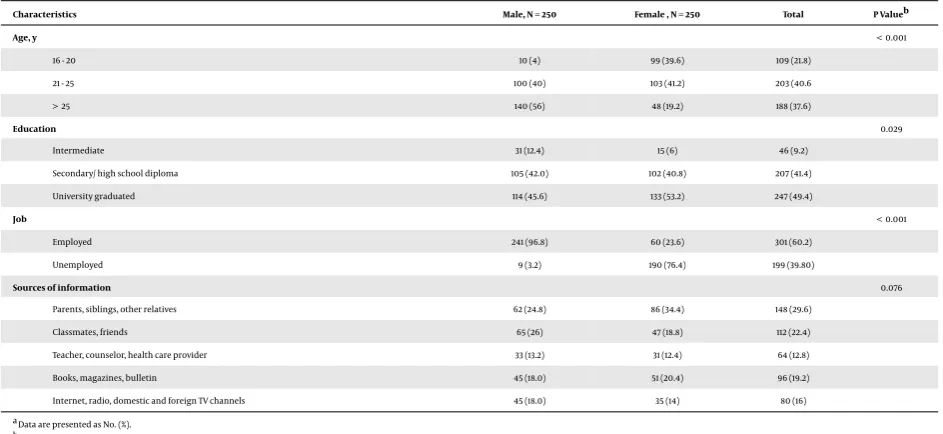
Table 1.Demographic Data of Premarital Couples in the Studya
Characteristics Male, N = 250 Female , N = 250 Total P Valueb
Age, y < 0.001
16 - 20 10 (4) 99 (39.6) 109 (21.8)
21 - 25 100 (40) 103 (41.2) 203 (40.6
> 25 140 (56) 48 (19.2) 188 (37.6)
Education 0.029
Intermediate 31 (12.4) 15 (6) 46 (9.2)
Secondary/ high school diploma 105 (42.0) 102 (40.8) 207 (41.4)
University graduated 114 (45.6) 133 (53.2) 247 (49.4)
Job < 0.001
Employed 241 (96.8) 60 (23.6) 301 (60.2)
Unemployed 9 (3.2) 190 (76.4) 199 (39.80)
Sources of information 0.076
Parents, siblings, other relatives 62 (24.8) 86 (34.4) 148 (29.6)
Classmates, friends 65 (26) 47 (18.8) 112 (22.4)
Teacher, counselor, health care provider 33 (13.2) 31 (12.4) 64 (12.8)
Books, magazines, bulletin 45 (18.0) 51 (20.4) 96 (19.2)
Internet, radio, domestic and foreign TV channels 45 (18.0) 35 (14) 80 (16)
a Data are presented as No. (%). b The results of Chi-square test.
Table 2.The Mean Score and Distribution of Responses Regarding Sexual Knowledge, Attitudes and the Subscales
Sexual Knowledges’ Subscales Number of Items Mean±SD Rate of Responses (%)
True Do Not Know False
Sexual biology 7 3.04±3.0 49.10 44.9 6
STDs 8 3.43±2.91 50.02 42.4 7.58
Sexual relationship 6 2.01±3.17 54.42 24.35 21.23
Probability of pregnancy and prevention 9 2.63±3.26 39.93 49.2 10.87
Anatomy of the genitalia 3 1.32±1.50 49.8 44.30 5.90
Overall sexual knowledge 33 12.45±8.54 47.85 41.67 10.47
Sexual attitudes’ subscales Agree No idea Disagree
Sexual satisfaction 9 35.20±6.20 68.35 23.81 7.83
Sexual negotiation 8 27.58±5.93 49.16 30.81 20.03
Role of sex in life 6 21.57±4.99 56.25 26.33 17.41
Sexual concerns 6 19.90±4.71 44.81 29.05 26.14
Initiation of sex by the female 3 9.44±3.42 45.73 17.92 36.30
Sexual pleasure 2 7.93±1.94 70.90 16 13.1
Overall sexual attitudes 34 121.63±14.51 55.69 25.84 18.47
Abbreviation: STDs, sexual transmitted diseases.
15 to 18 years. The current study findings showed that the main common sources of sexual information were the var-ious forms of media (books, magazines, bulletin and other media such as satellite or internet, Radio, television). The results of a study on young Asian adults showed that vari-ous forms of media were important sources of sexual infor-mation (25). Moreover, the current study findings demon-strated that the use of books, magazines and other media increased the scores of sexual knowledge and attitudes, although these associations were not statistically
signifi-cant. Other researchers found the use of mass media as a positively related factor to sexual knowledge, attitudes, and behaviors of adolescents (10,25).
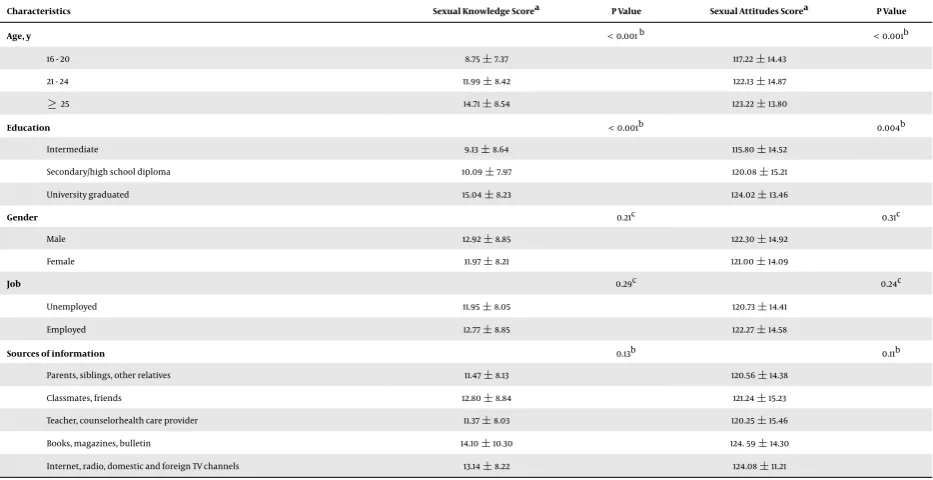
Table 3.The Associations Between Demographic Characteristics and Sexual Knowledge and Attitudes
Characteristics Sexual Knowledge Scorea P Value Sexual Attitudes Scorea P Value
Age, y < 0.001 b < 0.001b
16 - 20 8.75±7.37 117.22±14.43
21 - 24 11.99±8.42 122.13±14.87
≥25 14.71±8.54 123.22±13.80
Education < 0.001b 0.004b
Intermediate 9.13±8.64 115.80±14.52
Secondary/high school diploma 10.09±7.97 120.08±15.21
University graduated 15.04±8.23 124.02±13.46
Gender 0.21c 0.31c
Male 12.92±8.85 122.30±14.92
Female 11.97±8.21 121.00±14.09
Job 0.29c 0.24c
Unemployed 11.95±8.05 120.73±14.41
Employed 12.77±8.85 122.27±14.58
Sources of information 0.13b 0.11b
Parents, siblings, other relatives 11.47±8.13 120.56±14.38
Classmates, friends 12.80±8.84 121.24±15.23
Teacher, counselorhealth care provider 11.37±8.03 120.25±15.46
Books, magazines, bulletin 14.10±10.30 124. 59±14.30
Internet, radio, domestic and foreign TV channels 13.14±8.22 124.08±11.21 a Data are presented as mean±SD.
b The results of analysis of variance test. c The results of independent T-test.
Table 4.The Associations Among Participants’ Characteristics, Sexual Knowledge and Attitudes Based on Results of Regression Analysis
Variables Standardized Coefficients, Beta P Value Adjusted R-Square
Sexual Knowledge 0.264
Age 0.206 < 0.01
Level of education 0.251 < 0.01
Gender -0.008 0.892
Source of informatio -0.014 0.723
Job -0.036 0.532
Sexual attitudes 0.389 < 0.01
Sexual attitudes 0.198
Age 0.028 0.561
Level of education 0.045 0.299
Gender 0.009 0.891
Source of information 0.069 0.096
Job 0.022 0.719
Sexual knowledge 0.418 < 0.01
questionnaires. Moreover the study could not measure the role of other factors on sexual knowledge and attitudes such as sex experiences, cultural and religious factors. An-other limitation was the use of non-random sampling due to sensitivity of the issue. The present study had some strengths including: a culturally based questionnaire was used to assess the sexual knowledge and attitudes. More-over, the sample size was large.
According to the obtained results, it is essential to
Table 5.Comparison of Participants’ Sexual Knowledge and Attitudes Between Males and Females
Sex-Related Knowledge Subscales Malea Femalea P Valueb
Sexual biology 3.52±2.94 2.55±2.98 <0.01
STDs 3.44±3.06 3.42±2.76 0.94
Sexual relationship 2.21±3.11 1.81±3.23 0.16
Probability of pregnancy and the prevention 2.50±3.43 2.75±3.09 0.39
Anatomy of genitalia 1.24±1.52 1.39±1.47 0.27
Sex-related attitude subscales
Sexual satisfaction 34.82±6.29 35.56±6.06 0.18
Sexual negotiation 28.04±5.75 27.12±6.09 0.08
Role of sex in life 21.64±5.14 21.49±4.85 0.74
Sexual concerns 20.11±4.60 19.70±4.81 0.33
Initiation of sex by the female 9.70±3.53 9.17±3.30 0.08
Sexual pleasure 7.97±2.03 7.89±1.85 0.63
Abbreviation: STD, sexual transmitted diseases. a Data are presented as mean±SD. b The results of Mann-Whitney U-test.
Acknowledgments
This study was originated from the first researcher’s thesis for receiving PhD degree in health promotion and health education, at faculty of medical sciences, Tarbiat Modares University. We are enormously grateful to all pa-tients who agreed to participate in the study.
Footnotes
Authors’ Contributions:All authors participated in the
study conception and design. Fazlollah Ghofranipour su-pervised the study. Zohreh Sadat helped in data collec-tion and wrote the first draft of the manuscript. Fazlol-lah Ghofranipour, Seyed Ali Azin and Zohreh Sadat con-tributed in data analysis and interpretation. Fazlollah Ghofranipour and Zohreh Sadat made critical revision of the manuscript for important intellectual content. All authors contributed to the reading, and revising of the manuscript, and approving the final version.
Financial Disclosure:None declared.
Funding/Support:This study was a part of a PhD
disser-tation, which was funded by Tarbiat Modares University, Tehran, Iran (the approval letter was issued on 1 April, 2014 under the No. 178).
References
1. Biri A, Korucuoglu U, Ilhan M, Bingol B, Yilmaz E, Biri H. Turkish women’s level of knowledge on and attitude toward sexual health.
Maturitas. 2007;58(3):236–40. doi: 10.1016/j.maturitas.2007.08.010. [PubMed:17920792].
2. World Health Organization . Defining Sexual Health Geneva: World
Health Organization; 2006. Available from: http://www.who.int/
reproductivehealth/topics/sexual_health/sh.
3. UNFPA . Sexual and reproductive health for all: Reducing poverty, ad-vancingdevelopment and protecting human rights United Nations: UNFPA; 2010. Available from: http://www.unfpa.org/publications/ sexual-and-reproductive-health-all.
4. Cottingham J, Kismodi E, Hilber AM, Lincetto O, Stahlhofer M, Gruskin S. Using human rights for sexual and reproductive health: im-proving legal and regulatory frameworks.Bull World Health Organ.
2010;88(7):551–555.
5. Farahani FK, Shah I, Cleland J, Mohammadi MR. Adolescent males and young females in tehran: differing perspectives, behaviors and needs for reproductive health and implications for gender sensitive inter-ventions.J Reprod Infertil.2012;13(2):101–10. [PubMed:23926532]. 6. Farnam F, Pakgohar M, Mir-mohammadali M. Effect of Pre-Marriage
Counseling on Marital Satisfaction of Iranian Newlywed Couples: A Randomized Controlled Trial.Sex Cult.2011;15(2):141–52.
7. Mosavi SA, Babazadeh R, Najmabadi KM, Shariati M. Assess-ing Iranian adolescent girls’ needs for sexual and reproduc-tive health information. J Adolesc Health. 2014;55(1):107–13. doi:
10.1016/j.jadohealth.2013.11.029. [PubMed:24560307].
8. Shariati M, Babazadeh R, Mousavi SA, Najmabadi KM. Iranian adoles-cent girls’ barriers in accessing sexual and reproductive health infor-mation and services: a qualitative study.J Fam Plann Reprod Health Care. 2014;40(4):270–5. doi: 10.1136/jfprhc-2013-100856. [PubMed:
25183530].
9. Khajehei M, Ziyadlou S, Ghanizadeh A. Knowledge of and attitudes to-wards sexual and reproductive health in adults in Shiraz: a need for further education.East Mediterr Health J.2013;19(12):982–9. [PubMed:
24684095].
10. Mohammadi MR, Mohammad K, Farahani FK, Alikhani S, Zare M, Tehrani FR, et al. Reproductive knowledge, attitudes and behav-ior among adolescent males in Tehran, Iran.Int Fam Plan Perspect.
2006;32(1):35–44. doi:10.1363/ifpp.32.035.06. [PubMed:16723300]. 11. Shirpak KR, Chinichian M, Maticka-Tyndale E, Ardebili HE, Pourreza
A, Ramenzankhani A. A Qualitative Assessment of the Sex Education Needs of Married Iranian Women.Sex Cult. 2008;12(3):133–50. doi:
10.1007/s12119-008-9023-0.
12. Wong LP. An exploration of knowledge, attitudes and behaviours of young multiethnic Muslim-majority society in Malaysia in relation to reproductive and premarital sexual practices.BMC Public Health.
13. Lotfi R, Ramezani Tehrani F, Merghati Khoei E, Yaghmaei F, Dworkin SL. How do women at risk of HIV/AIDS in Iran perceive gender norms and gendered power relations in the context of safe sex negotia-tions?.Arch Sex Behav.2013;42(5):873–81. doi: 10.1007/s10508-012-0040-6. [PubMed:23224750].
14. Jackson CA, Henderson M, Frank JW, Haw SJ. An overview of pre-vention of multiple risk behaviour in adolescence and young adulthood. J Public Health (Oxf). 2012;34 Suppl 1:31–40. doi:
10.1093/pubmed/fdr113. [PubMed:22363029].
15. Bashirian S, Hidarnia A, Allahverdipour H, Hajizadeh E. The theory-based substance abuse prevention program for adolescents.HEHP.
2013;1(1):3–12.
16. Musavian AS, Pasha A, Rahebi SM, Atrkar Roushan Z, Ghanbari A. Health promoting Behaviors Among Adolescents: A Cross-sectional Study.Nurs Midwifery Stud.2014;3(1):e14560. [PubMed:25414892]. 17. Moodi M, Miri MR, Reza Sharifirad G. The effect of instruction on
knowledge and attitude of couples attending pre-marriage coun-seling classes.J Educ Health Promot. 2013;2:52. doi: 10.4103/2277-9531.119038. [PubMed:24251288].
18. Khoei EM, Whelan A, Cohen J. Sharing beliefs: What sexuality means to Muslim Iranian women living in Australia.Cult Health Sex.
2008;10(3):237–48.
19. Lamadah SM, Mohamed HAE, El-Khedr SM. Knowledge, attitude and practices of adolescent females regarding reproductive health at makkah al Mukaramah.Life Sci J.2015;12(3):146–158.
20. DeJong J, Shepard B, Roudi-Fahimi F, Ashford L. Young people’s sexual and reproductive health in the Middle East and North Africa.Reprod
Health.2007;14(78):8.
21. Yip PS, Zhang H, Lam TH, Lam KF, Lee AM, Chan J, et al. Sex knowledge, attitudes, and high-risk sexual behaviors among unmarried youth in Hong Kong.BMC Public Health. 2013;13:691. doi: 10.1186/1471-2458-13-691. [PubMed:23895326].
22. Wong MYE, Lam TML. Sexual knowledge, attitudes and values among Chinese migrant adolescents in Hong Kong.Health.2013;05(12):2210– 7. doi:10.4236/health.2013.512300.
23. Zhang D, Bi Y, Maddock JE, Li S. Sexual and reproductive health knowl-edge among female college students in Wuhan, China.Asia Pac J Pub-lic Health.2010;22(1):118–26. doi:10.1177/1010539509350614. [PubMed:
20032041].
24. Lu C, Xu L, Wu J, Wang Z, Decat P, Zhang WH, et al. Sexual and repro-ductive health status and related knowledge among female migrant workers in Guangzhou, China: a cross-sectional survey.Eur J Obstet Gynecol Reprod Biol.2012;160(1):60–5. doi:10.1016/j.ejogrb.2011.10.001. [PubMed:22071111].
25. Lou C, Cheng Y, Gao E, Zuo X, Emerson MR, Zabin LS. Media’s contribution to sexual knowledge, attitudes, and behaviors for adolescents and young adults in three Asian cities.J Adolesc Health.2012;50(3 Suppl):S26–36. doi:10.1016/j.jadohealth.2011.12.009. [PubMed:22340853].