2018
Early Stage of Oxidation on Titanium Surface by
Reactive Molecular Dynamics Simulation
Liang Yang
Nanjing University of Science and Technology
Cai-Zhuang Wang
Iowa State University and Ames Laboratory, [email protected]
Shiwei Lin
Hainan University
Yang Cao
Hainan University
Xiaoheng Liu
Nanjing University of Science and Technology
Follow this and additional works at:
https://lib.dr.iastate.edu/ameslab_manuscripts
Part of the
Engineering Physics Commons, and the
Materials Science and Engineering
Commons
Recommended Citation
Yang, Liang; Wang, Cai-Zhuang; Lin, Shiwei; Cao, Yang; and Liu, Xiaoheng, "Early Stage of Oxidation on Titanium Surface by Reactive Molecular Dynamics Simulation" (2018).Ames Laboratory Accepted Manuscripts. 184.
Early Stage of Oxidation on Titanium Surface by Reactive Molecular
Dynamics Simulation
Abstract
Understanding of metal oxidation is very critical to corrosion control, catalysis synthesis, and advanced materials engineering. Metal oxidation is a very complex phenomenon, with many different processes which are coupled and involved from the onset of reaction. In this work, the initial stage of oxidation on titanium surface was investigated in atomic scale by molecular dynamics (MD) simulations using a reactive force field (ReaxFF). We show that oxygen transport is the dominant process during the initial oxidation. Our
simulation also demonstrate that a compressive stress was generated in the oxide layer which blocked the oxygen transport perpendicular to the Titanium (0001) surface and further prevented oxidation in the deeper layers. The mechanism of initial oxidation observed in this work can be also applicable to other self-limiting oxidation.
Keywords
Reactive Force Field, metal oxidation, self-limiting oxidation, Titanium (0001) surface, molecular dynamics simulation, compressive stress
Disciplines
Early Stage Of Oxidation On Titanium Surface
B
y Reactive
Molecular Dynamics Simulation
Liang Yang1,2 C. Z.Wang3,∗ Shiwei Lin2,* Yang Cao2 Xiaoheng Liu1
Abstract: Understanding of metal oxidation is very critical to corrosion control, catalysis synthesis, and advanced materials engineering. Metal oxidation is a very complex phenomenon, with many different processes which are coupled and involved from the onset of reaction. In this work, the initial stage of oxidation on titanium surface was investigated in atomic scale by molecular dynamics (MD) simulations using a reactive force field (ReaxFF). We found that oxygen transport is the dominant process during the initial oxidation. Our simulation also demonstrate that a compressive stress was generated in the oxide layer which blocked the oxygen transport perpendicular to the Titanium (0001) surface and further prevented oxidation in the deeper layers. The mechanism of initial oxidation observed in this work can be also applicable to other self-limiting oxidation.
Keywords: Reactive Force Field, metal oxidation, self-limiting oxidation, Titanium (0001) surface, molecular dynamics simulation, compressive stress
1. Introduction
As a material combining good mechanical strength and light weight [Chen, Fray and Farthing (2000); Plimpton (1995)], titanium is used in many technological areas such as aerospace, automotive industry, jewelry and medicine [Praveena and Nirmala (2017)]. It is well documented that biocompatibility and corrosion resistance properties, which are very important in such applications, is due to a thin passive film forming spontaneously on the surface of Ti when oxygen is present [Alves, Rossi, Ribeiro et al. (2017); Gemelli and Camargo (2007); Jaeggi, Parlinskawojtan, Kern et al. (2012)]. The passive film is normally a few nanometers thick and consists mainly of amorphous titanium dioxide [Pan, Thierry and Leygraf (1996)]. Nevertheless, the functionality of the oxide film depend on the chemical composition,
1 School of chemical Engineering ,Nanjing university of science & Technology ,Nanjing 210094 ,China.
2 Materials and Chemical Engineering, Hainan University, Haikou, 570228, China.
3 Ames laboratory and Department of Physics, Iowa State University, Ames, IA 50011, USA
Copyright © 2018 Tech Science Press TSP, vol.1, no.1, pp.1-5, 2018
structure, morphology and mechanical conditions of the material [Gemelli and Camargo (2007)] Titanium oxide film produced from titanium surface has been the focus of experimental studies for many years. A great deal of experimental investigation has been performed to investigate oxide film using various experimental techniques such as vacuum
evaporated titanium oxidation[Babuji and Radhakrishna (1985)], DC plasma oxidation[Leng, Chen, Yang et al. (2003)], anodic oxidation[Wu, Liu ,Wu et al.(2014)], micro-arc oxidation[Li, Kong, Kim et al. (2004)], thermal oxidation treatment[Dong and Bell (2000)], RF plasma oxidation[Valenciaalvarado, La Piedadbeneitez, Lopezcallejas et al. (2014)], and laser oxidation [Lavisse, Langlade, Berger et al. (2004)]. Many of these methods involve oxygen atoms under electric field to bombard the titanium surface to form an oxide film. However, mechanism on how electric field effect and intrinsic stress influence the transport of Oxygen atoms has not been clearly discussed. Moreover, studies concerning the early stage of oxidation are still very few. When the film thickness decreases to a nanometer scale, stress distributions are very crucial to the initial oxidation process. Therefore, the initial stage of titanium oxidation has been one of the most intensively studied topics, yet remains controversial. Understanding the initial oxidation behavior is also important for revealing and controlling the structure and properties of Titanium oxide films. In order to gain an atomic scale insight into the oxidation process, in this work, we simulate the oxidation of titanium by using molecular dynamics simulation under different electric field condition.
2. Computational details
In this paper, molecular dynamics simulations are performed using the “large-scale atomic/molecular massively parallelized simulator ”(LAMMPS) code integrated with the Reactive Force-Field (ReaxFF) [Aktulga, Fogarty, Pandit et al. (2012); Plimpton (1995); Xia, Wang, Sun et al. (2016)]. ReaxFF is a generic bond order dependent force field that can simulate chemical reactions by introducing the dynamic bond-orders and partial charges of the atoms[Zheng, Li, Nie et al. (2017)]. The bonded interactions are bond-order-dependent, with the bond order itself being calculated based on interatomic distance. In this method the forces are derived from the following energy expression[(Ashraf and van Duin (2017)]:
E𝑠𝑠𝑠𝑠𝑠𝑠𝑠𝑠𝑠𝑠𝑠𝑠=𝐸𝐸𝑏𝑏𝑏𝑏𝑏𝑏𝑑𝑑+𝐸𝐸𝑏𝑏𝑜𝑜𝑠𝑠𝑜𝑜+𝐸𝐸𝑢𝑢𝑏𝑏𝑑𝑑𝑠𝑠𝑜𝑜+𝐸𝐸𝑙𝑙𝑙𝑙+𝐸𝐸𝑜𝑜𝑣𝑣𝑙𝑙+𝐸𝐸𝑜𝑜𝑑𝑑𝑣𝑣𝑣𝑣𝑣𝑣𝑙𝑙𝑠𝑠+𝐸𝐸𝑐𝑐𝑏𝑏𝑢𝑢𝑙𝑙𝑏𝑏𝑠𝑠𝑏𝑏 (1)
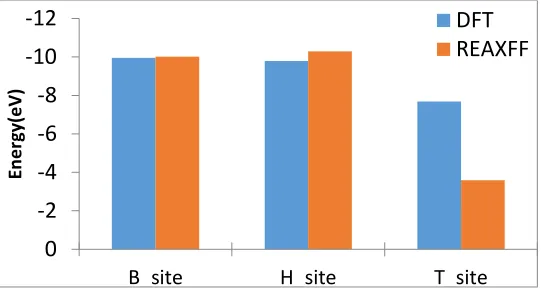
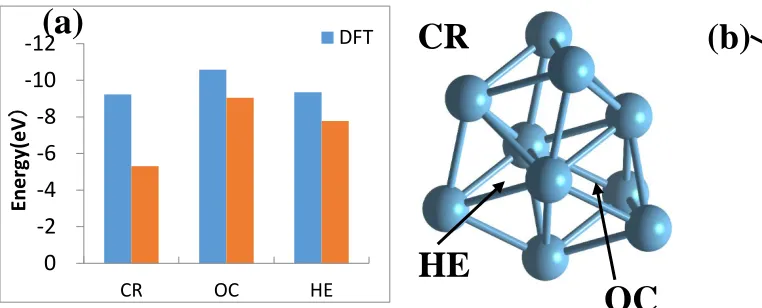
interaction energies [Huygh, Bogaerts, Duin et al. (2014)]. The force field parameters used in this work were developed by Ashraf C et al.[Huygh, Bogaerts, Duin et al. (2014)] which provides accurate description of the interatomic interactions among the Ti and O atoms. To further verify the accuracy of the ReaxFF in describing the interatomic interactions in Ti-O systems, we compare the adsorption energy for an oxygen adadtom on various sites of Ti (101) surface and the formation energy of an oxygen atom in the different interstitial sites in bulk Ti obtained from ReaxFF with those from first principles DFT calculations as shown in Fig. 1 and Fig. 2 respectively.
Figure 1: Oxygen adsorption energies per O atom in various configuration on titanium(0001) surface
The ReaxFF MD and the DFT results on the adsorption energies are compared in Fig.1. Although the absolute values of the adsorption energy from both calculations are not exactly the same, the relative stability of the adsorption site predict by the ReaxFF MD calculations agrees well with that of the DFT result. This comparison suggests that the ReaxFF can give a good description of reactions occurring at the titanium surface.
-12
-10
-8
-6
-4
-2
0
B_site H_site T_site
En
er
gy(
eV
)
Early Stage Of Oxidation On Titanium Surface By Reactive Molecular Dynamics
Simulation4
Figure 2: Formation energies calculated with ReaxFF MD and DFT for the different interstitial oxygen sites located in the titanium. (a) formation energies (b) interstitial sites.
In Fig. 2 the formation energies of interstitial oxygen calculated with the ReaxFF MD and with DFT are compared. Octahedral center (OC) site, hexahedral center (HE) site and Ti-Ti bond center crowdion (CR) site as indicated in the right site of the figure represent different locations where an oxygen interstitial atom can occupy in bulk titanium. The relative stability of the interstitial sites obtained from the ReaxFF MD calculations also agrees with that from DFT calculations. However, ReaxFF MD result underestimates all formation energies compared to the DFT result [Huygh, Bogaerts, Duin et al. (2014)] pecially for CR site, for which the formation energy calculated with ReaxFF lies about 42% below the DFT value. Therefore, ReaxFF MD overestimates the significance of CR site in comparison with the OC and HE sites.
-12
-10
-8
-6
-4
-2
0
CR OC HE
En
er
gy
(eV
)
DFT
OC
HE
CR
[image:6.612.108.489.188.342.2]Figure 3: Side view of the simulation box. Red and yellow atoms are O atoms
and Ti atoms, respectively.
We also test the accuracy of the ReaxFF in describing the lattice parameters of Ti crystal. After relaxing at 300K for 10ps [Liu, Fan , Sun et al. (2016); Liu, Wang, Zhou et al . (2007); Sun, Dai, Song et al. (2014)], the hcp Ti crystal structure has lattice constants of a=0.2983 nm,c=0.4883 nm,which gives c/a=1.6371. These calculated values are close the experiment values of a=0.2949 nm, c=0.4677 nm and c/a=1.5860[Liu, Wang, Zhou et al. (2007)] To perform the MD simulation, a thick slab of (0001) Ti containing 6957 atoms with the dimensions of 4.29 nm×4.29 nm×7.269 nm was set up. The simulation box was set to be 10.42 nm along z direction (the out-of-plane direction) to allow about 3.5 nm of free space (vacuum region) above the Ti(0001) surface for introducing oxygen atoms. Periodic boundary conditions were applied to all three directions.
Fig. 3 shows the simulation box used in the present simulation. In order to mimic a thick substrate, titanium atoms in the bottom 1 nm region of the simulation box were fixed. A oxygen reflection layer was also fixed at the top of the vacuum region so that oxidation can only occur at one surface (the non-fixed surface) of the Ti (0001) slab. Atoms in the region of about 6.6 nm above the fixed layer were kept at a constant oxidation temperature (300 K) during simulation to provide a thermal bath during the
Fixed Layer(1 nm) Thermal Bath(6.269 nm)
Early Stage Of Oxidation On Titanium Surface By Reactive Molecular Dynamics
Simulation6
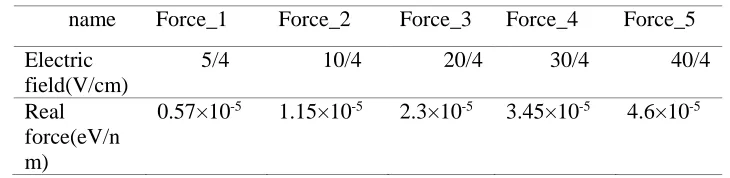
[image:8.612.122.487.346.435.2]oxidation(Melro and Jensen (2017). The temperature of the moving atoms in the Ti (0001) slab was rescaled at every time step (0.5 fs) during simulation. Oxidation was proceeded by placing oxygen atoms one-by-one (shown as red balls) at the distance 2 nm above the Ti (0001) surface. In order to simulate the effect of electric field force on oxidation process, each oxygen atom is subjected to a constant electric field force and moves toward the titanium surface. The range of this force is determined by the anode voltage as shown in Tab. 1[ Li, Chen, Wang et al. (2016); Liu, Liu, Zhong et al. (2014)]. In order to compare the oxidation behavior with the previous ab initio calculations and the experimental results of surface reaction, we oxidized the surface by sequentially adding 100 oxygen atoms in to the vacuum region to study the evolution of the surface oxidation.
Table 1: The oxygen atom of force in reaction process
name Force_1 Force_2 Force_3 Force_4 Force_5
Electric field(V/cm)
5/4 10/4 20/4 30/4 40/4
Real force(eV/n m)
0.57×10⁻⁵ 1.15×10⁻⁵ 2.3×10⁻⁵ 3.45×10⁻⁵ 4.6×10⁻⁵
3. Results and discussion
Although titanium has been studied extensively for many decades, there are still a lot of debates regarding the fundamental oxidation mechanism of this material [Fang, Wen, Xu et al. (2017)]. It is important to obtain atomic scale information on the interaction of oxygen with titanium surface to gain better fundamental insights into which factors play an important role in the oxidation process.
5 ps 5 ps
10 ps 10 ps
Early Stage Of Oxidation On Titanium Surface By Reactive Molecular Dynamics
Simulation8
40 ps 40 ps
80 ps 80 ps
200 ps 200 ps
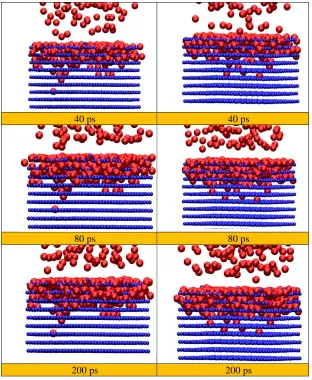
Figure 4: The evolution of atomistic structures during oxidation process under force-1(left column) and force-5(right column).
[image:10.612.151.463.177.557.2]atoms were found mainly distributed into the second layer and the third layer, although a few adatoms are still left on the Ti (0001) surface. With the increase of oxidation time, the oxygen of the second layer and the third layer tends to be saturated and the coverage of surface oxygen atoms increases. Finally, the surface, second layer and the third layer of the Ti slab are all saturated with oxygen.
3.2. Oxidation time
0 40 80 120 160 200
0.0 0.2 0.4 0.6 0.8 1.0
R
eac
tion
R
at
e
(%
)
Reaction Time(ps)
[image:11.612.146.440.259.456.2]force_1
force_2
force_3
force_4
force_5
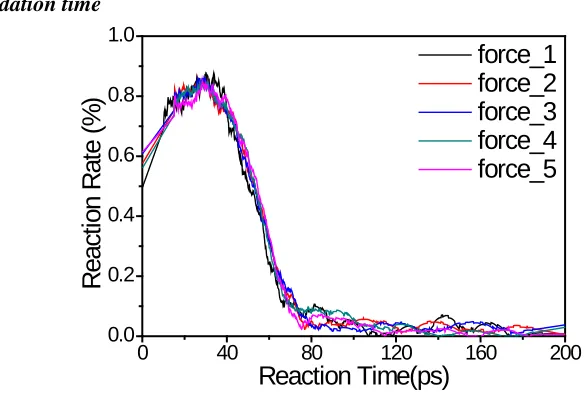
Figure 5: Reaction rate of oxidation process under different consist force at 300K.
We found that the reaction kinetics is dependent on the position of oxygen atom on the Ti (0001) surface. Figure 5 shows the oxidation process when the oxygen atoms were supplied with different force. The curves exhibit similar shape, all of which found three stages of early titanium oxidation. In the 1st stage, oxygen reaction rate increased with time. In the 2nd stage, oxygen then incorporated into the subsurface region and resulted in a reaction decrease and finally in the 3rd stage the reaction was very small which was caused by Ti-O layer formation. The oxygen-titanium reaction occurred very rapidly within 0.8 ps at all forces conditions. Therefore, it must be noted that the present simulations consider only very initial stage of the oxidation and exclude thermal diffusion of oxygen in a long time scale. However, the resulting atomic reaction rate of the oxygen atom is essentially the same for different applied forces. This result implies that the oxidation reaction on Ti (0001) surface is independent of applied forces.
Early Stage Of Oxidation On Titanium Surface By Reactive Molecular Dynamics
Simulation10
0 20 40 60 80 100 120 140 160 180 200 0
20 40 60 80 100 120 140
8
7 6 5
4 3
N
um
ber
of
ox
ygen
at
om
Time(ps)
1 2
9
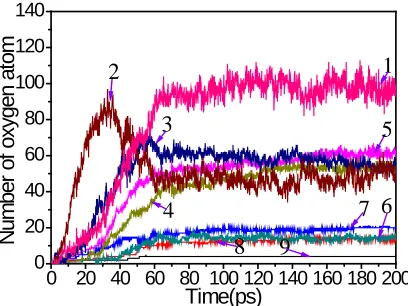
Figure 6: At top 9 layers, total oxygen atoms in each layer profile of the oxidized Titanium surface during oxidation process with 100 oxygen atoms in Vacuum Slab
By analyzing the simulated oxide layer, initial oxidation behaviors at 300 K were studied. Figure 6 shows the distributions of oxygen atoms in different layers as the function of oxidation time. The results show that the oxygen concentration in the 2nd layer increases sharply from 0 fs to 25 ps and then decreases quickly until about 60ps when it becomes stabilizing. The slopes of the curves reflect the reaction rate, which indicate that oxidation rate was extremely high in the first 25 ps, especially at the 2nd layer. This result agrees with the results shown in figure 5. During early 25ps, the oxygen concentration rise rapidly and reached a maximum, especially the change at second layer is much faster than that at the other layers. Our simulations suggest that oxygen go to the 2nd layer without adsorbed on the surface at initial stage of oxidation. After the first 25 ps, the oxygen concentration at the 2nd layer is saturate and we could observe that a lot of oxygen atoms start to accumulate on the first layer and generate a surface oxide layer. At the same time the number of oxygen atoms at deeper layer is less than the first layer because of oxidation was decelerating attributed to the compressive stress at the 2nd layer which block the diffusion of the oxygen atoms into the deeper layers as shown below.
[image:12.612.211.415.191.344.2]5.1 5.4 5.7 6.0 6.3 6.6 6.9 7.2 7.5 -2.0 -1.5 -1.0 -0.5 0.0 0.5 1.0 1.5
5.1 5.4 5.7 6.0 6.3 6.6 6.9 7.2 7.5 -2.0 -1.5 -1.0 -0.5 0.0 0.5 1.0 1.5
5.1 5.4 5.7 6.0 6.3 6.6 6.9 7.2 7.5 -2.0 -1.5 -1.0 -0.5 0.0 0.5 1.0 1.5
5.1 5.4 5.7 6.0 6.3 6.6 6.9 7.2 7.5 -2.0 -1.5 -1.0 -0.5 0.0 0.5 1.0 1.5 0.1ps A tom m ic s tr es s( aot m × Å 3 × 10 7 )
Z directiion depth of titanium(nm)
10ps A tom m ic s tr es s( aot m × Å 3 × 10 7 )
Z directiion depth of titanium(nm)
50ps A tom m ic s tr es s( aot m × Å 3 × 10 7 )
Z directiion depth of titanium(nm)
150ps A tom m ic s tr es s( aot m × Å 3 × 10 7 )
[image:13.612.139.474.190.451.2]Z directiion depth of titanium(nm)
Figure 7: The corresponding x component stress distribution under different oxidation time.
Early Stage Of Oxidation On Titanium Surface By Reactive Molecular Dynamics
Simulation12
atoms, the oxide film turned to expand in parallel to the surface direction. But , as the lateral expansion was constrained by the titanium substrate, compression stress was generated in the oxide film. Such residual compressive stress in oxide film cause the so-called “self-limiting oxidation” since the barrier caused by compressive deformation is higher than the activation energy of oxygen diffusion and reaction. So the ballistic transport of O atoms at very early moment played dominant role during oxidation of titanium.
4. Conclusion
By performing a ReaxFF MD simulation study, the transport of O atoms was found to control the initial oxidation stage of titanium. Surface oxide layer is formed quickly within 2ps of simulation time. Our simulation results also show that the oxidation reaction is independent of the initial applied forces. The O concentration accumulation was caused by the transport of O atoms into 2nd layer at the very beginning of oxidation (50 ps), leading to compressive stress of the surface layer which blocked the subsequent transport of O atoms. We believe that the mechanism discovered in this work can be applied to other self-limiting oxidation behaviors.
Acknowledgments
Support of this work from the National Natural Science Foundation of China (Grant No. 51361009. Work at Ames Laboratory was supported by the US Department of Energy, Basic Energy Sciences, Division of Materials Science and Engineering under Contract No. DE-AC02-07CH11358, including a grant of computer time at the National Energy Research Scientific Computing Centre (NERSC) in Berkeley, CA.
References
Aktulga, H. M.; Fogarty, J.; Pandit, S. A.; Grama, A. (2012): Parallel reactive molecular dynamics: Numerical methods and algorithmic techniques. Parallel Computing, vol.38,no.4, pp. 245-259.
Alves, S. A.; Rossi, A. L.; Ribeiro, A. R.; Toptan, F.; Pinto, A. M.; Celis, J.-P.; Rocha, L. A. (2017): Tribo-electrochemical behavior of bio-functionalized TiO2 nanotubes in artificial saliva: Understanding of degradation mechanisms. Wear,
pp. 384–385, 28-42.
Chemistry A, vol.121, no.5, pp. 1051-1068.
Babuji, B.; Radhakrishna, S. (1985): Optical properties of titanium oxide thin films.
Journal of Materials Science Letters, vol. 4, no. 6, pp. 767-769.
Chen, G. Z., Fray, D. J.; Farthing, T. W. (2000): Direct electrochemical reduction of titanium dioxide to titanium in molten calcium chloride. Nature, vol. 407, no. 6802, pp. 361-364.
Dong, H.; Bell, T. (2000): Enhanced wear resistance of titanium surfaces by a new thermal oxidation treatment. Wear, vol. 238, no. 2 , pp. 131-137.
Fang, W.; Wen, X.Z.; Xu, J.; Zhou, J. Z.; (2017): CSDA: a novel cluster-based secure data aggregation scheme for WSNs. Cluster Computing
Gemelli, E.; Camargo, N. H. A. (2007): Oxidation kinetics of commercially pure titanium. Materia-rio De Janeiro, vol. 12, no. 3, pp.525-531.
Huygh, S.; Bogaerts, A.; van Duin, A. C. T.; Neyts, E. C. (2014): Development of a ReaxFF reactive force field for intrinsic point defects in titanium dioxide.
Computational Materials Science, vol. 95, pp. 579-591.
Jaeggi, C.; Parlinskawojtan, M.; Kern, P. (2012): Correlation of electrolyte-derived inclusions to crystallization in the early stage of anodic oxide film growth on titanium. Thin Solid Films, vol. 520, no. 6, pp.1804-1808.
Xia, Z. H.; Wang, X. H.; Sun, X. M.; Wang, Q. (2016): A Secure and Dynamic Multi-Keyword Ranked Search Scheme over Encrypted Cloud Data. IEEE Transactions on Parallel and Distributed Systems, vol.27,no.2 ,pp. 340-352
Lavisse, L.; Langlade, C.; Berger, P.; Grevey, D.; Vannes, A. B. (2004): A thermo-kinetic study of titanium oxidation assisted by a Nd-YAG pulsed laser.
Materials Science Forum, pp. 697-704.
Leng, Y. X.; Chen, J. Y.; Yang, P.; Sun, H.; Huang, N. (2003): Structure and properties of passivating titanium oxide films fabricated by DC plasma oxidation.
Surface & Coatings Technology, vol. 166, no. 2, pp. 176-182.
Li, D. G.; Chen, D. R.; Wang, J. D.; & Liang, P. (2016): Effect of acid solution, fluoride ions, anodic potential and time on the microstructure and electronic properties of self-ordered TiO2 nanotube arrays. Electrochimica Acta, vol. 207, pp. 152-163.
Li, L.; Kong, Y.; Kim, H.; Kim, Y.; Kim, H.; Heo, S. B.; Koak, J. (2004): Improved biological performance of Ti implants due to surface modification by micro-arc oxidation. Biomaterials, vol. 25, no. 14, pp. 2867-2875.
Liu, J.; Fan, X.; Sun, C.; Zhu, W. (2016): Oxidation of the titanium(0001) surface: diffusion processes of oxygen from DFT. RSC Advances, vol.6 , no. 75, pp. 71311-71318.
Early Stage Of Oxidation On Titanium Surface By Reactive Molecular Dynamics
Simulation14
the Ti(0001) surface. Journal of Physics: Condensed Matter, vol. 19, no.22,pp. 226004.
Liu, Z.; Liu, H.; Zhong, X.; Hashimoto, T.; Thompson, G. E.; Skeldon, P. (2014): Characterization of anodic oxide growth on commercially pure titanium in NaTESi electrolyte. Surface and Coatings Technology, vol. 258, pp. 1025-1031.
Melro, L. S.; Jensen, L. R. (2017): Influence of functionalization on the structural and mechanical properties of graphene. Computers Materials & Continua, vol.53 no. 2,pp. 111-131.
Pan, J.; Thierry, D.; Leygraf, C. (1996): Electrochemical impedance spectroscopy study of the passive oxide film on titanium for implant application.
Electrochimica Acta, vol. 41, pp. 1143-1153.
Plimpton, S. (1995). Fast parallel algorithms for short-range molecular dynamics.
Journal of Computational Physics, vol. 117,no. 1, pp. 1-19.
Praveena, R.; Nirmala, S. (2017): Bus encoded LUT Multiplier for portable biomedical therapeutic devices. Computers Materials & Continua, vol. 53, no.1, pp. 39-51.
Sun, J. P.; Dai, J. H.; Song, Y.; Wang, Y.; Yang, R. (2014): Affinity of the interface between hydroxyapatite (0001) and Titanium (0001) surfaces: A First-Principles investigation. Acs Applied Materials & Interfaces, vol.6, no. 23, pp. 20738-20751.
Valenciaalvarado, R.; La Piedadbeneitez, A. D.; Lopezcallejas, R.; Barocio, S. R.; Mercadocabrera, A.; Penaeguiluz, R.; La Rosavazquez, J. M. D. (2014): Titanium oxidation by rf inductively coupled plasma. Journal of Physics: Conference Series, vol. 511, no. 1, pp. 012077.
Wu, L.; Liu, J. H.; Wu, G.; Li, S.; Yu, M. Y. (2014): Growth behaviour of anodic oxide film on titanium alloy. Surface Engineering.