Introduction
The common cold is a self-limiting upper respiratory tract infection which is caused by the rhinovirus, coronavirus or the adenovirus.1 Symptoms like sneezing, nasal congestion, coughing, sore throat and a low-grade fever are often experienced during the late autumn and winter season, from about early-May to August in South Africa.2 A person may be contagious after being infected with the virus.3 The viruses in question are airborne and spread quickly via hand-to-hand contact, or via the inhalation of airborne droplets from sneezing and coughing (also refer to Figure 1 below).1
After the virus enters the nasal cavity it damages the ciliated cells resulting in the release of inflammatory mediators and causing inflammation of the nasal tissue lining.1 The increase in permeability of the capillary cell walls results in oedema. Oedema is responsible for symptoms like sneezing and nasal congestion.1,3 A postnasal drip may develop, which leads to a sore throat and coughing, which in turn is responsible for the spread of the virus.1
Common colds are self-limiting and resolve within seven to ten days without the use of antibiotics. However, some people may end up developing a secondary bacterial infection.2
The common cold is often confused with influenza (flu). However, flu is a viral illness caused by a different virus, the influenza virus. It has a high mortality and hospitalisation rate.4 Influenza can occur all year round but is seen more often from May through winter. Due to the constant evolution of the influenza strains there is a
higher fatality rate associated with the virus than with the viruses causing the common cold.1 This epidemiological pattern reflects the changing nature of the antigenic properties of flu viruses and their subsequent spread, which depends upon multiple factors, including transmissibility of the virus and the susceptibility of the population.1
The influenza virus is transmitted via air droplets when a person comes into close contact with an infected person or via self-infection when a person comes into direct contact with an infected person or object.5
Colds and flu – an overview of their
management
Z Dlamini1, K Kupa1, N Schellack2
1Academic Intern, School of Pharmacy, Faculty of Health Sciences, Sefako Makgatho Health Sciences University 2School of Pharmacy, Faculty of Health Sciences, Sefako Makgatho Health Sciences University
Corresponding author: Prof Natalie Schellack ([email protected])
Abstract
In South Africa deaths related to colds and flu are at least three times higher when compared to the USA. The burden of HIV and tuberculosis in our country heightens the risk of severe flu-related illness. The common cold and flu are caused by very different viruses that share very similar symptoms. The common cold is a self-limiting upper respiratory tract viral infection and it is caused by the rhinovirus, coronavirus or the adenovirus. It usually resolves within 7–10 days. Flu is caused by the influenza virus and usually presents with headaches, myalgia, fever and body aches. There is no place for antibiotic usage in colds and flu management, and there is no clinical evidence which suggests that using antibiotics alters the course of the disease or prevents secondary infection. Treatment is mainly symptomatic and includes many over-the counter-medicines, specific antiviral agents and herbal treatment.
Keywords: colds, flu, rhinovirus, coronavirus, adenovirus, influenza, upper respiratory tract infections, herbal medicine, antivirals, over-the-counter medicine
© Medpharm S Afr Pharm J 2019;86(3):16-22
1 Introduction
The common cold is a self-limiting upper respiratory tract infection which is caused by the rhinovirus, coronavirus or the adenovirus.1 Symptoms like sneezing, nasal congestion, coughing, sore throat and a low-grade fever are often experienced during the late autumn and winter season, from about early-May to August in South Africa.2 A person may be contagious after being infected with the virus.3 The viruses in question are airborne and spread quickly via hand-to-hand contact, or via the inhalation of airborne droplets from sneezing and coughing (also refer to Figure 1 below).1
After the virus enters the nasal cavity it damages the ciliated cells resulting in the release of inflammatory mediators and causing inflammation of the nasal tissue lining.1 The increase in permeability of the capillary cell walls results in oedema. Oedema is responsible for symptoms like sneezing and nasal congestion.1,3 A postnasal drip may develop, which leads to a sore throat and coughing, which in turn is responsible for the spread of the virus.1
Common colds are self-limiting and resolve within seven to ten days without the use of antibiotics. However, some people may end up developing a secondary bacterial infection.2
Figure 1. Transmission of viruses that cause colds2
The common cold is often confused with influenza (flu). However, flu is a viral illness caused by a different virus, the influenza virus. It has a high mortality and hospitalisation rate.4 Influenza can occur all year round but is seen more often from May through winter. Due to the constant evolution of the influenza strains there is a higher fatality rate associated with the virus than with the viruses causing the common cold.1This epidemiological pattern reflects
the changing nature of the antigenic properties of flu viruses and their subsequent spread, which depends upon multiple factors, including transmissibility of the virus and the susceptibility of the population.1
The contamination
of shared objects, food,
etc.
Direct contact
(person-to-person)
Airborne particles through coughing and
sneezing
Transmission of the common
cold
Table I. Types of influenza strains and their differences1
Virus strain Influenza A Influenza B
Who can become infected
Animals and humans Humans
Severity of infection Causes pandemics, like swine flu and bird flu
Less severe than influenza A
A rapid onset of fever, headaches, myalgia, body aches and pains, sore throat and rhinitis (runny nose) are associated with flu. These symptoms generally last for four to five days and then disappear, however a person may experience coughing and malaise for more than 14 days.1,2 Influenza-like illness (ILI) is an acute respiratory infection that presents with a fever greater than 38 ˚C, with coughing or pharyngitis. The diagnosis of ILI is rarely based on the patient’s clinical picture. Laboratory diagnosis usually includes6: • Virus isolation in cell culture
• A polymerase chain reaction (PCR) test • Antigen detection
Management of colds and flu
Pharmacotherapy is directed at alleviating associated symptoms. Antibiotics are often prescribed erroneously, and in the absence of a secondary bacterial infection. Antibiotics should only be administered when a bacterial infection has been identified, and should not be used as a preventative measure. The following measures can be used to either prevent or treat the symptoms of a cold and flu (each of these recommendations will be discussed separately)1,5:
• A flu vaccine is recommended by, amongst others, the Centers for Disease Control and Prevention (CDC) in the United States of America, as a preventative measure against the acquisition of the influenza virus.
• Selected over-the-counter (OTC) products contain a combination of active ingredients which help with symptomatic relief. • Drinking plenty of fluids, especially water: Water has been
shown to be the best fluid with which to hydrate and lubricate the mucous membranes.
• Vitamins and minerals, e.g. vitamin C and zinc sulphate.
• Antiviral drugs, e.g. neuraminidase inhibitors (zanamivir and oseltamivir), as well as N-methyl D-aspartate receptor antagonists (amantadine and rimantadine).
• Others, such as orally-inhaled anticholinergics, inhaled corticosteroids, herbal solutions and nonsteroidal anti-inflammatory drugs (NSAIDs).
Vitamins and minerals
The prophylactic use of vitamin C has been shown to reduce the risk of developing a cold or flu in certain populations, e.g. athletes, with a reduction of approximately 6% in the disease duration. However, the evidence that supports the use of vitamin C in high dosages to reduce the severity of a cold or flu is lacking and inconclusive.
Zinc may inhibit viral growth, and could possibly reduce the duration of cold symptoms. However, not enough high-quality trials support the routine and high-dosage use of zinc in preventing colds or flu. Some reports have been lodged with the US Food and Drug Administration (FDA) that nasal preparations containing zinc may cause loss of smell. Zinc may also reduce the absorption of certain antibiotics. Food containing calcium and phosphorus can impair the absorption of zinc.7
Importance of hydration
Fluid (especially water) helps to lubricate the mucous membranes (and decreases sputum viscosity) of patients suffering from a cold or influenza. However, some literature contradicts this by suggesting that the provision of extra fluid to patients with acute respiratory conditions may cause hyponatraemia and fluid overload, because of the actions of antidiuretic hormone. This hormone is released in adults and children with lower respiratory tract infections and causes water reabsorption from the renal collecting duct. The combination of the increased production of the antidiuretic hormone and extra fluid may lead to fluid overload. Research has not clearly illustrated this in upper respiratory infections yet and water hydration still remains of importance in the treatment of colds and flu.1,8,9
Other strategies used to treat colds and flu
Anticholinergic agents, such as inhaled ipratropium bromide, may be used to treat a cough caused by a cold. Nasal preparations have shown some efficacy in reducing rhinorrhoea and sneezing. Inhaled corticosteroids can be used to reduce the swelling and inflammation of the nasal mucosa, but have not been shown to provide any benefit in patients diagnosed with a cold.1
Conflicting evidence has emerged about the use of nasal irrigation. Nasal irrigation constitutes a mechanical intervention. It is not classified as a decongestant and does not improve ciliary function. Studies have shown that nasal preparations that contain a certain preservative, namely benzalkonium chloride, may worsen symptoms and infections. Nasal washes that contain a lot of fluid and minimal salt can be used to remove mucus from the nose, removing bacterial products, and improving sinonasal function. Nasal irrigation can be used prior to the administration of topical therapies to ensure true sinus distribution.1,10
There are several different OTC medications that can be used to alleviate pain and fever associated with colds and flu. The typical active ingredients are aspirin, paracetamol and caffeine. Aspirin, however, is contraindicated in children who have a viral infection as they are at risk of developing Reye’s syndrome.1,2
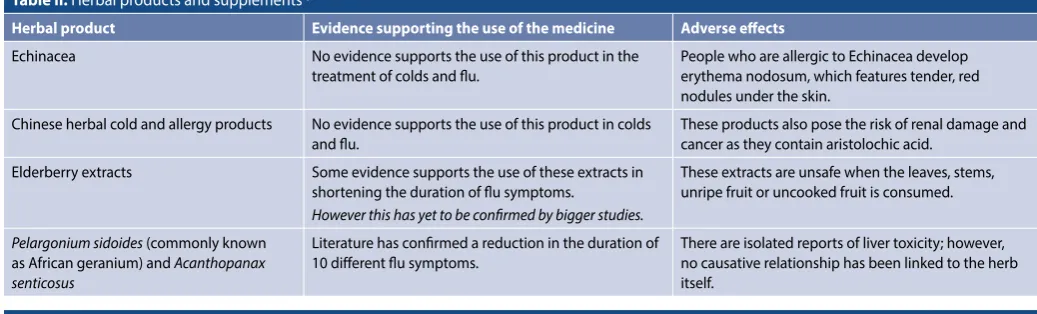
Herbal products and supplements include substances like echinacea, Chinese herbal cold and allergy products, elderberry extracts, Andrographis paniculata, Pelargonium sidoides and
Flu, or the influenza vaccine
The influenza vaccine is developed each year to protect you against the most common strains of flu. Flu vaccines provoke an immune response to the antigen found on the surfaces of the viruses. Antigenic drift can occur in the viruses, causing resistance to the vaccine.12 It is for this reason that recommendations are based on the World Health Organization’s (WHO) accredited regional laboratories, and changes are made to the composition, in terms of strains of influenza every year.13,14 This antigenic drift is the reason why the vaccine that is released in September every year in the northern hemisphere is not always exactly the same as that released in February in the southern hemisphere.
Antibodies usually develop within two weeks of the vaccine being administered. A peak in immunity occurs four to six weeks after vaccination, which then gradually wanes again. It therefore does not convey lasting immunity against the influenza virus. Immunisation reduces the likelihood of flu developing in healthy adults by approximately 70–90%.14 If a family member or house mate has already developed flu, vaccination of other members of the household, within 36–48 hours, will still provide effective protection against the virus.14
Some individuals require the flu vaccine as a matter of priority; these involve pregnant women, immune-compromised individuals and others (refer to Table III).
In the southern hemisphere, it is recommended that the vaccine be given in April; however, it can be given throughout the winter season. Figure 2 depicts the adverse effects that are associated with the flu vaccine.1
Combination products used for colds and flu
Treatment is mainly symptomatic and includes many OTC medicines, antivirals and herbal treatment.
Antitussive agents (cough suppressants)
Antitussive agents should only be given for a non-productive, dry, irritating cough (refer to Table IV). Care should be taken when giving antitussive agents as the coughing mechanism serves as a protective function of the body. Coughing clears the throat and the lower respiratory tract of foreign particles and mucus. Coughing that occurs as a result of bronchoconstriction and bronchospasm (coughing in asthma and COPD patients) should be treated with Table II. Herbal products and supplements1,11
Herbal product Evidence supporting the use of the medicine Adverse effects
Echinacea No evidence supports the use of this product in the treatment of colds and flu.
People who are allergic to Echinacea develop erythema nodosum, which features tender, red nodules under the skin.
Chinese herbal cold and allergy products No evidence supports the use of this product in colds and flu.
These products also pose the risk of renal damage and cancer as they contain aristolochic acid.
Elderberry extracts Some evidence supports the use of these extracts in shortening the duration of flu symptoms.
However this has yet to be confirmed by bigger studies.
These extracts are unsafe when the leaves, stems, unripe fruit or uncooked fruit is consumed.
Pelargonium sidoides (commonly known
as African geranium) and Acanthopanax senticosus
Literature has confirmed a reduction in the duration of 10 different flu symptoms.
There are isolated reports of liver toxicity; however, no causative relationship has been linked to the herb itself.
Table III. List of individuals who would require the flu vaccine as a matter of priority1
Individuals that require the vaccine as a matter of priority
Pregnant women, and women who are planning to fall pregnant during winter Patients younger than 18 years of age on chronic aspirin therapy
HIV-infected patients (CD4 cell count > 100 cells/uL)
Patients who suffer from any other disease which leaves them immune-compromised
People who suffer from an underlying medical condition, e.g. diabetes mellitus, COPD, heart disease People older than 65 years of age, or infants between 6–49 months of age
People staying in old age homes, frail care facilities and rehabilitation centres Healthcare workers who have direct contact with patients on a daily basis Patients who are on glucocorticosteroid therapy for long periods of time
Allergic reactions in people who have an egg allergy
Flu-like symptoms, which develop with 2–24 hours after vaccination
Soreness and tenderness at the site of the injection
Please Note: Individuals with allergies to eggs or chicken proteins should not recieve vaccines that are produced via egg-based culturing techniques.
Table IV. Over-the-counter medicine for the treatment of colds and flu1,13
Preparation Active ingredient Indication
Topical decongestants
Illiadin® Oxymetazoline (0.100 mg/ml) Short-term symptomatic relief of nasal congestion
Drixine® Oxymetazoline (0.5 mg/ml) Short-term symptomatic relief of nasal congestion
Nazene® Adult Nasal Metered Spray Oxymetazoline (0.5 mg/ml) Short-term symptomatic relief of nasal congestion
Otrivin® Xylometazoline (1 mg/ml) Short-term symptomatic relief of nasal congestion
Sinutab® Nasal Spray Xylometazoline (1 mg/ml) Short-term symptomatic relief of nasal congestion Vibrocil-S® Phenylephrine and dimethindene (250 mg/100 g) Short-term symptomatic relief of nasal congestion
Topical corticosteroids
Beclate Aquanase® Beclomethasone dipropionate (50 µg/spray) Maintenance therapy for allergic rhinitis Beconase® Beclomethasone dipropionate (50 µg/spray) Maintenance therapy for allergic rhinitis Clenil® Aq Nasal Spray Beclomethasone dipropionate (50 µg/spray) Maintenance therapy for allergic rhinitis Flomist® Fluticasone propionate (50 µg/spray) Maintenance therapy for allergic rhinitis Flonase® Fluticasone propionate (50 µg/spray) Maintenance therapy for allergic rhinitis
Nexomist® Mometasone furoate (50 µg) Maintenance therapy for allergic rhinitis
Rinelon® Mometasone furoate (50 µg) Maintenance therapy for allergic rhinitis
Topical antihistamines/anti-allergic agents
Rhinolast® Azelastine (0.14 mg/spray) Short-term intermittent allergic rhinitis
Sinumax Allergy Nasal Spray® Levocabastine (0.5 mg/ml) Short-term intermittent allergic rhinits Vividrin® Cromoglicic acid (2.6 mg/spray) Intermittent or persistant allergic rhinitis Other nasal preparations
Mistabron® Mesna (50 mg/ml) Nasal obstruction owing to thick secretions
Systemic nasal decongestants with antihistamines
Actifed® Pseudoephedrine HCl (30 mg) Triprolidine HCl (1.25 mg) Systemic decongestion of nasal mucosa and sinuses associated with colds and flu
Betafed Be-Tabs® Pseudoephedrine HCl (30 mg) Triprolidine HCl (1.25 mg) Systemic decongestion of nasal mucosa and sinuses associated with colds and flu
Demazin Syrup® Phenylephrine HCl (2.5 mg/5 ml) Chlorpheniramine (1.25 mg/5 ml) Systemic decongestion of nasal mucosa and sinuses associated with colds and flu
Demazin NS® Pseudoephedrine sulphate (120 mg) Loratidine (5 mg) Systemic decongestion of nasal mucosa and sinuses associated with colds and flu
Systemic decongestant and/or analgesic and/or antihistamine combinations
Benylin® for colds Pseudoephedrine HCl (30 mg) Ibuprofen (200 mg) Symptomatic relief of colds and flu Nurofen® Cold and Flu Ibuprofen (200 mg) Pseudoephedrine HCl (30 mg) Symptomatic relief of colds and flu Sinuclear® Paracetamol (325 mg) Phenylpropanolamine HCl (18 mg) Symptomatic relief of colds and flu Sinugesic® Paracetamol (500 mg) Pseudoephedrine HCl (30 mg) Symptomatic relief of colds and flu Sinumax® Paracetamol (500 mg) Pseudoephedrine HCl (30 mg) Symptomatic relief of colds and flu Sinustat® Paracetamol (325 mg) Phenylpropanolamine HCl (18 mg) Symptomatic relief of colds and flu Sudafed® Sinus Pain Paracetamol (500 mg) Pseudoephedrine HCl (60 mg) Symptomatic relief of colds and flu
Cough preparations Mucolytics
Solmucol® N-Acetylcysteine To reduce viscosity of secretions
Mucatak® Amuco 200® ACC200®
Betaphlem® Carbocisteine To reduce viscosity of secretions
Bronchette® Flemex® Lessmusec® Mucospect®
bronchodilators. Coughing that is caused by a lower respiratory tract infection should be managed with appropriate antimicrobial agents.
Antihistamines
The first-generation antihistamines, such as chlorpheniramine, brompheniramine and promethazine, are used to reduce certain symptoms of a cold, like rhinitis and sneezing. This is due to the anticholinergic effects of these drugs. Some of the first-generation antihistamines are also used for their antitussive action and are combined in cold medicines to help patients sleep. Literature has stated that antihistamines used alone are of very little benefit in treating symptoms of colds and flu, but they do offer symptomatic relief when used in combination with decongestants and antitussive agents.5
In 2006 the FDA issued a warning to parents and healthcare professionals against the use of promethazine-containing medicines which are contraindicated in children under the age of two years due to a fatal respiratory depression.15
Expectorants and mucolytic agents
Expectorants and mucolytic drugs are used to alter the viscosity of mucous and bronchial secretions, thereby making it easier to cough up sputum.1,16 There are two ways of achieving this through pharmacological action:
• By using expectorants to increase the volume of bronchial secretions and reduce the viscosity of these secretions. Guaiphenesin, sodium citrate and ammonium chloride are examples of expectorants. For obvious reasons, the use of cough mixtures containing an expectorant, as well as an antitussive agent, or combined with an antihistamine, should rather be avoided.
• By using mucolytic agents which act by altering the structure of mucus, thus resulting in a low mucus viscosity. Examples are: carbocisteine, bromhexine and N-acetylcysteine. Dornase alfa (recombinant human DNase) is used in patients with cystic fibrosis.
Non-pharmacological methods, like maintaining a good fluid hydration status and inhaling steam, can also reduce the viscosity of mucous secretions.
Oral decongestants
Oral sympathomimetic, systemic decongestants, like
pseudoe-phedrine phenylpropanolamine and phenylephrine are now mainly available in combination in South Africa.5 Oral decongestants should only be used for a short period of time and as symptomatic relief for acute coryza, as part of colds and influenza. Topical agents are preferred as they have reduced systemic side-effects.1 Clear warnings should be given to patients about the use of oral decongestants with alcohol or certain drugs such as sedatives.13,17
Nasal decongestants
Nasal congestion, a result of vasodilation and oedema of the nasal mucosa, can be alleviated using alpha-1 adrenergic agonists topically (nasal sprays), or orally. These topical decongestants are actually vasoconstrictors and, compared to a placebo, have shown a reduction in airway resistance.1,5,13,17
Antiviral agents
Neuraminidase inhibitors
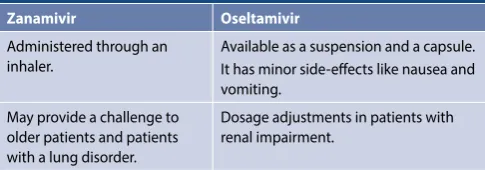
Two classes of antiviral therapy are available in South Africa: neuraminidase inhibitors and N-Methyl D-arspartate receptor antagonists. They play a major role in the treatment and prevention of both seasonal and avian influenza.1,18 Zanamivir and oseltamivir are currently available. These drugs are registered for the prophylaxis of the influenza A and B virus, and should be used within the first 24 hours of the onset of the symptoms. These agents act by inhibiting the enzyme involved in viral replication, neuraminidase. Important information regarding the use of these agents is listed in Figure 3.1,18 Table V denotes the important differences between oseltamivir and zanamivir.
N-methyl D-aspartate receptor antagonists
Amantadine is an antiviral drug that is commonly associated with the treatment of Parkinson’s disease. It is, however, also used in the prevention and treatment of influenza A. Amantadine acts by increasing the amount of dopamine from the nigrostriatal Expectorants
Benylin Wet Cough Menthol® Guaifenesin Cough alleviation
Cough suppressants
Benylin® Dry Cough Dextromethorphan Symptomatic relief of a non-productive cough
Dilinct® Dry Cough
Nitepax® Noscapine
Pholtex® Forte Pholcodine
Pholtex Linctus® Pholcodine 15 mg/10ml Phenyltoloxamine (10 mg/10 ml)
Table V. Important differences between zanamivir and oseltamivir1,18
Zanamivir Oseltamivir
Administered through an inhaler.
Available as a suspension and a capsule. It has minor side-effects like nausea and vomiting.
May provide a challenge to older patients and patients with a lung disorder.
pathway and inhibits the reuptake of dopamine by the neurons. Amantadine is currently not recommended for treatment or use as an antiviral agent as there is widespread resistance to the drug.1,13,18
If the drug is being used for minor sensitive influenza strains the following should be noted:
• Initiation of amantadine should occur within two days after contracting influenza A as it may reduce the duration of the disease.
• It cannot be used against influenza B.
• There is no literature which supports the drug preventing complications of influenza A.
At the end of World War 2, influenza reappeared and prompted the WHO to co-ordinate a global network of research and surveillance from 1949. Subsequent pandemics, e.g. the so-called Asian flu in 1957, Hong Kong flu in 1968, and the 1976 swine flu scare in the USA, illustrated the role of natural reservoirs, e.g. pigs and wildfowl, as being instrumental in the introduction of new strains of influenza. Immunocompromising conditions such as HIV/AIDS and cancer highlighted the influenza pandemic; however, avian influenza and severe acute respiratory syndrome in the 1990s established new behavioural norms with influenza outbreaks:
travel restrictions, mass slaughters of infected livestock, with intensive media interest, and worldwide anxiety. In the early 21st century, influenza remains a substantial cause of mortality.19
Conclusion
The global rise in antimicrobial resistance is a call for absolute restraint in the use of antimicrobials, which includes both patients and healthcare professionals. Antibiotics should never be used to treat the common cold or flu, unless there is a secondary bacterial infection. There is insufficient evidence in the literature to support the use of OTC products for the prevention of these viral infections; however, vitamin C and zinc can be used as prophylaxis. Receiving the influenza vaccine may reduce the risk of acquiring seasonal influenza. Treatment is symptomatic; however, the use of many of the OTC medicines is not supported by literature. Certain herbal remedies such as P. sidoides extract, A. paniculata and elderberry may be effective, although one should always read the safety profile of these remedies before use. Codeine and antihistamines may be used in combination therapies to treat coughs and other cold symptoms. Paracetamol and other NSAIDs may be used to manage pain and fever in adults. Antivirals, such as the neuraminidase inhibitors, can be used in the prevention and treatment of both influenza A and B.
References
1. Schellack N, Labuschagne Q. 2014. Overview and management of colds and flu. South Af-rican Pharmacy Journal, 81(6), pp.19-26.
2. Uptodate.com. 2019. The common cold in children: Clinical features and diagnosis. [online] Available at: https://www.uptodate.com/contents/the-common-cold-in-children-clinical-features-and-diagnosis [Accessed 3 Apr 2019].
3. National Prescribing Centre, 2017. [online] Available at: NHS National Prescribing Centre. Common cold. NHS [homepage on the Internet]. 2006. c2014. Available from: http://www. npc.nhs.uk/merec/infect/commonintro/resources/ merec_bulletin_vol17_no3_common_ cold.pdf [Accessed 3 Apr 2019].
4. Hermsen ED, Rupp ME. Influenza. Pharmacotherapy: a pathophysiologic approach. In: DiP-iro JT, editor. New York: McGraw Hill, 2008; p.1791-1799.
5. Van Schoor J. 2013. Colds, flu and coughing: a review of over-the-counter cold and flu medicines. South African Family Practice, 55(4), pp.334-336.
6. Perrotta D, Bella A, Rizzo C, Paolotti D. 2017. Participatory Online Surveillance as a Sup-plementary Tool to Sentinel Doctors for Influenza-Like Illness Surveillance in Italy. PloS one, 12(1), p.e0169801.
7. Wright CI, 2016. Awareness of ‘Does Finiflu (containing garlic, onion and chili) provide symptomatic relief from cold and flu?’. Current Trends in Nutraceuticals, 1(1), p.6. 8. Guppy MPB, Mickan SM, Del Mar CB. “Drink plenty of fluids”: a systematic review of
evi-dence for this recommendation in acute respiratory infections. BMJ. 2004328(7438):499- 500.
9. Byber K, Flatz A, Norbäck D,. 2016. Humidification of indoor air for preventing or reduc-ing dryness symptoms or upper respiratory infections in educational settreduc-ings and at the workplace. The Cochrane Library.
10. Barham HP, Harvey RJ. 2015. Nasal saline irrigation: therapeutic or homeopathic. Brazilian Journal of Otorhinolaryngology. 81(5), pp.457-458.
11. Mousa HAL. 2017. Prevention and treatment of influenza, influenza-like illness, and com-mon cold by herbal, complementary, and natural therapies. Journal of Evidence-Based Complementary and Alternative Medicine. 22(1), pp.166-174.
12. Vaccines.gov. (2019). Types of Vaccines | Vaccines.gov. [online] Available at: https://www. vaccines.gov/basics/types/index.html [Accessed 3 Apr 2019].
13. Rossiter D, editor. South African Medicines Formulary. 11th ed. Cape Town: Health and Medical Publishing Group; 2014.
14. Simon H, Zieve D. Colds and flu: an in-depth report on the diagnosis, treatment and pre-vention of colds and flu. University of Maryland Medical Centre [homepage on the Inter-net]. 2013. c2014. Available from: http://health/medical/reports/articles/colds-and-the-flu [Accessed 3 Apr 2017].
15. Fda.gov. 2019. Information for healthcare professionals – promethazine (marketed as phenergan and generic products). [online] Available at: https://www.fda.gov/Drugs/ DrugSafety/PostmarketDrugSafetyInformationforPatientsandProviders/ucm126465.htm [Accessed 3 Apr 2019].
16. Schellack G, editor. Pharmacology in clinical practice: application made easy for nurses and allied health professionals. 2nd ed. Claremont: Juta and Company; 2010.
17. Ryan D. 2016. How to identify and manage seasonal allergic rhinitis. Journal of Community Nursing, 30(2).
18. Jefferson T, Jones M, Doshi P, Del Mar C. Neuraminidase inhibitors for preventing and treat-ing influenza in healthy adults: systematic review and meta-analysis. BMJ. 2009;339:b5106. 19. Barnett R. Case histories: Influenza. Lancet 2019; 393: 218. Available at
https://www.thelan-cet.com/action/showPdf?pii=S0140-6736%2819%2930148-5 [Accessed 19 Apr 2019].
They are used to prevent/treat Influenza A and B.
If used within the first four days of the symptoms presenting, they can prevent complications of the virus.
They only reduce flu symptoms by one day and this reduction occurs only if the agent was started within 48 hours of the symptoms presenting.
Their use in avian ('bird') flu has not been fully established. They can reduce the transmission of the virus.
Oseltamivir should be intitated in indviduals who are at a higher risk of contracting influenza and complications of influenza, such as immune-compromised patients.
Oseltamivir has been approved in paediatric patients older than one year.
Reports of fatal neuropsychiatric conditions have been filed.
Figure 3. Important information regarding the use of oseltamivir and