International Journal of Advances in Engineering Research http://www.ijaer.com
(IJAER) 2016, Vol. No. 12, Issue No. IV, October e-ISSN: 2231-5152, p-ISSN: 2454-1796
RESEARCH INSIGHTS IN CLUSTERING FOR SPARSELY
DISTRIBUTED WIRELESS SENSOR NETWORK
*Dr. S. R. BOSELIN PRABHU, **BALAKUMAR N
*Associate Prof., Dept of Electronics and Communication Engineering V. S. B. College of Engineering-Technical Campus, Coimbatore, India **Assistant Prof., Department of Electrical and Electronics Engineering,
Tamilnadu College of Engineering, Coimbatore, India
ABSTRACT
A wireless sensor is a miniature component which measure physical parameters from the environment and transmit them to the monitoring station by wireless medium. In wireless medium, the sensor and its associated components are called as node. A node is self-possessed by a sensor, processor, local memory, transceiver and a low-powered battery. To diminish the data transmission time and energy consumption, the sensor nodes are assembled into a number of little groups referred as clusters and the phenomenon is referred as clustering. Every cluster comprise of a leader which is known as cluster head. The cluster head will be chosen by the sensor nodes in the individual cluster or be pre-assigned by the user. The main advantages of clustering are the transmission of aggregated data to the base station, offers scalability for huge number of nodes and trims down energy consumption. Fundamentally, clustering could be classified into centralized clustering, distributed clustering and hybrid clustering. In centralized clustering, the cluster head is fixed. The rest of the nodes in the cluster act as member nodes. In distributed clustering, the cluster head is not fixed. The cluster head keeps on shifting form node to node within the cluster on the basis of some parameters. Hybrid clustering is the combination of both centralized clustering and distributed clustering mechanisms. This paper gives a detailed description about the research insights in clustering for sparsely distributed wireless sensor network
Keywords—Sensor, sensor nodes, wireless sensor network (WSN), distributed clustering, dense wireless sensor
network.
INTRODUCTION
International Journal of Advances in Engineering Research http://www.ijaer.com
(IJAER) 2016, Vol. No. 12, Issue No. IV, October e-ISSN: 2231-5152, p-ISSN: 2454-1796 human-in-the-loop monitoring schemes are uncertain, inefficient and sometimes impossible. Therefore, wireless sensors are expected to be deployed randomly in the predetermined area of interest by a relatively uncontrolled manner. Given the huge area to be covered, the short lifespan of the battery-operated wireless sensors and the possibility of having damaged sensor nodes during deployment, large population of sensors are expected in the majority of wireless sensor applications [1-7].
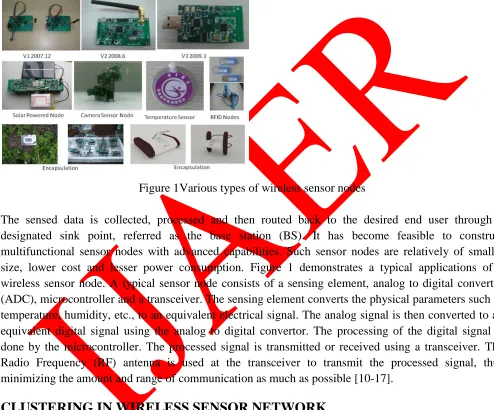
Figure 1 Various types of wireless sensor nodes
The sensed data is collected, processed and then routed back to the desired end user through a designated sink point, referred as the base station (BS). It has become feasible to construct multifunctional sensor nodes with advanced capabilities. Such sensor nodes are relatively of smaller size, lower cost and lesser power consumption. Figure 1 demonstrates a typical applications of a wireless sensor node. A typical sensor node consists of a sensing element, analog to digital convertor (ADC), microcontroller and a transceiver. The sensing element converts the physical parameters such as temperature, humidity, etc., to an equivalent electrical signal. The analog signal is then converted to an equivalent digital signal using the analog to digital convertor. The processing of the digital signal is done by the microcontroller. The processed signal is transmitted or received using a transceiver. The Radio Frequency (RF) antenna is used at the transceiver to transmit the processed signal, thus minimizing the amount and range of communication as much as possible [10-17].
CLUSTERING IN WIRELESS SENSOR NETWORK
International Journal of Advances in Engineering Research http://www.ijaer.com
(IJAER) 2016, Vol. No. 12, Issue No. IV, October e-ISSN: 2231-5152, p-ISSN: 2454-1796 A cluster head may also be just one of the sensor nodes that are rich in resources. The cluster membership might be fixed or variable. Cluster heads form a second tier network or just ship the data to the base station or sink node. In addition to network scalability, clustering has numerous advantages.
Clustering localizes the route setup within the cluster and thus reduces the size of routing table stored at the individual node. Clustering conserves communication bandwidth as it limits the scope of inter-cluster interactions to the inter-cluster heads and evades redundant exchange of messages among the sensor nodes. Moreover, clustering stabilizes the network topology at the level of sensors and thus cuts down the topology maintenance overhead.
Figure 2 Clustering mechanism in Wireless Sensor Network
The cluster head implements optimized management strategies to further enhance the network operation and to prolong the battery life of the individual sensors. A cluster head schedules activities in the cluster so that nodes can switch to the low-power sleep mode most of the time and thus reduce the rate of energy consumption. Furthermore, cluster head aggregates the data collected by the sensors in its respective cluster by the process of data aggregation and thus decreases the number of data packets.
RESEARCH INSIGHTS IN WSN
The major technical issues and challenges for realization of wireless sensor network could be summarized as follows as given by (Ji 1997; Ragaey et al 2001; Mclurkin 1999).
a) Resource constraints
International Journal of Advances in Engineering Research http://www.ijaer.com
(IJAER) 2016, Vol. No. 12, Issue No. IV, October e-ISSN: 2231-5152, p-ISSN: 2454-1796
b) Dynamic topologies
The topology and connectivity of the sensor network might vary due to link failure and sensor node failure. Furthermore, sensors may also be subjected to interference, highly corrosive environments, large humidity levels, vibrations, dust or other situations that confront their performance. These inconsiderate environmental conditions and dynamic network topologies cause a portion of the sensor nodes to get broken down.
c) Quality-of-service (QoS) requirements
A variety of applications visualized on wireless sensor network will have dissimilar quality of service requirements. The quality of service offered by these sensor networks refers to the accuracy between the data reported to the sink node and what is really happening in the sensing atmosphere.
d) Data redundancy
Because of the high solidity in the network topology, sensor interpretations are seriously correlated in space domain. Additionally, the nature of physical happenings constitutes the temporal correlation between the consecutive observations of the sensor node.
e) Packet errors and variable-link capacity
Compared with wired networks, wireless sensor network have the attainable capacity of each wireless links that depends on the interference level perceived at the receiver. Moreover, wireless links display widely changing characteristics over time and space due to noisy environments, thereby making quality of service provisioning to be a demanding task.
f) Security
Security is an essential feature in the design of sensor networks, to make the communication safe from external denial-of-service (DoS) attacks and intrusion. Passive attacks happen by eavesdropping on transmissions including traffic analysis or exposure of the message contents. Active attacks constitute modification, fabrication and interruption which might include node capturing, routing attacks or flooding. In military applications, security plays a vital role during data communication.
g) Large-scale deployment and ad-hoc architecture
Many sensor network have a multitude of sensor nodes (hundreds to thousands or even more), which might be spread arbitrarily over the deployment field. Furthermore, the lack of predetermined network infrastructure demands these networks to setup connections and upholds the network connectivity autonomously.
h) Integration with Internet and other networks
International Journal of Advances in Engineering Research http://www.ijaer.com
(IJAER) 2016, Vol. No. 12, Issue No. IV, October e-ISSN: 2231-5152, p-ISSN: 2454-1796 architecture. The current sensor network platforms use gateways for integration between sensor network and the Internet.
TRENDING APPLICATIONS OF WSN
Although the implementations of wireless sensors are enormous, there are few strange applications of WSNs which could be categorized under: military applications, ecological monitoring, profit-making or human centric applications and in robotics as documented by (Arampatzis et al 2005; Xu et al 2001; Boselin Prabhu et al 2013, 2014, 2015) [21-25].
Figure 3 Application in precision agriculture
1) Military and Surveillance Applications
International Journal of Advances in Engineering Research http://www.ijaer.com
(IJAER) 2016, Vol. No. 12, Issue No. IV, October e-ISSN: 2231-5152, p-ISSN: 2454-1796
Figure 4 Application in military
2) Environmental Monitoring Applications
The ability of a wireless sensor node to sense temperature, light and indoor air pollution could be employed for indoor and outdoor environmental monitoring applications. A chief wastage of energy takes place through needless heating or cooling of buildings. Sensor nodes could be integrated with heaters, fans and other related equipment at an economic way, leading to healthier environment and greater level of comfort for the residents. Other environmental applications are the lessening of fire and earthquake damages. Fire and smoke detections are something widespread today in buildings, and in many countries it is forced by relevant regulations.
Figure 5 Application in environmental monitoring
3) Wildlife Maintenance and their Conservation
International Journal of Advances in Engineering Research http://www.ijaer.com
(IJAER) 2016, Vol. No. 12, Issue No. IV, October e-ISSN: 2231-5152, p-ISSN: 2454-1796
4) Application in Logistics
Management of precious assets like equipment, machinery and diverse stock or products could be predicament. The difficulty is extremely distributed as these companies increase all over the globe. A gifted technique to achieve asset tracking and cope with this crisis is believed to be with the employment of wireless sensor network. The application of wireless sensors in petroleum bunks refer to the storage supervision of barrels. The concept is that, the sensor nodes attached to these barrels will be able to position the nearby objects, detecting their content and alerting in case of impropriety with their own, etc.
Figure 6 Application in logistics
5) Healthcare Applications
Healthcare systems can also profit from the use of wireless sensors. Applications in this group comprise of tele-monitoring human physiological data, monitoring of patients within the hospital, monitoring drug administrator in hospitals, etc. Cognitive disorders possibly leading to Alzheimer‟s could be monitored and controlled at their premature stages with these wireless sensors. The nodes can be used to outline the recent actions, and thus remind the senior citizens, point out the person‟s real actions or detect a growing problem. A comparable approach employs Radio Frequency Identification (RFID) tags to examine the patient behaviour and customs by recording the frequency with which they touch particular objects. These applications include a display which will assist the care-giver with the exact information about the indisposed person unnoticeably and without hurting their mental feelings. Sensor nodes can also be used in order to study the behaviour of young children.
6) Robotic Applications
International Journal of Advances in Engineering Research http://www.ijaer.com
(IJAER) 2016, Vol. No. 12, Issue No. IV, October e-ISSN: 2231-5152, p-ISSN: 2454-1796 of detached groups of sensor clusters. In all these cases, robots are the essential part of the sensor network. In the choice between robotics and medical applications is the virtual keyboard, which is an arrangement of wearable motes capable of sensing the acceleration. Motes are attached with a glove for every finger and at the wrist which is capable of recognition. Applications could be a wireless wearable keyboard or a pointing device, hand motion and gesture recognition for the disabled.
7) Landslide Detection Applications
Landslide detection employs wireless sensors for forecasting the occurrences of landslides. One sole trait of these systems is that it combines numerous distributed techniques to contract with the complexities of a distributed sensor network environment where connectivity is deprived and power budgets are unnatural, while fulfilling the real-world safety requirements. These sensors prepare point measurements at different parts of the rock but formulate no effort in measuring the relative motion between the rocks. The approach is based on the uncomplicated observation that rock-slides takes place because of bigger strain in the rocks. Thus, by measuring the source of the landslide, the landslides could be foreseen as easily as if one would be measuring the budding relative movement of rocks.
8) Forest fire Detection Applications
Forest fires are wild fires happening in wild areas and become a reason for major damage to natural and human resources. Forest fires burns the infrastructure and might result in severe human death toll closer to urban areas. The universal causes of forest fires include lightning, human carelessness and disclosure of fuel to tremendous heat. It is known that in few of the cases, forest fires are part of the forest ecosystem and they are momentous to the life cycle of indigenous habitats. However, in many cases the losses caused by these fires to public safety and natural resources is intolerable, thereby untimely detection and suppression of fires deem crucial..
9) Wireless Sensor-Cloud Applications
Sensor-Clouds could be used for health monitoring applications by means of merely available sensors like accelerometer sensor, proximity sensor, temperature sensor and so forth to gather patient‟s health-related data for tracking the sleep activity pattern, body temperature and other respiratory conditions. These wearable sensor devices have the support of wireless interface for streaming the data and are linked wirelessly to any smart phone through this interface.
CONCLUSION
International Journal of Advances in Engineering Research http://www.ijaer.com
(IJAER) 2016, Vol. No. 12, Issue No. IV, October e-ISSN: 2231-5152, p-ISSN: 2454-1796 down energy consumption.. This paper gives a detailed description about the correlative issues in clustering for sparsely distributed wireless sensor network
REFERENCES
[1] Lianshan Yan., Wei Pan., Bin Luo., Xiaoyin Li. and Jiangtao Liu., “Modified Energy-Efficient Protocol for Wireless Sensor Networks in the Presence of Distributed Optical Fiber Sensor Link,” IEEE Sensors Journal, Vol. 11, 2011, pp. 1815-1819.
[2] Hamid Ali Abed Al-Asadi, “Temperature dependence of the lasing characteristics of vertical cavity surface emitting lasers," Engineering Journal of Technology University, Vol. 145, 1994.
[3] Boselin Prabhu S.R. and Sophia S., “Environmental monitoring and greenhouse control by distributed sensor Network”, International Journal of Advanced Networking and Applications, 5(5), 2014.
[4] Boselin Prabhu S.R. and Sophia S., “Greenhouse control using wireless sensor network”, Scholars Journal of Engineering and Technology, 2(4), 2014.
[5] Hamid Ali Abed Al-Asadi, “Temperature dependence of the noise characteristics of Multiisection semiconductor lasers," Science Journal, vol. 7, No. 3, 2001.
[6] Hamid Ali Abed Al-Asadi, “Linewidth characteristics of vertical cavity surface emitting lasers due to external optical feedback," Science Journal, vol. 8, 2001.
[7] Boselin Prabhu S.R. and Sophia S., „Modern cluster integration of advanced weapon system and wireless sensor based combat system‟, Scholars Journal of Engineering and Technology, 2(6A), 2014.
[8] Boselin Prabhu S.R. and Sophia S., „A review of efficient information delivery and clustering for drip irrigation management using WSN‟, International Journal of Computer Science and Business Informatics, 14(3), 2014.
[9] Hamid Ali Abed Al-Asadi, “Linewidth characteristics of vertical cavity surface emitting lasers due to external optical feedback," Science Journal, vol. 8, 2002.
International Journal of Advances in Engineering Research http://www.ijaer.com
(IJAER) 2016, Vol. No. 12, Issue No. IV, October e-ISSN: 2231-5152, p-ISSN: 2454-1796 [11] Boselin Prabhu S.R. and Sophia S., „Mobility assisted dynamic routing for mobile wireless sensor networks‟, International Journal of Advanced Information Technology, 3(3), 2013.
[12] Boselin Prabhu S.R. and Sophia S., „A review of energy efficient clustering algorithm for connecting wireless sensor network fields‟, International Journal of Engineering Research and Technology, 2(4), 2013.
[13] Hamid Ali Abed Al-Asadi, “Vertical cavity amplifiers and its cavity length dependence the saturation power and quantum efficiency," Tikrit Journal of Pure Science, vol. 9, No. 2, 2003.
[14] Hamid Ali Abed Al-Asadi, “Effects of pump recycling technique on stimulated Brillouin scattering threshold: A theoretical model,” Optics. Express, Vol. 18, No. 21, pp. 22339-22347 Impact factor: 3.88, 2010.
[15] Boselin Prabhu S.R. and Sophia S., „Variable power energy efficient clustering for wireless sensor networks‟, Australian Journal of Basic and Applied Sciences, 7(7), 2013.
[16] Boselin Prabhu S.R. and Sophia S., „Capacity based clustering model for dense wireless sensor networks‟, International Journal of Computer Science and Business Informatics, 5(1), 2013.
[17] Hamid Ali Abed Al-Asadi, “Brillouin Linewidth Characterization in Single Mode Large Effective Area Fiber through the Co-Pumped Technique,” International Journal of Electronics, Computer and Communications Technologies (IJECCT), Vol. 1(1), pp. 16-20, 2010.
[18] Boselin Prabhu S.R. and Sophia S., „An integrated distributed clustering algorithm for dense WSNs‟, International Journal of Computer Science and Business Informatics, 8(1), 2013.
[19] Boselin Prabhu S.R. and Sophia S., „A research on decentralized clustering algorithms for dense wireless sensor networks‟, International Journal of Computer Applications, 57(20), 2012.
[20] Hamid Ali Abed Al-Asadi, “Analytical study of nonlinear phase shift through stimulated Brillouin scattering in single mode fibre with pump power recycling technique,”, Volume 13 Number 10, Journal of Optics. Impact factor: 1.99, 2011.
International Journal of Advances in Engineering Research http://www.ijaer.com
(IJAER) 2016, Vol. No. 12, Issue No. IV, October e-ISSN: 2231-5152, p-ISSN: 2454-1796 [22] Boselin Prabhu S.R. and Sophia S., „Hierarchical distributed clustering algorithm for energy efficient wireless sensor networks‟, International Journal of Research in Information Technology, 1(12), 2013.
[23] Boselin Prabhu S.R. and Sophia S., „Real-world applications of distributed clustering mechanism in dense wireless sensor networks‟, International Journal of Computing Communications and Networking, 2(4), 2013.
[24] Younis, O. and Fahmy, S., “HEED: A Hybrid Energy-Efficient Distributed Clustering Approach for Ad Hoc Sensor Networks,” IEEE Transactions on Mobile Computing, 2004.
International Journal of Advances in Engineering Research http://www.ijaer.com
(IJAER) 2016, Vol. No. 12, Issue No. IV, October e-ISSN: 2231-5152, p-ISSN: 2454-1796
AUTHOR BIOGRAPHIES
Dr. Boselin Prabhu.S.R obtained his bachelor‟s degree (B.E) in electronics and communication engineering, master‟s degree (M.E) in network engineering and doctorate (Ph.D) in wireless sensor networks with the department of information and communication engineering. He is currently working as an Assistant Professor with 7 years of experience in teaching and research. His research areas of interest include Wireless Sensor Networks, Mobile Networks and Ad-Hoc Networks. He has published 63 papers in International Journals and Conference Proceedings. He is currently a lifetime member of 52 International Societies. He is an editorial board member, advisory board member and reviewer of 432 International Journals both Scopus and ISI Indexed. He is the Chief Editor of International Journal of Advanced Engineering and Technology (IJAET). He is an elected fellow member FUAMAE, FISECE, FUAAMP, FISQEM and FUACEE. He has reviewed more than 75 research articles for leading International Journals. He has attained Google scholar citations-79 and h-index-05. He is a biographical world record holder of Marquis Who‟s Who in the World (32nd
and 33rd Edition) for his outstanding contribution towards research community. He has written one book (electronic circuits-II) for engineering students. He is an Excellent Professional Achievement Award Winner from Society of Professional Engineers in 2016.