Vol. 2, No. 1, 2014, 1-9 ISSN: 2321 – 9238 (online) Published on 22 April 2014
www.researchmathsci.org
Progress in
Efficient Human Skin Detection Using 2D Histogram and
Gaussian Approach
K. Edison Prabhu1 and A. Arul Kumar2 Department of Electrical and Electronics Engineering
Nehru institute of Engineering and Technology Coimbatore, India
E-mail: [email protected], [email protected]
Received 18 February 2014; accepted 8 March 2014
Abstract. The efficient human skin detection method is more suitable for many human skin colors with different illumination conditions which is used to skin segmentation. There are many human skin –color detection methods were available but they were not performing efficient with different ethnic. These are algorithm is based on skin colour detection. One of the problems this and similar algorithms have to deal with is sensitivity to the illumination conditions under which the input image is captured. Hence illumination sensitivity influences face detection results. In this paper, we propose a human skin detection approach that combines a smoothed 2-D histogram and Gaussian model, for automatic human skin detection in color image(s). The proposed approach reduces computational costs and it improves the accuracy of skin detection despite wide variation in ethnicity and illumination.
Keywords: 2D Histogram, Gaussian model, skin detection 1. Introduction
K. Edison Prabhu and A. Arul Kumar
luminance invariant color space [1,3]; however, such an approach can withstand only changes that skin-color distribution undergo within a narrow set of conditions and also degrades the per-formance [9]. 3) Require large training sample: In order to define threshold value(s) for detecting human skin, most of the state-of-the-art work requires a training stage. One must under-stand that there are tradeoffs between the size of the training set and classifier performance. First of all, we employ an online dynamic approach as in [7] to calculate the skin threshold value(s). Therefore, our proposed method does not require any training stage beforehand. Second, a 2-D histogram with smoothed densities and a Gaussian model are used to model the skin and nonskin distributions, respectively. Finally, a fusion strategy framework using the product of two features is employed to perform automatic skin detection. To the best of our knowledge, this is the first attempt that employs a fusion strategy to detect skin in color image(s). The image pixels representation in a suitable color space is the primary step in skin segmentation in color images. A better survey of different color spaces (e.g., RGB, YCbCr, HSV, CIE Lab, CIE Luv, and normalized RGB) for skin-color representation and skin-pixel segmentation methods is given by Sobottka et al. [8].
2. Related Work
Skin detection is the process of finding skin-color pixels and regions in an image or video. In images and videos, skin color is an indication of the existence of humans in media. In one of the early applications, detecting skin-color regions was used to identify nude pictures on the Internet for content filtering.
A skin classifier defines a decision boundary of the skin-color class in the color space based on a training database of skin-color pixels. For example, the fixed range values on the HS color space where the pixel values belong to skin pixels in the range of RH=[0,50]
and RS=[0.23,0.68] threshold values in RG space and HSV space where threshold values
are set to be within the range Rr = [0.36,0.465], Rg= [0.28,0.363], RH=[0,50],
RS=[0.20,0.68] and RV=[0.35,1.0]to differentiate skin and non skin pixels. In these
this is the first attempt that employs a fusion strategy to detect skin in color image(s).
3. Our Method
Fig. 1 shows the proposed framework for automatic skin detection. First, an approach is adopted to obtain the face(s) in a given image. Second, a dynamic method is employed to calculate the skin threshold value(s) on the detected face(s) region. Third, two features— the 2-D histogram with smoothed densities and Gaussian model—are introduced to represent the skin and non skin distributions, respectively. In this paper, the RGB color space is converted to the LO space [4] to mimic visual human perception [8].
Figure 1: Data flow diagram • The input image of size 250x 250
• The input image is resized the size of 125x 125
• The RGB image is converted to gray scale image in order to reduce the noise • The skin region is detected from the Gaussian model
3.1. Preprocessing
In the preprocessing steps, for any given image(s), St where t is the number of images, t €
{1, 2 ….T} we first locate human eyes. Then, an elliptical mask model as illustrated in Fig. 3 is used to generate the elliptical face region. in the image(s). Here,(x0,y0) is the
center of the ellipse as well as the eyes symmetry point. Minor and major axes of the ellipse are represented by1.6D and 1.8D, respectively, where D is the distance between two eyes. Then, the detected edge pixels are further dilated using a dilation operation to get the optimal nonsmooth regions. Finally, we obtain a new image(s),S’t that only
consist(s) of face regions.
3.2. Color Space
An image can be represented in a number of different color space models (ie. RGB,HSV[1],YCrCt). These are some color space models available in image processing.
K. Edison Prabhu and A. Arul Kumar
LO Space: The theory of opponent colors was first studied by C. S. Chan, [4] in 1892. He observed that certain colors are never perceived together in the human visual system. For instance, we never see yellowish-blue or reddish-green. Based on this theory, the LO is a representation of color information by applying logarithms to the opponency model so that it is simple to model illumination changes. As illumination changes, log component chromaticity distributions undergo a simple translation. These distributions are coded by using means and first -moments found using principle component analysis [6].
Figure 2: Elliptical mask model generated using eye coordinates
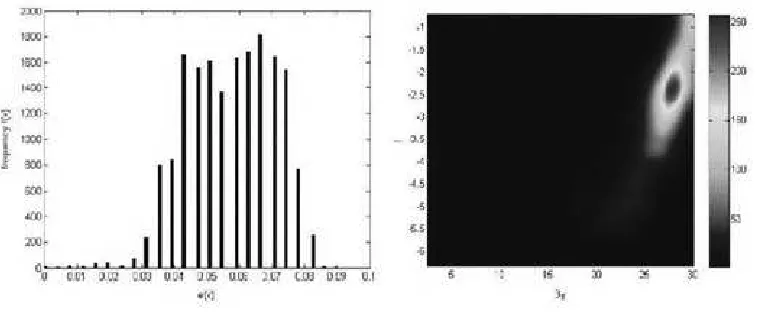
Figure 3: (a) and (b) Histograms of 1-D and 2-D: (a) As only one channel with frequency at yaxis and
(b) Two different channels of the same color space on xaxis and y axis.
3.3. Skin Detection
1) Dynamic Threshold with Smoothed 2-D Histogram: Human skin color varies greatly between different ethnicity [1]. Nonetheless, skin appearance in color image(s) can also be affected by illumination, background image, camera characteristic, etc. In our approach, we employ an online dynamic approach as to [9] to calculate the skin threshold value(s) on the face images, St . The assumption is that the face and body of
densities [3]. In this paper, the feature vector for the smoothed 2 represented by the combination of I and B
segmentation, Dhist, at pixel n is given as
2) Gaussian Model: The Gaussian model is a sophisticated model that is capable of describing complex-shaped distributions and is popular for modeling skin distributions. The threshold skin
through elliptical Gaussian joint probability distribution functions defined as
where H is the color vector of
diagonal covariance matrix, respectively. the constraint ∑ πi
be obtained by using Fig
between x axis and the line D. Let (I on the red dot along line
where dx and dy are the distance between (I
respectively. µx and µyare the coordinate of µ at x axis and y axis respectively. Distance
between the boundary and centre of the Gaussian model at x axis and y axis, D Dy axis at given angle,
where ∑x and ∑y are the variance of x axis and y axis for gaussian model. Distance D is
represented as
Therefore, gmm is given as
Dgmm(St,µ,∑) =
The combined matching results using the fusion rules can be obtained as follows:
where Ґ is the selected rule
issue tractable, the individual features are assumed to be independent of each other. ]. In this paper, the feature vector for the smoothed 2-D histogram, Z is represented by the combination of I and By. The smoothed 2-D histogram
, at pixel n is given as
Dhist(St,Z) = 1 , yn 200 , 20
In, Byn,∈ St
The Gaussian model is a sophisticated model that is capable of shaped distributions and is popular for modeling skin The threshold skin-color distribution in the 2-D histogram is modeled through elliptical Gaussian joint probability distribution functions defined as
!(H| λ) = ∑ w ig (c|µi, ∑i)
is the color vector of (I,By),λ ={wiµi, ∑i }µi is the mean vector, and
diagonal covariance matrix, respectively. wi refers to the mixing weights, which satisfy
1. The result of Gaussian model-based skin detection, D be obtained by using Fig 3(b). µ is the center of the Gaussian model, while
x axis and the line D. Let (Ii ,Byi) be the coordinate of pixel n and is positioned
on the red dot along lineD. Distance of (In ,Byn), d and angle are calculated as follows:
d = #$%&' $&
tan* +,+-
here dx and dy are the distance between (In,Byn) and centre, µ at x axis and y axis
are the coordinate of µ at x axis and y axis respectively. Distance ween the boundary and centre of the Gaussian model at x axis and y axis, D
are as follows:
Dx = ∑ cos - )
Dy = ∑ sin , )
are the variance of x axis and y axis for gaussian model. Distance D is
#&' %&
is given as
∑) = 11 , $
0.
The combined matching results using the fusion rules can be obtained as follows:
D(St) = Ґ345676, |9::76, ;, ∑<
selected rule, which represents the product. In order to make the fusion issue tractable, the individual features are assumed to be independent of each other.
D histogram, Z is stogram-based skin
(1)
The Gaussian model is a sophisticated model that is capable of shaped distributions and is popular for modeling skin-color D histogram is modeled through elliptical Gaussian joint probability distribution functions defined as
(2)
is the mean vector, and ∑i is the refers to the mixing weights, which satisfy based skin detection, Dgmm, can
µ is the center of the Gaussian model, while is the angle and is positioned are calculated as follows:
(3)
(4) , µ at x axis and y axis are the coordinate of µ at x axis and y axis respectively. Distance ween the boundary and centre of the Gaussian model at x axis and y axis, Dx axis and
(5)
(6)
are the variance of x axis and y axis for gaussian model. Distance D is
(7)
(8)
The combined matching results using the fusion rules can be obtained as follows:
< (9)
4.3. Fusion Strategy
In order to increase the effectiveness and robustness of the skin detection algorithm, a fusion strategy is proposed by inte
combined single representation. Both models will vote for classification of skin an nonskin pixels. This can be done by using product rule to both models. matching results produced by the smoothed 2
platforms. These are chosen from the community (top
different skin colors, illuminations, image quality, and difficulty levels
4. Experiments
In this section, the performance of the proposed approach under different conditions, such as fusion strategy, color spaces, and a comparison with the state
terms of qualitative and quantitative performance. We only perform quantit on the dataset [4] as ground truth videos are only available for this dataset.
Experiments are conducted using three public databases. Pratheepan’s dat [9]. It consists of a set of images downloaded randomly from Google. These random images are captured with a range of different cameras using different color enhancements and under different illuminations.
4.1. Results and Analysis
The detection results for each dataset are to be added, respectively. When there is no face detected on our proposed method does not require any training stage beforehand. Second, a 2-D histogram with smoothed densities and a Gaussian model are used to mod skin and nonskin distributions, respectively. Finally, a fusion strategy framework using the product of two features is employed to perform automatic skin detection. To the best of our knowledge, this is the first attempt that employs a fusion strat
color image(s). The image pixels representation in a suitable color space is the primary step in skin segmentation in color images. A better survey of different color spaces (e.g., RGB, YCbCr, HSV, CIE Lab, CIE Luv, and normalized RGB
representation and skin-pixel segmentation methods is given by Kakumanu
Finally, the proposed approach does not require any training stage and, hence, is more effective in terms of computational cost as opposed to approaches. In our experiments, we noticed that the final result of our work depends greatly on the outcome of the preprocessing phase
returned. The result of skin segmentation for false face region detecte
region is obtained, false dynamic thresholds will be generated. Therefore, false classifications will be processed, where non skin regions are classified as skin regions. we will investigate the face detector algorithm to overcome this
work we have made a humble attempt to propose an algorithm for human skin detection in colour images in the presence of varying lighting conditions, for varied skin colours as well as with complex backgrounds. Based on a novel t
modus operandi and detection, our method detects skin regions over the entire image and engenders human skin detection based on the signatures of the detected skin patches. The algorithm constructs the boundary for each sk
Experimental results demonstrate successful skin detection over a wide range of facial variations in colour, position, scale, varying lighting conditions, orientation, 3D pose, and
K. Edison Prabhu and A. Arul Kumar
In order to increase the effectiveness and robustness of the skin detection algorithm, a fusion strategy is proposed by inte-grating the two incoming single features into a combined single representation. Both models will vote for classification of skin an nonskin pixels. This can be done by using product rule to both models. matching results produced by the smoothed 2-D histogram of popular public video clips from web platforms. These are chosen from the community (top-rated) and cover a large variety of different skin colors, illuminations, image quality, and difficulty levels.
In this section, the performance of the proposed approach under different conditions, such as fusion strategy, color spaces, and a comparison with the state-of-the
terms of qualitative and quantitative performance. We only perform quantit ] as ground truth videos are only available for this dataset.
Experiments are conducted using three public databases. Pratheepan’s dat sists of a set of images downloaded randomly from Google. These random images are captured with a range of different cameras using different color enhancements and under different illuminations.
Results and Analysis
The detection results for each dataset are to be added, respectively. When there is no face detected on our proposed method does not require any training stage beforehand. Second,
D histogram with smoothed densities and a Gaussian model are used to mod skin and nonskin distributions, respectively. Finally, a fusion strategy framework using the product of two features is employed to perform automatic skin detection. To the best of our knowledge, this is the first attempt that employs a fusion strategy to detect skin in color image(s). The image pixels representation in a suitable color space is the primary step in skin segmentation in color images. A better survey of different color spaces (e.g., RGB, YCbCr, HSV, CIE Lab, CIE Luv, and normalized RGB) for skin
pixel segmentation methods is given by Kakumanu
Finally, the proposed approach does not require any training stage and, hence, is more effective in terms of computational cost as opposed to approaches. In our experiments, we noticed that the final result of our work depends greatly on the outcome of the preprocessing phase. If the algorithm detects a false face region, poor result will be returned. The result of skin segmentation for false face region detected. When a false face region is obtained, false dynamic thresholds will be generated. Therefore, false classifications will be processed, where non skin regions are classified as skin regions. we will investigate the face detector algorithm to overcome this problem.
work we have made a humble attempt to propose an algorithm for human skin detection in colour images in the presence of varying lighting conditions, for varied skin colours as well as with complex backgrounds. Based on a novel tangible skin component extraction modus operandi and detection, our method detects skin regions over the entire image and engenders human skin detection based on the signatures of the detected skin patches. The algorithm constructs the boundary for each skin detection using Gaussian model. Experimental results demonstrate successful skin detection over a wide range of facial variations in colour, position, scale, varying lighting conditions, orientation, 3D pose, and In order to increase the effectiveness and robustness of the skin detection algorithm, a grating the two incoming single features into a combined single representation. Both models will vote for classification of skin and nonskin pixels. This can be done by using product rule to both models. matching results D histogram of popular public video clips from web rated) and cover a large variety of
In this section, the performance of the proposed approach under different conditions, such the-art methods in terms of qualitative and quantitative performance. We only perform quantitative analysis
] as ground truth videos are only available for this dataset.
Experiments are conducted using three public databases. Pratheepan’s dataset sists of a set of images downloaded randomly from Google. These random images are captured with a range of different cameras using different color enhancements
The detection results for each dataset are to be added, respectively. When there is no face detected on our proposed method does not require any training stage beforehand. Second, D histogram with smoothed densities and a Gaussian model are used to model the skin and nonskin distributions, respectively. Finally, a fusion strategy framework using the product of two features is employed to perform automatic skin detection. To the best egy to detect skin in color image(s). The image pixels representation in a suitable color space is the primary step in skin segmentation in color images. A better survey of different color spaces (e.g., ) for skin-color pixel segmentation methods is given by Kakumanue. [8].
expression in images from the database.
detection algorithm which detects only the true skin regions in the image. The complexity involved in computation is relatively more proficient when compared to that of the prior developed methodologies because of t
is excluded from the computation
wide range of facial variations in an image. faces of any size, faces with gl
Figure 4: (a) Input i
Colour space
IBy HS HV SV YCb
YCr CbCr
Table 1: multiple features (the fusion of
4.2. Comparison between
In this section, we analyze seven different combinations of feature vectors: The results for each feature vector are presented true positive rate and
negative rate than HS. Also, it has been proven that the human visual system uses an opponent color coding.
expression in images from the database. The modified image is subjected to skin detection algorithm which detects only the true skin regions in the image. The complexity involved in computation is relatively more proficient when compared to that of the prior developed methodologies because of the fact that the luminance information is excluded from the computation our algorithm can detect multiple human skin
wide range of facial variations in an image. It works works efficiently for occluded faces, faces of any size, faces with glasses, intensity variations etc.
(a) (b) (c)
(a) Input image, (b) existing method, (c) our proposed method
Accuracy F-score True Positive
Rate
Fa Neg R
0.9039 0.6490 0.6580 0.3
0.9057 0.6512 0.6521 0.3
0.7977 0.4549 0.6521 0.3
0.8898 0.6285 0.6905 0.3
0.8936 0.6143 0.6277 0.3
0.8985 0.6392 0.6656 0.3
0.9151 0.6241 0.5223 0.4
ltiple features (the fusion of 2D histogram and GMM).
between Different Color Spaces
In this section, we analyze seven different combinations of feature vectors: The results for each feature vector are presented true positive rate and
negative rate than HS. Also, it has been proven that the human visual system uses an The modified image is subjected to skin detection algorithm which detects only the true skin regions in the image. The complexity involved in computation is relatively more proficient when compared to that he fact that the luminance information orithm can detect multiple human skin with a It works works efficiently for occluded faces,
(c) our proposed method
alse gative Rate
3420 3479 3479 3995 3723 3344 4777
and GMM).
In this section, we analyze seven different combinations of feature vectors:
K. Edison Prabhu and A. Arul Kumar
4.3. Fusion Strategy Results
In this section, we show the comparison result of using single feature—smoothed 2-D histograms (s2D) or Gaussian mixture models (GMM) only, and multiple features (the fusion of s2D and GMM). The results are illustrated in Fig.4 and Table I. Fusion Approach has the highest accuracy and F-score. More-over, it can also be visualized that the fusion strategy has lower false positive rate compared to the single feature approach. For instance, the smoothed 2-D histogram is able to detect most of the skin regions, but it is highly occluded with noise.
5. Conclusion
In this paper, the efficient skin detection based on smoothed 2-D histogram and Gaussian model has been proposed to automatic detect human skin in image(s). As exhibited in experiments, the proposed method outperforms state-of-the-art methods in terms of accuracy in different conditions: background model, illumination, and ethnicity. With this, it shows the potential to be ap-plied to a range of applications such as gesture analysis. One drawback of the proposed approach is that its success relies on eye detector algorithms. However, this is the general problem faced by all other researchers who work in this domain. Our future work is focused on building a better preprocessing method, to use field-programmable gate arrays to implement a hardware scheme.
REFERENCES
1. Y. Bae, S. Kim, B. Wang, M. H. Lee and F. Harashima, Flame detection for the steam boiler using neural networks and image information in the ulsan steam power generation plant, IEEE Trans. Ind. Electron., 53(1) (2005) 338–348.
2. D. Brown, I. Craw and J. Lewthwaite, A SOM based approach to skin detection with application in real time systems, in Proc. Brit. Mach. Vis. Conf., 2001, pp. 491–500.
3. C. S. Chan, H. Liu and D. J. Brown, Recognition of human motion from qualitative normalised templates, J. Intell. Robot. Syst., 48(1) (2007) 79–95.
4. C. S. Chan, H. Liu and D. J. Brown, Human arm-motion classification using qualitative normalized templates, Lecture Notes Artif. In-tell., 4251, Part I (2006) 639–646.
5. N. Kubota and K. Nishida, Perceptual control based on prediction for natural communication of a partner robot, IEEE Trans. Ind. Electron., 54 (2) (2007) 866– 877.
6. O.Linda and M. Manic, Fuzzy force-feedback augmentation for manual control of multi-robot system, IEEE Trans. Ind. Electron, 58(8) (2010) 3213–3220.
7. G. Pratl, D. Dietrich, G. P. Hancke and W. T. Penzhorn, A new model for autonomous, networked control systems, IEEE Trans. Ind. Informat., 3(1) (2007) 21–32.
8. K. Sobottka and I. Pitas, A novel method for automatic face segmentation, facial feature extraction and tracking, Signal Process. Image Commun, 12(3) (1998) 263– 281.
1385–1393.