294
Volume-4, Issue-1, February-2014,
ISSN No.: 2250-0758
International Journal of Engineering and Management Research
Available at:
Page Number: 294-299
Toxicity of Sodium Arsenite on Haematological Parameters, Liver and
Kidney of Male Albino Rats
KshamaDwivedi
Department of Zoology, Bareilly College, Bareilly, INDIA
ABSTRACT
Groundwater contamination of arsenic is one of the major causes of serious health hazards in many countries and has taken the dimension of an epidemiological problem. The present investigation was therefore undertaken to study the effect of sodium arseniteon haematological parameters liver and kidney marker enzymes of male albino ratsfor 30, and 60 days.
Animals exposed for two different doses (low and high) of sodium arsenite showed significant decrease of TEC, TLC, Hb and PCV (P<0.05) and increase of MCV and ESR (P<0.05) in 30 days exposed animals. Albino rats exposed for 60 days showed significant fall(P<0.05) in all these parameters except ESR. The present study also shows that there was significant increase (P<0.05) in serum creatinine, urea, alkaline phosphatase (ALP), aspartate aminotransferase (AST) and alanine aminotransferase (ALT) values in animals exposed to sodium arsenite for 30 and 60 days in different doses compared to control.
Keywords--- Sodium arsenite, haematological
parameters, liver, kidney and enzymes.
I.
INTRODUCTION
Among several heavy metals that are present in the environment naturally, arsenic is recognized as one of the most dangerous element. Millions of people around the globe are chronically exposed to arsenic through drinking water. The anthropogenic contribution to the environmental arsenic originates mostly from mixing, smelting (Welch et al., 1982) and in the refining of certain ores and also from burning of coal. In most population worldwide, the principal source of non-occupational arsenic intake (at 25 to 50µg/d) is food with drinking water while air mostly minor source (Boppalet al., 1995).
Being carcinogenic for skin, bladder, liver and kidney (WHO 1971), arsenic is placed among top hazardous substances by ATSDR and UPEPA (ATSDR, 1999). It also causes reproductional dysfunction and can damage the respiratory, gastrointestinal, cardiovascular and haemopoietic system (WHO, 1971, Engel and Smith, 1994; Chen et al., 1995) and skin (Burnstam and Nriagu, 2000).Many epidemiological studies have revealed that people are more likely to have vascular diseases when living for many years in areas where well
water is contaminated with inorganic arsenic (arsenite and arsenate) (Engel and Smith, 1994; Chiouet al., 1997).
Arsenic is known to be a potent sulfhydryl-reactive chemical capable of binding and cross-linking cellular proteins (Akhandet al., 2004) thereby altering multiple cellular pathways including expression of growth factors, suppression of cell cycle checkpoint proteins, promotion of apoptosis, inhibition of DNA repair, decreasing immune surveillance, and increasing oxidative stress. These alterations in cellular pathways play key roles in various diseases in humans such as carcinogenicity, genotoxicity, diabetes, hypertension, weight loss and cardiovascular and neurological disorders. In addition, there has been increasing evidence of correlation between arsenic exposure and the generation of reactive oxygen species (ROS) leading to tumour promotion (Shi et al., 2004). Moreover, overproduction or an ineffective elimination of ROS may induce oxidative stress and cause damage or malfunctioning of various organs including liver, lungs, kidney and spleen.
In the view of above, present investigation was undertaken to elucidate the impact of subchronic arsenic exposure on haematological parameters, liver and kidney marker enzymes of male albino rats for different duration and doses.
II.
MATERIALS AND METHODS
Experimental animals
Albino rats of 6 to 10 weeks old weighing approx. 150- 160 grams were purchased from the Laboratory Animal Resource Section, Indian Vertinary Research Institute (IVRI) Izatnagar Bareilly, U. P. and maintained in experimental animal shed of the division. Animals were kept for a week to be conditioned to the new environment prior to the start of experiments. Animals were kept under conventional condition (6 rats per steel cage, 12 hr. light to dark cycle). The animals were made available to standard rat food and tap water ad libitum. All the chemicals used were from Sigma Chemicals Co., Merk and Qualigens.
295
The experimental albino rats were divided intothree groups A, B and C each comprising of 6 animals. Group A (control) received plain tap water while group B with low dose of sodium arsenite (4.3 mg/kg.b.wt.) and group C with high dose of sodium arsenite (8.6 mg/ kg.b.wt.). Albino rats were exposed to two test doses of sodium arsenite (NaOAs2
Blood was collected on the 30
) for varying exposure periods of 30 and 60 days. The compound was given in tap water per os by gavage. Mortality rate, food consumption, clinical signs and symptoms were recorded daily. Bodyweight gain was calculated weekly.
th
and 60th
The results of the effect of sodium arsenite on haematological parameters in albino rats exposed for 30 and 60 days are given in table 1 and3 while the percentage changes in table 2 and 4. The results of effect of sodium arsenite on liver and kidney marker enzymes of male albino rats are given in table 5 and 6 for 30 and 60 days respectively.
Table 1: Haematological profile in albino rats after oral administration (gavage) of Arsenic for 30 days. day
from retro-orbital plexus with the help of capillary tube as described by Sorg and Buckner (1964). Blood was collected in two aliquots. In one aliquot, EDTA (1mg/ml) was added as anticoagulant for the estimation of haematological parameters. The samples were stored in air tight vials at –20°C till used. In the other vial, blood was collected without any anticoagulant for harvesting serum whereby, blood was kept in a slanting position undisturbed for clotting. The serum separated slowly. Before pouring out the fluid in the centrifuge tube, the clot was rotated once with a clean dry glass rod without rounded end. This helped in getting maximum
fluid. A drop of 0.001% thiomerosal was added to the serum as a preservative and samples were stored at – 20°C till further analysis. Haematological study was carried out as per methods described by Jain (1986). All the biochemical estimation was performed by the methods given by Oser, 1965.
Statistical analysis
All data are presented as the mean ±standard error of mean(SEM). The results were analysed for statistical significance by one-way analysis of variance (ANOVA) followed by Dunnett’spost hoc test of significance. P values less than 0.05(p≤0.05) were considered as statistically significant.
III.
OBSERVATIONS
Group
TEC (Millions/
Cumm)
TLC (Thousands /Cumm)
Hb (g/dl)
PCV (%)
MCV (fL)
ESR Mm3/L)
Group-A:
Control 7.32±0.88 7.33±0.33 13.50±0.39 48.21±2.07 65.86±12.44 1.25±0.25
Group-B:
As (L) 6.80±0.44 7.49±0.40 11.28±0.20 46.80±1.52 68.82±3.62 1.00±1.00
Group-C:
As (H) 6.70±0.51 6.75±0.68 11.12±0.28 41.27±2.61 61.60±8.21 1.20±0.44
As (L) = Sodium Arsenite Low Dose As (H) = Sodium Arsenite High Dose
All the values are mean±SE; n=6
Table 2: Percentage change of haematological profile in albino rats after oral administration (gavage) of Arsenic for 30 days.
Group
TEC (Millions/
Cumm)
TLC (Thousands
/Cumm)
Hb (g/dl)
PCV (%)
MCV (fL)
ESR Mm3/L)
Group-B:
As (L) 7.10 +2.20 -16.44 -2.90 4.49 -25
Group-C:
As (H) -8.47 -7.91 -17.62 -14.54 -6.47 -4
As (L) = Sodium Arsenite Low Dose As (H) = Sodium Arsenite High Dose
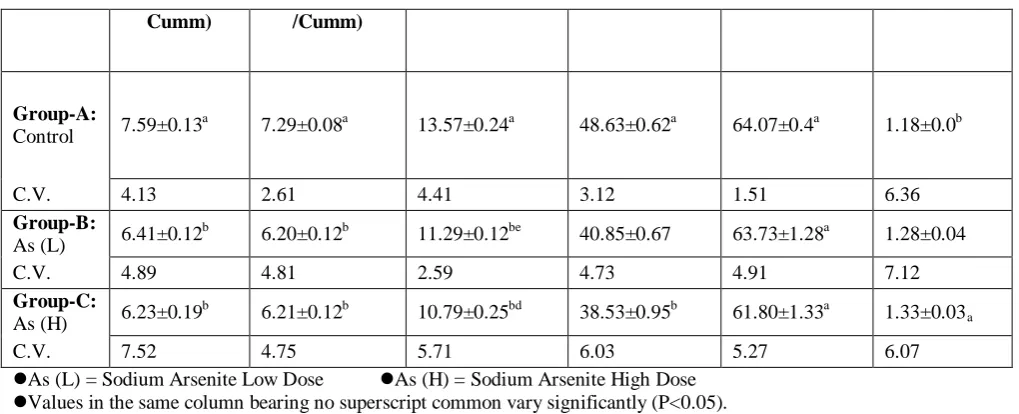
Table 3:Haematological profile in albino rats after oral administration (gavage) of Arsenic for 60 days.
Group TEC (Millions/
TLC (Thousands
Hb (g/dl)
PCV (%)
MCV (fL)
296
Cumm) /Cumm)
Group-A:
Control 7.59±0.13 7.29±0.08
a
13.57±0.24
a
48.63±0.62
a
64.07±0.4
a
1.18±0.0
a b
C.V. 4.13 2.61 4.41 3.12 1.51 6.36
Group-B:
As (L) 6.41±0.12 6.20±0.12
b
11.29±0.12
b
40.85±0.67
be
63.73±1.28a 1.28±0.04
C.V. 4.89 4.81 2.59 4.73 4.91 7.12
Group-C:
As (H) 6.23±0.19 6.21±0.12
b
10.79±0.25
b
38.53±0.95
bd
61.80±1.33
b
1.33±0.03
a
a
C.V. 7.52 4.75 5.71 6.03 5.27 6.07
As (L) = Sodium Arsenite Low Dose As (H) = Sodium Arsenite High Dose
Values in the same column bearing no superscript common vary significantly (P<0.05).
All the values are mean ±SE; n=6 ANOVA with DMR test
C.V. = Coefficient Variance
After 30 days’ post treatment, TEC decreased. The maximum decrease after 30 days’ treatment was in Group B and Group C was and 7.10% and 8.47% respectively as compared to the control while in 60 days treated, group C (17.82%) showed significant fall than group B (15.55%).
Contrary to the nature of response, values of TLC decreased after 30 days’ post treatment. The maximum decrease was observed after 60 days’ post treatment. It is to be noticed that all animals treated for 30 days showed some recovery towards normal condition but after 60 days’ intoxication, the TLC decreased two folds in the same corresponding group.
Table 4: Percentage change of haematological profile in albino rats after oral administration (gavage) of Arsenic and Cadmium for 60 days.
Group
TEC (Millions/
Cumm)
TLC (Thousands /Cumm)
Hb (g/dl)
PCV (%)
MCV (fL)
ESR Mm3/L)
Group-B: As
(L) -15.55 -14.89 -16.69 -16.00 -0.53 11.49
Group-C: As
(H) -17.82 -14.74 -20.37 -20.77 -3.46 14.57
As (L) = Sodium Arsenite Low Dose As (H) = Sodium Arsenite High Dose
After 30 days, a significant fall in haematocrit was observed having a maximum value group C (14.54%) compared to the control. However, the fall was insignificant in group B (2.92%).After 60 days’ post induction, PCV decreased in group C (20.77%) and group B (16.00%) as compared to the control. Decreased value of PCV may be due to decrease in red blood cell count of rats due to arsenic toxicity.
After 30 days’ intoxication, significant decrease in MCV value was observed the animals of group C
showed fall of 6.47% but animals treated for 60 days showed slight recovery in MCV value after completion of experiment.
After 30 days’ treatment, haemoglobin decreased maximum in group C (17.62%) but it was much more in 60 days treated group C (20.37%) than other, showing effect to be dose and duration dependent.
ESR value increased after 30 days’ intoxication and after 60 days’ increase in ESR value of Groups C and B was 14.57%, 11.49%, respectively.
Table 5:Effect of sodium arsenite on liver and kidney functional tests in albino rats after oral administration (gavage) of Arsenic for 30 days.
Group
Serum alkaline phosphatase(IU/
L)
Serum aspartate amino tranferase(IU/L)
Serum alanine amino transferase(IU/L
)
Serum Urea mg/dl
297
Group-A:Control 57.5±0.32 7.33±0.53 6.50±0.09 2.01±0.09 60.86±1.20
Group-B:
As (L) 64.80±0.05 11.49±0.51 8.28±0.13 2.20±0.21 68.82±0.84
Group-C:
As (H) 76.70±0.21 11.75±0.23 8.72±0.42 2.27±0.92 71.60±0.32
As (L) = Sodium Arsenite Low Dose As (H) = Sodium Arsenite High Dose
Table 5:Effect of sodium arsenite on liver and kidney functional tests in albino rats after oral administration (gavage) of Arsenic for 60 days.
Group Serum alkaline
phosphatase(IU/L)
Serum aspartate amino tranferase (IU/L)
Serum alanine amino transferase (IU/L)
Serum Urea mg/dl
Serum Creatinine µmol/l
Group-A:
Control 56.9±0.63 8.05±0.42 6.67±0.31 2.00±0.98 61.28±0.11
Group-B:
As (L) 97.40±0.82 11.28±0.38 8.95±0.55 2.32±0.66 76.02±0.74
Group-C:
As (H) 122.31±0.43 13.19±0.29 9.86±0.46 2.49±0.65 82.08±0.69
As (L) = Sodium Arsenite Low Dose As (H) = Sodium Arsenite High Dose
Above findings shows significant increase in the serum ALP, AST and ALT. Marked increase in serum urea and creatinine is also seen in the results. The changes seem to be dose and duration dependent.
IV.
DISCUSSION
Clinical observations showed that animals were docile and less active than control. No mortality occurred both in control group (Group A) as well as in group treated with different doses of sodium arsenite. In the animals treated for 30 days and 60 days, there was a dose- dependent reduction in body weight gain.
Haematological and biochemical indices have been reported to be reliable parameters for the assessment of the health status of humans and animals with arsenic poisoning (Saxenaet al., 2011; Ohaeriet al., 2011). Blood cells have a short life span as compared to most other cells in the body. Toxic compounds not only affect the metabolism and function of mature blood cells but also produced adverse effects on haemopoiesis. The response to toxic influences manifests itself primarily in
reduction of the number of circulating blood cells, in functional and structural abnormalities of the blood cells and too much lesser extent by morphological changes. Exposure of animals might occur in chronic as well as in acute form due to poisonous toxic compounds in the environment, at workplace and in the household.
Alteration in haematological parameter that is change in the activity of serum enzymes were frequently indicator of toxicity and of organ or cell damage (Kodavanti and Mehendale, 1991). Intensive production of cells in the bone marrow is reported to be highly sensitive to toxic influences. This might result in abnormal production, decreased production, and complete inhibition of production of malignant cells due to changes in the DNA. Sometimes only one cell line is affected by toxic substances, sometimes all of them.
298
The present study showed that animalsintoxicated for 60 days had decreased total erythrocyte count as compared to Group A (Control).
The impact of arsenic on haematological parameters had attracted attention of workers on cat (Massman and Opits, 1954), rats (Institoriset al.,2002b), and fish (Virmaniet al.,2007).The findings were in accordance with Hong et al. 1989 and Flora et al.1997. They reported decreased haemotocrit as well as red blood cells and haemoglobin in female B6 C3 F1 mice exposed to various concentrations of arsine for 14 days. Decreased red blood cell production due to arsenic toxicity might be because of disturbances in the haematopoietic system (Terada et al., 1960; Westhoffet al.,1975).
Haematopoietic system is highly sensitive to toxic influence. This might result in abnormal production, decreased production or inhibition of production of blood cells (Marx, 1996).ATSDR (1999) reported decrease in RBC, MCV, PCV and haematocrit in arsenic exposure of rat. Sodium arsenite (ip) administration had result in significant induction of micronuclei in polychromatic erythrocytes of mice (Tinwellet al., 1991). Maheiuet al. (2000) reported prolonged exposure might lead to decrease in RBC. Institoriset al. (2002) reported insignificant changes in haematological parameters on exposure to arsenic. The results from this study showed significant increase (P<0.05) in activities of liver damage marker enzyme AST and ALT in intoxicated groups. This increase indicates cellular leakage and failure of functional integrity of liver cell membranes. ALP is involved in the transport of metabolites across the membrane, synthesis of certain enzymes and proteins, secretary activities and glycogen metabolism. Significant increase (P<0.05) in the ALP values of animals in group B and C compared to group A animals may imply that damage occurs in the liver cells of rats administered with sodium arsenite, sice the activities of these enzymes are reported to be increased in liver damage (Santraet al., 2000 and Roy et al., 2009).Howeverthe increase in this enzymes activity may not be unconnected with a disturbance in the transport of metabolites or alteration in the synthesis of certain enzymes as in other hepatotoxic conditions. The increase in these liver marker enzymes (AST, ALT and ALP) in the serum is responsible for the hepatotoxicity of the liver in the group administered with sodium arsenite (Devyet al., 2006) The significant increase (P<0.05) in the serum urea and creatinine values of albino rats intoxicated with sodium arsenite compared to healthy rats indicate that group B and C animals have renal impairment (Patel and Kalia. 2010).
V.
CONCLUSION
Present study shows sodium arsenite produce toxic effect on haematological parameters as active stressor. Different liver and kidney markers show significant increase in blood serum. This clears the picture of liver and kidney impairment animals exposed to arsenic. The toxicological effect of arsenic was dose and duration dependent.
ACKNOWLEDGEMENT
The author is thankful to Dr. D. K. Gupta (supervisor) Head, Department of Zoology, Bareilly College and Dr. H.C. Tripathi, Principal Scientist, IVRI, Bareilly for providing the facility to carry out this project and also for their help and cooperation.
REFERENCES
[1] Agency for Toxic Substances and Disease Registry (1999). ATSDR HazDat database. Atlanta, G.A: U.S. Department of Health and Human Services.
[2] Akhand, A.A., Du, J., Liu, W., Hossain, K., Miyata, T., Nagase, F., Kato, M., Suzuki, H. and Nakashima, I.(2004). Redox- linked cell surface- oriented signanling for T- cell death. Antioxid Redox Signal. 4: 445-454. [3] Bernstam, L. and Nriagu, I. (2000). J. Toxicol. Environ. Health 33: 293-322.
[4] Boppel, P. (1995). Arsenic, Lead and Cadmium in home-made preserves of fruits and vegetables from previous years: Peaches since the harvest year 1931. Z. Lebensm. Unters. Forsch. 201: 14-16.
[5] Chen, C. J., Hsuch, Y.M., Lai, M.S., Shyu, M.P., Chen, S.Y., Wu, M.M., Kyo, T.L. and Tai, T.Y. (1995). Increased prevalence of hypertension and long-term arsenic exposure. Hypertension 25: 53-60.
[6] Chiou, H.Y., Huang, W.I., Sn, C.L., Chang, S.F., Hsu, Y.H., and Chen, C.J. (1997). Dose-response relationship between prevalence of cerebrovascular disease and ingested inorganic arsenic. Stroke20: 1717-1723.
[7] Devy,A., Khan. A. B. and Kumar,R. (2006). Cadmium chloride induced histopathological and biochemical changes in the testes of adult albino rats. Toxicol. Int.13:61-64.
[8] Engel, R.R. and Smith, A.H. (1994). Arsenic in drinking water and mortality from vascular disease: An ecologic analysis in 30 countries in the United States. Arc. Environ. Health 49: 418-427.
[9] Flora, S. J. S., Dube, S. N., Vijayaraghvan, R. and Pant, S.C. (1997). Changes in certain hematological and physiological variation following single gallium arsenide exposure in rats. Biol. Trace. Elem. Res. 58: 197-208. [10] Hong, H. L., Fowler, B. A. and Boorman, G. A. (1989). Haematopoietic effects in miceexposed to arsine gas. Toxiol. Appl. Pharmacol. 97: 173-182.
[11] Institories, L., Papp, A., Siroki, O., Banerjee, B. D. and Desi, I. (2002b). Immuno and neurotoxicological investigation of combined subacute exposure with the carbonate pesticide propoxur and cadmium in rats. Toxicology. 1: 161-173.
[12] Institoris, L., Siroki, O., Undeger, U., Basaran, N. and Desi, I. (2002a). Immunotoxicological investigations in rats dosed repeatedly with combinations of cypermethrin, As(III), and Hg(II). Toxicology. 172: 59-67.
[13] Kodavanti, P.R. and Mehendale, H.M. (1991). Biochemical methods of studying hepototoxicity. Meeks, R.G., Harrison, S. D., Bull. R.J. In: Hepatotoxicity (Eds). CRC press, Boca Raton. 241-325.
299
Haematological effects. Toxicol, Lett. 111(3): 235-42.[15] Marx, J.J.M. (1996). Toxicology of the blood, pathophysiology, toxicological pathology and mechanistic aspects. Niesink, R.J. M., Vries, J.D., Hollinger, M.A. In: Toxicology Principles and Applications. Eds. Raymond.
[16] Massmann, W. and Opitz, H. (1954). Experimentel le Unter such ungeniiber Ekg-Veranderungen beichronischer Arsenvergiftung. Z. Kreislaufforsch. 43: 704-713. [17] Ohaeri, C. C. and Eluwa, M. C. (2011). Abnormal biochemical and haematological indices in Trypanosomiasis as a threat to herd production. Vet. Parasitol. 177: 199-202.
[18] Patel, H. V. and Kalia, K.(2010). Subchronic arsenic exposure aggravates nephrotoxicity in experimental diabetic rats. Ind. J. Exp.Bio.48: 762-768. [19] Roy, M., Pandey, P. K. and Roy, S. (2009). Indian Vertinary Journal. 86: 570-572.
[20] Santra, A., Maiti, A., Das, S., Lahiri, S., Charkaborty, S.K., Debendra, N. and Mazumdar. (2000).Clinical Toxicology.38 (4): 395-405.
[21] Saxena, D. P., Shukla, S. K. and Kumar, K. (2011). Efficacy studies of in vitro screening of antiplasmodial activity by crude extract of Diospyrosmelanoxylem. Res. J. Med. Plant. 5: 312-320.
[22] Shi, H., Shi, X. and Liu, K.J. (2004). Oxidative mechanism of arsenic toxicity and carcinogenesis. Mol. Cell Biochem: 25567-25578.
[23] Sorg, D.A. and Buckner, B.(1964): A simple method of obtaining venous blood from small laboratory animals. Proc. Soc. Exp. Bio. Med. 115: 1131-1132. [24] Terada, H. (1960). Clinical observation of chronic toxicosis by arsenic. Nihon Rinsho. 18(10): 118-127. [25] Tinwell, H., Stephens, S.C. and Ashby, J. (1991). Arstenite as the probable active species in human carcinogenecity of arsenic; mouse micronucleus assays on Na and K arsenite, orpiment and Fowler's solution. Environ. Health. Perspect.95: 205-210.
[26] Virmani, S., Sabhlok, V.P. and Jain, K.L. (2007). The effect of heavy metals on the glycogen reserves in the liver and muscle tissue of the fish cirrhinusmrigala L. and subsequent improvement of the same in metal free water. Poll. Res. 26(2): 215-218.
[27] Welch, K., Higgins, I., Oh, M and Burchifid,C. (1982). Arch. Environ. Health. 37: 325- 335.
[28] Westhoff, D.D., Samaha, R.J. and Barnes, A., Jr. (1975). Arsenic intoxications as a cause of mega loblastic anaemia. Blood, 45: 241-246.
[29] WHO (1971). In: International standards for drinking water. Third edition, Geneva