in the population sciences published by the Max Planck Institute for Demographic Research Konrad-Zuse Str. 1, D-18057 Rostock·GERMANY www.demographic-research.org
DEMOGRAPHIC RESEARCH
VOLUME 16, ARTICLE 14, PAGES 441-468
PUBLISHED 25 MAY 2007
http://www.demographic-research.org/Volumes/Vol16/14/ DOI: 10.4054/DemRes.2007.16.14
Research Article
Intergenerational family ties and the
diffusion of cohabitation in Italy
Paola Di Giulio
Alessandro Rosina
c
°2007 Di Giulio & Rosina
1 Introduction 442
2 The role of family ties in the diffusion of cohabitation in Italy 443
3 Data and methods 449
4 Results 452
5 Conclusions and discussion 459
6 Acknowledgements 461
References 465
Appendix A 466
Intergenerational family ties and the diffusion of cohabitation in Italy
Paola Di Giulio1 Alessandro Rosina2
Abstract
Cohabitation has been spreading in the population during the last thirty years, and this is one of the most striking aspects of wider social changes that have taken place through-out the industrialized world. However, this change did not take place uniformly across Europe. The purpose of this paper is to contribute to the current debate around the com-patibility of cohabitation experiences with the Italian cultural context. Using an individ-uallevel diffusion approach we obtain results that are consistent with the crucial role that family ties play in the choice of cohabitation in place of (or before) marriage.
1.
Introduction
Cohabitation has been spreading in industrial societies during the last thirty years, and this is one of the most striking aspects of general social changes that have taken place throughout these countries. The sudden gain in the popularity of cohabitation at the be-ginning of the 1970s as an informal way of starting a union can be explained by several factors. Cultural elements, such as rising individualism and secularism (Lesthaeghe and van de Kaa 1986), as well as economic aspects, such as changes brought by industrial-ization, changes in gender roles, and rising female labor-market participation, may have contributed to its increase (for a review, see Smock 2000). At the same time, the sexual revolution helped in removing the stigma surrounding premarital sex (Bumpass 1990). However, this change did not take place uniformly across Europe, one large exception be-ing the Southern European countries. In the mid-1990s, about one in three women aged 25-29 in Sweden and Denmark was cohabiting; this compares to more than one woman in four in France, about one woman in six in Germany and the Netherlands, and less than one woman in 20 in Italy (Kiernan 1999). Demographers disagree on whether the country differences in the prevalence of cohabitation are likely to disappear over time or whether they will persist, as there are fundamental structural and cultural differences between the societies (Bernhardt 2004).
Recent results from an analysis on the adoption of cohabitation among young Italian and German women (Nazio and Blossfeld 2003) seem to support researchers who do not see the differences disappearing over time, claiming that the diffusion of cohabitation among broad groups of the population in Italy is blocked. This differs from the empirical evidence presented in other recent studies (Rosina 2002, Rosina and Billari 2003, Rosina et al. 2003, Barbagli 1997, Barbagli et al. 2003, Rosina and Micheli 2006). They show that cohabitation starts to spread also in Italy and they argue that mechanisms related to the relationship between generations - and specifically between Italian parents and their children - are at the basis of the adoption or rejection of new behaviors (Rosina and Fraboni 2004).
The purpose of this paper is to contribute to the current debate around the compatibil-ity of cohabitation experiences with the Italian cultural context. We show that in Italy, this relationship is not influenced solely by the characteristics of the country’s young adults but also by some of their parents’ characteristics. The strong ties between parents and children and a welfare state that provides very limited direct help to youth are at the basis of the relatively scarce diffusion of non-marital cohabitation in Italy (Rosina and Fraboni 2004). Using an individual level diffusion model, we obtain results that are consistent with the crucial role that family ties play in the choice of cohabitation instead of (or be-fore) marriage.
back-ground and argues that the study of cohabitation in Italy needs to consider the role of family ties. To test our hypothesis, we use an approach proposed by Nazio and Blossfeld (2003), and slightly modify it in order to catch adequately the specificity of the Italian context, as will be highlighted in Section 3. Comments on the results of the analysis and a general discussion close the paper.
2.
The role of family ties in the diffusion of cohabitation in Italy
Not many studies have compared the southern European situation with the rest of Europe or the rest of the western industrialized world in terms of cohabitation. One of the most recent studies, a contribution by Nazio and Blossfeld (2003) on East and West Germany and Italy, concludes that the diffusion of cohabitation to broad groups of the Italian popu-lation seems to be blocked. This is due to the fact that "[...] cohabitation is indeed not an attractive choice in Italy" (Nazio and Blossfeld 2003: 77) and it seems to be "[...] confined to a small highly selective group of women [...]. As a rule these women are not religious, have left the education system and are employed, live mainly in the North and grew up in an urban context" (Nazio and Blossfeld 2003: 78). Moreover, the authors conclude that, similarly to East and West Germany, during the diffusion process the perceived ex-periences of peers (what they call the ‘cumulative peer group adoption of cohabitation’) exerts in general more influence on the decision to cohabit than the past adoption of this very behavior by earlier generations (‘cumulative pre-cohort adoption’): "Peer groups should play a particularly influential role in the diffusion of cohabitation because in this case strongly held attitudes have to be changed, mainly at the beginning of the diffusion process" (Nazio and Blossfled 2003: 52).
The very interesting and methodologically promising analysis presented by Nazio and Blossfeld does not entirely catch and highlight some crucial Italian cultural context speci-ficities related to the importance of family ties for the decision-making process of young adults on union formation. Their findings and conclusions can be contrasted with the re-sults of other studies (Rosina 2002, Rosina et al. 2003, Rosina and Billari 2003, Barbagli 1997, Barbagli et al. 2003), where it is stated that pre-marital cohabitation, after some decades of delay compared to other European countries, started to spread also in Italy, Figure 1. The authors introduce the hypothesis that the cultural specificity of Italian fam-ily ties (Reher 1998, Dalla Zuanna and Micheli 2004) is more consistent with mechanisms related to the relationship between generations for the adoption of new behaviors than to the experience of peers.
Figure 1: Percentage of cohabiting unions out of all first unions. Women by region and generations, Italy 2003
cohabitation. The delay in diffusion would then not be due to the limited interest of the Italian youth towards this type of union, but to the "[...] convenience of the children in the Mediterranean area to avoid choices which openly clash with the values of parents [...]" (Rosina and Fraboni 2004: 162).
On the one hand, it is indeed interesting to see that among Italian youth in the 1980s, there was already a favorable view of cohabitation. Many of them (two out of three) were ready to enter into cohabitation, but they felt that they were living in a society that was not culturally open enough to accept this behavior (see e.g. Cavalli and De Lillo 1993). On the other hand, although the children have positive inclinations towards cohabitation, they may refrain from cohabiting if their parents have a negative view of it in order to avoid financial or emotional sanctions (Axinn and Thornton 1993, Goldscheider and Goldschei-der 1993, De Valk and Liefbroer 2004). "Moreover, parents and children have the same representation of adult life as a difficult transition which is better to postpone in order to keep open the opportunities to self- fulfillment in the social world. [...] Even more emphatically, the perceptions of mothers and fathers convey with the image of a harmo-nious, conflict-free family, characterized by good quality of parent-children relations and by high level of satisfactions" (Scabini 2000: 24; see also Dalla Zuanna 2001). The public nature of non-marital cohabitation suggests that children of parents who believe that co-habitation is not acceptable may not cohabit in order to avoid embarrassing their parents. The result may be that couples who want to enter informal cohabitation but whose par-ents disapprove of it may also prefer to marry rather than to cohabit (Axinn and Thornton 1993). This is especially true for Italian children. The need to receive parental support is indeed an important feature of southern Europe. The welfare state in those countries is historically characterized by a "familialistic" approach, expressed in important trans-fers towards older generations and very limited direct help for the youth (Ferrera 1996, Esping-Andersen 1999). Given that the link between generations and the need to receive help is very important in the southern region, southern European children are assumed to (and have to) take into account the attitudes of their parents towards their own potential choices. For example, using data from a survey on young adults of ages 23-27 who still live in the parental home, Billari and Rosina (2005) show that the attitudes of parents con-cerning household formation choices have an important influence on their children when they decide to form (or not to form) a household, net of the attitudes and values of these children.
the first union with an informal cohabitation rather than marriage. In general, the strategic importance of parental support places young Italians at a disadvantage when they make choices that parents do not approve of because this may lead to less generous parental help.
This kind of distinctive parental influence on children nowadays probably does not exist in northern and western Europe or it is unimportant to the youth in this region3. The
welfare system there is more oriented towards helping young people in ‘starting out’. At the same time (and for the same reason), people leave the parental home at very young ages. If this is true, then in northwestern European countries the very generation that begins to open up to new behavior may engage in it straightaway. Taking the context of strong family ties, by contrast, the acceptance of innovative behavior among parents is a prerequisite of the process of diffusion of this behavior among their children (Rosina and Fraboni 2004). This effect may be caught better by the mechanisms linked to the influence the behavior of older cohorts has on the behavior of the younger generations.
The literature has stressed that at least two different influences4 are active during
the process of cohabitation diffusion: a) the more the behavior spreads, the more the new generations will be aware of the new behavior as a possible option open to them before or as an alternative to marriage (knowledge-awareness mechanism). For example, the media increasingly presents information on the new habit, at least indirectly, on the costs and benefits of cohabitation, and its characteristics (Rogers 2003). The younger generations thus benefit from the ensuing greater social acceptability of the new behavior. This mechanism is linked to the cumulative experience of previous generations. And b) the simple knowledge of the existence of the new behavior is useful in forming a personal opinion on it. Opinions do not necessarily translate into behavior, however. In fact, it is also necessary that individuals can compare the cohabitation experiences made by people who have the same characteristics as them. Direct information about cohabitation experiences will come from their peers by means of the so-called "direct social modeling mechanism"5 (Bandura 1977), under which we include the cumulative
experience of cohabitation in peer groups.
3Most of the literature on cohabitation in those countries either ignore the effect of the parents’ characteristics or
include them as a measure of the social background of the children. In relatively few papers, the characteristic of the parents are used to assess the effect of their own preferences on the expected behavior of the children (for example de Singly 1986, Villeneuve-Gokalp 1991, Axinn and Thornton 1993, Liefbroer and de Jong Gierveld 1993, Schroeder 2006).
4Montgomery and Casterline (1996) group them under the name social effects and they can be distinguished in
social influence and social learning. The two effects usually overlap and it is generally difficult to distinguish one from the other.
5The social learning theory of Bandura emphasizes the importance of observing and modeling the behaviors,
Consistently with what just has been hypothesized, we expect that in Italy a positive attitude on cohabitation has largely preceded the diffusion of this behavior; in fact, as early as the 1980s, young adults have been showing a high acceptance of non-marital cohabitation, and the vast majority declares to be ready to enter into it. But in contrast to Nazio and Blossfeld (2003), we hypothesize that the adoption of cohabitation is influ-enced by mechanisms related to the behavior of earlier cohorts (cumulative experience of previous generations) more so than to the experience of cohabitation in the peer group.
To bring out the specificity of the Italian situation, in the empirical part we restrict our sample to women born in central and northern Italy. In general, southern Italy and northern and central Italy show persisting historical differences in the models of family organization and household formation (Viazzo 2003). These differences are confirmed by the different demographic dynamics observed in the last decades in the three regions (Micheli 2000). To be more precise, in southern Italy informal cohabitation in older as well as in younger generations remains at a marginal level and is almost exclusively due to the traditional phenomenon of the ‘fuitine’ (Sabbadini 1991), which expresses the kidnapping of a young woman by her boyfriend in order to oblige her family to give consent to marriage. However, this is often carried out in complicity with the two families in order to avoid the expensive costs of a wedding party. It is usually followed by a frugal celebration of the marriage. This type of behavior cannot be considered a modern type of cohabitation, of which modern values and freedom of choice form an integral part. In selecting only women born in central and northern Italy, it is possible to avoid that the determinants of the new and old type of cohabitation interlace and reciprocally obscure the effects.
Furthermore, forerunners of new behaviors usually belong to a population that enjoys a high cultural status (Goldscheider and Goldscheider 1999), and has enjoyed a high level of education, which in turn has a liberalizing effect on attitudes toward family and gender role behavior, for example (see, e.g., Trent and South 1992). According to our hypothesis, two separate and parallel kinds of open-mindedness are required to engage in a new behavior such as cohabitation: by the youth and by their parents. A central role in the diffusion process would then be played not only by the education level of the youth, but also by the education level of the parents. Better educated parents are more liberal with regard to child-rearing than less educated ones (van der Silk et al. 2002): open-minded parents are found to be more receptive to the influence of the more modern values on their children (Schoenpflug and Silbereisen 1992, Schoenpflug 2001, Pinquart and Silbereisen 2004). They are more authoritative and less authoritarian6in their parenting style (Rudy
forms an idea of how new behaviors are performed, and on later occasions this coded information serves as a guide for action."
6Where "[...] authoritarian parenting [is] characterized by the imposition of an absolute set of standards, the
and Grusec 2001), they are more inclined to transmit modern gender role behaviors (Kulik 2002) and they have more modern attitudes toward premarital sex (Thornton and Camburn 1987). On the basis of the results obtained in previous analyses (Rosina and Billari 2003, Rosina and Fraboni 2004 - a diffusion approach was not used), we can expect that better educated fathers are more open-minded, less dependent on context influence and social pressure, and represent less of an obstacle to the choice of their children7. We consider
the characteristics of fathers to be important because: a) fathers seem to care more so than mothers about their children’s obedience to authority in terms of child-rearing values, and less educated parents in particular are found to demand more conformity to their norms than those with a higher education (Van der Slik et al. 2002); b) in the traditional gender system society, such as Italy’s, until very recently, the husband was the ‘head’ of the household in terms of the power distribution within the family. The wife had some input in family decision-making, but she ultimately deferred this authority to her husband’s judgment. The mother provided childcare whereas the father served as the authority figure and disciplinarian of their children (Booth and Amato 1994, Schoenpflug 2001)8. This
certainly is still applicable only to selected groups or to selected periods; it provides an approximate description of the way in which many families lived.
3.
Data and methods
The data used stem from the "Seconda Indagine Nazionale sulla Fecondità"9(the Italian
Second Fertility Survey), carried out in Italy in 1995-96 (De Sandre 2000). The survey is part of the comparative round of the Family and Fertility Surveys and is representative at repartition (large region) level. Women and men aged 20-49 were interviewed, irrespec-tive of their marital status, and retrospecirrespec-tive information about family fertility and work career was collected. Compared to the international standard version of the database, the Italian version contains more variables of interest to the Italian context. In contrast
[is] characterized by firm control, high demands for maturity, and a willingness to reason and negotiate [...]" (Rudy and Grusec 2001).
7It is worth mentioning, however, that in Sweden, cohabitation started to spread in the 1960s among women
with a working-class background and much less so among the daughters of the mid-level salaried employees (Bernhardt and Hoem 1985).
8The impact of the mother’s level of education may play a role as soon as female participation in the educational
system increases and gender roles in society and in the family become more egalitarian. The large educational reform of 1962, which made lower-secondary education (eight years of schooling) compulsory for everyone, could not yet have had an effect at the time the survey data we use was collected. For an analysis on the role of mothers on the union formation of their children in Italy, see Schroeder (2006), and on Turkish families in Germany, see Schoenpflug (2001).
9The difference between the data source we use and the one used by Nazio and Blossfeld (2003) is that in the
to Nazio and Blossfeld (2003), and because of the reasons mentioned in the previous paragraphs, we select women10residents in northern and in central Italy. For reasons of
homogeneity, we restricted our sample to women who spent most of their childhood in Italy and who belong to the 1954-1973 cohorts, so as to avoid problems of selection and truncation.
Following the approach proposed by Nazio and Blossfeld (2003) and in order to model the diffusion of the innovation process, we apply an event-history analysis model that has special features. Rogers (2003) defines diffusion as a process in which innovation is trans-mitted to the members of a social system over time and by means of various channels. The diffusion process approach permits us to incorporate the probability of an individual to adopt innovative behavior as a function of the previous adoption of the same behavior from other individuals in the population (Strang and Tuma 1993). It therefore is espe-cially relevant for the analysis of the experience of events, with the degree of acceptability changing in society according to the quota of the population that already experienced the event (Prinz 1995, Manting 1996). The inclusion of a diffusion approach in the event-history analysis permits us to combine heterogeneity in individual level characteristics with the effect of the influence of individuals who have already adopted the new behav-ior11.
Very basically, an individual-level event-history analysis that includes a diffusion pro-cess can be formulated as:
rn(t) =eα+Ps∈Sβ (1)
wherern(t)is the propensity that an individual belonging to the ‘non- adopters’ set moves to adoption at timet,αstands for the effect of individual characteristics (that can modify
10We limit our analysis to the behavior of Italian women because young men’s choice of the type of union is
partially driven by factors other than those that drive women (Oppenheimer 2003) and because the small case number of the male sample makes it virtually impossible to perform the same analysis on men.
11The very first diffusion models proposed consist of macro level models, where - exactly as in the study on the
susceptibility/willingness to adopt),Sincludes the set of previous adopters, andβ is the effect of the diffusion process on the individual probability of adopting the new behavior. In the equation,αincludes all individual level variables that are assumed to influence susceptibility for the adoption of a certain type of union(α0x(t)). The termβ includes two mechanisms catching the influence of the behavior of other people on the adoption of cohabitation; a)knowledge-awarenessand b)direct social modeling(see the previous paragraph). In Nazio and Blossfeld (2003), the two mechanisms take the form of functions which at each point in time and for each age of the women respectively indicate a) the cumulative proportion that already adopted the new behavior (cohabitation as first union) in the older generations, labeled as pre-cohort adoption; b) the cumulative proportion of previous adopters belonging to their own generation, labeled as peer-group adoption. See Appendix A for further information about the model used.
The event-history analysis model used is exponential and the time unit is the month. Women are observed from age 15 (at which the risk to enter a union begins) until entrance into cohabitation or marriage. We have a formula for the cohabitation and one for mar-riage, as they operate as competing risks. The censoring point is age 39 or the moment of the interview. For comparative reasons, two time-dependent variables were used to con-trol the non-monotonic dependence from the time of the risk to enter union (Blossfeld and Huinink 1991): log (current age-15) and log (39-current age). An alternative approach would be to use linear splines instead of the two variables just defined.
Among the variables that measure the heterogeneity of individuals at the micro level (αpart of the model), there are bothtime constantandtime dependentvariables12:
To be out of education: adummy time-dependent variable that measures whether or not the woman in question has left the education system at a given age. From the normative point of view, to be out of education is an important prerequisite to entering marriage (Billari and Ongaro 1999). This may be much less so for the choice to start cohabiting. In fact, cohabitation is thought to be a less binding and more flexible living arrangement than is marriage, thus it may facilitate the reconciliation between education and affective life (Hoem 1986, Wu 2000).
Education level reached at a specific age,time-dependent, and measured by compulsory education, high school, and university. The level of education reached measures the accu-mulation of human capital, net of the current participation in the education system. The effect of the variable is two-fold: on the one hand, cohabitation, being more gender-equal than marriage (Becker 1981), will be chosen by women who have a higher human cap-ital and are more willing to challenge the traditional gender roles (Behrman 1997). On
the other hand, a higher education level can be seen as a vehicle of important cultural modernization, and thus we can expect that a greater number of modern women are more ready than traditional women to adopt a new living arrangement when this is perceived as favorable.
Employment, adummy variable that measures each time a woman has a job or not; it is atime-dependent proxyfor economic independency.
Religiosity, measured at interview. Women who are more religious will be less prone to choose cohabitation instead of marriage. Cautious interpretation should be made of the effect of variables measured at interview on previous behavior as religious behavior possibly impacts the choice of cohabitation and the choice of cohabiting in turn leads to a decline in religious attendance, given that this behavior is strongly disapproved of by the Catholic Church.
Urbanization of the place of residence at age 15, in rural or small cities (up to 10,000 in-habitants), medium-sized cities (from 10,000 to 100,000) or large cities (more than 100,000 inhabitants); it is aproxyof the social control over individual choices, the latter which is thought to be weaker in large cities (Lesthaeghe and Neels 2002);
Area of residence at interview: The social setting in central and northern Italy is more modern than in southern Italy.
Education level of the father. This variable was not included in the Nazio and Blossfeld analysis (2003). It measures the extent of open-mindedness in the family context (see previous paragraph). A different classification of the highest education level reached has been used for fathers, given that participation in school has increased in Italy only over the last few decades. The basic education level for fathers thus corresponds to elemen-tary school, the medium level to lower secondary school, and the highest level is ‘high school at least’. Survey respondents were given the option to answer ‘not indicated’. This category will prove to play an interesting role because if a respondent does not provide information about the father, this may imply that respondent and the father do not have a very close relationship.
effect could be again a lousy relationship with the father, and therefore a higher probabil-ity to experience a cohabitation, according to our hypothesis.
4.
Results
After having checked the information provided in the original data set, 3,212 women born between 1954 and 1973 were selected, of which 208 have experienced cohabitation as first union. Of these, 1,947 were residents of central and northern Italy at the age of 15 and 153 experienced first cohabitation.
First, thetime-dependentvariables (to be finished with education, the level of educa-tion reached and the employment) and thetime constantones (repartition of residence at interview, urbanization of the residence at age 15 and religiosity) were included, together with thetime dependent variables that control for the dependency of the baseline risk from time. Second, the model was restricted to women of central and northern Italy, and the education of the father was included. Third, the variable about the structure of the family until age 15 was included.
Tables 1a and 1b show the results for the models run for all of Italy (1), central and northern Italy only (2) with (b) or without (a) the inclusion of the father’s education level and with (c) the inclusion of the family structure variable. The results for southern Italy and the islands, available on request to the authors, are based on a very small number of events and present some unstable estimates. Therefore, they are not shown here.
The model for all of Italy without the inclusion of the education level of the father has been included for comparative reasons and is substantially similar13to the ones reported
in Blossfeld Nazio (2003): to be out of education and to be employed significantly favor the start of a cohabitation14. To be religious, a resident of southern Italy and to live in
small or medium-sized cities, characterized by traditional contexts, lower the risk of en-tering a cohabiting union, as expected. Both lower and higher educated women have a higher propensity to enter a cohabiting union. Although the authors interpret this finding as simply being the result of the continuous accumulating of human capital, it is possible that this effect interplays with the intrinsic characteristics of the diffusion process. In fact, at the beginning of the diffusion process, traditional and modern behaviors co-exist. In Italy, we find both the traditional type of cohabitation due to the economic difficulties
13See Di Giulio (2004).
14In this model, to have completed education and to be employed are basic conditions that favor the start of
connected with entering marriage (these are characteristic of the lower societal strata in the population) and the modern type motivated by cultural modernization (new values and social change). As for the factors directly connected with the diffusion process, summa-rized in the variables peer-group adoption and pre-cohort adoption, the diffusion is above all driven by the first component. Thus the direct experience of peers would be a direct basis for the decision to cohabit, having a role that is more important than the generic information diffusion stimulated by the behavior of previous generations.
Table 1a: Estimation of covariates’ effects on the diffusion of cohabitation for women (exponential model with time-constant and time-dependent covariates), Italy as a total
Model 1a Model 1b Model 1c
β s.e. β s.e. β s.e.
Intercept -7.889 0.866 ** -7.912 0.866 ** -8.123 0.878 **
Log(Age-15) 0.221 0.120 * 0.221 0.121 * 0.211 0.120 *
Log(39-Age) -0.003 0.255 -0.007 0.254 0.033 0.258
Out of education 0.439 0.178 ** 0.474 0.184 ** 0.472 0.184 **
Education level
Compulsory (ref) 0 0 0
High school -0.237 0.160 -0.258 0.165 -0.245 0.166 University 0.164 0.272 0.068 0.290 0.104 0.290
Employed 0.697 0.169 ** 0.711 0.170 ** 0.707 0.170 **
Religiosity -1.054 0.164 ** -1.045 0.164 ** -1.045 0.164 **
Rural/small city (ref) 0 0 0
Middle-sized city -0.009 0.181 -0.028 0.182 -0.019 0.182 Large city 0.461 0.182 ** 0.414 0.189 ** 0.417 0.190 **
North (ref) 0 0 0
Centre -0.308 0.202 -0.316 0.203 * -0.296 0.203 South and islands -0.298 0.176 * -0.304 0.176 * -0.301 0.176 *
Pre cohort adoption 0.064 0.054 0.062 0.054 0.074 0.054
Peer group adoption 0.070 0.039 * 0.071 0.039 * 0.072 0.040 *
Father’s education level
Basic (ref) 0 0
Lower secondary school -0.069 0.186 -0.055 0.186 High school at least 0.254 0.211 0.251 0.211
Not indicated 0.199 0.368 -0.023 0.378
Family structure at age 15: without father 0.742 0.235 **
Events 208 208 208
Log-likelihood (-13,668.3) (-13,668.3) (-13,668.3) -13,577.5 -13,576.32 -13,572.12
Note: **p <0.05; *p <0.10
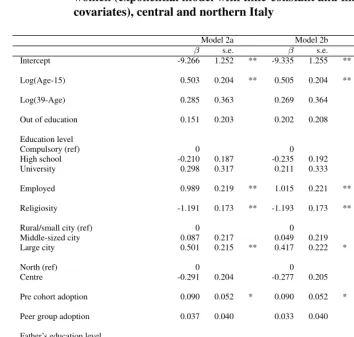
Table 1b: Estimation of covariates’ effects on the diffusion of cohabitation for women (exponential model with time-constant and time-dependent covariates), central and northern Italy
Model 2a Model 2b Model 2c
β s.e. β s.e. β s.e.
Intercept -9.266 1.252 ** -9.335 1.255 ** -9.455 1.262 **
Log(Age-15) 0.503 0.204 ** 0.505 0.204 ** 0.492 0.203 **
Log(39-Age) 0.285 0.363 0.269 0.364 0.284 0.366
Out of education 0.151 0.203 0.202 0.208 0.198 0.208
Education level
Compulsory (ref) 0 0 0
High school -0.210 0.187 -0.235 0.192 -0.207 0.193 University 0.298 0.317 0.211 0.333 0.257 0.332
Employed 0.989 0.219 ** 1.015 0.221 ** 1.012 0.220 **
Religiosity -1.191 0.173 ** -1.193 0.173 ** -1.202 0.173 **
Rural/small city (ref) 0 0 0
Middle-sized city 0.087 0.217 0.049 0.219 0.042 0.219 Large city 0.501 0.215 ** 0.417 0.222 * 0.410 0.222 *
North (ref) 0 0 0
Centre -0.291 0.204 -0.277 0.205 -0.258 0.205
Pre cohort adoption 0.090 0.052 * 0.090 0.052 * 0.098 0.053 *
Peer group adoption 0.037 0.040 0.033 0.040 0.033 0.041
Father’s education level
Basic (ref) 0 0
Lower secondary school 0.139 0.204 0.155 0.204 High school at least 0.317 0.241 0.318 0.242
Not indicated 0.750 0.378 ** 0.455 0.397
Family structure at age 15: without father 0.810 0.275 **
Events 153 153 153
Log-likelihood (-8,210.46) (-8,210.46) (-8,210.46) -8,121.11 -8,118.9 -8,115.27
Note: **p <0.05; *p <0.10
In Models 1b and 2b, both of which include the variable on the education level of the father, we observe that the variable has no clear pattern as to Italy as a whole. The effect of a father’s medium level of education is, in fact, negative as far as his daughter’s cohabitation is concerned. Nevertheless, if we restrict our analysis to central and northern Italy (Model 2b), a clearer pattern emerges: daughters whose fathers have a lower educa-tion also have a lower propensity to experience cohabitaeduca-tion, net of the effect of all other variables. The propensity to form a cohabitation grows as the education level of the father grows (as the application of a Wald test to check for the gradient of the effect can eas-ily show, although the effect is not statistically significant), and women who declare that they do not know how high or low the education level of their father is have the strongest propensity. Here, the variable can be interpreted as a proxy for the closeness reached in the relationship between father and daughter: the absence of the father or a loose con-nection to him may weaken the normative control the father has over the daughter and significantly favor a freer choice on the type of union. This result has been obtained by Wright and Young (1998) and Flouri and Buchanan (2001) in relation to gender-related attitudes: children from father-headed one-parent families have more traditional gender-related attitudes than children from mother-headed one-parent families. Moreover, if we include the variable about the structure of the family of origin until the age of 15 (Model 1c and 2c), we can confirm this interpretation: daughters who lived most of their child-hood without a father have a higher risk of experiencing cohabitation. Nonetheless, not indicating the level of education of the father has still a positive, but not significant, effect in central and northern Italy, indicating that this could express a different type of lack of closeness independent from the family structure.
Table 2a: Estimation of covariates’aeffects on first marriage and first
cohabitation for women (exponential model with time constant and time dependent covariates), Italy as a total
Marriage Cohabitation
β s.e. β s.e.
Intercept -14.154 0.599 ** -7.326 0.853 **
Log(Age-15) 1.442 0.080 ** 0.325 0.116 **
Log(39-Age) 2.041 0.164 ** -0.311 0.241
Out of education 1.350 0.075 ** 0.481 0.184 **
Education level 0 0
Compulsory (ref)
High school -0.246 0.053 ** -0.242 0.166
University 0.041 0.106 0.182 0.295
Employed -0.163 0.051 ** 0.728 0.169 **
Religiosity 0.415 0.099 ** -1.062 0.166 **
Rural/small city (ref) 0 0
Middle-sized city 0.064 0.056 -0.002 0.184
Large city 0.136 0.066 ** 0.401 0.193 **
North (ref) 0 0
Center 0.122 0.068 * -0.280 0.205
South and islands 0.043 0.057 -0.287 0.178
Father’s education level 0 0
Basic (ref)
Lower secondary school -0.188 0.065 ** -0.097 0.189 High school at least -0.220 0.086 ** 0.239 0.214
Not indicated 0.210 0.112 * -0.072 0.381
Family structute at age 15: without father -0.220 0.110 ** 0.717 0.236 **
Events 1,897 208
Log-likelihood -13668.3 -13,668.3
-12,665.0 -13,561.3
Note: **p <0.05; *p <0.10
beta... coefficient s.e. ... standard error
Table 2b: Estimation of covariates’aeffects on first marriage and first
cohabitation for women (exponential model with time constant and time dependent covariates), central and northern Italy
Marriage Cohabitation
β s.e. β s.e.
Intercept -16.847 0.918 ** -9.475 1.333 **
Log(Age-15) 1.949 0.129 ** 0.683 0.203 **
Log(39-Age) 2.691 0.249 ** 0.036 0.346
Out of education 1.281 0.100 ** 0.203 0.208
Education level 0 0
Compulsory (ref)
High school -0.271 0.069 ** -0.203 0.195
University 0.083 0.137 0.324 0.340
Employed -0.183 0.069 ** 1.024 0.220 **
Religiosity 0.473 0.112 ** -1.221 0.176 **
Rural/small city (ref) 0 0
Middle-sized city 0.067 0.075 0.092 0.223
Large city 0.084 0.084 0.415 0.227 *
North (ref) 0 0
Center 0.130 0.070 * -0.272 0.208
Father’s education level 0 0
Basic (ref)
Lower secondary school -0.244 0.081 ** 0.124 0.209 High school at least -0.273 0.106 ** 0.293 0.245
Not indicated 0.162 0.174 0.427 0.401
Family structute at age 15: without father -0.210 0.150 0.806 0.276 **
Events 1,094 153
Log-likelihood -8,210.5 -8,210.5
-7,515.8 -8,106.9
Note: **p <0.05; *p <0.10
beta... coefficient s.e. ... standard error
As expected, employment and religiosity have an opposite relation to marriage and cohabitation, both in Italy as a whole and in central and northern Italy only. The main result stems from the comparison of the variables relative to the father, however. Net to the characteristics of the women, the higher education level of the father has a negative effect on marriage and a positive impact on cohabitation; the effect is stronger in central and northern Italy than it is in Italy as a whole. Daughters of better educated men tend either to postpone marriage or to anticipate cohabitation (this result has a very low level of significance, though), supporting the statement that the education level of the father acts as a cultural resource more so than an economic resource, and that the impact on the two phenomena is different. We also find that in central and northern Italy, missing information on the education level of the father has a positive impact both on the propen-sity to enter a cohabitation and to engage in marriage, but it has a large and significant impact only for cohabitation, which vanishes when we control for the family structure at the age of 15. Childhood in a family where the father is present encourages marriage but significantly discourages cohabitation.
5.
Conclusions and discussion
During the 1980s, non-marital cohabitation became a common living arrangement be-tween the young people of northwestern Europe. In southern Europe, by contrast, it continues to constitute marginal behavior. This has led several authors to support the idea that cohabitation is not consistent with the Italian socio-cultural context and the debate continues up to now (Bernhardt 2004). Nazio and Blossfled (2003) have recently ana-lyzed the adoption of cohabitation among young Italian women, using an individual-level diffusion model. We believe that the analysis presented by them, interesting and stimu-lating as it is, does not highlight some important specificities of the Italian context. The authors conclude that the diffusion of cohabitation among young Italian women seems to be influenced more by the behavior of peers than by the cumulative experience of previous cohorts, and that the diffusion of cohabitation in Italy seems to be blocked and confined to a selected group.
Rosina and Fraboni (2004) have argued that it is exactly these features that are at the basis of the relatively scarce diffusion of non-marital cohabitation in Italy. As a consequence of the two key features, it is indeed strategically important for a young adult to receive parental support in the critical events of his/her life. The need to receive help places young Italians at a disadvantage when they make choices that their parents do not approve of, thus possibly rendering parental help less generous. Consistent with this hypothesis is that the cumulative earlier cohort experience in Italy does not only contain knowledge-awareness as to the diffusion of cohabitation behavior between young people, but also catches thedirect social modeling on the open-mindedness of parents. It plays a large role in the behavior of their children. This means that in Italy (and more generally in the strong family ties area), in contrast to western and northern European countries, pre-cohort adoption tends to surpass peer group adoption. To test this hypothesis, we used the approach proposed by Nazio and Blossfled, introducing some important variations to ade-quately study the specificities of the Italian context. Diverse studies have highlighted that the household organization and family formation models present persistent differences between northern and southern Italy, with consequences for current behavior. In partic-ular, in southern Italy informal cohabitation remains at a marginal level, even among the youngest generations, and it is almost exclusively due to the traditional phenomenon of the ‘fuitine’. Therefore, we restricted our sample to the women born in central and north-ern Italy. Furthermore, on the basis of our hypothesis, it is not only the educational level of youth that has a crucial role in the diffusion of cohabitation, but also, net of this, the educational level of the parents. We expect that better educated fathers will be more open-minded, less dependent on context influence and social pressure, and less of an obstacle to their daughters’ choice to cohabit.
Overall, the findings are consistent with this hypothesis. In the diffusion process of modern cohabitations in Italy, the influence of older generations is more important than the behavior of peers (same-age individuals). Furthermore, we found that the father’s education level and the structure of the family of origin influence the possibility of the daughter to adopt innovative behaviors, controlling for many important factors. In partic-ular, a high paternal education level has a negative effect on marriage and a positive one on cohabitation.
Together with the outcome of previous analysis based on the same approach (Rosina and Fraboni 2004), these results imply that cohabitation may be more diffused in Italy than in the past. Higher education spreads wider in the young generations and the young people, who after all have in general more modern views on cohabitation, will soon be-come parents of their own. They will probably show no or less reservation as to the cohabitation experience of their children.
were collected in the mid-1990s, which was a time when people who took advantage of the education reform in 1962 and were influenced by the new cultural environment following the 1968 movements, had children of adolescence age. Moreover, an extremely small number of people in the sample experienced first cohabitation and this makes all of our results relatively unstable. More consistent empirical evidence on the influence of family ties on the spread of informal cohabitation in Italy is needed, requiring surveys with a larger sample size and more detailed information, for example concerning attitudes of youth, their parents (the mother as well as the father), and the kind of material and non-material support that parents give to their children during their transition to independent adulthood. Panel data would be especially useful to correctly estimate the causal link between the different impact of the attitudes of the individuals and of their parents on the behavior of young people.
Another aspect to consider is that the decision to form a union is naturally taken by two individuals. We should not ignore the fact that the partners may have different opinions and wishes about union formation, or that they may suffer from different kinds of social and family pressures regarding their future relationship as a couple. The partnerships we observe in the survey may have been formed as the result of a bargaining process, which is worth investigating especially in a context of limited social acceptability of cohabitation. Finally, the decision to form a union is not only influenced by the social and the cultural context, the parents’ opinion or personal attitudes, but also by some other im-portant contextual level characteristics, such as the availability of suitable and economic accommodation or the possibility to take advantage of policies aimed at facilitating youth transition to adulthood. Although extremely difficult to include in the analysis, these vari-ables cannot be ignored if the aim is to provide a critical explanation for the delay of cohabitation diffusion in Italy.
6.
Acknowledgements
References
Axinn, W. and Thornton, A. (1993). Mothers, children and cohabitation: the intergenera-tional effects of attitudes and behavior.American Sociological Review, 58(2):233–246. Bandura, A. (1977).Social Learning Theory. Prentice Hall, Englewood Cliffs NJ:. Barbagli, M. (1997). Family and kinship in Italy. InFamily and kinship in Europe, pages
33–48. Pinter, London.
Barbagli, M., Castiglioni, M., and Dalla Zuanna, G. (2003). Fare famiglia in Italia. Un secolo di cambiamenti. Il Mulino, Bologna.
Becker, G. S. (1981). A treatise on the family. Harvard University Press, Cambridge Mass.
Behrman, J. R. (1997). Intrahousehold distribution and the family. In Rosenweig, M. R. and Stark, O., editors,Handbook of Population and Family Economics. Vol I., pages 125–187. Elsevier Science, Amsterdam.
Bernhardt, E. (2004). Cohabitation or marriage? Preferred living arrangements in Sweden. sdf-puzzle. http://www.oif.ac.at/sdf/sdf04-04-bernhardt.pdf (date of access: September 2006).
Bernhardt, E. and Hoem, B. (1985). Cohabitation and social background: Trends ob-served for Swedish women born between 1936 and 1960. European Journal of Popu-lation, 1(4):375–395.
Billari, F. and Rosina, A. (2005). ‘Mamma’ and the diffusion of cohabitation: the Italian case.Population Association of America, 2005 Annual Meeting, Philadelphia 2005. Billari, F. C. and Ongaro, F. (1999). Lasciare la famiglia d’origine: Quando e perché? In
De Sandre, A., Pinnelli, A., and Santini, A., editors,Nuzialità e fecondità in trasfor-mazione: percorsi e fattori del cambiamento, pages 327–346. Il Mulino, Bologna. Blossfeld, H. and Huinink, J. (1991). Human capital investments or norms of role
tran-sition? How women’s schooling and career affects the process of family formation. American Journal of Sociology, 97(1):143–168.
Booth, A. and Amato, P. R. (1994). Parental gender role nontraditionalism and offspring outcomes.Journal of Marriage and the Family, 56(4):865–877.
Braun, N. and Engelhardt, H. (2004). Diffusion processes and event history analysis. Vienna Yearbook of Population Research, pages 111–132.
Bumpass, L. (1990). What’s happening to the family? Interaction between demographic and institutional change.Demography, 27(4):483–498.
Cavalli, A. and De Lillo, A. (1993). Giovani anni ’90, Terzo rapporto IARD sulla con-dizione giovanile in Italia. Il Mulino, Bologna.
Dalla Zuanna, G. (2001). The banquet of Aeolus: A familistic interpretation of Italy’s lowest low fertility.Demographic Research, 4:133–161.
Kluwer Academic Press, Dordrecht.
De Sandre, P. (2000). Patterns of fertility in Italy and factors of its decline. Genus, LVI(1-2).
De Singly, F. (1986). L’union libre: un compromise. Dialogue, 2.
De Valk, H. and Liefbroer, A. C. (2004). Invloed van ouders op relatievorm-ingsvoorkeuren van turkse, marokkaanse en autochtone jongeren in Nederland. Mi-grantenstudies, 20(3):108–129.
Di Giulio, P. (2004). Legami familiari forti e diffusione delle convivenze in Italia. Doc-toral thesis, Università La Sapienza, Roma.
Esping-Andersen, G. (1999). Social Foundations of Postindustrial Economies. Oxford University Press, New York.
Ferrera, M. (1996). The ‘southern model’ of welfare in social Europe. Journal of Euro-pean Social Policy, 6(1):17–37.
Flouri, E. and Buchanan, A. (2001). What predicts traditional attitudes to marriage? Children and Society, 15(4):263–271.
Goldscheider, F. and Goldscheider, C. (1993). Whose nest? A two-generational view of leaving home during the 1980s.Journal of Marriage and the Family, 55(4):851–862. Goldscheider, F. and Goldscheider, C. (1999). The changing transition to adulthood.
Leaving and returning home. Sage, Thousand Oaks, CA.
Gruppo di Coordinamento per la Demografia (2007).Rapporto sulla popolazione. L’Italia all’inizio del XXI secolo. Il Mulino, Bologna.
Hoem, J. (1986). The impact of education on modern family union initiation. European Journal of Population, 2(2):113–133.
Kiernan, K. (1999). Cohabitation in western Europe. Population Trends, 96:25–32. Kulik, L. (2002). The impact of social background on gender-role ideology - parents’
versus children’s attitudes.Journal of Family Issues, 23(1):53–73.
Lesthaeghe, R. and Neels, K. (2002). From the first to the second demographic transi-tion: an interpretation of the spatial continuity of demographic innovation in France, Belgium and Switzerland.European Journal of Population, 18(4):325–360.
Lesthaeghe, R. and van de Kaa, D. (1986). Twee demografische transities? InGroei en Krimp, Mens en Maatschappij, pages 9–24. Deventer.
Liefbroer, A. and de Jong Gierveld, J. (1993). The impact of rational considerations and perceived opinions on young adults’ union formation intentions. Journal of Family Issues, 14(2):213–235.
Manting, D. (1996). The changing meaning of cohabitation and marriage. European Sociological Review, 12(1):53–65.
Micheli, G. (2000). Kinship, family and social network: the anthropological embedment of fertility change in southern Europe. Demographic Research, 3(13).
new models of fertility. Population and Development Review, 22:151–175. Supple-ment: Fertility in the United States: New Patterns, New Theories.
Nazio, T. and Blossfeld, H.-P. (2003). The diffusion of cohabitation among young women in West Germany, East Germany and Italy.European Journal of Population, 19(1):47– 82.
Oppenheimer, V. K. (2003). Cohabiting and marriage during young men’s career devel-opment.Demography, 40(1):127–149.
Palloni, A. (2001). Diffusion in sociological analysis. In Casterline, J. B., editor,Diffusion Processes and Fertility Transition. National Academy Press, Washington, D.C. Pinquart, M. and Silbereisen, R. (2004). Transmission of values from adolescents to their
parents: The role of value content and authoritative parenting.Adolescence, 39:83–100. Prinz, C. (1995).Cohabiting, Married or Single.Avebury, England.
Reher, D. S. (1998). Family ties in western Europe: persistent contrasts. Population and Development Review, 24(2):203–234.
Rogers, E. M. (2003).Diffusion of Innovations. Free Press, New York.
Rosina, A. (2002). Le prime unioni alternative al matrimonio. InFamiglie, mutamenti e politiche sociali Vol. I, Osservatorio Nazionale sulle famiglie e le politiche locali di sostegno alle responsabilità familiari. il Mulino, Bologna.
Rosina, A. and Billari, F. (2003). Flessibilità all’entrata in unione: i precursori del cam-biamento. In Breschi, M. and Livi Bacci, M., editors,La bassa fecondità in Italia: tra
costrizioni economiche e cambio di valori.Forum, Udine.
Rosina, A. and Fraboni, R. (2004). Is marriage losing its centrality in Italy?Demographic Research, 11:149–172.
Rosina, A., Fraboni, R., and Sabbadini, L. (2003). Diventare uomini e donne in italia. In Pinnelli, A., Racioppi, F., and Retttaroli, R., editors,Genere e demografia.Il Mulino, Bologna.
Rosina, A. and Micheli, G. (2006). Modelli familiari e negoziazione dei percorsi di tran-sizione allo stato adulto. Proceedings from the Congress: Famiglie, nascite e politiche sociali, Accademia nazionale dei Lincei. 28 - 29 April 2005.
Rudy, D. and Grusec, J. (2001). Correlates of authoritarian parenting in individualist and collectivist cultures and implications for understanding the transmission of values. Journal of Cross-Cultural Psychology, 32(2):202–212.
Sabbadini, L. L. (1991). Le libere unioni. In Menniti, A., editor,Le famiglie italiane negli anni ’80. Monografie IRP, Roma.
Saraceno, C. (1998). Mutamenti della famiglia e politiche sociali in Italia. Il Mulino, Bologna.
Turkish families in Germany and in Turkey. Journal of Comparative Family Studies, 32(2):219–230.
Schoenpflug, U. and Silbereisen, R. K. (1992). Transmission of values between gen-erations in the family regarding societal keynote issues: a cross-cultural longitudinal study on Polish and German families. In Iwawaki, S., Kashima, Y., and Leung, K., edi-tors,Innovations in Cross-Cultural Psychology. Swets & Zeitlinger, Amsterdam. pages 269-278.
Schroeder, C. (2006). Cohabitation in Italy: Do parents matter? Genus, 62(3-4):53–85. Smock, P. (2000). Cohabitation in the United States: An appraisal of research themes,
findings, and implications.Annual Review of Sociology, 26:1–20.
Strang, D. and Tuma, N. B. (1993). Spatial and temporal heterogeneity in diffusion. American Journal of Sociology, 99(3):614–639.
Thornton, A. and Camburn, D. (1987). The influence of the family on premarital sexual attitudes and behavior.Demography, 24(3):323–340.
Trent, K. and South, S. J. (1992). Sociodemographic status, parental background, chil-hood family structure, and attitudes toward family formation.Journal of Marriage and the Family, 54(2):427–439.
Van der Slik, F., De Graaf, N., and Gerris, J. (2002). Conformity to parental rules: Asim-metric influences of father’s and mother’s levels of education. European Sociological Review, 18(4):489–502.
Viazzo, P. (2003). What’s so special about the Mediterranean? Thirty years of research on household and family in Italy. Continuity and Change, 18(1):111–137.
Villeneuve-Gokalp, C. (1991). From marriage to informal union: Recent changes in the behaviour of French couples.Population an English Selection, 3:81–111.
Wright, D. and Young, R. (1998). The effects of family structure and maternal employ-ment on the developemploy-ment of gender-related attitudes among men and women. Journal of Family Issues, 19(3):300–314.
Appendix A
As far as the diffusion of cohabitation is concerned, we can imagine that at the beginning of the diffusion process only a small quota of the population (forerunners) experiences the new behavior, and these individuals, for example, will develop new values. If the adoption is successful, as time passes, each individual will be exposed to a growing quota of the population that experiences the new behavior. A young woman aged x will decide to marry or cohabit not only on the basis of personal preferences but also on the basis of two types of influences, labeled and computed as follows:
1. Pre-cohortknowledge awareness is measured as the cumulative proportion that al-ready adopted the new behavior (cohabitation as first union) in the older genera-tions, at each age. In particular, it will be given by the percentage of people belong-ing to the older generations that experienced the cohabitation as first union until the year before the respondent’s age x, for every age of the respondent.
2. Peer group: the effect of the direct social modeling of peers is measured as the cumulative proportion of previous adopters belonging to their own generation at each age. In particular it will be computed as the percentage of people of the own generation that has already experienced the cohabitation as first union until the year before the respondent has age x, for every age of the respondent.
Appendix B
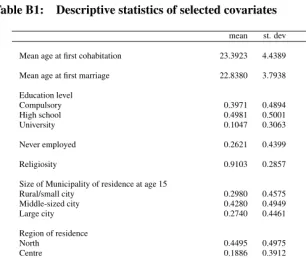
Table B1: Descriptive statistics of selected covariates
mean st. dev
Mean age at first cohabitation 23.3923 4.4389
Mean age at first marriage 22.8380 3.7938
Education level
Compulsory 0.3971 0.4894
High school 0.4981 0.5001
University 0.1047 0.3063
Never employed 0.2621 0.4399
Religiosity 0.9103 0.2857
Size of Municipality of residence at age 15
Rural/small city 0.2980 0.4575 Middle-sized city 0.4280 0.4949
Large city 0.2740 0.4461
Region of residence
North 0.4495 0.4975
Centre 0.1886 0.3912
South and islands 0.3619 0.4806
Father’s education level
Basic 0.5866 0.4925
Lower secondary school 0.2176 0.4127 High school at least 0.1578 0.3647
Not indicated 0.0380 0.1912
Family structure at age 15: without father 0.0483 0.2143