Biodiesel: A Cost-effective Fuel
Using Waste Materials
Majid Mohadesi
1* and Gholamreza Moradi
21. Department of Chemical Engineering, Faculty of Energy, Kermanshah University of Technology, Kermanshah, Iran
2. Chemical Engineering Department, Faculty of Engineering, Razi University, Kermanshah, Iran
(Received 2017.04.02, Accepted 2017.06.17)
Abstract
The main disadvantage of biodiesel is its high price. The price of bio-diesel depends on various factors such as the price of oil, methanol, cat-alyst, and labor. Among dif-ferent economic factors, oil accounts for the largest share of input costs of biodiesel production. In this study, first, suitable heterogeneous catalysts were identified for biodiesel produc-tion. Several studies were carried out on biodiesel production using het-erogeneous catalysts. All of these studies were designed to confirm that the pro-duction of biodiesel was cheaper than that of petroleum diesel. Waste materials as feedstock were used for this purpose. In transesteri-fication reaction, waste cooking oil and waste materials were used as catalysts. Alkaline earth metal oxides catalysts are the best kind of het-erogeneous catalysts. The catalytic reactivity of alkaline earth metal oxides including waste source of calcium oxide and magnesium oxide, CaO/Al2O3, CaO/SiO2, BaO/SiO2, and MgO/SiO2 were evaluated by the transesterification of oil and methanol. In this study, the costs of pro-duced biodiesel were compared for different sources. The results indi-cated that the cost of produced biodiesel using synthetic catalysts was 1.26 to 1.49 times that using natural catalysts (1.26 and 1.49 are related to waste cooking oil and refined oil, respectively). Consequently, using waste cooking oils and natural catalysts is recommended for biodiesel production. Also, n-hexane as co-solvent was used to increase the solu-bility of methanol in oil. In presence of n-hexane, the cost of biodiesel production was approximately reduced by 16%.
Keywords
Basic heterogeneous cata-lysts;
Biodiesel; Economy; Waste catalyst; Waste cooking oil.
Introduction
1 * Corresponding Author. Tel./Fax: +98 9166674989.E-mail: [email protected] (M. Mohadesi)
1. Introduction
t the present time, in order to make pro-gress in industrial machinery and move countries toward development, it is neces
sary to make use of fuels. In addition, the eco-nomic developments all over the world have in-creased the need for energy resources; as a result, fossil sources such as petroleum, coal, and natural gas have been utilized as major sources of energy. Nevertheless, the amount of fossil fuel available is limited; accordingly, many researchers have fo-cused on the utilization of alternative fuels that
can be achieved from renewable feedstock. One of the best alternatives among the renewable fuels is biodiesel, which is cleaner than other fuels and is considered to be environmentally friendly. Al-so, its functional features are almost similar to those of fossil fuels [1-8]. Biodiesel is non-toxic and biodegradable. In addition, it emits low level of pollution and provides better lubricity. As a results, when comparing common diesel fuels with biodiesel, because of its numerous benefits, biodiesel is more favored [9, 10]. Rudolph Diesel was the first person who introduced biodiesel in 1911; he used vegetable oils as an alternative fuel for a diesel engine. Since then, many other people have utilized the idea of using vegetable oils to feed engines [11].
In a technical point of view, biodiesel is a type of fuel that is made of fatty acid methyl ester or mono-alkyl esters, which are themselves extract-ed from vegetable (plant) oils or animal fats; in addition, biodiesel can be taken from other bio-mass-derived oils with some specific quality fea-tures. In order to chemically convert plant oils into FAMEs, it is necessary to carry out a trans-esterification process.
Transesterification can be performed through a number of methods including acid-catalyzed, al-kaline-catalyzed, enzyme catalyzed, or non-catalyzed process. Among the mentioned meth-ods, alkaline catalysts are more frequently used, because this method has a short reaction time as compared with other methods. In order to com-plete the above-mentioned reaction, normally, it is required to add methanol with a stoichiometric ratio of 3 parts methanol to one part plant oil [12].
While performing a transesterification process, the alcohol used in the process (such as metha-nol) reacts with the triglyceride oils, which are available in plant oils, animal fats, or recycled greases. As a result of that reaction, fatty acid al-kyl esters (biodiesel) and glycerol are produced. In order to successfully complete that reaction, the two factors of heat and strong base catalyst are required. The chemical reaction which occurs during this process is presented below [13]:
R1COOCH2
|
R2COOCH
|
R3COOCH2
+ 3CH3OH
Catalyst ↔
HOCH2
| HOCH
|
HOCH2
+ RR12COOCHCOOCH33
R3COOCH3
Triglyceride + 3MeOH Catalyst
↔ Glyserol
+ Methylesters(Biodiesel)
(1)
Both catalytic and non-catalytic mechanisms can be utilized to carry out a transesterification reac-tion. In order to perform a non-catalytic trans-esterification mechanism, supercritical conditions are needed. Because of the specific requirements for supercritical methods, it is necessary to pro-vide higher temperature and pressure; as a result, there is an increase in the parasitic energy re-quired for the process. Therefore, catalytic meth-ods are the most commonly used transesterifica-tion methods of biodiesel productransesterifica-tion, because they require low temperature and pressure [14]. The process of catalytic transesterification can be performed in different forms including homoge-neous, heterogehomoge-neous, or enzymatic [7, 15]. Recently, there has been an increasing focus on the utilization of solid catalysts for the transester-ification process, because the use of heterogene-ous catalysts can potentially help to overcome the problems with working with homogeneous cata-lysts. According to some new studies, the use of a solid base catalyst for the reaction can facilitate the transesterification of vegetable oil with meth-anol and provide mild reaction conditions [16-26].
produc-tion, the process is more efficient, continuous, high quality, and cost-effective [28]. Additionally, solid base catalysts can neutralize free fatty acid and prevent production of soaps [29]; as a result, the post-treatment (i.e., separation and purifica-tion) processes are more easily performed. Given the numerous advantages of using heterogeneous catalysts in transesterification process for bio-diesel production, many studies have increasingly focused on such catalysts over the past ten years. Recent research has also focused on synthesizing novel heterogeneous catalysts with desirable chemical and physical properties for biodiesel production. Nevertheless, it is worth noting that a heterogeneous catalyzed reaction is under the influence of a number of operation variables, feedstock quality, and reactor design [30-35]. Many heterogeneous catalysts, e.g., calcium car-bonate, sulfated zironica, zeolites, alumina loaded with alkaline metal salts, calcium oxide loaded with lithium ion, etc., have been applied for the transesterification reaction in the literature [36-41]. Among the heterogeneous catalysts, calcium oxide has been found as the potential one due to properties such as low cost, low alcohol solubility, high basic strength, non-corrosiveness, environ-ment friendliness, tolerance of moisture, and free fatty acids [42-44]. Calcium oxide can be derived from waste resources, like shells of oysters, chicken egg shells, mud crabs, and waste mol-lusks [44-48].
One of the main drawbacks of biodiesel is its high cost of production. At present time, the cost of producing biodiesel is about one and a half times the costs of petroleum diesel fuel. As the raw ma-terials and process used for biodiesel production impose high costs, the large-scale production of biodiesel has not been realized yet. Easy access to raw materials can significantly affect biodiesel production process. The availability of raw mate-rials can approximately affect the overall cost of the process by 75-90%. Accordingly, the total cost of the production can be remarkably reduced through finding and using less expensive raw ma-terials. For this reason, it is more cost-effective to take advantage of waste cooking oil, waste frying oils, and animal fats instead of refined vegetable oils. The usual method for transesterification re-action is to use homogeneous catalysts. The ap-plication of these catalysts has many drawbacks such as employing significant treatment before water washing and separating the product from homogeneous catalyst, which raise the operating
costs. Homogeneous catalysts are also sensitive to the presence of FFAs and moisture content in oil. Consequently, it is better to use heterogeneous catalysts. Many heterogeneous catalysts have been studied [16, 17, 43, 49, 50]. Research shows that, among the heterogeneous catalysts, solid base catalysts, especially alkaline earth metal ox-ides, have good performance, since they are inex-pensive and have strong basic strength [49, 51, 52].
In this study, it was tried to reduce the costs of biodiesel production. Waste materials as feed-stock were used for this purpose. In transesterifi-cation reaction, waste cooking oil and waste ma-terials were used as catalysts. The catalytic reac-tivity of alkaline earth metal oxides, including waste sources of calcium oxide and magnesium oxide, CaO/Al2O3, CaO/SiO2, BaO/SiO2, and
MgO/SiO2, was evaluated by the
transesterifica-tion of oil and methanol.
2. Methods
2.1. Materials
In this study, waste cooking oil (prepared from local restaurants), methanol 99.5% (Merck), and a heterogeneous catalyst were used for trans-esterification reaction. Several heterogeneous catalysts such as Mussel shell (collected from Persian Gulf) and demineralized (DM) water plant sedimentation were used as natural cata-lysts of transesterification reaction.
Also, various synthesized catalysts such as CaO/Al2O3, CaO/SiO2, BaO/SiO2, and MgO/SiO2
were used in transesterification reaction. Deion-ized water (DIW), nitric acid, aluminum iso-propoxide (AIP) (> 98%, Merck), and calcium ni-trate tetrahydrate (99%, Merck) were used for CaO/Al2O3 synthesis. Furthermore, Tetraethyl
orthosilicate (TEOS) (>99%, Merck), calcium ni-trate tetrahydrate (99%, Merck), deionized water, hydrochloric acid (37%, Merck), and ammonia solution (25%, Merck) were used for CaO/SiO2
catalyst synthesis. Throughout the synthesis of the catalysts, magnesium nitrate hexahydrate (Mg(NO3)2.6H2O, 99-102%, Merck) was used as a
precursor for magnesium oxide and barium ni-trate (Ba(NO3)2, 99%, Merck) was used as a
The reagents used during purification procedure including n-hexane 95% (extra pure, Merck) and methyl laurate (Methyl dodecanoate) ≥ 99.7% were supplied from Sigma as standard for GC analysis and other chemicals were purchased from a local company. Also, potassium hydroxide pellets 85% (GR for analysis, Merck) were used for determination of acidic number.
2.2. Catalysts preparation
In this study, several heterogeneous basic cata-lysts were used in transesterification reaction. The preparation method and characterization of these natural and synthesis catalysts are ex-plained in this section.
Mussel shell: Mussel shells were milled by
mor-tar and, then, fine particles (125-250 microns) were sieved. The collected particles were calcined inside the furnace at the temperature of 1050C for 2h [53].
DM water plant sedimentation: DM water plant
sedimentation was grinded by a mortar. The ob-tained powder was sieved to separate micro-particles (125-250 micron) and, then, was dried at 110C for 18h; afterwards, it was calcined at 900C in an oven for 2h [54].
CaO/SiO2, MgO/SiO2, and BaO/SiO2: As the first
step, a given amount of calcium nitrate tetrahy-drate was dissolved in deionized water. Then, hydrochloric acid and TEOS were added to the solution, which was later completely refluxed in
65˚C for 2h and 400rpm. Afterwards, ammonium
hydroxide was added to the mixture and it was
heated at 75˚C for 5h. In order to achieve a mixed
viscose gel, the surplus water was evaporated gradually. The gel, which was obtained from the previous step, was dried at 110˚C for 20h and, then, calcined at 650˚C for 3h. In the last stage, the catalyst obtained from the previous steps was crushed and sieved (particles between 125 to 150 microns) and was then used in the biodiesel pro-duction process. The same procedure was applied to synthesize MgO/SiO2 and BaO/SiO2 catalysts;
however, magnesium nitrate hexahydrate and barium nitrate were used as the precursors for MgO and BaO, respectively [55].
CaO/Al2O3: In the first step, a given amount of
aluminum isopropoxide and HNO3 were mixed
and completely refluxed in 85˚C for 1h. In the
next step, calcium nitrate tetrahydrate was added to the mixture and the extra amount of water was evaporated gradually until a mixed gel was ob-tained. The obtained gel was dried at 120˚C for
18h and, then, calcined at 500˚C for 6h [56].
2.3. Catalysts characterization
X-ray diffraction (XRD) analysis was used to characterize the crystalline phases of mussel shell, DM water plant sedimentation, CaO/SiO2,
MgO/SiO2, BaO/SiO2, and CaO/Al2O3 catalysts.
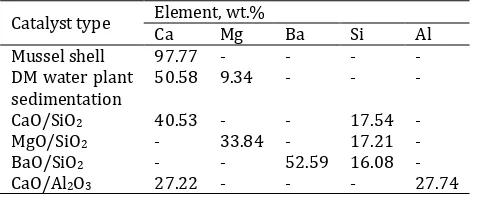
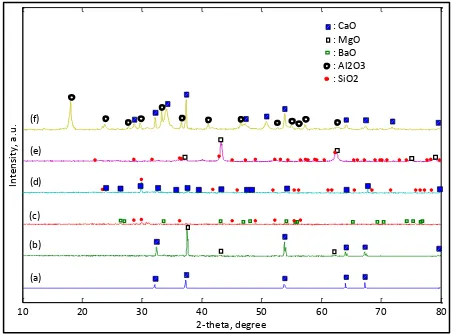
Using Cu Kα radiation, we performed XRD analy-sis. Taking into consideration 2-theta in a range of 10-80 with a step of 0.06, we plotted the inten-sity (Figs.1-a to 1-f). Moreover, in order to detect elements in the catalysts, we carried out the X-ray florescence (XRF) (Spectro Xepor 03 plus) analy-sis of catalysts (see Table 1).
2.4. The reaction procedure
Esterification reaction: Taking into account the
acidic number of waste cooking oil (2 mg KOH/g oil), esterification reaction was done at 65C for 4h by 5 wt.% of sulphuric acid as catalyst and a mixture of methanol and oil (molar ratio of 6:1) to lower the acidic number to less than 1 mg KOH/ g oil [57]. Thus, the acidic number of waste cooking oil was reduced to 0.49 mg KOH/ g oil.
Table 1. The amount of the main element in the catalysts based on XRF analysis.
Catalyst type Element, wt.% Ca Mg Ba Si Al
Mussel shell 97.77 - - - -
DM water plant
sedimentation 50.58 9.34 - - -
CaO/SiO2 40.53 - - 17.54 -
MgO/SiO2 - 33.84 - 17.21 -
BaO/SiO2 - - 52.59 16.08 -
CaO/Al2O3 27.22 - - - 27.74
Transesterification reaction: We used different
The reagents used during purification procedure including n-hexane 95% (extra pure, Merck) and methyl laurate (Methyl dodecanoate) ≥ 99.7% were supplied from Sigma as standard for GC analysis and other chemicals were purchased from a local company. Also, potassium hydroxide pellets 85% (GR for analysis, Merck) were used for determination of acidic number.
2.2. Catalysts preparation
In this study, several heterogeneous basic cata-lysts were used in transesterification reaction. The preparation method and characterization of these natural and synthesis catalysts are ex-plained in this section.
Mussel shell: Mussel shells were milled by
mor-tar and, then, fine particles (125-250 microns) were sieved. The collected particles were calcined inside the furnace at the temperature of 1050C for 2h [53].
DM water plant sedimentation: DM water plant
sedimentation was grinded by a mortar. The ob-tained powder was sieved to separate micro-particles (125-250 micron) and, then, was dried at 110C for 18h; afterwards, it was calcined at 900C in an oven for 2h [54].
CaO/SiO2, MgO/SiO2, and BaO/SiO2: As the first
step, a given amount of calcium nitrate tetrahy-drate was dissolved in deionized water. Then, hydrochloric acid and TEOS were added to the solution, which was later completely refluxed in
65˚C for 2h and 400rpm. Afterwards, ammonium
hydroxide was added to the mixture and it was
heated at 75˚C for 5h. In order to achieve a mixed
viscose gel, the surplus water was evaporated gradually. The gel, which was obtained from the previous step, was dried at 110˚C for 20h and, then, calcined at 650˚C for 3h. In the last stage, the catalyst obtained from the previous steps was crushed and sieved (particles between 125 to 150 microns) and was then used in the biodiesel pro-duction process. The same procedure was applied to synthesize MgO/SiO2 and BaO/SiO2 catalysts;
however, magnesium nitrate hexahydrate and barium nitrate were used as the precursors for MgO and BaO, respectively [55].
CaO/Al2O3: In the first step, a given amount of
aluminum isopropoxide and HNO3 were mixed
and completely refluxed in 85˚C for 1h. In the
next step, calcium nitrate tetrahydrate was added to the mixture and the extra amount of water was evaporated gradually until a mixed gel was ob-tained. The obtained gel was dried at 120˚C for
18h and, then, calcined at 500˚C for 6h [56].
2.3. Catalysts characterization
X-ray diffraction (XRD) analysis was used to characterize the crystalline phases of mussel shell, DM water plant sedimentation, CaO/SiO2,
MgO/SiO2, BaO/SiO2, and CaO/Al2O3 catalysts.
Using Cu Kα radiation, we performed XRD analy-sis. Taking into consideration 2-theta in a range of 10-80 with a step of 0.06, we plotted the inten-sity (Figs.1-a to 1-f). Moreover, in order to detect elements in the catalysts, we carried out the X-ray florescence (XRF) (Spectro Xepor 03 plus) analy-sis of catalysts (see Table 1).
2.4. The reaction procedure
Esterification reaction: Taking into account the
acidic number of waste cooking oil (2 mg KOH/g oil), esterification reaction was done at 65C for 4h by 5 wt.% of sulphuric acid as catalyst and a mixture of methanol and oil (molar ratio of 6:1) to lower the acidic number to less than 1 mg KOH/ g oil [57]. Thus, the acidic number of waste cooking oil was reduced to 0.49 mg KOH/ g oil.
Table 1. The amount of the main element in the catalysts based on XRF analysis.
Catalyst type Element, wt.% Ca Mg Ba Si Al
Mussel shell 97.77 - - - -
DM water plant
sedimentation 50.58 9.34 - - -
CaO/SiO2 40.53 - - 17.54 -
MgO/SiO2 - 33.84 - 17.21 -
BaO/SiO2 - - 52.59 16.08 -
CaO/Al2O3 27.22 - - - 27.74
Transesterification reaction: We used different
catalysts and waste cooking oil to conduct the transesterification reaction. In order to conduct all the experiments, we used a 250mL two necked flask, which was equipped with a thermometer and a condenser. The mixture of oil, methanol, and catalyst was stirred in 350rpm for 8h and the temperature was kept at 60C. After the reaction,
centrifugation was performed to separate the catalyst; then, glycerol and the produced bio-diesel were separated within a separation funnel. In order to increase the purity, the biodiesel was washed several times by water at a temperature of 90C. Finally, in order to remove the water, biodiesel was placed in an oven and heated at a temperature of 110C for 2h.
Figure 1. XRD patterns of catalysts; (a) calcined mussel shell at1050C for 2h, (b) calcined DM water plant sedi-mentation at 900C for 2h, (c) calcined BaO/SiO2 at 650C
for 3h, (d) calcined CaO/SiO2 at 650C for 3h, (e) calcined
MgO/SiO2 at 650C for 3h, and (f) calcined CaO/Al2O3 at
500C for 6h.
2.5. Product analysis
Gas chromatograph (GC) with a flame ionization detector (FID) was used to characterize fatty acid methyl ester existing in biodiesel samples. The capillary column was a BPX-70 high polar column with a length of 120m, a film thickness of 0.25μm, and an internal diameter of 0.25mm. Nitrogen was used as the carrier gas and as an auxiliary gas for FID. Using a 6890 Agilent Series Injector, 1μL
of the sample was injected. The inlet temperature of sample that was entered into the injector was 50°C; it was heated up to 230°C. Methyl laurate (C12:0), as a reference, was added into the crude biodiesel and the samples were analyzed by GC. The weight percentage of FAME or biodiesel puri-ty and conversion were calculated using Eqs. (2) and (3):
(2)
(3)
2.6. Biodiesel economy
The cost of producing biodiesel fuels depends on various factors including the following: base stock, geographic area, seasonal crop production, the price of crude petroleum, etc. The cost of bio-diesel production is normally more than twice the price of petroleum diesel. The high cost of bio-diesel is mainly attributed to the high costs of feedstock. Nevertheless, biodiesel can be pro-duced out of other feedstock, including used veg-etable oil, beef tallow, pork lard, and yellow grease. Because of its environmental advantages, biodiesel has received more attention recently. The use of cooking oils as a raw material is one of the primary options to reduce the costs of bio-diesel production, because it leads to a continu-ous transesterification process and generates high quality glycerol (a biodiesel byproduct). Be-cause of recent raises in petroleum prices and given the uncertainties concerning petroleum availability, there is an increasing interest in the use of vegetable oil fuels in diesel engines. Cur-rently, the largest part of biodiesels is produced through using soybean oil, methanol, and an alka-line catalyst. Because of the high prices of soy-bean oil, which is a food product, it is very chal-lenging to produce biodiesel cost effectively. Nev-ertheless, there are many low-cost oils and fats such as restaurant wastes and animal fats that can be converted to biodiesel. However, pro-cessing of these low-cost oils and fats is challeng-ing and problematic, because they often contain large amounts of FFAs that cannot be converted to biodiesel using an alkaline catalyst.
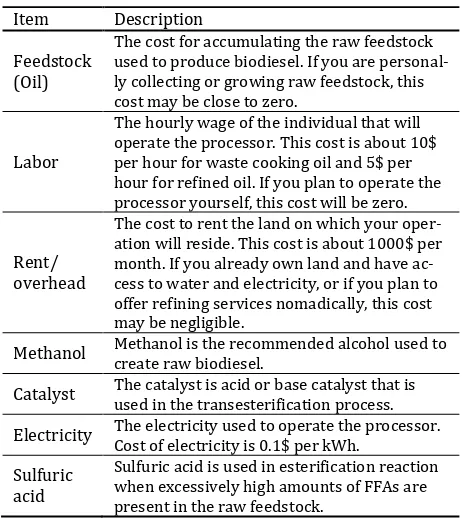
The major economic factor to consider for input costs of biodiesel production is the feedstock, which is about 80% of the total operating cost [58]. Other important costs are related to labor, methanol, and catalyst, which must be added to the feedstock. In this study, the cost of producing biodiesel from various sources is estimated. The cost of biodiesel will be obtained based on antici-pated volume and operating expenses. Cost of biodiesel is related to some items that are shown in Table 2. Costs of used materials in this study for biodiesel production are presented in Table 3. Also, density and molar mass of the materials are
shown in this table. These values are used for the mass balance.
3. Results and Discussion
3.1. Catalyst characterization
Fig. 1 showed calcined mussel shell at 1050C for 2h (Fig. 1-a), calcined DM water plant sedimenta-tion at 900C for 2h (Fig. 1-b), calcined BaO/SiO2 at 650C for 3h (Fig. 1-c), calcined CaO/SiO2 at
650C for 3h (Fig. 1-d), calcined MgO/SiO2 at 650C for 3h (Fig. 1-e), and calcined CaO/Al2O3 at 500C for 6h (Fig. 1-f), respectively. As illustrated in Fig. 1-a, the calcined mussel shell at 1050 °C consists in CaO. The uncalcined mussel shell con-sists in a high amount of calcium carbonate [53]. The peaks of Fig. 1-b are related to CaO and MgO. In calcination temperature of 900°C, CaCO3 and
MgCO3 are converted to CaO and MgO, completely
[54]. Also, Figs. 1-c, 1-d, and 1-e showed XRD pat-terns of 60% CaO/SiO2, 60% MgO/SiO2, and 60%
BaO/SiO2 catalysts, which were calcined at 650C
for 3 h. According to these figures, the main dif-fraction peaks belong to SiO2, CaO, BaO, and BaO.
The peaks in Fig. 1-f relate to Al2O3 and CaO. This
catalyst contains 40% CaO/Al2O3.
3.2. Comparison of different catalysts in the presence of waste cooking oil
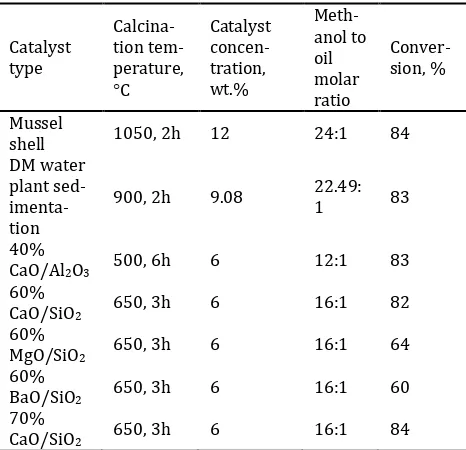
As mentioned, approximately 70-95% of the total biodiesel production cost arises from the cost of virgin vegetable oil. The cost of waste oil is very lower than that of refined oil. Thus, the optimal conditions in previous studies [53-56] were re-tested, but waste cooking oil was used instead of refined oil. First, free fatty acid in the waste cook-ing oil was decreased by esterification reaction. Then, the biodiesel was produced in a transesteri-fication reaction. In this reaction, the mixture of oil, methanol, and catalyst was stirred in 350rpm for 8h and the temperature was kept at 60C. The conversions of biodiesel in all experiments are presented in Table 4. It is clear that biodiesel conversion at all transesterification reactions is higher than 80%, except in presence of 60% MgO/SiO2 and 60% BaO/SiO2 catalysts. These
results indicate that the use of waste oil instead of refined oil in biodiesel is not really decreased. However, an esterification step must be per-formed before the main reaction.
Table 2. Effective items on biodiesel production cost and their descriptions.
Item Description
Feedstock (Oil)
The cost for accumulating the raw feedstock used to produce biodiesel. If you are personal-ly collecting or growing raw feedstock, this cost may be close to zero.
Labor
The hourly wage of the individual that will operate the processor. This cost is about 10$ per hour for waste cooking oil and 5$ per hour for refined oil. If you plan to operate the processor yourself, this cost will be zero.
Rent/ overhead
The cost to rent the land on which your oper-ation will reside. This cost is about 1000$ per month. If you already own land and have ac-cess to water and electricity, or if you plan to offer refining services nomadically, this cost may be negligible.
Methanol Methanol is the recommended alcohol used to create raw biodiesel.
Catalyst The catalyst is acid or base catalyst that is used in the transesterification process.
Electricity The electricity used to operate the processor. Cost of electricity is 0.1$ per kWh.
Sulfuric acid
Sulfuric acid is used in esterification reaction when excessively high amounts of FFAs are present in the raw feedstock.
Table 3. Cost of materials used in biodiesel production.
Material Unit Cost per unita, $
Density, kg.m-3
Molar mass, g.mol-1
Refined
soy-bean oil L 0.71 882.5 863.39
Refined corn oil L 0.79 879.5 859.90 Waste cooking
oil L 0.11 876.5 850.11
Methanol L 0.53 791.8 32.04
Sulfuric acid L 0.90 1840.0 98.08 Tetraethyl
or-thosilicate L 9.40 940.0 208.33 Calcium nitrate
tetrahydrate kg 5.00 - 236.15
Magnesium nitrate
hexahy-drate kg 5.00 - 256.41
Barium nitrate kg 10.00 - 261.34 Aluminum
iso-propoxide kg 13.00 - 204.25
a All costs have been extracted from the site www.alibaba.com/products. On this site, global information in materials and their costs exists.
3.3. Biodiesel economy
shown in this table. These values are used for the mass balance.
3. Results and Discussion
3.1. Catalyst characterization
Fig. 1 showed calcined mussel shell at 1050C for 2h (Fig. 1-a), calcined DM water plant sedimenta-tion at 900C for 2h (Fig. 1-b), calcined BaO/SiO2 at 650C for 3h (Fig. 1-c), calcined CaO/SiO2 at
650C for 3h (Fig. 1-d), calcined MgO/SiO2 at 650C for 3h (Fig. 1-e), and calcined CaO/Al2O3 at 500C for 6h (Fig. 1-f), respectively. As illustrated in Fig. 1-a, the calcined mussel shell at 1050 °C consists in CaO. The uncalcined mussel shell con-sists in a high amount of calcium carbonate [53]. The peaks of Fig. 1-b are related to CaO and MgO. In calcination temperature of 900°C, CaCO3 and
MgCO3 are converted to CaO and MgO, completely
[54]. Also, Figs. 1-c, 1-d, and 1-e showed XRD pat-terns of 60% CaO/SiO2, 60% MgO/SiO2, and 60%
BaO/SiO2 catalysts, which were calcined at 650C
for 3 h. According to these figures, the main dif-fraction peaks belong to SiO2, CaO, BaO, and BaO.
The peaks in Fig. 1-f relate to Al2O3 and CaO. This
catalyst contains 40% CaO/Al2O3.
3.2. Comparison of different catalysts in the presence of waste cooking oil
As mentioned, approximately 70-95% of the total biodiesel production cost arises from the cost of virgin vegetable oil. The cost of waste oil is very lower than that of refined oil. Thus, the optimal conditions in previous studies [53-56] were re-tested, but waste cooking oil was used instead of refined oil. First, free fatty acid in the waste cook-ing oil was decreased by esterification reaction. Then, the biodiesel was produced in a transesteri-fication reaction. In this reaction, the mixture of oil, methanol, and catalyst was stirred in 350rpm for 8h and the temperature was kept at 60C. The conversions of biodiesel in all experiments are presented in Table 4. It is clear that biodiesel conversion at all transesterification reactions is higher than 80%, except in presence of 60% MgO/SiO2 and 60% BaO/SiO2 catalysts. These
results indicate that the use of waste oil instead of refined oil in biodiesel is not really decreased. However, an esterification step must be per-formed before the main reaction.
Table 2. Effective items on biodiesel production cost and their descriptions.
Item Description
Feedstock (Oil)
The cost for accumulating the raw feedstock used to produce biodiesel. If you are personal-ly collecting or growing raw feedstock, this cost may be close to zero.
Labor
The hourly wage of the individual that will operate the processor. This cost is about 10$ per hour for waste cooking oil and 5$ per hour for refined oil. If you plan to operate the processor yourself, this cost will be zero.
Rent/ overhead
The cost to rent the land on which your oper-ation will reside. This cost is about 1000$ per month. If you already own land and have ac-cess to water and electricity, or if you plan to offer refining services nomadically, this cost may be negligible.
Methanol Methanol is the recommended alcohol used to create raw biodiesel.
Catalyst The catalyst is acid or base catalyst that is used in the transesterification process.
Electricity The electricity used to operate the processor. Cost of electricity is 0.1$ per kWh.
Sulfuric acid
Sulfuric acid is used in esterification reaction when excessively high amounts of FFAs are present in the raw feedstock.
Table 3. Cost of materials used in biodiesel production.
Material Unit Cost per unita, $
Density, kg.m-3 Molar mass, g.mol-1 Refined
soy-bean oil L 0.71 882.5 863.39
Refined corn oil L 0.79 879.5 859.90 Waste cooking
oil L 0.11 876.5 850.11
Methanol L 0.53 791.8 32.04
Sulfuric acid L 0.90 1840.0 98.08 Tetraethyl
or-thosilicate L 9.40 940.0 208.33 Calcium nitrate
tetrahydrate kg 5.00 - 236.15
Magnesium nitrate
hexahy-drate kg 5.00 - 256.41
Barium nitrate kg 10.00 - 261.34 Aluminum
iso-propoxide kg 13.00 - 204.25
a All costs have been extracted from the site www.alibaba.com/products. On this site, global information in materials and their costs exists.
3.3. Biodiesel economy
The utilization of oil and catalyst from waste sources could also counter environmental dam-age. Consequently, we focused on the exploitation of waste materials as catalysts and waste cooking oil for the production of biodiesel. The costs of
the best synthesized catalysts in this study (CaO/Al2O3, CaO/SiO2, MgO/SiO2, and BaO/SiO2)
were calculated using their precursors’ infor-mation. These costs are shown in Table 5. Also, the costs of the other items in biodiesel produc-tion were listed in Tables 2 and 3.
Table 4. Comparison of biodiesel conversion using differ-ent catalysts in the presence of waste cooking oil at its optimal conditions (stirrer speed of 350rpm, reaction temperature of 60C, and reaction time of 8h).
Catalyst type Calcina-tion tem-perature, C Catalyst concen-tration, wt.% Meth-anol to oil molar ratio Conver-sion, % Mussel
shell 1050, 2h 12 24:1 84
DM water plant sed- imenta-tion
900, 2h 9.08 22.49:1 83
40%
CaO/Al2O3 500, 6h 6 12:1 83
60%
CaO/SiO2 650, 3h 6 16:1 82
60%
MgO/SiO2 650, 3h 6 16:1 64
60%
BaO/SiO2 650, 3h 6 16:1 60
70%
CaO/SiO2 650, 3h 6 16:1 84
A comparative study was carried out about the cost of the produced biodiesel. Using the costs presented in Tables 2, 3, and 5, the cost of the produced biodiesels was calculated from different sources. A process for biodiesel production was considered in a batch reactor with a capacity of 500 gallons (1890L) per batch. The biodiesel cost calculations for different catalysts and oils were performed on this basis (1890L per batch). In addition to reaction time, 2h was considered to fill, empty, and clean the reactors.
Also, 25 days in a month were considered as working days. The information about electricity, dry-wash medium, and other items was extracted from Verde Biofuel site [59]. The price of pro-duced biodiesel using different materials was cal-culated by production cost calculator. The cost calculation procedure of produced biodiesel from waste cooking oil in the presence of mussel shell catalyst and n-hexane at optimum conditions is presented in Table 6.
Table 5. Costs of catalysts used in transesterification re-action.
Catalyst type Catalyst loading, wt.% Cost, $.kg-1
CaO/Al2O3 40 39.67
CaO/SiO2 60 26.50
BaO/SiO2 60 24.09
MgO/SiO2 60 32.95
CaO/SiO2 70 25.14
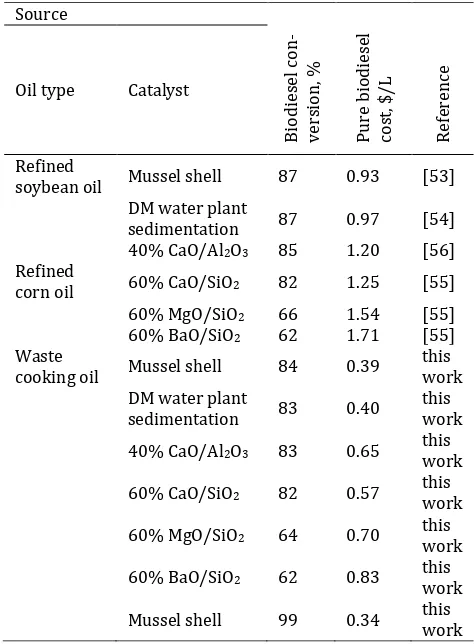
As shown in this table (Table 6), the cost of pro-ducing one liter of biodiesel is equal to 0.33 $. Through dividing produced biodiesel cost by its conversion, pure biodiesel cost was obtained. Fi-nally, the pure biodiesels costs at various condi-tions and their conversions are shown in Table 7. The cost of produced biodiesel using refined oil and synthesized heterogeneous catalysts is more than 1.2$ per liter [60]. Employing natural cata-lysts instead of synthetic catacata-lysts reduces the biodiesel production cost to 1$/L; however, the production cost of biodiesel is higher than that of diesel (the price of diesel is 0.9$/L) [60]. Thus, in this study, waste cooking oils and waste catalysts were used to produce biodiesel. In this case, the cost of producing one liter of pure biodiesel equals 0.39$, which is less than half the price of one liter of diesel. Finally, a co-solvent was used to reduce the cost of produced biodiesel. As a re-sult, the cost of producing one liter of pure bio-diesel using waste oil, mussel shell catalyst, and n-hexane as co-solvent is equal to 0.33$.
4. Conclusion
Mussel shell catalysts contained high amounts of CaCO3, which were converted to CaO by
calcina-tion. The calcium oxide within the catalyst was extracted by methanol during the process. There-fore, the biodiesel conversion was reduced in the catalyst reusability stage [53]. DM water plant sedimentation also contained high amounts of CaCO3 and MgCO3, which were converted to CaO
and MgO, respectively, after calcination. This catalyst had high efficiency and only a small amount of calcium oxide was extracted by meth-anol during catalyst reusing step. Thus, the bio-diesel production efficiency by reusing of catalyst did not drop too much. Less extraction rate of CaO from the DM water plant sedimentation cata-lyst than that from mussel shell catacata-lyst may be due to the presence of MgO in this catalyst [54].
Table 6. Biodiesel cost estimation on the basis of 1890L per batch (biodiesel produced from waste cooking oil in the presence of mussel shell as catalyst and n-hexane as co-solvent).
Item Unit
Co
st p
er
un
it, $
Uni
ts
p
er
bat
ch
Co
st,
$
/ba
tc
h
Co
st,
$
/L
Feedstock
(oil) L 0.11 1890 207.90 0.11
Labor h 10.00 7 70.00 0.04
Rent/
over-head Month 1000.00 85 11.76 0.01
Methanol L 0.53 427.4 226.52 0.12
Catalyst kg 0.00 20.02 0.00 0.00
n-hexane L 1.64 20.46 33.55 0.02
Electricity kWh 0.10 300 30.00 0.02
Sulfuric acid L 0.90 49.61 44.65 0.02
Tot
al
cos
t,
$
62
4.39
0.33
In order to eliminate or reduce the CaO extraction by methanol, the catalyst was placed on the sup-port. First, CaO was supported on Al2O3 by sol-gel
and impregnation method; the catalyst reusabil-ity, which was supported by sol-gel method, showed a better performance (Biodiesel conver-sion using sol-gel method after 5 times of reusing catalyst was higher than that obtained by im-pregnation method, and the CaO extraction rate
from synthesized catalyst by sol-gel method was lower than that from synthesized catalyst by im-pregnation method) [56]. However, the calcium oxide extraction was high and other supports should be used for this catalyst.
Table 7. Cost and conversion comparison of produced biodiesels from different sources.
Source
Bi
od
ie
se
l co
n-ve
rs
io
n,
%
Pu
re
bio
die
se
l
cost
, $/
L
Re
fe
re
nce
Oil type Catalyst
Refined
soybean oil Mussel shell 87 0.93 [53] DM water plant
sedimentation 87 0.97 [54] 40% CaO/Al2O3 85 1.20 [56]
Refined
corn oil 60% CaO/SiO2 82 1.25 [55] 60% MgO/SiO2 66 1.54 [55]
60% BaO/SiO2 62 1.71 [55]
Waste
cooking oil Mussel shell 84 0.39 this work DM water plant
sedimentation 83 0.40 this work 40% CaO/Al2O3 83 0.65 this work
60% CaO/SiO2 82 0.57 this work
60% MgO/SiO2 64 0.70 this work
60% BaO/SiO2 62 0.83 this work
Mussel shell 99 0.34 this work
Then, calcium oxide catalyst was supported on SiO2 using sol-gel method. The results indicated
Mussel shell catalysts contained high amounts of CaCO3, which were converted to CaO by
calcina-tion. The calcium oxide within the catalyst was extracted by methanol during the process. There-fore, the biodiesel conversion was reduced in the catalyst reusability stage [53]. DM water plant sedimentation also contained high amounts of CaCO3 and MgCO3, which were converted to CaO
and MgO, respectively, after calcination. This catalyst had high efficiency and only a small amount of calcium oxide was extracted by meth-anol during catalyst reusing step. Thus, the bio-diesel production efficiency by reusing of catalyst did not drop too much. Less extraction rate of CaO from the DM water plant sedimentation cata-lyst than that from mussel shell catacata-lyst may be due to the presence of MgO in this catalyst [54].
Table 6. Biodiesel cost estimation on the basis of 1890L per batch (biodiesel produced from waste cooking oil in the presence of mussel shell as catalyst and n-hexane as co-solvent).
Item Unit
Co st p er un it, $ Uni ts p er bat ch Co st, $ /ba tc h Co st, $ /L Feedstock
(oil) L 0.11 1890 207.90 0.11
Labor h 10.00 7 70.00 0.04
Rent/
over-head Month 1000.00 85 11.76 0.01
Methanol L 0.53 427.4 226.52 0.12
Catalyst kg 0.00 20.02 0.00 0.00
n-hexane L 1.64 20.46 33.55 0.02
Electricity kWh 0.10 300 30.00 0.02
Sulfuric acid L 0.90 49.61 44.65 0.02
Tot al cos t, $ 62 4.39 0.33
In order to eliminate or reduce the CaO extraction by methanol, the catalyst was placed on the sup-port. First, CaO was supported on Al2O3 by sol-gel
and impregnation method; the catalyst reusabil-ity, which was supported by sol-gel method, showed a better performance (Biodiesel conver-sion using sol-gel method after 5 times of reusing catalyst was higher than that obtained by im-pregnation method, and the CaO extraction rate
from synthesized catalyst by sol-gel method was lower than that from synthesized catalyst by im-pregnation method) [56]. However, the calcium oxide extraction was high and other supports should be used for this catalyst.
Table 7. Cost and conversion comparison of produced biodiesels from different sources.
Source Bi od ie se l co n-ve rs io n, % Pu re bio die se l cost , $/ L Re fe re nce
Oil type Catalyst
Refined
soybean oil Mussel shell 87 0.93 [53] DM water plant
sedimentation 87 0.97 [54] 40% CaO/Al2O3 85 1.20 [56]
Refined
corn oil 60% CaO/SiO2 82 1.25 [55] 60% MgO/SiO2 66 1.54 [55]
60% BaO/SiO2 62 1.71 [55]
Waste
cooking oil Mussel shell 84 0.39 this work DM water plant
sedimentation 83 0.40 this work 40% CaO/Al2O3 83 0.65 this work
60% CaO/SiO2 82 0.57 this work
60% MgO/SiO2 64 0.70 this work
60% BaO/SiO2 62 0.83 this work
Mussel shell 99 0.34 this work
Then, calcium oxide catalyst was supported on SiO2 using sol-gel method. The results indicated
the high amount of biodiesel conversion. Also, after 5 times of reusing catalyst, a small amount of CaO was extracted and biodiesel conversion fell slightly [55]. The kinetic studies of transester-ification [54, 60-62] showed that, at the early stages of the reaction, methanol was not soluble in oil; in addition, reaction was slower in the early stages than in the final moments. The speed of the reaction was determined by diffusion of methanol in oil film and reaction rate on catalyst surface [54, 60-62]. The results of this study showed that a growth in the concentrations of methyl ester and glycerol increased reaction rate constant and the diffusion of methanol molecules in oil film,
which were the resistors in reaction rate deter-mination [54, 60-62]. Therefore, a co-solvent (n -hexane) was used to increase the solubility of methanol in oil. This co-solvent reduced the reac-tion time from 8 to 5h [60]. In addireac-tion, the cost of biodiesel production was approximately re-duced by 16% (from 0.39$/L to 0.33$/L).
References
1. Lee, S., Posarac, D. and Ellis, N. (2012). “An experimental investigation of biodiesel syn-thesis from waste canola oil using supercriti-cal methanol.” Fuel, Vol. 91, No. 1, pp. 229-237. 2. Dias, J.M., Alvim-Ferraz, M.C., Almeida, M.F.,
Díaz, J.D.M., Polo, M.S. and Utrilla, J.R. (2012). “Selection of heterogeneous catalysts for bio-diesel production from animal fat.” Fuel, Vol. 94, pp. 418-425.
3. Roschat, W., Kacha, M., Yoosuk, B., Sudyoad-suk, T. and Promarak, V. (2012). “Biodiesel production based on heterogeneous process catalyzed by solid waste coral frag-ment.” Fuel, Vol. 98, pp. 194-202.
4. Georgogianni, K.G., Katsoulidis, A.P., Pomonis, P.J., and Kontominas, M.G. (2009). “Transester-ification of soybean frying oil to biodiesel us-ing heterogeneous catalysts.” Fuel Processing Technology, Vol. 90, No. 5, pp. 671-676.
5. Huber, G. W., Iborra, S. and Corma, A. (2006). “Synthesis of transportation fuels from bio-mass: chemistry, catalysts, and engineer-ing.” Chemical Reviews, Vol. 106, No. 9, pp. 4044-4098.
6. Lotero, E., Liu, Y., Lopez, D.E., Suwannakarn, K., Bruce, D. A. and Goodwin, J.G. (2005). “Synthe-sis of biodiesel via acid cataly“Synthe-sis.” Industrial & Engineering Chemistry Research, Vol. 44, No. 14, pp. 5353-5363.
7. Marchetti, J.M., Miguel, V.U. and Errazu, A.F. (2007). “Possible methods for biodiesel pro-duction.” Renewable and sustainable energy re-views, Vol. 11 No. 6, pp. 1300-1311.
8. Semwal, S., Arora, A.K., Badoni, R.P. and Tuli, D.K. (2011). “Biodiesel production using het-erogeneous catalysts.” Bioresource Technolo-gy, Vol. 102, No. 3, pp. 2151-2161.
9. Zabeti, M., Daud, W.M.A.W. and Aroua, M.K. (2010). “Biodiesel production using alumina-supported calcium oxide: an optimization study.” Fuel Processing Technology, Vol. 91, No. 2, pp. 243-248.
10. Jacobson, K., Gopinath, R., Meher, L.C. and Da-lai, A.K. (2008). “Solid acid catalyzed biodiesel production from waste cooking oil.” Applied Catalysis B: Environmental, Vol. 85, No. 1, pp. 86-91.
11. Pinto, A.C., Guarieiro, L.L., Rezende, M.J., Ri-beiro, N.M., Torres, E.A., Lopes, W.A. and An-drade, J.B.D. (2005). “Biodiesel: an over-view.” Journal of the Brazilian Chemical Socie-ty, Vol. 16, No. 6B, pp. 1313-1330.
12. Uriarte, F.A. (2010). “Biofuels from plant oils.” ASEAN Foundation, Jakarta, Indonesia. 13. Alba-Rubio, A.C., Castillo, M.A., Albuquerque,
M.C.G., Mariscal, R., Cavalcante, C.L. and Gra-nados, M.L. (2012). “A new and efficient pro-cedure for removing calcium soaps in bio-diesel obtained using CaO as a heterogeneous catalyst.” Fuel, Vol. 95, pp. 464-470.
14. Demirbas, A. (2005). “Biodiesel production from vegetable oils via catalytic and non-catalytic supercritical methanol transesterifi-cation methods.” Progress in Energy and Com-bustion Science, Vol. 31, No. 5, pp. 466-487. 15. Di Serio, M., Cozzolino, M., Giordano, M.,
Tes-ser, R., Patrono, P. and Santacesaria, E. (2007). “From homogeneous to heterogeneous cata-lysts in biodiesel production.” Industrial & En-gineering Chemistry Research, Vol. 46, No. 20, pp. 6379-6384.
ox-ides as the catalysts.” Bioresource Technolo-gy, Vol. 113, pp. 8-13.
17. Qing, S., Jixian, G., Yuhui, L. and Jinfu, W. (2011). “Reaction kinetics of biodiesel synthe-sis from waste oil using a carbon-based solid acid catalyst.” Chinese Journal of Chemical En-gineering, Vol. 19, No. 1, pp. 163-168.
18. Zabeti, M., Daud, W.M.A.W. and Aroua, M.K. (2009). “Optimization of the activity of CaO/Al2O3 catalyst for biodiesel production
using response surface methodology.” Applied Catalysis A: General, Vol. 366, No. 1, pp. 154-159.
19. Zabeti, M., Daud, W.M.A.W. and Aroua, M.K. (2009). “Activity of solid catalysts for biodiesel production: a review.” Fuel Processing Tech-nology, Vol. 90, No. 6, pp. 770-777.
20. Tan, T., Lu, J., Nie, K., Deng, L. and Wang, F. (2010). “Biodiesel production with immobi-lized lipase: a review.” Biotechnology Advanc-es, Vol. 28, No. 5, pp. 628-634.
21. Watanabe, Y., Shimada, Y., Sugihara, A., Noda, H., Fukuda, H. and Tominaga, Y. (2000). “Con-tinuous production of biodiesel fuel from veg-etable oil using immobilized Candida antarcti-ca lipase.” Journal of the Ameriantarcti-can Oil Chemists' Society, Vol. 77, No. 4, pp. 355-360.
22. Shah, S., Sharma, S. and Gupta, M.N. (2004). “Biodiesel preparation by lipase-catalyzed transesterification of Jatropha oil.” Energy & Fuels, Vol. 18, No. 1, pp. 154-159.
23. Chew, T.L. and Bhatia, S. (2008). “Catalytic processes towards the production of biofuels in a palm oil and oil palm biomass-based bio-refinery.” Bioresource Technology, Vol. 99, No. 17, pp. 7911-7922.
24. Singh, A.K. and Fernando, S.D. (2008). “Trans-esterification of soybean oil using heterogene-ous catalysts.” Energy & Fuels, Vol. 22, No. 3, pp. 2067-2069.
25. Lam, M.K., Lee, K.T. and Mohamed, A.R. (2010). “Homogeneous, heterogeneous and
enzymatic catalysis for transesterification of high free fatty acid oil (waste cooking oil) to biodiesel: a review.” Biotechnology Advanc-es, Vol. 28,No.4, pp. 500-518.
26. Omar, W.N.N.W. and Amin, N.A.S. (2011). “Op-timization of heterogeneous biodiesel produc-tion from waste cooking palm oil via response surface methodology.” Biomass and Bioener-gy, Vol. 35, No. 3, pp. 1329-1338.
27. Zhang, Y., Dube, M.A., McLean, D.D. L. and Kates, M. (2003). “Biodiesel production from waste cooking oil: 1. Process design and tech-nological assessment.” Bioresource Technolo-gy, Vol. 89, No. 1, pp. 1-16.
28. McNeff, C.V., McNeff, L.C., Yan, B., Nowlan, D.T., Rasmussen, M., Gyberg, A.E. and Hoye, T.R. (2008). “A continuous catalytic system for bi-odiesel production.” Applied Catalysis A: Gen-eral, Vol. 343, No.1, pp. 39-48.
29.Vicente, G., Martınez, M. and Aracil, J. (2004). “Integrated biodiesel production: a compari-son of different homogeneous catalysts sys-tems.” Bioresource Technology, Vol. 92, No. 3, pp. 297-305.
30. Gui, M.M., Lee, K.T. and Bhatia, S. (2009). “Su-percritical ethanol technology for the produc-tion of biodiesel: process optimizaproduc-tion stud-ies.” The Journal of Supercritical Fluids, Vol. 49, No. 2, pp. 286-292.
31. Liu, R., Wang, X., Zhao, X. and Feng, P. (2008). “Sulfonated ordered mesoporous carbon for catalytic preparation of biodiesel.” Carbon, Vol. 46, No. 13, pp. 1664-1669.
32. Liu, X., He, H., Wang, Y., Zhu, S. and Piao, X. (2008). “Transesterification of soybean oil to biodiesel using CaO as a solid base cata-lyst.” Fuel, Vol. 87, No. 2, pp. 216-221.
ides as the catalysts.” Bioresource Technolo-gy, Vol. 113, pp. 8-13.
17. Qing, S., Jixian, G., Yuhui, L. and Jinfu, W. (2011). “Reaction kinetics of biodiesel synthe-sis from waste oil using a carbon-based solid acid catalyst.” Chinese Journal of Chemical En-gineering, Vol. 19, No. 1, pp. 163-168.
18. Zabeti, M., Daud, W.M.A.W. and Aroua, M.K. (2009). “Optimization of the activity of CaO/Al2O3 catalyst for biodiesel production
using response surface methodology.” Applied Catalysis A: General, Vol. 366, No. 1, pp. 154-159.
19. Zabeti, M., Daud, W.M.A.W. and Aroua, M.K. (2009). “Activity of solid catalysts for biodiesel production: a review.” Fuel Processing Tech-nology, Vol. 90, No. 6, pp. 770-777.
20. Tan, T., Lu, J., Nie, K., Deng, L. and Wang, F. (2010). “Biodiesel production with immobi-lized lipase: a review.” Biotechnology Advanc-es, Vol. 28, No. 5, pp. 628-634.
21. Watanabe, Y., Shimada, Y., Sugihara, A., Noda, H., Fukuda, H. and Tominaga, Y. (2000). “Con-tinuous production of biodiesel fuel from veg-etable oil using immobilized Candida antarcti-ca lipase.” Journal of the Ameriantarcti-can Oil Chemists' Society, Vol. 77, No. 4, pp. 355-360.
22. Shah, S., Sharma, S. and Gupta, M.N. (2004). “Biodiesel preparation by lipase-catalyzed transesterification of Jatropha oil.” Energy & Fuels, Vol. 18, No. 1, pp. 154-159.
23. Chew, T.L. and Bhatia, S. (2008). “Catalytic processes towards the production of biofuels in a palm oil and oil palm biomass-based bio-refinery.” Bioresource Technology, Vol. 99, No. 17, pp. 7911-7922.
24. Singh, A.K. and Fernando, S.D. (2008). “Trans-esterification of soybean oil using heterogene-ous catalysts.” Energy & Fuels, Vol. 22, No. 3, pp. 2067-2069.
25. Lam, M.K., Lee, K.T. and Mohamed, A.R. (2010). “Homogeneous, heterogeneous and
enzymatic catalysis for transesterification of high free fatty acid oil (waste cooking oil) to biodiesel: a review.” Biotechnology Advanc-es, Vol. 28,No.4, pp. 500-518.
26. Omar, W.N.N.W. and Amin, N.A.S. (2011). “Op-timization of heterogeneous biodiesel produc-tion from waste cooking palm oil via response surface methodology.” Biomass and Bioener-gy, Vol. 35, No. 3, pp. 1329-1338.
27. Zhang, Y., Dube, M.A., McLean, D.D. L. and Kates, M. (2003). “Biodiesel production from waste cooking oil: 1. Process design and tech-nological assessment.” Bioresource Technolo-gy, Vol. 89, No. 1, pp. 1-16.
28. McNeff, C.V., McNeff, L.C., Yan, B., Nowlan, D.T., Rasmussen, M., Gyberg, A.E. and Hoye, T.R. (2008). “A continuous catalytic system for bi-odiesel production.” Applied Catalysis A: Gen-eral, Vol. 343, No.1, pp. 39-48.
29.Vicente, G., Martınez, M. and Aracil, J. (2004). “Integrated biodiesel production: a compari-son of different homogeneous catalysts sys-tems.” Bioresource Technology, Vol. 92, No. 3, pp. 297-305.
30. Gui, M.M., Lee, K.T. and Bhatia, S. (2009). “Su-percritical ethanol technology for the produc-tion of biodiesel: process optimizaproduc-tion stud-ies.” The Journal of Supercritical Fluids, Vol. 49, No. 2, pp. 286-292.
31. Liu, R., Wang, X., Zhao, X. and Feng, P. (2008). “Sulfonated ordered mesoporous carbon for catalytic preparation of biodiesel.” Carbon, Vol. 46, No. 13, pp. 1664-1669.
32. Liu, X., He, H., Wang, Y., Zhu, S. and Piao, X. (2008). “Transesterification of soybean oil to biodiesel using CaO as a solid base cata-lyst.” Fuel, Vol. 87, No. 2, pp. 216-221.
33. Liu, X., Piao, X., Wang, Y., Zhu, S. and He, H. (2008). “Calcium methoxide as a solid base catalyst for the transesterification of soybean oil to biodiesel with methanol.” Fuel, Vol. 87, No. 7, pp. 1076-1082.
34. Warabi, Y., Kusdiana, D. and Saka, S. (2004). “Reactivity of triglycerides and fatty acids of rapeseed oil in supercritical alco-hols.” Bioresource Technology, Vol. 91, No. 3, pp. 283-287.
35. Cao, W., Han, H. and Zhang, J. (2005). “Prepa-ration of biodiesel from soybean oil using su-percritical methanol and co-solvent.” Fuel, Vol. 84, No.4, pp. 347-351.
36. Kaur, M. and Ali, A. (2011). “Lithium ion im-pregnated calcium oxide as nano catalyst for the biodiesel production from karanja and Jatropha oils.” Renewable Energy, Vol. 36, No. 11, pp. 2866-2871.
37. Kouzu, M., Kasuno, T., Tajika, M., Sugimoto, Y., Yamanaka, S. and Hidaka, J. (2008). “Calcium oxide as a solid base catalyst for transesterifi-cation of soybean oil and its applitransesterifi-cation to bi-odiesel production.” Fuel, Vol. 87, No. 12, pp. 2798-2806.
38. Reddy, B.M. and Patil, M.K. (2009). “Organic syntheses and transformations catalyzed by sulfated zirconia.” Chemical reviews, Vol. 109, No. 6, pp. 2185-2208.
39. Sasidharan, M. and Kumar, R. (2004). “Trans-esterification over various zeolites under liq-uid-phase conditions.” Journal of Molecular Ca-talysis A: Chemical, Vol. 210, No. 1, pp. 93-98. 40. Benjapornkulaphong, S.,
Ngamcharussriv-ichai, C. and Bunyakiat, K. (2009). “Al2O3
-supported alkali and alkali earth metal oxides for transesterification of palm kernel oil and coconut oil.” Chemical Engineering Journal, Vol. 145, No. 3, pp. 468-474.
41. Kumar, D. and Ali, A. (2010). “Nanocrystalline lithium ion impregnated calcium oxide as het-erogeneous catalyst for transesterification of high moisture containing cotton seed oil.” Energy & Fuels, Vol. 24, No. 3, pp. 2091-2097.
42. Tang, Y., Meng, M., Zhang, J. and Lu, Y. (2011). “Efficient preparation of biodiesel from
rape-seed oil over modified CaO.” Applied Energy, Vol. 88, pp. 2735-2739.
43. Kouzu, M., Kasuno, T., Tajika, M., Yamanaka, S. and Hidaka, J. (2008). “Active phase of calcium oxide used as solid base catalyst for trans-esterification of soybean oil with refluxing methanol.” Applied Catalysis A: General, Vol. 334, No. 1, pp. 357-365.
44. Boey, P.L., Maniam, G.P. and Hamid, S.A. (2011). “Performance of calcium oxide as a heterogeneous catalyst in biodiesel produc-tion: a review.” Chemical Engineering Jour-nal, Vol. 168, No. 1, pp. 15-22.
45. Nakatani, N., Takamori, H., Takeda, K. and Sa-kugawa, H. (2009). “Transesterification of soybean oil using combusted oyster shell waste as a catalyst.” Bioresource Technolo-gy, Vol. 100, No. 3, pp. 1510-1513.
46. Boey, P.L., Maniam, G.P. and Hamid, S. A. (2009). “Biodiesel production via transesteri-fication of palm olein using waste mud crab (Scylla serrata) shell as a heterogeneous” cata-lyst. Bioresource Technology, Vol. 100, No. 24, pp. 6362-6368.
47. Boey, P.L., Maniam, G.P. and Hamid, S.A. (2009). “Utilization of waste crab shell (Scylla serrata) as a catalyst in palm olein transesteri-fication.” Journal of Oleo Science, Vol. 58, No. 10, pp. 499-502.
48. Viriya-empikul, N., Krasae, P., Puttasawat, B., Yoosuk, B., Chollacoop, N. and Faungnawakij, K. (2010). “Waste shells of mollusk and egg as biodiesel production catalysts.” Bioresource Technology, Vol. 101, No. 10, pp. 3765-3767. 49. Endalew, A.K., Kiros, Y. and Zanzi, R. (2011).
“Inorganic heterogeneous catalysts for bio-diesel production from vegetable oils.” Biomass and bioenergy, Vol. 35, No. 9, pp. 3787-3809.
bio-diesel production.” Fuel, Vol. 92, No. 1, pp. 9-15.
51. Sharma, Y.C., Singh, B. and Korstad, J. (2011). “Latest developments on application of heter-ogenous basic catalysts for an efficient and ecofriendly synthesis of biodiesel: a re-view.” Fuel, Vol. 90, No. 4, pp. 1309-1324. 52. Lapuerta, M., Rodríguez-Fernández, J. and
Agudelo, J.R. (2008). “Diesel particulate emis-sions from used cooking oil bio-diesel.” Bioresource Technology, Vol. 99, No. 4, pp. 731-740.
53. Rezaei, R., Mohadesi, M. and Moradi, G. R. (2013). “Optimization of biodiesel production using waste mussel shell catalyst.” Fuel, Vol. 109, pp. 534-541.
54. Moradi, G., Mohadesi, M., Hosseini, S., Davoodbeygi, Y. and Moradi, R. (2016). “DM Water Plant Sedimentation as a Cheap and Waste Source of Catalyst for Biodiesel Produc-tion.” International Journal of Chemical Reactor Engineering, Vol. 14, No. 1, pp. 113-124.
55. Mohadesi, M., Hojabri, Z. and Moradi, G. (2014). “Biodiesel production using alkali earth metal oxides catalysts synthesized by sol-gel method.” Biofuel Research Journal, Vol. 1, No. 1, pp. 30-33.
56. Moradi, G., Mohadesi, M., Rezaei, R. and Mora-di, R. (2015). “Biodiesel Production using
CaO/γ‐Al2O3 Catalyst Synthesized by Sol‐Gel
Method.” The Canadian Journal of Chemical Engineering, Vol. 93, No. 9, pp. 1531-1538.
57. Encinar, J.M., Sánchez, N., Martínez, G. and García, L. (2011). “Study of biodiesel produc-tion from animal fats with high free fatty acid content.” Bioresource Technology, Vol. 102, No. 23, pp. 10907-10914.
58. Demirbas, A. (2009). “Biofuels securing the planet’s future energy needs.” Energy Conver-sion and Management, Vol. 50, No. 9, pp. 2239-2249.
59. http://verdebiofuel.com/price-calculator/. 60. Mohadesi, M. (2014). Preparation and
Charac-terization of Optimal Basic Heterogeneous Cat-alysts for Biodiesel Production, PhD Thesis, Ra-zi University, Kermanshah, Iran.
61. Moradi, G., Davoodbeygi, Y., Mohadesi, M. and Hosseini, S. (2015). “Kinetics of transesterifi-cation reaction using CAO/Al2O3 catalyst
syn-thesized by sol‐gel method.” The Canadian Journal of Chemical Engineering, Vol. 93, No. 5, pp. 819-824.