The development of a framework for effective interdisciplinary
behaviour change project management
*Dr Fiona Spotswood
+44 (0)117 3281960
University of the West of England
Coldharbour Road
Bristol BS16 1QY
*Corresponding author
Stella Warren
University of the West of England
Coldharbour Road
Bristol BS16 1QY
Author Biographies:
Dr Fiona Spotswood
Fiona Spotswood is Senior Lecturer in Marketing at the University of the West of England, Bristol. She has been a committed researcher and commentator in behaviour change throughout her career, and has conducted ethnographic and mixed method work around children’s materialism, childhood physical activity, passive smoking, alcohol cultures and active travel, particularly cycling. Her position as a
commentator on behaviour change has been firmly established through the ESRC-funded seminar series she leads around interdisciplinary behaviour change and her edited volume ‘Beyond Behaviour Change: Key Issues, Interdisciplinary Approaches and Future Directions’, published in March 2016.
marketing initiatives to raise awareness of and encourage healthy behaviours; gendered research in both the public, private and not-for-profit sectors; social enterprise in community health and integrated health and social care initiatives; and is a founding member of alta, a mentoring scheme to support professional women in aviation and aerospace.
The development of a framework for effective interdisciplinary
behaviour change project management
Abstract
Purpose: Interdisciplinary interventions for behaviour change are increasingly being considered a standard to aim for to maximise the potential for effective change of behaviours which have complex,
multi-layered and interrelated causes. Despite considerable emphasis on interdisciplinarity in the
behaviour change guidance (NICE, 2007; House of Lords, 2011), there is little research into the lived
experience of managers attempting interdisciplinarity in day to day intervention management. This
study sought to explore these experiences, with the aim of identifying a useful best practice framework
for interdisciplinary intervention management.
Methodology: Fourteen experts with extensive experience of managing or participating in
interdisciplinary behaviour change projects were recruited for this project. They were recruited in pairs;
each pair having worked on the same project but having come from a different background or discipline.
The panel included academics as well as third, private and public sector practitioners. A range of
behaviour change fields were included. Depth interviews were conducted to explore experiences of
behaviour change projects and a draft ‘best practice’ framework was development from a thematic
analysis of the findings. Through a series of iterations, the draft framework was amended, crosschecked
Findings: The result of this research project is an evidenced based framework for best practice in interdisciplinary behaviour change project management. The framework includes eight ‘best practice’
points which are broken down giving guidance for successful interdisciplinary intervention management:
Implications: It has been emphasised that interdisciplinarity in behaviour change intervention planning and management is vital for the future success of work in the behaviour change field. However, it is
known that interdisciplinarity is difficult to achieve and little work has been done to consider how it
might be achieved in practice.
Limitations: Although the framework is based on sound in-depth evidence, it is yet untested and future research will further refine its content.
Contribution: It is hoped that this research forms the basis for future studies considering
interdisciplinarity in behaviour change so the field might develop and strong positive outcomes be
achieved.
Introduction
Behaviour change is a hot topic amongst policymakers and academics and will continue to be so as long
as the world’s dominant challenges are caused by the actions of populations, rather than communicable
disease or ‘extra-terrestrial attack’. These problems – obesity, pollution, congestion, smoking-related
disease and many heart diseases and cancers – are often human-made (Spotswood, 2016). However,
although there is broad agreement that ‘behaviour change’ is necessary and a worthy topic of
commentary, research and political action, there are a multitude of different approaches for
conceptualising, researching and intervening, and little cohesion between them. This is despite the
growing view that interdisciplinary intervention for behaviour change is the standard to aim for, to
maximise the potential for effective change of behaviours which have complex, multi-layered and
interrelated causes. The House of Lords Science and Technology Committee, for example, concluded in
their report on behaviour change that “it is important to consider the whole range of possible
interventions when policy interventions are designed” (House of Lords, 2011, 5), implying that a
combination of approaches rather than any one particular disciplinary or methodological allegiance will
best serve the future of society.
Broadly speaking, approaches to ‘behaviour change’ include behavioural economics, social marketing,
education, health promotion, approaches based on practice theory, engineering and infrastructure
change, legislation, systems thinking, participatory and community mobilisation approaches and
technology-based approaches. Although some degree of blending naturally occurs when behaviour
change interventions are designed, there is still a lack of meaningful cross-pollination between some
sectors which have fundamentally different perspectives on framing social problems and intervening.
For example, social marketing is an inherently applied and systematic approach which relies on
lives…” (Crawshaw, 2013, 633). This compares with social practice theoretical approaches which
decentre the individual, focus on conceptualising ‘problem’ practices and bundles of practices as entities
which are performed by practitioners in particular routinized, temporally sequenced patterns (Shove,
Pantzar & Watson, 2012). Although considered conceptually advanced compared with social marketing
(Butler, Parkhill & Pidgeon, 2014), practice theory has been criticised for being abstract and hard to
apply (Sahakian & Wilhite, 2014). The two approaches could conceivably work together to overcome
each other’s limitations, but this has yet to happen.
Increasingly, social marketing practitioners have focused upstream to press strategic policy and decision
makers to remove barriers to change (for example, Gordon, 2013), and midstream to encourage
customer facing service organisations in the co-creation their services with the public they serve Russell
Bennett, Wood & Previte, 2013).
There are a range of likely obstacles to interdisciplinary collaboration in behaviour change, which include
cultural and linguistic barriers, practical meeting arrangements and theoretical incommensurability. The
literature review below explores research into interdisciplinary collaboration from the business and
science fields to consider what barriers and solutions might be applied to behaviour change. The key
gaps in this literature are around specific guidance for the practical management of interdisciplinary
behaviour change projects and particularly the existence of a framework for helping guide the
management of such projects. This is surprising given the considerable emphasis on interdisciplinarity in
the behaviour change guidance (Nice, 2007). As such, this research sets out to explore the views and
experiences of experienced project managers working in interdisciplinary behaviour change, and to
develop a framework for interdisciplinary behaviour change project management. It is hoped that this
framework will enable better collaboration across disciplines in the future, and be a starting point for
Literature Review
1. Introduction
Interdisciplinary collaboration in science has been termed the ‘mantra of science policy’ (Robertson,
Martin & Singer, 2003) and is recommended in numerous policy contexts (Butland, Jebb, Kopelman,
McPherson, Thomas, Mardell & Parry, 2007; House of Lords, 2011; Teasley & Wilinsksky, 2001) on the
basis that such an approach would help us become “more adept at reassembling the unity of knowledge
and coping with problems that are too large for any discipline to tackle alone” (Robertson, et al., 2007,
24). For example: “the medical profession has long recognized that human health depends on a
combination of physical, social, cultural and economic factors” (Rosenfield, 1992, 1343). As such there
has been a significant funding push to support interdisciplinary and often geographically dispersed
collaborations in scientific research (Pelmar & Eisenberg, 2000). Research Councils UK (RCUK) actively
encourage inter- and multidisciplinary research across all seven of the grant awarding research councils,
as reflected in their Cross-Council Funding Agreement (CCFA). For example, a £1m grant to construct a
geoengineering governance framework: a two year project involving interdisciplinary research across
economics, political science, science and technology studies, and socio legal studies (RCUK, 2016).
Global examples of such initiatives come from USA’s National Science Foundation, the Behaviour Change
Consortium (Orleans, 2005), the National Institutes of Health (NIH) Roadmap and the School of Social
Ecology at the University of California, and the Framework Programmes in the European Union
(Cummings & Kiesler, 2005).
Interdisciplinary research has been lauded as a significant evolution in scholarship for many years;
termed “the scholarship of discovery” and “the scholarship of integration” by key thinkers (Boyer, 1990).
The accepted benefits of interdisciplinarity are multifarious. It can promote innovation through a
“juxtaposition of ideas, tools and people from different domains” (Cummings & Kiesler, 2005, 704).
revealing way; and the creation of innovative concepts and methods to answer complex research
questions (Bracken & Oughton, 2006; Nissani, 1997). It has also been emphasised that pooling talents,
interests, resources and sharing time-consuming tasks and work intensity can lead to the production of a
quality project and also promote the professional growth of project participants (Le Gris, Weir, Browne,
Gafni, Stewart & Easton, 2000).
Behaviour change in health is more likely to be achieved with a comprehensive intervention approach to
the multiple layers of influence – upstream, midstream and downstream (Sallis, Owen & Fisher, 2008).
This socio-ecologic al approach has been applied to obesity, nutrition and physical activity interventions
which aimed to understand the underlying determinants of health and general lifestyle and
systematically tackle individual, environmental and social factors in combination (Wood, 2016).
Given the complexity of health and environmental ‘wicked problems’, an interdisciplinary approach has,
unsurprisingly, been considered essential for research leading to necessary behaviour change. Indeed,
there are many examples of behaviour change projects which draw on multiple disciplines to achieve
their goals. These include projects from the Sustainable Lifestyles Research Group (SLRG)1, Centre for
Urban Research (RMIT University)2, Behaviour Works Australia3, Institute for Collaboration on Health,
Intervention and Policy4 and transdisciplinary research centres to advance clinical practice in mental
health5.
2. Research on the Topic
Robertson et al. (2003) refer to the need for interdisciplinarity in behaviour change as the ‘Humpty
Dumpty Problem’, writing that “to understand the world it has seemed necessary to analyse it by
1 http://www.sustainablelifestyles.ac.uk/
2 http://cur.org.au/research-programs/beyond-behaviour-change/ 3 http://www.behaviourworksaustralia.org/about/
4 http://chip.uconn.edu/
5
breaking it into many pieces... but to act in the world... to try and address the issues for the
understanding of which highly specialized knowledge was presumably sought, we need to somehow
reassemble all the pieces” (Robertson et al., 2003, emphasis added). Öberg (2009) emphasises the
particular importance of an interdisciplinary approach to research underpinning behaviour change
intervention, highlighting that: “one has to decide what to study, according to what method, and in light
of what literature” (Öberg, 2009, 409) and that these bases lead the intervention down a particular
path. Interdisciplinarity can reduce a narrow intervention focus and open a project up to multiple
perspectives and solutions. For example, Nash et al.(Nash, Collins, Loughlin, Solbrig, Harvey,
Krishnan-Sarin, Unger, Miner, Rukstalis, Shenassa, Dube & Spirito, 2003) note how “the intricate interplay of
factors at the genetic, behavioural, environmental, community and societal levels influencing tobacco
use behaviours” require a multitude of intervention approaches (Nash et al., 2003, s41). Rosenfield
(1992), also, describes a project in which malariologists, economists, anthropologists, regional planners,
vector biologists, demographers and immunologists worked together over eight years to confer about
concepts, methods and results, and develop interventions for malaria prevention from the perspectives
of the “migrant, the mosquito, the malaria parasite, and the ministry of health” as well as “the social
and economic forces that bind these elements together” (Rosenfield, 1992, 1351). Wood (2016)
advocates a partnership approach across each level of influence, aligning different disciplines upstream,
midstream and downstream, to reduce social and health inequality through a socio-ecological model.
3. Cognate Research
As these examples imply, the successful management of interdisciplinary behaviour change
interventions involves some considerable challenge. However, this complexity is not often recognised in
the behaviour change literature, where many authors have called for an interdisciplinary approach to
understanding and changing problematic behaviour, but do not acknowledge interdisciplinarity as a
& Michie, 2008; Michie, Johnston, Hardeman, & Eccles, 2008; Robertson et al., 2003, 24; West, 2006,
2009). One exception is Orleans (2005), who raises the issue of disciplinary ‘silos’ in behaviour change
and argues that there is no framework for integrating and delivering the multitude of guidelines for
behaviour change, as each is designed to tackle a single problem behaviour.
Outside the behaviour change literature, there has been considerable attention given to the challenges
of projects combining multiple disciplines. In a business context, research has found that
interdisciplinary teams face considerable problems communicating, collaborating and ultimately
producing successful results (Gratton & Erickson, 2007; Moss Kanter, 1989, 2002). As the team sizes
grow, so too do the problems and special coordination procedures are required (Cummings and Kiesler,
2005). For example, management of interdisciplinary projects should be based on the principle of
making sure staff see the project as a whole entity rather than succumbing to competition between
teams (Gratton & Erickson, 2007). However, collaboration can be particularly difficult when
collaborators may have few, if any, existing social bonds. Often, competition can mean that trust and
effective interdependence can be slow to develop (Bryan, Magnan, Nilsson, Marcus, Tompkins &
Hutchison, 2011), particularly when collaborators have different visions of project objectives, project
funding and intellectual property. Therefore, leadership is a key aspect of successful collaboration, with
special emphasis on the interpersonal skills of CEOs (Cummings & Kiesler, 2005), but also on procedures
to encourage the effective sharing of resources and “a willingness to consider all perspectives with open
communication, collegiality, trust, and a need and respect for collaborative work” (Nash et al., 2003,
s45). Several authors have highlighted the importance of training staff in interdisciplinary thinking and
working as a way to overcome the limitations of their disciplinary starting points (Nash et al., 2003;
Öberg, 2009, 411; Rosenfield, 1992).
Unsurprisingly, the management of communication within an interdisciplinary group has been identified
newsletters, meetings or socialising (Gratton & Erickson, 2007). Several authors point out that
technological advances and computer-mediated communication have made cross-boundary
communication more feasible (Robertson et al., 2003; Cummings & Kiesler, 2005, s44; Dauphinée &
Martin, 2005, s44), but others reason that physically bring people together is required, emphasising that
sharing space and talking are essential because different disciplines tend to have different scientific
cultures (Dill, 1999; Dauphinée & Martin, 2005; Cummings & Kiesler, 2005, s44; Dalgaard, Hutchings &
Porter, 2003, 41). In any case, the barriers of communicating between different disciplinary cultures
tend to mean that integration can be a slow process (Cummings & Kiesler, 2005). Indeed, Nash et al.
(2003) have described interdisciplinary communication as “analogous to growing up in one culture and
then living within another culture. Learning the social rules and behaviours, the unstated assumptions,
and the subtle nuances that are accepted within that culture (or discipline) as obvious can be
challenging” (Nash et al., 2003, s43).
By way of summary, Gratton and Erickson categorise the solution to managing successful
interdisciplinarity projects as correct executive leadership and the correct ‘soft’ skills amongst the team
(Gratton & Erickson 2007). Along the same lines, LeGris et al. (2000) argue a need for “mutuality of
commitment, ownership, communication, negotiation, flexibility and respect” amongst team members
on the one hand, and specific organisational factors, such as distinctive organisational/disciplinary
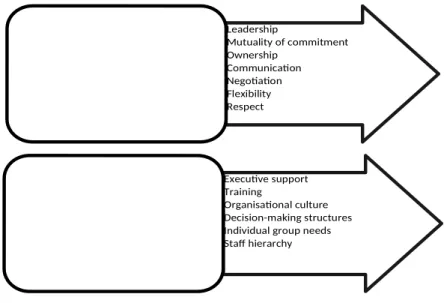
cultures and specific decision-making structures on the other. We have combined these solutions in
Figure 1:
Figure 1: Factors required to ensure effective collaboration
Adapted from LeGris et al. (2000) and Gratton & Erickson (2007)
Leadership
Mutuality of commitment Ownership
Communication Negotiation Flexibility Respect
Inter-personal
factors
Executive support Training
Organisational culture Decision-making structures Individual group needs Staff hierarchy
4. Conclusions
Despite the collective agreement on the importance in behaviour change of different disciplines working
together with maximum effectiveness to achieve project goals and yet the difficulties in achieving this,
there is a significant gap in the literature in the form of a framework specifically designed to facilitate
interdisciplinary behaviour change project management. Related frameworks include those aiming to
raise researchers’ awareness of colleagues research practices and paradigmatic bases (Öberg, 2009); to
facilitate interdisciplinary business collaborations (Gratton & Erickson, 2007); to coordinate and manage
large interdisciplinary projects (König, Diehl, Tscherning & Helming, 2013), to demonstrate the different
phases of an organisational partnership (Moss Katner, 2002); to define specific characteristics of
interdisciplinary team work in a healthcare setting (Nancarrow et al., 2013) and to explore the barriers
to partnership working (Moss Kanter, 1989). However, none guide the specific management challenges
inherent in interdisciplinary behaviour change, notwithstanding the multiple calls for frameworks to
guide the important steps and processes of collaborative work in behaviour change (Bryan et al., 2011,
8; Robertson et al., 2003; LeGris et al., 2000; Orleans, 2005), with a particular focus on solutions rather
than categories of barriers (Öberg, 2009, 413). The one such framework developed for the Behaviour
Change Consortium (Jordan, Ory & Sher Goldman, 2005) is over a decade old and has a limiting focus on
health behaviours with a ‘behavioural medicine’ perspective. The framework reported in this paper
takes a more inclusive view of a range of behaviour change perspectives and approaches and does not
favour one methodology, discipline or context.
Research Methodology
1. Introduction
The objective of the research was to explore the experiences of a range of experts who have extensive
framework for behaviour change project management best practice to be used in complex projects
involving a multitude of disciplines, agents and stakeholders.
2. Statement of the Research Issue
There is a gap in the literature between the guidance and advice related to interdisciplinary behaviour
change and the apparent dearth of interdisciplinary behaviour change projects. Based on a literature
review of interdisciplinary collaboration in the business and science arenas, it was hypothesised that
part of the reason for the resistance to interdisciplinarity in behaviour change relates to the practical
obstacles in managing the cultural differences between interdisciplinary teams working on behaviour
change projects. Therefore, this project sought to gather insights into the views and experiences of
experienced interdisciplinary behaviour change project managers in order to develop a framework for
best practice project management in this sector.
3.
Overview of the Methods Available
Given the inductive approach based on a subjective ontology, qualitative research options were those
most logically available to the researcher. In-depth interviews were the chosen method, based on the
geographically dispersed sample and flexibility of the approach in terms of adapting to telephone, skype
and face to face variations using the same interview guide. The depth of each interview to explore the
participant’s particular experiences of their own projects meant a focus group would not be suitable in
this instance.
4. Data Collection
Research was undertaken in two stages. Phase 1 was a set of in-depth interviews with 14 individuals,
recruited using a snowballing technique to a panel. Panel members were identified who worked
extensively in interdisciplinary behaviour change projects across the public, third, private and education
identified who represented projects from a wide variation of behaviour change contexts, agencies,
disciplines, funding and team sizes. There was also an effort made to include a mix of genders and ages
in the panel. Most panel members were recruited from the South West, in order to facilitate as much
face to face access as possible by the researcher on a limited travel budget. However, two interviews
were conducted on the phone and one on Skype.
Once in place, the panel was asked to identify a specific interdisciplinary project they could use as a case
study for the purposes of forthcoming interviews, and from this project to identify the contact details of
various team members who were involved from alternative agencies, disciplines and perspectives. The
researcher then contacted this list and identified a further set of seven panel members who added
depth and breadth to the panel. The result was a panel of fourteen members, each of whom was part of
a pair and had worked with their counterpart on a particular interdisciplinary behaviour change project.
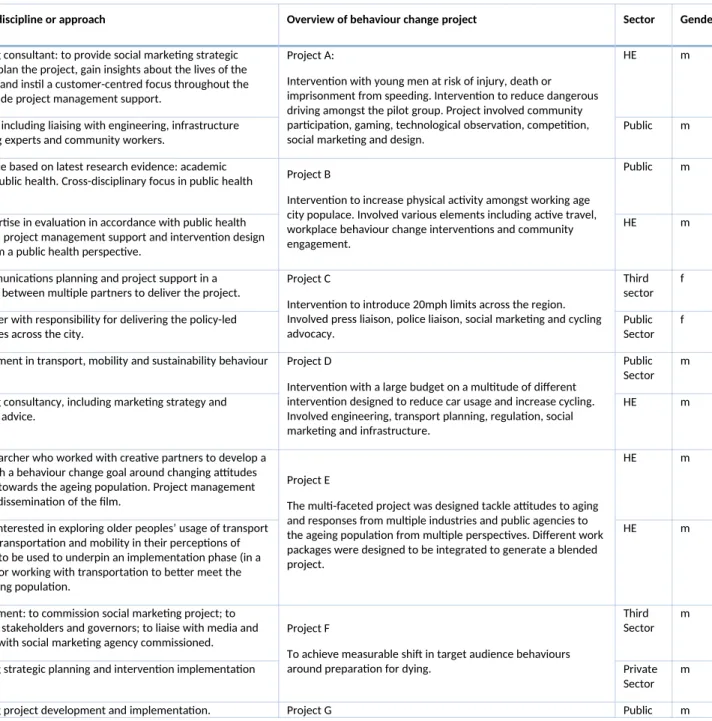
An overview of the panel characteristics can be seen in Table 1. The table shows how in some cases the
specific goals of the panel member in the case study project were subtly different, which adds particular
richness to the data collected about best practice interdisciplinary behaviour change project
management because of the particular challenges in collaborative working these variations in
perspectives posed.
Table 1: The interdisciplinary behaviour change panel
Panel member role Behaviour change
context Panel member discipline or approach Overview of behaviour change project Sector Gender Academic Researcher
and Social Marketing
Consultant Road safety
Social marketing consultant: to provide social marketing strategic insights to help plan the project, gain insights about the lives of the target audience and instil a customer-centred focus throughout the project. To provide project management support.
Project A:
Intervention with young men at risk of injury, death or imprisonment from speeding. Intervention to reduce dangerous driving amongst the pilot group. Project involved community participation, gaming, technological observation, competition, social marketing and design.
HE m
Team Leader Urban planning, including liaising with engineering, infrastructure
support, training experts and community workers.
Public m
Planning Consultant
Physical activity and obesity
To provide advice based on latest research evidence: academic background in public health. Cross-disciplinary focus in public health and transport.
Project B
Intervention to increase physical activity amongst working age city populace. Involved various elements including active travel, workplace behaviour change interventions and community engagement.
Public m
Public Health Researcher
To provide expertise in evaluation in accordance with public health criteria for rigor, project management support and intervention design consultancy from a public health perspective.
HE m
Partnership Project
Manager Cycling advocacy
Advocacy, communications planning and project support in a partnership role between multiple partners to deliver the project.
Project C
Intervention to introduce 20mph limits across the region. Involved press liaison, police liaison, social marketing and cycling advocacy.
Third sector
f
Transport Planning
Officer Transport planning
Transport planner with responsibility for delivering the policy-led transport changes across the city.
Public Sector
f
Programme Manager Sustainable transport
planning
Project management in transport, mobility and sustainability behaviour change.
Project D
Intervention with a large budget on a multitude of different intervention designed to reduce car usage and increase cycling. Involved engineering, transport planning, regulation, social marketing and infrastructure.
Public Sector
m
Academic Consultant
Increasing cycling uptake for short utility trips
Social marketing consultancy, including marketing strategy and implementation advice.
HE m
Academic Researcher
and Film Maker Attitudes to ageing
Film maker researcher who worked with creative partners to develop a fictional film with a behaviour change goal around changing attitudes and behaviours towards the ageing population. Project management support for the dissemination of the film.
Project E
The multi-faceted project was designed tackle attitudes to aging and responses from multiple industries and public agencies to the ageing population from multiple perspectives. Different work packages were designed to be integrated to generate a blended project.
HE m
Academic Researcher and Policy Advisor
Transport industry’s response to the needs of an ageing population
Social scientist interested in exploring older peoples’ usage of transport and the role of transportation and mobility in their perceptions of ageing. Insights to be used to underpin an implementation phase (in a future project) for working with transportation to better meet the needs of an ageing population.
HE m
Communications
Manager End of life planning
and preparation
Project management: to commission social marketing project; to engage funders, stakeholders and governors; to liaise with media and press and liaise with social marketing agency commissioned.
Project F
To achieve measurable shift in target audience behaviours around preparation for dying.
Third Sector
m
CEO of Behaviour Change Agency
Social marketing strategic planning and intervention implementation support.
Private Sector
m
amongst young people – health and wellbeing
outcomes To reduce alcohol related harm amongst young people in a rural holiday town. Project involved stakeholder engagement, press liaison, education outreach and communications.
Sector
Team Leader
Social disorder as a result of alcohol misuse amongst young people
Town management: including the commissioning of different behaviour change intervention strands and working across multiple stakeholders, including public health, police, tourist industry and local residents.
Public Sector
Panel members were interviewed using a moderator’s guide based on the literature review. Although
the guide formed a useful structure, interviewees were encouraged to talk freely about their
experiences. The researcher was overt about the purposes of the project, and given the recruitment of
experts to a panel, rather than participants to a sample, interviewees were encouraged to offer advice
and guidance for interdisciplinary behaviour change project management alongside personal stories of
their experiences.
In line with university ethical permissions, interviews were digitally recorded. Transcripts were analysed
using NVivo software using thematic analysis techniques based on Braun and Clarke (2006). Initial codes
were identified which were then critiqued for their duplication. Codes were grouped into themes during
an iterative process of re-reading the data and sense-making (Silverman, 2015). Umbrella codes were
then identified which had sub-codes within them. The end result was the draft framework, which
consisted of eight key statements and extensive related and supporting notes. The eight key statements
are listed below in Table 2:
Table 2: Key Statements for draft framework
Statement 1: The interdisciplinary project leader requires specific skills and an interdisciplinary mindset.
Statement 2: It is vital that all members of an interdisciplinary behaviour change project have shared goals for the project to succeed.
Statement 3: Promoting trust between members of an interdisciplinary project team is essential for success.
Statement 4: Flexibility within project partners is essential to avoid tensions over procedural protocols.
Statement 5: A willingness and skillset for supporting interdisciplinary collaboration amongst individual project members should be nurtured as an essential success factor.
Statement 6: Organisational cultural differences can be a barrier to interdisciplinary collaboration and can be overcome through the deployment of particular techniques.
Statement 7: Organisational structures can support and inhibit effective interdisciplinary behaviour change project management.
Statement 8: Project structures should be set up to facilitate effective interdisciplinary partnerships.
Having developed the draft framework and to ensure that participants’ views had been captured as
accurately as possible, it was used in Phase 2 as the basis for a survey, produced using Qualtrics, an
online survey platform. Panel members were invited to complete the survey via email and secure link,
and all panel members completed this second stage. Questions consisted of Likert scales for denoting
degrees of agreement or disagreement with the aggregated statements and supporting notes, and space
was also provided in each case for additional qualitative comments. The survey responses and the
panel’s comments were incorporated to finalise the framework.
5. Implementation
Following the initial survey feedback and further analysis of qualitative comments, the eight umbrella
statements and supporting statements were reviewed and edited to ensure the language is clear,
representative of the panel members’ views and fit for purpose. The framework was then reworked so
that it could be presented in a format that could be used in project management activities. The
framework, presented below, clearly outlines three key areas of focus for effective interdisciplinary
behaviour change project management; leadership, membership and organisation. These three focus
for effectiveness, and ‘procedures’ to help achieve these qualities. Each part is based on the insights and
views of the expert panel gathered during the research. The final framework is below in Table 3.
Table3: A Framework for Effective Interdisciplinary Behaviour Change Project Management
Leadership
Qualities Procedures
Statement 1:
The interdisciplinary behaviour change project leader requires specific skills and an interdisciplinary mindset.
An interdisciplinary behaviour change project leader will:
o Respect the individual contributions of different disciplines.
o Not be allied to one discipline
o Have had experience of interdisciplinarity through their education and/or work history.
o Be able to use appropriate language and develop the linguistic skills of the group towards a narrative that is understood clearly by all members and enables effective inter-group communication.
o Use techniques and technologies to allow all partners to have an equal voice.
o Be able to read and frame problems through different conceptual lenses.
o Enable project members to view problems through alternative and multiple lenses, and particularly to view problem behaviours through different theoretical lenses.
o Personally appreciate the value of interdisciplinarity.
o Organisations should pay special attention to the specific skills required in an interdisciplinary project manager.
o Managers should be recruited with interdisciplinarity at the heart of the job description.
o Specific performance indicators relating to interdisciplinarity should be monitored.
Membership
Qualities Procedures
Statement 2:
It is vital that all members of an interdisciplinary behaviour change project have shared goals for the
An interdisciplinary project is unlikely to succeed when project partners are forced together and are unable to see that the project has a common goal that all members share. Partners should all be willing participants and endorse an interdisciplinary approach.
o A priority order of shared project goals should be agreed by the group ahead of a project start.
o Agreed goals should be based on sound evidence to underpin the project.
project to succeed. and values are understood and respected in the definition of shared goals.
o If the shared goal or goals are not immediately apparent, then time needs to be built into early planning stages to nurture a shared agreement and vision amongst members.
o Mechanisms may be required to facilitate the nurturing of shared goals, such as workshops or presentations.
Statement 3:
Promoting trust between members of an interdisciplinary project team is essential for success.
Tensions between stakeholders (caused by silos, competing agendas, different organisational cultures and languages, and inflexibility) can lead to a lack of trust between partners and limit the effectiveness of a behaviour change project built on interdisciplinary foundations. A fully functioning interdisciplinary behaviour change project team will have fully integrated all the different disciplines and agencies represented and achieve full collaboration, which will continue throughout the project.
Trust between project partners can be facilitated, particularly through interpersonal relationships. Therefore, project management should include
o regular discussion and talk between project partners using face to face and virtual contexts.
o informal rapport-building sessions, so that errors of etiquette can be easily forgiven (see statement 4).
Statement 4:
Flexibility within project partners is essential to avoid tensions over procedural protocols.
An understanding that organisations have different protocols is essential for inter-organisational interdisciplinarity. The important foci should be on flexibility to achieve ultimate goal realisation. This includes a willingness to brush aside institutional ‘faux pas’; for instance when the incorrect ‘rank’ is inadvertently approached by a partner organisation or the incorrect process undertaken due to a lack of understanding of that organisation’s internal structures and procedures.
o Leadership should build a culture of flexibility within the project team.
o Flexibility should be rewarded and recognised.
o Flexibility can be facilitated through a development of interpersonal relationships (see statement 3).
Statement 5:
A willingness for interdisciplinary collaboration amongst individual project members can and should be nurtured as an essential success factor.
Members of a fully functioning interdisciplinary behaviour change project team will feel fully committed to the interdisciplinary nature of the project and the shared goals of the partners.
A commitment to interdisciplinarity can be nurtured by enabling, as part of the project management time and space for reflexivity on the project; particularly around the effectiveness of the integration of the different work streams and the contribution each partner is making. This can be achieved through face to face meetings and through relaxed and informal meetings with an appropriate ‘tone’ for collaboration, respect and learning.
Organisation
Qualities Procedures
Statement 6:
Organisational cultural differences can be a barrier to interdisciplinary collaboration and can be overcome through the deployment of particular
Organisations and disciplines have particular cultures which can be difficult to overcome when working in an interdisciplinary context. For example, finding a linguistic compromise is essential for the successful running of an interdisciplinary behaviour change project so that communication between team members is effective and the shared project goal is clearly defined and tackled.
When language barriers are a particular cultural problem during interdisciplinary project management, teams may
o adopt an alternative ‘compromise’ language, which can happen naturally if good interpersonal relationships have been developed.
techniques. understanding and reflexivity about language use can be developed.
o impose particular language protocols to avoid tension created by an inadvertent misuse of language.
The lengths required to achieve a share project language will depend on the project size and particular cross-disciplinary linguistic barriers faced by the group.
Other collaborative activities may be required to move teams beyond a sense of cultural misunderstanding and towards inter-cultural understanding. For example
o Group collaborative activities can be facilitated through a variety of mechanisms such as workshops and away days.
o Managers of particular workstreams could be identified from within an organisation who are particularly open to interdisciplinarity and not strongly allied to a particular working culture.
o Where appropriate, managers could set up systems (like secondments) to encourage interdisciplinary sharing, understanding and appreciation of different organisational or disciplinary cultures.
Statement 7:
Project procedures can be set up to support effective interdisciplinary behaviour change project management.
External structures for project management procedures may remove tension and enable joint goal setting by removing project
management procedures to systems and protocols which exist outside of any one discipline involved in the project. Furthermore, these structures might in some cases be monitored by external third parties, with the agreement of team members.
Procedures which may enable smooth interdisciplinary behaviour change project management include
o Pre-defining explicit group values from the start
o Agreeing standards for evaluation and research excellence which can be externally monitored, for example by using existing frameworks
o Agreeing financial and time accounting procedures which can be externally monitored
o Agreeing reporting mechanisms, which can be externally monitored
o Agreeing a set of language for formal and written communication, which can be pre-published.
However, it is essential that for such project procedures to succeed:
o Strong leadership be present from the start
o Leadership be flexible throughout the project; a new leader may refresh the project at a different stage of its development.
o Structures be set up in advance but be reflected upon throughout for their effectiveness.
o Structures be articulated clearly to project members.
o Structures be the result of collaborative agreement by the team.
Statement 8:
Project structures should be set up to facilitate effective interdisciplinary partnerships.
The structure of a project will have a huge impact on its success, particularly if no pool-fund exists and one partner is providing most or all of the funding. Project structures and hierarchies should therefore support the effective flows of information, procedural ease and clarity of management so that project goals are met.
o Group sizes and dynamics should be carefully considered. Working groups, steering groups and leadership teams should have balanced representatives from relevant parties.
o Project management software may be useful for ensuring key roles are assigned and carefully managed.
o Leadership should keep the project structure functional.
o A framework for best practice project planning and management (such as this) should be applied.
Conclusions and Recommendations
1. Introduction
It has been repeatedly emphasised that interdisciplinarity in behaviour change intervention planning
and management is vital for the future success of work in the behaviour change field. However, it is
known that interdisciplinarity is difficult to achieve and no work has been done to consider how it might
be achieved in practice. This research project, which uses evidence from a range of expert behaviour
change managers from a variety of fields, seeks to establish a framework for best practice
interdisciplinarity management of behaviour change projects. It builds on previous work by detailing a
framework for positive action rather than a list of things to avoid, and is broad enough to account for
interdisciplinary behaviour change projects across multiple sites. It is hoped that this framework will
underpin better collaboration across disciplines within behaviour change projects and form a starting
point for the framework to be bolstered by additional studies and experience.
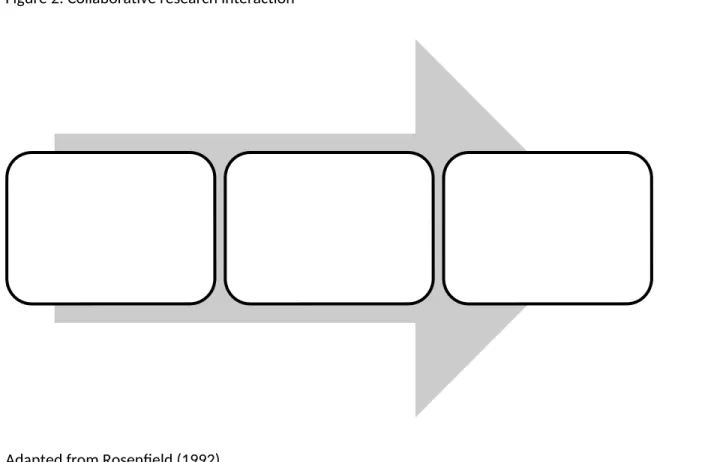
However, it is important to note that there is a difference between multi-, inter- and transdisciplinarity,
and the terms are often used interchangeably. More than multi- or interdisciplinarity, transdisciplinary
work has a more “comprehensive organizing construct” and team members “transcend their separate
conceptual, theoretical, and methodological orientations in order to develop a shared approach to the
research, building on a common conceptual framework” (Rosenfield, 1992, 1351). Some principles for
transdisciplinarity are noted by Robertson et al. (2003, 21), who also lament its rarity. They emphasise
the importance of developing a common language for the facilitation of a shared conceptual framework,
and of sharing practices and methods. Robertson et al.’s commentary builds on the definition offered by
Rosenfield (1992). She notes that creative collaboration requires more than different scientists working
on the same problem as part of the same team. “Each team member must become sufficiently familiar
enable the team to focus on the problem as part of a broader phenomenon (Rosenfield, 1992, 1344).
Indeed, true transdisciplinarity can only achieved when scientists go further than simply building a
disjointed jigsaw from the discoveries of single disciplines. They must “address problems from new
conceptual frameworks and methodological tools that are an integration of individual disciplinary
perspectives” (Nash et al., 2003, s42). Transdisciplinary scientists are described as “open minded while
theorizing from a broad, contextually oriented approach that is inclusive of different disciplinary views
and is supported by the use of multiple methodological tools” (Nash et al., 2003, s43). In the long term,
the result of transdisciplinarity is often the development of a new field, such as molecular biology or
social psychology (Jordan et al., 2005).
Figure 2: Collaborative research interaction
Adapted from Rosenfield (1992)
Multidisciplinary:
Researchers work in parallel or sequentially from disciplinary-specific bases to
address common problems
Interdisciplinary:
Researchers work jointly but still from disciplinary-specific bases to address common
problems
Transdisciplinary:
Researchers work jointly using shared conceptual frameworks drawing together
disciplinary-specific theories, concepts and approaches to
2. Conclusions
This paper argues that transdisciplinarity should be the goal of behaviour change work, but also
acknowledges the difficulties in achieving this, particularly given the huge variety in conceptual starting
points amongst the field. However, it is argued that a first step towards transdisciplinarity needs to be
the facilitation of better collaboration across disciplines and the establishing of this interdisciplinary
work as a sector standard, thereby avoiding the ‘silos’ within behaviour change reported by Orleans. She
observes that the field of behaviour change, given its complexity, has tended to attract focused and
narrow thinking, to avoid over complication and aid measurability of effect. This has had the result of
confounding “the development of integrated trans-behavioural conceptual and intervention models”
and of generating a “predominance of single-risk practice guidelines” which do not help providers
manage patients with more than one behavioural problem. It is hoped that this framework will underpin
a first step towards transdisciplinarity in behaviour change, perhaps via multi- and inter-disciplinarity.
3. Implications
This research and resulting framework makes three important contributions to the future development
of the behaviour change field. Firstly, it brings into focus the challenges in delivering interdisciplinary
behaviour change projects, which are not acknowledged in the guidance (e.g. House of Lords, 2011).
Bringing the practical challenges into the foreground, as this paper seeks to do, provides legitimacy for
conversations around disciplinary ‘culture clash’ and techniques and priorities required to maximise the
performance of interdisciplinary collaborations. Through the development of the framework for best
practice interdisciplinary behaviour change project management, the second contribution of the paper
is delivered: This framework will help practitioners and managers in behaviour change reach beyond
their own disciplines and grow the ambition of their project. Interdisicplinarity has been recognised as a
mechanism for maximising the effectiveness of behaviour change interventions, and the framework can
it is hoped that through smoother interdisciplinary project management, the behaviour change sector
might move towards transdisciplinarity, which would see individual disciplines working in a more
cohesive, blended format with shared goals and reduced obstacles related to unhelpful methodological,
conceptual or disciplinary allegiance.
4. Recommendations
Although this framework is based on sound, in-depth evidence, it is as yet untested and future research
will further refine its content. In addition, it is important to note that despite best efforts at the
recruitment stage, most of the panel members were male, and future research might seek insights from
more women in case this has a significant impact on the recommendations. Future work might build on
this study to include a larger number of panel members from a more extensive range of locations
around the UK. A version for projects in developing countries would also be a useful future addition to
the literature. It is hoped that this project will form the basis for future work on the application of
transdisciplinary behaviour change so that the stronger positive outcomes for individuals and society
might be achieved.
References
Abraham, C. and Michie, S. (2008). A Taxonomy of Behavior Change Techniques Used in Interventions.
Health Psychology [online], 27, 3, 379-387. doi: 10.1037/0278-6133.27.3.379
Boyer, E.L., (1990). Scholarship Reconsidered: Priorities of the Professoriate. Princeton, NJ: The Carnegie
Foundation for the Advancement of Teaching.
Bracken, L.J. and Oughton, E.A. (2006). “What do you mean?” The importance of language in developing
interdisciplinary research. Transactions of the Institute of British Geographers, 31, 371-382. doi:
Braun, V. and Clarke, V. (2006). Using thematic analysis in psychology. Qualitative Research in
Psychology, 3, 2, 77-101. doi: 10.1191/1478088706qp063oa.
Bryan, A.D., Magnan, R.E., Nilsson, R., Marcus, B.H., Tompkins, S.A. and Hutchison, K.E. (2011). The big
picture of individual differences in physical activity behavior change: A transdisciplinary approach.
Psychology of Sport and Exercise, 12, 1, 20-26. doi: 10.1016/j.psychsport.2010.05.002
Butland, B., Jebb, S., Kopelman, P., McPherson, K., Thomas, S., Mardell, J. and Parry, V., (2007).
Foresight: Tackling Obesities - Future Choices Project Report. London: Government Office for Science.
Butler, C., Parkhill, K.A. and Pidgeon, N. (2014). Energy Consumption and Everyday Life: Choice, values
and agency through a practice theoretical lens, Journal of Consumer Culture, 19. doi:
10.1177/1469540514553691
Crawshaw, P. (2013). Public health policy and the behavioural turn: The case of social marketing Critical
Social Policy, 33, 4, 616-637. doi: 10.1177/0261018313483489
Cummings, J.N. and Kiesler, S. (2005). Collaborative Research Across Disciplinary and Organizational
Boundaries. Social Studies of Science, 35, 5, 703-722. doi: 10.1177/0306312705055535
Dalgaard, T., Hutchings N.J. and Porter, J.R. (2003). Agroecology, scaling and interdisciplinarity.
Agriculture, Ecosystems and Environment, 100, 1, 39-51. doi: 10.1016/S0167-8809(03)00152-X
Dauphinée, D. and Martin, J.B. (2000). Breaking Down the Walls: Thoughts on the Scholarship of
Integration. Academic Medicine, 75, 9, 881-886. doi: 10.1097/00001888-200009000-00008
Dill, K.A. (1999). Strengthening biomedicine's roots. Nature, 400, 309-310. doi:10.1038/22415
French, J. (2009). The nature, development and contribution of social marketing to public health practice
Gordon, R. (2013) Unlocking the potential of upstream social marketing. European Journal of Marketing, 47, 1525-1547
Gratton, L. and Erickson, T.J. (2007). Eight Ways to Build Collaborative Teams. Harvard Business Review.
November.
House of Lords (2011). Behaviour Change. 2nd Report of Session 2010–12, Science and Technology
Select Committee. London: The Stationery Office Limited.
Jordan, P.J., Ory, M.G. and Sher Goldman, T. (2005). Yours, Mine, and Ours: The Importance of Scientific
Collaboration in Advancing the Field of Behavior Change Research. Annals of Behavioral Medicine, 29,
7-10. doi: 7-10.1207/s15324796abm2902s_3
König, B., Diehl, K., Tscherning, K. and Helming, K. (2013). A framework for structuring interdisciplinary
research management. Research Policy, 42, 261-272. doi: 10.1016/j.respol.2012.05.006
LeGris, J., Weir, R., Browne, G., Gafni, A., Stewart, L. and Easton, S. (2000). Developing a model of
collaborative research: The complexities and challenges of implementation. International Journal of
Nursing Studies, 37, 65-79. doi: 10.1016/S0020-7489(99)00036-X
Michie, S., Johnston, M., Hardeman, W. and Eccles, M. (2008). From theory to intervention: Mapping
theoretically derived behavioural determinants to behaviour change techniques. Applied Psychology, 57,
4, 660-680. doi: 10.1111/j.1464-0597.2008.00341.x
Moss Kanter, R. (1989). When Giants Learn to Dance: The Definitive Guide to Corporate Success. New
York: Touchstone.
Moss Kanter, R. (2002). Six Rules for a Happy Marriage ... uh, Partnership. Business 2.0, 3, 4, 114.
Nancarrow, S.A., Booth, A., Ariss, S., Smith, T., Enderby, P. and Roots, A. (2013). Ten principles of good
Nash, J.M., Collins, B.N., Loughlin, S.E., Solbrig, M., Harvey, R., Krishnan-Sarin, S., Unger, J., Miner, C.,
Rukstalis, M., Shenassa, E., Dube, C. and Spirito, A. (2003). Training the transdisciplinary scientist: A
general framework applied to tobacco use behavior. Nicotine and Tobacco Research. 5 (Supplement 1),
s41-s53. doi: 10.1080/14622200310001625528
NICE (2007) Behaviour change: General approaches. NICE guidelines [PH6]. Manchester: National
Institute for Health and Clinical Excellence.
Nissani, M. (1997). Ten Cheers for Interdisciplinarity: The Case for Interdisciplinary Knowledge and
Research. The Social Science Journal, 34, 2, 201-216. doi: 10.1016/S0362-3319(97)90051-3.
Öberg, G. (2009). Facilitating interdisciplinary work: Using quality assessment to create common ground.
Health Education, 57, 405-415. doi:10.1007/s10734-008-9147-z.
Orleans, C.T. (2005). The Behavior Change Consortium: Expanding the Boundaries and Impact of Health
Behavior Change Research. Annals of Behavioral Medicine. 29 (Special Supplement),76-79. doi: 10.1207/
s15324796abm2902s_11
Pellmar, T.C. and Eisenberg, L., eds. (2000). Bridging Disciplines in the Brain, Behavioral, and Clinical
Sciences. Washington, DC: National Academy Press.
RCUK (2016) Gateway to Research. Retrieved from:
http://gtr.rcuk.ac.uk/project/86EDF49B-7A60-407B-B996-9E8FE0F91D78
Robertson, D.W., Martin, D.W. & Singer, P.A. (2003). Interdisciplinary research: putting the methods
under the microscope. BMC Medical Research Methodology, 3, 20. DOI: 10.1186/1471-2288-3-20
Rosenfield, P.L. (1992). The potential of transdisciplinary research for sustaining and extending linkages
between the health and social sciences. Social Science and Medicine, 35, 11, 1343-1357.
Russell-Bennett, R., Wood, M. & Previte, J. (2013) Fresh ideas: Services thinking for social marketing.
Journal of Social Marketing, 3, 223-238.
Sahakian, M. and Wilhite, H. (2014). Making practice theory practicable: Towards more sustainable
forms of consumption. Journal of Consumer Culture, 14,1, 25-44. doi: 10.1177/1469540513505607
Sallis, J., Owen, N. & Fisher, E. (2008) Ecological models of health behaviour. Health Behavior and Health Education: Theory, Research and Practice. 4, 465-486.
Shove, E., Pantzar, M. and Watson, M. (2012). The Dynamics of Social Practice: Everyday Life and how it
Changes. London: Sage
Silverman, D. (2015). Interpreting Qualitative Data. 5th Edition. London: Sage.
Spotswood, F. (Ed) (2016). Beyond behaviour change: Key issues, interdisciplinary approaches and future
directions. Bristol: Policy Press.
Teasley, S. and Wolinksky, S. (2001). Scientific Collaborations at a Distance. Science, 202, 2254-2255.
West, R. (2006). Tobacco control: Present and future. British Medical Bulletin, 77-78, 123-136. doi:
10.1093/bmb/ldl012
West, R. (2009). The multiple facets of cigarette addiction and what they mean for encouraging and
helping smokers to stop. COPD, 6, 277-283. doi: 10.1080/15412550903049181.