Biometric Verification to Protect Interactive Login
Sessions for Secure Internet Services
N.Savitha
Assistant Professor, Department of Computer Science
University College for Women,Koti, Hyderabad.
Abst ract : Now a days security of the online based services has come to be serious challenge. Normal authentication methods rely on username and password, formulated as a single shot’s, delivering user verification most effective for the duration of login phase .Once the user’s identity has been validated, the approach resources are to be had for a fixed interval of time or except specific logout from the user.This paper explores promising possible choices offered with the aid of applying biometrics in the administration of sessions. A secure protocol is defined for perpetual authentication by way of continuous user verification. Subsequently, the use of biometric authentication permits authorizations to be received transparently i.e. with out explicitly notifying the user or requiring his interaction, which is main to warranty higher service usability.
Key Words : Web Security, Authentication, Continuous user verification, biometric Authentication.
I. INTRODUCTION
Day by day the usage of web based tasks and technologies are growing. As a result security of such webt-based tasks is properly necessary and important issue or serious effort. As a result of the contemporary broaden in the frequency and complexity of cyber-attacks biometric strategies present rising answer for secure and trusted authentication and identity verification. By using continuous verification the identity of the human running the pc is continually validated. Username and password of average authentication process is get replace by using biometric trait in case of biometric manner. Biometrics are the science and technology of determining and deciding upon the correct person identification based on physiological and behavioral traits which entails face recognition, retinal scans, fingerprint voice recognition and keystroke dynamics. Biometric user authentication
is formulated as a single shot verification .Single shot verification provides user verification only on the login time. If the identification of person is verified as soon as, then assets of the method are to be had to user for constant period of time and the identity of person is perpetual for whole session.
A common solution is to make use of very brief session timeouts and periodically request the person to enter his/her credentials again and again. To timely discover misuses of computer assets and restrict that an unauthorized person maliciously replaces an authorized one, solutions established on multi-modal bio-metric continuous authentication are proposed, turning user verification into a
continuous procedure instead of onetime
occurrence. To restrict that a single biometric trait is forged, biometrics authentication can rely on more than one biometrics characteristics . New method for users verification and session management are discussed on this paper that's defined and carried out within the context of the multi-modal biometric authentication process CASHMA-(Context aware security by Hierarchical Multilevel architecture). The CASHMA approach realizes a secure biometric authentication provider on the internet, in this clients ought to bear in mind just one username and use their biometric data as a substitute than passwords to authenticate in multiple internet offerings. CASHMA operation securely with any form of internet service for instance on-line banking, armed forces , and airport zone which require excessive safety services.
II. RELA TED W ORKS
dominant approach is one in which the cost of attack is larger than the capacities gain to the attacker. Conversely, a vulnerable method is one where the cost of attack is less than the capabilities gain. Authentication factors are grouped into these three categories: 1) what you recognize (e.g., password), 2) what you will have (e.g., token), and three) who you are (e.g., biometric).
A . Kn o wled g e -b as ed (“W h at y o u kn o w”)
These are characterised by secrecy and includes password. The term password entails single words, phrases, and PINs (personal identification numbers) that are closely stored secrets and techniques used for authentication. However there are various vulnerabilities of password-based authentication schemes. The fundamental drawback of passwords is that memorable password can as a rule be guessed or searched by means of an attacker and an extended, random, altering password is problematic to don't forget. Also, every time it is shared for authentication, so it turns into much less secret. They don't provide just right compromise detection, and they do not offer so much safety towards repudiation.
B. Ob ject -b as ed (“W h at y o u h av e”)
They are characterised by way of bodily possession or token. An identification token, safety token, access token, or without difficulty token, is a physical device presents authentication. This can be a at ease storage device containing passwords, such as a bankcard, smart card. A token can furnish three advantages when mixed with a password. One is that it can retailer or generate multiple passwords. Second skills is that it provides compromise detection considering that its absence is observable. Third talents is that it provides delivered safety towards denial of provider attacks. The two fundamental negative aspects of a token are inconvenience and price. There are additionally possibilities of misplaced or stolen token. But, there is a detailed talents of a bodily object used as an authenticator; if misplaced, the owner sees proof of this and can act accordingly.
C. Id -b as ed (“W h o y o u are”)
They're characterised via strong point to one person. A drivere’s license, passport, and so forth., all belong on this category. So does a biometric, reminiscent of a fingerprint, face, voiceprint, eye scan, or signature. One abilities of a biometric is that it is less conveniently stolen than the other authenticators, so it presents a much better safety against repudiation. For each identification documents and biometrics, the dominant security protection is that they are tricky to copy. However, if a biometric is compromised or a document is lost, they're now not as with ease replaceable as passwords or tokens.
Fig.1. Authenticator Categories
III. PROPOSED METHOD
The continuous authentication protocol allows for providing adaptive session timeouts to a web service to set up and hold a comfortable session with a client. The timeout is customized on the groundwork of the believe that the CASHMA authentication system that believe puts in the biometric subsystems and in the consumer.
A. In itial p h as e
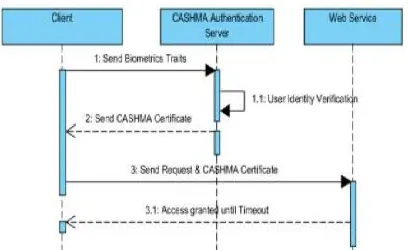
Fig 2. Initial phase of authentication server
There are two one of a kind possibilities arises. If the user identification is not established (step 1:1), new or extra biometric data is requested (again to step 1); this system is repeated except the minimal trust threshold gmin is reached. If the user
identification is efficaciously confirmed (step 1:1), the CASHMA authentication server authenticates the person, computes an preliminary timeout of length T1 at time immediate timestamp1 for the
user session. Creates the CASHMA certificate and sends it to the client. - The client forwards the CASHMA certificate to the internet service (step 2). The certificate is learn by way of internet server and authorizes the client to use the requested service (step 3) until time timestamp.
B. M ain ten an ce p h as e
The purpose of the preservation section is to shrink the hazards. It includes the steps repeated iteratively: - When the patron software acquires contemporary raw data that corresponding to one biometric trait, it have interaction them with CASHMA authentication server (step 5). The biometric data may also be received transparently to the user. When the session timeout is going to run out, the patron may just explicitly point out to its user that recent biometric data are needed. - The CASHMA authentication server verifies the identity of the user. If verification just isn't successful (step 5:1) the person is viewed as not correct and thus the CASHMA authentication server does no longer function to refresh the session timeout. This does not show that the
present session is terminated all of a sudden if yet another biometric data are supplied before the timeout expires, though it is viable to get a new certificate and refresh the timeout. If verification is victorious (step 6) the patron receives and forwards certificate to the web service, which reads the certificate. Sets the session timeout to run out at time timestamp+Ti (step 7).
Fig 3. Maintenance phase of authentication server
C. Samp le A p p licatio n Scen ario
CASHMA can authenticate to web services, ranging from services with strict security standards as on-line banking services to services with reduced protection standards as boards or social networks. Additionally, it might supply access to physical comfortable areas as a confined zone in an airport, or a navy zone (in such circumstances the authentication method can also be supported by biometric kiosk placed at the entrance of the comfortable subject). We explain the utilization of the CASHMA authentication provider through discussing the sample utility scenario in Fig. 4 the place a user we needs to log into an online Banking carrier utilising a smartphone. It is required that the user and the online service are en-rolled to the CASHMA authentication carrier. We assume that the user is utilizing a smartphone where a CASHMA software is established.
verifies the user identity, and supplies the entry if: i) it's enrolled in the CASHMA authentication service, ii) it has rights to entry the online Banking ser-vice and, iii) the obtained biometric data healthy those stored within the templates database related to the offered identifier. In case of positive user verification, the CASHMA authentication server releases an authentication certificate to the purchaser, proving its identity to 3rd events, and involves a timeout that sets the maximum length of the user session. The client grants this certificates to the net provider, which verifies it and grants access to the user.
Fig.4. Example scenario: accessing an online banking service.
The CASHMA utility operates to continually maintain the session open: it transparently acquires biometric data from the user, and sends them to the CASHMA authentication server to get a new certificate. Such certificate, which includes a new timeout, is forwarded to the online service to further extend the user session.
D.
Prototype Implementation
The implementation of the CASHMA prototype entails face, voice, iris, fingerprint and online dynamic handwritten signature as biometric traits for biometric kiosks and PCs/laptops, relying on on-board devices when available or pluggable accessories if needed. In smartphones simplest face and voice recognition are applied, iris recognition was discarded because of the difficulties in obtaining excessive-high-quality iris scans making use of the digital camera of commercial devices,
and handwritten signature recognition is
impractical on most of smart phones today on hand on market (greater displays are required). Eventually, fingerprint recognition used to be discarded because few Smartphone’s comprise a fingerprint reader. The chosen biometric traits (face and voice) swimsuit the must be got transparently for the continuous authentication protocol described.
E.
Data Protection In CASHMA
Very shortly, we propose the security solutions adopted to protect the communication channels. We anticipate the utilization of mechanisms as firewall to protect data saved each time required. Channel client CASHMA Authentication Server. The raw data received by the client sensors are transmitted to the CASHMA authentication server. This calls for ensures of confidentiality; this
channel is developed utilising TLS/SSL,
configured for asymmetric authentication (a secure channel is established opening from the public key of the CASHMA server). To provide authenticity and integrity to the user and the web service, the CASHMA server appends its digital signature to the certificates released to the client. Channel client - webservice. The user transmits its authentication certificates to the web service. We count on that the web service includes a pairs of public-private keys.
IV. CONCLUSION
the exercise of user and in the quality as well as the style of biometric data user is providing.
REFERENCES
[1]. CASHMA-“Context Aware Security by Hierarchical Multilevel Architectures”, MIUR FIRB, 2005.
[2]. Andrea Ceccarelli, Leonardo Montecchi, Francesco Brancati, PaoloLollini, Angelo Marguglio, Andrea Bondavalli,, “Continuous and. Transparent user identity verification for secure internet services”, IEEE Transactions on Dependable and Secure Computing MAY/JUNE 2015.
[3] CASHMA - Context Aware Security by Hierarchical Multilevel Architectures, MIUR FIRB 2005
[4]. L . Hong, A. Jain, and S. Pankanti, “Can Multibiometrics Improve Performance?” Proc. Workshop onAutomatic Identification Advances Technologies (Auto ID ’99) Summit, pp. 59-64, 1999.
[5]. [4] L. Montecchi, P. Lollini, A. Bondavalli, and E. La Mattina,“Quantitative Security Evaluation of a
Multi-Biometric Authentication System”, Proc. Int’l Conf. Computer Safety, Reliability and security, pp. 209-221, 2012.
[6]. S. Kumar, T. Sim, R. Janakiraman, and S. Zhang, “Using Continuous Biometric Verification to Protect Interactive Login Sessions” Proc. 21st Ann. Computer Security Applications Conf. (ACSAC ’05), pp. 441-450, 2005.
[7]. T. Sim, S. Zhang, R. Janakiraman, and S. Kumar, “Continuous Verification Using Multimodal Biometrics”, IEEE Trans. Pattern Analysis and M achine Intelligence, vol. 29, no. 4, pp. 687-700, Apr.2007. 013.
[8] A. Altinok and M. Turk, “Temporal Integration for Continuous Multimodal Biometrics,” Proc. Workshop Multimodal User Authentication, pp. 11-12, 2003.
[9] C. Roberts, “Biometric Attack Vectors and Defences,” Computers & Security, vol. 26, no. 1, pp. 14-25, 2007.
[10] S.Z. Li and A.K. Jain, Encyclopedia of Biometrics. first ed., Springer, 2009
A u th o r’s Pro file
N.Savitha working as Assistant Professor,