Clinical Interventions in Aging
Dove
press
O r I g I n A l r e s e A r C h
open access to scientific and medical research
Open Access Full Text Article
effectiveness of exercise and protein
supplementation intervention on body
composition, functional fitness, and oxidative
stress among elderly Malays with sarcopenia
suzana shahar1
norshafarina shari Kamaruddin2
Manal Badrasawi1
noor Ibrahim Mohamed sakian3
Zahara Abd Manaf1
Zaitun Yassin4
leonard Joseph5
1Dietetic Programme, 2Biomedical
Programme, 3Occupational Therapy
Programme, school of healthcare sciences, Universiti Kebangsaan Malaysia, Jalan raja Muda Abdul Aziz, Kuala lumpur, 4Department
of nutrition and Dietetics, Faculty of Medicine and health sciences, Universiti Putra Malaysia, serdang, selangor, 5Department of
Physiotherapy, school of healthcare sciences, Universiti Kebangsaan Malaysia, Jalan raja Muda Abdul Aziz, Kuala lumpur, Malaysia
Correspondence: suzana shahar Dietetic Programme,
school of healthcare sciences, Universiti Kebangsaan Malaysia, Jalan raja Muda Abdul Aziz, 50300 Kuala lumpur, Malaysia email [email protected]
Abstract: Sarcopenia, characterized as muscle loss that occurs with aging, is a major health problem in an aging population, due to its implications on mobility, quality of life, and fall risk. Protein supplementation could improve the physical fitness by increasing protein anabolism, and exercise has a documented evidence of positive effect on functional status among the elderly. However, the combined effect of both protein supplementation and exercise has not been investigated among sarcopenic elderly in the Asian population. Thus, this study aimed to determine the effectiveness of exercise intervention and protein supplementation either alone or in combination for 12 weeks, on body composition, functional fitness, and oxidative stress
among elderly Malays with sarcopenia. Sixty five sarcopenic elderly Malays aged 60−74 years
were assigned to the control group, exercise group (ExG), protein supplementation group (PrG), or the combination of exercise and protein supplementation group. A significant interaction
effect between body weight and body mass index (BMI) was observed, with the PrG (−2.1%
body weight, −1.8% BMI) showing the highest reductions. Further, there was a decrease in %
body fat (−4.5%) and an increase in fat-free mass (kg) (+5.7%) in the ExG after 12 weeks
(P , 0.05). The highest increments in lower and upper body strength were observed in the PrG
(73.2%) and ExG (47.6%), respectively. In addition, the ExG showed a reduction in superoxide dismutase (SOD) levels, and both interventions did not alter either lipid or protein oxidation. In conclusion, the exercise program was found to improve muscle strength and body composition, while protein supplementation reduced body weight and increased upper body strength, among sarcopenic elderly in Malaysia.
Keywords: protein supplement, aging population, sarcopenic elderly, Malaysia, Asian
Background
Aging is associated with muscle loss (sarcopenia) that may adversely affect the quality
of life and functional abilities.1,2 Sarcopenia is expected to be a health problem among
the aging population in Asia. It is important to note that frailty of old age has emerged as an important public health problem because it impairs mobility and quality of life,
and increases the risk of falls and the utilization of health care resources.3 There is
a need to formulate prevention and intervention strategies to deal with sarcopenia. Thus, it is a challenge for society to maintain a high level of physical activity and stay functionally fit to achieve healthy aging.
It is known that muscle strength declines by 15% per decade after the age of 50 years
and by 30% per decade after the age of 70, leading to sarcopenia.4 The prevalence
Clinical Interventions in Aging downloaded from https://www.dovepress.com/ by 118.70.13.36 on 20-Aug-2020
For personal use only.
Number of times this article has been viewed
This article was published in the following Dove Press journal: Clinical Interventions in Aging
Dovepress
suzana et al
of sarcopenia varies from 6% to 24%, depending on the geographical location, diagnostic tool, and cutoff points
used.5,6 Physical inactivity and inadequate protein intake have
been recognized to contribute to sarcopenia.7−9 Furthermore,
oxidative stress can trigger sarcopenia by increasing reac-tive oxygen species with aging, which can decrease muscle
performance and muscle mass.10
It has been demonstrated that regular exercise is effective for maintaining and promoting health, physical fitness, and functional independence in older adults, especially in terms
of endurance, muscular strength, flexibility, and balance.11
It is known that resistance and aerobic exercise might help in delaying muscle deterioration, which can progress to sarcopenia in the elderly. However, aerobic exercise alone does not contribute much to the improvement of muscle mass
strength as compared with resistance training.12 Resistance
training increases muscle mass and strength, due to the increase in the rate of synthesis of myosin heavy-chain and mixed muscle protein, and increase in muscle fiber size as
well as in capillary density in the muscle.13
Dietary protein supplementation is easily administered and with relatively low cost. It can be used in almost all aging populations, and it is intuitively and theoretically appropriate.
It can increase daily protein and energy intake.14 Yet, the
appropriate amount of protein supplementation needed to increase functional fitness has not been standardized and ranges from 1.2 g/kg/day to 1.5 g/kg/day. Protein supple-mentation can also increase protein anabolism, including protein synthesis, as well as metabolic and physical status in elderly subjects with sarcopenia. In particular, an addition of resistance exercise to protein supplementation could increase
muscle size and strength in elderly people.15
Recognizing the importance of a lifestyle that would prevent the delay of muscle loss, previous studies have been conducted to determine the benefit of exercise and nutrition
intervention among older adults.16,17 Nevertheless, to our
best knowledge, the current study is the only one using an exercise intervention and protein supplementation to reduce sarcopenia among elderly Malays with sarcopenia. Although community-based, well-rounded exercise programs have been proven to improve muscle mass and functional fitness, their efficacy in reversing sarcopenia has not been documented. Furthermore, the beneficial effects of a combination of well-rounded exercise and protein supplementation in improving body composition, physical function, and oxidative stress among sarcopenic elderly has yet to be determined. Thus, this study aimed to determine the beneficial effects of exercise and protein supplementation, either alone or in combination, on
the improvement of body composition, physical fitness, and oxidative stress among community-dwelling elderly people aged 60 years and above, with sarcopenia. It was hypothesized that a well-rounded exercise program and protein supplemen-tation could improve body composition, physical fitness, and oxidative stress among elderly people with sarcopenia. This study is a part of a larger community-based intervention (the Warga Emas Sihat Program) that aims to improve the health of the Malaysian elderly people.
Methodology
study design
This was a quasi–experimental, community-based interven-tion study, carried out from February 2010 to May 2010.
A total of 65 sarcopenic subjects (men, n = 47; women,
n = 18) were identified in the screening phase among 388
older adults (men, n = 155; women, n = 233) residing in
low-cost flats and houses in Cheras, Kuala Lumpur (the capital city of Malaysia). The subjects were divided into four groups according to the intervention and study location (senior citizen clubs in Jalan Siakap, Bandar Tun Razak, Seri Labuan, and Sri Sabah): the control group (CG), exer-cise group (ExG), protein supplementation group (PrG), and combined exercise and protein supplementation group
(Ex+PrG). The inclusion criteria were: elderly people aged
60 years old and above with sarcopenia (assessed using bio-impedance analysis, with the skeletal muscle cutoff points
of less than 10.75 kg/m2 for men and 6.75 kg/m2 for women,
as suggested by Janssen et al5); permanent residents for at
least 1 year prior to study, and with no terminal illness that could have limited their involvement and compliance to the intervention. Subjects who had been regularly consuming protein and dietary supplementation for the 3 months prior to the study and those with unstable chronic diseases were excluded. All participants were fully informed about the study and signed a consent form. The Institutional Review Boards of all participating senior citizen clubs approved the study.
The participants were gathered at community halls of the respective study locations for sociodemographic data collec-tion (including sex, age, marital status, educacollec-tional level, and employment) and health profiling. At baseline (1 week prior to the intervention), the primary outcomes (anthropometry and body composition) and secondary outcomes (fitness test and functional fitness) were measured. A 10 mL venous blood sample was drawn from the antecubital vein, with the subject in a seated position, after an overnight fast. The
samples were centrifuged at 28,000 g for 5 minutes at 4°C,
the clear supernatants were collected, and plasma was stored
Clinical Interventions in Aging downloaded from https://www.dovepress.com/ by 118.70.13.36 on 20-Aug-2020
Dovepress exercise and protein supplementation in sarcopenia
in multiple aliquots at −30°C. A dietary intake assessment
was also done at the baseline visit, using a validated diet history questionnaire interrogating for habitual food intake,
dietary pattern, and cooking methods.18
The intervention
The exercise group received approximately 60 minutes of moderately intensive, well-rounded activities in facilitated group sessions, held twice a week for 12 weeks at a local community center to ensure that participants would use the correct/recommended exercise techniques. These sessions were conducted by trained exercise instructors and supervised by the researchers. A pictorial guidebook and a compact disc (CD) were provided to each participant to assist them in per-forming the same exercise regimen, either at the center or at home. Participants were encouraged to do exercise at home. The pictorial guidebook and the CD were developed by the researchers, using trained fitness instructors and older adults as models. The program started with 10 minutes of general warm-up/aerobic exercises, including: walking and jogging on the spot; walking forwards, backwards, and sideways; arm movements; raising the head and moving it in a circular manner; moving the trunk in four directions; and pushing the knee forwards and backwards. This was followed by seven simple balance exercises, in which the participants were asked to stand on their heels; stand on one leg with the other leg on the ground or lifted behind or aside; stand on one leg while lifting up the opposite hand; and to walk foot by foot with fingers touching the foot from the back. Then, 30 minutes of resistance exercises were done, using an elastic
band (TheraBand® exercise bands, Hygenic Corporation, OH,
USA) and included: shoulder abduction; shoulder flexion; overhead press and side lateral extension; a standing double biceps curl; triceps extension; leg extension; foot extension; and plantar flexion. Finally, cool down/relaxation exercises were done for 10 minutes. The intensity of the resistance exercise was adjusted according to individual performance by changing the color of the elastic band, which had differ-ent tension levels.
The protein supplementation group received a soy protein drink (Cosway (M) Sdn. Bhd., Kuala Lumpur, Malaysia) in a powder form to maintain the protein intake of the subjects at
up to 1.5 g/kg/day. According to Wolfe et al,15 a total of 1.5 g/
kg/day can increase muscle mass and functional fitness. The energy composition of the protein supplementation contained 23% protein, 0.8% fat, and 0.3% carbohydrates. This protein supplementation was chosen because it has a high portion of protein, especially leucine, since leucine is required in a
high proportion for optimal stimulation of the rate of muscle
protein synthesis in the elderly.19
The mean protein intake of subjects at baseline was 56.7 g/ day in men and 52.5 g/day in women. An additional amount, 20 g/day and 40 g/day, of high protein supplementation in a powder form was given to men and women subjects, respec-tively. The subjects were asked to take the supplement once per day and to record their intake in a log book. The research-ers provided the protein supplements once a week to the subjects, at the allocated community center. The compliance was calculated through the sachets returned by the subjects to the researchers every week. The CG received a relaxation exercise program every 2 weeks for 3 months, supervised by the researchers, to maintain the interaction and increase the motivation of the subjects during the intervention.
study instruments
Body composition measurement
Anthropometric parameters were measured, including: body weight, to the nearest 0.1 kg, using a Tanita Digital Lithium Scale HD319 (Tanita Corp, Tokyo, Japan); height, using SECA Leicester Portable Height Measure (Seca GmbH and Co, Hamburg, Germany); and waist circumference, using a Seca measuring tape, to the nearest 0.1 cm. A Maltron Bio-Scan 916 (Maltron International Ltd, Rayleigh, UK) was used for measurement of body composition and it uses a bioimpedance analysis method.
senior Fitness Test (sFT)
Subjects carried out a 10-minute warm up exercise led by an instructor, and then they completed the SFT by Jones and
Rikli.20 The test consists of six measurements of physical
fitness: (1) the Chair Stand Test assesses lower-body strength and was scored as the total number of stands executed cor-rectly within 20 seconds; (2) the Arm Curl Test was used to assess upper body strength and was scored as the number of repetitions completed within 30 seconds; (3) the Chair Sit and Reach Test evaluates lower body flexibility and was scored as the number of centimeters short of reaching the toes (minus score) or beyond the toes (plus score); (4) the Back Scratch Test measures upper body flexibility and was scored as the number of centimeters the middle fingers were short of touching (minus score) or overlapped each other (plus score); (5) the 8-Foot Up and Go Test was used to assess dynamic balance, and for this test, the best performance time of the test trials was recorded, to 0.1 second; and finally, (6) the six-minute Walk Test which evaluates aerobic endur-ance, also was done and was scored as the total number of
Clinical Interventions in Aging downloaded from https://www.dovepress.com/ by 118.70.13.36 on 20-Aug-2020
Dovepress
suzana et al
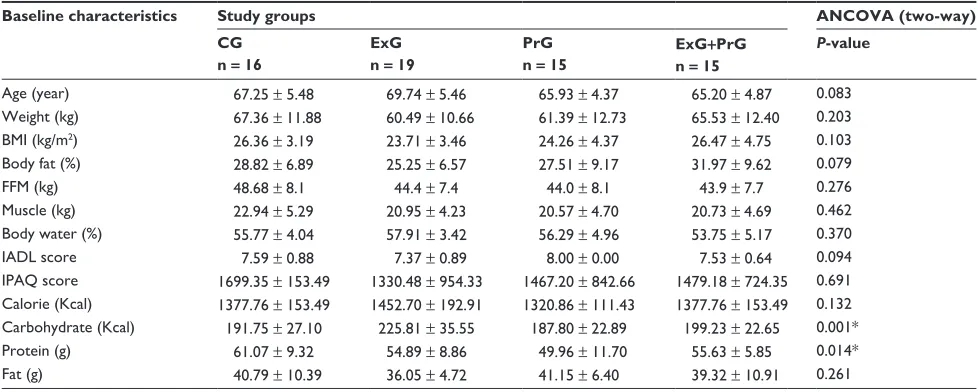
Table 1 Baseline characteristic according to intervention group
Baseline characteristics Study groups ANCOVA (two-way)
CG n = 16
ExG n = 19
PrG n = 15
ExG+PrG n = 15
P-value
Age (year) 67.25 ± 5.48 69.74 ± 5.46 65.93 ± 4.37 65.20 ± 4.87 0.083
Weight (kg) 67.36 ± 11.88 60.49 ± 10.66 61.39 ± 12.73 65.53 ± 12.40 0.203
BMI (kg/m2) 26.36 ± 3.19 23.71 ± 3.46 24.26 ± 4.37 26.47 ± 4.75 0.103
Body fat (%) 28.82 ± 6.89 25.25 ± 6.57 27.51 ± 9.17 31.97 ± 9.62 0.079
FFM (kg) 48.68 ± 8.1 44.4 ± 7.4 44.0 ± 8.1 43.9 ± 7.7 0.276
Muscle (kg) 22.94 ± 5.29 20.95 ± 4.23 20.57 ± 4.70 20.73 ± 4.69 0.462
Body water (%) 55.77 ± 4.04 57.91 ± 3.42 56.29 ± 4.96 53.75 ± 5.17 0.370
IADl score 7.59 ± 0.88 7.37 ± 0.89 8.00 ± 0.00 7.53 ± 0.64 0.094
IPAQ score 1699.35 ± 153.49 1330.48 ± 954.33 1467.20 ± 842.66 1479.18 ± 724.35 0.691
Calorie (Kcal) 1377.76 ± 153.49 1452.70 ± 192.91 1320.86 ± 111.43 1377.76 ± 153.49 0.132
Carbohydrate (Kcal) 191.75 ± 27.10 225.81 ± 35.55 187.80 ± 22.89 199.23 ± 22.65 0.001*
Protein (g) 61.07 ± 9.32 54.89 ± 8.86 49.96 ± 11.70 55.63 ± 5.85 0.014*
Fat (g) 40.79 ± 10.39 36.05 ± 4.72 41.15 ± 6.40 39.32 ± 10.91 0.261
Notes: Values are expressed as mean ± sD. *P, 0.05 is significant with baseline measurement used as covariates on ANCOVA analysis.
Abbreviations: AnCOVA, analysis of covariance; BMI, body mass index; Cg, control group; exg, exercise group; exg+Prg, combined exercise and protein supplementation group; FFM, fat-free mass; IADl, instrumental activity of daily living; IPAQ, international physical activity questionnaire; Prg, protein suplementation group; sD, standard deviation.
meters walked in 6 minutes.21 In addition, handgrip strength
was assessed as an estimate of muscle strength; functional fitness (handgrip strength) was measured using a pinchgrip Dynamometer (JAMAR Hydraulic Hand Dynamometer; Patterson Medical Holdings, Inc, Bolingbrook, IL,USA) to the nearest 0.1 kg.
Oxidative stress and hormone markers
The plasma was thawed once for the ascertainment of oxida-tive stress markers, such as superoxide dismutase enzyme
(SOD),22 and protein carbonyl.23 SOD was determined using
the Beyer and Fridovich method (assaying for superoxide
dismutase using spectrophotometry).22 Protein carbonyl was
determined using the Buss et al method for protein carbonyl
measurement.23 Lipid hydroperoxide was determined using a
kit by Cayman Chemical (Ann Arbor, MI, USA), and
glutathi-one was determined using a Merck kit (Calbiochem®; Merck
KGaA Darmstadt, Germany), respectively. The determination of insulin-like growth factor (IGF)-1 and orexin was done using an enzyme-linked immuno sorbent assay (ELISA) kit by
Cell Sciences® (Cell Sciences Inc, Canton, MA, USA), and
for interleukin (IL)-6, by an enzyme immunoassay (EIA) by Bachem (Bachem/Peninsula Laboratories, Inc., San Carlos, CA, USA).
statistical analysis
Statistical Package for Social Sciences for Windows, Version 17 (IBM Corporation, Armonk, NY, USA) was used to analyze the data collected. Descriptive analysis
was performed on demographic data, body composition, SFT results, and the oxidative stress and hormone markers. A one-way analysis of variance (ANOVA) and chi-square tests were used to compare between the intervention groups at baseline. Since the data was normally distributed, as
proven by the Shapiro−Wilk test, a two-factor analysis
of covariance (ANCOVA) was used to compare the body composition, functional fitness, and oxidative stress between intervention groups adjusted for sex and sarcopenia status (sarcopenia, lean, and obese). All tests were two-tailed, at a probability level of 0.05.
Results
A total of 65 subjects (men, n = 47; women, n = 18) completed
the intervention program, with a response rate of 86.7%. About ten participants failed to complete the intervention during the first few weeks of program because of various reasons, such family commitments, health problems, absence in the follow-up investigation period, and being busy with daily activities.
subjects’ sociodemographic data
The baseline characteristics of the 65 participants (mean
age 67.1 ± 5.3 years) are presented in Table 1. Only 7.7%
of subjects were working; only 12.3% were married and 87.7% were either single or a widow/widower. About 17.2% had no formal education, while 82.8% had formal education (completed middle and high school). Also, 13.8% had a history of geriatric falls. There were no
Clinical Interventions in Aging downloaded from https://www.dovepress.com/ by 118.70.13.36 on 20-Aug-2020
Dovepress exercise and protein supplementation in sarcopenia
significant differences with respect to sociodemography, health profile, or health practices between the intervention groups.
Intervention effect on nutritional
status and body composition
There were significant differences in carbohydrate and
pro-tein intake among the groups at baseline (P , 0.05); thus
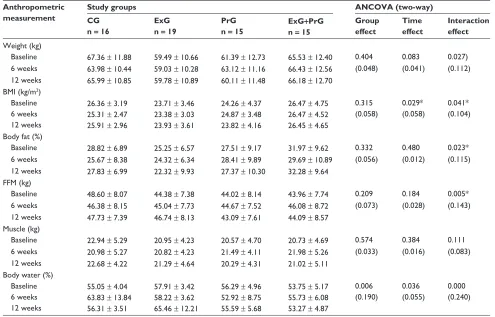
these parameters were included as covariates in the analysis. An improvement in body composition following the interven-tion was observed in this current study. After the 12-week intervention, significant interaction effects were noted for
body weight (F3,61 = 2.467) (P , 0.05), body mass index
(BMI) (F3,61= 2.278) (P , 0.05), % body fat (F3,61= 2.567)
(P , 0.05), % fat-free mass (F3,61= 3.281) (P , 0.05), and
% total body water (F3,61= 4.609) (P , 0.05). A time effect
was seen for BMI (F3,61= 3.647) (P , 0.05) and % total body
water (F3,61= 6.215) (P , 0.05), while a group effect was seen
for % total body water (F3,61= 3.413) (P , 0.05) (Table 2).
It was found that the PrG group had the largest decrease in
Table 2 Profile of anthropometry and body composition at baseline, 6 weeks, and 12 weeks of intervention, according to intervention group
Anthropometric measurement
Study groups ANCOVA (two-way)
CG n = 16
ExG n = 19
PrG
n = 15 ExGn = 15+PrG
Group effect
Time effect
Interaction effect Weight (kg)
Baseline 67.36 ± 11.88 59.49 ± 10.66 61.39 ± 12.73 65.53 ± 12.40 0.404 0.083 0.027)
6 weeks 63.98 ± 10.44 59.03 ± 10.28 63.12 ± 11.16 66.43 ± 12.56 (0.048) (0.041) (0.112)
12 weeks 65.99 ± 10.85 59.78 ± 10.89 60.11 ± 11.48 66.18 ± 12.70
BMI (kg/m2)
Baseline 6 weeks 12 weeks
26.36 ± 3.19 25.31 ± 2.47 25.91 ± 2.96
23.71 ± 3.46 23.38 ± 3.03 23.93 ± 3.61
24.26 ± 4.37 24.87 ± 3.48 23.82 ± 4.16
26.47 ± 4.75 26.47 ± 4.52 26.45 ± 4.65
0.315 (0.058)
0.029* (0.058)
0.041* (0.104)
Body fat (%)
Baseline 28.82 ± 6.89 25.25 ± 6.57 27.51 ± 9.17 31.97 ± 9.62 0.332 0.480 0.023*
6 weeks 25.67 ± 8.38 24.32 ± 6.34 28.41 ± 9.89 29.69 ± 10.89 (0.056) (0.012) (0.115)
12 weeks 27.83 ± 6.99 22.32 ± 9.93 27.37 ± 10.30 32.28 ± 9.64
FFM (kg)
Baseline 48.60 ± 8.07 44.38 ± 7.38 44.02 ± 8.14 43.96 ± 7.74 0.209 0.184 0.005*
6 weeks 46.38 ± 8.15 45.04 ± 7.73 44.67 ± 7.52 46.08 ± 8.72 (0.073) (0.028) (0.143)
12 weeks 47.73 ± 7.39 46.74 ± 8.13 43.09 ± 7.61 44.09 ± 8.57
Muscle (kg)
Baseline 22.94 ± 5.29 20.95 ± 4.23 20.57 ± 4.70 20.73 ± 4.69 0.574 0.384 0.111
6 weeks 20.98 ± 5.27 20.82 ± 4.23 21.49 ± 4.11 21.98 ± 5.26 (0.033) (0.016) (0.083)
12 weeks 22.68 ± 4.22 21.29 ± 4.64 20.29 ± 4.31 21.02 ± 5.11
Body water (%) Baseline 6 weeks 12 weeks
55.05 ± 4.04 63.83 ± 13.84 56.31 ± 3.51
57.91 ± 3.42 58.22 ± 3.62 65.46 ± 12.21
56.29 ± 4.96 52.92 ± 8.75 55.59 ± 5.68
53.75 ± 5.17 55.73 ± 6.08 53.27 ± 4.87
0.006 (0.190)
0.036 (0.055)
0.000 (0.240)
Notes: Values are expressed as mean ± sD. *P , 0.05 significant effect using ANCOVA, with sarcopenia status and sex as covariates.
Abbreviations: AnCOVA, analysis of covariance; BMI, body mass index; Cg, control group; exg, exercise group; exg+Prg, combined exercise and protein supplementation group; FFM, fat-free mass; Prg, protein suplementation group; sD, standard deviation.
body weight (∆−2.1%) and BMI (−1.8%) throughout the
12-week intervention as compared with baseline. The ExG
showed a decrease in body fat (−11.6%) and an increase in
fat-free mass (+5.1%) during the 12-week intervention as
compared with baseline.
Intervention effect on physical
fitness parameters
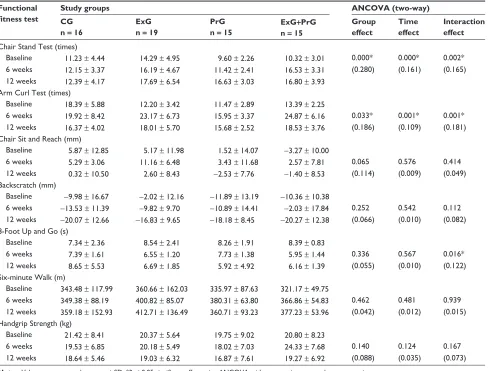
As shown in Table 3, there was an interaction effect for the
Chair Stand Test (F3,61= 3.833) (P , 0.05), Arm Curl Test
(F3,61= 4.282) (P , 0.05), and the 8-Foot Up and Go Test
(F3,61= 2.737) (P , 0.05). A significant group effect was
noted for the Chair Stand Test (F3,61= 7.533) (P , 0.05) and
Arm Curl (F3,61= 6.310) (P , 0.05), and a time effect for the
Chair Stand Test (F3,61= 11.123) (P , 0.05) and Arm Curl
Test (F3,61 = 7.082) (P , 0.05). With respect to the Chair
Stand Test, the PrG (+73.2%) showed the highest increment,
followed by the ExG + PrG (+62.8%) and ExG (23.8%)
compared with the CG (+10.3%), at 12 weeks (Figure 1).
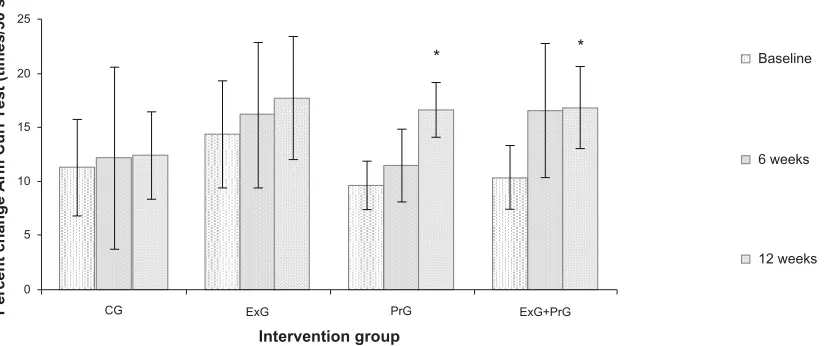
Furthermore, for the Arm Curl Test (indicating upper arm
Clinical Interventions in Aging downloaded from https://www.dovepress.com/ by 118.70.13.36 on 20-Aug-2020
Dovepress
suzana et al
Table 3 Functional fitness test at baseline, 6 weeks, and 12 weeks of intervention, according to intervention groups
Functional fitness test
Study groups ANCOVA (two-way)
CG n = 16
ExG n = 19
PrG n = 15
ExG+PrG n = 15
Group effect
Time effect
Interaction effect Chair stand Test (times)
Baseline 11.23 ± 4.44 14.29 ± 4.95 9.60 ± 2.26 10.32 ± 3.01 0.000* 0.000* 0.002*
6 weeks 12.15 ± 3.37 16.19 ± 4.67 11.42 ± 2.41 16.53 ± 3.31 (0.280) (0.161) (0.165)
12 weeks 12.39 ± 4.17 17.69 ± 6.54 16.63 ± 3.03 16.80 ± 3.93
Arm Curl Test (times)
Baseline 18.39 ± 5.88 12.20 ± 3.42 11.47 ± 2.89 13.39 ± 2.25
6 weeks 19.92 ± 8.42 23.17 ± 6.73 15.95 ± 3.37 24.87 ± 6.16 0.033* 0.001* 0.001*
12 weeks 16.37 ± 4.02 18.01 ± 5.70 15.68 ± 2.52 18.53 ± 3.76 (0.186) (0.109) (0.181)
Chair sit and reach (mm)
Baseline 5.87 ± 12.85 5.17 ± 11.98 1.52 ± 14.07 −3.27 ± 10.00
6 weeks 5.29 ± 3.06 11.16 ± 6.48 3.43 ± 11.68 2.57 ± 7.81 0.065 0.576 0.414
12 weeks 0.32 ± 10.50 2.60 ± 8.43 −2.53 ± 7.76 −1.40 ± 8.53 (0.114) (0.009) (0.049)
Backscratch (mm)
Baseline −9.98 ± 16.67 −2.02 ± 12.16 −11.89 ± 13.19 −10.36 ± 10.38
6 weeks −13.53 ± 11.39 −9.82 ± 9.70 −10.89 ± 14.41 −2.03 ± 17.84 0.252 0.542 0.112
12 weeks −20.07 ± 12.66 −16.83 ± 9.65 −18.18 ± 8.45 −20.27 ± 12.38 (0.066) (0.010) (0.082)
8-Foot Up and go (s)
Baseline 7.34 ± 2.36 8.54 ± 2.41 8.26 ± 1.91 8.39 ± 0.83
6 weeks 7.39 ± 1.61 6.55 ± 1.20 7.73 ± 1.38 5.95 ± 1.44 0.336 0.567 0.016*
12 weeks 8.65 ± 5.53 6.69 ± 1.85 5.92 ± 4.92 6.16 ± 1.39 (0.055) (0.010) (0.122)
six-minute Walk (m)
Baseline 343.48 ± 117.99 360.66 ± 162.03 335.97 ± 87.63 321.17 ± 49.75
6 weeks 349.38 ± 88.19 400.82 ± 85.07 380.31 ± 63.80 366.86 ± 54.83 0.462 0.481 0.939
12 weeks 359.18 ± 152.93 412.71 ± 136.49 360.71 ± 93.23 377.23 ± 53.96 (0.042) (0.012) (0.015) handgrip strength (kg)
Baseline 21.42 ± 8.41 20.37 ± 5.64 19.75 ± 9.02 20.80 ± 8.23
6 weeks 19.53 ± 6.85 20.18 ± 5.49 18.02 ± 7.03 24.33 ± 7.68 0.140 0.124 0.167
12 weeks 18.64 ± 5.46 19.03 ± 6.32 16.87 ± 7.61 19.27 ± 6.92 (0.088) (0.035) (0.073)
Notes: Values are expressed as mean ± sD. *P , 0.05 significant effect using ANCOVA with sarcopenia status and sex as covariates.
Abbreviations: AnCOVA, analysis of covariance; Cg, control group; exg, exercise group; exg+Prg, combined exercise and protein supplementation group; Prg, protein suplementation group; sD, standard deviation.
30
25
20
15
10
5
0
ExG
Intervention group
Percent changes Chair Stand Test (times/30 s) CG PrG ExG+PrG *
* Baseline
12 weeks 6 weeks
Figure 1 Percent changes in Chair stand Test results, in the different intervention groups during the 12-week intervention.
Notes: Values are expressed as mean ± SD. *Significant differences at P , 0.05 from baseline.
Abbreviations: Cg, control group; exg, exercise group; exg+Prg, combined exercise and protein supplementation group; Prg, protein suplementation group; sD, standard deviation; s, seconds.
Clinical Interventions in Aging downloaded from https://www.dovepress.com/ by 118.70.13.36 on 20-Aug-2020
Dovepress exercise and protein supplementation in sarcopenia
muscle strength), the highest increment was observed in the
ExG (47.6%), followed by the Ex+PrG (38.4%) and PrG
(36.7%) as compared with the CG (−10.9%) (Figure 2). In
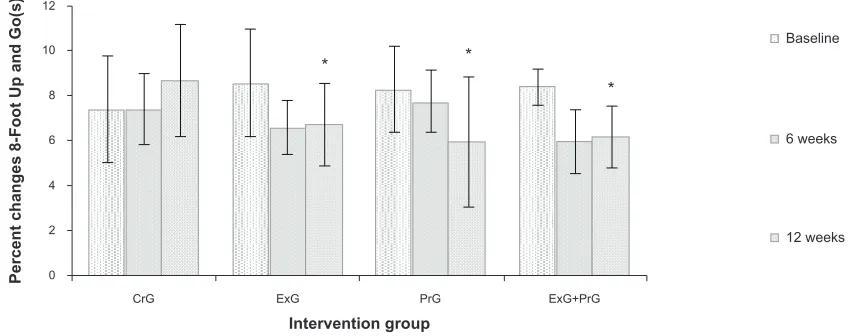
the 8-Foot Up and Go Test, the PrG (−2.3; 28.3) showed the
highest reduction for this test, followed by the Ex+PrG (−2.2;
26.6%) and ExG (−1.9; 21.7%) (Figure 3). However, the CG
(+1.3; 1.2%) showed an increment in the 8-Foot Up and Go
Test as compared with baseline. This study also found that the Chair Sit and Reach Test, Backscratch Test, six-minute Walk Test, and the Handgrip Strength Test remained unchanged
throughout the 12-week intervention (P . 0.05).
Intervention effect on the oxidative
stress
Table 4 shows a significant group effect (F3,61 = 2.969)
(P , 0.05) and time effect (F3,61= 3.777) (P , 0.05) for
protein carbonyl. A decrease in protein carbonyl levels after
the 12-week intervention was observed in the ExG+PrG
(−0.01 [50%]) and CG (−0.01 [33.0%]) as compared with
baseline. Further, only the ExG+PrG (−0.01 [50%]) showed a
reduction in protein carbonyl levels at 12 weeks as compared with the CG.
On the other hand, SOD levels showed a significant time
effect (F3,61 = 9.276) (P , 0.05) and an interaction effect
(F3,61 = 5.963) (P , 0.05) after 12 weeks of intervention
(Table 4). An increment of mean changes was observed
in the PrG (+5.2 [91.2%]) and CrG (+1.7 [22.9%]).
How-ever, SOD levels decreased in the ExG (−3.9 [38.2%])
after 12 weeks. In comparison with the CG, an increase
in SOD levels was observed in the ExG (+0.3 [5.7%])
and PrG (+0.3 [5.7%]). Meanwhile, the ExG+PrG (−0.9
[34.6%]) showed no changes in SOD level after 12 weeks of intervention. For lipid hydroperoxide, a significant
group effect (F3,61 = 4.098) (P , 0.05) and a time effect
(F3,61= 3.244) (P , 0.05) were noted (Table 4). An increment
in mean was observed only in the ExG+PrG (+1.2 [81.9%]);
whereas the PrG (−0.7 [19.1%]), ExG (−0.1 [5.1%]), and the
CG (−1.3 [38.2%]) showed a decrease in lipid hydroperoxide
levels as compared with baseline. In comparison with the CG
at 12 weeks, the PrG (+0.7 [31.6%]), ExG+PrG (0.6 [26.0%]),
and ExG (+0.3 [12.1%]) showed an increment in lipid
hydroperoxide levels. The IGF-1, IL-6, and orexin markers remained unchanged throughout the 12-week intervention.
Discussion
This study is one of a few studies reporting the effects of a community-based, well-rounded exercise program and protein supplementation, either alone or in combination, among elderly people with sarcopenia. First, having exam-ined the effects on body composition, the PrG showed the highest reduction in body weight and BMI after 12 weeks of intervention. These findings contradicted a previous study in which body weight and BMI did not change following soy supplementation for 12 weeks among hyperlipidemic
males.24 This may be due to a higher dosage of protein
supple-mentation provided in the current study (to achieve a daily
protein intake of 1.5 g/kg / day) compared with that study.24
However, this present study was unable to demonstrate the beneficial effect of protein supplementation in fat-free mass. This is also in contrast with another study that showed an improvement in fat-free mass of about 2.4% after 12 weeks
of intervention with amino acid supplementation.14 This study
25
20
15
10
5
0
ExG PrG
Baseline
6 weeks
12 weeks
ExG+PrG CG
Intervention group
Percent change Arm Curl Test (times/30 s)
* *
Figure 2 Percent changes in Arm Curl Test results, in the different intervention groups during the 12-week intervention.
Notes: Values are expressed as mean ± SD. *Significant differences at P , 0.05 from baseline.
Abbreviations: Cg, control group; exg, exercise group; exg+Prg, combined exercise and protein supplementation group; Prg, protein suplementation group; sD, standard deviation; s, seconds.
Clinical Interventions in Aging downloaded from https://www.dovepress.com/ by 118.70.13.36 on 20-Aug-2020
Dovepress
suzana et al
0
CrG ExG
Intervention group
Percent changes 8-Foot Up and Go(s)
PrG
Baseline
6 weeks
12 weeks
ExG+PrG 2
4 6 8 10 12
* *
*
Figure 3 Percent changes in 8-Foot Up and go Test results, in the different intervention groups during the 12-week intervention.
Notes: Values are expressed as mean ± SD. *Significant differences at P , 0.05 from baseline.
Abbreviations: Cg, control group; exg, exercise group; exg+Prg, combined exercise and protein supplementation group; Prg, protein suplementation group; sD, standard deviation.
was also inconsistent with previous research that showed an improvement in fat-free mass by about 2.4% after 12 weeks of intervention with amino acid supplementation. Here, the discrepancy might be due to the higher composition of leu-cine (40% of the total amino acid) in that study as compared
with 28.8% in the present study.14 However, our findings
were in agreement with a study done in Japan in which the well-rounded exercise (three times per week) groups
showed a tremendous reduction in percentage of body fat.25
This study also found no significant changes in muscle mass in all intervention groups after the 12-week intervention. However, there was a trend of improvement in muscle mass
for the ExG and ExG+PrG. Thus, it is necessary to identify
optimum duration and intensity of exercise that might give significant changes in body composition.
Upon completion of this study, it was observed that the use of a community based well-rounded exercise program combining low intensity and resistance exercise improved the physical function test results with respect to muscle strength and both upper and lower body strength. It was also noted that the ExG showed the highest improvement in upper body strength, and the PrG in lower body strength. Other researchers have reported that resistance exercise training with optimum intensity and duration can improve functional
fitness in older adults. A study done by Yamauchi et al4 of a
12- and 24-week intervention with a well-rounded exercise program, consisting of aerobics, resistance exercise, and stretching exercise, among 23 older adults showed improve-ments in upper and lower body strength, agility, and flex-ibility, which is in line with the findings of the current study. In Japan, the beneficial effects of resistance training using
elastic bands in combination with aerobic exercise or balance
exercise were studied;21 in that study, 113 older adults were
assigned to different groups with different modes of exer-cise: a resistance exercise group, a balance exercise group, a flexibility exercise group, a tai chi exercise group, and an aerobic exercise group. During the 12-week intervention, the resistance exercise group showed the highest improvement in upper body strength, while the balance exercise group
showed improvement in lower body strength.16 Another study
highlighted the benefit of resistance training in preventing muscle loss, and it was noted that resistance training could incur strength gains in older adults ranging from 25% to 100%, or more, through muscle hypertrophy and increased
motor unit recruitment.26
In addition, this current study investigated the changes in the oxidative stress parameters following the 12-week intervention. Reactive oxygen species (ROS) could play a role in triggering sarcopenia, as reported by Fulle and
Fano.10 The researchers noted that the senescence of
skel-etal muscle was characterized by a significant decrease in endogenous antioxidant mechanisms, with a consequent increase in oxidative damage, which was directly correlated
with a functional deficit in the control of Ca2+ homeostasis
by myofibers. ROS altered the opening capacity of
sarcoplas-mic reticulum.12 In this current study, the reduction of SOD
enzymes was observed in the ExG; no changes were observed
in the ExG+PrG, indicating the beneficial effect of exercise
in suppressing free radicals that occur during exercise, and causing SOD, which acts as a free radical scavenger, to be reduced. The levels of antioxidative enzymes were increased
in the PrG. This is in line with the study done by Fulle et al10
Clinical Interventions in Aging downloaded from https://www.dovepress.com/ by 118.70.13.36 on 20-Aug-2020
Dovepress exercise and protein supplementation in sarcopenia
Table
4
Measurement of oxidative stress markers at baseline, 6 weeks, and 12 weeks, according to intervention group
Intervention group
ANCOVA (two way)
Control (n =
16)
Exercise (n =
19)
Protein supplementation (n =
15)
Exercise
+
protein
supplementation (n =
15)
Group effect Time effect Interaction effect
Protein carbonyl (nmol/
l) Baseline 0.03 ± 0.01 0.02 ± 0.01 0.02 ± 0.01 0.02 ± 0.01 0.039* 0.026* 0.092 6 weeks 0.02 ± 0.01 0.02 ± 0.02 0.02 ± 0.01 0.01 ± 0.01 (0.133) (0.061) (0.088) 12 weeks 0.02 ± 0.01 0.02 ± 0.02 0.02 ± 0.01 0.01 ± 0.01
Superoxide dismutase (specific activity) Baseline
7.4 × 10 − 4± 4.4 × 10 − 4 10.2 × 10 − 4± 5.3 × 10 − 4 5.7 × 10 − 4± 2.6 × 10 − 4 6.3 × 10 − 4± 1.7 × 10 − 4 0.169 0.000* 0.000* 6 weeks 8.2 × 10 − 4± 4.6 × 10 − 4 6.2 × 10 − 4± 2.8 × 10 − 4 8.1 × 10 − 4± 2.8 × 10 − 4 6.9 × 10 − 4± 3.7 × 10 − 4 (0.083) (0.138) (0.236) 12 weeks 9.1 × 10 − 4± 3.5 × 10 − 4 6.3 × 10 − 4± 3.7 × 10 − 4 10.9 × 10 − 4± 3.7 × 10 − 4 6.3 × 10 − 4± 2.6 × 10 − 4
lipid hydroperoxide (mmol/
l) Baseline 3.48 ± 1.07 2.54 ± 0.66 3.50 ± 1.09 1.49 ± 1.59 0.010 a 0.044 a 0.180 6 weeks 2.05 ± 1.63 3.03 ± 1.37 3.64 ± 1.19 2.85 ± 1.75 (0.175) (0.053) (0.073) 12 weeks 2.15 ± 1.27 2.41 ± 1.07 2.83 ± 0.78 2.71 ± 1.14 Il -6 (pg/m l) Baseline 2.45 ± 1.29 1.89 ± 0.64 2.22 ± 0.59 2.49 ± 0.67 0.792 0.912 0.385 12 weeks 1.76 ± 0.74 1.87 ± 0.82 1.97 ± 1.06 1.93 ± 0.83 (0.017) (0.000) (0.050) Ig F-1 (pg/m l) Baseline 91.31 ± 33.79 80.96 ± 26.77 78.11 ± 29.89 81.28 ± 17.32 0.197 0.254 0.806 12 weeks 98.74 ± 17.65 91.81 ± 32.14 77.31 ± 25.03 91.06 ± 34.88 (0.076) (0.022) (0.016) Orexin (ng/m l) Baseline 0.42 ± 0.12 0.66 ± 0.19 0.34 ± 0.16 0.49 ± 0.10 0.593 0.073 0.593 12 weeks 0.31 ± 0.21 0.28 ± 0.19 0.28 ± 0.31 0.29 ± 0.14 (0..032) (0.054) (0.032) Notes:
Values are expressed as mean
±
s
D. *
P
,
0.05 significant effect using ANCOVA with sarcopenia status and sex as covariates.
Abbreviations:
A
n
COVA, analysis of covariance; I
g
F, insulin-like growth factor; I
l, interleukin.
Clinical Interventions in Aging downloaded from https://www.dovepress.com/ by 118.70.13.36 on 20-Aug-2020
Dovepress
suzana et al
who noted a decrease in the antioxidative capacity of the main scavenger enzymes during exercise. However, protein carbonyl and lipid hydroperoxide did not show any significant changes in either intervention group. These findings suggest that both exercise and protein supplementation were unable to modify the lipid and protein oxidation levels, in this study.
There is growing evidence that the reduction of (IGF)-1 related to aging plays a role in the pathogenesis of sarcopenia. A previous study reported an IGF-1 increment of 37% in
Brazilian women aged 45−70 years old, after 16 weeks of
resistance training.26 This finding contradicts our findings,
which did not show any changes throughout the 12-week intervention. This may be due to the lesser frequency of
exercise in the program in our study − only two times per
week for 12 weeks as compared with the previous study,
which had exercises three times a week for 16 weeks.21 On
the other hand, the causal pathway leading to inflammation and disability may cause decline in functional ability. Thus, the assessment of the IL-6 levels may be considered as one of the indicators to measure the influence of inflammation,
in this intervention study.27 Notwithstanding this, IL-6 levels
remained unchanged throughout the 12-week
interven-tion. Findings from Kohut et al28 suggested that the type of
exercises performed may impact the extent to which serum inflammatory markers were altered. Cardiorespiratory exer-cise could probably reduce serum IL-6, whereas flexibility/ moderate strength training did not have the same positive
effect.26 In the current study, more emphasis was put on the
flexibility and moderate strength exercises, which may not have any effect on IL-6 levels.
The sex distribution could have played a significant role in the determination of changes in the parameters study, due to the discrepancy in the metabolism and physiological mechanisms in the body system of men and women. However, in this study, a two-factor ANCOVA was used to compare the body composition, functional fitness, and oxidative stress between intervention groups, controlling for sex, which was not of primary interest. Thus, the unequal distribution of sex in this study did not affect the parameters studied.
One of the strengths of the current study is that the participants were noninstitutionalized, and therefore, this may allow direct extrapolation of the results to older persons of the local population. Physical activity stimulates muscle protein synthesis and accelerates protein breakdown. Protein supplementation is required to inhibit protein breakdown and stimulate protein synthesis, resulting in a positive muscle protein balance. The combination of both exercise and protein
supplementation were important and could give better effects in enhancing muscle protein synthesis compared with
exer-cise and protein supplementation alone.29 The major
limita-tion of the study is that bioelectrical impedance analysis was used to estimate muscle mass, whilst previous studies have noted inaccuracies in its use to assess fat-free mass in the
elderly − this was thought to be due to the changes in the
hydration of fat-free mass and the cylindrical shape of the
appendicle muscle.5 Furthermore, the timing of protein
ingestion should be standardized to maintain the optimum absorption of protein supplements in the subjects. In addition, the study was not a randomized clinical trial. This could have reduced the statistical power of the study and increased bias. However, at baseline the confounding factors were identified and were taken into consideration during the analysis of the intervention.
Conclusion
This study showed that exercise intervention and protein sup-plementation were beneficial in both reducing body weight and improving fat-free mass. There were no effects seen on muscle mass during the 12-week intervention. Further, the intervention seems to have been effective in improving upper and lower body strength as well as agility and dynamic bal-ance among the subjects. These improvements are desirable for increasing mobility and quality of life of the elderly. On the other hand, the exercise intervention may have acted as a scavenger and reduced the antioxidative enzymes, but it did not alter the lipid and protein oxidation in this study. Protein supplementation seems to have increased the antioxidative enzymes in this study. Moreover, there was no effect on hormones and inflammatory markers observed in this study. It would be interesting to investigate the effects of other dietary interventions, such as the inclusion of a high protein diet through natural food sources, in the sarcopenic elderly. Taking into consideration the benefit of exercise and protein supplementation, a well-planned intervention program could reduce the incidence of sarcopenia in the elderly, and should be introduced. This could reduce the health care cost attribut-able to sarcopenia worldwide and increase longevity.
Acknowledgments
The authors thank the participants for their voluntary involve-ment in this study. In addition, the authors acknowledge the financial assistance from the Ministry of Science Technology and Innovation, who sponsored this study (research grant 06-01-02 SF 0551).
Clinical Interventions in Aging downloaded from https://www.dovepress.com/ by 118.70.13.36 on 20-Aug-2020
Clinical Interventions in Aging
Publish your work in this journal
Submit your manuscript here: http://www.dovepress.com/clinical-interventions-in-aging-journal
Clinical Interventions in Aging is an international, peer-reviewed journal focusing on evidence-based reports on the value or lack thereof of treat-ments intended to prevent or delay the onset of maladaptive correlates of aging in human beings. This journal is indexed on PubMed Central, MedLine, the American Chemical Society’s ‘Chemical Abstracts
Ser-vice’ (CAS), Scopus and the Elsevier Bibliographic databases. The manuscript management system is completely online and includes a very quick and fair peer-review system, which is all easy to use. Visit http://www.dovepress.com/testimonials.php to read real quotes from published authors.
Dovepress
Dove
press
exercise and protein supplementation in sarcopenia
Disclosure
The authors report no conflicts of interest in this work.
References
1. Doherty TJ. Invited review: aging and sarcopenia. J Appl Physiol. 2003;95(4):1717–1727.
2. Evans WJ. Skeletal muscle loss: cachexia, sarcopenia, and inactivity. Am J Clin Nutr. 2010;91(4):1123S–1127S.
3. Bijlsma AY, Meskers CG, Westendorp RG, Maier AB. Chronology of age-related disease definitions: osteoporosis and sarcopenia. Ageing Res Rev. 2012;11(2):320–324.
4. Yamauchi T, Islam MM, Koizumi D, Rogers ME, Rogers NL, Takeshima N. Effect of home-based well-rounded exercise in community-dwelling older adults. J Sports Sci Med. 2005;4(4):563–571.
5. Janssen I, Baumgartner RN, Ross R, Rosenberg IH, Roubenoff R. Skeletal muscle cutpoints associated with elevated physical disability risk in older men and women. Am J Epidemiol. 2004;159(4):413–421. 6. Lee JS, Auyeung TW, Kwok T, Lau EM, Leung PC, Woo J.
Associated factors and health impact of sarcopenia in older chinese men and women: a cross-sectional study. Gerontology. 2007;53(6): 404–410.
7. Dreyer HC, Volpi E. Role of protein and amino acids in the pathophysi-ology and treatment of sarcopenia. J Am Coll Nutr. 2005;24(2): 140S–145S.
8. Stenholm S, Harris TB, Rantanen T, Visser M, Kritchevsky SB, Ferrucci L. Sarcopenic obesity: definition, cause and consequences. Curr Opin Clin Nutr Metab Care. 2008;11(6):693–700.
9. Woods JL, Iuliano-Burns S, King SJ, Strauss BJ, Walker KZ. Poor physical function in elderly women in low-level aged care is related to muscle strength rather than to measures of sarcopenia. Clin Interv Aging. 2011;6:67–76.
10. Fulle S, Fanò G. The contribution of reactive oxygen species in sarcopenia and muscle aging. In: Stocchi V, De Feo P, Hood DA, editors. Role of Physical Exercise in Preventing Disease and Improving the Quality of Life. Milan: Springer; 2007:103–111.
11. Nied RJ, Franklin B. Promoting and prescribing exercise for the elderly. Am Fam Physician. 2002;65(3):419–426.
12. Visvanathan R, Chapman I. Preventing sarcopaenia in older people. Maturitas. 2010;66(4):383–388.
13. Peterson MD, Rhea MR, Sen A, Gordon PM. Resistance exercise for muscular strength in older adults: a meta-analysis. Ageing Res Rev. 2010;9(3):226–237.
14. Paddon-Jones D, Sheffield-Moore M, Katsanos CS, Zhang XJ, Wolfe RR. Differential stimulation of muscle protein synthesis in elderly humans following isocaloric ingestion of amino acids or whey protein. Exp Gerontol. 2006;41(2):215–219.
15. Wolfe RR, Miller SL, Miller KB. Optimal protein intake in the elderly. Clin Nutr. 2008;27(5):675–684.
16. Carlsson M, Littbrand H, Gustafson Y, et al. Effects of high-intensity exercise and protein supplement on muscle mass in ADL dependent older people with and without malnutrition: a randomized controlled trial. J Nutr Health Aging. 2011;15(7):554–560.
17. Børsheim E, Bui QU, Tissier S, Kobayashi H, Ferrando AA, Wolfe RR. Effect of amino acid supplementation on muscle mass, strength and physical function in elderly. Clin Nutr. 2008;27(2):189–195. 18. Shahar S, Earland J, Abdulrahman S. Validation of a dietary history
questionnaire against a 7-D weighed record for estimating nutrient intake among rural elderly. Malays J Nutr. 2000;6(1):33–44. 19. Katsanos CS, Kobayashi H, Sheffield-Moore M, Aarsland A, Wolfe RR.
A high proportion of leucine is required for optimal stimulation of the rate of muscle protein synthesis by essential amino acids in the elderly. Am J Physiol Endocrinol Metab. 2006;291(2):E381–E387.
20. Jones CJ, Rikli RE. Measuring functional fitness in older age. The Journal on Active Aging. 2002;1:24–30.
21. Takeshima N, Rogers NL, Rogers ME, Islam MM, Koizumi D, Lee S. Functional fitness gain varies in older adults depending on exercise mode. Med Sci Sports Exerc. 2007;39(11):2036–2043.
22. Beyer WF, Fridovich I. Assaying for superoxide dismutase activity: some large consequences of minor changes in conditions. Anal Biochem. 1987;161(2):559–566.
23. Buss H, Chan TP, Sluis KB, Domigan NM, Winterbourn CC. Protein carbonyl measurement by a sensitive ELISA method. Free Radic Biol Med. 1997;23(3):361–366.
24. Carol D, Harold B, Peter H, John L, Richard B. Resistance training with soy vs whey protein supplements in hyperlipidemic males. J Int Soc Sports Nutr. 2009;6:8.
25. Nakamura Y, Tanaka K, Yabushita N, Sakai T, Shigematsu R. Effects of exercise frequency on functional fitness in older adult women. Arch Gerontol Geriatr. 2007;44(2):163–173.
26. Orsatti FL, Nahas EA, Maesta N, Nahas-Neto J, Burini RC. Plasma hormones, muscle mass and strength in resistance-trained postmeno-pausal women. Maturitas. 2008;59(4):394–404.
27. Schaap LA, Pluijm SM, Deeg DJ, Visser M. Inflammatory mark-ers and loss of muscle mass (sarcopenia) and strength. Am J Med. 2006;119(6):526. e9–526. e17.
28. Kohut ML, McCann DA, Russell DW, et al. Aerobic exercise, but not flexibility/resistance exercise, reduces serum IL-18, CRP, and IL-6 inde-pendent of beta-blockers, BMI, and psychosocial factors in older adults. Brain Behav Immun. 2006;20(3):201–209.
29. Bonnefoy M, Cornu C, Normand S, et al. The effects of exercise and protein-energy supplements on body composition and muscle function in frail elderly individuals: a long-term controlled randomised study. Br J Nutr. 2003;89(5):731–739.
Clinical Interventions in Aging downloaded from https://www.dovepress.com/ by 118.70.13.36 on 20-Aug-2020