REGULATING SUSTAINABLE DEVELOPMENT: AN
ENABLING MODEL FOR CONSISTENT
COLLABORATION BETWEEN PLANNING AND
BUILDING CONTROL SERVICES IN ENGLAND
Mark KEY
REGULATING SUSTAINABLE DEVELOPMENT: AN
ENABLING MODEL FOR CONSISTENT
COLLABORATION BETWEEN PLANNING AND
BUILDING CONTROL SERVICES IN ENGLAND
Mark KEY
School of the Built Environment, University of Salford, UK
Submitted in Partial Fulfilment of the Requirements of the
Degree of Doctor of the Built Environment, May 2016
Table of Contents
List of Figures ... i
List of Tables ... ii
Acknowledgements ... iii
Abbreviations ... iv
Abstract ... vi
1.2.1 Context ... 2
1.2.2 Sustainable Urban Drainage Systems ... 2
1.2.3 Energy Efficient and Low Carbon Developments ... 3
1.2.4 Glazing Technology ... 4
1.2.5 Fire Safety ... 5
1.2.6 Significance of Author’s Experiences ... 5
CHAPTER 2 - RESEARCH APPROACH 11
2.4.1 Pragmatism ... 14
2.4.2 Design Science ... 15
2.6.1 Origins and Development ... 16
2.6.2 The Anatomy of Artefacts ... 18
2.6.3 Prescriptive Knowledge Production through Models ... 19
2.6.4 Design Science Methodology ... 20
2.6.5 Define the Problems ... 22
2.6.7 Design and Development of the Artefact... 23
2.6.8 Evaluation of the Artefact ... 23
CHAPTER 3 - DEFINE THE PROBLEMS 25
3.2.1 Context ... 26
3.2.2 Defining Sustainable Development ... 27
3.2.3 Recent Political Attitudes towards Sustainable Development ... 28
3.2.4 Lack of Strategic Oversight of Regulation in Government ... 29
3.2.5 Sustainable Development & Statutory Building Performance Standards... 31
3.2.6 Sustainable Development & Voluntary Building Performance Standards ... 34
3.2.7 Effect of Increasing Technical Complexity upon the Design Process ... 36
3.2.8 Effect of Increasing Technical Complexity upon the Regulatory Process ... 38
3.2.9 The Emergence of Sustainable Development: Summary ... 40
3.3.1 Context ... 41
3.3.2 Government Led Reviews on the Regulatory Skills Gap ... 41
3.3.3 Academic and Industry Led Commentary on the Regulatory Skills Gap ... 43
3.3.4 Significance of the Regulatory Skills Gap ... 45
3.3.5 The Regulatory Skills Gap: Summary ... 46
3.4.1 Context ... 47
3.4.2 The Changing Face of Regulation ... 48
3.4.3 The Hampton Review ... 49
3.4.4 Problems Associated with Risk Based Approaches to Regulation ... 50
3.4.5 Building Control and the Risk Assessed Inspection Regimes ... 51
3.4.6 The Formation and Work of Better Regulation Offices ... 52
3.4.7 The Competitive Building Control System – Barrier to Consistent Collaboration ... 53
3.4.8 The Competitive Building Control System – Capture and Regulatory Drift ... 54
3.4.9 Volume Housing and the ‘Anti-competitive’ Building Control System ... 56
3.4.10 The Competitive Building Control System – Regulatory Rigour and Accountability . 57 3.4.11 The Competitive Building Control System – ‘Race to the Bottom’ ... 59
3.4.13 Setting and Use of Building Regulations Fees ... 61
3.4.14 Setting and Use of Planning Fees ... 62
3.4.15 Localism and the Introduction of Competition for Public Service Provision ... 64
3.4.16 The Effects of Public Sector Transformation: Summary ... 67
3.5.1 Context ... 68
3.5.2 Aim of Research ... 69
3.5.3 Research Objectives ... 70
CHAPTER 4 - RESEARCH METHODS 73
4.3.1 Background ... 75
4.3.2 Iterative Grounded Theory ... 76
5.2.1 Initial Consultation ... 88
5.2.2 Challenge Panel Report ... 89
5.2.3 Technical Consultation ... 91
5.4.1 Background ... 96
5.4.2 Technical Guidance & Policy: Calls for Consolidation ... 97
5.4.3 The Needs of the Design Team ... 99
5.4.4 BREEAM and the RIBA Plan of Work ... 100
5.4.5 The Importance of Early Collaboration ... 105
5.8.1 The Current Situation ... 113
5.8.2 Potential Effect of Removing the Code for Sustainable Homes ... 114
5.8.3 A Comparison of Statutory and BREEAM Sustainability Categories ... 115
5.8.4 Reasonable Allocation of Regulatory Sustainability Responsibilities... 118
5.8.5 The Use of Sustainability Checklists ... 121
5.9.1 The Current Situation ... 123
5.9.2 Who Should Set and Manage Standards? ... 124
5.9.3 How Often Should Standards Be Reviewed? ... 125
5.10.1 The Current Situation ... 127
5.10.2 Recognition of the Benefits of Commercial Sustainable Development ... 129
5.10.3 Advanced Regulatory Standards and Labelling as a Spur to Innovation... 130
5.11.1 Summary ... 132
5.11.2 Model Requirements ... 134
6.2.1 Context ... 139
6.2.2 Education for Sustainable Development: The Current Situation ... 140
6.4.1 The Emergence of Interdisciplinarity ... 145
6.4.2 The Modern Day Development of Interdisciplinarity ... 146
6.4.3 Drivers of Interdisciplinary Knowledge Production in the Built Environment ... 147
6.5.1 Educational Frameworks ... 149
6.5.2 Recent Evolution of Regulatory Educational Frameworks ... 152
6.5.3 Professional Qualifications ... 154
6.5.4 Professional Bodies: A Barrier to Change ... 155
6.5.5 The Regulatory Population in England ... 156
6.5.6 Planning and Building Control Education – Overview ... 157
6.6.1 Background ... 158
6.6.2 Interdisciplinary Education – Best Practice Case Studies ... 158
6.6.3 Faculty and Learning Tools ... 161
6.6.4 Problem Solving ... 162
6.6.5 Assessment Techniques ... 164
6.6.6 Point of Entry to Interdisciplinary Education ... 164
6.6.7 Educational Outcomes ... 166
6.7.1 Background ... 167
6.7.2 Built Environment Education – Case Studies ... 169
6.7.3 Experiences of Interdisciplinary Educators in the Built Environment ... 171
6.10.1 Summary ... 176
7.2.1 Better Regulation and Public Choice ... 182
7.2.2 Better Regulation and Risk Assessment ... 183
7.2.3 Regulation in the Public Interest ... 185
7.2.4 Regulation of Sustainable Development in the Public Interest ... 186
7.2.5 The Penfold Review ... 187
7.2.6 Summary ... 190
7.3.1 Background ... 191
7.3.2 The Emergence of Localism ... 193
7.3.3 Open Public Services White Paper ... 194
7.3.4 Commissioned Public Services ... 195
7.3.5 Sustainable Development and Service Reform ... 196
7.3.6 Commissioned Regulatory Services - Early Developments ... 197
7.3.7 Experiences of Private Sector Involvement in Public Services ... 198
7.3.8 Outcomes of Private Sector Involvement ... 199
7.3.9 Summary ... 201
7.4.1 Context ... 202
7.4.2 The Emergence of Social Enterprise ... 202
7.4.3 The Development of Social Enterprise in the Public Sector ... 203
7.4.4 Definitions of Social Enterprise - Context ... 205
7.4.5 Early Definitions of Social Enterprise ... 205
7.4.6 Government Definitions of Social Enterprise ... 206
7.4.7 Summary ... 207
7.5.1 Background ... 208
7.5.2 Social Housing: An Established Culture of Social Enterprise ... 209
7.5.3 The Creation of a Social Housing Market Ideology ... 209
7.5.4 Social Housing: Regulation and Performance Management ... 210
7.5.6 Developing Social Enterprise in the NHS ... 212
7.5.7 Creating a Community and Efficiency Based Market Ideology ... 213
7.5.8 Empowering NHS Service Teams ... 214
7.5.9 NHS Service Team Resistance to Private Sector Involvement ... 216
7.5.10 Competing with the Private Sector ... 217
7.5.11 Summary ... 218
7.6.1 Background ... 220
7.6.2 Non-Profit Regulatory Social Enterprise ... 221
7.6.3 Performance Measurement ... 222
7.6.4 Recent Government Initiatives ... 223
7.6.5 Current Performance Measurement – Planning ... 224
7.6.6 Current Performance Measurement – Building Control ... 225
7.6.7 The Need for High Quality Performance Information ... 226
7.6.8 The Local Authorities Regulatory Services Excellence Framework ... 228
7.6.9 The Measurement of Social Value ... 230
7.6.10 The Reality of Demonstrating Social Value ... 231
7.6.11 Financial Probity ... 232
7.6.12 Performance Measurement – Moving Forwards... 234
7.6.13 The Importance of Good Governance... 236
7.6.14 Good Governance Standard for Public Services ... 236
7.6.15 Governance and Social Enterprise ... 237
7.6.16 Good Governance for Regulatory Social Enterprise: Stewardship Theory ... 238
7.8.1 Summary ... 243
7.8.2 Model Requirements ... 246
CHAPTER 8 - DESIGN AND DEVELOPMENT OF THE MODEL 248
8.2.1 Codes for Sustainable Domestic and Commercial Development ... 248
8.2.2 Design and Regulation: Conjoined as Part of a Dynamic Unfolding Process ... 250
8.3.1 A ‘Triple Helix’ Approach to Establishing the Foundations of Learning ... 253
8.3.2 Attracting Student Numbers: Making Regulation More Interesting... 253
8.3.3 Setting up Interdisciplinary Undergraduate Programmes ... 254
8.3.4 Knowledge Production and the Outcomes of Interdisciplinary Education ... 255
8.3.5 A Visual Representation of Potential Solutions ... 256
8.4.1 A Return to Regulation in the Public Interest ... 258
8.4.2 A Localised and Competitive Framework of Non Profit Social Enterprise ... 258
8.4.3 Performance Measurement and Financial Probity ... 259
8.4.4 Local and National Oversight of Regulatory Activities ... 260
8.4.5 A Visual Representation of Potential Solutions ... 260
8.5.1 Model Template ... 262
8.5.2 Synthesis of the Research Solutions ... 263
10.2.1 Objective 1 – Rationalising Building Performance Standards ... 274
10.2.2 Objective 2 – Closing the Regulatory Skills Gap ... 276
References 286
Appendix A: Comments Received from Heads of Building Control in Relation to the Application of the Building (Local Authority Charges) Regulations 2010 307
Appendix B: Interview Questions 324
Appendix C: Recent Reform of Development Consent Service Delivery 349
Appendix D: Barriers to the Creation of Regulatory SMEs 356
i
List of Figures
Figure 2.1 - Grix's interrelationship between the building blocks of research ... 12
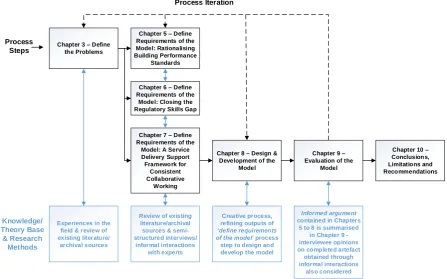
Figure 2.2 - Design science research methodology ... 21
Figure 3.1 - Variations in regulatory service provision ... 66
Figure 4.1 - Research methods and thesis chapters within design science research framework ... 78
Figure 5.1 - Introduction of optional planning requirements into the building control system 92 Figure 5.2 - RIBA Plan of Work 2013 ... 103
Figure 5.3 - BREEAM assessment & certification stages and the RIBA Plan of Work 2013104 Figure 5.4 - Distribution of decisions in each design stage ... 105
Figure 5.5 - The cost of change within the RIBA Plan of Work 2013 ... 106
Figure 5.6 - Traditional project team arrangement ... 110
Figure 5.7 - Extract from Building Regulations application vetting checklist ... 122
Figure 5.8 - Charting of improving sustainability standards ... 126
Figure 6.1 - The built environment knowledge base ... 174
Figure 6.2 - Sub-interdisciplinary problem solving groupings for new development... 176
Figure 7.1 - Summary of concerns raised by respondents to the Penfold Review ... 188
Figure 7.2 - Levels of performance information in the public sector ... 227
Figure 7.3 - Suggested CIPFA template for public building control services ... 233
Figure 7.4 - Principles of good governance ... 237
Figure 7.5 - Potential framework for competitive regulatory social enterprise ... 242
Figure 8.1 – Rationalising building performance standards: a visual representation of potential solutions ... 252
Figure 8.2 - Closing the regulatory skills gap: a visual representation of potential solutions 257 Figure 8.3 - Creating a service delivery support framework: a visual representation of potential outcomes ... 261
Figure 8.4 - The IDEAL Model ... 262
Figure 8.5 - Overview of problems in the regulatory framework ... 264
ii
List of Tables
Table 2.1 - Philosophical assumptions associated with the four research perspectives ... 16
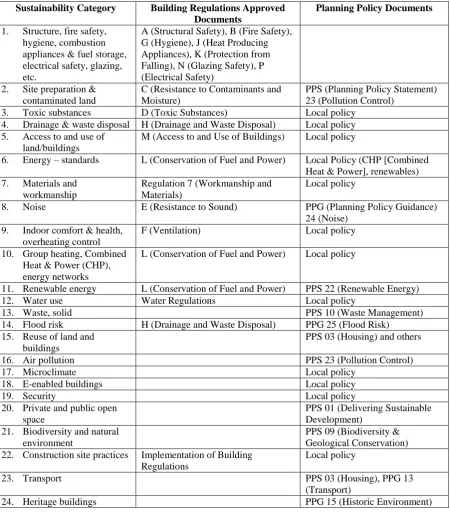
Table 3.1 - Coverage of sustainability categories... 32
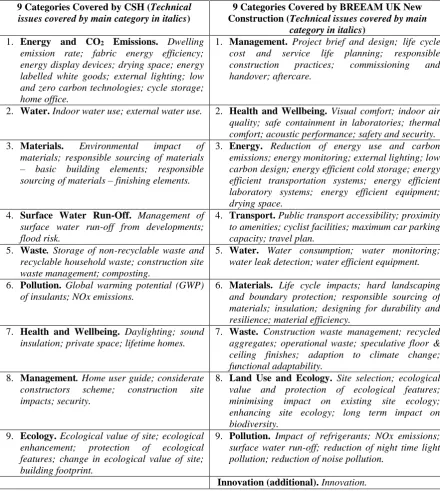
Table 3.2 - CSH and BREEAM assessment categories for new sustainable development ... 35
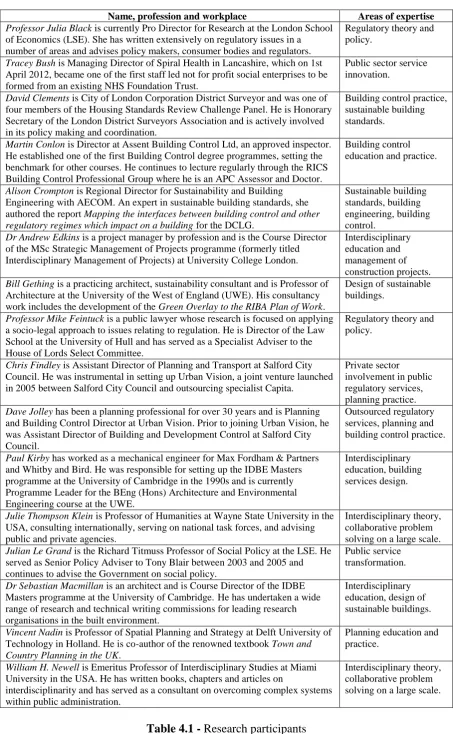
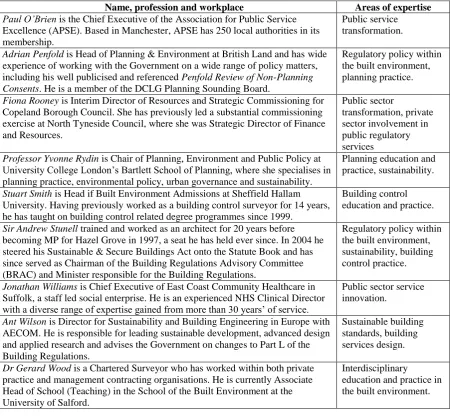
Table 4.1 - Research participants ... 81
Table 5.1 - Comparison of statutory guidance/policy and BREEAM categories ... 116
Table 5.2 - Allocation of sustainability categories ... 120
Table 6.1 - Modes of knowledge production ... 147
Table 6.2 - Planning and building surveying courses in English universities containing planning schools ... 151
Table 6.3 - Interdisciplinary collaboration model ... 163
Table 6.4 - Suggested learning outcomes for interdisciplinary education ... 166
Table 6.5 - Barriers to innovative educational initiatives ... 168
Table 7.1 - Number of responses to BCPSAG building control performance exercises... 225
Table 7.2 - Overview of the Excellence Framework ... 228
Table 7.3 - Current planning and building control performance indicators ... 235
iii
Acknowledgements
Firstly, I would like to thank my supervisors, Professor Chris Fortune and Dr Paul Chynoweth for their invaluable guidance, expertise and professionalism throughout my doctoral research project.
I would also like to thank the 25 individuals (detailed in Table 4.1) who agreed to give up their valuable time to participate in the research. Their expertise was vital to the completion of my thesis and I am forever in their debt.
I am very grateful to my building control team (some of whom have retired or moved on to alternative employment in recent years) and other colleagues at Copeland Borough Council who have supported me throughout my research journey. In this sense, I would like to express particular gratitude to my Director, Pat Graham, who has provided me with the resources and time/space needed to complete my thesis.
iv
Abbreviations
ACAI – Association of Consultant Approved Inspectors
AI – Approved Inspector
APSE – Association for Public Service Excellence
BCA – Building Control Alliance
BCPSAG – Building Control Performance Standards Advisory Group
BIM – Building Information Modelling
BRDO – Better Regulation Delivery Office
BRE – Building Research Establishment
BREEAM – Building Research Establishment Environmental Methodology
CABE – Chartered Association of Building Engineers
CAQDAS – Computer Assisted Qualitative Data Analysis Software
CCT – Compulsory Competitive Tendering
CHP – Combined Heat and Power
CIC – Community Interest Company
CICAIR – Construction Industry Council’s Approved Inspectors Register
CIOB – Chartered Institute of Building
CITR – Community Investment Tax Relief
CSH – Code for Sustainable Homes
DCLG – Department for Communities and Local Government
EIS – Enterprise Investment Scheme
HCA – Homes and Communities Agency
IDBE – Interdisciplinary Design for the Built Environment
LABC – Local Authority Building Control
v LGPS – Local Government Pension Scheme
LSE – London School of Economics
LSVT – Large Scale Voluntary Transfer
NGT – Nominal Group Technique
NHBC – National House Building Council
NHS – National Health Service
NICs – National Insurance Contributions
NPPF – National Planning Policy Framework
ODPM – Office of the Deputy Prime Minister
PPA – Planning Performance Agreement
RIBA – Royal Institute of British Architects
RICS – Royal Institution of Chartered Surveyors
RSLs – Registered Social Landlords
RTPI – Royal Town Planning Institute
SEI – Software Engineering Institute
SEL – Social Enterprise London
SIP – Share Incentive Plan
SMEs – Small to Medium Enterprises
SMP – Strategic Management of Projects
SROI – Social Return on Investment
SUDS – Sustainable Urban Drainage Systems
UCL – University College London
UNCED – United Nations Conference on Environment and Development
UWE – University of the West of England
vi
Abstract
Planning (often termed as development control) and building control have existed as public regulatory services on a national basis in England since the expansion of industrialisation in the 19th Century. Since then, the professions have collectively served the interests of local communities but have primarily worked in a mono-disciplinary context. This disciplinary isolation was compounded when the public building control system was opened up to competition from the private sector in the 1980s.
Since the beginning of the 21st Century, building performance standards have become increasingly complex due to the introduction of sustainable development as a major policy objective. As a result, disciplinary boundaries have become blurred, with many stakeholders viewing regulation as a constraint to sustainable development. In light of the modern challenges of regulating the built environment, this thesis aims to develop a model with the capacity to enable consistent collaborative practice between planning and building control services in England. In doing so, it seeks to address problems associated with the disparate array of existing building performance standards, the resulting and widening regulatory skills gap and ultimately, the fragmented nature of the regulatory service delivery framework.
In keeping with the problem solving ethos of the research, the design science research methodology was utilised, with research methods drawing upon a mixture of attributes common to consensus development and grounded theory research strategies. Building upon the author’s experiences as a building control manager, the adopted research approach resulted in iterative movements throughout the study between a broad base of existing knowledge and theory, and semi-structured interviews with experts in the field.
1
1
Introduction
Background to the Research
This thesis is submitted in partial fulfilment of the requirements of the University of Salford for the degree of Doctor of the Built Environment. It aims to solve problems affecting the working relationship between the two disciplines charged with regulating the built environment in England – planning (often termed as development control) and building control. As will be demonstrated, these problems are also serving to complicate the design process and potentially, detrimentally affect the sustainability of the nation’s built environment.
Building control has existed as a profession on a regional basis since the Great Fire of London in 1666 (Foulger and Stephenson, 2004). Building control and planning have existed as public regulatory services on a national basis in England since the expansion of industrialisation in the 19th Century resulted in the introduction of public health legislation (Baldwin and Cave,
1999; Cullingworth and Nadin, 2006; Foulger and Stephenson, 2004). Collectively, the professions have served the interests of local communities by controlling the use of land and maintaining a set of minimum building standards for over a century.
Until the turn of the 21st Century, the broad objective of the planning system was the regulation of the development and use of land in the public interest (Cullingworth and Nadin, 2006). Similarly, the broad objective of the building control system was to secure the health, safety and welfare of persons in or around buildings (Foulger and Stephenson, 2004). More recently, in addition to the objectives detailed above, both services have been asked to contribute to the delivery of sustainable development (Cullingworth and Nadin, 2006; Department for Communities and Local Government, 2007).
Having been a practitioner within the built environment for over 30 years, the author has worked as a local government Building Control Manager in Cumbria over the last decade. He leads a team that like many other local authority building control services, has worked in close proximity to its equivalent planning team over many years but nevertheless, primarily within a disciplinary silo.
2 the planning process precedes that of building control within the current regulatory framework. In the past, the silo working approach that the traditional regulatory framework has promoted has had limited detrimental effect upon the proposed developments examined within the author’s working environment.
However, in recent years, as regulatory requirements and building projects have become more complex due to the introduction of sustainable development as a major policy objective (Faber Maunsell and Steemers, 2010), a number of challenges have emerged in practice which will be discussed below. This increasing technical complexity has itself taken place against a background of significant transformation in the public sector environment within which the planning and building control functions sit. These two aspects provide the context for the research, each of which will now be considered.
Author’s Experiences: Increasing Technical Complexity
1.2.1 Context
In line with the Government’s modern aspirations for more environmentally friendly development in England (Department for Communities and Local Government, 2012b), regulatory requirements appear to have increased in complexity in a number of areas. As a result, regulatory building performance standards, traditionally falling exclusively under the remit of building control, have begun to be introduced into planning legislation. This would appear to be due to the fact that whilst performance standards linked to single buildings continue to be dealt with by the Building Regulations, whole development issues covered by planning have, over time, become interlinked considerations (AECOM, 2012).
What follow are but a few examples of increasing complexity associated with building performance standards that have been observed in practice in recent years by the author.
1.2.2 Sustainable Urban Drainage Systems
3 convey (flow) into a watercourse or sewer, or can also provide storage on site and attenuate (slow down) the flows of water. SUDS schemes often use a combination of these processes (Dickie et al., 2010).
Due to a lack of knowledge in relation to the technical requirements of surface water drainage systems, planning officers have begun to approach building control surveyors on an increasingly regular basis to request advice. However, in a context where building control is not a statutory consultee as part of the planning process, requests for advice are often refused due to the absence of planned and budgeted resources.
Traditionally, building control surveyors have assessed the design and installation of new surface water drainage for developments up to the point of connection to sewers or SUDS under the requirements of the Building Regulations. Although building control may be viewed as a natural commentator upon the technical requirements of SUDS, such requirements are a relatively new and complex concept. If SUDS form the final connection point for surface water emanating from a new development, their suitability is assessed as a planning requirement and not under the Building Regulations. Accordingly, building control surveyors are unfamiliar with SUDS and the design calculations presented to planning officers to justify their effectiveness.
Problems also occur regularly in relation to more standard drainage installations currently covered by the Building Regulations. Infiltration systems agreed as part of the planning process are often later found by building control surveyors to be unsuitable due to the impermeable nature of the ground, discovered at the point in time when design calculations are required to show compliance with the Building Regulations. Similarly, problems can arise when it is discovered that the distance required by the Building Regulations between buildings and foul water treatment systems given planning permission cannot be achieved.
1.2.3 Energy Efficient and Low Carbon Developments
4 If designs cannot be shown to be compliant with the Building Regulations, changes may have to be made to buildings that can affect their visual impact. Such changes may include reductions to areas of glazing or changes to external cladding which may, in some instances, not possess the insulation properties required to ensure that a building meets its carbon emissions target. As a result, earlier planning approvals may be affected, with amendments or new applications being required.
Like SUDS issues, without recognition as part of educational programmes, skills are being stretched in the increasingly complex area of energy efficiency/carbon reduction. For example, in 1990, Part L of the Building Regulations (Conservation of Fuel and Power) consisted of one 23-page volume referencing five British Standards. By 2013, Part L had expanded to four separate volumes, covering new and existing domestic and commercial buildings over 130 pages, with dozens of second tier technical reports and standards being referenced. Materials, renewable energy and heating/cooling technologies, which are continually advancing to meet (or go beyond) regulatory requirements, are all thrown into the mix when design calculations are carried out to ascertain whether a building will meet its carbon emissions target.
It is becoming difficult for planning and building control professionals to not only keep up with improvements in technology, but also to understand the changing nature of the calculations presented to them to demonstrate a development’s level of energy efficiency.
1.2.4 Glazing Technology
Improvements in glazing technology to meet energy efficiency requirements have led to the utilisation of more glass (particularly in modern office buildings) for visual effect. However, the author’s team has been asked for pre-application advice on proposals previously granted planning permission, which met energy efficiency requirements but due to large areas of glazing, have presented a fire risk to adjacent buildings. Any changes to areas of glazing at this juncture are likely to affect the visual impact of the buildings in question and consequently, earlier planning approvals.
5
1.2.5 Fire Safety
As detailed above, the visual impact of development proposals upon the occupants of neighbouring buildings and their surrounding environment play a big part in the decisions made by planning officers. However, there are times when the internal layout of buildings presented to building control surveyors result in requirements for additional window/door openings or external staircases to allow building occupants to escape safely in the event of a fire.
In some circumstances, it can be difficult for building control surveyors to negotiate the provision of additional window/door openings or external staircases with planning officers following the granting of planning permission. As a result, developers have been required to carry out unforeseen internal layout changes to ensure safe means of escape, the cost of which may exceed that of recommendations made by building control surveyors.
As requirements for insulation have increased as part of legislative energy efficiency targets, lightweight composite wall systems incorporating flammable external cladding have become increasingly popular. Again, the author’s team has been in a position of requesting reductions to areas of flammable cladding to buildings granted planning permission in order to reduce the risk of fire spread to neighbouring properties.
Fire and rescue service access to new buildings is assessed by building control surveyors as part of the fire safety requirements of the Building Regulations. The perimeter access required by fire and rescue service vehicles in the event of a fire is determined by the footprint and height of new buildings. A lack of suitable access to developments granted planning permission has resulted in subsequent changes to landscaping to the perimeter of buildings or where this is not possible, the negotiation of special arrangements with the fire and rescue service. Such special arrangements may result in the fitting of external fire mains, or place requirements on the fire and rescue service to put in place one off service arrangements for buildings, such as making specialist vehicles and equipment available in the event of a fire.
1.2.6 Significance of Author’s Experiences
6 consistently. Such an approach could result in a more efficient consent process for design professionals seeking development consents, who continue to vent their frustration in relation to the amount of design rework currently being required due to the manner in which the current regulatory process is staged. As a member of regional disciplinary management groups over a number of years, the author has been made aware that the type of issues described above are commonplace in other localities.
In addition, prior to commencing doctoral research in 2009, the author’s own experiences were being reflected by published and developing research. The research of Egan (2004) and Academy for Sustainable Communities (2007) was commissioned by the Government and made available to the author through the course of his professional duties. Both reports set out the need for cultural change within higher education initiatives for regulatory professions such planning and building control in order to ensure that the increasing technical complexity associated with sustainable development could be addressed through skill/knowledge sharing. The author was also in touch with individuals in 2009 who were involved in a research project being developed by the National Planning Forum. As part of this research, leading industry experts and representatives of the Government were being tasked with considering the extent to which better cooperation between planning and building control services might assist in delivering higher environmental standards and more sustainable outcomes. This research was published in September 2010 (Planning and Building Control Working Group, 2010) and would be subsequently be used to inform this study.
However, although the need to improve and share skills and knowledge on a consistent basis seems clear from the author’s experiences, these experiences have taken place during a time of unprecedented transformation within the public sector. This transformation has significantly altered the regulatory landscape over the last 30 years and is likely to continue to do so. Accordingly, there is a risk that the relationship between the two professions and the public interest centred ethos of regulation itself may be detrimentally affected rather than improved.
Transformation of the Public Sector
7 Planning is a monopolised public service with Government recognition for shaping spaces and communities (Department for Communities and Local Government, 2012b). It has strong ties with local politicians (or elected members). Although a majority of planning decisions are delegated to local authority planning officers, some decisions are made by elected members sitting on planning panels (Cullingworth and Nadin, 2006). In contrast, since the 1980s, local authority building control services have operated in an increasingly competitive marketplace, competing for regulatory work against approved inspectors (AIs). Approved inspectors are private sector consultancies who unlike public sector services, are allowed to profit from regulatory work and have the capacity to choose work they wish to bid for on a national basis (Foulger and Stephenson, 2004).
The author has known organisations requiring Building Regulations consents to choose services offered by approved inspectors to regulate projects in Cumbria that are far from the approved inspector’s offices – in some cases hundreds of miles from the projects in question. Some local builders, accustomed to working regularly with the author’s building control team, have informed surveyors that when they have been involved in projects covered by remote approved inspectors, no Building Regulations related inspections of building works have taken place. In such instances, local authority planning services and remote approved inspectors would inevitably find it difficult to collaborate consistently to overcome technical complexity if enabled to do so through a more joined up and design friendly regulatory process.
Recent Government policy has been shaped by dire economic circumstances, adding to the problems described above. Regulation would appear to have become monopolised by economists, with deregulation leading to individual choice and the extension of business markets becoming the political priorities of regulatory outcomes (House of Commons Environmental Audit Committee, 2013).
8 increasing pressure to cover discretionary services to the local communities they serve (i.e. general advice, enforcing illegal development activity, dealing with dangerous/dilapidated buildings, etc.) with fee income from applications for development consents.
As part of a policy drive to increase service efficiency and choice for local communities, public planning and building control services have recently been earmarked for competition from private sector organisations as part of the Government’s Localism agenda (HM Government, 2011a). However, rather than being on a national and project-by-project basis like the current building control system, the type of competition being advocated by the Government is in the shape of procurement exercises offering long term contracts/commissions to deliver services for local authorities.
The above policy changes have led many local authorities (including the author’s employers) to consider alternative ways in which services such as planning and building control might be delivered in a more commercially aware manner. The consideration of a more joined up approach to delivering the services in the interests of achieving sustainable development does not appear to be the main priority of some local authorities. It is the way in which planning and building control services can collectively contribute to their employers’ worsening financial position that would seem to be of greatest interest.
Summary
Despite political aspirations for sustainable development in England, economic considerations appear to have driven recent policy change in extremely challenging times. As a practitioner attempting to operate a regulatory service in an increasingly complex technical environment, a number of issues arose from initial field based observations. These issues were being reinforced at the outset of this study by existing/emerging research (Academy for Sustainable Communities, 2007; Egan, 1998; Planning and Building Control Working Group, 2010), strengthening the author’s belief that doctoral research as a means of helping to address the field based problems in question was required.
9 framework does not enable collaboration between the regulatory professions at appropriate junctures within the development consent process.
Although the technical guidance associated with building performance issues has expanded considerably in recent years and continues to do so, higher education initiatives do not appear to be evolving to enable new practitioners to cope with the modern challenges of sustainable development (Academy for Sustainable Communities, 2007; Egan, 2004). In fact, having been responsible for the training of a number of building control practitioners in recent years, and having searched for related degree programmes as a result, the author is aware that there is no dedicated higher education framework for the building control profession in England.
When considering the scope of required change to the current regulatory system, assessing the disjointed and increasingly complex performance standards framework within which practitioners operate and the resultant gap between existing and required skill levels is only part of the wider problem. In addition, it would appear that the disparity caused by the competitive building control system and continuing transformation within the public sector have the capacity to make the current mode of regulatory service delivery even more disjointed and inefficient.
Having observed the range problems outlined above in practice over a number of years, it appeared to the author that without change, the ability of planning and building control services to deal with building performance issues in disciplinary isolation could quickly reach a tipping point. It was therefore decided to aim to develop an operational framework with the capacity to enable consistent collaborative practice between planning and building control services in England through doctoral research. As such, it was envisaged that such an overriding framework could encapsulate a range of interlinked solutions to problems being experienced in the field, resulting in improvements that might benefit the regulatory services in question and other stakeholders in the development consent process.
11
2
Research Approach
Introduction
As an area of research, the built environment covers a wide range of topics, through which a strong management paradigm is interwoven (Chynoweth, 2006). A paradigm can be described as a body of theory subscribed to by all members of a particular field, which change over time (known as ‘paradigm shifts’) as ideas that underpin a subject or theory are successfully challenged (Kuhn, 1962).
The overriding issue in the quest for new academic knowledge is how it is produced and how the validity of methodologies and research methods generating the knowledge is perceived by the scientific community (Easterby-Smith et al., 2008; Grix, 2004; Robson, 2002; Saunders et al., 2009). However, as well as meeting the requirements of academic rigour, knowledge produced by research aimed at improving problems in professional practice is also required to serve ‘human purposes’ (Peffers et al., 2007; Van Aken, 2005).
This chapter details the selection of the research methodology employed to help to address problems being experienced within the regulatory framework by developing an enabling model for consistent collaboration between planning and building control services in England. By utilising the research tools most appropriate to the analysis of available empirical data, the output of the research will be better placed to address the type of problems outlined in Chapter 1 and in doing so, contribute useful knowledge to both academia and the regulatory field.
The chapter begins by considering alternative worldviews (or philosophical schools of thought) as a basis for the stance that has been taken by the author to shape and execute the research.
Worldviews
12 inquiry. Ontology explains what knowledge is and assumptions about reality. Epistemology describes how the researcher knows about the reality and assumptions about how knowledge should be acquired and accepted (Gill and Johnson, 2002; Pathirage et al., 2008).
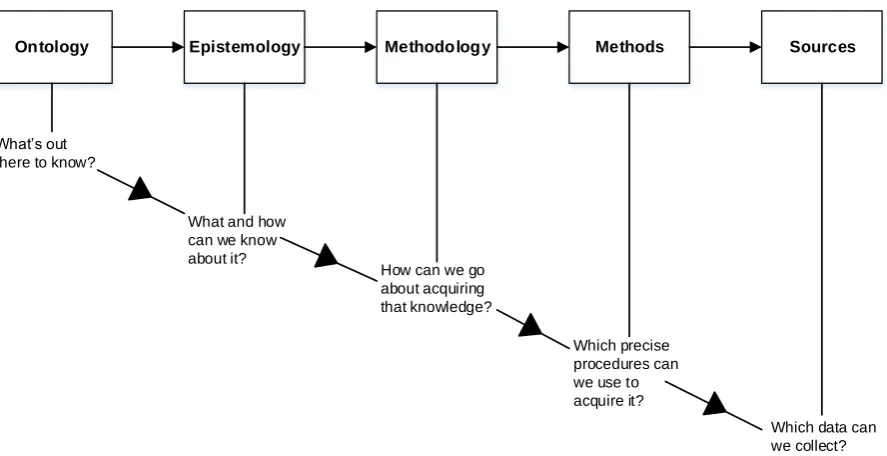
Grix (2004) sets out a simplified route through the minefield of advanced knowledge production, using ontology and epistemology as the foundation stones of his ‘building blocks of research’ (see Figure 2.1).
Ontology Epistemology Methodology Methods Sources
What’s out there to know?
What and how can we know about it?
How can we go about acquiring that knowledge?
Which precise procedures can we use to acquire it?
[image:29.595.93.537.219.447.2]Which data can we collect?
Figure 2.1 - Grix's interrelationship between the building blocks of research
Whether they are aware of them or not, all researchers hold philosophical assumptions and as Easterby-Smith et al (2008) point out, there are at least 3 reasons why an understanding of philosophical issues is important:
1. it can help to clarify research designs;
2. it can help the researcher to recognise which designs will work and which will not; and
3. it can help the researcher identify and even create designs that may be outside his or her past experience.
13 Established Academic Paradigms
Since the early part of the 20th Century, philosophical debate has increased in intensity and until recently, had broadly centred on two competing paradigms (Crotty, 1998). Positivism
(also often termed as naturalism, empiricism and objectivism, among others) carries the philosophical assumption that there is a neutral point from which an observer can stand back and view the world objectively. Interpretivism (also often known as idealism, constructionism and relativism, among others) holds the position that the world does not exist independently of our knowledge of it (Easterby-Smith et al., 2008; Grix, 2004; Gill and Johnson, 2002).
The idea of positivism was first captured by the French philosopher Auguste Comte in the mid-19th Century and has since been enmeshed in natural science research (Easterby-Smith et al., 2008). The roots of interpretivism are often associated with the thoughts of Max Weber in the early part of the 20th Century, who identified that a need for 'verstehen' (understanding) was required in the advancing social sciences, this being in contrast to the 'erklӓren' (explaining) approach associated with the natural sciences (Crotty, 1998).
The way that theory has been viewed historically from each of the two most recognised philosophical standpoints differs markedly. Theory can be viewed as abstract notions which assert specific relationships between concepts and can be used as the basis for an argument (Grix, 2004; Cottrell, 2005). From the positivist philosophical standpoint, a researcher will take a ‘top down’ approach, starting with a theory or hypothesis, which may be amended or contradicted. An interpretivist approach starts from the ‘bottom up’, using social views to build broader themes and generate theory (Creswell and Plano Clark, 2007).
14 On the back of decades of valuable philosophical debate, recent years have seen the discussion and development of additional paradigms, whose origins lie in increasing needs within modern society to both understand and solve complex problems.
Developing Academic Paradigms
2.4.1 Pragmatism
Rescher (1977) suggests that pragmatism can be traced back to the ancient Greeks, being derived from the Greek word ‘pragma’, which means ‘deed’ or ‘action’. According to Johnson and Duberley (2000) and Tarnas (1991), modern pragmatism is North American in origin and character, largely resulting from the posthumously published collection of works of Charles Saunders Peirce (1931 - 58), with the first articles outlining his thoughts being published in 1877. Peirce's work remained largely unknown and unacknowledged until pragmatism was popularised by the work of William James and John Dewey in the early part of the 20th Century (Creswell and Plano Clark, 2007; Crotty, 1998; Tarnas, 1991).
Johnson and Duberley (2000) suggest that pragmatism articulates an overt recognition of the active and proactive role of the epistemic subject, whose engagements are bounded by the tolerance of reality. Any knowledge is evaluated in the context of how it may guide action towards the realisation of particular objectives which express particular interests – or in other words, what it does for and to various groups of human actors. Accordingly, taking into account the socially constructed nature of the built environment, a number of commentators within the research community have begun to argue that pragmatic approaches are valid to management research (Amaratunga et al., 2002; Dainty et al., 2000; Green et al., 2008; Love
et al., 2002; Pathirage et al., 2008; Toor and Ofori, 2008).
15
2.4.2 Design Science
Often closely associated with the paradigm of pragmatism (Holmström et al., 2009; Kasanen
et al., 1993; Van Aken, 2005), design science is viewed as both a paradigm in its own right and a methodological research framework (Hevner et al., 2004; Vaishnavi and Kuechler, 2013; Van Aken, 2004).
Like pragmatism, the paradigm of design science advocates the use of research methods that best match the problem being studied. But what sets it apart from the more traditional paradigms of positivism and interpretivism is its aim to develop knowledge to solve problems, or to be used in the improvement of the performance of existing entities. As such, design science is fundamentally different from other research approaches (Van Aken, 2004). It is argued that the aim of ‘behavioral’ or ‘explanatory’ sciences (different terms used to encompass both natural and social science paradigms) is to describe, explain and possibly predict observable phenomena within their field. The research output of a behavioral/explanatory science is a causal model, preferably expressed in quantitative terms (Hevner et al., 2004; Van Aken, 2004).
The ideas used to distinguish between behavioral/explanatory and design sciences are inspired by Simon’s The Sciences of the Artificial (1969). Much research within the design sciences is based on the behavioral/explanatory paradigms, with research being aimed at describing and predicting in order to understand research problems. However, understanding the research problem is not enough, the ultimate aim being to develop knowledge that can be used to design solutions to problems in the field in question (Van Aken, 2004). As such, by definition, design science research aims to change the state of the world through the introduction of novel innovations, commonly known as ‘artefacts’, which make both great practical and theoretical contributions (Vaishnavi and Kuechler, 2013; Lukka, 2003).
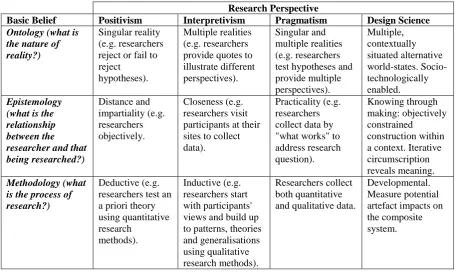
Research Perspective
16 Research Perspective
Basic Belief Positivism Interpretivism Pragmatism Design Science
Ontology (what is the nature of reality?)
Singular reality (e.g. researchers reject or fail to reject
hypotheses).
Multiple realities (e.g. researchers provide quotes to illustrate different perspectives).
Singular and multiple realities (e.g. researchers test hypotheses and provide multiple perspectives). Multiple, contextually situated alternative world-states. Socio-technologically enabled. Epistemology
(what is the relationship between the researcher and that being researched?) Distance and impartiality (e.g. researchers objectively. Closeness (e.g. researchers visit participants at their sites to collect data).
Practicality (e.g. researchers collect data by "what works" to address research question). Knowing through making: objectively constrained construction within a context. Iterative circumscription reveals meaning. Methodology (what
is the process of research?)
Deductive (e.g. researchers test an a priori theory using quantitative research methods). Inductive (e.g. researchers start with participants' views and build up to patterns, theories and generalisations using qualitative research methods).
Researchers collect both quantitative and qualitative data.
[image:33.595.84.541.55.327.2]Developmental. Measure potential artefact impacts on the composite system.
Table 2.1 - Philosophical assumptions associated with the four research perspectives
The environment within which this study is set is complex, with political, social, environmental and economic contexts. A research approach was required that offered the capacity to develop and measure the potential of a framework for change. Design science projects carefully investigate problem situations in complex field based environments and divide them into sub-problems requiring solutions (Johannesson and Perjons, 2012). When considering the problem situations and linked sub-problems outlined in Chapter 1 that required further explication on a national level prior to the development of potential solutions, this study was viewed as an ideal locus for the design science research approach.
The origins and development of the design science research approach will now be discussed, before moving on to illustrate how its application will be used to devise and evaluate solutions to the problems being addressed by this study.
Design Sciences and Design Science Research
2.6.1 Origins and Development
17 for example, design science may be used to create new pharmaceuticals or treatments (Kasanen et al., 1993).
Simon (1969) asserts that design sciences, which he terms as ‘sciences of the artificial’, were sidetracked in many universities during the 20th Century in pursuit of more academically respectable topics. However, students of the design sciences continue to be trained to this day at professional schools to enable them to use the general knowledge of their discipline to design specific solutions for specific problems (Van Aken, 2005).
What distinguishes the design sciences from other professional fields is that their goal is not to describe and explain the world, but to use their knowledge and understanding to solve practical problems (Voordijk, 2009). Otherwise, as Van Aken (2004) suggests, simply understanding the sources of resistance to organisational change still leaves undone the task of developing sound change programmes.
Recent debate in relation to the gap between academic and field based knowledge production was inspired by the seminal work of Gibbons et al. (1994) by drawing distinctions between Mode 1 and Mode 2 knowledge production. Mode 1 knowledge production is purely academic and mono-disciplinary, while Mode 2 is multidisciplinary and aims at solving complex and relevant problems in the field (Van Aken, 2005).
In the last 20 years, the uptake of design science research has been rapid and enthusiastic (Koskela, 2008). It has begun to be applied to research in fields such as information systems (Hevner et al., 2004; March and Smith, 1995; Osterle et al., 2011; Peffers et al., 2007), general management (Van Aken, 2005) and operations management (Holmström et al., 2009). Although the description of ‘the constructive approach’ is given to some research within the field of management accounting (Kasanen et al., 1993; Lukka, 2003), this essentially follows design science principles.
18 Koskela (2008) recommend that management within the built environment should be redefined as a design science, with innovative artefacts being developed to solve complex problems in the field.
2.6.2 The Anatomy of Artefacts
Ratcliff (2008) asserts that however good research methodologies become, it will not be possible to escape the ultimate dilemma, this being that all our knowledge is about the past while all our decisions are about the future. Accordingly, he suggests that traditional methods of research are not capable of determining the future shape and performance of the intricate and socially constructed built environment and to be capable of creating a future, one has first to be able to imagine it
Whilst artefacts offer function to their intended practice, undesirable side effects may result in situations where the researcher designing an alternative future does not have a complete understanding of the environment in which the artefact will operate (March and Smith, 1995). Accordingly, a critical challenge in constructing the desired artefact will be anticipating the potential side effects of its use and ensuring that they are avoided. As demanded by the Unique Adequacy requirement (UA) set out by Rooke and Kagioglou (2007) to guide construction management research, as an experienced regulatory practitioner attempting to design an alternative future within his field, the author is competent in the research setting.
Although artefacts may be designed through design science research to offer potential future solutions to problems in the field, they will result from a search process that draws from existing theories and knowledge (Peffers et al., 2007). Typically, requirements are gathered from and validated by people within the intended practice (Johannesson and Perjons, 2012).
19 that will act upon the artefact will continue to be the issues that have led to the research being carried out, such as legislative and stakeholder demands.
Based upon the knowledge types and forms introduced, it is possible to distinguish between four artefact types: constructs, methods, instantiations and models (Johannesson and Perjons, 2012; March and Smith, 1995). In keeping with the natural sciences, there is a need for a basic language such as terms, notations, definitions and concepts needed to formulate problems and their possible solutions – this basic language is termed as constructs. Design scientists also develop methods, which express prescriptive knowledge by defining guidelines to create artefacts. Instantiations are specific products intended to perform certain tasks in practice, such as a database.
Models are used to describe potential solutions to practical problems, work as descriptions of possible future solutions, and help to build artefacts that prescribe solutions to practical problems. Accordingly, in design science research, the focus is on producing the type of prescriptive framework for potential change that was aspired to during the early stages of this research.
2.6.3 Prescriptive Knowledge Production through Models
Knowledge produced by academic research can be of a descriptive or a prescriptive nature, with the development of descriptive knowledge being theory-driven and focusing on existing situations and the development of prescriptive knowledge being field-problem driven and solution-oriented (Van Aken, 2005).
20 previously used aspirational aim of ‘framework’ (defined by Oxford Dictionaries (2015) as a basic structure underlying a system, concept, or text), its use was viewed as being more in keeping with the chosen design science research approach.
Ratcliff (2008) postulates that increasingly complexity in the 21st Century has created the need for a fundamental rethink within the built environment and that theory can best be formulated by recourse to futures, foresight and imagination. A design science does not develop prescriptive knowledge for the layman, but does so for professionals and stakeholders in its field, with the knowledge being applied by individuals who have received a formal education in that field (Van Aken, 2004). The research methodology required to produce such knowledge is now discussed.
2.6.4 Design Science Methodology
Design science projects are often large undertakings, involving the review of a broad range of existing information and stakeholder views related to the problems being explored over an extended period of time. Accordingly, researchers adopting the design science research methodology can gain much from the manner in which it supports them in structuring their work logically, ensuring the quality of their results (Johannesson and Perjons, 2012).
There are a number of activities involved in what Simon (1969) describes as the ‘means-ends
analysis’ led framework of design science research. Means-ends analysis is based on representations of present states, desired states, the differences between the two states, and the actions that could change the present situation. The goal of the means-ends analysis is to move towards the desired state, which in this case is the development of an artefact (or model) with the capability to solve the research problems.
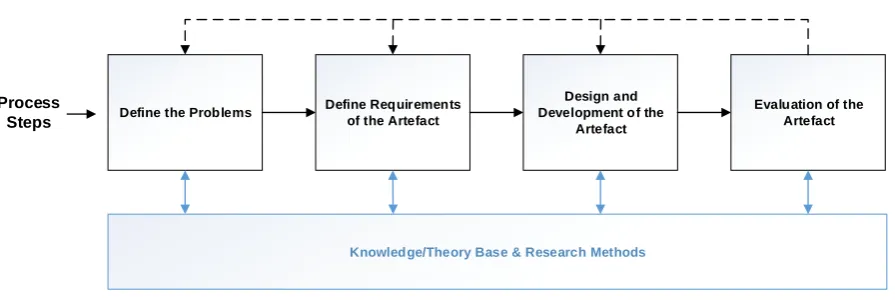
21 Define the Problems Define Requirements
of the Artefact
Design and Development of the
Artefact
Evaluation of the Artefact
Process Steps
Process Iteration
[image:38.595.93.541.73.223.2]Knowledge/Theory Base & Research Methods
Figure 2.2 - Design science research methodology
The methodology set out in Figure 2.2 demonstrates the iterative way in which this design science project was executed, moving back and forth between all the activities of problem definition, requirements definition, artefact development and artefact evaluation. Unlike the process models set out by Vaishnavi and Kuechler (2007) and Peffers et al. (2007), the models offered by Takeda et al. (1990) and Johannesson and Perjons (2012) do not clearly demonstrate iterative movements between process steps. When considering that the research was to be carried out within an environment of continuing political and policy change, process iteration was considered to be essential, as recommended for similar situations by other commentators (Holmström et al., 2009; Osterle et al., 2011).
Of the 4 process models that were considered, only the most recent offered by Johannesson and Perjons (2012) suggests the inclusion of details of the knowledge/theory base and research methods to be employed as part of each process step. The inclusion of this element of the process model was deemed as being valuable in offering an easily accessible reference to the structure of the research following establishment of the required resources. Accordingly, Figure 2.2 will be updated later in the thesis to demonstrate how its chapters fit within the flow of process steps, along with the knowledge/theory base and research methods utilised as part of each step.
22 capacity to produce the required artefact. The process models offered by advocates of the methodology detail the option of a fifth process step prior to evaluation of the artefact – a
demonstration of the artefact to interested stakeholders. This activity is particularly suited to instances where information or accounting systems are being developed (Lukka, 2003; Peffers
et al., 2007). However, taking into account the broad policy driven scope of this research, it would obviously not be possible to employ the desired artefact to test or demonstrate it in use.
The requirements of each of the four activities that will form the methodology adopted by the research are now considered separately.
2.6.5 Define the Problems
As suggested by its description, the process step define the problems is concerned with defining the issues to be addressed and justifying the value of solutions (Peffers et al., 2007). In keeping with the issues associated with this research, the problems should be of general interest and not restricted to local practice (Johannesson and Perjons, 2012).
A description of the type of problems being addressed by this research have been drawn out in Chapter 1 through a description of the author’s localised experiences as a practitioner. Chapter 3 will seek to reinforce these experiences on a far wider basis through a review of literature, including the results of a number of research projects commissioned by the Government that have considered a substantial body of stakeholder feedback. Where necessary (i.e. where literature on a particular issue is scarce), the author’s experiences in the field will be expanded upon. However, as detailed in Figure 2.2, the iterative nature of the methodology may also result in the research problems being expanded upon later as part of the design and development activity (i.e. barriers to particular solutions to problems that may emerge from the research).
2.6.6 Define Requirements of the Artefact
23
Describe each requirement in a precise, concise and easily understandable way.
For each requirement, explain why it is needed and relate it to the problem.
Ensure that it is realistic to develop an artefact fulfilling the requirements but also try to be original.
Describe the literature and the stakeholders that have contributed to defining the requirements.
Explain what has been done to define the requirements, in particular how the research literature and views of stakeholders have been reviewed.
In meeting the above requirements, it is the researcher’s task to make sure that they are aware of prior knowledge/theory of the topic area, not only in order to base further development work on that prior knowledge/theory, but also to be able to later identify and analyse the theoretical contribution of the research (Lukka, 2003).
2.6.7 Design and Development of the Artefact
The design and development of the artefact process step is inherently creative by nature (Lukka, 2003) involving a process of synthesis. The outputs of the define requirements of the artefact process step are refined through a process of reusing and adapting components from existing solutions, inventing new components, and combining them in an innovative way (Johannesson and Perjons, 2012). The desired output of this process step is an objective centred solution to meet the overall aim of the research (Peffers et al., 2007).
Simon (1969) compares the design and development of an artefact to the design and development of a building, during which an architect will draw together sketches, floor plans, elevation drawings and service information to create a final design product. Similarly, it is the researcher’s task during this stage of the study to draw together the potential solutions to the sub-problems and wider issues addressed by the previous outline and defineactivity through a process of synthesis to design and develop the desired artefact.
2.6.8 Evaluation of the Artefact
24 To date, research offering advice on evaluation strategies for design science research is limited and primarily concentrates on the development of information systems, the performance of which can often be tested in situ following design and development (Venable
et al., 2014). However, taking into account the broad policy driven scope of this research, it would obviously not be possible to employ the desired artefact to test or demonstrate it in use. In situations where innovative artefacts cannot be employed and tested in complex work environments, Johannesson and Perjons (2012) and Hevner et al. (2004) recommend the use of an ex-ante form of evaluation called informed argument. In such instances, evaluation is tightly coupled with artefact requirements definition and design (Venable et al., 2014). Accordingly, the informed argument form of evaluation has been utilised by this research, as reflected by the process iteration outlined in Figure 2.2.
Summary
Having worked through the ‘building blocks of research’ identified by Grix (2004), it has been determined that the design science research methodology best matches the problem solving ethos of this research. In this sense, it has been ascertained that design sciences can be distinguished from other professions as their goal is not to describe and explain the world, but to use their knowledge and understanding to solve practical problems (Voordijk, 2009). Otherwise, simply understanding the barriers to change still leaves undone the task of developing the type of model for potential change being sought by this research and in this sense, the design science methodology is fundamentally different from other research approaches (Van Aken, 2004).
As a large undertaking involving the review of a broad range of existing information and stakeholder views over an extended period of time, the design science research methodology also offers a means of structuring the study logically, ensuring the quality of its results (Johannesson and Perjons, 2012).
25
3
Define the Problems
Introduction
As detailed in Chapter 1, increasingly complex building performance standards and continuous transformation of the public sector appear to be having a detrimental effect upon the effectiveness and efficiency of the developments overseen in practice by the author and his peers. In this respect, Chapter 1 also discussed existing (Academy for Sustainable Communities, 2007; Egan, 2004) and developing (Planning and Building Control Working Group, 2010) research considered prior to the commencement of this study, which reinforced the problems being observed by the author. This chapter will seek to reinforce the problems discussed in Chapter 1 on a wider basis through a review of literature. Where necessary (i.e. where literature on a particular issue is scarce), the author’s experiences in the field that were outlined in Chapter 1 will be expanded upon.
Following the introduction of sustainable development as a regulatory aim, technical requirements have begun to cross the disciplinary boundaries between the planning and building control professions, resulting in a need for knowledge and skill sharing. However, ongoing transformation of the public sector seems to be serving to further fragment the relationship between the two professions rather than acting to bring them closer together.
An indication of the scale of the current problem in this respect is highlighted in the stakeholder feedback to the research of Faber Maunsell and Steemers (2010, p. 15), which suggests that: “…they [planning and building control practitioners] come from different backgrounds and speak a different language”. The following quotation from research carried out by AECOM (2012, p. 26) offers similar stakeholder perspectives:
“We have been informed that despite development control and building control operating from the same department, the two bodies and their assessing officers may hardly interact or communicate.”