OncoTargets and Therapy 2018:11 1491–1499
OncoTargets and Therapy
Dove
press
submit your manuscript | www.dovepress.com 1491
O r i g i n a l r e s e a r c h open access to scientific and medical research Open access Full Text article
Upregulated long non-coding rnas demonstrate
promising efficacy for breast cancer detection:
a meta-analysis
guozheng Yu1,2
Wei Zhang2,3
linyan Zhu1,2
lin Xia2,4
1Department of general surgery,
huangshi central hospital of edong healthcare group, affiliated Hospital of Hubei Polytechnic University, 2Hubei Key Laboratory
of Kidney Disease Pathogenesis and intervention, 3Department of clinical
Laboratory, 4Department of Medical
Oncology, huangshi central hospital of edong healthcare group, affiliated Hospital of Hubei Polytechnic University, huangshi, china
Purpose: Focusing on the latest literature, dysregulated long non-coding RNAs (lncRNAs) have been extensively explored in breast cancer (BC) research. The purpose of this meta-analysis is to synthesize the evidence on the diagnostic performance of abnormally expressed lncRNAs for BC.
Materials and methods: Relevant studies were searched in multiple electronic databases. The Quality Assessment of Diagnosis Accuracy Studies II criteria were applied to assess the quality of included studies. The bivariate meta-analysis model was applied to synthesize the diagnostic parameters using Stata 12.0 software. Publication bias was judged in terms of the Deek’s funnel plot asymmetry test.
Results: We included 10 eligible studies, which comprised 835 BC patients and 725 paired controls for this meta-analysis. The pooled sensitivity, specificity, diagnostic odds ratio, likeli-hood ratio positive, likelilikeli-hood ratio negative, and area under the curve (AUC) of upregulated lncRNA expression signature in confirming BC were 0.79 (95% CI: 0.70–0.85), 0.80 (95% CI: 0.73–0.85), 14.61 (95% CI: 10.91–19.55), 3.90 (95% CI: 3.03–5.02), 0.27 (95% CI: 0.20–0.36), and 0.86, respectively. Stratified analyses yielded a sensitivity of 0.83 (95% CI: 0.80–0.86) for serum-based analysis, which was higher than plasma-based analysis, whereas plasma-based analysis revealed a greater specificity of 0.88 (95% CI: 0.85–0.91). Moreover, lncRNA-homeotic genes (HOX) transcript antisense RNA showed a pooled specificity of 0.89 (95% CI: 0.84–0.93) and AUC of 0.86, which were superior to performances by lncRNA-metastasis-associated lung adenocarcinoma transcript-1 and -H19 in diagnosing BC. Notably, the analysis based on cancer subtypes demonstrated that lncRNA expression signature could distinguish triple-negative BC (lacks estrogen receptor, progesterone receptor, and human epidermal growth factor receptor 2 expression) from non-triple-negative BC, with an AUC of 0.85.
Conclusion: Upregulated lncRNAs reveal an immense potential as novel non-invasive biomarker(s) that could complement BC diagnosis.
Keywords: lncRNA, breast cancer, diagnosis, meta-analysis
Introduction
Breast cancer (BC) represents 25% of all cancer cases and 15% of all cancer-related deaths among females.1 Clinically, the final diagnosis of BC still depends on
histologi-cal examinations (gold standard), which is invasive and also accounts for a significant delay in establishing a formal diagnosis. The routine blood markers for BC diagnosis, including carbohydrate antigen 15-3 and carcinoembryonic antigen, are essential in this regard, but the diagnostic efficacy of these biomarkers is still limited.2,3 It is of
pivotal importance, therefore, to find non-invasive biomarkers with high sensitivity
correspondence: lin Xia Department of Medical Oncology, Huangshi Central Hospital, Affiliated Hospital of Hubei Polytechnic University, edong healthcare group, no 293 Yiyuan street, Xi’sai’shan District, huangshi city 435000, Hubei, China
Tel/fax +86 714 306 2067 email [email protected]
Journal name: OncoTargets and Therapy Article Designation: Original Research Year: 2018
Volume: 11
Running head verso: Yu et al
Running head recto: Efficacy of lncRNAs as biomarkers in breast cancer DOI: 152241
OncoTargets and Therapy downloaded from https://www.dovepress.com/ by 118.70.13.36 on 25-Aug-2020
For personal use only.
Dovepress
Yu et al
and specificity, which can be used for BC detection at early stages.
Long non-coding RNA (lncRNA) is one special type of the non-protein coding RNA transcripts with a sequence lon-ger than 200 nucleotides.4 It has been reported that lncRNAs
are associated with enhancer regions, and could influence increased activities of neighboring genes.5 LncRNAs have
been demonstrated to be differentially expressed in BC tissues compared with non-tumoral tissues.6–8 Moreover, a
recent study has confirmed key regulatory roles of lncRNAs in BC biology through diverse mechanisms.9 Of note,
emerging evidences have highlighted the potential clinical value of lncRNAs as biomarker(s) in identifying BC.6–8,10–16
However, the clinical utilities of lncRNAs remain uncertain as the published signatures virtually do not overlap. Some fresh viewpoints indicated that the diagnostic accuracy of lncRNAs for BC is yet to be accepted. The aim of this meta-analysis is to estimate the overall pooled efficacy of lncRNAs in confirming BC, so as to offer diagnostic basis for the development of novel biomarkers for BC at the molecular level.
Materials and methods
literature search
The Preferred Reporting Items for Systematic reviews and Meta-Analyses criteria were used to guide the implementa-tion of this meta-analysis.17 Systematic literature retrieval was
undertaken in PubMed, EMBASE, Wed of Science, China National Knowledge Infrastructure, and Wanfang databases till August 1, 2017, with language restriction to English and Chinese. The search terms applied for the electronic databases were: (“long non-coding RNA” or “non-coding RNA” or “lncRNA”) and (“breast” or “mastocarcinoma” or “breast carcinoma” or “breast cancer” or “breast tumor” or “breast neoplasm” or “tumor of breast”) and/or (“sensitivity” or “specificity” or “AUC” or “area under curve” or “ROC” or “Receiver operating characteristic curve” or “diagnosis”). The reference lists of articles were hand-searched for the collection of relevant studies.
selection of studies
Articles meeting the following criteria were included: 1) clinical studies about lncRNA(s) in human BC; 2) studies that embraced paired cancer-free control(s); 3) studies in which data were available with the diagnostic sensitivity, specificity, or AUC of lncRNA(s) for BC; and 4) English- or Chinese-language publications. Articles not meeting the following criteria were excluded: 1) publications that
incorporated ,20 participants; 2) studies that aimed to report other types of RNAs rather than lncRNA(s); 3) studies where data were incomplete to enable construction of a 2×2 contin-gency tables; and 4) letters to the editor, updates, interviews, commentaries, review papers, and animal studies.
Data extraction
Data extracted were values of true positives, true negatives, false positives, and false negatives in diagnostic studies. Where such data were unavailable, the estimated sensitivities and specificities were used to calculate these data to complete the 2×2 tables. Moreover, original author, year of publication, lncRNA type, sample size, sample type, test method, cut-off value, and reference gene were recorded from the included studies. Data from different lncRNA types or evaluation methods were treated as distinct or individual studies in this meta-analysis. We had group discussions and contacted authors for clarification of questions or unclear data when arguments arose.
Quality assessment
Methodological quality of each study was assessed using the Quality Assessment of Diagnostic Accuracy Studies (QUADAS) II criteria.18 The tool includes 14 questions, and
the answer of risk for bias could be rated as “No”, “Yes”, or “Unclear”, corresponding to a score of “1”, “0”, and “0”, respectively. The included studies were eliminated if they were judged to be of low quality.
statistical analyses
The meta-analysis was conducted with Stata 12.0 (Stata Corporation, College Station, TX, USA) and Meta-Disc 1.4 (XI Cochrane Colloquium, Barcelona, Spain) software. We calculated several primary outcomes, including pooled sen-sitivity, specificity, diagnostic odds ratio (DOR), likelihood ratio positive (LR+), and likelihood ratio negative (LR–) with their corresponding 95% CIs using a bivariate model. The summary receiver operator characteristic (SROC) curve was plotted and the pooled AUC value was calculated. False positive report probability (FPRP) analysis was performed according to the study by Wacholder et al.19 Heterogeneity
for each outcome was assessed using Cochran’s Q and I² statistics (significant level was P,0.05 or I2.50%). The
meta-analysis model (fixed or random) was selected depend-ing on the degree of study heterogeneity. Sensitivity analysis was undertaken by excluding each study from the analyses to ascertain its effect on the overall results. Meta-regression test was further conducted to identify the potential sources
OncoTargets and Therapy downloaded from https://www.dovepress.com/ by 118.70.13.36 on 25-Aug-2020
Dovepress Efficacy of lncRNAs as biomarkers in breast cancer
of study heterogeneity. Publication bias was measured using visual funnel plot and quantitative Deeks’ funnel plot asymmetry test by Stata 12.0 program. Any study not equally distributed in visual funnel plot or P,0.05 in Deeks’ funnel plot asymmetry test was considered to have statistically significant bias.
Results
characteristics and quality of the
included studies
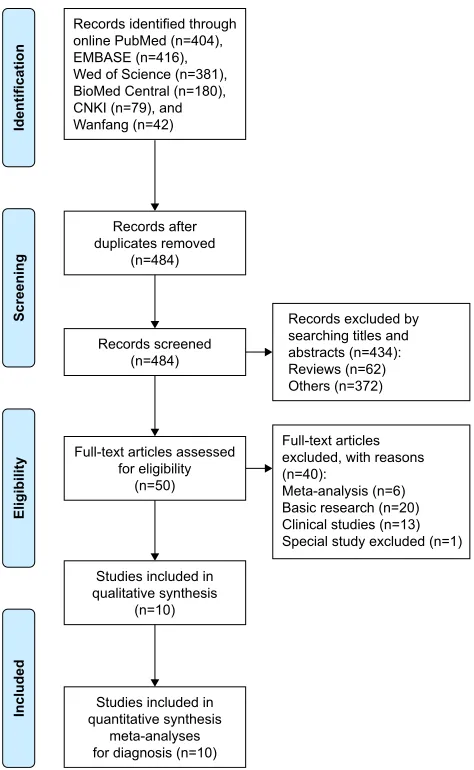
The selection procedure is demonstrated schematically in Figure 1. We identified 484 articles from the online data-bases based on the search criteria, of which 434 studies were excluded due to irrelevant contents (n=372) or review papers (n=62). In the subsequent stages, 39 of 50 records
were identified as basic research (n=20), clinical studies (n=13), or meta-analyses (n=6), and were all eliminated. One study plotted ROC curves of 3-lncRNA signature in predicting the overall survival of BC,20 and was excluded in
our analysis as well. Finally, 10 studies 6–8,10–16 were
identi-fied that fulfilled our inclusion criteria and thus, were used for statistical analyses.
study characteristics and quality
assessments
Ten diagnostic studies involving 835 BC patients and 725 paired controls were included in the analysis. All study participants were Chinese. The sample size varied from 30 to 120, and all BC patients received definite diagnosis by histopathological examinations of specimens. The lncRNA expression signature included H19, homeotic genes (HOX) transcript antisense RNA (HOTAIR), metastasis-associated lung adenocarcinoma transcript-1 (MALAT1), ANRIL, HIFA-AS2, urothelial carcinoma-associated 1 (UCA1), and RP11-445H22.4, and all revealed upregulated status in BC. The paired controls comprised healthy individuals,7,8,10,11,13–16
and non-BC controls.6,12 Additionally, the specimen types
were serum in 4 studies,10–13 plasma in 5 studies,7,8,11,14,16
and urine in 1 study.15 Method of testing in all studies was
real-time polymerase chain reaction, and lncRNAs were normalized to β-actin,7,8,14–16 glyceraldehyde-3-phosphate
dehydrogenase,6,10–12 and U6.13 Publication languages were
confined to English8,11–14 and Chinese.6,7,10,15,16 We also
included 1 study on the clinical utility of lncRNA expres-sion signature in distinguishing between triple-negative BC (TNBC, lacks estrogen receptor, progesterone receptor, and human epidermal growth factor receptor 2 expression) and non-TNBC in our subgroup analyses.11 The main features of
the included studies are displayed in Table 1.
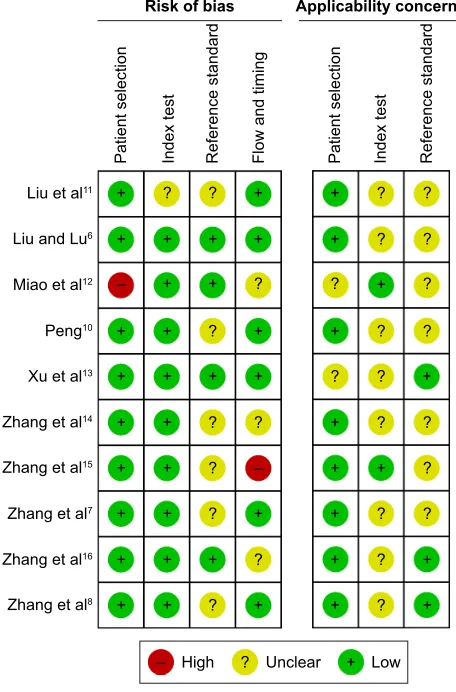
Figure 2 summarizes the proportions of risk of bias in the enrolled studies by QUADAS II checklist, and Table 1 lists the QUADAS scores for each study. As indicated in Table 1, only 1 study received a QUADAS score of 8,12 while all the
other studies presented QUADAS scores $10, suggesting
that the included studies were reliable to be synthesized in the meta-analysis.
heterogeneity
Cochran’s Q and I² tests were conducted to assess hetero-geneity generated by non-threshold effect, and Spearman’s correlation coefficient was used to evaluate heterogeneity from threshold effect. In our analysis, the non-threshold effect was not significant among all the pooled effect Figure 1 The study selection procedure for this meta-analysis was conducted
according to preferred reporting items for systematic reviews and meta-analyses (PRISMA) statement.
Abbreviation: CNKI, China National Knowledge Infrastructure.
)XOOWH[WDUWLFOHV H[FOXGHGZLWKUHDVRQV Q
0HWDDQDO\VLVQ %DVLFUHVHDUFKQ &OLQLFDOVWXGLHVQ 6SHFLDOVWXG\H[FOXGHGQ
5HFRUGVH[FOXGHGE\ VHDUFKLQJWLWOHVDQG DEVWUDFWVQ 5HYLHZVQ 2WKHUVQ
,GHQWLILFDWLRQ
6FUHHQLQJ
(OLJLELOLW
\
,QFOXGHG
5HFRUGVDIWHU GXSOLFDWHVUHPRYHG
Q 5HFRUGVLGHQWLILHGWKURXJK RQOLQH3XE0HGQ (0%$6(Q :HGRI6FLHQFHQ %LR0HG&HQWUDOQ &1.,Q DQG :DQIDQJQ
5HFRUGVVFUHHQHG Q
)XOOWH[WDUWLFOHVDVVHVVHG IRUHOLJLELOLW\
Q
6WXGLHVLQFOXGHGLQ TXDOLWDWLYHV\QWKHVLV
Q
6WXGLHVLQFOXGHGLQ TXDQWLWDWLYHV\QWKHVLV
PHWDDQDO\VHV IRUGLDJQRVLVQ
OncoTargets and Therapy downloaded from https://www.dovepress.com/ by 118.70.13.36 on 25-Aug-2020
Dovepress
Yu et al
sizes (Table 2). Nevertheless, the P-values of Spearman’s correlation coefficient in the overall pooled analysis, as well as serum-, MALAT1-, and BC subtype-based analyses were all ,0.05, indicating the existence of heterogeneity from
threshold effect (Table 2). No heterogeneity was detected in tissue-, H19-, and HOTAIR-based analyses (Table 2).
Diagnostic performance
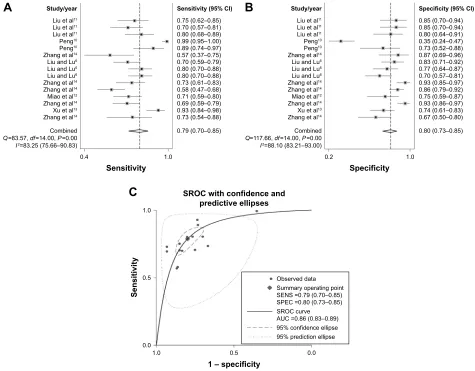
Figure 3A and B displays the pooled sensitivity and speci-ficity, respectively, of lncRNA profiling for BC diagnosis by means of forest plots. The overall pooled results for sensitivity, specificity, LR+, LR-, and DOR with 95% CIs were 0.79 (95% CI: 0.70–0.85), 0.80 (95% CI: 0.73–0.85), 3.90 (95% CI: 3.03–5.02), 0.27 (95% CI: 0.20–0.36), and 14.61 (95% CI: 10.91–19.55), respectively. The combined AUC value was estimated to be 0.86 from the SROC curve (Figure 3C), indicating an overall high efficacy as a diagnostic test.
Subgroup analyses
Subgroup analyses were performed according to particular characteristics such as sample type, single lncRNA testing, and BC subtype. As shown in Table 3, we found differences in serum- and plasma-based analyses, where the estimated AUC values were 0.84 and 0.86, respectively. Of note, the serum-based analysis yielded a sensitivity of 0.83 (95% CI: 0.80–0.86), which was higher than plasma-based analysis, whereas the plasma-based analysis conferred a better speci-ficity of 0.88 (95% CI: 0.85–0.91). In the meta-analyzed data based on single lncRNA testing, lncRNA-HOTAIR manifested a pooled specificity of 0.89 (95% CI: 0.84–0.93) and AUC of 0.86, which were superior to lncRNA-MALAT1 and -H19; however, lncRNA-MALAT1 testing achieved a better sensi-tivity of 0.83 (95% CI: 0.79–0.87) among these 3 lncRNAs. Moreover, the analysis in terms of cancer subtype suggested that lncRNA expression profile could distinguish TNBC from Table 1 Main characteristics of all included studies of upregulated lncRNAs in confirming breast cancer
Study Year Area Case/control type Patient/control
size Sample type LncRNA signature Expression status Test method Control gene Cut-off points
liu and lu6 2016 china Bc vs non-Bc 86/60 serum h19, hOTair,
MalaT1
Up-regulated RT-qPCR GAPDH Unclear
liu et al11 2017 china Bc vs health
TnBc vs non-TnBc 60/40 25/35
Plasma anril, hiFa-as2, Uca1
Up-regulated RT-qPCR GAPDH 0.42
Miao et al12 2016 china Bc vs non-Bc 78/40 serum MalaT1 Up-regulated RT-qPCR GAPDH Unclear
Peng10 2015 china Bc vs health 36/26
120/81
serum MalaT1 Up-regulated RT-qPCR GAPDH 11.104
Xu et al13 2015 china Bc vs health 68/68 serum RP11-445H22.4 Up-regulated RT-qPCR U6 0.3
Zhang et al15 2016 china Bc vs health 30/42 Urine h19 Up-regulated RT-qPCR β-actin Unclear
Zhang et al7 2016 china Bc vs health 70/86 Plasma hOTair Up-regulated RT-qPCR β-actin Unclear
Zhang et al14 2016 china Bc vs health 102/96 Plasma h19 Up-regulated RT-qPCR β-actin Unclear
Zhang et al16 2016 china Bc vs health 97/86 Plasma h19 Up-regulated RT-qPCR β-actin 1.085
Zhang et al8 2016 china Bc vs health 88/100 Plasma hOTair Up-regulated RT-qPCR β-actin Unclear
Abbreviations: ANRIL, antisense noncoding RNA in the INK4 locus; BC, breast cancer; GAPDH, glyceraldehyde 3-phosphate dehydrogenase; HOTAIR, homeotic genes (HOX) transcript antisense RNA; lncRNA, long non-coding RNAs; MALAT, metastasis-associated lung adenocarcinoma transcript-1; QUADAS, Quality Assessment of Diagnostic Accuracy Studies; RT-qPCR, real-time quantitative polymerase chain reaction; TNBC, triple-negative BC; UCA1, urothelial carcinoma-associated 1.
Figure 2 Study quality and bias assessment by Quality Assessment of Diagnosis Accuracy Studies (QUADAS) II tool.
Applicability concerns
Patient selection Index test Reference standar
d + + + + + + + + + + + + + ? ? ? ? ? ? ? ? ? ? ? ? ? ? ? ? ?
Risk of bias
Patient selection Index test Reference standar
d
Flow and timing
+ + + + + + + + + + + + + + + + + + + + + + + + + + + + ? ? ? ? ? ? ? ? ? ? – – Low + Unclear ? High – Zhang et al8
Zhang et al16 Zhang et al7 Zhang et al15 Zhang et al14 Peng10 Liu et al11
Liu and Lu6
Miao et al12
Xu et al13
OncoTargets and Therapy downloaded from https://www.dovepress.com/ by 118.70.13.36 on 25-Aug-2020
Dovepress Efficacy of lncRNAs as biomarkers in breast cancer
non-TNBC, with sensitivity, specificity, LR+, LR-, DOR, and AUC of 0.73 (95% CI: 0.62–0.83), 0.80 (95% CI: 0.71–0.87), 3.56 (95% CI: 2.39–5.30), 0.35 (95% CI: 0.23–0.54), 12.26 (95% CI: 5.87–25.59), and 0.85, respectively.
FPRP analysis
FPRP analysis was performed to verify whether the positive findings were real.19 We preset an FPRP value of 0.5, odds
ratio of 1.5, and α level of 0.05. When π=0.1 (moderate prior Table 2 Heterogeneity analysis of lncRNAs for breast cancer detection
Analysis Spearman
correlation
coefficient/P-value
Cochran’s
Q value/
P-value
I2, % Heterogeneity
Threshold effect
Non-threshold effect
Overall 0.748/0.001 21.43/0.0911 34.7 Yes no
sample type
serum 0.757/0.049 9.04/0.1715 33.6 Yes no
Plasma 0.505/0.248 8.98/0.1748 33.2 no no
single lncrna testing
h19 0.800/0.200 0.73/0.8667 0.0 no no
hOTair 0.500/0.667 2.91/0.2335 31.2 no no
MalaT1 1.000/0.000 4.97/0.1740 39.6 Yes no
BC subtype
TnBc vs non-TnBc 1.000/0.000 0.16/0.9245 0.0 Yes no
Abbreviations: BC, breast cancer; HOTAIR, homeotic genes (HOX) transcript antisense RNA; lncRNAs, long non-coding RNAs; MALAT, metastasis-associated lung adenocarcinoma transcript-1; TNBC, triple-negative BC.
Figure 3 Forest plots of overall combined sensitivity (A) and specificity (B), and SROC curve (C). Note: in the srOc curve, one cycle represents on individual study.
Abbreviations: AUC, area under curve; SENS, sensitivity; SPEC, specificity; SROC, summary receiver operating characteristic.
$
6WXG\\HDU 6HQVLWLYLW\&,/LXHWDO
/LXHWDO
/LXHWDO
/LXDQG/X
/LXDQG/X
/LXDQG/X
3HQJ
3HQJ
=KDQJHWDO
=KDQJHWDO
=KDQJHWDO
=KDQJHWDO
=KDQJHWDO;XHWDO
0LDRHWDO
4 GI 3
6HQVLWLYLW\
, ±
&RPELQHG
± ± ±
± ± ± ± ± ±
± ±
±
± ± ±
±
6SHFLILFLW\
/LXHWDO
/LXHWDO
/LXHWDO
/LXDQG/X
/LXDQG/X
/LXDQG/X
3HQJ
3HQJ
=KDQJHWDO
=KDQJHWDO
=KDQJHWDO
=KDQJHWDO
=KDQJHWDO;XHWDO
0LDRHWDO
&RPELQHG
6WXG\\HDU
4 GI 3
, ±
6SHFLILFLW\&,
± ± ±
± ± ± ± ± ±
± ±
±
± ± ±
±
%
652&ZLWKFRQILGHQFHDQG SUHGLFWLYHHOOLSVHV
±VSHFLILFLW\
6HQVLWLYLW\
&
2EVHUYHGGDWD 6XPPDU\RSHUDWLQJSRLQW 6(16 ± 63(& ± 652&FXUYH $8& ± FRQILGHQFHHOOLSVH SUHGLFWLRQHOOLSVH
OncoTargets and Therapy downloaded from https://www.dovepress.com/ by 118.70.13.36 on 25-Aug-2020
Dovepress
Yu et al
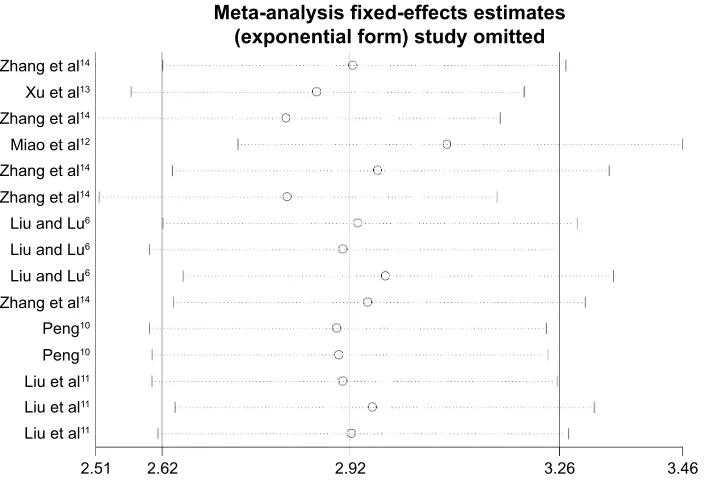
Figure 4 sensitivity analysis of the overall pooled study for outliers.
2.51 2.62 2.92 3.26 3.46
Meta-analysis fixed-effects estimates (exponential form) study omitted Zhang et al14
Zhang et al14
Zhang et al14 Zhang et al14
Zhang et al14 Xu et al13
Liu and Lu6 Liu and Lu6 Liu and Lu6
Liu et al11 Liu et al11 Liu et al11 Peng10 Peng10 Miao et al12
Table 3 Diagnostic indices of subgroup analyses based on sample type, single lncRNA testing and cancer subtype
Analysis Pooled sensitivity
(95% CI)
Pooled specificity (95% CI)
LR+ (95% CI) LR- (95% CI) Pooled DOR
(95% CI)
AUC
sample type
serum 0.83 (0.80–0.86) 0.68 (0.63–0.73) 2.87 (1.91–4.33) 0.24 (0.16–0.36) 13.92 (8.82–21.95) 0.84 Plasma 0.69 (0.64–0.73) 0.88 (0.85–0.91) 5.41 (3.99–7.33) 0.36 (0.29–0.44) 15.93 (10.24–24.77) 0.86 single lncrna testing
h19 0.67 (0.61–0.73) 0.79 (0.73–0.84) 2.99 (2.18–4.11) 0.42 (0.33–0.55) 8.18 (5.34–12.51) 0.80
hOTair 0.74 (0.68–0.80) 0.89 (0.84–0.93) 6.77 (2.99–15.35) 0.30 (0.24–0.37) 23.16 (12.49–42.95) 0.86 MalaT1 0.83 (0.79–0.87) 0.63 (0.56–0.70) 2.69 (1.40–5.19) 0.24 (0.13–0.47) 13.42 (6.48–27.78) 0.84 Cancer subtype
TnBc vs non-TnBc 0.73 (0.62–0.83) 0.80 (0.71–0.87) 3.56 (2.39–5.30) 0.35 (0.23–0.54) 12.26 (5.87–25.59) 0.85
Abbreviations: AUC, area under curve; HOTAIR, homeotic genes (HOX) transcript antisense RNA; LR+, likelihood ratio positive; LR-, likelihood ratio negative; MALAT, metastasis-associated lung adenocarcinoma transcript-1; TNBC, triple-negative BC.
probability), the FPRP value calculated based on our sample sizes was estimated to be 0.46, which was lower than the pre-set FPRP value of 0.5; when π=0.01 (low prior probability), the FPRP value was 0.81, which was higher than the preset FPRP value (0.5). The analysis revealed that the results were reliable when π=0.1, with moderate prior probability.
Influence analysis and meta-regression
Influence analysis was conducted with Stata 12.0 software. As displayed in Figure 4, no included individual studies were out of the upper or lower CI limits, suggesting that the selected studies had relatively high homogeneity. On the other hand, meta-regression was performed based on the platform of Meta-Disc 1.4 software. Five covariates, including sample types, patient size, control size, reference gene, and QUADAS score were corroborated to confirm the origins of heterogeneity. As shown in Table 4, sample typereceived the lowest P-value of 0.0442 among the analyses, indicating that different sample types were likely to be the source of study heterogeneity.
Publication bias
Publication bias was judged by funnel plot and Deeks’ funnel plot asymmetry test. Funnel plot showed that all included studies were relatively symmetrically distributed (Figure 5A). Moreover, Deeks’ funnel plot asymmetry test with a P-value of 0.185 revealed no proof of publication bias among the overall pooled study (Figure 5B).
Discussion
BC is one of the most frequently diagnosed cancers that also accounts for most cancer-related deaths among females worldwide.1 Dysregulation of lncRNAs in BC has
been highlighted by many investigations.6–8,10–16 In order
OncoTargets and Therapy downloaded from https://www.dovepress.com/ by 118.70.13.36 on 25-Aug-2020
Dovepress Efficacy of lncRNAs as biomarkers in breast cancer
Table 4 Meta-regression test of the overall pooled analysis based on different covariates
Covariates P-value PDOR with 95% CI
sample type 0.0442 2.43 (1.03–5.75)
Patient size 0.5195 0.99 (0.98–1.01)
control size 0.1620 1.02 (0.99–1.05)
reference gene 0.1701 1.21 (0.90–1.63)
QUaDas score 0.7567 0.90 (0.41–1.99)
Abbreviations: PDOR, pooled diagnostic odds ratio; QUADAS, Quality assessment of Diagnostic accuracy studies.
Figure 5 Publication bias examined by Deeks’ funnel plot asymmetry test (A) and visual funnel plot (B). Note: One cycle represents one individual study.
Abbreviations: ESS, effective sample size; RR, relative risk; SE, standard error.
A
B
1,000
100
10
1
0
0.2
0.4
0.6
0.8
1
–1 0 1 2 3
0.06 0.08 0.10
1/root (ESS) Log RR
0.12 0.14
Log odds ratio versus 1/sqrt
(effective sample size) (Deeks) Funnel plot with pseudo95% confidence limits
SE (log RR)
Diagnostic odds rati
o
Study Regression line
to examine the reported diagnostic efficacy of abnormally expressed lncRNAs in BC and evaluate whether lncRNA expression signature could be rated as additional molecular marker(s) to aid in BC diagnosis, we meta-analyzed the overall diagnostic accuracy of lncRNAs in BC.
A total of 10 studies were examined to assess the diagnos-tic value using a bivariate meta-analysis model. This proce-dure allows reliable validation of a large collection of samples by combining several independent datasets with wide CIs. As expected, lncRNA expression profile harbored a pooled sensitivity of 0.79 and specificity of 0.80, corresponding to a LR+ of 3.90, LR- of 0.27, and DOR of 14.61, showing an overall high diagnostic performance as a test. The AUC value is also a major indicator for a diagnostic test as fol-lows: the ideal position indicative of a perfect test is near the upper-left corner in a SROC curve. In our analysis, the SROC curve revealed an AUC of 0.86, which again indicates that lncRNA expression profile could be a powerful biomarker for BC detection. Similar studies have documented that abnormally expressed lncRNAs could be rated as auxiliary biomarker(s) to aid in gastric cancer (GC) diagnosis, with a combined AUC of 0.80.21 Our data achieved higher efficacy
for lncRNA signature in BC than in GC.
In our subgroup analyses by sample type, we found differences between serum-, and plasma-based analyses. The serum-based analysis seemed to achieve a higher sensitiv-ity than plasma-based analysis, whereas the plasma-based analysis conferred a better specificity than the former. In the analysis of single lncRNA testing for BC, lncRNA-HOTAIR manifested a pooled specificity of 0.89 and AUC of 0.86, which were superior to lncRNA-MALAT1 and -H19, yet, lncRNA-MALAT1 testing achieved a better sensitivity than lncRNA-HOTAIR and -H19. Studies have shown that lncRNA-MALAT1, -HOTAIR and -H19 are promising predictors for monitoring cancer prognosis.22–24 We herein
compared the diagnostic efficacy of these 3 lncRNAs for BC and showed that they were also promising biomarkers for BC diagnosis. On the other hand, the analysis in terms of BC subtype indicated that lncRNA expression signature (ANRIL, HIFA-AS2, and UCA1) could distinguish TNBC from non-TNBC, with an AUC of 0.85. TNBC represents 10%–20% of all BC cases and yields easier lymphatic metastatic status and poorer clinical outcomes than other BC subtypes.25–27 Our study also provides evidence that
lncRNAs are also capable of differentiating TNBC from non-TNBC, which may further help guide therapeutic strat-egy in the clinic.
The FPRP analysis was undertaken to assess whether we had achieved a convincing conclusion.19 The analysis showed
that the results were reliable when analyzed with moderate prior probability, but could not exclude false positives when analyzed with low prior probability. However, the presetting of π, as well as FPRP and odds ratio values were subjective, thus the accuracy of our FPRP analysis was limited and more evidence is needed to confirm our results.
OncoTargets and Therapy downloaded from https://www.dovepress.com/ by 118.70.13.36 on 25-Aug-2020
Dovepress
Yu et al
Heterogeneity should be taken into account when interpreting the results of a meta-analysis. Threshold and non-threshold effects contribute to primary causes of heterogeneity in diagnostic studies.28 In the current study, although the study
populations consisted of only Chinese, and study designs were similar among studies, the control sources were complicated: some were from healthy individuals and others were non-cancer controls. Additionally, the control gene(s) and cut-off values were different among studies. All these factors may be origins of heterogeneity. Consequently, sensitivity analysis was used to identify the underlying outlier studies that may have contributed to the generation of heterogeneity. However, no obvious studies were identified as outliers, suggesting that the enrolled studies were of high homogeneity. On the other hand, meta-regression analysis was implemented to explore the underlying causes that may have led to heterogeneity. Based on our results, the different sample types seem to be one of the major reasons responsible for the generation of homogeneity.
Our meta-analysis has a couple of limitations that require consideration. First, we may have exaggerated the relative risk because the pooled results are based on only 10 included studies with relatively small sample sizes, which may have introduced a variety of confounding factors to the results. Second, the characteristics of the Chinese population in this meta-analysis do not completely represent the situation in other regions, thus there may be the population bias in the analysis. Finally, our language restrictions may have led to data bias from the publications.
Conclusion
In general, the quantitative meta-analysis confirmed the prom-ising diagnostic efficacy of lncRNA signature as promprom-ising biomarker(s) for BC detection. Of note, the different sample types, as well as lncRNA and BC subtypes were associated with different results. In consequence, further studies on the diagnostic performance of lncRNA(s) in BC are warranted.
Acknowledgment
This study was supported by the foundation project of National Health and Family Planning commission (No. WJ2017M211).
Author contributions
All authors contributed toward data analysis, drafting and critically revising the paper, and agree to be accountable for all aspects of the work.
Disclosure
The authors report no conflicts of interest in this work.
References
1. Torre LA, Bray F, Siegel RL, Ferlay J, Lortet-Tieulent J, Jemal A. Global cancer statistics, 2012. CA Cancer J Clin. 2015;65(2):87–108. 2. Bates SE, Longo DL. Tumor markers: value and limitations in the
man-agement of cancer patients. Cancer Treat Rev. 1985;12(3):163–207. 3. Duffy MJ, Evoy D, McDermott EW. CA 15-3: uses and limitation
as a biomarker for breast cancer. Clin Chim Acta. 2010;411(23–24): 1869–1874.
4. Peng WX, Koirala P, Mo YY. LncRNA-mediated regulation of cell signaling in cancer. Oncogene. 2017;36(41):5661–5667.
5. Orom UA, Shiekhattar R. Long non-coding RNAs and enhancers. Curr
Opin Genet Dev. 2011;21(2):194–198.
6. Liu YH, Sun SY, Lu CT. Identification of long non-coding RNA expres-sion profile in tissue and serum of breast cancer. Chin J Clinicians
(Electronic Edition). 2016;10(12):1710–1713.
7. Zhang KJ, Zhang Y, Luo ZL, et al. [Long non-coding RNA HOTAIR in plasma as a potential biomarker for breast cancer diagnosis]. J South
Med Univ. 2016;36(4):488–492. Chinese.
8. Zhang Y, Zhang K, Luo Z, Liu L, Wu L, Liu J. Circulating long non-coding HOX transcript antisense intergenic ribonucleic acid in plasma as a potential biomarker for diagnosis of breast cancer. Thorac Cancer. 2016;7(6):627–632.
9. Malih S, Saidijam M, Malih N. A brief review on long noncoding RNAs: a new paradigm in breast cancer pathogenesis, diagnosis and therapy.
Tumour Biol. 2016;37(2):1479–1485.
10. Peng H. Diagnosis Value of Serum Non Coding RNA on Non-Small Cell
Lung Cancer and Breast Cancer and Correlation between miR-574-5p and Breast Cancer Migration [thesis article for PhD]. Beijing: Peking
Union Medical College; 2015:1–139.
11. Liu M, Xing LQ, Liu YJ. A three-long noncoding RNA signa-ture as a diagnostic biomarker for differentiating between triple-negative and non-triple-triple-negative breast cancers. Medicine. 2017; 96(9):e6222.
12. Miao Y, Fan R, Chen L, Qian H. Clinical Significance of Long Non-coding RNA MALAT1 Expression in tissue and serum of breast cancer.
Ann Clin Lab Sci. 2016;46(4):418–424.
13. Xu N, Chen F, Wang F, et al. Clinical significance of high expres-sion of circulating serum lncRNA RP11-445H22.4 in breast cancer patients: a Chinese population-based study. Tumour Biol. 2015;36(10): 7659–7665.
14. Zhang K, Luo Z, Zhang Y, et al. Circulating lncRNA H19 in plasma as a novel biomarker for breast cancer. Cancer Biomar. 2016;17(2): 187–194.
15. Zhang KJ, Zhang Y, Luo ZL, Wu LC, Zhang L,Liu JB. Diagnostic value of urinary lncRNA H19 for breast cancer. Shandong Med J. 2016; 56(18):42–44.
16. Zhang Y, Luo Z, Zhang KJ, Wu LC, Zhang L, Liu JB. Potential value of plasma long non-coding RNA H19 in the diagnosis of breast cancer.
Chin J Clin Lab Sci. 2016;34(4):264–267.
17. Moher D, Liberati A, Tetzlaff J, Altman DG; PRISMA Group. Preferred reporting items for systematic reviews and meta-analyses: the PRISMA statement. Int J Surg. 2010;8(5):336–341.
18. Whiting P, Rutjes AW, Reitsma JB, Bossuyt PM, Kleijnen J. The development of QUADAS: a tool for the quality assessment of studies of diagnostic accuracy included in systematic reviews. BMC Med Res
Methodol. 2003;3:25.
19. Wacholder S, Chanock S, Garcia-Closas M, El Ghormli L, Rothman N. Assessing the probability that a positive report is false: an approach for molecular epidemiology studies. J Natl Cancer Inst. 2004; 96(6):434–442.
20. Guo W, Wang Q, Zhan Y, et al. Transcriptome sequencing uncovers a three-long noncoding RNA signature in predicting breast cancer survival. Sci Rep. 2016;6:27931.
21. Cui Z, Chen Y, Xiao Z, et al. Long noncoding RNAs as auxiliary bio-markers for gastric cancer screening: a pooled analysis of individual studies. Oncotarget. 2016;7(18):25791–25800.
OncoTargets and Therapy downloaded from https://www.dovepress.com/ by 118.70.13.36 on 25-Aug-2020
OncoTargets and Therapy
Publish your work in this journal
Submit your manuscript here: http://www.dovepress.com/oncotargets-and-therapy-journal
OncoTargets and Therapy is an international, peer-reviewed, open access journal focusing on the pathological basis of all cancers, potential targets for therapy and treatment protocols employed to improve the management of cancer patients. The journal also focuses on the impact of management programs and new therapeutic agents and protocols on
patient perspectives such as quality of life, adherence and satisfaction. The manuscript management system is completely online and includes a very quick and fair peer-review system, which is all easy to use. Visit http://www.dovepress.com/testimonials.php to read real quotes from published authors.
Dovepress
Dove
press
Efficacy of lncRNAs as biomarkers in breast cancer
22. Liu FT, Pan H, Xia GF, Qiu C, Zhu ZM. Prognostic and clinicopatholog-ical significance of long noncoding RNA H19 overexpression in human solid tumors: evidence from a meta-analysis. Oncotarget. 2016;7(50): 83177–83186.
23. Shuai P, Zhou Y, Gong B, et al. Long noncoding RNA MALAT1 can serve as a valuable biomarker for prognosis and lymph node metastasis in various cancers: a meta-analysis. SpringerPlus. 2016;5(1):1721. 24. Wang L, Zhao Y, Qin Y, et al. High expression of long non-coding
HOX antisense transcript RNA and its clinical significance in cancer tissues: A meta-analysis. Thoracic Cancer. 2017;8(5):387–392. 25. Basso SM, Santeufemia DA, Fadda GM, Tozzoli R, D’Aurizio F,
Lumachi F. Advances in the Treatment of Triple-negative Early Breast Cancer. Medicinal Chemistry (Shariqah (United Arab Emirates)). 2016;12(3):268–272.
26. Li CY, Zhang S, Zhang XB, Wang P, Hou GF, Zhang J. Clinicopatho-logical and prognostic characteristics of triple- negative breast cancer (TNBC) in Chinese patients: a retrospective study. Asian Pacific Journal
of Cancer Prevention: APJCP. 2013;14(6):3779–3784.
27. Yin WJ, Lu JS, Di GH, et al. Clinicopathological features of the triple-negative tumors in Chinese breast cancer patients. Breast Cancer
Research and Treatment. 2009;115(2):325–333.
28. Huang Y, Qiu L, Mei AL, Li JX. Meta-analysis on the diagnostic value of laser Doppler imaging for burn depth. Zhonghua shao shang za zhi
(Chinese journal of burns). 2017;33(5):301–308.
OncoTargets and Therapy downloaded from https://www.dovepress.com/ by 118.70.13.36 on 25-Aug-2020