1
The influence of transplanted trees on soil microbial diversity
1in areas affected by coal mining subsidence of the Loess Plateau
2in China
3Yangnan Guo1,2, 3, Xianghong Liu4, Borjigin Tsolmon1, Jin Chen1, Wei Wei1, Shaogang Lei5, 4
Junzhe Yang2*, Yuying Bao1,6* 5
1 School of Life Sciences, Inner Mongolia University, Hohhot 010018, China
6
2 State Key Laboratory of Water Resource Protection and Utilization in Coal Mining, Beijing 100000,
7
China 8
3 China Energy Group, Shendong Coal Group Technology Research Institute, Ordos 017200, China
9
4 China Coal Research Institute, Beijing 100013, China
10
5 Ministry of Education, Engineering Research Center for Mine Ecological Restoration at China
11
University of Mining and Technology, Xuzhou 221116, China 12
6 State Key Laboratory of Reproductive Regulation and Breeding of Grassland Livestock, Hohhot
13
010070, China 14
* Correspondence: [email protected]; [email protected] 15
16
Abstract:
Soil microbial diversity in areas affected by coal mining subsidence is closely associated 17with vegetation restoration. In this study, we compared the diversity of soil bacteria and fungi under 18
different vegetation restoration modes in the subsidized Daliuta coal mining region in western China. 19
The dominant bacteria, Actinobacteria, Proteobacteria, Chloroflexi, and Acidobacteria, were found 20
at abundances of 29.43–34.68%, 15.87–24.75%, 13.09–19%, and 12.06–15.36%, respectively. The 21
dominant fungi, Ascomycetes and Zygomycetes, had abundances of 23.96–71.08% and 10.42–56.26%, 22
respectively. The diversity indices (Sobs, Shannon, and Chao1) of the rhizosphere soil bacteria and
23
phytocommunities of transplanted trees. Among physicochemical soil parameters, total nitrogen (TN), 25
total phosphorus (TP), water content (WC), and pH affected soil bacterial diversity, and available 26
phosphorus (AP) and TN affected bacterial community structure the most. Furthermore, WC affected 27
soil fungal diversity, whereas TP and TN mostly affected the fungal community structure. However, 28
edaphic factors did not uniformly affect all microbial groups. Although TN, WC, and AP significantly 29
influenced the species richness of Actinobacteria and Proteobacteria (p<0.05), TP was significantly 30
negatively correlated with species richness in Acomycota,Basidiomycota, and Zygomycota (p<0.05). 31
However, TN influenced the species richness of Zygomycota (p<0.05) . Furthermore, we found that 32
the rhizosphere microbial diversity of the CK phytocommunity differed from that of the transplanted 33
tree communities in the study area; i.e., the transplanted trees promoted soil microbial diversity in 34
phytocommunities, and moreover, different edaphic factors varied in their effect on the community 35
composition of rhizosphere bacteria and fungi. We will continue to monitor the soil microbial diversity 36
in the study area with the goal to provide guidance for environmental remediation of areas affected by 37
coal mining subsidence. 38
1. Introduction
40
China’s major coal deposits are located in the ecologically vulnerable arid and semiarid areas in 41
the west of the country. Shendong, which has approximately 25% of China’s coal reserves, is a large 42
coal mining region in western China. The region is arid, poor in biodiversity and vegetation cover, and 43
exposed to severe soil desertification [1]. Large-scale coal mining usually causes various ecological 44
problems, including ground subsidence, ground fractures, vegetation deterioration, and soil pollution 45
[2]. The Shendong coal mining region faces the same problems, as well as substantial challenges in 46
environmental governance. The countermeasures implemented in Shendong against ground 47
subsidence and fractures include afforestation projects, applying soil conditioners, and adding 48
functional microorganisms [3], which are all intended to improve the phytocommunities and landscape. 49
However, owing to the regional environment, including climatic conditions, transplanted trees often 50
have a withered appearance and a low survival rate. 51
To our knowledge, no in-depth studies have been conducted to investigate the interactions 52
between transplanted trees and soil in the areas affected by mining subsidence, including on the effects 53
of the transplanted trees on soil microbial diversity [4,5]. As a major biotic soil component, microbial 54
communities affect not only the growth and development of plants and supply of soil nutrients but also 55
indicate land disturbance, along with changes in soil microenvironments and land utilization patterns 56
[6,7]. Farming affects the diversity of soil bacteria and archaea. The phylum-level diversity of bacteria 57
is higher in forests than farmlands but species-level diversity is lower in forests than in farmlands, 58
whereas archaealdiversity is far lower in forests than in farmlands [8]. 59
Coal mining subsidence destroys aboveground vegetation (e.g., by tearing and pulling root 60
systems) and soil structure (e.g., by fractures and collapses), considerably disturbing the diversity and 61
density of soil microbial communities [2,4]. In grassland vegetation restoration projects, the biomass, 62
community structure, and ecological functions of soil microbes vary with the planting pattern [9,10]. 63
Changes in microbial diversity affect the concentration of mineral elements and enzymes in the soil 64
[11]. The characteristics of soil microbial communities correlate significantly with the 65
physicochemical properties of soil, such as soil bulk density and the concentration of nitrogen 66
in nitrogen transformation (e.g., ammonifying, nitrifying, and denitrifying bacteria) increases 68
significantly during vegetation restoration, their density varies widely among phytocommunities [12]. 69
Thus, the response of soil microbial communities varies with the pattern of vegetation restoration, and 70
the biomass of soil microbes correlates significantly with the total nitrogen (TN) and total carbon (TC) 71
in soil [3]. 72
Vegetation restoration is an important method for improving biodiversity and ecological functions 73
in areas affected by coal mining subsidence ,because it improves soil properties and promotes the 74
restoration of soil microbial communities. This study focused on the areas affected by coal mining 75
subsidence in the Loess Plateau of western China, including the communities of transplanted trees. 76
We assessed the differences between the Stipa breviflora phytocommunity and transplanted tree 77
communities (e.g., Populus simonii, Caragana korshinskii, Hippophae rhamnoides, Pinus
78
tabuliformis, Amygdalus pedunculata, and Armeniaca sibirica) in terms of bacterial and fungal 79
diversity and community structure of rhizosphere soil and analyzed their correlation with edaphic 80
factors. We explored the effects of transplanted trees on soil microbial communities and regional 81
vegetation restoration in areas affected by coal mining subsidence to provide guidance for vegetation 82
restoration projects and environmental governance in such areas. 83
2. Materials and methods
84
2.1. Study sites
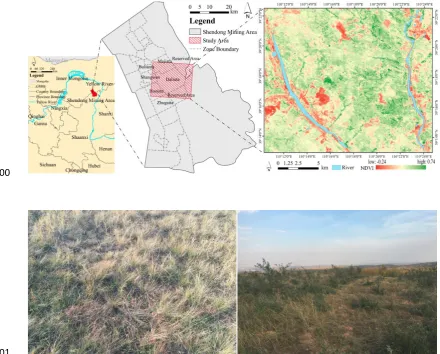
85Located in the Shendong Coal Mine of Daliuta Town, Shenmu County, Shaanxi Province, China, 86
the study area lies at the juncture of the Loess Plateau and Mu Us Desert and stretches from 87
39°16′9.97″N to 39°16′58.28″N, and from 110°18′57.19″E to 110°19′20.13″E (Figure 1). The altitude 88
ranges from 1,216 to 1,265 m, the average annual precipitation is 437.5 mm, and the precipitation 89
from July to September accounts for at least 60% of annual precipitation. The annual average sunshine 90
is 2,876 hours, the annual average temperature is 8.4 °C, the extreme minimum temperature is 91
−28.1 °C, and the extreme maximum temperature is 38.9 °C. The annual average frost-free period is 92
153 days. The vegetation in the study area represents a typical prairie of the warm temperate zone; 93
specifically, the prairie community dominated by Stipa breviflora of the grass family grows on the 94
is sparse. Large-scale coal mining has produced large subsidence areas and an abundance of fractures 96
of varying sizes (3–50 cm in width); the maximum difference in fracture height is 1.5 m. Afforestation 97
has been carried out extensively in the subsidence areas. Coal mining subsidence occurred in the study 98
area in 2011, and an ecological governance project was implemented in this area in 2012. 99
100
101
Figure 1. Location and landscape of the study area. Maps of the study area in the Shanxi Province and Inner Mongolia, 102
China, along with the location of the border of the Shendong arid coal mining area and Daliuta mine (upper panels). 103
Examples of the vegetation and landscape of the study area (lower panels). 104
2.2. Sampling and soil characterization
105In September 2017, we selected the primary S. breviflora community in the mining subsidence 106
area of the Shendong coal mine, along with communities of transplanted P. simonii, C. korshinskii, H.
107
rhamnoides, P. tabuliformis, A. pedunculata, and A. sibirica, as sample areas for our study, which were 108
referred to as CK, R1, R2, R3, R4, R5, and R6, respectively. In each sample area, a randomly placed 109
center. In each quadrat, surface soil (~2 cm in depth) was removed, and soil samples from 5 to 30 cm 111
in depth were collected at five points. Then the soil samples from the five quadrats were combined as 112
one representative soil sample of the community. For each community of transplanted trees, five 113
rhizosphere soil samples from 0 to 20 cm in depth were collected and combined [13]. Each 1-kg soil 114
sample was sealed in an aseptic Ziplock bag, marked, and analyzed in a laboratory [14,15]. 115
Within 48 hours, each soil sample was divided into two parts. One part was filtered through a 2-116
mm sieve and used to determine the physicochemical properties of the soil [15]. The other part was 117
stored in a freezer at −80 °C until further processing [16] in preparation for a nested PCR-DGGE 118
(denaturing gradient gel electrophoresis) analysis to assess bacterial and fungal diversity. In 119
accordance with the seven sampling sites, there were seven corresponding soil samples that were tested 120
in triplicate (21 soil samples in total). 121
2.3. Analysis of physicochemical soil parameters
122The soil water content was determined using the oven drying method [16], and the soil pH was 123
measured with a Mettler Toledo desk-type pH meter (Five Easy Plus, Mettler Toledo, China) [17]. The 124
soil concentrations of ammonium nitrogen, rapidly available phosphorus, and available potassium 125
were determined with a soil analyzer (TPY-6pc, Top Instrument, Zhejiang, China); the TN, TP (total 126
phosphorus), and TC values were determined using an elemental analyzer (Vario EL III, Germany) 127
[16]. 128
2.4. DNA extraction, PCR amplification, and sequencing
129Aliquots of 0.5 g of fresh sample material were ground in a mortar under liquid nitrogen. The 130
DNA of the rhizosphere soil samples was extracted using the E.Z.N.A.® DNA reagent kit (DP336, 131
Omega BioTek, Norcross, GA, U.S.). Extracted DNA samples were subjected to gel electrophoresis 132
(sepharose gel, 1%) and evaluated for purity and concentration. The DNA samples were stored at 133
−80 °C until further analysis by PCR. 134
To analyze the composition of microbial communities by PCR-DGGE, primers were designed to 135
target bacteria and fungi for sequencing analysis using the Illumina MiSeq high-throughput 136
16S rDNA of soil bacteria were 338F ACTCCTACGGGAGGCAGCAG-3') and 806R (5'-138
GGACTACHVGGGTWTCTAAT-3'), which were used to amplify a 468-bp fragment for analysis 139
using the PE30 sequencing method. For soil fungi, the primers targeting the ITS1 to ITS2 region of 140
the rRNA gene were ITS1F CTTGGTCATTTAGAGGAAGTAA-3') and ITS2R (5'-141
GCTGCGTTCTTCATCGATGC-3'), which were used to amplify fragments of ~300 bp for analysis 142
using the PE300 sequencing method. Specific primers with barcodes targeting the amplified areas 143
were synthesized and used in 454 pyrosequencing to completely cover entire bacterial and fungal 144
communities. 145
After a successful pre-experiment, 20-L PCR mixes were prepared to amplify each sample, 146
including its replicates. Each reaction consisted of 100–200 ng DNA, 10 L 2× Easy Taq PCR 147
SuperMix polymerase (TransGen Biotech; containing 1.25 U Ex Taq, 0.4 mM dNTP, and 4 mM Mg2+),
148
0.4 M primers, and ddH2O. The PCR conditions included an initial denaturation at 95 °C for 3 min,
149
followed by the denaturation at 95 °C for 30 s, annealing at 55 °C for 45 s, and extension at 72 °C for 150
45 s. A total of 27 cycles were performed for soil bacteria and 35 cycles for soil fungi. PCR products 151
were stored in a freezer. 152
For further processing, three PCR replicates of each sample were mixed and subjected to 153
electrophoresis (sepharose gel, 2%). The frozen samples were melted on the ice, then mixed 154
completely, and centrifuged. Aliquots of 2 L of the mixed samples were evaluated by gel 155
electrophoresis using the following conditions: sepharose gel, 2%; constant voltage, 120 V; and 156
running time, 30 min. The amplified PCR fragments were purified with beads to generate a sequencing 157
library. Using the Illumina MiSeq 2 300 bp paired-end (PE) method, the library was sequenced by 158
Shanghai Majorbio Bio-Pharm Technology Co., Ltd. 159
2.5. Statistical analysis
160The raw sequencing data included some invalid data that had to be removed. For the paired-end 161
data obtained through MiSeq sequencing, the samples were distinguished and sorted according to the 162
barcode information. Then the paired-end data were merged and spliced into tags according to the 163
overlapping alignments. Subsequently, the spliced data were filtered. Finally, quality control and 164
were subjected to a clustering analysis to generate operational taxonomic units (OTUs) needed to 166
assign species. Specifically, the OTUs derived from this clustering analysis using taxonomic databases 167
(e.g., RDP, Greengenes, and NCBI resource database) were subjected to species categorization and 168
subsequent statistical analysis. 169
Based on the results of OTU analysis, the Sobs, Shannon, and Chao1 indices were analyzed. The
170
species abundance and diversity using Mothur (version v.1.30.1) software for index calculation 171
[19].On the software platform Usearch (version 7.0; http://drive5.com/uparse/), single-factor ANOVA 172
and Pearson correlation coefficient analysis (e.g., the differences of soil properties and bacterial and 173
fungal richness) were performed using SPSS 22.0. Using the principal component analysis (PCA) 174
method, the Bray-Curtis distance was subjected to a dimensionality reduction analysis to derive 175
community structures. Furthermore, the effects of various environmental factors on bacterial and 176
fungal community structures were analyzed by redundancy analysis. To calculate the Bray-Curtis 177
distance, along with the matrix dimensionality reduction and redundancy analysis (RDA), the "vegan" 178
package was used for statistical analysis and drawing in R 3.3.3. 179
3. Results
180
3.1. Microbial richness and diversity
181At a similarity level of 0.03 for bacterial and fungal OTUs, the representative sequences of these 182
OTUs with a similarity of 97–99% were subjected to a taxonomic analysis using the RDP classifier 183
Bayesian algorithm. The values of the coverage index were equal to or greater than 0.97. At the 184
similarity level of 0.03, the sequencing results indicated the status of the bacteria and fungi present in 185
a soil sample without significant differences. 186
187
188
189
Site Sobs Shannon index Chao1 index Coverage
Bacteria
R1 2473 ± 18.01e 6.59 ± 0.02d 3318.83 ± 18.21c 0.97
R2 2622.33 ± 8.99d 6.72 ± 0.02c 3238.86 ± 53.91cd 0.97
R3 2459.33 ± 34.12e 6.62 ± 0.02d 3105.81 ± 83.88d 0.97
R4 2884 ± 27.79b 6.91 ± 0.02a 3729.58 ± 31.42a 0.97
R5 2963 ± 24.01a 6.83 ± 0.03b 3862.05 ± 28.96a 0.97
R6 2715 ± 27.1c 6.70 ± 0.03c 3533 ± 18.24b 0.97
CK 2176.33 ± 24.13f 6.37 ± 0.02e 2891.71 ± 54.22e 0.97
Fungi
R1 386.33 ± 40.48b 3.42 ± 0.15ab 485.40 ± 52.33b 0.99
R2 488.33 ± 36.84a 3.33 ± 0.51ab 602.27 ± 37.7a 0.99
R3 295.33 ± 10.81c 3.23 ± 0.1ab 331.70 ± 20.36c 0.99
R4 444.33 ± 16.25ab 4.18 ± 0.09a 487.95 ± 11.82b 0.99
R5 461.67 ± 42.44ab 2.85 ± 0.57b 535.70 ± 39.45ab 0.99
R6 453 ± 14.01ab 3.72 ± 0.13ab 520.78 ± 15.17ab 0.99
CK 255.33 ± 21.07c 2.74 ± 0.12b 311.41 ± 16.87c 0.99
Note: Observed species numbers are Sobs.The numerical values are average values ± standard deviations, and small 191
letters indicate the significant differences between different sampling areas (p <0.05). 192
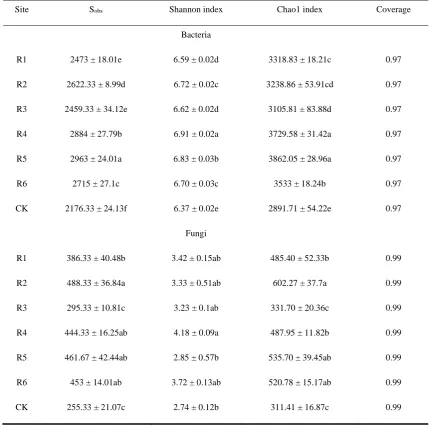
Table 1 describes the high-throughput sequencing results of the rhizosphere soil microbes 193
associated with the phytocommunities dominated by CK and the transplanted trees in the areas affected 194
by coal mining subsidence. 195
The analysis of bacterial diversity indices showed that the Sobs, Shannon, and Chao1 indices, were
196
higher for the rhizosphere bacteria of the transplanted tree phytocommunities than for those of the 197
primary CK phytocommunity. The diversity levels sorted in descending order according to the Chao1 198
index were R5 > R4 > R6 > R1 > R2 > R3 > CK; and according to the Shannon index, R4 > R5 > R2 > 199
R6 > R3 > R1 > CK. Thus, the richness and diversity of the rhizosphere bacteria of the transplanted 200
Specifically, the rhizosphere soil ofR4 had the highest bacterial richness and diversity. 202
The fungal diversity differed among the phytocommunities according to the Chao1 index, sorted 203
in descending order, R2 > R5 > R6 > R4 > R1 > R3 > CK, and according to the Shannon index, sorted 204
in descending order, R4 > R6 > R1 > R2 > R3 > R5 > CK. The index values indicated that the richness 205
and diversity of the rhizosphere fungi of the transplanted trees phytocommunities were significantly 206
higher than those of the primary CK phytocommunity. Specifically, the rhizosphere soil layer of R2 207
had the highest fungal richness, and the rhizosphere soil layer of R4 had the highest fungal diversity. 208
Overall, the transplanted trees in the areas affected by coal mining subsidence increased the 209
bacterial and fungal richness and diversity of the rhizosphere soil layer. Interestingly, the rhizosphere 210
soil of theR4 phytocommunity had the highest microbial diversity. 211
3.2. Differences in soil microbial communities
212The PE reads obtained by MiSeq high-throughput sequencing were first spliced according to the 213
overlap alignments. After control sequence analysis and data filtering were performed, a total of 214
1,207,639 sequences were generated from 21 bacterial samples; a total of 528,372,652 bp were 215
sequenced, and the average sequence length was 437.55 bp. A total of 1,177,106 sequences were 216
generated from 21 fungal samples, the fungal data included a total of 321,597,792 bp, and the average 217
sequence length was 273.7 bp (https://www.i-sanger.com/). 218
3.3. Soil microbe community structure
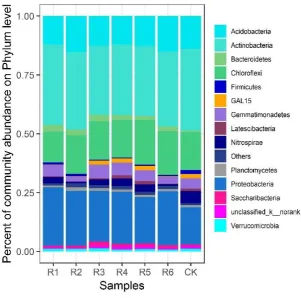
219In the CK phytocommunity of the areas affected by coal mining subsidence, the proportions 220
among the dominating bacterial groups in the rhizosphere were as follows: Actinobacteria (34.68%) > 221
Chloroflexi (16.16%) > Proteobacteria (15.87%) > Acidobacteria (13.9%), as shown in Figure 2. In 222
the rhizosphere of the R1 phytocommunity, the abundance of the major bacterial groups were as 223
follows: Actinobacteria (34.17%) > Proteobacteria (24.76%) > Chloroflexi (13.09%) > Acidobacteria
224
(12.12%). In the R2 phytocommunity rhizosphere, the proportions of the dominating bacterial groups 225
were as follows: Actinobacteria (32.84%) > Proteobacteria (23.31%) > Chloroflexi (16.34%) > 226
Acidobacteria (15.36%). In the phytocommunity of R3, the abundance of major rhizosphere bacterial 227
Acidobacteria (12.61%). In the rhizosphere of the R4 phytocommunity, the proportions of the 229
dominating bacterial groups were as follows: Actinobacteria (30.03%) > Proteobacteria (22.11%) > 230
Chloroflexi (16.06%) > Acidobacteria (12.06%). In the phytocommunity of R5, the abundance of 231
major rhizosphere bacteria groups were as follows: Actinobacteria (29.88%) > Proteobacteria
232
(19.71%) > Chloroflexi (19.00%) > Acidobacteria (12.57%). In the R6phytocommunity rhizosphere, 233
the proportions among the dominating bacterial groups were as follows: Actinobacteria (31.74%) > 234
Proteobacteria (22.94%) > Chloroflexi (18.61%) > Acidobacteria (15.14%). 235
236
Figure 2. Percent of community abundance on Phylum level in the rhizosphere soil of phytocommunities in mining 237
subsidence areas. 238
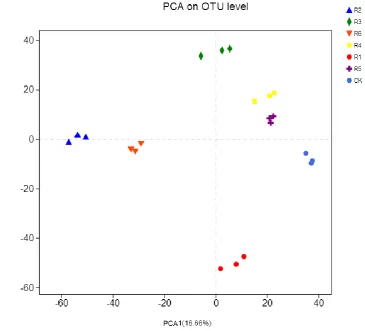
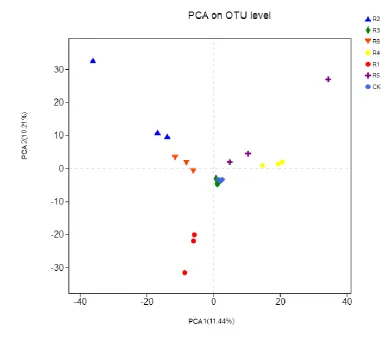
The PCA results indicated that, in areas affected by coal mining subsidence, the bacterial 239
community parameters of the rhizosphere soil differed between the CK phytocommunity and the 240
phytocommunities of transplanted trees (Figure 3). Specifically, the CK phytocommunity was the 241
closest to the phytocommunities of R5 and R4 but farthest from the R2 phytocommunity. Thus, the 242
most significant difference in the rhizosphere bacterial community composition existed between the 243
phytocommunities of CK, R5, and R4. 245
246
Figure 3. Principal component analysis (PCA) of the rhizosphere soil bacteria of phytocommunities in mining 247
subsidence areas. 248
In the CK phytocommunity, the proportions among the dominating rhizosphere fungal groups 249
were as follows: Zygomycota (56.15%) > Ascomycota (24%) > Unclassified_k_Fungi (17.82%) > 250
Basidiomycota (2%) (Figure 4). In the R1 phytocommunity, the abundance of the major rhizosphere 251
fungi groups were as follows: Ascomycota (44.19%) > Zygomycota (23.43%) > Unclassified_k_Fungi
252
(8.95%) > Basidiomycota (16%). In the R2 phytocommunity rhizosphere, the proportions among 253
dominating fungal groups were as follows: Ascomycota (64.45%) > Zygomycota (7.63%) > 254
Unclassified_k_Fungi (24.54%) > Basidiomycota (2.87%). In the R3 phytocommunity rhizosphere, 255
the proportions of major fungal groups were as follows: Ascomycota (58.6%) > Zygomycota (15.33%) > 256
Unclassified_k_Fungi (13.53%) > Basidiomycota (11.76%). In the rhizosphere of the R4 257
phytocommunity, the abundance of the dominating fungal groups were as follows: Ascomycota
(59.64%) > Zygomycota (13.12%) > Unclassified_k_Fungi (10.84%) > Basidiomycota (15.88%). In 259
the R5 phytocommunity rhizosphere, the proportions of major fungal groups were as follows: 260
Ascomycota (61.5%) > Zygomycota (10.43%) > Unclassified_k_Fungi (2.37%) > Basidiomycota
261
(25.6%). In the R6 phytocommunity, the proportions of major rhizosphere fungi groups were as 262
follows: Ascomycota (70.46%) > Zygomycota (19.9%) > Unclassified_k_Fungi (4.08%) > 263
Basidiomycota (5.54%). 264
265
Figure 4. Percent of community abundance on Phylum level in the rhizosphere soil layer of phytocommunities in 266
mining subsidence areas. 267
The PCA results (Figure 5) demonstrated that in areas affected by coal mining subsidence, the 268
rhizosphere fungi of the CK phytocommunity were closest to those of the R3phytocommunity but 269
relatively far from the rhizosphere fungi of the other phytocommunities of transplanted trees. Thus, 270
the rhizosphere fungi community composition of the CK phytocommunity differed from the other 271
but significantly differed from the other types of transplanted trees. 273
274
Figure 5. Principal component analysis (PCA) of rhizosphere soil fungi of phytocommunities in mining subsidence 275
areas. 276
3.4. Effects of edaphic factors on bacterial diversity
277The soil TN exhibited a highly significant positive correlation with the Sobs, Shannon, and Chao1
278
indices of soil bacteria (p <0.01), whereas the soil TP had a significant negative correlation with the 279
Sobs and Chao1indices of soil bacteria (p <0.05). The soil WC had a significant negative correlation
280
with the Chao1index of soil bacteria (p <0.05), and the soil pH had a significant positive correlation 281
with the respective Shannon index (p <0.05) (Table 2). 282
Table 2. Correlation between bacterial diversity indices and physicochemical soil parameters. 283
Soil parameter Sobs index Shannon index Chao1 index
pH 0.339 0.455* 0.222
NH4-N 0.086 0.234 −0.039
AP −0.023 0.016 −0.008
AK −0.297 −0.369 −0.248
TN 0.648** 0.683** 0.557**
TC 0.038 0.082 −0.083
TP −0.486* −0.360 −0.461*
WC, soil water content; NH4-N, ammonium nitrogen; AP, available phosphorus; AK, available potassium; TN, total 284
nitrogen; TC, total carbon; TP, total phosphorus; Spearman correlation analysis: * P <0.05; ** P <0.01. 285
286
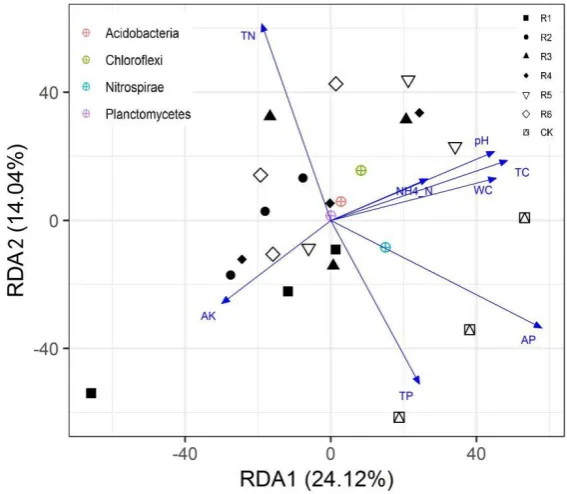
Figure 6. Redundancy analysis (RDA) for rhizosphere soil bacteria and edaphic factors in artificial phytocommunities. 287
The results of the RDA for physicochemical soil factors and bacterial communities are shown in 288
Figure 6. RDA1 and RDA2 accounted for 24.12% and 14.04% of the bacterial community composition 289
in soil, respectively. Among the eight soil parameters, AP and TN affected the soil bacteria most 290
significantly, but they had opposite effects on the bacterial community structure. 291
Table 3. Correlation between bacterial species abundance indices and physicochemical soil parameters. 292
WC −0.048 −0.516* 0.261 0.053
pH −0.382 −0.383 0.212 −0.216
NH4-N −0.185 −0.104 0.147 0.051
AP 0.033 −0.518* −0.017 −0.144
AK 0.19 0.071 −0.194 0.297
TN −0.509* 0.111 0.206 −0.087
TC −0.364 −0.42 0.231 −0.162
TP 0.411 −0.217 −0.363 0.056
WC, soil water content; NH4-N, ammonium nitrogen; AP, available phosphorus; AK, available potassium; TN, total 293
nitrogen; TC, total carbon; TP, total phosphorus; Spearman correlation analysis: * P <0.05; ** P <0.01. 294
The effects of physicochemical soil parameters on the richness of bacterial communities were as 295
follows. TN was significantly negatively correlated with the richness of Actinobacteria (p <0.05), and 296
WC and AP were significantly negatively correlated with the richness of Proteobacteria (p <0.05) 297
(Table 3). Thus, AP was the primary soil environment factor that affected the bacterial community 298
structure in the rhizosphere soil layer of the CKphytocommunity, and TN affected the rhizosphere 299
bacteria of the phytocommunities dominated by R2, R4, and R6. TN affected the richness of 300
Actinobacteria, but WC and AP had an effect on the richness of Proteobacteria. 301
3.5. Effects of edaphic factors on fungal diversity
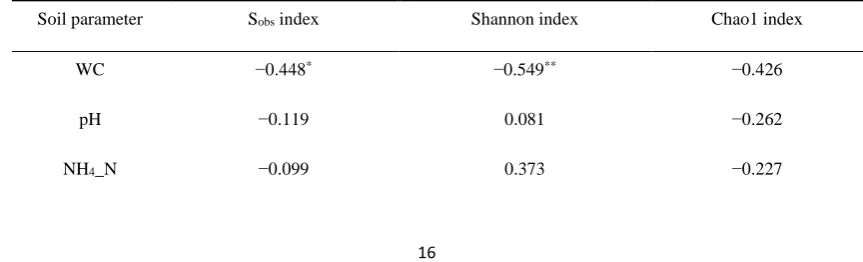
302The analysis of correlations between edaphic factors and the Sobs, Shannon, and Chao1 indices of
303
rhizosphere fungi revealed that WC had a significant negative correlation (p <0.05) with the Sobs index
304
and a highly significant negative correlation (p <0.01) with the Shannon index. Thus, WC affected 305
fungal diversity most significantly (Table 4). 306
Table 4. Correlation between fungal diversity indices and physicochemical soil parameters. 307
Soil parameter Sobs index Shannon index Chao1 index
WC −0.448* −0.549** −0.426
pH −0.119 0.081 −0.262
AP −0.219 −0.369 −0.227
AK 0.035 −0.385 0.220
TN 0.320 0.169 0.293
TC −0.335 −0.281 −0.414
TP −0.222 −0.323 −0.131
WC: soil water content; NH4-N: ammonium nitrogen; AP: available phosphorus; AK: available potassium; TN: 308
total nitrogen; TC: total carbon; TP: total phosphorus; Spearman correlation analysis: * P <0.05; ** P <0.01 309
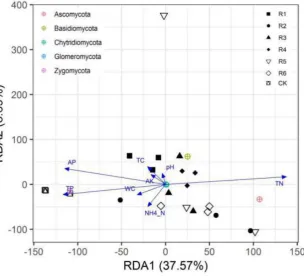
The results of the RDA for fungal communities and physicochemical soil factors are presented in 310
Figure 7. RDA1 and RDA2 accounted for 37.57% and 8.69% of the fungal community composition 311
in soil, respectively. Among the eight physicochemical soil factors, AP, TP, and TN affected the fungal 312
community structure most significantly, but the effects of AP and TP were the opposite of those of TN. 313
314
Figure 7. Redundancy analysis (RDA) for rhizosphere soil fungi and edaphic physicochemical factors 315
in artificial phytocommunities. 316
Thus, TP, AP, and TN were the primary edaphic factors that affected the fungal community 317
structure in the rhizosphere soil layer of the phytocommunities dominated by CK, R1, and R6. In 318
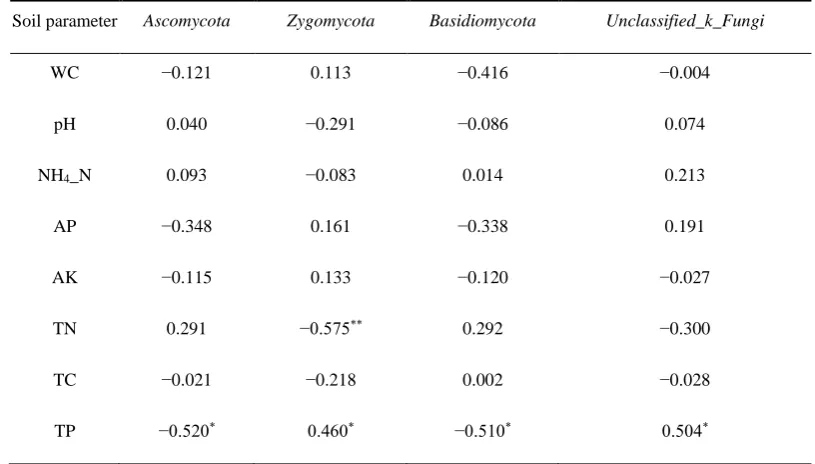
Zygomycota, whereas TN affected the richness of Zygomycota only (Table 5).
320
Table 5. Correlation between fungal species abundance indices and physicochemical soil parameters. 321
Soil parameter Ascomycota Zygomycota Basidiomycota Unclassified_k_Fungi
WC −0.121 0.113 −0.416 −0.004
pH 0.040 −0.291 −0.086 0.074
NH4_N 0.093 −0.083 0.014 0.213
AP −0.348 0.161 −0.338 0.191
AK −0.115 0.133 −0.120 −0.027
TN 0.291 −0.575** 0.292 −0.300
TC −0.021 −0.218 0.002 −0.028
TP −0.520* 0.460* −0.510* 0.504*
WC: soil water content; NH4-N: ammonium nitrogen; AP: available phosphorus; AK: available potassium; TN: total 322
nitrogen; TC: total carbon; TP: total phosphorus; Spearman correlation analysis: * P <0.05; ** P <0.01. 323
Among the edaphic factors, TP was significantly negatively correlated with the richness of 324
Ascomycota and Basidiomycota (p <0.05), but significantly positively correlated with the richness of 325
Zygomycota (p <0.05); and TN was significantly negatively correlated with the richness of
326
Zygomycota (p <0.01). 327
4. Discussion
328
More than 90% of China's coal reserves are exploited by underground mining, which is linked to 329
ground surface subsidence and other environmentally disruptive events [20]. Coal mining subsidence 330
has a severe impact on the ecosystems in mining regions, causing various problems such as changes 331
in the natural landscape, subsidence fractures, and damage to soil structure [21–23]. In addition, coal 332
mining subsidence harms the root systems of plants [24], affects their ability to absorb water and 333
nutrients [25,26], and thus, has an adverse effect on plant growth and development [27–29]. Moreover, 334
ground surface subsidence reduces soil fertility, along with the richness and diversity of soil microbes 335
[4]. 336
their functions in ecosystems [30]. To ensure the sustainability of soil ecosystems, it is of crucial 338
importance to restore the activities and communities of soil microbes [31]. The root system activities 339
and root exudates of transplanted trees are beneficial to the properties of degraded soil [32]. To achieve 340
environmental remediation in abandoned mining land, appropriate measures have to be implemented, 341
such as screening, cultivating, and transplanting of suitable pioneer tree species [33], introducing soil 342
improvement and fertilization measures [34–35], and reclaiming the land by afforestation [2] and 343
restoring soil microbial communities [36]. Different types of land utilization and measures of 344
vegetation restoration can affect the physiochemical properties and microbial communities of soil 345
[37,38]. 346
The various plants grown in the Loess Plateau had different effects on the physiochemical 347
properties of soil [39]. The plant diversity, quantity, and selection of the planted vegetation may affect 348
the microbial diversity of the soil [40]. Both the quality and quantity of residuals returned to the soil 349
vary with plant species [41]. Vegetation restoration can be achieved by adjusting the soil water content 350
and temperature, improving the soil quality, and restoring soil ecosystems. These measures require the 351
monitoring of soil parameters including the microbes, pH, TC, and TN [42]. Earlier reports have 352
shown that tree species and soil fertility affect the composition and structure of rhizosphere microbial 353
communities [43,44]. Although the planted trees and grass can cause secondary disturbance to areas 354
affected by coal mining subsidence, related studies have shown that tree transplanting, grass seed 355
planting, and microbial remediation [45,36] improve the vegetation coverage and increase plant 356
adverse resistance and productivity [46-48], and promote the microbial diversity and community 357
structure in soil [49]. 358
Increased vegetation coverage has a positive effect on soil microbial biomass [50]. Successfully 359
transplanted trees induce changes in the phytocommunities, soil microbial diversity, and soil properties 360
[51–53]. Live oaks, sawtooth oaks, Mongolian oaks, Amorpha fruticosa, and elms can affect 361
rhizosphere microbial diversity and plant growth [54,55]. For example, R5, Prunus humilis, 362
Xanthoceras sorbifolia,R6, and Robinia pseudoacacia generate large quantities of photosynthetic 363
carbon to support the growth of soil fungi and positively affect the diversity of soil fungi by the energy 364
revealed that vegetation restoration can improve the physiochemical properties of soil significantly 366
[58]. For example, the microbial biomass of rhizosphere soil with transplanted trees was higher than 367
that of bare the soil and increased with the degree of vegetation restoration [59]. Other studies showed 368
that increased plant richness increased soil fungal diversity in tropical jungles [60,61] and grassland 369
[62,63]. 370
The present study found that, in the areas affected by coal mining subsidence of the Loess Plateau, 371
the diversity of rhizosphere soil microbes varied with the species of transplanted trees. Specifically, 372
the R5 community had the highest Sobs and Chao1 indices of rhizosphere soil bacteria, the R2
373
community had the highest Sobs and Chao1 indices of rhizosphere soil fungi, and the R4 community
374
displayed the highest Shannon indices of rhizosphere soil bacteria and fungi. These indices were 375
higher than the corresponding indices of the primary CKphytocommunity in mining subsidence areas. 376
The transplanted R4, R5, and R2had changed the richness and diversity of soil bacteria and fungi 377
significantly, indicating that the transplanted trees in the subsidence areas increased the diversity of 378
microbial communities in the soil. These results were similar to those of previous studies [2,64]. 379
The present study also found that the soil bacterial composition of the R2 phytocommunity 380
differed from that of the primary CK phytocommunity most significantly, whereas those of the R5 and 381
R4 phytocommunities varied slightly from that of the primary CK phytocommunity. The soil fungal 382
composition of the R3 community differed slightly from that of the primary CK phytocommunity. 383
Moreover, the species richness of Proteobacteria in the rhizosphere soil of the transplanted trees was 384
higher than that of the CK phytocommunity. Proteobacteria was the second largest bacterial phylum, 385
which has an important role in the global cycles of C, N, and S [65]. These bacteria vary significantly 386
in form, physiology, and metabolic diversity. The species richness of Ascomycota and Basidiomycota
387
in the rhizosphere soil of various transplanted tree species was higher than that of CK in areas affected 388
by coal mining subsidence. This analysis revealed that the composition and structure of microbial 389
communities in rhizosphere soil varied significantly with the tree species [66]. The transplanted tree 390
species had significant effects on the composition and structure of microbial communities in the soil 391
of primary phytocommunities and are key factors influencing microbial diversity [43,44,67]. 392
diversity, which they affect more significantly than aboveground vegetation [68–70]. In a forest 394
ecosystem, different tree species can affect the composition and activity of bacterial communities in 395
the soil indirectly by affecting the physiochemical properties (e.g., pH value, organic content, nitrogen 396
content, and carbon-nitrogen ratio) of the soil [67,44]. These changes in physiochemical properties 397
can partially account for the effects of tree species on soil microbes [44,43]. Some studies on 398
vegetation restoration in mining areas by tree planting have argued that plants can affect the microbial 399
properties of soil by changing the availability of soil nitrogen, and the major planted tree species can 400
significantly affect the microbial community composition at the phylum level in the soil, specifically 401
for soil bacteria (e.g., Actinobacteria, Planctomycetes, and Nitrospirae) and species richness at the 402
phylum level in soil fungi (e.g., Ascomycota, Basidiomycota, and Zygomycota) [44].
403
Our study found that various physicochemical soil factors had different effects on the microbial 404
diversity in areas affected by coal mining subsidence; specifically, the TN, TP, WC, and pH of the soil 405
mainly affected the Sobs, Shannon, and Chao1 indices of soil bacteria. The soil WC mainly affected
406
the Sobs and Shannon indices of soil fungi, and the soil TN mainly influenced the species richness of
407
Actinobacteria (a bacterium) and Zygomycota (a fungus). These findings implied that the changes in 408
soil microbes occurring in the phytocommunities of transplanted trees could be driven by the 409
physicochemical soil properties, e.g., the quality of soil carbon and nitrogen and the root exudates of 410
plants [53]. Soil bacteria are highly sensitive to the changes in soil nutrients [71,72], and the microbial 411
composition is significantly affected by the carbon input of root systems, the physiochemical 412
properties of soil, and the interactions between plant species [73,74]. 413
Some forest types affected the fungal communities in the soil more significantly. This occurred 414
because soil fungi are more closely associated with plants (they have a symbiotic relationship via the 415
root systems) than soil bacteria [54]. This further demonstrates that the changes in aboveground 416
phytocommunities can alter the composition and structure of microbial communities in the soil [74]. 417
The findings of this study support this conclusion; specifically, the observation that the different 418
transplanted tree species in the areas affected by coal mining subsidence affected the physicochemical 419
properties of soil, as well as the composition and diversity of the microbial communities in soil. These 420
availability of soil nutrients [74,44,43]. 422
5. Conclusions
423
In the areas affected by coal mining subsidence of loess regions in western China, some dominant 424
bacterial (e.g., Actinobacteria, Proteobacteria, Chloroflexi, and Acidobacteria) and fungal (e.g., 425
Ascomycota and Zygomycota)phyla displayed a high species richness. 426
Transplanted trees altered the diversity and community structure of soil bacteria and fungi in 427
areas affected by coal mining subsidence, and increased their species richness and diversity (p <0.05). 428
Specifically, R4 had the highest bacterial diversity in the rhizosphere soil layer, and R2 and R4 had the 429
highest rhizosphere fungi richness and diversity. The transplanted tree species increased the richness 430
among Proteobacteria and Ascomycota in the study area. 431
Edaphic factors affected the diversity and community structure of soil microbes; specifically, the 432
soil TN, TP, WC, and pH had a significant correlation with the Sobs, Shannon, and Chao1 indices of
433
bacteria. AP and TN affected the bacterial community structure in the rhizosphere soil layer of the CK
434
phytocommunity, along with the bacterial community structure in the phytocommunities of R2, R4,
435
andR6. The soil parameters TN, WC, and AP mainly affected the species richness of Actinobacteria
436
and Proteobacteria, but WC was significantly negatively correlated with the fungal richness indices 437
(i.e., Sobs and Shannon). The soil parameters TP, AP, and TN mainly influenced the fungal community
438
structure in the rhizosphere of CK, R1, andR6 phytocommunities. TP mainly affected the species 439
richness of Ascomycota, Basidiomycota, and Zygomycota; and, in addition, TN affected that of 440
Zygomycota. 441
Among the phytocommunities of transplanted trees, the community structure of the rhizosphere 442
bacteria differed from that of the rhizosphere fungi, and their respective communities were differently 443
affected by edaphic factors. Thus, further studies should explore the underlying mechanisms, 444
specifically, potential correlations with seasonal variations, the severity of mining subsidence, and the 445
timeline of the vegetation restoration efforts. 446
Acknowledgments: This work is supported by National Key R&D Program of
447mining on soil microbial diversity in the National Science and Technology Support
449Program, sub-topic (No. 2012BAC10B03-5).
450Author Contributions: Y.G., J.Y and Y.B. Conceived and designed the experiments; Y.G., B.T., J.C. 451
and W.W. Performed the experiments; Y.G., X.L., S.L.and Y.B. Analyzed the data; Y.G., X.L., W.W. 452
and S.L. Contributed reagents/materials/analysis tools; Y.G., J.Y. and Y.B. Wrote the paper. 453
Conflicts of Interest: The authors declare no conflict of interest. 454
References
455
1. Qiu, L.; Bi, Y.L.; Jiang, B.; Wang, Z.; Zhang, Y.X.; Zhakypbek, Y. Arbuscular mycorrhizal fungi ameliorate 456
the chemical properties and enzyme activities of rhizosphere soil in reclaimed mining subsidence in 457
northwestern China. Journal of Arid Land. 2019, 11, 137-149. 458
2. Li, S.P.; Bi, Y.L.; Kong, W.P.; Wang, J.; Yu, H.Y. Effects of the arbuscular mycorrhizal fungi on environmental 459
phytoremediation in coal mine areas. Russ. J. Ecol. 2013, 34, 4455. 460
3. Wang, Z.G.; Bi, Y.L.; Jiang, B.; Zhakypbek, Y.; Peng, S.P.; Liu, W.W.. Arbuscular mycorrhizal fungi enhance 461
soil carbon sequestration in the coalfields, northwest China. Sci. Rep. 2016, 6, 34336. 462
4. Shi, P.L.; Zhang, Y.X.; Hu, Z.Q.; Ma, K.; Wang, H.; Chai, T.Y. The response of soil bacterial communities to 463
mining subsidence in the west China aeolian sand area. Applied Soil Ecology. 2017, 121, 1-10. 464
5. Li, Y.Y., Chen, L.Q., Zhang, T. and Zhou, T.J. Effect of reclamation on diversity of soil bacterial community 465
in mining subsidence area. 466
6. Spor, A.; Violle, C.; Bru, D., Bizouard, F.; Calderón, K.; Philippot, L.Effectiveness of ecological rescue for 467
altered soil microbial communities and functions. The ISME Journal. 2016,11, 272-283. 468
7. Heijden, M.G.A.V.D.; Klironomos, J.N.; Ursic, M.; Moutoglis, P.; Streitwolf-Engel, R.; Boller, T. Mycorrhizal 469
fungal diversity determines plant biodiversity, ecosystem variability and productivity. Nature. 1998, 396, 69-470
72. 471
8. Pausch, J.; Tian, J.; Riederer, M.; Kuzyakov, Y. Estimation of rhizodeposition at field scale: upscaling of a 472
14 C labeling study. Plant Soil. 2013, 364, 273-285. 473
9. Jangid, K. Land-use history has a stronger impact on soil microbial community composition than 474
aboveground vegetation and soil properties. Soil Biol. Biochem. 2011, 43, 2184-2193. 475
10. Smith, R.S.; Shiel, R.S.; Bardgett, R.D.; Millward, D.; Corkhill, P.; Rolph, G. Soil microbial community, 476
fertility, vegetation and diversity as targets in the restoration management of a meadow grassland. J. Appl. 477
Ecol.2010, 40, 51-64. 478
11. Dang, P.; Gao, Y.; Liu, J.L.; Yu, S.C.; Zhao, Z. Effects of thinning intensity on understory vegetation and soil 479
microbial communities of a mature chinese pine plantation in the loess plateau. Sci. Total Environ. 2018, 630, 480
171-180. 481
12. Leininger, S.; Urich, T.; Schloter, M.; Schwark, L.; Qi, J.; Nicol, G.W. Archaea predominate among ammonia-482
oxidizing prokaryotes in soils. Nature (London). 2006, 442, 806. 483
13. Berruti, A.; Demasi, S.; Lumini, E.; Kobayashi, N.; Scariot, V.; Bianciotto, V. Wild Camellia japonica 484
specimens in the Shimane prefecture (Japan) host previously undescribed AMF diversity. Applied Soil
485
14. Wang, L.; Zhao, G.L.; Sun, Y.J.; Yang, Y., Zhou H.J. Effects ofThinning on Microbial Community Structure 487
in the Organic Horizon of Chinese Pine Plantations in Badaling, Beijing, China. Forests. 2019, 10, 828. 488
15. Zhang, H.; Ming, T.; Hui, C.; Tian, Z.; Xue, Y.; Ye, F. Communities of arbuscular mycorrhizal fungi and 489
bacteria in the rhizosphere of Caragana korshinkii and Hippophae rhamnoides in Zhifanggou watershed. 490
Plant Soil. 2010, 326, 415-424. 491
16. Van, G.M.; Jacquemyn, H.; Plue, J.; Saar, L.; Kasari, L.; Peeters, G. Abiotic rather than biotic filtering shapes 492
the arbuscular mycorrhizal fungal communities of European seminatural grasslands. New Phytol. 2017. 493
17. Kriszta, V.; Rillig, M.C.; Stefan, H. Land-use intensity and host plant identity interactively shape 494
communities of arbuscular mycorrhizal fungi in roots of grassland plants. New Phytol. 2015, 205, 1577-1586. 495
18. Nocq, J.; Celton, M.; Gendron, P.; Lemieux, S.; Wilhelm, B. T. Harnessing virtual machines to simplify 496
next-generation DNA sequencing analysis. Bioinformatics. 2013, 29, 2075-2083. 497
19. Torsvik, V.; Ovreas V.L. Microbial diversity and function in soil: from genes to ecosystems. 498
Curr. Opin. Microbiol. 2002, 5, 240-245. 499
20. . Lei, S.G.; Bian, Z.F.; Daniels, J.L.; Xiao, H.E. Spatio-temporal variation of vegetation in an arid and 500
vulnerable coal mining region. Mining Science and Technology (China). 2010, 20, 485-490. 501
21. Li, Qian.; Stoeckl, N.; King, D.; Gyuris, E. Using Both Objective and Subjective Indicators to Investigate the 502
Impacts of Coal Mining on Wellbeing of Host Communities: A Case-Study in Shanxi Province, China. Social
503
Indicators Research: An International and Interdisciplinary Journal for Quality-of-Life Measurement. 2018, 504
137 , 1-27. 505
22. Edilane, R. N.; Lucia, C. M.; Teixeira, C. G.; Ernst, O. G.; Müller, S.C. Forest restoration after severe 506
degradation by coal mining: lessons from the first years of monitoring. Rev. Bras. Bot. 2018. 507
23. Stefanes, M.; Roque, F.D.O.; Lourival, R.; Melo, I.; Renaud, P.C; Quintero, J.M.O. Property size drives 508
differences in forest code compliance in the Brazilian Cerrado. Land Use Policy. 2018, 75, 43-49. 509
24. Guo, D.G.; Bai, Z.K.; Shangguan, T.L.; Shao, H.B.; Wen, Q.J. Impacts of Coal Mining on the Aboveground 510
Vegetation and Soil Quality: A Case Study of Qinxin Coal Mine in Shanxi Province, China. Acta Hydrochim.
511
Hydrobiol. 2011, 39, 219-225. 512
25. Wang, Z.K.; Chen, Z.Y.; XU, Z.H.; Fu, X.X. Effects of Phosphate-Solubilizing Bacteria and N2-fixing Bacteria 513
on Nutrient Uptake, Plant Growth, and Bioactive Compound Accumulation in Cyclocarya paliurus (Batal.) 514
Iljinskaja. Forests. 2019, 10, 772. 515
26. Zhao, R.M.; Wei, G.; Na, B.; Guo, J.G.; Wang, L.X.; Zhao, J.; Zhang, J. Arbuscular mycorrhizal fungi affect 516
the growth, nutrient uptake and water status of maize (Zea mays L.) grown in two types of coal mine spoils 517
under drought stress. Applied Soil Ecology. 2015, 88, 41-49. 518
27 Arzanesh, M.H.; Alikhani, H.A.; Khavazi, K.; Rahimian, H.A.; Miransari, M.J. Wheat (Triticum aestivum 519
L.) growth enhancement by Azospirillum sp. under drought stress. World J. Microbiol. Biotechnol. 2011, 27, 520
197-205. 521
28. Hol, W.H.G.; Macel, M.; Veen, J.A.V.; Meijden, E.V.D. Root damage and aboveground herbivory change 522
concentration and composition of pyrrolizidine alkaloids of Senecio jacobaea. Basic Appl. Ecol. 2004, 5, 253-523
260. 524
29. Terhonen, E.; Blumenstein, K.; Kovalchuk, A.; Asiegbu, F. Forest tree microbiomes and associated fungal 525
endophytes: functional roles and impact on forest health. Forests. 2019, 10. 526
30. Srivastava, D.S.; Cadotte, M.W.; Macdonald, A.A.; Marushia, R.G.; Mirotchnick, N.J. Phylogenetic diversity 527
31. Kohler, J.; Caravaca, F.; Azcón, R.; Díaz, G.; Roldán A. Suitability of the microbial community composition 529
and function in a semiarid mine soil for assessing phytomanagement practices based on mycorrhizal 530
inoculation and amendment addition. J. Environ. Manage. 2016, 169, 236-246. 531
32. Massaccesi, L.; Benucci, G.M.N.; Gigliotti, G.; Cocco, S.; Corti, G.; Agnelli, A. Rhizosphere effect of three 532
plant species of environment under periglacial conditions (Majella Massif, central Italy). Soil Biol. Biochem. 533
2015, 89, 184-195. 534
33. Parraga-Aguado, I.; González-Alcaraz, M.N.; Schulin, R.; Conesa, H.M. The potential use of Piptatherum 535
miliaceum for the phytomanagement of mine tailings in semiarid areas: Role of soil fertility and plant 536
competition. J. Environ. Manage. 2015, 158, 74-84. 537
34. Bashan, Y.; Salazar, B.G.; Moreno, M.; Lopez, B.R.; Linderman, R.G. Restoration of eroded soil in the 538
Sonoran Desert with native leguminous trees using plant growth-promoting microorganisms and limited 539
amounts of compost and water. J. Environ. Manage. 2012, 102, 26-36. 540
35. Frelich, L.E. Terrestrial Ecosystem Impacts of Sulfide Mining: Scope of Issues for the Boundary Waters 541
Canoe Area Wilderness, Minnesota, USA. Forests. 2019, 10, 747 542
36. Standish, R.J.; Stokes, B.A.; Tibbett, M.; Hobbs, R.J. Seedling response to phosphate addition and inoculation 543
with arbuscular mycorrhizas and the implications for old-field restoration in Western Australia. Environ. Exp.
544
Bot. 2007, 61, 58-65. 545
37. Wang, Y.; Fu, B.; Lü, Y.H.; Chen, L. Effects of vegetation restoration on soil organic carbon sequestration at 546
multiple scales in semi-arid Loess Plateau, China. CATENA. 2011, 85, 0-66. 547
38. Li, Q.X.; Jia, Z.Q.; Liu, T.; Feng, L.L.; He, L.X.Z. Effects of different plantation types on soil properties after 548
vegetation restoration in an alpine sandy land on the Tibetan Plateau, China. Journal of Arid Land. 2017. 9, 549
200-209. 550
39. Fu, B.J.; Chen, L.D.; Ma, K.M.; Zhou, H.F.; Wang, J. The relationships between land use and soil 551
conditions in the hilly area of the loess plateau in northern Shaanxi, China. CATENA. 2000, 39, 69-78. 552
40. Waid, J.S. Does soil biodiversity depend upon metabiotic activity and influences?. Applied Soil Ecology. 553
1999, 13, 151-158. 554
41. Wardle, D.A.; Bardgett, R.D.; Klironomos, J.N.; Heikki, S.L.; Putten, W.H.V.D.; Wall, D.H. Ecological 555
linkages between aboveground and belowground biota. Science (Washington D C). 2004, 304, 1629-1633. 556
42. Smith, J.L.; Norton, J.M.; Paul, E.A. Decomposition of 14 C- and 15 N-labeled organisms in soil under 557
anaerobic conditions. Plant Soil. 1989, 116, 115-118. 558
43. Urbanová, M.; Šnajdr, J.; Baldrian, P. Composition of fungal and bacterial communities in forest litter and 559
soil is largely determined by dominant trees. Soil Biol. Biochem. 2015, 84, 53-64. 560
44. . Šnajdr, J.; Dobiášová, P.; Urbanová, M.; Petránková, M.; Cajthaml, T., Frouz, J.; Baldrian, Petr. Dominant 561
trees affect microbial community composition and activity in post-mining afforested soils. Soil Biol. Biochem. 562
2013, 56, 105-115. 563
45. Bi, Y.L.; Xie, L.L.; Wang, J.; Zhang, Y.X.; Wang, K. Impact of host plants, slope position and subsidence on 564
arbuscular mycorrhizal fungal communities in the coal mining area of north-central China. Journal of Arid
565
Environments. 2018. 566
46. Yin, R.; Deng, H.; Wang, H. L.; Zhang, B. Vegetation type affects soil enzyme activities and microbial 567
functional diversity following re-vegetation of a severely eroded red soil in sub-tropical China. CATENA. 568
2014, 115, 96-103. 569
47. Watts-Williams, S. J.; Patti, A. F.; Cavagnaro, T. R. Arbuscular mycorrhizas are beneficial under both 570
48. Knelman, J.E.; Legg, T.M.; O’Neill, S.P.; Washenberger, C.L.; González, A.; Cleveland, C.C; Nemergut, D.R. 572
Bacterial community structure and function change in association with colonizer plants during early primary 573
succession in a glacier forefield. Soil Biol. Biochem. 2012, 46, 172-180. 574
49. Li, X.L.; Gai, J.P.; Cai, X.B.; Li, X.L.; Christie, P.; Zhang, F.S.;Zhang, J.L. Molecular diversity of arbuscular 575
mycorrhizal fungi associated with two co-occurring perennial plant species on a Tibetan altitudinal gradient. 576
Mycorrhiza. 2014, 24, 95-107. 577
50. Xu, B.; Cao, J.; Hansen, J.; Yao, T.; Joswia, D.R.; Wang, N.; Wu, G.; Wang, M., Zhao, H., Yang, W., Liu, X., 578
He, J. Black soot and the survival of Tibetan glaciers. Proc. Natl. Acad. Sci. U. S. A. 2009, 106, 22114-22118. 579
51. Feng, Y.; Tang, M.; Chen, H.; Cong, W. Community diversity of bacteria and arbuscular mycorrhizal fungi 580
in the rhizosphere of eight plants in Liudaogou watershed on the Loess Plateau China. China Environ. Sci. 581
2012, 33, 314-322. 582
52. Zeng, Q.; Dong,Y.; An, S.S. Bacterial Community Responses to Soils along a Latitudinal and Vegetation 583
Gradient on the Loess Plateau, China. PLOS ONE. 2016, 11, e0152894. 584
53 Zhang, C.; Liu, G.; Xue, S.; Wang, G. Soil bacterial community dynamics reflect changes in plant community 585
and soil properties during the secondary succession of abandoned farmland in the Loess Plateau. Soil Biol.
586
Biochem. 2016, 97, 40-49. 587
54. Ren, A.T.; Lu, W.H.; Yang, J.J.; Ma, C.H. Arbuscular mycorrhizal fungi diversity and its relationship with 588
soil environmental factors in oasis alfalfa planting of Shihezi. Pratacultural Science. 2014, 31, 1666-1672. 589
55. Sinha, S.; Masto, R.E.; Ram, L.C.; Selvi, V.A.; Srivastava, N.K.; Tripathi, R.C.; George, J. Rhizosphere soil 590
microbial index of tree species in a coal mining ecosystem. Soil Biol. Biochem. 2009, 41, 1824-1832. 591
56. Li, Y.J.; Jiao, J.Y.; Wang, Z.J.; Cao, B.T.; Wei, Y.H.; Hu, S. Effects of Revegetation on Soil Organic Carbon 592
Storage and Erosion-Induced Carbon Loss under Extreme Rainstorms in the Hill and Gully Region of the 593
Loess Plateau. Int. J. Environ. Res. Public Health. 2016,13, 1-15. 594
57. Ponge, J.F. Plant soil feedbacks mediated by humus forms: A review. Soil Biol. Biochem. 2013, 57, 1048-595
1060. 596
58. Chen, W.Y.; Zhang, S.N.; Hua, R.; Xu, XX. Effects of forestland and grassland restoration process on soil 597
infiltration characteristics in loess hilly region. Beijing Linye Daxue Xuebao/Journal of Beijing Forestry
598
University. 2017, 39, 62-69. 599
59. Harris, J.A. Measurements of the soil microbial community for estimating the success of restoration. Eur. J.
600
Soil Sci. 2010, 54, 801-808. 601
60. Peay, K.G.; Baraloto, C.; Fine, P.V. Strong coupling of plant and fungal community structure across western 602
Amazonian rainforests. The ISME Journal. 2013, 7, 1852-1861. 603
61. Sena, K.; Agouridis, C.; Miller, J.; Barton, C. Spoil Type Influences Soil Genesis and Forest Development on 604
an Appalachian Surface Coal Mine Ten Years after Placement. Forests. 2018, 9, 780 605
62. Brodie, E.; Edwards, S.; Clipson, N. Soil fungal community structure in a temperate upland grassland soil. 606
FEMS Microbiol. Ecol. 2003, 45, 105-114. 607
63. Johnson, D.; Vandenkoornhuyse, P.J.; Leake, J.R.; Gilbert, L.; Booth, R.E.; Grime. Plant communities affect 608
arbuscular mycorrhizal fungal diversity and community composition in grassland microcosms. New Phytol. 609
2004, 161, 503-515. 610
64. Zhang, B.; Deng, H.; Wang, H.L.; Yin, R.; Hallett, P.D.; Griffiths, B.S.; Daniell, T.J. Does microbial habitat 611
or community structure drive the functional stability of microbes to stresses following re-vegetation of a 612
severely degraded soil?. Soil Biol. Biochem. 2010, 850-859. 613
65. Kersters, K.; Vos, P.D.; Gillis, M.; Swings, J.; Vandamme, P.; Stackebrandt, E. Introduction to the Proteobacteria. 614
66. Banning, N.C.; Gleeson, D.B.; Grigg, A.H.; Grant, C.D.; Andersen, G.L.; Brodie, E.L. Murphy, D.V. Soil 616
microbial community successional patterns during forest ecosystem restoration. Appl. Environ. Microbiol. 617
2011, 77, 6158. 618
67. Chu, H.Y.; Neufeld, J.D.; Walker, V.; Grogan, P. The Influence of Vegetation Type on the Dominant Soil 619
Bacteria, Archaea, and Fungi in a Low Arctic Tundra Landscape. Soil Sci. Soc. Am. J. 2011, 75, 1756. 620
68. Brockett, B. F. T.; Prescott, C. E.; Grayston, S. J. Soil moisture is the major factor influencing microbial 621
community structure and enzyme activities across seven biogeoclimatic zones in western Canada. Soil Biol.
622
Biochem. 2012, 44, 9-20. 623
69. Fierer, N.; Strickland, M. S.; Liptzin, D.; Bradford, M. A.; Cleveland, C. C. Global patterns in belowground 624
communities. Ecology Letters. 2010,12, 1238-1249. 625
70. Dallaire, K.; Skousen, J. Early Tree Growth in Reclaimed Mine Soils in Appalachia USA. Forests. 2019, 10, 626
549. 627
71. Pennanen, T.; Caul, S.; Daniell, T.J.; Griffiths, B.S.; Ritz, K.; Wheatley, R.E. Community-level responses of 628
metabolically-active soil microorganisms to the quantity and quality of substrate inputs. Soil Biol. Biochem. 629
2004, 36, 841-848. 630
72. Yao, M.; Rui, J.; Li, J.; Dai, Y.; Bai, Y.; Heděnec, P. Wang, J.M.; Zhang, S.H.; Pei, K.Q.; Liu, C.; Wang, Y.F.; 631
He, Z.L.; Frouz, J.; Li, X.Z. Rate-specific responses of prokaryotic diversity and structure to nitrogen 632
deposition in the Leymus chinensis steppe. Soil Biol. Biochem. 2014, 79, 81-90. 633
73. Brant, J.B.; Myrold, D.D.; Sulzman, E.W. Root controls on soil microbial community structure in forest soils. 634
Oecologia. 2006, 148, 650-659. 635
74. Prescott, C.E.; Grayston, S.J. Tree species influence on microbial communities in litter and soil:current 636
knowledge and research needs. For. Ecol. Manage. 2013, 309, 19-27. 637
638