Mechanism Of QR Code Modulation For Data
Transmission In Mobile Devices
Miss. Shweta Totade
Prof. Deepak Sharma Prof. Nagma Sheikh
(M. Tech. Student)
(Assistant Professor)
(Assistant Professor)
[email protected]
[email protected]
[email protected]
Abstract:
The concept of 2-D barcodes is of great relevance for use in wireless data transmission between handheld electronic devices. In this study, a new approach for data modulation in 2-D barcodes is introduced, and its performance is evaluated in comparison to other standard methods of barcode modulation. In this new approach, orthogonal frequency-division multiplexing (OFDM) modulation is used together with differential phase shift keying (DPSK) over adjacent frequency domain elements. A specific aim of this study is to establish a system that is proven tolerant to camera movements, picture blur, and light leakage within neighboring pixels of an LCD.
Keywords
Barcode, data transfer, differential phase shift keying, orthogonal frequency-division multiplexing (OFDM) modulation.
1.
Introduction
BARCODES have played a great role in facilitating numerous identification processes since their invention in 1952. In fact barcode is a simple and cost-effective method of storing machine readable digital data on paper or product packages. As pressing needs to transfer even more data faster and with high reliability have emerged, there have been many improvements that were made on the original barcode design. Invention of two dimensional (2D) or matrix barcodes opened a new front for these cost-effective codes and their application in more complex data transfer scenarios like storing contact information, URLs among other things, in which QR codes have become increasingly
popular. A comparison of 2D barcode performance in camera phone applications. Much of the efforts in matrix barcode development have been dedicated to barcodes displayed on a piece of paper as that is the way they are normally used.
Much of the efforts in matrix barcode development have been dedicated to barcodes displayed on a piece of paper as that is the way they are normally used. With the replacement of books with tablets and e-Book readers one could contemplate that replacement of the paper with LCD may open another promising front for broader applications of 2D barcodes as a mean of data transfer. Moreover unlike the static paper, the LCD may display time-varying barcodes for the eventual transfer of streams of data to the receiving electronic device(s) as depicted in Fig. 1.
Fig 1. An illustration of transmission od data betwwen two handheld camera-phones using a sequence of 2D barcodes.
digital camera are used for transmission and reception with bit rates of more than 14 Mbps achieved in docked transmitter and receiver conditions over distances of up to 4 meters. However, this rate drops to just over 2 Mbps when the distance is increased to 14 meters. The superior performance of the later implementation is achieved using a more effective modulation and coding scheme for mitigation of image blur and pixel to pixel light leakage. The general idea is to use the inverse Fourier transform (IFT) of data like OFDM to modulate LCD pixels. While image blur and light leakage greatly reduce the performance of QR decoders they have a limited effect on OFDM modulation. Furthermore their performance degradation is confined to known portions of the decoded data. This prior knowledge on non-uniform error probability may be used for adaptive error correction coding based on data region as in [5]. There is an increasing interest in design and implementation of LCD-Camera based communication systems as indicated in [6]–[8]. This would require additional investigations in determining optimal modulation and demodulation schemes for this type of innovative communications medium. The OFDM modulation uses orthogonal frequency subcarriers to transfer data and can confine image blur, which is essentially a low pass filter, to high frequency components such that low frequency data bits are transmitted intact. This method requires high phase coherency to detect the data bits correctly
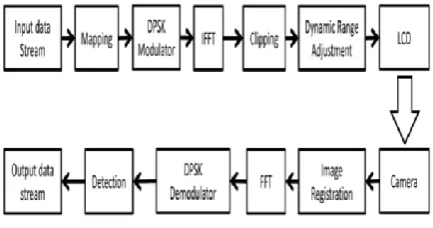
Fig. 2 Diagram Of The Algorithms Used For Data Transfer.
2. Data Transfer Capacity
There are many factors affecting the amount of data that can be extracted from a particular LCD, some of them depend on the LCD design itself and others on the camera working as the receiver.
Moreover, there are some limitations due to the system’s processing capability and power consumption. Although in practice, it might be challenging to obtain a fair assessment of the system’s performance, it is important to know what affects the transfer rate and what can be done about each limiting factor in this data transmission medium. The data capacity of an LCD may be calculated by considering for instance the maximum number of bits in a raw image as shown on the LCD.
A. Camera Limitations
A digital camera could be considered as a device which digitally samples a 2D signal. For correct sampling of consecutive frames in time, camera capture rate should be 2 times the display refresh rate (RD) unless there is a synchronization
system in place to activate the camera shutter when the image is stabilized on the display (exactly between frame changes). As it is not normally the case, if the camera capture rate is for example RC=8
Hz then the display refresh rate could not exceed 4 Hz. To satisfy the Nyquist criteria for image resolution, each pixel of the image shown on the LCD should be sampled by 2 or more pixels in the camera [12]. The image sensor uses limited number of bits per channel for conversion of each color pixel, resulting into quantization noise. To limit the effect of this noise on the overall detection performance it should be maintained 6-10 db below system noise level.
B. Power Limitations
superior when the same method of PAPR reduction is used.
C. Inter-Symbol Interference (ISI)
When a barcode is printed on paper, a white pixel does not affect its neighboring black pixels provided that the print quality is good and the resolution is high enough. On the other hand, when data is shown on an LCD, light that is passing through white pixels may leak into neighboring black pixels making them look gray. The straightforward solution to this problem is to increase the size of the pixels so that they have minimal effects on each other. This is called barcode granularity in QR coding [2]. On a lower level this is exactly the way a printed barcode is generated, where each printed dot is not corresponding to a data symbol but rather many printer dots contribute to a single black symbol. Moreover, any movements between camera and LCD during the capture of an image for barcode processing results in motion blur which is translated into ISI. As neighboring pixels affect each other in the captured image. At first this effect might not be evident based on common experiments with 2D barcodes like QR codes. These codes are decoded successfully without major efforts in terms of stability of code or camera.
D. Interference, Distortion, and Noise
When a camera is used to take a picture of a 2D barcode, certain image artifacts could impact the result of data extraction method. These artifacts are mainly due to the following:
Table I
Read Rate Of QR Codes In Docked And Handheld Conditions
QR Version
V1 V6 V11 V16 V21 QR Code 21*21 41*41 61*61 81*81 101*101
Docked 100% 100% 97% 99% 10%
Handheld 100% 100% 84% 71% 6%
• distance and angle between camera and LCD (perspective distortion);
• camera and subject relative motion; • out of focus lens;
• compression distortions; • unwanted ambient light sources;
• dirt and permanent marks on the LCD; • noise (primarily additive Gaussian noise)
3. DPSK-OFDM
While LCD technology is improving on pixel to pixel isolation, some of the image capture distortions still remain, causing neighboring pixels of the barcode mix up in the image and resulting in some kind of Inter Symbol Interference. The main idea in resolving this problem is to interpret the barcode image as a wireless radio signal for which ISI reduction techniques have already been proven successful. One of the best and most feasible modulation methods capable of coping with severe conditions in band limited communication channels is the so-called Orthogonal Frequency Division Multiplexing or OFDM [22]. The general idea is that when dealing with band-limited, power-constrained, multipath channels, it is more efficient to transfer a bunch of narrow-band signals in parallel instead of a single high bandwidth signal.
A. Similarities of Barcode and Wireless RF
Channel
For simplicity each 2D image is reformulated into a 1D row vector containing all pixels in the 2D image. Each row can be considered as a time domain signal which has Pulse Amplitude Modulation (zeros are black and ones are white pixels). Consider taking a picture of this single row, in a band limited channel which has a combination of camera focus problems, resolution limitations, light leakage from white to black pixels, among other things. Moreover in a multipath channel in which the camera moves during image capture and mixes up the image of several neighboring pixels, the resulting image will suffer from high ISI. To solve these problems in a time domain radio signal, OFDM method is used to essentially divide the channel into multiple orthogonal low bandwidth channels and the low rate data is sent into these channels in parallel.
modulation prior to applying the inverse Fourier transform in OFDM modulation, data would not have to be stored in the absolute phase of the received elements but rather in its phase difference to the neighboring element, which eliminates the requirement for channel estimation and equalization if the channel response does not vary abruptly between adjacent subcarriers.
B. Transmitter
One of the advantages of using OFDM is its effective computation method which uses the Inverse Fast Fourier Transform (IFFT) to modulate input data into orthogonal frequencies. The modulated signal should be real-valued in order to be shown on an LCD, so the input to the IFFT algorithm should have Hermitian symmetry
C. Cyclic Extension
OFDM systems require cyclic extension to prevent inter carrier interference (ICI) [27]. To be sufficient, the length of the added cyclic extension must be more than the time spread of the channel. In case of the 2D barcode, periodic extension of the image generated by 2D-IFFT is required to prevent ICI. The length of this extension is determined by the impulse response of the channel, which in turn depends on the image blur and the amount of movement anticipated between LCD and camera. However, since in this study the channel response is modeled in the frequency domain, frequency domain filtering [12] is applied on the barcode, and effective cyclic extension is achieved by frequency domain multiplication which results in time domain cyclic convolution. Hence in all the following simulations the length of the cyclic extension is the same for DPSK-OFDM and QPSK-OFDM ensuring ICI elimination in the longest channel responses simulated.
D. Receiver
After displaying the generated image of the receiver uses its camera for sampling and registering the acquired image so that a fairly acceptable copy of Da is created at the receiver end. The effects of interference, noise and distortions encountered in this step are addressed in the simulation section. To obtain the transmitted data successfully, the following steps should be taken into consideration at the receiver end:
Image Capture: Digital camera and display
systems have a limited refresh rate which tends to be more than 23 Hz for different standards. In a synchronous system the camera can capture each displayed frame at the exact moment when it is fully stable. However if the receiver does not know when a new frame is ready on the display, the sampling rate should be at least twice the display rate to ensure capture of at least one acceptable frame. Moreover the relative distance and angle between camera and display is bounded by the Nyquist criteria where each pixel on the display frame should map into a minimum of 2*2 block in the camera.
Image Registration: The first step in
processing the captured image is to extract the displayed image from background which depends on predefined finder patterns put into the image. For example, data matrix guidance lines are used in [5]. Because measurement errors in finder pattern location and perspective correction errors are not part of this study, the simulated images and their distorted received signals are ideally registered isolating the effects of blur and camera movement on error rate of different schemes.
FFT: Applying Fast Fourier Transform on the registered image results in frequency domain data which is comprised of the differential phase modulated elements stored in matrix.
DPSK Demodulation: The original
constellation mapped data can be extracted using phase differences between respective elements, but first data corresponding to regions 1 and 2 should be concatenated together to form matrix
E. Error Correction
and would consequently be considered a non-reliable channel for this kind of transmission.
F. Computational Complexity
An important issue regarding the applicability of such a system would be the computational power required to implement the system. Although a thorough investigation of such requirements and any optimization process can be subject to further study, it should be noted that the proposed DQPSK-OFDM system has a limited processing overhead compared to the equivalent QPSK-OFDM system which is already implemented and tested. More specifically, on the transmitter side, although the differential modulation is described by complex multiplications, it can be easily implemented using a small look-up table taking current phase and data to be modulated as inputs
4. SIMULATION
Current 2D barcodes use PAM as the preferred modulation method [2]. To compare them with the proposed modulator and demodulator, both systems are implemented in MATLAB. A Simple PAM modulator which translates bits into light and dark pixels of an image is compared to the proposed DPSK-OFDM method which uses the described algorithm for modulation and demodulation. Furthermore, the performance of QPSK-OFDM [28], which is essentially the same as 4-QAM (Quadrature Amplitude Modulation) OFDM used in PixNet [5], is compared to the proposed DPSK-OFDM system. The main parameters that are considered include:
• noise and clip ratio; • low pass filtering; • camera movement.
To study the effect of each of these parameters, first a random data stream is modulated to the displayed image using the algorithm under test. Then a controlled distortion is applied to the image before passing it to the receiver. The bit stream at the output of the decoder is compared to the input random stream to count for erroneous bits. This process is repeated several times using various random data streams and the same amount of distortion. The average result would be the bit error rate corresponding to that particular situation and assumed distortion. The process is then repeated for another distortion amount resulting in a plot for bit error rate against distortion.
A. Noise and Clip Ratio
In a barcode setup where PAM is used to modulate data onto image pixels, the average power is maximized. Consider the maximum amplitude driving a fully ―on‖ pixel is Ap leading to a
transmitted energy of Pp.
B. Low Pass Filtering
Inter symbol interference and out of focus lens may be modeled by applying low pass filtering on the captured image. To simulate this out of focus effect, the Butterworth low pass filter in the frequency domain is used with various cutoff frequencies and the resulting BER is measured. Equation (6) defines the applied filter.
C. Camera Movement
Assuming linear image motion in and directions and instantaneous shutter opening and closing, the motion may be modeled by the following transfer function as described.
5.
CONCLUSION
AND
FUTURE
WORK
correction errors on the BER performance of this algorithm compared to the other ones could augment our understanding of its applicability to real world scenarios.
6. REFERENCES
[1] N. J. Woodland and B. Silver, ―Classifying apparatus and method,‖ U.S. Patent 2 612 994, Oct. 7, 1952.
[2] Information Technology—Automatic
Identification and Data Capture Techniques—QR Code 2005 Bar Code Symbology Specification, ISO/IEC 18004:2006, 2006.
[3] H. Kato and K. Tan, ―Pervasive 2d barcodes for camera phone applications,‖ Pervasive Comput., vol. 6, no. 4, pp. 76–85, Oct. 2007.
[4] X. Liu, D. Doermann, and H. Li, ―Vcode- pervasive data transfer using video barcode,‖ IEEE Trans. Multimedia, vol. 10, no. 3, pp. 361– 371, Apr. 2008.
[5] S. D. Perli, N. Ahmed, and D. Katabi, ―Pixnet: Interference-free wireless links using LCD- camera pairs,‖ in Proc. MobiCom, 2010, pp. 137–148.
[6] J. Memeti, F. Santos, M. Waldburger, and B. Stiller, ―Data transfer using a camera and a three- dimensional code,‖ Praxis der Informations verarbeitung und Kommunikation, vol. 36, no. 1, pp. 31–37, 2013.
[7] C. Pei, Z. Zhang, and S. Zhang, ―Softoc: Real- time projector-wallcamera communication system,‖ in Proc. ICCE, Jan. 2013, pp. 100–101. [8] S. Kuzdeba, A. M.Wyglinski, and B. Hombs, ―Prototype implementation of a visual communication system employing video imagery,‖ in Proc. CCNC, 2013, pp. 184–189. [9] M.Mondal and J. Armstrong, ―Impact of linear misalignment on a spatial OFDM based pixelated system,‖ in Proc. 18th Asia-Pacific Conf. Commun., Oct. 2012, pp. 617–622. [10] M. Mondal and J. Armstrong, ―The effect of defocus blur on a spatial OFDM optical wireless communication system,‖ in Proc. 14th Int. Conf. Transparent Opt. Netw., Jul. 2012, pp. 1–4. [11] M. R. H. Mondal and J. Armstrong, ―Analysis of the effect of vignetting on mimo optical wireless systems using spatial OFDM,‖ J. Lightw. Technol., vol. 32, no. 5, pp. 922–929, Mar. 1, 2014.
[12] R. Gonzalez and R. Woods, Digital Image Processing, 3rd ed. Upper Saddle River, NJ,
USA: Pearson Education, 2007.
[13] A. Sripad and D. Snyder, ―A necessary and sufficient condition for quantization errors to be uniform and white,‖ IEEE Trans. Acoust., Speech, Signal Process., vol. ASSP-25, no. 5, pp. 442–448, Oct. 1977.
[14] J. Proakis and M. Salehi, Digital
Communications, 5th ed. New York, NY, USA: McGraw-Hill Education, 2007. [15] T. Cover and J. Thomas, Elements of Information Theory, 2nd Ed. ed. Hoboken, NJ, USA: Wiley, 2006.
[16] H. Ochiai and H. Imai, ―Performance analysis of deliberately clipped OFDM signals,‖ IEEE Trans. Commun., vol. 50, no. 1, pp. 89–101, Jan. 2002.
[17] S. Dimitrov, S. Sinanovic, and H. Haas,
―Clipping noise in OFDM-based optical wireless communication systems,‖ IEEE Trans.
Commun., vol. 60, no. 4, pp. 1072–1081, Apr. 2012.
[18] Y. Liu, J. Yang, and M. Liu, ―Recognition of QR code with mobile phones,‖ in Proc. Chinese Control Decision Conf., Jul. 2008, pp. 203– 206.
[19] H. Kato and K. T. Tan, ―First read rate analysis of 2D-barcodes for camera phone applications as a ubiquitous computing tool,‖ in Proc. 2007 IEEE Reg. 10 Conf., 2007, pp. 1–4.
[20] A. Ashok, S. Jain, M. Gruteser, N. Mandayam, W. Yuan, and K. Dana, ―Capacity of pervasive camera based communication under perspective distortions,‖ in Proc. IEEE Int. Conf. Pervasive Comput. Commun., Mar. 2014, pp. 112–120. [21] D. Tsonev, S. Sinanovic, and H. Haas, ―Complete modeling of nonlinear distortion in OFDM-based optical wireless communication,‖ J. Lightw. Technol., vol. 31, no. 18, pp. 3064– 3076, Sep. 2013.