University of South Carolina
Scholar Commons
Theses and Dissertations
2015
Lists in a Lighthouse
James Patrick CostelloUniversity of South Carolina - Columbia
Follow this and additional works at:https://scholarcommons.sc.edu/etd
Part of theTheatre and Performance Studies Commons
This Open Access Thesis is brought to you by Scholar Commons. It has been accepted for inclusion in Theses and Dissertations by an authorized administrator of Scholar Commons. For more information, please [email protected].
Recommended Citation
L
ISTSINAL
IGHTHOUSEby
James Patrick Costello
Bachelor of Arts Susquehanna University, 2012
Submitted in Partial Fulfillment of the Requirements
For the Degree of Master of Fine Arts in
Theatre
College of Arts and Sciences
University of South Carolina
2015
Accepted by:
J. Steven Pearson, Director of Thesis
Robyn Hunt, Reader
Richard Jennings, Reader
A
BSTRACTIn this document one will find the play, Lists in a Lighthouse, and a description of
the process it took to write it. It’s significance lie in the eyes of the reader. It could range
from: the greatest play written in the English speaking world to simply words on a page.
Like this Abstract so are the contents in this manuscript, abstract. One cannot quantify or
qualify its importance. That is impossible. It is merely a dialogue. A dialogue between the
play and its reader, the play and its actors, and the play and its audience. It is a process,
TABLE OF CONTENTS
ABSTRACT ...iii
LIST OF FIGURES……….v
SCRIPT………1
PROPS, SOUND, COSTUME………8
MINOT’S LIGHT KEEPERS….………..10
IMAGES……….………..……….13
REASERCH, EDITING, AND REHEARSAL PROCESS ...19
ANALYIS ...23
LIST OF FIGURES
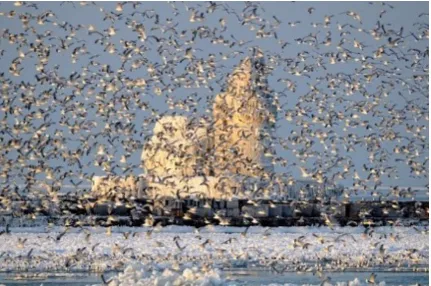
FIGURE 4.1. LIGHTHOUSE BIRDS………13
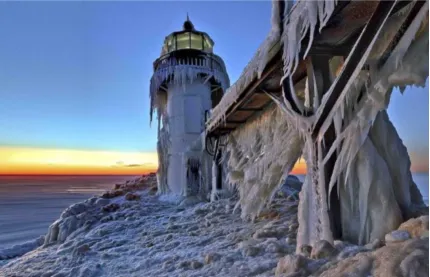
FIGURE 4.2. LIGHTHOUSE ICE……….14
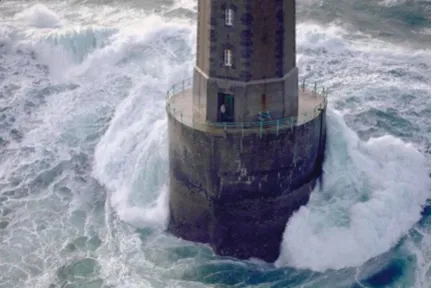
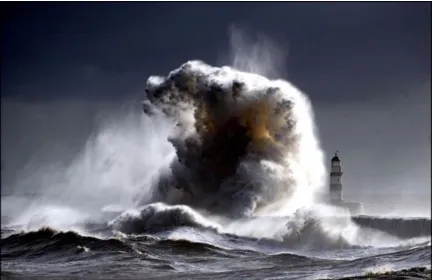
FIGURE 4.3. LIGHTHOUSE WAVE 3……….15
FIGURE 4.3. LIGHTHOUSE WAVE 4……….16
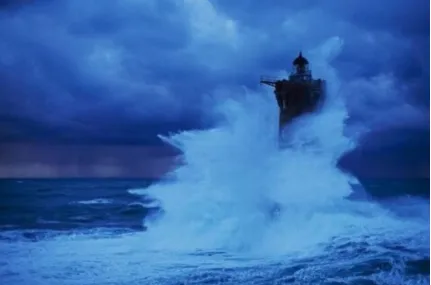
FIGURE 4.4. LIGHTHOUSE WAVE 7……….17
SCRIPT
[Light Up 1]
[Sound Up 1]
(Stage is bare except for a desk on the lower level. The desk is used. A lit lantern left from the night before sits in an ocean of papers. Stacks of papers emitting waves of potential ideas. The sun begins to rise. Black turns to red which turns to orange which turns to yellow. The sun has risen. Sound of seagulls swoop through the room. A man enters from the center door upstairs. Draped under a heavy jacket he greets the railing and bathes his face in the sun for warmth. He is tired, but living. He looks into the distance. Waiting. From under the blanket he glances at the Keeper Log.)
Isaac Dunham, Per S. Tornberg, Roach, Wallace Willcutt, Pierre Albert Nadeau, Octavius Reamy.
[Light Up 2]
(He turns the light on and scans it across the horizon. Unsatisfied he descends the stairs and sits at the desk.)
[Light Up 3]
right hand. I pull open the drawer and slam it shut. I place the pencil on the table. I pick up the pencil and examine it.American Naturals…figures. I return to my freshly made pile of lists. It’s just this. This and that. And that….
-Sit up in chair. (He does so)
-Rise your left hand. (Raises his left hand)
-Confess your favorite color.
Blue.
-Now let that color become you.
Let that color become you… (Thinks about this. Starts holding his breath. Explodes, gasping for air) did it work? Was I blue? Did I hold it for too long? I was purple wasn’t I! Damn it! (Threatens to rip the paper) And now I’m red! (He drags out a crate of tiny corked bottles.) Rolling the paper up with extreme precision I slide the note into the bottle and cork it. Well…one down. (Grabs another paper. He snaps his fingers in his ears, testing them out. Then rubs his fingers)
-Listen to yourself think.
Uhhh. Hmm. Ah. I guess that qualifies.
-Listen to your heart. (Tries to get his ear to his chest. Unsuccessful. Instead he opens the drawer and eats a cannoli).
-Listen for the birds. (The sound of gulls. A fog horn is heard in the distance. He runs up the stairs)
[Sound Up 2]
[Sound Up 3]
-Dreams often reveal the answers. The answers to questions we do not know. To
experience dreaming, sleep. Ha! A teaser! They’ll love that. (Tries to get comfortable in chair in order to sleep. He sleeps. The room shakes as the boat it hit by the first cannon ball. Lights flash read while the alarm sounds.)
[Light Up 4]
[Sound Up 4]
Irish Accent: Ah! We’re hit aren’t we? Got to get down there, stop the water. Use whatever you can find. No, no, no! Cannoli. (The ship is hit again. He loses his footing and hit his head. He is floating as the boat sinks. He lands back in his chair. The lights turn blue and the alarms fade. He wakes.)
[Light 4 Down]
[Sound 4 Down]
-As clearly as you can recall your dream. Do not leave out any details.
Well, ah. I was on a boat. We were hit. Water came rushing in. I tried to stop it. I hit my head. I drowned. Was I Irish? (He opens the drawer and sneaks a cannoli. He eats it. He mulls over his dream. And lets it go). I roll the paper up and tap it into the bottle. (He neatly arranges the bottles in a row 1, 2, 3. He then switches 3 and 1. Then 2 and 1. The 3 and 2. Then 1 and 2. 1, 2, 3. He grabs another bottle from the crate. Needing to make room on the table he moves aside the papers and bottles, all of his hard work. He lays the bottle on the table and spins it. Wherever it stops he stares out into the direction it points. He blows a kiss. He continues to play until he is completely depressed. Rapping his fingers on the desk he glances at the Keeper Log.) Desperate times call for your betters. (Before reading each entry he reviews a list he wrote earlier)
October 1850,
So may it stand, that 'they who go down to the sea in ships' may see this signal fire burning brightly to warn them from the countless rocks that echo with the rage that oft swells from the bosom of old ocean.
Isaac Dunham
P.S. And may these lists guide you from darkness and open doors to greater seas.
Well said.
November 1861,
I love it! There is no other place I’d rather be. The view! The breaking of the waves! The sound of gulls! And the view, that endless blanket of blue stretching itself off to the horizon. I have so much time to be. So much time.
Per S. Tornberg
P.S. Love it.
(Unties his shoes, takes them off, hopscotch, puts shoes on)
Was I like that?
December 1873,
Winter life in the tower is very dreary. Its stone courses are so welded together that it has become like one huge piece of stone, and it sways under the blows of wind and wave as the trunk of a tree. But it as firm as the oak it simulates in form. The life tells terribly on the keepers. More than one has so far lost his mind as to attempt his own life, and several were removed because they became insane.
Roach
P.S. Insane.
(Sink into the ground, rises, jumping jack)
That’s enough for today Looks like rain.
[Sound Up 5]
(A storm begins to rage, he grabs the garbage basket for potential vomit)
December 1885,
Wallace Willcutt
P.S. Get over it.
Easy for you to say. Back to work. (He closes the journal and put the basket down, but makes sure it is close. He grabs a paper. While standing on the chair with one leg)
-Wink with the right eye. (Winks right eye) Wink with the left eye. (Winks left eye)
-Wiggle your right ear. (Wiggles right ear) Wiggle your left ear. (Wiggles left ear)
-Wrinkle your nose. (Wrinkles his nose)
-Now perform all three. (He starts out slow, taking it step by step. Until he gets the hang of it and goes all out. The light goes out)
[Light Out 6]
That’s not supposed to happen. (He turns on the lantern and consults the journal.)
December 1897,
These last forty-eight hours have been the most terrific that I have witnessed for many a year. . . . The raging violence of the sea no man can appreciate, unless he is an eye witness. . . .
The rods are bent up in fantastic shapes; some are torn asunder from their fastenings; the sea is now running at least twenty-five feet above the level, and each one roars like a heavy peal of thunder; she shakes at least two feet each way. I feel as seasick as ever I did on board a ship.
Our lantern windows are all iced up outside, although we have a fire continually burning. I have a dread of some ship striking against us, although we have kept the bell constantly ringing all night. Our situation is perilous. If anything happens before day dawns on us again, we have no hope of escape. But I shall, if it be God’s will, die in the performance of my duty.
Pierre Albert Nadeau
[Light Up 7]
(Scanning the water he see something in the water. Floating.)
Distil my heart! A response. The light. The lists. “So may it stand,” Isaac Dunham. “So much time to be,” Per S. Tornberg. “So far lost his mind,” Roach. “Impossible for us to stand,” Wallace Willcutt. “Die in the performance of my duty,” Pierre Albert Nadeau. (Starts to speak. Stops himself.) Octavius Reamy…what did you have to say?
[Light Up 8]
(Slowly and cautiously he descends from the railing. Eyes only for the bottle lost at sea. On retrieving the bottle he returns to the surface. As he ascends he calls on the strength of Keepers past.)
Isaac Dunham, Per S. Tornberg, Roach, Wallace Willcutt, Pierre Albert Nadeau, Octavius Reamy.
(He makes a run for his desk, forgetting to untie himself. He unties himself. Moving everything aside he places the bottle on the desk. Sitting and contemplating he decided to open the bottle.)
December 1910,
The trouble with life here is that we have too much time to think. It’s lonely. Our work may go unnoticed, unappreciated, but we must press on. The light must stay burning. At all costs.
Octavius Reamy
P.S. Don’t forget about the lists.
(Imbued with new purpose and fighting spirit he puts the letter back in its bottle. At a new speed he inserts letters into their assigned bottle. Corking them and putting them back in the crate.)
[Sound Up 6]
A fog horn his heard in the distance. He pauses.
[Sound Up 7]
clean the desk. Organizing the papers, sharpening a fresh pencil and cleaning the sharpener. He reaches for the bottle found at seas and goes to pack it. Stopping himself he looks at it and kisses it and places it in the center of the table.
[Sound Up 8]
The fog horn is heard again, this time even closer. He turns on the lantern. Just before he is about to leave he stops himself. He realizes he still has the Keepers Log. Sitting at the desk he picks up the freshly sharpened pencil and beings to write.)
December 19…
P.S. Don’t forget about the lists. Oh and there are some cannoli in the drawer, help yourself.
(Flipping to the front of the Log he writes and reads.)
Isaac Dunham, Per S. Tornberg, Roach, Wallace Willcutt, Pierre Albert Nadeau, Octavius Reamy. Jeffery S. Tower!
PROPS, SOUND, COSTUME
Props:
Keeper’s Log
American Natural #2 Pencil
Manual Pencil Sharpener
2 Cannoli (per show)
Lantern
Bucket
Desk
Chair
Piles of Paper
Corked Bottles Wooden crate Climbing materials Sound: Ocean waves Fog horn Seagulls
Storm: Thunder, Rain, Wind
Alarm
Costume:
Red beanie cap
Green scarf
Wool sweater
Fingerless gloves
Tan jeans
MINOT’S LIGHT KEEPERS
Isaac Dunham (1849-1850)
Isaac A. John Bennett (1850-1851) / Joseph Wilson (asst., 1850-1851) Joseph Antoine (asst., 1850-1851)
Joshua Wilder (1860-1861);
T. W. Ryder (asst., 1860);
W. H. Sylvester (asst., 1861-1863);
A. W. Williams (asst., 1860-1861);
William S. Taylor (asst., 1860-1861)
James J. Tower (1861-1874);
Thomas Bates II (asst., 1861-1864);
James D. Baxter (asst., 1863);
Israel Vinal (asst., 1864-1865);
Alden Simmons (asst., 1865-1870);
John A. Pratt (asst., 1866-1868);
Levi L. Creed (asst. 1865-1874, principal keeper 1874-1881);
Albert H. Burdick (asst., 1870-1877);
Wallace Willcutt (asst., 1873-1874?);
John G. Hayden (asst., 1874-1877);
Thomas Joseph Sheridan (asst., 1876-1880);
Amiel Studley (asst., 1877-?);
Charles Davis (asst., 1879-1880);
Alonzo Smith (asst., 1880-1881);
Joseph A Noble (asst., 1880-1881);
Nathan Hendson (?) (asst., 1881);
Daniel M. Ryan (asst., 1881-1882);
Frank F. Martin (asst. 1881, principal keeper 1881-1887);
Frank W. Thomas (asst., 1881-1883);
Lester G. Willett (asst., 1881);
Joseph Enos Frates (1st asst., 1882-189?);
Joseph Jason, Jr. (asst., 1883);
Milton Herbert Reamy (1887-1915);
George L. Lyon (asst., 1887-1889);
Octavius Reamy (second assistant 1909-1910, first assistant 1910-1915, principal keeper 1915-1924);
Winfield L. Creed (asst., 1892?-1894);
George Holmes (asst., 1892);
James Kingsley (third asst., 1893-1894);
John E. Morrill (asst., 1894);
Charles Grey Everett (2nd asst., 1894-1895);
George Jamieson (asst., 1894-1896);
Levi B. Clark (second assistant, 1905-1907, first assistant, 1907-?);
? Currier (second assistant, 1910-?);
Andrew Tullock (second assistant, 1910-?);
Douglas H. Shepherd (assistant, c. 1913-1915);
Winfield Scott Thompson (c. 1915-1918);
Pierre Albert Nadeau (assistant, c. 192?-1925);
Per S. Tornberg (asst., 1922-1924, keeper 1924-1936);
Otis E. Walsh (asst., c. 1930s);
Anthony K. Sousa (asst., c. 1930s);
George H. Fitzpatrick (asst., 1924-1927, principal keeper 1936-1940);
Wesley B. Eaton (1943-1944);
Julian Hatch (Coast Guard, 1946 - March 1947);
BM1 Michael Pratt (Coast Guard circa 1946);
George Miller (Coast Guard, circa 1946);
IMAGES
!
Figure 4.1
!
Figure 4.2
Lighthouse Ice. Digital Image. Trib Local. Web. 7 October 2013. < http://
!
Figure 4.3
!
Figure 4.4
!
Figure 4.5
Lighthouse Wave 7. Digital Image. Komo News. Web. 7 October 2013. <http://
!
Figure 4.6
RESEARCH, EDITING, AND REHEARSAL PROCESS
While reflecting on the process of this solo show I found that the mind works in
mysterious ways. A trap I fell into was that the writing of this play and thesis was an
opportunity to express my opinions, my beliefs, and my point of view on certain issues.
However, as I began to write I thought, why? It certainly was not a requirement to open
up my soul and delve into the darkest corners of my mind. So I made it my mission to
make sure my play would go against being an existential and mind bending trip. There
will be plenty of time for that. I just wanted this play to be. To be what it would be and
what it seemed.
Before the idea of the lighthouse popped up I was focusing on my dreams. I have
had a number of reoccurring dreams that have stuck with me. One being a man bathed in
yellow light reaching through the iron bars of a cage. Whether he was reaching in or out
of the cage I was never sure. Another took place on a black and blue field, like a bruised
valley. A man stood waiting for something. Then a large water drop formed above him, or
was it a tear? I don’t know, but as it fell the man ran off in a blur. Third and lastly, was a
dream that scared me the most. It was a man approaching a bed. Was it to sleep, or to join
someone? Again, I don’t know, but as he passed a window a brown figure crashed
through to tackle him. I wanted to incorporate those dreams into my play somehow. I
pictured a man at a desk recording his dreams into some device, a tape recorder perhaps,
Last Tape” that I started to doubt this idea. It was almost too parallel with what I
had in mind. The strange thing was that I never heard of it before. This coincidence was
like the message which was brought up in “Arcadia”. No one idea is original, for it was
thought before, or will be thought of again down the line.
But how did I get in the lighthouse? One exercise that I found immensely helpful
was that of setting. Robyn asked for us to think of different places and what could happen
there. It was here where I wrote about a boat in a bottle. The idea of isolation, being
surrounded by water, and locked away from the world intrigued me. And then it dawned
on me, a lighthouse. Researching was rather painless. Of course I googled “lighthouses”
and found everything I was looking for. If I utilized my time better I would have
preferred to go to the library and find some hardcopy sources, however, the websites I
found did not disappoint. My searching brought me to the first lighthouse built on the
American coast in Boston, Massachusetts. The Minot’s Light had an enthralling history. It
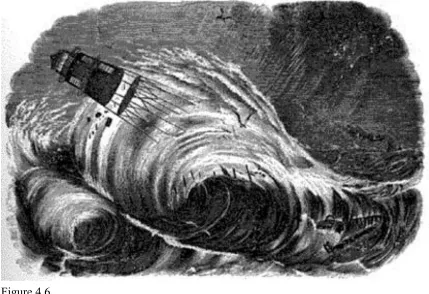
was first built with iron rods until a storm tore it asunder. It was then built the more
common way with stone.
What proved most beneficial was a list of the previous “Keepers of the Light”.
Their names inspired me: Isaac Dunham, Per S. Tornberg, Roach, Wallace Willcutt,
Pierre Albert Nadeau, and Octavius Reamy. Who were these men? Why did they decide
to dedicate their life to a place so secluded from the world? Along with some of their
names were private journal entries. They were so personal, so descriptive, and so
It wasn’t easy writing, then acting, then having to direct myself. Early on my
rehearsals consisted of sitting in a chair while imagining everything taking place. It was
almost as if I was afraid to speak the words aloud. Perhaps I feared that it was no good.
Partly to escape from the text and partly because I desperately needed the practice I spent
most of my time scaling up the rope and descending to the ground. It was thrilling and
terrifying all at once. After being instructed by Steve, I was responsible to set up the rope
myself. My own safety was in my hands. Granted it was not too high of a climb, but
enough for the fear-sweats to kick in.
As the performance date grew nearer I knew I had to attempt a full run. When I
finished I looked at the timer and it read 30 minutes. I couldn’t believe it. It certainly
didn’t feel like a half hour. How would I be able to cut 15 minutes off from this play? I
spent all night going through the script, trying to find something to take out. I couldn’t
find anything to cut, like Sergi, it all seemed equally important. The issue was that most
of my play was stage directions and nonsensical business with the lists. Of course I
panicked and brought it to the attention of Robyn. She sat in on my next run and took
notes on where space could be tightened. A point that Steve brought up was that like a
movie scenes can crossfade, one can begin the next scene while moving away from the
previous one. It sounded so simple, but I never thought of it. Rather than run up the stairs
then begin the next scene start the next scene while on the move. Again, it was something
as simple as walking and talking, but I didn’t think twice not even once about it before.
After putting this epiphany into practice it immediately cut the play down in half. The
The show started to come together that week of full runs. To keep it within the
time limit and to uphold my vision of allowing this play simply to be I knew I had to
keep up a strong pace. It was crucial to go from moment to moment and let things simply
ANALYSIS
For the most part the performances went well. The play was well received and
people seemed to enjoy it. From what I can remember there were only a few instances
where things went awry. I made the mistake of not rehearsing with cannoli. To save
money I used éclairs during rehearsals. This proved to be fatal, for when I ate the cannoli
on opening night, I quickly realized how dry and hard it was to swallow in comparison to
the éclairs. It was so dry in fact that when I went to sing I still had cannoli in my mouth
and was trying my best not to choke on it. The lesson learned was to rehearse with all of
your props before opening. Another minor issue was when I ran up the stair my raincoat
got caught in the fencing on the wall, however, I dealt with it swiftly by ripping it from
the wall. My costume designer, Joan Costello, was not pleased with the damage done to
the coat, but it was the only solution I could come up with in the moment. The pacing in
this play is so important that I couldn’t stop to unhook the coat. Probably my biggest
mistake was not fully committing the journal entries to memory. I thought that by loosely
memorizing them it would allow me experience them with a fresher set of eyes. This did
not play out in my favor when the lighting would be too dark to read, or my hand writing
proved to be illegible.
I have considered doing the play again. It would certainly be a challenge to find a
biggest issue would be to attain my own set of climbing gear. I have been in
communication with some of my classmates about “un-soloing” our shows and
intertwining them together. Laurie, Trey, Josiah, and I have played around the idea and
found that our plays shared some of the same themes and underlying messages. Laurie
has submitted a draft to a fringe festival, however, my storyline was not included this
time due to a conflict in schedules, but I remain confident that all of our shows can be
united as one further down the line. Perhaps mine will be integrated into the third
BIBLIOGRAPHY
D’ Entrmont, Jeremy. New England Lighthouses: A Virtual Guide. 1997-2015.
<http://www.lighthouse.cc/minots/history.html>
Keepers of the Light. Lighthouse Preservation Society. 2015. <http://