Available online: https://edupediapublications.org/journals/index.php/IJR/ P a g e | 282
Commercialization of Sports in India: A Study with
References to Pre and Post Globalization Era
Subhadeep Dutta
UG Student, Department of Commerce, University of Calcutta
[email protected]
Essence
Time has changed a lot for human-beings. There were times when people used to live in caves and covered their bodies with leaves. Although, it took centuries but still the cave-man has managed to enter the modern life of super computers and super conductors, to-day. Over the course of history many things have changed significantly for human beings. The ways of thinking as well as procedures of doing various things have changed incredibly for example, the way of living. Like countless other things, an immense transformation can bee seen in the field of sports to-day. In the beginning, main form of the sports was to show bodily strength and compete with others on the basis of this. To-day, we see millions of people in the world playing thousands of games involving bodily strength likely - foot-ball, cricket, wrestling, boxing, hocky, basket-ball, volley ball, racing and karate etc… Many sports are there which need different techniques besides bodily strength like – soccer and cricket etc… and there are games that involve only brain power like - chess and solving various kinds of puzzles. Many people in the world follow their favorite sport and sport stars crazily. Markets are full of shops that sell sport uniforms and goods or equipments. Fans love to buy shirts which have names or numbers of their favorite players. People are getting more and more into sports and it can be analyzed by looking at the profits made by different sports clubs of to-day. Soccer clubs make hundreds of millions of dollars annually. This revolution in sports was not possible if there was not the commercialization of sports. Commercialization has taken sports to the level where they are to-day. It has
brought lot of changes to the sports, especially by making sports a big and profitable business. Sports can now be followed by every-body, every-where and every-second. More competitions are held every year as compared to past. More and more people want to participate in the sports because of this shower of grand prizes. It has helped sports in getting quality players. The sports have become much more exciting, interesting and competitive because of commercialization of sports and it has brought a very positive change in sports.
In this context, through this study provides, an analysis of the market for sports articles in India emphasizing on the production structure, distribution and trade and also consumption patterns. It will also look at the practice of sports in the country, existing facilities, fashion and branding, fair and promotional events, sports tourism, sporting goods (manufacturing and retail), sports apparel, amateur and professional sports, recreational sports, high school and college athletics, outdoor sports, sports businesses such as sports marketing firms, the sport sponsorship industry and sport governing bodies etc… in the light of exploring the potential market for foreign companies in India with also Indian companies.
Key Words
Available online: https://edupediapublications.org/journals/index.php/IJR/ P a g e | 283
1.
Introduction
The commercialization of sports is that aspect of the sports enterprise that involves the sale, display or use of sport or some aspect of sport so as to produce income. Some experts prefer the term „Commodification of Sport‟
as a label for the same process. Interest in the commercialization of sport has existed for several decades but, only in recent years has the phenomenon has been taken seriously on a larger scale. The first attention came from a small group of critical, mostly leftist writers, who have now been joined by people from all political and social perspectives. Sports economy came to be developed in the west following the availability of increased leisure with the working class after World War - II. Sport commercialism has increased tremendously over the past twenty-two years. Major sporting events and organizations are at the point where most cannot survive without outside sponsor-ship revenue.
The commercialization of sport is not a cultural universal but, a product of unique technical, social and economic circumstances. Sports in the colonial United States were usually un-structured, spontaneous activities that the participants initiated, co-ordinated and managed. Only in the latter part of the 19th century did organized sport cross
the ocean from Great Britain and arrive in America. At that time, urbanization forced a large number of people to live in new settings and to abandon traditional leisure activities, which included drinking, carousing and gambling. The dominant class sought to replace them with activities such as base-ball, horse-racing and boxing. Globally, the sports sector is estimated to be worth USD 480 - 620 billion and contributes about 1 - 5 per cent to the Gross Domestic Products‟ of various countries. In India, sport is yet to be recognized as a sector and there is no comprehensive study on the industry‟s estimated size in the country. Moreover, the definition of the term
„Sector‟ is ambiguous and differs from country to
country. West Virginia University, United States has defined the sports industry as one that consists of several different segments. The definition highlights the vastness of the sports sector and association with several other industries such as education, real estate, infrastructure, tourism, manufacturing and retail. India‟s Draft National Sports Development Bill, 2013, recognizes 66 kinds of sport. Even if a few of the recognized sports are fully developed and monetized, sport as a sector can contribute significantly to the country.
Figure 1: Structure of Sport Event
2.
Objectives of the Study
The central objective of my research study is to find out the trends in the coverage of sports in the mainstream commercialization of sports in the era of globalization. The objectives are –
(i) To find-out the recent trends of sports in India. (ii) To find-out the socio-economic impact of sports in
our society also our economy.
(iii)We see the eco-system of Indian sports. (iv)We see our Indian constitution of sports. (v) We have to learn the mass education of sports.
3.
Concept of Commercialization in Sports
Available online: https://edupediapublications.org/journals/index.php/IJR/ P a g e | 284
While the organizational and managerial changes we have seen take place as sport has increasingly become a form of commercial activity can be enabling and beneficial for sport and sports people, they can also be constraining and, as such, should be the subject of more critical analysis than occurs at present. The focus is specifically on these organizations not because they are exemplars of marketing practice, but because as governments in many countries have reduced funding for amateur sport, marketing has been presented as the solution to financial problems. Approaches do little to challenge the virtue of commercialization and the managerial actions that have portrayed this process as a socially desirable and unproblematic practice. Also, they do little to demonstrate the negative side of this drive towards rationality, or to present new and challenging ways of thinking about the business side of sport. Rather, such uncritical views are actually concerned with the preservation of established privileges and priorities such as maintaining hierarchical control and generating profit. For some organizations, they may be merely another membership fee to be added to the coffers or another name on the membership list which can be used to justify the funding of the sport by government agencies and corporate sponsors.
The marketing of a sport to increase participation is an intuitively appealing and logical function for a voluntary sport organization. It is also consistent with the directives of main-stream management gurus who see marketing as concerned with serving the interests of potential and actual consumers by satisfying their needs. The basic tenet, whether it being selling chocolate bars or sport, is that an increase in consumption leads to an increase in satisfaction. The basis of this premise is that an
„exchange relationship‟ takes place where, in our situation, the voluntary sport organization provides the opportunity for an individual to participate in the sport and then he or she, in turn, provides loyalty to the organization through competing for them, paying
membership fees, being involved in social activities and so forth. The concept of an exchange relationship implies that each individual is free to select the option they want in a free and open market-place. It does not take account of the fact that structures such as socioeconomic status, gender, race, and geographical location can constrain an individual‟s ability to respond to the marketing initiative. As Alvesson and Willmott (1996, p.120) suggest, it presents an image of common sense voluntarism, ignores the asymmetrical relations of power in marketing relationships, and “provides a deceptively simple easy-to-understand formulation of the complexities of human interaction and neglects to discuss how structures of domination and exploitation shape and mediate relationships.”
3.1 Commercialization
The process by which a new product or service is introduced in the general market. Commercialization is broken into phases, from the initial introduction of the product through its mass production and adoption. It takes into account the production, distribution, marketing, sales and customer support required to achieve commercial success. As a strategy, commercialization requires that a business develop a marketing plan, determine how the product will be supplied to the market and anticipate barriers to success.
3.2 Commercialization of Sports
Available online: https://edupediapublications.org/journals/index.php/IJR/ P a g e | 285
the cricket world cup. This sum of money indicates that the cricket has progressed lot in field of commercialization. The all credit goes to the spectators that love cricket more than thoughts.
3.3 Non-profit Sector
These include CSR initiatives and investments in the sector by leading corporate houses, and non-profit foundations. These foundations are chiefly involved in providing opportunities to children from the under-privileged sections to take up sports, supporting promising sportspersons in accessing world-class training facilities and developing sporting infrastructure.
3.4 Profit Sector
This pertains to the commercial interests in the sports sector, and covers the entire spectrum of sports goods manufacturing, retailing, establishing sports academies, providing sports curriculum services to schools and colleges, owning leagues and franchises, player management agencies, media houses, infrastructure development companies and other companies that seek marketing avenues for their brands through sponsorship association with sports tournaments and players.
4.
History of Sports Sector
India known for its fanaticism for cricket and hockey started its sports odyssey long back during the great Vedic era of India. Initially, the development of sports in India gathered momentum after its important role, in maintaining the physical health, was coined by the people of India. Hunting, Swimming, Boating, Archery, Horse riding, Wrestling, and Fishing mark the stage of infancy of Indian Sports. Then came the Martial Arts which was also a strong way of self-defence apart from a vigorous physical exercise. In India sports is seen as „a way of
realizing the body potential of its fullest‟, also known as
„Dehvada‟ in ancient India. The philosophical foundation of the sports in India lies in the history of India dating back to Vedic era in which the Atharva Veda said, “Duty is in my right hand and the fruits of victory in my left”.
The golden history of sports in India is also evident in the immortal Indian epics like Ramayana; hunting, archery, horse riding, swimming were the royal games, Mahabharata made a mark in the sports like dicing, gymnastics, wrestling, chess (Shatranj) and gulli danda, Puranas mention about the threatening game of rope fighting. The archeological excavations of Harappa and Mohanjodaro along with the religious manuscripts like Puranas and Vedas are the standing testimonials of this glorious history of Indian sports. The historians believe that many sports like hockey, archery, wrestling and chess originated in India, which are synonymous to strength and speed now-a-days. In the late Vedic era, besides sports, the Yoga and Meditation, the inevitable parts of the toughest „Yogashastra‟ made India, acquire the seat of spiritualism, all over the world. This dignified discipline of Indian Sports finds its place in Bhagwat Gita.
Available online: https://edupediapublications.org/journals/index.php/IJR/ P a g e | 286
have paved a long way towards the road of success and have made themselves a hall-mark in the world of sports.
5.
Benefits of Commercialization
This White Paper proposes a turning point in the way sport is perceived, administered and regulated in Malta and Gozo. Up until some time ago, sport was considered a pastime that offered and promoted a healthy lifestyle among a country‟s citizens. However, more recent studies on the economic impact of sport in Europe have shown that this activity has been steadily evolving into one that boosts the economy by generating large amounts of revenue while providing employment opportunities to the State‟s workforce. Questions have been raised on the status of sport in the Maltese islands specifically, as to why other countries that are historically at par with the Maltese islands from a sporting perspective have registered significant improvement in sports competitions, whilst the Malta has lagged behind. It is the Government‟s belief that commercializing sports facilities will make all stakeholders realise that sport has now become a business-generating industry. This commercialization will boost sports organizations‟ income that will in turn be used to improve their sporting infrastructures. Ultimately this will mean that their athletes would be better equipped and trained for competitions on an international level, ultimately closing the competitive gap between Malta and other nations. The envisioned outcome is that sports organizations, private investors, the State and the national economy will all stand to benefit from the commercialization of sports facilities.
5.1 Sports Organizations
Sports organizations should be the net beneficiaries of the new legislation, which will provide them with an opportunity to create new income streams that up to now
has not been possible. The proposed legislation aims to support sports organizations in being financially self-sufficient and less dependent on donors or sponsors.
5.2 The Investors
Investors would benefit from this operation as it offers new possibilities for business in many localities around Malta and Gozo. It is believed that local and foreign investors would have wanted to invest in sports facilities however, up until now they would not have been able to do so because their investment would not be secured. This proposed legislation is thereby aimed at protecting such an investment and also promising a return on their business venture.
5.3 The State
The State should also be a beneficiary of the proposed legislation, as it would start receiving incremented ground rent for the emphyteutical concessions of the facilities. When sports organizations start boosting their funds via self-sustained commercial activities, the State would be in a position to reduce direct funding currently being offered to sports organizations; instead, it would use these funds for other priorities in Maltese sport.
5.4 The Economy
The commercialization of sports facilities should feed into the country‟s economy by increasing the number of employment opportunities that should be made available all around the Maltese islands. Initially, this would happen in the development stages; later on, employment opportunities would be available in the operation of new commercial establishments to be located within the sports facilities.
Available online: https://edupediapublications.org/journals/index.php/IJR/ P a g e | 287
The ultimate aim of commercialisation will be to provide sports organisations with the income required to make them financially self-sustainable and to have sufficient resources that would in turn enable them to invest in superior training structures. For these reasons, it is of paramount importance that thorough monitoring controls are carried out so that the declared financial targets in the approved projects are met.
Hence, it is being proposed that Sport-Malta, in concordance with the Regulator, should be entrusted to conduct the necessary financial monitoring of these projects as well as a review of the financial statements of the relative sports organisations under-taking such projects. The proposed legislation is to contain sections which stipulate that sports organisations engaging in commercial activities on their premises would be required to present annual audited financial statements accounting for the commercial activities, with the same reporting standards as required by law for commercial companies under the Companies Act (Chapter 386 of the Laws of Malta). Moreover, monitoring is also to be made on the payment of the ground-rents due to the Government, by Sport-Malta.
7.
Constitution of India
Under the Constitution of India, „Sports‟ is in the state list along with entertainment and amusement. Thus, the responsibility for developing sports primarily lies with each state government. This state-level focus on sports allows the development of sports at the grass-roots level; each state or region has its specialization and this heterogeneity can be maintained only by targeting sports at the state level. However, by clubbing sports with entertainment and amusement, it is treated as a leisure or voluntary activity and a serious focus on this sector is lacking. The law aims to promote healthy sports. It bans anti-corruption agreements between firms such as agreements to fix prices or to carve up markets, and it makes it illegal for businesses to abuse a dominant market position.
Available online: https://edupediapublications.org/journals/index.php/IJR/ P a g e | 288 Figure 2: Structure of the Ministry of Youth Affairs and Sports (Government)
In addition, there are autonomous institutions under the Ministry of Youth Affairs and Sports, such as the Indian Olympic Association (IOA) and the Board of Control for Cricket in India (BCCI). They work directly with their respective international federations or organizations and run parallel to the other departments under this ministry. IOA is affiliated to the International Olympic Committee (IOC), and is the governing body for 64 federations. It covers almost all major sports except cricket, which is governed by the BCCI. It is divided into national sports federations (that have voting rights in the IOA) and recognized sports federations (no voting rights in the
IOA).Generally, the relatively active federations come under the national sports federations, whereas the dormant ones are under the recognized sports federations. All these federations are affiliated, in turn; to their respective international sports federations (Figure – 3). State-level federations responsible for organizing state-level events and activities are members of the national federations. Among other central government bodies, the Planning Commission plays an important role in allocating funds to different states for sports activities. At the state level, various ministries govern state-level tournaments, activities, and events.
Available online: https://edupediapublications.org/journals/index.php/IJR/ P a g e | 289
8.
Public Perception
Researchers have broken down sport consumers in many categories to gain insight sin to preferences and behaviors relative to commercial efforts related to sponsorships. Zhang, Won, and Past ore (2005) examined college-aged students and their attitudes towards commercialization in college sport. The researchers noted that, overall; there is a growing concern that college sports are too commercialized. This negative attitude toward commercial efforts was specifically isolated and examined. Zhang et al., (2005) determined whether a negative attitude would preclude the intent to purchase from the sponsoring organization. The variable explained 12 per cent of the variance in purchasing intent. Their analysis tapped into the cognitive and affective reactions to the commercialization witnessed in college sports. Overall, they explained consumers would be less likely to purchase the sponsors‟ goods as a result of the negative coping strategy employed for commercialization.
In spite of the findings of Zhang et al., (2005), no consensus has been reached with regards to youth perception of sponsor efforts in sports. In general, younger fans have witnessed this evolution of commercialization for a larger percentage of their lives than older sport fans (Bush, A. J., Martin, and Bush, V. D., 2004; Sukhdial, Aiken, and Kahle, 2002) and are theorized to be more desensitized to commercial presences (Kapner, 1997; Wolburg & Pokrywczynski, 2001). The marketing strategies and promotional tactics have been at stadiums and arenas for much of their lived sport experiences. However, Shavitt, Lowrey, and Hefner (1998) and De Pelsmacker and Vander Bergh (1998) noted that it may just be that specific strategies and tactics may not appeal to the younger demographic in specific situations. For instance, through television or social media advertising was identified unfavorably by
the younger population; whereas other forms of media advertising e.g., through social media (Parganas & Anagnostopoulos, 2015)) were perceived positively by young consumers (Shavitt, et al., 1998). Still, none of these studies specifically addressed the perceptions of the commercialization specifically related to sport.
Looking beyond age, researchers have also examined fan perception of commercialization relative to gender preferences. Women now comprise a large part of the sport fan base (Dodds, De Garis, & Perricone, 2014; Kohen, 2012). It has been reported that females make up approximately 37 per cent of the fan base for professional basketball and 44 per cent of the fan base for football (Kohen, 2012). In 2012, over 43 million women watched the Super Bowl. With the large female fan base, the
“shrink it and pink it” approach to marketing to female sport consumers has been amended to expand product lines in merchandise beyond a smaller, pinker version of the products that were originally intended for male consumers. As reported by Source One Sports (as cited in Kohen, 2012), licensed women‟s apparel for football, baseball, and basketball generated over $ 330 million in 2011, alone. Women have been identified as a critical target market to be pursued by sport marketers (Shani, Sandler, & Long, 1992). However, in spite of the increase in efforts to target this group, this category of sport fan tends to perceive sponsor efforts more favorably when there is a sense of exclusivity (Alay, 2008). When a perceived „fit‟ is noted between the sponsor and the event, the sponsor‟s product is viewed in a more favorable light. Additionally, female have a more positive response to the efforts of a sponsor in scenarios in which the sponsor-event fit is strong and the status of the event is high (Alay, 2008).
Available online: https://edupediapublications.org/journals/index.php/IJR/ P a g e | 290
obtrusive‟ sponsorships (p. 198). Meenaghan (2001) cited sponsor interference and the degree of exploitation as two main contributing factors to the attitudes. However, Kinney and Mc Daniel (2004) assessed public attitudes towards different types of event sponsorship. They found that American consumers supported sponsorships of collegiate events but the consumers were more comfortable with sponsorships of professional sports. They recommended that‟s sponsor-ship managers consider sponsoring professional sport to reach a target audience over a collegiate sport (Kinney and McDaniel,
2004), perhaps suggesting that the prevalence of sponsorship activation efforts may impact the fan attitude more than the choice of sport. For instance, McDaniel and Chalip (2002) concluded that the more fans considered the Olympics to be over-commercialized, the less they enjoyed the Games. Their conclusion raised a paradoxical issue: events need sponsors to provide revenue and exposure in order to grow but the commercial aspect to sport may create a negative reaction from fans (McDaniel and Chalip, 2002).
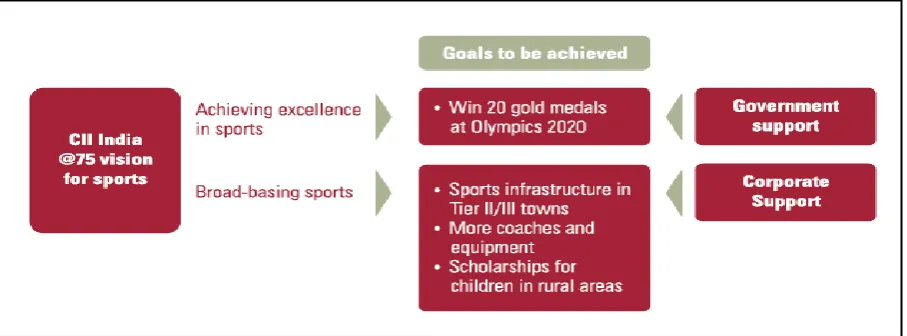
Figure 4: Sports Vision of India (Source – CII)
9.
Growth or Trend of Commercialization
in Sports
In some ways paralleling the increased commercialization of sport has been the emergence of academic interest in the business and management of sport. Much of the work in this area has been concerned directly or indirectly with issues of effectiveness and efficiency and has the implicit or explicit aim of improving managerial practice and the functioning of organizations. From this perspective, sports goods and services are commodities which, like other goods and services, are subject to market forces. The managers of sport organizations are presented as purveyors of
Available online: https://edupediapublications.org/journals/index.php/IJR/ P a g e | 291
The commercial trends that are occurring in sport are far too important and wide ranging to be accepted unquestioningly and it is here that I would like to think there is a role for the sport sociologist; to challenge some of these practices. While the organizational and managerial changes we have seen take place as sport has increasingly become a form of commercial activity can be enabling and beneficial for sport and sports people, they can also be constraining and, as such, should be the subject of more critical analysis than occurs at present. In this study, I look critically at the use of marketing involuntary sport organizations. In the world of “amateur sports”, the concepts and practices of marketing have become centrally important. In the discourse which is promoted by government bureaucrats, professional sport administrators and politicians, the voluntary sport organization is about much more than the development of athletes. Marketing as a managerial activity occurs primarily at two levels in voluntary sport organizations;
The first of these involves the marketing of a particular sport to potential participants, usually young children who may take up the sport.
The second involves the marketing of the organization‟s properties such as its name or logo, events it may hold or the athletes who are its members, in order to obtain corporate sponsorship.
Politically, socially and technologically, the world is in the midst of one of the most disruptive periods in living memory this disruption is impacting where investment in sports is coming from, how sports content is created and distributed, and is changing the dynamics of relationships between rights holders, sponsors and fans. With the advent of technology even mobile application rights, official website rights and ticketing arrangements can be under the scanner of competition law as they might lead to exclusivity issues. Due to technological advancements cable communication, subscription channels and pay per
view. It has changed the ways in which consumer access broadcasting content as it is increasingly available over internet and on wire-less portable devices. Hence technological innovation has increased competition concerns world-wide but to different degrees. As there is a huge viewer-ship of sports event as FIFA, World Cup, IPL, Olympics Games, Common-wealth and recently formula one racing there is increased opportunity for competition.
Available online: https://edupediapublications.org/journals/index.php/IJR/ P a g e | 292
insights. Nielsen Sports has analyzed the changes happening across the worlds of sports, media and technology by listening to the industry, examining the relevant data and carefully considering the impact of these changes. With the help of the experts around the world, the following are;
9.1 The emergence of new sporting powers, led by china
Emerging markets are increasingly engaging with and investing in top-level sport, the next three Olympic Games will be staged in Asia, while Russia and Qatar are the next two FIFA (International Federation of Association Football) World Cup hosts. Mexico is investing heavily in sports and major events, while markets like Turkey, Indonesia and Thailand face challenges but have undeniable growth potential. China is leading the way. The government target to create a US $ 813 billion sports industry by 2025 has fueled major investment across all aspects of sports in events, facilities, teams, leagues and grassroots programs. Alibaba‟s long-term partnership with the International Olympic Committee and Wanda Group‟s new partnership with FIFA have made headlines but both companies are laying foundations in other sports World Rugby has built a strategic partnership with Alibaba, while world cycling governing body, the UCI, has a long-term agreement in place with Wanda.
9.2 IP owners taking control of content and the conversation
From Presidents to the person on the street, this is an era when everyone has the ability to be a broadcaster and content has never been more prized or valuable. Two major property acquisitions in 2016 underlined the point: WME-IMG‟s acquisition of Ultimate Fighting
Championship (UFC) and Liberty Media‟s acquisition of Formula One were, ultimately, investments in content and intellectual property. Rights holders across the board, meanwhile, are looking to add value by developing their own content, often in partnership with brands or broadcasters but sometimes on their own. Athletes, too, are becoming their own media owners in various ways from dedicated apps and YouTube channels to larger investments in digital publishing such as Le Bron James‟ Uninterrupted and Derek Jeter‟s The Players‟ Tribune. Both are allowing athletes to engage with fans directly, authentically and on their own terms.
9.3 Changing attention spans prompting rights holders to rethink
Across sport, rights holders are examining ways to repackage, relocate and reposition events to better suit the changing structure and behavior of the fan population. Nielsen Sports‟ research shows that people are intensely interested in fewer things, but generally
interested in more things. Amid major competition for attention, the impact on rights holders is significant and leading to many examining and pushing ahead with tweaks to scheduling the NFL‟s introduction of Thursday Night Football and the Premier League carving out a package of Friday night live games, for example and format changes. Twenty20 cricket is the prime example, but a host of other sports tennis, golf and basketball among them are developing and commercializing shortened versions. To add to the competition for a fan‟s time and interest, new properties continue to spring up and entirely new sports, such as drone racing, are emerging.
Available online: https://edupediapublications.org/journals/index.php/IJR/ P a g e | 293
Rights holders and venues across the world of sports are on a constant quest to enhance the spectator experience at events and for those watching remotely by adding entertainment elements, such as concerts, fan zones and enabling more access to star athletes. Taylor Swift‟s pre-race concert at the 2016 United States Grand Prix, the theatre-style lighting deployed at the ATP World Tour Finals in London and, of course, the Super Bowl half-time show are all examples. Similarly, there are many examples of new entertainment events built around a sports element, including Andy Murray Live, an evening of music and exhibition tennis, and the Kellogg‟s Tour of Gymnastic Champions, a 36-city tour of US Olympic gymnasts designed to capitalize on the team‟s success at Rio 2016. The NFL and Cirque du Soleil, meanwhile, have partnered to create a major showcase installation in Times Square, due to open in 2017.
9.5 Live sport gaining traction on OTT and social media
Thanks to technology, fans have come to expect content live streaming, on-demand coverage and supporting statistics and analysis to be available to them whenever, wherever. Over-the-top live content is coming to sport, with established broadcasters, newer digital publishers, rights holders, telecoms firms, social media platforms and technology giants all engaged in some form. Amazon, Google and Apple are all active in content creation and delivery, while rights holders are actively developing and experimenting with their own media models PGA Tour Live, the Olympic Channel and Dugout, the collaboration between 30 major foot-ball clubs, are all examples. These rights holder-owned channels can also generate data, giving a richer, deeper picture of the audience and opening up new potential revenue streams around merchandise, tickets and content.
9.6 New revenue streams emerging as fans get fully connected
The introduction of features such as Facebook, Twitter and Instagram Live has given all stakeholders opportunities to deliver live sport, or secondary content, directly to consumers, while at the same time opening up more options for user-generated fan content. Indeed, rights holders are using technology to connect with fans wherever they are in a venue, at home or on the move. And mobile is increasingly the device of choice for fans to consume and share content. All stakeholders are innovating to connect with fans via smart-phone, including broadcasters like NBC, who rolled out a dedicated app and launched a partnership with Buzz-feed for Snap-chat content during Rio 2016. Different rights holders are at different stages of their digital journey: some are focused on fan acquisition, others on fan engagement and the most sophisticated on monetization from digital Fan Stories, to virtual reality and 360 video.
9.7 E-sports is emerging as more of a global force
Available online: https://edupediapublications.org/journals/index.php/IJR/ P a g e | 294
established sports. They will inevitably look to learn and gain best practice from the sports industry.
9.8 Social responsibility becoming more prevalent and impactful
As demonstrated by a number of adverts which ran during Super Bowl LI, which focused on activism, inclusivity and diversity, it is increasingly important for brands to be seen to adopt a position on major societal issues and outline how they are making a positive difference. Rights holders and sponsors are increasingly building corporate social responsibility components into partnerships, be it Bayern Munich working with Adidas to produce a shirt made of recycled ocean waste or Commonwealth Bank‟s major investment in women‟s sport through a long-term collaboration with Cricket Australia. At the same time, there is pressure, from the public and media, to modernize and raise standards in all aspects of sports, from major event bidding processes to the fights against doping and corruption, athlete behavior to combating match-fixing and illegal betting.
9.9 Increased investments in data and CRM central to optimizing fan relationships
An investment in gaining a more detailed understanding of audiences and fans who they are, but also what makes them tick and how they behave can not only pay dividends in terms of offering more refined, tailored content; it also opens the door to potential new monetization possibilities, via membership schemes, OTT broadcast subscriptions and retail. The smartest rights holders are already using their in-depth knowledge of their fan base to ensure brand partners are activating in the most effective way. The smartest brands are already demanding such information from their sponsorship
property. The power of CRM to optimize all aspects of the relationship with a fan is undeniable. The target for rights holders is the application of accurately collected data to achieve customized solutions, through rigorous analysis and segmentation of fans.
9.10 More focus than ever on cracking the sponsorship ROI code
The need to justify sponsorship decisions is increasing for all stakeholders. Data is driving decision-making at all levels of the most sophisticated sports organizations board members, marketing leaders, financial analysts and others all require ever more detailed evidence that their decisions are the right ones. Quantifiable tracking is a must for brands and more bespoke analytical frameworks are being created to assess the relative performance of assets. Looking ahead, rights holders are beginning to predict the return on investment a brand can expect during the pre-sales process, while Nielsen is working to match sponsorship exposures with retail sales to connect the dots and provide ongoing tracking of how a partnership is performing. The models are becoming more sophisticated but one golden rule remains. As one Chief Marketing Officer for a global brand aptly put it, “If you can't measure it, you can‟t manage it.”
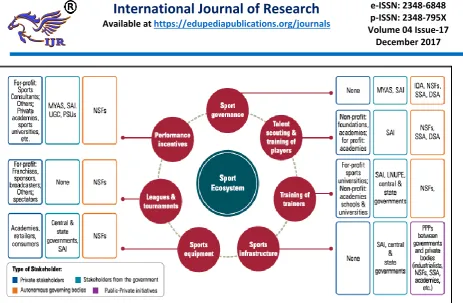
10. Sports Eco-system
Available online: https://edupediapublications.org/journals/index.php/IJR/ P a g e | 295 Figure 5: Sports Eco-system of India (Source – KPMG Analysis)
11. Methodology of the Study
The present study is secondary in nature. I do not attempt has been made to include any statistical data in this investigation. The data used for the study has been collected from Books, Magazines, Newspapers, Research Articles or Papers, Journals, E-Journals Reports, Books, and on-line data bases. For that, I have used different websites.
12. Limitation of the Study
Due to time constraint this research review study has been made on the basis of previous data i.e. secondary data. Those research gaps are huge and to be helped the future researcher when research on this topic. This study may be up-dated and redesigned by considering the latest available data. There is a lot of scope for further researches on this issue by considering other factors which I have not considered in my present study, it would have been more.
13. Recommendations
Nation-wide campaign to raise awareness on sports.
Focus on local sports or collage sports.
Implementation of a uniform sports policy across all states.
Strictly implementation of the Sports Bill, 2013.
Revision and Reconstruction of Physical Education syllabus in context with need of Society.
Active collaboration among stakeholders to help strengthen the commercial aspect of leagues and franchises.
Collaboration among National Sports Federation‟s and sports consulting firms to plan players‟ careers post-retirement.
Available online: https://edupediapublications.org/journals/index.php/IJR/ P a g e | 296
Allowing access of public infrastructure to private training academies in lieu of reasonable fees.
14. Epilogue
Commercialization of sports is a niche retail segment in which government, federations, manufacturers, sponsors and consumers play an important role. In India, retail of sports products is growing due to an increase in per capita income, increasing health awareness and brand consciousness and the entry of corporate retailers in this segment. Young people are the assets of any country in the world, with highest under 25 populations in the world India stands to gain with more work and output with the Human Resources available, but then preserving the Human Resource and maintaining the longitivity of these young ones is a challenge to India, one of the fastest developing nation of the world. India has been a manufacturing hub for sports products and the number of brands sourcing from India has increased after liberalization. With the growth of the domestic market, some companies that were previously focusing solely on exports are now looking at the domestic market. Global retailers, who are facing a saturated market at home and slowdown in countries like the US, are now looking at growing markets like India and China. India is hosting a number of international sports events, which has created opportunities for sports product retailing.
Lastly, the study found that as India is a member of the World Trade Organisation (WTO) and is negotiating comprehensive bilateral agreements with a large number of trading partners, the country should be careful about undertaking commitments. Citing the example of the lack of consistency between the services and investment chapter of recently signed India-Korea CEPA, the study argued that complex FDI regulations increases complexities in international negotiations. India is one of
the few countries, which still have FDI restrictions, while globally countries are moving towards regulating the retail sector. The study strongly argues in favor of proper regulation which will help the sector to modernize without adversely affecting the traditional sector. The advantages of the market are well writ in the sporting sector in India. The market has found specific solutions to ensure that the failures of state intervention are compensated. There are several success stories where these failures were compensated by the private sector involvement. Wakas I say that, now-a-days sports are not only an entertainment game it is game of money or game for business. The players are not assets for any developed or developing or under develop countries, the players are an individual goods and for that they sold-out.
15. Some Selected References
[1] “Cricket and globalization: global processes and the imperial game” - Fahad Mustafa, Journal of Global History, vol. - 8, Issue - 2, July 2013, pp. 318-341
[2]“Globalization of Sports Economy” by Wladimir Andreff, Rivista Diritto Ed Economia Dello Sport ISSN - 18256678, vol. - IV, Fasc. - 3, 2008
[3] “The Business of Sports and The Manufacturing of Global Social Inequality” by Prof. Welfram of East Asian Studies
[4] The sports Market-paper-A.T Kearney, at
Kearney.cm/paper/-/asset-publisher
[5] AT Kearney, (2003) the New Sports Consumer, Chicago, IL: AT Kearney Inc. Marketing and Communications. [6] Barnett, S. (1990). Games and Sets: the Changing Face of
Sport on Television. London: British Film Institute. [7] Bourdieu, P (1999) “The State, Economics in Sport” in H.
Dauncey and G. Hare, France and the 1998 World Cup London: Frank Cass.
[8] Coakley, J. (2009) Sport in Society: Issues and Controversies. 10th Ed. New York: McGraw-Hill.
[9] Crawford, G. (2004) Consuming Sport. London: Routledge. [10] Dobson, S. and Goddard, J. (2001). “The Economics of
Available online: https://edupediapublications.org/journals/index.php/IJR/ P a g e | 297 [11] Sarma S.N.: “A Socio-Economic and Cultural History of
Medieval Assam”, p-319
[12] Commercial Trends in Sports, 2017 reported by Glenn Lovett and Danny Townsend, Managing Directors, Nielsen Sports.
16. Some Selected E-References
www.usopen.org.in www.wikipedia.co.in www.google.co.in
www.Indian Sports Ministry.com
List of popular sports in India
NAME OF SPORTS
NUMBER OF PLAYERS
TERMINOLOGY TROPHY
AIR RACING - - Jawaharlal Challenge
ATHLETICS - Relay, Photo nish, Track, Lane, Hurdles, Spot
put, Hammer Throw, Discus Throw, Triple Jump, High Jump, Cross Country
Charminar Trophy, Federation Cup
BADMINTON 2 in Singles
& 4 in Doubles
Angled Drive serve, Backhand low serve, Bird, Double drop, Fault, Flick serve, Forehand smash, Court, Deuce, Smash, Drop, Let, Game, Lob, Double Fault, Clash, Service line, Net shots, Love all
Agarwal Cup, Chaddha Cup, Amrit Divan Cup, Harilela Cup, Ibrahim Rahimatillah Challenger Cup, Kitiakara Cup, Konica Cup, Narang Cup, Olympian Challenger Cup, Sophia Cup, Vikas Topiwala Challenge Cup
BASKETBALL 2 teams of 5
players each
Free Throw, Dribbling, Jump Ball, Court, Ball, Basket, Blocking, Held ball, Holding, Pivot, Multiple Throws
BasketballBasalat Jha Trophy, B. C. Gupta Trophy, Bangalore Blues Challenge Cup, Federation Cup, Nehru Cup, S. M Arjuna Raja Trophy, Todd Memorial Trophy
BRIDGE 4 players Revoke, Ruff, Dummy, Little Slam, Grand
Slam, Trump, Diamonds, Tricks, Suit, Rubber, Contact bridge,
Duplicate Bridge, Auction, Bid, Chicane, Declarer, Doubleton, Grand Slam, Finesse, Little Slam, No-trumps,
Over-trick, Shufe, Vulnerable
Basalat Jha Trophy, Holkar Trophy, Ruia Gold Cup, Singhania Trophy
CHESS 2 players Gambit, Checkmate, Stalemate, Check, Bishop,
Knight, King, Queen, Sicilian Defense, Move, Resign, Capture,
Castling, En Passant, Grand Master, Pawn,
Available online: https://edupediapublications.org/journals/index.php/IJR/ P a g e | 298 Rook, Under promoting
CRICKET 2 teams of 11
players each
LBW (Leg Before Wicket), Maiden over, Rubber, Stumped, Ashes, Hat-trick, Leg bye, Follow on, Googly, Gulley, Silly point, Duck, Run, Fielding, Drive, Six, Four, No Ball, Cover Point, Leg spinner, Wicket keeper, Pitch, Crease, Bowling, Leg-break, Hit-wicket, Bouncer, Stone-walling, Cover Drive, Boundary, Caught Behind Wicket (CBW), Follow on, Declare, Bowled, Caught, Run out, Over, Stumped, Gully, Slips, Striker, Short leg, Silly, Mid-on, Full toss, Beamer, Flick, Hook, Banana, Bowling, Chinaman, Duck, Crease, Doosra, Duck-worth Lewis Rule, Fine leg, Gardening, Inswinger, Leg Glance, Late cut, Maiden over, On drive, Out, Out swinger, over pitch, mandatory over, popping crease, rubber, run down, short pitch, Square leg, Straight drive, Swing,
third man, Yorker
Charminar Challenger Cup, C. K. Naidu Trophy, Deodhar Trophy, Duleep
trophy,Gavaskar Border Trophy, G. D. Birla Trophy, Ghulam Ahmed Trophy, Irani Trophy, Jawaharlal Nehru Cup,
Moinuddaula Gold Cup, Rani JhansiTrophy, Ranjit Trophy, Rohinton Baria Trophy, Sheesh Mahal Trophy, VizzyTrophy,Vijay Hazare Trophy, Vijay Merchant Trophy, Vinod Mankand Trophy, Wills Trophy
FIELD HOCKEY 2 teams of 11
players each
Field, Bully, Hat-trick, Short corner, Stroke, Striking Circle, Penalty corner, Under cutting, Scoop, Centre
forward, Carry, Dribble, Goal, Carried, Corner, Stick, Long Corner, Centre, Half, Defender, Forward, Penalty
Stroke, Push in, Free hit, Striking Circle goal, Goal line, Touch line, Goal keeper, Off side, Foul, Trapping,
Tie-breaker, Dribble, Advantage, Back stick, Flick, Free hit, Goal line, Green card, Halfway line, Red car, Roll in,
Scoop, Sixteen yard hit, Square pass, Tackle, Zonal Marking
Agha Khan Cup, All-India Women's Guru Nanak Championship, Beighton Cup, Bombay
Gold Cup, Dhyan Chand Trophy, Gurmeet Trophy, Guru Nanak Cup, Gyanuati Devi Trophy, Indira Gold Cup, Kuppuswamy Naidu Trophy, Lady Ratan Tata Trophy, MCC Trophy, Murugappa Gold Cup, Modi Gold Cup, Nehru Trophy, Obaid Ullah Gold Cup,
Rangaswami Cup, Ranjit Singh Gold Cup, Rene Frank Trophy, Scindia Gold Cup, Sahni Trophy, Settu Cup, Surjeet Singh Cup, Tommy Eman Gold Cup, Yadavindra Cup
FOOTBALL 2 teams of 11
players each
Field, Dribble, Off-side, Penalty, Throw-in, Hat-trick, Foul, Touch, Down, Drop kick, Stopper, Corner Kick, Yellow card, Tie-breaker, Kick-off, Goal, Red Card, Defender, Pass, Forward, Half, Goal keeper, Heading,
Trapping, Advantage Clause, Blind side, Centre forward, Deal ball, Direct free kick, Goal kick, Golden goal, Marking, Penalty kick, Penalty
Available online: https://edupediapublications.org/journals/index.php/IJR/ P a g e | 299
shootout, Striker, Tripping Sri Krishna Gold Cup, Subroto Cup, Todd
Memorial Trophy, Vittal Trophy
KABADDI 2 teams of 12
players each
- Federation Cup
KHO-KHO 2 teams of 9
players each
- Federation Cup
POLO 4 players Chukker, Mallet, Bunker, Handicap, Goal, Sixty
Yarder
Ezra Cup, Prithi Singh Cup, Radha Mohan Cup,
ROWING - Drop, Paddle, Regatta, Cow, Bucket, Bow,
Ergometer, Feather
Wellington Trophy, Naidu Trophy, Khaitan Trophy
TENNIS 2 in Singles
& 4 in Doubles
Volley, Smash, Service, Bank-hand-drive, Court, Double Fault, Topspin, Cross court, Passing shot, Forehand, Slice, Serve, Drop shot, Lob, Down the line, Deuce, Tie-breaker, Set, Game, Grand Slam, Ace, Backhand Stroke, Double Volley, Fault, Ground Stroke, Half Volley, Let, Love
Rajendra Prasad Cup
TABLE TENNIS 2 in Singles
& 4 in Doubles
Ball, Table, Paddle/Racket, Service & Return, Let, Penhold, Seemiller, Hit, Loop, Counter-hit, Flip, Smash, Push, Chop, Block, Lob, Backspin, Topspin, Sidespin, Corkspin, Drop, Deuce, Spin, Service, Let, Anti loop, Twiddle
Berna Bellack Cup, Jai Laxmi Cup, Ramanujan Trophy, Rajkumari Challenge Cup, Travancore Cup
WEIGHTLIFTING - Clean and Jerk, Bench Press, Snatch, Jerk Burdwan Trophy
VOLLEYBALL 2 teams of 6
players each
Blocking, Volley, Doubling, Heave, Smash, Point, Serve, Baseline, Ace, Foot fault, Holding, Jump set, Lob Pass, Love all, Quick smash, Scouting, Service, Spike, Tactical Ball, Windmill service
Federation Cup, Indira Pradhan Trophy, Shivanthi Gold Cup
List of popular sports in International level
NAME OF SPORTS
NUMBER OF PLAYERS
TERMINOLOGY TROPHY
AIR RACING - - Kings Cup
AUTO SPORTS - - British Competition Driver of the
Available online: https://edupediapublications.org/journals/index.php/IJR/ P a g e | 300 the year, , John Bolster Award,
National Driver of the year, McLaren Autosport BRDC Award, Rookie of the year, Racing car of the year, Rally Car of the year, Rider of the year, Pioneering and invention Award
BADMINTON 2 in Singles
& 4 in Doubles
Angled Drive serve, Backhand low serve, Bird, Double drop, Fault, Flick serve, Forehand smash, Court, Deuce, Smash, Drop, Let, Game, Lob, Double Fault, Clash, Service line, Net shots, Love all
Asia Cup, Thomas Cup, Uber Cup
BASKETBALL 2 teams of 5
players each
Free Throw, Dribbling, Jump Ball, Court, Ball, Basket, Blocking, Held ball, Holding, Pivot, Multiple Throws
William's Cup
BILLIARDS - Jigger, Break, Scratch, Cannon, Spot, Cue, In
Baulk, In Off, Long Jenny, Short jenny, Pot scratch, Frame, Spider, Short and long rest, in-off, Baulk Line, Hazard, Bolting, Screw back, Short stop, Strike
Basalat Jha Trophy, Holkar Trophy, Ruia Gold Cup, Singhania Trophy
CRICKET 2 teams of 11
players each
LBW (Leg Before Wicket), Maiden over, Rubber, Stumped, Ashes, Hat-trick, Leg bye, Follow on, Googly,
Gulley, Silly point, Duck, Run, Fielding, Drive, Six, Four, No Ball, Cover Point, Leg spinner, Wicket keeper,
Pitch, Crease, Bowling, Leg-break, Hit-wicket, Bouncer, Stone-walling, Cover Drive, Boundary, Caught Behind
Wicket (CBW), Follow on, Declare, Bowled, Caught, Run out, Over, Stumped, Gully, Slips, Striker, Short leg, Silly, Mid-on, Full toss, Beamer, Flick, Hook, Banana, Bowling, Chinaman, Duck, Crease, Doosra, Duck-worth Lewis Rule, Fine leg, Gardening, Inswinger, Leg Glance, Late cut, Maiden over, On drive, Out, Out swinger,
over pitch, mandatory over, popping crease, rubber, run down, short pitch, Square leg, Straight drive, Swing,
third man, Yorker
Anthony De Mellow Trophy, Ashes Cup, Australia-Asia Cup, Benson and Hedges, Champions Trophy, ICC World Cup, Lombard World Challenge Cup, Sharjah Cup, Shefeld Shield, Sir Frank Worrel Trophy, Reliance Cup (Cricket World Cup), Rothman's Trophy, Texaco Cup, Titan Cup, World Cup, Wisden Trophy,
World Series Cup
Available online: https://edupediapublications.org/journals/index.php/IJR/ P a g e | 301
ONE Grand Prix, Austrian Grand Prix,
Azerbaijan Grand Prix, Bahrain Grand Prix, Belgian Grand Prix, Brazilian Grand Prix, Canadian Grand Prix, Chinese Grand Prix, Hungarian Grand Prix,
Italian Grand Prix, Japanese Grand Prix, Malaysian Grand Prix, Mexican Grand Prix, Monaco Grand Prix, Russian Grand Prix, Spanish Grand Prix, Singapore Grand Prix, United States Grand Prix
FOOTBALL 2 teams of 11
players each
Field, Dribble, Off-side, Penalty, Throw-in, Hat-trick, Foul, Touch, Down, Drop kick, Stopper, Corner Kick, Yellow card, Tie-breaker, Kick-off, Goal, Red Card, Defender, Pass, Forward, Half, Goal keeper, Heading, Trapping, Advantage Clause, Blind side, Centre forward, Deal ball, Direct free kick, Goal kick, Golden goal, Marking, Penalty kick, Penalty shootout, Striker, Tripping
African Nations Cup, All Airlines Gold Cup, Asia Cup, Colombo Cup, European Champions Cup, Greek Cup, Great Wall Cup, Inter-Continental Cup, Jules Rimet Trophy, NFL Trophy, Merdeka Cup, FIFA World Cup, Euro Cup (UEFA European Championship), US Cup, Winners' Cup
GOLF - - Canada Cup, Eisenhower Cup,
Inter-Continental Cup, Prince of Wales Cup, Ryder Cup, Solheim Cup, Topolino Trophy, Walker Cup, Waterford Crystal Trophy, World Cup
HOCKEY 2 teams of 11
players each
Field, Bully, Hat-trick, Short corner, Stroke, Striking Circle, Penalty corner, Under cutting, Scoop, Centre forward, Carry, Dribble, Goal, Carried, Corner, Stick, Long Corner, Centre, Half, Defender, Forward, Penalty Stroke, Push in, Free hit, Striking Circle goal, Goal line, Touch line, Goal keeper, Off side, Foul, Trapping,
Tie-breaker, Dribble, Advantage, Back stick, Flick, Free hit, Goal line, Green card, Halfway line, Red car, Roll in, Scoop, Sixteen yard hit, Square pass, Tackle, Zonal Marking
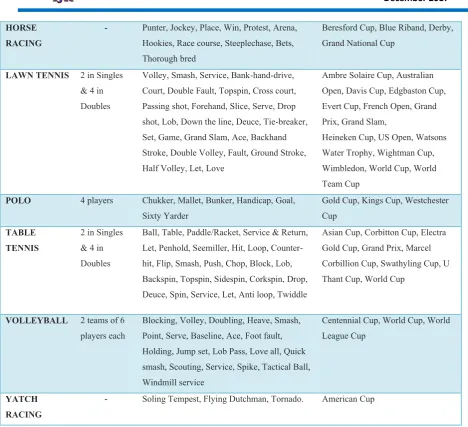
Available online: https://edupediapublications.org/journals/index.php/IJR/ P a g e | 302 HORSE
RACING
- Punter, Jockey, Place, Win, Protest, Arena,
Hookies, Race course, Steeplechase, Bets, Thorough bred
Beresford Cup, Blue Riband, Derby, Grand National Cup
LAWN TENNIS 2 in Singles
& 4 in Doubles
Volley, Smash, Service, Bank-hand-drive, Court, Double Fault, Topspin, Cross court, Passing shot, Forehand, Slice, Serve, Drop shot, Lob, Down the line, Deuce, Tie-breaker, Set, Game, Grand Slam, Ace, Backhand Stroke, Double Volley, Fault, Ground Stroke, Half Volley, Let, Love
Ambre Solaire Cup, Australian Open, Davis Cup, Edgbaston Cup, Evert Cup, French Open, Grand Prix, Grand Slam,
Heineken Cup, US Open, Watsons Water Trophy, Wightman Cup, Wimbledon, World Cup, World Team Cup
POLO 4 players Chukker, Mallet, Bunker, Handicap, Goal,
Sixty Yarder
Gold Cup, Kings Cup, Westchester Cup
TABLE TENNIS
2 in Singles & 4 in Doubles
Ball, Table, Paddle/Racket, Service & Return, Let, Penhold, Seemiller, Hit, Loop, Counter-hit, Flip, Smash, Push, Chop, Block, Lob, Backspin, Topspin, Sidespin, Corkspin, Drop, Deuce, Spin, Service, Let, Anti loop, Twiddle
Asian Cup, Corbitton Cup, Electra Gold Cup, Grand Prix, Marcel Corbillion Cup, Swathyling Cup, U Thant Cup, World Cup
VOLLEYBALL 2 teams of 6
players each
Blocking, Volley, Doubling, Heave, Smash, Point, Serve, Baseline, Ace, Foot fault, Holding, Jump set, Lob Pass, Love all, Quick smash, Scouting, Service, Spike, Tactical Ball, Windmill service
Centennial Cup, World Cup, World League Cup
YATCH RACING