Scholarship@Western
Scholarship@Western
Electronic Thesis and Dissertation Repository
6-11-2015 12:00 AM
A Maturity Model for Mobile Learning
A Maturity Model for Mobile Learning
Muasaad Alrasheedi
The University of Western Ontario
Supervisor
Luiz Fernando Capretz
The University of Western Ontario
Graduate Program in Electrical and Computer Engineering
A thesis submitted in partial fulfillment of the requirements for the degree in Doctor of Philosophy
© Muasaad Alrasheedi 2015
Follow this and additional works at: https://ir.lib.uwo.ca/etd
Part of the Engineering Education Commons, and the Other Computer Engineering Commons
Recommended Citation Recommended Citation
Alrasheedi, Muasaad, "A Maturity Model for Mobile Learning" (2015). Electronic Thesis and Dissertation Repository. 2941.
https://ir.lib.uwo.ca/etd/2941
This Dissertation/Thesis is brought to you for free and open access by Scholarship@Western. It has been accepted for inclusion in Electronic Thesis and Dissertation Repository by an authorized administrator of
(Thesis format: Monograph)
by
Muasaad Alrasheedi
Graduate Program in Electrical and Computer Engineering
A thesis submitted in partial fulfillment of the requirements for the degree of
Doctor of Philosophy
The School of Graduate and Postdoctoral Studies Western University
London, Ontario, Canada
ii
Abstract
Higher education is becoming increasingly interested in adopting innovative and modern
technologies as a mode of imparting education. Mobile technologies are considered to be the
next frontier of educational platforms as they have the capability to provide high-quality
learning experiences and to satisfy the increasing demand for mobility and flexibility. In
view of the ubiquitous nature of mobile technology and the immense opportunities it offers,
there are favorable indications that the technology could be introduced as the next generation
of learning platforms.
The present research aims to develop a comprehensive framework based on the well-known
Capability Maturity Model (CMM) and to empirically evaluate the maturity of mobile
learning (m-Learning) initiatives in universities. The objective is to first identify key factors
that affect m-Learning adoption, then classify these factors into target groups, and eventually
use this as a theoretical basis for proposing a maturity model for m-Learning. In doing so, the
research focuses on three major stakeholders in post-secondary education, namely students,
instructors, and university management.
The proposed Mobile Learning Maturity Model (MLMM) is based on a framework that
outlines an adoption rate using five maturity levels. The measuring instrument for the model
contains nine critical success factors selected from three of our empirical studies that
examined the perspectives of students, instructors, and academic management. The model
uses assessment questionnaires, a rating methodology, and two case studies. All data has
iii
Keywords
Mobile learning, m-Learning, m-Education, Capability Maturity Model, CMM, Empirical
Analysis, Post-secondary Assessment
iv
Dedicated To My Family
They have been the biggest influence in my life.
Indeed, behind the success of a man, there is always a woman. I am blessed to have a very
supportive wife and beautiful children. Through the thick and thin of my academic life, my
v
Acknowledgments
First of all, all praise goes to Allah Almighty, who is the most merciful and beneficent. I am
highly grateful to Allah for His countless blessings and for providing me the opportunity to
carry out PhD studies. Without His guidance and blessings, nothing is possible.
I am highly indebted to my Supervisor, Dr. Luiz Fernando Capretz, whose coaching and
supervision enabled me to develop a deeper understanding of the subject. His
encouragement, criticism, and appraisal have not only guided me, but also enhanced my
research capabilities. From scholarly discussions to critical assessment of my research work,
Dr. Capretz has brought out the best in me. I consider myself blessed to have worked under
his supervision. I am confident that the learning experience that began under his supervision
will help me excel in my professional career.
I am also grateful to Western University for providing me excellent facilities and
opportunities to carry out my research work and contribute to the world of technology in a
positive manner.
I owe sincere gratitude to Dr. Raza, postdoctoral research fellow at Western University. He
has been a colleague who provided many forms of guidance and tremendous support.
I can never thank enough all the research participants, from students to instructors and
university management who used their precious time to participate in this research. Their
sincere responses have helped me carry out this research in an objective manner.
I acknowledge, with great appreciation, the full funding provided by the Ministry of Higher
Education in Saudi Arabia (King Abdullah Scholarship Program (KASP)), and the Saudi Cultural Bureau in Canada for providing me their invaluable help.
I would like to thank the examination committee members (Dr. Stéphane Gagnon, Dr. Gavan
Watson, Dr. Quazi Rahman, and Mr. Danny Ho) for their valuable remarks and considerable
recommendations. Last, but definitely not least, I offer my gratitude to anyone and everyone
vi
Table of Contents
Abstract ... ii
Dedicated To My Family ... iv
Acknowledgments... v
Table of Contents ... vi
List of Tables ... xi
List of Figures ... xiii
List of Appendices ... xiv
List of Abbreviations and Symbols... xv
Chapter 1 ... 1
1 Introduction ... 1
1.1 Mobile Learning Definition ... 3
1.2 Research Objectives ... 6
1.3 Motivation ... 6
1.4 Problem Statement ... 7
1.5 Research Methodology ... 10
1.6 Research Questions ... 13
1.7 Contributions to Knowledge ... 14
1.8 Thesis Structure ... 14
Chapter 2 ... 17
2 Background ... 17
2.1 M-Learning Concept ... 17
2.1.1 M-Learning vs. E-Learning ... 17
2.1.2 Evolution of M-Learning ... 21
vii
2.1.5 Challenges in M-Learning ... 27
2.2 Related Works ... 27
2.2.1 Capability Maturity Model (CMM) ... 27
2.2.2 Current Evaluation Frameworks ... 29
2.2.3 E-Learning Maturity Models ... 31
Chapter 3 ... 34
3 Literature Review ... 34
3.1 A Systematic Review of the Critical Factors ... 34
3.2 Theoretical Framework ... 37
3.3 Research Design... 38
3.3.1 Inclusion and Exclusion Criteria ... 38
3.3.2 Quality Assessment ... 39
3.3.3 Data Collection and Analysis... 40
3.3.4 Quality Evaluation of Individual Studies ... 42
3.3.5 Information on Platform Availability ... 44
3.3.6 CSFs from a Systematic Review of the Studies... 47
3.4 Discussion ... 52
3.4.1 Summary of Results ... 52
3.4.2 Discussion on CSFs ... 52
Chapter 4 ... 56
4 Student Perspectives of Mobile Learning: An Empirical Study ... 56
4.1 Literature Review of CSFs of Students ... 56
4.2 Research Model and Hypotheses ... 59
4.3 Research Methodology ... 61
viii
4.5.1 Demographic Distribution of the Population ... 63
4.5.2 Reliability and Validity Analysis of the Measuring Instrument ... 65
4.6 Hypothesis Tests and Results... 66
4.6.1 Phase I ... 67
4.6.2 Phase II... 67
4.6.3 Phase III ... 68
4.7 Testing the Research Model... 69
4.8 Discussion ... 71
4.9 Limitation of the Study ... 72
4.10Conclusion ... 73
Chapter 5 ... 74
5 Instructor Perspectives of Mobile Learning: An Empirical Study ... 74
5.1 Literature Review of CSFs... 74
5.2 Research Model and Hypothesis ... 77
5.3 Research Methodology ... 79
5.4 Data Collection and the Measuring Instrument ... 80
5.4.1 Data Analysis Procedure ... 81
5.4.2 Demographic Distribution of the Population ... 81
5.4.3 Reliability and Validity Analysis of Measuring Instrument ... 82
Instructor autonomy ... 83
5.5 Hypothesis Tests and Results... 83
Instructor autonomy ... 84
5.5.1 Phase I ... 84
5.5.2 Phase II... 85
ix
5.6 Discussion of the Results ... 88
5.7 Limitations of the Study... 90
5.8 Conclusion ... 90
Chapter 6 ... 92
6 Management Perspectives on CSFs Affecting M-Learning: An Empirical Investigation ... 92
6.1 Literature Review of CSFs from the Management Perspective ... 92
6.1.1 Organizational Behavior and Organizational Management ... 93
6.2 Research Model and Hypothesis ... 94
6.3 Research Methodology ... 96
6.3.1 Data Collection and the Measuring Instrument ... 97
6.3.2 Reliability and Validity of Measuring Instrument ... 97
6.3.3 Data Analysis Procedure ... 98
6.4 Hypothesis Test and Result ... 98
6.5 Testing of the Research Model Using Regression Analysis ... 101
6.6 Discussion ... 102
6.7 Limitation of the Study ... 103
6.8 Conclusion ... 104
Chapter 7 ... 105
7 M-Learning Maturity Model ... 105
7.1 Theoretical Framework ... 105
7.2 Mobile Learning Maturity Model ... 108
7.2.1 First Level: Preliminary ... 108
7.2.2 Second Level: Established ... 109
x
7.2.5 Fifth Level: Continuous Improvement ... 116
7.3 Performance Scale and Rating Methodology ... 119
7.3.1 Performance Scale ... 119
7.3.2 Rating Methodology ... 120
7.3.3 Reliability and Validity Analysis of Questionnaires ... 121
7.4 Case Studies ... 123
7.4.1 Evaluation Process ... 123
7.4.2 Case study –“University A” ... 124
7.4.3 Case Study –“University B” ... 125
7.4.4 Analysis of Inter-Rater Agreement ... 127
7.5 Discussion ... 128
7.6 Limitation of the Assessment Methodology ... 129
7.7 Conclusion ... 129
Chapter 8 ... 131
8 Research Implications ... 131
8.1 Major Contributions ... 132
8.2 Conclusions ... 132
8.3 Future work ... 135
References ... 136
Appendices ... 146
xi
List of Tables
Table 3.1. Quality Evaluation of Individual Studies... 43
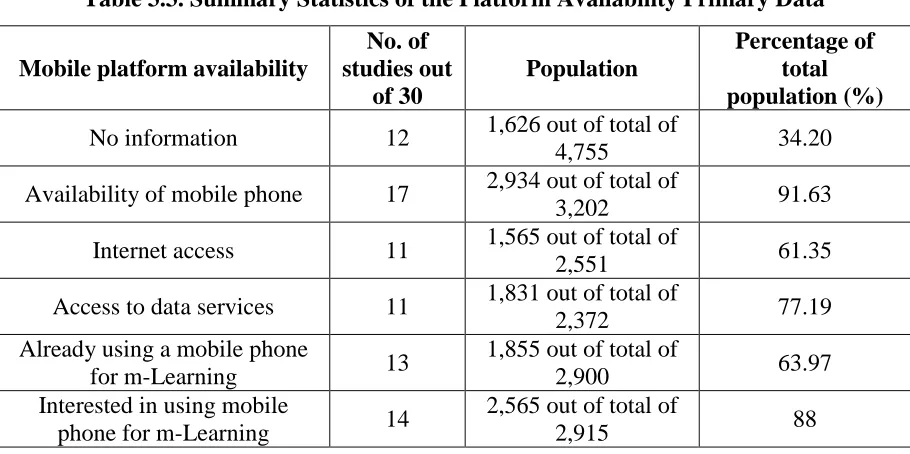
Table 3.2. Platform Availability Information for the Study Population ... 45
Table 3.3. Summary Statistics of the Platform Availability Primary Data ... 47
Table 3.4. Likert Scale Responses for CSFs-Part A ... 49
Table 3.5. Likert Scale Responses for CSFs-Part B ... 50
Table 3.6. Summary Statistics of the Likert Scale Responses for the CSFs ... 51
Table 3.7. CSFs split for future study ... 55
Table 4.1. Cronbach’s Alpha for Multi-Measuring Rating Scales ... 65
Table 4.2. Hypothesis Testing Using a Parametric Test ... 66
Table 4.3. Hypotheses Testing Using Partial Least Square Regression ... 69
Table 4.4. Multiple Regression Analysis of the Research Model... 70
Table 5.1. Cronbach’s Alpha for Multi-Measuring Rating Scales ... 83
Table 5.2. Hypothesis Testing Using Parametric Test ... 84
Table 5.3. Hypotheses Testing Using Partial Least Square Regression (Instructor Perspectives) ... 86
Table 5.4. Multiple Regression Analysis of the Research Model... 87
Table 6.1. Cronbach’s Alpha for Multi-Measuring Rating Scales ... 98
Table 6.2. Hypothesis Testing Using Parametric Test and Non-Parametric Statistical Testing ... 99
xii
Table 7.2. Framework of m-Learning Maturity Model ... 119
Table 7.3. Performance Scale ... 120
Table 7.4. Rating Threshold for the m-Learning Maturity Assessment ... 121
Table 7.5. Reliability Analysis of m-Learning CSFs Using Coefficient Alpha ... 122
Table 7.6. Validity Analysis of m-Learning CSFs Using (PCA Eigen value) ... 122
Table 7.7. Details of Assessment Results of “Case Study A” ... 125
Table 7.8. Details of Assessment Results of “Case Study B” ... 126
Table 7.9. Summary of Assessment Results of Case Studies ... 127
Table 7.10. The Inter-Rater Agreement Analysis of University A ... 127
xiii
List of Figures
Figure 1.1 Utilities of m-Learning (adapted from Schofield et al. (2011)) ... 5
Figure 1.2 m-Learning Assessment Maturity Model [Research Phase I] ... 11
Figure 1.3 m-Learning Assessment Maturity Model [Research Phase II] ... 12
Figure 1.4 m-Learning Assessment Maturity Model [Research Phase III] ... 13
Figure 2.1 E-Learning Continuum (copied from: http://www.elearning.uwo.ca/) ... 20
Figure 2.2 The basic elements of the m-Learning process (adapted from: Ozdamli and Cavus (2011))... 23
Figure 2.3 The Characteristics of m-Learning (adapted from: Ozdamli and Cavus (2011)) .. 24
Figure 2.4 Five Levels of CMM (Paulk, 1993) ... 29
Figure 4.1 Research Model: CSFs Affecting the Success of m-Learning Adoption According to Students' Perception ... 60
Figure 4.2 Steps Representing the Research Methodology ... 62
Figure 4.3 Respondent Gender Distribution ... 64
Figure 4.4 Respondent Faculty Distribution ... 64
Figure 5.1 Research Model – Critical Success Factors Affecting the Success of m-Learning from Instructor Perspectives ... 77
Figure 5.2 Steps Representing the Research Methodology ... 79
Figure 5.3 Respondent Gender Distribution (Instructors) ... 82
xiv
List of Appendices
Appendix I: Students Perspectives Questionnaire ... 146
Appendix II: Instructors Perspective Questionnaire ... 149
Appendix III: University Management Perspectives Questionnaire ... 153
xv
List of Abbreviations and Symbols
BL Blended Learning
c Coefficients
CAGR Compound Annual Growth Rate
CMM Capability Maturity Model
CMP Change management practices
CSF Critical Success Factor
DARE Database of Abstracts for Reviews and Dissemination
e-Learning Electronic Learning
EMM e-Learning Maturity Model
ePCMM e-Learning Process Capability Maturity Model
f Independent variables/ factors
H Hypothesis
IA Internet access
IAU Instructor autonomy
ID Study identification
IP Increased Productivity
ISO/IEC International Organization for Standardization/International Electrotechnical
Commission
xvi
MF m-Learning Factor
MFN M-Learning Factor Number (an integer)
ML Maturity Level (an integer)
m-Learning Mobile Learning
MLMM m-Learning Maturity Model
NAS Number of Achieved Statement
OCDMM Online Course Design Maturity model
PCA Principal Component Analysis
PDA Personal Digital Assistant
PLC Partial Least Square
R&D Research and Development
S Statement
SMS Short Message Service
SN Statement Number (an integer)
SoC System on Chip
TCI Technical Competence of Instructors
UC University’s Commitment to m-Learning
ULP University Learning Practices
Chapter 1
1
Introduction
1In the present day, higher educational institutions throughout the world are increasingly
being persuaded to make use of mobile technology (Traxler, and Kukulska-Hulme, 2005)
– a trend that is widely accepted and used almost everywhere in the world as a mode of
communication. The fast-paced evolution of emerging technologies in this area has a
significant effect on the way society communicates, learns, accesses information, and
connects with peers and colleagues. The pervasive nature and application of innovative
technologies continue to challenge the foundations of learning, teaching, research, and
creative inquiry, especially in the higher education arena. This emerging 21st century
mobility paradigm presents opportunities, challenges, and, sometimes, barriers in the
ways learners interact, collaborate, connect, contextualize, and personalize their learning
environments.
Therefore, the field of mobile learning (m-Learning) is becoming increasingly capable of
supporting high quality learning experiences. On top of this, students are increasingly
demanding greater mobility and flexibility in their learning experiences. As a result,
higher education has been gradually considering the implementation of institutional
m-Learning strategies (Attewell et al., 2009).
Furthermore, researchers have come to appreciate that mobile technology has facilitated
inter-communication in ways that were never thought of before. Thus, it is generally
accepted that the concept of m-Learning is much wider in scope than simply gaining or
imparting knowledge using mobile technology, and that m-Learning involves related
1
Parts of this chapter were published in following articles:
1. Alrasheedi, M., & Capretz, L. F. (2013d). Can m-Learning Maturity Be Measured? A Preliminary Work, Proceedings of the Canadian Engineering Education Association, Montreal, Canada, June 17-20, 2013, 1-6.
investigations into how interpersonal interactions using mobile technology can facilitate
the process of learning (Sharples et al., 2007). Moreover, the rapid development in
mobile technology has correspondingly increased capabilities in supporting education not
only in stand-alone environments but also in blended contexts, i.e., in conjunction with
traditional teaching techniques. This has made the field of m-Learning into the new
learning paradigm. The field is now the focus of increasing research and development
(R&D) activities (Kukulska-Hulme and Traxler, 2007).
M-Learning is a fairly recent concept and research in this area is still in its infancy. In
fact, the earliest research projects in this field started appearing only in the latter half of
the 1990s and the first international research conference dates back less than a decade. As
is obvious, the relative newness of the field also means that the processes, frameworks,
tools, etc., have not yet been standardized (Vavoula and Sharples, 2009). The continually
evolving concepts in m-Learning, related to both technology and communication
networking, makes the research into m-Learning challenging in every aspect including
evaluation. In order to overcome the challenges of evaluation, tailored tools and
frameworks need to be developed. Presently, researchers in this field borrow frameworks
and tools from other areas based on their similarities. However, these practices will not
be sufficient if the acceptance of the technology is to be popular and universal
(Kukulska-Hulme and Traxler, 2007).
The use of mobile technology in the educational sector is not limited to addition of a
delivery method, for instance electronic learning (e-Learning) on a mobile device. In fact,
there are several other contexts arising from the use of a mobile device, which include but
are not limited to, distance learning, which is especially important for people living in
remote communities and the possibility of anytime-anywhere learning for students. Other
important contexts are a tailored learning processes to suit each students’ pace and
collaborative learning between students as well as instructors in geographically distant
locations (Motiwalla, 2007). In order to successfully use the full capabilities of mobile
technology in the educational sector, the assessment framework would have to include
these contexts. Thus it can be seen that existing frameworks for educational evaluation,
m-Learning (Vavoula and Sharples, 2008). This points to a clear need for developing
assessment frameworks that are especially tailored to assess m-Learning and its
successful implementation in the educational sector.
One of the modes for developing a successful evaluation framework is to use a popular
technology implementation framework and adapt it for evaluating m-Learning in higher
education. This research aims to use this mode for developing a framework by attempting
to adapt the capability maturity model (CMM) framework – detailed descriptions
regarding the CMM are discussed in section (2.2.1) below – for evaluating m-Learning in
higher education. The primary goal of the present research is to put forward a maturity
model for m-Learning.
1.1
Mobile Learning Definition
The emergence of the concept of m-Learning has led to many attempts to define the
concept. Choosing one definition among the many proposed can be controversial. The
main reason for this is that the mobile platform (hardware and software) is undergoing
rapid transformations with new technologies being developed every few months. The
newer versions are getting more sophisticated but the older versions, or phones, are still
widely used. The platform is not limited to mobile phones, as the name suggests, but
includes a host of other devices including notebook computers, tablets, digital cameras,
music players, and even gaming consoles. The concept of m-Learning has been part of
several debates (Kukulska-Hulme and Taxler, 2007). The main question to be asked here
is: Does the concept of m-Learning refer to the mobility of the student or does the term
reflect the mobile device itself? Both points of view are equally relevant and powerful
and choosing either would have a significant impact on the implementation process. One
aspect common to both is that the concept of m-Learning encompasses learning within
the traditional classroom setting as well as the possibility of formal or informal education
outside the traditional classroom set-up using any of the possible mobile devices. It is
also clear that interaction with mobile devices is just one part of m-Learning; the most
important part is the characterization of these interactions so that they support the
Looking at the two different views of m-Learning, it is clear that the last definition is
more in line with the point of view supported by Kukulska-Hulme and Traxlor (2007).
This is because it can be argued that, in this case, the location of the learners is vital, in
the sense that they have to be separated enough so that interaction between them is
possible only through mobile devices. People also have to be free to move without
affecting the overall learning process (Kukulska-Hulme and Traxler, 2007).
From a technical standpoint, the m-Learning platform should be one that responds to
learners based on their requests and provides information effectively. Furthermore, such a
device should be capable of interactive communication among different actors in the
learning process. These actors include students and instructors, as well as the higher
education managers.
Many definitions of m-Learning consider it as an extension of the e-Learning process.
For instance, Quinn (2000) defines m-learning as e-Learning through devices that are
mobile. Similarly, m-Learning is often defined as a point at which e-Learning and mobile
computing intersect to provide a learning experience based on the anytime, anywhere
concept. However, it is evident from these definitions that m-Learning is considered as an
extension of e-Learning. Thus, these definitions are limited to the learning that takes
place through a device that offers mobile connectivity away from the traditional learning
environment.
However, when looking at m-Learning from the perspective of users, the concept
becomes more clear and broad. From the user perspective, m-Learning should include the
mobility of the learner as well as of the device itself. In addition, this does not eliminate
the need for a traditional learning environment like classrooms. In fact, any learning
activity that is complemented or supported by mobile devices, whether in a traditional
learning environment or an m-Learning environment, is considered to be m-Learning.
Therefore, m-Learning includes any learning which is supported by a wireless,
Internet-connected device, either inside or outside the classroom.
To explain this concept, UNESCO (2013) in its policy guidelines, uses the term
of mobile technology either in standalone mode or in conjunction with any other
information and communication technology.
El-Hussein and Cronje (2010) emphasized the use of the mobile technology aspect
clearly while defining m-Learning in their paper, where they note that the devices used
for m-Learning must be noticeably mobile. However, the architects of m-Learning
models must not consider the process as merely the extension of e-Learning using mobile
devices. The focus of designing m-Learning applications must be specific to the usage of
mobile technology, using all the advantages the technology offers to facilitate the process
of learning. In the context of this research, the definition of El-Hussein and Cronje (2010)
is considered to be the most relevant definition.
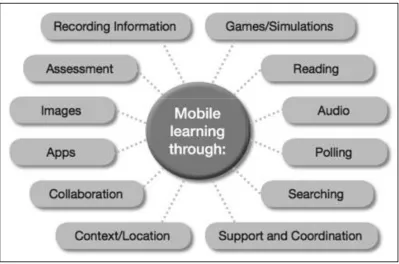
Figure 1.1 below shows the different ways in which m-Learning can be utilized in an
education setting as summarized by Schofield et al. (2011). More elaborations about the
m-Learning concept will follow in section 2.1.
1.2
Research Objectives
The primary goal of this research is to put forward a maturity model for m-Learning. In
addition, this research also aims to illustrate various stages in the model in order to assist
the process of assessing the maturity of m-Learning.
In order to accomplish the basic goal of this research, the study first attempts to prove the
validity of applying CMM concepts to the m-Learning platform. Following this, the study
proposes to adapt the CMM framework to assess the m-Learning initiatives within higher
education. The idea is to use the CMM concept as a guideline to evaluate and enhance the
process of adoption of m-Learning initiatives both as a stand-alone platform and as an
integrated platform with existing e-Learning initiatives within higher education. The
advantages of using the modified version of CMM for m-Learning will also be discussed
as part of the research. As mentioned, the framework is aimed at universities that would
be able to use it to appraise their present m-Learning initiatives in terms of adoption
success by various stakeholders involved in the learning process. In addition, this
research attempts to make an in-depth assessment of the validity of applying CMM to the
m-Learning domain.
In short, this research addresses the following question:
Is it possible to creatively use CMM in proposing a maturity model for m-Learning?
The intention is to effectively use the CMM model to evaluate the maturity of
m-Learning. The scope of the research is limited to the evaluation of CMM as it applies to
m-Learning and how it can be mapped precisely to define the m-Learning maturity. It is
also aimed to discuss the merits of the modified model as well as propose suggestions to
make it comprehensive. This question led to a series of formulated research questions
given in section (1.6) below.
1.3
Motivation
Paul and Seth (2012) reported that less than a decade ago, 70% of the world population
75% of the world, including the developing world, have access to a mobile phone
(RFE/RL, 2012). This not only shows the immense success of the technology itself, but
also the fact that people are aware of the multitude of benefits of mobile phones (Li et al.,
2008). In addition, most of the mobile devices are also multifunctional offering varied
functionality in terms of multiple speeds and capacities of data storage and processing.
The use of these versatile devices in the educational sector has the potential to allow
students to access their course materials as well as interact with fellow students and their
instructors regardless of their location and time. In other words, mobile technologies have
the capability to support anytime and anywhere learning (Wains and Mahmood, 2008).
The immense advantages offered by m-Learning have not gone unnoticed, as is evident
from the fact that the global market for m-Learning related products reached $3.2 billion
in 2010 (Schofield et al., 2011). With researchers estimating the compound annual
growth rate (CAGR) at 22.7% for the near future, it is clear that the era of the m-Learning
platform has arrived (Schofield et al., 2011). Higher education is now expected to tap into
these benefits in order to stay in competition by offering newer channels to attract
students and increase their admission capacity (Adesope et al., 2007; Lindbeck, and
Fodrey, 2010).
Due to these factors, there is clear impetus to ensure successful implementation of an
Learning platform within universities. This, in turn, needs knowledge of whether the
m-Learning platform has been successfully implemented and a road map has been
developed for the successful acceptance of the m-Learning platform by all categories of
stakeholders in higher education. The only way this is possible is by using the right
evaluation framework, which will not only give a true picture of the current status of
m-Learning implementation within the educational institute, but also provide a roadmap for
success that includes evaluation of m-Learning at important milestones. This is the
objective of the present research.
1.4
Problem Statement
The rapid development in mobile technology has led to a corresponding increase in its
educational sector has catapulted the field of m-Learning into a new learning paradigm
and the field is now the focus of increasing R&D activities (Kukulska-Hulme and
Traxler, 2007).
Over the past decade, several theoretical and pilot research studies have been conducted
to assess the use of mobile technologies in education. Regardless of the differences in
contexts of these studies, all have consistently agreed on the existence of several barriers
to the adoption of an m-Learning platform in education. Higher educational institutions
are wary of investing extensively in overhauling the existing system by embedding the
mobile platform; this hesitation is primarily due to the extremely fast rate at which newer
devices with better capabilities keep entering the market, thus rendering the older devices
obsolete. This has resulted in very few higher institutions in the higher education sector
actually implementing m-Learning initiatives on a wide scale.
Researchers, such as Wishart and Green (2010), consider the lack of a comprehensive
framework for evaluating the use of mobile technologies in higher education to be
probably the foremost concern in the area of m-Learning. The presence of an overall
framework that uses the process of m-Learning adoption could result in efficiencies in the
process, and it would definitely enhance learning outcomes for students. In view of the
urgency in implementing m-Learning, due to current needs, an evaluation method is
required to assess the value that institutions gain by adoption, implementation, and
assessment. However, m-Learning evaluation methodology requires a comprehensive
framework that has not yet been explored by researchers.
A CMM, as the name suggests, is a maturity model used to determine how far a
technology can grow or mature with its capability in a particular area. The use of CMM
in the educational context is not a new idea, as reported by Lutteroth et al. (2007). Indeed,
Jalote (2003) asserts that the CMM can be used as a tool to overcome any deficit in the
quality standards of a process in any area, including the educational sector. A CMM
model has been successfully modified and adapted to assess process maturity in varied
domains like the usability of open source software (Raza, 2011; Raza et al., 2012a; Raza
Ahmed and Capretz, 2010; Ahmed and Capretz, 2011a; Ahmed and Capretz, 2011b).
This proves that with appropriate modifications, the CMM model can be adapted to also
assess the maturity of m-Learning within higher education, which is the primary goal of
this research.
One of the more relevant researches in the area is the work by Hain and Back (2011)
where a maturity model for e-Collaboration has been developed on the lines of CMM.
E-Collaboration shares similarities with m-Learning in the sense that effects from the
platform are immense, like m-Learning, but not yet fully identified and exploited.
M-Learning too can be used in several different contexts. The exponentially fast
development of mobile technologies and the ensuing convergence of communication
between people means that there is a fair possibility of the development of newer
contexts. The e-Collaboration maturity model focuses only on the most popular and
relevant areas to begin with, though the model can be extended to other contexts as well.
Ideally, the m-Learning maturity model could also use popular areas such as remote
learning and collaborative learning for the initial framework design. Finally,
e-Collaboration also focuses on the socio-cultural context and includes it within the
maturity model (Hain and Back, 2011).
Thus, using the above framework as a guideline, the present research attempts to
overcome the absence of an overall comprehensive framework by developing an
m-Learning maturity model to aid in evaluating the m-m-Learning maturity. In the initial stage,
the framework identifies the stages of maturity from the perspectives of students,
instructors, and the management as a whole.
In order to develop this framework, it is necessary to address the following inquiries and
the related sub-inquiries.
1. To empirically discover and classify the factors contributing directly or indirectly
to the maturity evaluation of m-Learning. This primary issue has the following
sub-problems that need to be addressed as well:
I. Identification of the key factors from the student viewpoint
III. Identification of the key factors from the university management
viewpoint.
2. To create a maturity model for m-Learning in the university set-up. This primary
problem has the following sub-problems that also need to be addressed:
I. Identification of the different maturity levels for the m-Learning maturity
model (MLMM)
II. Development of the evaluation questionnaires for assessing m-Learning
III. Development of the rating scheme for m-Learning maturity levels.
3. To apply the MLMM developed above and the evaluation of the proposed
framework. This problem has the following sub-problems that need to be
addressed as well:
I. Development of a comprehensive evaluation methodology
II. Development of case studies to carry out explorations in m-Learning
initiatives
III. Gathering and interpreting evaluation data.
1.5
Research Methodology
As discussed in the above section, the main purpose of the research is to understand the
issues involved in the implementation of m-Learning in universities from the points of
view of different stakeholders – students, instructors, and university management. This
assessment gives the key factors from the points of view of the three stakeholders and
uses these to build a maturity model for the successful implementation of m-Learning in
universities. The approach used for the development of the maturity model is similar to
the research model and the corresponding method reported in (Raza, 2011; Raza et al.,
2012a, 2012b; Ahmed and Capretz, 2010, 2011a, 2011b). Accordingly, the detailed
methodology used in the present study is as described below:
The primary intent is simply to develop the MLMM with defined objectives and
milestones for each level. The research addresses the three problems identified in the
Problem Statement section (1.4) above. The final research deliverable includes a
comprehensive literature review of m-Learning in different set-ups that helps in
also helps in developing a viable assessment approach to derive appropriate scales for
capability assessment responses for each stakeholder group.
Figure 1.2 below illustrates the first phase of the research. Within this phase we intend to
tackle problems 1, 1-i, 1-ii, and 1-iii, with a goal to find workable solutions for each of
the problems.
Figure 1.2 m-Learning Assessment Maturity Model [Research Phase I]
Sub-problems Based on literature review of
m-Learning
Solution problem 1 To identify the factors contributing directly or
indirectly to the maturity assessment of m-Learning
To come up with the factors that contribute directly or indirectly to the maturity assessment
of m-Learning
Empirical investigation of key factors from Student
perspectives (Solution to problem 1-i)
Development of a research model based on the key
factors
Preparation of questionnaires and conducting a survey to perform assessment of
each key factor
Statistical analysis of the Student perspectives data
Empirical investigation of key factors from Instructor
perspectives (Solution to problem 1-ii)
Development of a research model based on the key
factors
Preparation of questionnaires and conducting a survey to perform assessment of
each key factor
Statistical analysis of the Instructor perspectives data
Empirical investigation of key Factors from the University perspectives (Solution to problem 1-iii)
Development of a research model based on the key
factors
Preparation of questionnaires and conducting a survey to perform assessment of
each key factor
Figure 1.3 below illustrates the 2nd phase of the research. Within this phase it is intended
to tackle problems 2, 2-i, 2-ii, and 2-iii, with a goal to find feasible solutions for each
problem.
Figure 1.3 m-Learning Assessment Maturity Model [Research Phase II]
Figure 1.4 below illustrates the 3rd phase of the research. Within this phase it is intended
to address problems 3, 3-i, 3-ii, and 3-iii, with a goal to find workable solutions for each
problem.
To develop an m-Learning maturity model
(Solution to problem-2)
Development of maturity scales for m-Learning on the basis of research models of phase-1
(Solution to problem 2-i)
Preparation of questionnaires and guidelines to perform assessment
of m-Learning
(Solution to problem 2-ii)
Development of rating methodology
Figure 1.4 m-Learning Assessment Maturity Model [Research Phase III]
1.6
Research Questions
As discussed above, the main purpose of this research is to find answers to a series of
formulated research questions in order to fill the research gap in the area of m-Learning
assessment. The answers to these questions will provide a comprehensive methodology
for assessing the MLMM. Following are the questions that need to be answered within
the scope of this research:
1. Is it possible to clearly differentiate between e-Learning and m-Learning
platforms based on their characteristics?
2. Are there any frameworks available for evaluating m-Learning maturity in the
educational setting?
3. Is the application of CMM to m-Learning viable?
4. What are the critical success factors (CSFs) that affect successful m-Learning
adoption based on the literature?
5. What are the key factors that contribute towards m-Learning maturity from the
perspective of the students?
6. How can we assess the success of m-Learning from the perspective of the
instructors?
To apply m-Learning maturity to assess the current maturity of m-Learning
(Solution to problem-3)
Development of assessment methodology.
(Solution to Problem 3-i)
Conducting case studies.
(Solution to problem 3-ii)
Collecting and interpreting assessment data.
7. What are the CSFs that contribute towards m-Learning adoption from the
perspective of the university management?
8. How can we perform the assessment of m-Learning capability within a university
environment?
9. Can we develop a methodology for evaluating the maturity level of m-Learning
initiatives in higher education
10.What are the future implications from the development of MLMM?
1.7
Contributions to Knowledge
There are three major contributions of this research, which are discussed below:
1. Development of a novel evaluation framework targeting groups such as students,
instructors, researchers, practitioners, and academic administrators in the field of
m-Learning.
2. The resulting model of the framework, derived from CMM, is useful for
identifying factors that directly or indirectly contribute to maturity assessment
(from a literature review) and an assessment of the importance of the critical
success factors from the points of view of the stakeholders (students, instructors,
and institutional management). This provides the experimental validation of the
model developed.
3. The model is evaluated using two case studies to assess the present maturity level
of different institutions. This not only helps in fine tuning the model for
evaluation purposes, but also creates a road map for future m-Learning evaluation
efforts.
1.8
Thesis Structure
The organization of this thesis is based on 13 articles that have been published or are
currently under review in software engineering and educational technology journals and
conferences. These papers are cited accordingly in the corresponding chapters. In Chapter
provide a summary of related work. Then in Chapter 3, we present a literature review that
is related to m-Learning CSFs.
Chapter 4 presents an empirical investigation for studying the impact of key factors on
m-Learning adoption from the perspective of students, establishing the relationship between
the key CSFs and m-Learning adoption from the viewpoint of students. The study
conducted and reported in this chapter can enhance the understanding of CSFs that affect
the implementations of Learning from student viewpoints. Consequently, the
m-Learning researchers can use this research to address CSF issues in their projects.
Therefore, this empirical investigation provides justification for considering these CSFs
as a measuring instrument for a maturity model that assesses the m-Learning.
Accordingly, Chapter 5 presents a research model of an empirical investigation that
establishes a relationship between the CSFs from the perspective of instructors and
m-Learning adoption. The results of this investigation show that the key factors in our
research model assist in improving and developing MLMM.
Chapter 6 presents an empirical investigation for studying the impact of CSFs from the
perspective of university management, including deans, department chairs, and IT
decision makers. In this study, we investigate the effects of CSFs on m-Learning
adoption and discover answers to the research question stated in this investigation. The
study will enable m-Learning development teams to improve their understanding of the
relationship between the key factors and m-Learning adoption.
In Chapter 7 the MLMM is presented. In particular, the model examines the relationship
between m-Learning and the level of adoption. The measuring instrument of the model
contains nine factors that have been selected from three of our empirical studies that
examined the perspectives of students, instructors, and the university management. In
addition to presenting the MLMM, this chapter discusses assessment questionnaires, a
Finally, Chapter 8 concludes this thesis and provides a summary of the research
contributions of this dissertation in the area of m-Learning. This chapter also discusses
Chapter 2
2
Background
2This chapter explains different technical jargon and terms used in this research to develop
a clear understanding the various concepts related to this thesis. This chapter also aims to
differentiate between e-Learning and m-Learning with respect to technology and the
implementation process. Moreover, this chapter presents a comprehensive outlook on
related work.
2.1
M-Learning Concept
This section aims to discuss and evaluate the concept of m-Learning from different
perspectives. In doing so, this section presents the differences between m-Learning,
e-Learning, and distance learning. The section also covers some distinct characteristics of
m-Learning, the limitations of m-Learning, and various challenges faced in the
implementation of m-Learning.
2.1.1 M-Learning vs. E-Learning
E-Learning is a popular concept that emerged long before the concept of m-Learning,
which, on the contrary, is a very recent concept. E-Learning involves any learning and
teaching which is supported by electronic devices (Woodill, 2012). More specifically,
e-Learning includes computer-and-network-based learning and knowledge transfer. Thus,
e-Learning not only includes computer-based but also web-based learning. E-Learning
revolutionized the educational industry by shifting the focus from an instructor-centric
learning model to a learner-centric model (Capuruço and Capretz, 2009). During the last
decade of the 20th century, e-Learning reigned in the use of technology in education.
However, with the turn of the new millennium and the emergence of smartphones,
m-Learning start gaining more attention. This new technology has grasped the attention of
2
Parts of this chapter were published in following article:
researchers, practitioners, as well as learners. The m-Learning platform has been winning
a great deal of approval (Abu-Al-Aish and Love, 2013), especially among young students
who have grown up using portable videogames as well as sophisticated wireless
technological devices.
Pinkwart et al. (2003) view Learning as a descendant of e-Learning because
m-Learning is a subset of m-Learning. However, while m-m-Learning has evolved from
e-Learning, there are a number of distinct differences between the two platforms and
processes. The conceptual difference between the two is easy when viewed at the
superficial level. Simply stating, the two learning concepts differ in the capabilities of the
web browsers involved in each environment. This, however, leads to the erroneous
conclusion that as e-Learning is to be an alternative to campus or classroom learning,
therefore, m-Learning can be viewed as a means to take the learning environment away
from a certain fixed point. This is fallacious because while e-Learning is used primarily
as an alternative to learning in classrooms, m-Learning can actually be a complementary
activity to both traditional learning and e-Learning. More importantly, m-Learning
considers the fact that users involved will interact with many educational resources
regardless of their exact location with respect to the normal learning location (Traxler and
Kukuskra-Holme, 2005; Attewell et al., 2009).
Significant differences between the two concepts are discussed below:
Platform and Accessibility
In order to develop a successful m-Learning platform, it is important to understand that
the e-Learning and m-Learning platforms are completely different. The standard
differences between the platforms are enumerated by Saleem (2011). According to the
author, the e-Learning platforms use wired devices whereas m-Learning uses wireless
devices. This also leads to a difference in the access provisions. In e-Learning, the device
needs to be connected to an available telephone service by a fixed line, whereas mobile
Learning Style
E-Learning is considered as a tethered learning mechanism (associated to something), for
example (distant learning), whereas m-Learning offers an untethered learning process.
This is why e-Learning is considered formal and structured, while m-Learning is less
formal.
Devices
E-Learning and m-Learning devices also differ in various aspects. E-Learning devices
include desktop PCs, CD/DVDs, and laptops, whereas m-Learning devices include
tablets, smart phones, mobile phones, and iPods.
Time and Context
Yet another difference exists in terms of time and context. The e-Learning platform offers
flexibility in terms of larger storage space and adequate display, which gives greater
tolerance while designing educational material. On the other hand, m-Learning offers
many limitations because of small screen size and limited storage space, which also limits
the size and duration of learning material and sessions, unless they are cloud-based.
It is worth mentioning that while e-Learning has an advantage over m-Learning because
of better storage techniques, file transfer is easier in mobile devices as compared to
devices used in e-Learning. Transfer of learning materials, in fact, the entire device itself
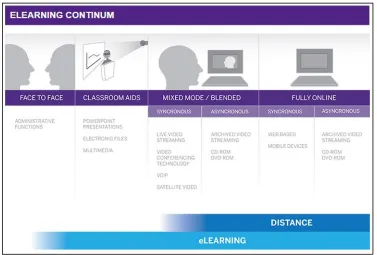
Figure 2.1 E-Learning Continuum (copied from: http://www.elearning.uwo.ca/)
The e-Learning continuum, depicted by Figure 2.1 above, shows how e-Learning
supports learning and education under different scenarios. From a face-to-face interaction
to full online capabilities, e-Learning offers a myriad of combinations. Under face-to-face
interactions, e-Learning can assist in administrative tasks. A more appropriate and widely
used mode of e-Learning is as classroom aids through multimedia, PowerPoint
presentations, and electronic files used by instructors and students. Moving on, the
e-Learning continuum offers blended learning capabilities through either synchronous (live
video feed, video conferencing, satellite video, or voice over IP (VOIP)) or asynchronous
(archived audio or video streaming, and CD or DVD) learning facilities. Finally, the last
scenario of e-Learning is through a fully online medium where learning can be done
solely by using electronic devices. This fully online medium can be used for distance
learning as well.
Cobcroft (2006) used different contexts to explain the differences between the two
concepts. The first difference is pedagogical. In e-Learning, the communication between
students and instructors is usually asynchronous, passive, and scheduled, which also
on wired devices. In contrast, m-Learning offers the opportunity for instant
communication that is synchronous as well as spontaneous based on needs. The use of
mobile devices that students carry with them all the time makes it easier to deliver and
receive messages using both e-mail and short messaging services (SMS). Furthermore,
while e-Learning also offers interactive opportunities with audio and video conferencing
techniques, students and instructors have to access systems at a prescribed location,
usually within some time limits. In contrast, mobile technologies are not geographically
bound and there is a possibility to reach the collaborators at anytime and from anywhere.
Additionally, the opportunities for one-on-one communication are immense in the use of
mobile technology. Another context suggested by Cobcroft (2006) is the evaluation
scenario that is different for both platforms. In an e-Learning platform, for example, the
traditional grading scheme is used to assess students, whereas m-Learning offers
opportunities for customized assessment. The mobile platform also offers the prospects of
using knowledge in real-time cases and on the site experiments as opposed to e-Learning,
which is mostly simulation and lab-based (Cobcroft, 2006).
E-Learning has, indeed, been around for many more years than m-Learning, particularly
with many types of the recent employment of e-Learning. Nevertheless, m-Learning is
winning great approval from proponents and critics alike, especially by young students
who have grown up employing their portable videogames as well as their wireless
technological devices. Corresponding to such meaning, m-Learning can appeal not only
to the persons who actually require portable learning, but also to others who would like to
use their mobile devices for either learning or playing games (Teall et al., 2011).
2.1.2 Evolution of M-Learning
Mobile technologies have been successfully demonstrated across many countries
showing that one can get benefits from using such devices in the education process
(Ozdamli and Cavus, 2011). M-Learning development offers endless valuable
opportunities to both students and instructors, considering the emergence of the highest
technology of both networks and mobile devices (Engel et al., 2011). Hence, we can
assert that mobile technologies, especially after many years of continued evolution and
advanced mobile devices involved – for example, personal digital assistants (PDAs),
iPods, wireless networks, and mobile phone techniques – might assist in making the
m-Learning process more feasible, especially in teaching and learning (Ozdamli & Cavus,
2011). Moreover, there is a new attitude among the educational experts and institutions
towards adopting m-Learning simply as an instructional strategy. Hence, one can forecast
such alternative modes related to m-Learning concerning the education of involved
students, whereas such techniques allow more flexibility in the process of learning
(Kukulska-Hulme et al., 2011).
Figuring out the starting ages of students for using mobile techniques could indicate that
new generations might already be adapted to this technology, simply to use mobile
techniques in supporting the learning in classrooms. As mentioned earlier, the new
generations are living in an environment that is full of mobile technologies (Engel et al.,
2011). M-Learning, consequently, would be the learning of the future that logically could
expand the process of e-Learning and, additionally, has the potential to further evolve and
expand so much so that the process of learning becomes available for all (Elias, 2011).
On the other hand, while developing the process of m-Learning, one should consider the
new mode of learning with care, particularly when implementing it as a new educational
option for students. The matter requires balance, especially with the needs of students as
well, because of the rapid technical development (Frohberg et al., 2009).
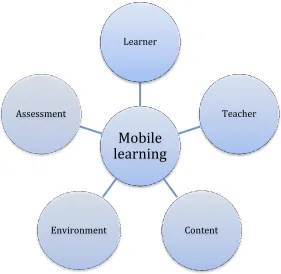
For understanding the process and technologies involved in m-Learning, one must
conceptualize the necessary elements of the whole process, which includes students/
learners, instructors, the surrounding environment, the contents, and, finally, assessment
Figure 2.2 The basic elements of the m-Learning process (adapted from: Ozdamli
and Cavus (2011))
2.1.3 Advantages of M-Learning
Indeed, m-Learning involves many advantages, such as making the learning process
easily accessible at any time and at any place. This can save time and effort for teachers
and students alike, in addition to making the process of education more enjoyable
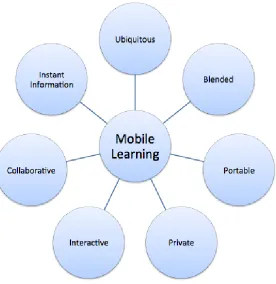
(Zengning, 2011). Some of the major characteristics of an m-Learning platform, as
discussed by Ozdamli and Cavus (2011), are shown in Figure 2.3 below:
Mobile
learning
Learner
Teacher
Content Environment
Figure 2.3 The Characteristics of m-Learning (adapted from: Ozdamli and Cavus
(2011))
Other prominent advantages of m-Learning include:
Mobility
The most significant advantage that m-Learning offers over all other instructional media
is the mobility. As long as the learner has a telecommunication network, the user is able
to acquire learning and education.
Real Time Accessibility
M-Learning offers synchronous learning through real-time interaction between the
learner and the learning material. The interaction and communication among peers and
between student and instructor can be made in real time through messaging services and
Virtualization
Smartphones and advanced mobile devices have a camera feature, which can act as a
virtual environment for learning. For example, the instructor can create virtual
classrooms using this technology. Similarly, video calls can enable the interactive
learning processes.
2.1.4 Disadvantages or Limitations of M-Learning
Mobile
Besides several advantages of m-Learning, there are several disadvantages associated
with the use of m-Learning. These start with the set-up costs for the acquisition of the
necessary equipment; the costs can also include additional costs such as training by the
educational organization (Fotouhi-Ghazvini et al., 2011). Moreover, the facts of
copyright and security issues have recently become the main concern of the institutions
involved, as data privacy and security have become major concerns for global mobile
phone users in recent years.
Despite the distinct feature of mobility, there are a number of technical limitations that
limit the scope of m-Learning. These technical limitations include input limitations,
storage limitations, security challenges, low resolution, limited battery life, small screen
size, Internet access limitations, and lack of standardization across mobile devices. These
disadvantages of m-Learning are discussed below in detail.
Input Limitations
Although smartphones have improved input mechanisms through touch keypads, the
voice recognition features are not reliable. Similarly, the small size of a virtual keyboard
makes it challenging to type very fast.
Storage Limitations
Unlike laptops and desktops, which offer huge data storage capacities, mobile phones do
mobile devices is always a limitation. Similarly, the processing speed and power of
mobile devices is slower than e-Learning devices, which negatively impacts the
transmission of learning material.
Security Challenges
Security challenges are not limited to the mobile technology, but also concern the
e-Learning media as well. However, because mobile phones are smaller in size, there is a
higher vulnerability for mobile thefts and lost mobiles, which endanger the security of the
mobile user.
Low Resolution
As compared to computers, the resolution of mobile devices is still very low because of
battery and processing limitations. Because of the low resolution screen, it becomes
hazardous for humans to spend too much time reading on mobile screens. This is one of
the biggest hurdles in the proliferation of the m-Learning platform.
Small Screen Size
Although newer mobiles are boasting larger screen sizes, with tablets having reasonable
screen sizes, they are still smaller as compared to laptops and desktops. Small screens are
necessary for allowing the portability feature of mobiles, however, they impede the
development of m-Learning as the leading educational tool.
Internet Access Limitations
Yet another limitation offered by mobile devices is that many web pages are designed for
computers and become distorted when opened in mobile applications. Several mobile
apps are now replacing the traditional web pages, nevertheless, differences between
Lack of Standardization
A variety of mobile phones and mobile operating systems are available on the market,
and there is a lack of standardization among them. This makes it difficult for instructors
and universities to design generic learning material. This is another major barrier in the
way of m-learning proliferation.
However, despite these limitations, it should be admitted that m-Learning is a creative
and valuable means by which one can enhance the experience of learning, either at the
workplace or in education (Kukulska-Hulme et al., 2011; Lam et al., 2010).
2.1.5 Challenges in M-Learning
Vavoula and Sharples (2008) specified six challenges in evaluating m-Learning:
analyzing and capturing learning in or across context, measuring the process and
outcomes of m-Learning, respecting the privacy of the learner/ participant, assessing the
utility or even usability of mobile devices, regarding the wider context of an organization,
and understating the socio-culture of learning. To these could be added, evaluating
informality. However, the authors admitted that these challenges result from the
complicated nature of learning based on mobile devices, where the focus is social instead
of being technical (Vavoula and Sharples, 2008).
2.2
Related Works
This section presents a brief summary about CMM as well as a critical assessment of the
existing evaluation frameworks for m-Learning. A review of the frameworks gives a
precise idea of the research direction in terms of developing an assessment framework.
2.2.1 Capability Maturity Model (CMM)
Originally the use of the CMM was to assess the maturity of government contractors to
work on a contracted software project (Paulk, 1993). CMM is basically a hierarchical
model with five levels illustrated in Figure 2.4 that helps to judge the maturity of various
software contractors who are hired by institutions or organizations to develop software
practices that are required for the effective implementation of a process. Five levels of
such a model can be described as the following (Paulk, 1993):
1) Initial: in this case the developed process can be characterized as ad-hoc, whereas
few processes can be defined and the resulting success may focus basically on an
individual’s heroics and efforts.
2) Repeatable: the process of the main project management is to be established to a
certain track schedule, cost, and functionality. The process discipline needed can
be seen in place, in order to repeat the earlier success of such projects, especially
with the same application.
3) Defined: the development and management activities can be standardized,
documented, and integrated into a set of friendly standard processes for the
institute or organization involved.
4) Managed: the detailed process is measured as well as the quality of products can
be collected to make the process easy and the product involved can be controlled
and understood.
5) Optimizing: the regular and continued process enhancement can be facilitated,
particularly by feedback from the process involved, as well as from the piloting
technologies and other innovative ideas.
Critically, CMM’s originality was designed in order to offer these various benefits, such
as offering certain road maps for enhancing the software development process of the
Figure 2.4 Five Levels of CMM (Paulk, 1993)
2.2.2 Current Evaluation Frameworks
As the field of m-Learning is still in its infancy, few frameworks and models have been
developed and evaluated by researchers. For instance, Vavoula and Sharples (2008) have
suggested six complications in the assessment of m-Learning: evaluating the current
learning settings and analyzing the possibility of meaning in different settings (setting
includes physical and social environment, learning objectives, tools, and methods);
deciding the assessment methods and outcomes for m-Learning (existing learning
assessment methods have been validated by long-term research); evaluating and
presenting ethical guidelines for m-Learning platform; understanding the impact of
highly technical nature of the mobile-platform in an educational setting; evaluating the
process of m-Learning platform on a long-term basis to understand the change process
between the traditional and the new learning context (as a result of m-Learning); and
educational setting. However, while the six complications mentioned exhaustively cover
the various m-Learning contexts, collaborative learning, and apply-as-you-learn concepts,
which offer core advantages of m-Learning are not addressed.
Vavoula and Sharples (2009) also present the theoretical framework developed by
previous research, Vavoula et al. (2006) for assessing m-Learning in an educational
setting. The framework known as M3 assesses the m-Learning platform at three levels:
micro, in which only user experiences are assessed; meso, in which the overall learning
environment is assessed; and macro, which assesses how the new platform blends into
the established set-ups of the higher education. Several suggestions have also been
proposed to modify the framework for future researchers. The biggest drawback of the
framework is that it does not have any levels of growth. Implementation and successful
acceptance of any new technology are not one-step processes. Moreover, while the views
of students and instructors are being taken, applying them progressively to improve the
implementation is not discussed in the research.
In contrast, Seipold and Pachler (2011) have assessed the process of m-Learning by
presenting a detailed analysis of a particular scenario of mobile device usage in higher
education. They have also discussed the way in which the use of mobile phone
technology in the educational sector could be tailored to suit the existing structures,
cultural practices, and institutions involved. The discussion, however, does not include a
framework for assessment. Also, it involves a case-specific approach, which draws
conclusions but does not present an actual framework that could be used in similar or
different scenarios.
A better framework is proposed by Parson and Ryu (2006) in which the ISO/IEC metrics
that are used for the measurement of software quality are used to assess the quality of
m-Learning in higher education. The framework for assessment covers both technical and
non-technical aspects of m-Learning. At the same time, the use of a standardized
framework such as ISO/IEC, means that the results from the assessment would be
tool for measuring the current quality of m-Learning in higher education, it does not
present a roadmap for successful implementation.
In the context of developing an assessment framework, the six challenges specified by
Vavoula and Sharples (2009) in evaluating the m-Learning process need to be addressed
methodically. The challenges can be enumerated as: analyzing and capturing learning in
or across context, measuring the processes and outputs from the m-Learning platform,
respecting the privacy of the learner/participant, assessing the utility and/or usability of
mobile devices, considering the wider context of an organization or the socio-culture of
learning, and, finally, evaluating the resulting informality. The authors have
acknowledged that these challenges are a result of the social implications arising from the
diverse effects of using mobile devices, rather than being due to technical aspects
(Vavoula and Sharples, 2009).
The review of existing frameworks for the assessment of m-Learning in higher education
has shown that the frameworks lack a complete roadmap for successful implementation
of m-Learning. The present research is thus an attempt to address this gap by proposing a
framework that includes this aspect.
2.2.3 E-Learning Maturity Models
Marshall and Mitchell (2002) presented the e-Learning Maturity Model (EMM) where
their focus was to boost the adoption of the platform and consequently improve the
process. It also involved the ability of the model determination using SPICE ISO/IEC
(Dorling, 1993). In case of SPICE there is an additional level, zero, which specifies the
condition where the process could not be accomplished or was performed incompletely
(Marshall and Mitchell, 2004).
The basic objectives of EMM in the context of the educational sector are similar to that of
CMM, but the domain appears to be different. This implies that the model cannot be used
for the purpose of m-Learning. Another model that could be applied effectively is the
Online Course Design Maturity model (OCDMM) proposed by Neuhauser (2004). The
![Figure 1.2 m-Learning Assessment Maturity Model [Research Phase I]](https://thumb-us.123doks.com/thumbv2/123dok_us/7741596.1268134/28.612.112.555.253.647/figure-learning-assessment-maturity-model-research-phase-i.webp)
![Figure 1.3 m-Learning Assessment Maturity Model [Research Phase II]](https://thumb-us.123doks.com/thumbv2/123dok_us/7741596.1268134/29.612.247.404.148.391/figure-learning-assessment-maturity-model-research-phase-ii.webp)
![Figure 1.4 m-Learning Assessment Maturity Model [Research Phase III]](https://thumb-us.123doks.com/thumbv2/123dok_us/7741596.1268134/30.612.236.414.70.298/figure-learning-assessment-maturity-model-research-phase-iii.webp)