Editor’s key points
From a health care perspective, reconciliation involves providing care that addresses the specific cultural and social needs of Indigenous people. The insidious effects of colonization on health and health care are multifaceted and persistent within the lives of many Indigenous people. Owing to ongoing social exclusion, many Indigenous peoples’ lives are burdened by poverty, persistent psychosocial discord within family and community, and daily racism. This is the context in which many Indigenous people experience type 2 diabetes. The Educating for Equity Care Framework presented in this article is a resource for deeper clinician engagement with Indigenous patients with type 2 diabetes. At its core, the framework provides 2 directives for clinicians: re-centring the clinical relationship (strategies include reflecting on your own biases and using narrative approaches) and engaging the social realities of Indigenous patients (strategies include screening for resource limitations that influence diabetes management and building patients’ knowledge about diabetes care). Each directive is grounded in Indigenous cultural concepts for addressing critical social variables that influence patient health and clinical interactions.
Viewing Indigenous people’s experiences of health and illness through a cultural lens can help improve diabetes care and help practitioners to understand patients’ preferences, connections, and barriers to accessing cultural resources.
Educating for Equity
Care Framework
Addressing social barriers of Indigenous
patients with type 2 diabetes
Lynden (Lindsay) Crowshoe MD CCFP Rita Henderson MA PhD Kristen Jacklin MA PhD Betty Calam MD CCFP MClSc FCFP Leah Walker Michael E. Green MD CCFP MPH
Abstract
Objective To present a clinical framework for addressing critical social elements for Indigenous patients with type 2 diabetes.
Sources of information The Educating for Equity (E4E) Care Framework was developed through a rigorous analysis of qualitative research that included the perspectives of Indigenous patients (n = 32), physicians (n = 28), and Indigenous health curriculum developers (n = 5) across Canada. A national advisory group of Indigenous health experts, educators, leaders, physicians, and community members provided feedback on integrating analysis from primary research into recommendations for physicians. Systematic literature reviews were conducted and a nominal group technique process helped forge research team consensus around the framework’s themes and recommendations.
Main message For Indigenous patients with type 2 diabetes, social factors arising from the legacy of colonization are often barriers to improved diabetes outcomes, while culture is often not recognized as a facilitator in diabetes management. Structural competency in balance with cultural safety should be central to the clinical process when negotiating diabetes management with Indigenous patients. The E4E Care Framework presented in this article provides recommendations to navigate this terrain.
Conclusion A focus on social and cultural elements is fundamental to effective diabetes care among Indigenous patients. The E4E Care Framework is a
resource that can help clinicians improve Indigenous patients’ capacity for change in a way that acknowledges the social factors that affect the increasing diabetes rates, while using a cultural lens to facilitate improved outcomes.
Case description
Geraldine is a 55-year-old First Nations woman with type 2 diabetes that was diagnosed 5 years ago; she also has hypertension, high cholesterol, and chronic shoulder, hip, and knee pain. She has been in your practice for 3 years, and her glucose control has been marginal. Review of her hemoglobin A1c levels shows that they have ranged from 8% to 8.8% despite your manage-ment attempts involving medications (ie, basal insulin therapy and maximum dose of metformin) and health behaviour teaching. What more can you do?
The prevalence of type 2 diabetes among Indigenous people in Canada is 2 to 3 times the national average, depending on whether on-reserve or off-reserve populations are counted, with increasingly younger ages at diagnosis, greater severity at diagnosis, and higher complications rates.1,2 The Canadian Diabetes
for this disparity are more complex than a biologic expla-nation allows and they include the effects of social envi-ronments arising from colonization4,5 and exclusion from
Canadian society.6 The 2015 Truth and Reconciliation Commission of Canada: Calls to Action report lists 94 calls to action that highlight the health legacy of the country’s residential school system.7 One of the calls to action7
directs health services to effectively address the health outcomes that have arisen from the multi-generational effects of what the Truth and Reconciliation Commission has termed “cultural genocide.”8 The existing evidence
base provides limited direction to clinicians around the interplay between colonization, health, and health care.3
Educating for Equity (E4E) is a research collaboration (2010-2016) among stakeholders from Australia, Canada, and New Zealand that explores how health professional education can reduce disparities in chronic disease care and improve outcomes for Indigenous populations. Noting the knowledge gap in clinical approaches for effective, culturally safe9 diabetes care for Indigenous
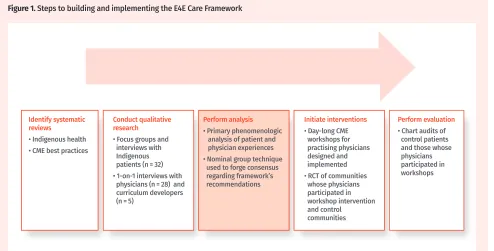
patients, the Canadian E4E team set out to develop an evidence-based tool for educational contexts. The Canadian team completed and analyzed in-depth inter-views with Indigenous patients, Indigenous and non-Indigenous physicians, and curriculum developers. Qualitative insights into health care relationships then informed the development of the E4E Care Framework
(Figure 1), as well as a 1-day continuing medical
educa-tion workshop that was implemented and evaluated in partnership with community service providers.
Sources of information
The E4E team aimed to identify evidence distinctly addressing Indigenous patients and to frame a clini-cal approach. The team began in 2011 with a series of scoping reviews of scientific literature on the fol-lowing: health professional education on Indigenous health equity; best practices for treating type 2 diabetes; and biologic manifestations of social inequities affect-ing Indigenous patients with diabetes internationally. Little was found to establish best practices for health professional education in Indigenous health, while one 2011 review addressed the quality of intervention research on Indigenous populations with type 2 dia-betes.10 A rich literature outlined the effects of social
inequities on biology and disease causes. This included research on chronic psychosocial stress and its acti-vation of the hypothalamic-pituitary-adrenal axis and cortisol pathways,11 gene-environment interactions,12
epigenetic mechanisms including during fetal and neo-natal growth,13,14 metabolic consequences of childhood
stress,15 effects of social change (eg, in the process of
food procurement or sharing), inequities framing poor health behaviour (eg, diet, exercise),16 and historical
trauma produced by colonization.17 The team’s literature
review of studies on the lived experiences of Indigenous populations with type 2 diabetes generated important insights on how social inequities and biologic processes overlap in daily life.18,19 Additionally, the team scanned
existing Indigenous curricula in 5 Canadian medi-cal schools and online continuing medimedi-cal education
Figure 1. Steps to building and implementing the E4E Care Framework
Perform evaluation • Chart audits of control patients and those whose physicians participated in workshops Initiate interventions
• Day-long CME workshops for practising physicians designed and implemented • RCT of communities whose physicians participated in workshop intervention and control communities Perform analysis
• Primary phenomenologic analysis of patient and physician experiences • Nominal group technique used to forge consensus regarding framework’s recommendations Conduct qualitative
research • Focus groups and interviews with Indigenous patients (n = 32) • 1-on-1 interviews with physicians (n = 28) and curriculum developers (n = 5)
Identify systematic reviews
• Indigenous health • CME best practices
summaries addressing any health disparities or disease entities among Indigenous populations.
Patient sequential focus groups and interviews (n = 32) were then conducted in 5 Indigenous communi-ties located in 3 Canadian provinces,20 and 1-on-1
tele-phone interviews were conducted with physicians (n = 28) and curriculum developers (n = 5) from across Canada. The feedback of a national advisory group of Indigenous health experts, educators, leaders, physicians, and Indigenous community members helped to transform research findings into care recommendations. Building on primary phenomenologic thematic analysis,21 the
research team leads conducted a secondary analysis to develop the care framework, employing a nominal group technique22,23 process to populate and structure the
multi-component resource. The resulting E4E Care Framework provides strategies for enhancing clinical approaches to diabetes management within Indigenous communities by integrating social and cultural lenses. It promotes struc-tural competency24 in balance with cultural safety25-28 as
critical components of a patient-centred care model.29-31
These concepts are reinforced through health-promoting primary care strategies, including motivational interview-ing32,33 and trauma-informed care.34-36 All patient and
phy-sician perspectives in this article derive from E4E focus groups and interviews.
Main message
Colonization and diabetes. Colonization is the predom-inant determpredom-inant of health for Indigenous people.37,38
Both patients and physicians recognized colonization as a distal determinant that undermines individual resilience and leads to negative health outcomes through perva-sive poverty, adverse life experiences, and ongoing rac-ism.18,19 These unfavourable conditions underlie and
exacerbate Indigenous people’s experiences of diabetes, as the structural barriers and psychosocial effects of pov-erty have consequences for health.39,40 Research
partici-pants emphasized that historical discrimination against Indigenous people persists, resulting in their relatively low social status. Additionally, participants attributed the dis-ruption of social cohesion or the development of dysfunc-tional relationships to the insidious effects of colonization. Thus, diabetes can be contextualized as a manifestation of social suffering originating from colonization and enacted through structural violence and inequity.41-43
It is therefore important for clinicians to recognize that, far from being a distant historical event, coloni-zation is indeed a process that has enduring effects. Moreover, it is essential to situate health care within a legacy of colonization. Using a postcolonial theoretical lens44 to examine the experiences of Indigenous
peo-ple with type 2 diabetes, the E4E initiative identified a great need for understanding the relationship between Canada’s colonial history and how Indigenous people experience both diabetes and the health care system.
Health care can contribute to ill health when it is cultur-ally unsafe45 or complicit in the processes of colonization.
This tension plays out within spaces structured by the unresolved legacy of colonization, from health care poli-cies that provide differential access to health benefits46 to
discriminatory emergency department triage practices.47
Care is thereby shaped through systemic and individual levels of racism48 that might stir physician biases, trigger
patient resistance, and sustain systemic barriers.
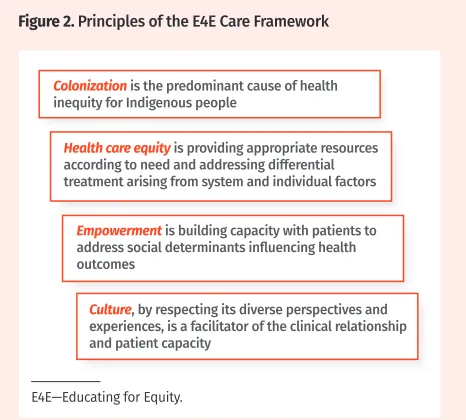
Framing diabetes care for Indigenous patients. The guiding principles of the E4E Care Framework orient the clinician toward social factors that affect Indigenous patients with type 2 diabetes (Figure 2). Motivated by patient stories of harmful care,19 as well as by patient
and physician descriptions of positive health care rela-tionships,9 these principles highlight the dynamic nature
of cultural humility and culturally safe care.49 A
clini-cal approach attuned to the Indigenous patient’s social and cultural realities facilitates congruent management strategies. Clinicians are reminded that the cultural expe-riences of Indigenous people are diverse. Engagement that considers cultural diversity is not about treating all patients alike, but rather it is about supporting and lever-aging the necessary tools for each patient to build capac-ity and resilience. Providing effective care for Indigenous patients necessitates health care equity, where resources are discrimination free, are developed for the specific needs of Indigenous patients, and fill existing gaps.
In addressing social factors that adversely influ-ence the health care outcomes of Indigenous patients with diabetes, physicians are called upon to compre-hend complex social domains within an already-complex biomedical explanatory model. The notion of stress-induced disturbances of the hypothalamic-pituitary-adrenal axis as a mechanism for diabetes outcomes50-52
Figure 2. Principles of the E4E Care Framework
Colonization is the predominant cause of health inequity for Indigenous people
Empowerment is building capacity with patients to address social determinants influencing health outcomes
Culture, by respecting its diverse perspectives and experiences, is a facilitator of the clinical relationship and patient capacity
Health care equity is providing appropriate resources according to need and addressing differential treatment arising from system and individual factors
provides a rationale for clinicians to explore patients’ stress. Population health studies that link inequity and chronic disease through material, psychosocial, and polit-ical pathways53-55 lend a useful framework. Within the
Indigenous context, the political pathway plays out as the ongoing influence of colonization, while material and psychosocial pathways represent complex social effects on health, such as poverty and multi-generational trauma.
Described here is a call for clinicians to identify and address the systemic causes of disease within the patient’s environment. Metzl and Hansen24 describe this
approach in terms of structural competency, where cli-nicians are encouraged to move beyond an “individual choice” paradigm toward recognizing how social and economic status shape health resource access, health behaviour, and ultimately health outcomes.
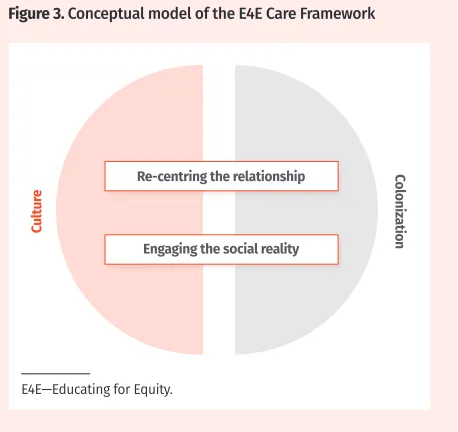
To facilitate practice implementation, the E4E team developed a framework (Figure 3) best understood in terms of the interplay of structural competency and cul-tural safety within a patient-centred care approach. At its core, the E4E Care Framework provides 2 directives for clinicians: re-centring the clinical relationship and engaging the social realities of Indigenous patients to find opportunities for change. Each directive is grounded in Indigenous cultural concepts for addressing critical social variables, arising from the legacy of colonization, that influence patient health and clinical interactions. While the directives act synergistically, the framework inten-tionally describes the relational directive first, as devel-oping a relationship is fundamental to effective care.19
Respectful inquiry can also engender a therapeutic rela-tionship. The following sections describe the interplay of social and cultural concepts related to each directive.
Re-centring the relationship. Implicit physician
bias results in health care inequities directly through
misinformed physician decision making and indirectly through destabilizing the clinical relationship.56 Patients
reported being routinely discriminated against, stereo-typed, and marginalized. The damaging and uneven historical relationships between Indigenous people and non-Indigenous Canadians means that many Indigenous patients have apprehensions about the Western medical system,19 which for many remains a living symbol of
con-tinuing oppression, mistreatment, and neglect. As a result, patients remain highly vigilant for any threat of stereo-type.57 Resistance, hesitation, withdrawal, and
acquies-cence are all potential patient responses to approaches that establish physician authority and power imbalance.
Re-centring clinical relationships involves attending to colonization and inequity within health care (Table 1). The E4E Care Framework directs clinicians to address dynamics related to “unequal treatment” and imbalance of “power and authority.” Clinicians must become aware of their potential complicity in perpetuating these con-cepts. Critical self-reflection is the first step in identifying one’s stereotypes, assumptions, and biases. Using the notion of power distance,58 an agreeable power balance
is achieved by direct inquiry, refraining from language rooted in oppression and racism, and using nonverbal communication cues59 that mirror the patient’s
commu-nication approach. The framework recommends that cli-nicians examine any remaining moments of discord for underlying historical tensions.
The E4E Care Framework suggests what the concepts of cultural competency and cultural safety9 might look
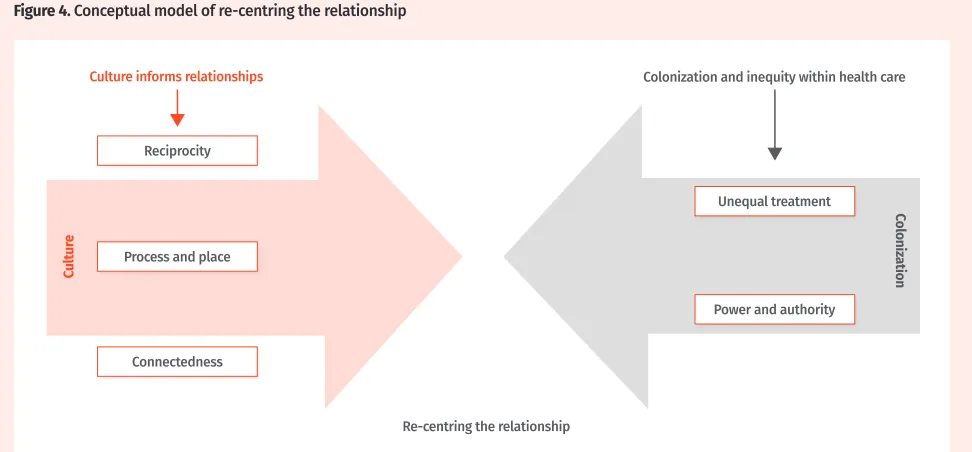
like for Indigenous patients, and how they might foster patient-physician concordance for management plans. We advocate refocusing on relational aspects of care by using a cultural lens that is attuned to Indigenous perspec-tives on sharing, time, and connectedness19 (Figure 4).
Strategies in this area involve critical self-reflection on one’s own concepts of health and diabetes care, as well as assumptions about Indigenous perspectives, includ-ing preferences around professional distance or objec-tivity. Tools include strengthening skills in intercultural communication,60 such as using narrative and indirect
approaches more common in Indigenous contexts.61,62 It
could also involve increased community engagement.
Geraldine’s social environment: Key to Geraldine’s social context is a history of trauma originating from her first husband, with whom she has adult children and who was physically abusive until she escaped by leaving her reserve community years ago. This trauma is compounded by the adversity of growing up in poverty and her residential school experiences. You notice that Geraldine’s summer visits to the reserve with her children appear to trigger annual retrauma-tization that correlates with worsening of her diabe-tes control. She also has an unstable current home environment, where her second husband is a heavy
Figure 3. Conceptual model of the E4E Care Framework
Cultur
e Coloniz
ation
E4E—Educating for Equity.
Re-centring the relationship
Table 1. The E4E Care Framework for re-centring the relationship
KEY CONCEPTS OF RE-CENTRING THE RELATIONSHIP RECOMMENDATIONS
Colonization* and inequity within health care Addressing colonization and inequity within health care: • Identify and critically reflect on your own stereotypes,
assumptions, and biases
• Negotiate an agreeable power balance
• Identify and explore moments of discord, paying particular attention to patient resistance, hesitation, and withdrawal • Refrain from an authoritarian approach that relies on
language rooted in oppression and racism Unequal treatment
• The health system, as a social and cultural construction of Canadian society, is perceived (and experienced) by patients as an institution that supports and facilitates ongoing colonization and control over Indigenous people through racist, oppressive, and exclusionary practices
Power and authority
• Indigenous patients’ heightened awareness of and reaction to the power and authority mismatch within the doctor-patient relationship arises from historical injustices that undermined individual autonomy and from negative experiences of authority from residential schooling
Culture informs relationships† Reflecting on how culture informs relationships:
• Critically reflect on your own concepts of health and diabetes care and potential assumptions about Indigenous
perspectives
• Reflect on professional distance and objectivity, and in the spirit of reciprocity, consider sharing aspects about yourself to build trust
• Adjust your pace when exploring the patient’s world • Connect and work to foster positive relationships at the
individual, family, and community levels Reciprocity
• Creating an authentic relationship involves sharing key social contexts in order to build rapport and trust
Process and pace
• Providing appropriate care requires attention to issues of process and pace to allow for exploration of and reflection on the patient’s experiences
Connectedness
• Patient experience of diabetes and diabetes care is embedded in relationships, family dynamics, and community supports and structures
E4E—Educating for Equity.
*Colonization is a traumatic historical episode and an ongoing process resulting in uneven power relations between Indigenous people and Canadian society. It is the mechanism by which inequality shapes diabetes and health care outcomes for Indigenous people. Participants attributed racism and societal exclusion of Indigenous people to ongoing processes of colonization. Approaches that establish physician authority, expertise, status, and pro-fessional distance can negatively affect clinical relationships in the context of these historical relationships, social exclusion, and trauma.
†Cultural perspectives inform how patients experience diabetes and engage with health care, as well as how physicians approach care. Patient resistance might reflect incongruence and the need for physician reflection.
Figure 4. Conceptual model of re-centring the relationship
Culture informs relationships
Re-centring the relationship
Colonization and inequity within health care
Cultur
e
Col
oniz
ation
Reciprocity
Unequal treatment
Power and authority Process and place
drinker and is emotionally abusive. Grown children and grandchildren also live in her home to help sup-plement the rent, as she has trouble making ends meet. You notice that her diabetes seems to improve when she is able to work regularly as a house cleaner. However, over the years, she has shared with you that she drinks to cope with her stressors. During those times, she is often not eating well and cuts back on her medications. She also works less at these times, often overwhelmed with spousal conflict and caring for her grandchildren. It seems that stressors and chronic joint pain influence her ability to work. How do you start to support Geraldine in order to improve her diabetes outcomes?
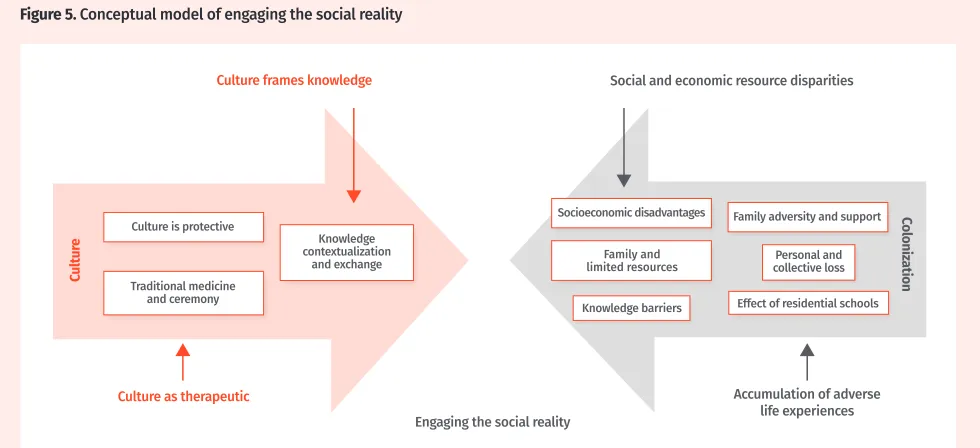
Engaging the social reality. Effective health care for Indigenous patients is shaped by a deep understanding of the causal relationships between social factors specific to Indigenous people and health. These social factors form constant stressors that accumulate and operate concur-rently to maintain chaotic and overwhelming living con-ditions, which lead to diabetes while undermining an individual’s capacity to cope with it. For instance, family networks can be a source of support, but within contexts of socioeconomic disadvantage family members can diminish capacity for self-care by pressuring a patient to divert limited resources elsewhere. For clinicians, engag-ing with social contexts of diabetes in Indigenous settengag-ings involves recognizing distinct barriers that hinder patients in achieving improved outcomes, developing strategies for achieving management and therapeutic goals, and identifying tools for fostering self-efficacy and positive health behaviour among patients (Table 2).
The E4E Care Framework recommends that clinicians consider the broader environment through screening for resource limitations and adverse life experiences, and then acknowledging these as playing a role in diabetes onset and management. This approach is concordant with traditional Indigenous perspectives of relational, indi-rect, and nonconfrontational approaches.61 The screening
question, “Do you ever have difficulty making ends meet at the end of the month?,” is aligned with recommended Indigenous approaches.63 Screening is best framed by
ask-ing about “hardship” beyond poverty that is related to dis-cord within the family, community, and broader society. At this point, clinicians could indicate that they have some understanding of the outcomes of colonization on health and then explore those experiences.
A strategy for incorporating social factors within care is to speak with patients about population health evi-dence that demonstrates material and psychosocial pathways to chronic disease. For example, the concept of effort-reward imbalance64 on health outcomes was a
strong theme within our research. Additional key themes arising from the legacy of colonization include lateral violence,65 intergenerational trauma, attachment,66 and
the need for social support.67-69 Clinicians are advised
to be aware of the principles of trauma-informed care when exploring adverse life experiences.36 Even though
behaviour change remains important in the path to well-ness, this contextual approach is intended to facilitate patient empowerment in addressing social factors that operate as barriers to health. In concordance with the concept of structural competency, the framework invites clinicians to engage as advocates at the system level in order to sustain individual patient change.
Helping Geraldine cope with adverse social contexts: One element of the E4E Care Framework encourages you to help patients cope with social barriers to well-being by acknowledging connections between adverse life experiences and patients’ capacity to manage diabetes. In Geraldine’s case, this includes helping her to address family stressors and to maintain employment in order to avoid poverty. Heavy drinking appears to be a mark-er of not coping well with hmark-er retraumatization and ongoing adversities, while it undermines her diabetes management through inconsistent eating and reduced medications. Given that Geraldine’s heavy drinking is episodic and driven by the same social stressors as her diabetes, you use her alcohol consumption patterns to gauge where she is at in terms of being overwhelmed. Alcohol is therefore a point of entry into addressing the social contexts influencing her diabetes, helping you to reinforce the interconnection of social stressors with her health outcomes.
While the E4E Care Framework speaks to how a context of acculturation worsens diabetes out-comes and how accessing cultural resources might be a means for improving health outcomes through traditional knowledge and social support networks, Geraldine’s past traumas make her hesitant to recon-nect with Indigenous cultural practices. In this case, as in all, care follows the patient’s priorities and contexts.
Culture as therapeutic: Culture is a key facilitator for approaching diabetes management, and we must understand that cultural beliefs, values, and practices might play a role for patients in acquiring health knowl-edge and resilience (Table 2). Culture was viewed as a protective factor and a facilitator for improving health and managing diabetes. Resilience through reaffirming cultural identity and continuity is nurtured by access-ing cultural knowledge and cultural supports, which can be accomplished by engaging in ceremonies and hav-ing relationships with community knowledge keepers, for example.70-72 This should not imply that all patients
Table 2. The E4E Care Framework for engaging the social reality
KEY CONCEPTS OF ENGAGING THE SOCIAL REALITY RECOMMENDATIONS
Social and economic resource disparities* Considering Indigenous patients’ social and economic realities:
• Screen for and explore resource limitations that influence diabetes onset and management • Acknowledge with the patient the effect of resource
limitations on diabetes onset and management • Support access to key proximal health determinants • Assess diabetes knowledge and health literacy Socioeconomic disadvantages
• Socioeconomic disadvantage is a normalized state for many patients, limiting choices while increasing stress and diminishing capacity for self-care and healthy behaviour patterns
Family and limited resources
• These are contexts in which self-care might occur. Food and financial sharing within large families results in diversion of resources, becoming another stressor
Knowledge barriers
• Health knowledge is affected through structural access barriers to learning, ongoing adverse life experiences, and discord within the health care relationship
Accumulation of adverse life experiences† Considering patients’ adverse life experiences: • Acknowledge with the patient the connections
between adverse life experiences and capacity for diabetes management
• Explore patients’ perspectives on personal adverse experiences in the context of diabetes in order to address their priorities
Family adversity and support
• Family and community are viewed as supportive but also potentially stressful in the context of pervasive social dysfunction arising from the outcomes of historical trauma, poverty, and underlying inequities from colonization Personal and collective loss
• The nature and extent of multiple forms of loss (eg, personal, cultural, historical) are key features of adversity affecting individuals, families, and communities
Effect of residential schools
• The residential school experience traumatized individuals, disrupted communities, and continues to adversely influence health and health behaviour
Culture frames knowledge‡ Helping build Indigenous patients’ knowledge about diabetes care:
• Build a shared understanding of diabetes that integrates and contextualizes biomedical, social, political, and cultural explanatory frameworks • Use language appropriate for the patient’s
educational and cultural background; consider metaphors within a narrative approach Knowledge contextualization and exchange
• Knowledge contextualization and exchange rather than just information delivery was identified as an effective means to facilitate patient education
Culture as therapeutic§ Recognizing culture as therapeutic:
• Strive for cultural congruency of management recommendations
• Explore patients’ preferences and support choices for accessing cultural resources
• Engage with the community to learn about local beliefs and practices, as well as healing resources Culture is protective
• Health is positively correlated with a sense of security in cultural identity and access to cultural knowledge and traditions
Traditional medicine and ceremony
• Traditional medicine and ceremony are desired modalities to access and reconnect with, in conjunction with Western medicine
E4E—Educating for Equity.
*Relationships between resource limitations, socioeconomic status, and the social environment directly affect health and diabetes through material deprivation, as well as indirectly through psychosocial pathways such as stress, depression, anxiety, and loss of control. The ongoing process of coloniza-tion is conceptualized to be the apparatus responsible for these barriers affecting Indigenous people’s health and their experiences with diabetes. †Persistent and recurring throughout the life course of Indigenous individuals and communities, adverse experiences accumulate and pervasively influ-ence wellness and health by undermining health behaviour patterns and diminishing resiliinflu-ence and capacity to cope with disease.
‡Placing diabetes care knowledge within the cultural, social, and political landscape of Indigenous people can facilitate patient engagement and learning. In addition, culture is fundamental to effective communication for achieving knowledge exchange and patient education.
access to cultural resources. Clinicians are advised to nonjudgmentally ascertain patient knowledge and access to resources of both biomedical and Indigenous contexts (Figure 5). By exploring patients’ cultural per-spectives and preferences for health, while sharing bio-medical perspectives, clinicians and patients might build a shared understanding. In this way, clinicians can attain congruency of diabetes management with the social and cultural reality of the patient. The intent of the frame-work’s knowledge contextualization and exchange rec-ommendation is to build patient capacity through health literacy using an acceptable rapport-building strategy. Notably, culture influences health literacy in important ways, in turn shaping capacity for chronic disease man-agement.73,74 Physicians are encouraged to engage with
their local traditional community to learn more about cultural healing practices and resources.
Conclusion
According to one of the calls to action in the 2015 Truth and Reconciliation Commission of Canada report, health is the direct result of distal determinants arising from his-torical and ongoing colonizing policies.7 From a health
care perspective, reconciliation involves achieving health care equity by providing care that can address the spe-cific cultural and social needs of Indigenous people. The insidious effects of colonization on health and health care are multifaceted and persistent within the lives of many Indigenous people, who are often overwhelmed by a host of social factors that diminish capacity to cope and that affect their overall well-being. Owing to ongo-ing social exclusion, many Indigenous peoples’ lives are burdened by poverty, persistent psychosocial discord within family and community, and daily racism. This is
the context in which many Indigenous people experi-ence type 2 diabetes.
Clinicians require critical awareness and skills for addressing complex social factors that under-mine health outcomes. The E4E Care Framework pro-vides a resource for deeper clinician engagement with Indigenous patients with type 2 diabetes. This resource provides a lens to understand, identify, and apply oppor-tunities for enhancing Indigenous patient capacity for change in a way that acknowledges the social factors driving high rates of diabetes, while using a cultural lens to facilitate improved outcomes. It presents recommen-dations for improved care within clinical contexts, wider communities, and the realm of social advocacy in which physicians can support patients in obtaining needed resources. It offers an applied map of integrated con-cepts including cultural safety, cultural competency, and structural competency. It also offers recommendations that inherently endorse and expand a patient-centred care approach. The framework can contribute to inform-ing health care policies and services more broadly, offer-ing an educational resource to build patient health literacy about the effects of colonization on their health, health behaviour, and health care interactions. Dr Crowshoe is Associate Professor in the Department of Family Medicine at the University of Calgary in Alberta. Dr Henderson is Assistant Professor and Models of Care Scientist in the Department of Family Medicine at the University of Calgary.
Dr Jacklin is Professor of Medical Anthropology in the Department of Family Medicine and Biobehavioral Health at the University of Minnesota Medical School in Duluth.
Dr Calam is Associate Professor in the Department of Family Practice at the University of British Columbia in Vancouver. Ms Walker is Associate Director for Education at the Centre for Excellence in Indigenous Health at the University of British Columbia.
Dr Green is Professor in and the Brian Hennen Chair and Head of the Department of Family Medicine, as well as Professor in the Department of Public Health Sciences, at Queen’s University in Kingston, Ont.
Acknowledgment
This project was funded by the Canadian Institutes of Health Research.
Figure 5. Conceptual model of engaging the social reality
Culture frames knowledge
Culture as therapeutic
Engaging the social reality
Social and economic resource disparities
Accumulation of adverse life experiences
Cultur
e
Col
oniz
ation
Culture is protective
Knowledge contextualization
and exchange limited resourcesFamily and
Traditional medicine and ceremony
Socioeconomic disadvantages
Knowledge barriers
Personal and collective loss Family adversity and support
Contributors
All authors contributed to building and implementing the Educating for Equity Care Framework, and to preparing the manuscript for submission.
Competing interests
None declared
Correspondence
Dr Lynden (Lindsay) Crowshoe; e-mail [email protected] References
1. Diabetes among First Nations, Inuit, and Métis populations. In: Public Health Agency of Canada. Diabetes in Canada: facts and figures from a public health perspective. Ottawa, ON: Public Health Agency of Canada; 2011. p. 89-103.
2. Pelletier C, Dai S, Roberts KC, Bienek A, Onysko J, Pelletier L. Report summary. Diabetes in Canada: facts and figures from a public health perspective. Chronic Dis Inj Can 2012;33(1):53-4. 3. Harris SB, Bhattacharyya O, Dyck R, Hayward MN, Toth E; Canadian Diabetes Association Clinical
Practice Guidelines Expert Committee. Type 2 diabetes in Aboriginal peoples. Can J Diabetes 2013;37(Suppl 1):S191-6. Epub 2013 Mar 26.
4. Daniel M, O’Dea K, Rowley KG, McDermott R, Kelly S. Social environmental stress in Indigenous populations: potential biopsychosocial mechanisms. Ann N Y Acad Sci 1999;896:420-3.
5. King M, Smith A, Gracey M. Indigenous health part 2: the underlying causes of the health gap. Lancet 2009;374(9683):76-85.
6. Dyck RF, Karunanayake C, Janzen B, Lawson J, Ramsden VR, Rennie DC, et al. Do discrimination, residential school attendance and cultural disruption add to individual-level diabetes risk among Aboriginal people in Canada? BMC Public Health 2015;15:1222.
7. Truth and Reconciliation Commission of Canada. Truth and Reconciliation Commission of Canada: calls to action. Winnipeg, MB: Truth and Reconciliation Commission of Canada; 2015. 8. Truth and Reconciliation Commission of Canada. Honouring the truth, reconciling for the future.
Summary of the final report of the Truth and Reconciliation Commission of Canada. Winnipeg, MB: Truth and Reconciliation Commission of Canada; 2015.
9. Brascoupé S, Waters C. Cultural safety. Exploring the applicability of the concept of cultural safety to Aboriginal health and community wellness. J Aborig Health 2009;5(2):6-41.
10. McNamara BJ, Sanson-Fisher R, D’Este C, Eades S. Type 2 diabetes in Indigenous populations: quality of intervention research over 20 years. Prev Med 2011;52(1):3-9. Epub 2010 Nov 8.
11. Berger M, Leicht A, Slatcher A, Kraeuter AK, Ketheesan S, Larkins S, et al. Cortisol awakening response and acute stress reactivity in First Nations people. Sci Rep 2017;7:41760.
12. Drong AW, Lindgren CM, McCarthy MI. The genetic and epigenetic basis of type 2 diabetes and obesity. Clin Pharmacol Ther 2012;92(6):707-15. Epub 2012 Oct 10.
13. Kitsiou-Tzeli S, Tzetis M. Maternal epigenetics and fetal and neonatal growth. Curr Opin Endocrinol Diabetes Obes 2017;24(1):43-6.
14. Bygren LO. Intergenerational health responses to adverse and enriched environments. Annu Rev Public Health 2013;34:49-60. Epub 2013 Jan 7.
15. Pervanidou P, Chrousos GP. Metabolic consequences of stress during childhood and adolescence. Metabolism 2012;61(5):611-9. Epub 2011 Dec 5.
16. Ghosh H. Urban reality of type 2 diabetes among First Nations of eastern Ontario: Western science and Indigenous perceptions. J Glob Citizsh Equity Educ 2012;2(2):158-81.
17. Evans-Campbell T. Historical trauma in American Indian/Native Alaska communities: a multilevel framework for exploring impacts on individuals, families, and communities. J Interpers Violence 2008;23(3):316-38.
18. Crowshoe LL, Henderson RI, Green ME, Jacklin KM, Walker LM, Calam B. Exploring Canadian physicians’ experiences with type 2 diabetes care for adult Indigenous patients. Can J Diabetes 2018;42(3):281-8. Epub 2017 Aug 15.
19. Jacklin KM, Henderson RI, Green ME, Walker LM, Calam B, Crowshoe LJ. Health care experiences of Indigenous people living with type 2 diabetes in Canada. CMAJ 2017;189(3):E106-12.
20. Jacklin K, Ly A, Calam B, Green M, Walker L, Crowshoe L. An innovative sequential focus group method for investigating diabetes care experiences with Indigenous peoples in Canada. Int J Qual Methods 2016;15(1):1-12.
21. Biggerstaff D, Thompson AR. Interpretative phenomenological analysis (IPA): a qualitative methodol-ogy of choice in healthcare research. Qual Res Psycholmethodol-ogy 2008;5(3):214-24.
22. Van de Ven AH, Delbecq AL. The effectiveness of nominal, Delphi, and interacting group decision making processes. Acad Manage J 1974;17(4):605-21.
23. Van de Ven AH, Delbecq AL. The nominal group as a research instrument for exploratory health stud-ies. Am J Public Health 1972;62(3):337-42.
24. Metzl JM, Hansen H. Structural competency: theorizing a new medical engagement with stigma and inequality. Soc Sci Med 2014;103:126-33.
25. Frank JR, Snell L, Sherbino J, editors. CanMEDS 2015. Physician competency framework. Ottawa, ON: Royal College of Physicians and Surgeons of Canada; 2015.
26. National Aboriginal Health Organization. Cultural competency and safety: a guide for health care administrators, providers and educators. Ottawa, ON: National Aboriginal Health Organization; 2008. 27. Tzelepis F, Sanson-Fisher RW, Zucca AC, Fradgley EA. Measuring the quality of patient-centered care: why patient-reported measures are critical to reliable assessment. Patient Prefer Adherence 2015;24(9):831-5. 28. San’yas Indigenous Cultural Safety Training [website]. Vancouver, BC: Provincial Health Services
Authority in BC. Available from: www.sanyas.ca/home. Accessed 2018 Nov 14.
29. Kitson A, Marshall A, Bassett K, Zeitz K. What are the core elements of patient-centred care? A nar-rative review and synthesis of the literature from health policy, medicine and nursing. J Adv Nurs 2013;69(1):4-15. Epub 2012 Jun 19.
30. Stewart M, Brown JB, Weston WW, McWhinney IR, McWilliam CL, Freeman TR. Patient-centred medi-cine: transforming the clinical method. 2nd ed. London, UK: Radcliffe Medical Press; 2003. 31. Mead N, Bower P. Patient-centredness: a conceptual framework and review of the empirical
litera-ture. Soc Sci Med 2000;51(7):1087-110.
32. Steinberg MP, Miller WR. Motivational interviewing in diabetes care. New York, NY: Guildford Press; 2015. 33. Ekong G, Kavookjian J. Motivational interviewing and outcomes in adults with type 2 diabetes: a
systematic review. Patient Educ Couns 2016;99(6):944-52. Epub 2015 Dec 4.
34. Trauma-informed practice guide. Vancouver, BC: Centre of Excellence for Women’s Health; 2013. Available from: http://bccewh.bc.ca/wp-content/uploads/2012/05/2013_TIP-Guide.pdf. Accessed 2018 Nov 14. 35. Browne AJ, Varcoe C, Fridkin A. Addressing trauma, violence, and pain: research on health services
for women at the intersections of history and economics. In: Hankivsky O, de Leeuw S, Lee JA, Vis-sandjée, Khanlou N, editors. Health inequities in Canada: intersectional frameworks and practices. Vancouver, BC: UBC Press; 2011. p. 295-311.
36. Hopper EK, Bassuk EL, Olivet J. Shelter from the storm: trauma-informed care in homelessness services settings. Open Health Serv Policy J 2009;2:131-51.
37. Czyzewski K. Colonialism as a broader social determinant of health. Int Indig Policy J 2011;2(1):Art. 5. 38. Greenwood M, de Leeuw S, Lindsay NM, Reading C, editors. Determinants of Indigenous peoples’
health in Canada: beyond the social. Vancouver, BC: UBC Press; 2015.
39. Adelson N. The embodiment of inequity: health disparities in Aboriginal Canada. Can J Public Health 2005;96(Suppl 2):S45-61.
40. Howard HA. Canadian residential schools and urban Indigenous knowledge production about diabe-tes. Med Anthropol 2014;33(6):529-45.
41. Page-Reeves J, Niforatos J, Mishra S, Regino L, Gingrich A, Bulten R. Health disparity and structural violence: how fear undermines health among immigrants at risk for diabetes. J Health Dispar Res Pract 2013;6(2):30-47.
42. Maar MA, Manitowbi D, Gzik D, McGregor L, Corbiere C. Serious complications for patients, care pro-viders and policy makers: tackling the structural violence of First Nations people living with diabetes in Canada. Int Indig Policy J 2011;2(1):Art. 6.
43. Manitowabi D, Maar M. Coping with colonization: Aboriginal diabetes on Manitoulin Island. In: Fear-Segal J, Tillett R, editors. Indigenous bodies. Reviewing, relocating, reclaiming. Albany, NY: SUNY Press; 2013. p. 145-59.
44. Browne AJ, Smye VL, Varcoe C. The relevance of postcolonial theoretical perspectives to research in Aboriginal health. Can J Nurs Res 2005;37(4):16-37.
45. Matthews R. The cultural erosion of Indigenous people in health care. CMAJ 2017;189(2):E78-9. Epub 2016 Sep 12.
46. Morrison J. The time has come to fix the non-insured health benefits (NIHB) program. Can Pharm J (Ott) 2015;148(4):217.
47. Rollason K, Welch MA. Inquest report disappoints. Review of Sinclair’s ER death fails him, family, doctors say. Winnipeg Free Press 2014 Dec 13.
48. Jones CP. Levels of racism: a theoretic framework and a gardener’s tale. Am J Public Health 2000;90(8):1212-5.
49. Browne AJ, Varcoe C, Smye V, Reimer-Kirkham S, Lynam MJ, Wong S. Cultural safety and the chal-lenges of translating critically oriented knowledge in practice. Nurs Philos 2009;10(3):167-79. 50. Rosmond R. Stress induced disturbances of the HPA axis: a pathway to type 2 diabetes? Med Sci
Monit 2003;9(2):RA35-9.
51. Björntorp P. Body fat distribution, insulin resistance, and metabolic diseases. Nutrition 1997;13(9):795-803.
52. Björntorp P. Do stress reactions cause abdominal obesity and comorbidities? Obes Rev 2001;2(2):73-86. 53. Jiang L, Beals J, Whitesell N, Roubideaux Y, Manson S; AI-SUPERPFP Team. Stress burden and diabetes
in two American Indian reservation communities. Diabetes Care 2008;31(3):427-9. Epub 2007 Dec 10. 54. Iwasaki Y, Bartlett J, O’Neil J. Coping with stress among Aboriginal women and men with diabetes in
Winnipeg, Canada. Soc Sci Med 2005;60(5):977-88.
55. Hayward KC, Colman R. The tides of change: addressing inequality and chronic disease in Atlantic Canada. Ottawa, ON: Public Health Agency of Canada; 2003.
56. Penner LA, Blair IV, Albrecht TL, Dovidio JF. Reducing racial health care disparities: a social psycho-logical analysis. Policy Insights Behav Brain Sci 2014;1(1):204-12.
57. Aronson J, Burgess D, Phelan SM, Juarez L. Unhealthy interactions: the role of stereotype threat in health disparities. Am J Public Health 2013;103(1):50-6. Epub 2012 Nov 15.
58. Hofstede G. Culture’s consequences: international differences in work-related values. Thousand Oaks, CA: Sage Publications; 1984.
59. Northouse PG, Northouse LJ. Health communication: a handbook for health professionals. Upper Saddle River, NJ: Prentice Hall; 1985.
60. Towle A, Godolphin W, Alexander T. Doctor-patient communications in the Aboriginal community: towards the development of educational programs. Patient Educ Couns 2006;62(3):340-6. Epub 2006 Jul 24. 61. Brant C. Native ethics and rules of behavior. Can J Psychiatry 1990;35(6):534-9.
62. Kelly L, Brown J. Listening to Native patients. Changes in physicians’ understanding and behaviour. Can Fam Physician 2002;48:1645-52.
63. Brcic V, Eberdt C, Kaczorowski J. Development of a tool to identify poverty in a family practice set-ting: a pilot study. Int J Family Med 2011;2011:812182. Epub 2011 May 26. Erratum in: Int J Family Med 2015;2015:418125. Epub 2015 Sep 21.
64. Van Vegchel N, de Jonge J, Bosma H, Schaufeli W. Reviewing the effort-reward imbalance model: drawing up the balance of 45 empirical studies. Soc Sci Med 2005;60(5):1117-31.
65. Bombay A, Matheson K, Anisman H. Origins of lateral violence in Aboriginal communities. A pre-liminary study of student-to-student abuse in residential schools. Ottawa, ON: Aboriginal Healing Foundation; 2014.
66. Neckoway R, Brownlee K, Castellan B. Is attachment theory consistent with Aboriginal parenting realities? First Peoples Child Fam Rev 2007;3(2):65-74.
67. Brave Heart MY, DeBruyn LM. The American Indian holocaust: healing historical unresolved grief. Am Indian Alsk Native Ment Health Res 1998;8(2):56-78.
68. Brave Heart MY. The return to the sacred path: healing the historical trauma and historical unre-solved grief response among the Lakota through a psychoeducational group intervention. Smith Coll Stud Soc Work 1998;68(3):287-305.
69. Sotero MM. A conceptual model of historical trauma: implications for public health practice and research. J Health Dispar Res Pract 2006;1(1):93-108.
70. Lalonde C. Identity formation and cultural resilience in Aboriginal communities. In: Flynn RJ, Dudding PM, Barber JG, editors. Promoting resilience in child welfare. Ottawa, ON: University of Ottawa Press; 2006. p. 52-71.
71. Kirmayer LJ, Sehdev M, Whitley R, Dandeneau SF, Isaac C. Community resilience: models, metaphors and measures. J Aborig Health 2009;5:62-117.
72. Chandler MJ, Lalonde C. Cultural continuity as a hedge against suicide in Canada’s First Nations. Transcult Psychiatry 1998;35(2):191-219.
73. Schillinger D, Grumbach K, Piette J, Wang F, Osmond D, Daher C, et al. Association of health literacy with diabetes outcomes. JAMA 2002;288(4):475-82.
74. Shaw SJ, Huebner C, Armin J, Orzech K, Vivian J. The role of culture in health literacy and chronic disease screening and management. J Immigr Minor Health 2009;11(6):460-7. Erratum in: J Immigr Minor Health 2009;11(6):531.
This article is eligible for Mainpro+ certified Self-Learning credits. To earn credits, go to www.cfp.ca and click on the Mainpro+ link.