Lampiran 20 UTM/RMC/F/0024 (1998)
UNIVERSITI TEKNOLOGI MALAYSIA
CATATAN: * Jika Laporan Akhir Penyelidikan ini SULIT atau TERHAD, sila lampirkan surat daripada pihak berkuasa/organisasi berkenaan dengan menyatakan sekali sebab dan tempoh laporan ini perlu dikelaskan sebagai SULIT dan TERHAD.
BORANG PENGESAHAN LAPORAN AKHIR PENYELIDIKAN
TAJUK PROJEK : The Implementation of Collaborative Network for Innovation Process in Higher Education Institutions (HEIs): A Knowledge Management Perspective.
MD HAFIZ BIN SELAMAT
Saya _____________________________
(HURUF BESAR)
Mengaku membenarkan Laporan Akhir Penyelidikan ini disimpan di Perpustakaan Universiti Teknologi Malaysia dengan syarat-syarat kegunaan seperti berikut:
1. Laporan Akhir Penyelidikan ini adalah hakmilik Universiti Teknologi Malaysia.
2. Perpustakaan Universiti Teknologi Malaysia dibenarkan membuat salinan untuk tujuan rujukan sahaja.
3. Perpustakaan dibenarkan membuat penjualan salinan Laporan Akhir Penyelidikan ini bagi kategori TIDAK TERHAD.
4. *Sila tandakan (
9
)SULIT (Mengandungi maklumat yang berdarjah keselamatan atau kepentingan Malaysia seperti yang termaktub di dalam
(AKTA RAHSIA RASMI 1972).
TERHAD (Mengandungi maklumat TERHAD yang telah ditentukan oleh organisasi/badan di mana penyelidikan dijalankan).
TIDAK TERHAD
______________________________________
TANDATANGAN KETUA PENYELIDIK
Nama & Cop Ketua Penyelidik
The Implementation of Collaborative Network for Innovation Process in Higher Education Institutions
(HEIs): A Knowledge Management Perspective.
MD HAFIZ SELAMAT
MOHD. NAZIR BIN AHMAD @ SHARIF SURAYA BT. MISKON
ZETI DARLEENA BT. ERI
Research Vot: 71899
UNIVERSITI TEKNOLOGI MALAYSIA 2006
Alhamdullillah…
First and foremost we would like to express our true and sincere thanks and gratitude to RMC for the sponsor of this research, The Implementation of
Collaborative Network for Innovation Process in Higher Education Institutions (HEIs): A Knowledge Management Perspective. Thank you for the all key
researchers to support the implementation of these research. Also, we would like to express our thanks to the member of our department for all the help and support during the time spent in the lab. We also take this opportunity to express our
appreciation, especially to the staffs and members of the Faculty of Computer Science
Table of Content
Title Page i
Acknowledgement ii
Table of content iii
Abstract v
INTRODUCTION 1
1.1 Project Background 1
1.2 Objective 3
1.3 Scope 3
1.4 Project Scenario 4
1.5 Research Framework 4
LITERATURE REVIEW 5
2.1 Introduction 5
2.2 The knowledge management theories 5
2.2.1 A brief history of knowledge management 5 2.2.2 Knowledge Management: definition 8 2.3 Knowledge management: Activities and processes 8
2.4 Processes 11
2.5 Categorization of knowledge management approaches 13
2.6 The architecture of knowledge management 14 2.7 Innovation concepts in Knowledge Management 15 2.7.1 Introduction to Innovation 15
2.7.2 Knowledge Innovation 15
2.7.3 Innovation in the knowledge management spectrum 15
2.7.4 Core Principle of Knowledge Innovation 17
METHODOLOGY 18
RESULT 20
4.1 Introduction 20
4.2. Conference Paper (1)Qualitative Research: Knowledge Management
Perspective 20
4.3 Conference Paper (2) The Implementation of Collaborative Network for
Innovation Process in Higher Education Institutions (HEIs): A Knowledge
Management Perspective 21
REFERENCE 22
Abstract
The Implementation of Collaborative Network for Innovation Process in Higher
Education Institutions (HEIs): A Knowledge Management Perspective. The scopes of this study are (1) to produce a computer-supported collaborative working model to support the innovation processes in higher education institutions which concentrate on the knowledge sharing perspectives, (2) to develop a mechanism of collaborative innovation in term of knowledge
communication among research group, (3) To identify the roles of information technology in collaborative working environment specifically in research and development activities from the knowledge management perspective. The steps of the study are (1) Preliminary Study, (2) Literature Review, (3) Data
collection, (4) Design, (5) Development and testing. The expected result are (1)
A collaborative networking model for knowledge management to assist research activities mainly among researcher in HEIs, (2) A prototype of knowledge management systems based on the proposed model, (3) Results from the evaluation of knowledge management systems prototype.
Researcher:
Md Hafiz Selamat ([email protected])
Mohd. Nazir Bin Ahmad @ Sharif ([email protected]) Suraya Bt. Miskon ([email protected])
CHAPTER I
INTRODUCTION
1.1 Project Background
One of the most important and most difficult issues facing today’s organizations is the problem of innovation. The development of new products and the improvement of existing ones may be the lifeblood of many organizations. As new technologies and new markets engage in high complexity, firms must deal with enormous discontinuities, increasing volatility, and the rapid evolution of industries.
There are clearly organizational trends, which focus on knowledge management in innovation. The modes of knowledge production are changing from the conventional disciplinary-based model, to a new model where knowledge is produced interactively at the point of application among heterogeneous groups. In short, innovation processes are becoming more interactive – more dependent on knowledge, which is widely distributed – therefore knowledge management is increasingly central.
Knowledge management for interactive innovation has distinct implications for the deployment of information and communication technologies (ICTs). It is recognized that ICTs can play a decisive role in knowledge management literature to date in terms of understanding innovation has been limited by a rather narrow focus on ICT-based tools and systems, premised on a cognitive information-processing view of knowledge management. These ICT-based tools and systems create the structural networks but, as shown by Swan (1999), it does not necessarily encourage the social networking
processes so necessary for communication and sense making. Swan (1999) suggest that this IT emphasis needs to be balanced by an approach which takes greater account of localized communities of practice and the importance of social networking in KM. This is especially critical when trying to understand innovation processes, which are
characteristically interactive.
Knowledge exists only among people. Therefore the main objective of this research is not on developing and implementing ICTs infrastructure for managing knowledge. The purpose of this research is to understand the value of ICTs in order to create an environment whereby knowledge can be shared and communicated among peoples. It will apply the perceptions of KM in public sector (mainly in higher
1.2 Objective
To produce a computer-supported collaborative working model to support the innovation process in higher education institutions which concentrate on the knowledge sharing perspectives.
1.3 Scope
a. To develop a mechanism of collaborative innovation in term of knowledge communication among research group.
1.4 Project Scenario
1.5 Research Framework
R&D Database
RMC S E R V E R
Research
Project Extended
Research New
Research
Current Research
Collaboration Knowledge Innovation
Management
Research and Development : KM Perspectives Concept
The Implementation of Collaborative Network for Innovation Process in Higher Education
Process (HEIs) : Knowledge Management Perspective
CHAPTER II LITERATURE REVIEW
2.1 Introduction
The broad range of knowledge management related articles, papers, books, authors, disciplines conferences and lately training is evidence that knowledge
management is a discipline which needs to be considered in any strategy and planning. There are a number of aims in writing this paper and in proposing the knowledge management concept as a framework for understanding knowledge management application and technologies.
The first aim was to review the theories and literature that will assist others who approach this topic to better understand and position the diverse aspects of knowledge management being presented in the literature. The second aim was to provide a checklist of knowledge management activities and processes that can be used to assess and
organization’s current level of knowledge management- related activity and then plan and communicate future knowledge management investments. While, the third aim is to understand the architecture of knowledge management.
2.2 The knowledge management theories 2.2.1 A brief history of knowledge management
A number of management theorists have contributed to the evolution of
Chris Argyris, Christoper Bartlett, and Dorothy Leonard-Barton of Harvard Business School have examined various facets of managing knowledge.
Everett Rogers’ work at Stanford in the diffusion of innovation and Thomas Allen’s research at MIT in information and technology transfer, both of which date from the late 1970s, have also contributed to our understanding of how knowledge is produced, used, and diffused within organizations. By the mid-1980s, the importance of knowledge (and its expression in professional competence) as a competitive asset was apparent, even though classical economic theory ignores (the value of) knowledge as an asset and most organizations still lack strategies and methods for managing it.
Recognition of the growing importance of organizational knowledge was accompanied by concern over how to deal with exponential increases in the amount of available knowledge and increasingly complex products and processes. The computer technology that contributed so heavily to superabundance of information started to become part of the solution, in a variety of domains. Doug Engelbart’s Augment (for "augmenting human intelligence"), which was introduced in 1978, was an early hypertext/groupware application capable of interfacing with other applications and systems. Rob Acksyn’s and Don McCracken’s Knowledge Management System (KMS), an open distributed hypermedia tool, is another notable example and one that predates the World Wide Web by a decade.
The 1980s also saw the development of systems for managing knowledge that relied on work done in artificial intelligence and expert systems, giving us such concepts as "knowledge acquisition," "knowledge engineering," "knowledge-base systems, and computer-based ontologies.
learning and knowledge management were published (for example, Senge’s The Fifth Discipline and Sakaiya’s The Knowledge Value Revolution).
By 1990, a number of management consulting firms had begun in-house
knowledge management programs, and several well known U.S., European, and Japanese firms had instituted focused knowledge management programs. Knowledge management was introduced in the popular press in 1991, when Tom Stewart published "Brainpower" in Fortune magazine. Perhaps the most widely read work to date is Ikujiro Nonaka’s and Hirotaka Takeuchi’s The Knowledge-Creating Company: How Japanese Companies Create the Dynamics of Innovation (1995).
By the mid-1990s, knowledge management initiatives were flourishing, thanks in part to the Internet. The International Knowledge Management Network (IKMN), begun in Europe in 1989, went online in 1994 and was soon joined by the U.S.-based
Knowledge Management Forum and other KM-related groups and publications. The number of knowledge management conferences and seminars is growing as organizations focus on managing and leveraging explicit and tacit knowledge resources to achieve competitive advantage. In 1994 the IKMN published the results of a knowledge management survey conducted among European firms, and the European Community began offering funding for KM-related projects through the ESPRIT program in 1995.
Knowledge management, which appears to offer a highly desirable alternative to failed TQM and business process re-engineering initiatives, has become big business for such major international consulting firms as Ernst & Young, Arthur Andersen, and Booz-Allen & Hamilton. In addition, a number of professional organizations interested in such related areas as benchmarking, best practices, risk management, and change management are exploring the relationship of knowledge management to their areas of special
2.2.2 Knowledge Management: definition
Knowledge is the full utilization of information and data, coupled with the potential of people's skills, competencies, ideas, intuitions, commitments and
motivations. . Knowledge is the result of learning which provides the only sustainable competitive advantage. (Denham Grey)
Knowledge management is the management of the organization towards the continuous renewal of the organizational knowledge base - this means e.g. creation of supportive organizational structures, facilitation of organizational members, putting IT-instruments with emphasis on teamwork and diffusion of knowledge (as e.g. groupware) into place. (Thomas Bertels)
2.3 Knowledge management: Activities and processes
Knowledge management draws from a wide range of activities and practices:
i. Cognitive science. Insights from how we learn and know will certainly improve tools and techniques for gathering and transferring knowledge. ii. Expert systems, artificial intelligence and knowledge base management
systems (KBMS). AI and related technologies have acquired an undeserved reputation of having failed to meet their own — and the marketplace’s — high expectations. In fact, these technologies continue to be applied widely, and the lessons practitioners have learned are directly applicable to
knowledge management.
iii. Computer-supported collaborative work (groupware). In Europe, knowledge management is almost synonymous with groupware … and
organizational knowledge management — with or without supporting technology.
iv. Library and information science. We take it for granted that card catalogs in libraries will help us find the right book when we need it. The body of research and practice in classification and knowledge organization that makes libraries work will be even more vital as we are inundated by information in business. Tools for thesaurus construction and controlled vocabularies are already helping us manage knowledge.
v. Technical writing. Also under-appreciated — even sneered at — as a professional activity, technical writing (often referred to by its practitioners as technical communication) forms a body of theory and practice that is directly relevant to effective representation and transfer of knowledge. vi. Document management. Originally concerned primarily with managing
the accessibility of images, document management has moved on to making content accessible and re-usable at the component level. Early recognition of the need to associate "metainformation" with each document object
prefigures document management technology’s growing role in knowledge management activities.
vii. Decision support systems. According to Daniel J. Power, "Researchers working on Decision Support Systems have brought together insights from the fields of cognitive sciences, management sciences, computer sciences, operations research, and systems engineering in order to produce both computerised artifacts for helping knowledge workers in their performance of cognitive tasks, and to integrate such artifacts within the decision-making processes of modern organisations." That already sounds a lot like
knowledge management, but in practice the emphasis has been on quantitative analysis rather than qualitative analysis, and on tools for managers rather than everyone in the organization.
such arcane tasks as textual analysis, semantic nets are now in use in mainstream professional applications, including medicine, to represent domain knowledge in an explicit way that can be shared.
ix. Relational and object databases. Although relational databases are currently used primarily as tools for managing "structured" data — and object-oriented databases are considered more appropriate for
"unstructured" content — we have only begun to apply the models on which they are founded to representing and managing knowledge resources.
x. Simulation. Knowledge Management expert Karl-Erik Sveiby suggests "simulation" as a component technology of knowledge management,
referring to "computer simulations, manual simulations as well as role plays and micro arenas for testing out skills."
xi. Organizational science. The science of managing organizations
increasingly deals with the need to manage knowledge — often explicitly.
2.4 Processes
In this section, we will study a knowledge management model for research supervision.
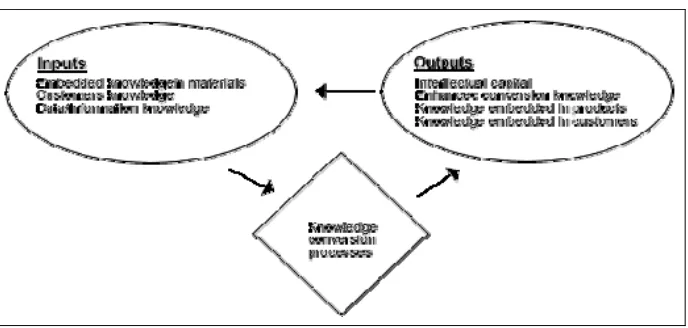
Figure 2.1: knowledge management processes (Adapted from Armistead, 1999)
Figure 2.1 above explores knowledge management from the perspective of operational process, that is, the basic input-output transformation process. At the input end, we have a combination of knowledge of customer’s needs and expectations,
knowledge of raw materials and resources to be used, knowledge of products and services to be delivered as well as data information or knowledge. The process clearly indicates that knowledge management takes information, knowledge and people as its basic inputs, and applied knowledge and intellectual capital as its desired outputs.
The knowledge conversion process is actually a changing and/or improving process. It consists of preserving, embedding and enhancing knowledge of process, products and services. The knowledge conversion process can also be seen as one of knowledge creation, transferring and sharing, and a process of knowledge access
development, use and transfer is vital in the knowledge conversion process (Armistead, 1999). The knowledge management process is not a one-stop process but a spiral cycle of continuos improvement and development. The outputs of the cycle may be supplied as inputs for the next transformation process.
Knowledge management in different organisations may serve different purposes. Universities have a significant level of knowledge management activities associated with the creation and maintenance of knowledge repositories, improving knowledge access, enhancing knowledge environment and valuing knowledge (Rowley, 2000). The supervision of research students is undoubtedly an integral part of the knowledge management activities in universities. The author maintains that the effectiveness of research supervision process to achieve quality improvement and increased productivity will be enhanced if knowledge management concepts are effectively integrated into the process.
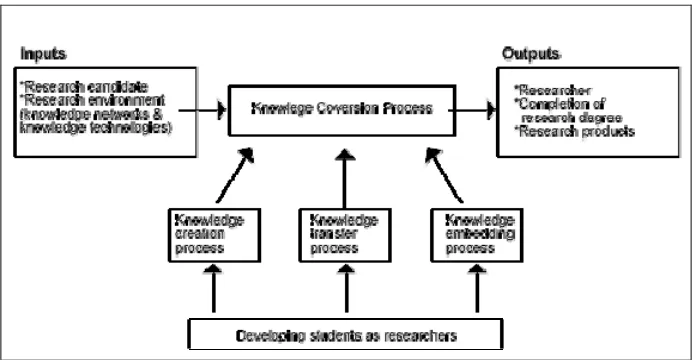
Figure 2.2: A knowledge management model for research supervision
process. The model demonstrates close synergies between knowledge conversion process and that of research supervision.
The above knowledge management model for research supervision is new and innovative in nature because it takes a non-conventional approach, that is, a knowledge management approach to address research supervision. That is different from the exiting models that have been developed to address issues of supervisory structures and/or learning/teaching patterns as mentioned in the paper. However, is the innovative model feasible in the real world? The following section addresses the question of how to implement the model in actual research supervision.
2.5 Categorization of knowledge management approaches
The term "knowledge management" is now in widespread use, having appeared in the titles of many new books about knowledge management as a business strategy, as well as in articles in many business publications, including The Wall Street Journal. There are, of course, many ways to slice up the multi-faceted world of knowledge management. However, it’s often useful to categorize them.
In a posting to the Knowledge Management Forum, Karl-Erik Sveiby identified two "tracks" of knowledge management:
i. Management of Information. To researchers in this track, according to Sveiby, "… knowledge = Objects that can be identified and handled in
information systems."
2.6 The architecture of knowledge management
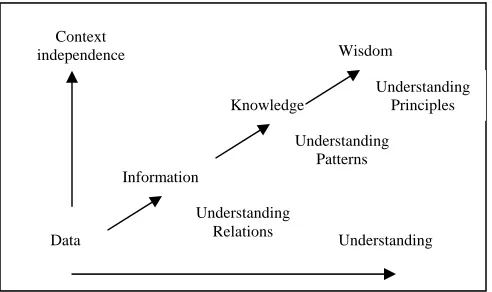
To define knowledge management, it is important to look t the two parts that make up the term, knowledge management. The architecture of knowledge is part of the hierarchy made up of data, information, knowledge and wisdom.
Figure 2.3: The architecture of Knowledge Management
The figure above shows the basic architecture of knowledge management. The architecture comprises the components as below:
i. Data – are raw statistics and facts
ii. Information – comprises the basic facts with context and perspectives iii. Knowledge – is information which provides guidance for action iv. Wisdom – is understanding which knowledge to use for what purpose
Context independence
Understanding Data
Information
Knowledge
Wisdom
Understanding relations
Understanding patterns
2.7 Innovation concepts in Knowledge Management
2.7.1 Introduction to Innovation
The innovation f new knowledge is the most popular topic in today’s management literature. Innovation – based knowledge management applications focus on providing an environment in which knowledge workers, often from differing disciplines, can come together in teams to collaborate in the creation of new knowledge. The focus knowledge management applications in this element is on providing an environment in which knowledge workers of various disciplines can come together to create new knowledge. The most common application referenced in the literature is the creation of new products or company capabilities.
2.7.2 Knowledge Innovation
Innovation theories in knowledge management embody the concept that innovation is the one competence needed for the future. It addresses the all the fundamental management dimensions in the process of innovation - the creation and conversion of ideas into viable commercial products in addition to building a foundation for future sustainable growth. It recognizes that knowledge is the core component of innovation - not technology or finances per se. Nurturing and managing the flow of knowledge may be the most distinctive competence of the decade.
2.7.3 Innovation in the knowledge management spectrum
future knowledge management investments. The knowledge applications found in the research have been mapped to the elements of the knowledge management spectrum. Figure 1 below shows the innovation spectrum.
Innovation
Knowledge Management Application
Communities Collaboration Discussion Forums Networking
Virtual teams
Research and Development Multi – disciplines teams
Enabling Technologies
Groupware E – mail Chat rooms
Video conferencing Search Engines Voice Mail Bulletin boards Push technologies Simulation technologies
2.7.4 Core Principle of Knowledge Innovation
There are four core concepts that distinguish knowledge management innovation from other knowledge and innovation approaches:
i. Innovation Value System (not value chain) - value chain thinking is linear and static. The innovation value system is dynamic and shows all the interdependent relationships that are need to be developed for successful innovation.
ii. Strategic Business Network (not Strategic Business Units) - strategic business unit management tends to create isolated islands of knowledge. The Strategic Business Network encourages the flow of knowledge between partners, customers,
suppliers, research organisations and other stakeholders, including competitors, in the innovation process.
iii. Collaborative (not Competitive) Advantage - Competitive strategies create win-lose scenarios, often competing for a share of the same pie. Collaborative strategies encourage win-win situations through symbiotic relationships. Knowledge grows and the pie gets bigger for all.
CHAPTER III
METHODOLOGY
3.1 Introduction
The methodology of the research cab be divided into several phase as follow:
a. Phase 1 (Preliminary Study)
• Identify research problems
• Research objectives
• Scope of the research
• Identify expected outcomes
b. Phase 2 (Literature Review)
Thorough understanding on the major issues of the research will be on:
• Collaborative working concept – existing theories, model, practices, etc.
• Knowledge management concept – theories, activities/ processes, architecture,
• Model construction – techniques, methods, framework, tools,
• Higher education institutions (HEIs) – activities, organizational behaviour, characteristics,
c. Phase 3 (Data Collection)
• Several techniques will be applied (questionaire, interview, etc).
d. Phase 4 (Design)
• The design (model/ system) will be formulated based on the data collected in the previous phase.
• Based on the data collected, a model of knowledge management for research activities will be design.
• A system/ tools to assist knowledge management in research activities will also be construct.
e. Phase 5 (Development & Testing)
• A prototype of knowledge management will be develop based on the model proposed.
• The prototype will be tested in the real environment (HEIs) in order to evaluate the effectiveness of the systems.
• The evaluation process also should justify the validity of the model proposed by the researchers.
3.2. Questionaire
CHAPTER IV
RESULT
4.1 Introduction
The chapter will discuss about the result or the outcome from this research.
4.2. Conference Paper (1)Qualitative Research: Knowledge Management Perspective
Using a qualitative research methodology, this study explored reasons and focused an important of innovation based on knowledge management between research focus groups in Higher Education Institutions (HEIs). The resource-based view of the university in strategic management has been extend by theory on knowledge
management to claim that a university’s competitiveness stems from the specialized knowledge held by its researchers, the ability of the firm to generate new knowledge and innovation, and strategic action enabled by innovation. Thus, there has been a general shift in focus group research away from technological to managerial and organizational issues, hence an increasing interest in the application of qualitative research methods. Qualitative Research can be found in many disciplines and fields, using a variety of approaches, methods and techniques. Based on that, several techniques are used include (a) collecting information, (b) intentionally observing surroundings, (c)choosing a broad range of informants, (d) finding a key of informant, (e)conducting interviews,
This paper was presented in the 2nd Qualitative Research Covention 2003
”Theory and Practice” P. J. Hilton, Malaysia, 22-23 October, 2003. The complete Paper in in Appendix B
4.3 Conference Paper (2) The Implementation of Collaborative Network for Innovation Process in Higher Education Institutions (HEIs): A Knowledge Management Perspective
Knowledge management based works are increasingly becoming a key part of our organizations today. Knowledge management is the way that organizations create, capture and re-use knowledge to achieve organizational objectives. The changing environment has profound implications for research education/training in universities where knowledge dominates. The central issue confronting research supervisors is how to achieve quality, effectiveness and productivity of their work in the new changing environment. This research aims to develop an innovative networking - model using knowledge management approach to research supervision to address the central issue. Computer supported collaborative working (CSCL) has grown out of wider research into computer supported collaborative work (CSCW) and collaborative learning. CSCW is defined as a computer-based network system that supports group work in a common task and provides a shared interface for groups to work with. The objective of this research is to produce a computer-supported collaborative working model to support the innovation processes in higher education institutions that concentrate on the knowledge sharing perspectives. We use the knowledge management approach it is because this approach is transforming the use of development knowledge in many organizations and the way in which knowledge is shared between these organizations and individuals. The
methodology of these research start with preliminary study, literature review, data collection, design, development and finally test the systems. With this knowledge it will help to develop a mechanism of collaborative innovation in term of knowledge
working is to try and ascertain exactly what are the unique problems and concerns that might make a separate problem area for researchers. By having some shared concepts and some agreement about what the object of study is, the field could develop more coherently, rather than simply exist as a place for quite different ideas.
REFERENCE
Allen, W.J. (2001), “Working together for environmental management: the role of
information sharing and collaborative learning.” PhD (Development Studies), Massey
University, New Zealand
Atkinson, P., Delamont, S., & Hammersley, M. (1988). Qualitative research traditions: A British reply to Jacob. Review of Educational Research, 58(2), 231-251
Bertels, T. (2000), “Defining Knowledge Management”, Ulrich-Jakobi-Wall-Str, Germany Bhatt, G. D. (2001), “Knowledge management in organizations: examining the interaction
between technologies, techniques, and people”, Journal of Knowledge Management. vol 5 Cano V. (1995), “Definitions of Qualitative Research”, United Kingdom
Carliner S. (1999), “Using Qualitative Research Techniques to Learn the Cultural Language”, Bentley College, Waltham
Denzin, N. K., & Lincoln, Y. S. (1994). “Handbook of Qualitative Research.” London: Sage Publication Inc
Flannery, W. T. & Dietrich G. B., “Stage of Technology Development, Knowledge Management and Technology Transfer”
Grey D. (1997), “Views on knowledge and knowledge management”, Campbell Ave,
Indianapolis.
Grey D., “Views on knowledge and knowledge management”, Campbell Ave, Indianapolis, USA.
Haawandeh, S. (2001), “Series on Innovation and Knowledge Management”, University of Oklahoma.
Holsapple, C. W. and Sena, M. P. (1998) , "Organized Knowledge Sharing with Book-Centered Web Sites: An Architecture, Implementation, and Analysis”
Kersten, G. E. (1999), “Learning Organizations in the 5thLong Wave: Management, Innovation, Knowledge, and IT International Institute for Applied Systems Analysis “, Austria and Concordia University, Montreal, Canada
Lincoln, Y.S., and Guba E.G. (1986), “Naturalistic Inquiry”, Newbury Park, CA: Sage Publications.
Malhotra, Y. (1996). “Organizational Learning and Learning Organizations: An Overview” Martin, L. M., & Harry Matlay, H. (2003), “The Impact of Knowledge Management and
Organisational in Accessing new Opportunities”, University of Central, Birmingham, UK
Mason J. (1996), “The definition of Qualitative Research”, United Kingdom.
Meijer, B. R.(1999), “A Management Attitude towards Knowledge Fusion and Innovation, Delft University of Technology
Merriam, Sharan B. (2002), “Qualitative Research in Practice: Examples for Discussion and Analysis.”, San Francisco, USA
Myers M. D. (1997), “Qualitative Research in Information System,” MIS Quartely June, Auckland, New Zealand.
Newman B. (1991), "An Open Discussion of Knowledge Management", USA.
Nonaka and Takeuchi (1995), H. The Knowledge-Creating Company, Oxford University Press, New York, NY
Ram, S., Hayne, S., & Carlson, D. (1992). "Integrating Information Systems Technologies to Support Consultation in an Information Center," Information & Management,
Senge, P.M. (1990), “The Fifth Discipline,” Doubleday, New York.
Sexton, G.(2000), “The Foundation of Creativity and Innovation in Learning Organization”, Minneapolis.
Shahnon, S. (2000),”What is knowledge management”, Universiti Sains Malaysia.
Sierhuis M. (2000), “Analyzing Web-Based Qualitative Data”, The Journal of Management Information System, Vol 19.
Sutoh, T.; Suzuki, H. & Baba, J. I. (1998), “Strategic Knowledge Management Creates Increasing Returns”, Japan.
Takahashi, S. (1997), “Knowledge Integrated Management”, University of Sao Paulo, Brazil Thompson B. (Ed.) (1994), “Advances in Social Science Methodology”, Volume 3, pages
141-163. JAI Press.
Tsoukus H. (2000), “An organizational knowledge and its management: an ethnographic
investigation”, Essex University.
ID Task Name Duration Start
1 Preliminary Studies 20 days? Mon 7/1/02
2 identify research problem 5 days? Mon 7/1/02
3 identify research objectives 5 days? Mon 7/8/02
4 identify research scope 5 days? Mon 7/15/02
5 identify research outcomes 5 days? Mon 7/22/02
6 Literature Review 30 days? Mon 7/29/02
7 knowledge management 20 days? Mon 7/29/02
8 innovation process 20 days? Mon 7/29/02
9 higher education institutions 20 days? Mon 7/29/02
10 CSCW 20 days? Mon 7/29/02
11 literature review report 10 days? Mon 8/26/02
12 Data Collection 40 days? Mon 9/9/02
13 survey design 10 days? Mon 9/9/02
14 pilot testing 10 days? Mon 9/23/02
15 fieldwork 20 days? Mon 10/7/02
16 Data Analysis 20 days? Mon 11/4/02
17 data analysis reporting 20 days? Mon 11/4/02
18 Model Construction 30 days? Mon 12/2/02
19 formulate KMHEI model 20 days? Mon 12/2/02
20 validate KMHEI model 10 days? Mon 12/30/02
21 Prototype Design 23 days? Mon 1/13/03
22 gui design 15 days? Mon 1/13/03
23 database design 15 days? Thu 1/23/03
24 Progress Report Writing 7 days Mon 12/16/02
25 Submit Progress Report 0 days Wed 1/1/03
26 Prototype Development 20 days? Mon 2/17/03
27 coding 20 days? Mon 2/17/03
1/1
Jun Jul Aug Sep Oct Nov Dec Jan Feb Mar Apr May Jun Jul Qtr 3, 2002 Qtr 4, 2002 Qtr 1, 2003 Qtr 2, 2003 Qtr 3, 20
Task
Split
Milestone
Summary
External Tasks
External Milestone
The Implementation of Collaborative Network for Innovation Process in Higher Education Institutions (HEIs): A Knowledge Management Perspective. (VOT 71899)
ID Task Name Duration Start
28 Testing 20 days? Mon 3/17/03
29 alpha testing 10 days? Mon 3/17/03
30 beta testing 10 days? Mon 3/31/03
31 Final Report Writing 30 days Mon 5/12/03
32 Submit Final Report 0 days Mon 6/30/03 6/30
Jun Jul Aug Sep Oct Nov Dec Jan Feb Mar Apr May Jun Jul Qtr 3, 2002 Qtr 4, 2002 Qtr 1, 2003 Qtr 2, 2003 Qtr 3, 20
Task Milestone External Tasks
The Implementation of Collaborative Network for Innovation Process in Higher Education Institutions (HEIs): A Knowledge Management Perspective. (VOT 71899)
NCICT 2003 Prince Hotel & Residence, Kuala Lumpur 21-22 October 2003(24-25 Sya’ban 1424).
Strategies Innovation: Knowledge Management Perspective
Md Hafiz Selamat, Mohd. Nazir Ahmad @ Sharifβ, Suraya Miskonϕ, Zeti Darleena Eriγ, Maziatul Hanis Mior Harunξ
Department of Information System
Faculty of Computer Science & Information System Universiti Teknologi Malaysia
Email: [email protected], β[email protected]γ[email protected],
ϕ
[email protected], ξ[email protected]
ABSTRACT
Today, knowledge management has become a
well-known term. Knowledge management is the ability to create and retain greater value from core business competencies. But the real challenge facing most companies is that of faster innovation. It is a matter of strategy and leadership. Knowledge drives strategy, and strategy drives knowledge management. The purpose of the following analysis is to identify the most promising organisational strategies of innovative agents under different environmental constraints. To do so, the processes of the relationships between these agents are taken into account by putting three aspects together. First, it is shown that the transfer, storage, and use of knowledge are significantly influenced by this knowledge's characteristics. Second, the main principles of the generation and selection of innovation are introduced from the systemic point of view. As a third element, the variety of possible relationships between innovative agents are categorised to identify the different organisational principles that can be employed. By putting all these elements together, it is possible to show which strategies are the most promising under different constraints given by the innovation possibilities, the relevant institutions, the knowledge employed, and the kind of innovation expected.
Keywords: knowledge, knowledge management, innovation, organisation, innovation systems
1.0 INTRODUCTION
The innovation of new knowledge is the most popular topic in today’s management literature. Innovation – based knowledge management applications focus on providing an environment in which knowledge workers, often from differing disciplines, can come together in teams to collaborate in the creation of new knowledge. The focus knowledge management applications in this element is on providing an environment in which knowledge workers of various disciplines can come together to create new knowledge. The most common application referenced in the literature is the creation of new products or company capabilities.
2.0. DEFINING KNOWLEDGE MANAGEMENT
NCICT 2003 Prince Hotel & Residence, Kuala Lumpur 21-22 October 2003(24-25 Sya’ban 1424).
continuous renewal of the organizational knowledge base - this means e.g. creation of supportive organizational structures, facilitation of organizational members, putting IT-instruments with emphasis on teamwork and diffusion of knowledge (as e.g. groupware) into place.
The knowledge management supports three main functions; they are formation, assimilation and distribution. The formation explains that
knowledge management must have a sub process to connect the planned actions with the result to learn from any projects. The architecture of knowledge is part of the hierarchy made up of data, information, knowledge and wisdom. The Figure 1below shows the basic architecture of knowledge management. The architecture comprises the components as below a) Data – are raw statistics and facts, b) Information – comprises the basic facts with context and perspectives, c) Knowledge – is information which provides guidance for action d)Wisdom – is understanding which knowledge to use for what purpose
Figure 1: The Architecture of Knowledge
3.0 KNOWLEDGE INNOVATION
Innovation was defined mostly as reinvention that enabled existing ideas to be used in a different setting. It is also means applying or using knowledge in a way that has not been done before. It is finding a new way to do something or a new product that no one else has thought of/ The innovation for new knowledge is the most popular topic in today’s management literature. Innovation – based knowledge management applications focus on providing an environment
in which knowledge workers, often from differing disciplines, can come together in teams to collaborate in the creation of new knowledge. The focus knowledge management applications in this element is on providing an environment in which knowledge workers of various disciplines can come together to create new knowledge. The most common application referenced in the literature is the creation of new products or company capabilities.
Innovation theories in knowledge management embody the concept that innovation is the one competence needed for the future. It addresses the all the fundamental management dimensions in the process of innovation - the creation and conversion of ideas into viable commercial products in addition to building a foundation for future sustainable growth. It recognizes that knowledge is the core component of innovation. Nurturing and managing the flow of knowledge may be the most distinctive competence of the decade.
3.1 KNOWLEDGE MANAGEMENT AND INNOVATION
Knowledge management has received a great deal of attention over the past few years. The innovation of new knowledge is the most popular topic in today’s management literature. Innovation – based knowledge management applications focus on providing an environment in which knowledge workers, often from differing disciplines, can come together in teams to collaborate in the creation of new knowledge. The focus knowledge management applications in this element is on providing an environment in which knowledge workers of various disciplines can come together to create new knowledge. The most common application referenced in the literature is the creation of new products or company capabilities.
NCICT 2003 Prince Hotel & Residence, Kuala Lumpur 21-22 October 2003(24-25 Sya’ban 1424).
dramatic shift in how we think about work and life in organizations. And, it will come because we have a new vision of working together in organizations.
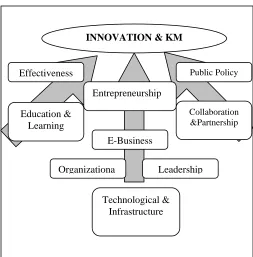
Figure 2: Transformation element through the innovation and knowledge management.
Knowledge and innovation play an increasingly vital role in technological advances and the transformation of society. The transformation of society form agrarian to industrial and now to information and knowledge has largely been brought about as a result of the accumulation and increasingly sophisticated deployment of knowledge. Figure 2 shows the important role in the process of the combination between innovation and knowledge management.
Knowledge management looks at a wide range of issues that involves information management, knowledge acquisition, knowledge sharing, organizational culture, organizational learning, communities of practice, best practices, and learning organizations.
The emergence of the knowledge based economy, the threat of globalization, and the intensification of competition have profound implications for organizational growth, adaptability, sustainability and survival. For many organizations and countries alike, innovation and knowledge management are no longer luxury
items, but rather necessities and a means of sustaining economic development and competitiveness.
3.2 PRINCIPLES OF INNOVATION
There certain principles of innovation that are related with the concept of knowledge management. Based on the literature by Bart R. Meijer(1999), we can identify the principles, they are:
a. Innovation requires a vision -- innovation requires change, risk and upheaval. Innovation is not done for innovation’s sake; there must be a driving motivator compelling the organization to develop the systems, resources and culture needed to support innovation. In today’s environment, the innovation driver is the need to survive in a world of rapid change.
b. Innovation is customer-driven and bottom line focused -- the purpose of innovation is to find better ways to delight customer and create a financially viable organization.
c. Innovation requires a foundation of ethics -- only in an environment of mutual trust and respect, not only within the organization but also within the surrounding community and global environment, can an organization develop a truly innovative approach to problems and opportunities.
d. Innovation requires innovative thinking -- innovative thinking is a skill needed by every member of the organization. It is the ability to constantly look for new possibilities, generate ideas, think together productively, make sound decisions and gain the commitment needed for rapid and effective implementation.
e. Innovation looks at the whole system -- creating solutions in one area that cause problems in another is not innovation
f. Innovation requires a diverse, information- and interaction-rich environment -- people with different perspectives, working together toward a common objective, with accurate, up-to-date information and the proper tools are the only source of innovation.
Entrepreneurship Education & Learning Technological & Infrastructure Organizationa Leadership E-Business Collaboration &Partnership Public Policy Effectiveness
NCICT 2003 Prince Hotel & Residence, Kuala Lumpur 21-22 October 2003(24-25 Sya’ban 1424).
g. Innovation involves and rewards every member of the organization -- there are no longer "thinkers" and "doers," "owners" and "workers." Innovation requires the very best thinking and doing from everyone and treats everyone as an "owner" equitably sharing the rewards generated by those best efforts.
h. Innovation requires a continuous scan of future plans -- the destiny of an organization may be determined by the efforts of an unknown team working in a basement laboratory of a small mid-western university.
i. Innovation requires a learning orientation -- only by creating an environment where every member of the organization is continuously learning more about its products, services, processes, customers, technologies, industry and environment can an organization successfully innovate year after year.
j. Innovation always involves resistance -- innovation requires change; change requires moving away from the comfort of the status quo. Resistance is normal and should not be used as an excuse not to innovate.
4.0. INNOVATION IN KNOWLEDGE MANAGEMENT ORGANIZATION
Knowledge management is the management of the organization towards the continuous renewal of the organizational knowledge base - this means e.g. creation of supportive organizational structures, facilitation of organizational members, putting IT-instruments with emphasis on teamwork and diffusion of knowledge (as e.g. groupware) into place.(Thomas Bertels)
Individual learning is the cornerstone of successful learning organizations. And personal mastery is the foundation of individual learning. Without individuals who are proficient, engaged, and productive an organization is incapable of creating change at the speed necessary to secure its future. Exploring and clarifying individual gifts, dreams, hopes, values, beliefs and purpose, and discovering ways to express these through work provides a vital–and often overlooked–first step for tapping into the energy, commitment and creativity people innately want to bring to their jobs. The alignment of individual potential with organizational need unleashes the power of the learning organization to the benefit of the
organization and the individual. There are distinct parallels between the efficiency, effectiveness and success of an organization with a clear mission, vision, values and awareness of its strengths, and individuals operating with clarity of purpose, dreams, personal beliefs and strengths. No one in the business world would argue that an organization passionate about why it exists and focused on what it does well has an advantage over its competitors. But organizations aren’t passionate. Companies don’t create, innovate or succeed. Individuals do.
Many of the elements that foster innovative teamwork exist within the knowledge management organisation. The learning organization is in effect a collective process of reflecting on new ideas, knowledge and insights in order to continually improve its performance. Innovation and the learning organization are therefore inextricably linked, and can be considered companion pillars of high-performing organisations. The learning organization provides the supporting conditions for innovation, innovative teams generate significant leaps of progress, and the learning organization captures this new knowledge and integrates it throughout the organization.
As Gregory E. Kersten (1999), states in his literature review, we can identify the key elements of a knowledge management organization, including:
• Common purpose (expressed in the guide a “shared vision”) can bring clarity to what members of a team or an organization want to accomplish together. It requires aligning the team’s values, principles and beliefs in terms of what the team wants to achieve and how it wants to achieve it.
• Multiplicity can help maximize creativity by bringing together people with differing skills, abilities and backgrounds. If everyone on the team is of like mind, opposition to the majority view can be considered troublesome and “buy in” can be considered excessively important.
NCICT 2003 Prince Hotel & Residence, Kuala Lumpur 21-22 October 2003(24-25 Sya’ban 1424).
• Creative conflict is designed to ensure that constructive and healthy conflict is not avoided because it can play a creative role, providing a means of challenging assumptions, revealing biases, scrutinizing evidence, and making arguments persuasive. Ideally, diverse views are brought to the table and new ideas flow from this creative conflict.
• Modesty is about public servants recognizing existing limitations of the knowledge they have and being challenged to seek the knowledge they do not have.
The learning organization can also help senior management to effectively identify and elect those fundamental and critical issues that justify a more comprehensive approach to innovation. To further build upon the innovative foundation provided y the learning organization and to make innovation more deliberate, the next part of the toolkit provides teams with a practical approach to innovation
CONCLUSION
Knowledge with an innovation is a vital organization resource. It is the raw material, work-in-process, and finished good of decision making. Distinct types of knowledge used by decision makers include information, procedures, and heuristics, among others. An ability to adeptly manage such diverse types of knowledge is crucial for the productivity of both individual decision makers and the organizations within which they work. A variety of computer-based techniques for managing knowledge (i.e., representing and processing it) have been and will continue to be devised to supplement innate human knowledge management skills. As a field of study, knowledge management is concerned with the innovation strategies, invention, improvement, integration, usage, administration, evaluation, and impacts of such techniques. Progress in this field has significant implications for individual effectiveness within organizations, organizational competitiveness in the global marketplace, and economic success of states or regions.
Developing a knowledge management practice requires a well-balanced approach. Technology is a required foundation for managing knowledge assets and bringing people together in dispersed organizations. At the same time, creating incentives for sharing knowledge and having focused business goals will help avoid many of the common pitfalls of .While knowledge management offers cost savings, the real value is in more forward-looking and adaptive organizations. Companies will see benefits in faster product development, improved decision-making, more skilled employees, and enhanced services that better meet customer needs. These benefits will surface in measures such as cycle-time reductions, better resource returns, higher product satisfaction indexes, and increased employee education levels.
REFERENCE
Allen, W.J. (2001), “Working together for environmental management: the role of
information sharing and collaborative learning.” PhD (Development Studies), Massey University, New Zealand
Bertels, T. (2000), “Defining Knowledge Management”, Ulrich-Jakobi-Wall-Str, Germany Flannery, W. T. & Dietrich G. B., “Stage of Technology Development, Knowledge Management and Technology Transfer” Grey D., “Views on knowledge and knowledge management”, Campbell Ave, Indianapolis, USA.
Haawandeh, S. (2001), “Series on Innovation and Knowledge Management”, University of Oklahoma.
Holsapple, C. W. and Sena, M. P. (1998) , "Organized Knowledge Sharing with Book-Centered Web Sites: An Architecture, Implementation, and Analysis”
Kersten, G. E. (1999), “Learning Organizations in the 5thLong Wave: Management, Innovation, Knowledge, and IT International Institute for Applied Systems Analysis “, Austria and Concordia University, Montreal, Canada Lucca, J., Sharda, R. & Weiser M., (1998), “Coordinating Technologies for Knowledge Management in Virtual Organizations”, Oklahoma State University.
NCICT 2003 Prince Hotel & Residence, Kuala Lumpur 21-22 October 2003(24-25 Sya’ban 1424).
Impact of Knowledge Management and
Organisational in Accessing new Opportunities”, University of Central, Birmingham, UK
Meijer, B. R.(1999), “A Management Attitude towards Knowledge Fusion and Innovation, Delft University of Technology
Nonaka and Takeuchi (1995), H. The Knowledge-Creating Company, Oxford University Press, New York, NY
Ram, S., Hayne, S., & Carlson, D. (1992). "Integrating Information Systems Technologies to Support Consultation in an Information Center," Information & Management,
Sexton, G.(2000), “The Foundation of Creativity and Innovation in Learning Organization”, Minneapolis.
Shahnon, S. (2000),”What is knowledge management”, Universiti Sains Malaysia. Sutoh, T.; Suzuki, H. & Baba, J. I. (1998), “Strategic Knowledge Management Creates Increasing Returns”, Japan.
2nd Qualitative Research Covention 2003 ”Theory and Practice” P. J. Hilton, Malaysia, 22-23 October, 2003
Qualitative Research: Knowledge Management Perspective
Md. Hafiz Selamatα, Suraya Miskonβ, Zeti Darleena Eriγ, Mohamad Nazir Sharifδ,
Maziatul Hanis Mior Harunε
αβγδε
Department of Information System Faculty of Computer Science and Information System,
Universiti Teknologi Malaysia, Skudai, Johor,
Malaysia
Email:α[email protected], β[email protected], γ[email protected], δ[email protected],
Abstract
Using a qualitative research methodology, this study explored reasons and focused an important of innovation based on knowledge management between research focus groups in Higher Education Institutions (HEIs). The resource-based view of the university in strategic management has been extend by theory on knowledge management to claim that a university’s competitiveness stems from the specialized knowledge held by its researchers, the ability of the firm to generate new knowledge and innovation, and strategic action enabled by innovation. Thus, there has been a general shift in focus group research away from technological to managerial and organizational issues, hence an increasing interest in the application of qualitative research methods. Qualitative Research can be found in many disciplines and fields, using a variety of approaches, methods and techniques. Based on that, several techniques are used include (a) collecting information, (b) intentionally observing surroundings, (c)choosing a broad range of informants, (d) finding a key of informant, (e)conducting interviews, (f)recording observation, interviews and impressions, (g) respecting privacy.
Keywords: Knowledge management, qualitative research, innovations
1. Introduction
Knowledge management is based on a simple philosophy: organizations of all shapes and sizes - especially those involved in international development - need to optimally use all resources available to them, including the knowledge and skills of their staff and partners. But to capture and use that knowledge requires more than just better file and information management; effective qualitative research method and techniques are essential. An effective knowledge management consultant needs to understand an organization’s subject area, its definition of “knowledge,” and its knowledge culture.
There are different forms of qualitative research such as ethnography, case study, action research and evaluation which often combine and overlap. There are also many perspectives or schools of thought which interpret qualitative research in different ways. A fuller understanding of these perspectives enable us to reflect upon our own perceptions, collect data in a different way and enhance our analyses of the data we collect. We discuss these analysis based on the knowledge management perspectives.
2nd Qualitative Research Covention 2003 ”Theory and Practice” P. J. Hilton, Malaysia, 22-23 October, 2003
they can work cooperatively and intelligently throughout a research or planning program
2. Qualitative research: definitions, techniques and methods
Qualitative research as an approach to inquiry is customarily distinguished from other human science research both conceptually and methodologically. Conceptual distinctions relate to the philosophical, theoretical, and disciplinary traditions from which qualitative researchers draw. Because these traditions are several and diverse, they contribute to the multiplicity of conceptual stances held by those calling themselves qualitative researchers (Atkinson, Delamont, & Hammersley, 1988; Jacobs, 1987, 1988).
Qualitative research is based on and grounded in descriptions of observations. Most qualitative research designs are intended to address this question. It can be asked about anything ordinary occurrences, extraordinary events, or circumstances puzzling to some investigator. What is crucial is the attention to the unfolding of events in the natural flow of human activity (Thompson B., 1994).
Qualitative research involves the use of qualitative data, such as interviews, documents, and participant observation data, to understand and explain social phenomena. Qualitative researchers can be found in many disciplines and fields, using a variety of approaches, methods and techniques. In Information Systems, there has been a general shift in IS research away from technological to managerial and organizational issues, hence an increasing interest in the application of qualitative research methods. Qualitative research methods are used by a number of fields in both the social sciences and the humanities. Qualitative research tends to be either based on archival research or utilizes a number of direct observational techniques. These may include ethnographic studies and case analysis. The resources included in this guide cover theoretical aspects of qualitative research as well as more applied topics such as conducting field notes and data analysis.
3. Knowledge Management
Knowledge Management is the collection of processes that govern the creation, dissemination, and utilization of knowledge. In one form or another, knowledge management has been around for a very long time. Practitioners have included philosophers, priests, teachers, politicians, scribes, Liberians, etc. (Brian (Bo) Newman, 1991). These processes exist whether we acknowledge them or not and they have a profound effect on the decisions we make and the actions we take, both of which are enabled by knowledge of some type. Knowledge management is not a, "a technology thing" or a, "computer thing" If we accept the premise that knowledge management is concerned with the entire process of discovery and creation of knowledge, dissemination of knowledge, and the utilization of knowledge then we are strongly driven to accept that knowledge management is much more than a "technology thing" and that elements of it exist in each of our jobs.
KM is the systematic and explicit management of knowledge related activities, practices, programs and policies within the enterprise (Wiig, 2000). Knowledge management is an audit of "intellectual assets" that highlights unique sources, critical functions and potential bottlenecks which hinder knowledge flows to the point of use. It protects intellectual assets from decay, seeks opportunities to enhance decisions, services and products through adding intelligence, increasing value and providing flexibility. (Denham Grey. 1999)
Knowledge Management (KM)
(Maarten Sierhuis, 2000).This is, as the word
2nd Qualitative Research Covention 2003 ”Theory and Practice” P. J. Hilton, Malaysia, 22-23 October, 2003
these techniques we can perform Knowledge Analysis and Knowledge Planning.
There are two broad approaches to Knowledge Management (KM). One focuses on the 'hard' aspects, the deployment and use of appropriate technology, the other focuses on the 'soft' aspect, the capture and transformation of knowledge into a corporate asset. This second approach includes the management of people and processes. Sveiby’s (2001) two categorizations of KM capture this hard and soft approach. His first categorization is the management of information. This approach views knowledge as objects that can be handled by information management systems. The key goal of this approach is to increase access to information through enhanced methods of access and reuse of documents through, for example, hypertext linking, databases, and full-text search. Networking technology in general (especially intranets), and groupware in particular, are key solutions. This approach is based on the idea that technology harnessed to a great volume of information will make KM work.
The second categorization of KM is the capture and transformation of knowledge into a corporate asset through the management of people. This approach views knowledge as a process - a complex set of dynamic skills, know-how, etc that is constantly changing. This approach tends to view the "knowledge problem" as a management issue. Management approaches tend to focus more on innovation and creativity - the "learning organization" as advocated by Senge (1990). Organizational behaviours and culture need to be changed as well. To make this approach work, a "holistic" view is required, and often theories of behaviour of large-scale systems are invoked. The aim here is to get people to share what they know. Processes are what matter, not technology.
Although management is increasingly aware of the potential of KM, there is still no clear consensus about just what knowledge is and how knowledge resources should be managed (Bhatt, 2001)
4. KM theory and practice using qualitative research
Qualitative Research can be found in many disciplines and fields, using a variety of approaches, methods and techniques. There are research methods which obtain a lot of in-depth information from people. Based on that, several techniques are used include (Carliner S., 1999):
a. Collecting Information -- The collecting information dimension involves linking people with information. It relates to the capturing and disseminating of explicit knowledge through information and communication technologies aimed at codifying, storing and retrieving content, which in principle is continuously updated through computer networks. Through such collections of content, what is learned is made readily accessible to the information needed. Current examples in the nowadays feature include various intranets, the internets, database, library, and many more. Even where comprehensive collections of materials exist, effective use may still need knowledgeable and skilled interpretation and subsequent alignment with the local context to get effective results, just as reading a newspaper article on brain surgery does not qualify or enable a reader to conduct brain surgery. An organisation that focuses completely on collecting and makes little or no effort at connecting tends to end up with a repository of static documents.
b. Intentionally observing surroundings --
From the KM perspectives, this method helps to enhance the intelligence and knowledge between individuals, groups or any higher institutions. This method is one of the ethnographies techniques that apply in the qualitative research techniques. It is a way to describe of the physical environment in which the culture exists. Physical space often defines the way people’s responses to situations in their environment so qualitative researchers try to record as much detail as possible about it. And this also will help to identify the community’s priorities within specific sectors or issues.
c. Choosing a broad range of informants --In
2nd Qualitative Research Covention 2003 ”Theory and Practice” P. J. Hilton, Malaysia, 22-23 October, 2003
The more an informant shares about their knowledge, experiences and feeling, the richer the understanding of that knowledge (Lincoln and Guba, 1986). There many different types of informants provide different types of information about the knowledge in knowledge management environment from the qualitative research method e.g. Executives, lecturers, researchers, trainers, staff, students, knowledge experts and other professionals.
d. Finding a key of informant -- Although each
informant provides crucial insight into a knowledge management environment, a key informant that main person who not only provides insights, but is able to respond to the researchers observations and also provides opportunities that researcher might not otherwise find by themselves. This is one of the important elements in the knowledge management environment which allow the researcher to gain the correct and accurate information.
e. Conducting interviews – The interview is
probably the most widely used method in qualitative research. It is a process of learning about certain knowledge or environment through another person’s thought. In the ethnographic technique of interview, it is widely describes a interviewing technique that begins with a tour, in which someone from the environment being studied provides an overview of the environment, followed by a descriptions of specific aspects of an environment. Using the ethnographic techniques in qualitative research with several representatives of a singe culture can provide the rich perspective of knowledge needed to fully understand topic or issue.
f. Recording observation, interviews and impressions – observation is probably the most
common way of findings out about things. Observation in everyday prepares us for observation in research. When we observe in everyday life we combine information from all our senses in order to understand or make sense I particular situation. In qualitative research, the reason why systematic observation is so important in research is because as researchers we are attempting to derive knowledge that can be generalised. The information generate from data contributes to the advancement of knowledge.
g. Respecting privacy -- the qualitative research
experts to respect the information shared with them.
Conclusion
Qualitative research in knowledge management group gives a chance to gain a broad qualitative understanding of the underlying reasons and motivations. This research is slightly same with the observation technique. Through the literature review, some of the qualitative research and analysis techniques have been helpful in learning a new knowledge management environment. The analysis of qualitative data from interview, transcript and observation notes or open-ended surveys can identify similarities across several knowledge sharing directories and trends. Data can be categorised into recurrent issues and topics that seem relevant to answer the evaluation question. These are research methods which obtain a lot of in-depth information from people especially for researchers and knowledge experts.
Reference
1. Atkinson, P., Delamont, S., & Hammersley, M. (1988). Qualitative research traditions: A British reply to Jacob. Review of Educational Research, 58(2), 231-251
2. Bhatt, G. D. (2001), “Knowledge
management in organizations: examining the interaction between technologies, techniques, and people”, Journal of Knowledge Management. vol 5.
3. Cano V. (1995), “Definitions of Qualitative Research”, United Kingdom
4. Carliner S. (1999), “Using Qualitative Research Techniques to Learn the Cultural Language”, Bentley College, Waltham. 5. Denzin, N. K., & Lincoln, Y. S. (1994).
“Handbook of Qualitative Research.” London: Sage Publication Inc