An Irish Mathema cs Learning Support Network (IMLSN) Report
on Student Evalua on of Mathema cs Learning Support:
Insights from a large scale mul ins tu onal survey
Authors and Editors: Ciarán O’Sullivan, Ciarán Mac an Bhaird, Olivia Fitzmaurice and Eabhnat Ní Fhloinn
An Irish Mathema cs Learning Support Network (IMLSN) Report on
Student Evalua on of Mathema cs Learning Support:
Insights from a large scale mul ins tu onal survey
_____________________________________________________________
Authors and Editors: Ciarán O’Sullivan, Ciarán Mac an Bhaird, Olivia Fitzmaurice and Eabhnat Ní Fhloinn.
An Irish Mathema cs Learning Support Network (IMLSN) Report on Student Evalua on of Mathema cs Learning Support:
Insights from a large scale mul ins tu onal survey
Authors and Editors: Ciarán O’Sullivan, Ciarán Mac an Bhaird, Olivia Fitzmaurice and Eabhnat Ní Fhloinn.
ISBN:9781905952588
© NCE MSTL, IMLSN and the Authors, 2014
In order to facilitate mely dissemina on of the results of this survey, a number of papers based on some elements of this report have already been published or submi ed for publica on, each focusing on a par cular theme. We are extremely grateful to the publishers and editors of the 3 journals involved Teaching Mathema cs and its Applica ons: An interna on al journal of the IMA (publisher Oxford University Press, editors Chris Sangwin, Duncan Lawson and Anne Watson), Interna
onal Journal of Mathema cal Educa on in Science and Technology (publisher Taylor & Francis, editor Mar n Harri son ) and Adults Learning Mathema cs – An Interna onal Journal) for agreeing to allow us to include similar research in this report and would like to acknowledge that some of our results were presented for thefirst me in the following pa pers: Ní Fhloinn et al. (2014), Mac an Bhaird et al. (2013), Fitzmaurice et al. (to appear). As a result, copyright of the rele vant tables andfigures is in the ownership of the journals involved (see Appendix C for details).
No parts of this publica on may be reproduced by any process except with the wri en permission of the copy right holders.
All enquiries in rela on to this publica on should be addressed to: NCE MSTL
University of Limerick Limerick
Ireland
The views expressed in this publica on are those of the authors and do not necessarily reflect the views of the NCE MSTL.
Foreword
The National Centre for Excellence in Mathematics and Science Teaching and Learning (NCE MSTL) is delighted to make this report available to the wider community of STEM educators and stakeholders in Ireland. This large scale evaluation of students’ views on Mathematics Learning Support (MLS) in Irish Higher Education is unique in its scope and its attention to users and non users of MLS services.
Mathematics Learning Support (MLS) in all its manifestations in Higher Education internationally is a response to the well documented ‘Mathematics Problem’. Mathematics is now widely acknowledged as having a special underpinning role for the STEM disciplines and as such merits special attention. It is worth making the point that the special attention mathematics receives under MLS clearly serves a dual function and benefits mathematics learning and STEM
education. In this way MLS makes an impact for the better on high priority issues in mathematics and STEM education such as access, transition, retention, and engagement.
In this study the authors use a customised survey instrument to survey students from nine HEI’s in Ireland who interact with Mathematics Learning Support Centres (MLSC). Uniquely, they focus on users and non users of services and their views. This present report, the first of its kind in Ireland, contains a wealth of interesting data and analyses. And as the authors point out (p. 9):
Among these findings are reasons given by students who availed of MLS as to why they did so and the impact they reported MLS had on them. Equally importantly, the report presents findings by students who did not avail of MLS such as their reasons for not availing of MLS and what they reported would encourage them to do so.
Ireland has been at the forefront of research and practice in this emerging field of MLS in Higher Education through the work of members of The National Centre and the Irish Mathematics Learning Support Network (IMLSN) who commissioned this report. The National Centre has supported the work of the IMLSN since its inception in various ways, financially and otherwise, but mainly through advice and staff input. The National Centre is pleased to acknowledge the role of Dr Olivia Fitzmaurice, member of the NCE MSTL Steering Committee, as one of the authors of this report.
The National Centre has an active policy of publishing important findings from its research and collaborations on teaching and learning in STEM disciplines. Towards this end the National Centre publishes reports and occasional papers of merit under its own imprint. This report, the fourth in itsOccasional Publications Series, is worthy of wider attention.
John O’Donoghue, Professor (Emeritus) Mathematics Education Associate Director, NCE MSTL
Sibel Erduran, Professor of STEM Education Director, NCE MSTL
Acknowledgements
This report and survey has been possible only through the hard work and collaboration of a wide number of people, all of whom we would like to thank.
To start, we would like to thank the 1633 first year students from across nine Higher Education Institutions (HEIs) who took the time and effort to fill out our questionnaire. We also appreciate the contributions of the following individuals who ensured that the questionnaires were distributed in their institutions, collected and returned to the committee:
Huizhong Wu Appleby, Dublin City University (DCU); Colm McGuinness, Institute of Technology (IT)
Blanchardstown; Diarmuid Ó Sé, IT Carlow; Ciarán O'Sullivan, IT Tallaght; Joan Cleary, IT Tralee; Kevin Jennings, National University of Ireland Galway (NUIG); Ciarán Mac an Bhaird, National University of Ireland Maynooth (NUIM); Nuala Curley, University College Dublin (UCD); and Olivia Fitzmaurice, University of Limerick (UL).
We are grateful to the All Ireland Society for Higher Education (AISHE) and the National Learning Digital Repository (NDLR) who provided some funding which allowed us to get assistance with data input and initial data analysis. We would like to thank Theresa Melican (UL) for her assistance with the data input and Siobhán Connolly (NUIM) for her preliminary data analysis. We also appreciate the continuous support and expert advice from the National Centre for Excellence in Mathematics and Science Teaching and Learning (NCE MSTL), they were especially instrumental in the final production of this document. We acknowledge and thank the National Forum for the Enhancement of Teaching and Learning in Higher Education for their advice and interest, and their support for the official launch of this report.
The editors would also like to acknowledge those who made contributions to the creation of the survey. In particular, Professor Ailish Hannigan (UL), Dr. Jean Saunders (UL), Dr. Ann O'Shea (NUIM), Dr. Sinéad Breen (St. Patrick’s College Drumcondra), Dr. Joan Cleary (IT Tralee) and Dr. John Keogh (IT Tallaght). We thank the following people who agreed to read the report prior to publication for offering their time and expertise. We especially appreciate their insight and constructive suggestions: Diarmuid Ó Sé, Tim Crawford, Terry Maguire, Anthony Cronin and Ann O’Shea. In particular, we thank Professor John O’Donoghue (NCE MSTL) for his observations and for contributing the foreword. Professor O’Donoghue’s guidance and expert advice to all involved in the provision of MLS in Ireland and further afield has been invaluable.
Finally, the editors would also like to acknowledge the work of fellow members (past and present) of the committee without whom the report would not have been possible. These include Diarmuid Ó Sé (IT Carlow), Tim Crawford (Queen’s University Belfast, QUB), Páraic Treacy (UL), Gráinne Burke (NUIM), Kevin Jennings (NUIG) and Niamh O’Meara liaison from the NCE MSTL.
In order to facilitate timely dissemination of the results of this survey, a number of papers based on some elements of this report have already been published or submitted for publication, each focusing on a particular theme. We are extremely grateful to the publishers and editors of the 3 journals involved Teaching Mathematics and its Applications: An international journal of the IMA (publisher Oxford University Press, editors Chris Sangwin, Duncan Lawson and Anne Watson), International Journal of Mathematical Education in Science and Technology (publisher Taylor & Francis, editor Martin Harrison ) and Adults Learning Mathematics – An International Journal) for agreeing to allow us to include similar research in this report and would like to acknowledge that some of our results were presented for the first time in the following papers: Ní Fhloinn et al. (2014), Mac an Bhaird et al. (2013), Fitzmaurice et al. (to appear). As a result, copyright of the relevant tables and figures is in the ownership of the journals involved (see Appendix C for details).
Contents
Foreword………..……….……….1 Acknowledgements……….………..……....2 Contents………..……...3 List of Figures……….………..……...6 List of Tables………..………..…...7 Executive Summary………..…9 Introduction………..……….…...16Chapter 1. Literature review... 18
1.1 The Mathematics Problem... 18
1.2 Responses to the Mathematics Problem ... 18
1.3 Evaluation of Mathematics Learning Support (MLS) ... 19
Chapter 2. Methodology... 21
2.1 Background of the IMLSN and the survey... 21
2.2 Research instrument... 21
2.3 Data collection ... 23
2.4 Data analysis ... 23
Chapter 3. Research findings ... 25
3.1 Profile of survey participants ... 25
3.1.1 Institutions ... 26
3.1.2 Area of study ... 26
3.1.3 Mode of study ... 27
3.1.4 Gender profile ... 27
3.1.5 Mathematical attainment prior to entry ... 27
3.1.6 Mature Student profile ... 28
3.2 Insights into engagement with MLS... 30
3.2.1 Level of engagement with MLS... 31
3.2.2 Reasons given by students for their decision to first avail of MLS ... 31
3.2.3 Student evaluation of particular MLS services ... 32
3.2.3.1 Drop In Centre ... 33
3.2.3.2 ICT enabled Support... 34
3.2.3.3 Workshops ... 35
3.2.4 Student perception of MLS impact ... 37
3.2.4.1 Student perception of MLS impact on mathematical confidence ... 37
3.2.4.2 Student perception of MLS impact on mathematical performance... 38
3.2.4.3 Student perception of the impact of MLS on helping them cope with the mathematical demands of their course ... 39
3.2.4.4 Student perception of MLS impact (trend analysis) ... 40
3.2.5 Student perception of the influence of concerns about mathematics on considerations of dropping out ... 40
3.2.6 Student perception of MLS impact on retention... 41
3.3 Insights into non engagement with MLS ... 44
3.3.1 Student reasons for not availing of MLS ... 45
3.3.2 Student insights into what would encourage them to avail of MLS ... 47
3.3.2.1 Detailed analysis of suggestions made by students whose LC grades are known as to what would encourage them to avail of MLS ... 48
3.4 Categories emerging from the open “Any other comment/suggestion” section at the end of the survey ... 50
Chapter 4. Special Focus Analysis ... 52
4.1 Focus on prior educational attainment ... 52
4.1.1 Leaving Certificate results... 53
4.1.2 Relationship between level of prior mathematical achievement and availing of MLS ... 53
4.1.3 Timing of switching from Higher to Ordinary Level mathematics ... 54
4.2 Focus on non engaging students ... 56
4.2.1 Responses to Question 16 analysed using Leaving Certificate level and grade ... 57
4.2.2 Responses to Question 16 analysed using type of HEI attended and LC level ... 57
4.2.3 Responses to Question 16 analysed using data on students changes to LC level ... 59
4.3 Focus on gender differences in the usage of MLS ... 60
4.3.1 Background ... 61
4.3.2 Focus on students who used MLS... 62
4.3.2.1 Reasons for using MLS ... 63
4.3.2.2 Potential impact of MLS... 65
4.3.3 Focus on students who did not use MLS ... 66
4.3.3.1 Reasons for not using MLS... 66
4.4.2 Relationship between Mature Student status and use of MLS ... 72
4.4.2.1 Mature Student reasons for using MLS ... 73
4.4.2.2 Rating of and comments about MLS services by Mature Students ... 74
4.4.2.3 Impact on Mature Students’ mathematical education... 75
4.4.2.4 Mature Student reasons for not using MLS ... 76
Chapter 5. Discussion, Recommendations and Future Work ... 79
5.1 Discussion... 79
5.2 Recommendations ... 86
5.3 Future Work ... 87
Bibliography ... 90
Appendix A: Sample Mathematics Learning Support Survey ... 96
Appendix B: Glossary of abbreviations. ... 99
Appendix C: Details of publications containing prior dissemination of data and analysis contained in this report. ... 100
List of Figures
Figure 1: Student responses to rating Drop in Centres ... 33
Figure 2: How students rated the ICT enabled Supports... 34
Figure 3: How students rated the Topical or Examination Revision Workshops... 35
Figure 4: How students rated Support Tutorials... 36
Figure 5: Student responses on how they perceived that MLS has helped their confidence in mathematics ... 37
Figure 6: Student perception on how MLS had impacted on their mathematics performance so far... 38
Figure 7: Student perceptions of how MLS has helped them cope with the mathematical demands of their course... 39
Figure 8: Perceptions of the impact on three aspects of their mathematical experience of students who had indicated that MLS had influenced their decision not to drop out ... 43
Figure 9: Perceptions of the impact on three aspects of their mathematical experience of students who had indicated that MLS had not influenced their decision on dropping out... 43
Figure 10: Percentage of students of each gender and LC mathematics grade who used MLS... 62
Figure 11: Percentage of students from each discipline who used MLS, given as a proportion of students of each gender in the discipline within our study... 63
Figure 12: Proportion of reasons given for first deciding to use MLS broken down by gender... 64
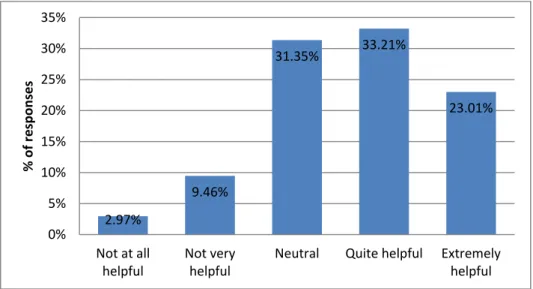
Figure 13: Student perceptions by gender on how they felt the MSC has helped them cope with the mathematical demands of their course... 65
Figure 14: Percentage of respondents of each gender per option in response to Question 16 ... 66
Figure 15: Percentage of students’ comments about what would encourage them to avail of MLS broken down by gender ... 68
Figure 16: How Mature Students users of MLS rate the Drop In Centre ... 74
List of Tables
Table 1: Breakdown of student respondents per Higher Education Institute... 26
Table 2: Breakdown of survey respondents by discipline area and institution... 26
Table 3: Breakdown of survey respondents by gender ... 27
Table 4: Breakdown of survey respondents by discipline area and gender ... 27
Table 5: Leaving Certificate mathematics level of respondents who provided answers ... 28
Table 6: Leaving Certificate results of surveyed students by gender ... 28
Table 7: Leaving Certificate levels of Mature Students ... 28
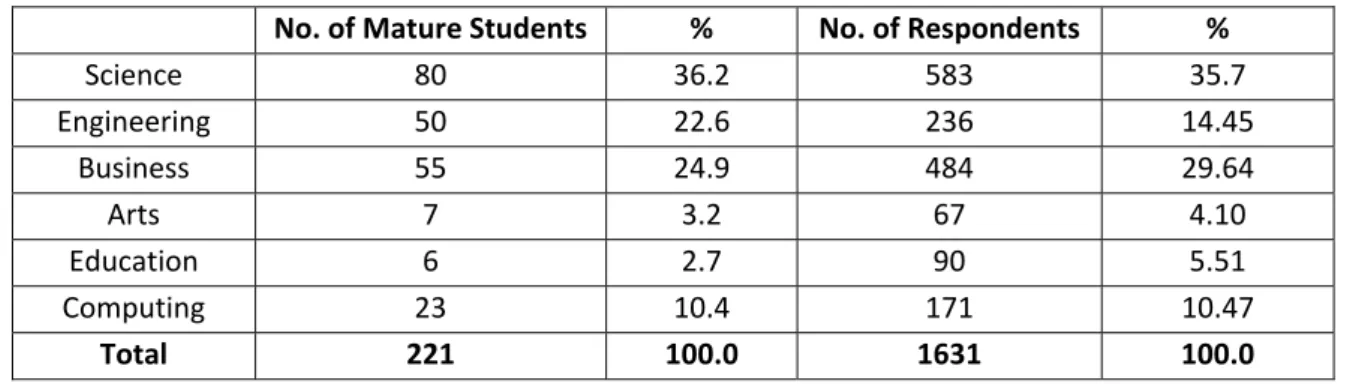
Table 8: Degree Programmes of Mature Students and of overall survey respondents. ... 29
Table 9: Number of respondents availing or not availing of MLS... 31
Table 10: Number of respondents using MLS in each HEI... 31
Table 11: Frequency of reasons given for availing of MLS... 32
Table 12: MLS services and HEIs in which they were available ... 33
Table 13: Student comments/suggestions regarding Drop In Centres ... 34
Table 14: Student comments/suggestions relating to ICT enabled Supports ... 35
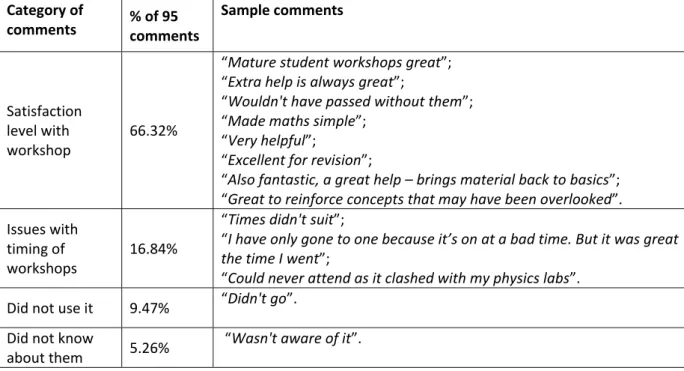
Table 15: Student comments/suggestions regarding Topical or Examination Revision Workshops... 36
Table 16: Student comments/suggestions regarding Support Tutorials ... 37
Table 17: Categories of student comments on how MLS has helped their confidence in mathematics ... 38
Table 18: Categories of comments on how MLS had impacted on students’ mathematics performance .. 39
Table 19: Categories of comments made by students in relation to dropping out of their course/college because of mathematical difficulties ... 40
Table 20: Categories of comments made by students in relation to the influence of MLS on their decision to stay in college ... 42
Table 21: Frequency of responses ticked in Question 16 ... 45
Table 22: Responses to Question 16 from non attendees ... 45
Table 23: Reasons for not availing of MLS for students other than those who had indicated they felt did they not need help with mathematics... 47
Table 24: Frequency of students comments about what would encourage them to avail of MLS... 47
Table 25: Categories of responses of users of MLS to the additional comments and suggestions question ... 50
Table 26: Categories of responses of non users of MLS to the additional comments and suggestions question ... 51
Table 27: Leaving Certificate mathematics grades of respondents... 53
Table 28: Comparison of LC results of students availing and not availing of MLS ... 53
Table 29: Leaving Certificate mathematics grade of respondents who had used MLS... 53
Table 30: Leaving Certificate mathematics grade of respondents who had not used MLS ... 54
Table 31: Timing of switching of LC levels of respondents ... 54
Table 32: LC grades of students switching LC levels ... 54
Table 33: Relationship between grade obtained and the time at level switch was made ... 55
Table 34: Breakdown of answers to Question 16 based on LC level ... 57
Table 35: Breakdown of answers to Question 16 based on type of HEI attended... 58
Table 36: Breakdown of the LC levels of non users of MLS in the two types of HEI ... 58
Table 38: Breakdown of answers to Question 16 from Universities based on LC level ... 59
Table 39: Breakdown of answers to Question 16 if students had changed LC level ... 59
Table 40: Comparison of gender with using MLS ... 61
Table 41: Breakdown of answers to Question 16 from IoTs based on gender... 67
Table 42: Comparison of mathematics LC level of Mature Students users and non users of MLS... 72
Table 43: Subject discipline of all Mature Students and Mature Student users ... 73
Table 44: Frequency of Mature Student reasons for using MLS ... 73
Table 45: Comparison of frequency of reasons for not using MLS between Mature Students and all students ... 76
Table 46: Frequency of comments from Mature Students who are non users of MLS about what would encourage them to avail of MLS ... 77
Executive Summary
In this section we provide a summary of the main outcomes of this survey on Mathematics Learning Support (MLS), for full and further information we refer the reader to the relevant part of the report.
What is the IMLSN?
The Irish Mathematics Learning Support Network (IMLSN) was established in 2009 to promote MLS and support individuals and HEIs involved in the provision of MLS in Ireland. The IMLSN has an elected voluntary committee whose members are drawn from a range of HEIs from around the island of Ireland. The IMLSN website (http://supportcentre.maths.nuim.ie/mathsnetwork) has a full list of our activities (including workshops, developing resources and materials, and the latest news from the national and international MLS community).
What this report is about?
Large numbers of students entering Higher Education (often referred to as third level education) take some level of mathematics as part of their degrees, and it is widely reported that a considerable minority of these students demonstrate a lack of the basic mathematical skills that they require to succeed. A common response has been the establishment of MLS to give students the opportunity to reach the levels required. Research has shown that in general, although the supports appear to impact positively on students who avail of them, a significant number of students do not engage appropriately. Accurate evaluation of MLS is crucial to determine best practice for practitioners and to promote (to both students and relevant personnel) the benefits of using and providing MLS. The IMLSN decided to conduct a large scale survey evaluating first year service mathematics students’ opinions on MLS. The survey was given both to students who availed of MLS and those who had not. This report presents the findings from this large scale survey carried out at nine HEIs in Ireland. Among these findings are reasons given by students who availed of MLS as to why they did so and the impact they reported MLS had on them. Equally importantly, the report presents findings by students who did not avail of MLS such as their reasons for not availing of MLS and what they reported would encourage them to do so.
The Study
Literature reviewAs part of the study, a thorough literature review of the reasons for the establishment of MLS and how MLS should be evaluated was undertaken. Firstly, the reasons for the increasing numbers of students entering HEIs who take some level of mathematics or statistics as part of their degrees was considered. Secondly, consideration was given to the well documented problem (often labeled the ‘Mathematics Problem’) of significant numbers of these students demonstrating a lack of the basic mathematical skills that they require to succeed. This problem is commonplace in HEIs in Ireland, the UK and elsewhere. Thirdly, the various responses from HEIs to this problem (including the provision of MLS which is available in the majority of HEIs in Ireland and the UK) was considered. Finally, literature on international best practice in the evaluation of MLS (with systems of qualitative and or quantitative evaluations now commonplace in the wider MLS community) was reviewed.
Research instrument
Following the literature review regarding the evaluation of MLS, we received expert advice on the design and analysis of questionnaires. It was then decided to develop an anonymous paper based questionnaire as the appropriate research instrument. It was also decided, based on the literature review, to target only first year service mathematics students. Samples of questionnaires already in use within HEIs to assess MLS were collected from IMLSN members, these questionnaires were amalgamated, and a pliot questionnaire was developed. This pilot questionnaire was piloted with 100 students from 5 different HEIs (3 Universities and 2 IoTs). This pilot questionnaire was modified and the finalised questionnaire was reviewed and approved by Professor Ailish Hannigan (Statistical consultant to the NCE MSTL). This questionnaire was anonymous and paper based; there were 17 questions in total, with a variety of multiple choice, five point Likert scale, and open ended questions. The questionnaire had three main sections. The first section was to gather information regarding the respondents’ background and was to be completed by all students. Students then completed one of the remaining two sections depending on whether they had availed of MLS or not. Users of MLS completed a section to indicate their levels of satisfaction with the services provided and to investigate their perception of the impact that MLS had on their mathematics education. Non users of MLS completed a section which investigated the reasons why they did not engage with MLS. The full survey questionnaire can be seen in Appendix A.
Data collection
The questionnaire was issued in February 2011 to representatives involved in the provision of MLS within HEIs on the island of Ireland. They were invited to arrange for it to be issued during the second semester of the academic year 2010 11 to any first year students who were studying at least one service mathematics module. The decision to have the paper based questionnaire issued in the appropriate lectures was made in order to get a blend of users and non users. 1633 completed questionnaires were received from nine HEIs all in the Republic of Ireland. The nine comprised five Universities and four IoTs, out of a total of seven Universities and fourteen IoTs (Higher Education Authority, 2013). The Universities involved were DCU, NUIG, NUIM, UCD and UL. The Institutes of Technology involved were IT Blanchardstown, IT Carlow, IT Tallaght and IT Tralee. Acknowledging that the manner in which the data was collected was dependent on local factors we do not claim that the results of this survey are representative, but they do give an invaluable first insight on the state of MLS on a large scale.
Data analysis
The large quantity of quantitative and qualitative data from the completed surveys was then inputted into SPSS. The quantitative data was analysed using SPSS. The qualitative data obtained from the open questions was analysed using General Inductive Analysis (GIA) (Thomas, 2006) and Grounded Theory. This approach allows the theory to emerge from the data itself with initial coding of the quantitative data giving rise to labels, with subsequent coding grouping these labels into concepts, categories and themes. Members of the report team worked in pairs, firstly carrying out the coding process independently and then comparing their coding results for verification and to ensure reliability.
In order to facilitate timely dissemination of the results of this survey, a number of papers based on some elements of this report have already been already been published or submitted for publication, each focusing on a particular theme. We are extremely grateful to the editors of the journals involved for agreeing to allow us to include similar research in this report and would like to acknowledge that some of our results were presented for the first time in the following papers: Ní Fhloinn et al. (2014), Mac an Bhaird et al. (2013), Fitzmaurice et al. (to appear). As a result, copyright of the relevant tables and figures
Main findings
Profile of students surveyed
1633 first year service mathematics students from 9 HEIs participated, 1201 from 5 Universities and 432 from 4 Institutes of Technology (IoT).
Students were from 6 disciplines of study: Science (583), Engineering (171), Computing (236), Business (484), Arts (67), and Education (90).
42% of respondents were female and 58% were male. 13.5% of respondents were classified as Mature Students.
In terms of prior mathematical attainment 34% indicated they had completed Higher Level (HL) Leaving Certificate1(LC) mathematics, 63% Ordinary Level (OL) LC, 1% Foundation Level (FL) LC and 2% had a different qualification or did not provide information.
Engagement with MLS
MLS services were used by 36% of the student population surveyed.
There was clear evidence that MLS had a positive impact in influencing students not to drop out due to experiencing difficulties with mathematics. 22% of respondents who had availed of MLS had considered dropping out of their course due to mathematical difficulties and almost two thirds of these students stated that availing of MLS had a positive impact on their retention on their course. In addition to this 22%, a further 3% of MLS users who had not considered dropping out submitted additional comments to indicate that MLS had influenced their decision to stay in college.
This positive impact on student retention was comprehensive in that it pertains in equal measure across the spectrum of Leaving Certificate mathematical achievement.
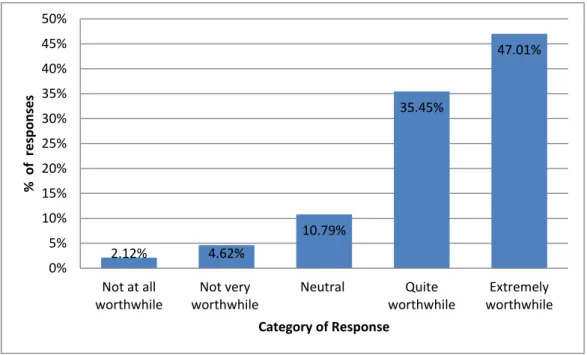
Drop in Centres were the most widely provided, availed of and positively endorsed MLS service with 83% of users considering them worthwhile or extremely worthwhile.
Workshops and Support Tutorials were also positively endorsed and were considered worthwhile or extremely worthwhile by approximately 80% of MLS users.
ICT enabled supports were the least positively endorsed, although it was still the case that 56% of students who had used these supports felt they were worthwhile or extremely worthwhile. MLS was not viewed by students only as a remedial support but rather, utilised by those students seeking to improve their understanding of mathematical concepts.
Student comments on MLS services fell into 3 main categories: Satisfaction with services provided; Resourcing (staff, contact hours, space); and Quality of tutors/teaching.
Seeking advice in their preparations for forthcoming assessments provided a key prompt to avail of MLS for 41% of MLS users.
1
In the Republic of Ireland, the Leaving Certificate examination is the state school leaving examination taken by 96% of the second level student cohort at the end of a 5 year programme. Mathematics is taken at Higher, Ordinary or Foundation Levels, with Higher Level being the highest rated in terms of level of subject matter covered and
The majority of students who used MLS reported that it had a positive effect on their mathematical confidence, performance and ability to cope with the mathematical demands of their course.
The student responses highlighted the importance of the quality of tutors in students’ experience of MLS.
There was a strong association between mathematical achievement in Leaving Certificate and struggling with mathematics in HE to the extent of considering dropping out.
Non engagement with MLS
64% of respondents did not engage with MLS.
A prominent reason provided for non engagement with MLS was that help was not required (49% of non users of MLS). Overall this means that approximately one third of the students surveyed engaged with MLS, another one third did not engage as they did not feel the need to but the final one third of students did not engage but may have needed to.
The second most common reason students gave for not using MLS services was that the available times did not suit them (29% of non users of MLS and hence 56% of non users who may have needed help).
A significant proportion of responses indicated that enhanced advertising and promotion (in particular of location) of MLS services would also be of assistance in enabling students to engage with MLS.
In response to what would encourage non users to avail of MLS, two main themes emerged. The first indicated that students would go if they needed help, and the second encompassed comments about MLS structures. The stronger the mathematical background of the student the more likely the response fitted the first theme and the weaker the student the more likely it was in the second theme.
Prior educational attainment and MLS
There was a significant association between Leaving Certificate mathematics levels and whether students availed of MLS, the higher the level, the less likely they were to avail of MLS. However, it must be noted that students using MLS had a broad range of mathematical backgrounds.
60% of students who reported taking OL LC mathematics prior to entry indicated that they had switched from HL to OL.
For OL students who were initially doing HL and then switched, the longer they stayed in HL the better their OL LC grade.
There was an association between switching from HL to OL and availing of MLS, the later they switched to OL, the less likely they were to seek help.
Focus on non engaging students
There was a significant relationship between LC mathematics results and reasons students gave for not availing of MLS. The better the prior mathematical attainment of the student the more likely they are to say that they did not need help.
There was a significant relationship between the reasons given by non users for not availing of MLS and the type of institution (IoT or University) that they attended.
For University students, there was a significant relationship between the reasons given by non users for not availing of MLS and their LC level of mathematics and grade.
For students who switched LC mathematics level, the later they switched the more likely they are to say that they did not seek help in the form of MLS as they felt they did not need it.
Gender and MLS
A statistically higher proportion of females than males availed of MLS regardless of prior mathematical achievement levels or discipline of study.
There was a significant association between gender and the categories that emerged from the reasons given for use of MLS. The incentive to do as well as possible in assignments and examinations emerged as the most significantly distinguishing feature (45% for female respondents as against 26% for male).
Once they have engaged with MLS, male and female students did not report any difference in the academic impact of MLS or in their experience of MLS.
For students who did not use MLS there was a statistical difference in the reasons given for not availing of MLS in 2 of 7 categories. A significantly higher proportion of females than males reported that they did not know where MLS was provided in their institution whereas more males than females said that they had never heard of the service.
For non users of MLS, males were more likely than females to indicate that they would avail of MLS if they needed it whilst females were more likely than males to suggest more suitable opening times were needed to encourage them to avail of MLS.
Mature Students and MLS
A statistically significant higher proportion of Mature Students2 (62%) than traditional students (32%) availed of MLS.
The mathematical background of both users and non users of MLS amongst Mature Students was very similar. In each subject discipline, the proportion of Mature Students using MLS was very similar to the proportion of all Mature Students.
Mature Students reported different needs and motivations for seeking MLS. Mature students were more likely to use MLS simply because it was there for them and they wanted to access extra help. In contrast, the traditional students were more motivated by assessment demands. Qualitative feedback illustrated that for Mature Students MLS is a mathematical lifeline.
Mature Students were more positive in their praise of MLS than their traditional counterparts and their experiences with MLS played a more significant role in their retention than in that of other students.
Low self efficacy in mathematics seemed to inspire Mature Students to avail of MLS rather than shy away from it.
2
Recommendations and future work
MLS should be embedded as a permanent fixture in every HEI in the country and should be properly resourced in order to ensure the best mathematical experience for all students.
Evidence of the positive contribution of MLS in terms of student transition and retention should be widely disseminated to HEI authorities to highlight the benefit from a financial perspective. Evidence of the positive contribution of MLS both in terms of student transition and retention, and improved student confidence in their mathematical ability and a more positive student attitude towards mathematics as a subject, should be communicated to incoming first year students in order to encourage engagement with MLS.
Evidence that MLS services were used by one third of the first year students in this study with another one third possibly needing them should be communicated to incoming first year students to promote the accessing of MLS services as a key element of taking active responsibility for their own learning mathematical learning in HE.
MLS providers should consider more extensive and innovative promotion of MLS to students using best international practice.
Re alignment of hours when MLS is provided should be considered to meet the needs of a significant cohort of students.
There should be an increased collaboration between those teaching first year mathematics in HEIs and those providing MLS.
First year mathematics modules should have an element of continuous assessment scheduled to occur very early in the module.
Priority should be given to bespoke training and development of all MLS staff to ensure the optimal student experience.
Digital literacy skills of students and practical issues of accessing online materials/service require further consideration in MLS to be of maximum benefit to students.
Adequate MLS provision should be put in place as part of the learning infrastructure for the expanding population of Mature Students entering HEIs.
The stark differences in motivation for availing of support should be highlighted in the training of MLS staff so as to enhance the learning experience of Mature Students.
HE and the MLS community should be prepared for the high levels of Mature Student engagement. This trend will have resource implications when coupled with stated national policy objectives to increase the numbers of Mature Students in HE.
Further research should be undertaken in the area of gender and engagement with MLS to explore the issue more deeply and ascertain further insights in order to provide the optimal MLS service to all users.
Any future study in this area should consider the impact of a higher proportion of students completing HL LC mathematics and the patterns of switching LC levels in mathematics, due to changes in the second level curriculum and LC points allocation for HL mathematics.
A further large scale cross institutional study of student evaluation of MLS be carried out in 2016 within a structure that enables the data collection and analysis of the survey to be completed expeditiously.
Future work
Currently the IMLSN is involved in a number of collaborative projects for the mutual benefit of practitioners of MLS on the island of Ireland and further afield. The projects we are currently working on include:
Continued analysis and dissemination of data from the student evaluation. Addressing issues related to staff recruitment and training:
o Dissemination of data with respect to the academic and financial benefits of MLS. This assists MLS providers in individual institutions in their ongoing efforts to secure suitable levels of staffing in the provision of MLS.
o Developing and disseminating templates for tutor training sessions.
o Designing a trial second level teacher internship programme.
Investigating how best to improve the digital literacy skills of students using MLS and optimising online materials/services in MLS for student usage.
Working more closely with The National Forum for the Enhancement of Teaching and Learning in Higher Education and the National Centre for Excellence in Mathematics and Science Teaching and Learning and continuing to collaborate with international MLS networks on various projects.
INTRODUCTION
In this document, we report on a student evaluation of Mathematics Learning Support (MLS) which was carried out in nine Higher Education Institutions (HEIs) in Ireland. This large scale evaluation, the first of its kind, was conducted by the Irish Mathematics Learning Support Network (IMLSN) in 2011 on first year students who were taking modules in service mathematics. The IMLSN was established in 2009 to promote and support individuals and HEIs involved in the provision of MLS in Ireland, similar in scope to the much larger and highly effective sigma (The Centre of Excellence in Mathematics and Statistics Support) network (http://www.sigma network.ac.uk/) based in England and Wales. One of the initial aims of the IMLSN was to conduct a thorough evaluation of students’ opinions on MLS with a view to establishing evidence for best practice in the provision of MLS on an institutional, national and international basis.
In Chapter 1, we provide a comprehensive literature review. We consider the reasons for the increasing numbers of students entering HEIs who take some level of mathematics or statistics as part of their degrees. We present research which shows that a significant number of these students demonstrate a lack of the basic mathematical skills that they require to succeed. This well documented problem, often labeled the ‘Mathematics Problem’, is commonplace in HEIs in Ireland, the UK and elsewhere. We focus on various responses from HEIs to this problem including the provision of MLS which is available in the majority of HEIs in Ireland and the UK. We also discuss international best practice in the evaluation of MLS, with systems of qualitative and or quantitative evaluations now commonplace in the wider MLS community. Additional literature reviews specific to Gender Differences in the use of MLS, and Mature Students are presented in sections 4.3 and 4.4 respectively.
In Chapter 2, further details on the establishment of the IMLSN and discussion of the reasons why we decided to conduct this survey are presented. Here, we also discuss the research instrument used in the evaluation and how the data was collated and analysed.
In Chapter 3, we present the survey results largely in line with the structure of the evaluation (see Appendix A). We initially provide an analysis of the results of Section A, the profile of the survey participants. We then focus on Section B, the responses of students who availed of MLS and close with Section C, the feedback of students who did not engage with MLS.
In Chapter 4, to gain further insight into the outcomes of Chapter 3, we present a more detailed analysis of the responses. We focus on four main areas: students’ prior educational attainment; students who do not engage with MLS; gender difference in the use of MLS, and Mature Students and MLS. We consider how the results of our survey, in particular students’ perception of MLS, tie in with existing research which suggests that appropriate student engagement with MLS can have a positive impact on student retention and progression. We present additional analysis on the problem of student engagement. This is one of the main challenges that face practitioners of MLS. We discuss the outcomes of the survey in terms of student engagement and non engagement, their mathematical backgrounds, the type of HEI they attended, their gender and whether they were Mature Students or not. We also look at non attendees, their reasons for non engagement and their suggestions on how they could be encouraged to engage are all explored.
In Chapter 5 we discuss in detail the outcomes of the survey and their relevance to the provision of MLS on the island of Ireland and further afield. We believe this collaboration can act as a model for more large scale investigations into MLS and that the outcomes are extremely beneficial to the MLS and wider mathematics education community both nationally and internationally. We also present a brief overview of further work being carried out by the IMLSN in the area of MLS. Finally there is a discussion of what, if
In order to facilitate timely dissemination of the results of this survey, a number of papers based on some elements of this report have already been already been published or submitted for publication, each focusing on a particular theme. We are extremely grateful to the editors of the journals involved for agreeing to allow us to include similar research in this report and would like to acknowledge that some of our results were presented for the first time in the following papers: Ní Fhloinn et al. (2014), Mac an Bhaird et al. (2013), Fitzmaurice et al. (to appear). As a result, copyright of the relevant tables and figures is in the ownership of the journals involved (see Appendix C for details).
Chapter 1.
Literature review
1.1 The Mathematics Problem
More and more students entering Higher Education Institutions (HEIs) are taking courses in mathematics and statistics, in part because of the recent increase in recognition for and emphasis on the importance of STEM (Science, Technology, Engineering and Mathematics) subjects to society (Engineers Ireland, 2010; Expert Group on Future Skills Needs, 2008). However, a significant number of first year students do not appear to be adequately prepared for mathematics in HEIs and they often exhibit very weak mathematical backgrounds. For many years in the international academic community there has been widespread unease about the number of students who are entering HEIs without many of the basic mathematical skills that they require. This well documented problem, often labeled the ‘Mathematics Problem’, is common place in HEIs in Ireland, the UK and elsewhere (Lawson et al., 2012; Gill et al., 2010a; OECD, 2004).
The ‘Mathematics Problem’ and corresponding low achievement in mathematics have significant negative consequences. In 1999, the OECD viewed it as a contributing factor in low enrolment and retention rates in science and technology courses (OECD, 1999). An Irish Government body (Expert Group on Future Skills Needs, 2008) outlined the need for improving “our national mathematical achievement” and highlighted the importance of mathematics knowledge to the economy in Ireland. Similar reports across the world have highlighted the importance of mathematics to our future prosperity, for example in the UK (Vorderman et al., 2011) and Australia (McInnes & James, 1995).
This ‘Mathematics Problem’ was very well described in an Irish context by O’Donoghue in 2004, as outlined in Gill and O’Donoghue (2007). O’Donoghue described a number of overlapping themes including: the mathematical deficiencies of students upon entry; pre requisite mathematical knowledge and skills; mathematical preparedness/under preparedness; mathematics at the school/University interface; issues in service mathematics teaching; numeracy/mathematical literacy. Various aspects of the ‘Mathematics Problem’ in Ireland have also been investigated: for example Hourigan and O’Donoghue (2007) and Lynch et al. (2003) both considered the teaching and learning of mathematics at second level, and some of the details of the problems that are apparent at HE are also discussed. Outside of Ireland, considerable research is also available: for example Sutherland and Dewhurst (1999) discussed how the ‘Mathematics Problem’ impacted on a wide range of disciplines in a range of Universities across the UK. Rylands and Coady (2009) found that Universities and colleges worldwide have seen an increase in failure rates for first year mathematics courses because of the ‘Mathematics Problem’. Lawson et al. (2012) contains a detailed overview of the history of the ‘Mathematics Problem’.
1.2 Responses to the Mathematics Problem
Due to growing concern about the under preparedness of incoming undergraduates to cope with the mathematical demands of their courses, many HEIs have implemented various forms of MLS, particularly aimed at first year students (Gill et al., 2010b). This widespread provision of MLS across HEIs in Ireland, the United Kingdom and Australia has been well documented in recent years with support services of various kinds now operating in the majority of HEIs (Perkin et al., 2012; Gill et al., 2008; MacGillivray, 2008). In 2008, an audit carried out by the Regional Centre for Excellence in Mathematics Teaching and Learning (CEMTL) in Ireland demonstrated that 13 out of 20 HEI provided mathematics learning support in some form (Gill et al., 2008). In the UK the level of MLS provision in HEIs is above 85% of those surveyed (Perkin et al., 2012), and this is continuing to rise, in part due to the latest funding award to
sigma from the UK government (see http://www.sigma network.ac.uk/news/). It is clear that MLS is becoming an integral part of the support that any student should expect to receive within a HEI.
require an understanding of mathematical concepts and techniques.” (Matthews et al., 2012). MLS assists students in overcoming their mathematical difficulties, and the main target group (in line with our large scale survey) is first year students. This emphasis on provision of MLS to first year students resonates with Hourigan and O’Donoghue (2007) who state that mathematical deficiencies need to be addressed as early as possible in students' time in Higher Education (HE). The purpose of these supports is to offer non judgmental, non embarrassing and non threatening one to one support (Ní Fhloinn, 2007; Lawson et al., 2003; Elliot & Johnson, 1994). MLSCs usually offer one to one help to students on a drop in or appointment basis and are free of charge (Pell & Croft, 2008; Gill, 2006). Best practice guides are available for establishing MLSCs (Mac an Bhaird & Lawson, 2012). Additional supports also on offer include online resources, revision classes, extra tutorials, mathematical software and so on. Most MLSCs are committed to servicing the needs of traditional and non traditional (i.e. International and Mature) students (Ní Fhloinn, 2007; Gill & O’Donoghue 2006). Carmody and Wood (2005) reported on the benefits of a drop in support centre for easing the transition to HE for first year students. The drop in centre caters for students from all faculties and has become a meeting place for collaborative learning. Tutors use a variety of teaching methods and resources, which is easier to do in a one to one situation than in front of a large class.
1.3 Evaluation of Mathematics Learning Support (MLS)
Continuous and thorough evaluation of MLS is of critical importance to the establishment of best practice, the maintenance of these services for the students who need them and ensuring that the service provided is meeting the needs of the students (Gill et al., 2010b). Evaluation of mathematics support is also important for ensuring that the service provided improves the overall mathematical level and knowledge of students, as well as justifying the financial outlay for HEIs who run such a service. As noted in Green and Croft “(e)vidence that a centre improves retention is a powerful weapon.”(Green & Croft, 2012, p.13). However, evaluation of MLS is a complex task, as noted by Lawson et al: “It is very difficult to establish that the Mathematics [Learning] Support Centre has been the key reason behind the retention of any particular student.” (Lawson et al., 2003, p.17). This is because the most effective support mechanisms should function within an overall model including lectures, tutorials and additional support sessions as needed, so it is challenging to isolate the effects of each support on its own. For example, a large scale study on retention conducted in the UK which asked students who dropped out of college for their reasons for doing so found that “(v)ery many of the responses… indicate that withdrawal was the result of a combination of circumstances, rather than attributable to a single cause.” (Yorke & Longden, 2008, p. 25), again indicating the complexity of the issue. There are a considerable number of papers available on the type of suitable evaluation depending on the MLS provided. The 2012 sigma report (Matthews et al., 2012), gives a thorough review of the literature relating to the evaluation of MLS whilst MacGillivray and Croft (2011) contains a comprehensive overview and analysis of the issues at hand. Numerous studies have been done to date, mostly on a small scale, which attempt to quantify the impact of MLS in a quantitative manner, focusing upon examination performance within particular class groups or HEIs, and comparing performance with incoming mathematics level and subsequent usage of MLS. Much of the research focuses on evaluating the impact of MLS by using the success rate of the students who avail themselves of support as a metric (Burke et al., 2012; Mac an Bhaird et al., 2009; Pell & Croft, 2008; Symonds et al., 2007). Several of these papers report on the positive impact on the most at risk students, and show improved student retention (Dowling & Nolan, 2006). The term ‘at risk’ is used to refer to students who are at risk of failing or dropping out of HE due to their weak mathematical backgrounds. Pell and Croft (2008) state that while support is provided first and foremost for at risk students, it is more often the case that users tend to be high achievers working to attain high grades. Other studies have focused on more qualitative information, such as staff and student feedback within individual Universities, generally through the form of anonymous surveys (Ní Fhloinn, 2009; Perkin et al., 2007). Student feedback has been recognized as crucial for measuring the effectiveness of MLS (Gill & O’Donoghue, 2007; Lawson et al., 2001). Ní Fhloinn (2008) looked at the role of student feedback in such
an evaluation in DCU, merging qualitative and quantitative data, and found that using a combination of both data gave a more complete picture of the MLSC there.
However, many of these studies, for example Grehan et al. (2011) and Mac an Bhaird et al. (2009), have also shown that a significant minority of students who are most in need of MLS do not avail of it and, indeed, do not engage with mathematics in general. The reasons for student non engagement with MLS and mathematics are a complex area of research. As a consequence, many researchers have begun to consider the type of student using MLS (Mac an Bhaird & O’Shea, 2009; Croft & Grove, 2006). Pell and Croft (2008) found that first year Engineering students who received the top grades were more likely to attend the MLSC than those who failed or who just passed the module. Similar results have been reported in MacGillivray and Cuthbert (2007). Some authors have found that the fear of showing a lack of knowledge or ability negatively impacts on students' willingness to ask questions (MacGillivray, 2009; Ryan et al., 2001). In a study which investigated UCD students’ reasons for dropping out (Redmond et al., 2011), respondents reported little, if any, engagement with any form of support early in their first year. Reasons given for not engaging included a lack of knowledge of who to approach, where to go, and this was particularly true for students in large classes. Grehan (2013) focused on the fears that students expressed and how these fears prevented them from engaging with mathematics during their first year at NUIM. Many of these factors were also identified in a study of students at Loughborough University (Symonds, 2008). Other factors include the availability, type and quality of the MLS in any individual institution as well as the discipline of study, the mathematical demands of the course and the student’s prior mathematical achievements, see the 2012sigmareport (Mac an Bhaird & Lawson, 2012) for details on numerous reports in this area.
MLS has also been shown to have a positive impact in improving students’ confidence in their own ability in mathematics, which is now recognised as a key feature in their overall performance. There is growing evidence of the importance of students’ attitudes and beliefs about mathematics for their achievement in and successful applications of the subject. Typically, it is confidence in one’s own mathematical ability (mathematical self efficacy) that is correlated with achievement rather than liking or pleasure in the subject (Ernest, 2003). An investigation into the impact of first year Engineering students’ confidence in their ability in mathematics upon their subsequent performance in examinations found a significant difference between the marks achieved by students with different confidence levels, and concluded that “having attended to the mathematics syllabi, lecturers could seek to boost student confidence in their ability in mathematics as a further means to improve student performance at University.” (Parsons et al., 2009, p. 53). The same study found that engagement with mathematics support generally improved the marks of students with lower qualifications upon entry to the course.
In sections 4.3 and 4.4 there are additional short literature reviews which are specific to the MLS and Mature Students, and MLS and Gender sections of the survey analysis.
Chapter 2.
Methodology
2.1 Background of the IMLSN and the survey
In Ireland in 2009, the need to formally establish a network to facilitate easier communication within the community of mathematics education and MLS practitioners was recognised. Furthermore, such a network, it was hoped, would provide opportunities for research collaboration and ensure the continuity of the already established and successful annual workshops. These workshops addressed issues which were relevant to all practitioners of MLS who were at various stages of progression. In 2009, the IMLSN was established as a focus point for those interested in mathematics and statistics support in HE in Ireland (Mac an Bhaird et al., 2011). The IMLSN (http://supportcentre.maths.nuim.ie/mathsnetwork) has a constitution and a steering committee whose members are drawn from a range of HEIs from around the island of Ireland and there is also a liaison between the committee and the NCE MSTL.
In March 2009 the IMLSN committee prioritized the evaluation of MLS as one of its key objectives. In times of austerity, MLS could be seen as a target for cutbacks. So, while the majority of HEIs that provide MLS carry out their own evaluations, we decided to take this one step further and consider evaluating MLS on a large scale. A four person sub committee of the IMLSN, Olivia Fitzmaurice, Ciarán Mac an Bhaird, Eabhnat Ní Fhloinn and Ciarán O'Sullivan, was established to manage the entire project.
The sub committee conducted a thorough literature review (see Chapter 1) and in light of this, it was decided to develop a standard questionnaire for use in all HEIs who provide MLS. Such a large scale survey had not been considered before, and the rich data that could be accessed was very evident from the existing literature. This would allow us to ascertain student usage, experience and perceptions of MLS by conducting a large scale cross institutional survey of first year students. This project would also give valuable insights into best practice in analysing and reporting on such data.
2.2 Research instrument
To construct a valid and reliable research instrument and to establish best practice, a thorough review of the literature on both MLS evaluation and the use of questionnaires was conducted (Green & Croft, 2012; Research Methods in Education, 2001). In parallel, a one day IMLSN Workshop on Survey Creation and Analysis was organised in UL in June 2009 and was available for all members of the MLS community. It focused on how to create such a research instrument, how to phrase questions appropriately to measure what was intended and, furthermore, how to analyse both quantitative and qualitative data. The morning session was devoted to the design of surveys/questionnaires and was conducted by Dr. Jean Saunders from the Statistics Consultancy Unit in UL and in the afternoon, methods for the analysis of questionnaires were considered with sessions on the use of the statistical tools: Rasch analysis (delivered by Dr. Ann O'Shea (NUIM) and Dr. Sinéad Breen (St. Patrick’s College, Drumcondra)), and NVivo analysis (Dr. John Keogh, IT Tallaght).
As a result of this initial work, it was decided to use an anonymous questionnaire for this study since the use of questionnaires to evaluate MLS is commonplace (Ní Fhloinn, 2008; Lawson et al., 2003; Croft, 2000). It was also decided, based on the literature review, to target only first year service mathematics students (i.e. students who were studying at least one mathematics module as part of their undergraduate programme, but were not specialising in mathematics) because they are generally the most relevant to MLS in terms of issues of retention and progression.
Based on existing best practice we decided that a paper based (rather than online) questionnaire distributed in class would give the highest response rate and the richest data. These questionnaires were amalgamated and a communal pilot questionnaire was formed as a result. Samples of questionnaires already in use within HEIs to assess MLS were requested and collected from IMLSN members. This also took cognizance of both the literature review and outcomes of the workshop. The resulting pilot questionnaire comprised 16 questions in total, with a variety of multiple choice, five point Likert scale,
and open ended questions. The questionnaire had three main sections. The first section was to gather information regarding the respondents’ background, and the student then was required to complete one of the remaining two sections depending on whether or not they had engaged with the MLS available. For users of MLS there was a section to indicate their levels of satisfaction with the services provided and to investigate their perception of the impact that MLS had on their mathematics education. For non users of MLS there was a section which investigated the reasons why these students did not engage with the MLS available. The pilot questionnaire was issued to 100 students from five different HEIs (DCU, IT Tallaght, IT Tralee, NUIM and UL) at the end of the 2009 10 academic year.
The results of the pilot questionnaires were examined and expert statistical advice received to ensure the validity and reliability of the questions. This was a crucial part of the process as it allowed us to duly modify the survey as a result of findings from the pilot. The following changes were typical of the changes that were made:
Pilot Survey:
Leaving Certificate Mathematics Grade (if applicable):
A1 A2 B1 B2 B3 C1 C2 C3 D1 D2 D3 Other Final Survey:
Leaving Certificate Mathematics Grade (if applicable):
Leaving Cert 1991 or before: A B C D E
1992 or after: A1 A2 B1 B2 B3 C1 C2 C3 D1 D2 D3 Other
This change was made as the Leaving Certificate Points/Grades system had changed in 1992. The rating scales were also altered:
Pilot Survey:
Not at all worthwhile 1 2 3 4 5 Extremely Worthwhile Final Survey:
1 2 3 4 5 N/A
where 1=Not at all Worthwhile and 5=Extremely Worthwhile.
This change was made as students in the pilot survey were circling the words instead of the numbers. An extra question was also added to determine if students were full time or part time. The Institutes of Technology (IoTs) have higher populations of part time learners than some Universities.
Having adapted the questionnaire accordingly, Professor Ailish Hannigan (Statistical consultant to the NCE MSTL) reviewed and approved the final questionnaire. The revised questionnaire contained 17 questions in total, with a variety of multiple choice, five point Likert scale, and open ended questions. The full survey questionnaire can be seen in Appendix A.
2.3 Data collection
In February 2011, the questionnaire was issued by IMLSN committee members to a representative involved in the provision of MLS within HEIs on the island of Ireland. They were invited to arrange for it to be issued during the second semester of the academic year 2010 11 to any first year students who were studying at least one service mathematics module. Evaluation sheets regarding MLS are usually distributed within MLSCs but this can lead to bias as they already rate the centre to some extent if they attend it (Lawson et al., 2003). In order to get a blend of users and non users and to reduce bias we wanted the paper based questionnaire issued in the appropriate lectures. The committee received 1633 completed questionnaires from nine HEIs all from the Republic of Ireland. The nine comprised of five Universities and four IoTs, out of a total of seven Universities and fourteen IoTs (Higher Education Authority, 2013). The Universities involved were DCU, NUIG, NUIM, UCD and UL. The Institutes of Technology involved were IT Blanchardstown, IT Carlow, IT Tallaght and IT Tralee.
2.4 Data analysis
In the summer of 2011 the IMLSN used funding from the NCE MSTL and AISHE to employ 2 graduate students on a part time basis to assist with inputting the enormous quantities of quantitative and qualitative data into SPSS, and with the production of an initial analysis of the quantitative data.
The large quantity of qualitative data obtained from the open questions was analysed using General Inductive Analysis (GIA) (Thomas, 2006) and Grounded Theory. GIA is an approach to Grounded Theory as laid out by Strauss and Corbin (1998). Instead of forming a theory and using the analysis of your research to find evidence supporting that theory, GIA and Grounded Theory allows for an open ended approach. The theory emerges from the data itself. Initial coding of the data gives rise to labels, subsequent coding groups these labels into concepts, categories and themes. Members of the sub committee working in pairs carried out the coding process independently and then compared for verification and to ensure reliability.
Initial analysis was conducted to explore the following research questions so as to gain insights into both the student experience of MLS and their perception of the impact of such support:
What proportion of students availed of MLS? What was the profile of students availing of MLS?
What reasons did students who availed of MLS give for doing so? How did students who availed of MLS rate the services provided? What was the profile of students not availing of MLS?
What were the reasons given by students who had not availed of MLS for their lack of engagement with MLS?
What would encourage students who did not avail of MLS to do so?
Do students perceive an improvement in their mathematical confidence as a result of MLS? Do students feel that MLS impacts upon their examination performance?
As a result of MLS, do students feel better able to cope with the overall mathematical demands of their course?
Results of the analysis for these research questions are contained in Chapter 3. From the initial analysis of the data several categories emerged which we decided merited further analysis:
1. What is the influence of prior educational attainment in mathematics on the decision to avail of MLS? 2. Is there an interaction between the decision of the student not to avail of MLS and other factors such
as prior educational attainment and type of institution attended?
3. Are there gender differences in the usage of MLS? In particular,
a) Is there a significant difference between male and female students’ level of engagement with MLS? b) Do male and female students report different reasons for using/not using MLS?
c) Is there any evidence of a differing impact upon male and female students who use MLS? d) Are there different approaches that could be taken to encourage male and female non users of
MLS to engage with the service if needed?
4. Do Mature Students in mathematics use MLS differently? In particular, a) What are the motivational factors of Mature Students who seek MLS? b) Why do some Mature Students in mathematics not seek MLS?
Chapter 3.
Research findings
As stated previously, in order to facilitate timely dissemination of the results of this survey, a number of papers based on some elements of this report have already been already been published or submitted for publication, each focusing on a particular theme. We are extremely grateful to the editors of the journals involved for agreeing to allow us to include similar research in this report and would like to acknowledge that some of our results were presented for the first time in the following papers: Ní Fhloinn et al. (2014), Mac an Bhaird et al. (2013), Fitzmaurice et al. (to appear). As a result, copyright of the relevant tables and figures is in the ownership of the journals involved (see Appendix C for details).
3.1 Profile of survey participants
In Section A of the questionnaire, all students were asked a number of background questions and we present the results in this section of the report. Given the large scale and cross institutional nature of the survey, there is a natural multi dimensional complexity of respondent profile. It is clear that these dimensions will impact on the student experience to varying extents. Throughout the report, we are aware of this complexity of respondent profile in considering the results from the survey. Any implications that can be drawn, must be considered in this context. Nevertheless, the important unifying aspect is that all the respondents were first year service mathematics students evaluating MLS services which they may or may not have used in their HEI. Their feedback, when analysed appropriately, gives insights that may be of benefit in the provision of such MLS services.
Key Findings
1633 first year service mathematics students from 9 HEIs participated, 1201 from 5 Universities and 432 from 4 Institutes of Technology (IoT).
Students were from 6 disciplines of study: Science (583), Engineering (171), Computing (236), Business (484), Arts (67), and Education (90).
42% of respondents were female and 58% were male. 13.5% of respondents were classified as Mature Students.
In terms of prior mathematical attainment 34% indicated they had completed Higher Level (HL) Leaving Certificate3(LC) mathematics, 63% Ordinary Level (OL) LC, 1% Foundation Level (FL) LC and 2% had a different qualification or did not provide information.
3
In the Republic of Ireland, the Leaving Certificate examination is the state school leaving examination taken by 96% of the second level student cohort at the end of a 5 year programme. Mathematics is taken at Higher, Ordinary or Foundation Levels, with Higher Level being the highest rated in terms of level of subject matter covered and difficulty.
3.1.1 Institutions
Of the 1633 responses, 1201 were from University students and 432 from Institute of Technology (IoT) students. A detailed breakdown is included in Table 1.
Table 1: Breakdown of student respondents per Higher Education Institute
University No. of Respondents Institute of Technology No. of Respondents
UL 263 Tallaght 256 NUIM 345 Tralee 59 NUIG 90 Carlow 83 UCD 295 Blanchardstown 34 DCU 208 Total 1201 Total 432
In considering the student responses to the survey it is important to highlight the different and complementary roles and missions Universities and IoTs have within the HE system in Ireland. At undergraduate level Universities focus on Level 8 (Honours Degree programmes), e.g. in 2011 2012, 97% of full time undergraduate students in Universities were on level 8 programmes. IoTs emphasise career focused HE offering Level 8 programmes but also programmes at Level 7 (Ordinary Degrees) and Level 6 (Higher Certificates), e.g. in 2011 2012, 53% of full time undergraduate students in IoTs were on Level 8 programmes, 38% were on Level 7 programmes, and 9% were on Level 6 programmes. IoTs also have a larger proportion of Mature Students and students from disadvantaged areas and are stronger than the Universities in part time and flexible provision. Universities are more active in research at postgraduate level, have a higher proportion of research activity and a much higher proportion of national and international research funding whilst IoTs are involved in less research activity in a smaller number of focused areas concentrating on industry focused research and innovation (HEA report, 2013). In the IoTs that participated in the survey, the ratio of Level 8:7:6 students was 49:38:11% which is very similar to the 53:37:9% proportion of Level 8:7:6 students in IoTs nationally in the 2011 12 academic year.
3.1.2 Area of study
The students surveyed were asked to indicate their degree programme. As students were from a wide number of different institutions, it is natural that they were studying service mathematics across a range of discipline areas. Of the 1633 students, 1631 indicated their discipline of study and these were categorised as: Science, Engineering, Computing, Business, Arts, and Education, as shown in Table 2.
Table 2: Breakdown of survey respondents by discipline area and institution
HEI Science Computing Engineering Business Arts Education Total
UL 56 30 146 5 25 262 NUIM 194 20 43 62 26 345 NUIG 90 90 UCD 73 102 120 295 DCU 101 68 39 208 IT Tallaght 69 45 141 255 IT Tralee 59 59 IT Carlow 83 83 IT Blanchardstown 34 34 Total 583 171 236 484 67 90 1631