ScholarWorks
ScholarWorks
Walden Dissertations and Doctoral Studies Walden Dissertations and Doctoral Studies Collection2020
Perceptions and Test Results of Spatial-Temporal Math in Middle
Perceptions and Test Results of Spatial-Temporal Math in Middle
School
School
Lilian Uneojo Zekeri Walden University
Follow this and additional works at: https://scholarworks.waldenu.edu/dissertations
Part of the Curriculum and Instruction Commons
This Dissertation is brought to you for free and open access by the Walden Dissertations and Doctoral Studies Collection at ScholarWorks. It has been accepted for inclusion in Walden Dissertations and Doctoral Studies by an authorized administrator of ScholarWorks. For more information, please contact [email protected].
Walden University
College of Education
This is to certify that the doctoral dissertation by
Lilian Zekeri
has been found to be complete and satisfactory in all respects, and that any and all revisions required by
the review committee have been made.
Review Committee
Dr. Alia Sheety, Committee Chairperson, Education Faculty Dr. Paula Dawidowicz, Committee Member, Education Faculty Dr. Danielle Hedegard, University Reviewer, Education Faculty
Chief Academic Officer and Provost Sue Subocz, Ph.D.
Walden University 2020
Abstract
Perceptions and Test Results of Spatial-Temporal Math in Middle School
by Lilian Zekeri
EdS, Auburn University, 2011 MEd, Auburn University, 2006 BEd, Ahmadu Bello University, 1993
Dissertation Submitted in Partial Fulfillment of the Requirements for the Degree of
Doctor of Philosophy
Education Curriculum, Instruction, and Assessment
Walden University March 2020
Abstract
The spatial-temporal math (ST Math) technology program was developed to address mathematics deficiencies experienced by students. However, the advantages and challenges of implementing ST Math for middle school students and teachers had not been examined. This single case study of 7th and 8th grade students’ performance after using the program had 2 purposes. The 1st was to ascertain teachers’ and administrators’ perceptions of the advantages and challenges of implementing the ST Math program. The 2nd was to see what a descriptive analysis of students’ test results indicated about
performance of students using the program. Vygotsky’s activity theory, Mayer’s cognitive theory of multimedia learning, and 21st century skills theory provided the conceptual framework. Data sources included semistructured interviews and students’ test scores. Interview participants were 3 teachers and 2 administrators from a middle school in the Southern United States. Using NVivo software, interview data were
analyzed via open and axial coding, and themes and patterns were identified. Student test scores were analyzed descriptively (include the tests and N). Results indicated that teachers and administrators agreed the ST Math technology program contributed to students’ mathematics proficiency. Students’ state standardized test scores showed fluctuation in scores for the first 4 years longitudinally, while ST Math pretests and posttests each year indicated a progression in students’ learning. This study contributes to social change by informing educational leaders, educators, policy makers, decision makers and stakeholders about the usefulness of the ST Math program with 7th and 8th -grade students.
Perceptions and Test Results of Spatial-Temporal Math in Middle School
by Lilian Zekeri
Ed. S, Auburn University, 2011 M. Ed, Auburn University, 2006 B. Ed, Ahmadu Bello University, 1993
Dissertation Submitted in Partial Fulfillment of the Requirements for the Degree of
Doctor of Philosophy
Education Curriculum, Instruction, and Assessment
Walden University March 2020
Dedication
This study is dedicated to my late father, Capt. N. A. Ocheja, whose unending effort and encouragement has inspired me to go the extra mile to achieve this dream. To my mom, thank you for your prayers. Special thanks to my husband, Dr. Andrew Zekeri, and my son, Destiny, for their patience, support, and allowing me to take the time off to complete this program. I love you! To my siblings, especially my late sister Charity Lametu Onotu, you all motivated me to keep my head up and make the family proud. I would not forget to mention the baby of the house: Miss Rosemary Iganya Ojotu. Thank you for your prayers and for always being there for us.
Acknowledgments
I want to acknowledge Dr. Alia Sheety, who came to my rescue at a time I was going to give up. Your patience, support, and feedback has propelled me to achieve this significant result in my life. Dr. Paula Dawidowicz, thank you for your unwavering assistance and prompt feedbacks. Dr. Danielle A. Hedegard, my URR, your contribution and approval has earned me this notable accomplishment. It would have been impossible without you all. You motivated and challenged me beyond my limits. I am forever grateful.
To Dr. Wade Smith, Dr. David Bail, Dr. Amy White, Dr. Neil Blumberg, and all my professors who have impacted me with the knowledge needed to accomplish this task, I say thank you. I am also grateful to my colleagues who took the time to respond to the interview questions. You all made this dream a reality. Thank you. Above all, thanks to God almighty for granting me the grace to reach this milestone.
i
Table of Contents
List of Tables ...v
List of Figures ... vi
Chapter 1: Introduction to the Study ...1
Background ...2
Problem Statement ...5
Purpose of the Study ...6
Research Questions ...6
Conceptual Framework ...7
Nature of the Study ...10
Assumptions ...11
Scope and Delimitations ...12
Limitations ...12
Significance...13
Summary ...14
Chapter 2: Literature Review ...16
Literature Search Strategies ...18
Conceptual Framework ...19
The 21st Century Skills Theory ... 28
Literature Review Related to Key Variables and/or Concepts ...30
Investigation of Some Technology Assisted Programs ... 32
ii
Spatial-Temporal Math Technology Program ... 38
Effectiveness and Advantages of ST Math in Teaching Mathematics ... 40
Middle School Age Group ... 43
Mathematics Curriculum ... 45
Relevance of Mathematics in Middle School ... 47
School Accountability, Standardized Testing, and Mathematics Assessment Practices ... 49
Teachers Perceptions on the Use of Technology in the Classroom ... 52
Limitations of Using Technology in the Classrooms ... 53
Summary ...54
Chapter 3: Research Method ...56
Research Design and Rationale ...57
Role of the Researcher ...59
Methodology ...60
Participant Selection Logic ... 60
Sampling ... 61
Criteria for Participant Selection ... 62
Participants/Rationale for the Number of Participants ... 63
Relationship Between Saturation and Sample Size ... 64
Instrumentation ... 65
Procedures for Recruitment, Participation and Data Collection ... 70
iii
Issues of Trustworthiness ...73
Chapter 4: Results ...78
Data Collection ...80
Data Analysis ...82
Students’ Test Scores ... 87
ST Math Pretest and Posttest ... 90
Discrepant data... 91 Evidence of Trustworthiness...92 Credibility ... 92 Transferability ... 93 Dependability ... 93 Confirmability ... 94 Results 94 Research Question 1 ... 96
Theme 1: ST Math is a Research-Based Program ... 96
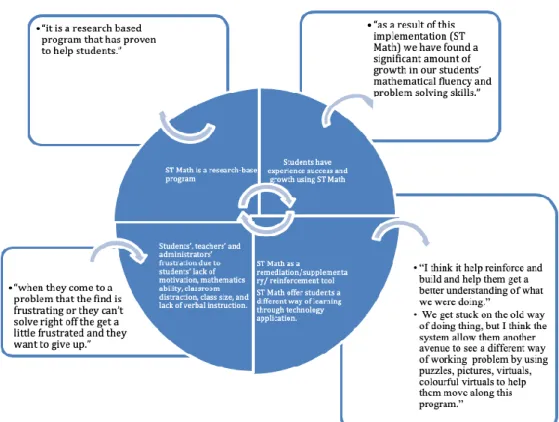
Theme 2: Students have Experience Success and Growth using ST Math... 97
Theme 3: ST Math as a Remediation/Supplementary/ Reinforcement Tool ... 99
Theme 4: ST Math offer Students a Different Way of Learning through Technology Application... 100
Theme 5: Students, Teachers and Administrator’s Frustration and Challenges ... 101
iv
Research Question 2 ... 104
Discrepant Data ... 106
Summary ...108
Chapter 5: Discussion, Conclusions, and Recommendations ...110
Interpretation of the Findings...111
Alignment to the Literature ...112
Limitations of the Study...114
Recommendations ...115
Implications...116
Conclusion ...117
References ...119
Appendix A: Interview Protocol ...137
Appendix B: Mathematics Proficiency Levels Before (2014–2015) and After (2016–2018) Implementation...140
v List of Tables
Table 1. Interview Questions That Correspond With the Research Questions... 68 Table 2. Overview of the Research Design ... 69 Table 3. Participants’ Identification Numbers, Role and Years of Experience ... 80 Table 4. Codes and Themes Related to the Research Questions and Conceptual
Framework. ... 85 Table 5. Mathematics Proficiency Level Prior to Implementation (2014 and 2015) and
Proficiency Level After Implementation 2016–2018 ... 89 Table 6. Mathematics Proficiency Level Prior to Implementation (2014 and 2015) and
Proficiency Level After Implementation 2016—2019, by Cohorts... 90 Table 7. Qualitative Descriptive Analyses of the Students’ Aggregate Mean Score of ST
Math Pretest and Posttest ... 91 Table 8. Qualitative Descriptive Analyses of the Students’ Aggregate Mean Score of ST
vi List of Figures
Figure 1. Vygotsky’s mediational triangle……….22
Figure 2. Model of mediated action………...23
Figure 3. Model of an activity system. ... 24
Figure 4. Mayer’s cognitive theory of multimedia learning ... 26
Figure 5. Mayer’s cognitive theory of multimedia ... 27
Figure 6. Partnership for 21st century skills model ... 30
Figure 7. Frequently used words, generated by NVivo ... 84
Figure 8. Example of NVivo coding related to technology usage. ... 86
Figure 9. Examples of quotes related to the themes. ... 95
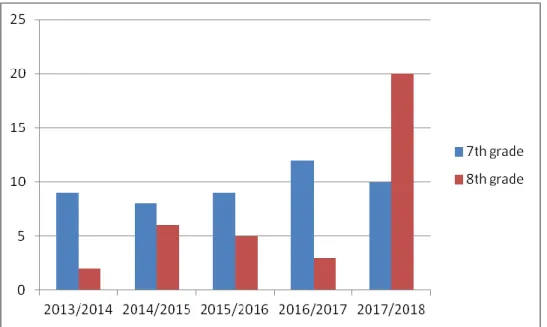
Figure 10. Mathematics proficiency level prior to implementation (2014 and 2015) and proficiency level after implementation 2016–2018. ... 104
Chapter 1: Introduction to the Study
Many students enter middle school unprepared for middle-school mathematics curriculum (Bowens & Warren, 2016; Chang, Evans, Kim, Norton, & Samur, 2015; Nelson, Parker, & Zaslofsky, 2016; Onwumere & Reid, 2014; Wendt, Rice, &
Nakamoto, 2014); therefore, learning and mastering mathematics becomes a challenge. Teaching and learning mathematics with the assistance of technology programs have been proposed as one way to address the student achievement gap and to support students’ mastery of necessary mathematics skills in middle schools (Chappell, Arnold, Nunnery, & Grant, 2015; Drijvers, 2015; Sparapani, & Calahan, 2015). Many schools are engaged in revolutionizing the learning atmosphere and developing learning proficiency by using appropriate technology tools and instructions (Onal & Demir, 2017). Because of technology usage, students are engaged in an active learning process (Colvin-Sterling, 2016; Kay, 2014; Luo, 2018; Luo, & Murray 2018; Murray & Rabiner, 2014; Nart, 2016; Williams & Larwin, 2016).
One technology program used to aid proficiency in mathematics in seventh and eighth grade is spatial-temporal math (ST Math), but its advantages and challenges have not been studied in middle school. This study aimed at learning about teachers’ and administrators’ perceptions of the advantages and challenges of implementing the ST Math technology program and descriptively examined what students’ test results indicate about the overall changes in test scores when continuous implementation of the program is used compared to prior to its use.
The ST Math technology program is a multimedia technology game-based instructional program used in elementary and middle schools to provide students with supplementary mathematics instruction to close gaps and promote proficiency in mathematics skills. ST Math focuses on mathematics curriculum and uses game-like visuals to teach mathematics skills. Students log into their account with their picture password and complete mathematics puzzles anytime and anywhere with or without teacher assistance (Nisbet & Luther, 2014; Rutherford et al., 2014).
In this chapter, I discuss the background of the study and introduce the problem statement and purpose of the study. Also included in this section is the research
questions, conceptual framework, nature of the study, definitions, assumptions, scope and delimitations, limitations, and the significance of the study.
Background
Mathematics is one of the three disciplines regularly discussed both nationally and internationally because of its importance (Brackett, 2016; Felton, 2014; Onybuchi & Norman, 2014; Sparapani et al., 2015). It predicts students’ success in pursuing careers related to math or courses of study in college that will empower them to transform their lives and society (Aguirre, 2016; Çetinkaya, Özgören, Orakcı, & Özdemir, 2018; Felton, 2014; McNeil & Fairley, 2016). In other words, to be successful in science, technology, engineering, and mathematic-related (STEM) courses in high school, college, and career, middle-school students must be successful and acquire mastery in basic mathematics skills (DeCoito & Richardson, 2016; McNeil & Fairley, 2016; Nelson et al., 2016). Mathematics underachievement has been a major concern nationally (Callan & Cleary,
2018). Students’ failure to master these skills early will contribute to difficulty in meeting grade level expectations in later years because mathematics skills build on one another (Brackett, 2016; Nelson et al., 2016). Unfortunately, some students enter middle school without mastering these basic mathematics skills and are not prepared for the
mathematics curriculum.
Based on the importance and relevance of mathematics to students’ academic and functional ability, students are expected to learn and be proficient in math. To ascertain students’ level of proficiency in math, students in the United States are required to take a yearly mathematics standardized test (Polikoff, Greene, & Huffman, 2017; Stotsky, 2016). This test is vital for educators’ accountability. The students’ standardized tests are valuable methods for rating students learning and holding teachers, schools, and districts accountable for the failure or success of the school (Balenlyne & Varga, 2016; Polikoff, Greene, & Huffman, 2017; Stotsky, 2016). Students tend to be uninterested and
unmotivated in learning the mathematics subject, which can lead to a lack of proficiency in the subject (Balenlyne & Varga, 2016; Herges, Duffied, Martin, & Wageman, 2017; Musu-Gillette, Wigfield, Harring, & Eccles, 2015).
Research indicates that integrating technology in teaching and learning will bring about a significant increase in learning achievement and improve students’ proficiency in any given subject and the standardized testing associated with it (Colvin-Sterling, 2016; Kay, 2014; Luo, 2018; Luo, & Murray 2018; Murray & Rabiner, 2014; Nart, 2016; Williams & Larwin, 2016). Wu (2018) stated that technology games that are skillfully designed are beneficial and can promote and aid students’ learning and understanding of
the subject. Similarly, Edwards and Boody (2017) maintained that computer games increase students active learning and commitment by providing both audiovisual learning setting.
ST Math has been proposed as a multimedia technology game based instructional program that enhances students’ engagement in mathematics thereby improving their mathematics proficiency. The program makes use of game-like visual to demonstrate mathematic skills. Research of ST Math usage in elementary schools has indicated it benefits students’ mathematics curriculum mastery (Nisbet & Luther, 2014; Rutherford et al., 2014; Wendt et al., 2014), but there is no documented research regarding its
advantages and challenges when implemented at the middle-school level.
In this study, I examined the advantages and challenges of implementing ST Math on students’ learning and proficiency in mathematics in seventh and eighth grade. To accomplish this, I examined teachers’ and administrators’ perspectives of the program as a research-based curriculum that seeks to assist students in mathematics proficiency. I also descriptively examined what students’ test results indicated about the overall
changes in test scores when continuous implementation of the program is used in seventh and eighth grade compared to prior to its use. The outcome of the study may fill a gap in the literature where there has been a lack of research on the advantages and challenges of ST Math in middle schools and the benefit of the continuous use of the program (more than a 1-year period) to improve the quality of students’ learning and proficiency in mathematics. In addition, the results of this study may inform and allow better understanding for decision makers about the advantages of the program and could
potentially produce several positive outcomes in the domain of curriculum, instruction, and assessment.
Problem Statement
The problem is that the advantages and challenges of implementing ST Math, a multimedia technology game-based instructional program on students’ learning and proficiency in mathematics has not been studied at the middle-school level.
A small number of researchers have investigated and evaluated the role of ST Math in promoting mathematics learning, but these studies were in elementary schools (Nisbet & Luther, 2014; Rutherford et al., 2014). No similar study has been conducted in middle school, and the last documented research of the ST Math program was in 2014. Rutherford et al. (2014), Schenke et al. (2014), and Wendt et al. (2014) conducted separate research on the implementation of ST Math technology program in Grades 3 through 5 in California schools. These studies focused on the application of ST Math for a 1-year period. The question that originated out of these studies is whether continuous implementation of ST Math beyond a single school year has a more beneficial effect on the students’ mathematics proficiency over time due to multiple years of exposure or long-term effects after the exposure ends (Rutherford et al., 2014; Schenke et al., 2014; Wendt et al., 2014). Therefore, in the current study I sought to address the lack of knowledge on the advantages and challenges of implementing ST Math in seventh and eighth grade to improve students’ learning outcomes.
Purpose of the Study
The purpose of this qualitative single case study is to examine the advantages and challenges of implementing ST Math on students’ learning and proficiency in
mathematics in seventh and eighth grade. To accomplish this, I examined teachers’ and administrators’ perspectives of the program as a research-based curriculum that seeks to assist seventh and eighth-grade students in mathematics proficiency. I also descriptively examined students’ test results to determine the overall changes in test scores when continuous implementation of the program is used in seventh and eighth grade compared to prior to its use.
Research Questions
In this case study, I sought to examine the advantages and challenges of
implementing ST Math program on students’ learning and proficiency in mathematics in middle school, specifically seventh and eighth grade. In the study, I addressed the following research questions:
RQ1: What are teachers’ and administrators’ perspectives of the advantages and challenges of implementing ST Math multimedia technology game-based instructional programing on students’ learning and proficiency in mathematics in seventh and eighth grade?
RQ2: What do students’ test results indicate about the overall changes in test scores with the continuous implementation of the ST Math multimedia technology instructional program in seventhand eighth grade?
Conceptual Framework
Schools and educators search for ways to engage both teachers and students in technology-driven instruction. In this research, I focused on Vygotsky’s (1978) activity theory, Mayer’s (2001) cognitive theory of multimedia learning, and the 21st century skills theory (Partnership for 21st Century Skills, 2006). These three theories deal with the importance of technology in teaching and learning and how to successfully
incorporate technology during instruction to enhance students learning and achievement in a technologically driven society. The theories contribute to making the learning process easier by creating guidelines for a conducive interactive environment where students are actively involved and are learning by doing, communicating, and receiving feedback (Kaptelinin & Nardi, 1997; Kuzu et al., 2007; Mayer’s 2001; Partnership for 21st Century Skills, 2006; Redmond, 2015; Venkat & Adler, 2008; Vygotsky, 1978).
In activity theory, Vygotsky (1978) maintained that “all premeditated human actions are goal-directed and tool-mediated by artifacts or tools” (Venkat & Adler, 2008, p. 127). This study is grounded in these relevant constructs of activity theory which suggest that (a) there is an individual or collective subject who performs an action, (b) the action or activity is aimed at an object or something, and (c) there should be an
interaction between the subject and the object (Venkat & Adler, 2008; Vygotsky, 1978). The study research questions are designed to explore the advantages and
challenges of ST Math as students and teachers (subjects) interact with the program using desktop computers, iPads, or laptops (tools). In this research, the object is the ST Math program. For this research, elements of activity theory are a necessary phenomenon to be
studied. Interview questions were used to explore the teachers’ and administrator perspectives through the lens of activity theory. I constructed the interview protocol to include the relevant constructs of the conceptual framework. My data analysis was grounded in the conceptual framework using priority codes that included the relevant elements of the activity theory.
Cognitive theory of multimedia learning (Mayer 2001; Mayer et al. 2004; Mayer, 2014) is focused on the concepts that (a) students best acquire knowledge when words and pictures are showed in conjunction instead of words alone, (b) students need the opportunity to make connections between the verbal and graphic conceptual schema construct they have created (Mayer’s, 2001; Kuzu et al., 2007), and (c) working memory is the most important aspect of multimedia learning because multimedia learning takes place in the working memory (Mayer, 2014; Schweppe, 2014).
This research study was framed by the concept that instructional practices should include multimedia instruction to maximize students’ mathematic learning proficiency. I used interview questions to explore teachers’ and administrators’ perspectives of the advantages and challenges of the ST Math program as a multimedia human computer interaction program. My data analysis was grounded in the conceptual framework using priority codes that included the relevant elements of cognitive theory of multimedia learning.
Another conceptual framework for this study was 21st century skills theory (Partnership for 21st Century Skills, 2006), which is used to focus on the following:
1. Enhancing learners’ knowledge and making them successful in schools and careers (Partnership for 21st Century Skills, 2006);
2. Engaging students in multimedia projects, such as online games (Senechal, 2010); 3. Technology that enables students to acquire skills and knowledge needed to
function successfully in the technological world of the 21st century (Redmond, 2015);
4. Shared responsibility of schools and educators to ensure students receive education and training that prepares them for the workforce and society (Partnership for 21st Century Skills, n.d.; Tucker, 2014); and
5. Teachers’ ability to grasp students’ interest as they efficiently incorporate extensive kinds of media texts into their curriculum (Redmond, 2015). This study’s research questions are designed to explore teachers’ perceptions on the advantages and challenges of the implementation of ST Math as an element of the 21st century skills theory that contributes to improving students’ mathematics proficiency. The study is guided by the fact that instructional practices should include elements of 21st century skills, especially technology application, which must be relevant to students’ learning (Partnership for 21st Century Skills, n.d.; Tucker, 2014; Redmond, 2015). The interview questions were used to explore the benefits of continuous implementation of ST Math beyond a single school year and how, as an element of 21st century skills, it
contributed to improving students’ mathematics proficiency through the lens of test results. In the data analysis, I used a priori codes based on elements of the 21st century skills theory to develop the themes.
Nature of the Study
The nature of this study is a qualitative single case study that includes multiple data streams. Qualitative research is mainly investigative research that searches for in-depth understanding of a social phenomenon within participants’ natural setting (Creswell, 2009, 2013, 2014; Ngozwana, 2018). Case study research is employed to analyze a phenomenon, generate hypotheses, or verify an approach (Creswell, 2009; Creswell, 2013). The phenomenon studied in this research was the ST Math program. Participants for the study consisted of three mathematics teachers, an administrator, and a school improvement plan (SIP) leadership team facilitator of Midland Middle School (pseudonym). Data collection involved participant interviews, descriptive examination of documents such as student scores on the ST Math pretest, posttest and recorded
standardized test scores from the last 5 years. Inter transcripts were provided to the participants for verification and then coded by searching for themes. I used the computer software NVivo to produce code maps and organize the codes into themes. Following, I descriptively analyzed the students’ test report scores. I triangulated the different data collected for trustworthiness.
Definitions
Spatial-temporal math (ST Math): A multimedia technology game-based
instructional program built on mathematics curriculum and pedagogy. Students log into the program with their password and solve mathematics puzzles (Nisbet & Luther, 2014; Rutherford et al., 2014; Schenke et al., 2014; Wendt et al., 2014).
Mathematics proficiency: The ability of students to understand mathematical concepts, order of operations, and relationships between mathematical concepts (Çetinkaya et al., 2018).
Middle school: An intermediate school in between elementary school and high school. Most middle schools are comprised of sixth, seventh, and eighth grades
(Çetinkaya et al., 2018; Romero, Master, Paunesku, Dweck, & Gross, 2014). The setting for this study includes only seventh and eighth grade.
Technology instruction: The use of technological tools to support teaching and learning. Students and teachers participate actively in a technology rich classroom (Colvin-Sterling, 2016; Kay, 2014; Luo, 2018; Luo & Murray 2018; Williams & Larwin, 2016).
Mathematics curriculum: The “plan for the experiences that learners will
encounter, as well as the actual experiences they do encounter, that are designed to help them reach specified mathematics objectives” (Remillard & Heck, 2014, p. 707). A planned learning objective geared toward enabling students to understand mathematical concepts and relationships between them.
Assumptions
Three assumptions emerged from this research. First, during the interviews, I assumed teachers and administrators would give honest perspectives regarding the advantages and challenges of ST Math technology program in the school. Second, I assumed I would obtain reliable data from the school. Third, I assumed that the students would perform to the best of their abilities on the pretest and posttest and the state
standardized test. These assumptions were necessary because they enabled me to ask the right questions, analyze multiple data, and examine participant backgrounds to determine the trustworthiness and validity of the accounts; they kept me focused throughout the research process.
Scope and Delimitations
The scope of this study was confined to seventh and eighth-grade students in Midland Middle School. I chose this group because the students participated in the ST Math program. I would have preferred only students who are not proficient in
mathematics to participate, but in this case, all Midland Middle School students participated in the program. The recorded standardized test scores I examined were limited to the last 5 years, 2014 to 2018. Interview participants were three mathematics teachers, an administrator, and a SIP leadership team facilitator at the middle school. I would have preferred to interview more than three mathematics teachers, but this particular school has a small population of students and teachers. The ST Math program is related to human computer interaction theory, which was not chosen as one of the applied theories in this research. This research is restricted to this particular school, but the results may be applicable to similar situations, similar populations, and similar phenomena.
Limitations
This study focuses on a specific program (ST Math) using technology in a specific middle school; therefore, the results cannot be generalized to include other schools. Also, the results are restricted to student performance in mathematics and do not
involve other subjects or the school climate. The sample size for teacher interviews was small because there were only three mathematics teachers at the school. Nonetheless, the inclusion of other forms of data collection that enable triangulation enhances the validity and trustworthiness of the research.
Significance
The outcome of this study may add to the body of literature where there has been a lack of research on the advantages and challenges of ST Math in middle school and the benefits of continuous use of the program longer than a 1-year period. In addition, the results may inform and allow better understanding for decision makers about the advantages of the program and could potentially produce several positive outcomes in curriculum, instruction, and assessment. The results may identify possible successes and gaps in the ST Math program as a solution to students’ mastery of mathematics. Wendt et al. (2014) emphasized that the strength and the efficiency of the U.S. economy and its labor force is determined by its education system producing students who have proficient mathematics skills. Similarly, Musu-Gillette, Wigfield, Harring, and Eccles (2015) stressed that belief in perceived importance of mathematics as well as ability and interest in mathematics predict students’ plan to pursue a math-intensive career or course of study in high school. Therefore, it is imperative for stakeholders to empower students to be competent in mathematics. The results of this study may contribute to a better
Summary
Schools and educators search for beneficial approaches to engage both teachers and students in technology-driven instruction. Hall and Hord (2015) attested that, in this education age, various research on how to improve learning practices is being conducted. To improve students’ mathematics proficiency at the participating school, ST Math was adopted and incorporated into the curriculum. Researchers have emphasized that
effective technology integration into the curriculum will improve students’ knowledge, keep them engaged and motivated, and provide them with the opportunity to learn through text, images, and sounds (Colvin-Sterling, 2016; Kay, 2014; Luo, 2018; Luo & Murray 2018; Murray & Rabiner, 2014; Nart, 2016; Williams & Larwin, 2016).
Similarly, National Educational Technology Standards (2014) have stressed the need to use learner-centered strategies and provide students with appropriate digital tools and resources. Vygotsky’s activity theory, the 21st century skills theory, and Mayer’s cognitive theory of multimedia learning have contributed to enhancing and enriching schools and classrooms that have implemented them. They have served as a course of action for the implementation of efficient approaches to engaging teachers and students in technology-driven instruction and learning.
In Chapter 2, I focus on the importance of mathematics proficiency in middle school, middle-school mathematics curriculum, technology application in learning, and a description of ST Math program. Additionally, I discuss the implication of school
technology in the classroom. I also establish the conceptual framework of the study and review specific literature search strategies and terms used in the study.
Chapter 2: Literature Review
National Center for Education Statistics (2014) revealed that many middle-school students in the United States perform below average on the National Assessment of Educational Progress mathematics assessment. The assessment results indicated that students are not well-prepared for middle-school mathematics curriculum (Bowen & Warren, 2016; Nelson et al., 2016). Students’ positive perspectives concerning mathematics start regressing in elementary school; at the same time, they develop an increase in math anxiety (Balenlyne & Varga, 2016). When they arrive at middle school, their attitudes decline further, and they start losing self-confidence in their mathematics capabilities (Balenlyne & Varga, 2016; Onal & Demir, 2017). Lack of success in mathematics education is a problem of national concern (Callan & Cleary, 2018; Levi, Chahine, Garrett & Wang 2016), and for more than 50 years, educational stakeholders have struggled to determine the best method of improving mathematics proficiency (Brown, 2018; Mulcaly, 2014).
School districts spend a significant amount of funds on lessons and practices to increase student proficiency in mathematics, with little success (Brown, 2018). The lack of progress has established a need for a research-based instructional curriculum that can facilitate an increase in student mathematics proficiency from below average to average and above average. Researchers have reported significant increases in student academic outcomes when technology is implemented and integrated into the curriculum (Chappell et al., 2015; Drijvers, 2015; Sparapani, & Calahan, 2015; Williams & Larwin, 2016). Technology integration in all scope of subjects has become linked to effective teaching in
public schools (Park & McLeod, 2018). K-12 schools in the United States and beyond are investing in educational technology and software to promote student learning (Leonard et al., 2016; Park & McLeod, 2018). With the increasing availability of technology-based tools, such as educational software and apps, studies have shown that these tools offer new approaches and strategies for educational pedagogy (Karatas, Tunc, Yilmaz & Karaci, 2017). This technology complements the traditional classroom teaching method (Park & McLeod, 2018; Working, 2018) and changes the classroom environment by facilitating a change in the learning culture from the traditional teacher-centered
paradigm to a student-centered paradigm (Levi et al., 2016). It also promotes higher-level thinking in mathematics and other subjects (Working, 2018). Technology reduces
cognitive load (Falloon, 2017), enhances group work, and increases knowledge and evaluation (Working, 2018). It offers immediate feedback and improves motivation (Working, 2018). The use of technology in the classroom can support a more positive attitude toward mathematics for middle-school students (Balenlyne & Varga 2016).
Students in Midland Middle School scored below state average on the state standardized test. The school district introduced the ST Math technology program as an instructional curriculum to improve student mathematics proficiency. However, the advantages and challenges of implementing ST Math, a multimedia technology game-based instructional program, on students’ learning and proficiency in middle-school mathematics has not been studied at the middle-school level. The purpose of this study is to examine the advantages and challenges of implementing ST Math on students’
I examined teachers’ and administrators’ perspectives of the program as a research-based curriculum that seeks to assist students to be proficient in mathematics. I also
descriptively examined student test results to determine the overall changes in test scores when continuous implementation of the program is used in seventh and eighth grade compared to prior to its use.
In Chapter 1, I introduced the topic, statement of the problem, purpose, and background information of the study. I proceeded to highlight the nature, significance, and implications for social change. Also included in Chapter 1 is discussion of the conceptual framework for the study and the assumptions, scope, delimitations, and limitations of the study.
In this chapter, my literature review focuses on the importance of mathematics proficiency in middle school, middle-school mathematics curriculum, application of technology in learning, and a description of the ST Math program. Also, I discuss the implication of school accountability, standardized testing, teachers’ perceptions, and limitations of using technology in the classroom. I establish the conceptual framework of the study and review specific literature search strategies and terms used in the study.
Literature Search Strategies
The literature search for this study included reviewing peer-reviewed, scholarly articles available through the Walden University database, including published
dissertations. The database includes ERIC, Google Scholar, SAGE Journals, Academic Search Complete, and Education Research. The U.S. Department of Education websites were also used to obtain information and copies of studies. The keywords used in
searching online materials both alone and in combination were technology application in learning, importance of mathematics, computer assisted instruction, instructional
computer game, research-based instruction, middle school, teachers perceptions and perspective, middle school mathematics, computer learning theories, technology application theories, ST Math application, importance of technology, teacher and technology integration in learning, technology and student achievement, technology and mathematics achievement, relevance of mathematics in middle school, ST Math
technology program, usefulness of ST Math technology program, activity theory, cognitive theory, and 21st century skills.
The scope of the literature review included peer-reviewed, scholarly articles published within the last 5 years. However, a few articles older than this were used to further reinforce some of the points related to the study. Over 60 full-text journals and peer-reviewed articles were sorted and used for this study.
Conceptual Framework
The conceptual framework for this study was based on Vygotsky’s (1978) activity theory, Mayer’s (2001) cognitive theory of multimedia learning, and the 21st century skills theory (Partnership for 21st Century Skills, 2006) The three theories deal with how to successfully incorporate technology during instruction to enhance student learning and achievement in a technology-driven society. These theories have influenced how
software for learning has been developed and how it has contributed to supporting higher level thinking skill development. The theories contribute to making the learning process easier by creating a guideline of a conducive interactive environment where students are
actively involved and are learning by doing, communicating, and receiving feedback (Kaptelinin & Nardi, 1997; Kuzu et al., 2007; Mayer, 2001; Partnership for 21st Century Skills, 2006; Redmond, 2015; Venkat & Adler, 2008; Vygotsky, 1978).
In activity theory, Vygotsky (1978) maintained that all premeditated human actions are goal-directed and tool-mediated by artifacts or tools (Venkat & Adler, 2008, p. 127). This study is grounded in the relevant constructs of activity theory, which suggest that (a) there is an individual or collective subject (agent) who performs an action, (b) the action or activity is aimed at an object or something, and (c) there should be an interaction between the subject and the object. In other words, the subject (agent) should be interacting with an object (Venkat & Adler, 2008; Vygotsky, 1978).
The research questions were designed to explore the advantages and challenges of implementing the ST Math technology program as subjects (the students and teachers) interact with the program using tools (a desktop computer, iPad, or laptop). In the classroom, the objects that the teachers interact with are the technology devices (tools) that they implement to develop the students’ abilities to reason intelligently (Russell & Schneiderheinze, 2005). In this research, the object is the ST Math technology program. Constructing knowledge is an important part of students’ classroom response and
interaction. Technology usage in the educational environment supports and enhances the student learning abilities. For technology to be used effectively, it must be used in conjunction with existing tools and concepts in a specified environment (Russell & Schneiderheinze, 2005).
The purpose of this qualitative single case study was to examine the advantages and challenges of implementing ST Math on students’ learning and proficiency in mathematics in seventh and eighth grade. To accomplish this, I examined teachers’ and administrators’ perspectives of the program as a research-based curriculum that seeks to assist students in mathematics proficiency. I also descriptively examined test results indicating the overall changes in students’ test scores when continuous implementation of the program is used in seventh and eighth grade compared to prior to its use.
This research purpose is supported by the concept that improving students’ mathematics proficiency should involve students’ interaction with the ST Math technology program. Because of the interaction of the subjects with the mediating artifact—the ST Math technology program carried out on technology devices—there is bound to be changes in their learning as they develop higher-order thinking abilities that offer them the chance to build adequate knowledge that will assist them in responding intelligently to current and related issues. For this research, elements of activity theory are a necessary phenomenon to be studied. Interview questions explored teachers’ and administrators’ perspectives on the advantages and challenges of implementing the ST Math program on seventh and eighth-grade students’ learning and proficiency in
mathematics. Also, I descriptively examined test results to determine overall changes in student test scores when continuous implementation of the program is used in seventh and eighth grade compared to prior to its use. The interview protocol was constructed to include the relevant constructs of the conceptual framework. Data analysis was grounded
in the conceptual framework by using priority codes that included the relevant elements of the activity theory.
Activity Model Triangle
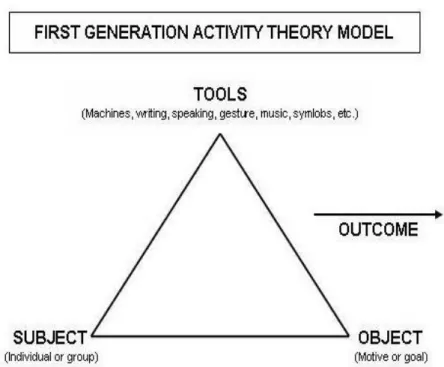
Vygotsky (1978) demonstrate the view of subject-tool-object in his renowned triadic, shown in Figure 1 and Figure 2. In Figure 1, the triangle includes the subject, tool, and object; in Figure 2, the triangle is expanded to include the outcome of the process.
Figure 1. Vygotsky’s mediational triangle (on the basis of Vygotsky, 1978/1933) Adapted from “Signs and Codes in Early Childhood: An Investigation of Young Children’s Creative Approaches to Communication,” by K. Guo, and N. Mackenzie, 2015, Australasian Journal of Early Childhood. 40, p. 2
Figure 2. Model of mediated action (on the basis of Vygotsky, 1978). Adapted from “Expanding the Foci of Activity Theory: Accessing the Broader Contexts and
Experiences of Mathematics Education Reform,” by H. Venkat, and J. Adler, J. 2008, Educational Review, 60(2), p.129.
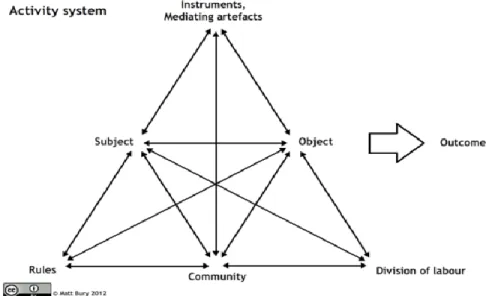
Many researchers have modified Vygotsky’s triangles, including Leontiev (1981). Expanding on Vygotsky idea, Leontiev broadened the concept to include collective and institutional activities of community, division of labor, and rules. Engestrom (1987) represented Leontiev’s idea in a detailed triangular outline, represented in Figure 3.
Figure 3. Model of an activity system (on the basis of Engestrom, 1987). Adapted from “Expanding the Foci of Activity Theory: Accessing the Broader Contexts and
Experiences of Mathematics Education Reform,” by H. Venkat, and J. Adler, J. 2008, Educational Review, 60(2), p.130.
Cognitive Theory of Multimedia Learning
Mayer’s (2001) and Mayer et al.’s (2004) cognitive theory of multimedia learning focuses on the concept that (a) students best acquire knowledge when words and pictures are showed in conjunction instead of with words alone, (b) students need the opportunity to make connections between the verbal and graphic conceptual schema construct they have created (Mayer, 2001; Kuzu et al., 2007), and (c) working memory is the most important aspect of multimedia learning because multimedia learning takes place in the working memory (Mayer, 2014). Kuzu et al. (2007) define multimedia as computer-based applications where learners are presented with information through diverse kinds of media (Kuzu et al., 2007). Mayer (2001) summed it up as the presentation of learning material using both words and pictures. The words could be spoken or written, and the pictures are visual representations, such as animation, photos, video, or illustrations. The
key purpose of multimedia learning theory as a classroom instruction strategy is on how to assist learners in mastering the learning material.
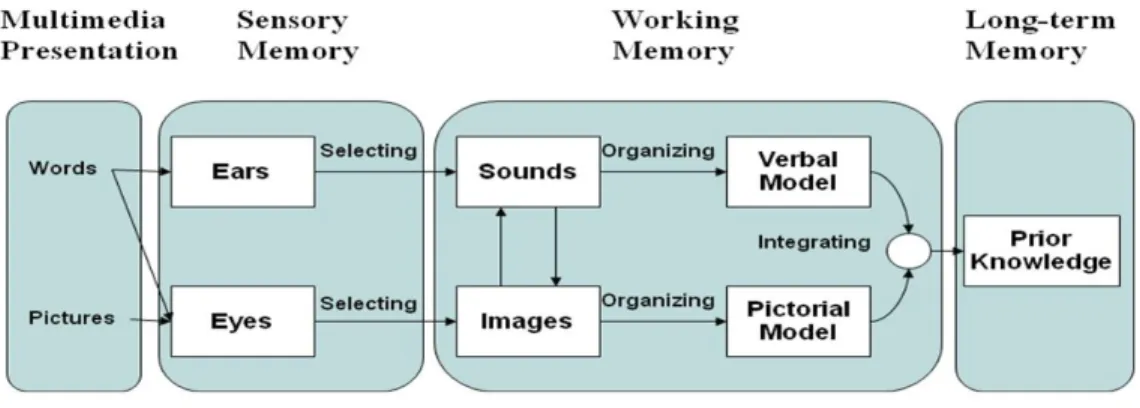
In line with the cognitive foundation, Mayer focuses on the sensory memory, working memory perception, attention, and long-term memory (Mayer, 2005; Schweppe, 2014). According to Mayer (2014), working memory is the most important aspect of multimedia learning because learning with the aid of multimedia occurs in the working memory. When pictures and words are presented to the learner through a multimedia presentation, they are processed along two distinctive channels: the ears and eyes. They then enter the sensory memory (Mayer, 2005; Schweppe, 2014). In the sensory memory learners decide on words and images to transfer to the working memory. The words and images transferred to the working memory are organized into a verbal and pictorial model, and only a small amount of information can be processed at any given period. A combination of the learners’ prior knowledge and the verbal and pictorial models are retrieved from the long-term memory (Mayer, 2005; Schweppe, 2014). Mayer (2001) illustrated his cognitive theory in Figures 4 and 5 below:
Figure 4. Mayer’s cognitive theory of multimedia learning. Adapted from Mayer, R. E., 1947. (2001). Multimedia Learning. Cambridge; New York: Cambridge University Press p. 37
According to Kuzu et al. (2007), Mayer is greatly concerned with reducing extraneous cognitive load. In attempting to reduce the extraneous cognitive load, various principles have been constructed and utilized to lessen the cognitive load; therefore, assisting the learners to obtain knowledge and improve their intellect. Mayer (2001) proposed seven principles for the design of multimedia instruction:
• Multimedia principles: This principle indicates that students learn best when words and pictures are used instead of only words.
• Spatial contiguity principle: This principle emphasizes that words and pictures should be rendered in close proximity.
• Temporal contiguity principle: This principle shows that effective learning occurs when matching pictures and words are presented together.
• Coherence principle: According to this principle, learning is enhanced when extraneous words, sounds and pictures are excluded from the media presentation.
• Modality principle: This principle rationalize that students acquire knowledge better when narration and animation is utilized than the use of on-screen text and animation alone.
• Redundancy principle: Here Mayer emphasizes that learning occurs with the combination of narration and animation than the utilization of narration, animation and on-screen text.
• Individual differences principles: Mayer rationalized that the design effects in multimedia learning are most favorable for low-knowledge learners and high-spatial learner than for the high-knowledge learners and low high-spatial learners (p. 223)
Figure 5. The theory that influenced Mayer’s cognitive theory of multimedia. This research study was framed by the concept that instructional practices should include multimedia designed instruction to maximize students’ mathematic learning proficiency. Interview questions explored the teachers’ and administrators’ perspectives
Mayer Cognitive Theory of Multimedia Learning Dual Coding Theory Active Processing Limited Capacity theory
of the advantages and challenges of ST Math program as a multimedia human computer interaction program. Data analysis was grounded in the conceptual framework by using a priority codes which included the relevant elements of cognitive theory of multimedia learning.
The 21st Century Skills Theory
Another conceptual framework for this study is based on the 21st century skills theory. The primary focus of the Partnership for 21st Century Skills is to (a) enhance learners’ knowledge; therefore, making them successful in schools and career life (Partnership for 21st Century Skills, 2006); (b) engage students in multimedia projects such as generating online game for the students (Senechal, 2010); (c) students’
engagement with technology will enable them to acquire skills and knowledge needed to function successfully in the technological world of the 21st century (Redmond, 2015); (d) It is the responsibility of the schools and educators to make certain that students receive the education and training that will prepare them for the world workforce and the society at large (partnership for 21st century skills, n.d., Tucker, 2014); and (e) teachers can grasp students’ interest when they can efficiently incorporate extensive kinds of media texts into their curriculum (Redmond, 2015).
The 21st century skills as shared by Jones (2014) include the following set of skills:
• Students mastering of the core subjects: English, English language arts, reading, mathematics, science, arts, geography, civic, government, history, and economics.
• Information, media, technology skills such as information, communication technology (ICT) literacy, media literacy, information literacy
• Learning innovation skills include innovation, creativity, critical thinking, problem solving, communication and collaboration.
• The 21st century themes such as global awareness, health literacy, environmental literacy, civic literacy, financial literacy, entrepreneurial skills, economic and business.
• Life and career skills which include social and cross-cultural skills, initiative, self-direction, flexibility, adaptability, leadership, responsibility, productivity, and accountability (p. 12).
This study’s research questions are designed to explore how the integration of ST Math technology program as an element of the 21st century skills theory contributes to improving students’ mathematics proficiency. The purpose of the study was structured by the fact that instructional practices should include elements of the 21st century skills especially technology application that must be relevant to students’ learning (Partnership for 21st Century Skills, n.d., Tucker, 2014, Redmond, 2015). The interview questions explored the advantages of ST Math technology program and how as an element of 21st century skill contributes to improving students’ mathematics proficiency through the lens of students’ tests results. In the analysis of data, a priori codes based on the elements of the 21st century skills theory was used to develop the themes. Figure 5 illustrates the 21st
century skills theory.
Figure 6. Partnership for 21st century skills model. Literature Review Related to Key Variables and/or Concepts
Technological instructional programs have revolutionized teaching and learning (Colvin-Sterling, 2016; Luo, 2018; Luo & Murray 2018; Williams & Larwin, 2016). A growing number of schools around the country and beyond are occupied with
transforming the learning atmosphere of the school and developing students’ learning proficiency through technology tools and instructions (Onal & Demir, 2017). The three theories discussed above (activity theory, cognitive theory of multimedia learning, and the 21st century theory) have served as a course of action for the implementation of
21st
Century
Skills
Creativity and Innovation Communication and Collaboration Research and Information Digital Citizenship Life and Career Skills Global, Health, Financial and Civic Literacypractical approaches to engaging teachers and students in a technology-driven instruction and learning. Students are motivated to come to school, remain in school and learn as a result of technology usage. Also, students are actively involved and are learning by doing, communicating, and receiving feedback. They also use their knowledge and skills to solve problems and engage in an active learning process (Colvin-Sterling, 2016; Kay, 2014; Luo, 2018; Luo & Murray 2018; Murray & Rabiner, 2014; Nart, 2016; Williams & Larwin, 2016).
Educational leaders understand that because the world is changing, the schools must change as well. The National Educational Technology Standards (2014) stressed the need to use learner-centered strategies and provide students with the appropriate digital tools and resources. They believed that a technology enriched classroom and instruction will produce students who will become problem solvers, decision-makers, and policy makers in the society. As the world is becoming more digital, so students are expected to engage with media and technology. Students’ engagement with technology will enable them to acquire skills and knowledge needed to function successfully in the technological world of the 21st century (Redmond, 2015). According to Tucker (2014) the goal of the partnership for 21st century skills is to provide the educational system tools and resources needed to prepare the students to participate actively in the global economy. Most schools teach knowledge and skills stipulated by the core curriculum without making the
connection to the 21st century workplaces, but they thrive to close such a gap (Tucker, 2014). Unless more effort is exercise in closing the gap between what students learn and its relevant to their living, the educational system of today will be insignificant
(Partnership for 21st Century Skills, n.d., Tucker, 2014). Different technological devices are used in the classrooms to support students’ technology need. These devices include iPod, iPad, cell phones, tablets, projectors, document camera, Apple TV, and e-beam. Also, most recently, educators utilized different technology derived teaching and learning games to enhance classroom instructions.
Investigation of Some Technology Assisted Programs
The call for the enhancement and implementation of the 21st century skills has necessitated changes in the teaching and learning practices; therefore, educators have come up with different technology programs that are used to support and enhance classroom pedagogies (Falloon, 2017; Park & McLeod, 2018; Swallow, 2017). Both teachers and students’ access to technology devices have doubled over the past years (Swallow, 2017). While some of these programs are very effective, some have come under criticism. Grant (2015) examined the use of mobile computing devices in K–12 classrooms utilizing a qualitative case study approach. Data were collected from nine K– 12 teachers through the interview process. Findings revealed that mobile computing devices motivates and engages students in their learning. Similarly, Swallow (2017) exploit a qualitative multiple-case study to examine the influence of one-on-one technology initiative on the teaching practices at a catholic school. Participant for the study were 4 middle school teachers. Data were collected through interview, observation, historical documents and field evidence. Findings revealed that technology promotes the desired teaching and learning outcome. Also, Bowens and Warren (2016) employed a mixed methods research to investigate the impact of the Jaime Escalante Math Program
(JEMP) on the students’ mathematics achievement in an urban school using 2 years of student math assessment data. The findings showed significant growth in participants’ mathematics scores, therefore revealing that the program was useful. Likewise, Carrick, Miller, Hagedorn, Smith-Konter, and Velasco (2016) evaluated the influence of the Pathways to the GeoSciences Summer High School Program on students’ admission and retention in the geosciences path. The objective of the evaluation was to assess the
effectiveness of the program in meeting its goals. A total of 245 students mainly Hispanic American origin in El Paso, Texas participated in the program over a period of 10 years. Data were collected using three types of survey instruments: pre- and post-participation surveys, formative evaluation of daily activities, and annual post-participation surveys. The short-term results indicated positive changes in student attitudes toward science and the geosciences while long-term showed that 55% of the participants remained in the geosciences path and 20% either majored in or were enrolled in geosciences major. Equally, Geer (2014) investigated the impact of the Success Maker Software program on the state mathematics tests of 4th-grade students. He discovered that integration of technology in the 4th-grade curriculum was beneficial and had a substantial effect on the 4th-grade students’ state mathematics tests.
In the same way, Williams and Larwin (2016) investigated the implementation of one on one computing environment and its effect on student achievement in Ohio high school. The result shows that one-on-one computing programs have the potential to improve student achievement. All the above studies show that the applications of
technology instructional programs are capable of enhancing classroom instruction and enable students to master or become proficient in the subject.
Not only are technology programs applied in the classrooms, but some of these programs are in form of simulations, games and virtual world’s applications that promote teaching and learning. Merchant, Goetz, Cifuentes, Keeney-Kennicutt and Davis (2014) conducted meta-analysis research to examine the effect of some technology used in the K-12 classrooms. The result shows that simulations, games, and virtual worlds were effective in improving the learning outcome gains. Similarly, Decoito and Richardson (2016) examined the potentials of a digital game. Participants agreed that science digital online games promote engagement, reinforcement of content material, advance 21st-century skills, and that computer-based games have significant educational value and can assist students to learn the principles, theories, and problem-solving in science. Also, Wu (2018) stated that literature supports the notion that well-designed digital games can facilitate and promote learning since the designs are based on some learning principles. These principles include providing immediate feedback, sandbox, customization, and adjustable difficulty level to motivate and meet the needs of the players (Wu, 2018). Lately, Edwards and Boody (2017) maintained that computer games tend to enhance students learning and actively involve students in a multisensory instruction atmosphere; therefore, improving mastering of the subject taught.
Although technology-assisted learning is beneficial to all students, for some students (At-Risk students/disability students/ inattentive students), this may be the best method of learning because it assists in providing visual representations, interaction, and
enabled differentiated and individualized instruction (Murray & Rabiner, 2014; Park & McLeod, 2018; Zheng, Warschauer, Hwang, & Collins, 2014). According to Zheng et al. (2014), at-risk students benefits from any technology-facilitate science instruction. It increases their science achievement, knowledge, and comprehension. Also, it encourages and inspires students to choose a STEM-related career. Besides, research indicated that when at-risk students are involved in scientific methods hands-on inquiry-based
mediations of constructing and investigating, it enhances their understanding of science concepts and achievements (Zheng et al., 2014). Murray and Rabiner (2014) emphasized that Computer-Assisted Technology Instruction (CAI) is a vital mediation remedy for inattentive young students who have certain disabilities. It can enhance the quantity of instructional time required of them especially in early elementary school. According to Murray and Rabiner (2014), data maintained that CAI would help older students with inattentive behavior become less disruptive and offtask in class during instruction.
Technology has become an integral part of teaching and learning. Various researches point to the fact that using technology for instructional purposes has revolutionized the methods of classroom teaching and learning. With an effective application of technology in the classroom, the teachers’ role shifts from that of an instructor to a mediator or facilitator who guides whenever necessary. Using technology, students are motivated to learn, participate in inquiry-learning, project-based learning, and improve in their problem-solving and communication skills. Also, students now can learn through images, sounds, and text. It is, therefore, imperative for teachers to apply
technology in the classrooms to support their classroom practice putting into consideration the importance of technology reviewed in the above pages. The Use of Technology in Mathematics
According to Bhagat and Chang (2015), mathematics is one of the major subjects in the curriculum of any school and grade levels and one of the criteria for admission into any technological and scientifically driven profession. It is, therefore, imperative for students to master and be successful in mathematics. Although understanding
mathematics is crucial, many students are not meeting expectations in this area. Callan and Cleary (2018) affirmed that students’ lack of proficiency in mathematics is a nationwide concern and it has prevented many students from completing higher degree and pursuing mathematics related profession. A considerable number of students find mathematics difficult, boring and suffer from fear and failure of the subject (Levi et al, 2016; Onal, & Demir, 2017; Yenmez, 2017). Educators acknowledged the necessity for implementing different approaches, strategies, curriculum, and teachers’ professional development that is essential to the improvement of students’ mathematics proficiency (Balenlyne & Varga, 2016; Murphy, 2016). Eronen and Karma (2018) pointed out that learning has gradually shifted from the behaviorist point of view to the constructivist prototype that put emphasis on cognitive practices. The various methods that educators utilized in the classroom to foster teaching and learning can influence students’ level of understanding of the subject (Balenlyne & Varga, 2016; Falloon, 2017; Levi et al., 2016; Murphy, 2016; Park & McLeod, 2018; Herro & Quigley, 2016). Educators nationwide call attention to the necessity for effectual mathematics instruction that will benefit all
students including students with disabilities (Mulcahy, 2014; Yenmez, 2017). There is the need for educators to study areas of improvement of mathematics and apply higher-order thinking in learning the subject so that students will be motivated and inspired to not only learning the basics of mathematics, but also see the practical uses of mathematics in the real-world (Karatas, Tunc, Yilmaz, & Karaci, 2017; Murphy, 2016; Yenmez, 2017).
There is a vital move to establish powerful technology-rich teaching and learning environment for education in the twenty-first century. Technology provides new
methods. Strategies, and tools for educational activities (Karatas et al., 2017; Leonard et al., 2016). Technology usage in the mathematics class can bring a lasting solution to students’ boredom and anxiety in the mathematics class (Balenlyne & Varga, 2016; Falloon, 2017; Herges, 2017; Musu-Gillette, 2015; Onal, & Demir, 2017; Yenmez, 2017). It provides significant independence that enables learners to establish how, when, and where to learn; therefore, offering additional academic answers for inspiring and shifting from the traditional approach of teaching (Eronen & Karma, 2018). The influence of technology in the teaching and learning of mathematics is continuously developing. It is important to note that technology not only help the students to learn mathematics concepts proficiently, but it can enhance a deeper understanding of mathematical concepts; therefore, bringing about a significant increase in learning achievement and proficiency (Budinski & Milinkovic, 2017; Levi et al., 2016).
According to Smith (2018) with the aid of technology, students take ownership of their own learning, participate in activities that stimulate deeper thinking and the role of the teacher become that of the facilitator. Student-centered approaches offer students
opportunity to collaborate and cooperate as well as to self-guide in making decisions regarding their own processes (Eronen & Karma, 2018; Levi et al., 2016). Eronen and Karma, (2018), stated that many students reported that the feeling of self-guidance improves learners’ meta-cognitive skills and ability to evaluate their own work. Eronen and Karma (2018) cited example involving the combination of geometric and symbolic thinking. They believed that technology for instance computer algebra system (CAS) calculators offer an appropriate setting wherein the latest mathematical conception in the problem-solving process can be learned through the manipulation of geometric or
symbolic representations of the concept. Gresalfi & Barnes (2015) emphasized that technology designed instructional games gives immediate feedback regarding the quality and level of students’ performance. These feedbacks are sorely formative and occur during the game; therefore, offering information that allow the players to change their behavior or activity.
One technology program that has been created to close the gap of students’ lack of proficiency in mathematics is the ST Math technology program. The Mind Research Institute created ST Math for K-12 education.
Spatial-Temporal Math Technology Program
In contrast to the traditional method of teaching mathematics, ST Math uses game-like visual to illustrate and teach math skills. Students help JiJi, a penguin, overcome obstacles by solving math puzzles. Each time a student solves a puzzle correctly, Jiji walks across to the next task. The level of difficulties increases as the student progresses into the next phase. Students have the opportunity to work
independently at their pace on mathematics standards at home or anywhere technology is available using a desktop computer, laptops, and iPads. Students log into ST Math with their password to work on mathematics standard at any given time at their learning ability pace. Díaz, Nussbaum, Ñopo, Maldonado-Carreño and Corredor (2015) emphasized that good teaching put into consideration specific student needs, diversity within the
classroom and individual student’s progress within the learning process reflecting the different paces of learning. Similarly, Levi et al, (2016) highlighted the need for a student-centered model of learning culture instead of teacher-centered model. Özerem and Akkoyunlu (2015) stressed that educators should design learning process or methods that put individual students’ learning styles into consideration instead of continuous constant learning approaches. Multimedia learning environments teaches by giving importance to individual differences. The cognitive theory of multimedia learning of Mayer (Mayer 2001, Mayer et al. 2004) focuses on the concept that students best acquire knowledge when words and pictures are presented concurrently rather than with words alone and students have the opportunity to make connections between the verbal and graphic conceptual schema construct they have created (Mayer’s 2001, Kuzu et al., 2007). ST Math seeks to teach mathematics using visual and putting individual needs into considerations.
ST Math technology program was developed from neuroscience research at the University of California, Irvine. Mind Research Institute’s unique methodology examined the brain’s inborn spatial-temporal thinking capability. According to Mind Research institute, the spatial temporal remains the foundation of revolutionary intelligent and