FP7-ICT-2011-8-317550-A4CLOUD
A4Cloud
www.a4cloud.eu
Accountability For Cloud and Other Future Internet Services
D:C-6.1: Risk and trust models for accountability in the
cloud
Deliverable Number: D36.1
Work Package: WP 36
Version: Final
Deliverable Lead Organisation: SAP
Dissemination Level: PU
Contractual Date of Delivery (release): 31 March 2014
Date of Delivery: 02/01/2014
Editor
Anderson Santana de Oliveira (SAP)
Contributors
Anderson de Oliveira, Alexandr Garaga (SAP); Leonardo A. Martucci
(KAU); Massimo Felici, Rehab Alnemr (HP); Dimitra Stefanatou, Maartje Niezen (TiU); Carmen Fernandez, David Nuñez (UMA); Bushra Hasnain, Asma Vranaki (QMUL) and; Erdal Cayirci (UiS)
Reviewer(s)
FP7-ICT-2011-8-317550-A4CLOUD Page 2 of 109
Executive Summary
Adequate trust and risk management are fundamental for governance in the cloud. Data controllers, processors, or more generally cloud customers must be aware of specific risks for business confidential, personal and other kinds of sensitive data subject to regulatory restrictions when using cloud services. In this deliverable we describe the progress in defining a representation of trust and risk for cloud service chains. We build on existing methodologies to create a high level approach to define risk in terms of the actors involved in a cloud service chain, possibly combining Software as a Service (SaaS), Platform as a Service (PaaS) and Infrastructure as a Service (IaaS), their responsibilities, obligations, and other accountability attributes, to finally determine how the trust assigned to each link in the chain will influence risk assessments.
We reviewed extensively risk analysis methodologies, guidelines, models and standards to identify the gaps they have when applied to cloud computing, under the perspective of accountability. We propose a broad approach covering all risk categories mentioned in the literature, very close to the enumeration proposed by ENISA(ENISA, 2009).
Establishing a level of trust about a cloud service is dependent on the degree of control an organization is able to exert on the provider to provision the security controls necessary to protect the organization’s data and applications, and also the evidence provided about the effectiveness of those controls. The majority of cloud computing agreements are offered in standard form, often drawn on traditional outsourcing or technology licensing models, but those types of agreements may not cover the particular risks associated with cloud computing. We provide an analysis of the impact of risks to the conclusion of cloud contracts, and how risk allocation affects the reliability of contracts as effective trust mechanisms - in particular, the security obligations allocated to data controllers -and data processors- established under the Data Protection Directive aim at mitigating risks, given that both entities are obliged to adopt "appropriate security measures" depending on the nature of processing.
Trust also greatly influences the adoption of cloud services, shifting the cloud market. It is necessary to understand how social behaviour of (potential) cloud consumers will affect their choice to make use of cloud services. Aiming to integrate both the computer and social science perspectives on trust we investigate the social economic impact of changing roles, responsibilities and risks due to the use of cloud services by the different cloud consumers, as trust is shaped by the consumers’ perceptions of risk in cloud providers and their services. We depicted different perspectives on trust, in particular on how to make it measurable via the notion of reputation and other important elements for a risk and trust model. The deliverable also elaborates on the understanding of the relationships among accountability, risk, and trust and how this enables accountability governance. We present an analysis of stakeholder feedback (from the B2 – Stakeholder Elicitation workshop dedicated to risks)
We created an abstract meta-model for cloud ecosystems, to which we mapped the A4Cloud conceptual framework of the work package C2. From this we can instantiate specific cloud service chains, following a structured approach in order to determine the trust and risk levels. In this deliverable, we set up the basis for modelling trust relationships and for enumerating risks in cloud ecosystems that will be the starting point for the privacy impact assessments. We also investigated how continuous risk monitoring of cloud services can be performed in an accountable and trustworthy setting, by creating a generic analytical model to understand how concrete events about the service operations, security and privacy will influence the risk and reputation levels for a given service composition. We confirmed the fitness of the model using numerical analysis using Monte Carlo simulations.
FP7-ICT-2011-8-317550-A4CLOUD Page 3 of 109 Table of Contents EXECUTIVE SUMMARY ... 2 INDEX OF FIGURES ... 5 INDEX OF TABLES ... 7 1 INTRODUCTION ... 8
1.1 TERMS AND DEFINITIONS ... 8
1.2 GENERIC SCENARIOS ... 9
1.2.1 Scenario 1a: Enterprise moving to Cloud... 9
1.2.2 Scenario 1b: Enterprise reassessing subcontracting risks ... 10
1.2.3 Scenario 2a: CSP subcontracting another CSP ... 10
1.2.4 Scenario 2b: CSP reassessing subcontracting risks ... 10
1.2.5 Scenario 3a: Cloud broker subcontracting a CSP ... 11
1.2.6 Scenario 3b: Cloud broker reassessing subcontracting risks ... 11
1.3 OBJECTIVES AND SCOPE OF THE RISK AND TRUST MODELS WORK PACKAGE ... 11
1.4 DOCUMENT ORGANISATION: ... 14
2 PERSPECTIVES AND RELATED WORK ON RISK ... 16
2.1 RISK ASSESSMENT ... 16
2.1.1 Microsoft’s Cloud Risk Decision Framework ... 16
2.1.2 Quantitative Impact and Risk Assessment Framework for Cloud Security - QUIRC ... 17
2.1.3 Failure Modes and Effect Criticality Analysis (FMEA) ... 17
2.1.4 Fault-Tree Analysis (FTA) ... 17
2.1.5 European Network and Information Security Agency (ENISA) ... 18
2.1.6 Shared Assessments Guide ... 18
2.1.7 Joint Risk and Trust Model for MSaaS Mashups ... 18
2.1.8 Cloud Security Alliance (CSA) Guidance ... 18
2.1.9 Open Security Architecture ... 19
2.2 INFORMATION SECURITY AND RISK MANAGEMENT STANDARDS ... 19
2.3 THE NOTION OF RISK AND STAKEHOLDERS’RISK PERCEPTION ... 21
2.3.1 Risk Perceptions: Customers’ Cloud Concerns ... 22
2.3.2 Risk Assessments in Cloud Computing ... 23
2.3.3 Preliminary Analysis on Stakeholders’ Risk Perception ... 23
3 PERSPECTIVES AND RELATED WORK ON TRUST AND REPUTATION MODELS ... 25
3.1 THE NOTION OF TRUST ... 25
3.2 TRUST,CONFIDENCE AND CONTROL... 28
3.3 TRUST AND REPUTATION ... 30
3.3.1 Trust and Reputation Metrics ... 33
3.3.2 Transitivity of Trust ... 34
3.3.3 Trust Models for Cloud Computing ... 34
3.3.4 The Relation between Trust and Risk ... 35
4 RISK MITIGATION AND CLOUD CONTRACTS - A LEGAL PERSPECTIVE ON RISKS ... 36
4.1 DATA CONTROLLERS AND DATA PROCESSORS ... 36
4.2 CONTRACTS AND SLA’S ... 37
4.3 REGULATORY RISKS ... 37
4.3.1 Data Security and Confidentiality ... 37
4.4 LIABILITY ... 40
4.5 SUMMARY ... 41
FP7-ICT-2011-8-317550-A4CLOUD Page 4 of 109
5.1 ACCOUNTABILITY,RISK AND TRUST RELATIONSHIPS ... 43
5.1.1 Emerging Threats in Cloud Ecosystems ... 44
5.1.2 Accountability Definition and Model ... 46
5.1.3 Trust in Decision Making ... 47
5.2 ACCOUNTABILITY GOVERNANCE ... 49
5.3 STAKEHOLDER ELICITATION ... 49
5.4 FEEDBACK ANALYSIS AND DISCUSSION ... 50
5.5 SUMMARY ... 52
6 RISK AND TRUST MODELS FOR CLOUD ECOSYSTEMS ... 53
6.1 CLOUD ECOSYSTEMS MODEL ... 53
6.1.1 Actors ... 55
6.1.2 Service ... 56
6.1.3 Relationships ... 57
6.2 ACCOUNTABILITY MODEL ... 59
6.2.1 Accountability Relationships ... 62
6.2.2 Controls for Accountability ... 62
6.3 TRUST MODEL ... 63
6.3.1 Trust Attributes ... 64
6.4 RISK MODEL ... 65
6.4.1 Assets ... 65
6.4.2 Risk Characteristics ... 66
6.4.3 Risk Factors and Mapping ... 67
6.5 SUMMARY ... 68
7 ACCOUNTABILITY-BASED APPROACH FOR RISK MANAGEMENT FOR CLOUD ECOSYSTEMS ... 69
7.1 MODELLING METHODOLOGY ... 69
7.2 ESTABLISHING CONTEXT ... 70
7.2.1 Preliminary Steps ... 70
7.2.2 Constructing Cloud Ecosystem Model ... 70
7.2.3 Constructing Accountability Model ... 72
7.3 RISK ASSESSMENT ... 72
7.4 RISK TREATMENT ... 74
7.5 RISK MONITORING ... 75
7.6 JOINT RISK AND TRUST MODEL (JRTM)TRUST MODEL ... 76
7.7 COMPUTING RISK AND TRUST ... 78
7.8 SUMMARY ... 81
8 CONCLUSIONS ... 82
REFERENCES ... 84
APPENDICES ... 96
A. ENISA CLOUD COMPUTING RISKS ... 96
B. A4CLOUD TOOLS ... 98
C. NIST RISK MAPPING ... 99
D. JOINT RISK ANT TRUST MODEL STATISTICAL ANALYSIS ... 101
E. ACCOUNTABILITY MODEL ... 107
FP7-ICT-2011-8-317550-A4CLOUD Page 5 of 109
Index of Figures
Figure 1 Scenario 1 - Enterprise to CSP ... 11
Figure 2 Scenario 2 - CSP to CSP ... 11
Figure 3 Scenario 3 - Cloud broker to CSP ... 12
Figure 4 C6 dependencies with respect to Stream B ... 13
Figure 5 C6 relationships in Stream C ... 14
Figure 6 Cofta's trust model - basic concepts ... 29
Figure 7 Cofta's trust model - basic building block ... 30
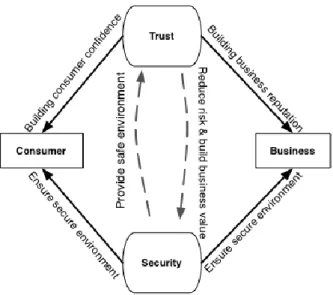
Figure 8 Security and Trust in Computer and Business Context (Chang, 2006) ... 31
Figure 9 Relationship between Trust and Reputation ... 32
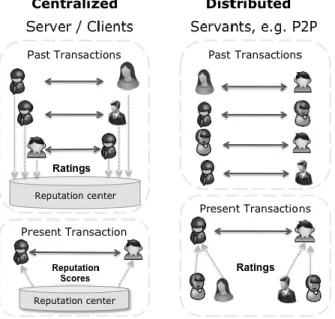
Figure 10 Reputation Network Architectures ... 33
Figure 11 Emerging Threats in Cloud Ecosystems ... 45
Figure 12 Threat scenario ... 46
Figure 13 Assets: Data, Cloud Services and Controls ... 46
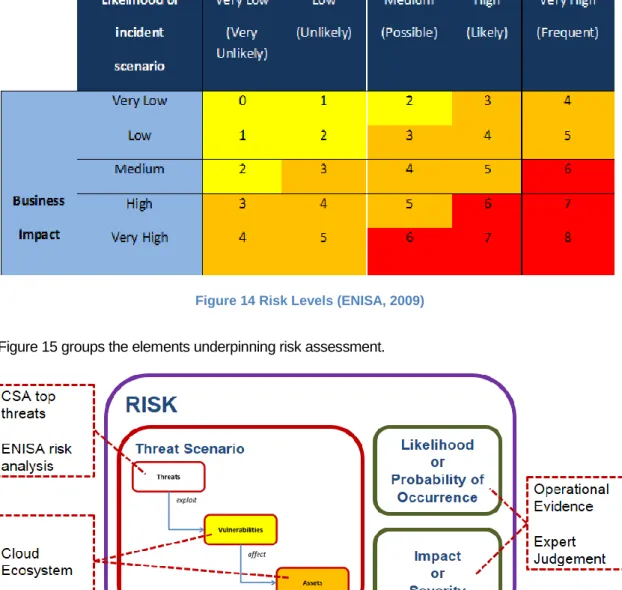
Figure 14 Risk Levels (ENISA, 2009) ... 47
Figure 15 Elements informing risk assessment... 47
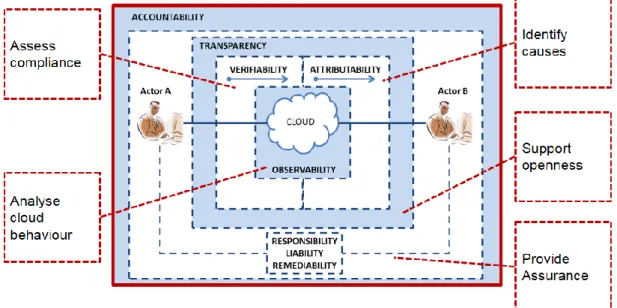
Figure 16 Accountability Attributes and Evidence ... 48
Figure 17 A model for trust decision making (Felici, 2012) ... 49
Figure 18 Accountability governance ... 50
Figure 19 Accountability, Risk and Trust Situations ... 51
Figure 20 Box plots of questionnaires ... 52
Figure 21 Accountability as enabler for cloud ecosystems ... 54
Figure 22 Models overview... 54
Figure 23 Cloud ecosystem conceptual model ... 55
Figure 24 ERP cloud solution for MarcheAzur ... 56
Figure 25 Accountability conceptual model ... 61
Figure 26 Accountability conceptual: accountability attributes ... 61
Figure 27 BUC2 trust relationships ... 66
Figure 28 - Risk conceptual model ... 66
Figure 29 ISO 31000 risk management process ... 70
Figure 30 Accountability-based risk management process ... 71
Figure 31 Example graphical representation of a cloud ecosystem... 72
Figure 32 Risk identification and evaluation ... 74
Figure 33 Risk treatment ... 76
Figure 34 Risk monitoring... 77
Figure 35 collecting the evidence for risks ... 78
FP7-ICT-2011-8-317550-A4CLOUD Page 6 of 109 Figure 47 A4Cloud tools ... 96 Figure 48 Upper bounds of security v(S), privacy v(P) and service v(G) risks for various slope (γ) and freshness (ω) values, .95 confidence interval, and dε=dΦ=dρ= 0.02. ... 100 Figure 49 Upper bounds of security v(S), privacy v(P) and service v(G) risks for various slope (γ) and freshness (ω) values, .95 confidence interval, and dε=dΦ=dρ= -0.02 ... 101 Figure 50 Upper bounds of security v(S), privacy v(P) and service v(G) risks for various slope (γ) and CSP performance tendency (dε=dΦ=d) values, .95 confidence interval, and freshness ω=0.5 ... 102 Figure 51 Upper bounds of security v(S), privacy v(P) and service v(G) risks for various number of services n in cloud service mashup ... 102 Figure 52 Upper bounds of privacy risk v(P) for various average durations of privacy ... 103 Figure 53 Upper bounds of security v(S), privacy v(P) and service v(G) risk for various event rates, which also means various period length ... 103 Figure 54 Accountability Model ... 105 Figure 55 Questionnaire: Accountability, Risk and Trust in Cloud Services ... 107
FP7-ICT-2011-8-317550-A4CLOUD Page 7 of 109
Index of Tables
Table 1 Actor attributes ... 56
Table 2 Service attributes ... 57
Table 3 Data provision relationship attributes ... 58
Table 4 Outsourcing relationships ... 60
Table 6 Cloud accountability concepts ... 61
Table 7 Characteristics of security controls implementation ... 64
Table 8 Trust attributes ... 65
Table 9 Asset attributes ... 67
Table 10 Risk attributes ... 67
Table 11 ENISA risk categories ... 94
FP7-ICT-2011-8-317550-A4CLOUD Page 8 of 109
1
Introduction
Cloud security requirements reflect intrinsic security problems not seen in regular IT security scenarios. Current risk assessment methods are not tailored to cloud computing: the lack of transparency on how cloud service ecosystems are composed prevents the seamless application of traditional methodologies and standards. While the future internet creates new business opportunities it also creates a variety of new risks as connectivity and the multi-domain created by trust and organizational boundaries increases. Because of its setup, cloud computing creates several types of technical, organizational and regulatory “complexities” and risks.
The typical risk management lifecycle involves risk assessment, setting policies to mitigate these risks, implementing controls and running systems in accordance with these controls, and monitoring and auditing to ensure risks are mitigated.
Nowadays, the state of the art does not tackle new, emerging aspects related to cloud and accountability. Uncertainty about cloud service providers’ behaviour or practices and uncertainty about the cloud services offered can affect cloud consumers’ risk perceptions. As highlighted in (Silva, Westphall, Mattos, & Santos, n.d.) major difficulties regarding risk analysis in cloud computing stem from the lack of clarity about the involved agents and their respective responsibilities in the risk management processes.
For example, moving to cloud will remove control and flexibility from service users, so that better risk planning must be achieved prior to contract negotiation and service initiation. In this report, we provide an initial socio-economic analysis of the notions of risk in cloud ecosystems, looking at the interaction between (perceived) risks and the cloud ecosystem. Exploring these notions will provide an understanding of stakeholders’ behaviour with regard to cloud computing.
As IT functions are spread across the cloud, companies will need not only event monitoring systems that cross cloud boundaries, but also assurance systems that demonstrate that each service provider is enforcing their required policies and that the combination adequately manages risk. These objectives are to be achieved by the A4Cloud project as a whole; however the missing link among them is a common model to allow assessing risk based on some trust assumptions and how to use such representations to derive contracts, policies and controls that will enable accountability. In this report we describe how we can build machine-readable models to allow for an accountability-based approach for risk and trust management for the cloud. In order to understand the objectives of this work, we introduce briefly the terminology, the cloud scenarios where risk analysis is needed, and the relationship of the risk and trust models to other parts of the A4Cloud project.
1.1 Terms and Definitions
Throughout this document the following terms are defined according to the A4Cloud glossary, which describes common terms used along the A4Cloud project, and the EC ICT Work Programme 2011-12. In this section, we list the terms that are relevant to this deliverable and define others that are included in the A4Cloud glossary1.
Risk Is a measure of the extent to which an entity is threatened by a potential circumstance or event, and typically a function of 1) the adverse impacts that would arise if the circumstance or event occurs; and 2) the likelihood of occurrence.
Risk analysis is the systematic use of information to identify sources and estimate risk.
Trust: Trust (or, symmetrically, distrust) is a particular level of the subjective probability with which an agent assesses that another agent or group of agents will perform a particular action, both before he can monitor such action (or independently of his capacity ever to be able to monitor it) and in a context in which it affects his own action.
FP7-ICT-2011-8-317550-A4CLOUD Page 9 of 109
Trustworthiness is defined as: The attribute of a person or enterprise that provides confidence to others of the qualifications, capabilities, and reliability of that entity to perform specific tasks and fulfil assigned responsibilities.
“Risk in the modern world is confronted and dealt with in three fundamental ways. Risk as feelings refers to our fast, instinctive and intuitive reactions to danger. Risk as analysis brings logic, reason and scientific deliberation to bear on hazard management. When our ancient instinct and our modern scientific analyses clash, we become painfully aware of a third reality – risk as politics.” (Slovic, Finucane, Peters, & MacGregor, 2004). The literature brings further definitions for risk:
“Risk, in general, means the perceived probability of loss or harm.” (Rousseau, Sitkin, Burt, & Camerer, 1998)
“Risk is a measure of probability and severity of adverse effects” (Lowrance, 1976).
An essential element of risk management is risk analysis, for which an analytical definition is the following: risk analysis is an estimation of the occurrence of events, their possible consequences, their causes, and existing and/or planned countermeasures and mitigations. Risks are related to uncertainty, which is expressed as a probability P that is associated to a given event. The information used to assess a probability P associated with an event A is a base of knowledge K. The conditional probability P(A|K) expresses the probability of occurrence of event A given K, and the conditional probability P(B|A,K) expresses the probability of occurrence of consequence B given A and K. Note that knowledge base K is full of assumptions and uncertainties.
Risk analysis is defined as “an attempt to envision how the future will turn out if a certain course of action or inaction is taken” (Kaplan and Garrick 1981). Three questions are answered during a risk analysis:
A scenario si (i.e., What can go wrong?)
The probability pi of si (i.e., the probability that the scenario is realized)
The consequence xi of si
Hence, the risk R is a set of triplets that answers three questions (i.e., R={<si, pi, xi>}, i=1, 2, …, N)
for N scenarios (i.e., N represents the number of all possible scenarios) (Kaplan and Garrick 1981). This definition focuses on a single risk. However, risk analysis should end up with a set of N risks, where hopefully N is the number of all risks.
From (Landoll, 2011), we take some key terms and definitions:
Asset - Resource, data, or other item of value to the organization
Threat - A threat is an undesired event that may result in the loss, disclosure, or damage to an organizational asset
Vulnerability - A vulnerability is a flaw or oversight in an existing control that may possibly allow a threat agent to exploit it to gain unauthorized access to organizational assets
The next sections of the document discuss in depth the concepts of trust and its implications to accountability from a security and privacy perspective.
1.2 Generic Scenarios
Here we present the generic scenarios considered in this WP that illustrate the problem of concern within concrete contexts thus giving a rationale behind the requirements in the next section.
1.2.1 Scenario 1a: Enterprise moving to Cloud
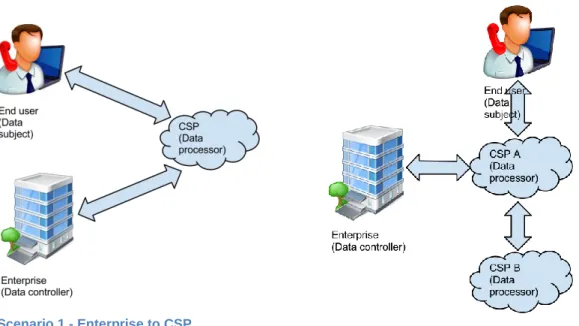
In this scenario an Enterprise would like to move part of its business process to the cloud thus improving the connectivity with their customers (Figure 1). However, such a drastic change apart from opportunities presents a number of risks (e.g. see Section 6.4). If the Enterprise is the data controller
FP7-ICT-2011-8-317550-A4CLOUD Page 10 of 109 this move will lead to compliance challenges as whatever happens with the personal data in the cloud service provision chain, the data controller is liable according to the EU Data Protection regulation. Thus, before switching to the new business model the Enterprise has to do a thorough risk assessment of the different cloud deployment models (Private, Public, Community, or Hybrid) and different CSPs. The decision then will be made balancing the business opportunities versus risks.
1.2.2 Scenario 1b: Enterprise reassessing subcontracting risks
Over time the risk landscape provided by the initial risk assessment changes. This may be due to change in the cloud ecosystem (e.g. new subcontractor, new software installation) as well as the environment (e.g. discovery of new hypervisor vulnerabilities, new regulations). In order to have an up-to-date risk landscape the Enterprise has to continuously monitor these risks and revaluate its decisions if necessary (e.g. switch to a more secure CSP or implement additional controls).
Figure 1 Scenario 1 - Enterprise to CSP
Figure 2 Scenario 2 - CSP to CSP
1.2.3 Scenario 2a: CSP subcontracting another CSP
In this scenario CSP A acting as a data processor decides to subcontract another CSP B and outsource part of the provision, e.g. infrastructure (Figure 2). However, if the binding agreements are in place between the Enterprise and CSP A regarding the security guarantees in case of a security incident CSP A will be liable even if the incident is a subcontractor’s fault. In order to contain the risks resulting from this change CSP A has to perform a thorough risk assessment of the different cloud deployment models and different subcontractors. The decision then will be made balancing the business opportunities versus risks.
1.2.4 Scenario 2b: CSP reassessing subcontracting risks
Over time the risk landscape provided by the initial risk assessment changes. In order to have an up-to-date risk landscape CSP A has to continuously monitor these risks and revaluate its decisions if necessary (e.g. switch to a more secure subcontractor or implement additional controls).
FP7-ICT-2011-8-317550-A4CLOUD Page 11 of 109 1.2.5 Scenario 3a: Cloud broker subcontracting a CSP
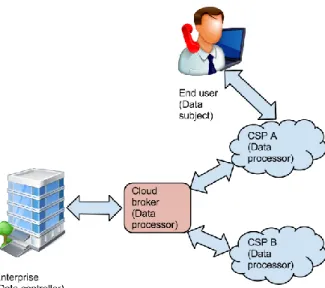
In this scenario an Enterprise would like to move part of its business process to the cloud but it decides instead of dealing directly with potential CSPs to use a Cloud broker (Figure 3). They setup binding agreements that transfer the liability on Cloud broker in case of the selection of an unreliable CSP. In order to contain the risks the Cloud broker has to perform a thorough risk assessment of the different cloud deployment models and different CSPs. The decision then will be made balancing the business opportunities versus risks.
Figure 3 Scenario 3 - Cloud broker to CSP
1.2.6 Scenario 3b: Cloud broker reassessing subcontracting risks
Over time the risk landscape provided by initial risk assessment changes. In order to have an up-to-date risk landscape, the Cloud broker has to continuously monitor these risks and revaluate its decisions if necessary (e.g. switch to a more secure subcontractor or implement additional controls).
1.3 Objectives and Scope of the Risk and Trust Models Work package
Understanding the risks of using cloud services is a fundamental issue, whose importance is reinforced by the need to analyse the risks to accountable data processing in the cloud.
In WP:C-6 we follow a multidisciplinary approach to embed the concept of accountability in the cloud. We integrate legal, socio-economic, regulatory and technical approaches into a framework to provide accountability pre-emptively, to assess risk and avoid privacy harm and reactively to provide transparency, auditing and corrective measures for redress. In addition to the interdisciplinary background of the work package partners themselves, it is important to explain how the WP:C-6 results will be used across the project. The interactions of our results with other work packages from the requirements work stream are highlighted in Figure 4.
FP7-ICT-2011-8-317550-A4CLOUD Page 12 of 109 Figure 4 C6 dependencies with respect to Stream B
Our approach is to focus on the concepts emerging from the framework from WP:C-2 to determine the methodology and to identify which input we need to collect from cloud stakeholders in the inter-disciplinary risk workshop organized by WP:B-2. In B4, the development of a game-theoretic model of economic governance to study under which circumstances and how accountability can solve the moral hazard problem – or, in different terms, the one-sided Prisoner’s Dilemma problem – involved in cloud computing. The model will use input from risk assessment (WP:C-6), consequence estimations of accountability breaches and data collected from enterprises through case studies and interviews. In the current report, we used some simple scenarios from the B3 use cases to illustrate some features of our models. A complete risk and trust analysis of the use cases will be performed in Task T:C-6.4.
In terms of the work stream C, the cohesion of the work in C6 is also very strong, as shown in Figure 5.
C6 – risk
methodology
B3 – use
cases
B4 – socio
economic
studies
B2- Risk
assessment
workshop
FP7-ICT-2011-8-317550-A4CLOUD Page 13 of 109 Figure 5 C6 relationships in Stream C
The conceptual framework from C2 determined the attributes of the cloud environment itself to the C6 models, in particular the way we represent accountability relationships. As we follow a very classic object oriented approach, the models can assume a machine-readable representation in a straightforward way, to be later used in combination with the metric techniques emerging from WP:C-5. These machine readable representations will be useful in WP:C-8, in order to automate the A4Cloud framework of evidence.
This report covers the first two tasks of work package C6. First we investigate the relationships among accountability, risk, and trust, and we derive a computer-based representation for it that will allow us to continuously assess the risk and trust levels for a given cloud service. Second, we develop a representation for cloud ecosystems, together with a methodology to analyse risks in cloud service chains, where multiple levels of outsourcing may happen. Our work focuses on personal data protection, but other regulatory compliance concerns could also be modelled.
From the input received from the other work packages, we identified the following requirements for A4Cloud risk and trust model and relate it to the main tasks:
T:C-6.1Definition of the risk and trust models
REQ (Representing stakeholders assets) Capture each stakeholder’s assets, specifically personal and business sensitive data.
REQ (Modelling trust relationships) Provide a representation usable for modelling of trust relationships and delegations in the cloud supply chain.
REQ (Separate risk profiles) to allow for the creation of separate risk profiles for different stakeholders: cloud consumers, cloud providers, cloud brokers, when performing their risk assessments.
REQ (Represent vulnerabilities and threats) Be able to represent explicitly in the risk and trust models specific vulnerabilities and threats
FP7-ICT-2011-8-317550-A4CLOUD Page 14 of 109
T:C-6.2 Modelling cloud infrastructures and controls
REQ (Modelling cloud environments) Encapsulate cloud and accountability concepts (main parties, deployments model, service supply chains, security (accountability) controls).
REQ (Machine-readable representation) Provide machine-readable representations amenable to automated treatment by tools.
REQ (Dynamic risk monitoring) Associate risk analysis with event monitoring in order to determine impact and the risk thresholds in different cloud landscapes. Constantly update the risk and trust model based on the new events.
T:C-6.3 Data protection impact assessment tool - this task started on month 13 and will use the results reported in the current deliverable.
REQ (Impact assessment) Assess the impact of specific events from cloud environment (using accountability metrics from WP:C-5).
REQ (Risk estimation) Estimatetherisk levels (using accountability metrics from WP:C-5).
REQ (Facilitate CSP selection) Facilitate the selection of a Cloud Provider matching customer’s business needs and risk profile.
REQ (Support contractual negotiations) Supportthe negotiations of contract terms and SLAs based on the risk profile.
T:C-6.3 Use cases risk and trust assessment – this task will start on month 19, thus it will benefit from the maturity of the research and development performed in the previous tasks
REQ (Applicability to Business Use Cases) the models must support realistic use cases, composed of multiple cloud service providers, as defined in WP:B-3
1.4 Document Organisation:
The remainder of this document is organised as follows:
Section 2 discusses related works and the state of the art concerning risk for cloud computing complemented.
Section 3 presents different perspectives on the notion of trust with an analysis of the socio-economic and aspects in dealing with (perceptions of) risks related to cloud computing technologies by organisations and individuals.
In Section 4 we will explore how contracts might operate as trust mechanisms between cloud service providers and cloud service users.
Section 5 discusses the emergent relationships between accountability, risk and trust, and how such relationships underpin accountability governance.
On Section 6 we elaborate a meta-model where it is possible to represent the different accountability concerns in terms of the relationships among the different cloud actors, building on the knowledge introduced in the first sections and on the A4Cloud conceptual framework.
Section 7 describes an accountability-based approach to risk, positioning the modelling approach within the risk management life cycle, including the risk monitoring phase, for which we propose an analytical approach for computing risk and reputation, based on the observed events in the cloud ecosystem, supported by experimental results.
Section 8 summarizes the contributions reported here and how it responds to the requirements enumerated above.
FP7-ICT-2011-8-317550-A4CLOUD Page 16 of 109
2
Perspectives and Related Work on Risk
Risk and trust are complex notions that have attracted researchers for thousands of years in various contexts. Recently in the field of computer science, risk assessment and security –especially for cloud computing– have become one of the focal research fields both for industry and academia. In this section, we provide a survey on the recent literature for risk and trust modelling in the field of computer science as well as related standards. Please note that our survey in this report cannot be exhaustive due to the extensive literature in the field. We include the most recent and relevant work to the accountability based approach for cloud computing in this section. In the following section, the social and legal perspective of risk and trust are discussed.
2.1 Risk Assessment
Risk assessment is a more difficult issue for a cloud customer than for a conventional information system user. Not all cloud service providers (CSP) clearly inform the locations of their server farms and data centers to customers2. The architecture and the details of the CSP’s infrastructure are not known by its customers. Due to the autonomic features of a cloud, such as self-configuration, self-optimization and self-healing algorithms, even CSPs may not know in which actual physical servers the processes and the data of a consumer are located at a given time. Additionally, CSPs have to prioritize the issues to solve when risks occur. These uncertainties increase the risks for cloud users. Similarly, all these facts also introduce new threats and vulnerabilities with increased value of assets and consequences for CSPs. Therefore, the risks that a CSP is exposed to may also be much higher than a conventional IT service provider, which makes risk assessment a more important and difficult task for CSPs.
Risk assessment is a part of risk management and includes risk analysis (see Section 6 for details). There are many risk assessment methodologies available in the literature, and they can be categorized based on various approaches as listed below:
- Formal versus informal procedures: For risk assessment, a formal process can be used. Alternatively, it can be carried out without following any predefined formal technique.
- Qualitative versus quantitative techniques: The results of risk assessment can be given by using qualitative scales, such as high, moderate and low, or by using numbers, such as 0.95. - Consequence versus cause analysis: For risk assessment, the consequences, the causes or
both can be analyzed.
- Inductive versus deductive techniques: Risk assessment can be made forward looking and planned starting from potential threats and vulnerabilities. It may be made also backward looking from the potential events.
In this subsection we explain a selected set of risk assessment methodologies and identify their categories according to the approaches listed above when applicable.
2.1.1 Microsoft’s Cloud Risk Decision Framework
Microsoft has proposed a Cloud Risk Decision Framework(Stone & Noel, 2012) based on the ISO 31000 risk management standard3. Its purpose is to help cloud consumers assess potential cloud offerings and select the one that meet certain risk acceptance criteria. For each of the cloud offerings, the adapted ISO 31000 process is executed to construct the respective risk profile, which is subsequently compared to the current solution (maybe a non-cloud solution) as the baseline. During the analysis particular attention is paid to the relevant corporate governance policies and guidelines and to the regulatory environment. The document provides a list of possible risks for the cloud grouped in four categories: compliance risks, strategic risks, operational risks and market & finance risks, aimed at helping the risk identification. For the compensating controls the framework recommends to use CSA Cloud Control Matrix (CCM)(CSA Cloud Security Alliance, 2013b).
2 http://www.cloud-council.org/publiccloudSLA.pdf
FP7-ICT-2011-8-317550-A4CLOUD Page 17 of 109 Microsoft’s Cloud Risk Decision Framework seems to be better suited for risk assessment of cloud scenarios than general frameworks. At the same time the process remains quite abstract and does not dictate which specific Risk and Trust models to build that would facilitate subsequent risk identification and estimation. Additionally, it considers only the point of view of a cloud consumer and ignores those of cloud provider and cloud end user.
2.1.2 Quantitative Impact and Risk Assessment Framework for Cloud Security - QUIRC In (Saripalli & Walters, 2010), a framework for assessing security risks associated to cloud platforms is presented. A set of six primary security objectives is identified relative to cloud security – CIAMAU (Confidentiality, Integrity, Availability, Multiparty trust, multiple Auditability and Usability), but they do not address explicitly the principle of accountability. Each organisation defines the priorities for the security objectives.
The risk assessment is performed by analysing a predefined set of common cloud threats and assessing the probability and impact values of each one on the corresponding objective. Among the list of common cloud threats only few are cloud-specific and the rest are generic internet threats.
The probabilities are estimated by analysing the history of previous attacks, e.g. the one provided by SANS Institute4. However, it should be noted that this report gives only the number of attacks and without an actual number of access attempts and the percentage of successful attacks. Therefore, it is problematic to infer real attack probabilities based on it. The impact values are organization specific assigned by managers and domain experts. Lastly, the quantitative risk values can be calculated by multiplying threat events probabilities on the impacts and aggregating for all security objectives. Similarly to the previous approach, the paper does not attempt to construct a comprehensive risk and trust model for the cloud ecosystem, taking into account the service supply chains, trust and accountability relationships. However, it could be practical when there are statistics of previous incidents and several security experts are involved.
2.1.3 Failure Modes and Effect Criticality Analysis (FMEA)
FMEA(Bowles & Peláez, 1995) (or FMECA) is a simple analysis designed to reveal possible failures and predict effects on a system. It is a systematic inductive method. FMEA divides a system into singular components and investigates the consequences of a failure. FMEA is based on forms that list all components of a system, their relationship to other components, probabilities of failure and their consequences among other fields in a given form. FMEA considers one component failure at a time and thus is not suitable for detecting critical combination of components. FMEA provides a systematic view of important failures and also a good basis for more comprehensive risk analysis. However, FMEA overlooks human failures, as it focuses on component failures and is unsuitable for systems with much redundancy. In addition, FMEA is a resource demanding analysis, as all components of a system are analyzed individually.
This kind of analysis requires a great deal of knowledge of the security processes implemented in the cloud ecosystem and hence can be used mainly by the CSPs.
2.1.4 Fault-Tree Analysis (FTA)
FTA (W. S. Lee, Grosh, Tillman, & Lie, 1985) is one of the most used threat modelling methods. It is based on a deductive logical tree which describes the relations between system failures (events) and failures of the components of a system. It starts by identifying undesirable events and identifying their causes and placing them on top (root) of a logical tree. The bottom of the tree (the leaves) consists of component failures and/or human errors, the so-called basic events. The branches of the tree are
4http://isc.sans.edu/reports.html
FP7-ICT-2011-8-317550-A4CLOUD Page 18 of 109 connected with logical gates, such as logical AND, OR, etc. FTA is able to identify combination of component failures.
Like FMEA, FTA is time consuming and not tailored to the cloud or even the IT domain. 2.1.5 European Network and Information Security Agency (ENISA)
ENISA’s Cloud Computing Security Risk Assessment guide (ENISA, 2009) provides an overview of assets, vulnerabilities and risks associated to the cloud (specific to the cloud and to Internet in general). The risks are categorised into policy and organizational risks, technical risks, legal risks and risks not specific to the cloud. The description of each risk includes risk levels (likelihood, impact), the comparison to the baseline (non-cloud solution), affected assets and exploited vulnerabilities. The guide also provides a template questionnaire for a typical CSP that covers various control categories and thus provides transparency into CSP’s operations.
It aims to help the cloud consumers at comprehensively assessing risks to moving to the cloud and choosing appropriate CSPs as well as developing effective strategies and policies for mitigating the underlying risks. We extensively used this guide in developing our approach described in Sections 5 and 7.
2.1.6 Shared Assessments Guide
Shared Assessments (Niall Browne, Susanna Space, 2010) is a process specifically designed for the financial institutions for the evaluation of the security controls introduced by their information technology service providers. It discusses how new technologies present unknown risks that must be considered before and during migration to cloud environments, and is based on ISO 27002 (see the standards subsection of this section of our document). It includes agreed upon procedures (AUP) and standardized information gathering questionnaire (SIG). AUP and SIG are used for evaluating security controls. 2.1.7 Joint Risk and Trust Model for MSaaS Mashups
Joint Risk and Trust Model for MSaaS Mashups (JRTM) is a model developed by an A4Cloud partner and published recently (Cayirci, 2013), where a mashup is a service comprising multiple cloud services in various forms (i.e., Iaas, PaaS or SaaS) for providing a composite service. JRTM is a quantitative trust and risk model introduced for modelling and simulation as a service (MSaaS) mash-ups. In this model, the real risk is defined as the risk that cannot be (or is not) eliminated by a CSP. The model describes how to estimate the security and the service outage risk to the cloud service customer, where the risk is perceived as the probability that a security threat is realized or the probability that a service outage occurred. The trust is evaluated as the probability that the CSP can eliminate a security risk when it occurs or the probability that the CSP can recover from a service outage before it hampers the user’s operations. The probabilities for risk and trust are determined based on historic data. For trust negative and positive performances are differentiated and the freshness of the data is taken into account. We explored this model as a means to perform continuous monitoring of risk indicators and of the performance of accountability controls in Section 7.6
2.1.8 Cloud Security Alliance (CSA) Guidance
CSA does not provide a full-fledged methodology for risk assessment for the cloud. Its security guidance report (Brunette & Mogull, 2009) brings an editorial note on how to assess the relevance of critical risks, intended as a quick method for estimating risk tolerance of potential cloud adopters. The approach is structured as follows:
- Identify the asset for cloud deployment (data, or applications, functions and processes) – this consists in determining exactly what data or business process will move to the cloud.
- Evaluate the asset – determine the importance of the asset to the organisation. It is a basic assessment of the sensitivity of the asset. In essence, determine confidentiality integrity, and
FP7-ICT-2011-8-317550-A4CLOUD Page 19 of 109 availability requirements for the asset, and whether the risk changes if all or part of it is handled in the cloud.
- Map the asset to a Cloud deployment model (public, private, community, or hybrid) – choose a model that provides an acceptable risk level.
- Evaluate the potential cloud ecosystem models and providers – evaluate whether IaaS, PaaS, or SaaS is the appropriate choice for the asset, depending on the desired level of control. This will impact on being responsible for implementing risk mitigations. Specific requirements will influence the decision, for instance, if handling data subject to specific regulations.
- Map out the potential data flow – it is necessary to identify the data flows from the cloud consumer organisation, the cloud provider service, and customers (or other nodes). The principle is to understand how data can move in and out of the cloud. Risk exposure points can be delineated, and some unacceptable flows eliminated in this manner.
The security guidance suggests the approach to be performed prior to adopting the security recommendations it makes, as not all security controls are suitable or necessary for a given asset and cloud deployment. A high-value regulated asset might entail audit and data retention requirements. For high-value assets, which are not subject to regulatory restrictions, the cloud consumer may focus on more technical security controls, such as encryption to protect it on the cloud, with fewer constraints on auditability.
The report also emphasizes the importance of an effective program for governance and enterprise risk management for cloud computing, see the CSA GRC Stack project5, from which we highlight the CCM – Cloud Control Matrix (CSA Cloud Security Alliance, 2013b): The Cloud Control Matrix is a list of control points and their specification, which are mapped to other security standards, control frameworks and regulations, such as NIST, ISO certifications. It will be useful in modeling controls in our work.
2.1.9 Open Security Architecture
Open Security Architecture (OSA)6 provides a generic architecture implementing a set of controls and addressing a number of threats. The most relevant part of this initiative is the control catalog and graphical security architecture patterns which map controls to specific elements in the architecture. The Cloud Computing pattern, in particular, depicts the involved actors and the recommends the distribution of security controls between the system components and involved actors. This is the main difference with CSA CCM that merely lists the security controls without specifying so explicitly the application points.
2.2 Information Security and Risk Management Standards
As stated above, regulatory compliance is an important factor that influences the trust in a CSP. Moreover, CSPs have to comply with regulations to operate within the EU. We also survey international standards to which CSPs can be required to comply with in this subsection. Apart from international standards, every EU member state has a special law, typically called “Data Protection Act” on the protection of personal data. Most of these laws have been in effect for around 15 years, and mandate the protection of personally identifiable information, for which a high demand for IT security risk management framework emerged. Recent cyber security incidents have increased the interest in this topic and efforts for standardization.
Internationally recognized information/cyber security standards also applicable to cloud infrastructures include the following:
5https://cloudsecurityalliance.org/research/grc-stack/ 6http://www.opensecurityarchitecture.org/cms/
FP7-ICT-2011-8-317550-A4CLOUD Page 20 of 109 - International Organization for Standardization (ISO) Standards 2700x series publications: ISO
270017 standardizes the certification process for Information Security: it defines an information security management system that includes a structure and controls. ISO/IEC 270028 describes good IT security management process. The standard is arranged into 11 control areas, covering confidentiality, integrity and availability properties.
- National Institute of Standards and Technology (NIST) 800-xx series publications9: NIST 800-1210 gives an overview of computer security good practices and elaborates on control areas; NIST 800-1411 explains security principles commonly used; NIST 800-3712 introduces a risk management framework to federal information systems; and NIST 800-5313 is a guide for assessing the security controls in federal information systems.
- Internet Engineering Task Force (IETF) publications: Request for Comments (RFC) 219614 is an IETF publication that provides an overview on topics related to the development of security procedures and policies for the information systems in the Internet.
- International Society for Automation (ISA) standards: ISA/IEC 6244315 describes the electronically secure industrial automation and control systems with a wide perspective that includes all the stakeholders from various domains, such as, manufacturers, security practitioners, system integrators and users.
However, the standards explained in this subsection define a set of generic processes and controls for ensuring information security and as such are also applicable to cloud infrastructures. However, these generic frameworks have the following disadvantages:
- Expensive and time consuming. For example, to perform a full risk assessment process (e.g. from ISO 3100016) would need hiring a consulting agency and involve a number of parties and iterations. Thisis not often feasible for SMEs and so they would need a more efficient approach tailored for cloud computing. Moreover, this process ideally has to be done for each potential CSP, in case the customer is deciding which one to choose for outsourcing part of his business process.
- Opacity of CSP infrastructures and processes. For an effective risk evaluation one would need to get objective picture of the level of security that the CSP has implemented in his infrastructure. CSPs, however, rarely disclose this kind of information: at best they can reference some obtained certificates.
- Limited treatment scope. In case the risks are unacceptable cloud consumers have little room for introducing mitigations. As they do not usually have management access to the underlying cloud infrastructure the choice are restricted to contractual mitigations or adopting another CSP. There are also international standards on risk management. A generic standard for risk management is ISO 31000, which provides principles and guidelines for risk management. ISO 3101017 focuses on risk assessment concepts, principles and approaches for selecting risk assessment techniques.
7http://www.iso.org/iso/iso27001 8http://www.iso.org/iso/catalogue_detail?csnumber=54533 9http://csrc.nist.gov/publications/PubsSPs.html 10http://csrc.nist.gov/publications/nistpubs/800-12/800-12-html/ 11http://csrc.nist.gov/publications/nistpubs/800-14/800-14.pdf 12http://csrc.nist.gov/publications/nistpubs/800-37-rev1/sp800-37-rev1-final.pdf 13http://dx.doi.org/10.6028/NIST.SP.800-53r4 14http://tools.ietf.org/html/rfc2196 15http://isa99.isa.org/ISA99%20Wiki/Home.aspx 16http://www.iso.org/iso/iso31000 17http://www.iso.org/iso/catalogue_detail?csnumber=51073
FP7-ICT-2011-8-317550-A4CLOUD Page 21 of 109 Examples of risk management related standards specialized on IT: NIST SP 30 and NIST SP 800-37 (NIST, 2010, 2012) and cloud computing: NIST SP 800-144 and NIST SP 800-146 (Badger, Grance, Patt-Corner, & Voas, 2012; Jansen & Grance, 2011). Although these publications cover both risk management and security in cloud computing, there is not yet a publication on the intersection of both areas. It is clear that the intersection of risk management and cloud computing needs careful attention, as cloud computing raises new problems and challenges to organizations that outsource their information systems.
In the cloud-related publications, NIST provides a collection of identified risks and threats, categorized according to the cloud ecosystem model (Software as a Service, Platform as a Service, and Infrastructure as a Service) and type of cloud (public, private, community and hybrid). One of the main points made in these publications is that the outsourcing of services, systems and processes to the cloud makes the evaluation of threats and risks difficult, as the internal procedures and systems of the cloud cannot be controlled, and in some cases, little or no information about them is available to the cloud customer. Organizations should then carefully assess the trade-off between the advantages of moving to the cloud and the disadvantages associated to the loss of control.
Apart from NIST SP 800-30 series, ISO1333518, ISO/IEC 2700519, BS7799-320 and ISACA Risk IT are also standards that specifically address IT risk management. The ISO/IEC 27005 framework provides guidelines for risk assessment, risk treatment, risk acceptance, risk communication, risk monitoring and review. It accepts context establishment as the first step in IT risk management in which basic criteria, purpose, scope and boundaries of risk management are determined. Risk assessment consists of risk analysis (risk identification and estimation) and risk evaluation.
ISO/IEC 27005 recommends the following among the things to be examined for risk assessment: security policy, organization of information security, human resources security, physical and environmental security, access control, information security incident management and regulatory compliance. Risk identification aims to identify what could cause a potential loss and examine the following for this: assets, threats, security measures, vulnerabilities, consequences and related business process; risk estimation involves deriving the risk levels by estimating probabilities and consequences of potential unwanted events; risk evaluation is concerned of providing decision on the risk mitigation strategies (accept, transfer, mitigate).
2.3 The Notion of Risk and Stakeholders’ Risk Perception
The emergence of cloud computing has drastically changed the use of information technology; from a private to a public utility. However, together with the rapid transition towards the clouds, the number of concerns with regard to e.g. security, reliability, and privacy has risen. Uncertainty about cloud service providers’ behaviour or attributes (i.e. competence, benevolence, and integrity) and uncertainty about the cloud services offered can affect cloud customers’ risk perceptions (D. H. McKnight, Choudhury, & Kacmar, 2002). The concept of perceived risk, from a customer perspective, defines risk in terms of the customer’s perceptions of the uncertainty and adverse consequences of using a service, in this case cloud computing (Dowling & Staelin, 1994). Perceived cloud risk means the extent to which a user believes it is unsafe to use the cloud or that negative consequences are possible. Perceived risks therefore (might) affect purchasing behavior and subsequently innovation. The different stakeholders in cloud ecosystems potentially identify different cloud computing risks and/or perceive the identified risks differently. With respect to governing the behavior of cloud customers and cloud providers an understanding of the perceived risks is relevant since choices to adopt the cloud are not only based on facts, but often also on more intuitive considerations (Ryan & Falvey, 2012; Sjoberg & Fromm, 2001).
18http://www.iso.org/iso/catalogue_detail.htm?csnumber=39066 19http://www.iso.org/iso/catalogue_detail?csnumber=56742
FP7-ICT-2011-8-317550-A4CLOUD Page 22 of 109 2.3.1 Risk Perceptions: Customers’ Cloud Concerns
In this section we will analyse cloud computing risks and trust from a customers’ perspective. In the following, we will focus on the perception of a) business cloud customers and b) individual cloud users on risks. It appears that both type of cloud customers see the (potential) benefits of cloud computing, but also have concerns with cloud computing. Whereas the business cloud customers concerns encompass both technical and perceived risks, the individual cloud customers’ concerns mainly relate to perceived and/or emotional risks. This reiterates the necessity of a socio-economic perspective on cloud computing as well as the concerns stakeholders might have. Not only uncertainty of the technology itself is commented upon in the perceptions described below, but also economic and societal concerns. In general, business cloud customers mainly see the benefits of cloud computing (it offers scalability of resources and subsequently cost reduction) and focus less on the risks. Nevertheless, research on cloud adoption demonstrates that the risks of using cloud-services, according to business cloud customers in general are: a) policy and organizational risks, b) technical risks, c) legal risks, and d) non-cloud specific but infrastructural risks(Lin & Chen, 2012). Policy and organizational risks refer to, for example, vendor and data-lock in and loss of governance. Technical concerns relate to, for example, the loss of data due to misuse of cloud services by other users and identity verification and outsiders attacks due to multi-tenancy (Phaphoom, Oza, Wang, & Abrahamsson, 2012). The legal risks specifically focus upon the protection of data, for example, when jurisdictional boundaries are crossed. Infrastructural risks most often refer to the (lack of) availability of cloud services, and likely is one of the main perceived risks by business cloud customers. “Uncertainty of service availability and reliability, especially the concern over unexpected system downtime and disruption, could deter companies from adopting cloud computing because it increases project and business risk” (Lin & Chen, 2012, p. 534). With regard to cloud security business cloud customers do not only have technical concerns (e.g. related to the underlying infrastructure and the security), but also have more emotional concerns e.g. trust and privacy issues (Savola, Juhola, & Uusitalo, 2010). Though scalability is the main benefit of cloud computing, business cloud customers perceive risks in lack of verifiable knowledge in the utilization of resources available (Phaphoom et al., 2012). Last, the cloud offers a business model that requires changing role and responsibilities within business customers’ organizations. The latter includes the risk of resistance to change and is due to feelings of loss of control.
Importantly, Lin & Chen indicate that the categories of risks, the number of risks and the perception of their severity vary between most businesses (Lin & Chen, 2012). These variations in risk perceptions depend on the company’s size, technological expertise and corporate culture of the businesses. Whereas SMEs and LEs both have business perspectives on the use of cloud services, their positioning might still differ. Smaller enterprises are likely less capable of negotiating contracts with cloud providers than bigger enterprises. Yet SMEs seem to adopt cloud computing quicker than large organizations. Moreover, there are differences between small and large companies as regards the ease of adoption (adoption simplicity) and the costs induced by the effort of implementing Cloud Computing services (adoption costs). Also, these characteristics imply that a learning effect can occur which affects marginal adoption costs (adoption costs).
Similar to business cloud customers, individual cloud customers (or the population at large) mainly see the benefits of cloud computing and are only to some extend aware of related risks. However, individual cloud customers’ and/or end-users’ perceptions of risk seem more related to the ability to control one’s information in the cloud and transparency rather than related to e.g. technical risks as identified by business cloud customers. (Sjoberg & Fromm, 2001) demonstrate that risks of on-line service use are above all ethical and legal risks and concerns issues such as personal integrity, privacy and freedom of speech.
Moreover, individual cloud customers’ risk perceptions are often related to their understandings of the Cloud. Research by Marshal & Tang (2012) on File Synch and sharing in the Cloud for example shows that cloud users’ uncertainty and misconceptions limited their ability to fully take advantage of the service’s features. Users needed more accurate and robust models to be able to discover and trust cloud computing services” (Marshall & Tang, 2012). It is reasonable to assume that cloud customers’ lack of knowledge and understanding of cloud computing influences their risk perception.
FP7-ICT-2011-8-317550-A4CLOUD Page 23 of 109 2.3.2 Risk Assessments in Cloud Computing
Governing innovation, in a modern technological culture in which the existence of uncertainty of scientific knowledge and related societal problems are key characteristics, requires a thorough understanding of the risks that come with innovation (Beck, 1992). Cloud computing is such an innovation in need of responsible governance. The cloud’s complex and opaque nature (e.g. the relation between data-subjects, data-controllers and data-processors is unclear) and its inherent technological, cross-border and dynamic character raise problems for its responsible governance. Subsequently, identifying what uncertainties exist, and what the (potential) risks are, has become core business in the analysis and assessment of innovations. Whereas cost-benefit analysis and other positivist sciences seem to dominate the risk assessment landscape, societal and other values have less room for informing regulators in the responsible governance of science and technologies. Yet, increasingly it is recognized that social, ethical and economic impacts have an important role in the assessment of science and technology. The A4Cloud project recognizes that the concerns with cloud computing not only relate to the uncertainty of the technology itself, but also to its ethical, economic and societal impacts.
Taking this wider socio-economic approach to risks and governing innovation entails that risk assessment should not only produce the best estimate of the harm that a threat may induce but should be complemented with a concern assessment. This concern assessment will identify and analyze issues that individuals or society as a whole link to a certain risk. Whereas for the first purpose classical risk modeling will suffice, the latter requires a more social scientific approach such as survey methods and macro-economic modeling (Renn, Klinke, & Asselt, 2011). Many risks cannot be calculated on the basis of probability and effects alone. The latter approach provides the opportunity to focus more on possible socio-economic and ethical implications of cloud computing.
Socio-economic implications refer to how the social behavior of (potential) cloud customers will affect their choice to make use of cloud services and vice versa how economic activity in the cloud (e.g. responsible stewardship) affects the social processes of cloud customers. In specific, we are interested in the social economic impact of shifting roles, responsibilities and risks due to the use of cloud services by the different cloud customers.
2.3.3 Preliminary Analysis on Stakeholders’ Risk Perception
Based upon the findings in section 2.3.1 we can indicate that from a socio-economic cloud customer perspective, relevant factors or concepts that belong in a risk model are:
a) policy and organizational risks i. vendor- and data-lock in ii. loss of governance b) technical risks
i. loss of data ii. security
i. outsiders attack
iii. non-cloud specific / infrastructural risks i. (lack of) cloud services’ availability c) legal/ethical risks
i. data protection ii. privacy concerns iii. freedom of speech d) emotional risks
i. trust concerns
ii. lack of knowledge in the utilization of resources available iii. users’ understanding of the cloud
iv. feelings of loss of control v. privacy concerns
FP7-ICT-2011-8-317550-A4CLOUD Page 24 of 109 vi. resistance to change
vii. ability to control one’s information viii. personal integrity
FP7-ICT-2011-8-317550-A4CLOUD Page 25 of 109
3
Perspectives and Related Work on Trust and Reputation Models
There are multiple perspectives on the notion of ‘trust’. In this section we will highlight two complementary perspectives; the computer science approach and the social science approach. Whereas the latter aims to understand the social relationships between cloud service providers and cloud service users and how risk and trust shape such relationship, the former approach focuses on reputation, an important element in this social relationship, and how this can be modelled.
From the discussion in Section 2, we can point out some deficiencies in existing risk management methodologies when applied to cloud ecosystems: a) there is no adequate methodology to analyse risks; b) it is difficult to allocate liabilities according to the roles an actor plays in the cloud service supply chain; c) to assess risks according to different service and deployment models; d) low visibility of the overall risk landscape and how controls are implemented across the supply chain. Moreover, it is fundamental to determine how trust influences risk perception and to create mechanisms to evaluate CSP reputation. In addition to the description of the notion of trust, we present in this section a review of the state of the art regarding trust and reputation models.
Finally, the socio-economic perspective on risks and risk perceptions provided in Chapter 2 demonstrates that an understanding of how the increased demand for giving account, e.g. in the form of risk assessments, is shaped by the notion of risk. Below we will discuss how risk (perception) and trust are related. This is important since trust in the Cloud greatly influences the adoption of cloud services, and might cause shifts in the cloud market.
3.1 The Notion of Trust
The concept of trust in Computer Science derives from the concept in sociological, psychological and economical environments. The definition of trust is not unique. It may vary depending on the context and the purpose where it is going to be used. Despite that the notion of trust is of paramount importance when considering systems security, a standard definition of trust has not been provided yet. (Fulmer & Gelfand, 2012) and (Castelfranchi & Falcone, 2010) provide a comprehensive overview of various definitions of trust in the literature. For example, (Gambetta, 1988) defines trust as:
Trust is the subjective probability by which an individual, A, expects that another individual, B, performs a given action on which its welfare depends.
(Mayer, Davis, & Schoorman, 1995) define trust as:
The willingness of a party to be vulnerable to the actions of another party based on the expectation that the other will perform a particular action important to the trustor, irrespective of the ability to monitor or control that other party.
(Castelfranchi & Falcone, 2010) define trust as:
Trust is a mental attitude, an attitude of an agent X towards another agent Y about the behavior/action α relevant for complex the result g.
These definitions stress 3 main aspects of trust: - Belief component: a mental attitude
- Decisional component: a decision to rely upon the other - Behavioural component: an intentional act of trusting
The origins of computational trust date back to the nineties, when Marsh (Marsh, S. P, 1994) analysed social and psychological factors that have an influence on trust and replicated this concept in a computational setting. A few years later, Blaze (Blaze, Feigenbaum, & Lacy, 1996) identified trust management as a way to leverage and unify authentication and access control in distributed settings. These two early contributions show that trust can be conceived in different ways and for different purposes. From these seminal works onwards, different types of trust models have been proposed, with different purposes and targeting different settings. (Castelfranchi & Falcone, 2010) outline the following components that a trust model should ideally contain: