Boston University
OpenBU http://open.bu.edu
Theses & Dissertations Boston University Theses & Dissertations
2019
Integrating assistive technology
into the classroom: a program for
teacher professional development
https://hdl.handle.net/2144/36993BOSTON UNIVERSITY
SARGENT COLLEGE OF HEALTH AND REHABILITATION SCIENCES
Doctoral Project
INTEGRATING ASSISTIVE TECHNOLOGY INTO THE CLASSROOM: A PROGRAM FOR TEACHER PROFESSIONAL DEVELOPMENT
by
THERESA A. BAILEY B.S., SUNY at Buffalo, 1986 M.S.., Boston University, 2006
Submitted in partial fulfillment of the requirements for the degree of Doctor of Occupational Therapy
© 2019 by
Approved by
Academic Mentor
Nancy W. Doyle, OTD, OTR/L Lecturer of Occupational Therapy
Academic Advisor
Karen Jacobs, Ed.D., OT, OTR, CPE, FAOTA Clinical Professor of Occupational Therapy
DEDICATION
I would like to dedicate this work to my family. My parents, who always encouraged me to follow my dreams, my children who cheered me on in my academic endeavors and most especially my husband Mike. Without his love and support, none of this would have been possible. With his love and support, there are no limits. Thank you all, I love you forever.
ACKNOWLEDGMENTS
I would like to take this opportunity to thank the people who helped me so much along this journey.
I would like to thank Nancy Doyle, my academic mentor. Her patience, guidance and suggestions as my project developed have been invaluable. I would not have been able to complete my project without her help and encouragement. Thank you for helping me to focus on the essential aspects of the project as it unfolded to its current form.
I would like to thank Karen Jacobs, who encouraged me to apply to the OTD program and helped with the whole process from the application to Capstone. I am, as ever, in awe of her energy and enthusiasm, and am truly grateful for the example she sets for what it means to be an occupational therapist.
I would like to thank the Boston University faculty, especially Karen Duddy, Wendy Coster, Linda Niemeyer and Sarah McKinnon. Your guidance in different course topics has broadened my perspective on the profession of occupational therapy and has helped me to be a better and more effective therapist.
I would like to thank Kate Silfen, who provided tremendous help with the research needed for the project.
I would like to thank my peer mentor Cindy Abbott-Gaffney, for the help, encouragement and laughter throughout the course work and the doctoral project. Her suggestions added a richness to my project that would otherwise be lacking. I would also like to thank my classmates, especially Rosie C. and Eric S. for the support and
with you all has been a highlight of the doctoral experience.
I would like to thank my family for the support and encouragement they gave me as I completed the coursework for the doctoral program. My children Michael and Kathleen, and most of all my husband Mike’s support allowed me to follow my dream and work toward a doctorate. I couldn’t have finished without you and I love you to the moon and back.
INTEGRATING ASSISTIVE TECHNOLOGY INTO THE CLASSROOM: A PROGRAM FOR TEACHER PROFESSIONAL DEVELOPMENT
THERESA A. BAILEY
Boston University, Sargent College of Health and Rehabilitation Sciences, 2019 Major Professor: Nancy W. Doyle, OTD, OTR/L, Lecturer of Occupational Therapy
ABSTRACT
Occupational therapists work in the school setting as related service providers, helping those students with an Individual Education Plan (IEP) access their special education curriculum. As part of the development of the IEP process, each student is supposed to be assessed for the need for assistive technology to support their educational program (United States Department of Education, n.d.). Assessing for student needs in assistive technology falls within the occupational therapy scope of practice under communication management, one area of independent activities of daily living (AOTA, 2014). However, many students do not have their assistive technology needs identified and met. Additionally, many teachers working with students with disabilities do not have access to the ongoing training necessary to integrate and use assistive technology in the classroom (Basham, Israel, Graden, Poth, & Winston, 2010; Connor, Snell, Gansneder, & Dexter, 2010; Okolo & Diedrich, 2014; Quinn, Behrmann, Mastropieri, & Chung, 2009).
“Integrating Assistive Technology into the Classroom: A Program for Teacher Professional Development” was created by an occupational therapist with experience working in the school setting, including assessing students for assistive technology needs and supporting teachers, students and classrooms in using assistive technology. The goals
of the project are to 1) provide classroom teachers with the tools necessary to use different types of assistive technology in the classroom and 2) address the needs of
diverse learners so that all students are able to successfully participate in their educational program. The program incorporates strategies from adult learning theory and strategies for effective teacher professional development to ensure program success. The program is an innovative, evidence-based approach to teacher professional development in the use and integration of assistive technology in the classroom. It has the potential to become a model for professional development in the area of assistive technology use in the school setting.
TABLE OF CONTENTS DEDICATION ... iv ACKNOWLEDGMENTS ... v ABSTRACT ... vii TABLE OF CONTENTS ... ix LIST OF TABLES ... xi
LIST OF FIGURES ... xii
CHAPTER ONE - Introduction ... 1
CHAPTER TWO – Project Theoretical and Evidence Base ... 6
CHAPTER THREE – Description of the Program ... 35
CHAPTER FOUR – Evaluation Plan ... 50
CHAPTER FIVE – Funding Plan ... 61
CHAPTER SIX – Dissemination Plan………... 72
CHAPTER SEVEN - Conclusion ... 81
APPENDIX A: EXPLANATORY MODEL OF IDENTIFIED PROBLEM ... 86
APPENDIX B: SAMPLE WORKSHOP 1……… 87
APPENDIX C: SAMPLE WORKSHOP 2……… 92
APPENDIX D: LOGIC MODEL……….. 98
APPENDIX G: FACT SHEET ... 110 REFERENCES ... 113 CURRICULUM VITAE……….. 119
LIST OF TABLES
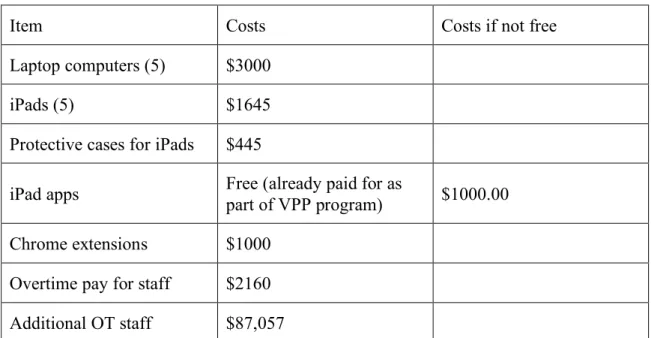
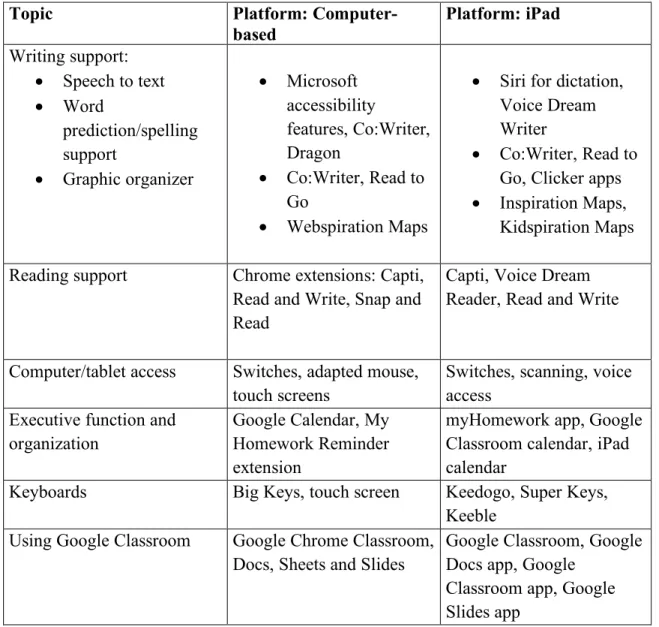
Table 3.1. Workshop Topics. ... 47 Table 5.1 Expenses. ... 68 Table 5.2 Funding Opportunities for Program Implementation……… 70
LIST OF FIGURES
APPENDIX A. Explanatory Model of Identified Problem ... 86 APPENDIX D. Logic Model……….………... 98
CHAPTER ONE - Introduction Introduction
Occupational therapists work in the school setting as a related service provider, to help those students with an Individual Education Plan (IEP) to access their special
education curriculum. As part of the development of the IEP process, each student is supposed to be assessed for the need for assistive technology to support their educational program. The Assistive Technology Act of 1998 (reauthorized in 2004) defines assistive technology as “any item, piece of equipment, or product system, whether acquired commercially, modified, or customized, that is used to increase, maintain, or improve functional capabilities of individuals with disabilities”(Bausch, Mittler, Hasselbring & Cross, 2005 p. 60). In both my work as an occupational therapist and my role as an assistive technology consultant, I have noticed a lack of comfort in the use of assistive technology as an educational tool. Although our agency has technology available for use within all of our classroom settings, this technology is often not used for school learning tasks. Training in the use of the devices is piecemeal, and often at the discretion of the classroom teacher. As a result, technology that is theoretically available for instructional purposes will often sit on a shelf or in a closet, seldom used. This experience is borne out in the literature. Many classroom teachers are not comfortable in the use of this
technology (Bausch & Hasselbring, 2004; Copley & Ziviani, 2004). Program Overview
The purpose of the project will be to provide special education teachers with the knowledge and tools necessary to use and integrate assistive technology into the
classroom setting. In doing so, students with diverse learning needs will have the assistive technology support they need to fully and successfully participate in their educational program. For this project, a program of teacher professional development workshops will be created focusing on the different technology available for classroom use, and also in technology that addresses specific student learning needs. This will be accomplished using both small-group instruction and individualized coaching and training with hands-on experiences in various technology that will address the diverse needs of special education students. The project will address two components:
1. Provide specific workshops and training for classroom staff in the different
technology and its usage for specific student learning needs. For this component, I am proposing to set up pilot programs in whole classrooms in several different programs in order to help classroom teachers integrate technology into the curriculum.
2. Provide technology to students to use in the classroom that would allow them to access the curriculum despite diverse learning needs. For this component, staff would require specific training in order to know when to request formal specific evaluation for individual students.
The project will serve to provide special education staff with the information and training they need to help our students use technology to enhance their educational experience, and also to take the skills developed using technology with them as they transition out of the school-based setting into adulthood.
Scope of the problem
This problem has implications both within and beyond the immediate classroom settings in the agency. We live in a digital age, and students who are not able to use technology will be at a distinct disadvantage as compared to their peers. For those students with severe physical and cognitive impairments, not learning how to use technology tools can prevent them from meaningful participation in their educational program. It is often assumed that these students are not capable of learning academic skills. Several studies have shown that pairing technology with evidence-based instruction results in improvement in academic performance for the severely disabled population (Browder, Mims, Spooner, Delzell, & Lee, 2008; Spooner, Ahlgrim-Delzell, Kemp-Inman & Wood, 2014). Other studies show that assistive technology is able to minimize barriers in school participation for students with disabilities (Adebisi, Liman, & Longpoe, 2015; Hemmingsson et al., 2011; Hemmingsson, Lidstrom, & Nygard, 2009). For students with less complex educational needs, technology usage will allow them to access the general education curriculum and also develop the technology skills that will serve them later in life, in higher education and also in the social domain. Learning to use technology is one of the tools needed for continued growth as a lifelong learner.
Domain of Occupational Therapy
The problem described above falls under two domains of occupations: Instrumental Activities of Daily Living (IADL), and Education. According to the Occupational Therapy Practice Framework (OTPF), Communication Management, one area of IADL
includes “Sending, receiving, and interpreting information using a variety of systems and equipment, including writing tools, telephones (cell phones or smartphones), keyboards, audiovisual recorders, computer or tablets, communication boards, call lights emergency systems, Braille writers, telecommunication devices for deaf people, augmentative communication systems and personal digital assistants (AOTA, 2014, p. 19). Using assistive technology in the classroom can be essential for students with or without disabilities to be able to communicate in written form as well as to access educational materials. The OTPF defines Education as “activities needed for learning and
participating in the educational environment” (AOTA, 2014 p.20). This includes
participating in academic activities as well as social interactions with peers. In addition, it includes exploration of interests beyond formal education to participating in classes, programs and activities that provide instruction or training in areas of interest. Learning to use technology can ensure students have the tools need to fully participate in their educational program and fulfill their roles as students.
Impact of Project
Using assistive technology in the classroom can be essential for students with or without disabilities to be able to communicate in written form as well as to access educational materials. The doctoral project that has been created has the potential to impact whole classrooms of students, not just those with occupational therapy on their IEP. In many cases, the students who will be potentially impacted by the program do not have access to occupational therapy services in their educational setting. The project as created has the potential to expand occupational therapy services to students who
CHAPTER TWO – Project Theoretical and Evidence Base
This chapter provides two main sections. The first section details the theoretical framework that supports the project, a proposed explanatory model of the problem and a review of the evidence of the identified problem. The second section consists of a review of current research in methods to address the problem, with conclusions drawn from the evidence used to develop the project. The synthesis of this evidence review is used as a guide in the development of the project.
Theoretical Base to Support the Project Framework for Understanding the Problem
Two theories will be used to help explain the origins of the problem being addressed in the doctoral project: the technology acceptance theory (TAM) and assumptions about adult learners as outlined by Malcolm Knowles in his theory of andragogy. The Technology Acceptance Model (TAM) proposes to provide an
explanation for why technology systems are or are not consistently used (Legris, Ingham, & Collerette, 2003). The focus of the doctoral project is developing teacher training workshops in the use of assistive technology and how best to integrate technology into the classroom setting. As such, the TAM provides a useful framework to understand why technology is not being utilized to its fullest extent in the classroom setting to address students’ learning needs. In addition, some of Knowles assumptions about adult learners are useful in understanding why adults may not be utilizing technology in the classroom (Hagen & Park, 2016).
(Davis, 1986) to test the effect of system characteristics on user-acceptance of computer systems. According to TAM, perceived ease of use and perceived usefulness are the two most important factors in explaining why technology is adopted by the user (Legris, Ingham, & Collerette, 2003). Perceived usefulness is defined as “the degree a person believes that a particular system will enhance job performance” (Davis, 1986 p. 26). In order for classroom teachers to perceive that a specific piece of assistive technology is useful in the classroom, information regarding the technology would need to be available. At this time many teachers are not aware of the technology that is available to use to address students’ needs in the classroom and are therefore not able to determine the perceived usefulness of the technology. This issue also affects student usage of technology. Many students do not have access to technology in the home and are not aware of how it can be used to enhance access to the curriculum. Without this
information they are unable to advocate for themselves and ask to use technology that may be of benefit in the participation in learning tasks.
Perceived ease of use is closely related to Bandura’s research on self-efficacy, defined as “judgements of how well one can execute courses of action required to deal with prospective situations” (Davis, 1993, p. 321). The perceived ease of use is the degree to which a person believes that using a particular system will be free from effort (Davis, 1993). According to Knowles (1971) adults come to the learning experience with an orientation to learning. In order for classroom teachers to perceive that a particular technology device, software program or app is easy to use, they need to have the opportunity to learn about how to use the technology and try it for themselves. At this
time, this training is not available for classroom teachers. Another characteristic of adults is that they bring a variety of levels of experience to situations (Knowles, 1971). A lack of experience in using assistive technology in the classroom is not being addressed at this time as there is currently no mechanism to provide access to the training and assistance that would be required to understand how to use technology and apply it to the classroom setting. This lack of experience often results in technology that is available for use in instructional activities sitting on a shelf or in a closet, seldom used.
Perceived usefulness and perceived ease of use lead to an attitude toward using technology (Legris et al., 2003). If technology is not perceived to be useful and easy to use, a negative attitude toward technology will result. In a busy classroom day, a negative attitude toward something like technology will result in a behavioral intention to ignore the technology in favor of other strategies for functional participation. These strategies are often not sufficient to address specific student learning needs, nor do they allow students the opportunity to function independently (i.e. use of a scribe for written communication rather than a computer, etc.). Without a behavioral intention to use technology, actual use of technology most likely does not occur. The result of this is that students often go without the use of tools that are essential for them to access the
curriculum and participate in the critical life role of being a student to their fullest potential.
Proposed Explanatory Model of the Problem
In order to define the causes of the identified problem, an explanatory model was developed to show the relationships between the problem itself and the factors that influence the problem. The identified problem for this project is the lack of use of assistive technology in the classroom that could benefit students with special education needs. The author proposes that this problem is influenced by one main factor, that leads to two other main factors. Along with these main factors, the author proposes that there are two moderating factors. This explanatory model will next be explained in more detail, with a visual depiction available (See Appendix A).
The first main factor is that many teachers who work with students with special education needs do not have access to ongoing training in the use of assistive technology in the classroom. This factor leads to two other related factors, namely that many teachers are not aware of what technology is available to address specific student needs. In
addition, teachers do not know when to ask for assistance from an assistive technology consultant to assess the educational needs of students that could be addressed by using this technology. This lack of access to training in technology interferes with classroom teachers’ ability to develop perceived ease of use to integrate assistive technology into the classroom (Legris et al., 2003). Without the hands-on experience of training teachers do not have the opportunity to develop a comfort level in using technology and as a consequence, teachers are less likely to adopt its use in the classroom. This lack of training also prevents teachers from learning about technology that may address specific student learning needs. In addition to these two factors, the author proposes that without
training, teachers do not know when to ask for assistance from an assistive technology consultant to assess the educational needs of students that could be addressed by using this technology. The result of these three factors is that technology is not being used in the classroom, and students often go without the use of tools that are essential for them to access the curriculum.
In addition to the three main factors outlined in the causal pathway, the author proposes that there are two moderating factors that may, in some instances, have an impact on the identified problem. The first proposed moderating factor is that not all schools have access to the specific technology that would be useful for students to use. Assistive technology needs are highly individualized based on the diverse needs of students, and not all schools have the technology that students may need to be successful in the classroom. The second moderating factor that the author proposes is that many students with special education needs do not advocate for themselves in using technology in the classroom and do not request to use technology that would help them to access the curriculum. The author proposes one possible reason for this lack of advocacy on the part of students is a lack of experience in using technology at home. With limited experience in using technology, the students and their parents do not know to advocate for
assessment in this area, with the result being that students often go without the use of tools that are essential for them to access the curriculum.
The explanatory model (See Appendix A) outlines the factors and their interactions that result in the identified problem. From this model, a review of the evidence will provide insight into the problem and lead to further questions for
evidence-based solutions to address the identified problem.
Evidence for Proposed Explanatory Model of Identified Problem
To test the proposed explanatory model of the identified problem previously described in this chapter, four questions were generated to guide the search for evidence:
1. Is there evidence that teachers are not using assistive technology in the classroom?
2. Is there evidence that teachers do not have access to specific training in the use of technology?
3. Is there evidence that classrooms do not have access to the technology they need for classroom use?
4. Is there evidence that a lack of access to technology at home results in students not advocating for use of technology in the classroom?
Question 1: Is there evidence that teachers are not using assistive technology in the classroom?
To search for evidence regarding this question, a search was conducted in CINAHL, Education Database and ERIC using the following keywords: assistive technology AND teachers AND use/utilization. From the results, ten publications were chosen for review. Nine of the publications were articles published in peer-reviewed journals. One was a doctoral dissertation completed at the University of North Carolina at Greensboro by a PhD candidate studying teachers’ perceptions of assistive technology for use with students with learning disabilities. The studies chosen were a mix of research
studies and literature reviews regarding the use of assistive technology in the classroom. Eight of the studies chosen were completed in the United States, one was completed in Australia and one was completed in Saudi Arabia. Although the studies were not all addressing the same population of special education students, they all found a significant lack of teachers using assistive technology in the classroom.
Two of the studies chosen focus on the use of assistive technology for students with severe disabilities. Both studies reported that teachers did not consistently utilize assistive technology to address students’ academic needs in the classroom. One study was composed of survey responses from forty-four teachers from elementary, middle school and high school programs, all of whom worked with one or more students with severe disabilities and all of whom worked with at least one student that had access to assistive technology (Connor, Snell, Gansneder, & Dexter, 2010). Results of the survey showed that only 45% of the teachers used computers for specialized instruction in the classroom and only 27% of the teachers used specialized computers three or more days per week (Connor et al., 2010). The second study that looked at assistive technology use of students with severe disabilities was a literature review of studies mostly completed in the 1990’s. This review was published in Australia but it looked at papers published globally, including in the United States (Copley & Ziviani, 2004). Information on how the studies were chosen for review beyond the fact that the authors were focusing on high-tech assistive technology was not provided; however, the review provides a good overview of the barriers to the use of assistive technology for children with multiple disabilities. A common theme found in the studies was that there were poor rates of use
of assistive technology at home, in school and in the community (Copley & Ziviani, 2004). This lack of usage was attributed to lack of training, inadequate follow-up and teacher resistance (Copley & Ziviani, 2004).
The evidence also revealed that teachers of students with high incidence disabilities such as learning disability (LD), emotional disability (ED) and attention deficit hyperactivity disorder (ADHD) were not using assistive technology in the classroom on a consistent basis (Basham, Israel, Graden, Poth, & Winston, 2010; Flanagan, Bouck, & Richardson, 2013; Okolo & Diedrich, 2014; Quinn, Behrmann, Mastropieri, & Chung, 2009; Williamson-Henriques, 2013). Basham et al. (2010), in a report to propose a framework to combine Response to Intervention (RTI) and Universal Design for Learning (UDL), found that assistive technology usage was particularly low for students with high incidence disabilities in the general education setting. They also found that assistive technology was often overlooked and neglected on the Individual Education Plan (IEP) for students with high incidence disabilities (Basham et al., 2010). In a survey of seventh grade teachers who teach literacy to students with high incidence disabilities, Flanagan et al. (2013) found that there were barriers to the use of assistive technology in the classroom which limited its use by classroom teachers. These barriers included high costs of the technology, lack of knowledge, and lack of access to training. As a result, common assistive technology solutions that would address learning
disabilities such as instructional technology, screen readers, speech to text and word prediction were rarely being used (Flanagan et al., 2013).
for students with high incidence disabilities. In a large survey study completed in Michigan, Okolo and Diedrich (2014) found that more teachers were comfortable with using technology for personal use than for instructional purposes. They also found that general education teachers and those who work with students with high incidence disabilities were less likely to use technology for instructional or assistive technology purposes (Okolo & Diedrich, 2014). They reported between 30% and 43% of the respondents did not know how the students use assistive technology both in and out of school, which the authors felt was an indication that technology was not being
consistently used as needed (Okolo & Diedrich, 2014). Similar findings were found in another large survey study conducted by Quinn et al. (2009). In a survey with
respondents from fourteen states and sixty school districts in the United States conducted by the National Assistive Technology Research Institute (NATRI), a low number of students with disabilities were evaluated for assistive technology needs (Quinn, et al. 2009). In addition, most of the students reported to be using assistive technology were diagnosed with more significant disabilities, with low numbers reported for those students with LD. Another significant finding from the survey was that many of the students reported to be using some type of assistive technology, yet did not have assistive technology services on their IEP; this could be an indication that the technology was not being used to its fullest extent in the classroom (Quinn et al., 2009). Finally, in a doctoral study completed in a rural area of the southeast United States, Williamson-Henriques (2013) found that 73% of the teachers surveyed were reluctant to use assistive technology in the classroom because it frequently did not work correctly. Some of the special
education teachers in the study working in inclusion classrooms reported that classroom teachers were not incorporating technology in the classroom consistently that would allow the students to access the curriculum more effectively (Williamson-Henriques, 2013).
The issue of teachers not using assistive technology in the classroom for students with special education needs is not restricted to the United States of America, and may be an issue with global implications. The final study chosen for review was a survey of one hundred and twenty seven teachers in Saudi Arabia (Alkahtani, 2013). The study focused on what technology was used (if any at all), if teachers requested technology and the current level of knowledge and skills in using technology in the classroom. Results from this study showed that 93.7% of the teachers did not use assistive technology in the classroom, nor did the teachers consider assistive technology when developing the educational plan for students with special needs (Alkahtani, 2013). These results are much higher than what is seen in the United States. They do not necessarily compare with studies completed in the United States, as technology in general is much less available in schools in Saudi Arabia so classroom teachers are not exposed to technology in the same way as teachers are in the U.S. Nevertheless, the results of this study suggest that this problem may impact teachers and students in countries other than the United States.
In reviewing the literature above, it appears that evidence does exist to support the premise that teachers are not using assistive technology in the classroom to address the educational needs of students with disabilities.
Question 2: Is there evidence that teachers do not have access to specific training in the use of technology?
To search for evidence regarding this question, a search was conducted in Education Database and ERIC using the keywords assistive technology AND teachers AND training. From these results, eleven publications were chosen for review. Of these studies, six were also reviewed for evidence regarding the first question (Bausch & Hasselbring, 2004; Connor et al., 2010; Copley & Ziviani, 2004; Flanagan et al., 2013; Okolo & Diedrich, 2014; Williamson-Henriques, 2013a). In all of these six studies, the authors reported that teachers did not have access to the training needed to successfully use assistive technology in the classroom. Bausch and Hasselbring (2004) in their literature review concluded that teachers did not have the training they needed to
integrate assistive technology into the classroom; they particularly noted that this training was particularly lacking at the pre-service level. Connor et al. (2010) found that the teachers who responded to the survey stated that they were more prepared to work with students with disabilities than they were to use assistive technology to access the curriculum. The authors recommended that schools provide more ongoing training and collaboration in the use of assistive technology (Connor et al., 2010). The literature review completed by Copely and Ziviani in Australia (2004) found that early research into the use of assistive technology showed that there was a lack of teacher training in its use and that much of the training that did exist focused solely on the technical aspects of using the device while neglecting to cover the purpose and goals of assistive technology. Because of this assistive technology was more likely to be used in isolation rather than
integrating it and generalizing its use. Flanagan et al. (2013) found that 47% of the teachers surveyed stated that their lack of training resulted in decreased use of assistive technology in literacy instruction and 37% reported that they had no access to any training at all. In the study completed by Okolo and Diedrich (2014), 70% of the respondents stated that the largest barrier to using assistive technology was staff knowledge and 72% stated that they needed more staff training. In the research study completed by Williamson-Henriques (2013), only 49% of the respondents reported having adequate training in the use of assistive technology.
In a study completed in four different countries to assess the use of iPads,
Chambers et al. (2018) found that 29% of respondents indicated that they had no support in how to use iPads as an instructional tool. Of particular note is that 65% of the
respondents in the United States stated that more training would be useful, with the researchers concluding that teachers need systemic support in order to effectively use iPads in the classroom (Chambers et al., 2018). In an analysis of data from two different research studies (one in Texas, one nation-wide), Ajuwon, Meeks, Griffin-Shirley and Okungu (2016) found that over half of the surveyed teachers of students with visual impairment reported having no confidence in using assistive technology. 34% of the respondents from Texas noted that they needed more education in using assistive technology, with 20% of the respondents on the national survey reporting the same (Ajuwon et al., 2016).
In a case study completed in a school district in Florida, three different surveys were used to answer what barriers exist to using assistive technology in the classroom,
how professional development can overcome these barriers and how professional
development can be improved (Schaaf, 2018). This study consisted of three surveys given to all the teachers in a center-based special education program in one school district. Of the twenty-seven teachers in the building, nine teachers completed all three surveys. Using the Delphi method, the teachers ultimately ranked the top barriers to using assistive technology in the classroom. Lack of training in the use of assistive technology was ranked the number two barrier to using technology, with malfunction of assistive technology equipment ranked number one (Schaaf, 2018). A larger survey study conducted in a county in California found that the largest barrier to the use of assistive technology was the lack of knowledge and training in how to use it (Lee & Vega, 2005). Only 24.7% of the respondents noted that they had adequate preparation in the use of assistive technology in teacher preparation programs and 48.7% of the respondents stated that they received little to no training at all (Lee & Vega, 2005). Finally, in a policy brief written by the National Education Association regarding technology in the schools, only nineteen states have technology mandates for pre-service teachers as part of licensing requirements (NEA, 2008). The brief further states that educators in rural and urban areas are much less likely than suburban teachers to feel as if they have been adequately
trained. In reviewing the evidence above, the literature does support the premise that teachers do not have access to the training that is needed to successfully utilize assistive technology in the classroom.
Question 3: Is there evidence that schools do not have access to the technology that they need for classroom use?
This question is considered to be a moderating factor in the causal pathway. To search for evidence regarding this question a general search of the internet for
government statistics was conducted by asking the question: “Do schools have technology needed for student use?” Several sources were found from the resulting search. An article published in the New York Times discussed a growing trend across the United States of schools having students bring their own technology to use at school to use because the school lacks the technology needed for instructional or assistive technology purposes (Richtel, 2013). In doing so, the schools highlighted in the article attempted to address a need that the local school district did not fill by having the students bring their own phone, tablet, computer or other device to school to use in the classroom. A policy brief published by the National Education Association (NEA, 2008) corroborated this need. The NEA noted that when computers were counted in schools, all computers with internet access were designated for instructional purposes whether they were available for student use or not (NEA, 2008). In doing this, computer availability appeared to be higher than it actually was and the NEA recommended that schools improve access to technology by making more computers available for student use. In addition, the NEA recommended that schools make internet access more readily available to staff and students (NEA, 2008).
The National Science Board (NSB) is made up of twenty-five members and a director that are appointed by the President of the United States to establish the policies
of the National Science Foundation for the promotion of support of science and engineering (NSB, 2018a). As such, the NSB compiles reports for the President and Congress on policy matters in science and engineering. As part of this mandate, the NSB publishes an annual report on science and engineering indicators which includes
information on technology in K-12 education (NSB, 2018b). This information is a compilation of reports from various sources from around the United States. The NSB included the following in the most recent report (NSB, 2018b): while use of technology in schools is growing, one survey reported that 55% of K-12 teachers do not feel that they have enough computers to use in their classroom. In addition, internet access within school districts is inconsistent, with some having access campus-wide and some restricted to certain areas of the school (NSB, 2018b). Lastly, high minority schools were reported to be half as likely to have access to high speed internet than more affluent areas (NSB, 2018b).
The above reports have some corroboration in the research. Okolo and Diedrich (2014) found that the second highest ranked barrier to the use of assistive technology in schools was lack of access to technology. 61% of the teachers surveyed expressed
dissatisfaction with the technology available to them (Okolo & Diedrich, 2014). Of those responses, two-thirds expressed the need for more technology, problems with outdated technology and the need for better distribution of the technology that was available (Okolo & Diedrich, 2014). From this evidence it is clear that there are schools that do not have access to the technology that they need for classroom use.
Question 4: Is there evidence that a lack of access to technology at home results in students not advocating for use of technology in the classroom?
This question is also considered to be a moderating factor in the causal pathway of the problem. To search for evidence regarding this question, a search was conducted in PsychInfo and ERIC databases using the keywords adolescents OR middle school AND disabilities OR special needs AND self-advocacy and poverty AND digital divide AND high school OR middle school OR secondary school. The results of these searches did not reveal any evidence that lack of access to technology at home leads to a lack of advocacy for the use of technology in the classroom. There were, however, five publications regarding self-advocacy skills among students with special needs. One of these studies looked at self-advocacy among high-poverty youth in a high school in the southeast United States (Washington, Hughes, & Cosgriff, 2012). In this study, two groups of students were chosen: one group of students with significant special education needs and one group of students considered to be high achieving. These groups were chosen to determine the effects of poverty on intellectually impaired students’ ability to exhibit self-determination and educational planning skills and compare these abilities to a group of high-achieving students at the same school. The students with intellectual impairment were found to have less involvement in the educational planning process including the development of the IEP than their high-achieving peers (Washington et al., 2012). The authors felt that high-poverty most likely contributed to this outcome because the students had less opportunities to be involved in the community and had less resources available to them in the classroom (Washington et al., 2012).
Other evidence found in the search show that students with special needs do not consistently advocate for themselves; however, this is attributed to disability status rather than poverty level (Cuenca-Carlino & Mustian, 2013; Piers & Duquette, 2016; Rosetti & Henderson, 2013; Walker & Test, 2011). Research completed by Cuenca-Carlino and Mustian (2013) showed that using a writing program to learn persuasive writing skills resulted in an increased ability to better advocate for themselves. This research implied that students with ED have difficulty successfully advocating for their needs unless the skills are specifically taught. The other publications reviewed looked at self-advocacy among students with learning disabilities. Rosetti and Henderson (2013) conducted a study with four students in private and charter schools in the San Francisco Bay area. The study was comprised of individual interviews reflecting on the lived experiences of having LD/ADHD in school. Although self-advocacy was not part of the interviews all of the participants brought it up on their own, stating that they learned to self-advocate to get their educational needs met by participating in support groups, support from school personnel such as teachers and counselors, and family support (Rosetti & Henderson, 2013). In discussing how important this self-advocacy is to their success they discussed how other peers with LD had more difficulty because they did not advocate for
themselves (Rosetti & Henderson, 2013). The other two studies reported similar findings in regard to self-advocacy for students with LD when they went on to post-secondary education (Piers & Duquette, 2016; Walker & Test, 2011). In both studies, the participants had to be taught self-advocacy skills in order to successfully ask for the accommodations needed in order to fully participate in their educational program. In
reviewing the evidence for this question, it appears that a lack of technology in the home is not responsible for a lack in self-advocacy and that this is more related to the students’ disabilities.
Summary of the evidence
In reviewing the evidence for the causal pathway of the problem to be addressed, it appears that there is evidence to support the first two questions in regard to the use of assistive technology in the classroom and access to teacher training. From this review of the evidence it is felt that these two factors do have a negative impact on the use of assistive technology in the classroom. There is also some evidence in support of the third question as a moderating factor in regard to the availability of assistive technology in schools. However, the fourth question as a moderator is not supported as first described. The moderating factor in the causal pathway, lack of self-advocacy to use technology in the classroom, appears to be related to disability status rather than a lack of access to technology in the home. As such, this moderating factor needs to be changed the to reflect these findings, emphasizing the fact that students with disabilities need to be taught to advocate for themselves, including in the use of needed technology in the classroom. A visual depiction of the explanatory model is available (See Appendix A).
Evidence Base to Support the Project: A Synthesis of Current Approaches and Methods
Introduction
Students with special education needs are supposed to be assessed for assistive technology needs that are necessary for the child to access his or her special education
program (United States Department of Education, n.d.). Although this is required by federal law, there is evidence in the literature that teachers who lack training in the use of technology in the classroom are not using assistive technology to address the needs of special education students (Basham et al., 2010; Connor et al., 2010; Flanagan et al., 2013; Okolo & Diedrich, 2014; Quinn et al., 2009). To evaluate current approaches to address this problem, the research evidence was reviewed in order to understand the methods utilized and the effectiveness of the programs. To guide the evidence review, two questions were generated for the literature search:
1. Is there evidence that hands-on professional development training is effective in training teachers to use assistive technology?
2. Is there evidence that the principles of adult learning theory have been utilized in teacher professional development?
Question 1: Is There Evidence that Hands-on Professional Development Training is Effective in Training Teachers to use Assistive Technology?
To search for evidence regarding this question, a search was conducted in ERIC using the following key words: hands-on training AND technology AND teacher professional development. Additional searches using in the ERIC database used the following key words: ongoing training AND professional development OR teacher training. From these results, nine publications were chosen to review. Of these
publications, two were case studies, one was a study that involved preservice teachers and teacher educators, and the remaining six were outcome evaluations of professional development programs in technology for teachers. All of the studies reviewed found
positive outcomes from the professional development programs.
In a single case study completed in Canada in 2000, a multi-disciplinary school team was trained by outside trainers from an augmentative and alternative
communication (AAC) center using a systematic approach including workshops, modeling, practice and coaching/feedback to increase the participation of a 10-year old non-verbal student with cerebral palsy in English and math activities in school (Schlosser et al., 2000a). The interventions took place over the course of four months in a group setting. Using a multiple-probe design, the researchers found that there was an increase in the ability to use and integrate the technology into the classroom on a consistent basis. A decrease in barriers and an increase in participation and social validation was noted by the end of the intervention. Of particular note, the authors concluded that the workshops alone would not be as effective; the follow-up coaching that took place led to the positive outcomes. Similarly, Reed and Bowser (2012) found that the most effective strategies to implement and integrate assistive technology into the classroom incorporate on-going support and training in the use of the technology. This support and training needs to include demonstration, opportunities for practice and on-going team and system support in order to have positive outcomes (Reed & Bowser, 2012).
There have been some impact evaluations conducted to determine the outcomes of teacher professional development in the use of technology in the classroom. One study, completed as part of the North Carolina Learning Technology Initiative (NCLTI), looked at the effectiveness of a technology facilitator (TF) in four of the eighteen schools that participated in a 1:1 technology initiative (Stanhope & Corn, 2014). 1:1 technology
initiatives involve the use of technology by all students in school learning tasks and require classroom teachers to plan lessons that incorporate the use of the technology into the materials (Stanhope & Corn, 2014). Over the course of the two years of the program, TFs were only available in the first year in each school; the position was eliminated as a cost-cutting measure during the second year of the study. The teachers reported in the qualitative portion of the review at the end of the study that having the ongoing support of the TF was critical for the integration of the technology into the classroom and suggested that the position be reinstated (Stanhope & Corn, 2012). In another study conducted at a mid-size suburban school district in Michigan, a technology initiative utilizing professional development in the use of wiki pages as a classroom learning tool was offered to all 695 teachers in the district (Duran, Brunvand, Ellsworth, & Sendag, 2012). A total of 218 teachers accepted the invitation for a self-selected convenience sample. At the end of the study, the authors found that professional development that is sustained, student-centered, participatory and with adequate resources had a positive effect on the use and integration of technology into the classroom. Of particular note, the participants reported that they appreciated being able to learn from their colleagues in their own building and they valued having follow-up sessions rather than one-time workshops (Duran, et al., 2012).
Two of the studies chosen incorporated online learning into the professional development experience. Liu, Ko, Willmann and Ficker (2018) examined the role of professional development in a large school district in Texas in support of an iPad initiative. The professional development was a year-long initiative that included
face-to-face workshops, instructional technology support, video conferences, webinars and 1:1 support. The teachers reported a positive view of the professional development at the mid-point and end-point of the program, and they also reported that the professional development was helpful in the classroom in learning to use the different apps available (Liu, et al., 2018). In particular, the teachers reported that the fact that the professional development had immediate application in the classroom and was available on their campus was particularly beneficial. Also noted as beneficial was the coaching available from the technology personnel support. Participants did note, however, that there was some redundancy in the training sessions and that the focus on basic skills was often unnecessary. In a summative evaluation of program for a group of 377 teachers in south eastern Virginia, Overbaugh and Lu (2008) found similar results. The teachers
participated in a variety of six-week online courses and two one-week immersion courses in the use of different technology to address different student learning needs. The six-week courses on line were asynchronous and could be completed at the participants’ discretion, while the immersion courses were completed over the summer (Overbaugh & Lu, 2008). The authors found that the immersion courses were particularly helpful in providing hands-on learning with experts and that overall the courses were helpful in learning to use the technology in the classroom setting. The program was shown to be effective for participants in different types of school environments and with different levels of experience in using technology, since the teachers were able to choose which online courses to attend in order to address diverse classroom learning needs (Overbaugh & Lu, 2008).
In a study conducted as part of a doctoral dissertation in a large urban school district in western New York State, Miktuk (2012) found that ongoing professional development with a focus on student learning within a team framework resulted in an increase in integration of technology into elementary school classrooms. The study also found that teachers who attend professional development in the use of technology have higher levels technology integration into the classroom (Miktuk, 2012). The author concluded that specific professional development in the use of technology has a positive impact on its use as a classroom learning tool (Miktuk, 2012). A descriptive report of a program designed to integrate assistive technology into classrooms through user groups found similar results (Parette, Peterson-Karlan, Wojcik, Watts, & Stoner, 2007). A program in Central Illinois comprised of special education teachers who were members of the Illinois Low Incidence Association formed assistive technology user groups, with experts in AT as leaders available to provide professional development opportunities for interested teachers to learn about different technology and its use to support student learning needs. The participants in the user groups reported that they felt that they had time to have questions answered and also time to explore the technology during the on-going meetings within each school (Parette et al., 2007). From this, it appears that the implementation of user groups within a specific school program can be an effective means to develop the information and knowledge of AT needed to incorporate technology into the classroom.
The final study reviewed involved a pilot project developed for pre-service teachers, teacher educators and classroom teachers (Vannatta & O’Bannon, 2002). The
study was funded by a grant from Preparing Tomorrow’s Teachers for Technology and consisted of specific trainings and mentoring collaborations over the course of seven months. The purpose of the study was to determine if technology training and planning increase proficiency and implementation in the use of technology. The project
emphasized the need for ongoing support and practice to integrate technology into the classroom. The training model included team collaboration, focused technology training that included five sessions on multimedia and internet applications and one-to-one mentoring between pre-service and K–6 teachers. At the end of the study the authors found a significant increase in proficiency of all participants. The faculty members and teachers found that the professional development activities were especially helpful in developing technology skills for classroom use (Vannatta & O’Bannon, 2002). Adult learning theory and teacher professional development
Knowles, Holton and Swanson (2015) describe three dimensions of the
andragogy in practice model: the goals and purposes for learning, individual and situation differences, and core adult learning principles. The goals and purposes for learning define and shape the learning experience and can be further broken down to specify three
general categories: individual, institutional and societal. Individual categories are those that enhance personal growth. Institutional categories are those that promote productivity and societal categories are those that facilitate change in society and support social order. This essentially defines the mission of the adult learning experience being developed and is considered to be separate from core andragological assumptions. By analyzing the goals and purposes of the learning program separately from core andragological
principles, one can determine how the core principles will fit within a given situation (Knowles et al., 2015). This allows for the adaptation of the use of andragogy to fit the purpose of the learning experience. Four principles of the adult learner as outlined by Knowles (1971) show some evidence of influencing the outcome of adult learning (Hagen & Park, 2016). These principles are as follows: adults as self-directed learners, the role of prior experience, an adult’s readiness to learn and orientation to learning (Hagen & Park, 2016).
Question 2: Is There Evidence that the Principles of Adult Learning Theory have been Utilized in Teacher Professional Development?
To search the evidence regarding this question, a search was conducted in ERIC using the following key words: adult learning theory AND teacher professional
development OR training. In searching for evidence on the impact of using a specific theoretical framework for teacher professional development it became clear that this question has not been a major focus of study. From results, four studies that specifically focused on using the principles of adult learning theory in teacher professional
development training were chosen to review. Three of the studies chosen took place in the United States and one was conducted in Canada. The studies chosen were all impact evaluations of professional development programs that utilized principles of adult learning theory as a theoretical framework of the professional development experience.
Zepeda, Parylo and Bengston (2014) conducted a multiple case qualitative study of the professional development programs for principles and administrators in four school districts in Georgia. Using semi-structured interviews of district superintendents, building
principals and central administrators along with relevant documents as back-up data, the study authors sought to determine the extent to which the principles of adult learning theory inform the practice of professional development. The authors found that all of the professional development programs offered to administrators incorporated the following adult learning principles to some degree: learning opportunities were based on the individual’s orientation to learning, offering choice in professional development
programs, problem-centered learning and goal-oriented learning. The authors found that continuous and job-embedded learning opportunities for professional development were viewed as positive and valuable experiences by the participants.
Two of the studies chosen looked at how adult learning principles were utilized in teacher professional development programs. Although the professional development programs in both studies focused on technology, the studies themselves were concerned with determining why a teacher development program is or is not successful. In one descriptive research study completed in a school district in southern Ontario, Canada, Slepkov (2008) looked at the use of adult learning principles in a professional
development workshop program called “Grass Roots.” In this study, twenty-six teachers volunteered to participate in the research project while also participating in a professional development program designed to learn how to develop and use a website in the
classroom. The project lasted six months, at the end of which the participants were asked to reflect on their experience by answering the following questions: Why participate in professional development, what prior knowledge did they bring to the experience, what did the participants see as the outcome and what do they see as their next steps. The
author found that the teachers participated in the program because they were ready to take on a new challenge and saw the meaningfulness in the experience. The participants also reported that the project made accommodations for the different levels of experience that each brought to the program. Personal reflections of the participants revealed that hands-on learning was an essential comphands-onent of the program. Similarly, Ahlfeld (2010), in a report of a hands-on, six-hour self-directed professional development program, found that the participants reported an increased level of confidence in the use of technology. The participants, teachers in a small, rural elementary school in Vermont, were given the opportunity to utilize different technology based on their own needs and to share what they learned with their coworkers. The teachers reported that having the opportunity to trial different technology based on that which they wanted to focus was a valuable experience. The teachers were able to use the experience to determine what would be useful in the classroom and also what did not suit their needs.
In a qualitative study completed at a small college in New England, librarians working with graduate students were given the opportunity to participate in two workshops along with readings to introduce the librarians to the principles of adult learning (Malik, 2016). The four participants were asked to complete pre-and post-narrative essays to reflect on their experience, and themes were derived from the responses. The researchers found that by the end of the program, the participants were able to see the practical application of adult learning theory in their instructional design of programs for graduate students. The researchers also found that participants’ learning was intertwined with doing, and that prior experiences informed the process. At the
conclusion of the program the participants understood that their role in working with adult learners was to be more student-centered rather than teacher-centered. The program, although small, was able to demonstrate the effectiveness of a small, localized learning experience.
In addition to the studies that focused on adult learning theory as a framework for professional development, five of the studies reviewed for the first question utilized adult learning theory principles in their design (Duran, et al., 2012; Liu, et al., 2018; Parette, et al., 2007; Schlosser et al., 2000; Vannatta & O’Bannon, 2002). All of the studies
referenced utilized hands-on training in their professional development as well as
collaboration between participants in the respective settings. Schlosser et al. (2000) used a combination of adult learning strategies including workshops, modeling, practice and feedback in training a classroom team to integrate technology into the classroom for a ten-year old student with cerebral palsy. Duran et al. (2012) in their impact evaluation of a two-school-year long professional development program noted that essential
components of the program included collegial learning and active participation that was based on the participants’ need to know in order to successfully integrate the technology program into the classroom. Vannatta and O’Bannon (2002) in their study of preservice teacher training in technology found that the adult learning theory strategies of self-direction, relevant training (need to know), and goal-oriented learning were essential components of the program and had a positive impact on its outcome. Liu et al. (2018) employed a conceptual framework proposed by Desimone that included the following attributes of effective teacher professional development: content focus, active learning,
coherence, duration and collective participation (Liu et al., 2018). Within this conceptual framework, there is alignment with hands-on participation and goal-oriented learning that is a part of adult learning theory. Interestingly, Liu et al. (2018) also noted that some portions of the professional development did not consider the learners’ prior experience and some of the participants viewed the training as basic and repetitive. The authors note that if the teachers were able to have more choice in the professional development activities the program would have been viewed more positively (Liu, et al., 2018).
Conclusion
In reviewing the evidence, it appears that there is research that supports the
provision of hands-on professional development for teachers in the use of technology that results in both an increased comfort level in the use of technology and an increase in the integration of technology into the classroom setting. From the evidence, it appears that an effective approach to addressing the problem of a lack of teacher training in the use of assistive technology is through professional development that is tailored to classroom teacher’s needs, provides the opportunity to practice the use of the technology and allows for access to coaching and assistance throughout the process. A program that
encompasses the principles of adult learning theory and provides hands-on, ongoing training in the use of technology as part of a teacher professional development program would be an effective means to address the problem. Critical aspects of such
programming should take participants’ prior knowledge and experience into account and also allow for choice in order to address the diverse needs of classroom teachers in different educational settings.
CHAPTER THREE – Description of the Program
Introduction and Background
Occupational therapists work in schools with children who have special education needs as a related service in order to help these students access the curriculum (United States Department of Education, n.d.-b). Children with an Individual Education Plan (IEP) are supposed to be assessed for the need for assistive technology to support their special education program (United States Department of Education, n.d.-a). The Assistive Technology Act of 1998 (reauthorized in 2004) defines assistive technology as “any item, piece of equipment, or product system, whether acquired commercially, modified, or customized, that is used to increase, maintain, or improve functional capabilities of individuals with disabilities” (Bausch et al., 2005 p. 60). Many teachers working with students with disabilities do not have access to the ongoing training necessary to integrate and use assistive technology in the classroom. This lack of training is born out in the literature (Basham et al., 2010; Connor et al., 2010; Okolo & Diedrich, 2014; Quinn et al., 2009). The problem is evident at a large regional special education agency located on the eastern half of Long Island, NY. Although technology is available for classroom use in all special education program locations of the agency, the classroom teachers lack access to training in its use. As a result, the technology that is theoretically available for instructional purposes often sits on a shelf or in a cabinet, unused.
Occupational therapists working in the school setting have unique skills that can be utilized to address this problem. According to the Occupational Therapy Practice
domain, their interrelationships, and the client within his or her contexts and
environments (AOTA, 2014 p. S4). This includes evaluating accommodations such as assistive technology that would enable a student to successfully participate in a major life role, that of a student. According to the OTPF, communication management is an
instrumental activity of daily living (IADL) that may require the use of equipment such as assistive technology in order to allow the person to fully participate in the home and community (AOTA, 2014, p. S19). For students with special learning needs, assistive technology is often required in order to allow for the successful participation in school learning tasks such as reading, writing and communicating. Occupational therapy practitioners specializing in assistive technology for the educational setting possess the expertise in activity analysis and have the ability to determine the best-match AT for the activity at hand. The occupational therapy practitioner specializing in AT is in a unique position to make recommendations for the use of AT in the classroom that can both address individual student learning needs that can also be integrated into the classroom to improve the educational experience for all the students in the class.
This doctoral project focuses on addressing the lack of integration and use of assistive technology in the classroom. It was created by an occupational therapist working in the school setting with students who have varying disabilities who would benefit from the use of assistive technology to successfully participate in their
educational program. Using a review of the current literature, the doctoral project was created to address the identified problem incorporating an evidence-based approach. From this evidence review, it was found that the origins of the problem can be explained
by using the Technology Acceptance Model (TAM). The TAM proposes to provide an explanation for why technology systems are or are not consistently used (Legris et al., 2003). According to TAM, perceived ease of use and perceived usefulness are the two most important factors in explaining why technology is adopted by the user (Legris et al., 2003). In order for classroom teachers to perceive that technology is easy to use and has a usefulness in the classroom, teachers need to know what technology is available and they need to be proficient in its use. Without access to this training, the technology is not perceived to be a useful tool for instructional and/or assistive technology purposes and it therefore does not get used in the classroom, even when it is available. For a more in-depth description of the TAM, please refer to Chapter 2.
The research reviewed to address the above-mentioned problem shows that there is evidence that specific hands-on professional development training for teachers in the use of technology results in an increase in the use of technology in the classroom (Ahlfeld, 2010; Duran et al., 2012; Liu et al., 2018; Miktuk, 2012; Parette et al., 2007; Reed & Bowser, 2012; Schlosser et al., 2000; Stanhope & Corn, 2014; Vannatta & O’Bannon, 2002). Additionally, successful teacher professional development programs incorporate strategies that are derived from adult learning theory, or andragogy (Ahlfeld, 2010; Duran, et al., 2012; Liu et al., 2018; Parette et al., 2007; Reed & Bowser, 2012; Schlosser et al., 2000; Slepkov, 2008). By incorporating the adult learning principles into a series of ongoing professional development workshops the lack of training evident at the agency can be addressed in an evidence-based, effective manner.
provide special education teachers with the opportunity to learn how to use and integrate various assistive technology tools into the classroom. The specific assistive technology has been chosen by an occupational therapy practitioner and assistive technology consultant who has identified currently available technology that fits a variety of
individual special education needs and can also be beneficial for whole classrooms to use as well. The workshops will be available to all teachers in the agency and provided at multiple building sites incorporating typical classroom technology as well as technology that addresses specific student learning needs. The workshops with follow-up coaching will align with adult learning theory principles in that teachers will be able to sign up for workshops that address specific learning needs of students with disabilities with whom they work (self-directed learning), be differentiated based on the experience levels of the participants, provide hands-on experiences for learning to accommodate the participants’ readiness to learn and provide for the immediate application of learning into the
classroom (orientation to learning). Participation in the workshops will provide classroom teachers the skills needed to understand and use assistive technology in the classroom to meet the needs of students with diverse learning differences.
The purpose of this chapter is to describe the features of the doctoral project titled Integrating Assistive Technology into the Classroom: A Program of Professional
Development for Classroom Teachers. The development of the program incorporates evidence-based strategies for effective teacher development training. Specific workshop topics are included in the chapter, as well as a description of the program participants, the goals and objectives of the program, the guiding theory of the program, the