compliers from non-compliers?
Elizabeth Andrew
Thesis submitted for the degree of Doctor of Philosophy
All rights reserved
INFORMATION TO ALL USERS
The quality of this reproduction is dependent upon the quality of the copy submitted. In the unlikely event that the author did not send a complete manuscript and there are missing pages, these will be noted. Also, if material had to be removed,
a note will indicate the deletion.
Dissertation Publishing
UMI U584482
Published by ProQuest LLC 2013. Copyright in the Dissertation held by the Author. Microform Edition © ProQuest LLC.
All rights reserved. This work is protected against unauthorized copying under Title 17, United States Code.
ProQuest LLC
789 East Eisenhower Parkway P.O. Box 1346
This work has not been previously accepted in substance for any degree and is not being concurrently submitted in candidature for any degree.
Signed... (candidate)Date...
Statement 1
This thesis is being submitted in partial fulfillment o f the requirements for the degree o f PhD Signed...(candidate)Date...
Statement 2
This thesis is the result of my own investigations, except where otherwise stated. Other sources are acknowledged by explicit references.
Signed...(candidate)Date...
Statement 3
I hereby give consent for my thesis, if accepted, to be available for photocopying and for inter-library loans, and for the title and summary to be made available to outside
organisations.
Signed... (candidate) D a te ...
Statement 4
I hereby give consent for me thesis, if accepted, to be available for photocopying and for inter-library loans after expiry of a bar on access approved by the Graduate Development Committee.
Where to start? I am indebted to all o f the individuals who kindly and bravely agreed to share their voice hearing experiences with me. I never cease to be impressed and inspired by people’s capacity to cope with the heights o f distress. I would also like to thank the mental health professionals who made referrals into the study, notably Catherine Bradfield, Fiona Senior, Tom Wall, and Andrew Hider, I know it is not always easy to ask, so thank you!
I am extremely grateful to Nicola Gray and Bob Snowden for affording me the opportunity to return to academia for a while, for the development o f the original idea (hope this bears some resemblance!), and for their continued support and belief.
I would very much like to acknowledge the National Research and Development Programme for Forensic Mental Health whose financial support made this study possible and meaningful.
I am indebted to Catherine Goodwin who had the arduous task of proof reading the final draft and to Jonathan Gould for his technological wizardry.
Finally, this thesis is the product of five years worth o f hard work and fine tuned juggling. There have been two major life-changing interruptions in this time: the arrival o f my two beautiful children Isobel Jasmine and Patrick Finlay. They have made the completion of this piece o f work ever more difficult but all the more necessary; they have also provided an important sense of perspective and a welcome distraction. Which leads me nicely on to the people without whom this would never have been finished: my parents who always encourage and praise and who drove 150 miles to baby sit so I could conduct a research interview; and my husband James who has spent many a Saturday morning in the park so I could work and who has supported, believed in me and poured me wine consistently for the duration. Thank
The main aim of this study was to explore and identify the factors associated with compliance with command hallucinations to harm self or others. The theoretical foundations lie in psychological models of auditory hallucinations in general and command hallucinations in particular, and in social models of compliance. Previous research in this area has highlighted the importance of beliefs about self and beliefs about voices in understanding the relationship between the command and the associated behaviour. Seventy four individuals who reported hearing voices were recruited into the study, 76% of these reported currently hearing command hallucinations (CH); 88% of whom reported hearing dangerous commands to either harm others, or harm or kill themselves. CHs were followed up at two intervals over a six month period. In terms of compliance, a good deal o f support emerged for the beliefs aspect of the cognitive behavioural model of command hallucinations. All compliers, regardless of the content o f the command were more distressed than non-compliers and reported stronger beliefs about malevolence and omnipotence. The findings with regard to beliefs about benevolence were more inconsistent. In addition to beliefs about voices, there were factors that appeared to be specific to compliance with each respective content: those who complied with harm-other commands were significantly more compliant by nature, reported significantly higher levels of guilt, rated their voices as louder and more real, and were significantly more resistant towards the voices; those who complied with suicide commands appeared to do so because they believed themselves to be inferior to others and felt that they didn’t belong, and because the commands were congruent with their mood and beliefs; those that complied with commands to self-harm appeared to do so because they felt physically and emotionally overwhelmed by the commands. The thesis concludes with a discussion of the current findings and the implications for future research into this area and the clinical
Table 3.1: Number of sample reporting each command content (n = 10) 76
Table 3.2: Matrix of reliability coefficients for content 79
Table 3.3: Matrix o f reliability coefficients for past behavioural response 80 Table 3.4: Matrix of reliability coefficients for current behavioural response 80 Table 3.5: Matrix o f reliability coefficients for function of the behavioural response 81 Table 3.6: Matrix of reliability coefficients for coping strategies 82
Table 4.1: Frequency of diagnoses in CH and GH groups 91
Table 5.1: Demographic details of the four groups. 109
Table 5.2: Results for between group comparison of never heard vs ever heard a dangerous
command 115
Table 5.3: Means for length of time hearing voices and trauma variables for the three voice
hearing groups 117
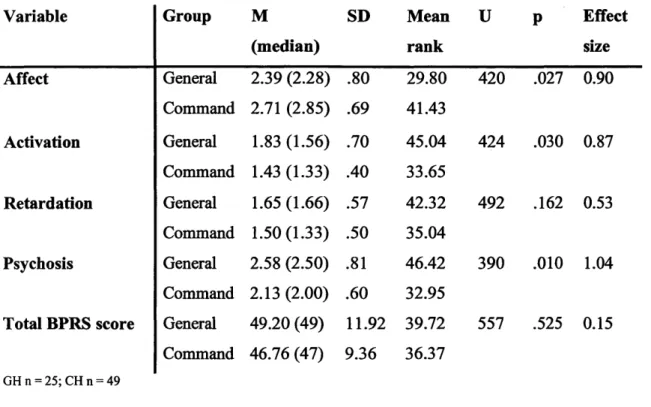
Table 5.4: Results o f the between group analysis comparing general hallucinators with command hallucinators
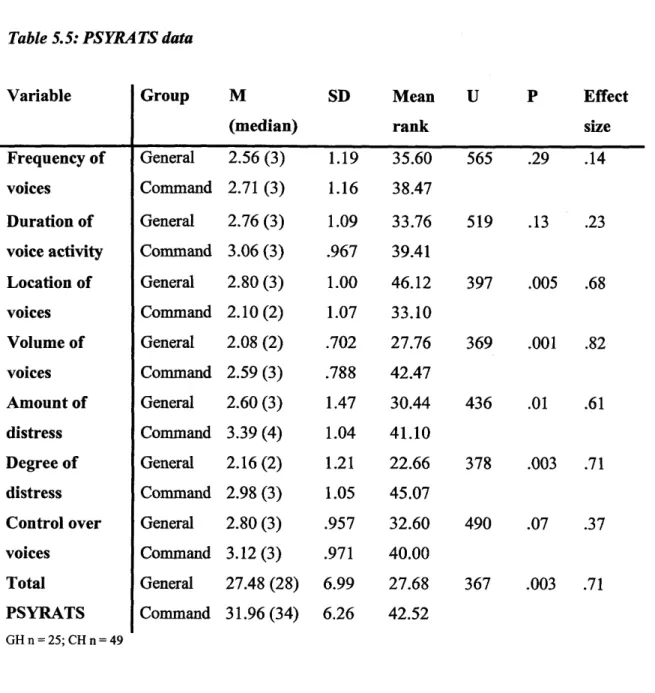
Table 5.5: PSYRATS data
Table 5.6: Between group analysis o f the BAVO-R
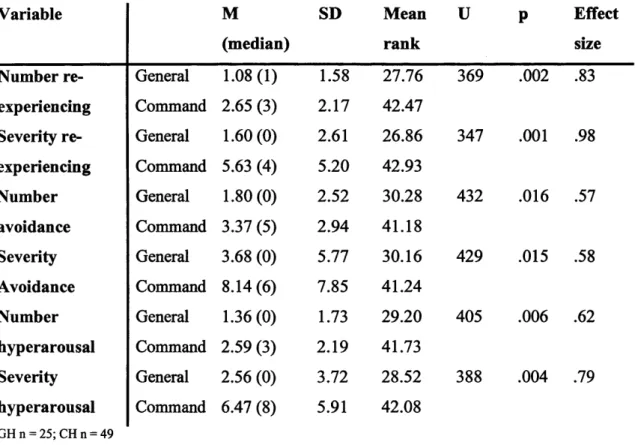
Table 5.7: Between group comparison o f trauma variables
Table 5.8: Results from correlational analysis o f trauma, beliefs about voices and distress Table 5.9: Between group analysis comparing the general mental state of those with and
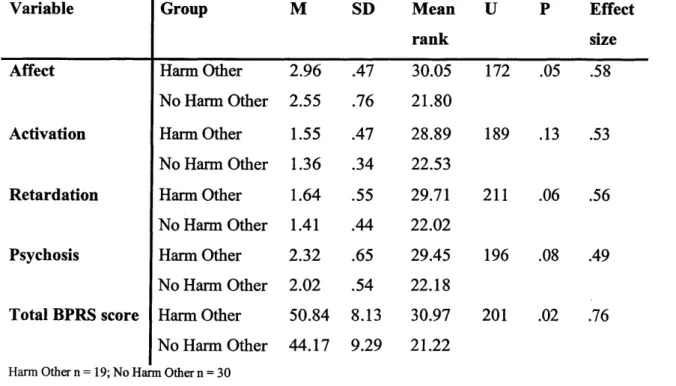
without command hallucinations to harm others 137
Table 5.10: Between group analysis comparing voice characteristics of those with and without
command hallucinations to harm others 139
Table 5.11: Between group analysis comparing beliefs about voices of those with and without 125 127 128 129 131
with and without command hallucinations to harm others 141 Table 5.13: Between group analysis comparing general mental state o f those with and without
command hallucinations to commit suicide 142
Table 5.14: Between group analysis comparing voice characteristics of those with and without
command hallucinations to commit suicide 143
Table 5.15: Between group analysis comparing beliefs about voices of those with and without
command hallucinations to commit suicide 144
Table 5.16: Between group analysis comparing scores on the social comparison scale of those
with and without command hallucinations to commit suicide 145
Table 5.17: Between group analysis comparing general mental state o f those with and without
command hallucinations to harm self 146
Table 5.18: Between group analysis comparing voice characteristics of those with and without
command hallucinations to harm self 147
Table 5.19: Between group analysis comparing beliefs about voices of those with and without
command hallucinations to harm self 148
Table 5.20: Between group analysis comparing scores on the social comparison scale of those
with and without command hallucinations to commit suicide 149
Table 5.21 :Between Group comparison of all variables based on predominant content 151
Table 5.22: Between Group Analysis Continued 152
Table 5.23: Frequency data for behavioural responses to each type o f dangerous command 159 Table 5.24: Comparison of voice variables of compilers and non-compliers with a lifetime
history o f harm-other commands 162
Table 5.25: Comparison of Beliefs about Self and Interpersonal Behaviour of compilers and
history of harm-other commands 165 Table 5.27: Comparison of Voice Variables o f compilers and non-compliers with current
harm-other commands 167
Table 5.28: Comparison of Beliefs about Self and Interpersonal Behaviour o f compilers and
non-compliers with current harm-other commands 168
Table 5.29: Comparison of General Mental State of compilers and non-compliers with current
harm-other commands 169
Table 5.30: Comparison of Voice Variables of compilers and non-compliers with a lifetime
history of suicide commands 171
Table 5.31: Comparison of Beliefs about Self and Interpersonal Behaviour o f compilers and
non-compliers with a lifetime history of suicide commands 172
Table 5.32: Comparison of General Mental State of compilers and non-compliers with a
lifetime history o f suicide commands 173
Table 5.33: Comparison of Voice Variables o f compliers and non-compliers with current
command hallucinations to commit suicide 175
Table 5.34: Comparison of Beliefs about Self and Interpersonal Behaviour of compliers and non-compliers with current command hallucinations to commit suicide 176 Table 5.35: Comparison of General Mental State of compliers and non-compliers with current
command hallucinations to commit suicide 177
Table 5.36: Comparison of Voice Variables of compliers and non-compliers with current
command hallucinations to self-harm 179
Table 5.37: Comparison of Beliefs about Self and Interpersonal Behaviour of compliers and
command hallucinations to self-harm 181 Table 5.39: Behaviour associated with command hallucinations over time. 191 Table 5.40: Individual Predictors of Behavioural Response to Suicide Commands at one-
month follow-up 195
Table 5.41: Individual predictors o f behaviour associated with suicide commands at one
month (using attractiveness) 197
Table 5.42: Individual predictors o f compliance with command hallucinations to harm self at
Contents
Declarations i Acknowledgements ii Abstract iii List of Tables iv Contents 1 Appendices 233Chapter 1 - Introduction to Auditory Hallucinations 1
1.1 Overview 1
1.2 Definition o f Hallucinations 1
1.3 Auditory Hallucinations 2
1.4 Why study auditory hallucinations? 3
1.5 Accounts of Auditory Hallucinations 3
1.5.1 Historical accounts of hearing voices 3
1.5.2 Hallucinations as a spiritual experience 4
1.5.3 Hallucinations as a sign o f mental illness 5
1.5.4 Hallucinations as a first rank symptom of schizophrenia 5
1.6 What is schizophrenia? 6
1.6.1 Validity of schizophrenia as a single disease 6
1.7 Auditory hallucinations in the general population 9
1.7.1 Epidemiological Studies 9
1.7.2 Selective populations - college students 10
1.7.3 Coping with hearing voices 11
1.8 Psychological understandings of auditory hallucinations 14
1.8.2 The personal meaning of voices 16
1.8.3 Cognitive-behavioural accounts of voices 17
Chapter 2 - Command Hallucinations 25
2.1 Risk Assessment 25
2.2 Definitions - What are Command Hallucinations? 26
2.3 What distinguishes those that hear commands from those that don’t? 28
2.4 Prevalence of Command Hallucinations 31
2.5 Content of commands 33
2.6 Are command hallucinations associated with risk behaviour? 35
2.6.1 Case Study Data 36
2.6.2 Studies on State Recordings 36
2.6.3 Larger Studies using Clinical Populations 38
2.7 Distinguishing Compliers from Non-Compliers - Mediating Variables 47 2.7.1 Characteristics of the Voice and Topographical Variables 47
2.7.2 Beliefs About Voices 50
2.7.3 The relationship between voice and voice hearer 52
2.7.4 Additional Variables 53
2.7.5 Comment 54
2.8 Cognitive Behavioural Model o f Command Hallucinations 55
2.9 Summary and Introduction to the Current Study 60
Chapter 3 - The Command Hallucinations Rating and Interview Schedule (CHRIS) 63
3.1 Introduction 63
3.2 Methodology 69
3.2.1 Design 69
3.2.2 Participants 69
3.2.3 Measures 70
Belief About Voices Questionnaire - Revised (BAVQ-R, Chadwick, Lees & Birchwood,
2000). 73
3.3 Procedure 74
3.4 Results 75
3.4.2 General Mental State 76 3.4.3 Reliability analysis 77 3.4.3.1 Content 77 3.4.3.2 Behavioural Response 79 3.4.3.3 Function o f behaviour 80 3.4.3.4 Coping 82 3.5 Discussion 83 Chapter 4 - Methodology 88 4.1 Design 88 4.2 Participants 88 4.3 Measures 92
4.3.1 Current Mental State 92
4.3.2 Assessment of Voices 95 4.3.3 Trauma 99 4.3.4 Interpersonal factors 101 4.3.5 Cognitive Abilities 104 4.4 Procedure 104 4.4.1 Ethical Approval 104 4.4.2 Recruitment 104 4.4.3 Interview 105 4.4.4 Follow-Up 106 4.5 Analysis 107 Chapter 5 Results 109 5.1 Introduction to chapter 109
5.2 What distinguishes those that hear commands from those that don’t? I l l
5.2.1 Introduction to hypotheses 111
5.2.2 Participants 113
5.2.3 Results 114
5.2.4 Interim Discussion 119
5.3 What distinguishes those that currently hear commands from those that do not currently
5.3.1 Introduction to hypotheses 121 5.3.2 Participants 123 5.3.3 Results 124 5.3.4 Mental State 124 5.3.5 Topography o f Voices 126 5.3.6 Trauma 129
5.3.7 The relationship between trauma, beliefs about voices and distress associated with
voices 130
5.3.8 Interim Discussion 132
5.4 Distinguishing harm-self from harm-other 134
5.4.1 Introduction to hypotheses 134 5.4.2 Participants 135 5.4.3 Measures 136 5.4.4 Results 136 5.4.5 Harm-Other Commands 137 5.4.5.1 Suicide Commands 142 5.4.5.2 Self-Harm 146
5.4.6 Comparison based on predominant content 150
5.4.7 Interim discussion 154
5.5 What distinguishes compliers from non-compliers? 157
5.5.1 Introduction to hypotheses 157
5.5.2 Participants 159
5.5.3 Comparing compliers and non-compliers based on lifetime history of
command hallucinations 161
5.5.3.1 Harm Other: Approach One (lifetime history of commands) 161 5.5.3.2 Harm Other: Approach Two (current voice-hearing experience) 166 5.5.3.3 Suicide: Approach One (lifetime history o f commands) 170 5.5.3.4 Suicide: Approach Two (current command hallucinations) 174 5.5.3.5 Harm-Self: Approach One (lifetime history of commands) 178
5.5.4 Interim Discussion 182
5.5.4.1 Harm-Other 184
5.5.4.2 Suicide 186
5.6 Question Five: Predicting Future Compliance 190
5.6.1 Introduction 190
5.6.2 Participants 190
5.6.3 Results 191
5.6.4 Regression Analyses 194
5.6.4.1 Predicting Compliance with Harm-Other Commands 194
5.6.4.2 Predicting Compliance with Suicide Commands 194
5.6.4.3 Predicting Compliance with Command Hallucinations to Harm Self 198
5.6.5 Interim Discussion 200
5.7 Summary 201
Chapter 6 Overview and Discussion 202
6.1 Overview 202
6.2 What distinguishes Compliers from Non-Compliers? 203
6.2.1 Harm-Other 207
6.2.2 Suicide 209
6.2.3 Harm-Self 210
6.2.4 Methodological Issues 212
6.3 What predicts future compliance? 215
6.4 The Development of Command Hallucinations 216
6.5 Clinical Implications 220
6.6 Theoretical Implications 223
6.7 Limitations 225
6.8 Future Research 229
Chapter
1 - I n t r o d u c t i o n t o A u d i t o r y H a l l u c i n a t i o n s1.1
Overview
The purpose o f this chapter is to orient the reader to the general experience of auditory hallucinations. The chapter will provide a theoretical, conceptual and empirical framework for the importance of biopsychosocial models of auditory hallucinations.
The chapter examines both historical and contemporary understandings of auditory hallucinations and presents evidence to support the view that ‘hearing voices’ is not an experience linked intrinsically and exclusively to mental illness, but is an experience also reported by a significant minority o f the general population.
The chapter looks at the way in which the experiences o f ‘non-psychiatric’ and ‘psychiatric’ voice hearers differ and how such differences have informed psychological accounts o f hearing voices.
1.2
Definition of Hallucinations
Hallucinations can occur in any of the five senses: sight, smell, taste, touch and hearing. Respectively, these are referred to as visual, olfactory, gustatory, tactile and auditory hallucinations.
Whilst, in clinical populations, hallucinations are not specific to the auditory modality, auditory hallucinations are perhaps the most commonly reported (Miller, O’Connor and DiPasquale, 1993). Furthermore, the preponderance of research and subsequent theoretical models (e.g. Chadwick and Birchwood, 1994; Chadwick, Birchwood, and Trower 1996; Garety, Kuipers, Fowler, Freeman and Bebbington, 2001) is conducted with individuals reporting auditory hallucinations. Many o f the concepts that are discussed in this chapter may apply to hallucinatory experiences in other modalities, however, the focus of attention for the current study is auditory hallucinations.
1.3
Auditory Hallucinations
The concept and definition of auditory hallucinations has been the subject of debate for many years. In the revised third edition of the Diagnostic and Statistical Manual (DSM-III-R, APA, 1987) hallucinations are defined as a “sensory perception without external stimulation of the relevant sensory organ”. The DSM-IV does not provide a definition of hallucinations.
Clinical and experimental findings fail to support the above definition and have suggested that hallucinations may occur when a stimulus - either internal or external - is present but the stimulus is misattributed (Bentall, 1990; Fowler, Garety and Kuipers, 1995). It has also been argued that the above definition fails to account for the subjective experience o f auditory hallucinations.
With this borne in mind, Slade and Bentall (1988) provide a more comprehensive definition of hallucinatory experiences defining hallucinations as “any percept like experience which a. occurs in the absence of an appropriate stimulus, b. has the full force o f the corresponding actual (real) perception, and c. is not amenable to direct and voluntary control. Bentall (1990) argues that this definition accounts for some o f the psychological factors associated with
hallucinations such as the misattribution of stimuli, the impact of this experience on the individual and the subjective perception of control over the experience.
Auditory hallucinations vary in nature and content and can consist of music, and general noise (see Johns, Nazroo, Bebbington and Kuipers, 2002). However, the majority o f auditory hallucinations are described as voices. The term ‘hearing voices’ will be used interchangeably with auditory hallucinations throughout this thesis.
1.4
Why study auditory hallucinations?
Auditory hallucinations are commonly associated with mental ill health, in particular with schizophrenia (see Bentall, 1990). Whilst the validity of this association has been questioned (a point that will be examined in more detail later in this chapter) there is little doubt that for a cohort of individuals in contact with psychiatric services, auditory hallucinations are associated with considerable distress (Garety & Hemsley, 1987). Moreover, almost a third of psychiatric voice hearers experience auditory hallucinations that are resistant to antipsychotic medication (Curson, Patel and Liddle, 1988). Theoretical developments that will be examined in this chapter have facilitated a move away from a unimodal formulation of auditory hallucinations which views the hallucinatory experience as a consequence o f an underlying pathology towards a greater biopsychosocial understanding of the experience of hearing voices.
1.5
Accounts of Auditory Hallucinations
1.5.1
Historical accounts of hearing voices
Throughout ancient history there have been reports of individuals ‘hearing voices’. The way in which these unusual experiences have been responded to is generally dependent on the culture of the time (Clark, 2001). For instance, Socrates, a great philosopher in ancient
Greece, was said to have heard inspiring voices at times (Zilboorg and Henry, 1941). He referred to his voices as ‘daemons’ (children of the Gods) and did not hesitate to follow their advice. Moreover, his peers would also follow the advice of Socrates’ ‘daemons’. In the bible, Ezekiel is described as having a sudden experience of a message and visions from God. He was honoured for his experiences and the consequences associated with them. The voices heard by Joan of Arc were considered, at the time, to be the result of a benevolent spiritual experience. She was hailed as a heroine when the ‘voices’ led the French army to victory only to be condemned as a witch when she was later captured by English victims (see Leudar and Thomas, 2000). These cases exemplify how the individual and societal response to unusual experiences such as hearing voices is often wholly dependent on the frame of reference for such experiences (e.g. religious beliefs) and the consequences associated with the experience (e.g. a ‘message’ from God leads to the evacuation of a town that is subsequently destroyed by floods).
1.5.2
Hallucinations as a spiritual experience
Currently, in western culture, hearing voices is seen as a symptom of mental illness, often linked intrinsically to ‘schizophrenia’. However, there are a number of alternative explanations o f ‘hearing voices’. A spiritual or mystical explanation posits that all humans have the ability to expand their consciousness by developing spirituality. Hearing voices is viewed as part of such an expansion (Roberts, 1979). Those who work in the realms of parapsychology believe that hearing voices is the result of a special gift or sensitivity that permits communication with the ‘spirit world’. Others suggest that the voices belong to individuals who have died and who’s ‘spirits’ continue to wander. Such ‘spirits’ attach themselves to individuals resulting in an apparent hallucinatory experience (see for example, Sanderson, 1997).
1.5.3
Hallucinations as a sign of mental illness
Even in ancient times, hearing voices was an unusual - albeit more culturally sanctioned - experience. With the demise of the church and religious beliefs in general and the ever growing influence o f science, the renaissance saw the introduction of medicine and the notion of pathology. For hundreds of years, medicine has attempted to explain the occurrence of auditory hallucinations. As early as 1798, the English Physician, Crichton, described hallucinations as ‘diseased perceptions’. However, it was the psychiatrist Henry Maudsley who was most influential in forming medicine’s view o f auditory hallucinations (see Leudar and Thomas, 2000). A staunch agnostic and a “devout materialist”, Maudsley developed rational and materialist explanations for a range o f supernatural or spiritual phenomena, including hearing voices. He posited that the religious experiences of individuals such as Mohammed and St. Paul were better explained in terms of epilepsy, and that hallucinations could also be explained in this way. Maudsley wrote fluently and profusely on such topics. His work placed the experience of hearing voices firmly within the realm of psychiatry and mental illness.
1.5.4
Hallucinations as a first rank symptom of schizophrenia
In the mid 1950’s, the notion that auditory hallucinations were pathognomonic to schizophrenia was introduced. According to Schneider (1957), there were three types of auditory hallucinations: hearing voices speaking your own thoughts out loud, hearing two or more voices talking about you, and voices providing a running commentary on your actions. Schneider termed these experiences (and others) first rank symptoms and stated that the presence of one or more such symptom in the absence of any evidence to suggest organic brain disease, indicated a diagnosis of schizophrenia. First rank symptoms formed the basis of the diagnostic systems that continue to be employed by psychiatrists today.
1.6
What is schizophrenia?
As auditory hallucinations are intrinsically linked by the medical model, to schizophrenia it may be important to consider the notion and validity of the concept of schizophrenia.
Schizophrenia is one of the psychotic disorders characterised by major disturbances in thought, emotion and behaviour (Davison and Neale, 1998). The range of symptoms associated with schizophrenia is extensive and can include: delusions, disordered thought processes and speech, hallucinations, altered affect, motor abnormalities, and cognitive deficits (DSM-IV, APA, 1994).
However, the way in which schizophrenia is viewed has changed dramatically in the last two decades.
Once viewed as a progressively deteriorating condition (Kraeplin 1898), schizophrenia has long been conceptualised by many as a single disease entity that can be diagnosed and defined by its symptomatology. Indeed, the presence o f just one first rank syndrome (e.g. auditory hallucinations) is sufficient for a diagnosis of schizophrenia, although current diagnostic criteria (DSM-IV) require that the individual has also experienced deterioration in functioning. There are a number of difficulties with such a view. These will be addressed below.
1.6.1
Validity of schizophrenia as a single disease
The phenomenological approach forms the basis o f many psychiatric diagnostic tools (e.g DSM-IV, APA, 1994; ICD-10, WHO, 1992). Schizophrenia is diagnosed primarily by the presence o f first rank symptoms and a deterioration of function. Whilst the reliability of diagnosis has been supported by large-scale research studies (Farmer and McGuffin, 1988), it is the validity o f the diagnosis that causes concern.
The first consternations regarding the validity of schizophrenia began in the 1960’s with the advent of the anti-psychiatry movement (e.g. Laing, 1965). It was noted that ‘schizophrenia’ was a heterogeneous disorder and it was often the differences between individuals that explained their presentation. It was suggested that to group these people together in one diagnostic category was counterproductive.
Bentall (2003) presents an exceptionally comprehensive deconstruction of the concept of schizophrenia and other forms of psychosis but, in brief, he suggests that there are three ways of assessing the validity of schizophrenia. He argues firstly that the symptoms of the syndrome should go together, that is if an individual has one symptom there should be a high likelihood that they have another symptom; secondly that the diagnosis should predict onset, outcome and response to treatment; and thirdly, that diagnosis should be related to aetiology.
Regarding the first point, the symptoms associated with schizophrenia are not exclusive to that diagnosis. For example, auditory hallucinations are found in a number of organic and functional disorders such as depression and grief reactions (Kindon and Turkington, 1994).
Secondly, the diagnosis of schizophrenia appears to have little predictive validity. The course and outcome of schizophrenia is particularly heterogeneous. A large-scale study (n = 280) performed by Ciompi (1980) demonstrated this variability. The author examined the medical notes o f almost three hundred individuals whose histories were documented until the age o f 65. The average follow-up period was 37 years. Ciompi detected significant variability in outcome with almost half of the sample presenting with acute onset and the other half with insidious onset. Furthermore, equal numbers had an episodic and continuous course. Half were left with a moderate or severe disability but a quarter showed a full recovery. Ciompi’s use o f Bleuler’s diagnostic criteria (which are very broad) attracted a good deal of criticism. Psychiatrists argued that individuals that would not have met stricter diagnostic criteria for
schizophrenia (e.g. DSM or ICD criteria) would have been included in the study thereby increasing the probability of a more favourable outcome.
Nevertheless, later studies employing stricter criteria (Present State Examination) also found that the diagnostic label of ‘schizophrenia’ was o f little use in determining an individual’s prognosis. A group of researchers involved in the International Pilot Study of Schizophrenia examined the extent to which individual symptoms, regardless of their role in diagnosis, predicted outcome. Carpenter, Bartko and Strauss (1979) followed up 130 individuals over a five-year period examining symptomatology, details o f social functioning and duration of hospitalisation. Participants were split into two groups according to their outcome (best and worst outcome). Only one symptom (restricted or blunted affect) discriminated between the groups. Individual symptoms have also been shown to be better predictors of the response to medication than syndromes (Johnstone, Crow, Johnson and Macmillan, 1986). The authors concluded that diagnosis was of little assistance in predicting outcome.
Finally, scientists have been in pursuit of the mechanisms governing the manifestation of psychosis since Kraeplin first classified it a century ago. However, an unequivocal aetiological account has remained elusive. Although significant developments have been made in various areas o f psychological research from biological to social no clear ‘cause’ either psychological or physical has been discovered. Furthermore, there is a good deal of inconsistency within the existing research. Given the heterogeneous nature of ‘schizophrenia’ (see points above) this is of little surprise.
Given the points discussed above, it is difficult to accept that schizophrenia, as a single entity, is a valid concept. Bentall and others (e g Bannister, 1968; Slade and Cooper, 1979) suggest that what is called “schizophrenia” could be a range of different disorders grouped together under an umbrella term. They have recommended abandoning investigations into the
syndrome of schizophrenia and adopting a symptom approach. The current study will adopt this approach and will therefore avoid, where possible, using the term schizophrenia. The term ‘psychosis’ will be used throughout this work (where appropriate) to indicate any psychotic disorder o f which hearing voices is a symptom. However, it should also be noted that the experience of hearing voices is not exclusively related to the diagnostic category of schizophrenia and has also been associated with severe depression, personality disorder, and post-traumatic stress disorder.
The licence to examine and intervene with individual symptoms has opened many doors for psychological approaches to psychotic symptoms such as auditory hallucinations. This was further inspired by the ‘discovery’ and exploration o f voice hearers in the general population.
1.7
Auditory hallucinations in the general population
A number o f researchers have reported that a significant minority o f the general population experience ‘auditory hallucinations’. These studies fall into two categories: epidemiological studies and studies on specific populations such as students. A brief selection o f these studies will be presented below.
1.7.1 Epidemiological Studies
Several large-scale epidemiological studies have been conducted in various countries. For example, in the Netherlands, Tien (1991) drew upon a vast epidemiological database (n > 18,500) and noted that the lifetime prevalence of hallucinations not related to organic causes was 10% for men and 15% for women. Two per cent o f these cases reported hearing voices. Data from an American study, the Eastern Baltimore Mental Health Survey, suggested that 5% of the general population reported hallucinations (Eaton, Romananoski, Anthony, and Nestadt 1991). Whilst, Sidgwick (1984) collected data from over 17, 000 individuals in 10
countries and found that 9.9% experienced a hallucination as part of normal consciousness (that is not related to physical or mental illness, drug use or sleep deprivation). Others have detected similar prevalence rates (e.g. Van Os, Hanssen, Bijl, & Ravelli, 2000). It has been reported that these experiences are close to or identical to those that would attract a psychiatric diagnosis.
It would appear, however, that there is a degree o f cross-cultural variation in the experience of auditory hallucinations. In the UK, 9.8 % of individuals from a Caribbean origin reported an auditory hallucinatory experience in the previous year compared to just 4% of a white population (Johns et al, 2002). The authors did not hypothesise as to the reason for this finding, however, it is conceivable that a white population were wary o f reporting such unusual experiences. Johns et al noted that there was a greater religious affiliation within the Caribbean population. Among religious populations, hearing voices can be a culturally sanctioned experience and individuals may therefore have fewer worries about reporting such experiences.
1.7.2
Selective populations - college students
Posey & Losch, (1983) administered a questionnaire containing 14 examples of hallucinatory experiences (example of experiences) to 375 students. Seventy one per cent reported lifetime prevalence o f at least one experience, 39% said they heard their own voice speaking their thoughts out loud, and 5% reported having a conversation with a hallucinated voice. In an extension o f this study, Barrett and Etheridge (1992) found that a significant minority of students reported having hallucinatory experiences at least once a month (the figures for each of the 14 experiences ranged from 2.3% - 26.6% reporting the experience at least once a month). Whilst neither set o f researchers appear to have measured how many of these individuals had sought psychiatric help, Posey and Losch (1983) did interview a small sample
of voice hearers and, according to the Minnesota Multiphasic Personality Inventory, these individuals did not meet the criteria for a psychiatric diagnosis.
1.7.3
Coping with hearing voices
It is clear then, that there may be individuals in the general population who hear voices but do not experience significant distress associated with their experiences and do not have contact with psychiatric services (e.g. Romme, Honig, Noorthoom, and Escher 1992).
Distinguishing those that cope with the unusual experience o f hearing voices from those that do not cope is not a new concept. Leudar and Thomas (2000) provide a comprehensive account o f some of the earliest attempts to search for the factors that distinguish these two groups. They describe how, in the nineteenth century, the French Societe Medico- Psychologique met to discuss hallucinations. Whilst some members claimed that the hallucinations o f ‘visionaries’ such as Socrates could not be distinguished from those of the ‘inmates’ in French asylums (Maury, 1855) others argued that there were a number of features that distinguished ‘pathological’ from ‘non-pathological’ or ‘physiological’ experiences. For example, Buchez - a French Psychiatrist - suggested that all humans are endowed with physiological functions of internal vision and internal audition. He believed that these functions were more developed in artists (musicians, painters etc.) and that in such individuals, visions and auditory images are prepared and voluntary. In pathological conditions, on the other hand, internal images are spontaneous and involuntary; that is the individual does not feel they have control over the experience. A similar view is said to have been held by Peisse (see Leudar and Thomas, 2000) but he added that ‘insane hallucinators’ did not distinguish their spontaneous and involuntary perceptions from normal perceptions, that is the hallucination was perceived as being real. Brierre de Boismont also resisted the notion that hallucinations were inextricably linked to ‘madness’ and suggested that it was not
hallucinating per se that was pathological but it was the involuntariness, delirious content and “childish terrors” of the hallucinator that was associated with insanity. It would appear that early attempts at distinguishing voice hearing experiences focussed on a number of factors: the degree of control over the experience, the sense of the hallucination being real, and the distress associated with the experience. These factors can be recognised in current definitions and psychological understandings of auditory hallucinations. Furthermore, modem day research into the relationship between the voice hearer and the voices, has supported the role that these factors play in the development and maintenance o f auditory hallucinations and associated distress. This is discussed in greater detail later in the chapter.
In recent years, a number of researchers have begun to specifically seek out voice hearers in the general population in order to investigate the differences between the experiences of the two groups.
Romme and Escher’s (1989) seminal study examined a group o f individuals from the general population who reported hearing and coping with voices. Four hundred and fifty people responded to a television appeal for ‘voice hearers’. All of these individuals were sent a questionnaire consisting of thirty open-ended questions about the experience of hearing voices. O f the final number available for analysis (n = 186), 66% reported an inability to cope with the experience. Clearly then, there was a significant proportion of people in the general population who heard voices and were coping with the experience.
In the second phase o f the study, twenty individuals who had said that they were able to cope with the experience of hearing voices were interviewed in more detail. Ten of these had never had any contact with psychiatric services and did not meet criteria for a psychiatric diagnosis. The remaining ten were known to have a psychiatric history including four with a diagnosis
of schizophrenia. However, these individuals still reported being able to cope with their voices.
In their interviews with this group of individuals, the authors noted a number of themes that helped to differentiate those that coped with hearing voices and those that could not manage the experience. ‘Copers’ appeared to progress through a number of phases before reaching a state of acceptance of the voices. Following a period of panic, anger and helplessness regarding the experience of hearing voices, ‘copers’ reported structuring their experiences in what Romme and Escher refer to as the ‘organisation phase’. Individuals described accepting that they were hearing voices but choosing to only listen to the positive voices, or setting limits for the length of time they would listen to the voices. Furthermore, individuals that learned to cope with the voices appeared to reach a stage o f stabilisation where the voices became an integrated part o f the self.
There appeared to be a difference in the content o f the voices with ‘copers’ reporting positive, friendly voices, and ‘non-copers’ reporting hostile and aggressive voices. This finding is somewhat intuitive, however, the direction of causality for this factor is not clear. It could be that a positive attribution (e.g. “this is a positive spiritual experience”) influences the interpretation o f the content.
‘Copers’ also described having a frame of reference in which to understand their experiences. These ranged from psychological understandings to spiritual and mystical explanations (mediumistic tendencies, voices as a result of transcendental meditation).
Similar findings were reported from a qualitative study conducted by Jackson and Fulford (1997). Again, the authors noted strong phenomenological parallels between the experiences described by two groups: a non-psychiatric group reporting spiritual experiences and a group of individuals with a diagnosed psychiatric condition reporting spiritual experiences. These
experiences included hearing voices. Spiritual experiences were defined as “special for the individual in their degree of subjective profundity and meaning and which seem in some way to go beyond ‘mundane’ consensual reality”. Individuals assigned to the spiritual group had to have reported a significant period o f anomalous experience explained in spiritual terms, apparently involving psychotic-like phenomenology. They had no psychiatric history and had indications of a positive adjustment. The ‘diagnosed group’ had to have a diagnosed and treated psychotic disorder. All had experienced significant recovery at the time of the interview.
Whilst there were phenomenological similarities, a number of differences between psychiatric and spiritual experiences were also noted, including the emotional tone and reaction to the experiences. The difference between the groups was most apparent on the effect the experiences had on the individuals’ life. The non-psychiatric group reported feeling empowered and helped by their experiences whereas a diagnosed group reported feeling overwhelmed and isolated.
Jackson (1997) was particularly interested in how the different outcomes occurred; why one group perceives their experiences as spiritual and the other as psychotic. He suggests that there may be a number of psychological factors that determine the path of these experiences: Preparation (the spiritual participants had a background in which the experiences made some sense such as strong religious/spiritual beliefs); guidance (the individuals had consulted ‘professionals’ such as priest or a seer that had helped them to understand their experiences); and “giftedness” or the sufficient ego strength to succeed.
1.8
Psychological understandings of auditory hallucinations
The notion that auditory hallucinations are not necessarily pathological and may be based on a continuum facilitated the development o f psychological models of auditory hallucinations.
Such models are able to account for the occurrence of ‘psychotic phenomena’ in the general population and the way in which these apparently benevolent experiences differ from the distressing and persistent hallucinations experienced by a psychiatric population. There are a number of models of auditory hallucinations, a brief selection will be presented below.
1.8.1
The occurrence of auditory hallucinations - neurocognitive models
Frith (1979) proposes that a deficit in the mechanism that controls the contents of consciousness may underpin auditory hallucinations. Frith distinguishes between conscious and preconscious processes. He explains that there are two levels o f consciousness: the preconscious and consciousness. Preconscious processes occur below the levels of consciousness and are concerned with the selection of appropriate interpretation of and response to stimuli. Auditory hallucinations are said to occur when these preconscious processes are actually conscious resulting in the misinterpretation of auditory stimuli, for example, noises outside of the door may be interpreted as people talking about you outside the door. Frith’s model received a good deal of empirical support. However, it has been criticised for being reductionist and also for failing to account for a number of clinical phenomenon such as the observation that hallucinations decrease when the individual attends to what others say (Slade, 1974). Frith later produced another model o f the positive symptoms of psychosis. In this model it is suggested that difficulties with the self-monitoring of actions and intentions leads to the individuals own intentions to act not being recognised and being experienced as alien (Frith, 1992). Hemsley (1993) has developed a similar neurocognitive model that focuses on the breakdown of ‘willed intention activity’. His model suggests that a cognitive deficit leads to a ‘weakening o f the influence of stored memories of regularities of previous input on current perception’, which leads to ambiguous, unstructured sensory input and the subsequent intrusion into consciousness of unintended material from
memory. The ‘unintendedness’ o f this action leads to material being interpreted as alien; as voices.
Slade and Bentall (1985) and Bentall (1990b) have suggested that auditory hallucinations may result from a deficit in reality testing that leads to the misattribution of internal cognitive events (i.e. thoughts) as external real stimuli (i.e. voices), and the misinterpretation of external stimuli (for example, ambiguous noise interpreted as voices) (Bentall and Slade, 1985). There is a host o f experimental data supporting the notion o f misattribution of stimuli. For example, in order to investigate the ability to discriminate internally and externally generated stimuli, Morrison and Haddock (1997) asked three groups o f individuals to participate in a word association task: a group that experienced auditory hallucinations, a group that experienced delusions but not hallucinations, and a control group. They found that the first group were significantly more likely to attribute their own thoughts in a word association task to the investigator.
Neurocognitive models are useful in considering the processes underlying the occurrence of anomalous experiences such as auditory hallucinations. However, they do not provide an aetiological account of voices, that is they do not explain why certain individuals develop these difficulties. They also fail to explain why some individuals are able to cope with the resulting experience (hearing voices) and others are not. Finally, they do not explain how voice activity is maintained over time.
1.8.2
The personal meaning of voices
It has been argued that, similarly to the medical understanding of hearing voices, neurocognitive accounts of auditory hallucinations fail to capture the subjective experience o f hearing voices and the personal significance o f voice content.
Whilst most people who hear voices report hearing both positive and negative voices (e g Close and Garety, 1998), psychiatric voice hearers consistently rate the negative voices as predominant (e.g Jackson and Fulford, 1997; Falloon and Talbot, 1981; Romme and Escher, 1989). They also report feeling afraid of their voices (Romme and Escher, 1989). This is a direct contrast to non-psychiatric voice hearers who report predominantly positive voices that they believe enrich their lives.
It has been shown on numerous occasions that the content o f and beliefs about voices can be associated with an individual’s life history (Romme and Escher, 1989, 1993; Bentall, 1990; Chadwick et al, 1994), and the way that they feel about themselves (Close and Garety, 1998). It has even been demonstrated that individuals can rate their relationship with the voice as though it were a real person and that this relationship often mirrors relationships in the individual’s childhood (Benjamin, 1989).
1.8.3
Cognitive-behavioural accounts of voices
In response to findings such as those described above (e.g. Romme and Escher, 1989), which describe individuals who hear voices but do not experience any significant distress, a group of researchers (Chadwick and Birchwood, 1994) developed a model which attempts to incorporate the subjective experience of the individual voice hearer, their relationship with the voice/voices that they hear, and any associated coping strategies.
The model is based upon existing cognitive behavioural accounts of psychological disturbance (e.g. depression, anxiety etc.). It draws heavily upon both Beck’s model of cognitive therapy (Beck, Rush, Shaw and Emery, 1979) and Ellis’ Rational Emotive Therapy (Ellis, 1962, 1994). Central to both of these models is the notion that the response to any given event is mediated by thoughts, images and beliefs. This is often described as the ABC model where A is the activating event (a noise), B is the belief (“that’s a burglar”) and C is
the emotional, physiological and behavioural consequence (feel frightened, experience a quickened pulse rate, ring police or hide under duvet). This is often misrepresented as a linear model. However, it is not suggested that thoughts cause behaviours rather that both responses occur as one unified process, that is that ‘anxiety’ is an emotional, cognitive and behavioural experience. The model proposes that proximal beliefs such as those exemplified above are related to core beliefs about the self, others and the world. It is thought that these core beliefs may have their origin in childhood. Early relationships and life events are thought to have a profound impact on an individual’s propensity towards negative self- evaluation and low self-esteem.
The cognitive model of voices (Chadwick and Birchwood, 1994) views the occurrence of the voice as the triggering event (A) to which the individual gives a meaning (B) and experiences associated emotional, behavioural and physiological consequences (C). The model therefore suggests it is not the occurrence of voices per se that causes distress rather that it is the beliefs about the voice that elicit the emotional and behavioural consequences.
Birchwood and Chadwick found that they were able to classify certain beliefs that were felt to be central to the experience of the voice hearer. These include beliefs regarding the identity of the voice (e.g. the devil), beliefs about the purpose of the voice (malevolent or benevolent), the power of the voce (omnipotence) and beliefs about the effect of compliance or resistance (engagement and resistance). They were also able to classify coping behaviours as either resistance (resistant and combative behaviour, arguing and negative affect) or engagement (co-operative behaviour and positive affect).
The authors have argued that whether a voice is construed as malevolent or benevolent, powerful or benign is influenced by core cognitive schemata which are likely to be autobiographical in nature in that they are believed to be related to the individual’s past and
current life experiences and interpersonal relationships. Since the original development of a cognitive behavioural model of voices, Birchwood and others have found empirical support for this hypothesis. Specifically, that those who report a lower degree of social rank (that is how they view themselves in relation to others) are more likely to feel entrapped by the voices that they hear and are more likely to experience significant levels o f distress in relation to the voices that they hear (Birchwood and Gilbert, 2004). Birchwood, Meaden, Trower, Gilbert, and Plaistow (2000) describe how early life events and relationships may lead to a sense of subordination and that those who experience such events are more likely to perceive themselves as being unable to control the voices and therefore perceive their voices as being more omnipotent (powerful). Such early life events are likely to influence the development of core beliefs about self as subordinate to others, and therefore of lower social rank. Chapter two will present the way in which the role of social rank has been specifically applied to command hallucinations.
The two main hypotheses generated by the cognitive behavioural model have received a good deal of empirical support. The first of these hypotheses is that coping (emotional, behavioural and cognitive responses) is sometimes better understood in relation to beliefs about the voices than in relation to the content of the voices and that beliefs are not a direct interpretation of voice content (otherwise coping could be predicted from content analysis alone). The second hypothesis posits that by modifying the individual’s beliefs about the voices it would be possible to reduce the associated distress.
The content of voices differs from one individual to another (see Chadwick, Birchwood and Trower, 1996). A voice may occur in the first, second or third person. It may provide a running commentary of the person’s actions, and can also include comments (“well done”), suggestions (“watch the curb”), insults (’’you are a slut”), criticisms (“you did that wrong
again”), and commands (“cut yourself’). The interpretation of the content is a very subjective experience and may depend on qualitative differences in the pitch, intonation, context and beliefs about the voice.
Whilst there is a link between voice content and the individual’s associated feelings and behaviours, sometimes the class of belief is not understandable in light of content alone. Chadwick et al (1996) give an example of an apparently innocuous voice (the voice made comments such as “take care”, “mind your step”) that is interpreted as malevolent by the voice hearer who believed the voice to be that of evil witches intent on driving them mad. The voices elicited a good deal o f distress and an avoidant coping response. Whilst this individual’s coping responses were not understandable in relation to the content o f the voices, they were understandable in the context of the individual’s belief about the voices.
Chadwick et al (1996) found that for a third of their sample (n = 26) there appeared to be little congruence between voice content and beliefs about the voices. It would appear that individuals often formed beliefs by collating other pieces of ‘evidence’. For example, all participants believed their voices to be omnipotent. Seventy per cent of the sample cited concurrent symptoms such as visual hallucinations as evidence for their belief. It should be noted, however, that this degree of incongruence between content and belief has not been detected in other studies. For example, Close and Garety (1998), in their attempt to replicate Chadwick and Birchwood’s study, found that all those that reported negative content believed their voices to be malevolent, and those with positive content believed their voices to be benevolent.
Using a semi-structured questionnaire with a small sample of voice hearers (n = 26), Chadwick and Birchwood (1994) examined the relationship between beliefs about voices, coping behaviours and affect. They consistently found that malevolent voices were resisted
whilst voices believed to be of a benevolent nature were engaged with. Almost fifty per cent of a psychiatric sample believed their voices to be malevolent. These individuals were found to be significantly more likely to be depressed than those reporting benevolent voices and significantly more likely to report severe depression. Believing the voice to be more omnipotent (powerful) was also found to be associated with more severe depressive symptomatology. Although Chadwick and Birchwood’s original findings were based on a relatively small sample of psychiatric voice hearers, their results have now been replicated several times (Chadwick and Birchwood, 1995; Beck-Sander, Birchwood and Chadwick, 1997; Close and Garety, 1998; Chadwick, Birchwood and Lees, 2000; Vidgen, 2001; Andrew, Gray and Snowden, 2008).
There are other important findings implicit in Chadwick et a l’s model. Most importantly, their findings may explain why some individuals experience persistent voices. The findings suggest that if a voice is believed to be malevolent and omnipotent it is resisted. Findings from other research involving voice hearers suggests that this may result in a paradoxical increase in voice activity and is therefore a counterproductive strategy which is likely to lead to the individual feeling more out o f control o f the experience and further increasing the voices ‘power’(Falloon and Talbot, 1981; Romme et al, 1992).
The cognitive-behavioural model of voices provides a conceptual and empirical paradigm for the relationship between voice content, beliefs and emotional and behavioural consequences. The model has provided a much-needed impetus for therapeutic interventions for voice hearers. Indeed, interventions based on the cognitive behavioural model that attempt to modify beliefs about voices have enjoyed some success (Chadwick and Birchwood, 1994, 1996). However, it should be bome in mind that such approaches are rarely used in isolation and are often administered in a group context - an intervention in itself.
Vulnerability-Stress Models
The vulnerability-stress model (Zubin and Spring, 1977; Nuechterlein and Dawson, 1984a) represents a biopsychosocial approach to understanding the development of auditory hallucinations and other psychotic phenomena. It suggests that an individual may have a longstanding liability to developing auditory hallucinations (schizotypy). The vulnerability is likely to be biological in nature (either genetic, biochemical, or structural), although it has also been argued that the vulnerability may equally be psychological (Andrew et al, 2008) and may lead to a disorder in automatic cognitive processes. Susceptibility may be further increased by psychosocial factors such as family conflict, adverse environments or traumatic life experiences (see Garety et al, 2001). The symptoms o f psychosis are then likely to be precipitated by stressful or traumatic life events.
Garety et al (2001) have developed a model that is based on the principle of the vulnerability- stress hypothesis but that also incorporates the cognitive and psychological factors discussed in the previous two sections. The model suggests that there are two proximal routes to the development o f the positive symptoms of psychosis (including hearing voices). It is argued that, in a predisposed individual, a triggering event elicits a disruption in cognitive processes (Garety and Hemsley, 1994). The resulting cognitive disturbance can be conceptualised in two ways. First, that a cognitive deficit results in the unintended emergence in consciousness of material from memory (Hemsley, 1993) or secondly, a difficulty with the self monitoring of intentions that leads to the individuals intentions and willed action being experienced as involuntary and alien (Frith, 1992). Either of these cognitive disturbances is said to lead to anomalous conscious experiences (e.g thoughts experienced as voices). The emotional changes that occur as a direct and indirect result of the triggering event are said to feed into the anomalous experiences, for example an event can lead to anxiety and depression, further
anxiety may be elicited by the anomalous experiences all of which may influence the content and personal meaning of the voices (beliefs about voices). It is also suggested that in the context of all of these experiences, the individual searches for an explanation, and that biased conscious appraisal processes (e.g. Garety and Freeman, 1999) result in the individual making external attributions for their experiences. Pre-existing negative schema developed perhaps as a result o f childhood adversity or trauma that facilitate negative emotions, low self-esteem and a tendency to make external attributions not only contribute to the transformation of an anomalous experience to a ‘psychotic’ experience but they may also serve as a maintaining factor in voice activity, (Birchwood et al, 2000) voice content and the associated distress (Garety et al, 2001).
The second route is a direct affective route where triggering events lead to a disturbance in affect without cognitive disruptions which leads directly to the type of attributional biases outlined above.
The model assumes that all voice hearing experiences - psychiatric or non-psychiatric- have the same aetiology but that there are a number o f points at which it is hypothesised that an anomalous experience (hearing voices) can be transformed into a distressing and disrupting experience. Garety et al (2001) suggest that the externalising attributional style is at the core of the ‘psychotic’ experience and it is the tendency to externalise that distinguishes psychiatric from non-psychiatric voice hearers. However, there are a number o f other observations within the model where there could be hypothesised differences. For example, it may be that non-psychiatric voice hearers do not experience the social adversity (Bhugra, Leff, Mallett, Der, Corridan, and Rudge 1997), social marginalisation, childhood loss (Agid, Shapira, Zislin, Ritsner, Hamin, Murad, Troudart, Bloch, Heresco-Levy, and Lerer, 1999) and
trauma (Romme and Escher, 1992) that has been noted in psychiatric voice hearers, and thus the content and personal meaning of the voices do not result in any associated distress.
Garety’s model helps to understand the development of auditory hallucinations and other positive symptoms (delusions). However, whilst it describes factors that may contribute to the maintenance of auditory hallucinations, it does not specify the mechanisms by which such factors operate. The model is, however, entirely consistent with cognitive behavioural accounts o f auditory hallucinations (Chadwick, Birchwood and Trower, 1996).
The previous section provided an account o f the concept of auditory hallucinations and how the concept has changed over time from being an unusual but culturally sanctioned experience, to being an indication, in modem day Western Society, of severe mental illness. Importantly, the section reviewed the evidence for the continuum hypothesis which posits that the tendency towards anomalous experiences, such as hearing voices, is distributed on a continuum and that a significant proportion o f the general population report such experiences. The continuum hypothesis facilitated the development of psychological models of auditory hallucinations, some of which were reviewed in this chapter. Perhaps the most influential model in terms of the development of psychological interventions is the cognitive behavioural model. This model has also been applied specifically to the distressing experience of command hallucinations and will be outlined further in the next chapter.
C h a p ter
2 - C o m m a n d H a l l u c i n a t i o n s2.1
Risk Assessment
The assessment of risk (e.g. violence, self-harm, suicide and re-offending) forms a central part of the task of multidisciplinary teams working within services for mentally disordered offenders and for those working within the community. The outcomes of such risk assessments have considerable implications for both the future placement of the individual and for the safety of society. To date, the best measures of clinical and criminal risk have been actuarial measures (e.g. age, gender, age at first conviction, see Gray, Snowden, MacCulloch, Phillips, Taylor, and MacCulloch, 2004) and classifications of illness (e.g. Psychopathy; Schizophrenia - see Gray, McGleish, MacCulloch, Hill, Timmons and Snowden, 2003). Unfortunately, most of these measures of risk are static and unchangeable rather than dynamic. Consequently, once an individual is categorised as high risk it is difficult to alter that categorisation. The implications are that those categorised as high risk may be detained in secure conditions far longer than is necessary at both a high human and financial cost.
Buchanan (1997) suggests that many studies of risk have limited designs: ‘coding fo r diagnosis is not sufficient. We should be examining individual elements o f phenomenology which we have reason to think may be related to violence. Such elements include persecutory beliefs, passivity phenomena and command hallucinations. ’ This phenomenological position was supported by Junginger (1996) who suggested that:
characteristics (e.g. mental illness), an analysis o f the association between violence and the content and themes o f psychotic symptoms could be much more informative ’.
Until recently analysis of risk has been confined to the above two forms of analysis (actuarial and phenomenological classification). However, it may be that both actuarial and phenomenological levels of classification cannot provide comprehensive and reliable assays of risk because they will ultimately fail to describe the contribution of more fine grained controlling factors in determining risk. Furthermore, they provide limited information as to how to tailor clinical interventions and improve prognosis. Therefore, a more detailed analysis through the identification and appraisal of extra-phenomenological (e. g. characteristics of the phenomena and other variables e.g. cognitive factors, interpersonal dynamics) is necessary.
This chapter will provide an overview of the current literature pertaining to risk associated with command hallucinations. The nature and prevalence of command hallucinations will be presented before providing an overview of the literature relating to the association between command hallucinations and risk. A discussion of the current psychological models for understanding the relationship between command hallucinations and compliance behaviour will set the context for an introduction to the current study.
2.2
Definitions - What are Command Hallucinations?
Command hallucinations are not specifically mentioned or defined in the current diagnostic and statistical manual for mental illness (DSM-IV, APA, 1994). However, the symptom has been acknowledged at a phenomenological level since Bleuler’s original
writings where he referred to command hallucinations as having a compulsive power making them difficult to ignore (Bleuler, 1924: p62). Many have since attempted to provide a definition of what constitutes a command hallucination.
Hellerstein, Frosch, and Koenigsberg (1987) suggest that command hallucinations "Order particular acts, often violent or destructive ones and instruct a patient to act in a certain manner - ranging from making a gesture or grimace to committing suicidal or homicidal acts" (pg 219). Thompson, Stuart and Holden (1992) have also acknowledge the range of commands and the presence of innocuous commands explaining that “hallucinated instructions can include self-injurious or suicidal acts, other-directed violence, common day-to-day behaviours and nonsensical activity”. More recently, Byrne, Birchwood, Trower and Meaden (2006) have emphasised the voice hearer’s perception of the content in stating that what distinguishes commands from ordinary hallucinations is that “phenomenologically the voice is experienced or interpreted as commanding rather than commenting”. In their research sample, they included individuals who interpreted that a command was implied even if the voice was not explicitly commanding.
What is clear is that the experience of hearing commands is associated with considerable distress for the voice hearer. Previous research has found that command hallucinations are associated with a sense of hopelessness, helplessness (Rogers, Gillis, Turner, and Frise-Smith, 1990) and depression (Soppitt and Birchwood, 1997) perhaps beyond that experienced by individuals with general auditory hallucinations (Mackinnon, Copolov, and Trauer, 2004).