University of Bradford eThesis
This thesis is hosted in Bradford Scholars – The University of Bradford Open Access
repository. Visit the repository for full metadata or to contact the repository team
© University of Bradford. This work is licenced for reuse under a
Creative Commons
A FRAMEWORK FOR CORRELATION AND
AGGREGATION OF SECURITY ALERTS IN
COMMUNICATION NETWORKS
F. ALSERHANI
PhD
UNIVERSITY OF BRADFORD
ii
A FRAMEWORK FOR CORRELATION AND
AGGREGATION OF SECURITY ALERTS IN
COMMUNICATION NETWORKS
A reasoning correlation and aggregation approach to detect multi-stage attack scenarios using elementary alerts generated by Network Intrusion Detection Systems (NIDS) for a
global security perspective
FAEIZ ALSERHANI
Submitted for the Degree of
Doctor of Philosophy
School of Computing, Informatics and Media
University of Bradford
iii
Acknowledgements
It takes a long time to complete a PhD thesis, though not as long as it takes to lay some rail track, surprisingly. I would here like to express my thanks to the people who have been very helpful to me during the time it took me to write this thesis. First and foremost, I would like to thank my supervisors, Dr. Andrea Cullen and Prof. Irfan Awan, for the time and effort they put into helping me along the way. Their insight was extremely valuable and I have learned much from their feedback. The good advice, support and friendship of Prof. Irfan has been invaluable on both an academic and a personal level, for which I am extremely grateful. I also would like to show my gratitude to the people of Syphan technologies, Mr. Pravin Merchandi, Dr. Jules Dissos and Mr. Shakeel Ali , for their comments and support during the initial phase of the research.
The years spent in Bradford would not have been as wonderful without my colleague Mr. Monis Akhlaq. I am sincerely and heartily grateful to Monis for his personal and scientific support which has made a great impact on completion of this work. We have spent unforgettable times in our lab discussing issues and solving problems related to our research. I also would like to thank my colleague Dr. Rasha Osman for her assistance and interesting feedback during the research years.
Finally, I am forever indebted to my parents and my family for their understanding, endless patience and encouragement when it was most required. They have given me their unequivocal support throughout, as always, for which my mere expression of thanks likewise does not suffice.
iv
Abstract
The tremendous increase in usage and complexity of modern communication and network systems connected to the Internet, places demands upon security management to protect organisations’ sensitive data and resources from malicious intrusion. Malicious attacks by intruders and hackers exploit flaws and weakness points in deployed systems through several sophisticated techniques that cannot be prevented by traditional measures, such as user authentication, access controls and firewalls. Consequently, automated detection and timely response systems are urgently needed to detect abnormal activities by monitoring network traffic and system events. Network Intrusion Detection Systems (NIDS) and Network Intrusion Prevention Systems (NIPS) are technologies that inspect traffic and diagnose system behaviour to provide improved attack protection.
The current implementation of intrusion detection systems (commercial and open-source) lacks the scalability to support the massive increase in network speed, the emergence of new protocols and services. Multi-giga networks have become a standard installation posing the NIDS to be susceptible to resource exhaustion attacks. The research focuses on two distinct problems for the NIDS: missing alerts due to packet loss as a result of NIDS performance limitations; and the huge volumes of generated alerts by the NIDS overwhelming the security analyst which makes event observation tedious.
A methodology for analysing alerts using a proposed framework for alert correlation has been presented to provide the security operator with a global view of the security perspective. Missed alerts are recovered implicitly using a contextual technique to detect multi-stage attack scenarios. This is based on the assumption that the most serious intrusions consist of relevant steps that temporally ordered. The pre- and post- condition approach is used to identify the logical relations among low level alerts. The alerts are aggregated, verified using vulnerability modelling, and correlated to construct multi-stage attacks. A number of algorithms have been proposed in this research to support the functionality of our framework including: alert correlation, alert aggregation and graph reduction. These algorithms have been implemented in a tool called Multi-stage Attack Recognition System (MARS) consisting of a collection of integrated components. The system has been evaluated using a series of experiments and using different data sets i.e. publicly available datasets and data sets collected using real-life experiments. The results show that our approach can effectively detect multi-stage attacks. The false positive rates are reduced due to implementation of the vulnerability and target host information.
v
Figures
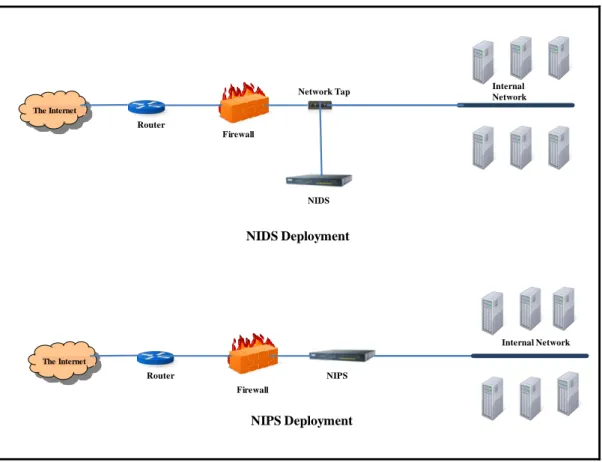
NIDS and NIPS deployment ... 23
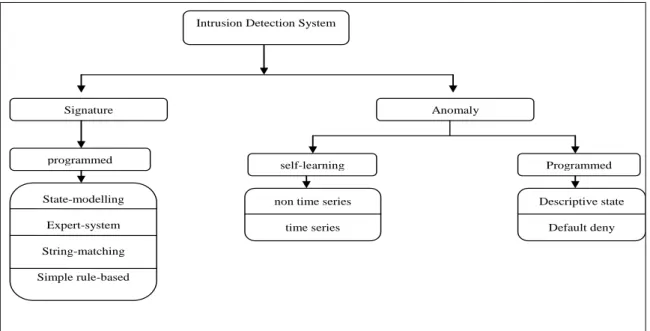
Axelsson’s classification of Intrusion Detection Systems (IDSs) ... 24
Architecture of hybrid systems ... 35
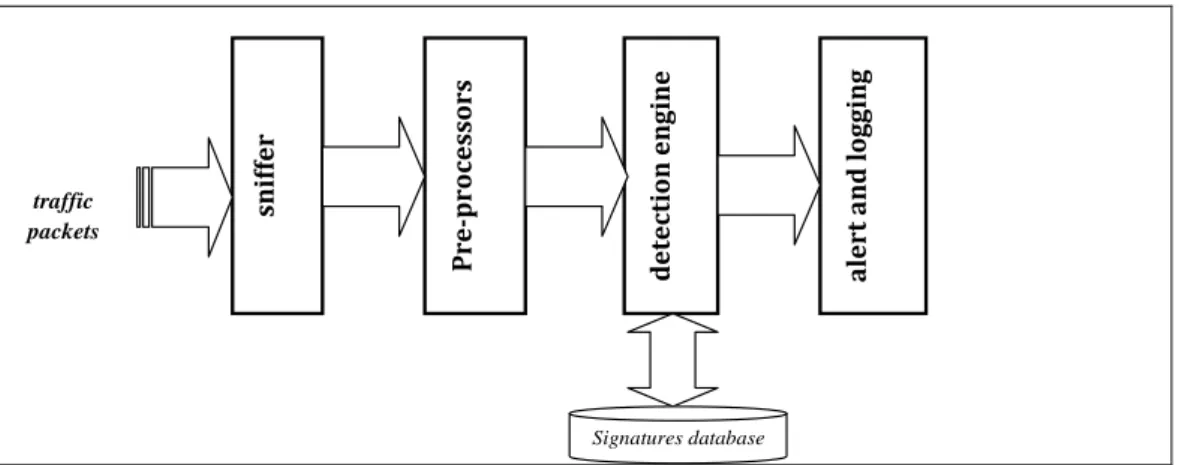
Snort sub-systems ... 37
Snort rule header ... 40
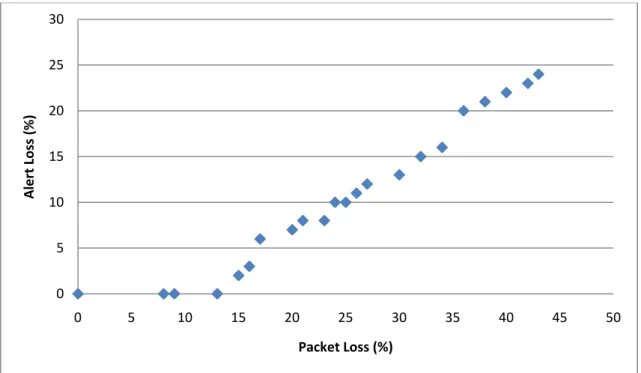
Relationship between packet loss & missing alerts ... 64
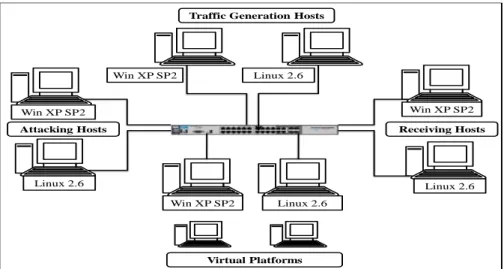
Test Bench-1 ... 67
Results – Scenario Alpha ... 70
Results – Scenario Bravo ... 70
Results – Scenario Charlie ... 71
Results – Scenario Delta ... 71
Results – Scenario Echo ... 72
Test-bench 2 – Host configuration ... 73
Results: packet dropped, UDP traffic – 750 Mbps ... 74
Results: packets dropped, UDP traffic – 1.0 Gbps ... 75
Results: packets dropped, UDP traffic – 1.5 Gbps ... 75
Results: packets dropped, UDP Traffic – 2.0 Gbps ... 76
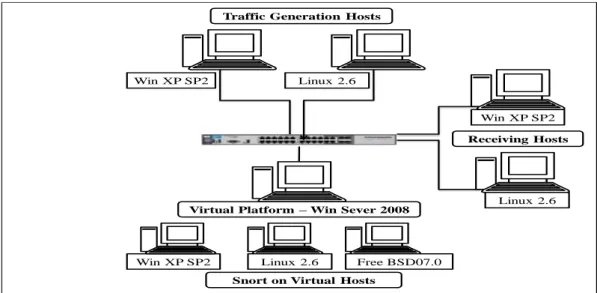
Test-bench 3 – Virtual Configuration ... 78
Snort packets received (%) – UDP traffic (128 Bytes & 256 Bytes) ... 80
Snort packets received (%) – UDP traffic (512 Bytes & 1024 Bytes) ... 81
Snort packets Rx (%) – UDP (1460 Bytes) and TCP (50 connections) ... 83
Snort packets received (%) – TCP Traffic (100 & 200 connections) ... 84
vi
Alerts and logs (success rate) ... 85
Comparison – Snort on Linux and Win ... 87
CPU and memory usage ... 88
Snort Packet Received (%) – Free BSD on Three/Two virtual platforms ……... 90
Virtualization concept ... 91
Statistics the I/O system (SATA 300) hard drive ... 92
Disk queue (SATA 300) hard drive ... 93
Multi-stage Attack Recognition System (MARS) framework …..…...………….. 100
Abstraction levels of attack classification ……..……….………... 110
Attack classification ………..……….………… 110
Examples of attack class inheritance ………..……... 111
Matching of alert pre-and post-conditions in the correlation function …….…..… 113
Correlation of two alerts ………..……….. 115
Alert verification algorithm .………..……… 118
Relationships between alert correlation and aggregation …………..……… 119
Algorithm of initialization of pre- and post-conditions …..………... 121
Algorithm of knowledge initialization ……….. 122
Construction of an event title ………..………... 123
Alert correlation algorithm ……….. 124
Algorithm of two combined events ………..…………. 125
Aggregation analysis algorithm ………..………... 128
Aggregation of zero in-degree alerts algorithm ………..…... 129
Aggregation of zero in-degree alerts algorithm (continued) ………..…... 130
Aggregation of zero in-degree alerts algorithm (continued) ………..…... 131
vii
Example of graph reduction ………..…………..……..……… 132
Online reduction algorithm ………..……….. 134
Online reduction algorithm (continued) ………..……….. 135
Offline reduction algorithm ………..………. 136
Offline reduction algorithm (continued) ……….……... 137
Reasoning about missed alerts ………..………... 138
Reasoning about missed alerts by generalised capability formalization ………… 140
System process flow ………..……… 144
An example of the capability knowledge base specification ……….. 146
MARS architecture ………..……….. 151
Main database tables ………..……….... 153
Example of implicit correlation ………..………... 158
Confusion matrix ………..………. 163
Relations between the confusion matrix measures ………. 164
Detected events in the functional test ………..………….. 172
Attack graph of the three detected events ... 173
Attack graph of non-critical events detected by MARS ... 174
Attack graph of the events detected in INSIDE.2.0 ... 174
The main evaluation metrics of MARS and TIAA ... 176
Recall rate (%) of the DARPA dataset ... 179
Precision rate (%) of the DARPA dataset ... 179
Overall accuracy rate (%) of the DARPA dataset ... 180
Alert reduction rate (%) of DARPA dataset ... 180
Test bench ... 181
viii
First attack stage ... 185
The second, third and fourth attack stages ... 187
The fifth attack stage ... 187
Graph of the extracted Botnet scenario ... 188
The first triggering event ... 192
The second and third events ... 194
Extracted SQLIA scenario graph ... 195
Comparison of resource usage by Snort and MARS (offline test) ... 197
Alert processing time of Snort and MARS ... 198
ix
Tables
Pattern-matching algorithm performance ... 39
Summary of test benches ... 66
Network Description – Test-bench 1 ... 68
Test-bench 1 scenarios ... 79
Network description – Test-bench 2 and Test-bench 3 ... 72
Host-based configuration results(packets dropped(%)) – UDP traffic ... 74
Host-based configuration results – mixed traffic ... 77
Packets received at host OS ... 79
Examples of pre- and post-conditions ... 114
Description of alert attributes ... 145
Events information ... 149
Description of the attack ……….……….. 169
DARPA2000 dataset statistics ……..………. 169
Functional test results ... 171
Comparative results to evaluate MARS effectiveness ... 175
Evaluation results of the DARPA datasets – accuracy test ... 178
x
Table of Contents
Chapter 1: Introduction ……… ……. 1
1.1 Introduction ……….………... 1
1.2 Security status ………..………..…... 1
1.3 The limitations of NIDSs ……….….……….. 3
1.4 Alert correlation systems ……….……….. 6
1.5 Motivation ……….……….. 9
1.6 Contribution ………,……….. 13
1.7 Thesis outline ……….. 16
1.8 Publications ……….……… 18
Chapter 2: Background and related research ……….. 21
2.1 Intrusion Detection Systems (IDSs) ………. 21
2.2 Intrusion Detection Systems: methodologies ………….……….. 25
2.2.1 Anomaly-based detection ………..………... 25 2.2.1.1 Statistical techniques ……….………. 26 2.2.1.2 Expert systems ……….... 27 2.2.1.3 Machine learning ……….…... 28 2.2.1.4 Data-mining techniques ………..…… 30 2.2.2 Signature-based detection ……….………. 31 2.3 Hybrid IDSs ……… 35 2.4 Snort ……… 36 2.4.1 Pre-processor ………. 37 2.4.2 Detection engine ……… 38
xi
2.4.3 Snort with Artificial Intelligence (SnortAI) ……….. 40
2.5 Bro ……… 40
2.6 Host-based vs. network-based IDSs ……….. 41
2.7 Alert correlation ………. 42
2.7.1 Similarity-based approaches ………. 43
2.7.2 Scenario-based approaches ……… 45
2.7.3 Pre- and post-condition approaches ……….. 47
2.7.4 Probabilistic approaches ……… 50
2.8 Alert verification ………. 51
2.9 Alert correlation system requirements ………. 53
2.10 Conclusion ………. 54
Chapter 3: Performance evaluation of Network Intrusion
Detection Systems (NIDS) ………..
56
3.1 Introduction ……… 56 3.2 NIDS evaluation ……….. 57 3.3 Background traffic ………. 59 3.4 Motivation ………... 62 3.5 Evaluation methodology ……… 65 3.6 Test-bench 1 ……… 67 3.6.1 Hardware Description ……… 67 3.6.2 Results ………... 69 3.6.2.1 Scenario Alpha ……… 69 3.6.2.2 Scenario Bravo ……… 69
xii 3.6.2.3 Scenario Charlie ……….. 70 3.6.2.4 Scenario Delta ………. 71 3.6.2.5 Scenario Echo ……….. 71 3.7 Test-bench 2 ………..………. 72 3.7.1 Evaluation methodology ………... 73 3.7.2 Results ……….……….. 74 3.7.2.1 UDP traffic ………. 74 3.7.2.2 Mixed traffic ……….. 76 3.8 Test-bench 3 ………..………. 77 3.8.1 Evaluation methodology ……….….. 78 3.8.2 Results ……….……….. 79 3.8.2.1 UDP traffic ……….………. 80 3.8.2.2 TCP traffic ……….……….. 82 3.9 Analysis ………..………. 84 3.9.1 Test-bench 1 ……….………. 84 3.9.2 Test-bench 2 …….………. 87 3.9.3 Test-bench 3 ….………. 88
3.10 Discussion of Snort performance ……….. 93
3.10.1 Packet processing ……….. 93
3.10.2 Multi-core processing ……… 94
3.10.3 PCI bus and disk input/ output (I/O) operations ……… 94
3.9.4 Packet loss in NIDSs ………. 95
3.11 Conclusion ….……… 96
xiii
4.1 Introduction ………... 98
4.2 Multi-stage Attack Recognition System (MARS) framework … 99 4.3 Requires/provides model ………... 102 4.4 Knowledge-base modelling………. 107 4.4.1 Attack classification ………..………… 109 4.4.2 Knowledge-base representation ……… 111 4.4.3 Alert modelling ………. 112 4.5 Vulnerability modelling ... 115
4.6 Alert correlation algorithm ………... 118
4.6.1 Initialization of instances of pre- and post-conditions ……….. 120
4.6.2 Knowledge initialization ………... 121
4.6.3 Correlation algorithm ……… 122
4.7 Alert aggregation ……… 125
4.8 Graph reduction ………. 131
4.9 Prediction of undetected intrusion ……… 137
4.9.1 Alerts missed by IDSs ………... 138
4.9.2 Intruder intention recognition ……… 141
4.10 Conclusion ………. 143
Chapter 5: MARS framework implementation ………... 144
5.1 Introduction ……… 144
5.2 MARS components ………. 144
5.2.1 Alert collection ……….. 145
5.2.2 Adding pre- and post-conditions ………... 146
xiv
5.2.4 Alert correlation ……… 147
5.2.5 Graph reduction ………. 148
5.2.6 Event generation ……… 148
5.2.7 Alert aggregation ………... 149
5.2.8 Attack scenario construction ………. 150
5.2.9 Interactive tools ………. 150
5.3 MARS architecture ……… 151
5.4 Real-time and near real-time implementation ………. 155
5.5 Implicit correlation ………. 157
5.6 Conclusion ………... 159
Chapter 6: Experiments and evaluation ………... 160
6.1 Introduction ……… 160 6.2 Evaluation methodology ……… 160 6.3 Evaluation metrics ……….. 162 6.4 Datasets ……… 164 6.5 DARPA 2000 datasets ……… 166 6.5.1 Dataset description ……… 167 6.5.2 Functional test ……….. 171
6.5.3 Accuracy reduction evaluation ……….. 174
6.6 Real-life experiments in a controlled setup ……….. 180
6.6.1 Botnet attack experiment ………... 182
6.6.2 The basic functionality test for Botnet experiment …………... 184
6.6.3 SQL injection attack (SQLIA) experiment ………... 189
xv
6.6.5 Accuracy and reduction evaluation ………... 195
6.7 Performance evaluation ………. 196
6.8 Conclusion ………... 199
Chapter 7: Conclusion and avenues for future research ………… 201
7.1 Introduction ……… 201
7.2 Evaluation of NIDSs in high-speed environments ……….. 203
7.2.1 Avenues for future research ……….. 204
7.3 A reasoning framework for alert correlation ……….. 205
7.3.1 Avenues for future research ……….. 209
7.4 Implementation and evaluation of our framework ………. 210
Bibliography ……….. 212
Appendix I Snort signatures ……….. 233
Appendix II MARS interface ……….. 234
1
C
HAPTER
1:
I
NTRODUCTION
1.1
Introduction
This recent era has witnessed a massive growth in the use of computer network applications. More hosts are connected to the Internet to speed up business processes and to provide more accessibility. This has increased reliance on e-business paradigms providing dynamic and complex environments with interconnections of critical infrastructure elements. The inherently invisible nature of Internet usage, in most cases due to political reasons and the absence of legislation, has made these systems targets for hackers and intruders [1]. Traditionally, firewalls have been used as perimeter guards for organizational networks to filter incoming and outgoing traffic [2]. However, the number of sophisticated attack methods is growing, such as vector, multi-stage and insider attacks, in addition to data leakage threats as more sensitive data is stored in open-mode networks. Hence, an extra layer of defence is needed for deep packet inspection and context-aware detection.
1.2
Security status
In spite of the existence of security mechanisms, incidents of attacks are still occurring because attackers make use of flaws in implemented applications and services [3]. There are plenty of methods for bypassing traditional security systems, such as buffer overflow, application layer attacks to trick users, and insider threats. Most of these behaviours are considered legitimate because they do not violate the applied security policies, though they are in fact malicious. In addition, from a business point of view, a trade-off has to be made between strict security policies and productivity [4].
To provide protection mechanisms against the new trends in intrusion techniques, advanced and intelligent intrusion detection and protection systems are required [5].
2
Firewalls and software patches can no longer be regarded as reliable means of providing a defence against well-defined and novel attacks. Network traffic data has to be inspected and analysed in depth in order to detect malicious behaviour. Stateless analysis relying on packet-level observation does not improve the efficiency of the protection systems. Furthermore, different data sources and incorporated detection techniques have to be used in order to achieve higher level protective systems.
In this respect, Network Intrusion Detection Systems (NIDSs) have been proposed as complementary security tools providing sensors to observe network traffic for any malicious activities. Several approaches with different capabilities have been developed to achieve this functionality, such as signature-based and anomaly-based mechanisms. Pre-defined attack patterns are supplied to signature-based approaches to detect any matching between these patterns and the received traffic data. In anomaly-based
mechanisms, generated normal profiles are compared with the incoming activities to
judge abnormalities. However, the common purpose of NIDSs is to detect potential intrusions in network traffic, generating security alarms. NIDSs can perform in detective mode or proactive mode, but immediate response may affect the usability of the protected systems, particularly if alarms are false.
Recent advances in CPU processing power, memory and network speed have "stressed" the performance of NIDSs [6]. The difference between advances in networking speed
and processing speed has created what has been called a performance gap, because
communication speed has developed far in advance of processing speed [7]. This has imposed challenges for NIDSs, as they have to process multi-Giga traffic inline. Several methods have been developed for load balancing, distributed sensors [8] and parallel processing, but another challenge has emerged in the coordination of these sub-system units.
3
1.3
The limitations of NIDSs
NIDSs can be considered a second line of defence in the protection of production networks, and they can cooperate with firewalls and antivirus systems to achieve maximal protection coverage. Both research communities and commercial vendors have been working for several years to improve the functionality of NIDSs. However, these systems still suffer from limitations that can generally be summarized as follow:
1) High volume of generated low-level alerts [9], which makes it impractical for human analysts to pursue such an amount of information. Even worse, the quality of the observed data varies between certain intrusions and activities with a low degree of confidence. Typically, NIDSs produce alerts which are mapped to atomic detected events, but are not capable of determining to which incidents the detected alerts belong. The administrator has to analyse the data manually or use simple analysis tools based on statistical methods. Moreover, hostile actions are assumed to be infrequent compared to legitimate activities, so the analysis of a large amount of data in order to observe rare information is a cumbersome.
2) A high rate of false positives is a major limitation of NIDSs and one that makes their effectiveness questionable. [10] states that more than 99% of the alerts generated by NIDSs are false positives. False positives are produced because the NIDS believes, based on its detection mechanism, that the detected activity is malicious. This weakness is mainly due to the fact that the system is unable to precisely determine the ultimate goal of the intrusion. Essentially, there is only a slight distinction between legitimate and malicious behaviour, as even malicious behaviour makes use of the facilities offered by the target system. For instance, in signature-based methods, there must be a balance between the level of specificity and the generality of a signature. A very
4
specific definition keeps the rate of false positives to a minimum, whereas general signatures broaden the detection space but increase the false positive rate.
3) A high rate of false negatives is also another critical issue, where the NIDS is not able to detect malicious behaviour. That is due to the unavailability of pattern descriptions in signature-based methods or the fact that the behaviour is similar to a normal one in anomaly-based methods. However, skilful attackers use known attacks but combine them with available evasion techniques [11, 12] to deceive the NIDS and to pass undetected. Moreover, 0-day attacks are not identified, as they are unknown and their definitions are unavailable to the NIDS.
4) The difficulty in handling a huge amount of traffic packets, diverse network protocols and sophisticated Web services. Deep inspection and comprehensive analysis have to be done for higher-degree detection and protection. And that requires massive processing capabilities and intelligent algorithms. The typical deployment of a NIDS is at the network edge, where the aggregation of organizational traffic passes. In inline mode, this has made the achievement of acceptable connectivity without any latency a challenge. Many approaches have been developed to cope with these problems, such as traffic splitting [13, 14] across a number of sensors to balance the load. Other techniques involve shifting from software-based to hardware-based solutions [15-17].
5) The sophistication and complexity of modern attacks exploiting new emerging services, such as Web application technologies [18]. Simple attacks to violate security policies are no longer used, particularly after years of security patches to protect core systems. Current trends in intrusion techniques are to employ hidden attacks that are difficult to be recognised by traditional security means. Multi steps of normal-type activities incorporate an attack and after breaking into the system, the intruder remains
5
silent for the longest possible time. Identifying this type of behaviour is not a straightforward matter without intensive observation and behavioural analysis. Most implementations of NIDSs, both commercial [19] and open source [20, 21], rely on stateless signature-based methodologies. Basic statistical approaches are implemented to detect anomalous behaviour using anomaly-based methods. Moreover, NIDSs need to be supplied with enough information from network traffic and from the end systems [12] to obtain the full picture of the protected systems. Such cooperation between security systems rarely exists and is still in a developmental phase. Efficient correlation techniques have to be implemented in order to differentiate between benign and malicious behaviour.
6) Scalability to support the points mentioned above, as networks nowadays are changing in respect to bandwidth and diversity of services available. The implementation of NIDSs may be sufficient for a certain time, but they need adaptive mechanisms in order to react to different situations.
7) Testing NIDSs to evaluate their operations is cumbersome [22]. There are no efficient approved methodologies to evaluate such systems due to the complexity of NIDS and the operational environments in which they are deployed. Ad hoc approaches have been developed and will be discussed in detail in Chapter 3.
8) Statefulness analysis in order to build an accurate behaviour profile remains a stressing demand for NIDSs. For instance, Snort [23, 24] performs analyses on a connection basis only, so the need for higher levels of context analysis is crucial. This is based on the assumption that each occurring event may be connected with other events, and the correlation is useful in understanding the target of the event in question. Several NIDS claim they perform stateful analyses, but the concept of this type of analysis is
6
sometimes unclear. Stateful analysis does not only consist of performing TCP reassembly or IP de-fragmentation, but also the analysis of the semantic of multiple activities, including levels of connection, applications and services.
9) Evasion techniques [11, 12, 25, 26] have been used to exploit the implementation ambiguities of protocols and services. Moreover, the gap between application developers and security experts has led to the production of programs with bugs exploited creatively by hackers. Malicious data distributed over fragmented packets to confuse detection systems or session slicing are examples of such evasion methods, or it can also take the form of obfuscation of Web application requests to break into vulnerable applications.
1.4
Alert correlation systems
Principally, Intrusion Detection Systems (IDSs) in general are useful only if their detection results are reviewed and analysed to derive current system security. Some difficulties affecting IDS operations have been stated, and to alleviate some of these limitations alert management systems have been proposed. Alert correlation systems as complementary tools deployed in a typical scenario separately from IDS, as the latter are performance sensitive [27]. The objective of these approaches is to receive alert streams from the IDS, create logical relationships between alerts, link each alert to its related contextual information, and provide a high-level view of the system's security situation. In prime, the receiving audit data is obtained from various IDS so it is used in alert correlation process. However, alert correlation can be also applied on individual IDSs to detect coordinated attacks and to reduce alarm volumes. It is worth mentioning that alert correlation is not an isolated process, and that several components are involved in achieving correlation, aggregation, alert reduction and alert verification.
7
It has been identified in the cyber security field that well-planned attacks consist of a number of stages conducted in a temporal order. True alerts belonging to intrusions generated by the IDS are not isolated; they also reflect the sequential pattern of the attacker. However, IDSs consider these alerts as individual events and report this to the administrator with a huge amount of alerts, most of them false positives or ones not critical to the protected system. A high-level view of these incidents can assist in recognizing the attacker’s plan and taking rapid action to protect the network. Moreover, IDSs, due to their limitations, cannot detect all variations of unseen attacks. However, alert correlation systems can predict the upcoming attack based on the pervious behaviours of attackers. Also, false alarms can be excluded because they are often of isolated and non-critical events.
As a motivating example of a multi-stage attack, the Botnet attack scenario is considered as follows: the attacker performs scanning activities looking for a vulnerable host in a target network in order to install a backdoor. The IDS can detect the scanning behaviour, rating it as a low-risk activity, and also detects the shellcode installation but it is not as a part of the Botnet attack. Then the infected machine sends a connection request to the C&C (command-and-control) server in order to download the configuration file, which is typically encrypted. The IDS in this case can detect the URL of the C&C server as a blacklist. Note that the second phase does not necessarily need to be linked to the first phase, particularly if they occur far away from each other. The second stage can pass undetected using some obfuscation techniques; however, the server response containing some abnormal data in HTML format is detected. After that, maintenance and update activities are performed by downloading some binaries. The infected machine consequently performs a fast scan for other machines and sends a large number of DNS requests. Hence, if these stages are treated individually, they may
8
be considered isolated activities with low priority. Alert correlation systems process the resulting alerts to discover the connection between them based on causal relationships and to provide a global picture for the administrator.
Alert correlation systems are intended to fill the semantic gap between high-level abstracted events and low-level elementary alerts. The security administrator’s requirements include: reduction of data redundancy, intelligent correlation of IDS alerts, recognition of attack scenarios, and a visualised attack scene. To achieve these tasks, different correlation mechanisms are employed, including alert similarities [28-30], attack scenario specifications [31], pre- and post-conditions [32-35], and data-mining techniques [36-38]. These mechanisms vary in their requirements and inner workings, but their common function is to build an abstracted knowledge about different attacks.
Despite several efforts made to achieve the objectives of alert correlation systems, only a limited part of the correlation function has been addressed. Correlation tasks cannot be implemented alone, but require some other cooperative system components, such as aggregation, verification and data reduction. It has been mentioned that the main motivation behind the notion of alert correlation is to identify the connection between alerts. However this task, without removing data redundancy, will make it more complex and the information size will be increased considerably. In addition, the practice of correlation is processing-intensive and the typical deployment is connected to the IDS. It is impractical to rely on a single component for a complex function such as alert correlation; instead, a framework consisting of various components should be used. Each sub-system is responsible for certain tasks and all system parts are integrated in a systematic manner.
9
1.5
Motivation
With the rapid advances in communication networks and the increase in the number of incidents of detected attacks [39], NIDSs have become a major component of security systems. However, NIDS have two major problems: first, missed attacks due to unknown attack patterns or because packets carrying attack evidence are dropped due to performance limitations. Second, the huge volume of irrelevant alerts overwhelming security analysts makes event observation tedious. This thesis has addressed these two practical problems through two phases:
1) NIDS (software-based) evaluations in high-speed environments to characterise the problem of missed alerts caused by packet loss.
2) Alert correlation systems to mitigate the two previous problems using a contextual recovery technique that provides the security analyst with a global view of the security perspective.
The motivation behind this work inspired from the two phases above can be summarized as:
a) Performance evaluation of NIDSs (software-based) in high-speed networks: The typical deployment of software-based NIDSs is installation on a dedicated server with minimum active services. This setup is quite susceptible to resource-exhaustion attacks, especially in high-speed environments. Sending a large amount of traffic or using computationally expensive techniques like fragmentation can compromise a NIDS or make it start dropping packets. Few efforts have been made to measure the performance of NIDSs, and most of the evaluation methodologies are based on moderate traffic flow [40]. This is because generating traffic in high volumes requires a sophisticated test-bench, which is not always available to most researchers. A test-bench has been built in
10
our lab using various machines and switches to simulate real-life network traffic. In addition, the evaluation of NIDSs is elusive and there is no typical methodology to test, as few vendors [41] offer it and it is not available to researchers.
b) Alerts missed by NIDSs: As mentioned above, NIDSs may miss some alerts due to unavailable attack descriptions or packet loss in Gig networks. The missing of such alerts is very dangerous, as serious attacks can pass undetected. Several works have
been carried out to deal with this issue [27, 42] and to characterise NIDS performance.
NIDS vendors recommend the application of conservative engine detection configurations to minimise resource consumption. This can affect the effectiveness of NIDSs as the detection space may be narrowed. Other efforts have been made to distribute traffic making use of balancers [13, 14, 43]; however, these may add extra complexities. The implementation of NIDS on hardware is potentially the optimal solution for this issue [16, 44, 45]. However, hardware is expensive, difficult to configure and tedious to maintain. In addition, the problem of missed alerts caused by a lack of signatures will not be alleviated. For this reason, recovery techniques are needed to reason about missed alerts, whether solely or contextually.
c) Overwhelming administrators with irrelevant alerts: Typically, IDSs continuously generate vast amounts of alerts, and most of them are either false or low-level risk alerts. These data have to be analysed to obtain security status. This flood of information may end up hiding serious activities that could end up being overlooked. Simple analysis tools based on statistics provide certain details but do not reduce the resulting data. Hence, a mechanism needs to be devised to reduce alert flooding without losing critical details focusing on serious and coordinated activities.
11
d) False positives: It has been identified that approximately 99% of alerts reported by IDS are false positives [10, 46]. This is the result of the reduced quality in the description of current signatures and the imprecise determination of the borderline between legitimate and malicious activities. There are mainly three levels of solution to deal with this issue: 1) at the IDS sensor level, 2) at the protected system level, and 3) at the IDS log level. The first technique is to enhance the IDS detection algorithm to produce a very small number of false alerts. The main focus of these solutions is to build multiple special-purpose IDS [47, 48]. However, this could possibly affect the attack coverage and create compatibility and integration issues. The other two approaches [10, 29, 35, 49-51] are promising in terms of extending the IDS detection domain and focusing on attack-related alerts. Alerts are generated and then post-processed to identify only important information believed to relate to true positives. Vulnerability and protected system information are obtained and supplied to alert correlation systems to identify whether the attack is successful or the alert is a false positive. In addition, the alert correlation system itself performs its functions to discover the relationships between the alerts and aggregate them, ignoring isolated alerts which are most likely false positives.
e) Multi-stage attack recognition: It has been identified in practice [29, 35, 49] that most skilful attacker activities consist of multiple steps (attack scenarios) and occur in a certain time (attack window). An attack is performed using different vectors to gain access to the target system. IDS treat these steps individually, reporting isolated alerts while each step prepares for the next one to complete the intended attack. Identification of such a strategy can lead to the recognition of attack intentions, as well as the prediction of unknown attacks.
12
f) Slow-and-low attack detection: The new intrusion trend is to be slow [52], while the stages are distributed over a long period of time so as to avoid notice. Another feature is that it is performed with minimum noise, exploiting very small amounts of traffic in order to defeat any anomaly-based technique. Most alert correlation systems, particularly the ones implemented for real time [53], rely on the observation of incoming data during a pre-defined windows size. Memory requirements increase dramatically with the window size and the system becomes a target for state explosion attacks. The only available solution is to remove the detected states from memory in a periodic fashion. This leads to the loss of some of the attack stages if they are temporally diverged. All detected attack phases should be recorded, as the relationship may be discovered after a while.
g) Alert correlation approaches:
- Algorithms: The proposed algorithms vary between alert aggregation, data fusion, data reduction and alert correlation. The current trend is to create a cooperative system environment that provides complementary components to achieve practical solutions.
Knowledge base modelling: The core of the correlation systems consists of the supported knowledge bases. Knowledge acquisition methods and the considered features are different, some of them being based on security expert analyses and others relying on pure statistical and machine learning approaches. Knowledge representation plays a major role in the effectiveness of the developed system. The supported data should be formalized in a systematic manner, taking into account specific and general
concepts.
Alert verification: One of the main causes of false positives is the knowledge gap between the IDS and the network it protects. The IDS is not capable of identifying the
13
target system's response after the attack. To bridge this gap, vulnerability, host and network details should be supplied to the correlation system to verify logged alerts. If an alert is assigned low priority, it can be used to extend the attack knowledge without having to consider it a critical element in the attack strategy. Instead of obtaining the target response, which adds more complexity, it is preferable to store an updated knowledge base about the required information.
System implementation to provide a practical ground: The development of required algorithms for alert correlation functions becomes useless if these algorithms are not implemented. The evaluation of the system's effectiveness cannot be carried out without a practical tool. Most proposed approaches have been implemented in an ad hoc manner to show the main functionalities.
Evaluation of alert correlation systems: Generally, the evaluation of IDSs is not an easy task due to the heterogeneous nature of such systems, and alert correlation systems inherit this property. Most evaluation methodologies only focus on a particular part of the system without considering other conditions. Moreover, some researchers validate their work with one or two datasets, some of which do not suit the case. For instance, some datasets consist of attack traffic only [54], which makes the test basic and simple. Others are not originally intended to test alert correlation algorithms. Therefore an intensive evaluation methodology with clear metrics is required, and it needs to be applied to different categories of datasets.
1.6
Contribution
1) Comprehensive performance evaluation of NIDS in a high-speed environment
We have carried out a comprehensive performance evaluation of NIDSs to identify their limitations in high-speed environments. We have designed and implemented a
state-of-14
the-art, high-speed test lab so as to be able to replicate current and potential threats. This facility has been specifically designed to simulate realistic network traffic conditions comprising different scenarios of background and malicious network traffic. We then evaluated Snort [23], an open-source NIDS, on account of it being a de facto standard. Two broader approaches have been selected to determine the performance of Snort: host-based and virtual-based analyses. This is further supplemented by gauging the performance of the system on different operating system (OS) platforms.
2) A proposed framework for alert correlation
We have proposed a framework for alert correlation consisting of a collection of integrated components to utilize the capabilities of different approaches. This is to formalize a comprehensive solution for correlation, aggregation, data reduction and multi-stage attack recognition. We have presented a Multi-stage Attack Recognition System (MARS) as an alert correlation system to receive alerts from the IDS. The attack scenario is presented as evolving events over time bringing the attack strategy as a graph of connected aggregated phases. The graph explosions in other approaches have been avoided, which typically result in unmanageable attack graphs.
3) Set of proposed algorithms for the framework components:
- Alert correlation: We have developed an algorithm for alert correlation functions based on the partial satisfaction of the pre- and post-conditions of each attack. The logical connections are based on hierarchical multilayer specifications of attack capabilities. The correlation is performed for all elementary alerts before aggregation, and then any further correlations can be obtained implicitly for performance purposes. - Alert aggregation: To complement the alert correlation algorithm, an aggregation algorithm has been developed to eliminate data redundancy. The aggregation mechanism assigns a master alert for each group of similar alerts. Thus the main
15
objective of this algorithm is to minimise the number of nodes in the resulting attack graph. A pre-defined time threshold is used to determine aggregation probability. - Graph reduction: In cooperation with the aggregation algorithm, an algorithm has been also developed to reduce the number of graph links. An online graph-reduction algorithm is proposed for the deletion of transitive graph edges starting from root to leaf nodes. It is executed during the initial phase of correlation to eliminate graph complexity. A further graph reduction is performed by an offline algorithm starting from leaf to root nodes.
- Event generation: The ultimate goal of the proposed system is to generate security events; hence an event-generation algorithm has been presented. An event refers to the description of an attack scenario reflecting a global view of intrusion. Each event has a title and two events can be combined if they are related to the same scenario. We have also provided facilities to interact with the detected events through administrative tools. - Prediction of undetected intrusion: Other approaches have dealt with broken scenarios caused by missed alerts by repairing them based on building a potentially large amount of links. However, the attack may be missed due to being a 0-day attack, where no pattern is known. An implicit mechanism has been proposed to estimate undetected activities using a generalized formalization of attack capabilities and intrusion categories. The missed attacks are not described specifically; instead a possible attack plan is predicted.
4) Knowledge modelling:
Two knowledge bases have been proposed: internal and external. We have made a distinction of abstracted attack concepts and their capabilities from dynamic information, such as vulnerability and host details. In the internal base, capabilities have been modelled using a hierarchical method based on attack classes and inheritance
16
between these classes. The external base represents an extendable collection containing vulnerabilities, services, OSs and host information.
5) Implementation of the proposed algorithms in a tool:
In order to evaluate the proposed algorithms in a practical manner, we have implemented these algorithms and the knowledge bases in the MARS tool. The MARS core is an engine that is capable of analysing the receipt of alerts from IDS sensors and automatically constructing security events. The attack scenario is visualised in the form of nodes and edges and the administrator is able to navigate each element for further details. The resulting attack graph is kept as simple as possible, whilst at the same time providing rich information can be obtained by request.
6) Comprehensive evaluation methodology to test the developed tool:
We have evaluated our system using a collection of different datasets. A test-bench has been set up and we have conducted a series of experiments exploiting various situations. A set of evaluation criteria has been presented including functionality, accuracy and completeness, reduction, and performance tests. We have evaluated our approach not only on the basis of the number of correlated alerts, but also using the number of correlation instances for each alert in order to achieve precise results.
1.7
Thesis outline
Chapter 2 presents background information as an introduction to the topics of the thesis, namely intrusion detection systems (IDSs) and alert correlation systems. We start with a summary of the principle concepts of IDSs, discussing models, architectures and deployment scenarios. Then, state-of-the-art alert correlation and management approaches are reviewed, including similarity-based, pre- and post-conditions based,
17
and probabilistic approaches. The requirements of the design and implementation of a practical alert correlation system are also discussed.
Chapter 3 lays out this study's initial research phase to carry out a performance evaluation of NIDSs. The evaluation methodologies of IDS performance have been investigated to provide a background to our preliminary testing. Extensive testing
scenarios are implemented on a highly sophisticated test-benchusing various platforms
and configurations. A detailed performance investigation of Snort as a de facto IDS standard is given using different traffic conditions. The tests are conducted on host and virtual system configurations to explore the system response in different deployments. We also discuss packet dropping as an identified limitation of software-based IDS in high-speed environments. The chapter concludes with how the problem of missed attacks can be mitigated regardless of the reason with the use of alert correlation mechanisms.
Chapter 4 describes the core concepts proposed in this thesis: the alert correlation
framework and its algorithms. The underlying requires/provides model with our
definitions of capabilities and concepts are presented. We explain in detail the design and representation of our knowledge bases and how IDS signatures are modelled. Then, a set of proposed algorithms are described including: alert correlation, alert aggregation, event combination, event generation, and graph reduction. Therefore, issues in relation to attacks missed by the IDS have been discussed and our approach for predicting the security status.
In Chapter 5, the implementation and design specifications of the proposed framework are presented. We illustrate the MARS tool architecture, its integrated components and the system process flow.
18
In Chapter 6 the effectiveness of our implemented approach is demonstrated using a series of experiments. The evaluation methodology and testing criteria are discussed and the evaluation metrics are explained. We then continue to provide complete information about the datasets and experiment steps. We start with the DARPA [55] dataset evaluation for comparative purposes, incorporating the dataset description and analysis of obtained results. We then conduct two lab experiments reflecting real-life attacks to measure system functionality and performance. At the end of this chapter, a performance evaluation is presented comparing MARS and the IDS in respect to resource consumption.
Chapter 7 summarizes the thesis, reviewing our main observations and contributions.
We conclude with a discussion of related research directions and promising avenues for future research.
1.8
Publications
The record in this section describes the publications presented in this thesis and group research.
Year 2009
Papers Published in Refereed Journal
Multi-Tier Evaluation of Network Intrusion Detection Systems, Journal for
Information Assurance and Security (JIAS), pp. 301 – 310, Dec. 2009. ISSN: 1554-1010.
19 Papers Published in Refereed Conferences
Evaluating Intrusion Detection Systems in High Speed Networks, In Proc. of IEEE
Fifth International Conference of Information Assurance and Security (IAS 2009), China, 2009, pp. 454 – 459. ISBN 978-0-7695-3744-3.
Snort Performance Evaluation, In Proc. of Twenty Fifth UK Performance
Engineering Workshop (UKPEW 2009), Leeds, 2009, pp. 136 – 143. ISBN 978-0-9559703-1-3.
Virtualization in Network Intrusion Detection Systems, In Proc. of 4th Intl
Symposium on Info Security (IS'09), Vilamoura, 2009, pp. 6 – 8. Springer Verlag ISBN 978-3-642-05289-7.
Year 2010
Papers Published in a Book
Virtualization Efficacy for NIDS in High Speed Environments, In Information
Security & Digital Forensics, vol. 41, Dasun Weerasinghe, Ed, Springer Verlag, 2010, pp. 26 – 41. ISSN 1867-211 ISBN 978-3-642-3-11529-5.
Smart Logic - Preventing Packet Drop in High Speed Network Intrusion Detection Systems, In Information Security & Digital Forensics, vol. 41, Dasun Weerasinghe, Ed, Springer Verlag, 2010, pp. 57 - 65. ISSN 1867-211 ISBN 978-3-642-3-11529-5. Papers Published in Refereed Conferences
MARS: Multi Stage Attack Recognition System, In Proc. of the International
Conference on Advanced Information Networking and Applications (AINA), Perth,
2010, pp. 753-759, ISSN: 1550-445X (Attained Best Paper Award).
High Speed NIDS using Dynamic Cluster and Comparator Logic, In IEEE 10th
International Conference on Computer and Information Technology (CIT 2010), 29 June - 01 July, 2010, Bradford, UK.
20
Detection of Coordinated Attacks using Alert Correlation Model, In Proc. of IEEE
Conference on Progress in Informatics & Computing held from 10-12 Dec, in Shanghai, China, 2010.
Year 2011
Papers Accepted in a Book Awaiting Publication
Implementation and Evaluation of Network Intrusion Detection System on Commodity Hardware, Performance handbook, Next Generation Internet: Performance Evaluation & Applications, Springer, SPIN 12440030, LNCS 5233. ISBN 978-3-540-99500-5.
Papers Submitted in Refereed Journal
Intelligent Anomaly Detection Filter in High Speed Network Intrusion Detection Systems, submitted in the proceedings of Elsevier Journal of System and Software Engineering.
Papers Published in Refereed Conferences
Event-based Correlation Systems To Detect SQLI Activities, submitted in the
International Conference on Advanced Information Networking and Applications (AINA), Bioplois, Singapore, March, 2011.
21
C
HAPTER
2:
B
ACKGROUND AND RELATED RESEARCH
2.1
Intrusion Detection Systems (IDSs)
The widespread use of corporate networks with sophisticated technologies, e.g. Web services, distributed databases and remote access, has raised concerns in terms of security issues. Network Intrusion Detection Systems (NIDSs) are one of the major techniques used to protect such networks against well-planned penetration. Conventionally, to secure computer systems, network services and running applications, resort was made to the creation of protective ―shields‖. Security mechanisms such as firewalls [2], authentication mechanisms and Virtual Private Networks (VPN) have been developed in order to protect the systems of organizations. However, these security mechanisms have almost inevitable vulnerabilities and are usually insufficient in ensuring the complete security of the infrastructure. Attacks are continually being adapted to exploit the system’s weaknesses, often caused by careless design and implementation flaws. This accounts for the need for security technology that can
monitor systems and identify security policy violations. This is called intrusion
detection, and complements conventional security mechanisms [56].
Understandably, intrusion is popularly defined as a malicious and externally or internally induced operational fault. Nowadays, computer intrusions and attacks are often regarded as synonymous. But more technically, an attack is an attempt to intrude (into what is supposedly a secure network), while an intrusion is actually the result of an attack that has been partially or completely successful [57]. ―Intrusions in the computer systems are usually caused by attackers accessing the systems from the Internet, or by authorized users of the systems who attempt to misuse the privileges given to them and/or to gain additional privileges for which they are not authorized‖ [57]. Hence, the
22
difference that intrusion is a consequence of attack, however, unsuccessful attack is not necessary to result in an intrusion. Therefore, throughout this thesis, both terms are used from the viewpoint of the defender, and thus preventing an attack is inclusive of stopping an intrusion.
An IDS is a system for detecting and preventing such intrusions. A technical definition provided by the National Institute of Standards and Technology [58] is that it is ―the process of monitoring the events occurring in a computer system or network and analyzing them for signs of intrusions, defined as attempts to compromise the confidentiality, integrity, availability, or to bypass the security mechanisms of a computer network‖. An IDS satisfies its reason for being by observing the network traffic or looking at OS events [59]. An IDS can be defined as ―a combination of software and/or hardware components that monitors computer systems and raises an alarm when an intrusion happens‖ [59].
Thus, the concept of a NIDS is to observe activities among network links to detect anomalous and misuse behaviour by acquiring information from traffic and inspecting data packets in an inline or offline fashion. Then, these systems notify administrators or respond to detected threats by blocking any malicious packets or sessions. Hence, proactive systems that identify the violation of security policies are called NIDSs, whereas reactive systems that respond and stop any misuse behaviour are called Network Intrusion Prevention Systems (NIPS). However, most of these systems can be switched between the two modes based on organizational needs.
Despite both systems NIDS and NIPS perform the same analysis looking for signs of intrusion, they differ in how to provide protection for network environment. NIDS is a passive device watching the traversed packets from a monitoring port or SPAN port
23
(Switched Port Analyzer), matching the traffic to a set of configured rules, and triggering an alarm in case of suspicious activities. The ideal deployment of NIDS is to be connected to a monitoring port of a backbone switch as shown in Figure 2.1. A copy of network packets seen on any switch port is sent to the monitoring port to be analyzed by the NIDS. NIDS cannot block the connection and need the administrator response to deal with the detected events. NIPS have all features of the NIDS but it can block malicious traffic immediately by terminating the network connection, attacking user session, or by blocking the access to victim machines or services. Therefore, NIPS needs more tuning to keep the false positive rate to the minimum which affect the legitimate traffic. NIPS are typically deployed inline behind the firewall to limit the inspected traffic in order to improve the efficiency as shown in Figure 2.1.
The Internet Internal Network Network Tap NIDS The Internet Internal Network NIPS Firewall Router Firewall Router NIDS Deployment NIPS Deployment
Figure 2.1NIDS and NIPS deployment.
The notion of the IDS was first introduced in 1980 by James Anderson [60], who proposed an anomaly detection approach based on the distinction between the
24
characteristics of normal and anomalous behaviour. A threat model was presented that classified threats as external penetrations, internal penetrations and misfeasance. Denning [61] in 1987 introduced a general model for IDSs, which is the basis of many system prototypes have been developed since then. Denning’s model includes an identification of two different models of intrusion detection systems: 1) the misuse (or signature) model, when an attack is detected based on previous knowledge of its signature; and 2) the anomaly model, when an attacker is detected based on its abnormal behaviour. This notion, based on the assumption that the normal behaviour of users and systems can be characterised, enables automatic profiling. Debar [62] proposed the first IDS taxonomy based on different criteria:
(1) Detection method: behaviour-based, knowledge-based.
(2) Behaviour on detection: passive, active.
(3) Audit source location: host log files, network packets.
(4) Usage frequency: continues monitoring, periodic analysis.
(5) Detection paradigm: state-based, transition-based.
Figure 2.2 Axelsson’s classification of Intrusion Detection Systems (IDSs).
Intrusion Detection System
Signature Anomaly self-learning Programmed programmed State-modelling Expert-system String-matching Simple rule-based
non time series time series
Descriptive state Default deny
25
Axelsson [46] proposed a generalisation model of IDSs as an alternative taxonomy, as shown in Figure 2.2. The classification is mainly based on detection principles and operational aspects
Even though several methodologies have arisen to classify IDSs since 1980, these fall into three general approaches: 1) anomaly- (behaviour) based, 2) signature- (knowledge) based, and 3) hybrid systems (anomaly and signature).
2.2
Intrusion Detection Systems: methodologies
2.2.1 Anomaly-based detection
Anomaly-based detection methods are based on a deviation of abnormal activities from the normal or expected behaviour of the system. A set of characteristics of the system are observed and analyzed to create a model of normal behaviour using collections of information about the system over a particular time interval. IDSs can detect anomalies when they compare current behaviour to the normal system model in order to identify, report and block any violation. Moreover, anomaly-based methodologies are based on the assumption that any anomaly is an indication of a potential attack.
Normal behaviour is learned by the system during an online/offline training phase (heuristic systems). Collected data from the learning stage is analysed, pre-processed and processed; then the normal model is built according to these observations. Therefore, audit data is inspected for any abnormal patterns deviating from the normal model baseline, and these are considered malicious. The effectiveness of these methodologies depends on the selected variables and parameters to build the model of the system profile [63]. These parameters vary from simple statistical data to comprehensive measures. Therefore, robustness of these systems is proportional to the amount and accuracy of measured data. In addition, these sorts of systems should be
26
adaptable due to the complex and changing nature of protected environments, such as communication networks. [64] summarizes the anomaly-based IDS process into three
stages: 1) a parameterization stage to collect the observed instances of normal system
behaviour; 2) a training stage to characterize the normal and abnormal models, which
can be achieved either manually or automatically; and 3) a detection stage to detect any
deviation exceeding a pre-defined threshold. These systems are theoretically able to detect novel and 0-day attacks [65]. However, their efficiency is strongly dependent on model construction and threshold selection. Several techniques are used to build anomaly-based systems.
2.2.1.1 Statistical techniques
The objective of statistical techniques is to observe the system's activities in order to determine its behaviour, and then to generate system profiles. Selected variables are sampled over a specific period of time to measure the normal behaviour of the system. The observed activities can be system logs, spatial and temporal characteristics of network traffic, or system calls. Two models are built: a model stored or programmed and a current model; and detection is based on the degree of abnormality in the comparison of the two models considering a threshold metric. The advantage of these approaches is that they do not require prior knowledge of the observed systems. However, one of the biggest drawbacks of these techniques is determining the threshold in order to achieve a balance between false positives and false negatives, which is difficult in the presence of different situations and requirements. In addition, intruders can deceive the protection system to send malicious data by training the target system itself.
Haystack's prototype [66] was developed as one of the earliest statistical anomaly-based IDSs. The detection system considers a combination of two models: user behaviour and
27
generic group behaviour. It takes into account a range of normal behaviour events between two limits and each event has a score, with a high score indicating an anomaly. However, normal system features are extracted offline only. The early proposed
techniques in this respect were based on univariate models such as [61]; however, the
trend lately has become toward multivariate models that consider more than one single
variables [67]. Using a combination of metrics rather than only one provides more accurate discrimination between the observed models.
2.2.1.2 Expert systems
Expert systems [68, 69]are knowledge-based and used to build the profile of a system or its users based on rules obtained from statistical measures of normal behaviour over a period of time. Primarily, these approaches are intended for data classification according to the extracted rules. In the first stage, training data is used to define certain variables and classes, and then classification rules are inferred and applied to audit data. The W&S (Wisdom & Sense) [70] expert system was proposed to detect anomalies in user behaviour. The IDES (Intrusion Detection Expert System) [69], developed at the Stanford Research Institute (SRI), is a system that summarises user behaviour and calculates interrelated statistics, and then compares the current activities with the user profiles. The next generation of NIDES (Next-generation IDES) was designed to operate online to monitor system activities. The SPADE (Statistical Packet Anomaly Detection Engine) [71] is a Snort pre-processor plug-in, developed to use the concept of anomaly score to detect stealthy port scans. It consists of two sub-systems: an anomaly monitoring sensor and a correlation engine. An alarm is triggered if the assigned score of each event exceeds a specific threshold. The main advantage of these approaches is flexibility and accuracy; however, constructing the required knowledge is not an easy task and is a time-consuming process.