REMOVAL OF METHYLENE BLUE BY
MAGNETITE-COVERED BENTONITE NANO-COMPOSITE
F. S. Hashem
Keywords: magnetite, bentonite, nano-composite, methylene blue
Batch adsorption experiments were carried out for the removal of methylene blue from aqueous solutions using Fe3O4/bentonite
nano-composite. Effects of the contact time, mass of the adsorbent and the pH of the initial dye solution on the adsorption capacity were studied. The results showed that the adsorption capacity for the dye increased by increasing the contact time and initial pH of the solution. However, it decreased with increasing the adsorbent. The adsorption kinetics was in good agreement with pseudo 2nd order kinetic equation and the
intra-particle diffusion model. The adsorption isotherm showed good fitting to Langmuir equation and the maximum adsorption capacity was1600 mg/g. For this the prepared nano-composite could be regarded as a potential adsorbent for MB removal in a wastewater treatment.
Corresponding Authors Tel/ Fax:00201117845995 E-Mail: [email protected]
Chemistry Department, Faculty of Science, Ain Shams University, Cairo, Egypt.
Introduction
Colored organic dyes are the most visible water pollutants. These dyes are let into the water bodies by effluents from textile, rubber, paper, plastic and cosmetic industries. Dyes in water bodies reduce light penetration and most of the dyes stuff used in these industries are toxic and non biodegradable.1 Methylene blue is one of these dyes which
represents as waste water pollutant, which makes its removal a matter of prime concern.2 Adsorption is an
economically and effective technique for the removal of dyes and colored pollutants from waste water.3 The ease of
operation, ease of availability and simplicity of design represent other reasons for the use of such technique.4, 5
Activated carbon is usually used as adsorbent due to its high adsorption capacity, high surface area, microspores structure and high degree of surface reactivity. But, there are some problems with its use, it concerns the high cost and the loss in the regeneration. For these reasons, many researchers prefer low cost and effective substitutes, like coconut husk 6
spent tea leaves 7 fly ash 8-11 and surface soils.12 Naturally
occurring clays are bellowing to low cost materials with good adsorption ability 13-16. This ability comes from their
high specific surface area, chemical and mechanical stability, layered structure and high cation exchange capacity (CEC). Bentonite, naturally occurring clay, is a cheap and a widespread material that has been used as an alternative material for the removal of dyes.
Clays can be modified to improve their sorption ability. One of these modification methods is coating with magnetic particles.17, 18 Uses of the magnetic particle in the nano
scale have attracted many authors.19 The extremely fine
size of nano-particles yields favorable characteristics. With reduction in size, more atoms are located on the surface of a particle that results in a remarkable increase in surface area of nanopowders. This imparts a considerable change in surface energies and surface morphologies. All these factors alter the basic properties and the chemical reactivity of nano-materials.20,21 Fe
3O4 nanoparticles, a fine brown
powder, were used recently in several applications like magnetic storage media, solar energy transformation, electronics, ferro fluids and catalysis.22 Several methods
have been reported to synthesize Fe3O4 powders, including
hydrothermal synthesis 23, microemulsion 24 and chemical
co-precipitation.25 Ultra small magnetic ferrite nano
particles (diameter smaller than 15 nm) will be dispersed in a liquid carrier and provide a colloidal solution known as magnetic fluid (or Ferro fluid). Such solution, including both the fluid and magnetic properties, was used in numerous industrial applications.26
The aim of the present work is to prepare Fe3O4/ bentonite
nano-composite that has high capacity for the removal of basic dyes like methylene blue. Batch adsorption experiments are carried out and the adsorption kinetics for adsorption of MB on modified bentonite are studied.
Experimental
Materials
Natural occurring bentonite clay was supplied by the Red Sea for Phosphate Company, Egypt. The bentonite samples were ground and sieved by 200-mesh sieve and washed with distilled water 3-4 times. Methylene blue was used as a basic dye. Other used agents were all analytical grade and all solutions were prepared with distilled water.
Preparation of the modified bentonite
The modified bentonite was prepared by co-precipitation method.27 20 g of bentonite was added into 100 ml of
distilled water containing FeCl2 (0.02 molar) and FeCl3
(0.04 molar). The pH was adjusted to around 10 by adding NH4OH solution (1 mol L-1) and stirred for 30 min. 40 ml
of 2M HNO3 was next added with stirring for 5 minutes
followed by addition of 60 ml of 0.35M Fe(NO3)3 and the
Surface area
The surface areas of the natural bentonite and the modified bentonite were measured using Sears’method.28 A
sample containing 0.5g of clay was acidified with 0.1N HCl to pH 3 to 3.5. The volume was made up to 50ml with distilled water after addition of 10.0 g of NaCl. The titration was carried out with standard 0.1 M NaOH in a thermostatic bath at 298 ± 0.5 K to pH 4.0, and then to pH 9.0. The volume, V, required to raise the pH from 4.0 to 9.0 was noted and the surface area (S, m2 g-1) was computed from
the Eqn. (1)
Scanning electron microscope and X-ray diffraction
The characterization and morphology of the formed composites are identified using X-ray diffraction (XRD) and Scanning electron microscope (SEM). For X-ray examination, a stabilized X-ray generator was used fitted with copper target and nickel filter under working conditions of 40 kV and 25 mA. For SEM examination, a freshly fractured surface of the dried sample was coated with a thin film of gold (about 300–400 x 10-6 m thickness)
using a vacuum evaporation technique. A JEOL-JSM-5400 high resolution scanning electron microscopy was used (Shimadzu Co., Japan).
Adsorption experiments
Effect of adsorbent mass
The effect of mass of Fe3O4/bentonite nano-composite on
the adsorption capacity was studied using 50 ml of methylene blue (2000 mg L-1 at pH 7) onto 0.5 – 3.0 g of
modified bentonite with shaking at 25ºC for 24 hours using (THZ-98A) shaker at a constant speed of 120 r/min. After 24 hours, the solid particles were removed by filtration. The remaining concentration of MB in the filtrate was measured by using UV–spectrophotometer (Specord 200) at 666 nm corresponding to maximum absorbency of methylene blue. The concentrations of the samples were determined by using a linear regression equation obtained by plotting a calibration curve for MB over a range of concentrations. The adsorption capacity was calculated using equation (2):
where
qtis the adsorption capacity (mg g-1) at time t and
C0 and Ct are the concentrations of the MB solution before (2000 mg L-1) and after adsorption process (mg L-1),
V is the volume of the solution (L) and
m is the mass of the adsorbent (g).
Effect of pH
The effect of pH on the adsorption was studied by agitating 50 ml of MB solution (2000 mg L-1) with 50 mg of
Fe3O4/bentonite nano-composite at different pH values (2 -
10) with shaking for 24 h at 25 °C. After equilibrium, filtration was carried out and the concentration of residual MB in the filtrate was measured.
Adsorption kinetics
For kinetic study, 50 ml of dye solutions (2000 mg L-1)
was agitated with 0.5 g of modified bentonite with shaking at 25ºC for 20, 40, 60, 90, 120, 180, 240 ,300 and 360 minutes. At each time interval the solid particles were removed and the adsorption capacity qt was calculated by applying equation (2).
Results and Discussion
Characterization of Fe3O4/bentonite nano-composite
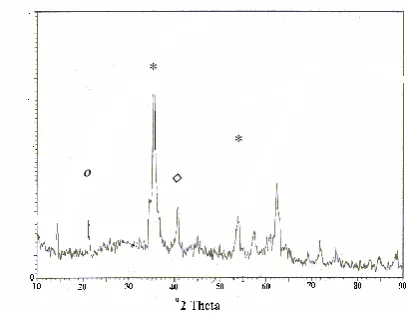
Fig.1 shows XRD pattern of Fe3O4/bentonite
nano-composites. From the pattern, we can conclude that quartz and alumina are the major constituents of used bentonite. Nano Fe3O4 was identified from the peak at 2θ = 35.56º and
53.49º. The broadening of such peak indicates a large number of generated surface defects with high specific surface area and particle distortions which contribute to such diffraction broadening.
*
*
º ◊
Figure 1. XRD of Fe3O4/bentonite nanocomposites , * Fe3O4,
◊Al2O3 , º SiO2
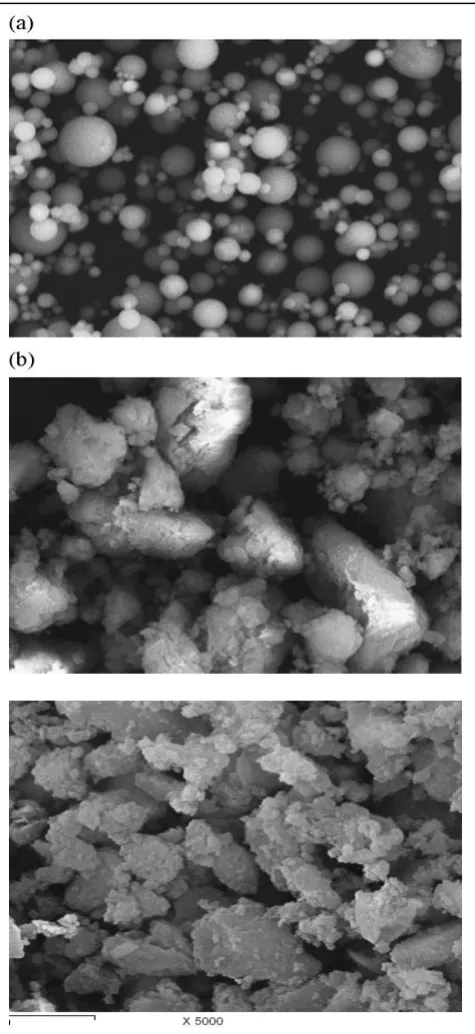
The morphology of natural bentonite and Fe3O4/bentonite
nano-composites was studied by SEM, Fig.2a, b and c. Very fine micro particles were observed with diameter 0.2-0.8 μm in the SEM of Fe3O4/bentonite nano-composites. Presence
of these fine particles leads to increase in the porosity and the surface area of the modified clay. This was confirmed by the measured surface area obtained for modified bentonite (98 m2g-1) compared to normal bentonite (24 m2 g-1).
32 25 (1)
S V
( 0 )
(2)
V C Ct
qt
m
Effect of contact time
The effect of contact time on the adsorption capacity of MB by the modified bentonite is shown in Fig.3. The adsorption process could be divided into three steps. In the first step, the adsorption rate was fast and 82% of the adsorption capacity was achieved within the first 40 min of the adsorption process. This is followed by second step that represents a gradual adsorption stage from 40 to 120 minutes of the adsorption process. In the third step the rate of adsorption of MB on modified bentonite was slow and reached equilibrium in about 240 min. The quick adsorption in the first 40 minutes of the adsorption process indicates the high diffusion of the dye molecules into the external surface
of the modified bentonite or the boundary diffusion layer of the solute molecules. This is followed by a slow diffusion to the internal surface and pore matrix in which intra-particles diffusion is the rate limiting. At later times the available adsorption sites became fewer which decrease the rate of adsorption and an equilibrium state was attained.
Figure 3. Effect of contact time on adsorption capacity of MB on modified bentonite
Effect of pH values on adsorption
In order to understand the effect of pH on the adsorption process, the point of zero charge (pHPZC) of the normal
bentonite and Fe3O4/bentonite nano composites was
determined by the solid addition method.29 It was 2.6 and
3.2 for the normal bentonite and Fe3O4/bentonite nano
composites respectively. The increase in the pHPZC in the
modified bentonite indicates that the presence of Fe3O4
nanoparticles on bentonite surface has slightly changed its charge properties besides its surface morphology. Adsorption of the cations is favored at pH > pHPZC, while
the adsorption of the anions is favored at pH< pHPZC.
Fig. 4 shows the effect of the initial pH of MB solution on the adsorption capacity of the bentonite and Fe3O4/bentonite
nano-composites. The adsorption of MB on modified bentonite was higher than normal bentonite at all the pH range studied. The adsorption capacity ranged between 2-3 fold for modified bentonite compared to non modified one which related to increase in surface area and surface roughness caused by nano particles. However, the adsorption of MB on modified bentonite is highly pH dependent. The adsorption capacity increased continuously in the pH 2- 7 and reached 1600 mg/g at pH = 7. In the pH range 7 - 10 the adsorption capacity was nearly unchanged or slightly decreased. At low pH values, the number of negatively charged adsorbent sites decreased and the number of positively charged sites increased, which did not favor the adsorption of positively charged dye cations like methylene blue due to electrostatic repulsion. In addition, lower adsorption of methylene blue at acidic pH might be due to the presence of excess H+ ions competing with MB
cations for the available adsorption sites which reduce the adsorbed amount. Increasing the pH values from 2-7 will lead to deprotonation of the acid sites on clay surface and the surface becoming negatively charged with high attractive properties. This leads to increase in the surface diffusion of the dye molecules due to high the electrostatic interactions between MB and modified bentonite.20 At
higher pH values (>7) no further adsorption occurred which may be related to the complete coverage of the surface by methylene blue molecules.
Figure 2. SEM of bentonite and modified bentonite (a) nano Fe3O4 (b) bentonite (c) Fe3O4/bentonite nanocomposite
0 200 400 600 800 1000 1200 1400 1600 1800
0 100 200 300 400
time (minutes)
q
(
m
g
/g
Figure 4. Effect of pH on the adsorption capacity of MB on bentonite (B) and modified bentonite .
Effect of adsorbent mass
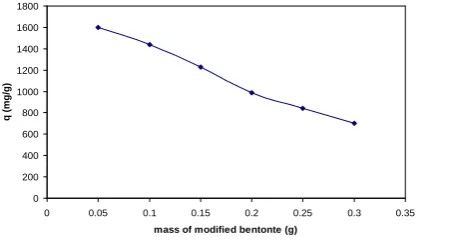
Fig.5 shows the amount adsorbed of MB (mg g-1) with
change in the mass of Fe3O4/bentonite nano-composite. It
was noted that the amount of adsorbed MB per gram of adsorbent decreases with increasing mass of the modified bentonite. So that 6-fold increase in modified mass resulted in 250% decrease in the adsorption capacity. Such result has been obtained by other authors30-33 and has many
explanations. Increasing the adsorbent amount reduces the unsaturation of the adsorption sites and correspondingly, the number of such sites per unit mass comes down resulting in comparatively less adsorption. Also this decreases the driving forces for adsorption (conc. of dye molecules/ conc. of adsorption sites) which decrease the dye diffusion from solution into the adsorbent platelets. In addition, overlapping of adsorption sites as a result of over-crowding of adsorbent particles may be another explanation. 34
Figure 5. Effect of mass of modified bentonite on the adsorption capacity
Figure 6. 2nd order rate plot to experimental data.
Adsorption kinetics
In order to understand the process of adsorption, three kinetic models were applied to the experimental data.
The linear form of pseudo first-order kinetic model is expressed by Eq. (3).
where
qe the concentration of MB adsorbed after equilibrium,
qt the concentration of MB adsorbed in time t,
k (min.-1) is pseudo 1st order rate constant.
Pseudo 2nd order rate equation in the linear form is
expressed as
where
k (g mg-1. min-1) is the pseudo 2nd order rate constant
which can be calculated from the intercept of the straight line obtained from plotting t/qt vs. t.
Intra-particle diffusion model 35 is an empirical model
assuming that the adsorption capacity varies with t 1/2 (Eq.
(4)):
where
Kd (mg g-1 t -1/2) is the intra-particle diffusion rate
parameter and
C is a constant.
Plotting qt versus t1/2 should give a straight line if the
diffusion model is valid. Kd and C are calculated from the
slope and intercept of the line and the value of C indicates the thickness of boundary layer, and with the larger value of
C the contribution of the surface sorption is greater in the rate limiting step.
The three models are tested for MB on Fe3O4/bentonite
nano-composite. The best-fit model was determined depending on the linear correlation coefficient R2. The
results are shown in table (1). The pseudo 2nd order plot is
represented in Fig. 6. According to the value of the correlation coefficient, the pseudo 2nd order rate equation
(R2= 0.999) showed the best fit to the experimental data than
the 1st order rate equation (R2= 0.886). In addition the
experimental qe value (qe, exp) and the calculated qe value
(qe,cal) calculated from the pseudo-second order kinetics
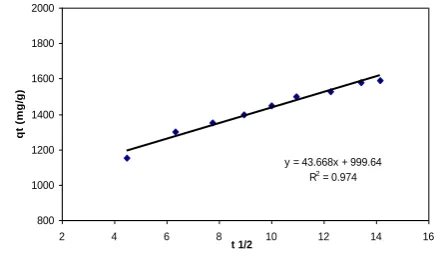
model are very close to each other. The intra-particle diffusion model also showed a good fit of the experimental data (R2=0.974), see Fig 7.
ln(qeqt)lnqekt (3)
1
(4) 2
t t
qt kqe qe
1/ 2
(5)
qt K td C
0 200 400 600 800 1000 1200 1400 1600 1800
0 2 4 6 8 10 12
pH
q
(
m
g
/g
)
BM B
0 200 400 600 800 1000 1200 1400 1600 1800
0 0.05 0.1 0.15 0.2 0.25 0.3 0.35
mass of modified bentonte (g)
q (mg/g)
y = 0.0006x + 0.0076 R2 = 0.9987
0 0.02 0.04 0.06 0.08 0.1 0.12 0.14
0 50 100 150 200 250
t (minute)
t/
This indicates that the adsorption of MB on the modified bentonite followed the 2nd order rate equation and was
controlled by diffusion of MB molecules from the bulk of the solution to the external surface and pore structure of the modified bentonite.
Figure 7. Intra-particle diffusion plot for the experimental data.
Adsorption isotherm
In order to study how the molecules of MB interact with the adsorbent surface the adsorption isotherms are used to analyze the experimental data. The most widely used isotherm equations are Langmuir and Freundlich equations.
Table 1. Kinetic parameters for three model of adsorption of MB on modified bentonite.
Model Parameters
Pseudo 1st order rate
equation
R2= 0.886
K=0.0034 min-1
Pseudo 2nd order rate
equation
R2=0.998
K=0.001 g mg-1min-1
qe,calcd.= 1666.7 mg g-1
qe,expt. = 1600 mg g-1
Intra-particle diffusion model
R2= 0.974
Kd= 43.67 mg g-1 min-1/2 C= 999.64
In the Langmuir model, an activated site on the surface of the adsorbent adsorbs one molecule indicating that the adsorbed layer is one molecule thick. It is expressed in the following Eq. (6).
where; Ce (mg L-1) is the equilibrium concentration, qe (mg
g-1) is the amount adsorbed, q
m (mg g-1) is the complete
monolayer adsorption capacity, and b (L mg-1) is the
Langmuir constant.
Freundlich isotherm is valid for non-ideal adsorption on heterogeneous surface and suggests multilayer adsorption on adsorbent surface. Freundlich equation is presented as following:
where k and n are Freundlich constants. The value 1/n is a measure of adsorption intensity or surface heterogeneity, which may become more heterogeneous when 1/n close to zero.36 The value of 1/n below one suggests a normal
Langmuir isotherm while 1/n above one is indicative of cooperative adsorption. 37
Figure 8. Langmuir isotherm of adsorption of MB on modified bentonite
The two adsorption isotherms are constructed by plotting
Ce/qe versus Ce for Langmuir and log qe versus log Ce for
Freundlich. Figs 8 showed Langmuir isotherm and Table 2 showed the Langmuir and Freundlich parameters.
Table 2. Isotherm constants for MB adsorption on modified bentonite.
Constants Isotherm
R2= 0.99
qm = 1660 (mg g-1)
qe. =1600 (mg g-1)
b =0.013 Langmuir
R2 =0.96
1/n = 0.473 K = 1.987 Freundlich
The values of R2 for Langmuir and Freundlich models are
0.99 and 0.96 respectively. Also the calculated value of qm
for adsorption obtained from Langmuir model are 1660 mg/g which is close to the experimental value 1600 mg g-1
indicating that only one layer of the dye molecules was formed on the surface of the adsorbent. In addition, the value of 1/n = 0.47 calculated from Freundlich plot which is less than one means a surface homogeneity. Hence, the Langmuir isotherm described the adsorption of MB on the modified bentonite very well and there is monolayer coverage of the dye on the nano-composite surface.
Conclusions
1. Introduction of Fe3O4 magnetic nano-particles into the
surface of bentonite generates a porous surface with high surface area which is suitable for the adsorption of basic dyes like methylene blue.
2. The results of batch experiments for removal of MB showed that the adsorption capacity increased with 1
(6)
Ce Ce
qe bqm qm
1/
(7)
n
qe kCe
y = 43.668x + 999.64 R2 = 0.974
800 1000 1200 1400 1600 1800 2000
2 4 6 8 10 12 14 16
t 1/2
q
t
(m
g
/g
)
y = 0.0006x + 0.0471 R2
= 0.9969
0 0.05 0.1 0.15 0.2 0.25 0.3
0 100 200 300 400 500
Ce (mg/l)
C
e
/q
increasing the contact time and the initial pH of MB solutions with maximum adsorption capacity at pH 7. However the adsorption capacity decreased with increasing mass of the adsorbent.
3. Kinetic data of adsorption are well fitted by the pseudo 2nd order kinetic model with a good agreement with the
intra-particle diffusion model.
4. The equilibrium experimental data fits perfectly the Langmuir isotherm which implies the monolayer formation on the surface of the modified bentonite. The maximum adsorption capacity was 1600 mg g-1.
References
1Gottlib, C., Shaw, C., Smith, A., Wheatle, S., J. Biotechnol. 2003;
101, 49–56.
2Wang, L., Zhang, J.,Wang, A., Colloids Surf. A: Physicochem.
Eng. Aspects, 2008, 322, 47–53
3Hashemian, S., Asian J. Chem., 2009, 21(4), 3622-3630.
4Meshko, V., Markovska, L., Mincheva, M., Rodrigues, A. E., J.
Water. Res., 2001, 335(14), 357-3366.
5Sanghi, R., Bhattacharya, B., Color. Techn., 2002, 118(5),
256-269.
6Tan, I. A. W., Ahmad, A. L., Hameed, B. H., J. Hazard. Mater.,
2008, 154(13),337– 346.
7Hameed, B H., J. Hazard. Mater., 2009, 161(23), 753–759.
8Janos, P., Buchtova, H., Ryznarova, M., J. Water. Res., 2003,
37(20), 4938–4944.
9Visa, M., Nacu, M., Environ.. Eng. Manag. J., 2011, 10, 1407-141.
10Visa, M., Andronic, L., Lucaci, D., Duta, A., J. Adsorpt. 2011, 1,
101-108.
11Shaobin, W. Y., Boyjoo, A. Choueib, C., Zhu, Z. H., J. Water.
Res., 2005, 39, 129-138.
12Qu, B. C., Zhou, J. T., Xiang, X. M., Zheng, C. L., Zhao, H. X.,
Zhou, B., J. Environ. Sci., 2008, 20(6), 704–709.
13Khenifi; A., Adsorption, 2007, 13(2), 149-158.
14Mellah, A., Chegrouche, S., J. Water. Res., 1997, 31, 621– 629.
15Naseem, R., Tahir, S. S., J. Water. Res.., 2001, 35, 3982–3989.
16Hashemi , S., Main Group Chem., 2007, 6(2), 97-107.
17Wu, R., Appl. Catal. and Biology : Enviromn., 2004, 48, 49-56.
18Wu, R., Qu, J., J. Chem. Technol. Biotechnol., 2005, 27, 20-27.
19Oliveira, L. C. A., Appl. Clay Sci., 2003, 22, 169-177.
20Hashemian, S., Afr. J. Biotech.., 2010 , 9(50), 8667-8671.
21Maile, A., The Chemistry and Physiscs of Nanocement, Loyola
Mary Mount University, Advisor: Dr. C.P. Huang Submitted to: NSF REU University of Delaware August 11 ,2006 .
22Poole, C. P., Owens, F. J., Introduction to Nanotechnology, John
Wiley and Sons , 2003 .
23Yamaguchi; K., Matsumoto, K., Fiji, T.,. J. Appl. Phys., 1990, 67,
4493–5.
24Fan, R., Chen, X. H., Gui, Z., Mater Res Bull., 2001, 36(34),
497–502.
25Zhang, D. E., Tong, Z. W., Li, S. Z., Zhang, X. B., Ying A. L.,
Mater. Lett. , 2008, 62(14), 4053–54.
26Zins, D., Cabuil, V., Massart , R., J. Mol. Liq., 1999, 83(1–3),
217–32.
27El-Diasty, F., El-Said, H.,El-Hosiny, F. I., Curr. Opinion Solid
State Mater. Sci. J., 2009; 13, 28–34.
28Sears, G., Anal. Chem., 1956, 28, 1981–1983.
29Balistrieri, L. S., Murray, J. W., Am. J. Sci. , 1981, 281, 788–806.
31Rengaraj, S., Joo, C. K., Kim, Y., Yi, J., J. Hazard. Mater., 2003,
B102, 257–275.
31Yu, B., Zhang, Y., Shukla,A., Shukla, S. S., Dorris, K. L., J.
Hazard. Mater., 2000, B80, 33–42.
32Bulut, Y., Aydin, H., Desalination, 2006, 194, 259.
33Li, Y., Gao, B., Wu, T., Chen, W., Li, X., Wang, B., Colloid Surf.,
2008, 325, 38–43.
34Namasivayam, C., Prabha, D., Kumuthu, M., Bioresour. Technol.,
1998, 64, 77.
35Weber, W. J., Morris, J. C., Proc. Int. Conf. Water Pollut. Symp.
Oxford, Pergamon., 1969, 231–266.
36Haghseresht, F., Lu, G. Q., . Energy and Fuels, 1998, 12(6),
1100–1107.
37Fytianos, K., Voudrias, E., Kokkalis, E.. Chemosphere, ,2000,
40(1), 3–6.