ISSN: 2501 - 1235 ISSN-L: 2501 - 1235 Available on-line at: www.oapub.org/edu
doi: 10.5281/zenodo.1294303 Volume 4 │ Issue 8 │ 2018
EXPLORING PSYCHO-SOMATIC IMPLICATIONS OF
YOGA PRACTICES – A STRATEGIC INQUIRY
Sudesh Bhardwaj1i, Nirmaljit K. Rathee2 1Dr., DAV College, Sector-10, Chandigarh, India
2Dr., Professor, Delaware State University, Dover, Delaware, USA
Abstract:
Benefits of yogic practices are well documented, and its popularity is increasing day by day across the world. Yoga has gained new avenues and has started to explore the new facts and hidden benefits by objectively testing the potential benefits of yogic practices for human well-being and holistic health. The present research adopts a philosophical descriptive approach to analyze the popular belief regarding the psychosomatic qualities developed through yogic practices. An opinionnaire consisting to two broad themes was designed to obtain the responses from the surveyed yoga practitioners (N=400: Male=200 and Female=200), aged 18 to 25 years. Data was statistically analyzed to find out the somatic and psychological qualities that the subjects perceived were developed through yoga practices. The results indicated that the female participants believed that yoga practices will much contribute to their Stability and Balance, while the male subjects believed it will help them in developing their Core Strength. With regard to the psychological qualities, both male and female subjects listed Self-Confidence as their first preference. Overall, the subjects believed that the yogic practices can be quite useful to promote somatic qualities of stability and balance, and core strength. Regarding the psychological qualities, self-confidence and mental rejuvenation were found to be most favorable reasons to practice yoga. Implications of the study have been discussed and the recommendations for future research have been made.
Keywords: psychosomatic; yoga practices; core strength; mental rejuvenation
1. Introduction
Steadily progressing over the last 5000 years, yoga has successfully withstood the rigors of scientific research inquiry and has been embraced by the world as a health savior in
this era of artificial intelligence. As an ancient Indian scientific art, the philosophy of yoga proclaims the potential mechanics of yoga not merely work upon physical aspect of human being; it strengthens the mental aspects and nourishes the spiritual efficiencies as well. It harmonizes the body, mind and spirit as a whole through the process of becoming increasingly aware of bodily functions. Research has established that yoga works upon physiological, psychological and moral human body entities to bring about the overall health benefits and form a base for developing better health therapy (Ayala et al., 2018; Tailor & McCall, 2017; Weber and Sculthorp, 2016). Acknowledging its benefits, in 2014, United Nations General Assembly (UNGA-2014) accepted yoga as a holistic system for catering human health and wellbeing, and hence, declared 21st June as the International Day of Yoga. The global institutionalization of yoga and the observance of international day of yoga has interestingly accelerated its acceptance and globalized its practices at a pace faster than ever.
Now-a-days, scientifically structured yogic exercises are being recommended for different age groups for yielding the required health benefits. Raub (2002) states that yogic practices are similar to alternative medicinal treatments and complementary to conventional medical therapy, which boost physical and psychological wellness. It is commonly observed that young children, youth and adolescence are often suggested to have more self-confidence to perform the challenging tasks as they look for the new beginnings in the complex modern life. However, despite motivation and guidance, a large proportion of young population still remains unconstructive to drive themselves with self-confidence. Their confidence remains suppressed due to the stress of expectations of others and self. Globally, there is an increase in the number of youth displaying the signs of attention-deficit hyperactivity disorder which also affect their overall performance in life (Fayyad et al., 2007). Here, yoga practices, including meditation, can be used as a vital therapeutic tool to achieve tranquility of the mind, create a sense of well-being, improve self-confidence, enhance mental strength and efficiency, increase attentiveness, lower the irritability, and to adopt an optimistic outlook towards life (Arora and Bhattacharjee, 2008). According to Rathee (2014), yoga involves an active attentional and mindfulness component as an effective means of enhancing concentration, managing stress, developing coping skills and achieving a more positive outlook in life. Yogic practices increase a free flow of energy and have a positive effect on self-esteem (Shapiro and Cline, 2004; Impett et al., 2006; Oken et al., 2006; Kiecolt-Glaser et al., 2010).
the best way to strengthen the skeletal muscles and to increase the working efficiency of the body (Raub, 2002).
A large number of young population across the world are adopting these practices in their daily workout, and besides the intended benefits, they also derive subtle foundational benefits. Apart from Asana and Kriyas, other yoga practices such as Pranayama, Dharana and Dhyana are now also being used as therapeutics remedies by the medical experts and therapists for treating various ailments and health problems. A growing body of knowledge supports the belief that certain yoga techniques may improve psychomotor wellness through critical regulation of the hypothalamic– pituitary–adrenal axis and the sympathetic nervous system (Ross and Thomas, 2010).
The increasing popularity of yoga has opened new avenues in the field of research to validate this well accepted physical-mental art and to prove its health and wellness potentials scientifically. It seems, yoga practices are undergoing a paradigm shift in its philosophy and practice from being purely spiritual experience to a power-fitness regime, an experimental science.
Although the realm of yoga includes many disciplines, understanding what practice behaviors motivate people to practice yoga may provide a better base for implementing yoga for health (Ayala, et al. 2018). In order to form a sound foundational base for yogic practices, it is pertinent to conduct research involving yoga practitioners to explore the yogic philosophical assumptions, popular ideologies, and informed views of people to bring new generalizations based on strategic inquiry.
2. Methodology
For the present research, a descriptive philosophical strategic inquiry was conducted through concurrent embedded mixed methods design to observe the perceived benefits of yogic practices that motivated subjects’ adherence. Participants (N=400) were male and female yoga practitioners, aged 18 to 25 years, who had participated at the National or All India Inter-university level yoga competitions. The participants were randomly selected and were asked to fill-out a self-developed opinionnaire having two broader thematic questions elaborating five somatic and five psychological qualities listed in each category. The subjects were asked to rate the qualities as per their preference (i.e. 1, 2, 3, 4, 5) that they believed would be developed as a result of their participation in the yoga practices. The responses of the subjects were statistically analyzed, and the percentage were worked out for each of the somatic and psychological qualities to find out the most preferred qualities that participants looked for while participating in yogic practices.
3. Results & Discussion
Table 1: Responses of Female participants with regard to the Somatic Qualities
Theme – 1 Somatic Qualities
Core Strength
Muscles Suppleness
Joint Flexibility
Muscles Smoothness
Stability and Balance
Numbers/Responses 39 34 47 12 68
Percentage 19.5% 17% 23.5% 6% 34%
Figure 1: Percentage of Somatic Qualities as rated by Females
With regard to the somatic qualities, the results in Table-1 (Figure-1) have revealed that 68 female subjects (i.e. 34%) believed that their participation in yogic practices will help them to improve their Stability & Balance. As compared to them, 47 (23.5%) thought it would improve their Joint Flexibility. From these results, it becomes clear that the most preferred somatic quality among the female group was the Stability and Balance, whereas, the second most preferred quality was joint flexibility.
Table 2: Responses of Female participants with regard to the Psychological Qualities
Theme – 2 Psychological Qualities
Mental Rejuvenation
Mood Lightness
Self Confidence
Winning adversity
Patience
Numbers/Responses 45 46 67 14 28
Percentage 22.5% 23% 33.5% 7% 14%
Results in Table 2 have disclosed that the psychological quality of Self-Confidence received the highest ratings, with 67 (33.5%) female subjects in favor of it. These participants believed that their participation in yogic practices will help them in developing their self-confidence. The second most-favored quality that emerged among others was Mood Lightness, having been approved by 46 (23%) female subjects.
Table 3: Responses of Male participants with regard to the Somatic Qualities
Theme – 1 Somatic Qualities
Core Strength
Muscles Suppleness
Joint Flexibility
Muscles Smoothness
Stability and Balance
Numbers/Responses 66 41 25 18 50
Percentage 33% 20.5% 12.5% 9% 25%
Figure 3: Percentage of Somatic Qualities as rated by Males
The results depicted in Table-3 demonstrate that Core Strength was accepted by 66 (33%) participants to be the best somatic quality developed through yoga practices. This was followed by Stability and Balance, having been favored by 50 (25%) male subjects.
Table 4: Responses of Male participants with regard to the Psychological Qualities
Theme – 2 Psychological Qualities
Mental Rejuvenation
Mood Lightness
Self Confidence
Winning adversity
Patience
Numbers/Responses 50 39 62 8 41
Figure 4: Percentage of Psychological Qualities as rated by Males
Among all the psychological qualities, 62 (31%) male subjects accepted Self Confidence as the outcome of participation in yoga practices. Mental Rejuvenation, with 50 (25%) subjects favoring it, appeared to be the second most-favored psychological quality among the male subjects.
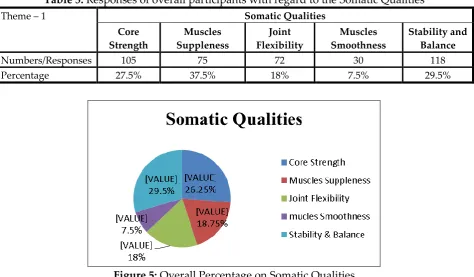
Table 5: Responses of overall participants with regard to the Somatic Qualities
Theme – 1 Somatic Qualities
Core Strength
Muscles Suppleness
Joint Flexibility
Muscles Smoothness
Stability and Balance
Numbers/Responses 105 75 72 30 118
Percentage 27.5% 37.5% 18% 7.5% 29.5%
Figure 5: Overall Percentage on Somatic Qualities
Table 6: Responses of overall participants with regard to the Psychological Qualities
Theme – 2 Psychological Qualities
Mental Rejuvenation
Mood Lightness
Self Confidence
Winning adversity
Patience
Numbers/Responses 95 85 129 22 69
Percentage 23.75% 21.25% 32.25% 5.5% 17.25%
Figure 6: Overall Percentage on Psychological Qualities
The results projected in Table-6 have revealed that overall 129 (32.25%) subjects believed that they could develop psychological quality of Self Confidence by participating in the yoga practices as compared to 95 (23.75%) subjects who believed that yogic practices resulted in achieving mental rejuvenation.
4. Findings & Conclusions
The findings of this study on somatic qualities have revealed that the female participants believed that yoga practices will much contribute to their Stability and Balance. The second-best option that emerged among other somatic qualities was Joint Flexibility. Yoga has been shown to directly strengthen muscles that maintain balance, including abdominal and leg muscles (Schmid et al. 2010). Chen & Tseng (2008) found that senior women who participated in yoga had increased strength, improved leg muscle endurance, and, significant improvements in balance. Similarly, the effects of yoga postures were compared to the effects of ‘power poses,’ which arguably increase the sense of power, stability and self-confidence due to their association with interpersonal dominance (Carney et al., 2010).
found that people sitting in upright vs. slouched positions were more confident in the positive feedback they received and felt more proud of themselves (Stepper and Strack, 1993). Participants who were sitting upright with a lifted chest vs. sitting in a slumped, chest collapsed position had more confidence in their thoughts (Brinol et al., 2009).
With regard to the findings on the somatic qualities, the male subjects believed that their regular participation in yogic practices will help them in developing their Core Strength, followed by Stability and Balance as their second-best option. Kumar et al. (2016) had also found significant improvement in core strength in a quasi-experimental study on healthy yoga practitioners. Gregg et al. (2000) reported that regular yoga workouts helped the elderly people by slowing down the decrease in their muscular strength which, in old age, accelerates, thus, demonstrating that the yoga exercises helped them to maintain their muscular strength at core level. Numbers of studies suggest that yoga asana intervention improves muscular strength and core strength of different body segments among elderly and unhealthy people (Van Puymbroeck et al., 2007; Smith et al., 2017; Martin and Keats, 2014). While emphasizing the quality of yoga asana to develop components of physical fitness, Rathee and Bhardwaj (2017) suggested that yoga asana, if performed regularly, not merely develops general muscular strength, but also builds the core strength of the body.
With regard to the psychological qualities, the male subjects have listed Self-Confidence and Mental Rejuvenation as their first and second preferences respectively. These findings draw support from a study conducted by Golec de Zavala et al. (2018) who suggested that even short-time practice of simplified yoga poses can have positive effects on well-being and self-views, and increased the subjective sense of energy, which in turn increased esteem and positive view, thus, raising the self-confidence. Similarly, Kok et al. (2013) also reported that performing yoga asanas increased confidence in one’s own performance by increasing positive emotionality and belief in one’s own ability and efficiency. Working on elderly people, Kovacic et al. (2013) found that physical exercises through yoga can bring improvement in the level of self-confidence among elderly people.
The findings of the present study suggest that overall the subjects believed that the yogic practices are quite useful to promote somatic qualities such as stability and balance, and core strength. So far as the psychological qualities were concerned, the self-confidence and mental rejuvenation emerged as the first and second preferences respectively among the subjects of this study. Thus, the current research has brought out a generalization highlighting some common elements of psychosomatic qualities that may provide potentially reliable reasons for people to practice yoga to attain holistic health.
4.1 Implications of the Study and Suggestions for Future Research
wellness programs. Therapeutic and rehabilitative programs involving yoga practices can also be planned to develop somatic and mental qualities among youth. The study provides a positive support to the conceptualized ideas of other researchers that the yoga practices have great potential to promote holistic health among younger generation.
The findings of the current study can be broad-based by employing different methodological designs and undertaking empirical research with different research samples, age groups etc. to generalize the findings of the current research.
References
1. Arora, S. and Bhattacharjee, J. (2008). Modulation of immune response in stress by yoga. International Journal of Yoga, 1, pp. 45–55.
2. Ayala, S. G., Wallson, K. and Birdee G. (2018). Characteristics of Yoga Practice and Predictors of Practice Frequency. International Journal of Yoga Therapy. No. 28. 3. Brinol, P., Petty, R. E. and Wagner, B. (2009). Body posture effects on self-evaluation: a self-validation approach. European Journal of Social Psychology, 39, pp. 1053–1064.
4. Bussing, A., Michalsen, A., Khalsa, S. S., Telles, S and Sherman, K. J. (2012). Effects of yoga on mental and physical health: A short summary of reviews.
Evidenced-Based Complementary and Alternative Medicine, 12, pp. 1-7.
5. Carney, D. R., Cuddy, A. J. and Yap, A. J. (2010). Power posing: brief nonverbal
displays affect neuroendocrine levels and risk tolerance. Psychological Science, 21(10), pp. 1363-1368.
6. Chen, K., and Tseng, W. (2008). Pilot-testing the effects of a newly-developed silver yoga exercise program for female seniors. Journal of Nursing Research, 16 (1), pp. 37-45.
7. Fayyad, J., De Graaf, R., and Kessler, R. (2007). Cross-national prevalence and correlates of adult attention-deficit hyperactivity disorder. Br J Psychiatry; 190: 402-409.
8. Garrison, K., Tang, D. and Schmeichel, B. (2016). Embodying power: a preregistered replication and extension of the power pose effect. Social Psychology & Personality Science, 7, 1–8.
9. Golec de Zavala, A., Lantos, D. and Bowden, D. (2017). Yoga Poses Increase
Subjective Energy and State Self-Esteem in Comparison to ‘Power Poses’.
Frontiers in Psychology, 9:149.
10.Gregg, E., Pereira, M. and Caspersen C. J. (2000). Physical activity, falls and fractures among older adults. Journal of the American Geriatric Society, 48, 883-893 11.Impett, E. A., Daubenmier, J. J., and Hirschman, A. L. (2006). Minding the body:
12.Kiecolt-Glaser, J. K., Christian, L., Preston, H., Houts, C. R., Malarkey, W. B. and Emery, C. F. (2010). Stress, inflammation, and yoga practice. Psychosomatic Medicine. 72, pp. 113–121.
13.Kok, B. E., Coffey, K. A., Cohn, M. A., Catalino, L. I., Vacharkulksemsuk, T., Algoe, S. B., Brantley, M. and Fredrickson, B. L. (2013). Psychological Science. 24 (7), pp. 1123-1132.
14.Kumar, S., Prasad, S., Balakrishnan, B., Muthukumaraswamy, K. and Ganesan,
M. (2016). Effects of Isha Hatha Yoga on Core Stability and Standing Balance.
Advances in Mind Body Medicine, 30 (2), pp. 4-10.
15.Matin, A. C. and Keats, M. R. (2014). The impact of yoga on quality of life and psychological distress in caregivers for patients with cancer. Oncology Nursing Forum, 41 (3), pp. 257-264
16.Oken, B. S., Zajdel, D., Kishiyama, S., Flegal, K., Dehen, C. and Haas, M. (2006). Randomized, controlled, six-month trial of yoga in healthy seniors: effects on cognition and quality of life. Alternative Therapies in Health Medicine, 12, pp. 40– 47.
17.Rathee, N. K. (2014). Improving body mechanics and enhancing concentration.
DAHPERD Annual Convention, 2014 – A workshop presentation.
18.Rathee, N. K. and Bhardwaj, S. (2017). Contemporary Yoga Education: Transforming the Body, Mind and Soul. A reference book for educators and yoga practitioners. European Scientific Institute (ESI), Kocani, Republic of Macedonia.
19.Rathore, M., Trivedi, S., Abraham, J. and Sinha, M. B. (2017). Anatomical Correlation of Core Muscle Activation in Different Yogic Postures. Intl. Journal of Yoga, 10 (2), pp. 59-66.
20.Ross, A. and Thomas, S. (2010). The Health Benefits of Yoga and Exercise: A Review of Comparison Studies. Journal of Alternative and Complementary Medicine, 16 (1), pp. 3–12.
21.Schmid, A. A., Puymbroeck, M.V., and Koceja, D. M. (2010). Effect of a 12-week yoga intervention fear of falling and balance in older adults: a pilot study.
Archives of Physical Medicine and Rehabilitation, 91.
22.Shapiro, D., and Cline, K. (2004). Mood changes associated with Iyengar yoga practices: a pilot study. International Journal of Yoga Therapy. 14, pp. 35–44.
23.Smith, P. D., Mross, P. and Christopher, N. (2017). Development of a falls reduction yoga program for older adults-A pilot study. Complementary Therapies in Medicine, 31, pp. 18-126.
24.Stepper, S. and Strack, F. (1993). Proprioceptive determinants of emotional and nonemotional feelings. Journal of Personality and Social Psychology, 64 (2), pp. 211– 220.
25.Taylor, M. J. and McCall, T. (2017). Implementation of Yoga Therapy into U.S. Healthcare Systems. International Journal of Yoga Therapy. No. 27.
27.Weber, K., and Sculthorp, B. (2016). Yoga Therapy: Meeting the Needs of The Triple Aim. Yoga Therapy Today, Winter, 22–23
Creative Commons licensing terms