Australian Journal of Basic and Applied Sciences
2018 March; 12(3): pages 35-42DOI: 10.22587/ajbas.2018.12.3.5
Research Article AENSI Publications
Australian Journal of Basic and Applied Sciences ISSN: 1991-8178, EISSN: 2309-8414
Application of A New Technology For Dairy Processing Wastewater Treatment Using Activated
Sludge
1
Rehab M. El-Hefny,
2Mohamed N. Ali,
3Ahmed M. Fouad
1Environmental and Sanitary Engineering Department, Faculty of Engineering-Shoubra, Benha University, Egypt.
2Environmental and Sanitary Engineering Department, Faculty of Engineering, Beni-suef University, Egypt.
3Civil Engineering Department, Pyramids Higher Institute for Engineering and Technology, Egypt.
Correspondence Author: Dr. Mohamed N. Ali, Environmental and Sanitary Engineering Department, Faculty of Engineering-Shoubra, Benha University, Egypt.
E-mail: [email protected].
Received date: 23 January 2018, Accepted date: 17 March 2018, Online date: 25 March 2018
Copyright: © 2018 Rehab M. El-Hefny et al. This is an open-access article distributed under the terms of the Creative Commons Attribution License, which permits unrestricted use, distribution, and reproduction in any medium, provided the original author and source are credited.
Key words: activated sludge, dairy wastewater, nanoparticles.
INTRODUCTION
Dairy plants are considered as ‘wet industry’ because they consume large volumes of water, which is used for very diverse purposes. As a result, dairy plants discharge large volumes of wastewater (Wildbrett, 2002; Al-Wasify et al. 2017).
The dairy industry, like most other agro-industries, generates wastewater characterized by high biological oxygen demand (BOD) and chemical oxygen demand (COD) due to their high organic content (Vidal et al. 2000). The discharge of the polluted water is the most significant contributor to the pollution of environment from the dairy industry in terms of both quality and quantity; contamination by the solid waste and waste gases are less serious (Wildbrett, 2002). The dairy-industry wastewater is primarily generated from the cleaning and washing operations in milk processing plants. It is estimated that about 2% of the total milk processed is wasted into drains (Munavalli and Saler, 2009).
There are many physicochemical methods that have been studied and applied for wastewater treatment. These methods include screening, sedimentation, flotation, filtration, aeration, coagulation, ozonation, chlorination, ion exchange, degasification, neutralization, etc. However, these methods have many limitations such as the use of chemical agents, higher cost, partial treatment, production of secondary pollutants and production of large volumes of solids. Due to these limitations, the application of biological methods was more suitable to be used as an alternative technique (Rodrigues et al. 2008). Produced wastes (sludge and effluents) from food industries, including dairy industry, contain high levels of organic matter, fatty acids, oil and grease (O&G) and notable nitrogenous compounds (Porwal et al. 2015; Al-Wasify et al. 2017).
Dairy wastewater is generally treated using biological methods such as activated sludge process, aerated lagoons, trickling filters, sequencing batch reactor, upflow anaerobic sludge blanket reactor, anaerobic filters, etc. (Demirel et al. 2005). Biological methods, like activated sludge process, are invariably employed for the secondary treatment of large number of industrial wastewaters.
Nanoparticles are used for wastewater treatment due to its small size, crystal form, high surface area, structure, high catalytic ability, unique network order and its high reactivity (Zhang et al. 2007; Pavithra and Shanthakumar, 2017). The main aim of the present study is to evaluate the treatment process of dairy wastewater using activated sludge technology supplemented with nanoparticles.
MATERIAL AND METHODS
Samples and sampling:
Two hundred liters of raw dairy wastewater were collected from El-Masreyeen factory in 6th October City from the ground tank of compact unit, Egypt. Raw
dairy wastewater samples were collected in plastic containers with 20 liters for each one. Samples were collected and transferred immediately for the experiments according to the standard methods (APHA, 2010).
Device components:
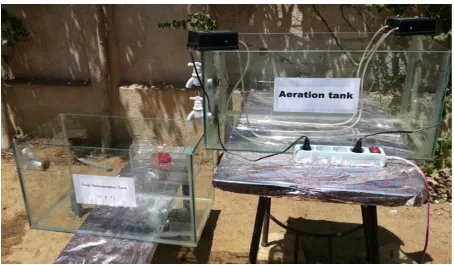
Figure (1) showed the device components of activated sludge process (ASP) bench scale model. The model composed of two tanks. The first is anaerobic tank (60*30*30) and the second is aeration tank (60*30*30). The dairy wastewater was treated with aeration for 8 hours at a rate 3 times per day for a period of 4 days. The aeration occurred for 2 days for 8 hours at a rate 3 samples per day and aeration of 12 hours at a rate 2 samples per day for 2 days. Aeration and flipping has been done by using the compressed and diffused air method through perforated air pipes which will produce bubbles of air. After finishing of this step, we
Abstract
Background: Dairy wastewater contains high levels of organics and other pollutants. Objective: The present study was carried out to study the treatment process of dairy effluents using activated sludge process (APS) without and with Nanoparticles using a bench scale model. The model consisted of aeration and sedimentation tanks. Samples were collected from El-Masreyeen factory in 6th October City from the ground tank of compact unit, Egypt. Results: The results proved the
excrete this water to the sedimentation tank from the aeration tank through a tap in the bottom of the tank to precipitate this water for 4 hours in sedimentation tank.
The used nanoparticles:
Nanoparticles (INNPT nanomaterial) were produced from Elwatanya company for development, investment and trade, Egypt. The composition of INNPT nanomaterial (weight %) is CaO (35-40%), Al2O3 (40-45%), Fe2O3 (5-15%) and SiO2 (2-3%).
Physicochemical analysis:
The raw and treated dairy wastewater samples were examined according to APHA (2010) for the following parameters; chemical oxygen demand (COD), biological oxygen demand (BOD), pH, dissolved oxygen (DO), total suspended solids (TSS), ammonia-nitrogen (NH3-N), total Kjeldahl nitrogen (TKN) and total
phosphorus (TP).
Fig. 1: Components of activated sludge process (ASP) bench scale model.
RESULTS AND DISCUSSION
Characterization of raw dairy wastewater:
Table 1 summarizes the average values for measured physicochemical parameters of raw dairy wastewater. The raw dairy wastewater was highly polluted. High values of COD and BOD indicated that organic matters were highly concentrated in dairy industry. In addition, it was clear that dairy wastewater was rich of both nitrogen and phosphorus. Leachate also was white in color indicating high suspended matters. In the present study, pH of dairy influent was neutral. Passeggi et al. (2009) and Al-Wasify et al. (2017) stated that pH of the dairy effluent depends mainly on the nature of the end-product and range from 4.7 to 12.2. To evaluate and determine the efficiency of dairy wastewater treatment process, TSS is one of the main parameters used in the evaluation process. Presence of high concentrations of TSS in wastewater can destroy the aquatic life and cause great problems at wastewater treatment plants (Baruah et al. 1993). TSS average concentration was 500 mg/L which was almost like the findings reported by Porwal et al. (2015) as they found high concentrations of TSS ranged from 601.6 to 626.6 mg/L. Moreover, BOD and COD are the most widely used indicators of wastewater quality. Dairy wastewater is characterized by high concentrations of BOD and COD due to the presence of lactose, fats, casein, nutrients and inorganic salts (Kolhe et al. 2009). The presence of high concentrations of BOD (450 mgO2/L) and COD (1000 mg/L) consumed the dissolved oxygen (DO) in dairy influent which was 2.0 mg/L.
Table 1: Raw dairy wastewater characterization.
Parameter Unit Average value
COD mg/l 1000
BOD mg O2/l 450
pH - 7.2
TSS mg/l 500
NH3-N mg/l 10
TKN mg/l 60
TP mg/l 20
DO mg/l 2
Activated Sludge Process (ASP) without Nanoparticles:
Aeration treatment without seeding by using ASP and by using diffused air system increases the activity of bacteria. Samples were taken for 8 hours 3 times/day for 4 days and it reduces the dairy wastewater properties by 35% as shown in Table (2). The aeration cycle of 8-hour runs three times during a day for a fourth day. The physicochemical properties of dairy wastewater decreased gradually before adding a seed in dairy wastewater industry along four days of running the 8-hour aeration cycle. The removal efficacy changed from one parameter to another. For example, the removal efficiency for COD, BOD, TSS, TKN, NH3 and
COD, pH, TKN, TP,NH3-N,DO and TSS parameters, and it reduces the dairy wastewater properties by 62.7%. From the results shown in Table (3) it was clear that
by increasing the settling duration to 4-hour settling phase instead of 60 minutes only leads to enhance the removal efficiency and the overall efficiency. The results decreased for the parameters COD, BOD, TSS, TKN, NH3 and TP. The removal percentages are 46%, 56.7%, 55%, 58.3%, 87.5% and 72.5%, respectively.
Which means that the results enhanced when using a long settling phase. The total efficacy is 62.7% after using an 8-hour modified aeration cycle with 4-hour settling phase. Aeration treatment without seeding by using ASP and by using diffused air system increases the activity of bacteria. A sample was taken for 8 hours 3times/day for 2day and it reduces the dairy wastewater properties by 41%.
Extremes of pH are fatal for most bacteria. The bacteria grow best when the pH is slightly on the acidic side. The optimum range for bacterial growth generally lies between 6.5 and 7.5(Metcalf and Eddy, 2004). Activated sludge and aerated lagoons could be successfully operated when the pH was between 9 and 10.5 (Benefield and Randall, 1980).
DO of the system remained between 4.2 mg/L and 4.5 mg/L which was as similar as reported values of dairy wastewater treatment using activated sludge reactor (Lateef et al. 2013). This value was ideal for the biological treatment systems working under aerobic conditions. The values of DO for the present study were above the minimum level of 2 mg/L which has been widely reported in the literature (Benefield and Randall, 1980).
Many reports show that ASP has been used successfully to treat dairy industry wastes. Donkin and Russell (1997) found that reliable COD removals of over 90% and 65% reductions in total nitrogen could be obtained with a milk powder/butter wastewater. Phosphorus removals were less reliable and appeared to be sensitive to environmental changes. The total COD of dairy wastewater is mainly influenced by the milk, cream, or whey (Sreemoyee and Priti, 2013). The concentration of total suspended solids (TSS) varies in the range of 0.024–4.5 g/l (Passeggi et al. 2009).
The effect of the various aeration regimes on BOD5 removal appeared to be quite similar to that on the COD. Furthermore, it was clear that the TSS removal
and BOD5 reduction trends are similar to each other. This may be due to the high organic contents of the suspended solid particles. Similar findings were reported
by Kushwaha et al. (2010) for treatment of dairy wastewater by inorganic coagulants.
Table 3: Results of the sedimentation process of ASP without nanoparticles.
Parameter Unit Influent of ASP without seeding Sedimentation for 4hr after 4-d
aeration
Total removal efficiency of ASP system
COD mg/l 575 540 46%
BOD mgO2/l 286 195 56.7%
PH --- 4.3 4.2 ---
TSS mg/l 296.5 225 55%
NH3-N mg/l 3.2 1.2 87.5%
TKN mg/l 33.5 25 58.3%
TP mg/l 7.5 5.5 72.5%
DO mg/l 4.2 4.5 ---
Average 62.7%
Table 2: Results of ASP without seeding 8h 3times/day for 4 days.
To ta l re mo v al ef fi ci en cy o f A S P A v er ag e
Day 4 (h) Day 3 (h) Day 2 (h) Day 1 (h)
R aw w at er U n it Te st p ar ame te r
Av. 24 16 8 Av. 24 16 8 Av. 24 16 8 Av. 24 16 8
33% 675 575 57
5 575 580 590 585 590
59
5 655 600 650 720 860
79 0 86 0 93 0 100 0 mg/
1 COD
25% 338.
5 286
27 5
287
.5 295 310
302
.5 310
31
7 348 325 350 370 410
39 0
41 0
43
0 450
mg/
1 BOD
---- 5 4.3 4.
2 4.3 4.3 4.4 4.4 4.4
4.
5 5 4.5
4.9
5 5.4 6.3
5. 8
6. 3
6.
75 7.2 --- PH
30% 350 296.
5 29
0 297
302
.5 313
307
.5 312
31
9 350 325 350 380 440
41 0
44 0
47
0 500
mg/
1 TSS
50% 5 3.2 3 3.2 3.4 3.7 3.5 3.7 3.
8 5 4 5 6 8 7 8 9 10
mg/
1 NH3-N
29.2
% 42.5 33.5
32 .5
33.
7 35 37.5
36. 5
37.
5 39 44.5 40 45 48 53 50 54 57 60
mg/
1 TKN
42..5
% 11.5 7.5 7 7.5 8 9 8.5 9
9.
5 12 10
12.
5 14 17
3.
1 17
18
.5 20
mg/
1 TP
--- 4 4.2 4 4.2 4.4 4.7 4.5 4.7 4.
8 4.5 5 4.5 4 3
3.
5 3
2.
5 2
mg/
1 DO
35% Average
Nanoparticle treatment by using ASP, with adding nanoparticle and by using diffused air system increases the activity of nanoparticle. The sample was taken after 12 hours for 2times/day for 2days of aeration with nanoparticle and it reduces the dairy wastewater properties by 78.5% as shown in Table (4).
Table 4: Results of ASP aeration with nanoparticles. Total removal efficiency of
ASP system with Nano Average
2nd day (h) 1st day (h)
Unit Parameter
Av. 24 12 Av. 24 12
94.8% 52.5 35 33 37 70 66 74 mg/l COD
92.4% 34 23 20 26 45 42 48 mg/l BOD
--- 6.75 6.5 6.5 6.5 7 7 7 --- PH
94.6% 36.5 27 26 28 46 42 50 mg/l TSS
67.5% 3.25 3 2.9 3.1 3.5 3 4 mg/l NH3-N
95.6% 2.65 2.3 2.2 2.4 3 2.6 3.5 mg/l TKN
94% 1.2 0.9 0.085 0.95 1.5 1.4 1.6 mg/l TP
--- 4.5 4.15 4.0 4.3 4.8 4.6 5.0 mg/l DO
89.8% Average
The aeration cycle of 12-hour runs two times during a day for two days after adding nanoparticle. Samples were taken to analysis at National Research Center to determine the chemical properties for dairy wastewater. the chemical characteristics of dairy wastewater decrease gradually after adding a nanoparticle in dairy wastewater industry along two days of running the 12-hour aeration cycle. The total removal efficiency changed from one parameter to another. For example, the removal efficiency for COD, BOD, TSS, TKN, NH3 and TP was 94.8%, 92.4%, 94.6%, 95.6%, 67.5% and 94%, respectively. The overall removal
percentage at 12-hour aeration cycle for two days equal to 89.8%. Table (5) shows the results of the sedimentation process after adding nanoparticle which reduced the water properties such as BOD, COD, pH, TKN, TP, NH3-N and TSS by 86.8%.
Table 5: Results of ASP sedimentation with nanoparticles.
Parameter Influent of ASP with
nanoparticle additive
Sedimentation after
nanoparticle additive for 1st
hour
Total removal efficiency of sedimentation stage
Total removal efficiency of ASP system
COD 33 30 10% 97%
BOD 20 20 0% 95.6%
PH 6.5 6.1 --- ----
TSS 26 16 38.5% 96.8%
NH3-N 2.9 2 31% 80%
TKN 2.2 1.3 40.9% 97.8%
TP 0.85 0.7 17.6% 96.5%
DO 4 4 --- ---
Average 23% 93.9%
From the results shown in Table (5) it was clear that by increasing the settling duration to 4-hour settling phase instead of 60 minutes after adding nanoparticle only leads to enhance the removal efficiency and the total all efficacy. The results decreased for COD, BOD, TSS, NH3-N, TKN and TP. The removal
percentages are 97%, 95.6%, 96.8%, 80%, 97.8% and 96.5%, respectively which means that the results enhanced when using a long settling phase with adding nanoparticle. the overall removal efficacy is 93.9% after using a 12-hour modified aeration cycle with 4-hoursettling phase.
The adsorption effect of nanoparticles demonstrates the significant improvement in the treatment of dairy wastewater due to their extremely high specific area and associated sorption sites, tunable pore size, and short intraparticle diffusion distance. The application of nanoparticles in the powdered form into activated sludge can be highly efficient since all surfaces of the adsorbents are utilized and the mixing process facilitates the mass transfer (Sylvester et al. 2007; Qu et al. 2013; Ghani and Yusoff, 2015). The presence of magnetic iron (Fe) nanoparticles have proven to be useful for adsorption, reductively transforming or degrading different types of organic pollutants and inorganic contaminants (Noubactep, 2010; Singh et al. 2012; Palanisamy et al. 2013; Němeček et al. 2014; Peeters et al. 2015).
Comparison between the fourth stages of dairy treatment:
Fig. 2: Removal of pollutants during four stages for COD.
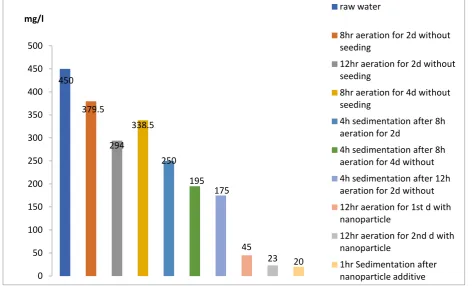
Fig. 3: Removal of pollutants during four stages for BOD.
1000
757.5
687.5 675
550
540
425
70
35
30
0
200
400
600
800
1000
1200
mg/l
raw water
8hr aeration for 2d without
seeding
12hr aeration for 2d without
seeding
8hr aeration for 4d without
seeding
4h sedimentation after 8h
aeration for 2d
4h sedimentation after 8h
aeration for 4d without
4h sedimentation after 12h
aeration for 2d without
12hr aeration for 1st d with
nanoparticle
12hr aeration for 2nd d with
nanoparticle
1hr Sedimentation after
nanoparticle additive
450
379.5
294
338.5
250
195
175
45
23
20
0
50
100
150
200
250
300
350
400
450
500
mg/l
raw water
8hr aeration for 2d without
seeding
12hr aeration for 2d without
seeding
8hr aeration for 4d without
seeding
4h sedimentation after 8h
aeration for 2d
4h sedimentation after 8h
aeration for 4d without
4h sedimentation after 12h
aeration for 2d without
12hr aeration for 1st d with
nanoparticle
12hr aeration for 2nd d with
nanoparticle
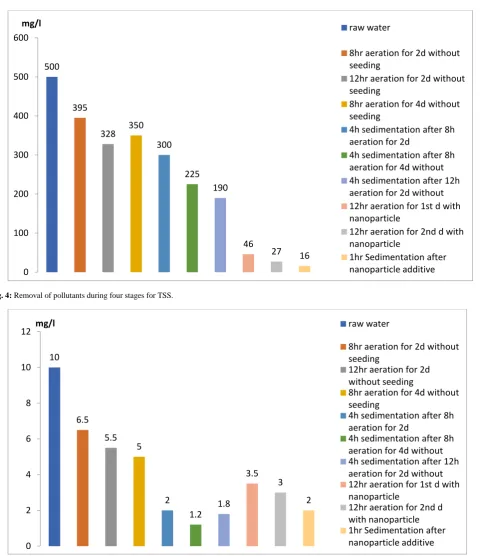
Fig. 4: Removal of pollutants during four stages for TSS.
Fig. 5: Removal of pollutants during four stages for NH3-N.
500
395
328
350
300
225
190
46
27
16
0
100
200
300
400
500
600
mg/l
raw water
8hr aeration for 2d without
seeding
12hr aeration for 2d without
seeding
8hr aeration for 4d without
seeding
4h sedimentation after 8h
aeration for 2d
4h sedimentation after 8h
aeration for 4d without
4h sedimentation after 12h
aeration for 2d without
12hr aeration for 1st d with
nanoparticle
12hr aeration for 2nd d with
nanoparticle
1hr Sedimentation after
nanoparticle additive
10
6.5
5.5
5
2
1.2
1.8
3.5
3
2
0
2
4
6
8
10
12
mg/l
raw water
8hr aeration for 2d without
seeding
12hr aeration for 2d
without seeding
8hr aeration for 4d without
seeding
4h sedimentation after 8h
aeration for 2d
4h sedimentation after 8h
aeration for 4d without
4h sedimentation after 12h
aeration for 2d without
12hr aeration for 1st d with
nanoparticle
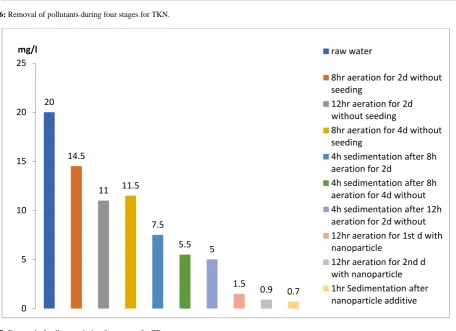
Fig. 6: Removal of pollutants during four stages for TKN.
Fig. 7: Removal of pollutants during four stages for TP.
Conclusions:
Based on the experimental program executed in this research, the following conclusions had been reached:
The raw dairy wastewater sample has low properties.
Aeration tank reduces the water properties such as COD, BOD, and TSS by 33 % because COD fraction test which is experimented in the dairy wastewater water showed that the dissolved material was 80 %, suspended material was 30 %.
These prove that it is important to use aeration tank.
Using biological treatment by ASP with Nanoparticle additive and using air blower to increase the activity of Nanoparticle for 12 hours reduces the water properties 85.5%.
Biological treatment in ASP tank is depending on Nanoparticle additive which reduces the value of COD, BOD.
A comparison was made between the results of the two stages used in industrial wastewater treatment and the Egyptian standards for the treated dairy processing drainage in sewer system.
60
49.5
32
42.5
35
25
11
3
2.3
1.3
0
10
20
30
40
50
60
70
mg/l
raw water
8hr aeration for 2d without
seeding
12hr aeration for 2d without
seeding
8hr aeration for 4d without
seeding
4h sedimentation after 8h
aeration for 2d
4h sedimentation after 8h
aeration for 4d without
4h sedimentation after 12h
aeration for 2d without
12hr aeration for 1st d with
nanoparticle
12hr aeration for 2nd d with
nanoparticle
1hr Sedimentation after
nanoparticle additive
20
14.5
11
11.5
7.5
5.5
5
1.5
0.9
0.7
0
5
10
15
20
25
mg/l
raw water
8hr aeration for 2d without
seeding
12hr aeration for 2d
without seeding
8hr aeration for 4d without
seeding
4h sedimentation after 8h
aeration for 2d
4h sedimentation after 8h
aeration for 4d without
4h sedimentation after 12h
aeration for 2d without
12hr aeration for 1st d with
nanoparticle
The results of the two stages used in industrial wastewater treatment were identical with the Egyptian standards for reusing the treated dairy wastewater in irrigation purposes.
From the obtained results it is concluded that it is necessary to use Nanoparticle additive to dairy wastewater because the final properties of dairy wastewater treated were matching with the Egyptian specification for final treatment.
REFERENCES
Al-Wasify, R.S., M.N. Ali, S.R. Hamed, 2017. Biodegradation of dairy wastewater using bacterial and fungal local isolates. Water Science and Technology, 76(11): 3094-3100.
APHA (American Public Health Association), 2010. Standard Methods for the Examination of Water and Wastewater, 22nd Edition, Washington, D.C. Baruah, A.K., R.N. Sharma, G.C. Borah, 1993. Impact of sugar mill and distillery effluents on water quality of river Gelabil Assam. Indian Journal of Environmental Health, 35(4): 288-293.
Benefield, L.D., C.W. Randall, 1980. Biological Process Design for Wastewater Treatment, Prentice Hall, Inc., Englewood Cliffs. Demirel, B., O. Yenigun, T.T. Onay, 2005. Anaerobic treatment of dairy wastewaters: a review. Process Biochem, 40: 2583-2595.
Donkin, J., J.M. Russell, 1997. Treatment of a milk powder/butter wastewater using the AAO activated sludge configuration. Water Science & Technology, 36: 79-86.
Ghani, Z.A., M.S. Yusoff, 2015. Review on Applications of Nanoparticles in Landfill Leachate Treatment. Applied Mechanics and Materials, 802: 525-530. Kolhe, A.S., S.R. Ingale, R.V. Bhole, 2009. Effluents of diary technology. International Indexed & Refereed Research Journal, 5: 459-461.
Kushwaha, J.P., V.C. Srivastava, I.D. Mall, 2010. Treatment of dairy wastewater by inorganic coagulants: Parametric and disposal studies. Water Research, 44: 5867-5874.
Lateef, A., M.N. Chaudhry, S. Ilyas, 2013. Biological treatment of dairy wastewater using activated sludge. Science Asia, 39: 179-185. Metcalf AND Eddy Inc, 2004. Wastewater Engineering: Treatment, Disposal and Reuse, 4th edn, McGraw-Hill New York. pp: 704-16. Munavalli, G.R., P.S. Saler, 2009. Treatment of dairy wastewater by water hyacinth. Water Sci Tech, 59: 713-722.
Němeček, J., O. Lhotský, T. Cajthaml, 2014. Nanoscale zero-valent iron application for in situ reduction of hexavalent chromium and its effects on indigenous microorganism populations. Science of the Total Environment, (485–486): 739-747.
Noubactep, C., 2010. Review: the fundamental mechanism of aqueous contaminant removal by metallic iron. Water SA, 36: 663-670.
Palanisamy, K.L., V. Devabharathi, N.M. Sundaram, 2013. The utility of magnetic iron oxide nanoparticles stabilized by carrier oils in removal of heavy metals from waste water. International Journal of Research in Applied, Natural and Social Sciences, 1: 15-22.
Passeggi, M., I. López, L. Borzacconi, 2009. Integrated anaerobic treatment of dairy industrial wastewater and sludge. Water Science & Technology, 59(3): 501-506. doi: 10.2166/wst.2009.010.
Pavithra, S., S. Shanthakumar, 2017. Removal of COD, BOD and color from municipal solid waste leachate using silica and iron nanoparticles - a comparative study. Global NEST Journal, 19(1): 122-130.
Peeters, K., G. Lespes, R. Milačič, J. Ščančar, 2015. Adsorption and degradation processes of tributyltin and trimethyltin in landfill leachates treated with iron nanoparticles. Environmental Research, 142: 511–521.
Porwal, H.J., A.V. Mane, S.G. Velhal, 2015. Biodegradation of dairy effluent by using microbial isolates obtained from activated sludge. Water Resources and Industry, 9: 1-15.
Qu, X., P.J.J. Alvarez, Q. Li, 2013. Applications of nanotechnology in water and wastewater treatment. Water Research, 47: 3931-3946.
Rodrigues, M.A.S., F.D.R. Amado, J.L.N. Xavier, K.F. Streit, J.Z. Ferreira, 2008. Application of photoelectrochemical electrodialysis treatment for the recovery and reuse of water from tannery effluents. Journal of Cleaner Production, 16(5): 605-611.
Singh, R., V. Misra, R.P. Singh, 2012. Removal of hexavalent chromium from contaminated ground water using zero-valent iron nanoparticles. Environmental Monitoring and Assessment, 184(6): 3643-3651.
Sreemoyee, C., P. Priti, 2013. Assessment of physico-chemical parameters of dairy waste water and isolation and characterization of bacterial strains in terms of COD reduction. International Journal of Science, Environment and Technology, 2(3): 395-400.
Sylvester, P., P. Westerhoff, T. Mooller, M. Badruzzaman, O. Boyd, 2007A hybrid sorbent utilizing nanoparticles of hydrous iron oxide for arsenic removal from drinking water. Environmental Engineering Science, 24(1): 104-112.
Vidal, G., A. Carvalho, R. M´endez, J.M. Lema, 2000. Influence of the content in fats and proteins on the anaerobic biodegradability of dairy wastewaters. Bioresour Tech, 74: 231-239.