ARTIGO ORIGINAL
RESUMO
Introdução: O programa de Enhanced Recovery After Surgery® consiste na implementação de várias medidas perioperatórias que re-duzem o stress cirúrgico e, consequentemente melhoram a recuperação dos doentes. O objetivo deste estudo é avaliar a compliance com o programa Enhanced Recovery After Surgery® bem como os resultados obtidos no final do primeiro ano da sua implementação para a cirurgia colorretal eletiva no nosso hospital.
Material e Métodos: Foi feita uma análise dos 210 doentes submetidos a cirurgia colorretal no período entre maio de 2016 e dezem-bro de 2017. O grupo de doentes intervencionados após a implementação do protocolo (grupo Enhanced Recovery After Surgery®) foi comparado com um grupo que recebeu cuidados convencionais (grupo pré- Enhanced Recovery After Surgery®). Diferenças entre os dois grupos foram ajustadas usando o emparelhamento com base na propensão. Os objetivos primários foram o tempo de inter-namento, o tempo até retorno do trânsito intestinal, a incidência de complicações e a mortalidade. Analisámos também a evolução da compliance com as recomendações Enhanced Recovery After Surgery®.
Resultados: Após emparelhamento com base na propensão para pertencer ao grupo pré- Enhanced Recovery After Surgery® e Enhanced Recovery After Surgery®, foram incluídos 112 doentes neste estudo, 56 em cada grupo. A adesão global ao protocolo Enhanced Recovery After Surgery® registou um aumento de 35,7% para 80,8%. Houve uma redução no tempo de internamento, tempo até retorno do trânsito intestinal e complicações médicas.
Discussão: O programa Enhanced Recovery After Surgery® é seguro e parece reduzir a estadia hospital e melhorar a recuperação dos doentes.
Conclusão: Este estudo mostrou que a implementação do programa Enhanced Recovery After Surgery® foi possível no Hospital
Beatriz Ângelo e teve um impacto positivo no pós-operatório imediato dos doentes com patologia colorretal.
Palavras-chave: Colon/cirurgia; Cuidados Perioperatórios; Portugal; Procedimentos Cirúrgicos Electivos; Procedimentos Cirúrgicos do Sistema Digestivo; Recto/cirurgia
ERAS
Program in a Portuguese Hospital: Results from
Elective Colorectal Surgery after One Year of
Implementation
Programa ERAS
®num Hospital Português: Resultados
na Cirurgia Colorretal Eletiva Um Ano após a Sua
Implementação
1. Serviço de Anestesiologia. Hospital Beatriz Ângelo. Loures. Portugal. 2. Serviço de Cirurgia Geral. Hospital Beatriz Ângelo. Loures. Portugal.
3. Departamento de Cirurgia. Faculdade de Ciências Médicas. Universidade Nova de Lisboa. 4. Serviço de Cirurgia Geral. Departamento de Cirurgia. Hospital Beatriz Ângelo. Loures. Portugal. Autor correspondente: André Carrão. [email protected]
Recebido: 08 de agosto de 2018 - Aceite:20 de novembro de 2019 | Copyright © Ordem dos Médicos 2020
André CARRÃO1, Daniel RIBEIRO1, Maria MANSO1, Joana OLIVEIRA1, Luís FÉRIA2, Miguel GHIRA1, Rui MAIO3,4
Acta Med Port 2020 Sep;33(9):568-575 ▪ https://doi.org/10.20344/amp.11158
ABSTRACT
Introduction: The Enhanced Recovery After Surgery® program comprises the implementation of various perioperative measures that reduce surgical stress and ultimately improve patient recovery and outcome. The purpose of this study is to evaluate the first-year compliance and clinical outcomes after implementation of the Enhanced Recovery After Surgery® program in elective colorectal surgery in our hospital.
Material and Methods: An analysis was performed on the 210 patients who underwent elective colorectal surgery from May 2016 to
December 2017. The group of patients that underwent surgery after the protocol implementation (Enhanced Recovery After Surgery® group) was compared to a conventional care control group (pre- Enhanced Recovery After Surgery® group). Differences between the two groups were adjusted using Propensity Score matching. The main outcomes were length of stay, return of bowel function, complica-tions and mortality. The evolution of compliance with Enhanced Recovery After Surgery® principles was also analyzed.
Results: After propensity score matching, 112 patients were included in the present study: 56 patients formed the pre-Enhanced Re-covery After Surgery® group and 56 the Enhanced Recovery After Surgery® group. The overall adherence to the protocol increased from 35.7% to 80.8%. There was a decrease in length of stay, time to return of bowel function and medical complications.
Discussion: The Enhanced Recovery After Surgery® program is safe and seems to shorten length of stay and improve patient recovery and clinical outcome.
Conclusion: This study showed that the implementation of the Enhanced Recovery After Surgery® program was possible in Hospital Beatriz Ângelo, with a positive impact in the immediate postoperative recovery of colorectal patients.
Keywords: Colon/surgery; Digestive System Surgical Procedures; Elective Surgical Procedures; Perioperative Care; Portugal;
Rec-tum/surgery
INTRODUCTION
The Enhanced Recovery After Surgery (ERAS®) pro
ARTIGO ORIGINAL protocols. The goal of the program is to reduce the
surgical-induced neuroendocrine stress response, by treating the potential risk factors, in order to shorten length of hospital stay, perioperative morbidity and mortality.
It was developed by a group of European surgeons, who
founded the ERAS® Study Group in 2001, which was the
basis of the ERAS® Society, created in 2010. This new ap
-proach to the surgical patient contrasts with the ‘fast track’ concept, which emerged for the first time in 1994, since it emphasizes the quality of the care given and not solely fast
discharge.1
The first ERAS® protocols were drafted in the early
2000s, initially for colon surgery and swiftly followed by rec
-tal surgery. After this, a wide range of surgical areas fol
-lowed the same path.
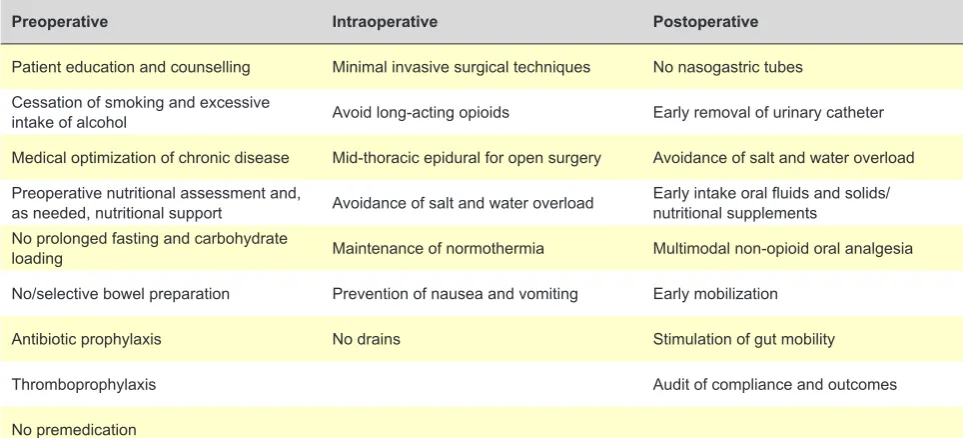
The ERAS® Society guidelines for Colorectal Surgery
were last updated in 2018. They encompass 24 core ele
-ments (Table 1) that include preoperative, intraoperative
and postoperative measures to be implemented.2
Several studies have shown that the application of these protocols is safe, leads to a better postoperative recovery, a faster return of bowel function, less morbidity and a shorter
length of hospital stay after surgery.2-4
The implementation of these protocols is a complex pro
-cess which requires the integration and contribution of all
the professional groups involved, including surgeons, an
-esthesiologists, nurses, nutritionists and physiotherapists, among others.
Constant monitoring is needed to guarantee sustain
-ability and continuous improvement. In the absence of con
-tinuous training and auditing there is a decrease in the pro
-gram’s compliance.5 It has been shown that a compliance
greater than 70% is associated with better clinical results,6-8
including 5-year survival after malignant colorectal surgery. Hospital Beatriz Ângelo was the first hospital in Portugal
to adhere to the ERAS® society program. The ERAS® im
-plementation program (EIP) consists of four seminars and three action periods in between, with a total length of eight to 10 months. It started with the creation of a multidisciplinary team composed of surgeons, anesthesiologists, nurses, an intensive care physician and a member of the management board. During this period, this team had weekly meetings where international guidelines were adapted to the local features, the patient perioperative circuit was organized, patients´ data were introduced in the audit system and staff education was prepared.
One of the important steps was the reorganization of the preoperative period with the creation of new appointments in order to better evaluate and optimize the surgical patient.
These included nursing, nutritional and physical rehabilita
-tion consulta-tions, in addi-tion to the preexisting general sur
-gery and anesthesiology ones. They form a one-day bundle
to avoid extra visits to the hospital and enable patient edu
-cation and management of their expectations. It also allows
for the formulation, together with the patient, of a postopera
-tive recovery plan including early mobilization, ambulation and oral intake.
Another crucial change in perioperative care was to
grant dedicated time to an ERAS® nurse for patient and
family support, supervision of the circuit, data collection and audit, and staff coaching.
As said before, maintaining this program is not possible
without continuous auditing of the compliance with the dif
-ferent protocol´s elements and the clinical outcomes. This
allows the team to identify the success of the implementa
-tion or the need of change in strategy. To enable this, the
patients’ clinical data have to be inserted in EIAS (ERAS®
interactive audit system) in real time.
Hospital Beatriz Ângelo (HBA) in Loures, Portugal, start
-ed the ERAS® implementation program (EIP) for colorectal
Table 1 – Recommendations for perioperative care in colon and rectal surgery1
Preoperative Intraoperative Postoperative
Patient education and counselling Minimal invasive surgical techniques No nasogastric tubes
Cessation of smoking and excessive
intake of alcohol Avoid long-acting opioids Early removal of urinary catheter Medical optimization of chronic disease Mid-thoracic epidural for open surgery Avoidance of salt and water overload
Preoperative nutritional assessment and,
as needed, nutritional support Avoidance of salt and water overload Early intake oral fluids and solids/nutritional supplements No prolonged fasting and carbohydrate
loading Maintenance of normothermia Multimodal non-opioid oral analgesia No/selective bowel preparation Prevention of nausea and vomiting Early mobilization
Antibiotic prophylaxis No drains Stimulation of gut mobility
Thromboprophylaxis Audit of compliance and outcomes
No premedication
ARTIGO ORIGINAL surgery in May 2016, which lasted about 8 months; and since January 2017 all colorectal surgery patients were in
-cluded in the program. The purpose of this study is to evalu
-ate the first-year compliance and clinical outcomes.
MATERIALS AND METHODS Patients
A consecutive series of 210 patients undergoing elec
-tive colorectal surgery in Hospital Beatriz Ângelo was ana
-lyzed. The first 67 patients (pre-ERAS® group) underwent
surgery in 2016 and were registered during the implementa
-tion program. The remaining 143 are all the patients treated
during 2017 – after the full implementation of the ERAS®
program (ERAS® group). The data concerning both groups
of patients (which include over one hundred variables) were
inserted into the ERAS® database (EIAS – ERAS® interac
-tive audit system), either retrospec-tively (pre-ERAS® group)
or prospectively (ERAS® group). The study was approved
by the Health Ethics Committee of Hospital Beatriz Ângelo.
Outcomes
Demographics and preoperative data of all patients
were extracted from the EIAS database: gender, age, body
mass index (BMI), history of tobacco use, diabetes, car
-diovascular and respiratory disease, American Society of Anesthesiologists (ASA) physical status, P-POSSUM score
mortality risk, use of neoadjuvant treatment, final diagno
-sis and procedure group (colonic vs rectal). The operative variables analyzed were duration of surgery, intraoperative blood loss, total volume of IV fluids and transfusion rate.
Compliance with the care elements of the periopera
-tive period was recorded and compared between the two
groups. The compliance represents the percentage of pa
-tients that were treated according to the protocol and it is calculated taking into account only the data available (the
data not registered in the clinical records appear as ‘miss
-ing’).
The main outcome measures in the postoperative pe
-riod were length of stay (number of days between operation and discharge), time to return of bowel function (described
as time to first flatus and first bowel movement), complica
-tions (divided in medical and surgical and according to their severity – Clavien-Dindo classification) and mortality.
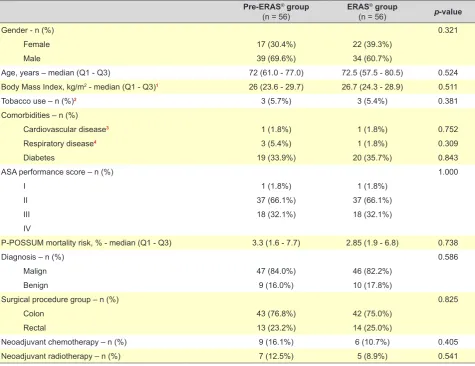
Table 2 – Demographic patient data and preoperative characteristics
Pre-ERAS® group
(n = 56) ERAS
® group
(n = 56) p-value
Gender - n (%) 0.321
Female 17 (30.4%) 22 (39.3%)
Male 39 (69.6%) 34 (60.7%)
Age, years – median (Q1 - Q3) 72 (61.0 - 77.0) 72.5 (57.5 - 80.5) 0.524
Body Mass Index, kg/m2 - median (Q1 - Q3)1 26 (23.6 - 29.7) 26.7 (24.3 - 28.9) 0.511
Tobacco use – n (%)2 3 (5.7%) 3 (5.4%) 0.381
Comorbidities – n (%)
Cardiovascular disease3 1 (1.8%) 1 (1.8%) 0.752
Respiratory disease4 3 (5.4%) 1 (1.8%) 0.309
Diabetes 19 (33.9%) 20 (35.7%) 0.843
ASA performance score – n (%) 1.000
I 1 (1.8%) 1 (1.8%)
II 37 (66.1%) 37 (66.1%)
III 18 (32.1%) 18 (32.1%)
IV
P-POSSUM mortality risk, % - median (Q1 - Q3) 3.3 (1.6 - 7.7) 2.85 (1.9 - 6.8) 0.738
Diagnosis – n (%) 0.586
Malign 47 (84.0%) 46 (82.2%)
Benign 9 (16.0%) 10 (17.8%)
Surgical procedure group – n (%) 0.825
Colon 43 (76.8%) 42 (75.0%)
Rectal 13 (23.2%) 14 (25.0%)
Neoadjuvant chemotherapy – n (%) 9 (16.1%) 6 (10.7%) 0.405
Neoadjuvant radiotherapy – n (%) 7 (12.5%) 5 (8.9%) 0.541
* Seven missing-values in the pre-ERAS group and one in the ERAS group; **Three missing-values in the pre-ERAS group
Analysis of categorical variables was done using the χ2 test except for ‘Cardiovascular disease’ and ‘Respiratory disease’ which used Fisher’s exact test. Analysis of continuous vari
ARTIGO ORIGINAL
Statistical analysis
Statistical analysis was performed using SPSS software version 23 for Windows (SPSS Inc., Chicago, IL, USA).
Descriptive data were reported as mean ± standard devi
-ation (SD), median (interquartile range - IQR) or number
of patients (percentage) as appropriate. Categorical vari
-ables were compared using the Pearson’s chi-square test or Fisher’s exact test. For continuous variables, differences
between groups were tested using Student’s t test for nor
-mally distributed data or the Mann-Whitney U test for non-normally distributed data (based on Kolmogorov-Smirnov
test). A p-value < 0.05 was considered statistically signifi
-cant.
In order to reduce selection bias, pre and ERAS® pa
-tients were matched according to propensity scores de
-termined with the near neighbor matching procedure. Diabetes, respiratory disease and ASA score were used as matching covariates. Matching was performed using R package MatchIt.
RESULTS Demographic
Demographic patient data and preoperative character
-istics are shown in Table 2. After propensity score match
-ing, one hundred and twelve patients were included in the
present study: 56 patients formed the pre-ERAS® group and
56 the ERAS® group. There was no difference in median
age, BMI or in the distribution of gender between the two groups. Also, there was no significant difference regarding history of tobacco use, cardiovascular disease, respiratory disease, diabetes, ASA score and mortality risk prediction
P-POSSUM score. Finally, there was no difference regard
-ing the surgical procedure group (colonic vs rectal), the di
-agnosis (whether it was benign or malignant) nor whether
the patient had received neoadjuvant chemotherapy or ra
-diotherapy.
Perioperative variables
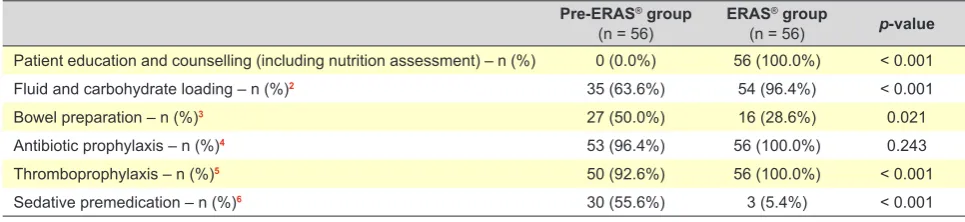
Regarding the preoperative period (Table 3), there was a significant increase in patient education and counselling
(0% vs 100%, p-value < 0.001), fluid and carbohydrate
loading (63.6% vs 96.4%, p-value < 0.001) and thrombo
-prophylaxis (92.6% vs 100%, p-value < 0.001). The use of
sedative premedication decreased (55.6% vs 5.4%, p-value
<0.001) as did bowel preparation (50% vs 28.6%, p-value
0.021).
The intraoperative variables for the ERAS® and
pre-ERAS® groups are presented in Table 4. The difference
in mean duration of surgery did not achieve statistical sig
-nificance (216.9 minutes vs 190.4 minutes, p-value 0.166)
but there was a significant reduction in the median amount of fluids administered in the intraoperative period (1316.9
mL vs 1796.5 mL, p-value 0.039). Despite this reduction in
fluid therapy, the need for vasoactive medication was not
increased (p-value 0.611). There was no statistically signifi
-cant difference regarding blood loss and transfusion rate.
Monitoring of anesthesia depth and maintenance of nor
-mothermia increased (p-value < 0.001) whereas the use of
opioid analgesia (p-value < 0.001) and surgical drains de
-creased (p-value 0.033). The use of nerve blocks and local
anesthesia also increased (21.7% vs 51%, p-value 0.004)
and there wasn´t a statistically significant difference in the use of mid-thoracic epidural anesthesia in open surgery. Regarding the prevention of nausea and vomiting there was
not a significant difference either (98.2% vs 100%, p-value
0.495).
During the postoperative period there was a significant
decrease in the median duration of intravenous fluid thera
-py in the ERAS® group (four days versus one day, p-value
< 0.001) as well as an increase in the median volume of
oral fluids on the day of surgery (0 mL vs 700 mL, p-value
< 0.001), as shown in Table 5. This group also had a sta
-tistically significant increase in stimulation of gut mobility, avoidance of nasogastric tubes as well as earlier removal
of urinary catheter (p-value < 0.001). About three quarters
(73.2%) of the patients in the ERAS® group had early mobi
-lization (out of bed in the day of surgery and walking three times a day starting in the first postoperative day), when
compared with 14.8% in the pre-ERAS® group (p-value <
0.001). The use of opioids for postoperative analgesia had
a major decrease in the ERAS® group (3.6% vs 38.9%, p
-value < 0.001).
Compliance
Overall mean adherence to the ERAS® protocol was
80.8% in the ERAS® group compared with 35.7% in the
pre-ERAS® group (p-value < 0.001). The compliance in each
operative period is described in Table 6.
Table 3 – Preoperative variables1
Pre-ERAS® group
(n = 56) ERAS ® group
(n = 56) p-value Patient education and counselling (including nutrition assessment) – n (%) 0 (0.0%) 56 (100.0%) < 0.001 Fluid and carbohydrate loading – n (%)2 35 (63.6%) 54 (96.4%) < 0.001
Bowel preparation – n (%)3 27 (50.0%) 16 (28.6%) 0.021
Antibiotic prophylaxis – n (%)4 53 (96.4%) 56 (100.0%) 0.243
Thromboprophylaxis – n (%)5 50 (92.6%) 56 (100.0%) < 0.001
Sedative premedication – n (%)6 30 (55.6%) 3 (5.4%) < 0.001
1 According to the ERAS® Society Guidelines: World J Surg.2019;43:659-95.2
2,4 One missing-value in the pre-ERAS group; 3,5,6 Two missing-values in the pre-ERAS group
ARTIGO ORIGINAL
Outcomes
Time to return of bowel function
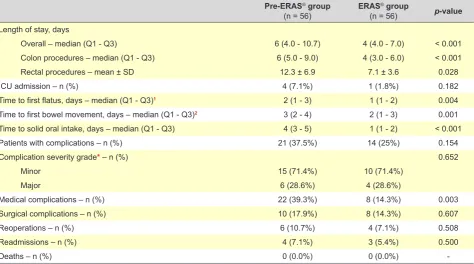
Overall there was a faster return of bowel function in
the ERAS® group compared with the pre-ERAS® group. The
median time to first flatus decreased from two to one day (p
-value 0.004) while the median time to first bowel movement
decreased from three to two days (p-value 0.001). Patients
also started solid oral intake earlier in the postoperative pe
-riod in the ERAS® group (p-value < 0.001).
Complications and Reoperations
There was no difference in the overall number of pa
-tients who presented complications (p-value 0.154) as sum
-marized in Table 7. In the pre-ERAS® group, 37.5% (22) of
the patients developed at least one complication compared
with 25% (14) in the ERAS® group. In both groups 28.6%
of these were major complications. When analyzing over
-all medical complications, there was a significant decrease
in the ERAS® group (14.3% vs 39.3%, p-value 0.003).
There was no difference regarding surgical complications.
Table 4 – Intraoperative variables1
Pre-ERAS® group
(n = 56) ERAS
® group
(n = 56) p-value Duration of surgery, minutes – mean ± SD2 216.9 ± 109.4 190.4 ± 89.7 0.166
Total fluid volume, mL – mean ± SD3 1796.5 ± 1197.4 1316.9 ± 884.3 0.039
Vasoactive medication – n (%)4 13 (29.5%) 14 (25.0%) 0.611
Blood loss, mL – median (Q1 - Q3)5 100 (50 - 200) 100 (50 - 200) 0.477
Transfusion rate, mL – mean ± SD6 116.67 ± 531.9 6.25 ± 35.8 0.171
Monitoring of anesthesia depth – n (%)7 13 (52.0%) 55 (8.2%) < 0.001
No opioid analgesia – n (%)8 29 (60.4%) 56 (100.0%) < 0.001
Mid-thoracic epidural anaesthesia in open surgery – n (%) 9 (64.3%) 8 (47.1%) 0.276
Nerve blocks or local anesthesia– n (%)9 12 (21.7%) 28 (51.0%) 0.004
Maintenance of normothermia – n (%)10 23 (74.2%) 51 (100.0%) < 0.001
Prevention of nausea and vomiting – n (%) 54 (98.2%) 56 (100.0%) 0.495
No surgical drains – n (%) 29 (51.8%) 40 (71.4%) 0.033
1 According to the ERAS® Society Guidelines: World J Surg.2019;43:659-95.2
2,5,11 One missing-value in the pre-ERAS group; 3 27 missing-values in the pre-ERAS group; 4 12 missing-values in the pre-ERAS group; 6 11 missing-values in the pre-ERAS group; 7 31 missing-values in the pre-ERAS group; 8 Eight missing-values in the pre-ERAS group; 9 One missing-value in the pre-ERAS group and one in the ERAS group; 10 25 missing-values in the pre-ERAS group and five in the ERAS group
Analysis of categorical variables was done using the χ2 test except for ‘Monitoring of anaesthesia depth’, ‘Maintenance of normothermia’ and ‘Prevention of nausea and vomiting’ which
used Fisher’s exact test. Analysis of continuous variables was done using Student’s t-test except for ‘Blood loss’ which used the Mann-Whitney U test.
Table 5 – Postoperative variables1
Pre-ERAS® group
(n = 56) ERAS
® group
(n = 56) p-value Oral fluids on day of surgery, mL – median (Q1 - Q3)2 0 (0 - 0) 700 (325 - 1000) < 0.001
IV fluids on day of surgery, mL – median (Q1 - Q3)3 2000 (1250 - 2550) 2000 (1587.5 - 2450) 0.386
Duration of IV fluid therapy, days – median (Q1 - Q3)4 4 (3 - 6) 1 (1 - 2) < 0.001
Stimulation of gut mobility* – n (%) 11 (19.6%) 39 (69.6%) < 0.001
No nasogastric tubes – n (%) 17 (30.9%) 52 (92.9%) < 0.001
Time to removal of urinary catheter, days – median (Q1 - Q3)5 2 (1 - 3) 1 (1 - 1) < 0.001
Early mobilization – n (%)6 8 (14.8%) 41 (73.2%) < 0.001
Opioid analgesia – n (%)7 21 (38.9%) 2 (3.6%) < 0.001
1 According to the ERAS® Society Guidelines: World J Surg.2019;43:659-95.2
2 25 missing-values in the pre-ERAS group; 3 19 missing-values in the pre-ERAS group; 4 Four missing-values in the pre-ERAS group and one in the ERAS group; 5 Three missing-values in the pre-ERAS group and four in the ERAS group; 6,7 Two missing-values in the pre-ERAS group
Analysis of categorical variables was done using the χ2 test. Analysis of continuous variables was done using the Mann-Whitney U test.
* Laxatives, chewing gum or both; IV: intravenous
Table 6 – Compliance with ERAS® Society core recommendations for perioperative care
Pre-ERAS® group
(n = 56) ERAS
® group
(n = 56) p-value
Overall compliance, % - mean ± SD 35.7 ± 8.7 80.8 ± 12.9 < 0.001
ARTIGO ORIGINAL
Table 7 –Outcomes
Pre-ERAS® group
(n = 56) ERAS
® group
(n = 56) p-value Length of stay, days
Overall – median (Q1 - Q3) 6 (4.0 - 10.7) 4 (4.0 - 7.0) < 0.001 Colon procedures – median (Q1 - Q3) 6 (5.0 - 9.0) 4 (3.0 - 6.0) < 0.001
Rectal procedures – mean ± SD 12.3 ± 6.9 7.1 ± 3.6 0.028
ICU admission – n (%) 4 (7.1%) 1 (1.8%) 0.182
Time to first flatus, days – median (Q1 - Q3)1 2 (1 - 3) 1 (1 - 2) 0.004
Time to first bowel movement, days – median (Q1 - Q3)2 3 (2 - 4) 2 (1 - 3) 0.001
Time to solid oral intake, days – median (Q1 - Q3) 4 (3 - 5) 1 (1 - 2) < 0.001
Patients with complications – n (%) 21 (37.5%) 14 (25%) 0.154
Complication severity grade* – n (%) 0.652
Minor 15 (71.4%) 10 (71.4%)
Major 6 (28.6%) 4 (28.6%)
Medical complications – n (%) 22 (39.3%) 8 (14.3%) 0.003
Surgical complications – n (%) 10 (17.9%) 8 (14.3%) 0.607
Reoperations – n (%) 6 (10.7%) 4 (7.1%) 0.508
Readmissions – n (%) 4 (7.1%) 3 (5.4%) 0.500
Deaths – n (%) 0 (0.0%) 0 (0.0%)
-122 missing-values in the pre-ERAS group and nine in the ERAS group; 2One missing-values in the pre-ERAS group and three in the ERAS-group * Minor complication: Clavien-Dindo I, II and IIIa; Major complication: Clavien-Dindo > IIIa
Analysis of categorical variables was done using the χ2 test except for ‘ICU admission’, ‘Complication severity grade’ and ‘Readmissions’ which used Fisher’s exact test. Analysis of
continuous variables was done using the Mann-Whitney U test except for ‘Length of stay – Rectal procedures’ which used Student’s t-test. ICU: intensive care unit
There was no difference in the number of patients receiving
unplanned operation after primary surgery nor in the num
-ber of readmissions after discharge.
Length of Stay (LOS)
There was a significant decrease in the length of stay
from a pre-ERAS® median of six days to an ERAS® median
of four days (p-value < 0.001) as depicted in Table 7. In the
ERAS® groups, patients undergoing colonic surgery spent a
median of four days in hospital while those who underwent rectal surgery spent on average 7.1 days. Around 7% (n =
4) of the patients in the pre-ERAS® group versus 1.8% (n =
1) in the ERAS® group required admission to the Intensive
Care Unit (p-value 0.182).
Mortality
There were no deaths in both groups.
Discussion
In our hospital, the overall adherence to the protocol in
-creased from 35.7% to 80.8%, which is in accordance with various published studies and accomplishes the threshold
associated with better clinical outcomes.6-8
In contrast to traditional care, 100% of the ERAS® pa
-tientsattended preoperative education and counseling. There was a statistically significant rise in the percentage of patients receiving the carbohydrate loading supplement on
the evening before and morning of the surgery. This prac
-tice complies with ASA Prac-tice Guidelines for Preoperative
Fasting.9 According to some authors this also decreases the
perioperative catabolic process and insulin resistance10-12
and, ultimately, increases patient satisfaction.13
Although still in debate, the ERAS® Society does not
recommend bowel preparation as a routine, since it is linked to adverse effects such as dehydration, prolonged ileus and
patient distress without any evidence of advantages.14-16
This strategy was included in our hospital’s protocol and there was a statistically significant decrease in its use (50%
vs 28.6%, p-value 0.021).
Regarding the intraoperative period, restrictive fluid therapy is an established practice that is believed to reduce
the incidence of several complications, including anastomo
-sis leak, fluid overload and hypothermia.17-20 This practice
was adopted and there was a decrease in average intra
-operative fluid therapy from 1796.5ml to 1316.9ml. This change occurred without an increase in use of vasoactive medication, which may indicate that the patients arrive at the operating room well hydrated.
The ERAS® program emphasizes pain control through
the use of a multimodal opioid-sparing analgesic scheme. Our protocol established performing a thoracic epidural block for laparotomic surgery. For laparoscopic surgeries or
if contraindications for a thoracic epidural block were pre
-sent, other regional techniques (including intrathecal opi
-oids) or IV lidocaine perfusion were instituted. In addition
to this, postoperative analgesia is switched to oral at post
ARTIGO ORIGINAL 100%. At the same time, the use of peripheral nerve blocks or local anesthesia increased from 21.7% to 51%.
According to the ERAS® Society peritoneal drainage
hasn´t shown any advantage in the available literature2 and
may impair patient postoperative mobilization. The avoid
-ance of surgical drain placement was promoted and there was a decrease in its use from 49.2% to 28.6%.
The routine prophylactic use of nasogastric intubation is being abandoned. An association has been shown between
its use and postoperative fever, oropharyngeal and pulmo
-nary complications.21 There was a significant difference in
the use of nasogastric intubation before and after the imple
-mentation of the program, with a decrease from 69.1% to 7.1%.
In order to reduce the infectious risk, patient discomfort
and facilitate mobilization, an early removal of urinary cath
-eter was promoted with a reduction in the median of time to
remove it from two days to one day.2
The ERAS® patients’ postoperative period is marked by
early mobilization and ambulation (73.2% of the patients),
which in our case reflects the effort and coordination be
-tween the ERAS® nurse and the ward and rehabilitation
nurses.
These patients also had a faster onset of oral fluid intake and progression to solid food. There was an increase in the average oral fluid intake in the day of the surgery from 0 to
700 mL and a decrease in the average duration of intrave
-nous fluid therapy from four to one day. All patients were of
-fered a liquid diet and supplements on the day of surgery and progress to solid food at the postoperative day one. This early advancement of diet and prompt mobilization
may have contributed to the quicker return of bowel func
-tion observed (median decreased from three to two days), which in turn may have been associated with the shorter length of stay.
The return of gastrointestinal function was assessed us
-ing the time to first flatus and time to first bowel movement.
In these fields, an improvement was observed with reduc
-tion of the median time of at least one day. This may be associated with the use of measures that promote bowel motility, such as administration of domperidone, reduction
of the use of opioid analgesics, early mobilization and am
-bulation.
Similar to other existing studies,6,7,22-24 there was a statis
-tically significant decrease in the rate of medical but not of surgical complications.
Regarding length of stay, there was a significant de
-crease in hospitalization time from a median of 6 to 4 days for all elective colorectal patients. This shorter length of stay
was not associated with a higher percentage of readmis
-sions, which reflects the safety of this program. This allows
not only to lower the cost per patient, increase patient turno
-ver and hospital productivity (a growing concern in the cur
-rent era of cost-containment in health care),24-26 but also a
faster return to usual patient activity and improvement in
patient satisfaction.26,27
Limitations
Despite the good results obtained, this study presents some limitations. These include the retrospective nature
of the pre-ERAS® group and small sample size (further re
-duced by the need to perform a propensity score matching due to differences in patient characteristics such as ASA
score (III), higher incidence of respiratory disease and dia
-betes). Another limitation is the lack of registration of sev
-eral parameters before the implementation of the protocol.
CONCLUSION
This study showed that the implementation of ERAS®
program in Hospital Beatriz Ângelo was possible, with a positive impact on outcomes. It´s execution is a complex
process that requires a multidisciplinary approach, a struc
-tured implementation program and continuous data audit. It
requires the commitment of the patient and all the periop
-erative professionals and represents a change in the institu
-tion culture.
As in other studies, it was shown that enhanced re
-covery programs are safe and bring major benefits to the
patients. Its adoption is spreading worldwide, and this evi
-dence based multimodal approach is becoming the corner
-stone of high-quality perioperative care.
PROTECTION OF HUMANS AND ANIMALS
The authors declare that the procedures were followed
according to the regulations established by the Clinical Re
-search and Ethics Committee and to the Helsinki Declara
-tion of the World Medical Associa-tion.
DATA CONFIDENTIALITY
The authors declare having followed the protocols in
use at their working center regarding patients’ data publica
-tion.
PATIENT CONSENT
Obtained.
COMPETING INTERESTS
The authors have declared that no competing interests exist.
FUNDING SOURCES
This research received no specific grant from any fund
-ing agency in the public, commercial, or not-for-profit sec
-tors.
REFERENCES
1. Engelman RM, Rousou JA, Flack JE III, Deaton DW, Humphrey CB, Ellison LH, et al. Fast-track recovery of the coronary bypass patient. Ann Thorac Surg. 1994;58:1742-6.
ARTIGO ORIGINAL
2018. World J Surg. 2019;43:659-95.
3. Nygren J, Thacker J, Carli F, Fearon KC, Nordeval S, Lobo DN, et al. Guidelines for perioperative care in elective rectal/pelvic surgery: enhanced recovery after surgery (ERAS®) society recommendations.
Clin Nutr. 2012;31:801-16.
4. Spanjersberg WR, Reurings J, Keus F, van Laarhoven CJ. Fast track surgery versus conventional recovery strategies for colorectal surgery.
Cochrane Database Syst Rev. 2011;16:CD007635.
5. Ljungqvist O, Scott M, Fearon KC. Enhanced recovery after surgery: a review. JAMA Surg. 2017;152:292-8.
6. Gustafsson UO, Hausel J, Thorell A, Ljungqvist O, Soop M, Nygren J, et al. Adherence to the enhanced recovery after surgery protocol and outcomes after colorectal cancer surgery. Arch Surg.2011;146:571–7. 7. ERAS Compliance Group. The impact of enhanced recovery protocol
compliance on elective colorectal cancer resection: results from an international registry. Ann Surg. 2015;261:1153-9.
8. Gustafsson UO, Oppelstrup H, Thorell A, Nygren J, Ljungqvist O. Adherence to the ERAS protocol is associated with 5-year survival after colorectal cancer surgery: a retrospective cohort study. World J Surg. 2016;40:1741-7.
9. Apfelbaum JL, Agarkar M, Connis RT, Coté CJ, Nickinovich DG, Warner MA. Practice guidelines for preoperative fasting and the use of pharmacologic agents to reduce the risk of pulmonary aspiration: application to healthy patients undergoing elective procedures: an updated report by the American Society of Anesthesiologists Task Force on preoperative fasting and the use of pharmacologic agents to reduce the risk of pulmonary aspiration. Anesthesiology. 2017;126:376-93. 10. Bilku D, Dennison A, Hall T, Metcalfe M, Garcea G. Role of preoperative
carbohydrate loading: a systematic review. Ann R Coll Surg Engl.
2014;96:15-22.
11. Ljungqvist O, Nygren J, Thorell A. Modulation of post-operative insulin resistance by pre-operative carbohydrate loading. Proc Nutr Soc. 2002;61:329–36.
12. Ljungqvist O. Modulating postoperative insulin resistance by preoperative carbohydrate loading. Best Pract Res Clin Anaesthesiol.
2009;23 401-9.
13. Çakar E, Yilmaz E, Çakar E, Baydur H.The effect of preoperative oral carbohydrate solution intake on patient comfort: a randomized controlled study. J Perianesth Nurs. 2017;32:589-99.
14. Bucher P, Mermillod B, Gervaz P, Morel P. Mechanical bowel preparation for elective colorectal surgery a meta-analysis. Arch Surg.
2004;139:1359–64.
15. Eskicioglu C, Forbes SS, Fenech DS, McLeod RS. Preoperative bowel preparation for patients undergoing elective colorectal surgery: a clinical practice guideline endorsed by the Canadian Society of Colon and
Rectal Surgeons. Can J Surg. 2010;53:385-95.
16. Rollins KE, Javanmard-Emamghissi H, Lobo DN. Impact of mechanical bowel preparation in elective colorectal surgery: a meta-analysis. World J Gastroenterol. 2018;24:519-36.
17. Chappell D, Jacob M, Hofmann-Kiefer K, Conzen P, Rehm M. A rational approach to perioperative fluid management. Anesthesiology. 2008;109:723-40.
18. Kalyan JP, Rosbergen M, Pal N, Sargen K, Fletcher SJ, Nunn DL, et al. Randomized clinical trial of fluid and salt restriction compared with a controlled liberal regimen in elective gastrointestinal surgery. Br J Surg. 2013;100:1739-46.
19. Asklid D, Segelman J, Gedda C, Hjern F, Pekkari K, Gustafsson UO. The impact of perioperative fluid therapy on short-term outcomes and 5-year survival among patients undergoing colorectal cancer surgery – a prospective cohort study within an ERAS protocol. Eur J Surg Oncol. 2017;43:1433-9.
20. Brandstrup B, Tønnesen H, Beier-Holgersen R, Hjortsø E, Ørding H, Lindorff-Larsen K, et al. Effects of intravenous fluid restriction on postoperative complications: comparison of two perioperative fluid regimens: a randomized assessor-blinded multicenter trial. Ann Surg.
2003;238:641-8.
21. Feldheiser A, Aziz O, Baldini G, Cox BP, Fearon KC, Feldman LS, et al. Enhanced recovery after surgery (ERAS) for gastrointestinal surgery, part 2: consensus statement for anaesthesia practice. Acta Anaesthesiol Scand. 2016;60:289-334.
22. Varadhan KK, Neal KR, Dejong CH, Fearon KC, Ljungqvist O, Lobo DN. The enhanced recovery after surgery (ERAS) pathway for patients undergoing major elective open colorectal surgery: a meta-analysis of randomized controlled trials. Clin Nutr. 2010;29:434-40.
23. Greco M, Capretti G, Beretta L, Gemma M, Pecorelli N, Braga M. Enhanced recovery program in colorectal surgery: a meta-analysis of randomized controlled trials. World J Surg. 2014;38:1531-41.
24. Thiele RH, Rea KM, Turrentine FE, Friel CM, Hassinger TE, McMurry TL, et al. Standardization of care: impact of an enhanced recovery protocol on length of stay, complications, and direct costs after colorectal surgery. J Am Coll Surg. 2015;220:430-43.
25. Lemanu DP, Singh PP, Stowers MD, Hill AG. A systematic review to assess cost effectiveness of enhanced recovery after surgery programmes in colorectal surgery. Colorectal Dis. 2014;16:338-46. 26. Horattas MC, Horattas SA, Heib N, Brandstetter S, Bahr K, Reissig
J. Enhanced recovery after surgery results in enhanced patient satisfaction. J Am Coll Surg. 2017;225:e67-8.