Journal of Electrical Engineering,
Electronics, Control and Computer Science
JEEECCS, Volume 2, Issue 3, pages 53-60, 2016
Implantable bone-conduction hearing aid
Baha system
Madalina Georgescu1,2, Andreea Marinescu1,2, Angela Tonu1,2, M. Radulescu1,2, V. Budu1,2, M. Tusaliu1,2, Magdalena Cernea1
1-Audiology, ENT - „Carol Davila” University of Medicine and Pharmacy, Bucharest, ROMANIA Bucharest, Romania
2-Audiology, ENT - Institute of Phono-Audiology and ENT Functional Surgery Bucharest, Romania
Abstract –Implantable hearing aids are currently used in management of hearing loss. For patients with conductive component of hearing loss, bone conduction hearing aids are used.
In these implantable hearing devices sound pressure is transmitted directly to the inner ear through an implant placed behind the ear bypassing the affected external and middle ear.
Biomaterials used for these implantable hearing aids proved their safety and long-term stability due to good osseointegration and stabilising tissue-implant interaction.
Keywords - hearing loss, bone conduction, implantable hearing aid, biomaterials
I. INTRODUCTION
Hearing is essential for human condition - verbal communication. It is a very complex process by which sounds, words and music are converted into cortical auditory sensations. Impairment of the hearing leads to hearing loss, a medical condition reflected in worsening the capacity of hearing sounds and understanding words. Permanent bilateral hearing loss is a very significant sensorial handicap since hearing impaired people have learning difficulties at school and superior academic levels, social inclusion problems, low access to well payed jobs and a diminished self-confidence behaviour.
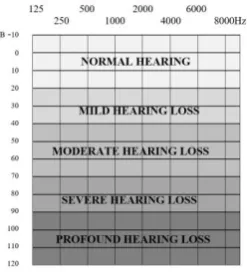
Hearing loss has different types (conductive, sensorineural or mixed, regarding the site of lesion along the auditory pathway) and different severity levels (mild, moderate, severe or profound, depending on the amount of hearing available without and amplification) (fig. 1).
Fig. 1 Hearing loss severity degree
Acoustic signals are transmitted both by air and bone conduction pathways to the ear components either by mechanical vibrations (external and middle ear) or by neural impulse (from inner ear to the brain). Physiologically, air conduction is used, but in pathological conditions when air conduction is impaired (external and/or middle ear agenesis and other malformations, chronic suppurated otitis media, ossicular chain immobility), normal stimulation of the inner ear may be achieved by bone conduction.
Bone conduction is the process of sound transmission directly to the inner ear bypassing the affected external and/or middle ear. By this mechanism acoustic energy is transmitted by vibration to the cochlea and determines compression of the cochlea and inertial movement of the endolymph (liquid in the inner ear).
The amount of sound pressure needed in bone conduction (BC) for normal hearing is higher (with 30dB HL in average) than sound pressure needed for normal hearing in air conduction (AC), the latest being the natural hearing pathway.
While in patients with unilateral hearing loss, management of the sensorial handicap aims better quality of speech understanding especially in difficult acoustic environments (noise, reverberant rooms, multiple simultaneous speakers) and normal listening effort, in patients with bilateral permanent hearing loss, appropriate management is mandatory for hearing per se; quality of hearing is the second aim of treatment. Lack of normal hearing at least in one ear has multiple negative consequences, not only for the patient, but also for his family and for the society.
Fig. 2 Conductive hearing loss
For patient with conductive hearing loss, medical or surgical treatment is usually first treatment choice, but if surgery is not a valid option for these patients, amplification is recommended. Usually amplification is provided with conventional hearing aids, medical devices which increase the intensity of sounds delivered to the inner ear and compensates the hearing loss. Conventional hearing aids are worn behind the ear or in the ear canal.
Sometimes this method of auditory rehabilitation is not possible and these patients benefit of implantable bone conduction hearing aids. The present paper aims to present the benefit of one of the implantable BC hearing aid devices types, the Baha system.
II. METHOD
For patients with conductive or mixed hearing loss who cannot wear a conventional hearing aid, bone conduction hearing aid is recommended (table 1).
TABLE 1INDICATION FOR BCHEARING AIDS
1. External and/or middle ear atresia
2. External auditory canal obstruction (fibrous, osseous) 3. Middle ear pathology without surgical indication or patient
will for surgery
Ossicular fixation
Otosclerosis
Ossicular desarticulation 4. Chronic otorrhea
5. External auditory canal dermatologic pathology
As technology improved significantly, bone conduction hearing aid worn on glasses or on a tight band around patient‟s head have been replaced by BC implantable hearing aids as Baha (Cochlear Company), Bone Bridge (MED EL Company) or Ponto (Oticon Company).
For first BC hearing aids pressure needed for normal hearing results in local irritation of the soft tissue. Additionally, the soft tissue attenuates the sound which reflects in lower quality of hearing [1].
In order to overcome this attenuation and skin adverse reactions, implantable BC-hearing aids were
designed. They transmit the sound via an implant fixated in the bone which takes over the sound pressure and transmits it directly to the cochlea.
In general, this is the principle, but there are differences between the competitors regarding the effective sound transmission mechanism – vibration of the sound processor is transmitted:
to an implant fixated in the mastoid bone and from this implant osseointegrated in the mastoid vibrations are transmitted to the inner ear (Baha system)
directly to the cochlea by vibrations of a bone conduction floating mass transducer (FMT-MED EL system) (fig. 3).
Fig. 3 BC implantable hearing aid
Baha Bone Bridge
This paper presents the technological progress of the Baha system, resulting in better audiological benefit and quality of life for patients with conductive component of the hearing loss.
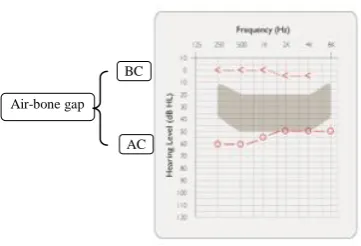
Audiological indications for Baha system are presented in figure below (fig. 4). Benefit depends on the type of hearing loss (conductive, mixed or sensorineural).
For conductive and mixed hearing loss a good auditory benefit is obtained if hearing loss is at most 50-60dB HL (BC thresholds at most at 40dB HL) and speech discrimination score better or equal with 60% [2,3,4].
Benefit is also reported by patients themselves with significant improvement in Glasgow Benefit Inventory (GBI) (Annex 1) - positive results were obtained in all categories of the GBI, learning and emotion domains, general, physical and social domains.
For single sided deafness (SSD) patients, Baha system on the deaf ear acts as a CROS system – contralateral routing of the signal – in order to improve speech discrimination in noise and localizing the sounds by availability to sounds around the head. Acoustic signals are processed only by the normal hearing ear, but awareness to sounds is better since the speech processor of the Baha system picks the stimuli on the deaf ear.
AC BC
Fig. 4 Audiological indications for Baha system
Courtesy of Cochlear® - shadow area represents the intensity necessary for understanding vocals and consonants
III. RESULTS
The Baha system is a one-screw device, surgically implanted in the mastoid (fig. 5). In order to have a good BC transmission of the sound and avoid loosening and failure of the screw/implant, a biomaterial with good osseointegration properties was chose.
Fig. 5 Baha system – BA 400 abutment
1-BI 300 implant; 2-BA 400 abutment; 3-magnet for Baha attract system; 4-speech processor
Due to its highly biocompatibility, lack of inflammatory response in surrounding tissue and good resistance to corrosion, Titanium seems the biomaterial of choice for Baha‟s implant [5].
Unique osseointegration of the Titanium is recognized and well accepted from Branemark‟s research in the field of orthopaedics (1952) [6]. Also, Titanium implants are widely used in oral surgery for different stability or reconstruction purposes.
Since 1977, almost the same intraorally implant was used percutaneously in the temporal bone for firm attachment of the speech processor of the BC-hearing aids [7].
Initial tight fixation during surgery is completed by secondary biological stability offered by osseointegration, during the healing stage [8].
Final strength of the implant-tissue system depends on:
Surgical fixation (drilling protocol) and design of the implant (length, diameter, thread profile);
Quality of the osseointegration process which depends on the quality and depth of the mastoid, biomaterial of the implant and the amount of bone to implant contact;
Properties of the surrounding tissue (trabecular-cortical bone ratio, bone density) [9].
Osseointegration represents a direct structural and functional connection between the host-bone and the implant – collagen filaments are formed between the bone matrix and the TiO surface of the implant. Over 20 years of clinical experience and research improved the Titanium implant of the Baha system, providing very good stability over time.
The BI 300 implant was an important step in developing the implant, since the TiO BlastTM surface proved to be more stable at follow-up evaluations compared to the previous implants. This improved the survival rates of the implant and allowed an earlier loading of the implant.
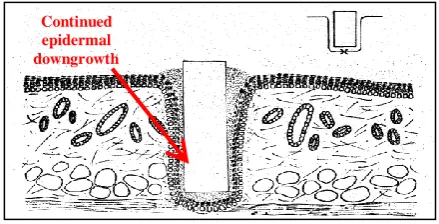
The abutment fixated on the Titanium implant was initially designed also from Titanium and this limited the good long term results of Baha users regarding the soft tissue and skin condition. Titanium is inert in contact with tissue, property which impedes upon good integration of the screw in the soft tissue above the bone. Because of this, retraction pockets and bacterial biofilm developed around the abutment due to the lack of stable soft tissue-abutment interface and continuous epidermal down growth (fig. 6) [10].
Surgical procedure for BI 300 implies soft tissue reduction in order to ensure long-term stability around the percutaneous Titanium abutment. Extensive reduction frequently results in transient/permanent numbness and poor cosmetic results [11,12,13,14].
Fig. 6 The epidermis marsupialised the percutaneous implant (became extracutaneous). Courtesy of Cochlear® Further clinical studies dedicated to these adverse soft-tissue reactions improved the BI 300 implant to the new BA 400 DermaLockTM technology.
Continued epidermal downgrowth AC
BC
1
2 3
This new implant is based on the assumption that in this situation, biomaterials should interact with tissue rather than be ignored by them [15].
The CochlearTM Baha® BA 400 Abutment has a particular shape – a pronounced concavity (red arrow in fig. 7) in the lower part and a hydroxyapatite coated region in contact with tissue, since hydroxyapatite provides a very tight adherence with the surrounding soft tissues (fig. 7) [16,17,18].
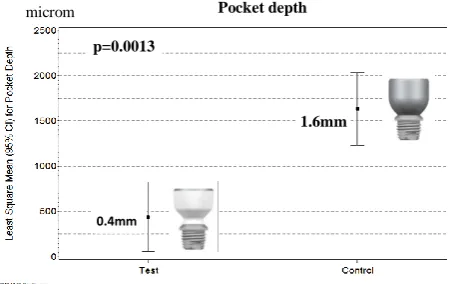
Fig. 7Hydroxyapatite bond to living tissues due to specific adsorbtion of binding proteins. Courtesy of Cochlear® DermaLock surgery implies no reduction of the surrounding tissues. This good seal of the BA 400 implant due to tissue-hydroxyapatite interactions enhances dermal adherence and limits retraction pocket formation and epidermal migration. These two pathological evolution of Baha surgery are the principal failure mode of percutaneous implants (fig. 8) [10,19,20]. Eventhough the Titanium implant is stable, skin complications impedes on using the Baha system and second surgery might be needed.
Fig. 8 Compared epidermal downgrowth in Titanium abutment and DermaLock technology. Courtesy of Cochlear®
Clinical studies revealed improved soft tissue adherence to DermaLock hydroxyapatite coated abutment compared to BA300 titanium abutments, with more viable soft tissue and more active immune response in vicinity of the DermaLock surface (fig. 9) [21]. These two mechanism explain better longterm results with the new technology.
BA300 titanium abutments
DermaLock
Fig. 9 Scanning electron micrographs - soft tissue-to-abutment interface. Courtesy of Cochlear®
More than that, surgical technique (straight incision or punch-only) minimizes the tension at the abutment-tissue interface and this emphasizes a good integration and stable results in time. A follow-up at nine month of BA 400 DermaLock patients showed 91.5% Holgers grade 0-1 and no patient with Holgers grade 4 [22].
Holgers scale grades skin reactions in 0 to 4 severity levels as follows:
Grade 0 = reaction-free area around the abutment Grade 1 = redness with slight swelling
Grade 2 = redness, moistness and moderate swelling Grade 3 = redness, moistness and moderate swelling with tissue granulation
Grade 4 = overt signs of infection (often removal of the implant is required)
IV. CONCLUSION
Implantable bone conduction hearing aids are a valuable treatment option for patients with conductive or mixed moderate hearing loss in whom conventional hearing aid is not recommended – malformations of the external or/and middle ear, persistent otorheea.
Baha system with its new technological improvements ensures a good stability of the implantable part and as well low skin and soft tissue pathology secondary to surgery and hearing aid device itself do to very good osseointegation (Titanium BI 300 implant) as well as tight adherence of the BA hydroxyapatite coated BA 300 abutment.
REFERENCES
[1] Asma A, Ubaidah MA, Hasan SS, et al, “Surgical outcome of bome anchored hearing aid (baha) implant surgery: A 10 years experience.” Indian J Otolaryngol Head Neck Surg, vol. 65(3), pp. 251-254, 2013
[2] Snik AF, Mylanus EA, Proops DW, Wolfaardt JF, Hodgetts WE, Somers T. et al., “Consensus statements on the baha system: Where do we stand at present?” The Annals of otology, rhinology & laryngology. Supplement vol. 195, pp. 2-12, 2005.
[3] Snik AF, Bosman AJ, Mylanus EA, Cremers CW, “Candidacy for the bone-anchored hearing aid.” Audiol Neurootol vol. 9, pp. 190-6, 2004.
pth
p =
0.00
13
1.
6
m
m
0.
4
m
m
m
0.4mm p=0.0013 Pocket depth microm 1.6mm DermaLoc k BA300 DermaLoc
k BA30
[4] Bosman AJ, Snik AFM, Mylanus EM, Cremers C, “Fitting range of the Baha intenso.” Int J Audiol vol. 48, pp. 346-52, 2009.
[5] M. Georgescu, A. Marinescu, V. Budu, I. Bulescu, M. Tusaliu, M. Cernea, “Cochlear implant – an active implantable device.” Scientific Bulletin of the Electrical Engineering Faculty year 15, vol. 3(31), pp. 27-31, 2015. [6] Branemark PI, “Osseointegration and its experimental
background.” J Prosthet Dent vol. 50, pp. 399–410, 1983. [7] Tjellstrom A, Lindstrom J, Hallen O, Albrektsson T,
Branemark PI, “Osseointegrated titanium implants in the temporal bone. A clinical study on bone-anchored hearing aids.” Am J Otol vol. 2, pp. 304–10, 1981.
[8] Raghavendra S, Wood MC, Taylor TD, „Early wound healing around endosseous implants: a review of the literature.” Int J Oral Maxillofac Implants vol. 20, pp. 425– 31, 2005.
[9] Meredith N, “Assessment of implant stability as a prognostic determinant.” Int J Prosthodont vol. 11, pp. 491–501, 1998. [10] Von Recum AF, “Applications and failure modes of
percutaneous devices: a review.” J Biomed Master Res vol. 18(4), pp. 323-36, 1984.
[11] Hultcrantz M, “Outcome of the bone-anchored hearing aid procedure without skin thinning: a prospective clinical trial.” Otol Neurotol. Vol. 32, pp. 1134-1139, 2011.
[12] Wilson DF, Kim HH, “A minimally invasive technique for the implantation of bone-anchored hearing devices.” Otolaryngol Head Neck Surg. Vol. 149, pp. 473-477, 2013. [13] Kiringoda R, Lustig LR, “A meta-analysis of the
complications associated with osseointegrated hearing aids.” Otol Neurotol. Vol. 34, pp. 790-794, 2013.
[14] Hobson JC, Roper AJ, Andrew R, Rothera MP, Hill P, Green KM, “Complications of bone-anchored hearing aid implantation.” J Laryngol Otol. Vol. 124, pp. 132-136, 2010. [15] Williams DF, “On the mechanisms of biocompatibility.”
Biomaterials vol. 29(20), pp. 2941-53, 2008.
[16] Larsson A, Wigren S, Andersson M, Ekeroth G, Flynn M, Nannmark U, “Histologic evaluation of soft tissue integration of experimental abutments for bone anchored hearing implants using surgery without soft tissue reduction.” Otol Neurotol vol. 33(8), pp. 1445-51, 2012. [17] Larsson A, Andersson M, Nannmark U, Flynn M, Wigren S,
“Soft tissue stability around hydroxyapatite-coated Baha abutments using a simplified surgical technique.” Presented at The 4th International Symposium on Bone-Conduction Hearing and Craniofacial Osseointegration (Osseo 2013), Newcastle, United Kingdom, 6-8 June 2013.
[18] Kilpadi KL, Chang PL, Bellis SL, “Hydroxylapatite binds more serum proteins, purified integrins, and osteoblast precursor cells than titanium or steel.” J Biomed Mater Res vol. 57, pp. 258-67, 2001.
[19] von Recum AF, Park JB, “Permanent percutaneous devices.” Crit Rev Bioeng vol. 5(1), pp. 37-77, 1981.
[20] Larsson A, Andersson M, Nannmark U, Flynn M, Wigren S, “Soft tissue stability around hydroxyapatite-coated Baha abutments using a simplified surgical technique.” Presented at The 4th International Symposium on Bone-Conduction Hearing and Craniofacial Osseointegration (Osseo 2013), Newcastle, United Kingdom, 6-8 June 2013.
[21] M. van Hoof, S. Wigren, HD Duimel, PHM Savelkoul, M. Flynn, R. Jan Stokroos, “Can the hydroxyapatite-coated skin-penetrating abutment for bone conduction hearing implants integrate with the surrounding skin?” Frontiers in surgery vol. 2(45), pp. 1-8, 2015.
Annex 1 The GBI questionnaire (all-purpose)
1. Has the result of the operation/intervention* affected the things you do?
Much worse A little or somewhat worse
No change A little or somewhat better
Much better
1 2 3 4 5
2. Have the results of the operation/intervention* made your overall life better or worse?
Much worse A little or somewhat worse
No change A little or somewhat better
Much better
1 2 3 4 5
3. Since your operation/intervention*, have you felt more or less optimistic about the future?
Much more optimistic More optimistic No change Less optimistic Much less optimistic
1 2 3 4 5
4. Since your operation/intervention* , do you feel more or less embarrassed when with a group of people?
Much more embarrassed
More embarrassed No change Less embarrassed Much less
embarrassed
1 2 3 4 5
5. Since your operation/intervention* , do you have more or less self-confidence?
Much more self-confidence
More self-confidence No change Less self-confidence Much less self-confidence
1 2 3 4 5
6. Since your operation/intervention*, have you found it easier or harder to deal with company?
Much easier Easier No change Harder Much harder
1 2 3 4 5
7. Since your operation/intervention*, do you feel that you have more or less support from your friends?
Much more support More support No change Less support Much less support
1 2 3 4 5
8. Have you been to your family doctor, for any reason, more or less often, since your operation/intervention*?
Much more often More often No change Less often Much less often
1 2 3 4 5
9. Since your operation/intervention*, do you feel more or less confident about job opportunities?
Much more confident More confident No change Less confident Much less confident
1 2 3 4 5
10. Since your operation/intervention*, do you feel more or less self-conscious?
Much more self-conscious
More self-conscious No change Less self-conscious Much less self-conscious
1 2 3 4 5
11. Since your operation/intervention*, are there more or fewer people who really care about you?
Many more people More people No change Fewer people Many fewer-people
1 2 3 4 5
12. Since you had the operation/intervention*,do you catch colds or infections more or less often?
Much more often More often No change Less often Much less often
1 2 3 4 5
13. Have you had to take more or less medicine for any reason, since your operation/intervention*?
Much more medicine More medicine No change Less medicine Much less medicine
1 2 3 4 5
Much better Better No change Worse Much worse
1 2 3 4 5
15. Since your operation/intervention*, do you feel that you have had more or less support from your family?
Much more support More support No change Less support Much less support
1 2 3 4 5
16. Since your operation/intervention*, are you more or less inconvenienced by your health* problem?
Much easier Easier No change Harder Much harder
1 2 3 4 5
17. Since your operation/intervention*, have you been able to participate in more or fewer social activities?
Many more activities More activities No change Fewer activities Many fewer activities
1 2 3 4 5
18. Since your operation/intervention*, have you been more or less inclined to withdraw from social situations?
Much more inclined More inclined No change Less inclined Much less inclined
1 2 3 4 5
Scores for the filled in questionnaire
Total GBI score: x = (sum of the numbered answered)/18
Total score = (x - 3) 50
General subscale score: y = (sum of scores in questions 1,2,3,4,5,6,9,10,14,16,17 and 18)/12
Score = (y - 3) * 50
Physical Health Subscalescore: z = (sum of scores in questions 8, 12 and 13)/3
Score = (z - 3) * 50
Social support subscale score: w = (sum of scores in questions 7, 11 and 15)/3