“‘DOING’ YOUTUBE”:
INFORMATION CREATING IN THE CONTEXT OF SERIOUS BEAUTY AND LIFESTYLE YOUTUBE
Leslie Elizabeth Anne Thomson
A dissertation submitted to the faculty at the University of North Carolina at Chapel Hill in partial fulfillment of the requirements for the degree of Doctor of Philosophy in the
School of Information and Library Science.
Chapel Hill 2018
Approved by:
© 2018
ABSTRACT
Leslie Elizabeth Anne Thomson: “‘Doing’ YouTube”: Information Creating in the Context of Serious Beauty and Lifestyle YouTube
(Under the direction of Barbara M. Wildemuth)
This dissertation uses constructivist grounded theory to illuminate the practices and
activities—namely, those tied to the information creating and the informal information provider
roles—of serious YouTubers, specifically serious beauty and lifestyle YouTubers. A “serious YouTuber”
is defined as an individual who regularly uploads original content to the video-hosting website
YouTube as a part- or full-time venture, thereby attempting to rally viewers into a
sub-community. In their videos, beauty and lifestyle YouTubers cover such varied terrain as makeup,
fashion, décor, relationships, and daily life.
Sensitized by the frameworks of practice theory, everyday life information practices,
serious leisure, and creativity forms, this investigation suggests that the information creating
done in the mixed serious leisure beauty and lifestyle YouTube pursuit is unique, distinct from
the information creating done in strictly professional, educational, hobbyist, or domestic
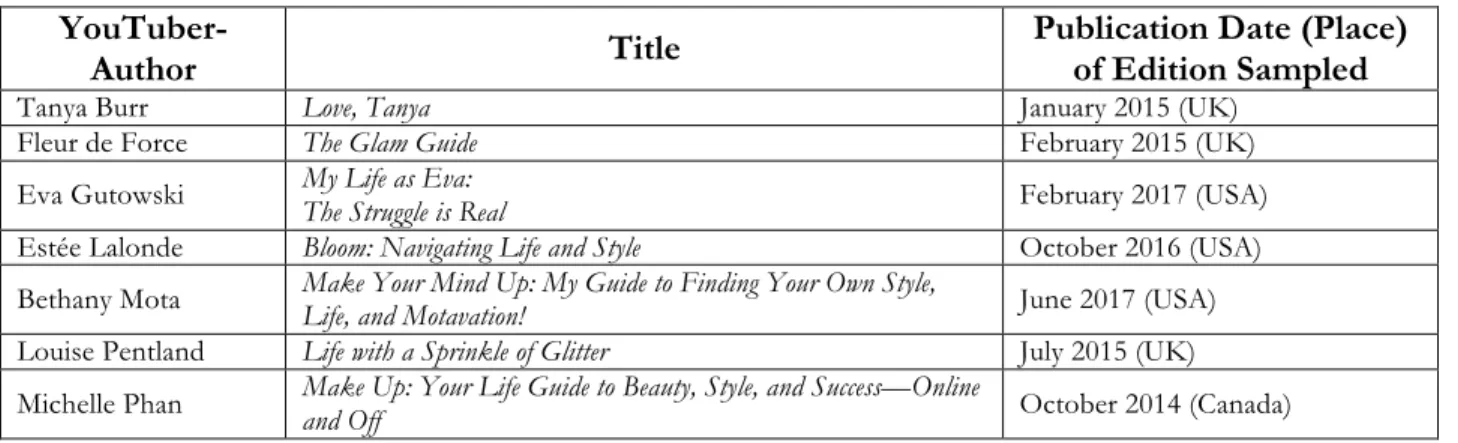
contexts. Documentary research (seven monographs, ten magazine issues, over thirty podcast
episodes, and upwards of one hundred YouTube videos were read, listened to, or watched), and
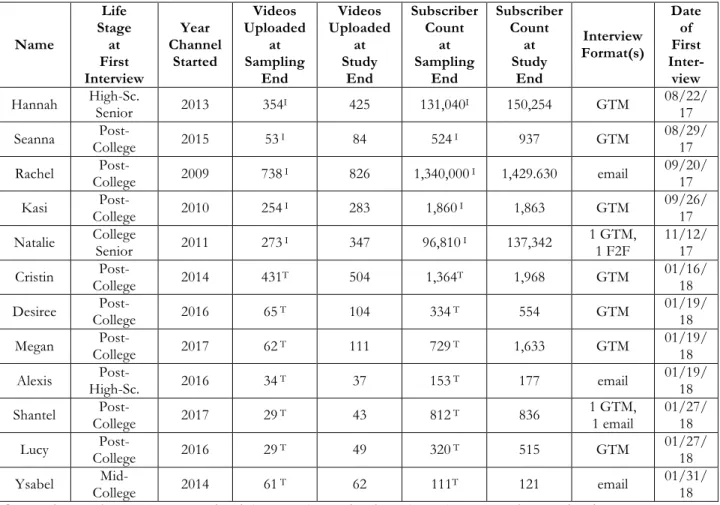
semi-structured interviews (twenty-four total, with a sample of twelve serious beauty and lifestyle
YouTubers) produced a data record that was analyzed using constant comparison. Findings of
this investigation and analysis fall into three main areas.
First, serious beauty and lifestyle YouTubers embark upon career trajectories consisting
serious beauty and lifestyle YouTubers operate and interact within an expansive social world of
primary and secondary actors that include YouTube itself, viewers, brands, managers, and more,
forming relationships that affect their creating. Third, serious beauty and lifestyle YouTubers
carry out ten-step episodes of creating, each step an information activity that utilizes different
information resources and tools. One overarching thematic thread weaves throughout these
findings—affect—and the original concept internal sensibility is introduced and exemplified.
These findings have significance for practice, theory, and research. Among other
contributions, they supply an understanding of public information institutions’ roles in
promoting serious-level creative projects, an empirically grounded update to the existing
everyday life information practices model that accounts for creating, and suggestions for refining
ACKNOWLEDGEMENTS
This dissertation would not exist without the many people who have sustained it and me
over the past five and a half years.
First of all, to my advisor Dr. Barbara Wildemuth, thank you for your willingness to
suspend scepticism and invest in this project, and for giving of your time and expertise so
generously in relation to it. You have modeled thoughtful and incisive scholarship for my entire
doctoral career, which I will continue to strive toward myself. More than this, you have modeled
a patience and kindness that I will forever appreciate. Your support and attention, even
post-retirement (!), made every difference.
To the other members of my dissertation committee, Drs. Gary Marchionini,
Mohammad Jarrahi, Reijo Savolainen, and Andrew Cox, thank you for your considered insights,
comments, questions, and feedback, which made this dissertation and my doctoral journey so
much stronger than it otherwise would have been. Thank you all as well for your devotion to
this project and compassion for my process, which was obvious despite any time differences and
geographical distances.
Dr. Jenna Hartel, you are the consistent presence behind my graduate career; thank you
for being an expert, a mentor, a cheerleader, an ever-willing co-conspirator, and for having such
a personal impact, not to mention professional impact, on my life. Whenever I needed
inspiration to continue, I could count on either an email or call from you or an article of yours to
remind me of why I should keep going. Dr. Amy Van Scoy, I am so honoured to share an alma
support and spirit behind all of my projects, and never forgot an important deadline of mine
(especially when I dropped so many deadlines of ours!), means more than you could ever know.
Thank you, a thousand times over. Countless other organizers, mentors, and attendees at ASIST,
CAIS, ALISE, and ISIC conferences have also encouraged this work and me, for which I am
deeply grateful. Noriko Hara and Eric Meyers especially contributed to my thinking; thank you
both. The Royster Society of Fellows and those involved with it were also sources of intellectual,
emotional, and financial support, and deserve so much gratitude.
Though many SILS doctoral students and alumni have influenced both this product and
my process at various points in time, I will never forget those who provided so much when it
truly mattered: Sami, Sarah Beth, Rachael, Angela, Anita, Sandeep, and my cohort, Heejun,
Shenmeng, Grace, and Debbie. And from beyond SILS: Elysia, Sarah, and Tim. Thank you all
for your support, encouragement, and friendship. Students I have taught at SILS have also
influenced this product and my life in undeniable ways: thank you for allowing me the privilege
of discussing and learning with you, because doing so was one of the highlights of my time here.
Erin, Vicki, Meghan, Ryan G., Ryan P., Jedd, and Allison are all among the unfailing
friends who never needed to know or to fully understand what I was doing (though they always
asked!) in order to say that I could and would accomplish it. Thank you all for being wonderful
people, regardless of whether I was. The same is true for my sister-in-law Jo-Ann and amazing
niece Carina and nephew RJ: thank you for continuing to show up, and for tolerantly letting me
show up only when I could. And to my brother Robert, thank you for showing me from day one
what hard work and good work are, and for supporting me at every turn. Licorice Black Bean
Thomson, thank you for bringing light into every day of this final year and a half.
To my parents, I don’t know enough ways to thank you. You are the most loving, loyal,
believing in me and for making it known that there is nothing that you would not do for me,
without question. You have given me much more than I can express, and there is no doubt that
this dissertation is here because you both were always here.
Last but definitely not least, thank you to the interviewees in this study. Your openness
to helping me, your excitement over doing so, and the company your videos have offered me as
I’ve navigated through the past year and many ups and downs in my life were so meaningful;
getting to speak with you and to know you through your online work has been another
TABLE OF CONTENTS
LIST OF TABLES ... xv
LIST OF FIGURES ... xvi
CHAPTER 1: INTRODUCTION ... 1
CHAPTER 2: SENSITIZING LITERATURE AND THEORETICAL FRAMEWORKS ... 6
2.1 Introduction ... 6
2.2 Web 2.0, YouTube, and Serious Beauty and Lifestyle YouTube ... 6
2.2.1 YouTube. ... 9
2.2.1.1 Users of YouTube. ... 10
2.2.1.2 Labour on YouTube. ... 11
2.2.2 Serious Beauty and Lifestyle YouTube. ... 14
2.2.2.1 Serious beauty and lifestyle YouTube content. ... 16
2.2.2.2 Serious beauty and lifestyle YouTube viewers. ... 19
2.2.2.3 Serious beauty and lifestyle YouTube creators. ... 20
2.3 Information Practices, Creating, and Sharing ... 23
2.3.1 Information creating. ... 24
2.3.2 Information sharing. ... 26
2.3.3 Models and research emphasizing information creating. ... 28
2.3.3.1 Kuhlthau’s “Information Search Process”. ... 29
2.3.3.3 Interface Ecology Lab’s “Information-Based Ideation”. ... 30
2.3.3.4 Information creating in workplaces. ... 31
2.3.3.5 Information creating in schools. ... 32
2.3.3.6 Everyday life information creating. ... 33
2.3.3.7 (Serious) Leisure information creating. ... 34
2.4 Theoretical Frameworks ... 36
2.4.1 Practice theory. ... 36
2.4.2 Everyday (life) information practices. ... 39
2.4.3 Serious Leisure Perspective. ... 42
2.4.3.1 Amateurs. ... 43
2.4.3.2 Devotees. ... 45
2.4.4 Four C Model of Creativity. ... 46
2.5 Conclusion ... 48
CHAPTER 3: METHODOLOGY AND METHODS ... 51
3.1 Introduction ... 51
3.2 Grounded Theory and Constructivist Grounded Theory ... 52
3.3 Research Design ... 54
3.3.1 Sample. ... 55
3.3.1.1 Initial sampling. ... 55
3.3.1.1.1 Initial sampling of documentary artefacts. ... 55
3.3.1.1.2 Initial sampling and recruiting of interviewees. ... 59
3.3.1.1.3 Initial sampling of audiovisual documentary artefacts created by interviewees. ... 60
3.3.1.2.1 Theoretical sampling and recruiting of additional interviewees. ... 62
3.3.1.2.2 Re-analysis of initial-sampling data. ... 65
3.3.2 Ethical protocols. ... 65
3.3.3 Data collection. ... 67
3.3.3.1 Documentary research. ... 67
3.3.3.2 Semi-structured interviews. ... 68
3.3.3.3 Convention attendance. ... 70
3.3.4 Data analysis. ... 71
3.3.4.1 Constant comparison. ... 71
3.3.4.1.1 Open coding. ... 72
3.3.4.1.2 Focused coding. ... 72
3.3.4.1.3 Theoretical coding. ... 73
3.3.4.2 Integrating categories. ... 73
3.3.4.3 Memoing. ... 74
3.4 The Constructed Grounded Theory ... 75
3.4.1 Assessment of quality. ... 76
3.4.2 Evaluation of trustworthiness. ... 77
3.4.2.1 Credibility. ... 78
3.4.2.2 Transferability. ... 80
3.4.2.3 Dependability. ... 80
3.4.2.4 Confirmability. ... 81
3.5 Conclusion ... 81
CHAPTER 4: PRELUDE TO THE FINDINGS ... 83
4.2 The Role of Affect in Serious Beauty and Lifestyle YouTube ... 83
4.3 Internal Sensibility ... 87
CHAPTER 5: THE CAREER TRAJECTORY IN SERIOUS BEAUTY AND LIFESTYLE YOUTUBE ... 90
5.1 Introduction ... 90
5.2 Interviewees’ Serious Leisure Career Trajectories ... 91
5.2.1 Hannah. ... 91
5.2.2 Natalie. ... 95
5.2.3 Cristin. ... 97
5.2.4 Desiree. ... 100
5.2.5 Kasi. ... 103
5.2.6 Shantel. ... 106
5.2.7 Alexis. ... 108
5.2.8 Megan. ... 110
5.2.9 Seanna. ... 113
5.2.10 Rachel. ... 116
5.2.11 Lucy. ... 119
5.2.12 Ysabel. ... 122
5.2.13 Summary of interviewees’ serious leisure career trajectories. ... 124
5.3 Serious Beauty and Lifestyle YouTube Career Trajectories ... 124
5.3.1 Taking notice. ... 125
5.3.2 Learning while doing. ... 127
5.3.5 Openly owning ‘doing’ YouTube. ... 132
5.3.6 Narrativizing. ... 134
5.3.7 Summary of serious beauty and lifestyle YouTube career trajectories. ... 137
5.4 Life Trajectories ... 139
5.5 Field Trajectory ... 141
5.6 Discussion ... 144
CHAPTER 6: THE SOCIAL WORLD OF SERIOUS BEAUTY AND LIFESTYLE YOUTUBE ... 150
6.1 Introduction ... 150
6.2 Serious Beauty and Lifestyle YouTube Actors and Relationships ... 151
6.2.1 YouTube. ... 152
6.2.2 Serious beauty and lifestyle YouTubers, and creator networks. ... 155
6.2.3 Serious beauty and lifestyle YouTube viewers, and follower sub-communities. ... 160
6.2.4 Brands. ... 166
6.2.5 Summary of primary actors and relationships. ... 170
6.2.6 Managers and Multi-Channel Networks. ... 172
6.2.7 Third-party bidding and support platforms. ... 176
6.2.8 Third-party affiliate linking, code-to-credit, and share-to-credit programs. ... 178
6.2.9 Infopreneurs and infopreneurial tools. ... 180
6.2.10 Third-party conventions. ... 182
6.2.11 Other social media and live-streaming platforms and sites. ... 184
6.2.12 Summary of secondary actors and relationships. ... 185
6.3.1 Realness. ... 191
6.3.2 Positivity. ... 193
6.3.3 Individuality. ... 195
6.3.4 Summary of serious beauty and lifestyle YouTube focal objects (or content). ... 197
CHAPTER 7: THE INFORMATION ACTIVITIES AND RESOURCES IN SERIOUS BEAUTY AND LIFESTYLE YOUTUBE ... 199
7.1 Introduction ... 199
7.2 Serious Beauty and Lifestyle YouTube Video Types ... 200
7.3 Episodic and Sporadic Serious Beauty and Lifestyle YouTube Information Creating Activities ... 202
7.3.1 Ideating. ... 203
7.3.1.1 Viewers’ requests and suggestions. ... 205
7.3.1.2 Other online content creators’ uploads and posts. ... 207
7.3.1.3 Beauty and lifestyle products and services. ... 209
7.3.1.4 Cultural trends. ... 211
7.3.1.5 Seasons and seasonal tentpoles. ... 212
7.3.1.6 Everyday experiences and sentiments. ... 213
7.3.1.7 Whims. ... 215
7.3.1.8 Summary of ideating. ... 216
7.3.2 Pre-Testing. ... 216
7.3.3 Outlining and storyboarding. ... 218
7.3.4 Making up. ... 222
7.3.5 Filming. ... 225
7.3.8 Packaging. ... 234
7.3.9 Uploading. ... 237
7.3.10 Cross-promoting. ... 238
7.3.11 Seeking technical help. ... 242
7.3.12 Summary of episodic and sporadic information creating activities. ... 244
7.4 Ongoing Serious Beauty and Lifestyle YouTube Information Activities ... 246
7.4.1 Monitoring ... 246
7.4.2 Analyzing ... 249
7.4.3 Being Present ... 250
7.4.4 Branding ... 251
7.4.5 (De-)Partitioning Public and Private ... 254
7.4.6 Summary of Ongoing Information Activities ... 255
7.5 Discussion ... 256
CHAPTER 8: CONCLUSION ... 260
8.1 Introduction ... 260
8.1.1 Limitations. ... 261
8.2 Synthesis of Findings ... 267
8.3 Implications for Practice ... 271
8.4 Implications for Theory ... 276
8.5 Implications for Future Research ... 279
APPENDIX A ... 282
APPENDIX B ... 284
APPENDIX D ... 293
APPENDIX E ... 297
APPENDIX F ... 299
APPENDIX G ... 300
APPENDIX H ... 301
APPENDIX I ... 303
APPENDIX J ... 311
APPENDIX K ... 312
APPENDIX L ... 313
APPENDIX M ... 314
APPENDIX N ... 316
APPENDIX O ... 318
LIST OF TABLES
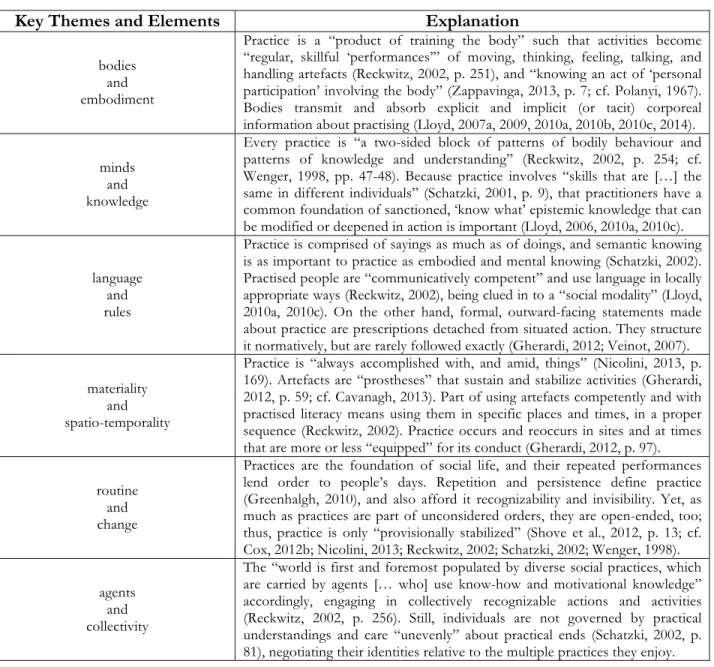
Table 1. Themes and Elements in Practice Theory ... 38
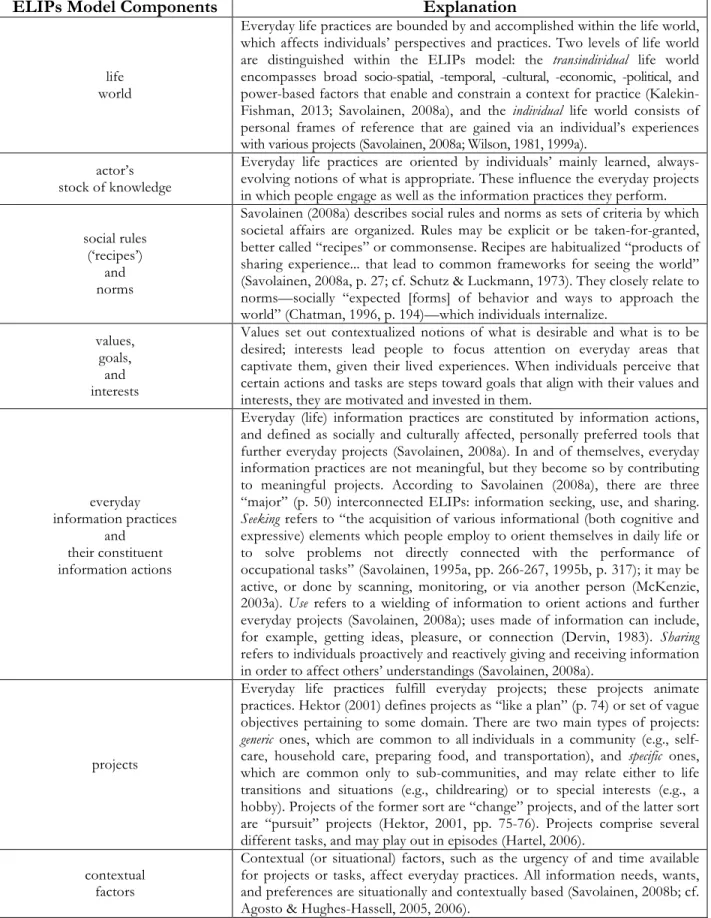
Table 2. Components of the Everyday Life Information Practices Model ... 41
Table 3. Monographs Sampled ... 56
Table 4. Demographic, Channel-Related, and Participation-Related
LIST OF FIGURES
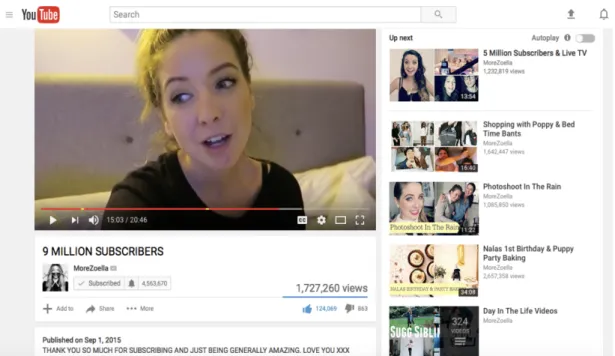
Figure 1. Zoe Sugg discussing her Zoella YouTube main-channel subscribership ... 2
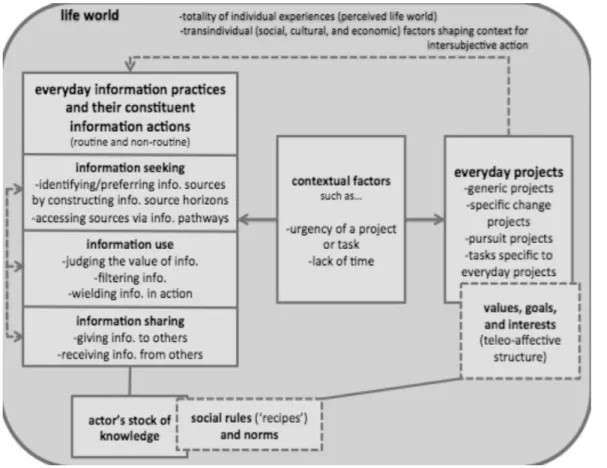
Figure 2. Everyday life information practices (ELIPs) model ... 40
Figure 3. Hannah’s Hannah Ashton YouTube channel banner ... 91
Figure 4. Natalie’s Natalie Barbu YouTube channel banner ... 95
Figure 5. Cristin’s Cristin Sierra YouTube channel banner ... 97
Figure 6. Desiree’s Desiree Nozomi YouTube channel banner ... 100
Figure 7. Kasi’s curlyhairlove YouTube channel banner ... 103
Figure 8. Shantel’s Shantel Brooklyn YouTube channel banner ... 106
Figure 9. Alexis’s Alexis Nichole YouTube channel banner ... 108
Figure 10. Megan’s Megan Acuna YouTube channel banner ... 110
Figure 11. Seanna’s Seanna Miriah YouTube channel banner ... 113
Figure 12. Rachel’s Rachhloves YouTube channel banner ... 116
Figure 13. Lucy’s The Residents YouTube channel banner ... 119
Figure 14. Ysabel’s NOTSTARGIRL YouTube channel banner ... 122
Figure 15. The serious beauty and lifestyle YouTube serious leisure trajectory ... 139
Figure 16. Relationships of primary actors in the serious beauty and lifestyle YouTube social world ... 172
Figure 17. Relationships of primary and secondary actors in the serious beauty and lifestyle YouTube social world ... 186
CHAPTER 1: INTRODUCTION
As the world becomes increasingly visually oriented (Kaminsky, 2010), people’s information
behaviours, practices, and source preferences shift in turn. In September 2015, Zoe Sugg, a then-25
year-old woman living in Brighton, England uploaded a video to the hosting website YouTube in
which she discusses her primary channel (or page) on the site, Zoella—one featuring “life, beauty, &
chats” (Zoella, 2017) content—surpassing nine million subscribers (or viewer-followers). For seven
minutes, she talks to her camera, addressing it as if speaking directly to these subscribers, as can be
seen in Figure 1, below, telling about how she began creating for the channel as a hobby and way to
share about everyday topics that she loved, filming and editing with unsophisticated technologies.
She explains that, after six years of this, and of having made it into an unexpected career, she
experiences the same feelings of pleasure and devoteeship that she did initially. In her words:
“This isn’t work to me. […] This is still my hobby that I started in 2009, […] I still get to make the videos that I enjoyed making in 2009. I don’t know why you love my videos so much. They’re not high quality, they don’t have big production teams behind them, they’re not the videos I envisage in my head.”
Before ending her talk, Zoe thanks her subscribers, “the nicest community,” and implies the role
into which they cast her, since often “someone might send me a tweet [… asking] about, y’know,
some tips for anxiety or [saying], ‘I’m having a tough time in school.’” To these viewers, Zoe is more
than an amusing source of interest-driven content; she is an informal information source and trusted
go-to for advice (the full transcript of this video segment, found in Appendix A, implies this even
Figure 1. Zoe Sugg discussing her Zoella YouTube main-channel subscribership in a video uploaded to the site September 1, 2015.
Zoe Sugg is an extraordinary example of success on YouTube, yet what she does on the
platform is not uncommon. Statistics around YouTube uptake are vague—for “YouTube in its own
communications is most inexplicit with numbers” (Bärtl, 2018, p. 17)—but nonetheless astounding.
YouTube is, as of January 2018, the second most-visited website in the world (Alexa, 2018),
estimated to have over one billion total users who stream over 3.25 billion hours of video per month
(Statista, 2015; YouTube Statistics, 2016). In 2015, there were between 80 million and 3 billion
videos on the site (Vonderau, 2016), and as early as 2011, approximately 47.3 million users had
uploaded at least one video to a channel (Ding et al., 2011). A majority of these 47.3 million
individuals might be considered casual YouTubers (or casual YouTube creators) who dabble in sharing
videos; however, a fair number do make consistent efforts to generate original content and rally
viewers into sub-communities like Zoe’s—in this dissertation, such individuals are referred to as
serious YouTubers, defined further below. In 2012 alone, unspecified “thousands” of YouTubers were
Researchers have some idea of how YouTube factors into the lives of information seekers,
being a pedagogical, scholarly, and entertainment tool (e.g., Cho, 2013; Kousha et al., 2012;
Sugimoto & Thelwall, 2013). Notwithstanding its prevalence, though, information creators’ firsthand
experiences with YouTube and similar new media platforms tend to be overlooked; in fact, within
the information and library science (ILS) field broadly, one uniquely positioned to consider people’s
information-related interactions, little is known about information creating, especially in contexts of
everyday life and leisure. This is despite the fact that an increasing number of commercially available
digital tools and technologies encourage and enable widespread participatory creativity—whether
like Zoe’s, or at more ordinary, ‘quotidian’ levels. While some existing ILS models do consider
information creating (Kerne et al., 2014; Koh, 2013; Kuhlthau, 1991), these tell little about
information creating that is “imaginative and expressive” (Koh, 2013, p. 1827), unconstrained by
imposed tasks. On the other hand, in a general model of everyday information practices (Savolainen,
2008), “production” is intentionally excluded as something carried out by professionals, although
much information creating occurs within households (Hektor, 2001), and spirals alongside
involvement in leisure (Cox & Blake, 2011; Hartel, 2014). Several empirical studies found in ILS
literature make mention of the information hobbyists create (e.g., Chang, 2009; Fulton, 2016, 2017;
Hartel, 2006; Johnson, 2016; Lee & Trace, 2009), but none interrogate howthis is done.
Furthermore, information creating in an era of seemingly ubiquitous digital connectivity is
not a standalone phenomenon: in Web 2.0 environments, information creating is intrinsically tied to
information sharing (Hartel et al., 2016). Individuals are incited to document and curate public or
semi-public online archives of themselves and their identities; in the case of YouTube, for example,
many individuals create videos with a concomitant understanding that they will share these publicly.
However, researchers have yet to fully conceptualize how the practices of creating and sharing link
cast into—roles as informal information providers or ‘citizen experts’ when they create and share content
online in video, blog, podcast, or another format, offering up “experiences, knowledge, resources,
[… and] support” (Oh & Syn, 2015, p. 2046) to followers, however many or few these may number.
This dissertation focuses primarily on the information creating done by serious YouTubers.
In this dissertation, a serious YouTuber is an individual who: 1) regularly uploads original videos to the
site; 2) relays information around a handful of focal topics in which he or she has some personal,
everyday, even leisure-like interest; and 3) addresses a public audience of viewers that he or she
directly rallies and attempts to cultivate as a sub-community.1 Specifically, this dissertation focuses
on the information creating of serious beauty and lifestyle YouTubers—ones who sit under the serious
YouTuber umbrella and are just like or very similar to Zoe, covering such topical terrain as skincare,
makeup, fashion, décor, food, fitness, relationships, school, careers, and daily living with their videos.
The beauty and lifestyle category attracts much attention from YouTube viewers; total views
of beauty videos alone were over 222,000,000,000 by 2017, and these continue to increase 65 percent
year-over-year (Pixability, 2017). This raises questions about the places serious beauty and lifestyle
YouTubers occupy as an increasingly influential demographic in people’s information horizons, and
about the authority that they have in the broader social world. Furthermore, the serious beauty and
lifestyle YouTubers who are of interest in this dissertation may upload to their channels as a
part-time job or as one part of a more extensive full-part-time job, and are considered to be a step beyond
hobbyists. Having built substantial online presences and followings, many are choosing to take on
jobs for which there were no pre-existing models a decade ago, when YouTube launched, thus
speaking to the evolution and prevalence of information creating in everyday life and leisure.
1 When the term (online) content creator is used in this dissertation, it refers to individuals who may contribute any or all of
Using a constructivist grounded theory methodology, this dissertation considers as its central
‘problems’ or questions to address:
1. In what YouTube-related practices and information practices do serious beauty and lifestyle
YouTubers engage over the course of their tenures on the platform?
2. How do serious beauty and lifestyle YouTubers interact and exchange information with one
another and with other actors as they navigate a complex field and expanding social world?
3. What information activities and resources are involved in serious beauty and lifestyle
YouTubers’ information creating practice?
Practice theory, everyday life information practices, serious leisure, and a model of creativity serve as
sensitizing lenses for this dissertation. In addition, this dissertation is sensitized by research that
relates to Web 2.0 and information practices, drawn from within and outside of the ILS canon.
In the following chapters of this dissertation, I will review relevant existing literature,
describe the research design for the study that I carried out, present its most interesting, illuminating
findings, and consider the implications of these findings. Specifically, in Chapter 2, literature written
about Web 2.0, YouTube, and serious beauty and lifestyle YouTube; information practices, including
creating and sharing; and practices, everyday life, leisure, and creative outputs is recounted, situating
the phenomena of interest within a broader context. In Chapter 3, how a grounded theory methodology
and methods of documentary research and semi-structured interview were used to construct an
inductive understanding of the phenomena of interest is detailed. Chapter 4 is a prelude, introducing
an overarching thematic thread that weaves through this study’s findings, as well as the original concept
of internal sensibility. Chapter 5, Chapter 6, and Chapter 7 present findings related to, respectively:
serious beauty and lifestyle YouTubers’ journeys; their social world and its information flows; and
their information creating practice. In Chapter 8, these findings are synthesized, and implications and
CHAPTER 2: SENSITIZING LITERATURE AND THEORETICAL FRAMEWORKS
2.1 Introduction
The previous chapter introduced the topic of this dissertation and the central questions that
guided the study that I carried out. In this chapter, literature that sensitized me to the phenomena of
interest—primarily, the information creating done by serious beauty and lifestyle YouTubers—is
reviewed. This review pulls from several disciplines, and is divided into three main sub-areas, as follows.
The chapter begins with an exploration of literature related to the serious beauty and lifestyle
YouTube context, inclusive of media and communication scholarship and of industry reports.
Following this, literature related to the practices of information creating and sharing, and mainly
drawn from the ILS field, is recounted. Next, the frameworks of practice theory, everyday life
information practices, serious leisure, and a model of creativity are introduced, their bases primarily
in sociological, anthropological, ILS, and creativity research writings. The chapter concludes with a
discussion about the place of existing literature in constructivist grounded theory research studies.
2.2 Web 2.0, YouTube, and Serious Beauty and Lifestyle YouTube
Web 2.0 (sometimes also called web democratization or the participatory web) is a term that
originated in the late twentieth century, when a series of paradigmatic and technological shifts
changed how individuals access and use the Internet (Strickland, 2007). It gestures to philosophies,
practices, and platforms that promote ‘ordinary citizens’ as creators, and not just consumers, of
online content (Beer & Burrows, 2007).2 Web 2.0 is said to foster a widespread participatory culture
because it invites individuals to create and circulate new ideas and “vernacular theories” (Jenkins,
2 Web 2.0 has no one, clearly accepted definition. It encompasses the host of sites and tools available for individual,
2006, p. 290, 294). It plays upon “participatory creativity,” part of the “range of human innovation”
(Sawyer, 2012, pp. 6-7) that deserves attention. The serious beauty and lifestyle YouTubers introduced in
Chapter 1 are among those who have capitalized on Web 2.0 affordances; moreover, they have done
so as comparatively “elite” creators (Li, Bernoff, Fiorentino, & Glass, 2007), an exclusive position that
means they are able to contribute original content high on the spectrums of complexity and quality.
Not every political, economic, and social context enables Web 2.0 participation, let alone
“elite” participation, which problematizes its democratic, open, and accessible ethos (Deodato, 2014;
Dunaway, 2011). Those who contribute most in this environment today tend to be single, young,
(sub)urban, affluent, educated individuals (Perrin, 2015), since doing so requires time and ability to
engage in unpaid, small-scale ‘work’ (Blank & Reisdorf, 2012). The earliest Web 2.0 adopters in the
United States were “disproportionately white, male, middle class, and college educated” (Jenkins,
2006, p. 23), and from higher-income households with educated parents, in-home computers, and
high-speed Internet connections (Lenhart & Madden, 2005). While differences in the use of Web 2.0
between genders and races are reportedly rather modest now,3 ones across classes and education levels
are still prominent (Perrin, 2015; cf. Schradie, 2011). Robinson (2009) details the “high-status
information habitus” of individuals with the means to “play seriously” and creatively online,
showing that they are more likely to explore the Internet, while those without this luxury tend
toward “tastes for the necessary” (pp. 491-492). Zillien and Hargittai (2009) refer to this as a
difference of Internet-in-practice, and found that, even accounting for differences in technological
access and skill level, individuals of low socioeconomic status are less likely to engage in
capital-enhancing activities online (for example, seeking political information), let alone creative ones.
3 As recently as 2011, YouTube still evidenced a gender gap, with about 73 percent of uploaders being males who
Structural conditions do not explain all of Web 2.0 participation; individual motivation also
plays a role. Intrinsic and extrinsic motivators, including opportunities to benefit economically;
develop skills; build a portfolio; experience personal enjoyment; increase enjoyment, awareness,
competence, and sense of identity; find value-alignment; and feed their love for a community
influence individuals’ contributions to crowdsourcing platforms, collaborative consumption platforms
(for goods- and services-sharing), podcasts, and blogs (Brabham, 2010; Hamari, Skoklint, &
Ukkonen, 2016; Huang, Shan, Lin, & Cheng, 2007; Kjellberg, 2010; Liao, Liu, & Pi, 2011; Markman,
2011; Nardi, Schiano, Gumbrecht, & Swartz, 2004). Recent research suggests advertising revenue is
ever more important to female “mommy” bloggers (Hunter, 2016), though it does not supplant the
importance—especially for females—of having personal, creative outlets around which to network
(Fullwood, Nicholls, & Makichi, 2015; cf. Chen, 2015). Self-efficacy, enjoyment, reputation, and
reciprocity were main motivators for 1,056 YouTube uploaders surveyed by Oh and Syn (2015), while
Chiang and Hsiao’s (2015) 265 survey respondents noted that altruism and self-efficacy motivated
their uploading to YouTube, but only in addition to interpersonal interactions there.
The potential for “participatory creativity” (Sawyer, 2012, p. 6) that Web 2.0 sites and tools
offer can be applauded, but many questions and criticisms can also be raised about the content that
results. Gulati (2012) decries that “democratized” and “perceived expertise” is often taken in place
of information or advice from those who have “spent years acquiring specialist skills or knowledge
in a particular field.” Keen (2007) claims that Web 2.0 content is a threat to traditional (presumably
credible) media, prioritizing speed and superficiality over accuracy and depth. Following a survey of
31 fashion bloggers, Detterbeck, LaMoreaux, and Sciangula (2014) concur that the fast pace of both
the blogging and fashion worlds can preclude in-depth research, but that online content creators do
not dispose of personal standards for their work as a result. Constructing credible, authoritative, and
Rather than argue conservatively against it, Beer and Burrows (2007) propose that Web 2.0’s
widespread uptake be seen as a curious sociological phenomenon, one that involves people building
public archives of otherwise private, mundane lives, in which more people, in turn, take interest.
2.2.1 YouTube.
Now a Google-owned online video-hosting website, YouTube was first launched on
February 14, 2005. YouTube in many ways epitomizes Web 2.0, describing itself as a video
“distribution platform for original content creators and advertisers large and small,” and a forum
through which to discover, watch, and share videos and connect with others (About YouTube,
2015). YouTube archives the videos uploaded by a specific individual on his or her channel—a
devoted page—and then broadly categorizes channels, enabling their search and discovery. Some of
the sundry genres under which YouTube channels are placed include Music, Comedy, Science and
Education, Lifestyle, and How-To and DIY. Online content creator-run channels (as opposed to
corporate, brand-run advertising ones) are operated and maintained by individuals or small groups
of individuals alone. Appendix B provides an overview of YouTube, explaining the options available
to those who create Google accounts and possibly upload their own video content to a channel.
As of June 2016, YouTube is the second visited website in the world and third
most-visited website in the United States (Alexa, 2016). As of June 2015, it is the second most-used search
engine in the world (Edward, 2015). In 2013, YouTube’s estimated revenue was 5.6 billion American
dollars (LaPorte, 2014), earned via advertisements that stream alongside monetized videos, as is
explained below. Web user and upload statistics are apt to be outdated soon after their release;
however, today, YouTube can be estimated to have over one billion total users; to receive over 900
billion unique visits per month; to reach more individuals aged 18-49 than any American cable
network; to stream over 3.25 billion hours of video every month; and to have over 400 hours of
2.2.1.1 Users of YouTube.
Maia, Almeida, and Almeida (2008) studied the activity patterns of people on YouTube, and
distinguished five user types: small community members, who use their accounts to interact with known
relations; content consumers, who do not upload videos, but subscribe to channels and view videos,
who can be referred to as “viewers”; content producers, who upload videos and receive channel
subscribers, and who view some videos; producers and consumers, who upload videos and receive
channel subscribers at the same rate as they subscribe to channels and view videos; and others, whose
accounts have no history. Content producers and producers and consumers both qualify within the “elite”
group of Web 2.0 creators (Li et al., 2007), and may be collectively referred to as “YouTubers.”
By 2011, approximately 47.3 million users had uploaded at least one video to a YouTube
channel themselves (Ding et al., 2011). However, the top 20 percent of YouTubers (by quantity of
videos uploaded to their channels) were responsible for 72.5 percent of all video content on the site
in 2011, and their video content received 97 percent of all views (Ding et al., 2011). These statistics
suggest that, in addition to serious YouTubers—who are a consistent, and thus rather prolific, subcategory
of content creators—another subcategory of YouTubers can be considered casual YouTubers, dabbling
content creators exemplified in works by Burgess (2006), Gauntlett (2011), and Strangelove (2010).
YouTube promotes itself as a place for YouTubers and those who watch their content—
viewers—to connect with one another, despite, as Madden and colleagues (2013) point out, the site’s
relative de-emphasis on individual user profiles. YouTubers and viewers interact mainly via uploads,
views, ratings (likes and dislikes), shares, comments, replies, and direct messages (several of these
terms are defined, in the context of YouTube, in the Glossary in Appendix C). However, many of
these interactions are less direct than is typical for an online community, and can reflect but “a passing
interest a user has in the content,” with “little continuous effect” (Rotman, Golbeck, & Preece, 2009,
2.2.1.2 Labour on YouTube.
With time, Web 2.0 has evolved to generate new forms of work and new career choices—
ones that have only existed and that can only exist in the twenty-first century; for example, Bruns
(2008) says Web 2.0 enables “mass amateurization” (p. 171) and side-incomes. Web 2.0’s ethos of
participatory, creative potential, and, recently, of entrepreneurial freedom, promotes these as positive
developments. However, questions about the labour forms and the legal standards perpetuated in
the Web 2.0 landscape arise. Büscher (2014) and Florida (2012) argue against romanticizing similar
types of “precariat” creative work—self-led, piece-meal, and sponsored—for this renders invisible
its neoliberal reality and the increased risks and stresses that often accompany it.
YouTube’s success as a vehicle for seeking and sharing information online has made it a
viable side job or career path for countless serious YouTubers. As noted, serious YouTubers invest
immense time and effort into their channels, hence them becoming (or already being) full-time work
for many; below, they are positioned as “amateurs” or “devotees” in a leisure typology (Stebbins,
2015). Honan (2012) writes, “YouTube’s breakout stars, the newer ones at least, are less likely to be
one-hit wonders.” More than this, serious YouTubers deliberately reach beyond an offline-identified
public (with whom they have real-life bonds) in order to communicate and connect with members
of the public they do not know, with shared interests (Courtois, Mechant, Ostyn, & De Marez, 2013).4
All YouTubers, serious and casual alike, may receive revenue from their work on the site,
depending on whether they choose, when they are eligible, to monetize their channels by enabling
advertisements (brief commercials of 15 to 120 seconds) to play before, during, or after their videos;
require paid subscriptions to their channels; or sell merchandise through YouTube. YouTubers who
do receive revenue on the site are participants in the YouTube Partner Program, and are paid
4 That serious YouTube is a growing amateur or professional venture for many is shown by the return of over 11,300
through a linked AdSense account (About the YouTube Partner Program, 2016). Its Partner Program
made YouTube the first Web 2.0 platform with paid creators (LaPorte, 2014). To become and
remain a YouTube Partner, a YouTuber must have 1,000 channel subscribers and 4,000 hours of
annual watch time (Creator Blog, 2018)—this is a recent change in requirements that is discussed
further in later chapters. In addition, all of his or her videos must be “advertiser- friendly,” owned
by that YouTuber him- or herself, and comply with the site’s Terms of Service and Community
Guidelines (Understanding Monetization, 2016). Advertising seems to be the most common way
that YouTubers obtain revenue from the site. In most cases, serious YouTubers are YouTube
Partners, given that their continual investments of resources (including time, energy and effort, and
money) into their channels would not otherwise be possible. However, Petersen (2008) states that
YouTubers who have AdSense accounts draw menial earnings from these; per reports, for example,
YouTube takes somewhere around half—45 percent in 2013—of the earnings from each
advertisement that it runs before, during, or after an uploaded video (LaPorte, 2014).
Besides revenues being but questionably commensurate with efforts, YouTubers’ content is
arguably tied to a site with a technological infrastructure that “oscillates between exploitation and
participation” (Petersen, 2008, Social networking sites). For example, users do “the curatorial work
that is typically done in archives: gathering, editing, uploading, classification, as well as retrieval and
exhibition” (Gehl, 2009, p. 48), yet all hosted and stored videos and all display and ranking metadata
that surrounds these is able to be easily mined for potential exchange-value and re-presented by a
company, including Google itself, or another enterprising individual. In 2009, Gehl reported that
1.64 billion dollars worth of unpaid labour was archived on YouTube channels (p. 52). YouTube’s
Partner Program can also be cast in an exploitative light, as a system designed to push YouTubers
toward increasing investments: not only is monetization an option solely for YouTubers who exceed
the top 1-5 percent of content in certain categories is eligible for the Google Preferred Program
(Think with Google, 2016), which guarantees these YouTubers premium advertising and sponsorship
opportunities (and, arguably, in the end, benefits advertisers most) (LaPorte, 2014). Some YouTubers
may choose to sign contracts with multi-channel networks (MCNs) and/or management companies,
intermediaries who claim they are able to fast-track connections with related brands (Fast Company,
n.d.); both are discussed further in Chapter 6. However, for YouTubers who upload content under
any such contract, intellectual property rights may eventually become an issue (e.g., Eördögh, 2014).
Self-branding, a “distinct kind of labour”—notably, unpaid—typical of modern societies
(Hearn, 2008, p. 201) is also required of serious YouTubers. An “outer-directed process of highly
stylized self-construction” using socially resonant narratives in order to consciously project specific
images (Hearn, 2008, p. 201), self-branding is reminiscent of Goffman’s (1959/1990) concepts of
self-presentation and impression management, whereby individuals labour, consciously or not, over
their image in everyday life interactions, any time they have “continuous presence before a particular
set of observers and [make] some influence upon [them]” (p. 32). Self-branding is engaged in by
serious YouTubers who are at once attempting to control the proflections—the online projections and
reflections (Marchionini, 2008)—that they engender with viewers, and to position themselves within
a “taste neighborhood,” proximate to other, perhaps more popular, YouTubers (Susarla, Oh, & Tan,
2012, p. 26). Serious beauty and lifestyle YouTubers’ (self-)branding is discussed further in Chapter 7.
Directly relevant to this dissertation, Duffy (2017) wrote a monograph about the
“aspirational labour” that beauty and lifestyle online content creators perform, which she defined as
“a mode of (mostly) uncompensated, independent work propelled by the much-venerated ideal of
getting paid to do what you love,” predicated on the future prospect “of a career where labor and leisure
that service capitalism in the present, as individuals (usually females) “work, for little or no pay, to
generate consumption-oriented visibility through social media” (Duffy, 2017, p. 9). She continues:
“in addition to investing in various commodities, the work of aspirational labour is often physically embodied in the blogger, vlogger, or Instagrammer as she models her newly purchased wares. In a reprise of the female body’s visibility in twentieth-century consumer culture, the digitally networked, pixelated version not only shops but also ‘tags,’ ‘likes,’ and—most importantly—‘recommends’ branded goods” (Duffy, 2017, p. 10).
2.2.2 Serious Beauty and Lifestyle YouTube.
According to YouTube’s site-wide analytics, the users who spend the most time on the
platform view “niche content” and carefully cull their subscriptions (Honan, 2012), indicating their
willingness to invest time and energy there. “Beauty and lifestyle” is one particular niche category on
YouTube that, as mentioned, houses videos pertaining to topics such as skincare, makeup, hair,
nails, and perfume, as well as more holistic aspects of “styles or ways of living”—for example,
fashion, food, décor, dating, and daily life—that are ostensibly “desirable, glamorous, or attractive”
(“lifestyle,” n., 2015; cf. Bell & Hollows, 2006; Jagose, 2003; Stebbins, 1997). Beauty content on
YouTube is sometimes discussed independently (or, as if independent) of lifestyle content; however,
many of the YouTubers operating in this realm—including many “top creators” (Pixability, 2014,
2015) and interviewees from this study, as discussed further in Chapter 6—describe their channels
using the fused terminology of “beauty and lifestyle.” For this reason, this dissertation follows suit.
This dissertation also uses the concept of a social world as its preferred means to analytically
encapsulate and discuss “beauty and lifestyle” and YouTube (hereafter, serious beauty and lifestyle
YouTube). Generally, a social worldis a unit of social organization focused on some object, be it a
product, activity or practice, experience, lifestyle, or technology, which has “coalesced into [a] perceived
sphere of interest and involvement” (Unruh, 1979, p. 115; cf. Strauss, 1978; Unruh, 1980). Typically,
“universes of discourse” via their participation there, however minimal this may be (Shibutani, 1955,
pp. 565-567). Social worlds lack official authority, are “diffuse and amorphous, [… and] not
necessarily defined by formal boundaries, membership lists, or spatial territory” (Unruh, 1979, p. 115).
They may be newly emergent or well established, their existence characterizing any substantive area
(Strauss, 1978). Everyday life is rife with social worlds (Unruh, 1980), and “the consensus and working
assumption in leisure science is that certain leisure realms […] are social worlds” (Hartel, 2007, p.
36). Serious beauty and lifestyle YouTube may thus be considered a social world in and of itself.5
More specifically, serious beauty and lifestyle YouTube fits the description of a
“commodity-intensive” leisure social world, one that encourages, and in many cases requires, the constant consumption
of products and goods by its participants. For example, one recent survey found that, “the more
involved members become with the [online] beauty community, the more likely they are to increase
their spend[ing] on products” (MacDonald, Medina, & González Romo, 2016, p. 208). Another found
that the content “genre” of beauty, fashion, and lifestyle on YouTube is “especially associated” with
product integration, since 90 percent of surveyed YouTubers from this category collaborate with
beauty and lifestyle brands on videos (Gerhards, 2017, p. 11), perhaps by creating and sharing
sponsored or review content (other forms of collaboration are discussed further in Chapter 6).
Unsurprisingly, females dominate the serious beauty and lifestyle YouTube social world.
Studies of other gendered social worlds (for example, knitting and quilting, or male-dominated
extreme sports) unevenly incorporate this fact into their analyses (e.g., Bartram, 2001; Gainor, 2009;
Orton-Johnson, 2014). Duffy (2017) argues that the beauty and lifestyle Web 2.0 sphere at large,
5 Serious beauty and lifestyle YouTube is conceptualized as a social world, rather than community of practice (or CoP),
for several reasons. Although both are similar social groupings, CoPs tend to be explicitly theorized as a foundation for learning, while social worlds theorization prioritizes ethos. Also, a majority of CoP enterprises are professional, and perhaps must always be so (Cox, 2005; Dunlap, 2013) in order to ensure that members share common epistemic backgrounds and/or orientations. Leisure participants, especially ones like serious YouTubers, whose pursuits stress individual advancement, are likely to lack this basis (Hemmig, 2008). Further, especially pertinent for this dissertation is the fact that the personal nature of serious beauty and lifestyle YouTube content specifically renders epistemic
inclusive of the serious beauty and lifestyle YouTube social world, however, is sustained because it
“reaffirm[s] the already-tight bond between consumption and femininity” (p. xi). Thus, it is fair to
say that females are the status quo in the serious beauty and lifestyle YouTube social world. This is
true across all four of the social world positions that Unruh (1979, pp. 115-116) identified: strangers,
who are not radically committed to, but who still facilitate, a social world (for example, casual
viewers of serious beauty and lifestyle YouTube content); tourists, who seek diversion in a social world
(for example, engaged viewers); regulars, who operate at the social world’s nucleus, their participation
routine (for example, highly engaged viewers and some serious YouTubers); and insiders, who control
others’ experiences of the social world, their lives and identities “bound and tied up in [its] activities”
(for example, devotee-level serious YouTubers) (Unruh, 1979, p. 121).
2.2.2.1 Serious beauty and lifestyle YouTube content.
Serious beauty and lifestyle YouTube content has a long history behind it. Eldridge (2015)
traces the evolution of cosmetics from ancient times, finding a business turning-point around the
1920s when women gained relative social and financial freedom, and film and television picked up.
A forerunner to YouTube, television enabled cosmetics brands to demonstrate products directly,
“build stories, and make claims” (Eldridge, 2015, p. 111). The history of lifestyle in popular culture
can also be traced back to pre-aristocracy, when these were thought to be inescapable class-based
ascriptions. The meaning of the term shifted as individuals became able to choose how their leisure
time, disposable incomes, and efforts to ‘stand out’ were spent centuries later (Bell & Hollows,
2006). Thus, “lifestyle-making” became a project for many, a way to display ‘authentic’ style with
assemblages of goods, experiences, appearances, and bodily dispositions (Featherstone, 1991;
Martin, 2003). During the latter half of the twentieth century, commercial sectors of lifestyle- and
outward images (for a fee) appeared (Bell & Hollows, 2006; Jagose, 2003; Lewis, 2010). Some gained
fame for doing so, including Martha Stewart, Steven Sabados, and Nigella Lawson.
Serious beauty and lifestyle YouTube content did not just represent more of the same,
however, at least initially. YouTubers in this sphere may have followed the examples of eminent
taste-maker experts, but began making—and may still make—videos as ‘ordinary citizens’ with
hobby interests, with no expectations that amateur or devotee work would follow from doing so.
Their initial creating and sharing of videos was subversive, a way to hear from everyday individuals,
rather than advertisers or spokespeople. Now a professionalizing arena, serious beauty and lifestyle
YouTube’s subversiveness today is questionable. Jeffries (2011), for example, concludes from a
content analysis that serious beauty and lifestyle YouTubers “fail to deliver substantial ideas, show
little awareness of global issues and corporate behavior, and glibly extricate themselves from tricky
questions about endorsement, [… in] hours of virtually unreflective talk” (p. 70), while their viewers
do “no productive questioning, no broaching of important issues” (p. 62). Marwick (2011) also
describes how fashion bloggers, a closely related and even overlapping group, are now “courted” by
brands who hope to win their favour with free event tickets, free products, and extra gifts (p. 1).
Pixability, a video advertising and insights firm (Pixability, 2018), presents some of the most
comprehensive accounts of the beauty (and sometimes lifestyle) content category on YouTube.
According to the company’s expansive 2015 Beauty on YouTube report, inclusive of data up to April 2015,
there are over 1.8 million beauty videos on YouTube, and 902,553 alone are about makeup. This
category is flourishing, too; between 2010 and 2013, the average number of monthly views of beauty
videos grew by 233 percent, from 300 million to 700 million (Pixability, 2014, p. 3). By April 2015,
these videos had attracted a total 45.3 billion views (Pixability, 2015, p. 7). YouTubers in this realm
are thus both highly visible and highly prolific, and are adding to the existing 1.8 million beauty
integrate “cross-over content”—such as to do with lifestyle—on their channels see it garner an
average of 530 percent more views, 670 percent more shares, and 700 percent more likes than
beauty-only videos (Pixability, 2015, p. 45). It is “opportunistic,” then, for serious YouTubers in this
category to expand their foci into adjacent areas such as lifestyle (Pixability, 2015, p. 45).
Pixability offers definitions for 18 specific sub-types of serious beauty and lifestyle YouTube
video in its 2015 report; these are included and expanded upon in the Appendix C Glossary, and offer
in-depth details and specifics about the content at the centre of this social world—for example,
Tutorials that offer step-by-step instructions on achieving a certain makeup look, or Vlogs that
involve confessional-style speaking and/or share clips from a day, week, or event. García-Rapp
(2016) argues that serious beauty and lifestyle YouTube content is either oriented commercially or to
community, depending on whether a video is about marketing products and expertise and generating
attention (like Tutorials would seem to be), or disclosing, seeking connection, and sustaining attention
(like Vlogs would seem to be). Chapters 6 and 7 in this dissertation expand upon topics, themes, and
types of serious beauty and lifestyle YouTube content from YouTubers’ perspectives.
Traditionally, the ILS field has cast judgment on what information and what entertainment is
(Case, 2012). Entertainment is usually defined as any object or occasion that prioritizes the pleasing
and diverting above the utilization or improvement of skills, knowledge, or experience; as it is apt to
be moderate in complexity, consumer-oriented, and related to popular culture (Stebbins, 2007), serious
beauty and lifestyle YouTube content seems a prime example of it. However, ideal types of either
rarely exist; Hektor (2001) calls entertainment a “special case of information” almost always linked
to positive emotions (p. 268). Rather than attempt to distinguish the two, this dissertation works
from the premise that exploring an area such as serious beauty and lifestyle YouTube can lead to a timely
2.2.2.2 Serious beauty and lifestyle YouTube viewers.
Serious beauty and lifestyle YouTube content reaches a viewership that is 89 percent female
and mostly aged between 13 and 34 (Pixability, 2014, p. 8, p. 29). It therefore makes sense that the
YouTubers who gain the most traction in this area are “native speakers of the language of teen girls”
(Jeffries, 2011, p. 64) and able to present their videos “in a comfortable and casual way” that is both
relatable and accessible (Sykes & Zimmerman, 2014, p. 2013; cf. Jeffries, 2011). That this content is
shared on a Web 2.0 platform and can be watched on any connected device also contributes to its
accessibility, since viewing and engaging with these videos can integrate seamlessly into the everyday
life rhythms of those who have the means and the abilities to participate in this landscape.
Viewers’ interactions with serious beauty and lifestyle YouTubers and their content have yet
to be studied in depth, though they do voice a preference for and engage the most with “long-form”
videos, such as detailed, step-by-step Tutorials, according to Pixability (2015, p. 33). It is also
conceivable, given their main demographic, that serious beauty and lifestyle YouTube viewers’ more
active, effortful interactions with this content (via comments) would differ from the brief,
less-than-100-character comments that Thelwall, Sud, and Vis (2012) found young males tend to leave on
general YouTube videos. They may, however, still fit within Madden, Ruthven, and McMenemy’s
(2013) general YouTube-comment classification system, which includes information, advice, impression,
opinion, response, expression, conversation, description, site-related, and non-response, or some
may expend the effort to create and share their responses as a video (Rasmussen Pennington, 2016).
Serious beauty and lifestyle YouTube viewers’ interactions and comments are discussed in Chapter 6.
Though serious beauty and lifestyle YouTubers work to set a generally upbeat tone with
their videos (Jeffries, 2011), most—especially eminent ones—encounter viewers who fit the
definition of “haters” (Kaminsky, 2010) or “trolls” who leave provocative and offensive comments
(sub)-sole purpose of giving viewers online space to vent about serious beauty and lifestyle YouTubers;
the sites gurugossiper.com, gossipbakery.com, and some lipstickalley.com forums are examples. Negative
interactions with serious beauty and lifestyle YouTube viewers are also discussed in Chapter 6.
2.2.2.3 Serious beauty and lifestyle YouTube creators.
YouTubers—not brands—are the most prolific creators in YouTube’s beauty and lifestyle
category, responsible for over 180,000, or 95.4 percent, of its channels (Pixability, 2015, p. 12).6
As of the start of 2014, these YouTubers had already uploaded an average of ten times more videos
than brand-operated channels had, and were adding to this about seven times faster, usually
operating on consistent, twice-weekly schedules (Pixability, 2014, p. 3, p. 13). YouTubers average
about 115 times the number of subscribers that brand-operated YouTube channels have (Pixability,
2014, p. 19); the most popular, eminent ones are not only ‘serious,’ but also, often, first-generation
early adopters, individuals who began uploading videos to YouTube during its first two to four years
of existence. Many of these serious beauty and lifestyle YouTubers have since started their own
brands or collaborated with existing beauty and lifestyle brands, released books, or started spin-off
projects; Zoe Sugg’s Zoella bath product line and home goods line, Tanya Burr’s Tanya Burr Cosmetics
line, Michelle Phan’s Make Up: Your Life Guide…book, and Tati Westbrook’s hosting on Amazon’s
StyleCode Live are some examples. Eminent serious beauty and lifestyle YouTubers make frequent
appearances at celebrity galas, appear on magazine covers, and sell out live shows and signings. Leon
(2015), a journalist, joked that meeting one “is harder than connecting with a world dignitary.”
Prototypical serious beauty and lifestyle YouTubers are white, under the age of 25, and
middle to upper-middle class with expendable incomes, existing networks of capital, and material
access (Duffy, 2017; Jeffries, 2011; Mau, 2014). Excepting the fact that most are female, they thus
conform to the general profile of Web 2.0 users. Further, the activities and information activities
entailed in being a YouTuber—filming videos, editing footage, and navigating audiences, for example—
are, Li and colleagues (2007) noted, “elite,” and demand more extensive literacies and skillsets than
are required for “mere consumptive” Internet uses (Hoffman, Lutz, & Meckel, 2015, p. 697).
Keeping up with the demands of ‘doing’ YouTube ‘seriously’ in any category requires a “grounded
knowledge of and [ability for] effective participation within” the site as a business sphere, and a
certain “savvy” (Burgess & Green, 2009, pp. 56-57) around their topic(s) and their sub-communities.
The reality of the site’s unprofessionalized beginnings meant that first-generation, early
adopter YouTubers could not necessarily have foreseen the success of their uploading, and certainly
not foreseen a serious YouTuber or online content creator devotee-level career path; narratives of
“accidental entrepreneurship” (Neff, 2012) permeate the stories of most serious beauty and lifestyle
YouTubers today as well, as discussed in Chapter 5. While some may have since taken up side projects
or ongoing ventures, they maintain their images as ordinary “‘beauty junkies,’ who seem genuinely
interested in products for products’ sake, […] often with an abashed caveat that they are not trained
professionals” (Bolin, 2014). Nonetheless, somewhat paradoxically, this non-calculated, non-expert
authenticity has become serious beauty and lifestyle YouTubers’ chief source of authority.
As most are absent the occupations, educations, and reputations that lead to attributions of
cognitive authority in more traditional spheres, serious beauty and lifestyle YouTubers play upon
contemporary fashions and insider compatibility, and become charismatic authorities in that way.
Wilson (1983) explains that charismatic authorities have trusted personalities. Lewis (2010, 2014)
prefers the term cultural authority in her work on “lifestyle-making” experts, noting that cultural
authorities use “‘I’m one of you’ modes of address” (p. 585). Either way, as “native speakers of the
language of teen girls” (Jeffries, 2011, p. 64), with “relatable, down-to-earth […] personalities and
intimate one-to-one styles” (Pixability, 2014, p. 16) on display, serious beauty and lifestyle YouTubers
and credibility. A recent survey by Variety magazine (Ault, 2014) found YouTubers across all categories
are the most influential celebrities for 13 to 18 year olds, while Pixability (2014, p. 10) surmised that
it is beauty YouTubers’ authenticity that has led their advice to be trusted above that of retail clerks.
MacDonald, Medina, and González Romo’s (2016) findings agree, stating that viewers perceive
beauty and lifestyle online content creators to be more neutral and reliable than sales associates.
Nonetheless, serious beauty and lifestyle YouTubers must somehow present themselves as
‘knowing what they are talking about’ (Wilson, 1983) in order to be listened to at all. Bourdieu (1984)
argues that to be “taste-makers,” individuals must be credible first in cultural capital, by qualifying
certain practices, and second in embodied capital, by maintaining certain comportments (cf.
Matthews & Smith Maguire, 2014; Smith Maguire, 2014). Several scholars mention the self-styled
sensibility fashion bloggers must portray in their posts (e.g., Detterbeck et al., 2014; Marwick, 2011)
and the innate “selection know-how” beauty and lifestyle YouTubers must showcase (e.g., Jeffries,
2011, p. 64). Tolson (2010) explains that serious beauty and lifestyle YouTubers emulate the
speaking styles of traditional experts but retain markers of ordinariness. For example, eminent serious
beauty and lifestyle YouTubers still keep amateur production circumstances (Sykes & Zimmerman,
2014; Tolson, 2010); these are part of their “expressive equipment” (Goffman, 1959/1990, p. 32),
and of a conscious and/or unconscious “information game” (p. 20) that consequently makes them
seem relatable to viewers and appealing to brands. Because self-presentation and self-branding of
this sort requires resources—just as being a user of Web 2.0 and of YouTube requires time, money,
technical skill, and site-specific know-how—this raises the question of which serious beauty and lifestyle
YouTubers can and do get noticed. Successful self-presentation and -branding beget notoriety,
which is oftentimes, not unproblematically, taken as a proxy for personal ability (Hearn, 2008).
Matthews and Smith-Maguire (2014) note of charismatic and cultural authorities (also called
personal “narratives, identities, and emotions” is necessary, because what “echoes across interviews
[is] that cultural intermediaries often love (some of) what they do” (p. 11).
2.3 Information Practices, Creating, and Sharing
This dissertation falls under the umbrella of user-centred information practice research, a
tradition that conceives of people as situation-bound individuals who are continually constructing
personal meaning and who come to understand their lives based on the information they
encounter—in whatever form it takes—as they engage in day-to-day action (Dervin & Nilan, 1986).
While information behaviour is “the currently preferred term used to describe the many ways in
which human beings interact with information” (Bates, 2010, p. 2381; cf. Wilson, 2000), this phrase
often relies upon a cognitive viewpoint to showcase how people find, receive, and enact information
in response to perceived mental needs or questions (Savolainen, 2007). Thus, several ILS theorists
view the term as inescapably fraught with implications of behaviourism (The behaviour/practice debate,
2009; Hjørland, 2011; Savolainen, 2007). Information practice has thus emerged as a “critical alternative”
(Savolainen, 2007, p. 109) that distances itself from the idea that individuals are rationally driven or
cognitively ‘needy’ when they engage with information (Cox, 2012a; Olsson, 2005; Savolainen, 2007,
2008a; Talja, 1997). Instead, it frames them as knowing, skilled agents who interact with information
in both routine and reflexive ways (Cox, 2012a). Further, the term foregrounds the notion that
information activities are inextricable from, but not willed by, the sociocultural context in which they
occur (Fulton & Henefer, 2010). Basically, then, an information practice is a set of small-scale,
socially and culturally established, but personally preferred, activities that take place around, for