Assessment of Centralized
Kitchens for Multigenerational
Populations in North Carolina
A Case Study Approach
UNC-Chapel Hill | Department
of City and Regional Planning
Hilary Pollan
Prof. Nichola Lowe, Advisor
April 2019
Table of Contents
Project Introduction...2
Centralized Kitchen Framework...5
Methodology...14
Case Studies...17
Case Study #1: WAGES NC (Wayne Action Group for Economic Solvency, Inc.) in Wayne County, NC...17
Case Study #2: Food Runners Collaborative (Raleigh, North Carolina)...29
Case Study #3: Child Care Services Association (Durham, North Carolina)...40
Discussion and Key Takeaways...50
Recommendations for Future Research...59
Project Introduction
My Master’s Project topic is driven by a proposal from a community partner, Food
Insight Group (FIG), to explore the role of centralized kitchens in addressing access to nutritious
food for vulnerable populations in North Carolina. FIG is committed to building just, equitable
and resilient food systems, and they see the potential for centralized kitchens in North Carolina
to meet the nutritional needs of multigenerational populations that participate in
federally-subsidized meal programs. Additionally, they recognize through meeting this need they could
also support mid- and small-scale local farms, with centralized kitchens playing an integrating
role in developing local food supply chains.
Addressing issues of food access among multigenerational populations, specifically
among older adults and younger children, has become increasingly important to North Carolina’s
economy and social fabric. In 2017, individuals age 60 years and older comprised 15.9% of the
state’s population, with an increase projected as baby boomers continue to age (U.S. Census
Bureau, 2017). Older adults are also at greater risk of experiencing food insecurity than the
general population. Thus, federally-subsidized older adult meal programs – such as the
congregate meal and home-delivered meal programs– are critical to keeping this population
active and health. Similarly, it important to prioritize access to nutritious food to early childhood
education centers in North Carolina to ensure a healthy future for the state. Early childhood is a
critical period for developing life-long healthy eating habits, and on average children receive
more than 50% of their daily caloric intake in childcare. In a state where 32.1 percent of adults
aged 18 years and older are obese, and recognizing that children who are overweight in
kindergarten are four times more likely to be obese as adults, communities should prioritize
Disease Control and Prevention 2017). Centralized kitchens present a cost effective way for
communities to improve access and food quality for federally-subsidized older adult meals and
early childhood meals (Yates 2018). Additionally, centralized kitchens offer opportunities to
increase local sourcing due to their ability to procure large quantities of local foods at lower
prices, and their greater capacity to process these foods. Fostering inter-organizational
collaboration between older adult and early child education meal programs has the potential to
further improve cost efficiencies to programs with limited funding, and to prevent duplicating
capacity within a community.
In FIG’s considerations of centralized kitchens as a solution to meeting multigenerational
population’s nutritional needs in North Carolina, they specifically want to build a deeper
understanding of:
1. How can public-serving institutions in the same community creatively cooperate to feed
individuals from vulnerable populations?
2. How can resources– such as infrastructure, staff, time, funding, etc. – can be
coordinated and/or shared to improve food access and nutritional quality for
multigenerational populations?
3. What, in practice, are the opportunities and challenges, of collaborative centralized
kitchens for between older adult and early childhood nutrition programs?
4. What capacity to centralized kitchens for older adult and early childhood meals have for
strengthening local food supply chain?
Based on three case studies of existing centralized kitchens serving older adults and/or
early childhood education centers at WAGES NC in Wayne County, Food Runner’s
emerged in response to FIGs questions. First, inter-organizational collaboration is most effective
when partners have similar missions, stable access to financial and political resources, and a
mutual agreement to allow the centralized kitchen to function as a semi-independent entity.
Second, although both older adult and early child education meal programs benefit from a shared
centralized kitchen, differences between the meal programs’ food safety and nutritional
regulations present significant barriers to full integration of operations. Third, coordination of
space, meal planning and operations within a centralized kitchen is an organizational challenge
but allow for increased capacity to serve multigenerational population and offers cost
efficiencies. And finally, while centralized kitchens offer greater capacity to process local foods,
procuring these items can be prohibitively expensive and/or logistically burdensome without an
existing local food supply chain serving other area institutions.
The results of this project are intended to inform FIG’s future decisions about nutritional
interventions to meet the needs of multigenerational populations; however, the results of this
project may also be useful for other food justice and social service advocates considering
inter-organizational collaborative approaches to address the needs of older adults, families, and
Centralized Kitchen Framework
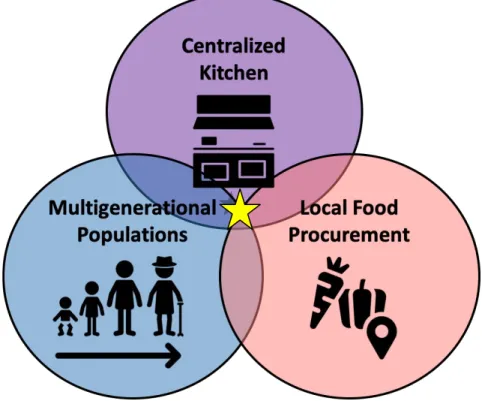
FIG has proposed a framework that entails three interconnected components: a (1)
centralized kitchen that provides high quality meals to (2) multigenerational populations at a sustainable price, and is able to (3) source local foods in order to strengthen the local food system (Figure 1).
Figure 1: Model of centralized kitchens to feed multigenerational populations and strengthen local food value chains
FIG’s proposed framework was selected for multiple factors, including: their recognition
of current demographic changes in the state and associated community planning needs and
trends; their understanding of how federally-subsidized meal programs function; and their
interest in building equitable and sustainable local food systems through
inter-institutional/organizational collaboration.The proposed framework of
federally-subsidized meal programs for older adult and Early Childhood Education centers for
three main reasons:
1) Both federally-subsidized older adult and Early Childhood Education meal programs
are equally concerned about improving the nutritional quality of the meals they serve
while remaining within their funding parameters.
2) These programs share a similar constraint of regulations imposed by their funding
programs [see Appendix 1 for of funding regulations and requirements for ECE and
Older adult meal programs], and the need to document meal planning and distribution
in order to receive reimbursement from the USDA. This unique constraint
distinguishes senior and Early Childhood Education meals from other institutions
such as K-12 schools, universities, and hospitals, and serves as a justification for
these two meal programs to innovate solutions and develop strategies together that
satisfy both their unique interests, needs and constraints.
3) Combining older adult and Early Childhood Education meals in a single centralized
kitchen produces a scale for meal productions that result in financial benefits for both
programs.
With these concerns in mind, the following section provides background and context to
the framework’s three components (e.g. Centralized Kitchens, Multigenerational Populations,
and Local Food Sourcing) to help inform my case study research of three centralized kitchens in
Component #1: Centralized Kitchens
Centralized kitchens are large commercial kitchens that prepare meals and distribute
them to schools and/or centers within a limited radius. This model has emerged as a potential
solution to meet the growing need of multigenerational populations, including for
federally-subsidized meal programs for older adults and Early Childhood Education centers. Centralized
kitchens offer the nutritional and economic benefits of a more robust kitchen infrastructure
which enables increased scratch cooking and reduced reliance upon processed food, trained food
service professional, procurement of large quantities that provide operational efficiency and
procurement savings, makes local sourcing more viable, allows program staff to focus on
improving quality of other service area ultimately, and ultimately provides cost and resource
savings to programs (Yates 2018). The centralized kitchen model has recently been of particular
interest to K-12 schools and Early Childhood Education centers in North Carolina as it presents
opportunities for nutritional quality improvements, cost control, and local food supply chain
development.
The U.S. is experiencing a critical demographic transition, wherein by 2040 people over
65 and people under 18 will make up almost half of U.S. residents. North Carolina is among the
top three destinations for retirees in the United States and is already home to a number of Baby
Boomers (Miller 2018).According to the most recent American Community Survey (2017), older
adults (e.g. individuals 65 years of age or older) currently comprise 15.9% of North Carolina’s
population, and projected to increase as baby boomers continue to age (U.S. Census Bureau,
2017).
Keeping this older population active and healthy has broader implications for North
Carolina’s economy and social fabric. The aging of baby boomers presents multiple fiscal and
service challenges to North Carolina; but some have framed this demographic shift as an
opportunity for innovation, economic development, and employment growth (Johnson and
Parnell 2017).They argue that all person-centered and built environments must change to
accommodate the aging population, and will require new models of care and services (Johnson
and Parnell 2017). North Carolina has the opportunity to invest in community planning that
supports age-friendly infrastructure and communities that foster a high quality of life for older
adults and their families.
Access to healthy food is critical dynamic of keeping North Carolina’s aging population.
However, accessing healthy food can be surprisingly difficult for older adults. Older adults are at
greater risk of experiencing food insecurity due to unique challenges including fixed incomes
limiting food options and an array of physical disabilities reducing transportation options.
Additionally, many older adults live in poverty, which also increases their risk of experiencing
food insecurity. In 2018, approximately 20.7 percent of adults aged 60 and older faced the threat
Many older adults, regardless of whether they live in poverty or have adequate resources,
rely on federally subsidized food and nutrition programs, including the congregate and home
delivered meal programs1, senior farmers’ market nutrition meal program (SFMNP), and the
Child and Adult Care Food Program (Accius 2008). Due to strong advocacy from organizations
like Meals on Wheels, funding for older adult meal programs has remained protected.
Nevertheless, counties have still found it challenging to meet the nutritional needs older adults
due to the limited funding available through the county allocation Home and Community Care
Block Grant (Pollan 2018c). (Administration for Community Living 2016).
Older adult meal providers currently use a variety of approaches to meet the nutritional
needs of older adults. A few counties use their own on-site commercial kitchens to prepare and
distribute congregate and home-delivered meal; however, some of the counties, such as Chatham
County, they have had to close their kitchen due to unsustainable costs. Other North Carolina
counties, that may even have their own commercial kitchen – such as Orange County, have
chosen to not operate their kitchen because of the intensive infrastructure, personnel and time
resources that are needed to successfully run a kitchen that meets the nutritional and safety
requirements set by the older adult meal program. These counties often realize that their
resources are better spent improving the quality of other services they provide (Pollan 2019c). As
the Triangle J Council of Government Area Agency on Aging Director said, “it is really hard to
do your own kitchen, that’s why most people got out of it. Most everyone is out [now]” (Pollan
2018c). Rather than cooking on site to meet the dietary needs of their clients, these counties
contract out their meals, often to national restaurant chains or meal services that can provide
meals within the set reimbursement rates (Pollan 2018c). For example, Guildford County
contracts their meals to Golden Corral (Pollan 2019a). Contracting out meals, however, often
means a loss of control over what food is served. According to the Triangle J Council of
Government Area Agency on Aging Director, many counties have commented on not being
happy with the senior meals provided by national food service providers, such as Aramark and
Bateman Food and Nutrition Services, emphasizing that the food quality is “not so great”
because these companies try to keep the meals as cheap as possible (Pollan 2018c). This trend
also represents a lost opportunity for regional and local food systems, which I will later provide
further argument for. Some counties, have been able to switch to more local catering kitchens,
such as Orange County who contract with a community-minded local restaurant that is able to
provide high-quality, nutritious meals with a strong working relationship with Department on
Aging that allow them a reasonable amount of control of the meals. However, the local
restaurant does not make any money off the catering contract, and benefits only through
increased name recognition within the community, meaning this model may not be replicable for
other communities (Pollan 2019c)
In light of these challenges older adult meal providers are facing across the state, new
models for improving access to healthy are required to address the needs of growing older adult
population in North Carolina. Multigenerational Planning, a holistic approach that takes into
consideration the needs of all age groups through stages of planning(Hodgson 2011), has gained
increasing prominence in the field of community planning as a result of the aging demographic
shifts (Hodgson 2011). In this approach, planners are striving to make cities and communities
accessible, safe, healthy and inclusive for children, youth and families, adults and the elderly.
need to successfully age in community are the same as families with children. These components
include: safe and walkable neighborhoods, opportunities for civic engagement, affordable and
mixed use housing, adequate public transit systems, and access to a complete range of health and
social service, including good schools, quality childcare, senior services, and healthy food
(Hodgson 2011; Warner and Greenhouse 2010). Many planners consider communities that foster
a multigenerational population to be more vibrant (Warner and Greenhouse 2010).
Communities across the U.S. are using the multigenerational community planning
framework in the development of their comprehensive plans and of new community services. For
example, in Ithaca, New York, they permanently co-located a local Head Start program in
retirement center, which has allowed older adults to work with preschoolers on a variety of
learning and social activities (Hodgson 2011). In Huntington Beach, California, they constructed
a multigenerational neighborhood that built affordable homes to fit different lifestyles and stages,
such as townhouses and carriage house for young families and downsizing baby boomers and
their aging parents (Warner and Greenhouse 2010). Developing centralized kitchens that provide
meals for multigenerational populations also fit within this framework.
Component #3: Local Food Procurement
In addition to improving the nutritional quality of food to support a healthy population,
FIG is interested in how farm-to-institution procurement can be an opportunity for regional and
local economies. Institutions, such as at K-12 schools, hospitals, and universities, and
education centers, offer unique market opportunities for local foods by creating critical scale
through their high-volume and consistent purchasing of food (Working Landscapes 2018).
Farm-to-Institution procurement can facilitate many benefits to individuals, and have
positive impacts on the social, economic and environmental characteristics of communities. At
the individual level, farm to institution sourcing can facilitate increased access to fresh, healthy
locally produced and processed foods, which promote positive health outcomes at the individual
and population levels (Anon 2015; Harris et al. 2012; Richman et al. 2019; Fitch and Santo
2016).Farm-to-institution sourcing can also help shift institutional procurement away from
industrial farms, and towards small and mid-sized family farmers, food entrepreneurs of color,
and local producers, distributors, and processors who have historically have been unable to
access large institutional markets (Anon 2015; Harris et al. 2012; Fitch and Santo 2016). While
direct economic impacts of farm-to-institution procurement are negligible, it can still have
valuable indirect economic impacts in local markets by helping open new opportunities to
farmers diversify their markets, increase off-season sales, and gain an outlet for surplus foods
that are less desirable in direct farm-to-consumer sales, and ultimately contributing the creation
of strong regional and local food system infrastructure. Farm-to-institution procurement also
promotes more environmentally sustainable practices in food production, processing,
transportation, consumption, and disposal (Fitch and Santo 2016).
Farm-to institution procurement can be included in an anchor institution framework,
whereby these procurement practices supports the development of more equitable food systems,
especially in rural communities. Anchor institutions are institutions embracing a commitment to
applying their social and economic influence and intellectual resources to improve the long-term
socially connected to place, are mostly non-profit organizations, hold significant investments and
real estate and social capital, are among the largest employers in their communities, and at a
minimum possess a social mission (Olinger et al. 2015);(Health Care Without Harm n.d.), Senior
meal programs and Early Childhood Education centers could position themselves as anchor
institutions committed to developing a robust farm-to-institution system. Additionally, these
institutions procurement power, combined with their use of public funds and public-serving
missions to provide food to many of the region’s most vulnerable residents, further position them
to be effective anchor institutions (Working Landscapes 2018)
There are a number of different perceived and real barriers to farm-to-institution
procurement, including sourcing products, cost and seasonality of local products, food safety
certifications and liability, lack of skilled labor for food preparation, lack of infrastructure for
food processing, and additional time required to find and purchase food from regional producers
(Harris et al. 2012; Fitch and Santo 2016). However, several organizations and researchers have
identified strategies to address some of these barriers to regional and local food procurement,
including creating food hubs, investing in value-added infrastructure, and developing local
procurement programs with distributors (Fitch and Santo 2016). Centralized kitchens are a
valuable strategy for addressing some of these barriers, specifically in terms of how they offer
for the robust infrastructure and skilled labor needed to process and prepare local foods, and the
ability procurement of large quantities that provide operational efficiency and procurement
Methodology
Research for this case study occurred in two main phases. The first phase included a
literature review and six key informant qualitative interviews with experts on older adult
services, early child care services, and nutrition services to provide contextual support to the case
selection and analysis. Qualitative interviews in the first phase included speaking with Henrietta
Zalkind, the Executive Director of the Down East Partnership for Children to understand her
perspective on centralized kitchens for Early Childhood Education centers and as opportunities
for building regional sustainable food systems; with David Yates, Early Childhood Education
Nutrition Services researcher at the Center for Health Promotion and Disease Prevention to
discuss his recent white paper on the feasibility and impact of centralized kitchens for early
childhood education centers; with Mary Warren, Director of the Triangle J Council of
Government Area Agency on Aging to learn more about funding mechanism and regulations for
older adult nutrition services and to understand recent trends in nutrition services among older
adult services providers; with the Janice Tyler, Myra Austin and Yvette Missri of the Orange
County Department on Aging to learn more about their department’s decision to not operate a
commercial and/or centralized kitchen, and with Dennis Streets, Executive Director of the
Chatham County Council on Aging, to discuss the council’s struggle with maintaining a
financially sustainable kitchen. I also frequently consulted with FIG for their expertise on
federally-subsidized nutrition programs and farm-to-institution procurement.
The second phase involved a series of semi-structured qualitative interviews of with
representatives from purposively selected existing centralized kitchens in North Carolina.
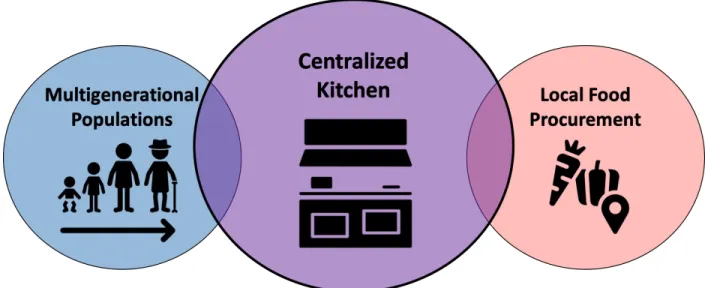
specific elements of interest, specifically if they serve multigenerational populations and/or
procure and process local foods. Figure 2 diagrams the case study selection.
Figure 2: Case Study Diagram
Each identified centralized kitchen selected an individual within their organization that they
thought could best speak to the operations of their centralized kitchen. Specifically, interviews
were conducted with Brownie Doss, Director of Older Adult Services, and Wanda Becton,
Health Services Manager at WAGES NC; with Christina Ogden, Executive Director, and Kevin
Underwood, Director of Operations at Food Runners Collaborative; and with Lisa Menna,
Nutrition Services Manager at Child Care Services Association. Tours of the centralized kitchen
were also given at Food Runners Collaborative and Child Care Services Association.
The case studies aimed to understand:
1. How can public-serving institutions in the same community creatively cooperate to feed individuals from vulnerable populations?
a. How did this central kitchen initially develop into their current form, including the role critical stakeholders and partner organizations?
2. How can resources– such as infrastructure, staff, time, funding, etc. – be coordinated and/or shared to improve food access and nutritional quality for multigenerational populations?
a. How do these central kitchens operate, including procurement food preparation, administrative, and reimbursement practices?
3. What, in practice, are the opportunities and challenges, of collaborative centralized kitchens for between older adult and early childhood nutrition programs?
a. What are the facilitators and barriers to the central kitchen’s ability to feed specific populations?
4. What capacity to centralized kitchens for older adult and early childhood meals have for strengthening local food supply chain?
Case Studies
This section presents three case studies in the following order: 1) WAGES NC (Wayne
Action Group for Economic Solvency, Inc.) in Wayne County, NC; 2) Food Runners
Collaborative in Raleigh, NC; and 3) Child Care Services Association in Durham, NC. WAGES
NC comes first because it offers the most developed case of a centralized kitchen preparing and
distributing federally-subsidized meals for a multigenerational population. While the other two
cases are less developed in terms of serving multigenerational populations, they each provide
other important insights to understanding the opportunities and challenges for centralized
kitchens. Food Runners Collaborative offers valuable insights into how to organizations with
shared missions can collaboratively approach developing and operating a centralized kitchen that
meets a growing regional demand for subsidized meal program catering, and Child Care Services
Association provides a compelling case of centralized kitchens’ opportunity to leverage their
capacity to produce high-quality, scratch-made meals with locally-sourced produce, at prices that
fit within a federally-subsidized meal program budget. Together, these cases offer valuable
lessons and ideas for organizations and/or regions considering centralized kitchens as a
collaborative strategy to address the nutritional needs of multigenerational populations.
Case Study #1: WAGES NC (Wayne Action Group for Economic Solvency, Inc.) in Wayne County, NC
Since the 1970s, WAGES NC has been successfully used a centralized kitchen to provide
case study provides valuable insights into how a centralized kitchen can successfully serve
multiple generations by carefully organizing and coordinating meal planning, preparation and
distribution between the kitchen and age-specific meal programs. This organization and
coordination facilitates the effective navigation of difference in the meal program requirements
and regulations, and offers mutually beneficial outcomes for all partners.
Background
WAGES NC is a private non-profit Community Action Agency located in Wayne
County, North Carolina. Established in 1966 as part of President Johnson’s War on Poverty,
WAGES NC has since evolved into an agency with facilities serving families throughout Wayne
County. Managed by a central administration, WAGES NC’s programs include an older adult
division with a nutrition program for the elderly/meals on wheels, an early childhood division
with seven Head Start and Early Head Start centers, and a food services program with a
centralized kitchen, among other human service programs. Each division essentially functions as
an independent non-profit, with its own staff and budget.
Older Adults Division
The Older Adults Division of WAGES NC is the primary agency responsible for the food
and nutrition programs for older adults in Wayne County. WAGES works closely with the
Wayne County Services on Aging; however, the Services on Aging receives Home and
Community Care Block Grant funding to deliver other older adult services.
WAGES NC began its congregate meal program in the 1970s with four meal sites: two in
Goldsboro -Wayne County’s capital, one in Fremont, and one in Mt. Olive. Today, there are
three congregate meal sites, including in at the Goldsboro Senior Center that opened in 2013. As
participants, 76 percent live at or below the poverty line, approximately half are ages 60 to 74
years old, and around 15 percent are age 85 and older over. The congregate meal program has
experienced some decline in participation over the last 20 years; the director of older adult
services suggested is may be a result of older adults needing to continue working these days.
Older adult services also operates 28 meals on wheels routes driven by volunteers that provide
319 meals every week day. Among these meal recipients, 88 percent live below the poverty line,
54 percent are non-white and 66 percent are age 75 or older. The director of older adult services
explained that there is “always a demand for Meals on Wheels… [because] people are living
longer and their family is not living there or their families cannot help their elderly everyday”
(Pollan 2018a).
Children and Families Division
The Children and Families Division of WAGES NC has been a Head Start and Early
Head Start grantee since the 1960s. WAGES NC operates 6 center sites, formally collaborates
with three private childcare centers, and partners with Wayne County Public schools on an
inclusive preschool classroom. They currently have a funded enrollment of 690 children for
Head Start, and because Head Start is an eligibility program, over 90 percent of the children live
below the poverty line. As part of their Head Start grant, WAGES NC is required to have a
health services advisory board, comprised of staff, parents and community partners. Within the
advisory board, WAGES NC chose to create a sub-committee for nutrition and menu planning.
This committee, coordinated by the childcare services nutrition assistant, meets on a monthly
basis to plan meals that meet Child and Adult Care Food Program dietary standards, address
dietary restrictions, and are culturally appropriate. The committee includes the four health
program, a kitchen staff representative, and, most importantly, parents of Head Start children.
WAGES NC is a Child and Adult Care Food Program sponsor, meaning that they submit their
Child and Adult Care Food Program paperwork directly to Raleigh, rather than through another
Child and Adult Care Food Program sponsor.
Centralized Kitchen
History
Originally, WAGES NC was located in an old school building that had a commercial
kitchen. The kitchen was used to prepare food for the congregate meal program; head start meals
were being purchased through the school system. In the early 1990s, WAGES NC moved out of
the old school building into a newly constructed building, where they decided to build a nice
commercial kitchen. Since then, all senior meals and early childcare lunches have been prepared
in WAGES NC’s commercial kitchen (Pollan 2018a). Today the kitchen serves approximately
1,300 daily meals, including for the congregate meal program, meals on wheels, the seven Head
Start and Early Head Start center sites, and for two private childcare centers.
Operations
The director of older adult services also oversees WAGES NC’s food services. In
addition, the kitchen has a kitchen manager who is in charge of the whole kitchen and orders
food for both programs. There are two heads cook - one responsible for senior meals and one
responsible for Head Start/Early Childcare meals. The kitchen prepares meals on Monday thru
Friday in the mornings for both programs at the same time; kitchen activities commence by 2PM
on most days.
In many ways the central kitchens functions like a caterer for the WAGES meal
program, the home-delivered meal program, the Head Start and Early Head Start center sites, and
two private childcare centers that contract their meals to WAGES NC. WAGES NC does not
prepare breakfast or snacks for Head Start and Early Headstart, due to limitations in the kitchen’s
capacity.
Coordination
Coordination of resources within the centralized kitchen between the two meal programs
is critical to the success of WAGES NC’s centralized kitchen. All three divisions (e.g. food
services, child and families and older adults) work together to effectively coordinate menus,
space, and regulation adherence within the central kitchen.
Menu planning is the first step in coordination, as both the senior meal program and the
early childcare meal program are required to submit their menus for approval from a dietitian
each month as part of their federal funding requirements. After each menu is planned and
approved separately, the two programs meet with the kitchen manager to coordinate menus based
on available space in the kitchen. While the kitchen is split in half, - with one side for each
program - there are some pieces of equipment that are shared and can only be used for one
program at a time. For example, there is only enough oven space to cook food for one program at
a time, and if both programs require an oven they will have to re-organize their menus. The two
programs trust the kitchen manager to honestly tell them what is possible each day. If
adjustments are necessary, the childcare menu is often adjusted; however, both programs’ staff
mentioned how they work together to fix any menu conflicts. In the summer, when only Early
Head Start is in session, the two programs will coordinate their more closely because the daily
Another major area of coordination is around meeting and tracking different regulations
associated with each meal program. As the Director of Older Adult Services explained, with the
exception of food temperature control, the two meal programs have very different restrictions
and sensitivities in monitoring, even though they are both using USDA funding. For example,
with Head Start they have to demonstrate that they have culturally appropriate menus, whereas
that would not be a concern for monitoring by the senior meal programs (Pollan 2018d). The
programs have different nutrition analyses, and different serving style best practices; Early
Childhood Education best practices is to serve all meals family style, whereas the senior meal
program requires them to serve each meal individually.
The final step of coordination is on the distribution of the meals to the different
congregate meal sites, head start centers, and child care centers. WAGES NC has three of its
own vans each with a van driver, each with a route: a route north, a route south to Mount Olive,
and one route within Goldsboro. The Mt. Olive route’s truck has both cooling and heating
because the route is longer. Both interviewees commented on the challenges of having long
distribution routes with multiple stops, especially in terms of keeping food at safe temperatures.
Foods are often covered in gravy or sauce to keep them at temperature to their final destination;
other foods, such as pizza, cannot make it to their final destination at temperature. This challenge
highlights one of the capacity challenges of this centralized kitchen.
Food Procurement Practices
Food procurement is also coordinated by the centralized kitchen, with the food services
staff responsible for ordering all the food for the approved menus. The two main priorities in
their purchasing are food quality and cost. Currently, WAGES NC is purchasing from three large
with any of these distributors, they are part of a Group Purchasing Organization through
Premiere in order to secure lower prices on certain products. They try to cook as much food as
possible from scratch, meaning they buy foods with minimal processing. In recent years, they
worked to limit their purchases of canned produce, and instead prioritize purchasing frozen
foods.
Currently, WAGES NC does not procure any local foods. According to the director of
older adult services, they do not have the capacity to process local fresh fruits and vegetables
within their centralized kitchen; it is too labor intensive. She gave the example of buying kale or
collards, and needing to wash, destem, and chop the produce before being able to use it, which is
a capacity their kitchen does not have (Pollan 2018a). In addition to capacity, the other major
barrier identified by WAGES NC for procuring local foods is price. Due to their limited budget
with the federally-subsidized meal programs, purchasing local foods is too expensive. The
director of older adult services did mention being interested in increasing their local food
procurement in the future; however, she had not identified a suitable approach to do so (Pollan
2018a).
Finances
Senior meals at WAGES NC are primarily funded by Home and Community Care Block
Grant with supplemental funds from USDA’s Nutrition Services Incentive Program, but they
receive additional funding from Wayne County, the City of Goldsboro, United Way, individuals,
churches and church foundations, and meal participants who choose to donate. Early Childhood
Education food costs are primarily covered by Child and Adult Care Food Program
Both meal programs use their funds to contract their meals from the WAGES NC
centralized kitchen, meaning that the kitchen functions essentially as an internal caterer for both
programs. At the end of each month, the kitchen is reimbursed from each funding source. The
reimbursements cover food purchasing, food preparations and daily maintenance and upkeep
costs are covered by the meal reimbursements from the two programs. The kitchen equipment
and operating costs, however, are covered by the WAGES NC central administration, meaning
that if WAGES NC wants to install something new in the kitchen, such as a new freezer or oven,
the WAGES NC administration would secure additional funding to do that, rather than the either
of the programs paying for it.
Because WAGES is a private non-profit, they do not need to earn a profit from their food
services. However, they do need to break even from their operations, which they currently are
able to do. The director of older adult services commented that reimbursements for senior meals
have been decreasing over time, while Child and Adult Care Food Program reimbursements have
remained relatively stable. This, according to the director of adult services, has allowed the
senior meal programs to rely on the stability of the Child and Adult Care Food Program funding,
in order to continue to serve the growing senior population in Wayne County without having to
seek additional funds to support the kitchen.
Themes and Key Takeaways
WAGES NC’s provides a valuable example of the benefits of central kitchens to meet the
nutritional needs of a multigenerational community, and on the role that coordination can play in
successfully navigating federally-funded meal program regulations.
WAGES NC is and has been working to meet the nutritional needs of low-income older
adults and young children in Wayne County for over 25 years. The unique structure of being a
Community Action Agency, and the agency’s decision to build a large commercial kitchen 25
years ago has made integrating meal production for a multigenerational population a solution
that emerged out of necessity and circumstance, rather than as an intentional collaborative
innovation. Nevertheless, WAGES NC food services program demonstrates how a centralized
kitchen can successfully serve as an internal caterer for two programs with separate funding
streams, if both programs can commit to coordinating and being flexible in meal planning,
purchasing, kitchen staff and space, and distribution systems. The programs’ commitment to
coordination is possible due to shared priorities for their meal programs, in terms of scale and
scope of their services, target populations served, nutritional quality, and cost.
WAGES NC also serves an example of how serving multigenerational populations out of
the same kitchen can serve to reduce overhead and food purchasing costs for both programs, and
if needed, have one program’s funding stream help balance budgets if and/or when the other
program experiences a change in their funding.
Finally, WAGES NC highlights the benefits of having an internal caterer (as compared to
an externally contracted caterer), as it increases the control that programs have over menu
planning, purchasing practices, distribution schedules, and meeting participant needs. The
convenience of an internal caterer is of particular value to Early Childhood Education centers
because of their need to have meals that meet the dietary restrictions of children in their
programs, sometimes at the very last minute. This level of communication and control would be
much more challenging with an external caterer.
While WAGES NC has been able to provide nutritious meals to a large number of people
on a daily basis, there is still a much greater need to increase healthy food access in Wayne
County that WAGES NC could potentially position itself to meet. However, as the director of
early childhood health services explained, WAGES NC’s centralized kitchen is at its maximum
capacity for preparing and distributing meals. This has become an issue already for WAGES
NC’s Head Start and Early Head Start that are unable to supply their breakfast and snacks
through the central kitchen. Instead, they are using processed meals prepared and heated up at
the center site. This on-site meal preparation has caused many costs to the Early Childhood
Education programs. First, the Early Childhood Education program has lost money from food
that has gone bad while being stored in a separate, lower-quality cold storage location at
WAGES NC. The spoiled food is also a source of frustration because of the inconvenience it
creates for the center sites. A second cost is the loss of staff time dedicated to serving children, as
these staff have to spend time preparing these meals that could ideally arrive to the center in a
ready-to-serve form. And finally, the nutritional quality of the meals is lowered as they are more
likely to serve processed foods than scratch made foods like they receive from the centralized
kitchen. In the current setting, serving a hot breakfast is not really an option, due to food safety
concerns around temperature. Similarly, the director of older adult services also discussed the
increasing demand for Meals on Wheels meals that they are currently unable to meet, due not
only to their kitchen’s limited capacity, but also due to limited funding and limited volunteer
power. If WAGES NC is to begin to address these concerns of increasing capacity to meet
increasing demand, then they will have to consider options to invest in expanding their current
The other area in which the central kitchen’s capacity is of concern is in WAGES NC’s
ability to increase their sourcing of local food, if they choose to do so. While expanding the
kitchen or creating a new kitchen would increase their capacity to process local foods, there are
also opportunities within the region to think more broadly about developing a value-chain for
local foods. For example, WAGES NC could consider investments in staff training to improve
their ability to process local foods. They should also consider looking at their neighbors in
Northeastern North Carolina under the organizing leadership of Working Landscapes, as a
source of inspiration and an example of how Southeastern North Carolina could intervene in the
traditional supply chain to increase access and ability to use local foods in meals for vulnerable
populations. Enhancing the local food value chain, as mentioned earlier, can have valuable
social, economic and ecological benefits to the region that align with the anti-poverty mission of
WAGES NC. In fact, these interventions address more upstream issues such as job creation,
community control over the means of production and capital flows, and concerns of
sustainability and environmental justice. The Child Care Services Association case study will
explore this question of local food sourcing in more depth.
Future Considerations
WAGES NC demonstrates that meal preparation for multi-generational population is not
only feasible in a centralized kitchen, but is in fact beneficial beyond what separate programs
would be able to achieve alone and to offers benefits to the larger community by providing a
publicly-oriented catering option for subsidized meal programs. Additionally, it demonstrates the
potential for successful centralized kitchens in rural communities, as most examples of
While WAGES NC could continue to operate at their current scale, there are certainly
opportunities for them to expand their services to meet the increasing needs of food insecure
older adults and children. There are also opportunities for them consider their role in a local food
Case Study #2: Food Runners Collaborative (Raleigh, North Carolina)
As seen earlier with the WAGES NC case, centralized kitchen can successfully serve
multigenerational population. However, because WAGES NC kitchen was built 25 years ago,
the case has limited utility for understanding the formation of a new centralized kitchen and how
to grow the capacity of an existing kitchen.
The Food Runners Collaborative (FRC) centralized kitchen, created in 1999, offers
insights into how organizations can approach the formation of a new centralized kitchen,
including making the initial infrastructure investment, building demand for their services, and
increasing capacity over time. The FRC case also demonstrates how organizations with similar
missions can collaborate on joint ventures that are mutually beneficial to the organizations, and
can take advantage of opportunities to increase the scale of their services to meet the needs of
multigenerational populations throughout a region.
Background
In 1999, MOW of Wake County and IFFS - two independent non-profit organizations
based in Raleigh, NC that focus on eliminating hunger in the region - were looking for a new
space to permanently house each of their organizations, both of which would include a
commercial kitchen. However, neither organized wanted to own or operate their own facility and
kitchen. After extended conversations, the two organizations decided to construct a building
together, and to establish a neutral, third party organization, FRC, to partner with them and to
MOW and IFFS began a joint capital campaign to for this new endeavor. Through
extensive research and consulting with area and state leaders, they created a plan for operating a
shared centralized kitchen that would meet both organizations needs and offer significant cost
savings to the community. They raised funds together for the construction of the new facility,
including from the A.J. Fletcher Foundation, Capital Broadcasting Company, Catholic Diocese
of Raleigh, State of North Carolina, City of Raleigh, Wake County, and Wake Med. The joint
venture also sought out critical political from the state government, which, included a major
in-kind donation NC’s Department of Agriculture for the land the facility is located. The facility’s
groundbreaking took place in 2002, and the facility opened in late 2004 (Anon 2016) The new
facility was divided between the three organizations by space need, with the kitchen specifically
divided in half between IFFS and MOW (Pollan 2019b)
MOW of Wake County and IFFS were highly strategic in defining FRC’s primary
functions, responsibilities, and financial feasibility and sustainability. As mentioned earlier,
FRC’s two primary function are to manage the shared facility and to serve as the caterer for
MOW of Wake County. As the facility manager for both MOW and IFFS, FRC is responsible for
the management of the building, management of the kitchen’s overall organization, and
maintenance of the centralized kitchen’s infrastructure and equipment. FRC receives occupancy
fees from both MOW of Wake County and IFFS that cover building maintenance fees, pay
utilities and fill reserve funds. Additionally, FRC has the ability to diffuse potential sources of
conflicts between the two organizations as an independent organization, and is positioned to
make decisions based on what is best for all partner organizations. FRC’s responsibilities
enabled each organization to keep focused on meeting their mission and on expanding their
FRC began operating the centralized kitchen less than six months after the facility
opened, shipping their first meal to MOW of Wake County in March of 2005. Within three
months, FRC was in full production, shipping senior meals to five programs in three counties. In
March of 2016, FRC has shipped six million senior meals from their kitchen.
Centralized Kitchen
As mentioned earlier, FRC has two primary functions: 1) to operate the facility that
houses both MOW and IFFS, including the commercial kitchen, and 2) to produce and distribute
senior meals (Pollan 2019b; Anon 2016). FRC’s relationship with the partner agencies is fairly
uniform for facility management. However, FRC’s relationship to each partner organization is
unique in terms of FRC’s kitchen operations responsibilities. FRC is the contracted caterer for
MOW of Wake County, which means MOW of Wake County contracts out their half of the
centralized kitchen space to FRC to operate as its kitchen manager and to prepare meals for its
programs. IFFS, on the other hand, does not contract out to FRC for their operations. Rather,
IFFS has its own kitchen managers who is responsible for IFFS operations in the centralized
kitchen, such as preparing child meals for their “backpack buddies” program and occasionally
preparing food for IFF’s “for-profit” catering business. In other words, while FRC is responsible
for the overall coordination of the centralized kitchen for all three partner organizations, they are
only involved with kitchen operations for MOW of Wake County and FRC’s own contracts.
FRC’s other catering contracts include MOW of Nash and Johnson Counties, an adult care
facility, and two privately owned day care centers.
Operations
On average, FRC’s centralized kitchen operations involves preparing 1,900 lunches per a
and thus primary focus is to produce and distribute senior meals. Their main contract, with
MOW of Wake County, includes both congregate and home-delivered meals. FRC maintains
contracts with all of their clients in order to lock them into the set meal prices. FRCs kitchen is
responsible for meeting all the nutritional and safety requirements set by the congregate and
home-delivered meal programs. To develop these menus, FRC first uses a computer programs
that helps them track the nutritional value of each meal; then they work with a dietician who
reviews and approves the menu based on its overall nutritional quality. Finally, the menu is sent
to Triangle J COG Area Agency on Aging for final approval. The childcare center does have
different nutritional requirements set by the USDA; however, FRC primarily interprets these
difference as being half the nutritional requirements of a senior meal. Once a menu is approved
by the Area Agency on Aging, FRC cannot change menu. Because the childcare menus are not
under the Area Agency on Aging, there is more flexibility to change them. While FRC is
responsible for meeting nutritional and food safety requirements of the subsidized meals, they
are not involved with the reimbursement process for any of their meals; MOW and the other
clients are responsible for applying for reimbursements.
FRC prepares all their food in the centralized kitchen, with their 10 FRC kitchen staff
members. They use the five vans they own to distribute the meals to the centers where the
congregate meals are served and the home-delivered meals are picked up by volunteers for
further distribution.
Coordination
As discussed earlier, FRC’s central kitchen houses both the operations for FRC’s catered
meals and for IFFS’s kitchen operations, which requires that FRC and IFFS work together to
the kitchen, the FRC director of operations explained that they “try to never divide the kitchen,
because we are partners in this kitchen…we can use the kitchen when we need to” (Pollan
2019b). Coordination is necessary to ensure FRC is following USDA safety guidelines and IFFS
is able to follow their Feeding America guidelines. Collaboration between the programs often
arises as they work together on coordination. For example, the FRC Director of Operations
shared that he and the IFFS Production Kitchen Manger frequently share good recipes and
collaborate on new projects.
Food Procurement Practices
FRC procures the majority of their food from U.S. Foods, including their produce. FRC
does work some with more regional produce distributors, such as Ford’s Produce; however,
Ford’s Produce prices are often too high for FRC. Through U.S. Foods, FRC is a member of a
cost-savings Group Purchasing Organization with Premiere, which their Director of Operations
claims is “such a great program” because it allows them to greatly reduce purchasing costs. The
Group Purchasing Organization requires them to buy a certain amount of food from U.S. Foods.
FRC receives a bonus reimbursement of a certain percentage of their percent (totals around a
couple thousand dollars) if they meet their requirements, but if they do not meet the Group
Purchasing Organization will send them a letter.
FRC often selects products based on what is available through their Group Purchasing
Organization. FRC uses price as the primary criteria for selecting products. Although they try to
avoid selecting the cheapest option, FRC ultimately have to select a product with a competitive
price due to their inability to increase meal prices because of their limited and rigid budgets. In
general, the Director of Operations tries to select a middle level product, and will select a lower
After price, customer satisfaction is the second most important criteria for selecting
products. As the Director of Operations, who is a self-proclaimed “customers first person”,
explained, “You have to think about what the customers will eat… They are 90 years old. They
love the smoked sausages. It is high in sodium, but if I took off the menu they would be very
angry with me…you can’t fight what older adults like” (Pollan 2019b). While the Director of
Operations is concerned about satisfying his customers preferences, he knows that serving foods
that many of his customers most like, such as smoked sausages and crab cakes, can only occur
intermittently. Thus, he strives to develop other recipes that are delicious and healthy, and works
closely with their dietician to develop menus that are still satisfying for their customers, yet
nutritionally balanced. FRC also has to ensure that they food can be served hot in trays, which
can greatly limit their product choices.
FRC procures a limited amount of local foods. As the FRC Director of Operations said
“if U.S. Foods has local foods, we will use it” (Pollan 2019b); however, local foods are
infrequently included in FRC menus. The seasonality of local foods can be difficult for FRC
because of their menus are already set and difficult to change based on what’s seasonally
available. Other barriers include processing local foods in the limited capacity of their kitchen
and higher prices. FRC would be interested in procuring more local foods, but the FRC Direct of
Operations expressed that it would be easier if they had a liaison who could help them get to
know the farmers and farms
IFFS receives donated foods, which they will use in their kitchen operations within the
FRC centralized kitchen. FRC, unfortunately, cannot purchase any of these donated products
food. FRC is, however, exploring options for having the food donated to MOW that FRC could
include in their contracted meals for MOW.
Finances
As discussed early, FRC was developed by MOW and IFFS to be financially feasible and
sustainable organization. Their main sources of revenue are their MOW of Wake County and
IFFS’s occupancy fees, and their meal contracts with MOWs, the adult day care center and the
Early Care and Education Center. FRC’s sustainable financial model allows them to carry out its
primary functions and responsibilities, without having to engage in any form of public
fundraising. This model was strategically designed by FRC’s partners to prevent any FRC from
detracting attention away from the partner organization’s fundraising efforts.
Themes and Key Takeaways
FRC’s centralized kitchen provides a useful example of how non-profit organizations can
creatively collaborate to leverage resources and create new organizational structures to reduce
costs, improve nutritional quality, and expand capacity to feed more individuals as demand for
meals increase in a region. Additionally, this case highlights and to the need of central kitchens
to align purchasing choices with the mission of a public-serving organization, and the
opportunity to provide meals at a small scale to multigenerational populations.
Benefits
FRC is a valuable example for understanding how publicly-oriented non-profit
organizations can align their missions and combine their resources to create mutually beneficial
strategies and solutions for meeting the needs of multi-generational populations in the same
region. MOW of Wake County and IFFS realized they could better achieve their similar missions
facility that met both their needs, and creating a new organization to operate that facility and
carry out an essential function of preparing senior meals. This structure offered many benefits to
the partners, including allowing each partner expand their organization’s capacity, cost savings
to both organizations and the larger community, and having a neutral partner to diffuse any
possible conflicts of interests between MOW and IFF
FRC’s strategic structure enables their partner agencies to focus on furthering their
missions with the peace of mind of stable infrastructure. Specifically, for MOW, FRC guarantees
a stable source of quality meals that does not require their direct resources or management, but
that still offers enough control over the meals they provide.
FRC’s position as the neutral partner among MOW and IFFS positions them to make
decisions based on what is best for all three organizations. The FRC Director of Operations
explained, FRC was created to be “looking out for everyone.” Both partners will come to FRC
with their need, and it is FRC’s responsibility to resolve potential conflict over competing
interests in spending on the building. For example, FRC could choose to replace the stove
because it is beneficial to all partners, even if that is not one partner’s specific preference.
Challenges
FRC’s status as a public-serving non-profit organization provides both limitations and
opportunities to meet their and their partner organization’s mission of feeding hungry individuals
in North Carolina. In the way FRC was designed by their partner organization to have a primary
function of providing support facilities and services to their partner agencies, and with its
financially sustainable model that prevents them from having to fundraise, FRC has restricted
amount of funding available to them. While this structure is ultimately beneficial to the joint
them. As a result, FRC frequently has to make choices between increasing the quantity of
low-priced meals and purchasing higher quality products. Because of their and their partner
organizations’ public-oriented mission, FRC tends to choose increasing producing more meals at
with lower price products, rather purchasing higher quality products, including local foods, that
would potentially limit the total number of meals they are able to produce. Part of this choice is
driven by public perception of FRC and its partner organizations’ primary goal of eliminating
hunger; the public would rather see as many people fed as possible, rather than seeing fewer
people fed with more expensive ingredients.
Future Considerations
FRC experience with producing meals for multigenerational populations provides
valuable insights into the opportunities and challenges of serving multigenerational populations.
FRC has been able to successfully produce meals for older adults, adult day care programs, and
Early Childhood Education centers. However, Early Childhood Education center meals only
make up around 50 of the 1,900 meals (e.g. less than 3% of total meals). This small share of
Early Childhood Education meals is reflective of FRC’s stated mission of producing and
distributing senior meals, but it also limited due to a few notable operational barriers. First, as
discussed earlier, older adult meals and early childhood meals have distinct food safety and
nutritional requirements. FRC must adjust their meals to meet these requirements, which
involves additional coordination and resources that are not required for older adult meals.
Second, providing Early Childhood Education meals requires the kitchen to be more flexible so
they can respond to the last minute requests made by the Early Childhood Education centers.
Because the number of ECE meals is so small in comparison to the older adult meals, the kitchen
Education meals increased, it could become too much of a challenge for the FRC kitchen to
handle. Third, while FRC has the capacity to produce greater volumes of Early Childhood
Education meals, it is not a major priority because, based on their mission, the primary
population FRC serves is older adults. If FRC chooses to expand their meal services to
multigenerational populations, they will have to implement significant adjustments to their
operations and consider revising the target population in their mission as justification for this
expansion. However, it is unclear if the desire and need exists for this expansion.
FRC’s status as a non-profit entity positions them as an accountable to responding to and
serving the public, but can also limit their ability to innovate due to limited funding. The FRC
Director of Operations commented that he thinks it is important that FRC is a non-profit entity,
in that is makes explicit their mission of serving the community. In recognizing that there are no
profits to be gained in the FRC model, they are able to promote FRC as a mechanism for serving
the community, rather than as a profit-generating entity. FRC’s collaborative, publicly-oriented
model has not only benefited the two main partner agencies, but also has offered a reliable
catering option for other federally-funded meal programs in the area. MOW of Johnston and
Nash County also have catering contracts with FRC, and thus are able to benefit from a resource
efficient, quality catering option that meets the nutritional and safety requirements set by their
federal-funding sources.
FRC, in partnership with MOW, have also worked on expanding the public recognition
of their work through recent collaborations with local celebrity chefs. According to the FRC
Director of Operations, while these efforts have offered new opportunities to collaborate in
feeding people, they have also fostered a more vocal public that expects to see as many people
waiting lists. In spite of these changes, FRC remains limited to the funds they receive through
their facility rental fees and contracts, challenging them creatively maximize their limited
funding to meet the public’s desire for expanded meal services. The tension between pressure for
expansion and limited funding could present new opportunities for FRC, such as allowing FRC
to fundraise in specific ways or revising their organizational structure to allow for new,
Case Study #3: Child Care Services Association (Durham, North Carolina)
Earlier, we learned that WAGES has an interest in local food sourcing, but has yet to
move in this direction. What would local food sourcing entail? What structures or model is
needed? To begin to address these questions, I now turn to the case of Child Care Services
Association (CCSA). This case explores how a centralized kitchen can be leverage their
kitchen’s capacity to procure and process local foods in order to efficiently produce high-quality,
nutritious meals at the low-prices required by subsidized meal programs.
Background
Child Care Services Association (CCSA) is a non-profit organization based in North
Carolina’ Research Triangle region that “works to ensure affordable, accessible, high quality
child care for all families through research, services and advocacy” (Child care Services
Association 2018). One employee described CCSA as an all-inclusive childcare resource center
for families and Early Childhood Education center directors that provides a range of support
services. One of the support services CCSA provides is quality meals for Early Childhood
Education centers through their centralized kitchen that opened in 2008. As of December 2018,
they had three kitchens: 1) a church kitchen in Chapel Hill, North Carolina that series
approximately 600 daily meals to children in Orange County, 2) a kitchen in Wake County that
services approximately with 450 children with capacity to grow, and 3) the centralized kitchen in
History
Starting in 1989, CCSA had access to a kitchen in Chapel Hill that they used to prepare meals for
Early Childhood Education centers in Orange and Chatham counties. Around 2008, CCSA
purchased land to build a larger facility in Durham. They decided to build a large commercial
kitchen in the new facility for a few reasons. First, and most simply, they had space to build the
kitchen in their new site. Second, CCSA began to receive inquiries and request for meal
resources from Early Childhood Education centers that were interacting with CCSA’s other
Early Childhood Education services; thus opening their own commercial kitchen emerged as a
natural fit for CCSA. And third, CCSA had had an interest in increasing their production volume
and switching to only scratch cooking, which a larger commercial kitchen would allow them to
do. Leaders from CCSA then went on site visit to a large production kitchen in North Virginia to
begin considering how to structure their new kitchen. The North Virginia kitchen basically
functioned as a caterer, sending off their meals for delivery, which inspired CCSA’s centralized
kitchen development. CCSA received substantial funding through the United Way and the State
Employees Credit Union, as well as instrumental support from State Representative David Price.
As of December 2018, the kitchen served approximately 1,200 daily meals out of their
centralized kitchen in Durham, in addition to the approximately 600 meals out of the kitchen in
Orange County, and approximately 450 meals out of their kitchen in Wake County. The Durham
kitchen serves 12 different Early Childhood Education centers. The centers range in size from 4
to 5 children, to the largest center with 150 children. Some of the centers are Head Starts, and the
head starts function in nearly the same way as a regular center. Many of the centers have been
using CCSA’s nutrition services for many years; there has been some turnover and CCSA has
Since the Durham kitchen opened, CCSA has had strong commitment to providing
exceptionally high-quality, nutritious, scratch-made meals. While initially motivated by needing
to meet Child and Adult Care Food Program nutritional requirements, CCSA’s meals often
exceed those requirements. The other major factor influencing CCSA’s meal quality is that
Durham’s Kitchen Manager is inspired to be creative with creating healthy, nutritious menus,
with an emphasis on highlighting seasonal and/or local produce. CCSA defines local as grown in
North Carolina. In the spring and summer, CCSA sources at least ten percent of their total food
purchasing from local sources.
Operations
CCSA’s centralized kitchen prepares all three Early Childhood Education meals each
day: breakfast, lunch, and a snack. Some centers order all three meals, whereas other centers may
only order one meal. This is especially true for larger Early Childhood Education centers that
have enough staff to prepare their own breakfast.
Menus are released on a monthly-basis, although the kitchen supervisor may amend them
based on what food is available. The menus are seasonally-inspired, as part of the kitchen
manager’s effort to incorporate local seasonal products into the meal, and are sent for review and
approval from a Durham County Department of Public Health Registered Dietician. CCSA
contracts with the dietician to ensure that that the menus meet Child and Adult Care Food
Program nutritional requirements; the menu is relatively similar each month so it is not a
challenging requirement. Each week includes a balance of lunches with seafood, beef, poultry
and vegetables.