VOLUME 19 ISSUE 61 JULY 2015 ISSN 1366-5278
A randomised controlled trial of Outpatient versus
inpatient Polyp Treatment (OPT) for abnormal
uterine bleeding
T Justin Clark, Lee J Middleton, Natalie AM Cooper, Lavanya Diwakar,
Elaine Denny, Paul Smith, Laura Gennard, Lynda Stobert, Tracy E Roberts,
Versha Cheed, Tracey Bingham, Sue Jowett, Elizabeth Brettell,
Outpatient versus inpatient Polyp
Treatment (OPT) for abnormal
uterine bleeding
T Justin Clark,
1,2
*
Lee J Middleton,
3
Natalie AM Cooper,
4
Lavanya Diwakar,
5
Elaine Denny,
6
Paul Smith,
1,2
Laura Gennard,
3
Lynda Stobert,
6
Tracy E Roberts,
5
Versha Cheed,
3
Tracey Bingham,
1
Sue Jowett,
5
Elizabeth Brettell,
3
Mary Connor,
7
Sian E Jones
8
and Jane P Daniels
2,3
1
Birmingham Women
’
s Hospital NHS Foundation Trust, Edgbaston,
Birmingham, UK
2
School of Clinical and Experimental Medicine, College of Medical and
Dental Sciences, University of Birmingham, Birmingham, UK
3
Birmingham Clinical Trials Unit, University of Birmingham, Birmingham, UK
4Women
’
s Health Research Unit, The Blizard Institute, Queen Mary University of
London, London, UK
5
Health Economics Unit, School of Health and Population Sciences, College of
Medical and Dental Sciences, University of Birmingham, Birmingham, UK
6
Centre for Health and Social Care Research, Faculty of Health, Birmingham City
University, Edgbaston, Birmingham, UK
7
Jessop Wing, Sheffield Teaching Hospitals NHS Trust, Sheffield, UK
8Bradford Teaching Hospitals NHS Foundation Trust, Bradford, UK
*Corresponding author
Declared competing interests of authors:Mr Clark reports receiving honoraria for training from Hologic and Ethicon, which make endoscopic instruments [Myosure (Hologic, Marlborough, MA, USA) and Versapoint (Gynecare, Ethicon, Somerville, NJ, USA)] suitable for removing uterine pathologies such as polyps. Since completing the OPT Trial recruitment (but not before completing writing this report) he received £40,000 funding from Smith & Nephew to evaluate a product (TruClear) also suitable for removing uterine polyps and fibroids. Dr Smith reports grants from National Institute for Health Research Grants during the conduct of the study, and grants from Smith & Nephew outside the submitted work.
Published July 2015
Clark TJ, Middleton LJ, Cooper NAM, Diwakar L, Denny E, Smith P,et al. A randomised controlled trial of Outpatient versus inpatient Polyp Treatment (OPT) for abnormal uterine bleeding.Health Technol Assess2015;19(61).
Health Technology Assessmentis indexed and abstracted inIndex Medicus/MEDLINE,Excerpta Medica/EMBASE,Science Citation Index Expanded(SciSearch®) andCurrent Contents®/ Clinical Medicine.
ISSN 1366-5278 (Print)
ISSN 2046-4924 (Online)
Impact factor: 5.116
Health Technology Assessmentis indexed in MEDLINE, CINAHL, EMBASE, The Cochrane Library and the ISI Science Citation Index. This journal is a member of and subscribes to the principles of the Committee on Publication Ethics (COPE) (www.publicationethics.org/).
Editorial contact: [email protected]
The full HTA archive is freely available to view online at www.journalslibrary.nihr.ac.uk/hta. Print-on-demand copies can be purchased from the report pages of the NIHR Journals Library website: www.journalslibrary.nihr.ac.uk
Criteria for inclusion in theHealth Technology Assessmentjournal
Reports are published inHealth Technology Assessment(HTA) if (1) they have resulted from work for the HTA programme, and (2) they are of a sufficiently high scientific quality as assessed by the reviewers and editors.
Reviews inHealth Technology Assessmentare termed‘systematic’when the account of the search appraisal and synthesis methods (to minimise biases and random errors) would, in theory, permit the replication of the review by others.
HTA programme
The HTA programme, part of the National Institute for Health Research (NIHR), was set up in 1993. It produces high-quality research information on the effectiveness, costs and broader impact of health technologies for those who use, manage and provide care in the NHS.
‘Health technologies’are broadly defined as all interventions used to promote health, prevent and treat disease, and improve rehabilitation and long-term care.
The journal is indexed in NHS Evidence via its abstracts included in MEDLINE and its Technology Assessment Reports inform National Institute for Health and Care Excellence (NICE) guidance. HTA research is also an important source of evidence for National Screening Committee (NSC) policy decisions.
For more information about the HTA programme please visit the website: http://www.nets.nihr.ac.uk/programmes/hta
This report
The research reported in this issue of the journal was funded by the HTA programme as project number 06/404/84. The contractual start date was in April 2008. The draft report began editorial review in October 2013 and was accepted for publication in February 2014. The authors have been wholly responsible for all data collection, analysis and interpretation, and for writing up their work. The HTA editors and publisher have tried to ensure the accuracy of the authors’report and would like to thank the reviewers for their constructive comments on the draft document. However, they do not accept liability for damages or losses arising from material published in this report.
This report presents independent research funded by the National Institute for Health Research (NIHR). The views and opinions expressed by authors in this publication are those of the authors and do not necessarily reflect those of the NHS, the NIHR, NETSCC, the HTA programme or the Department of Health. If there are verbatim quotations included in this publication the views and opinions expressed by the
interviewees are those of the interviewees and do not necessarily reflect those of the authors, those of the NHS, the NIHR, NETSCC, the HTA programme or the Department of Health.
© Queen’s Printer and Controller of HMSO 2015. This work was produced by Clarket al.under the terms of a commissioning contract issued by the Secretary of State for Health. This issue may be freely reproduced for the purposes of private research and study and extracts (or indeed, the full report) may be included in professional journals provided that suitable acknowledgement is made and the reproduction is not associated with any form of advertising. Applications for commercial reproduction should be addressed to: NIHR Journals Library, National Institute for Health Research, Evaluation, Trials and Studies Coordinating Centre, Alpha House, University of Southampton Science Park, Southampton SO16 7NS, UK.
Published by the NIHR Journals Library (www.journalslibrary.nihr.ac.uk), produced by Prepress Projects Ltd, Perth, Scotland (www.prepress-projects.co.uk).
Professor Tom Walley Director, NIHR Evaluation, Trials and Studies and Director of the HTA Programme, UK
NIHR Journals Library Editors
Professor Ken Stein Chair of HTA Editorial Board and Professor of Public Health, University of Exeter Medical School, UK
Professor Andree Le May Chair of NIHR Journals Library Editorial Group (EME, HS&DR, PGfAR, PHR journals) Dr Martin Ashton-Key Consultant in Public Health Medicine/Consultant Advisor, NETSCC, UK
Professor Matthias Beck Chair in Public Sector Management and Subject Leader (Management Group), Queen’s University Management School, Queen’s University Belfast, UK
Professor Aileen Clarke Professor of Public Health and Health Services Research, Warwick Medical School, University of Warwick, UK
Dr Tessa Crilly Director, Crystal Blue Consulting Ltd, UK Dr Peter Davidson Director of NETSCC, HTA, UK Ms Tara Lamont Scientific Advisor, NETSCC, UK
Professor Elaine McColl Director, Newcastle Clinical Trials Unit, Institute of Health and Society, Newcastle University, UK
Professor William McGuire Professor of Child Health, Hull York Medical School, University of York, UK
Professor Geoffrey Meads Professor of Health Sciences Research, Faculty of Education, University of Winchester, UK Professor John Norrie Health Services Research Unit, University of Aberdeen, UK
Professor John Powell Consultant Clinical Adviser, National Institute for Health and Care Excellence (NICE), UK Professor James Raftery Professor of Health Technology Assessment, Wessex Institute, Faculty of Medicine, University of Southampton, UK
Dr Rob Riemsma Reviews Manager, Kleijnen Systematic Reviews Ltd, UK
Professor Helen Roberts Professor of Child Health Research, UCL Institute of Child Health, UK
Professor Helen Snooks Professor of Health Services Research, Institute of Life Science, College of Medicine, Swansea University, UK
Professor Jim Thornton Professor of Obstetrics and Gynaecology, Faculty of Medicine and Health Sciences, University of Nottingham, UK
Please visit the website for a list of members of the NIHR Journals Library Board: www.journalslibrary.nihr.ac.uk/about/editors
Abstract
A randomised controlled trial of Outpatient versus inpatient
Polyp Treatment (OPT) for abnormal uterine bleeding
T Justin Clark,
1,2*Lee J Middleton,
3Natalie AM Cooper,
4Lavanya Diwakar,
5Elaine Denny,
6Paul Smith,
1,2Laura Gennard,
3Lynda Stobert,
6Tracy E Roberts,
5Versha Cheed,
3Tracey Bingham,
1Sue Jowett,
5Elizabeth Brettell,
3Mary Connor,
7Sian E Jones
8and Jane P Daniels
2,31Birmingham Women’s Hospital NHS Foundation Trust, Edgbaston, Birmingham, UK
2School of Clinical and Experimental Medicine, College of Medical and Dental Sciences, University of Birmingham, Birmingham, UK
3Birmingham Clinical Trials Unit, University of Birmingham, Birmingham, UK
4Women’s Health Research Unit, The Blizard Institute, Queen Mary University of London, London, UK
5Health Economics Unit, School of Health and Population Sciences, College of Medical and Dental Sciences, University of Birmingham, Birmingham, UK
6Centre for Health and Social Care Research, Faculty of Health, Birmingham City University, Edgbaston, Birmingham, UK
7Jessop Wing, Sheffield Teaching Hospitals NHS Trust, Sheffield, UK 8Bradford Teaching Hospitals NHS Foundation Trust, Bradford, UK
*Corresponding author [email protected]
Background:Uterine polyps cause abnormal bleeding in women and conventional practice is to remove them in hospital under general anaesthetic. Advances in technology make it possible to perform
polypectomy in an outpatient setting, yet evidence of effectiveness is limited.
Objectives:To test the hypothesis that in women with abnormal uterine bleeding (AUB) associated with benign uterine polyp(s), outpatient polyp treatment achieved as good, or no more than 25% worse, alleviation of bleeding symptoms at 6 months compared with standard inpatient treatment. The hypothesis that response to uterine polyp treatment differed according to the pattern of AUB, menopausal status and longer-term follow-up was tested. The cost-effectiveness and acceptability of outpatient polypectomy was examined.
Design:A multicentre, non-inferiority, randomised controlled trial, incorporating a cost-effectiveness analysis and supplemented by a parallel patient preference study. Patient acceptability was evaluated by interview in a qualitative study.
Setting:Outpatient hysteroscopy clinics and inpatient gynaecology departments within UK NHS hospitals.
Participants:Women with AUB–defined as heavy menstrual bleeding (formerly known as menorrhagia) (HMB), intermenstrual bleeding or postmenopausal bleeding–and hysteroscopically diagnosed
Interventions:We randomly assigned 507 women, using a minimisation algorithm, to outpatient polypectomy compared with conventional inpatient polypectomy as a day case in hospital under general anaesthesia.
Main outcome measures:The primary outcome was successful treatment at 6 months, determined by the woman’s assessment of her bleeding. Secondary outcomes included quality of life, procedure feasibility, acceptability and cost per quality-adjusted life-year (QALY) gained.
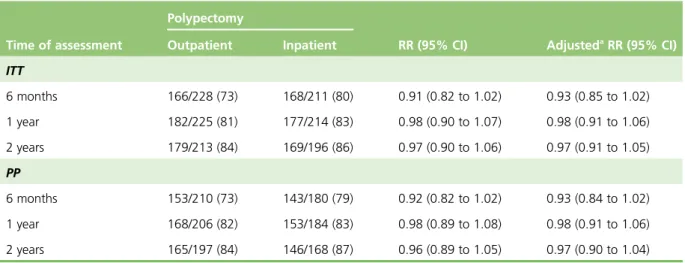
Results:At 6 months, 73% (166/228) of women who underwent outpatient polypectomy were
successfully treated compared with 80% (168/211) following inpatient polypectomy [relative risk (RR) 0.91, 95% confidence interval (CI) 0.82 to 1.02]. The lower end of the CIs showed that outpatient polypectomy was at most 18% worse, in relative terms, than inpatient treatment, within the 25% margin of
non-inferiority set at the outset of the study. By 1 and 2 years the corresponding proportions were similar producing RRs close to unity. There was no evidence that the treatment effect differed according to any of the predefined subgroups when treatments by variable interaction parameters were examined. Failure to completely remove polyps was higher (19% vs. 7%; RR 2.5, 95% CI 1.5 to 4.1) with outpatient polypectomy. Procedure acceptability was reduced with outpatient compared with inpatient polyp treatment (83% vs. 92%; RR 0.90, 95% CI 0.84 to 0.97). There were no significant differences in quality of life. The incremental cost-effectiveness ratios at 6 and 12 months for inpatient treatment were
£1,099,167 and £668,800 per additional QALY, respectively.
Conclusions:When treating women with AUB associated with uterine polyps, outpatient polypectomy was non-inferior to inpatient polypectomy at 6 and 12 months, and relatively cost-effective. However, patients need to be aware that failure to remove a polyp is more likely with outpatient polypectomy and procedure acceptability lower.
Trial registration:Current Controlled Trials ISRCTN 65868569.
Funding:This project was funded by the NIHR Health Technology Assessment programme and will be published in full inHealth Technology Assessment; Vol. 19, No. 61. See the NIHR Journals Library website for further project information.
Contents
List of tables xv
List of figures xvii
List of abbreviations xix
Plain English summary xxi
Scientific summary xxiii
Chapter 1Introduction 1
Background 1
Definition of a uterine polyp 1
Aetiology of uterine polyps 1
Diagnosis of uterine polyps 1
Prevalence and epidemiology of uterine polyps 2
Clinical significance of uterine polyps 2
Natural history 2
Oncogenesis 2
Abnormal uterine bleeding 3
Abnormal uterine bleeding and uterine polyps 4
Treatment of uterine polyps 4
Expectant management 4
Medical management 4
Surgical management: polypectomy 5
Evidence for uterine polyp treatment in abnormal uterine bleeding 6
Systematic Review performed during the Outpatient versus inpatient Polyp Treatment Trial 6
Methods 6
Search strategy 6
Study selection 7
Inclusion criteria 7
Type of study included 7
Study quality assessment 7
Synthesis of results 7
Results 7
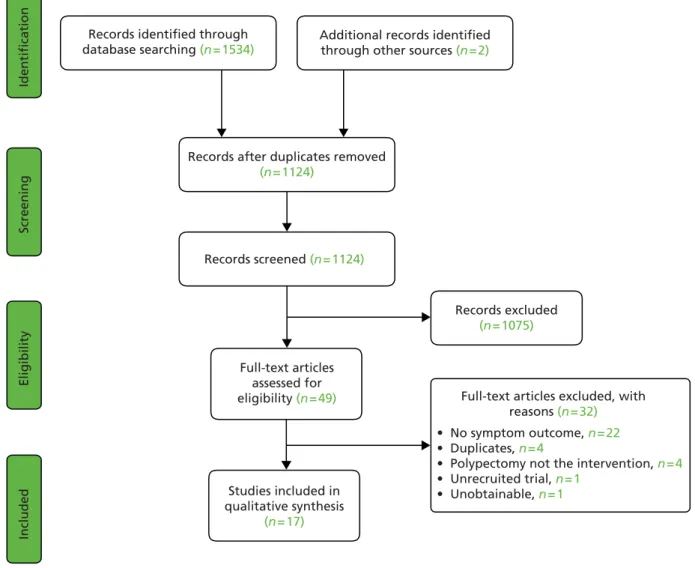
Results of search 7
Included studies 8
Study quality and design 8
Participant characteristics 8
Interventions 11
Outcomes 11
Discussion 15
Current practice: surgical method and setting 15
Need for a large simple trial of outpatient uterine polypectomy compared with
inpatient uterine polypectomy in abnormal uterine bleeding 16
Objectives 17
Methods 18
Exclusion criteria 18
Interventions 18
Outcomes 18
Randomisation and blinding 19
Statistical considerations 19
Summary of results 19
Bleeding response 19
Quality of life 19
Interpretation 23
Impact on planning for a definitive trial 23
Clinical factors and prognosis 23
Design implications for the substantive study 24
Objectives of the Outpatient polyp treatment study 24
Chapter 2Methods of randomised controlled trial and preference study 25
Objectives 25
Study design 25
Screening and consent prior to outpatient hysteroscopy 26
Determining eligibility 26
Randomisation 27
Women with strong preference for treatment setting 27
Stratification of randomisation 27
Treatment allocations 28
Surgical procedures 28
Withdrawal from the Outpatient versus inpatient Polyp Treatment Trial 29
Serious and unexpected adverse events 29
Other management at discretion of local doctors 29
Follow-up and outcome measures 29
Format 29
Timing of assessments 29
Primary clinical outcome measure: treatment success 29
Secondary clinical outcome measures 30
Statistical considerations 31
Statistical analysis 31
Trial management 33
Independent Trial Steering Committee 33
Data Monitoring and Ethics Committee: determining when clear answers have emerged 33
Research governance 33
Ethical approval 34
Chapter 3Results of the randomised controlled trial 35
Recruitment 35
Patients and follow-up 38
Operative results 38
Serious adverse events 42
Treatment success: primary outcome 42
Major secondary outcomes 45
Procedure acceptability 48
Other outcomes 48
Discussion of the randomised controlled trial 51
Principal findings 51
Strengths and limitations of the study 53
Implications for practice 54
Chapter 4Results of the preference study 57
Recruitment 57
Patients and follow-up 57
Operative results 57
Serious adverse events 64
Treatment success 64
Major secondary outcomes 64
Procedure acceptability 64
Other outcomes 67
Discussion of the preference study 68
Principal findings 68
Strengths and limitations of the study 69
Implications for practice 69
Conclusions 69
Chapter 5Economic analysis of the randomised controlled trial 71
Introduction 71 Methods 71 Costs 71 Outcomes 73 Assumptions 73 Analysis 73 Base-case analysis 74 Intention to treat 74 Per-protocol analysis 74 Missing data 74 Skewed data 76 Sensitivity analysis 76
Probabilistic sensitivity analysis 77
Results 78
Deterministic sensitivity analysis 78
Probabilistic sensitivity analysis 78
Discussion 81
Principal findings 81
Strengths and limitations of the study 82
Implications for practice 82
Conclusion 82
Chapter 6Patient acceptability and experience of outpatient polyp treatment 83
Introduction 83 Methodology 84 Sample 84 Method 84 Data analysis 85 Findings 85 Characteristics of sample 85
Participation in a randomised trial 85
Experience of the procedure 86
Pain 87
Information needs 88
Differences between inpatient and outpatient experience 89
Minority experiences 90
Satisfaction with the procedure 91
Discussion 91
Principal findings 91
Strengths and limitations of the study 92
Implications for practice 92
Conclusion 92
Chapter 7Discussion 93
Evidence of effectiveness 93
Evidence of cost-effectiveness 94
Evidence of acceptability 94
Implications for practice 95
Recommendations for research 96
Acknowledgements 99
References 103
Appendix 1Statistical analysis plan 115
Appendix 2Enrolment form: all participants 123
Appendix 3Follow-up forms 129
Appendix 4Assessment of inpatient treatment experience 133 Appendix 5Assessment of outpatient treatment experience 135
Appendix 6Patient cost questionnaire 137
Appendix 7Polyp treatment form 141
Appendix 8Post-treatment discharge form 145
Appendix 9CONSORT checklist (including details with respect to extension for
non-inferiority trials) 149
Appendix 10Results of primary end point (treatment success): sensitivity analyses 151 Appendix 11Results of primary end point (treatment success): comparison with
European Quality of Life-5 Dimensions score 153
Appendix 12Results of adjusted analyses for major secondary outcomes 155
Appendix 13Results of secondary outcomes: scores 157
Appendix 14Results of visual analogue scale bleeding scores sensitivity analysis: without those prescribed levonorgestrel intrauterine system at the time
of operation 159
Appendix 16Range of procedures and equipment used within the Outpatient
versus inpatient Polyp Treatment Trial 163
Appendix 17Local anaesthetic use in outpatient polypectomy 167
Appendix 18General anaesthesia (drug costs) 169
Appendix 19General anaesthesia (equipment plus staff costs) 171
Appendix 20Equipment costs for polypectomy 173
Appendix 21Outpatient polypectomy cost (bottom-up costing) 175 Appendix 22Inpatient polypectomy cost (bottom-up costing) 177
Appendix 23Cost incurred (per-protocol analysis) 179
Appendix 24Outcome data per protocol (complete data set analysis) 181 Appendix 25Cost-effectiveness and cost–utility analyses: per protocol 183 Appendix 26Deterministic sensitivity analyses: per protocol 185 Appendix 27Probabilistic sensitivity analysis: patient treatment compared with
inpatient treatment–per-protocol analysis at 6 months 187
Appendix 28Probabilistic sensitivity analysis: outpatient treatment compared
with inpatient treatment–per-protocol analysis at 12 months 189
Appendix 29Cost-effectiveness acceptability curve: outpatient treatment
compared with inpatient treatment–per-protocol analysis 191
List of tables
TABLE 1 Patterns of AUB 3
TABLE 2 Methodology of the included studies 10
TABLE 3 Operative details of included studies 12
TABLE 4 Treatment outcomes of included studies 14
TABLE 5 Baseline patient characteristics 21
TABLE 6 Bleeding response success 21
TABLE 7 Visual analogue scores for bleeding (lower score=better) 22 TABLE 8 Menorrhagia Multi-Attribute Assessment Scale scores
(higher score=better) 22
TABLE 9 EuroQol EQ-5D and health thermometer scores (higher score=better) 22 TABLE 10 Sexual satisfaction scores (lower score=better) 22
TABLE 11 Recruitment by centre 35
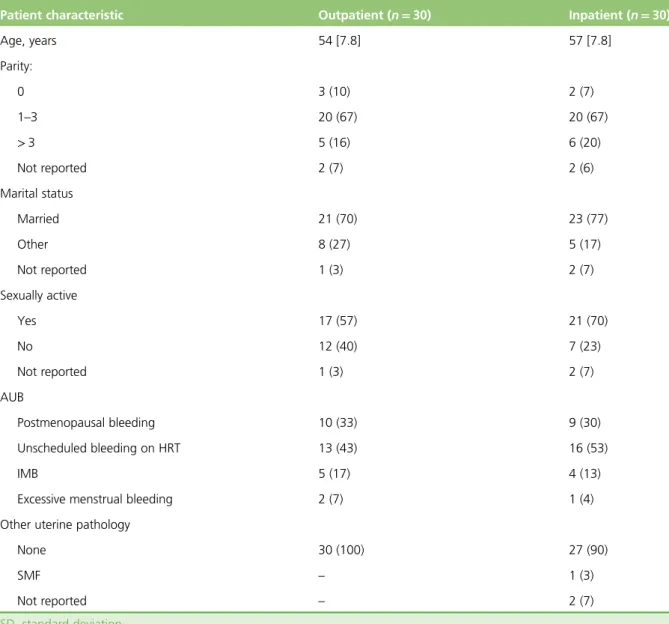
TABLE 12 Baseline characteristics 39
TABLE 13 Operative details 40
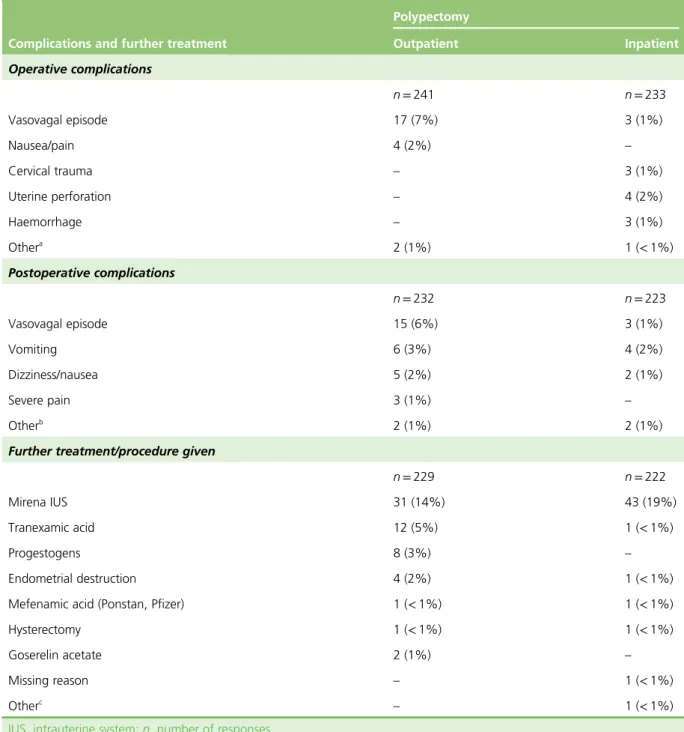
TABLE 14 Operative and postoperative complications including further
treatments/procedures given 41
TABLE 15 Primary outcome: treatment success 43
TABLE 16 Results of subgroup interaction tests (p-values shown) 43
TABLE 17 Likert response 45
TABLE 18 Results of secondary outcome measure: scores 46
TABLE 19 Operation acceptability: patient responses 49
TABLE 20 Currently taking any additional medical treatments for bleeding
symptoms in the last month 49
TABLE 21 Currently taking any additional medical treatments for bleeding
symptoms in the last month: details 50
TABLE 22 Gynaecological surgery over the full period of follow-up (not polyp
TABLE 23 Health service resource use and time off work in the last 6 months 52
TABLE 24 Recruitment by centre 58
TABLE 25 Baseline characteristics 61
TABLE 26 Operative details 62
TABLE 27 Operative and postoperative complications including further
treatments/procedures given 63
TABLE 28 Likert response 64
TABLE 29 Results of secondary outcome measure: scores 65
TABLE 30 Operation acceptability: patient responses 66
TABLE 31 Currently taking any additional medical treatments for AUB in the last
month: details 67
TABLE 32 Gynaecological surgery over the full period of follow-up
(not polyp removal) 67
TABLE 33 Health service resource use and time off work in the last 6 months 68
TABLE 34 Admission and procedure costs 72
TABLE 35 Outpatient polypectomy cost 72
TABLE 36 Inpatient polypectomy cost 73
TABLE 37 Costs incurred: ITT analysis (complete data set analysis) 75 TABLE 38 Outcome data for ITT (complete data set analysis) 75 TABLE 39 Cost-effectiveness and CUA (full data set after multiple imputation): ITT 76
TABLE 40 Estimation of out-of-pocket costs 77
TABLE 41 Deterministic sensitivity analyses: ITT 79
List of figures
FIGURE 1 Study selection process 8
FIGURE 2 Quality of observational studies using the STROBE guidelines 9 FIGURE 3 Study quality of the RCTs using the Cochrane risk of bias tool 9
FIGURE 4 Pilot OPT Trial profile 20
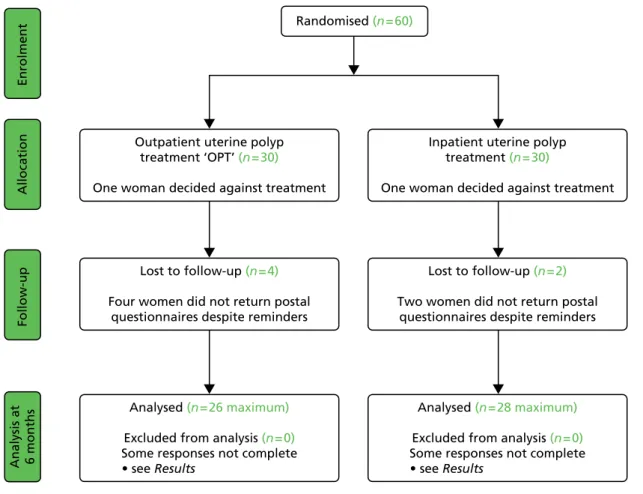
FIGURE 5 Outpatient polyp treatment flow diagram 25
FIGURE 6 Outpatient polyp treatment pathways for outcome measures 30
FIGURE 7 Trial accrual 36
FIGURE 8 Consolidated Standards of Reporting Trials diagram 37 FIGURE 9 Primary outcome: comparison with margin of non-inferiority 42 FIGURE 10 Primary outcome: by predominant bleeding complaint 43
FIGURE 11 Primary outcome: by site of uterine polyp 44
FIGURE 12 Primary outcome: by type of uterine polyp 44
FIGURE 13 Menorrhagia Multi-attribute Assessment Scale scores over time by
group (95% CI for mean shown at each time point; higher=better) 47 FIGURE 14 EuroQol EQ-5D scores over time by group (95% CI for mean shown
at each time point; higher=better) 47
FIGURE 15 EuroQol health thermometer scores over time by group
(95% CI for mean shown at each time point; higher=better) 47
FIGURE 16 Visual analogue scale bleeding duration scores over time by group
(95% CI for mean shown at each time point; lower=better) 48
FIGURE 17 Visual analogue scale bleeding amount scores over time by group
(95% CI for mean shown at each time point; lower=better) 48
FIGURE 18 Accrual to preference study 59
FIGURE 19 Allocated treatment according to randomisation and preference 59 FIGURE 20 Consolidated Standards of Reporting Trials diagram for
preference study 60
FIGURE 21 Probabilistic sensitivity analysis: outpatient vs. inpatient treatment–
FIGURE 22 Probabilistic sensitivity analysis: outpatient vs. inpatient treatment–
ITT analysis at 12 months 80
FIGURE 23 Cost effectiveness acceptability curve outpatient vs. inpatient
List of abbreviations
AA Automobile Association
AAGL American Association of
Gynecologic Laparoscopists
AUB abnormal uterine bleeding
CEA cost-effectiveness analysis
CEAC cost-effectiveness acceptability
curve
CHEERS Consolidated Health Economic
Evaluation Reporting Standards
CI confidence interval
CONSORT Consolidated Standards of
Reporting Trials
CUA cost–utility analysis
D&C dilatation and curettage
DMEC Data Monitoring and Ethics
Committee
DSA deterministic sensitivity analysis
EH endometrial hyperplasia
EQ-5D European Quality of Life-5
Dimensions
EQ-5D-3L European Quality of Life-5 Dimensions (three-level version)
FIGO International Federation of
Gynecology and Obstetrics
GnRH-a gonadatrophin-releasing hormone
agonist
GP general practitioner
HCHS Health and Community Health
Services
HMB heavy menstrual bleeding (formerly
known as menorrhagia)
HR hazard ratio
HRQL health-related quality of life
HRT hormone replacement therapy
HTA Health Technology Assessment
ICER incremental cost-effectiveness ratio
IMB intermenstrual bleeding
IQR interquartile range
ISS Index of Sexual Satisfaction
ITT intention to treat
LNG-IUS levonorgestrel intrauterine system
LREC Local Research Ethics Committee
MCMC Markov chain Monte Carlo
MeSH medical subject heading
MMAS Menorrhagia Multi-attribute
Assessment Scale
MRC Medical Research Council
MREC Multicentre Research Ethics
Committee
NICE National Institute for Health and
Care Excellence
NNTB number needed to benefit
NNTH number needed to harm
ONS Office for National Statistics
OPH outpatient hysteroscopy
OPT outpatient polyp treatment
OR odds ratio
PBAC pictorial blood assessment chart
PMB postmenopausal bleeding
PP per protocol
PSA probabilistic sensitivity analysis PSSRU Personal Social Services Resource
Unit
QALY quality-adjusted life-year
R&D research and development
RE related event
RR relative risk
SAE serious adverse event
SIS saline infusion sonography/scan
SMF submucous fibroid
STROBE STrengthening the Reporting of
OBservational studies in Epidemiology
TMG Trial Management Group
TSC Trial Steering Committee
TVS transvaginal ultrasound scan
VAS visual analogue scale
Plain English summary
A
bnormal vaginal bleeding is common, occurs in women of all ages, and is found in association with‘polyps’, which are localised, overgrown areas of the endometrium (womb lining) which protrude inside the uterus (womb). Removal of polyps or‘polypectomy’involves placing surgical instruments into the uterus via the vagina. This procedure is usually performed under general anaesthetic in hospital. However, advances in technology have made it possible to perform polypectomy in a conscious patient in an outpatient setting. We do not know if this approach is as effective as traditional inpatient management and how acceptable it is to women. Convenience and cost-savings to the UK NHS are potential advantages of outpatient polypectomy, and so even if this approach was marginally less effective it may still represent an attractive option to women and health services. We therefore conducted a randomised controlled trial with a parallel patient preference study to evaluate the effectiveness, cost-effectiveness and acceptability of outpatient polypectomy compared with conventional inpatient polypectomy.
The trial showed that outpatient polypectomy alleviated bleeding symptoms in 73% of women at 6 months and was no worse than inpatient polypectomy at 6, 12 and 24 months. However, when choosing a
treatment setting, women need to be aware that for every nine outpatient polypectomies performed an additional one procedure will fail compared with inpatient treatment. In addition, polypectomy in the outpatient setting is less acceptable compared with the inpatient setting. Outpatient polypectomy was found to be cost-effective compared with inpatient polypectomy.
Scientific summary
Background
Abnormal uterine bleeding (AUB) affects women of all ages and is the commonest reason for referral to secondary care. Uterine polyps are focal outgrowths of the endometrium and are frequently found in association with AUB. The available evidence supports the current practice of surgically removing uterine polyps to help alleviate bleeding symptoms. Conventional practice is to undertake this simple procedure under general anaesthesia in hospital. However, with advances in endoscopic technology, it is now possible to perform uterine polypectomy in an outpatient setting without the need for hospital admission and anaesthesia. Furthermore, treatment can be carried out at the same time as diagnosis; the‘see and treat’approach. The convenience and immediacy of outpatient treatment may appear advantageous over traditional practice. However, the limitations of operating in the genital tract using miniature equipment in a conscious patient may offset any apparent benefits. Thus, there is an urgent need for a robust health technology assessment of outpatient polyp treatment (OPT) to evaluate its effectiveness, cost-effectiveness and acceptability compared with traditional inpatient surgical treatment.
Objectives
In undertaking the Outpatient versus inpatient Polyp Treatment (OPT) Trial, we aimed to:
1. test the hypothesis that in women with AUB associated with benign uterine polyp(s), OPT achieved as good, or no more than 25% worse (in relative terms), alleviation of bleeding symptoms at 6 months compared with standard inpatient treatment (principal objective)
2. test the hypothesis that response to uterine polyp treatment differed according to the pattern of AUB and menopausal status by three secondary analyses:
i. premenopausal women compared with postmenopausal women ii. intermenstrual bleeding compared with excessive menstruation
iii. postmenopausal women on hormone replacement therapy (HRT) compared with those not on HRT
3. explore the variation in the effectiveness of OPT compared with standard inpatient polyp treatment at different periods of follow-up (12 and 24 months)
4. assess patient acceptability and impact on health-related quality of life (HRQL)
5. explore the relative cost-effectiveness of inpatient polypectomy compared with outpatient polypectomy.
Methods
Randomised controlled trial and patient preference study
A multicentre randomised controlled trial (RCT) was undertaken, supplemented by a parallel patient preference study. Five-hundred and seven women with AUB and hysteroscopically diagnosed uterine polyps were randomised to outpatient or inpatient polypectomy. A further 399 women willing to
participate in the OPT study, but expressing a strong treatment preference, were recruited into the patient preference study. The primary outcome was a successful treatment at 6 months, determined by the woman’s assessment of her bleeding. The prespecified non-inferiority margin for the primary outcome was 25%. Secondary outcomes included generic [European Quality of Life-5 Dimensions (EQ-5D)] and disease-specific (Menorrhagia Multi-Attribute Scale) quality-of-life measures, bleeding response on a Likert scale, visual analogue scale (VAS) bleeding scores, procedure acceptability and surgical re-intervention/
failure rates. Longer-term clinical outcomes were assessed at 12 and 24 months in the randomised trial. Primary analyses were by intention-to-treat (ITT) but per-protocol (PP) sensitivity analyses were also conducted for the primary outcome; further sensitivity analyses were also carried out to test the robustness of the results with respect to missing responses and re-interventions. Analyses was performed on predefined subgroups (type of bleeding, location and type of polyp) to examine if there was any evidence of a differential treatment effect. Point estimates [relative risks (RRs), mean differences] and 95% confidence intervals (CIs) were
produced for all main outcomes.
Economic analysis
An economic evaluation was carried out, which included both a cost-effectiveness analysis (CEA) and cost–utility analysis (CUA). The CEA was based on the patient-reported outcomes, and reported in terms of cost per successful treatment. The CUA was carried out based on an outcome of quality of life estimated from the EQ-5D (3L) questionnaire and reported in terms of additional cost per quality-adjusted life-year (QALY) gained. The costs and outcome measures incorporated into the economic analysis were collected prospectively during the OPT Trial. Costs were estimated using published standard sources of costs for UK NHS procedures (NHS reference costs 2011–12 and Personal Social Services Resource Unit 2012). Bottom-up costing was also undertaken and used in a sensitivity analysis. The robustness of the base-case results to plausible variations during the uptake of these procedures in routine NHS use was explored using a range of one-way deterministic sensitivity analyses (DSAs). In addition, probabilistic sensitivity analysis (PSA) was carried for the base case to enable the simultaneous exploration of the uncertainties in the cost and outcome data. The results of these analyses were presented in terms of incremental cost-effectiveness ratios (ICERs) at 6 and 12 months, reflecting the additional cost per additional outcome of interest of outpatient treatment compared with inpatient treatment. The analysis took the perspective of the NHS, but a wider societal perspective was also explored, as far as possible using the patient self-reported out-of-pocket costs.
Acceptability study
A patient acceptability study was undertaken using a phenomenological approach. This qualitative study was undertaken in order to aid interpretation and understanding of the questionnaire data on acceptability of the procedure, and to gain insight into women’s experiences of undergoing outpatient and inpatient treatment. A series of semistructured interviews were undertaken with a purposive sample of RCT and preference patients to explore the ways in which women make sense of their experience and to elicit their motivations for participation in the RCT.
Results
Randomised controlled trial and patient preference study
At 6 months, 73% (166/228) of women who underwent outpatient polypectomy were found to have been successfully treated, compared with 80% (168/211) who had undergone inpatient polypectomy (ITT RR 0.91, 95% CI 0.82 to 1.02; PP RR 0.92, 95% CI 0.82 to 1.02). The lower end of the CI showed that outpatient polypectomy was at most 18% (RR 0.82) worse in relative terms than inpatient treatment (same for both ITT and PP analyses), within the 25% margin of non-inferiority set at the outset of the study. In absolute terms this translates to a risk difference of–0.07 (95% CI–0.16 to 0.03) and a lower bound of the CI for number needed to harm (NNTH) of six with outpatient treatment (NNTH 15, 95% CI 6 to number needed to benefit 39). By 1 and 2 years, the corresponding proportions were very similar between groups, producing RRs that were close to unity. There was no evidence that the treatment effect differed according to any of the predefined subgroups when treatment by variable interaction parameters were examined. There were no significant differences in quality of life or VAS scores.
Failure to completely remove polyps was higher in the outpatient treatment group than in the inpatient treatment group (19% vs. 8% respectively; RR 2.5, 95% CI 1.5 to 4.1). There was reduced acceptability in the outpatient group (83% vs. 92%; RR 0.90, 95% CI 0.84 to 0.97), although the number of women
responding at least‘fairly acceptable’was 98% in both groups. Four uterine perforations occurred in the inpatient treatment group.
In the patient preference study, 81% of women expressed a preference for outpatient treatment. Eighty two per cent of women reported a successful response to surgery at 6 months in both the outpatient group and inpatient polypectomy group (RR 0.99, 95% CI 0.87 to 1.12). As with the RCT, no differences in quality-of-life or VAS scores were observed. The inpatient treatment setting was
associated with increased acceptability, although overall acceptability (at least‘fairly acceptable’) was 98% for outpatient treatment. Lower rates of procedure failure were seen compared with the RCT groups [odds ratio (OR) 0.64, 95% CI 0.42 to 0.99] but no differences between groups were seen.
Economic analysis
For the base-case analysis, the point estimates of the mean costs incurred at 6 months on the outpatient and inpatient treatment groups were £822 and £1482, respectively, with a cost difference of £660. The proportion of patients who reported improvement in symptoms following polypectomy were 0.74 and 0.81 at 6 months for outpatient and inpatient treatment groups, respectively. The point estimates for mean QALY levels in the inpatient and the outpatient groups at 6 months were equal at 0.41. In the ITT analysis at 6 months, it cost an extra £9421 per patient successfully treated with inpatient treatment compared with outpatient treatment. The additional cost per QALY was £1,099,167 per additional QALY gained in the inpatient group. At 12 months, the corresponding costs were an extra £22,293 per additional effectively treated inpatient and the additional cost per QALY was £668,800. Similar results were obtained using the PP analysis, although outpatient treatment dominated inpatient treatment (i.e. it was less expensive while being more effective) at 12 months.
Inpatient polypectomy remained more expensive than outpatient treatment in all of the scenarios considered, and the ICERs were similar in DSA to those obtained by the base-case analysis. PSA showed that although inpatient treatment is more expensive than the outpatient treatment, there was uncertainty around the difference in effectiveness, implying that the effectiveness of the two treatments was broadly similar. Outpatient treatment was the preferred procedure at lower willingness-to-pay (WTP) thresholds; only at WTP thresholds of≥£90,000 did the two alternatives have equal chance of being considered cost-effective.
Acceptability study
Various factors were found to be influential to women when deciding whether to take part in the OPT study. Altruistic reasons around helping other women were common in the RCT, whereas preference patients had more individual reasons for choosing one treatment option over the other; most women choosing outpatient treatment wanted it over and done with in one hospital visit. Women expressed satisfaction with their treatment, whatever their preference for treatment. The main difference in
procedural experience was that outpatients reported some pain and embarrassment during the procedure, whereas inpatients reported some level of fatigue from the general anaesthetic.
Conclusions
When treating women with AUB associated with uterine polyps, outpatient polypectomy was non-inferior to inpatient polypectomy at 6 and 12 months and more cost-effective. However, patients need to be aware that failure to remove a polyp is more likely with outpatient treatment and procedure acceptability slightly lower.
We found outpatient surgical treatment of uterine polyps to be non-inferior to traditional inpatient treatment under general anaesthesia for the successful alleviation of AUB when compared with our prespecified margin of non-inferiority of 25%. The removal of these focal pathologies was associated with symptomatic control in three-quarters of women at 6 months, and treatment outcomes were maintained
at 12 and 24 months. There was no evidence that the treatment effect differed depending on whether the presenting complaint was heavy, intermenstrual or postmenopausal bleeding, neither was it affected by the location or type of polyp. A significant improvement in generic and disease-specific HRQL was seen following polypectomy in both treatment groups at 6, 12 and 24 months, with no differences observed according to treatment setting. Although outpatient polypectomy was successfully completed in four out of five women, the odds of failure to complete polyp removal were two and a half times more likely in the conscious patient than with traditional inpatient treatment.
Outpatient polyp treatment was less expensive than traditional inpatient treatment and similarly effective, resulting in slightly lower self-reported effectiveness and QALY values at 6 and 12 months. The differences in costs and outcomes between these procedures were fairly constant at these time points, suggesting that the treatment has very few longer-term implications on health and resource use. The ICERs obtained by cost-effectiveness and CUAs were very high, reflecting the equivalence in effectiveness between these procedures. Sensitivity analyses clearly demonstrated that although outpatient therapy was definitely cheaper than inpatient treatment, there was uncertainty around the effectiveness estimates implying the effectiveness of the two alternatives was broadly similar. Thus, outpatient polypectomy appears to be more cost-effective than current inpatient approaches to polypectomy at current acceptable WTP thresholds for the NHS.
Rates of acceptability were high for both treatment groups, although acceptability with inpatient therapy as measured on a Likert scale on the day of treatment was higher. When women were willing to take part in the study but had a preference for treatment setting,>80% chose to have the treatment awake as an outpatient. Exploring acceptability and patient experience by semistructured interviews within 2 weeks of treatment revealed that women expressed satisfaction with their treatment, whatever their preference for inpatient or outpatient treatment. Women valued expeditious treatment and saw the immediacy and convenience of‘see and treat’outpatient treatment as a proportionate response to resolving their
problem. Women considered the rapid discharge and return to normal activities associated with outpatient treatment as an advantage.
Implications for health care
Outpatient polyp treatment is effective, acceptable and cost-effective. The current situation, for which the majority of NHS providers of gynaecological services are unable to routinely offer women the choice of outpatient surgical treatment for symptomatic uterine polyps, is unsustainable. Diagnostic outpatient hysteroscopy facilities and practitioners are widely available within most NHS hospitals, so that little additional infrastructure and training would be required to begin offering therapeutic services. Contemporary health service development needs to take into account the views of patients; the demand for the outpatient setting demonstrated in recruitment to the OPT preference study further support the clinical and economic argument for change. In addition to developing modern diagnostic and therapeutic
‘ambulatory units’within hospitals, providers should consider the possibility of setting up or expanding community-based services, which may be more convenient to service users and potentially more cost-effective.
The results of this research should inform the consenting process so that contemporary written material and counselling is succinct, valid and relevant. This will enable patients to acquire realistic expectations of the likely outpatient treatment experience, especially regarding pain, acceptability and treatment failure. The provision of timely written and verbal information is therefore of prime importance to allow women to make informed choices regarding treatment setting, especially where‘see and treat’approaches to diagnosis and treatment are to be offered.
Recommendations for future research (numbered in priority order)
1. Within gynaecological practice and other surgical disciplines, technology and patient expectations will drive the development of convenient and rapid outpatient interventions to resolve commonly encountered conditions that currently necessitate traditional inpatient surgery. Further RCTs, similar to the OPT Trial, should be conducted to evaluate the effectiveness and cost-effectiveness of such practices.
2. RCTs comparing uterine polypectomy compared with (1) medical management (e.g. the levonorgestrel intrauterine system) and (2) expectant management may be warranted, subject to preliminary feasibility studies, for the treatment of abnormal bleeding (stratified by bleeding pattern). Similar trials should be considered in subfertility.
3. RCTs should be conducted to delineate the optimal surgical approach and identify the best
technologies in terms of feasibility, acceptability and effectiveness to treat common uterine pathologies, such as uterine polyps, in an outpatient setting.
4. RCTs designed to evaluate approaches to minimising pain and enhancing both recovery and
acceptability of outpatient, ambulatory interventions. Environmental and procedural interventions, such as local anaesthetic, analgesic and sedative regimens, and variations in surgical technique, should be conducted.
5. Studies are needed to identify clinical factors, for example patient characteristics, anatomic, surgical and pathological indicators that are predictive of poor patient experience and adverse outcomes, including complications, with outpatient surgery. A prospective, centralised database of outpatient surgical procedures in gynaecology should be considered.
Trial registration
This trial is registered as ISRCTN65868569.
Funding
Funding for this study was provided by the Health Technology Assessment programme of the National Institute for Health Research.
Chapter 1
Introduction
Background
Definition of a uterine polyp
Uterine polyps are focal endometrial outgrowths that can occur anywhere within the uterine cavity. They contain a variable amount of glands, stroma and blood vessels, the relative amounts of which influence their visual appearance at hysteroscopy. Polyps may be soft and cystic or firm and fibrous; they may be pedunculated or sessile, single or multiple, and vary in size from small–with minimal uterine cavity distortion–to large, filling the whole cavity.
Aetiology of uterine polyps
Uterine polyps are composed of either functional and/or basal endometrium. They are typically a mixture of dense fibrous tissue (stroma), large and thick-walled vascular channels, and elongated glandular spaces of varying shapes1,2which protrude into the uterine cavity. The underlying cause of uterine polyp formation remains unclear but is believed to be multifactorial.3They are thought to originate as focal areas of stromal and glandular overgrowth. This hyperplasia of the endometrium may occur within an area of mucosa that contains more hormonal receptors, thus making it more sensitive to oestrogenic
stimulation.4,5The mechanism of uterine polyp development may differ according to menopausal status. In premenopausal women, a decrease in oestrogen and progesterone receptors within polyp stromal cells, although not the glandular component, has been found, which may make polyps less sensitive to cyclic hormonal changes.6–8Others have pointed to increased cell longevity, as a result of inhibition of apoptosis7,9and biomarkers for altered gene expression have been documented within uterine polyps.10,11 Diagnosis of uterine polyps
For many years the traditional method of diagnosing endometrial polyps was dilatation of the cervix and curettage of the endometrium [dilatation and curettage (D&C)]. However, this approach requires general anaesthesia, is associated with morbidity arising from uterine trauma, and has been shown to have limited diagnostic accuracy, because detecting and removing focal pathologies is notoriously problematic without direct visualisation.12–15The advent of convenient imaging of the uterine cavity using ultrasound or endoscopic technologies has largely replaced the D&C for endometrial evaluation;16when histological tissue samples are indicated, they can be obtained at the same time utilising blind, miniature outpatient biopsy devices17,18or, in the case of hysteroscopy, guided biopsy.19,20
Transvaginal ultrasound scan (TVS) is the least invasive outpatient test to evaluate the endometrium, as it avoids potentially painful instrumentation of the uterine cavity; the ultrasound probe simply sits within the top of the vagina. Uterine polyps typically appear as a hyperechoic lesion with or without cystic spaces, usually with regular contours and surrounded by a thin hyperechoic halo, or the polyp may appear as a non-specific endometrial thickening or focal mass within the endometrial cavity. TVS is often used as the first-line test for evaluating bleeding complaints because of its convenience and acceptability.21 However, compared with saline infusion sonography (SIS), through which fluid is instilled to expand the uterine lumen and delineate the walls of the uterine cavity, or outpatient hysteroscopy (OPH), which directly visualises the inside of the uterus, TVS has poorer accuracy for diagnosing uterine polyps.22,23 This is primarily because the sonographic findings are not specific to polyps, and other endometrial abnormalities–such as submucosal fibroids or endometrial irregularity–may have the same features, with the findings often subtle and easily overlooked especially for smaller polyps.24The development of ancillary technologies such as three-dimensional imaging and the use of colour or power Doppler may in time help improve the diagnostic accuracy of TVS for detecting focal pathologies within the uterus but evidence to date is lacking.25,26
The gold standard investigative tools for diagnosing uterine polyps are SIS or OPH. Both tests have good accuracy for both detecting or excluding the presence of polyps within the uterus.22,27–29Although SIS is popular in some parts of Europe and North America, OPH is more widely practised in the UK and worldwide. This is because the skills of hysteroscopy are more widely attained by practising gynaecologists and it is safely practised30,31but also because OPH allows convenient simultaneous removal of polyp (‘see and treat’),32may be more cost-effective16and appears to be preferred by women.33,34In contrast with OPH, SIS has the advantage of allowing assessment and visualisation of other pelvic structures, and visualisation of potential myometrial and adnexal abnormalities.35
Prevalence and epidemiology of uterine polyps
The prevalence of uterine polyps in a general adult female population without abnormal uterine bleeding (AUB) is generally estimated to be around 10%.32Case series of asymptomatic women are generally small and estimates of prevalence imprecise; after TVS, uterine polyps were detected incidentally in 12% of premenopausal women36and in 6–11% of infertile women without AUB.37,38In asymptomatic postmenopausal women, prevalences of 13%36and 16%39have been reported following investigation with ultrasound and hysteroscopy, respectively. However, they are found with increasing frequency in women undergoing investigation for problems with AUB (seeAbnormal uterine bleeding and uterine polyps). In addition to AUB, risk factors for uterine polyp development are thought to include obesity, late menopause and the use of the partial oestrogen agonist tamoxifen.36,40–42The role of hormone replacement therapy (HRT) on polyp formation is unclear, with some studies supporting an association36,40 and others not.43,44
Clinical significance of uterine polyps
Once a uterine polyp has been diagnosed, the current clinical consensus is to remove it.45The rationale for this approach is based upon (1) a belief that uterine polyps are unlikely to spontaneously resolve; (2) a desire to alleviate AUB symptoms or optimise fertility; and (3) a need to exclude serious
endometrial disease.32 Natural history
The natural history of endometrial polyps is not fully understood.46A proportion of small polyps may regress naturally without treatment, but the majority persist; in one series of 45- to 50-year-old
asymptomatic women, 27% of 31 polyps regressed spontaneously during a 1-year follow-up. Polyps that regressed tended to be smaller,47in keeping with an earlier case series.46
Oncogenesis
The pathogenesis and oncogenic potential of uterine polyps are unclear. However, the vast majority of uterine polyps are benign, and endometrial cancer originating within the polyp is a rare occurrence. Case series of varied populations report a cancer prevalence of approximately 0.5–3%.48–55Asymptomatic women are estimated to have a 4- to 10-fold reduced risk of malignancy compared with those women with AUB.55,56Outside of AUB, other risk factors for malignancy within uterine polyps appear to include increasing age, postmenopausal status, obesity, diabetes53–55and an increased polyp diameter.55,56The use of tamoxifen appears to increase the risk of atypical hyperplasia and malignancy within uterine polyps.41,57
Atypical endometrial hyperplasia (EH) is considered to be a premalignant condition58and the prevalence within polyps ranges between 1% and 3%.53–56Non-atypical hyperplasia has been reported to be found in up to 13% of polyps,53but the oncogenic potential of this condition is generally low. A systematic review of observational series evaluated the prevalence of premalignant and malignant disease within uterine polyps. It reported malignant tissue changes within endometrial polyps in 0–12.9% of included studies, and hyperplastic change in 0.2–23.8% of polyps. They found postmenopausal symptomatic women to have the highest risk of premalignant and malignant tissue changes.59A more recent review60similarly found symptomatic women with AUB bleeding to be at higher risk of premalignancy or malignancy within
a uterine polyp; they reported the prevalence of endometrial neoplasia within polyps in women with symptomatic bleeding as 4.2% (195/4697) compared with 2.2% (85/3941) for those without bleeding [relative risk (RR) 1.97; 95% confidence interval (CI) 1.24 to 3.14]. Among symptomatic postmenopausal women with endometrial polyps, 4.5% (88 of 1968) had a malignant polyp in comparison with 1.5%
(25/1654) of asymptomatic postmenopausal women (RR 3.36, 95% CI 1.45 to 7.80). The risk of premalignancy or malignancy within a uterine polyp was higher in symptomatic postmenopausal women (5.4%, 214/3946) compared with 1.7% (68/3997) in reproductive-aged women (RR 3.86, 95% CI 2.92 to 5.11).
Abnormal uterine bleeding
Abnormal uterine bleeding affects women of both reproductive (premenopausal women) and postreproductive (postmenopausal women) age. AUB is one of the four most common reasons for consulting a general practitioner (GP), and accounts for 70% of all referrals to hospital gynaecology clinics,61making this complaint one of the commonest problems in gynaecology. A large proportion of health-care resources in both primary care and hospital settings are used up in managing this condition.62
In premenopausal women, AUB manifests itself primarily as heavy menstrual bleeding (HMB), which has been defined as‘excessive menstrual blood loss which interferes with the woman’s physical, emotional, social and material quality of life, and which can occur alone or in combination with other symptoms’.63 HMB affects one in five women of reproductive age, with 5% of women aged 30–49 years consulting their GP each year because of the condition.64The overall prevalence of HMB in England and Wales has been estimated at 1.5 million women.65Uterine bleeding may be unscheduled, however, occurring outside of the expected time of the menstrual period. This irregular‘breakthrough’bleeding is known as intermenstrual bleeding (IMB) and is also common; a recent survey within primary care found the 2-year cumulative incidence of IMB to be 24% (95% CI 21% to 27%).66
Postmenopausal bleeding (PMB) is also a common clinical problem in both general practice and secondary care (hospital settings). Women are most likely to present with PMB in the sixth decade of life, for which consultation rates in primary care are 14.3 per 1000 of the population.67PMB causes significant alarm and anxiety to women, who recognise vaginal bleeding after their periods have ceased as abnormal. Rapid referral to secondary care for investigation is indicated because between 5% and 10% of women with PMB will have endometrial cancer.68Postmenopausal women taking HRT may also develop problematic genital tract bleeding. Women taking sequential HRT regimens may present with either heavy scheduled bleeding or unscheduled, erratic bleeding, whereas women taking continuous, combined‘no bleed’HRT preparations present with unexpected bleeding, which is, by definition, unscheduled and abnormal. Similarly, women with breast cancer who are taking the partial oestrogen agonist tamoxifen may present with unscheduled bleeding.69Table 1summarises the types of AUB.
TABLE 1 Patterns of AUB
Bleeding type Description
HMB Excessive cyclical menstrual bleeding; menses may be frequent, prolonged or irregular
IMB Intermittent or persistent episodes of bleeding that occur between normally timed menstrual periods; the bleeding may be of a regular and predictable or random, following no particular pattern PMB Any vaginal bleeding occurring after the menopause; in women taking exogenous hormones (HRT)
bleeding may be heavy and scheduled (sequential‘bleed’HRT regimens) or unscheduled (sequential or continuous combined‘no bleed’preparations)
Abnormal uterine bleeding and uterine polyps
The majority of women with symptomatic polyps present with AUB as described in the preceding section. With the advent of high-resolution pelvic ultrasound and hysteroscopic diagnosis, it has become clear that uterine polyps are highly prevalent during investigation of abnormal bleeding. The reported prevalence of endometrial polyps in general is considered to be between 20% and 30%,43,70,71the variation reflecting the criteria used to define a polyp, the diagnostic test used, and the type of population studied. Although the prevalence of uterine polyps may be increased after the menopause,36polyps are found commonly to affect both pre- and postmenopausal women across all age groups.46In recognition of the frequency in which uterine polyps are discovered in women of reproductive age, the International Federation of Gynecology and Obstetrics (FIGO) has recently accepted a new classification system for causes of AUB in the reproductive years, based on the acronym‘PALM-COEIN’with the‘P’denoting a
‘polyp’, i.e. describing AUB associated with the presence of uterine polyps.72
The improved diagnostic accuracy, has led to the increased use of surgical intervention for the removal of polyps (‘polypectomy’), a procedure that is universally practised to resolve symptoms and to obtain tissue for histological examination.45
Treatment of uterine polyps
Until recently, inpatient blind uterine curettage (D&C) under general anaesthetic has been the technique routinely used to perform uterine polypectomy. It involves wide dilatation of the cervix and the use of standard surgical polypectomy forceps to explore the uterine cavity. This technique is still used today, although most gynaecologists perform a hysteroscopy beforehand to locate the polyp to direct blind avulsion of the lesion followed by curettage.45,73Owing to the need for inpatient hospital admission and general anaesthesia, this approach is associated with heavy use of health-care resources, with over 25,000 inpatient procedures being performed during 2011–12 in the UK, a figure that was up by 4000 on the numbers from 1998 to 1999 confirming a trend towards an increase in the use of inpatient polypectomy [Department of Health (England), Hospital Episode Statistics–2011/1274].
Expectant management
The observation that polyps are an incidental finding in around 5–15% of women,36–39the majority of polyps are benign60,75and some may naturally regress46,47has led some to question whether removal of uterine polyps is necessary,76and indeed removal may subject women to unnecessary morbidity and wastage of scarce health service resources. Two RCTs have addressed this issue, randomising women with AUB and uterine polyps to expectant management or surgical removal.75,76One trial76failed to recruit women with PMB because neither doctors nor patients were in equipoise and so were unwilling to participate. This finding is consistent with postmenopausal women having a preference for hysteroscopic diagnosis and treatment when an abnormality is found.73The other RCT randomised 150 women with uterine polyps, of which 60% had AUB symptoms. Overall, no reduction in periodic blood loss was demonstrated at 6 months’follow-up, but IMB symptoms were significantly improved.75The findings from this study are limited, given that it was restricted to premenopausal women, the sample size was small (only 60% of the population included were symptomatic), the presenting complaints were heterogeneous and the study length of follow-up was short.
Medical management
Medical management is widely adopted for the treatment of menstrual complaints and includes the use of hormonal contraceptives. Although some of these women may have undiagnosed uterine polyps, evidence for the use of medical therapy is lacking and not recommended.63Gonadotrophin-releasing hormone analogues (‘GnRH-a’s) have been used prior to hysteroscopic resection of focal pathologies in premenopausal women77but the costs and menopausal side effects are difficult to justify for the removal of uterine polyps. This is because polyps are successfully removed in the majority of cases without the need for adjunctive medical preparation, in contrast with submucous fibroids (SMFs). One small series evaluated
different HRT regimens to see whether some have a reduced propensity to polyp formation.78The use of levonorgestrel-releasing intrauterine system (LNG-IUS) in women taking tamoxifen has been reported to reduce the incidence of endometrial polyps.79
Surgical management: polypectomy
A UK national survey45and two subsequent Dutch surveys80,81confirmed that the vast majority of gynaecologists advocated surgical removal of polyps from the uterus after diagnosis with 854 of 918 (93%),45455 of 553 (83%)80and 411 of 585 (91%) respondents performing polypectomy.81In the UK, the predominant method for removal of uterine polyps was by blind avulsion or curettage, after hysteroscopic location of the focal lesion under general anaesthesia,45whereas in the Netherlands removal under direct hysteroscopic vision under general or regional anaesthesia80,81was the favoured approach.
Blind uterine polypectomy
Blind methods to retrieve focal intrauterine pathology included blind curettage of the endometrium or avulsion with polyp forceps. These approaches can be associated with potential uterine trauma, which can be unrecognised and lead to serious complications from intra-abdominal damage.12,13Failure to remove polyps and problems with incomplete removal are well recognised.13–15,82–84
Hysteroscopic uterine polypectomy
Advances in hysteroscopic technology have enabled polyps to be removed under direct vision. Fine mechanical instruments, such a scissors, biopsy cups, forceps and snares can be used down a 5- or 7-French working channel of a rigid operative hysteroscope and the safety and feasibility of such
approaches have been reported.32,85–87Potential drawbacks of mechanical instrumentation are the fragility of the instruments, limited manipulation, difficulty with cutting or avulsing large and fibrous pathology, and, in some instances, bleeding.32,88
The adoption of electrosurgical technologies may help to overcome these difficulties. Large-diameter hysteroscopic resectoscopes that were developed originally to resect the endometrium for the treatment of HMB89can also be used to resect focal pathologies, such as SMFs77,90or polyps.91,92They have the advantage of speed and manipulation, but the large diameter of the instruments necessitates general anaesthesia, specialised skills are required93,94and potential serious complications from fluid overload and inadvertent electrosurgical injury can occur.95
In contrast with firm SMFs of myometrial origin, polyps are generally softer structures that are derived from the underlying endometrium. Thus, it has been recognised that smaller, less-traumatic electrosurgical instruments would suffice. A miniature bipolar electrosurgical system has been developed (Versapoint®, Gynecare, Ethicon, Somerville, NJ, USA) to cut away polyps and the safety, acceptability and feasibility of this approach has been reported.96–98However, retrieval of the tissue specimen from the uterine cavity can be problematic, and usually requires the additional use of mechanical instruments to effect.32Other technologies have been developed, including monopolar electrosurgical snares,86and, more recently, morcellation technologies (TRUCLEAR™, Smith & Nephew, Andover, MA, USA) and Myosure (Hologic, Marlborough, MA, USA), which allow simultaneous tissue cutting and extraction.99,100
Evidence for uterine polyp treatment in abnormal
uterine bleeding
In 2006, our group published a systematic review of the efficacy of uterine polypectomy for the treatment of AUB.87The review included nine case series (534 patients) and a single controlled observational study comparing setting for the treatment of uterine polyps (58 patients). No randomised controlled trials (RCTs) were identified, or any studies on patient acceptability or cost-effectiveness. A summary of the evidence is given below:
l Technique Uterine polypectomy was carried out under general anaesthesia utilising hysteroscopic or blind approaches in all studies, although local anaesthetic outpatient approaches were also used in three of these series. The hysteroscopic techniques under general anaesthesia involved use of large-size endoscopes that are associated with the need to perform wide cervical dilatation.
l Setting A single, non-randomised comparative study of 58 women undertaken at the Birmingham Women’s Hospital97showed that outpatient removal under local anaesthesia was no worse than inpatient, general anaesthetic treatment [14/18 (78%) vs. 14/16 (88%);p=0.7], a result that could partly be explained by the possibility of type II error due to small sample size and lack of randomisation. l Alleviation of AUB All studies reported an improvement in symptoms of AUB following treatment
(range 75–100%) at follow-up intervals of between 2 and 52 months.
l Influence of type of AUB It was possible to stratify treatment outcome according to type of abnormal bleeding in only one small study of 45 women,101which could not detect a difference between polypectomy for menstrual dysfunction or PMB (p=0.2), again partly due to small sample size. In summary, the evidence from this systematic review suggested that uterine polypectomy was a safe and technically successful procedure for the treatment of AUB.87However, randomised effectiveness data comparing treatment approaches or settings were non-existent, as were economic data to examine cost-effectiveness and qualitative data of patient acceptability and preference.
Systematic Review performed during the Outpatient versus inpatient Polyp Treatment Trial
For this report we have undertaken a systematic review of the effectiveness of uterine polypectomy, building on our previously published systematic review,87using updated methodological advances in search strategies, quality assessment and statistical analysis.102,103The objective of the review was to systematically review the literature to evaluate the effectiveness of uterine polypectomy for the treatment of AUB. Our secondary aims were to establish if the type of AUB, setting or technique influenced outcome.
Methods
Search strategyWe performed searches on the general bibliographic databases MEDLINE (1950–2013), EMBASE (1980–2013) and Cumulative Index to Nursing and Allied Health Literature (CINAHL) (1981–2013). Based on published advice, our search term combination for electronic databases was medical subject headings (MeSH) for polyps combined with word variants for endometrium (endometri* OR uter*) and surgical polypectomy (surgery OR curettage OR hysteroscopy OR polypectomy). Furthermore, all of the bibliographies of relevant studies were hand-searched to identify articles that were not captured by the electronic searches.