Acknowledgments:
I would like to thank several individuals for their support in completing this project. First and foremost, thank you to my advisor, Professor Isaac Unah. Without your thoughtful assistance, time, and guidance this study would not have been possible.
Thank you to Professors Gent (UNC Political Science), Benjamin (UNC Political Science), and Smith (UNC Public Policy) who generously helped advise me during the planning stages of this research project while I was studying abroad.
Thank you to school desegregation experts Sean Reardon, Genevieve Siegel-Hawley, and Betsy Brinson for being in contact with me while I was conducting the research, and graciously pointing me to more resources. A special thank you to investigative reporter, Nikole Hannah-Jones for her contributions to the research on this topic. In particular, her series on school
desegregation for This American Life served as my initial inspiration for this study, and her other compelling, narrative pieces on race in schools motivated me toward completion. I am excited to continue studying this topic after graduation in part because of her work and example.
Thank you to Michele Hayslett, Data Librarian, in Davis Library for helping me navigate census data and answering every question I had about the best sources for my data.
Table of Contents:
INTRODUCTION 3
SCHOOL DESEGREGATION IN THE UNITED STATES 5
I. AFRICAN AMERICAN ADVOCACY 6
II. BROWN V. BOARD OF EDUCATION OF TOPEKA 6
III. VICTORY FOR INTEGRATION 8
IV. TURNING BACKWARDS 9
FIGURE 1-NUMBER OF DISTRICTS DISMISSED FROM COURT ORDER, BY YEAR AND REGION 11
V. THE SUPREME COURT RULES ON VOLUNTARY DESEGREGATION 13
VI. RESEGREGATION 16
FIGURE 2-PROPORTION OF BLACK STUDENTS IN MAJORITY WHITE SCHOOLS IN THE SOUTH,1954-2011 17
LITERATURE REVIEW 18
I. BENEFITS OF INTEGRATION 18
II. THE ROLE OF POLITICS 21
III. CHANGING DEMOGRAPHICS 23
IV. VOLUNTARY DESEGREGATION POLICIES 24
V. CONTRIBUTION TO THE LITERATURE 32
THEORY 33
I. DEPENDENT VARIABLE 34
II. INDEPENDENT VARIABLES 34
III. EXPECTED EFFECT OF VARIABLES (HYPOTHESES) 35
TABLE 1–SUMMARY OF INDEPENDENT VARIABLES 43
METHODOLOGY 44
I. CONSTRUCTING THE SAMPLE 44
TABLE 2–LIST OF DISTRICTS IN MY STUDY 49
II. DATA COLLECTION 51
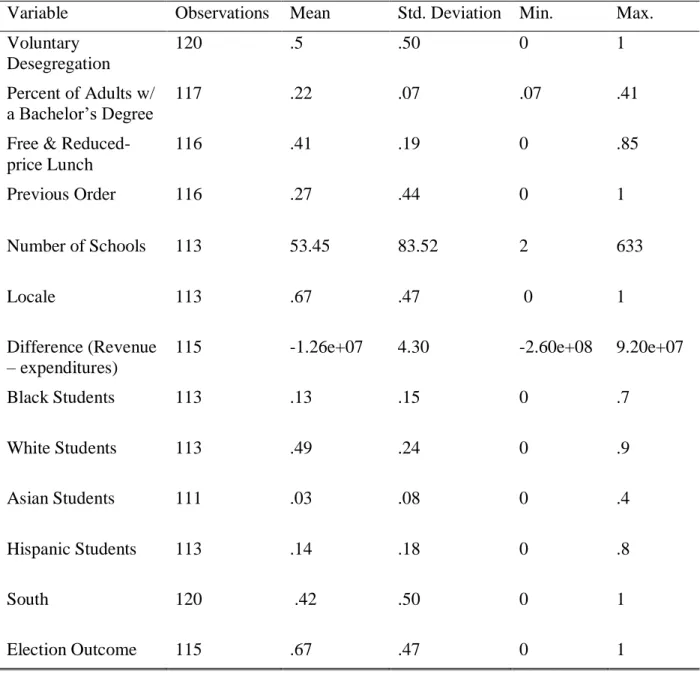
TABLE 3–DESCRIPTIVE STATISTICS FOR EXPERIMENTAL SCHOOL DISTRICTS 57
TABLE 4–DESCRIPTIVE STATISTICS FOR SAMPLE OF SCHOOL DISTRICTS,EXPERIMENTAL AND CONTROL 58
FINDINGS 59
TABLE 5–PAIRWISE CORRELATION OF FREE &REDUCED-PRICE LUNCH 60
AND RACE OR ETHNICITY VARIABLES 60
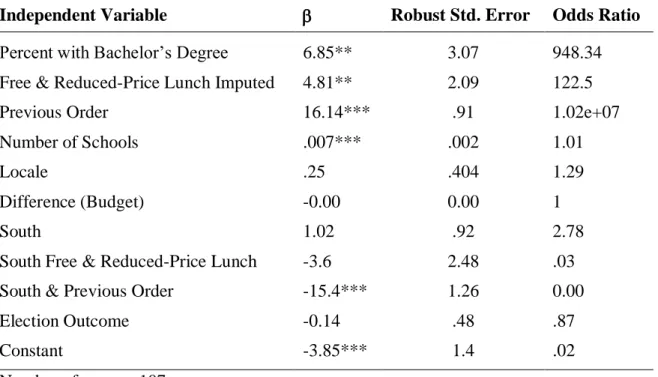
TABLE 6–LOGISTIC REGRESSION OF THE ADOPTION OF VOLUNTARY SCHOOL DESEGREGATION PLANS 62
(NO RACE OR ETHNICITY VARIABLES) 62
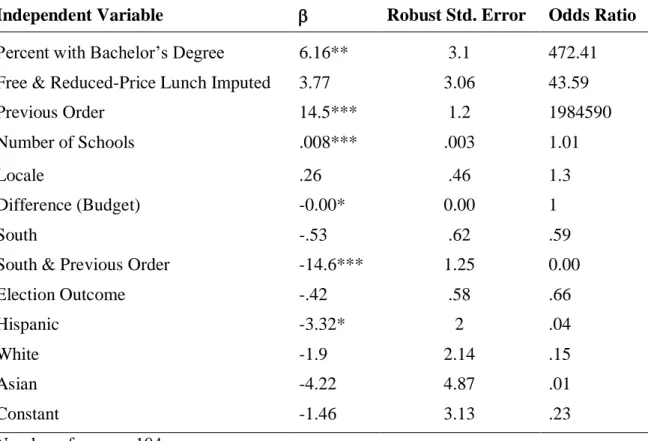
TABLE 7–LOGISTIC REGRESSION OF THE ADOPTION OF VOLUNTARY SCHOOL DESEGREGATION PLANS 64
(RACE OR ETHNICITY VARIABLES INCLUDED) 64
EXTERNAL VALIDITY 66
CONCLUSION 67
Introduction
Various national governments around the world including South Africa, Germany, and the United States struggle with the best way to create fair, effective public schools against a legacy, and in many ways contemporary reality, of institutionalized racial segregation. As public education is an essential function of modern governments, policy makers face a political choice regarding what they should, or should not, do to redress injustice and create a system that best educates all their citizens. These choices represent questions about the agency of marginalized groups in a democracy, and the collective bargaining process that transpires between citizens, local officials, and the courts when such groups seek to effect change.
In the United States, the process of creating more egalitarian schools has meant a long and tenuous process of racial integration. The historical arc of this struggle is characterized by the interaction of individual citizens, who agitated for change, with all three branches of government. The Supreme Court played an indispensable role in determining the trajectory of this issue, as demonstrated by monumental cases such as Sweat v. Painter (1950), Brown v. Board of Education (1954) and Swann v. Charlotte-Mecklenburg Board of Education (1970). Eventually, intervention by federal courts, combined with presidential and congressional power in the form of the 1964 Civil Rights Act, resulted in substantial progress towards school
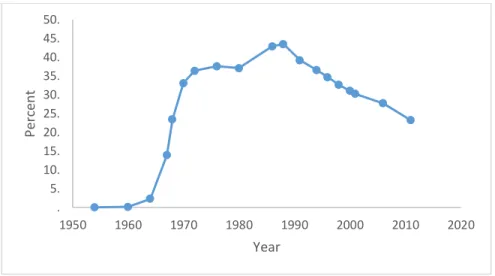
integration. The percentage of black students in majority white schools in the South went from 0 prior to Brown v. Board, to 43.5 percent by the peak of integration in 1988 (Orfield,
Frankenberg, Ee, & Kuscera, 2014).
By the 1990s however, the process of desegregation entered into an ongoing period of reversal. The Supreme Court began issuing a series of decisions, starting with Board of
Law Center, 2004). As more and more schools have been granted “unitary” status, meaning their federal desegregation order has been lifted by the courts, more and more have “resegregated.”
Today, public schools are more segregated than they were in the 1970s (Potter, Quick, & Davies, 2016). This is a high stakes situation because resegregation counteracts the benefits to students that integration provides. No other policy action in the U.S. has been as effective at narrowing the black-white racial achievement gap in public schools or preparing our citizens to flourish in a diverse workplace than racial integration (Hannah-Jones, 2015). Despite this reversal, there are fewer than 100 school districts around the country that are attempting to counteract the resegregation process by voluntarily adopting modern desegregation policies (Potter et al, 2016).
The central question of this thesis focuses on voluntary school desegregation plans and their adoption. With more than 13,500 school districts in the country in the 2013-2014 school year, and less than 100 districts engaged in voluntary desegregation, these districts are extremely rare (National Center for Education Statistics, 2016). Why is it that some rare school districts choose to adopt voluntary school desegregation policies, while others within the same state do not? It is the goal of this study to better understand the dynamics of communities that have willfully decided to enter into a historically challenging collective bargaining process, and have successfully implemented these policies. It is important to study these school districts because the successful adoption of such strategies may be the nation’s most viable approach to
counteracting segregation in the modern era.
Upon consulting several lists of school districts currently engaged in voluntary
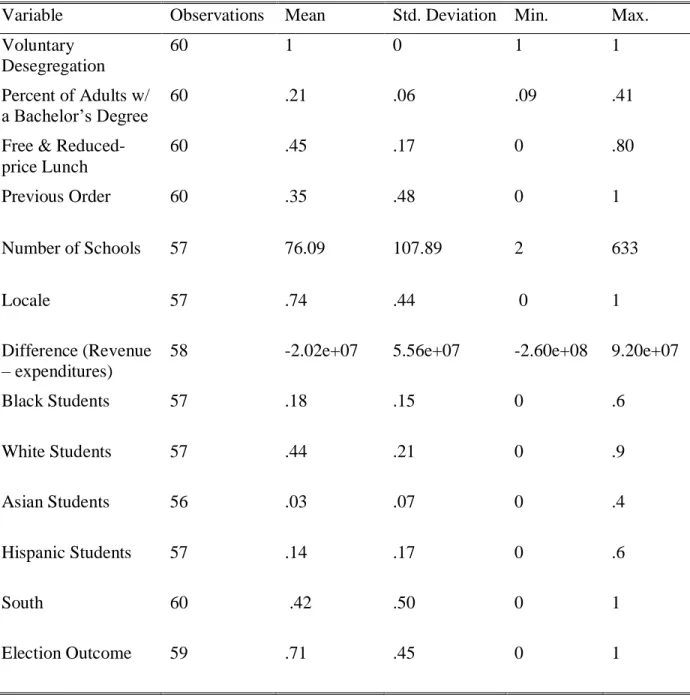
60 districts engaged in voluntary desegregation, and 59 control districts. By collecting data regarding a range of independent variables, I seek to identify any trends in the ideological, economic, geographic, and social characteristics of the districts that opt-in to voluntary desegregation.
In the following sections, I first provide background information regarding the trajectory of history that connects Brown to today’s voluntary desegregation. After reviewing the existing theoretical literature on this topic, I will outline the ways in which my research contributes to the existing body of knowledge regarding voluntary school desegregation efforts. Subsequently, I will explain my theory and hypothesis, the methodology of my study, and the data that I have collected. Next, I present my analysis of the data. I conclude by discussing the external validity of my findings and reflecting on the need for further research on this topic.
School Desegregation in the United States
I. African American Advocacy
It is critical to point out that the advocacy of the African American community pre-dates, and is indispensable to, the decision by the Supreme Court in Brown v. Board (1954). Such a
landmark decision would have never come about without individuals who were willing to advocate for change. Further, it required subsequent African American individuals to take their cases to court when Brown was violated in order to make sure the law was enforced.
By the early 20th Century, African American communities expressed varying opinions about how to achieve access to quality education within a system that marginalized them, most visibly in the South through Jim Crow (Jirout, 2016). World War I prompted many African Americans to begin organizing for improved education because the war highlighted that although black Americans were “free” and could serve their country abroad, they could not access quality education at home. Through membership in organizations like the NAACP, African Americans in Jim Crow strongholds like North Carolina lobbied for improving the schools that served black children. The government feared that new advocacy by the black community would lead to broad social unrest. For this reason, they made improvements to black schools but perpetuated the idea that black communities needed to lead the charge for improvements, and “help themselves.” In this way, they hoped to channel black activism towards their communities rather than towards the establishment (Jirout, 2016). As a result, there was a rapid growth of school programs and resources funded by African American communities during this time period. This led to such opportunities as vocational training, “which weakened Jim Crow’s ability to dictate a child’s future based solely on skin color” (Jirout, 2016, pg. 459).
II. Brown v. Board of Education of Topeka
education built, Southern white leaders began improving black schools themselves in an effort to prevent a decision like Brown that would mandate integration. In 1954, the University of North Carolina Press published The Negro and the Schools, in which Harry Ashmore describes Southern schools as, “a region with… last-minute efforts at equalization under the threat of imposed desegregation but with pervasive… inequality remaining after nearly sixty years of ‘separate but equal’ education’ (qtd in. Boger & Orfield, 2014, pg. 1). This description points to the need for Brown; however, the reaction to the decision was not monolithic among the black community. For many, integration meant losing the upgrades to their separate education that they had worked hard to attain. Many viewed integration as the process of becoming “second-class citizens” again in white schools (Jirout, 2016). Nonetheless, in Brown vs. the Board of Education the Supreme Court called for an end of a system in which there were racially identifiable “white” and “black” schools, and ongoing resource disparity (Holley-Walker, 2010).
Chief Justice Earl Warren wrote in his decision that “separate educational facilities are inherently unequal,” however, the attempts to improve schools by southern officials, discussed above, prevented the issue of resources from being the main focus of his decision. The
paramount factor in his decision was what he described as the societal effect of segregation itself. He wrote that to separate black children “from others of similar age and qualifications solely because of their race generates a feeling of inferiority as to their status in the community that may affect their hearts and minds in a way unlikely ever to be undone” (qtd. in Hannah-Jones, 2014b, pg. 3). He emphasized that school integration was an important step towards integrating society more generally.
accompanying enforcement mechanism, however, so Brown had little immediate effect on schools. School officials in the South capitalized on the ambiguous language of the Supreme Court to delay integration through a combination of avoidance and “obstruction politics.” Obstruction politics ranged from acts like lengthy school board votes and prolonged lawsuits, to the Virginia legislature directly threatening to close any school with a desegregation order. A violent resistance also emerged that included campus riots and Alabama Gov. George Wallace’s infamous stand in the schoolhouse door, where he physically blocked two black students from entering the school, proclaiming, “segregation today, segregation tomorrow, segregation forever” (Southern Poverty Law Center, 2014). By 1963, almost a decade after the decision, only 1% of black students were enrolled in majority white schools in the South (Hannah-Jones, 2014a). In this time period, the decision did however, delegitimize segregation and encourage Southern black people to confront racism with a greater level of confidence and optimism. (Boger & Orfield, 2005). Frequently, desegregation only came to a district once an individual or the Department of Justice sued the school district. When found in violation of the Constitution, the district was then given a personalized federal court order to desegregate, complete with a plan and timetable for doing so. These orders gained a true enforcement mechanism with the passage of the 1964 Civil Rights Act. Under this law, if school districts did not comply with
desegregation mandates they stood to lose the increasing amount of school funding allocated to them under the 1965 Elementary and Secondary Education Act. (Boger & Orfield, 2005).
III. Victory for Integration
permissible. The decision declared that segregation was to be eliminated “root and branch” from the education system, meaning no schools’ student population or faculty should be “racially identifiable,” and all resources and curriculum should be equalized (The NAACP Legal Defense and Educational Fund, Inc. et al, 2005). Change was most dramatic in the American South. Southern schools became the most integrated for a few reasons. It was due, in part, to the extra oversight federal judges had to levy in order to get these districts to desegregate. The courts issued the largest number of district-specific desegregation orders to districts in the South (Frankenberg, 2014). Additionally, many large cities in the South were part of larger school districts that included both city and suburbs, unlike in the North. This meant that, generally speaking, mostly black and Latino students could be bused from low-income, urban areas to attend white-majority schools in the suburbs, without ever having to leave the district. In other parts of the country, many large cities already had few remaining white students, making integration more difficult, short of interdistrict cooperation (Boger & Orfield, 2005). Despite its many challenges, by the peak of integration in 1988, Brown seemed to be a proven success. Between 1971 and 1988, the racial achievement gap between black and white 13-year-olds was narrowed by almost half (Hannah-Jones, 2014b). Both high school graduation levels and college-going rates soared among African American students. In the early 1950s, around 25 percent of black students were graduating from high school. Some federal statistics put this number at 75 percent before resegregation began to take hold in the 1990s (Boger & Orfield, 2005, pg. 7).
IV. Turning Backwards
desegregate urban school districts across district lines (NAACP et. al, 2005). This meant that many of those racially-isolated, urban districts in regions outside of the South would never feel the effects of Brown. The most significant reversal of integration came in 1991 with Oklahoma City Board of Education vs. Dowell. In this ruling the Court seemingly changed its mind about the prior expectations for desegregation, expressed in Green. Instead of requiring that schools eliminate traces of racial discrimination “root and branch” from all elements of the school environment, Dowell stated that districts have met the goal of integration if they eliminate discrimination “to the extent practicable” (NAACP et. al, 2005). This meant that courts could dissolve a district’s court order and grant them “unitary” status, returning them to local control, if they had complied with it “in good faith… for a reasonable period of time” and if they claimed that they needed to revert to segregated neighborhood schools for “educational [not racial] purposes” (Boger & Orfield, 2005, pg. 11).
The criteria upon which schools are granted unitary status is of critical importance because there is a direct correlation between a district’s court order being lifted, and that district resegregating (Reardon, Grewal, Kalogrides, Greenberg, 2011). Between the Dowell decision, Freeman vs. Pitts (1992) and Missouri vs. Jenkins (1995) the Court continued to make it
The Court’s decisions in the 1990s spurred a host of “unitary” decisions for districts, effectively lifting their court orders. In addition to the ideological shift in the Supreme Court, these decisions can be attributed to blatant suspension of judicial activism, and “integration fatigue” on behalf of district court judges–many of whom had faced death threats for their determination to enforce desegregation (Parker, 2003; Hannah-Jones, 2014a). Under President George W. Bush, the Department of Justice also began taking an active role in ending
segregation orders under the claim that they were never intended to be permanent. Between 2000 and 2008, the Bush administration instructed the DOJ to close lingering desegregation orders wherever possible; 60% of the districts that have been granted unitary status since 1967 were released from their orders in this eight-year period. As a result of these multiple factors, there was a large increase in the rate of districts granted unitary status after 1991 and persisting through at least 2007 (Reardon et al., 2011).
Source: Reardon et al., 2011
Many of these districts have been released from their orders despite the fact that
segregation prevails in their schools. This often happens because judges incorrectly interpret the “lack of action” in cases to mean that the problems have been solved. Other times, it is because it is the path of least resistance. Take for example, Gadsen City Schools in Alabama. A judge released them from their court order in 2000; however, at the time they still operated a 90-percent black high school, had not adopted any specific desegregation policy, and still had a school named after the founder of the Ku Klux Klan. When the district court judge in the case was asked why he did not do more to ensure that the district complied with their order before release, he said it “would only invite another dispute” (Hannah-Jones, 2014b).
Wendy Parker (2003) explains the rise in unitary districts by saying, “district court judges relinquished even more power [to the districts] than is compelled by the admittedly
significant consequence of this process is that once a district has been granted unitary status, it is harder for minority families to win a case when suing for greater integration (Hannah-Jones, 2014a).
V. The Supreme Court Rules on Voluntary Desegregation
Some newly declared “unitary” districts chose to continue pursuing integration of their own accord by maintaining race as a factor for school assignment. Several such plans came to be protested by white families. In 2007, the Supreme Court ruled on one such school district’s voluntary integration plan, that of Jefferson County School District in Louisville, Kentucky, and a similar plan by Seattle School Distict No. 1. in the case Parents Involved in Community
Schools v. Seattle School District No. 1. Decided in 2007, this case has come to be commonly known as “PICS.” In PICS, the court ruled that these voluntary race-based integration plans were unconstitutional. The Court decided that the district’s use of students’ race in school assignment was not “narrowly tailored” to meet school diversity goals. Justice Anthony Kennedy asserted that the school districts could “achieve their stated ends through different means” (qtd. in Kahlenberg, 2007). Essentially the Court ruled that if districts are not under federal mandate to consider race, they cannot implement race-based school assignment policies without first considering other, race-neutral demographic factors (Hossain & Reed, 2016). This was the first time that the Court went beyond simply ending federal desegregation orders, to limiting the ways in which school districts could voluntarily integrate their students by race (Frankenberg, 2014).
With a judiciary system that no longer enforces integration measures, the PICS decision caused concern about how dramatically it would limit districts from voluntarily pursuing
prioritizing integration as a method for school reform a long time ago. He believes that the decision itself does not have as many tangible consequences for schools as it has symbolic impact. To Ryan, the idea that schools should teach students how to cooperate with those of diverse backgrounds while learning and working was “pushed into the background” before PICS, largely because of the reversal in the posture of the Supreme Court itself. For this reason, the consequences of this decision will only affect a small number of schools, because only a few are even attempting to do this. Of those voluntarily desegregating, even fewer are employing broad-based, voluntary integration plans like the ones struck down in the PICS decision. Ryan argues that the main consequence of this decision is that it takes away “hope” that the Court would rule “firmly on the side of school integration,” and it was a missed opportunity for the Court to endorse voluntary integration as a means to pursue the goals of Brown in this century (Ryan, 2007, pg. 157). Reardon and Rhodes explain the symbolism of the decision by saying it represented, “the growing societal de-emphasis on race and race-based remedies for racial and social inequality” (Reardon & Rhodes, 2011).
districts in the entire country that still buses students among urban and suburban neighborhoods. Whereas other districts composed of urban and rural portions are plagued by the “struggling inner city schools” and “wealthy suburban schools” dichotomy, the most highly desired high school by parents in Jefferson County is located downtown (Semuels, 2015).
Many graduates of the Jefferson County School system spoke openly in protest of the decision in PICS, including parents who were students at the time of forced busing in the 1970s (Semuels, 2015). Their outrage stemmed from the fact that they learned first-hand that Louisville has benefited from an integrated school system. Gary Orfield (qtd. in Semuels, 2015) points out that while Louisville has similar racial makeup and faces similar urban challenges as places like Detroit and Richmond, Virginia, Louisville has fared much better than the other two cities in certain economic and social ways as a result of their integrated school system. This includes less housing segregation as a result of “white flight,” according to a study by Genevieve Siegel-Hawley (2013), which has kept home values and tax revenues in Louisville stable–not the case for the struggling housing market of Detroit. Siegel-Hawley’s central finding was that in some ways good “school policy can become housing policy,” and good housing policy economically strengthens cities (Siegel-Hawley, 2013). Despite apparent benefits to the community, and improved economic outcomes for low-income students, the persistence shown by Louisville in desegregating its schools is unique (Hannah-Jones, 2014b).
Jefferson County’s dedication to integrated education sparked my interest in the topic of this thesis. Louisville seems to suggest that, especially after PICS, if a district is voluntarily desegregating today they must persist despite legal and social challenges, and have a firm political commitment to preserving integration. Jefferson County’s strong economic and
and learn more about the sources of the persistence in districts that have stuck by the original promise of Brown, seemingly against all odds.
It is unclear how many schools that had not adopted a voluntary desegregation policy at the time of the PICS ruling were deterred from ever doing so because of the decision. In 2011 the U.S. Department of Education and the Department of Justice issued guidance on permissible ways that districts can still pursue racial diversity in schools in the wake of PICS. Despite the opportunity to pursue “generalized race-based approaches,” it is likely that many districts avoid using race as a factor in student assignment all together. Lawyer Roger Clegg commented after PICS that “prudent school districts should shy away from any use of race in assigning students for fear of costly and disruptive litigation” (qtd. in Ryan, 2007, pg. 249). Ryan judges that this fear can serve as both a “real deterrent” or a “convenient excuse for inaction” to districts that are considering voluntary plans (Ryan, 2007, pg. 249). On the other hand, the PICS decision may have the opposite effect on the approximately 300 school districts that remain under a federal desegregation order. PICS has no bearing on the validity of assignment plans that consider race because they were previously mandated to do so by the Court. Ryan estimates that if a district assigns students by race and would like to continue doing so, and the local district court agrees with the goal of racial integration, both parties have an incentive to keep the court order in place. In this way, some districts may opt to “voluntarily integrate” by never petitioning to have their order closed (Ryan, 2007).
VI. Resegregation
characterized by dramatic resegregation. Cases like Jefferson County schools in Louisville are the exception. By many measures, schools are more racially segregated now than they were in the 1970s. Indeed, “more than one‐third of all black and Latino students attend schools that are more than 90 percent non‐white,” (Potter et al., 2016). Resegregation has indeed been the most pronounced for Latino students, particularly those living in the western region of the country (Orfield et al., 2014). An “apartheid school” is defined as one that has a white student population of 1 percent or less. The number of apartheid schools in the U.S. grew from 2,762 in 1988 to 6,727 by 2011 (Hannah-Jones, 2014b). While there were 43.5% of black students in the South by 1988, the peak of desegregation, that number had dropped to 23.2% by 2011, and is projected to continue dropping (Orfield et al., 2014, pg. 10-11).
Figure 2 - Proportion of Black Students in Majority White Schools in the South, 1954-2011
Source: Data from Gary Orfield’s report, Brown at 60: Great Progress, a Long Retreat and an Uncertain
Future (2014).
Orfield and Frankenberg contend that although progress has been lost, black students in the south are clearly better off now than they were prior to Brown. Black students are “ten times
. 5. 10. 15. 20. 25. 30. 35. 40. 45. 50.
1950 1960 1970 1980 1990 2000 2010 2020
Per
ce
nt
as likely to be in majority-white schools as they were when the 1964 Civil Rights Act was passed” (Orfield et al., 2014, pg. 11). The “progress lost” is that segregation has significantly increased today in comparison to 1970. As Erica Frankenberg summarizes it, although Brown did positively impact the South, “the country still has a system of schools in which poor black and Latino students often are not in the same schools as white, middle class students
(Frankenberg, 2014).
Literature Review
Historical analysis of school desegregation, as explored above, makes up a good portion of the literature on this topic. There are, however, several additional research areas of note. These include the increasing amount of literature on the benefits and importance of school integration, the merits of the shift from racial integration to socioeconomic integration, the changing demographics of the country, the political nature of desegregation, and emerging research specifically on the prevalence and usage of voluntary desegregation policies themselves. In this section, I review this research and examine how my thesis makes a unique contribution to the literature. Areas of research outside the scope of my study include emerging strategies for encouraging the adoption of voluntary desegregation.
I. Benefits of Integration
low-income, due to the strong relationship between race and socioeconomic status in this country (Orfield et al., 2014). For this reason, minority students in segregated schools are not only
segregated from white students, they are isolated from middle-class students. This is detrimental because learning in classrooms with middle-class students is a central predictor of academic success (NAACP et. al, 2005).
Learning in classrooms with middle-class students improves the educational outcomes of low-income students for several reasons. First, white, middle-class students tend to have better facilities and resources (Hannah-Jones, 2015). Second, middle-class students, on average, have more developed vocabularies than low-income children, and higher educational expectations (Kahlenberg, 2001). This creates a more rigorous, engaging classroom environment. When low-income children attend school with middle-class peers, they also benefit from the involvement of middle-class parents. Middle-class parents, who tend to work fewer jobs and own cars, are more likely to volunteer in the classroom, join the Parent-Teacher Association, and hold school officials accountable. Additionally, middle-class schools attract more highly qualified teachers than low-income schools do. These teachers are more likely to be teaching in their field of expertise and have high academic expectations. Not only is the quality of instruction better, but middle-class schools also tend to offer more advanced curriculum, such as Advanced Placement (AP) and International Baccalaureate (IC) classes (Kahlenberg, 2001).
Due to the creation of mixed-income classrooms, researchers have documented
than lift up struggling schools, it sanctioned schools who fared the worst in standardized testing, often as a result of racial and socioeconomic segregation, and imposed unrealistic achievement expectations on them (Boger & Orfield, 2005).
The benefits of desegregation are significant for both students of color and white students. Indeed, the literature documents that there were no diminished outcomes for white students during school integration; rather, they experienced improvements in their ability to discuss issues across racial and ethnic lines (Boger & Orfield, 2005). A study by Rucker Johnson, public policy professor at UC Berkeley (2014), found that black Americans who
attended integrated schools as a result of federal mandate were “more likely to graduate, go on to college, and earn a degree than black Americans who attended segregated schools” (qtd. in Hannah-Jones, 2016, pg. 7). He also found that they made more money, were less likely to spend time in jail, and were healthier. His findings replicated Orfield’s finding that none of these benefits to black Americans decreased the outcomes of white Americans. White students in integrated schools perform just as well as those who attend segregated schools, despite any logistical burden such as increased travel time to school (Rucker, 2015). Further, white students who graduated from desegregated schools are more likely to live in integrated neighborhoods, work in integrated work places, help break down racial stereotypes, and develop relationships across racial lines (Holley-Walker, 2010). As The Century Foundation phrased it in their report on voluntary socioeconomic integration, “students [of both races] in racially and
result of racism (de jure segregation) or the result of a traditional, neighborhood school model in a racially segregated community (de facto segregation).
II. The Role of Politics
As political scientist Jeffrey Raffel explained in his case study of school desegregation in Wilmington, Delaware, the process of implementing federal desegregation mandates was deeply political. Evidence from the literature suggests that this characterization also holds for voluntary desegregation. In 1980 Raffel argued that desegregation cannot be analyzed through an apolitical framework because at its core, desegregation was a community-wide bargaining process. The Supreme Court ordered the desegregation, but it was up to school districts to figure out how to go about changing the status quo in a way that minimized the disruption of basic community relationships. Although local leaders frequently opposed school desegregation themselves, once their district came under a direct mandate, it was in their best interest to carry out the
reorganization of students and transportation in a way that gained popular support.
Administrators and school board members alike needed to maintain popular support in order to keep their jobs or be re-elected, respectively, and to increase the likelihood of positive
educational results (Raffel, 1980).
Like federally-mandated desegregation, voluntary desegregation is also highly political. It is political for the very basic premise that it necessitates choices that favor some groups of students and inconvenience others. Decisions must be made about which students (white, black, Latino, low-income, affluent, etc.) get what school assignment, when, and how it will be
implemented. Although it is not a claim asserted by this thesis, one could assert that voluntary school integration is actually more political in nature than the federally mandated variety, as it removes the central actor of the federal judiciary, and the bargaining process must be negotiated on a case-by-case basis within the community.
Without the external force of a federally-mandated desegregation order, voluntary desegregation has come about through a variety of piece-meal collaborations. Examples in the literature of actors that advocate for voluntary desegregation range from parents, to
superintendents, to mayors, and others. In La Crosse, Wisconsin, one of the first districts to adopt a socioeconomic-based, voluntary integration plan in 1992, the process was set in motion when two new elementary schools needed to be built to relieve overcrowding. Teachers in the district recognized that student outcomes would be improved if they could break up concentrations of poverty in the district. Eventually, the teachers approached their principals, and nine elementary school principals wrote the Board of Education urging them to draw the new boundaries in a way that promoted socioeconomic integration. With support of the teacher’s union, the Board
2014). Then, in 2013, Wake returned to their diversity efforts when more progressive school board members “won a political fight,” replacing anti-integration school board members, and creating a new, socioeconomic-based integration plan (Potter et al., 2016, pg. 9).
If policymakers hope to advocate for an increase in the adoption of voluntary desegregation orders over time, it will be important to evaluate the type of advocates and political coalitions that are the most successful at implementing them. It was not feasible in this study to examine the different types of political agency involved in all 60 districts that are voluntarily desegregating, but this is a valuable aim for follow-up research. It is my goal that my nation-wide survey of characteristics will provide some insight into the community-based bargaining process in question by providing an overview of what these rare communities look like, across the board.
III. Changing Demographics
students in the South, and in the West, Latino students are the largest group, followed by white students (Frankenberg, 2014). This demonstrates that ongoing voluntary integration efforts must be thought of within a more pluralistic framework than the black-white narrative resulting from Brown v. Board. This trend also informs another changing factor of the context: the new research on the harms of segregation. Though previously discussed above, this growing research has grave implications for the growing Latino population. Civil rights researcher Gary Orfield has documented how the combination of linguistic segregation and high-stakes testing in English has negatively impacted the educational outcomes of Latino students in a unique and detrimental way (Boger & Orfield, 2005).
IV. Voluntary Desegregation Policies
Below, I will discuss the literature that specifically pertains to voluntary desegregation orders. This literature ranges from researchers who have written about the legality of voluntary orders post-PICS, to information on the most popular approaches to voluntary desegregation.
i. The Post-PICS Legal Landscape
practicing voluntary integration are mainly turning to socioeconomic integration, or consider race as one of many other considerations (Potter et al., 2016).
ii. Benefits of Socioeconomic Integration
Because many districts fear legal objection under the above restrictions, the majority of voluntary desegregation plans today avoid race altogether and utilize socioeconomic measures for integration. Such plans classify students by factors like neighborhood poverty rate, free or reduced-price lunch eligibility, or parental education level for the purpose of school assignment in order to ensure diverse student enrollments at each school in the district. The goal is for each school’s student population to be roughly socioeconomically representative of the district’s socioeconomic composition as a whole (Reardon & Rhodes, 2011).
Many scholars, including Richard Kahlenberg, argue that socioeconomic measures like family income are ideal race-neutral means that school districts should turn to in consideration of this legal landscape. For one thing, socioeconomic class is not a protected class under the
Fourteenth Amendment, making SES-based school assignment policies perfectly legal (Reardon & Rhodes, 2011). It is clearly very appealing for school districts to avoid lawsuits. Secondly, there is strong evidence that SES-based integration will produce racial desegregation, whether purposed to do so or not, given the strong correlation between race and class in the U.S
Coleman Report support Kahlenberg’s claim–it found that “the social composition of the student body was the most influential school factor for student achievement,” not racial diversity (Potter et al., 2016).
It is unclear and/or highly variable whether or not SES-based integration strategies truly produce increased racial desegregation. A study by Sean Reardon and Lori Rhodes suggests (although the sample was small) that the effects of socioeconomic school integration plans on racial school integration levels are dependent on the strength of the mechanism employed to produce socioeconomic integration, whether there was previously a race-based integration plan in place, and whether the plan augments or supplants a race-based integration plan (Reardon & Rhodes, 2011). Although the racial implications of SES-based plans are not fully understood, it is clear that the limited number of districts that continue to pursue integration after the PICS decision do so using SES-based strategies. These policies are sometimes implemented in conjunction with race-based considerations, and sometimes not (Potter et al., 2016). There are specific benefits to race-based integration, discussed above, including the fact that students gain an increased understanding and respect for racial and ethnic groups other than their own;
however, SES-based integration may be the most legally-viable strategy for breaking up concentrations of poverty and increasing educational outcomes for minority students, to-date (Potter et al., 2016).
iii. Clarifying the Designation “Voluntary”
district courts, and voluntary desegregation orders issued by the U.S. Department of Education, are essential because they clarify which districts are actually doing this voluntarily.
Districts that are engaged in a “voluntary desegregation order” with the Office for Civil Rights at the Dept. of Education are not enacting these policies on their own accord, despite the confusion of the name. These districts have agreed to implement desegregation policies because they know that if they do not, they can be stripped of their federal funding by the Department of Education. Therefore, they enter into “voluntary” agreements proactively in order to avoid having their funding removed. In order to compile an accurate list of districts engaged in voluntary desegregation, I needed a list of who is still under court or Dept. of Education order.
the open court desegregation orders and the active Department of Education voluntary orders, by state (Qiu & Hannah-Jones, 2014). This tool allowed me to eliminate all non-voluntary districts from my thesis sample, as discussed in the methodology section. My thesis would not have been possible without Hannah-Jones’ contributions to the literature through these tools.
iv. Prevalence of Voluntary Integration Policies
According to Reardon and Rhodes, voluntary SES-based integration policies are relatively new, but do pre-date PICS. Many districts engaged in voluntary desegregation did so as a means of warding off resegregation after their court order was lifted, and elected to implement SES-based strategies over race-SES-based ones prior to the PICS ruling. Reardon and Rhodes attribute this to the same growing “societal de-emphasis on race” that resulted in the PICS decision. For this reason, the majority of districts engaged in SES-based desegregation actually implemented their plans prior to 2007 (Reardon & Rhodes, 2011).
Holley-Walker (2010) surveyed the prevalence of certain student assignment plans being implemented across districts in the South that have recently become unitary. Her piece examines districts in Alabama, Florida, Georgia, Louisiana, Mississippi, North Carolina and South
Carolina that have become unitary after 2004. Holley-Walker summed up the post-PICS legal landscape saying, “Without those court orders, the school districts are faced with choices about whether to continue to make racial integration a priority and what legally permissible strategies the school districts may employ” (Holley-Walker, 2010, pg. 877). Reading this analysis allowed me to narrow in on the question that interests me: why certain districts choose to continue
adopted by these districts and the trends therein. Interestingly, Holley-Walker’s study progresses from which districts are obtaining unitary status, to the type of voluntary desegregation used by districts who elect to adopt them. It does not investigate the considerations for why some districts adopt them, and others do not. This study attempts to answer this question.
Erica Frankenberg published a study analyzing current voluntary integration efforts, titled “Assessing the Status of School Desegregation Sixty Years After Brown” (2014). Attempting to estimate the number of districts who are currently voluntarily desegregating, she considered and synthesized multiple estimates on the number of districts engaged in voluntary desegregation. She explains that similar to how there is no clear number of districts still under court orders, “there is no authoritative source about how many districts employ voluntary integration policies.” Frankenberg utilized several estimates of districts either engaged in race-conscious integration policies, or socioeconomic integration. Among them were James E. Ryan (10-30 districts), Sean Reardon and Lori Rhodes (40 districts), and Richard Kahlenberg (more than 80). From a rough list of 100 possible districts, Frankenberg and her research assistant investigated each, sometimes by calling the districts, finding out how they conceptualized diversity, and what policy they used. They then researched to make sure they weren’t still under a court order, meaning they truly were voluntary. Because Frankenberg aimed to study voluntary racial
desegregation, as she was interested in the legacy of Brown, she considered whether each district still had the intent of reducing racial isolation (Frankenberg, 2014).
Eventually, they determined that 69 districts are engaged in voluntary desegregation with the purpose of reducing racial isolation, and that the principal way in which they are doing so is through (1) diversity priority for transfers; (2) magnet school criteria; (3) district-wide
Although I did not hear back from Frankenberg about the possibility of utilizing her database of 69 districts for this study, her methodology provided me with insight about steps to take when constructing my sample.
Also of critical importance to my study, as it provided the starting point for my sample, was The Century Foundation’s report on schools engaging in socioeconomic integration, “A New Wave of School Integration,” published in February 2016. This report provided me the most up-to-date starting point regarding the number of districts engaged in socioeconomic desegregation. As I will explain in my methodology section, it became apparent as I began conducting my research that my study would have to examine voluntary socioeconomic integration. This report identified 83 school districts and 8 charter schools or networks that use socioeconomic status as a factor in student assignment, for a total of 91 entities who are doing this. The districts and
charters that The Century Foundation (TCF) identified are distributed across 32 states, with the leading states being California, Florida, Iowa, New York, Minnesota, and North Carolina. The Century Foundation also reported the rate of increase in the use of voluntary desegregation orders over time. In 1996, TCF researchers found two districts engaged in socioeconomic integration; by 2007, the number had risen to 40, and by 2016, it had risen to 91 (Potter et al., 2016).
v. Strategies for Integration
The TCF report identified five main strategies for socioeconomic integration that districts are currently employing. TCF was able to divide the policies in place into five categories: (1)
Frankenberg identified in her study of districts desegregating along racial or socioeconomic criteria, referenced above, plus the inclusion of charter school admissions.
Attendance zone boundaries is a policy in which district lines are redrawn with consideration for socioeconomic balance among the schools. This is the most common strategy used by
districts and charters within the TCF sample. According to Frankenberg, this strategy may also be the most “far-reaching” in terms of creating diversity, as the redrawing of district lines affects the base assignment for every student, not just those who apply for a transfer, or opt-in to a magnet school (Frankenberg, 2014, p. 698). The second most popular strategy was district-wide choice policies, also called “controlled-choice.” In this policy, families rank their school
preferences. The district assigns students to a school by considering these preferences in
combination with how to best balance socioeconomic diversity. Because this assignment process relies heavily on the research and advocacy of parents, as well as their ability to meet deadlines, low-income students may still be disadvantaged with the use of this policy, in comparison to their peers whose families have more resources (Frankenberg, 2014).
positioned to do so because they draw students from around the district. In fact, if not well-designed to enroll a diverse student population, research shows that magnets and charters can actually have a segregating effect on schools (Kahlenberg & Potter, 2014; Betts, Kitmotto, Levin, Bos, & Eaton, 2015). That being said, magnet schools and charter schools can be used as successful tools for choice-based desegregation. Two school districts in the sample, Santa Rosa City Schools (CA) and District of Columbia Public Schools (DC) operate charter schools that reserve seats for low-income or at-risk students that otherwise would have had below-average enrollment of these two student populations (Potter et al., 2016).
Lastly, transfer policies are plans that give preference to school transfer requests that would “increase the socioeconomic diversity of affected schools, or give a priority to economically disadvantaged students when reviewing transfer requests” (Potter et al., 2016, pg. 17). As with magnets and charters, TCF took care to only include districts with transfer programs in their sample that specifically consider socioeconomic status. In 2001, the No Child Left Behind Act began requiring schools to provide intradistrict transfer options to Title I students in failing schools (Potter et al., 2016). It turned out that more-advantaged students were more likely to participate in this program, transferring out of failing schools, and further isolating low-income students. In this way, transfer programs that are not designed to promote socioeconomic diversity can increase school segregation. (Phillips, Hausman, & Larsen, 2012). TCF identified 17 districts with transfer policies that consider SES (Potter et al., 2016).
V. Contribution to the Literature
Reardon and Rhodes did provide analysis of the districts engaged in SES-based desegregation in regards to size and demographic trends, I have provided this information about a more up-to-date sample. As expounded upon in the subsequent methodology section, I constructed a new,
nationwide sample of districts and charters engaged in voluntary desegregation, which I believe represents the most up-to-date list available. In all previous nationwide samples, including that of Reardon and Rhodes and The Century Foundation, I found districts included that are in fact still under a court order, according to ProPublica.
Further, up until this point, certain characteristics of these districts, including political attitudes and budgetary measures, have only been studied using select case studies. My study analyzes the impact of these factors as predictors of adoption across a quantitative, nationwide sample. While some studies have analyzed the political bargaining process necessitated by a community engaged in voluntary desegregation through case studies, my study is the only one I know of that investigates the relationship between political party affiliation in a community and support for voluntary desegregation.
Lastly, using my sample I calculated the percentage of districts engaged in voluntary desegregation that were formerly under a federal order, again using ProPublica’s records. This metric has not previously been calculated to my knowledge. The proportion of districts
desegregating today that were once mandated to by the courts provides information about the legacy of Brown v. Board era desegregation, and the lasting impact of the federal judiciary. Theory
population, or the monetary resources among parents are salient predictors of whether or not a district elects to voluntarily adopt desegregation (the dependent variable). Additionally, it may be that institutional factors like whether the district was previously under a court order influence whether or not a district voluntarily desegregates. This section will consider several claims regarding which attributes of a district explain its willingness to adopt voluntary desegregation.
I. Dependent Variable
The dependent, or outcome variable, in this study is whether or not a school district voluntarily adopts school desegregation. This is a dichotomous variable. This variable is coded as 0=the district has not adopted a voluntary desegregation policy, and 1=the district has adopted a voluntary desegregation policy.
II. Independent Variables
The independent variables that I use in this study, discussed in further detail in the methodology section, include the following contextual variables: the size of the district, the geography of the district, the budgetary resources available to the district, the level of poverty in the district (as measured by the percentage of students who qualify for free and reduced-price lunch), the racial makeup of the district, the political ideology of the district, and the educational attainment of the parents in the district. The institutional variable that I use is whether or not the district was previously under a federally-mandated court order to desegregate. I surveyed more independent variables than those listed; however, some variables could not ultimately be taken into account due to the amount of missing data in my study. I will only discuss in detail the supporting theory for variables that I could account for in my study.
makeup, educational attainment, budgetary resources, political ideology, and previous court order pertain to the attitudes of parents. I argue that the variables that pertain to the attitudes of parents are the most influential in the decision that a school district makes regarding voluntary integration. I do not expect that variables like size of the district or geography will influence the decision. I generally believe that because districts engaged in desegregation exist in many different parts of the country, if a district wants to desegregate in accordance with their attitudes, they will find a way to do so–regardless of size or location.
It is my theory that variables related to the attitudes of parents are the most important in influencing the adoption of school desegregation plans because school board members and superintendents are accountable to the voting adults that reside in their district. School board members and superintendents can only be elected and/or hired, and remain in their role, if they generally have popular support of the parents. There are numerous examples in the literature in which parents, displeased with actions taken by school board members on the issue of
desegregation, replaced them in popular elections, sending a strong message about their
preferences. The public school district in La Crosse, Wisconsin is an illustrative example of this. After the school board voted to approve the redrawing of elementary school district boundaries to promote socioeconomic integration in 1992, seven incumbents were replaced in the election later that year by anti-integration candidates. It also looked as though the superintendent, who was supportive of the plan, would be replaced (Kahlenberg, 2007, pg. 20).
III. Expected Effect of Variables (Hypotheses)
transportation, the level of budgetary resources may significantly affect the feasibility of the plan. However, if the district is considering reserving seats for low-income students in the admissions process of their existing magnet schools, this may not present a new budgetary challenge. For this reason, only general ideas about the impact of each variable can be discussed below.
The percentage of students that qualify for free and reduced-price lunch is expected to have a positive relationship to the decision to desegregate. The theory for this goes hand in hand with the theory behind racial makeup of a district. First, socioeconomic integration theoretically has the effect of integrating students by both race and class, due to the strong relationship between race and wealth in the U.S. (Kahlenberg, 2007). If there are too few minority students, or students experiencing poverty, in the school district, the district would have no impetus to integrate. Improving the outcomes of low-income students and racial minorities that are frequently isolated in low-performing schools is the whole point of voluntary integration; therefore, I expect that a sizable population of these students must be present in the district for officials to feel that integration is necessary. Low income schools and schools with large minority populations are going to act as some of the biggest proponents of such policies, and mobilize popular support for integration. Students of color experience more direct benefits from integrated education than white students, and therefore, racial minorities have been more
It is further expected that school officials at low-income schools will encourage integration because if middle-class students enroll in their schools, they bring increased resources with them.
These factors considered, there is also evidence that increased low-income and minority populations encourage desegregation only up to a point. There may be a point at which these populations surpass a certain level, and support for integration decreases. This is because districts may be hesitant to integrate if integration has the potential to radically change the composition of their schools. While a community may theoretically believe in the principal of integrated education, there are degrees of support. Nikole Hannah-Jones reflects on the “integration” in New York City public schools, where her young daughter is enrolled, as “carefully curated integration.” Liberal-leaning white parents are pleased when their children’s schools “have some students of color, but not too many.” She describes it as a kind of integration that allows “public schools [to] look like the United Nations, [but] comes at a steep cost for the rest of the city’s black and Latino children” (Hannah-Jones, 2016). This tokenized integration has a historical precedent. Before the court really began enforcing district-specific desegregation orders, this type of token integration emerged in which there were few white schools, but all-black schools were still common. White, middle-class parents, who are typically more likely to advocate on behalf of their preferences to elected officials, may be more favorable of tokenized integration.
posited by social scientist, H.M. Blalock Jr. (1970). The theory states that as “larger outgroup size increases” anti-outgroup attitudes increase “mediated by perceptions of threatened group interests” (Schlueter, 2010, pg. 1). Essentially, low-income whites are increasingly unfavorable of integration when it means that there is increased competition for resources with low-income racial minorities.
The expected drop-off in support for integration after the low-income, or racial minority population reaches a certain level is also likely explained by racial prejudice. When studying resegregation in Tuscaloosa, Alabama, Hannah-Jones found a school board report from 2000 that indicated that white parents would “not want their children to attend schools once they turned 70 percent black” (2014b, pg. 11). Yet, most low-income white students still attend mostly middle-class, white schools (Garcia & Weiss, 2014). This demonstrates that the attitudes of white, middle-class parents are likely more favorable to integrating their children’s schools with low-income white students than with high levels of racial minorities.
Educational attainment levels of parents should have a positive relationship with support for school desegregation. Elevated levels of education are associated with more liberal racial views (Parcel et al., 2016). This may be the result of attending college outside of conservative communities in which individuals grew up, resulting in greater exposure to diverse perspectives and the formation of friendships with people from different racial and ethnic backgrounds. If parents have increased critical thinking skills, familiarity with people from diverse backgrounds, and decreased economic insecurity, all factors associated with higher levels of educational attainment, it is more likely that they will have positive attitudes toward desegregation.
is anything short of exceptionally wealthy, parents tend to be unfavorable of added spending. When La Crosse Public Schools redrew its school boundaries in 1992, the cost of required new buses was $150,000. In reality, $150,000 only represents one-third of one percent of annual spending by the La Crosse district–so not very costly. However, opponents of the plan attacked school board members and the superintendent by labeling them “big spenders.” The negative electoral outcomes for school board members that supported the plan were likely the result of being portrayed as fiscally irresponsible (Kahlenberg, 2007). It is my assumption that if the district has more fiscal resources to work with, deciding to integrate may have lower political stakes, but if a district is already struggling financially (many of the districts in my sample were found to be running a deficit) it will likely be costlier politically and logistically to implement a program. Budgetary level is also an objective indicator of whether or not a district has the fiscal resources to finance any student assignment plan other than a simple, neighborhood school model. Many desegregation plans can be costly, especially those that involve bussing, or
building a new charter or magnet school. As budgetary level increases, support for desegregation should increase.
desegregation that occurred on the Supreme Court in the 1990s took place when seven out of nine justices were appointed by conservative presidents (Boger & Orfield, 2005).
Lastly, there are no existing published theories that I am aware of regarding the relationship between previously being under a federal court order and the decision to
desegregate. Logically, it seems that having been under a court order would make it less costly to adopt a voluntary plan because the infrastructure is already in place for desegregation. For this reason alone, I expect that previously being under an order has a positive relationship to adopting a voluntary plan.
Additionally, previously being under a court order likely influences parents’ overall favorability of desegregation. Parental attitudes about desegregation in Jefferson County Schools in Louisville were a key factor in this district defending voluntary school desegregation all the way up to the Supreme Court, and fighting to keep their policy even after it was struck down. As reporter Alana Semuels found, it was not initially popular when the district was forced to
increase in support for the integration plan. Residents of the district explain the turnabout in a few ways. First, one school principal remarked that “the problems that opponents of
desegregation forecasted did not materialize.” As University of Wisconsin professor, Joseph Heim stated, “La Crosse residents found out that kids were not destroyed while riding buses.” In fact, many parents noted that their kids were happy under the plan, and they liked that their kids were gaining perspective from classmates that lived within a different economic reality than their own (Kahlenberg, 2007). It can be that negative experiences with forced bussing negatively impact parents’ support for desegregation (Hannah-Jones, 2015); however, the literature suggests that in the majority of districts, the reality of desegregation counteracts stereotypes once
residents are forced to comply. This breakdown of stereotypes contributes to popular support for voluntary desegregation today.
There is also supporting theory for how the control variables (size and geography) may influence the decision to desegregate. Intuitively, it seems that having a large school district would dissuade school officials from adopting such a policy. The more students in a district, the tougher the logistical process of desegregation will be. When using certain methods,
other than their neighborhood school, it may not necessarily mean that they must drive across the county to get there. The relationship between “district size” and the decision to desegregate is unclear, although it may vary according to whether one considers the number of students or the number of schools.
Locale refers to whether a district is characterized as an urban area or a rural area. When examining Wake County Public Schools, Richard Kahlenberg found that as the suburban sprawl in Raleigh, NC increased, lengthening bus rides for students, the district’s voluntary
desegregation plan faced increased opposition and greater logistical challenges (2007). The relationship between suburban sprawl and the categories “urban” and “rural” is unclear; however, it is clear that these two locales face a different set of unique challenges that make desegregating a different process in each. I expect that urban districts will be more likely to desegregate because of increased public transportation options that may ameliorate some of the burden on families facing long commute times. Also, there are associated factors that may make urban areas more likely to desegregate–they tend to have more residents who advocate
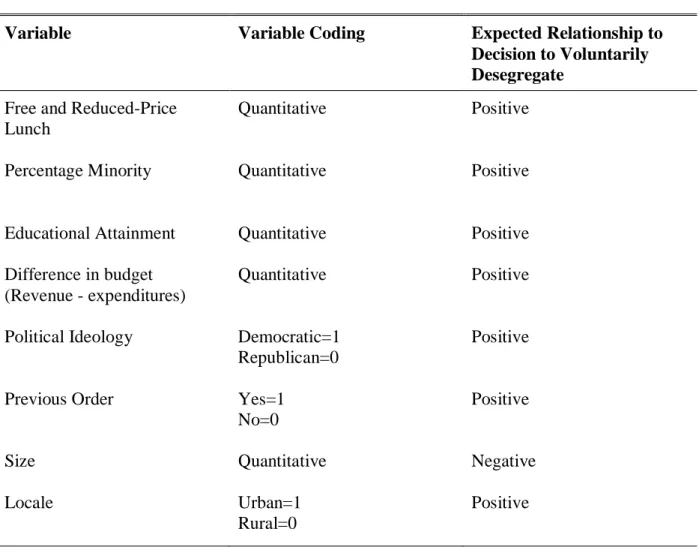
Table 1 – Summary of Independent Variables
Variable Variable Coding Expected Relationship to
Decision to Voluntarily Desegregate
Free and Reduced-Price Lunch
Quantitative Positive
Percentage Minority Quantitative Positive
Educational Attainment Quantitative Positive
Difference in budget (Revenue - expenditures) Political Ideology
Quantitative
Democratic=1 Republican=0
Positive
Positive
Previous Order Yes=1
No=0
Positive
Size Quantitative Negative
Locale Urban=1
Rural=0
Positive
Based on the preceding discussion of the expected effect of each independent variable, I will test the following hypotheses:
H1: The percentage of students that qualify for free and reduced-price lunch in a school district is positively related to the adoption of a voluntary school desegregation plan.
H2: The percentage of students that are racial minorities [black, Hispanic, or Asian] in a school district is positively related to the adoption of a voluntary school desegregation plan.
H4: The level of budgetary resources in a district is positively related to the adoption of a voluntary school desegregation plan. In other words, districts operating a surplus are more likely to adopt a desegregation plan.
H5: Districts that are liberal-leaning in terms of political ideology are more likely to adopt a voluntary school desegregation policy.
H6: School districts that were formerly under a federal court order to desegregate, but are now unitary, are more likely to adopt voluntary school desegregation that those that were not previously under a federal court order.
Methodology
I. Constructing the Sample
Before resorting to studying exclusively socioeconomic-based voluntary desegregation, I looked into the sources that Frankenberg listed as her starting point, to see if I could find any districts to include that used generalized race-based strategies. Of her sources, Kahlenberg and Reardon and Rhodes considered strictly socioeconomic plans. James Ryan estimates that there are between ten and thirty districts, not under court order, that use race-based student assignment plans; however, he does not name them. Her other sources include a piece called “The
Integration Report” by Philip Tegeler, Saba Bireda, and Genevieve Siegel-Hawley, which I did not find to include the names of any districts using race-based strategies, and “discussion with experts in the field”–which I of course did not have access to. It is my thought that the majority of the districts in her sample are also socioeconomic integration plans because most of the sources she pulled from are studies on SES-based integration, many districts are not forthcoming about their use of race, and the fact that the number of districts using socioeconomic plans is on the rise.
For this reason, I decided to work from the sample compiled by The Century Foundation (Potter et al., 2016). Although I am unsure whether every district in their sample has a clear intent to reduce racial isolation, it was the best starting point I could access once I realized that I would be studying socioeconomic integration. It is the most recently published nation-wide sample of voluntary, socioeconomic integration, published February 2016. TCF found that 91 different school districts and charter networks have voluntary desegregation policies. I first eliminated the charter networks from my sample, including Citizens of the World Charter School (CA), Community Roots Charter School (NY), Compass Charter School (NY), Brooklyn Prosper Charter School (NY), Larchmont Charter School (CA), Blackstone Valley Prep Mayoral
within a school district. Since “charter school admissions” is one category of desegregation policy, it made sense to me to study the districts that offer charter school admissions to its students, not the charter school population itself. Because I am studying the likelihood of a decision by a district, each unit in my sample needed to be a district. All of the districts in which the charter networks that I eliminated are located are included in my final sample, as long as they are not under a federal court order or engaged in a voluntary agreement with the U.S.
Department of Education. Blackstone Valley Prep Mayoral Academy (RI) was further eliminated because it was founded by the Rhode Island legislature for the purpose of interdistrict
integration. While this is a valuable model, my goal is to study the attitudes of school districts, not an entire state.
Next, I cross-referenced TCF’s list with the ProPublica database titled, “A National Survey of School Desegregation Orders,” compiled by Yue Qiu and Nikole Hannah-Jones. I eliminated any district from the sample whose federal court desegregation order is still active, or who is bound by a “voluntary” desegregation agreement with the U.S. Department of Education (ED). As discussed, although ED orders are called “voluntary,” districts enter into them with the understanding that if they do not agree to them, they will eventually be stripped of their federal funding. Therefore, the decision of districts to desegregate who are engaged in such agreements with ED does not reflect anything unique about their attitude toward desegregation.
face consequences if they did not have a desegregation policy. That being said, it makes the most sense to me when doing a study of “voluntary” desegregation to only include districts who are free of any federal mandate. After these actions, my sample included 62 districts; however, Hamilton County Public Schools (TN) and Troup County School District (GA) were
subsequently eliminated; when I called the districts to clarify part of their policy, I learned that their socioeconomic desegregation policies were no longer in place.
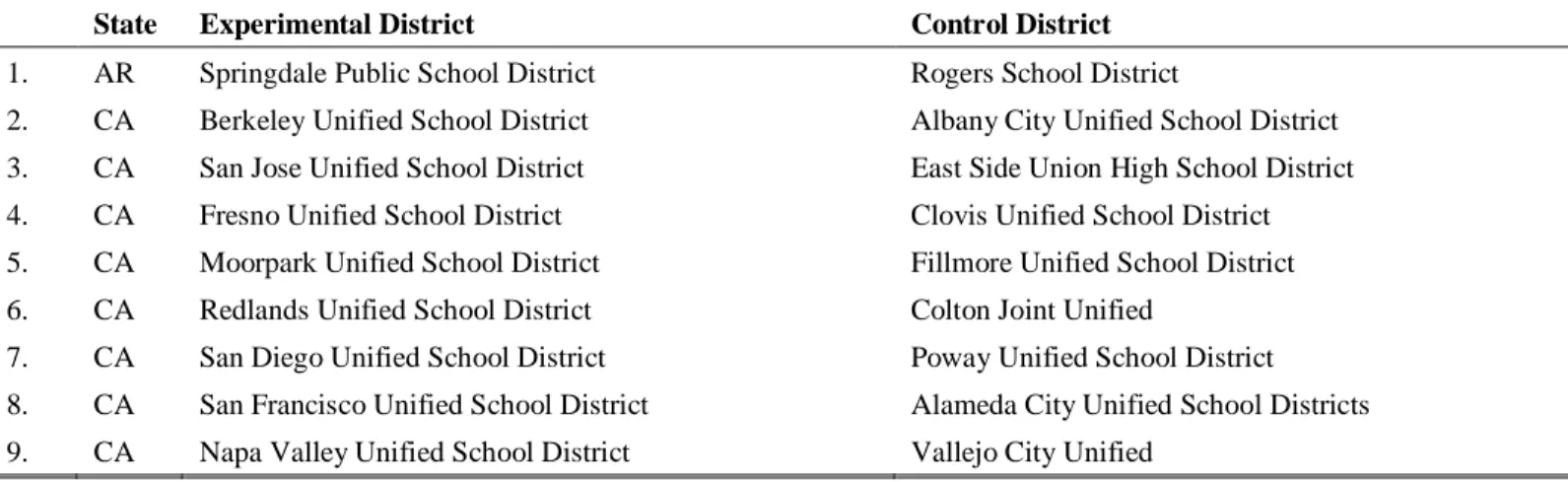
As a result of these steps, my study has 60 experimental districts, compared to TCF’s 91 districts and charter networks. TCF reported enrollment data for its sample from one uniform period of time–the 2012-2013 school year. While choosing one period of time for examination is convenient, I wanted to study the characteristics of a district as they were when the district made the decision to desegregate, in order to gain insight into the decision making process. For this reason, I collected the data for each district according to the year that the district adopted the policy. TCF report provided me with the implementation year for all but nine of the districts in my sample. From there, I tracked down the year of implementation for these districts by searching the district websites and/or calling them. I ultimately learned all of their