Depression, Anxiety, and Sucidality in U.S. Medical Students: A Literature Review and Commentary
By
Kate Dickson
A Master’s Paper submitted to the faculty of the University of North Carolina at Chapel Hill
in partial fulfillment of the requirements for the degree of Master of Public Health in
the Public Health Leadership Program
Chapel Hill
Summer 2018
Abstract
A growing body of literature shows that although medical students start their journey to
becoming a physician with similar self-reported mental health outcomes as those of
their non-medical peers, they finish their training in poorer mental health. Research on
the topic of medical student mental health and wellbeing has found higher rates of
anxiety, depression, and suicidality among medical students than in the general
population, although exact estimates vary by study. A high quality systematic review
with meta-analysis of the data on the prevalence of these disorders in medical schools
nationwide would help the medical education community more fully understand the
scope of the problem, and design interventions appropriately. This paper intended to
conduct such a review, but limitations in the literature – especially the paucity of data on
anxiety and suicidality - make such synthesis and analysis difficult, if not impossible.
This paper presents the findings of the literature review, comments on the gaps and
limitations of the evidence, and poses recommendations aimed at improving the quality
Table of Contents
Abstract……….……….……….……ii
Introduction………...………….………1
Background………1
Rationale………3
Methods………..………4
Search Strategy………4
Study Selection……….………4
Data Extraction………..5
Results………6
Search Results………..………6
Study Results ………..……….…6
Discussion………..………7
Characteristics and Limitations of the Existing Literature………..…7
Recommendations for Future Research……….……11
Looking Long Term………12
Conclusion……….………..13
References………..………15
Appendix A: Tables and Figure..……….……….……21
Table 1: Inclusion and Exclusion Criteria………..……….…21
Figure 1: Diagram of Search Results……..………22
Table 2; Results of the Literature Review……….……….…23
Table 3: Measures of Depression………28
Table 4: Measures of Anxiety………..….……28
Table 5: Measures of Suicidality……….……….……29
Table 6: Studies by Class Year ………..………….……29
Appendix B: Search Strategy……….……….………….………30
Appendix C: Systematic Review……….……….……31
Figure C1: PRISMA Diagram………40
Introduction
Background
A growing body of literature reports that, although the exact estimates vary by
study, rates of mental illness, specifically depression, anxiety, and suicidality, are higher
among physicians and physicians-in-training (medical students, residents, and fellows),
than among cohorts of age-matched peers not in the medical field. Studies show that
while medical students enter school with similar or better self-reported mental health
than is true of others their age, their mental health by the time they graduate is poorer.1 Furthermore, the mental health of medical students actually declines as they advance in
training, both throughout medical school and into residency.1 Numerous variables contribute to the poor mental health of doctors and those who will become doctors,
including long hours, exposure to stressful and traumatic experiences, a culture of
perfection, and a strict, hierarchical work environment.1,2,48 These, and many other causes, combine to paint a picture of mental illness within the medical community that
has severe and far-reaching consequences, for both individuals and for the entire health
care system.
In 2015, a study in the Journal of the America Medical Association (JAMA),
reported that around 300-400 physicians in the United States commit suicide each year,
the equivalent of about 2 graduating medical school classes.2 Another study found that rates of suicide are 70% higher among male physicians and 130% higher among female
physicians than among non-physicians of the same age and sex.3 Unfortunately, this alarming trend starts early on, in medical school, where suicide is the second leading
common than among non-medical peers of the same age.4 If we consider suicide as the most extreme consequence of poor mental health, and medical school as the
beginning of a long, arduous journey to becoming a physician, then it is obvious that we
need to understand what increases a medical student’s risk of committing suicide.
Anxiety and depression are two of the most common mental illnesses in the
general population, so it is no surprise that they also occur frequently among medical
students. The relationship between depression, anxiety, and suicidality, which includes
suicidal ideation, prior suicide attempts, and completed suicides, is well documented.
Depression and anxiety, both independently, and often comorbidly, significantly worsen
a person’s quality of life and are known risk factors for suicide.3,5-7 Both are also often manageable conditions, if identified and treated appropriately with psychotherapy and/or
medication. Thus, among many necessary steps toward improvement, it is important to
understand just how many medical students are suffering from these diseases so that
we can attempt to prevent the most severe outcome of their distress – a suicide.
In addition to lowering quality of life and increasing suicidality, poor mental health
in providers is associated with worse care for patients. Provider anxiety, depression,
and burnout are shown to increase cynicism, worsen communication, and lead to more
medical errors.8 Specifically, a study of residents published in 2002 found that, when they were asked to reflect on aspects of their own practice, residents with poor mental
health were 2 to 3 times more likely to report providing suboptimal patient care.9 These data show that the wellbeing of providers is a public health concern. In order to have
healthy communities, we need healthy physicians, and healthy physicians learn the
fact, acknowledging this relationship has impelled the medical community to add a
fourth aim of improving provider mental health and career satisfaction to the Triple Aim
of improved patient experience of care, improved population health, and reduced
cost.57-58 In recent years, several academic hospital systems, residency programs, and medical schools have formally adopted the “Quadruple Aim” as a way to formalize their
commitment to improving the wellness of physicians and physicians-in-training.59,60 It is clear that an understanding of the mental health and wellbeing of medical students is
critical for the development of a healthy workforce of physicians, and of healthy
communities more broadly.
Rationale
This paper originally set out to conduct a systematic review and meta-analysis of
the prevalence of depression, anxiety, and suicidality among allopathic medical
students in the United States. Much of the existing literature focuses on residents,
fellows, and attending physicians, as well as international medical students. However,
because American medical education is such a unique experience - 4 dedicated years
of study after an undergraduate degree - a synthesis of the data focusing solely on that
population is needed.
However, early on in the search process, it became evident that we must
address large gaps in the literature before a high quality systematic review leading to
meaningful conclusions can be conducted. For that reason, this paper is a review of the
state of the literature and a commentary on the gaps and limitations that my search
identified. It is accompanied by a discussion of how better data can be collected and
issue of poor mental health in medical students.
Methods
Search Strategy
I searched PubMed, PsychInfo, and Embase for studies of U.S. medical student
mental health and wellbeing published in English between January 1, 2012 and April 17,
2018. Searches included terms related to both medical students and medical school,
and the outcomes of interest: depression, anxiety, and suicidality. In PubMed, Medical
Subject Headings (MeSH terms) were used as search terms when available. The full
search strategy is presented in Appendix B below. I also searched ClinicalTrials.Gov
for unpublished literature on the topic, and I searched Prospero for ongoing systematic
reviews on the topic, but neither produced relevant results. In addition, although other
systematic reviews were excluded from this investigation, the bibliographies of relevant
studies were examined to complete the article search process.
Study Selection
I reviewed titles, abstracts, and full-text articles to determine eligibility using the
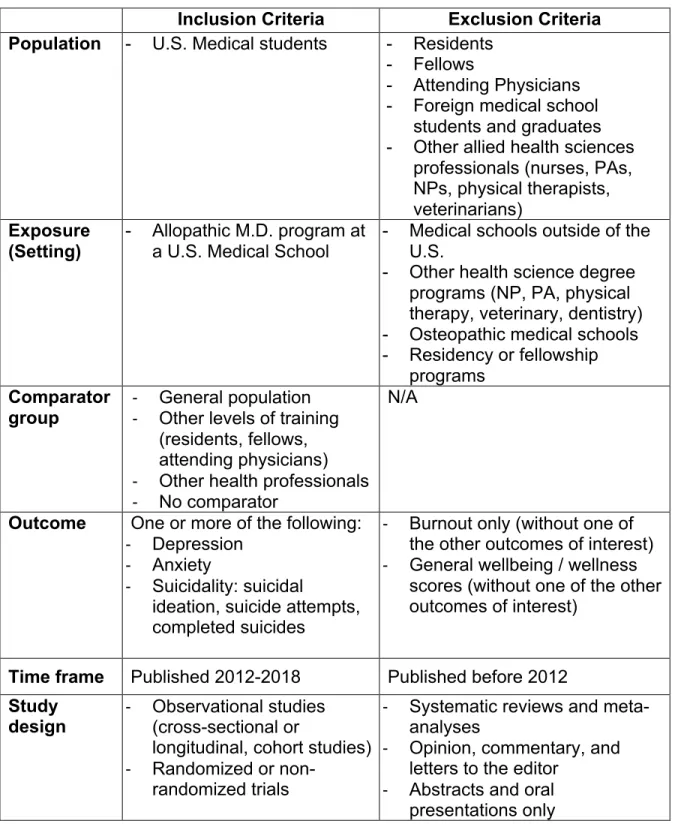
pre-defined inclusion and exclusion criteria. Full inclusion and exclusion criteria are
presented in Table 1. Only studies involving students at allopathic medical schools in
the United States were included. Eligible studies measured student anxiety,
depression, or suicidality using a variety of measures, which are reported in the results
of this paper.
This literature review specifically did not include studies that only addressed
burnout syndrome, defined as a triad of emotional exhaustion, depersonalization, and a
in the medical community because it, too, is a risk factor for suicidality and other poor
outcomes for both patients and providers.3,13 However, I decided to exclude studies that measured either burnout alone, or without one of the other measures of interest,
anxiety, depression, or suicidality, in order to focus more on the universal forms of
mental illness likely to affect students at the beginning of their training. Additionally,
anxiety and depression are both risk factors for developing burnout, so if the medical
community only focuses on the outcome of burnout, it will miss two significant
underlying mental health problems that put students at an increased risk.8,11,12 The year 2012 was chosen as the start point for the review because it was the
year that the American Medical Association (AMA) published “Supporting Two-Interval
Grading Systems for Medical Education”, a policy publicly acknowledging the benefits of
a pass-fail curriculum on medical student wellbeing, and encouraging medical schools
to adopt such grading systems.10 To date, a pass-fail grading policy remains one of the few documented interventions that has consistently proven to benefit student mental
health and wellbeing. By 2013, 41% of US allopathic schools had adopted pass-fail
grading in the pre-clinical curriculum, making it the most common grading method
nationwide.10 Because this major shift in medical education in favor of student mental health occurred in 2012, my review focuses on studies that have been published since
then.
Data Extraction
A preliminary data extraction was completed for the studies that met the search
criteria outlined in Table 1. The data I extracted included the year of training of the
suicidality, and also any other wellness-related outcome measures used in the studies.
Results
Search Results
A total of 39 studies were identified in the literature review. The identified studies
measured anxiety, depression, suicidality, or some combination of those outcomes of
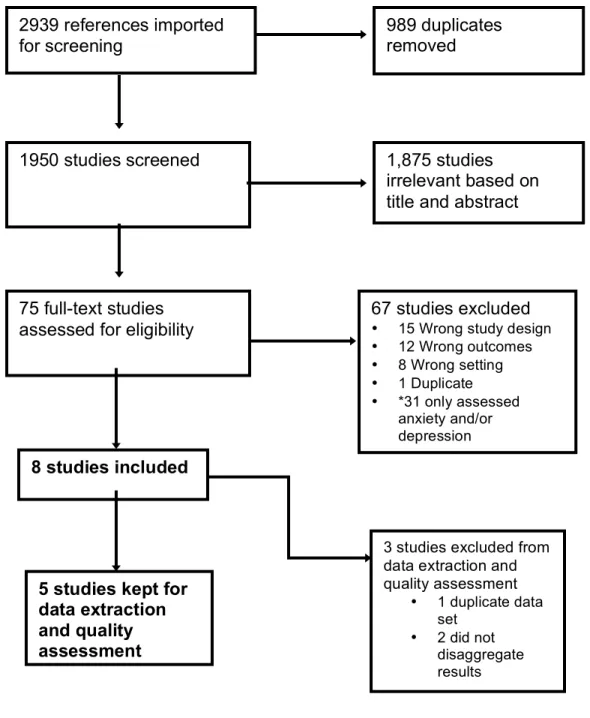
interest among U.S. allopathic medical students. Figure 1 presents the full results of the
literature search, and Table 2 includes all 39 articles.
Study Results
As shown in Figure 1, of the 39 studies identified, 38 measured depression, but
only 16 also measured anxiety, and only 8 assessed suicidality. Of the 16 studies that
measured both anxiety and depression, 4 used a single, combined assessment tool,
either the Patient Health Questionnaire-4 item screen (PHQ-4), the Hospital Anxiety and
Depression Survey (HADS), or the Depression, Anxiety, and Stress Scale (DASS-21).
One study measured suicidality alone without measuring either depression or anxiety.
Only 3 studies measured all 3 outcomes of interest. Of note, 5 of the studies identified
as measuring both anxiety and depression came from the same set of original data.
The Medical Student Cognitive Habits and Growth Evaluation Study (CHANGES) was a
multi-center longitudinal survey of first year students at 50 U.S. medical schools. It
collected data on over 4,000 medical students nationwide, and several studies on
student mental health and wellbeing in recent years have published using the data.
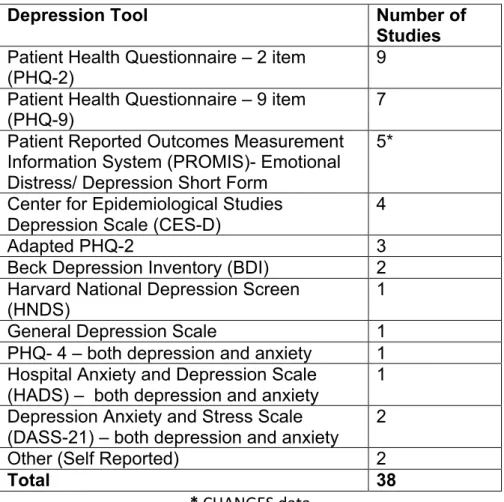
The specific tools used to measure the 3 outcomes of interest varied widely. For
depression, the tools included the Patient Health Questionnaire (PHQ) 2-item and
(PROMIS) – Emotional Distress and Depression Short Form, the Center for
Epidemiological Studies Depression Scale (CES-D), the Beck Depression Inventory, the
Harvard National Depression Screen, and the General Depression Scale. To measure
anxiety, the PROMIS – Anxiety Short Form, the Spielberger State Anxiety Inventory
(SSAI), the Generalized Anxiety Disorder (GAD) – 7, and the Beck Anxiety Inventory
were used. As mentioned previously, one study used the PHQ-4, one used the HADS
and 2 studies used the DASS-21 to measure both anxiety and depression with the
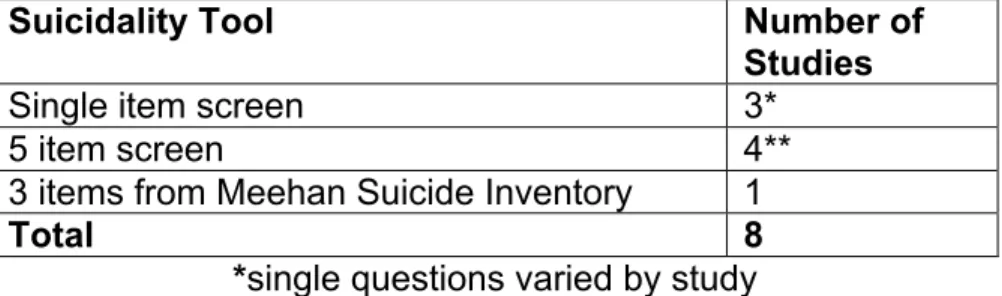
same tool. To assess suicidality, one study used the Meehan Suicide inventory, while
the others used various questionnaires ranging in length from 1 to 5 items. Of note, the
4 studies that used a 5-item risk assessment used data from the same original data set,
collected by the Healer Education Assessment and Referral (HEAR) Program at UC-
San Diego.
A minority of studies only asked participants to report the presence of anxiety or
depression rather than using validated survey tools. Tables 3-5 present the full range of
measurement tools used by the identified studies to measure the three outcomes of
interest.
The 39 studies identified also included students in a variety of class years. The
majority of studies included either only first year students (N=10), or students in all 4
years of the traditional U.S. curriculum (N=16). A full breakdown of the studies by
student year of participants is presented in Table 6.
Discussion
Characteristics and Limitations of the Existing Literature
anxiety, and suicidality in U.S. medical students is the heterogeneity of the tools
researchers have used to measure these outcomes. For depression, the most
frequently measured outcome, 12 different tools were used among 38 studies. Since no
single, universal tool for measuring depression has been established, this is common
for literature on the topic. As long as the instrument chosen by researchers in each
study is valid, the data from multiple studies can be analyzed together by dichotomizing
each of the tools into categories of “depressed” or “not depressed” based on the
published cut-off values for each tool. The only challenge then is that the person
conducting the analysis must be sure that each of the different tools has been validated,
and that all studies interpreted their data according to the published guidelines.
Most mental health research is limited by the fact that the majority of instruments
used to screen for and diagnose mental illness are self-reported, and this particular
body of literature is no different. All of the studies included in this review used voluntary
completion of self-reported surveys to measure outcomes, which makes them
susceptible to both selection bias and measurement bias. Especially when the topic is
sensitive and stigmatized, like mental illness, people might choose not to participate and
those that do participate might not be honest with their responses. This limitation is
largely unavoidable, but should be kept in mind when analyzing the data that exists on
medical student mental health and wellbeing.
Another striking limitation of the literature identified by my review is that, although
all but one of the studies measured depression (N=38), studies that measured anxiety
and suicidality were much more limited. Specifically, only half of the studies measured
problematic because of how tightly interrelated these three forms of mental illness are.
For example, high rates of comorbidity between anxiety and depression have been well
established.8,15 The 2005 U.S. National Comorbidity Survey found that 58% of people with major depression have a comorbid anxiety disorder, and 67% of people with
generalized anxiety have a history of unipolar depression. Furthermore, the survey
found that those with major depression and comorbid anxiety have poorer outcomes
than do those with only one disorder, including more severe disease and a longer, more
chronic course.15 In addition to more severe depression, students with poorly managed anxiety are also at higher risk for other adverse outcomes such as higher perceived
stress, lower self-reported quality of life, and higher rates of burnout.11,15 A paper written in 1998 about burnout in the medical profession postulated that people who are more
sensitive to anxiety are at higher risk of experiencing the exhaustion and
depersonalization characteristic of burnout.11 Clearly, if the medical education community is going to attempt to measure and address high rates of depression and
burnout in its students, similar attention should be devoted to measuring anxiety.11 The data on suicide returned by the literature review were even more limited.
Although rates of suicide are known to be higher in the medical profession than in the
general population, the vast majority of articles did not address suicide at all. Among
the 8 articles that did measure suicidal ideation or past suicide attempts, the
assessment tools varied widely in their scope and validity. Some only asked a single,
self-reported screening question, while others, all from the HEAR program at UC- San
Diego, included a more thorough 5-item risk assessment. Such infrequent and
data synthesis and analysis on the prevalence of suicidality among medical students.
Of course, one reason that the data collected on this topic is so sparse is because of
the ethical issues that arise from assessing risk of suicide. Positive responses warrant
intervention, so schools that are committed to asking their students about suicidality
have a responsibility to follow up with students who endorse it.
As mentioned before, anxiety and depression are both major risk factors for
suicide.3,5 In fact, anxiety, which was not measured frequently or consistently in the articles identified, acts both independently as a risk factor for suicide (OR 2.29 for
ideation and 2.48 for attempts) and amplifies the increased risk of suicide associated
with a diagnosis of depression.5 As shown by this review, the majority of the research in medical education right now only focuses on depression, while the assessment of
anxiety and suicidality is currently inadequate. However, because of the
well-established relationship between these 3 outcomes, I would argue that it is unethical for
the medical community to ask about symptoms of depression in students without
including validated screening tools for both anxiety and the risk of suicide.
The final limitation I identified in the literature review was the wide heterogeneity
of study subjects and a lack of follow-up throughout medical school. The traditional
medical school curriculum in the United States is 4 years, and the literature varies
significantly as to which years of study are included in individual articles. The vast
majority of articles surveyed either only first year students (N=10) or students in all 4
years of study (N=16), but the remaining looked at students in some combination of
other years. Most articles also were cross-sectional in design, only including data from
year of study differ- for example second year students are traditionally studying hard for
the USMLE Step 1 exam, while third year students are experiencing a transition to
clinical rotations- it is important to follow students along their entire trajectory of medical
education. The current state of the data is characterized by a lack of longitudinal data
and a lack of data on students in their last 3 years of schooling in general, since many
studies limit themselves to first-year students.
Recommendations for Future Research
After reviewing the literature on the topic of anxiety, depression, and suicidality in
U.S. medical students, it is my strong recommendation that the field of medical
education use well-validated assessment tools in order to consistently and frequently
measure rates of mental illness among students. While several screening tools for
anxiety, depression, and suicidality exist, the exact tools that schools choose to use are
less important than choosing a reliable and valid instrument, and interpreting it correctly.
Schools should assess students each year in order to gain a more longitudinal picture of
mental health throughout their medical school trajectory.
Of course, with increased measurement of the prevalence of mental illness
among medical students comes an increased responsibility on the part of medical
schools to address the needs that arise. Along with screening students more
frequently, schools need to invest in their capacity to follow up with students who
endorse mental illness and provide evidence-based interventions. Although most
assessments will be anonymous, students should be given the opportunity to provide
their contact information if they want to receive resources, and schools should work to
and asking for help when needed.
Looking Long Term
I believe the gaps and limitations identified in the body of literature surrounding
medical student mental health highlight a fundamental misalignment within the field of
medical education. Specifically, a disconnect exists between what problems many
medical schools’ wellness initiatives and programs are designed to solve, and the
problems a high number of students actually face. In the words of one student
participating in a focus group I conducted on medical student mental health and
wellbeing, “I feel like the wellness program that my school has in place is designed to
support my wellness more broadly, but not my specific mental health needs.”
In other words, the term wellness as it applies to medical students encompasses
several important domains including physical health, mental health, social health (and
healthy relationships), and academic success. In my own experience and the
experience of several students in my focus groups, school wellness programs often
serve a mostly social role, primarily by organizing fun events for students as study
breaks, and secondarily by promoting healthy coping skills such as yoga or
mindfulness. What is often missing is recognition of the more difficult aspects of
wellness, such as helping students to be successful as they manage underlying mental
health diagnoses of anxiety and depression. To give two examples, one student in a
focus group mentioned not qualifying for extra academic support when she felt her
anxiety was interfering in her test performance because she wasn’t doing “poorly
enough”, and another spoke about not receiving assistance from the school when trying
These instances show that a lot of students are “left out” of the wellness programs at
their schools because it is difficult, if not impossible, to engage with school-sponsored
“wellness” events when more basic, underlying mental health needs are not being met.
This literature review shows that clinical mental health issues such as anxiety,
depression, and suicidality are under-addressed in the existing literature on medical
student wellness, which might partially explain why they are also so under-addressed in
medical school programming. My final recommendation is that the medical education
community increase the collection of high- quality data about mental health issues
among medical students, and use those data to design interventions that meet all
students’ mental health needs - from fostering social and physical wellness by
organizing friendly team-based competitions, to supporting students’ clinical diagnoses
of depression and anxiety by affording them time during rotations specifically for
personal appointments.
Conclusion
Although rates of anxiety, depression, and suicidality are known to be higher
among medical students than among age-matched peers outside of medicine, the body
of literature that measures the prevalence of these outcomes has many gaps and
limitations. First, like most mental health research, studies use a wide array of different
self-reported tools to measure outcomes. As long as all instruments are validated the
heterogeneity is acceptable, but researchers should be aware of the selection bias and
measurement bias that arise from voluntary completion of self-reported survey tools.
Second, there is much more attention afforded to measuring depression among medical
of these outcomes are not only related, but anxiety and depression are both major risk
factors for suicide - the most extreme outcome of poor mental health. If the medical
education community is to address the wellbeing of students, then the prevalence of
these diseases should be measured consistently and longitudinally. With better data,
the medical education community can better design interventions aimed at improving
not only the broader wellness of U.S. medical students, but also their basic mental
health outcomes. Ensuring that the next generation of physicians is healthy is critical to
References
1. Brazeau, C. M. L. R., Shanafelt, T., Durning, S. J., Massie, F. S., Eacker, A., Moutier, C., … Dyrbye, L. N. (2014). Distress among matriculating medical students relative to the general population. Academic Medicine : Journal of the Association of American Medical Colleges, 89(11), 1520–1525.
https://doi.org/10.1097/ACM.0000000000000482
2. Goldman, M. L., Shah, R. N., Bernstein, C. A., Khan, R., Lin, J. S., & Mata, D. A. (2015, August). Addressing Depression and Suicide Among Physician Trainees. JAMA Psychiatry. United States.
https://doi.org/10.1001/jamapsychiatry.2015.0639
3. Dyrbye, L. N., Thomas, M. R., Massie, F. S., Power, D. V., Eacker, A., Harper, W., … Shanafelt, T. D. (2008). Burnout and suicidal ideation among U.S. medical students. Annals of Internal Medicine. https://doi.org/10.7326/0003-4819-149-5-200809020-00008
4. Grossman, D. C. (2016). Reducing the Stigma: Faculty Speak Out About Suicide Rates Among Medical Students, Physicians. Retrieved June 3, 2018, from
https://news.aamc.org/medical-education/article/reducing-stigma-suicide-rates/ 5. Sareen, J., Cox, B. J., Afifi, T. O., de Graaf, R., Asmundson, G. J., ten Have, M.,
& Stein, M. B. (2005). Anxiety disorders and risk for suicidal ideation and suicide attempts. Archives of General Psychiatry, 62(11), 1249–1257.
https://doi.org/10.1001/archpsyc.62.11.1249
6. Paro, H. B. M. S., Morales, N. M. O., Silva, C. H. M., Rezende, C. H. A., Pinto, R. M. C., Morales, R. R., … Prado, M. M. (2010). Health-related quality of life of medical students. Medical Education, 44(3), 227–235.
https://doi.org/10.1111/j.1365-2923.2009.03587.x
7. Brenes, G. A. T. (2007). Anxiety, Depression, and Quality of Life in Primary Care Patients. Anxiety J Clin Psychiatry Prim Care Companion J Clin Psychiatry, 99(6), 437–443. Retrieved from
https://www.ncbi.nlm.nih.gov/pmc/articles/PMC2139931/pdf/i1523-5998-9-6-437.pdf
8. Silva, V., Costa, P., Pereira, I., Faria, R., Salgueira, A. P., Costa, M. J., …
Morgado, P. (2017). Depression in medical students: insights from a longitudinal study. BMC Medical Education, 17. https://doi.org/10.1186/s12909-017-1006-0 9. Shanafelt T Bradley K Wipf J Back A. (2002). Burnout and Self-Reported Patient
Care in an Internal Medicine Residency Program. Annals of Internal Medicine, 136 (5)(February 2001), 358. https://doi.org/200203050-00008 [pii]
10. Deng, F. and Wesevich, A. (2016). Pass-fail is here to stay in medical schools. And that’s a good thing. KevinMD.com.
https://www.kevinmd.com/blog/2016/08/pass-fail-stay-medical-schools-thats-good-thing.html
11. Turnipseed, D. L. (1998). Anxiety and Burnout in the Health Care Work Environment. Psychological Reports , 82, 627–642. Retrieved from
12. Monrouxe, L. V, Bullock, A., Tseng, H.-M., & Wells, S. E. (2017). Association of professional identity, gender, team understanding, anxiety and workplace
learning alignment with burnout in junior doctors: a longitudinal cohort study. BMJ Open, 7(12), e017942. https://doi.org/10.1136/bmjopen-2017-017942
13. Shanafelt, T. D., Boone, S., Tan, L., Dyrbye, L. N., Sotile, W., Satele, D., … Oreskovich, M. R. (2012). Burnout and satisfaction with work-life balance among US physicians relative to the general US population. Archives of Internal
Medicine, 172(18), 1377–1385. https://doi.org/10.1001/archinternmed.2012.3199 14. Hardeman, R. R., Perry, S. P., Phelan, S. M., Przedworski, J. M., Burgess, D. J., & van Ryn, M. (2016). Racial Identity and Mental Well-Being: The Experience of African American Medical Students, A Report from the Medical Student
CHANGE Study. Journal of Racial and Ethnic Health Disparities. https://doi.org/10.1007/s40615-015-0136-5
15. Pollack, M. H. (2005). Comorbid Anxiety and Depression. J Clin Psychiatry, 66. Retrieved from
http://www-psychiatrist-com.libproxy.lib.unc.edu/JCP/article/_layouts/ppp.psych.controls/BinaryViewer.as hx?Article=/JCP/article/Pages/2005/v66s08/v66s0804.aspx&Type=Article
16. Chang, E., Eddins-Folensbee, F., & Coverdale, J. (2012). Survey of the
prevalence of burnout, stress, depression, and the use of supports by medical students at one school. Academic Psychiatry.
https://doi.org/10.1176/appi.ap.11040079
17. Dyrbye, L. N., Eacker, A. M., Harper, W., Power, D. V., Massie, F. S., Satele, D., … Shanafelt, T. D. (2012). Distress and empathy do not drive changes in
specialty preference among US medical students. Medical Teacher. https://doi.org/10.3109/0142159X.2012.644830
18. Chang, E., Eddins-Folensbee, F., Porter, B., & Coverdale, J. (2013). Utilization of counseling services at one medical school. Southern Medical Journal.
https://doi.org/10.1097/SMJ.0b013e3182a05994
19. Trostler, M., Li, Y., & Plankey, M. W. (2014). Prevalence of binge drinking and associated co-factors among medical students in a US Jesuit University. American Journal of Drug and Alcohol Abuse.
https://doi.org/10.3109/00952990.2014.907302
20. Johnson, K., Simon, N., Wicks, M., Schaad, D., Barr, K. P., & O’Connor, K. (2014). Sleep habits, quality of life and satisfaction with academic success in second year medical students. Journal of General Internal Medicine.
21. Wimsatt, L. A., Schwenk, T. L., & Sen, A. (2015). Predictors of Depression Stigma in Medical Students: Potential Targets for Prevention and Education. American Journal of Preventive Medicine.
https://doi.org/10.1016/j.amepre.2015.03.021
22. Liu, R., Carrese, J., Colbert-Getz, J., Geller, G., & Shochet, R. (2015). “Am i cut out for this?” Understanding the experience of doubt among first-year medical students. Medical Teacher. https://doi.org/10.3109/0142159X.2014.9709872015 23. Tucker, P., Jeon-Slaughter, H., Sener, U., Arvidson, M., & Khalafian, A. (2015).
Teaching and Learning in Medicine.
https://doi.org/10.1080/10401334.2014.979178
24. Ludwig, A. B., Burton, W., Weingarten, J., Milan, F., Myers, D. C., & Kligler, B. (2015). Depression and stress amongst undergraduate medical students. BMC Medical Education. https://doi.org/10.1186/s12909-015-0425-z
25. Brannick, M. T., Horn, G. T., Schnaus, M. J., Wahi, M. M., & Goldin, S. B. (2015). Medical student quality-of-life in the clerkships: A scale validation study.
American Surgeon.
26. Gold, J. A., Johnson, B., Leydon, G., Rohrbaugh, R. M., & Wilkins, K. M. (2015). Mental health self-care in medical students: A comprehensive look at help-seeking. Academic Psychiatry. https://doi.org/10.1007/s40596-014-0202-z 27. Thompson, G., McBride, R. B., Hosford, C. C., & Halaas, G. (2016). Resilience
Among Medical Students: The Role of Coping Style and Social Support. Teaching and Learning in Medicine.
https://doi.org/10.1080/10401334.2016.1146611
28. Chen, A. K., Kumar, A., & Haramati, A. (2016). The effect of Mind Body Medicine course on medical student empathy: A pilot study. Medical Education Online. https://doi.org/10.3402/meo.v21.31196
29. Kroska, E. B., Calarge, C., O’Hara, M. W., Deumic, E., & Dindo, L. (2017). Burnout and depression in medical students: Relations with avoidance and disengagement. Journal of Contextual Behavioral Science.
https://doi.org/10.1016/j.jcbs.2017.08.003
30. Wolf, M. R., & Rosenstock, J. B. (2017). Inadequate Sleep and Exercise Associated with Burnout and Depression among Medical Students. Academic Psychiatry. https://doi.org/10.1007/s40596-016-0526-y
31. Elkins, C., Plante, K. P., Germain, L. J., & Morley, C. P. (2017). Burnout and depression in MS1 and MS3 years: A comparison of cohorts at one medical school. Family Medicine.
32. Johnson, K. M., Simon, N., Wicks, M., Barr, K., O’Connor, K., & Schaad, D. (2017). Amount of Sleep, Daytime Sleepiness, Hazardous Driving, and Quality of Life of Second Year Medical Students. Academic Psychiatry.
https://doi.org/10.1007/s40596-017-0668-6
33. Haight S.J.; Chibnall J.T.; Schindler D.L.; Slavin S.J. (2012) Associations of medical student personality and health/wellness characteristics with their medical school performance across the curriculum. Academic medicine : journal of the Association of American Medical Colleges
34. McGrady, A., Brennan, J., Lynch, D., & Whearty, K. (2012). A wellness program for first year medical students. Applied Psychophysiology Biofeedback.
https://doi.org/10.1007/s10484-012-9198-x
35. Wachholtz, A., & Rogoff, M. (2013). The relationship between spirituality and burnout among medical students. Journal of Contemporary Medical Education. https://doi.org/10.5455/jcme.20130104060612
Students: A Comparison by Race and Gender: A Report from the Medical Student CHANGE Study. Journal of Racial and Ethnic Health Disparities. https://doi.org/10.1007/s40615-015-0087-x
38. Przedworski, J. M., Dovidio, J. F., Hardeman, R. R., Phelan, S. M., Burke, S. E., Ruben, M. a, … van Ryn, M. (2015). A Comparison of the Mental Health and Well-Being of Sexual Minority and Heterosexual First-Year Medical Students: A Report From the Medical Student CHANGE Study. Academic Medicine : Journal of the Association of American Medical Colleges.
https://doi.org/10.1097/ACM.0000000000000658
39. Phelan, S. M., Burgess, D. J., Puhl, R., Dyrbye, L. N., Dovidio, J. F., Yeazel, M., … van Ryn, M. (2015). The Adverse Effect of Weight Stigma on the Well-Being of Medical Students with Overweight or Obesity: Findings from a National Survey. Journal of General Internal Medicine. https://doi.org/10.1007/s11606-015-3266-x
40. Hardeman, R. R., Przedworski, J. M., Burke, S., Burgess, D. J., Perry, S., Phelan, S., … van Ryn, M. (2016). Association Between Perceived Medical School Diversity Climate and Change in Depressive Symptoms Among Medical Students: A Report from the Medical Student CHANGE Study. Journal of the National Medical Association. https://doi.org/10.1016/j.jnma.2016.08.005
41. Hardeman, R. R., Perry, S. P., Phelan, S. M., Przedworski, J. M., Burgess, D. J., & van Ryn, M. (2016). Racial Identity and Mental Well-Being: The Experience of African American Medical Students, A Report from the Medical Student
CHANGE Study. Journal of Racial and Ethnic Health Disparities. https://doi.org/10.1007/s40615-015-0136-5
42. Mousa, O. Y., Dhamoon, M. S., Lander, S., & Dhamoon, A. S. (2016). The MD Blues: Under-Recognized Depression and Anxiety in Medical Trainees. PLoS ONE. https://doi.org/10.1371/journal.pone.0156554
43. Damiano, R. F., DiLalla, L. F., Lucchetti, G., & Dorsey, J. K. (2017). Empathy in Medical Students Is Moderated by Openness to Spirituality. Teaching and Learning in Medicine. https://doi.org/10.1080/10401334.2016.1241714
44. Chand, S. P., Chibnall, J. T., & Slavin, S. J. (2018). Cognitive Behavioral Therapy for Maladaptive Perfectionism in Medical Students: A Preliminary Investigation. Academic Psychiatry. https://doi.org/10.1007/s40596-017-0708-2
45. Lucchetti, G., Damiano, R. F., DiLalla, L. F., Lucchetti, A. L. G., Moutinho, I. L. D., da Silva Ezequiel, O., & Kevin Dorsey, J. (2018). Cross-cultural Differences in Mental Health, Quality of Life, Empathy, and Burnout between US and Brazilian Medical Students. Academic Psychiatry : The Journal of the American
Association of Directors of Psychiatric Residency Training and the Association for Academic Psychiatry. https://doi.org/10.1007/s40596-017-0777-2
46. Downs, N., Feng, W., Kirby, B., McGuire, T., Moutier, C., Norcross, W., … Zisook, S. (2014). Listening to depression and suicide risk in medical students: The Healer Education Assessment and Referral (HEAR) program. Academic Psychiatry. https://doi.org/10.1007/s40596-014-0115-x
physicians relative to the general u.s. population. Academic Medicine. https://doi.org/10.1097/ACM.0000000000000134
48. MacLean, L., Booza, J., & Balon, R. (2016). The Impact of Medical School on Student Mental Health. Academic Psychiatry. https://doi.org/10.1007/s40596-015-0301-5
49. Jackson, E. R., Shanafelt, T. D., Hasan, O., Satele, D. V., & Dyrbye, L. N. (2016). Burnout and alcohol abuse/dependence among U.S. Medical Students.
Academic Medicine. https://doi.org/10.1097/ACM.0000000000001138
50. Martinez, S., Tal, I., Norcross, W., Newton, I. G., Downs, N., Seay, K., … Zisook, S. (2016). Alcohol use in an academic medical school environment: A UC San Diego Healer Education Assessment and Referral (HEAR) Report. Annals of Clinical Psychiatry : Official Journal of the American Academy of Clinical Psychiatrists.
51. Merlo, L. J., Curran, J. S., & Watson, R. (2017). Gender differences in substance use and psychiatric distress among medical students: A comprehensive
statewide evaluation. Substance Abuse.
https://doi.org/10.1080/08897077.2017.1355871
52. Moutier, C., Norcross, W., Jong, P., Norman, M., Kirby, B., McGuire, T., &
Zisook, S. (2012). The suicide prevention and depression awareness program at the university of California, San Diego school of medicine. Academic Medicine. https://doi.org/10.1097/ACM.0b013e31824451ad
53. Zisook, S., Young, I., Doran, N., Downs, N., Hadley, A., Kirby, B., … Tiamson-Kassab, M. (2016). Suicidal Ideation among Students and Physicians at a U.S. Medical School: A Healer Education, Assessment and Referral (HEAR) Program Report. Omega (United States). https://doi.org/10.1177/0030222815598045 54. Heron M. Deaths: Leading causes for 2015. National Vital Statistics Reports; vol
66 no 5. Hyattsville, MD: National Center for Health Statistics. 2017.
55. Rotenstein, L. S., Ramos, M. A., Torre, M., Segal, J. B., Peluso, M. J., Guille, C., … Mata, D. A. (2016). Prevalence of Depression, Depressive Symptoms, and Suicidal Ideation Among Medical Students. JAMA.
https://doi.org/10.1001/jama.2016.17324
56. Downes, M. J., Brennan, M. L., Williams, H. C., & Dean, R. S. (2016). Appraisal tool for Cross-Sectional Studies (AXIS). BMJ Open. Retrieved from
http://bmjopen.bmj.com/content/bmjopen/6/12/e011458/DC2/embed/inline-supplementary-material-2.pdf?download=true
57. Berwick, D. M., Nolan, T. W., & Whittington, J. (2008). The triple aim: Care, health, and cost. Health Affairs, 27(3), 759–769.
https://doi.org/10.1377/hlthaff.27.3.759
58. Bodenheimer, T., & Sinsky, C. (2014). From triple to Quadruple Aim: Care of the patient requires care of the provider. Annals of Family Medicine, 12(6), 573–576. https://doi.org/10.1370/afm.1713
59. Roper, B., & Wesley, B. (2016, August 4). UNC School of Medicine, UNC Health Care officially adopt Quadruple Aim. UNC School of Medicine Vital Signs.
60. Anandarajah, A. P., Quill, T. E., & Privitera, M. R. (2018). Adopting the
Quadruple Aim: The University of Rochester Medical Center Experience: Moving from Physician Burnout to Physician Resilience. The American Journal of
Appendix A: Tables and Figures
Table 1: Inclusion and Exclusion Criteria
Inclusion Criteria Exclusion Criteria Population - U.S. Medical students - Residents
- Fellows
- Attending Physicians - Foreign medical school
students and graduates - Other allied health sciences
professionals (nurses, PAs, NPs, physical therapists, veterinarians)
Exposure
(Setting) - Allopathic M.D. program at a U.S. Medical School - Medical schools outside of the U.S. - Other health science degree
programs (NP, PA, physical therapy, veterinary, dentistry) - Osteopathic medical schools - Residency or fellowship
programs Comparator
group
- General population
- Other levels of training (residents, fellows, attending physicians)
- Other health professionals
- No comparator
N/A
Outcome One or more of the following:
- Depression
- Anxiety
- Suicidality: suicidal
ideation, suicide attempts, completed suicides
- Burnout only (without one of the other outcomes of interest)
- General wellbeing / wellness scores (without one of the other outcomes of interest)
Time frame Published 2012-2018 Published before 2012 Study
design - Observational studies (cross-sectional or longitudinal, cohort studies)
- Randomized or non-randomized trials
- Systematic reviews and meta-analyses
- Opinion, commentary, and letters to the editor
Figure 1. Diagram of Search Results
2939 references imported for screening
1950 studies screened
75 full-text studies assessed for eligibility
1,875 studies irrelevant based on title and abstract
36 studies excluded
• 15 Wrong study
design
• 12 Wrong outcomes • 8 Wrong setting • 1 Duplicate
989 duplicates removed
39 studies included
Depression Only:
18
Depression + Anxiety
only: 13
Depression + Suicide
only: 4
(only suicide = 1)
Depression + Anxiety + Suicide:
Table 2. Results of Literature Review Authors Student Year Measures
Anxiety Depression Both Suicidality Others
Chang E.; Eddins-Folensbee F.;
Coverdale J. (2012) 16 1, 2, 3 PHQ-2 MBI, Perceived Medical School Stress Scale
Dyrbye LN. Eacker AM.; Harper W.; Power DV.; Massie FS.; Satele D.; Thomas MR.; Sloan
JA.; Shanafelt TD. (2012)17 1, 2, 3 PHQ-2
MBI, Jefferson Scale of Physician Empathy, MOS QOL SF
Chang E.; Eddins-Folensbee F.;
Porter B.; Coverdale J. (2013)18 1, 2, 3
modified
PHQ-2 MBI
Trostler M.; Li Y.; Plankey MW.
(2014)19 1, 2, 3, 4
Self
Reported
Self reported binge drinking, elicit and non-prescribed prescription drug use, stress level, tobacco use, protective behavioral strategies Brazeau CM.; Shanafelt T.;
Durning SJ.; Massie FS.; Eacker A.; Moutier C.; Satele DV.; Sloan JA.; Dyrbye LN.
(2014) 1 1 PHQ-2
MBI, Linear Analogue Assessment for overall QOL
Johnson K.; Simon N.; Wicks M.; Schaad D.; Barr K.P.;
O'Connor K. (2014)20 2
modified
PHQ2
Sleep habits inventory, Epworth sleep scale, one item from MBI, one item from PSS, and one item about emotional wellbeing
Wimsatt LA.; Schwenk TL.; Sen
A. (2015)21 1, 2, 3, 4 PHQ-9
Depression Stigma, self reported academic performance, history of depression
Liu R; Carrese J; Colbert-Getz
J; Geller G; Shochet R. (2015)22 1
Self
Reported 9 questions measuring doubt
Tucker P.; Jeon-Slaughter H.; Sener U.; Arvidson M.;
Khalafian A. (2015)23 1, 2 BDI
Ludwig AB.; Burton W.; Weingarten J.; Milan F.; Myers
DC.; Kligler B (2015)24 1, 3 CES-D
PSS, NHIS sleep habits and substance use scale, Weight, Activity, Variety and Excess tool Brannick, Michael T, PhD; Horn,
Gregory T, MD; Schnaus, Michael J, MD; Wahi, Monika M, MPH, CPH; Goldin, Steven
B, MD, PhD, MPH (2015)25 3 HNDS
MOS Core Measures of QOL 15 item survey, likert scale of fatigue, quantitative sleep hours per night
Gold JA.; Johnson B.; Leydon G.; Rohrbaugh RM.; Wilkins
KM. (2015)26 1, 2, 3, 4 PHQ-2
Single item stress question, modified MBI, Attitudes to Mental Illness Questionnaire, modified AUDIT-C
Thompson G; McBride RB;
Hosford CC; Halaas G. (2016)27 1, 2, 3, 4 PHQ-9
Items pertaining to past diagnosis and treatment of depression, likert scale of social support, coping strategies inventory, MBI Chen AK.; Kumar A.; Haramati
A. (2016)28 1 PHQ-9 Jefferson Scale of Physician Empathy, PSS
Kroska, Emily B.; Calarge, Chadi; O'Hara, Michael W.; Deumic, Emira; Dindo, Lilian
(2017)29 2, 3, 4
General Depression
Scale
MBI, Acceptance and Action Questionnaire-II, Valued Living Questionnaire
Wolf MR.; Rosenstock JB.
(2017)30 1, 2, 3, 4 PHQ-2
Likert scale of subjective wellbeing, MBI, quantitative sleep hours, ESS, Godin Leisure- Time Exercise Questionnaire
Elkins C.; Plante KP.; Germain
LJ.; Morley CP (2017)31 1, 3 PHQ-2 MBI
Johnson KM.; Simon N.; Wicks M.; Barr K.; O'Connor K.;
Schaad D (2017)32 2
modified
PHQ2
Sleep habits inventory, ESS, one item from MBI, one item from PSS, and one item about emotional wellbeing
Haight SJ.; Chibnall JT.; Schindler DL.; Slavin SJ.
(2012)33 3 SSAI CES-D
McGrady A.; Brennan J.; Lynch
D.; Whearty K. (2012)34 1 BAI BDI
Social Readjustment Rating Scale- Revised, questionnaire about illness frequency
Wachholtz A.; Rogoff M.
(2013)35 1, 2, 3, 4 HADS
Daily Spiritual Experiences Scale, Burnout measure- short version, Functional Assessment of Chronic Illness Therapy- Spiritual Well-Being Non Illness (FACIT-Sp-NI)
Slavin SJ.; Schindler DL.;
Chibnall JT. (2014)36 1, 2 SSAI CES-D
PSS, PCS, AAMC Graduation Questionnaire, USMLE Step 1 Scores
Hardeman RR.; Przedworski JM.; Burke SE.; Burgess DJ.; Phelan SM.; Dovidio JF.; Nelson D.; Rockwood T.; van
Ryn M. (2015)37 1
PROMIS- Anxiety Short Form PROMIS- Emotional Distress- Depression Short Form
Self rated health, Brief COPE Inventory, MOS Social Support Survey, Pearlin's Mastery Scale, State Self-Esteem Scale
Przedworski JM.; Dovidio JF.; Hardeman RR.; Phelan SM.; Burke SE.; Ruben MA.; Perry SP.; Burgess DJ.; Nelson DB.; Yeazel MW.; Knudsen JM.; van
Ryn M. (2015)38 1
PROMIS- Anxiety Short Form PROMIS- Emotional Distress- Depression Short Form
Sexual identity, self rated health, select items from the Everyday Discrimination Scale and the UCLA Lonliness Scale
Phelan SM.; Burgess DJ.; Puhl R.; Dyrbye LN.; Dovidio JF.; Yeazel M.; Ridgeway JL.; Nelson D.; Perry S.;
Przedworski JM.; Burke SE.; Hardeman RR.; van Ryn M
(2015)39 1
PROMIS- Anxiety Short Form PROMIS- Emotional Distress- Depression Short Form
BMI, select items from: State Self-Esteem Scale, Pearlin Mastery Scale, MOS Social Support Survey, UCLA Social Loneliness Scale, Brief COPE measure, Crandall's Anti Fat Attitudes Questionnaire, Fat-Thin IAT, Everyday Discrimination Scale
Hardeman RR.; Przedworski JM.; Burke S.; Burgess DJ.; Perry S.; Phelan S.; Dovidio
JF.; van Ryn M. (2016)40 1
PROMIS- Anxiety Short Form PROMIS- Emotional Distress- Depression Short Form
Hardeman RR.; Perry SP.; Phelan SM.; Przedworski JM.; Burgess DJ.; van Ryn M.
(2016)41 1
PROMIS- Anxiety Short Form PROMIS- Emotional Distress- Depression Short Form
Short Form PSS, Multidimensional Inventory for Black Identity
Mousa OY.; Dhamoon MS.; Lander S.; Dhamoon AS.
(2016)42 1, 2, 3, 4 GAD-7 PHQ-2
Damiano RF.; DiLalla LF.; Lucchetti G.; Dorsey JK
(2017)43 1, 2, 3, 4
DASS-21
ESWIM, 3 general quality of life items, WHO-QOL-BREF, Duke University Religious Index, OLBI
Chand SP.; Chibnall JT.; Slavin
SJ. (2018)44 1 SSAI CES-D
Almost Perfect Scale-Revised, Imposter Scale, Perfectionism sub-scale of the Dysfunctional Attitude Scale
Lucchetti G.; Damiano RF.; DiLalla LF.; Lucchetti ALG.; Moutinho ILD.; da Silva Ezequiel O.; Kevin Dorsey J.
(2018)45 1, 2
DASS-21 ESWIM, OLBI, WHO-QOL-BREF
Downs N.; Feng W.; Kirby B.; McGuire T.; Moutier C.; Norcross W.; Norman M.;
Young I.; Zisook S. (2014)46 1, 2, 3, 4 PHQ-9
4 item screen
Self reported alcohol and drug use, adapted ASI, current mental health treatment
Dyrbye LN.; West CP.; Satele D.; Boone S.; Tan L.; Sloan J.;
Shanafelt TD. (2014)47 1, 2, 3, 4 PHQ-2
Single item screen
MBI, standardized linear scale for overall QOL, standardized linear scale for level of fatigue
Jackson ER.; Shanafelt TD.; Hasan O.; Satele DV.; Dyrbye
LN (2016)49 1, 2, 3, 4 PHQ-2
Single item screen
AUDIT-C, MBI, standardized linear scale for overall QOL, standardized linear scale for level of fatigue
Martinez S.; Tal I.; Norcross W.; Newton IG.; Downs N.; Seay K.; McGuire T.; Kirby B.; Chidley B.; Tiamson-Kassab M.; Lee D.; Hadley A.; Doran N.; Jong P.;
Merlo LJ.; Curran JS.; Watson
R. (2017)51 1, 2, 3, 4
Self reported
98 item research questionnaire created for this study. Included items on tobacco use, alchol use, marijuana, prescription drug, opioid, and other ilicit drug use, and well being/ distress
Moutier C.; Norcross W.; Jong P.; Norman M.; Kirby B.;
McGuire T.; Zisook S. (2012)52 1, 2, 3, 4
Self
reported PHQ-9
Self reported past suicide
attempts ASI
Zisook, Sidney; Young, Ilanit; Doran, Neal; Downs, Nancy; Hadley, Allison; Kirby, Brittany; McGuire, Tara; Moutier, Christine; Norcross, William; Tiamson-Kassab, Maria
(2016)53 1, 2, 3, 4
Self
reported PHQ-9
4 item screen
ASI, global functional impairment, self reported alcohol, substance abuse, and disordered eating
MacLean L.; Booza J.; Balon R.
(2016)48 1, 2, 3, 4 PHQ4
3 items from Meehan Suicide Inventory
6 questions from Natinal Survey on Drug use and Health, additional questions on perceived health, subjective stress level, and help seeking behavior
PHQ: Patient Health Questionnaire MBI: Maslach Burnout Inventory MOS: Medical Outcomes Survey QOL: Quality of Life
ESS: Epworth Sleepiness Scale PSS: Perceived Stress Scale PCS: Perceived Cohesion Scale
PROMIS: Patient Reported Outcomes Measurement Information System
CES-D: Center for Epidemiological Studies Depression Scale
HNDS: Harvard National Depression Screen HADS: Hospital Anxiety and Depression Scale DASS-21: Depression Anxiety and Stress Scale SSAI: Spielberger State Anxiety Inventory GAD-7: Generalized Anxiety Disorder BAI: Beck Anxiety Inventory
ESWIM: Empathy, Spirituality, and Wellness in Medicine Scale OLBI: Oldenburg Burnout Inventory
Table 3. Measures of Depression
Depression Tool Number of
Studies Patient Health Questionnaire – 2 item
(PHQ-2) 9
Patient Health Questionnaire – 9 item (PHQ-9)
7
Patient Reported Outcomes Measurement Information System (PROMIS)- Emotional Distress/ Depression Short Form
5*
Center for Epidemiological Studies Depression Scale (CES-D)
4
Adapted PHQ-2 3
Beck Depression Inventory (BDI) 2 Harvard National Depression Screen
(HNDS)
1
General Depression Scale 1 PHQ- 4 – both depression and anxiety 1 Hospital Anxiety and Depression Scale
(HADS) – both depression and anxiety
1
Depression Anxiety and Stress Scale
(DASS-21) – both depression and anxiety 2 Other (Self Reported) 2
Total 38
* CHANGES data
Table 4. Measures of Anxiety
Anxiety Tool Number of
Studies PROMIS – Anxiety Short Form 5* Spielberger State Anxiety Inventory (SSAI) 3 Generalized Anxiety Disorder (GAD)- 7 item 1 Beck Anxiety Inventory (BAI) 1 PHQ-4 – both anxiety and depression 1 Hospital Anxiety and Depression Scale
(HADS) – both anxiety and depression
1
Depression Anxiety and Stress Scale (DASS-21) – both anxiety and depression
2
Other (Self Reported) 2
Total 16
Table 5. Measures of Suicidality
Suicidality Tool Number of
Studies
Single item screen 3*
5 item screen 4**
3 items from Meehan Suicide Inventory 1
Total 8
*single questions varied by study **HEAR Program
Table 6. Studies by Class Year
Class Year Included In
Study Number of Studies
Year 1 10
Year 2 2
Year 3 2
Years 1 and 2 3 Years 1 and 3 2 Years 1, 2, and 3 3 Years 2, 3, and 4 1 Years 1,2,3, and 4 16
Appendix B: Search Strategy
Pubmed:
(“medical student”[tiab] OR “medical students”[tiab] OR “medical school”[tiab] OR “medical schools”[tiab] OR “medical school student”[tiab] OR “medical school students”[tiab] OR “medical education”[tiab] OR students, medical[mesh]) AND (anxiety OR depress* OR suicide OR suicidal* OR “suicidal ideation” OR anxiety[mesh] OR depression[mesh] OR suicide[mesh] OR ideation, suicidal[mesh])
PsychInfo
AB(“medical student” OR “medical students” OR “medical school” OR “medical schools” OR “medical school student” OR “medical school students” OR “medical education”) AND (anxiety OR depress* OR suicide OR suicidal* OR “suicidal ideation”)
Embase:
Appendix C:
Prevalence of Suicidality Among U.S. Medical Students: A Systematic Review
Abstract
Introduction: Rates of suicide are higher among physicians and physicians-in-training
than the general population.53 This systematic review focuses on the prevalence of
suicidality, defined as suicidal ideation and suicide attempts, among medical students at
U.S. medical schools.
Methods: PubMed, PsychInfo, and Embase were searched for studies on the topic
published in English between January 1, 2012 and June 2018. ClinicalTrials.Gov and
Prospero were also searched for unpublished literature and ongoing systematic
reviews. The search strategy included terms related to the population and setting of
interest (medical students and medical school), as well as the outcomes of interest for
the paper above, including anxiety, depression, and suicidality. For the purposes of this
systematic review, only those that measured suicidality were included. Excel was used
for data extraction and quality assessment using the AXIS tool.56
Results: A total of 8 studies including over 6,000 medical students were identified. Of
the 8 studies, 5 were included in the data extraction and quality assessment process.
Prevalence rates of suicidal ideation ranged from 7.9%-11.8%, but the heterogeneity of
the studies and the outcome measures used prevented a quantitative meta-analysis.
Conclusions: The body of literature that currently exists on the topic of sucidality in U.S.
medical students has many limitations, but it is clear that this is a relatively common
problem. In order to address the mental health needs of medical students, high quality
Introduction
Suicide is the 10th leading cause of death in the United States and a number of
highly publicized, celebrity suicides in recent months have increased the general
public’s awareness of suicide as the most extreme outcome of severe distress and
mental illness.54 Unfortunately, although suicide rates in the United States overall are
alarmingly high and on the rise, they are even higher amongst physicians and those
training to be physicians, including medical students, residents, and fellows. One study
found that a physician’s risk of suicide is 130% higher than the general population for a
female physician and 70% higher for a male.53
Medical school is the first step in a long, stressful for someone training to
become a doctor. For this reason, it is important to understand and address the mental
health problems of medical students in order to develop a healthy workforce of future
physicians. Published estimates of suicidal ideation among medical students worldwide
vary by study ranging from 4.9% to 35.6%.55 The purpose of this systematic review is to
examine the existing literature on suicidality among United States medical students in
order to better understand the scope of the problem so that appropriate interventions
can be designed and implemented.
Key Question
This review focuses on the prevalence of suicidality, which encompasses suicidal
ideation, suicidal behaviors, and suicide attempts, among medical students at U.S.
allopathic medical schools. Many existing studies include international medical
students, however because the sequence of training for U.S. medical graduates is
Methods
Data Sources and Search Strategy
I searched PubMed, PsychInfo, and Embase for studies on US medical student
mental health and wellbeing published in English between January 1, 2012 and June
2018. The searches included terms related to the population and setting of interest
(medical students and medical school), as well as the outcomes of interest for the body
of the paper above, including depression, anxiety, and suicidality. In PubMed, Medical
Subject Headings (MeSH terms) were used as search terms when available. The full
search strategy for these databases is detailed in Appendix B. ClinicalTrials.Gov was
also searched for unpublished literature on the topic, and Prospero was searched for
ongoing systematic reviews, but neither returned relevant results. In addition, although
this search excluded other systematic reviews, the bibliographies of relevant systematic
reviews were examined to complete the article search process.
Study Selection
Titles, abstracts, and full-text articles were reviewed to determine eligibility using
pre-defined inclusion and exclusion criteria. Full inclusion and exclusion criteria for this
entire paper are presented in Table 1 in Appendix A of the paper above. Of the eligible
articles, only those that measured suicidality were included for this specific systematic
review. In short, the included studies measured suicidal ideation or self-reported
suicide attempts among medical student at U.S. allopathic medical schools between
2012 and 2018. The year 2012 was chosen as the cut-off date because it marks the
year that a pass-fail grading system for pre-clinical curriculums was formally endorsed
the only interventions that has consistently proven to improve the mental health of
medical students.10
Data Extraction and Quality Assessment
Excel was used for data extraction and quality assessment of the relevant
articles. Information such as study design, location, sample size, response rate,
screening tool used, and results, as well other basic characteristics about each study
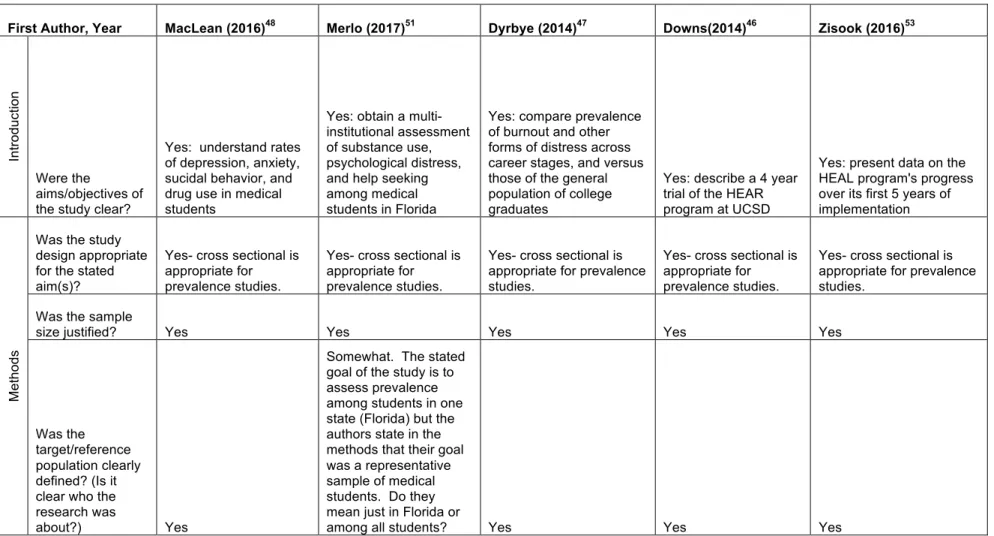
were extracted and are presented in Table C1 below. For quality assessment, the
Appraisal tool for Cross-Sectional Studies (AXIS tool) was used.56 The quality
assessment of each study can be found in Table C2.
Data Synthesis and Analysis
Due to the heterogeneity of studies and the outcome measurement tools used,
an advanced quantitative meta-analysis of the data was not possible. Instead, the
results section of this review includes a description of my findings and a critical analysis
of the body of literature that exists on this topic.
Results
Search Results
The search strategy described above returned a total of 8 relevant studies.
However, data extraction and clinical appraisal were only completed for 5 of the studies
because several studies used the same original dataset. When multiple articles
reported on the exact same data, I used my judgment to include only the study or
studies most relevant to this particular review. Specifically, the article by Jackson,
et.al.49 was not included because it presented the same exact data as the article by
rather than suicidality. The articles by Martinez, et.al.50 and Moutier, et.al.52 were also
not included because they used the same data set from the HEAR program at UC-San
Diego as the articles by Downs, et.al.46 and Zisook, et.al.53, but did not report on
suicidality of medical students alone. Instead, these articles included aggregated data
that combined findings for medical students along with findings for residents, and
faculty. A PRISMA diagram presenting the results of the search process is presented in
Figure C1.
Study Characteristics
All of the included studies were cross sectional in design and based on the
results of surveys that were completed by voluntary participants. Response rates
ranged from 16.4%-34%. All 8 articles included medical students from all 4 years of
study, and the 7 that reported respondent demographics all included a
disproportionately high female sample.46-47,49,50-53 Five studies took place at a single
institution (1 at Wayne State University48 and 4 at UC-San Diego46,50,52-53), while 2 were
nationwide.47,49 One study, by Merlo, et.al.51 looked at all medical students in the state
of Florida. Complete study characteristics can be found in Table C1.
Strength of Evidence
Several factors common to all of the included studies weaken the strength of
evidence of this body of literature, as it exists right now. First, although a cross
sectional design is appropriate for assessing prevalence, it cannot determine a causal
relationship, so one cannot draw the conclusion that medical school, or any aspect of
medical school, “causes” sucidality among students. Secondly, all studies measure
a significant risk of selection bias, as those that decide to participate in the study might
not be representative of the whole population from which they were recruited.
Furthermore, since this is a sensitive subject and participation was not mandatory,
response rates were generally low which raises the risk of selection bias. Lastly,
measurement bias is a concern because several of the studies either did not include
their exact measurement tool, or did not cite the sources that validated the tools they
chose to use. Full clinical appraisal of each of the included studies using the AXIS tool
is included in Table C2.
Prevalence of Suicidality
The prevalence of suicidality reported by the included studies ranged from 7.8%
(N=27 in a sample of 343 students) 46, to 11.8% (N=102 in a sample of 862 completed
surveys).51 The nationwide studies by Dyrbye, et.al. and Jackson, et.al., which included
the largest and most geographically representative sample of students reported
prevalence of suicidal ideation at 9.4% (N=414 in a sample of 4,402 students).47,49
Notably, one study asked students both about suicidal ideation in the past year, as well
as suicidal ideation at any point in their lives. The rate of lifetime suicidal ideation in that
sample was 29.9% (N=115/385).48
Heterogeneity of Screening Instruments
As discussed above, a meta-analysis of the study results is not possible due to
the high level of heterogeneity between the articles. In the sample of included studies,
a total of 4 different screening tools were used, ranging from one-item
assessments47, 49,51 to a more through 5-item questionnaire used by the HEAR
medical student data from the data of house staff and faculty, so the data was not
extractable.52, 53 This leaves a pool of 6 studies using 4 different outcome measures.
Discussion
This systematic review included a total of 8 studies (5 for data extraction and
quality assessment), and 6,018 U.S. medical students. It focused on the prevalence of
suicidality among this population, a group known to have higher rates of suicide and
suicidal ideation than the general population outside of the medical field. The
prevalence of suicidality measured by the studies included in this review ranged from
7.9%-11.8%, which is significant because it means that about 1 in every 10 medical
students surveyed has had thoughts of ending their own life while in medical school.
Limitations
A systematic review on this topic has several limitations. First, this review was
limited by a general paucity of literature overall. Of the 39 studies identified for the
paper above that addressed anxiety, depression, and suicidality among U.S. medical
students, only 8 included data on suicide. Thus from the beginning, this review was
limited to a very small group of studies. Secondly, the quality of the review is severely
limited by the heterogeneity of the data. Among the 5 studies from which data was
extracted, there were 4 different outcome measures with varying levels of validity and
reliability, making it difficult to do a high quality meta-analysis of the results.
Another major limitation of this body of literature comes from study design. All of
the relevant articles were cross sectional studies that used self-reported survey tools for
measurement. Because participation was completely voluntary, the results are limited
participate in the study is representative of the entire population. The risk of selection
bias was increased by the overall poor response rate, which averaged only about 25%.
Measurement bias is also a concern, as there is no consensus on a single,
validated screening tool for suicidality. The majority of the studies included used tools
that they had tailored to meet their particular research needs. Furthermore, the surveys
asked about sensitive topics, so as with all self-reported outcomes, it is possible that
students were not completely honest with their answers. Poor response rates,
heterogeneous screening tools, and a legitimate risk of untruthful answers severely limit
both the internal and external validity of the studies’ findings.
Future Directions for Research
There are several ways that future research can improve and build on this
existing body of literature. For one, the cross sectional design of the studies included in
this review could be improved by following students over time. With a more longitudinal
design, schools could track the mental health of their students throughout their medical
school journey, and hopefully identify appropriate points where intervention is
necessary. Secondly, researchers should work to develop a single, validated tool for
screening for suicide risk in this population. The tool should be a thorough risk
assessment that can be adopted by schools throughout the country.
Most importantly, given that we know that medical students are at high risk for
depression, anxiety, burnout, and other mental illnesses, it is imperative that the
medical education community ask about suicidal ideation frequently, and using
well-validated tools. Not only will this improve the quality and quality of available data, but
interventions. Healthy communities need healthy providers, and healthy providers start
their training in medical school. Thus, it should be a public health priority to
appropriately evaluate and address the mental health needs of medical students
nationwide.
Funding