Laying the Groundwork for Tobacco Retailer Licensing in
North Carolina
COUNTER TOBACCO CAPSTONE SUMMARY REPORT
2011-2012
Student team: Amber Anderson, Jennifer Brown, Meredith Kamradt, Allison Schmidt, Linnea Warren Community Partner/Faculty Adviser: Kurt Ribisl, PhD
2
Contents
Acronyms and Abbreviations ... 3
Abstract ... 5
Introduction ... 6
Background ... 9
Health Issue: Youth Tobacco Use in North Carolina ... 9
Environmental Determinants of Youth Smoking ... 9
Policy Solutions to Youth Tobacco Use ... 10
Counter Tobacco Capstone Project ... 11
Theoretical Approach. ... 12
Target Population: Community Leaders of Chapel Hill and Durham County. ... 13
Methods ... 14
Logic Model ... 14
Planning for Sustainability ... 16
Engagement & Assessment Activities ... 16
Work Plan Deliverables ... 18
Results ... 18
Sustainability Findings... 18
Project design and implementation factors... 18
Factors within the organizational setting. ... 20
Factors within the broader community environment. ... 21
Engagement and Assessment Findings ... 22
Summary of Deliverables ... 23
Table 1. ... 23
Summary of Capstone Deliverables: GIS maps of tobacco retailers in Chapel Hill and Durham County ... 23
Table 2. ... 24
Summary of Capstone Deliverables: North Carolina Tobacco Retailer Licensing Policy Brief: “Laying the groundwork for tobacco retailer licensing in North Carolina” ... 24
Table 3. ... 25
Summary of Capstone Deliverables: Tobacco Retailer Licensing Social Marketing Materials ... 25
3
Summary of Capstone Deliverables: Tobacco Retailer Licensing and Youth Manuscript: “Tobacco Marketing, Product Availability, and Sales to Minors at Stores near Schools: A Systematic Review” 26
Discussion... 27
Considerations for Sustainability ... 27
Strengths and Limitations of Engagement & Assessment Activities ... 27
Potential Impacts and Benefits of the Capstone Project ... 28
Lessons Learned & Challenges ... 28
Conclusion & Recommended Next Steps ... 29
References ... 31
Appendix A: Work Plan ... 37
Appendix B: Contact Information and Recommended Next Steps ... 53
Contact Information ... 53
Next Steps ... 53
Acronyms and Abbreviations
The Alliance – North Carolina Alliance for Health ASSIST—American Stop Smoking Intervention Study
CDC – United States Centers for Disease Control and Prevention CH—Chapel Hill
Counter Tobacco – Counter Tobacco North Carolina CP – Community Partner
DHHS—US Department of Health and Human Services GIS – Geographic Information Systems
HBHE – Health Behavior and Health Education HWTF – Health and Wellness Trust Fund IRB—Institutional Review Board
NC – North Carolina
NC DPH—North Carolina Department of Public Health
NC GASP—North Carolina Group to Alleviate Smokers Pollution OCHD – Orange County Health Department
4 SCT – Social Cognitive Theory
SEF – Social Ecological Framework SES – Socioeconomic Status
TPCB – Tobacco Prevention and Control Branch TRL – Tobacco Retailer Licensing
TRY—Together for Resilient Youth
UNC – University of North Carolina at Chapel Hill YSL – Youth serving locations
5
Abstract
Background: Tobacco use, primarily of cigarettes, is the leading preventable cause of death in the United States (Danaei et al., 2009; Mokdad, Marks, Stroup, & Gerberding, 2004; US Department of Health and Human Services, 2004). In North Carolina, 12,200 of our state’s citizens die every year from tobacco use, and the state spends $769 million in tobacco-related Medicaid costs. Additionally, despite widespread prevention efforts, cigarette-smoking rates remain high among youth (Everett et al., 1999). Exposure and access to tobacco is also an area reflective of striking disparities along racial, socio-economic, and age lines. It is therefore imperative that North Carolina take progressive steps to decrease youth cigarette use. One way in which states and localities are reducing tobacco use is by creating tobacco control policies that act at the point-of-sale (POS). POS policies are those that are directed at the location and event of purchase of tobacco products. One POS policy that has been used in the majority of states, but not in North Carolina, is tobacco retailer licensing. Tobacco retailer licensing laws can effectively decrease access and smoking rates, illegal sales of tobacco products and resulting tax revenue losses, and the burden of enforcement costs on the state when fees from licensing fund enforcement efforts. Methods: As a group of Capstone students from the Department of Health Behavior at the UNC Gillings School of Global Public Health, we produced four deliverables to lay the groundwork for tobacco retailer licensing in North Carolina. These deliverables are presented in the following order: 1) Tobacco retailer maps of Chapel Hill and Durham County 2) Policy brief 3) Social marketing materials, and 4) Manuscript. To assess the locations of tobacco retailers in two local communities, team members collected Geographic Information Systems (GIS) data on every tobacco retailer in Chapel Hill and Durham County. From these data, team members created maps of tobacco retailers in Chapel Hill and Durham County and examined spatial patterns based on available data, such as census information on racial composition and income of census blocks. To create a policy brief that advocates of POS policies could use to communicate with policy makers, a review of the scientific, legal, and advocacy materials on licensing tobacco retailers was conducted. To inform and inspire advocacy among potential allies around tobacco retailer licensing, the team created social marketing materials that were message-tested with Durham and Chapel Hill residents as well as community leaders, and revised materials with this input to create final versions. Finally, the team drafted a manuscript to document existing published evidence of POS tobacco marketing, youth tobacco use, and youth purchase of tobacco at tobacco retail outlets near schools. Results: We increased the North Carolina tobacco advocacy community and the general public’s knowledge about tobacco retailer licensing. The data collected and materials produced were presented to members of the Orange County Health Department, the North Carolina Tobacco Prevention and Control Branch, the North Carolina Alliance for Health, and community leaders from Durham and Chapel Hill as testimony for the need for tobacco retailer licensing in these areas. Finally, all of the materials will be made available on the Counter Tobacco website for advocates to continue to use. Discussion: Working with the tobacco control advocacy and policy-making communities provided the Capstone team with the opportunity to continually refine the priorities and deliverables of our project. These experiences provided a solid foundation of policy advocacy and social marketing skills for Capstone team members. The Capstone team’s activities and materials will advance POS policies in North Carolina and across the country. Major Deliverables:
1. GIS maps of tobacco retailers in Chapel Hill and Durham County
2. North Carolina tobacco retailer licensing policy brief (“Laying the groundwork for tobacco retailer licensing in North Carolina”)
6
4. Tobacco retailer licensing and youth manuscript (“Tobacco marketing, product availability, and sales to minors at stores near schools: A systematic review”)
Acknowledgements
We would like to sincerely thank Dr. Kurt Ribisl, Pam Seamans, Ann Houston-Staples, Sally Herndon, Pamela Diggs, and the Capstone Teaching Team for their time, mentorship, and support during the Capstone experience.
Introduction
The Capstone is a yearlong field experience involving mentored application of the skills and knowledge acquired in the Master’s of Public Health (MPH) program of the Department of Health Behavior (HB) at the UNC Gillings School of Global Public Health to a health problem of interest in North Carolina. Teams of four to five students, comprising a Capstone team, are assigned to work with a community partner on a project determined primarily by the partner organization with advising by a faculty advisor and support from the course teaching team. Work on the project ultimately results in a number of tangible, useful deliverables for the Capstone partner organization with the goals of
advancing progress in the field and improving health outcomes in the community.
The Capstone process began in March of 2010 with presentations by potential community partners. Following these presentations, students were given the opportunity to collaborate with the teaching team to decide on the project of their choice, were matched, and then began finalizing project work plans in collaboration with the community partner. We were assigned to work with the Counter Tobacco project until completion of the project in May of 2012.
7
negative health outcomes. Some of his most recent work has focused on mapping tobacco retail locations using Geographical Information Systems (GIS) technology and the implementation of point-of-sale (POS) policies to control tobacco point-of-sales. Through his funded work with Counter Tobacco North Carolina (Counter Tobacco), a POS focused project, Dr. Ribisl has extensive experience and a network of professional connections in this area. The aim of Counter Tobacco is to create an online resource (www.CounterTobacco.org) for government and community organizations around the country to combat sales and promotions of tobacco products. The website includes model policy solutions to counteract the impact of tobacco sales and marketing, case studies of effective regulation of POS locations, peer-reviewed evidence to support POS policy approaches, and other tobacco control resources. Tobacco control advocates and practitioners across the country can use this website to further strengthen their programmatic, policy, and advocacy work in the field.
In addition to working with Dr. Ribisl, we also developed partnerships with the North Carolina Alliance for Health (The Alliance) and the North Carolina Tobacco Prevention and Control Branch (TPCB), both organizations that work in tobacco control and advocacy, to ensure more interaction with
organizations and community members in Durham and Chapel Hill. Chapel Hill and Durham County were considered appropriate locations for our work because they have a number of advocacy organizations with experience in tobacco control advocacy, and their distance made data collection on tobacco retailers feasible for the student team.
8
Heart Association, and the NC Council of Churches (“Members and Partners”, n.d.). As an advocacy organization, the Alliance works most directly with partner organizations, lobbyists, and policymakers at the local and state levels.
The Counter Tobacco Capstone team was involved throughout the 2011-2012 academic year in a variety of activities to better understand the state of research and advocacy in POS tobacco control, including organization meetings, state and national webinars, and several workshops. Utilizing the knowledge gained from these experiences, working with Dr. Kurt Ribisl , and the community organizations mentioned above, we produced four major deliverables all with the shared goal of
advancing POS policies on the state advocacy and legislative agendas. These deliverables included 1) GIS maps of tobacco retailers in Durham and Chapel Hill 2) a policy brief on POS policies in North Carolina to distribute to policy advocates and legislators 3) social marketing campaign materials that could be used to mobilize the community to advocate for change, laying the foundation for future legislative changes to POS policies at the state and local levels in North Carolina, and 4) a systematic literature review and manuscript for publication examining the link between tobacco POS policies and promotions and youth smoking, as well as the implications of existing evidence for future policies.
This summary report details the work completed during the 2011-2012 academic year in
9
Background
Health Issue: Youth Tobacco Use in North Carolina
In the United States, the use of tobacco products is the leading preventable cause of death (Danaei et al., 2009; Mokdad, Marks, Stroup, & Gerberding, 2004; US Department of Health and Human Services, 2004). Despite decades of prevention efforts, the latest report by the Surgeon General on youth tobacco use states that each day 3,800 American youth under the age of 18 start smoking (Preventing Tobacco Use among Youth and Young Adults, 2012). This is especially problematic as many of those who initiate smoking at an early age continue throughout their lifetime, and long-term
exposure to tobacco is highly damaging to health (U.S. Surgeon General, 2010). Further, earlier ages of smoking initiation are associated with greater numbers of cigarettes smoked each day relative to later ages of initiation, resulting in greater cumulative effects of tobacco use (Everett et al., 1999). In the state of North Carolina, the smoking rate among youth aged 12-17 years is 10.8%, higher than both the national average for youth smoking and the youth smoking rates of many other states (Centers for Disease Control and Prevention, 2010b). To protect and nurture its future leaders and citizens, the state of North Carolina is in need of new smoking prevention initiatives that effectively restrict youth access to cigarettes.
Environmental Determinants of Youth Smoking
10
evidence demonstrates that exposure to POS marketing and access to cigarettes can have a strong impact on youth smoking behavior.
In addition to the evidence for the effects of advertisements and availability of tobacco products at the POS, exposure and access to cigarettes are areas reflective of striking health disparities, both in general and among youth. Racial and ethnic minorities and those of low socio-economic status (SES), including youth, are disproportionately exposed to and affected by tobacco use and its associated negative health outcomes (US Department of Health and Human Services, 1998). Furthermore, tobacco retailer density overall and the number of POS retailers near youth-serving locations, such as schools, may be higher in lower-income and minority communities (Seidenberg, Caughey, Rees, & Connolly, 2010). As a result, minority youth come into contact with sales and promotions of cigarettes more frequently. This is reflected in observations of higher rates of smoking in areas with greater proportions of low-income households (Chahine, Subramanian, & Levy, 2011). Therefore, interventions that restrict locations of tobacco outlets are likely to have a greater positive impact on low SES communities where tobacco outlets are more prevalent, helping to reduce health disparities in tobacco use among minority and low-income youth.
Policy Solutions to Youth Tobacco Use
11
sales to minors laws (McLaughlin, 2010). While evidence continues to emerge in this area, precedent for enacting POS laws has been set in other states and communities, and is supported on a national level by the US Department of Health and Human Services (DHHS) (Banthin, 2010). Overall, POS policies offer promising new opportunities to protect youth by limiting access to cigarettes.
Despite the potentially strong health and economic benefits of such laws, the state of North Carolina currently prohibits, or preempts, local regulation of cigarette retailers (North Carolina General Assembly, 2012). Preemption means that localities in North Carolina cannot enact licensing laws that are more stringent than the state law, which is that tobacco retailers are not required to obtain any license to sell tobacco products, including cigarettes. Encouragingly, there is support at the national level for eliminating such preemptory laws. The US DHHS has prioritized the elimination of state laws preempting local tobacco regulation as one of its Healthy People 2020 objectives, its evidence-based goals for promoting national health (U.S. Department of Health and Human Services, 2011).
Counter Tobacco Capstone Project
12
which components of these interventions were most effective in limiting youth access to tobacco has yet to be determined, the Community Guide recommends their combined implementation to achieve reductions in youth tobacco use. Our Capstone project drew from this multi-pronged approach in determining our deliverables and approaches; we therefore created materials that would reach advocates, policy makers, and the general public.
Theoretical Approach.
The Social Ecological Framework (SEF), an approach to understanding various influences on behavior, and the Health Impact Pyramid, a framework for considering various intervention
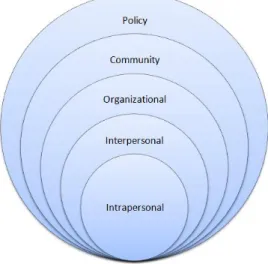
opportunities to change behavior, informed our Capstone team’s overall approach to youth smoking prevention. The SEF (Figure 1) posits that health behavior is influenced by a variety of factors at
different levels, including the intrapersonal, interpersonal, organizational, community, and policy levels (Glanz, Rimer, & Viswanath, 2008). Importantly, healthy behaviors are easiest to perform when the overarching political climate and social norms of organizations and social groups favor such behaviors (Glanz et al., 2008). With our Capstone project, we targeted changes to the greater physical
environment that restrict youth access and exposure to cigarettes, and to the social environment, that promote an environment in which youth smoking is discouraged and prevention policies are endorsed.
13
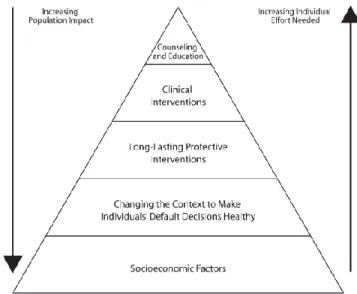
Another related framework, the Health Impact Pyramid (Figure 2) describes the relative impact of various types of interventions on health behaviors (Frieden, 2010). The Health Impact Pyramid includes five levels in which interventions can occur, arranged from the base level to the top level as having increasingly more individual effort needed to implement behavior change, and decreasing impact on population health. The two levels with the broadest population impact are socioeconomic factors, followed by environmental factors that make healthy behaviors the default. In promoting policy change, we focused on altering the environment so that healthier choices were easier to make; for example by decreasing the number, density, and proximity of tobacco retailers to youth serving locations (YSL), it will be more difficult to purchase and use tobacco products. These types of changes will achieve maximum impact on the population health of North Carolina youth, because they do not rely on an individual’s choice to purchase a tobacco product.
Figure 2: Health Impact Pyramid
Target Population: Community Leaders of Chapel Hill and Durham County.
14
change to stronger tobacco policies in the future. Though preemption currently restricts localities such as these from implementing tobacco retailer licensing laws, our activities were aimed at increasing knowledge about licensing and demonstrating the potential effects of a licensing law, with the ultimate goal of starting a statewide advocacy effort to remove the preemptory language. This approach was deemed feasible by the Capstone team because there exists historical precedent for tobacco control advocacy in the area. Organizations and community members from Chapel Hill and Durham were a part of the North Carolina Group to Alleviate Smokers Pollution (NC GASP) organization as early as 1991, and these two areas participated in Project American Stop Smoking Intervention Study (Project ASSIST) in 1995 (Washington, Barnes, & Glantz, 2011). Moreover, Orange and Durham counties were early adopters of clean air provisions, indicating that there is support for tobacco control policies in these counties (Washington et al., 2011). Finally, in the face of political opposition and criticism in the media, UNC-Chapel Hill has maintained a strong legacy of research showing evidence for progressive tobacco policies (Washington et al., 2011). Overall, both Chapel Hill and Durham have histories as pioneer communities in promoting health, and are well positioned to lead the state in tobacco policy initiatives. Recently, Durham became the first county in North Carolina to adopt policies for tobacco-free public places. Our team capitalized on this history and experience by working with The Alliance and the TPCB to raise advocates’ knowledge of POS and licensing policies, as many organizations have little knowledge of the importance and effects of these policies.
Methods
The background knowledge of youth smoking in North Carolina and current state policy aided us in the process our team used to create our deliverables.
Logic Model
15
outcomes (Kellogg, 2004). The Logic Model below (Figure 3) illustrates the relationship between inputs (i.e. resources) the activities the Capstone team performed; the activities our colleagues will perform in the future; and the short, medium and long-term outcomes we anticipate as a result. To summarize, using the inputs listed in the first column, members of the Capstone team produced materials and resources for tobacco POS policy advocacy efforts. The outputs, or products, produced by the Capstone team will assist in the implementation of policies that lift state preemption of local measures to address POS issues, policies that require licensure of tobacco retailers, and policies that limit youth access to tobacco. These efforts will result in the intended outcome of lower smoking initiation, lower rates of tobacco use, and lower morbidity and mortality attributable to smoking in the Chapel Hill and Durham County areas and statewide. Some of the outcomes and overall impact are expected to occur after the conclusion of the Capstone project. These are shown in italics and are included to provide context for our Capstone work.
Inputs Activities Outputs Outcomes Impact
Time Existing evidence Funding HBHE department facilities/ resources
Other UNC facilities/ resources
Student team
Faculty adviser
NC tobacco control
advocacy groups
Consultants from advocacy community
Write a systematic review of the literature on the effects of tobacco retailers near schools
Develop maps of tobacco retailers in CH and Durham County using GIS
Create a POS policy brief
Communicate to advocates in NC about POS policy solutions to reduce youth access and exposure to tobacco
Produce TRL social marketing materials
Present to, engage, and mobilize tobacco control advocates around TRL Manuscript: “Tobacco Marketing, Product Availability, and Sales to Minors at Stores near Schools: A Systematic Review”
22 maps of CH and Durham County
POS policy brief
Contact list of tobacco control advocates in NC
3 TRL social marketing ads
Presentation to and mobilization of tobacco control advocates
Augmented body of literature on stores near schools and their effect on smoking rates
Increased awareness of countertobacco.org among NC tobacco advocates
Increased awareness of POS policies in NC tobacco advocacy community
POS policies on NC tobacco advocacy agenda
POS issues on state legislative agenda Lifting of state
preemption of TRL Passage of local or statewide TRL in NC Passage of ordinances
limiting tobacco retailers near YSL
Reduced youth access and exposure to cigarettes and tobacco marketing in NC Reduced differential
access and exposure to tobacco marketing among low-income residents and racial and ethnic minorities. Reduced smoking
initiation among NC youth and adults Reduced tobacco use
among NC youth and adults
Reduced morbidity and mortality attributable to smoking in NC Reduced differential
morbidity and mortality among low-income and minority groups.
16
Planning for Sustainability
While outlining the planned work and intended results of this Capstone project presented above, the team evaluated the sustainability of the work. Planning for sustainability is important in order to have a lasting impact. According to Shediac-Rizkallah (1998), three main categories of factors influence the sustainability of a program: project design and implementation factors, factors within the organizational setting, and factors within the broad community environment. The authors provide three lenses through which to measure sustainability: maintenance of the health benefits, institutionalization of the program within an organization, and capacity building (Shediac-Rizkallah, 1998). Our project aims to intervene on a policy level to prevent the youth smoking, and we evaluated sustainability using all three approaches. The findings from our analysis of this project’s sustainability will be presented in the results section.
Engagement & Assessment Activities
Just as planning for sustainability is important to making long lasting impacts, community engagement is essential for community action and change. According to The Principles of Community Engagement (McCloskey et al., 2011), community engagement is important in order to improve health promotion and health research. A review of the literature revealed nine topic areas in which community engagement proved to have positive effects: agenda setting, study design and intervention delivery, intervention implementation and change, ethics, public involvement, overall understanding of academic partners, research participation, enhanced knowledge of community organizations, and public
receptivity (Staley, 2009).
17
reducing tobacco use (Centers for Disease Control and Prevention, 2010a). For these reasons, we sought to engage the network of tobacco prevention advocacy organizations within North Carolina as our community of stakeholders, namely The Alliance and the TPCB. We conducted engagement and
assessment activities with these organizations to understand priorities and consult with their leaders on activities and deliverables. These groups provided us mentorship by allowing us to attend meetings to observe policy advocacy in action, talking through advocacy strategies over the phone, consulting on our Capstone deliverables, and introducing us to members of their networks for opportunities to present our Capstone work.
We spent time speaking with The Alliance’s policy director, Pam Seamans, MPP, and additionally initiated contact with their coalition members and attended their quarterly membership meeting and tobacco prevention strategic planning meeting during the month of October 2011. At the quarterly membership meeting we attended, our faculty advisor, Dr. Ribisl gave a presentation on POS tobacco issues. Our team subsequently collected feedback with an informal poll and an open discussion on the receptivity of coalition members to innovative tobacco prevention initiatives.
The TPCB is a branch of North Carolina’s Division of Public Health, Chronic Disease and Injury Section that leads North Carolina’s fight against tobacco and builds the capacity of other agencies in the state to carry out relevant strategies to reduce the health effects of tobacco. Our Capstone team networked with various individuals from TPCB, participating in dialogue about our POS advocacy efforts during a meeting at their office, which was held in conjunction with the TPCB team, in October 2011. In February 2012, we hosted two community consultants, Ann Houston Staples, Director of Public
18
Work Plan Deliverables
In addition to engaging with the tobacco advocacy community to gain their buy-in and involvement in our project deliverables, our deliverables were intended to facilitate continued community engagement. Specifically, the Capstone team and collaborators selected a combination of deliverables that would raise awareness in the advocacy community and its leadership about POS concerns, as well as enable tobacco control policy advocates and practitioners to act when they move to focus on POS issues. The GIS maps and policy brief will help illustrate the need for POS policy change to policy makers. Complementing advocacy efforts to address policy solutions, the ready-to-use social marketing campaign materials will assist policy advocates as they continue to raise awareness and garner support among the general public. The manuscript summarizes the evidence showing an association between tobacco retailer proximity to schools and youth tobacco uptake for public health practitioners working on POS issues. In addition, the deliverables selected built on the collective experience of the Capstone team, and encouraged development of new skills among team members, such as those in political advocacy, health communications, manuscript writing, and GIS-mapping. A more detailed description of deliverables can be found in Tables 1-4.
Results
Sustainability Findings
In this section, we will examine the sustainability of the Counter Tobacco Capstone project using the Shediac-Rizkallah framework. We will discuss project design and implementation factors, factors within the organizational setting, and factors in the broader community environment that influence the sustainability of this project and its associated outputs, outcomes, and impact (Shediac-Rizkallah, 1998).
Project design and implementation factors.
19
Manuscript contributing to the body of literature on the effects of tobacco retailer
proximity to schools and youth tobacco use uptake
Dissemination plan for the social marketing materials and GIS maps on the web
(www.CounterTobacco.org) and to the Town of Chapel Hill and Durham County GIS divisions to community leaders and advocates for future use
Policy brief and Capstone team presentations communicating to policymakers to
increase support for tobacco POS regulation
Building support around tobacco POS regulation amongst local advocacy organizations
through involving these networks in the creation of our deliverables
Through each of these activities, we are laying the groundwork for sustained efforts to promote tobacco retailer licensing policies in North Carolina. First, the manuscript we have drafted contributes to the scientific literature by documenting existing evidence of the relationship between the presence of tobacco retailers near schools and youth uptake of tobacco use. Second, our original maps and social marketing materials will be made available to local and national allies, including the Chapel Hill and Durham GIS divisions as well as tobacco control policy advocates at large, who visit
20
available indefinitely on the Counter Tobacco website, these materials can be used to promote POS policies across the state and nationwide, particularly as policy environments become more conducive to supporting such regulations. To this end, our communications with and presentations to policymakers and residents of Chapel Hill and Durham have “set the stage” for future POS policies by promoting an environment more receptive to such tobacco regulation. Finally, having the ultimate goal of intervening on the policy level offers the potential for a more sustainable, institutionalized approach to addressing tobacco initiation among youth than does a one-time health intervention at the interpersonal or community level.
Factors within the organizational setting.
In addition to the project design and implementation factors mentioned above, a few factors within the setting of our partnering organizations will increase the sustainability of the Counter Tobacco Capstone project. First, Counter Tobacco North Carolina, a coalition of POS advocates in North Carolina, received grant funding during the 2011-2012 school year, with the potential to extend funding. This formalization and funding of Dr. Ribisl’s network of interested colleagues provides financial stability for continuing advocacy efforts. Additionally, POS issues are periodically integrated into the scope of work of the Alliance, NC TPCB, and other tobacco control advocacy groups in the state. These organizations have been solid, stable advocates in North Carolina for several years. The Alliance held a strategic planning meeting during the 2011-2012 school year, and consulted with the Counter Tobacco Capstone group to examine how our efforts may be integrated into their future plans. In addition, the Orange County Tobacco Coalition has included tobacco retailer licensing as a long-term National Association of City and County Health Organizations grant outcome. Unfortunately, POS policy advocacy was
21
supporter of POS policies, who will likely further the sustainability of our work as POS policies continue to be brought to these organizations via Counter Tobacco NC and CounterTobacco.org.
Factors within the broader community environment.
The nature of working at the policy level means that there will be both assets and challenges offered by the broader community environment. Generally speaking, we face a challenging economic and political environment for sustaining any progressive policy work, both nationally and locally. However, policy advocacy agencies work toward tobacco control from a variety of angles, and are open to learning about POS strategies as an element of the fight against the harmful effects of tobacco. Communities have used tobacco retailer licensing as a means of reducing the exposure and access of youth to tobacco advertising and products by reducing retailer density and proximity near schools (Centers for Disease Control and Prevention, 2011b). Evidencing this is the fact that 42 states have some form of POS policy in place to mitigate the harmful effects of tobacco in their communities (Centers for Disease Control and Prevention, 2011b). These policies are broad in impact, are institutionalized in local law, and are likely to be in place long-term. Our project looks to them as successful case studies in how to affect change and maintain sustainability in the broader community environment.
Despite the factors promoting sustainability mentioned above, there are a number of challenges to the sustainability of Counter Tobacco’s goals presented by the broader community environment as well, particularly the competing priorities of advocates in ensuring funding for tobacco prevention efforts. During the summer of 2011, the Health and Wellness Trust Fund (HWTF) was abolished, which had previously funded tobacco prevention programs throughout the state. Consequently, tobacco prevention advocates are currently investing most of their resources to ensure continued funding for existing programs. Before the decision was made to cut HWTF monies, the HWTF received one fourth of the annual funds that the state was allocated from the Tobacco Master Settlement Agreement.
22
towards these existing projects for the rest of the current fiscal year, future funds will be diverted to North Carolina’s general fund for use anywhere in the general state budget. Consequently, tobacco control groups are primarily focusing on securing funding and preserving the integrity of the State’s recently adopted clean indoor air laws, rather than on promoting new legislative approaches to tobacco prevention such as POS policies. Overall, factors at the community level both supported and challenged the sustainability of our Capstone project.
Engagement and Assessment Findings
The discussion of sustainability above was informed by our engagement and assessment findings, which yielded information about the strengths of existing tobacco prevention advocacy networks, as well as their challenges and current priorities. Our engagement and assessment findings yielded tangible ways to modify and tailor our deliverables to be of maximum utility to these tobacco prevention advocacy communities.
Through engagement and assessment, it became clear that the main strengths of the State’s existing tobacco prevention advocacy network are its committed individuals, experts who have worked in the field of tobacco prevention for many years. These individuals have connections at all levels of government in North Carolina as well as experience implementing strategies to promote tobacco prevention at local levels and statewide.
These individuals provided valuable feedback that guided our Capstone deliverable creation. For example, presentations to Jonathan Polansky and Ann Staples helped us to refine and tailor our social marketing messages before testing them via intercept interviews with the general public.
Additionally, as described in our methods section, the presence of competing priorities was exemplified when we polled members of the Alliance at a meeting in January 2012. Specifically, we discovered that some members were sympathetic to POS issues, some were fairly supportive, but the majority
23
priorities of our community allowed us to tailor our policy briefs and presentations to be useful to this community.
Additionally, informal feedback gleaned through telephone conversations and meetings allowed us to revise our work plan from writing a grant to support a local organization’s POS advocacy efforts to creating a draft manuscript to advance the scientific literature on tobacco POS opportunities. After speaking with a number of organizations, we found that few organizations had the current capacity to support POS advocacy efforts, given existing priorities, and that few funding sources for such work existed. In addition, from informal conversations with local and state-level policymakers, we came to understand the value of evidence in policy advocacy. When an opportunity arose, the team chose instead to contribute to a manuscript to help build the case for future tobacco POS policies; this manuscript describes the impact of POS promotions and sales on youth tobacco purchases and use. Overall, our community engagement and assessment findings guided our work throughout our Capstone project.
Summary of Deliverables
Tables 1-4 provide a summary of the deliverables created as part of the Capstone experience and the key findings associated with each deliverable.
Table 1.
Summary of Capstone Deliverables: GIS maps of tobacco retailers in Chapel Hill and Durham County Purpose: To reveal any existing access, economic and racial/ethnic disparities in Durham and Chapel Hill (CH) communities related to tobacco retailers and youth, and to provide detailed visual aids and analyses that will be included in potential recommendations and presentations to policy makers in Durham and Chapel Hill.
Timeline: August 2011-March 2012 (~7 months)
Methods Key Findings
Requested a list of tobacco retailers in CH from
Town of CH Town Manager, Roger Stancil, and received a “sundries” list in return naming the establishments in CH that applied for a license to sell sundries, including food, soda, and other items
Collected a list of all possible tobacco retailer locations in Durham County and CH using the Ref USA database for retail establishments
2 team members obtained training in using
Accuracy of sundries list: Comparison of the list to the list of geocoded tobacco retailers revealed that 29 tobacco retailers in Chapel Hill were not listed on the sundries list, which is 58% of retailers in Chapel Hill.
Findings from CH:
There are 47 tobacco retailers in CH.
Only the poorest and second poorest census tract
24 ArcGIS software
Used “ground-truthing”, or driving and scanning
every secondary road, in Durham County and CH to verify the retailers on the list that sold tobacco; Geo-coded those retailers using GPS units
Cleaned retailer data and uploaded GPS
coordinates into ArcGIS
Obtained other GIS data layers, including roads,
school parcels, parks, childcare centers, and Census tracts
Created GIS maps of Durham and CH retailers
Linked information from the US Census and CH
and Durham GIS divisions to Census tracts to map demographics
Mapped the distribution of retailers across
census tracts showing SES (CH) and percent minority (Durham)
Analyzed patterns of retailers, including distance to schools and retailer density; Analyzed spatial data for SES and racial/ethnic disparities
Mapped effects of policy solutions on retailer
density and location for inclusion in policy brief
retailers within 500 ft of another retailer).
13 (28%) retailers are within 1,000 ft. of a youth-serving location
o None of the retailers near youth-serving
locations are in the Census tracts with the highest median income.
There is evidence for disparities in tobacco retailer density and location by Census tract SES
breakdown in CH
Findings from Durham:
233 tobacco retailers in Durham County
13 (30%) schools, all within racially mixed or predominantly minority areas, have tobacco retailers within 1000 feet
Retailer density appears to be greater in areas
with higher proportions of minority residents
There is evidence for disparities in tobacco retailer density and location by Census tract racial breakdown in Durham
Table 2.
Summary of Capstone Deliverables: North Carolina Tobacco Retailer Licensing Policy Brief: “Laying the groundwork for tobacco retailer licensing in North Carolina”
Purpose: To provide a review of the problem of youth access to tobacco, a description of current POS tobacco policies in North Carolina, and to integrate these findings with GIS maps from Chapel Hill and Durham County to provide the basis for policy recommendations to reduce youth access to tobacco.
Timeline: August 2011-April 2012 (~8 months)
Methods Key Findings
Conducted a review of all relevant policies
related to POS of tobacco in Durham County and Chapel Hill
Narrowed policy recommendations to top three
most relevant based on policy research
Incorporated content from social marketing
materials into the policy brief
Presented policy brief to community consultants
for feedback
Finalized policy brief and presented findings and
other Capstone deliverables to: o Sally Herndon, TPCB
o Joseph Lee, UNC Gillings School of Global Public Health
o Leah Ranney, Tobacco Prevention and Evaluation Program
o Donna King, OCHD
o Pam Diggs, OCHD
o Lee Storrow, NC Alliance for Health
Current POS policies in North Carolina: There are no policies in place in NC that require tobacco retailers to be licensed. In fact, licensing is preempted at the state level, meaning that no local governments in NC can enact licensing policies for their localities until the state law is changed.
25 o Betsy Vetter, NC Alliance for Health
o Sterling Fulton-Smith, TPCB
o Tish Singeltary, TPCB
o Wanda Boone, Durham TRY
Prepared a “Next Steps Recommendations”
document for the 2012-2013 Counter Tobacco Capstone team
Table 3.
Summary of Capstone Deliverables: Tobacco Retailer Licensing Social Marketing Materials
Purpose: To raise awareness of the problem of a lack of tobacco retailer licensing in North Carolina, to increase support for enacting licensing policies, and to encourage potential allies to visit www.CounterTobacco.org.
Timeline: August-March 2012 (~7 months)
Methods Key Findings
Identified intended audience and scope of
campaign materials.
Developed general communication strategy for
intended audience.
Submitted an application to the UNC Institutional
Review Board (IRB) for message testing with intended audience.
Developed messages and materials.
Created mock-ups of social marketing ads.
Submitted mock-ups to graphic designers and
received their draft.
Presented drafts of ads to community consultants
and Counter Tobacco team for feedback.
Submitted changes to graphic designers and
received their second draft.
Developed intercept survey for message testing
with second draft of materials.
Tested messages and materials via 10 intercept
surveys at a Laundromat in Durham County and a retail mall in Chapel Hill
Summarized findings of intercept survey and
made edits to ads.
Submitted final changes to graphic designers and
received final materials.
Prepared report detailing methodology of
material creation and message testing. Included final materials.
Published materials in image gallery on
CounterTobacco.org.
Campaign scope, audience, and strategy: We decided to do a series of 2-3 print ads targeted at potential allies of POS regulation among health advocates and the public. These ads can be used by advocates in the future, posted in various public venues when tobacco retailer licensing becomes a salient issue in a given community.
IRB: Message testing deemed IRB exempt.
Messages to test:
After initial meeting with community
consultants, we decided to test:
o Irony to expose the inconsistency in NC
licensing laws.
Other similar products are licensed: NC
requires alcohol retailers to be licensed, but not tobacco retailers.
Other benign products are licensed: CH
requires retailers that sell ice cream and soda to be licensed, but not tobacco retailers.
o Arguments of economic fairness to raise
support for licensing laws.
NC taxpayers spend $2.26 billion each
year on smoking-related health care costs; tobacco retailers spend $0 to sell cigarettes.
Each NC household spends $563 in
taxes each year on smoking-related health care costs; tobacco retailers spend $0 to sell cigarettes.
Final messages:
Similar product: NC requires alcohol retailers to be licensed, but not tobacco retailers
Economic argument NC taxpayers spend $2.26
26
care costs; tobacco retailers spend $0 to sell cigarettes.
[New concept] Parent and child: Emphasize the
ease with which youth can buy cigarettes from a store to engage parents
Table 4.
Summary of Capstone Deliverables: Tobacco Retailer Licensing and Youth Manuscript: “Tobacco Marketing, Product Availability, and Sales to Minors at Stores near Schools: A Systematic Review” Purpose: To provide a summary of the evidence that tobacco retailers near schools increase youth uptake of tobacco use in order to contribute to the body of scientific literature supporting tobacco retailer licensing.
Timeline: January-April 2012 (~4 months)
Methods Key Findings
Received a collection of articles that co-authors obtained from a thorough review of the literature. Articles were included if they were a result of primary data collection, were on tobacco retailer proximity to schools, tobacco advertisement near schools, tobacco products available near schools, and youth uptake. 25+ articles were passed to Capstone team from Counter Tobacco NC research team.
Organized information from each of these
articles, including population, sample size, study design, measures, and key findings in a table.
Assessed articles for relevance and narrowed
pool to 10+ articles that addressed the effects of tobacco retailer and advertisement location and density near schools on youth smoking behavior.
Synthesized the information from table to an
outline.
Supplemented articles gathered with an
additional search on youth access to, as measured by youth purchase of, tobacco at stores near schools
o Searched 12 databases
o Search terms included words for “youth,”
“tobacco,” “sales/stores,” “schools,” and “proximity.”
Reviewed and outlined: tobacco industry
documents showing how the industry targeted marketing at stores near schools and POS policy solutions to address problems related to school proximity to tobacco retailers and youth smoking uptake
Created a draft manuscript from this outline.
Combined drafts of sections described above
with Methods section, portions of Policy Solutions section, and Recommendations for Future Research section written by co-authors (not on Capstone team)
Scope of the problem:
Existing research has examined the impact of
store location and density, the amount of tobacco advertising in stores near schools, and the availability of smokeless tobacco products near schools. There is evidence that stores near schools tend to sell tobacco to minors, which increases youth access to tobacco products and subsequent smoking behavior.
Youth purchase of tobacco at stores near schools:
While a small amount of peer-reviewed
publications have investigated youth tobacco purchase attempts at stores near schools, there is evidence that youth can purchase tobacco products at these stores in many cases without verification of their age or identity.
Tobacco industry documents on targeted marketing at stores near schools
Several published examples exist of the tobacco
industry’s targeting marketing to youth at stores near schools
POS policy solutions
As has been implemented in other states and
27
Discussion
Considerations for Sustainability
To ensure the sustainability of our deliverables as discussed above, we recommend several strategies to continue advocacy and communication around POS policies in North Carolina. Promotion of the Counter Tobacco website and sustained traffic to it will be an important facet of our project’s
sustainability and the availability of original materials. Continued advocacy for POS issues is also a critical strategy in sustaining the work of our Capstone project. Specific recommendations for next steps are made in the Conclusion of this Report and in Appendix B.
Strengths and Limitations of Engagement & Assessment Activities
Our Capstone team was able to successfully use the information we gained from the tobacco control advocacy community to guide how we framed POS tobacco issues in our policy brief, GIS maps, and the social marketing materials. Their insights also guided the way in which we approached our deliverables in substituting the writing of a grant for POS advocacy work for the drafting of a manuscript to contribute to the scientific literature. Having knowledge about current priorities and interest
surrounding the enactment of POS policies led us to focus on informing potential allies about local POS opportunities and strategizing about advocacy opportunities during the course of our Capstone project.
To improve upon our community engagement and assessment, we may have chosen to spend more time soliciting in-depth feedback on our POS efforts from one advocacy organization as opposed to many. However, with various sources of community input, we have guided our efforts to be
28
Potential Impacts and Benefits of the Capstone Project
Our efforts to introduce the need for POS policies in North Carolina may benefit our Capstone partner, and impact tobacco control advocates in North Carolina and beyond. We believe our work has resulted in a higher level of awareness of the need for POS policies amongst health advocates in North Carolina. The GIS information for Chapel Hill and Durham County serve as evidence that there are problems related to tobacco retailer density, especially with regard to youth-serving locations. In light of these findings and our research, we have created ready-to-go social marketing materials that can be used to further launch advocacy efforts on POS policies within the state in the future. In addition, our policy brief, GIS maps, and social marketing materials can now be used by Counter Tobacco, and disseminated across communities throughout North Carolina as they continue the mission of changing POS policies.
Beyond tangible deliverables, we have also worked to cultivate relationships with our leading health advocates in North Carolina. These relationships will benefit Counter Tobacco as they decide to move forward with POS issues. The combination of the Capstone team efforts represents a model framework that any community or organization can use in approaching POS policy efforts.
Lessons Learned & Challenges
During the course of our Capstone, we learned firsthand how to engage with community members in policy advocacy efforts, better cultivate and navigate professional relationships, and create a variety of materials to be used in a grassroots effort for policy change. Our Capstone team also experienced successes and challenges alike during the course of our experience, resulting in many lessons learned.
29
project, our Capstone project dedicated a significant amount of time to assessing and contacting
potential allies in the community to work with us on a grant proposal. However, through this process we had the opportunity to engage with multiple organizations in the community, which benefited our team by orienting us to many of the health advocacy groups in North Carolina and providing us with an opportunity to improve our project negotiation skills.
Another challenge we faced, as mentioned in our sustainability findings and learned through our process of community engagement, is the resistance we found towards advocacy efforts around POS issues. Organizations that work on tobacco control policy issues are not primarily focused on POS strategies, especially in the current political and economic climate. By coming to terms with this challenge, we experienced the reality that comes with advocacy and learned more about the prioritization of policy issues in the process.
Although challenges were present, our team is also extremely proud of our accomplishments during our Capstone experience. During the course of our project, we created tangible materials that will be used in North Carolina in the future to advocate for POS policies. In the process of creating these materials, we were also able to gain and strengthen our own skills sets in areas that include GIS, health communication, and policy advocacy. Additionally, we have gained skills to engage the policymaking and advocacy communities, critical to promoting policy change for public health.
Conclusion & Recommended Next Steps
Over the course of our Capstone experience, the Counter Tobacco team has gained an
appreciation of the rewards and pitfalls of policy advocacy work. On one hand, we feel energized by the idea of having a broad and lasting impact on local tobacco control policy. On the other hand, we
30
Our recommended next steps relate to the sustainability of the work we have done. We primarily recommend strategies that address continuing advocacy and communication. Many of our efforts will be sustained via the grant-funded activities of Counter Tobacco NC. Materials should continue to be made available, as they will be relevant as long as POS is still an issue. The funding of Counter Tobacco NC and intense interest on the part of Dr. Ribisl and colleagues leave us encouraged that this will occur.
Next year’s Counter Tobacco Capstone team will support this work by promoting use of the Counter Tobacco website, perhaps through advocacy networks, email listservs, webinars, and/or conferences; this continued and increased traffic will be an important part of Counter Tobacco’s
31
References
American Lung Association. (2011). State summary - North Carolina. Retrieved 10/12, 2011, from
http://www.stateoftobaccocontrol.org/state-grades/north-carolina/state-summary.html Americans for Nonsmokers' Rights. (2004). Preemption: Tobacco control's #1 enemy. Berkeley,
California. Retrieved from http://www.no-smoke.org/pdf/preemptionenemy.pdf
Banthin, Christopher. (2010). Regulating tobacco retailers: Options for state and local governments. St. Paul, MN: Tobacco Control Legal Consortium. Retrieved from
http://www.naccho.org/toolbox/_toolbox%5CRegulating_Tobacco_Retailers_Options_for _State_and_Local_Governments_1.pdf
Centers for Disease Control and Prevention. (2010a). Office on Smoking and Health - Mission, vision, and goals. Retrieved 2/10, 2012, from http://www.cdc.gov/tobacco/osh/mission_vision/index.htm Centers for Disease Control and Prevention. (2010b). Tobacco control state highlights 2010. Atlanta, GA:
US Department of Health and Human Services, Centers for Disease Control and Prevention, National Center for Chronic Disease Prevention and Health Promotion, Office on Smoking and Health. Retrieved from
http://www.cdc.gov.libproxy.lib.unc.edu/tobacco/data_statistics/state_data/state_highlights/2010 /pdfs/highlights2010.pdf
Centers for Disease Control and Prevention. (2011a). Best practices for comprehensive tobacco control programs--2007. Executive Summary. Retrieved from
http://www.cdc.gov/tobacco/stateandcommunity/best_practices/pdfs/2007/BestPractices_Executi veSummary.pdf
Centers for Disease Control and Prevention. (2011b). STATE system: State tobacco activities tracking and evaluation system. Retrieved 18 September, 2011, from
32
Celebucki, C. C., & Diskin, K. (2002). A longitudinal study of externally visible cigarette advertising on retail storefronts in Massachusetts before and after the Master Settlement Agreement. Tobacco Control, 11(Suppl II):ii47–ii53
Chahine, T., Subramanian, S., & Levy, J. (2011). Sociodemographic and geographic variability in smoking in the US: A multilevel analysis of the 2006-2007 current population survey, tobacco use
supplement. Social Science & Medicine,
Cohen, J. E., Planinac, L. C., Griffin, K., Robinson, D. J., O’Connor, S. C., Lavack, A., Thompson, F. E., & Di Nardo, K. (2007). Tobacco promotions at the point-of-sale. Revue Canadienne de Sante Publique 99(3): 166-171.
Danaei, G., Ding, E. L., Mozaffarian, D., Taylor, B., Rehm, J., Murray, C. J. L., & Ezzati, M. (2009). The preventable causes of death in the united states: Comparative risk assessment of dietary, lifestyle, and metabolic risk factors. PLoS Medicine, 6(4), e1000058.
Donovan, R.J., Jancey, J., and Jones, S. (2002). Tobacco point of sale advertising increases positive brand user imagery. Tobacco Control 11: 191-194.
Everett, S. A., Warren, C. W., Sharp, D., Kann, L., Husten, C. G., & Crossett, L. S. (1999). Initiation of cigarette smoking and subsequent smoking behavior among US high school students. Preventive Medicine, 29(5), 327-333.
Farrelly, M.C., Niederdeppe, J., & Yarsevich, J. (2003). Youth tobacco prevention mass media campaigns: past, present, and future directions. Tobacco Control 12: 35-47.
Frieden, T. R. (2010). A framework for public health action: The health impact pyramid. American Journal of Public Health, 100(4), 590.
33
Glanz, K., Sutton, N. M., Arriola, K. R. J. (2006). Operation Storefront Hawaii: Tobacco advertising and Promotion in Hawaii stores. Journal of Health Communication, 11:699–707.
Gordon, R., McDermott, L., Stead, M., & Angus, K. (2006) The effectiveness of social
marketing interventions for health improvement: what's the evidence? Public Health 120(12): 1133-1139.
Henriksen, L., Feighery, E. C., Schleicher, N. C., Haladjian, H. H., & Fortmann, S. P. (2004). Reaching youth at the point of sale: cigarette marketing is more prevalent in stores where adolescents shop frequently. Tobacco Control, 13:315–318.
Lantz, P. M., Jacobson, P. D., Warner, K. E., Wasserman, J., Pollack, H. A., Berson, J., & Ahlstrom, A. (2000). Investing in youth tobacco control: a review of smoking prevention and control strategies. Tobacco Control 9:47-63.
Lovato, C. Y., Hsu, H. C. H., Sabiston, C. M., Hadd, V., & Nykiforuk, C. I. J., (2007). Tobacco purchase marketing in school neighborhoods and school smoking prevalence. Canadian Journal of Public Health 98(4): 265-270.
McAlister, A. L., Perry, C. L., & Parcel, G. S. (2008). Chapter 8: How individuals, environments, and health behaviors interact: Social Cognitive Theory. In K Glanz, B. K. Rimer, & K. Viswanath (Eds.), Health Behavior and Health Education: Theory, Research and Practice (pp. 465 - 486). San Francisco: Jossey-Bass.
McCloskey, D., Aguilar-Gaxiola, S., Akintobi, T., Bonham, A., Cook, J., & Coyne-Beasley, T. (2011). In Silberberg M., Cook J. (Eds.), Principles of community engagement (Second ed.) National Institutes of Health.
McLaughlin, Ian. (2010). License to kill?: Tobacco retailer licensing as an effective enforcement tool. St. Paul, MN: Tobacco Control Legal Consortium. Retrieved from
34
Mokdad, A. H., Marks, J. S., Stroup, D. F., & Gerberding, J. L. (2004). Actual causes of death in the united states, 2000. JAMA: The Journal of the American Medical Association, 291(10), 1238.
North Carolina Alliance for Health. (n.d.). Mission/Vision. Retrieved from
http://www.ncallianceforhealth.org/Mission-Vision.aspx
North Carolina Alliance for Health. (n.d.). Accomplishments. Retrieved from
http://www.ncallianceforhealth.org/Accomplishments.aspx
North Carolina Alliance for Health. (n.d.). Members and Partners. Retrieved from
http://www.ncallianceforhealth.org/Members-and-Partners.aspx
North Carolina General Assembly. (2012). GS 14-313: Article 39. protection of minors. Retrieved
February 27, 2012, from http://www.ncleg.net/gascripts/statutes/statutelookup.pl?statute=14-313 Riordan, M. (2011). Tobacco use among African Americans. Campaign for Tobacco-Free Kids.
Retrieved from: http://www.tobaccofreekids.org/research/factsheets/pdf/0006.pdf Sallis, J. F., Owen, N., & Fisher, E. B. (2008). Chapter 20: Ecological models of health behavior.
In K Glanz, B. K. Rimer, & K. Viswanath (Eds.), Health Behavior and Health Education: Theory, Research and Practice (pp. 465 - 486). San Francisco: Jossey-Bass.
Seidenberg, A. B., Caughey, R. W., Rees, V. W., & Connolly, G. N. (2010). Storefront cigarette advertising differs by community demographic profile. American Journal of Health Promotion, 24(6), 26-31. Shediac-Rizkallah, M. C. (1998). Planning for the sustainability of community-based health programs:
Conceptual frameworks and future directions for research, practice and policy. Health Education Research, 13(1), 87-108.
Staley, K. (2009). Exploring impact: Public involvement in NHS, public health and social care research. Eastleigh, United Kingdom: INVOLVE.
35
http://apps.nccd.cdc.gov.libproxy.lib.unc.edu/statesystem/HighlightReport/HighlightReport.aspx?F romHomePage=Y&StateName=North%20Carolina&StateId=NC
STATE (State Tobacco Activities Tracking and Evaluation) System. (2011b). State Preemption Fact Sheet. Atlanta, GA: Centers for Disease Control and Prevention . Retrieved from
http://apps.nccd.cdc.gov/statesystem/common/File_Download.aspxTask Force on Community Preventive Services. (2005). Tobacco. In S. Zaza, P. A. Briss, & K.W. Harris (Eds.), The Guide to Community Preventive Services: What Works to Promote Health? (pp.3 - 79). Atlanta (GA): Oxford University Press.
Task Force on Community Preventive Services. (2005). Tobacco. In S. Zaza, P. A. Briss, & K.
W. Harris (Eds.), The Guide to Community Preventive Services: What Works to Promote Health? (pp.3 - 79). Atlanta (GA): Oxford University Press.
US Department of Health and Human Services. (2011). Healthy People 2020 Tobacco Use Objectives. Washington, DC. Retrieved from
http://www.healthypeople.gov/2020/topicsobjectives2020/objectiveslist.aspx?topicId=41 US Department of Health and Human Services. (2010). 2010 Surgeon General's Report—How
Tobacco Smoke Causes Disease: The Biology and Behavioral Basis for Smoking-Attributable Disease. Atlanta, GA: Author. Retrieved from:
http://www.cdc.gov/tobacco/data_statistics/sgr/2010/index.htm
US Department of Health and Human Services. (2004). The Health Consequences of Smoking: A Report of the Surgeon General. Atlanta, GA: Author. Retrieved from
http://www.cdc.gov/tobacco/data_statistics/sgr/2004/complete_report/index.htm US Department of Health and Human Services. (1998). Tobacco Use Among U.S. Racial/Ethnic
36 from:
http://198.246.98.21/tobacco/data_statistics/sgr/1998/complete_report/pdfs/complete_report.p df
U.S. Surgeon General (2010). How tobacco smoke causes disease: The biology and behavioral basis for smoking-attributable disease: A report of the surgeon general. Rockville, MD.
Wakefield, M.A., Durkin, S., Spittal, M.J., Siapush, M., Scollo, M., Simpson, J.A., Chapman, S.,
White, S., & Hill, D. (2008). Impact of tobacco control policies and mass media campaigns on monthly adult smoking prevalence. American Journal of Public Health 98(8): 1443-1450.
Washington, M., Barnes, R. L., & Glantz, S. (2011). Chipping away at tobacco traditions in tobacco. W.K. Kellogg Foundation. (2004). Using logic models to bring together planning, evaluation, and action:
Logic model development guide. Battle Creek, MI: Kellogg Foundation.
37
Appendix A: Work Plan
Counter Tobacco
Capstone Work Plan
A.
Capstone Team Members
Kurt M. Ribisl, PhD.
Community Partner
In partnership with the following organizations: NCDPH
Tobacco Prevention and Control Branch, Orange County Health Department, YES!, and NC Alliance for Health
Kurt M. Ribisl, Ph.D.
Faculty Adviser
Associate Professor
Organization: UNC Gillings School of Global Public Health Address: Dept of Health Behavior/Health Education; Chapel Hill, NC 27599-7440
Email: [email protected]
Web site: http://www.sph.unc.edu Phone: (919) 843-8042
Fax: (919) 966-2921
Name
Amber Anderson
Phone: 910-257-6940
E-mail: [email protected]
Name
Jenny Brown
Phone: 805-264-1204
E-mail: [email protected]
Name
Meredith Kamradt
Phone: 561-951-0921
E-mail: [email protected]
Name
Allison Schmidt
Phone: 914-671-9041
E-mail: [email protected]
Name
Linnea Warren
Phone: 505-263-9818
38
A.
Working Title
Please provide a working title that describes the population, setting, health topic(s), and major deliverable(s) you will be working on. E.g., Evaluation and Adaptation of a Reproductive Health Peer Education Curriculum for NC Latino Youth.
Counter Tobacco: Laying the Groundwork for Tobacco Retailer Licensing in North Carolina
B.
Capstone Project Description
In narrative format, please describe the significance of the health problem(s) the Capstone project aims to address. Describe the population that will benefit from the Capstone project work. Describe the setting that will be
impacted by the Capstone project work. Describe the methods that the Capstone team will use to address the health problems. (1-2 paragraphs)