Volume 6 Number 2 August 2020 page 167-177 p-ISSN:2460-1497 and e-ISSN: 2477-3840
DOI: https://doi.org/10.26858/est.v6i2.13179
167
Development of Interactive Video Based Powerpoint Media in
Mathematics Learning
Zakiyah Anwar1, Muhammad Syahrul Kahar2, Rais Dera Pua Rawi3, Nurjanah4, Hermanto
Suaib4, Febrianti Rosalina6
1Mathematics Education, Universitas Muhammadiyah Sorong
Email: [email protected]
2Mathematics Education, Universitas Muhammadiyah Sorong
Email: [email protected]
3Management Department, Universitas Muhammadiyah Sorong
Email: [email protected]
4Mathematics Education, Universitas Muhammadiyah Sorong
Email: [email protected]
5Administration Public Department, Universitas Muhammadiyah Sorong
Email: [email protected]
6Agriculture Department, Universitas Muhammadiyah Sorong
E-mail: [email protected]
(Received: March-2020; Reviewed: March-2020; Accepted: May-2020; Available online: June-2020; Published: August-2020)
This is an open access article distributed under the Creative Commons Attribution License CC-BY-NC-4.0 ©2020 by author (https://creativecommons.org/licenses/by-nc/4.0/ ).
Abstract. This study aims to determine the effectiveness and practicality of interactive video-based PowerPoint media implemented in learning. This research and development phase refers to the Research and Development (R&D) method. The assessment instruments consist of: (1) Validity instruments in the form of validity assessment instruments based on interactive video PowerPoint media; (2). Practicality instruments in the form of questionnaires for teacher and student responses to interactive video-based PowerPoint media; and (3) Effectiveness instruments in the form of observations of learning outcomes and student learning outcomes. Based on data analysis, obtained an average level of media validity of 3.99 and included in the valid criteria. Also, the practicality test results are seen from the teacher's response to learning by 4.4 and the response of students by 3.46 with practical criteria. This is supported by the results of students' learning tests on the use of interactive video-based PowerPoint media with an average score of students learning outcomes of 70.29. Therefore, it can be concluded that the interactive video-based PowerPoint media developed is effective and practical in the implementation of learning. On the other hand, the development of this media focuses on the concept of integrated learning video learning using PowerPoint and concentrates on interactive learning.
Keywords: Media Learning PowerPoint; Interactive Video; Learning
INTRODUCTION
Improving the quality of learning is influenced by several factors. One of them is the
learning process. Therefore, this media needs to be used as a method and strategy in motivating students to reach and master the material. Learning media have an important role in the implementation of the learning process and can serve the learning needs of students. The general goal of education is to make us function effectively in the technological era. The media is used to build student interest in the material taught by the teacher. But the use of instructional media must be contextual so that students do not feel bored during the learning
process(Kahar, 2017).
In communication often occurs
irregularities, so the learning process becomes ineffective and causes students to tend to be negligent, unprepared, and less interested. One effort to overcome this problem is to use integrated learning media. Learning media in learning activities function as information presenters, stimulate attitudes, and increase the effectiveness in receiving material. The results showed that there was a relationship between the use of instructional media and the learning characteristics of students in determining learning outcomes for students. In other words, students will get a significant advantage when using media that is appropriate to their
characteristics in the learning process
(Isnaningsih & Bimo, 2013).
Therefore, it is necessary to develop learning media to improve student achievement. Improving the quality of learning needs to be done through improvements, changes, and updates on the use of learning media used. There are still many schools that are only concerned with cognitive aspects and do not pay attention to student motivation issues. This also happens at the secondary school level, especially in mathematics. According to (Anang, 2015) Powerpoint is one of the application programs that can be used to make presentations, meetings, planning other activities, as well as learning media in schools.
According to (Widada, 2010) PowerPoint is software specifically designed to display multimedia programs in an attractive, easy to make, easy to use, and relatively inexpensive way to use them. That is because this media does not need other raw materials to store data. Microsoft PowerPoint is one of Microsoft Corporation's flagship products in presenting the
most widely used application programs.
Furthermore (Widada, 2010) revealed that PowerPoint is easy to use and has various
ready-made facilities to enhance the appearance of the presentation. Some of them are background, slide layout, text effects, animated objects, and additional audio or video.
The lack of student motivation to learn mathematics is influenced by the teacher's lack of creativity in teaching. Besides, the lack of learning media is also one of the reasons for the lack of student motivation. The low motivation of students to learn mathematics and the lack of interest in the enthusiasm of students to repeat lessons that have been learned previously also
have an impact on learning outcomes
(Djamarah, 2018). Based on the observations of researchers at Quba Sorong Middle School Class VII, student motivation is very lacking, they also tend not to be interested in the subjects taught by their teachers. Also, students talked more with their friends than listening to the material taught by the teacher, even many students slept when the teacher explained the material. This causes the learning process to be less conducive.
Therefore, researchers assume that the learning process needs to use PowerPoint media which are now widely used in the teaching process at school and lectures at universities. At present, many universities provide facilities to display PowerPoint as a learning medium. This makes the material taught by becoming interesting and not boring (Munadi, 2013). Based on these facts, it is considered necessary to develop technology-oriented learning media in the learning process of students. The teacher must be able to utilize learning media such as Moodle, visual media, and PowerPoint media. All of these media can be used to optimize the
learning done, to improve mathematical
reasoning (Faturrahman et al., 2018).
The author chose PowerPoint as a program
for developing learning media because
problems encountered in its use. Users will also be able to repeat the material if they feel they don't understand. The presence of this interactive multimedia will greatly help students and increase their various abilities in using instructional media. They can use it according to their level of understanding and make the learning process fun so that it can improve student learning outcomes.
Based on research conducted by (Aditya, 2018), with the research title "Development of web-based mathematics learning media for grade VIII students." The data obtained that the web-based mathematics learning media material for class VIII shows valid results. Media validity is based on media validation and content validation. The average results validation score was 3.61, and the media showed an average result with a material validity score of 3.5. The media trial was conducted on a small scale, which was the subject of 30th-grade junior high school students, totaling 30 students. Web media was developed to show that students responded positively to every aspect assessed. The media also makes students' motivation to learn mathematics increase. Elegant media display, PowerPoint tutorial video content explained interestingly so that students are easier to understand the learning material. (Marfuah et al., 2016) states that PowerPoint media can provide a real impact on learning and can bring positive student attitudes and participate actively in learning.
Thus, it is important to research the
development of interactive video-based
PowerPoint media in mathematics. Interactive videos can attract students to understand and improve learning outcomes in mathematics
learning. The interactive video contains
algebraic material using PowerPoint media. The development of this media is expected to increase students' understanding of the material provided in class. Besides, the development of this media focuses on aspects of integrated learning video learning by concentrating on interactive learning.
METHOD
This study uses research and development (R & D) design. R&D is an analysis used to produce certain products and to test the effectiveness (Sugiyono, 2010). This research includes the development of interactive video learning media based on PowerPoint. This is
done to improve the achievement of mastery in learning mathematics. The method used in this research is Research and Development (R&D). Research and Development (R&D) facilities consist of analysis, design, development, implementation, and evaluation.
In this study, using two sources of data are the primary data source, ie, data collected directly by the researcher (or officers) from the first source. As for the primary data source in this research are the principal, teachers, and students in the junior class VII Quba Sorong. Causes of secondary data, ie, data collected directly by the researchers as the support from the first source. It can also say of data arranged in the form of documents. In this research, documentation and questionnaires are secondary data sources. Subjects that will be used in this research are the student's class VII Quba Sorong. This study will take data from one class, VIIB class numbered 31 people. The sample was selected using a stratified sampling technique, namely by looking at the strata or level of knowledge of students in the school.
RESULTS AND DISCUSSION
Results
a. Rate Media
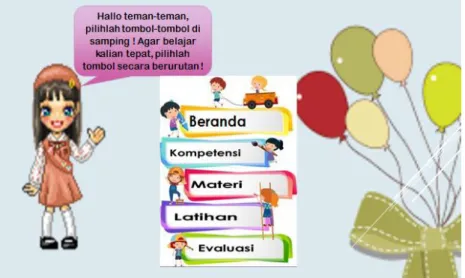
Figure 1. Display Menu PowerPoint-based Interactive Video
Display Menu is the main screen of any application for admission to the desired menu. Here are the results of a feasibility analysis of the media, and the
appropriateness of media content video-based interactive PowerPoint in mathematics.
Figure 2. Media viability
Based on research conducted by
researchers, the results of validation of all aspects of the feasibility of the media above the average score of 3.99. Testing was carried out on the value of two elements, namely the quality of objectives and content with a value of 4.21 and aspects of the quality of learning with a
Figure 3. Material Eligibility
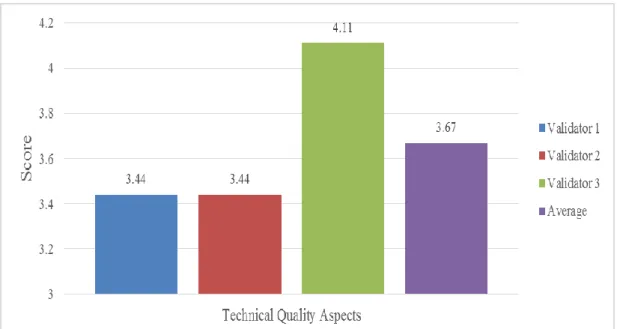
The assessment of the media was carried out by several media expert lecturers and experts in Mathematics education subject matter, Muhammadiyah Sorong University. Some of them are Sundari, S.Pd., M.Pd. as the first validator; M. Fathurrahman, S.Pd., M.Pd as the second validator and Rahmatullah bin Arsyad, S.Pd., M.Pd as the third validator. The assessment conducted by the experts is on the
aspect of technical quality. All validators gave an average value of 3.67 out of a maximum score of 5. Based on these results it can be concluded that the material submitted by the researcher is valid or suitable for use in research.
b. Assessment Instrument Lesson Plan.
Figure 4. Learning Implementation Plan
Based on the diagram above obtained an overall average score of 4.27 from a maximum score of 5 with very good criteria. Evaluation scores of the six aspects with the average value
4.27; aspects of media selection or aspects of learning resources 4.17 and the last aspect of assessment of learning outcomes 3.67. Based on these results it is concluded that the developed lesson plans meet valid requirements.
c. Questionnaire Responses Teacher and
Student
1. Teacher Questionnaire Responses
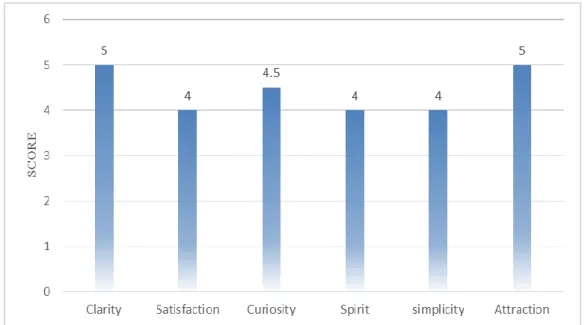
Figure 5. Teacher Questionnaire Responses The results of the response values on the questionnaire for the six aspects of assessment as follows; clarity aspect 5; namely satisfaction aspect 4; aspects of curiosity 4,5; spirit aspect 4; convenience aspects 4; aspects and aspects of interest 5. Overall, the average value of all these aspects is 4.4 from the maximum value of 5.
This shows that the response of respondents is in very good criteria. Based on these data it is also concluded that the development media are in practical qualifications.
2. Student Response Questionnaire.
The results of the students' responses to aspects of the study are as follows. The pleasure aspect is 3.83, the aspect of interest is 4.08, the aspect of the activity is 3.73, the seriousness aspect is 3.75, the aspect of convenience is 2.6, and the aspect of interest is 2.68. According to the data, an overall average score of 3.46 is obtained from the maximum score of 5. This data also shows that the development media are in a practical qualification.
Also, the average value of student learning outcomes obtained is 70.29, with the percentage of 67.74% classical completeness. Learning shows that the media used can provide knowledge and understanding to students in the class. on the other hand, this can also be seen from the level of student participation of 3.46.
Discussion
This research has succeeded in developing learning media in the form of interactive video-based PowerPoints in class VII students of Quba Sorong Middle School. The method developed in this study adopts the ADDIE method consisting of five phases. namely: (1) Analysis at this stage requires media to assist students in accepting algebraic material in a fun and not boring way, (2) Design at this stage is obtained by learning media in the form of interactive video-based powerpoints in The learning media contains algebraic material so students can play while learning and make learning more fun, (3) Development at this stage makes products which are then validated by material experts and media experts, (4) Implementation at this stage is carried out limited trials and main group trials, (5) Evaluation at this stage is carried out to assess effectiveness by giving test questions to student learning outcomes.
PowerPoint-based interactive video learning media are eligible to be used as learning media on several aspects: Validity test that has been conducted by subject matter experts and media experts. In the assessment by three subject matter experts, an average score of 3.67 was obtained, so that it was included in the "Very Valid" category. While the validation carried out by three media experts got an average score of 3.99 and was included in the "Very Valid" category. So that interactive video based on PowerPoint learning media has a category of "Very Valid" from material and media experts.
Based on the validity of the test results, interactive video-based PowerPoint media that
have been developed show that PowerPoint can be applied in class and is beneficial for students. Based on the results of research conducted by (Hala, 2015), it was concluded that if all aspects of the assessment have reached the validity criteria, then the developed media meets the requirements for use in the learning process. According to (Suprapti, 2016) criteria for a valid learning tool are learning tools that have been validated by experts and through valid tests. According to (Rohman & Mulyanto, 2010) learning media can provide benefits and encourage student consistency in developing learning abilities. Students can also increase learning motivation, so they can get better learning outcomes. According to (Zubair, 2015) the media and all instruments that have been validated by experts can be categorized as valid. These results prove that learning media has been revised based on validator correction that is valid for testing.
Practicality tests conducted by mathematics teachers show an average final score of 4.4 and are included in the "Practical" criteria. At the end of the student evaluation, the response value indicates a score of 3.46 and falls under the "Positive" criteria. From the results of teacher assessments and student responses, PowerPoint-based interactive video learning media are included in the practical category and do not need to be revised.
Based on practicality tests, interactive video-based PowerPoint videos that have been developed show that the media gives positive responses to students and teachers. In line with the opinion (Zulkarnain & Jatmikowati, 2018) which states that learning media is practical if the validator states that the learning media can be used with little or no revision. The students gave positive responses, as indicated by the results of the questionnaire given. According to (Maulana, 2017) practicality is seen from the
ease of use of interactive multimedia
development.
education. Students like to learn to use concrete objects that are used to explain things that cannot be seen directly. It also makes it easier for students to understand the learning material.
Presentation effectiveness test results show that students pass the test after using interactive video based on PowerPoint learning media. The average test score of a student's achievement test was 70.29, with a classical completeness percentage of 67.74% and fulfilling both criteria. Learning media also shows that PowerPoint-based interactive media is effective media. According to (Kahar et al., 2018) & (Kusumawati et al., 2019) students are less active in presentations because they do not understand the material. Also according to (Zhang et al, 2015) learning visualization in topic-giving can provide benefits in developing knowledge and social management so that it affects students' ability in the future.
Based on the results of testing the
effectiveness of interactive video-based
PowerPoint media that has been developed, the results show that the percentage of students who pass the test results after using PowerPoint media increases. Supports opinions (Isnaningsih & Bimo, 2013) which reveal that the results of effectiveness can be seen in students' knowledge abilities. According to (Jalil, 2016) the use of media to improve student understanding above KKM. According to (Horbi, 2009), learning media can be said to be effective if 70% of participants who have participated in the learning process can achieve the minimum completeness that has been set. According to (Puji et al., 2015) an increase in students' knowledge is seen before and after the use of media in learning. Interactive multimedia can help students in the learning process, attracting the attention and interests of students so that students can more easily remember knowledge. This opinion is also supported by Computer Technology Research (Munir, 2012) which states that people only remember 20% of meetings, 30% to hear, 50% of what is seen and heard. In other words, learning uses audiovisual technology to improve learning outcomes by at least 50%.
Furthermore, interactive video-based
PowerPoint media can provide an overview of information and provide understanding to students. Learning using PowerPoint media shows that interactive video based on media can attract attention, interest, and help students in
the learning process and facilitate students in the given study. According to (Faturrahman et al., 2018) increased activity in the learning model applied in class and subject matter can make students motivated to interact in learning. According to (Kahar, et al., 2019) learning models that significantly affect student learning success. In line with (Greenhow & Lewin, 2016) We apply our model along-the development of social constructivism and connectivism in learning is the complexity of learning in various models so as to reveal a new understanding of the media in education and learning.
According to (Gustina & Wibowo, 2020), it digital media can influence student attitudes though, it does not affect changes in knowledge. In line with (Febliza & Okatariani, 2020) which explains that online learning media can provide positive responses to students in terms of developing student innovation with a very good average increase. On the other hand, this learning is also able to provide learning experiences to students. (Sefriani et al., 2020) also explained that the use of interactive learning media and collaborating with other methods can provide good results in classroom learning. According to (Astra et al., 2015) Shows that the feasibility of an application media can be used as a learning medium so as to influence the learning and learning outcomes of learners. (Abdulkarim et al., 2018) Also explains that the look of a learning program with the media can provide interactivity to students in improving the ability to obtain information and knowledge.
The results of the research obtained show that the development of PowerPoint media can have a positive impact on the level of knowledge and understanding of students during the learning process. The learning video provided by the teacher is useful for students in the class to understand the material. This learning media can also make a real contribution to students in the class. The developed PowerPoint media focuses on instructional videos that are oriented towards interactive learning and are expected to encourage increased student learning outcomes.
CONCLUSIONS AND SUGGESTIONS
validators. The level of practicality is obtained
from the interactive video PowerPoint
assessment based on instructional media which is assessed by the mathematics teacher and from the teacher assessment results also obtained data that the interactive video-based on PowerPoint learning media is included in the practical category and does not need to be revised and averaged 4.4. The presentation effectiveness test obtained by students who pass the test after using interactive video based on PowerPoint learning media is increased. Completed student performance of 67.74% of students, so it can be
stated that interactive video based on
PowerPoint learning media is an effective media.
Therefore, it is necessary to develop interactive video learning media that can have an impact on improving student learning outcomes. On the other hand, this media application can encourage students to learn independently.
REFERENCES
Abdulkarim, A., Ratmaningsih, N., &
Anggraini, D. N. (2018). Developing civicpedia as a civic education E-learning media to improve students’ information
literacy. Journal of Social Studies
Education Research, 9(3), 45–61. https://doi.org/10.17499/jsser.32139
Aditya, P. T. (2018). Pengembangan Media Pembelajaran Matematika Berbasis Web Pada Materi Lingkaran Bagi Siswa Kelas
Viii. Jurnal Matematika Statistika Dan
Komputasi, 15(1), 64.
https://doi.org/10.20956/jmsk.v15i1.4425
Anang. (2015). Pengembangan Keprofesian berkelanjutan dan Penelitian tindakan kelas
bagi guru. In Bandung: PT Refika
Aditama.
Astra, I. M., Nasbey, H., & Nugraha, A. (2015). Development of an android application in the form of a simulation lab as learning media for senior high school students. Eurasia Journal of Mathematics, Science and Technology Education, 11(5), 1081– 1088.
https://doi.org/10.12973/eurasia.2015.1376 a
Djamarah, S. B. (2018). Psikologi belajar. In Jakarta: Rineka Cipta.
Faturrahman, M., Ibrahim, Kahar, M. S., Arsyad, R., & Rawi, R. D. P. (2018). Development of Learning Media Based on
MOODLE Integrated with Blended
Learning in Mathematic Learning Process at SMA Muhammadiyah Al-Amin Sorong. IOP Conference Series: Earth and Environmental Science, 175(1).
https://doi.org/10.1088/1755-1315/175/1/012202
Febliza, A., & Okatariani, O. (2020). The Development of Online Learning Media by Using Moodle for General Chemistry
Subject. Journal of Educational Science
and Technology (EST), 6(1), 40. https://doi.org/10.26858/est.v6i1.12339
Greenhow, Christine; & Lewin, C. (2016).
Social media and education:
reconceptualizing the boundaries of formal
and informal learning. Journal Learning,
Media and Technology, 41(1), 6–30. https://doi.org/https://doi.org/10.1080/1743 9884.2015.1064954
Gustina, E., & Wibowo, M. (2020). Improving Knowledge and Changing Health Attitude among Teenagers through Digital Media
Flipbook. Journal of Educational Science
and Technology (EST), 6(1), 15. https://doi.org/10.26858/est.v6i1.12136
Hala, Y. (2015). Pengembangan Perangkat Pembelajaran Biologi Berbasis Pendekatan Saintifik Pada Konsep Ekosistem Bagi
Siswa Sekolah Menengah Pertama.
Journal of Educational Science and Technology (EST), 1(3), 85–96. https://doi.org/10.26858/est.v1i3.1825
Horbi. (2009). Metodogi Penelitian dan
Pengembangan (Development and
Research) (Aplikasi Pada Penelitian
Pendidikan Matematika). In Jamber :
FKIP Universitas Jember.
Isnaningsih, A., & Bimo, D. S. (2013). Penerapan lembar kegiatan siswa (LKS) discovery berorientasi keterampilan proses sains untuk meningkatkan hasil belajar
2(2), 136–141. https://doi.org/10.15294/jpii.v2i2.2714
Jalil, M. (2016). Pengembangan Pembelajaran Model Discovery Learning Berbantuan Tips Powerpoint Interaktif Pada Materi
Interaksi Makhluk Hidup Dengan
Lingkungan. Refleksi Edukatika, 6(2),
130–137.
https://doi.org/10.24176/re.v6i2.604
Kahar, M. S., Fathurrahman, M., Amri, I.,
Pristianto, H., & Ibrahim. (2018).
Development of Cavendish Balance of Aids Based on Blender Application in
Learning Physics. IOP Conference Series:
Earth and Environmental Science, 175(1),
0–5.
https://doi.org/10.1088/1755-1315/175/1/012210
Kahar, M S. (2017). Analisis Minat Belajar Mahasiswa Terhadap Penggunaan Alat
Peraga Neraca Cavendish. SEJ (Science
Education Journal), 1(2), 73. https://doi.org/10.21070/sej.v1i2.1177
Kahar, Muhammad Syahrul, Wekke, I. S., Ibrahim, I., Amri, I., & Pristianto, H. (2019). Students’ profile of science process
in conducting physics practicum. AIP
Conference Proceedings, 2081(October). https://doi.org/10.1063/1.5094024
Kusumawati, I., Kahar, M. S., Khoiri, A., & Mursidi, A. (2019). Differences analysis understanding the concept of students
between the three islands (Java,
Kalimantan, Papua) through multiple representations approaches to the material
of Time Dilation. Journal of Physics:
Conference Series, 1153(1), 7–11.
https://doi.org/10.1088/1742-6596/1153/1/012145
Marfuah, S., Zulkardi, Z., & Aisyah, N. (2016).
Pengembangan Media Pembelajaran
Menggunakan Powerpoint Disertai Visual Basic for Application Materi Jarak Pada
Bangun Ruang Kelas X. Jurnal Gantang,
1(1), 45–53.
https://doi.org/10.31629/jg.v1i1.5
Maulana, I. T. (2017). Pengembangan Media Pembelajaran CD Interaktif Mata Diklat
Jaringan Dasar. Indonesian Journal of
Computer Science, 6(1), 96–108.
Munadi, Y. (2013). Media Pembelajaran:
Sebuah Pendekatan Baru. In Jakarta:
Referensi.
Munir. (2012). Mulmedia Konsep dan Aplikasi
dalam Pendidikan. In Bandung: Alfabeta.
Prasetyo, F. (2018). Pengembangan Multimedia Interaktif Berbasis Powerpoint 2016 Pada Subtema 1 Manusia Dan Lingkungan Di
Kelas V Sekolah Dasar. In Skripsi.
Puji, K., Gulo, F., & Ibrahim, A. (2015).
Pengembangan Multimedia Interaktif
Untuk Pembelajaran Bentuk Molekul Di
Sma. Jurnal Penelitian Pendidikan Kimia:
Kajian Hasil Penelitian Pendidikan Kimia, 1(1), 59–65.
Rohman, N., & Mulyanto, B. (2010).
Membangun Aplikasi Game Edukatif
Sebagai Media Belajar Anak-Anak. Jurnal
Computech & Bisnis, 4(1), 53–58.
Sefriani, R., Wijaya, I., Menrisal, M., & Dewi, M. (2020). Testing Of The Validity of Interactive Learning Module on Creative and Entrepreneurs Learning Products. Journal of Educational Science and Technology (EST), 6(1), 73. https://doi.org/10.26858/est.v6i1.10277
Sugiyono. (2010). Metode Penelitian Kuantitatif
Kualitatif dan R&D. In Bandung: Alfabeta.
Suprapti, E. (2016). Pengembangan Perangkat
Pembelajaran Matematika Model
Kooperatif Tipe STAD dengan Media
Powerpoint Ispring pada Materi
Jajargenjang, Layang-Layang dan
Trapesium di Kelas VII SMP. MUST:
Journal of Mathematics Education, Science and Technology, 1(1), 57. https://doi.org/10.30651/must.v1i1.98
Widada. (2010). Mudah Membuat Media Pembelajaran Multimedia Interaktif untuk
Guru dan Profesional. In Yogyakarta:
Pustaka Widyatama.
social-learning: Mapping development of
studies on social media-supported
knowledge management. Computers in
Human Behavior, 51(B), 803–811. https://doi.org/https://doi.org/10.1016/j.chb .2014.11.084
Zubair, S. (2015). Pengembangan Media
Pembelajaran Berbasis Software
Macromedia Flash 8 dan Power Point Pada
Materi Pokok Asam Basa. Jurnal
Pendidikan Fisika, 3(2), 130–136.
Zulkarnain, A. D., & Jatmikowati, T. . (2018).
Pengembangan Media Pembelajaran
Berbantuan Adobe Flash CS6 Berbasis
Android Pokok Bahasan Segitiga. Jurnal
Gammath, 3(1), 49–57.