Oxytocin can decrease germ cells apoptotic index in
testis under acute ischemia reperfusion in a rat model
Rezvaneh Ghasemnezhad1 M.Sc. student, Fahime Mohammadghasemi2 Ph.D., Masoumeh Faghani2 Ph.D., Mohammad Hadi Bahadori2 Ph.D.
1.Department of Anatomy, Guilan
University of Medical Sciences, Rasht, Iran.
2.Cellular and Molecular
Research Center, Guilan
University of Medical Sciences, Rasht, Iran.
Corresponding Author:
Rezvaneh Ghasemnezhad,
Department of Anatomy, Guilan University of Medical Sciences, Rasht, Iran.
Email:rezvanehghasemnezhad@ymail .com, [email protected]
Tel: (+98) 9116113640
Received: 29 May 2014 Revised: 20 December 2014 Accepted: 1 February 2015
Abstract
Background: Ischemia reperfusion (IR) is the main pathology of torsion of testis and it is a common urologic emergency. There is some evidence that shows oxytocin (OT) plays role in ischemia reperfusion.
Objective: To evaluate this hypothesis that OT can decrease germ cell apoptotic index in testis under acute ischemia reperfusion in a rat model.
Materials and Methods: 20 adult rats were randomly divided into four groups: Control, IR, OT and IR+ OT (OTA). Testicular ischemia was achieved by 720° torsion of the left testis for 2 hr. Then, torsion was removed and reperfusion was performed. Immediately after induction of reperfusion 0.03 µg/kg OT were administered intraperitoneally to the IR+ OT. Three hours after surgery left testis was removed and evaluations were made by Johnson’s score, ELISA, immunohistochemistry and histomorphometry for study of maturity of spermatogenesis, endocrine profiles, apoptosis and quantitative studies, respectively. Results: The results showed in addition tissue edema and congestion, a significant reduced in Johnson’s score were detected in IR group in comparison with controls (p=0.01), and apoptotic index increased significantly (p=0.001). Administration of OT in OT+IR group, increased Johnson’s score but it was not statistically significant. Germinal epithelium thickness was increased significantly (p=0.03), although apoptotic index decreased significantly in comparison with the IR group (p=0.04). However there was not significant difference in serum levels of testosterone, FSH and LH in none of groups (p=0.07).
Conclusion: These results suggested that OT can decrease apoptotic index and improves complication of acute ischemic reperfusion in testis in a rat model.
Key words: Oxytocin, Ischemia reperfusion injury, Testis, Apoptosis.
This article extracted from M.Sc. thesis. (Rezvane Ghasemnezhad)
Introduction
esticular torsion or, more correctly torsion of spermatic cord, is a
common urologic emergency
occurring in male newborns, children, and adolescents (1). Its incidence is about 1 in 4000 males by the age of 25 years (2, 3). Rapid diagnosis and immediately surgical treatment is necessary to avoid permanent
testicular damage (4). The main
pathophysiology of testicular torsion-detorsion is ischemia-reperfusion (IR) injury of the testis, and it causes over generation of reactive oxygen species that leading to cell membrane lipids peroxidation, protein denaturation and DNA damage, cell dysfunction and finally death or apoptosis (3, 5). The adverse effect of IR injury in tissues such as liver, brain,
kidney, heart and stomach have already been reported (6-12). Oxytocin (OT) is a small Nano peptide synthesized in the Para ventricular and supraoptical nuclei of the hypothalamus, OT is also produced in some tissues such as heart, uterus, placenta, amnion, corpus luteum, and testis (13, 14). In addition OT has been considered to be a cardiovascular hormone produces and releases by the heart and large vessels (15).
Traditionally it was shown as a female hormone due to its role in parturition and milk ejection, but some researches have been shown its roles in male reproduction, increasing testosterone production by Leydig cells and spermiation (16-18). Some studies have indicated that OT has protective effect on IR injury in heart, kidney, stomach and urinary bladder (9, 12, 19, 20). The anti-apoptotic effect of OT, excepting in some
T
study in some tissue such as heart and ovary is available (21, 22). Our review of the literature did not reveal any studies that investigate the anti-apoptotic effects of OT on testis tissue. Therefore we used OT in testis IR injury for the first time and the purpose of
this study was determination of this
hypothesis that OT can decrease apoptotic
index in testis under acute ischemic
reperfusion.
Materials and methods
Animals and surgical procedure
This experimental study has been carried out in Guilan University of Medical Sciences. Twenty male Wistar Albino rats weighting (280-330 gr) were used in this study. The animals were maintained on a constant 12 hr light/dark cycle at constant room temperature (23±2oC) and humidity (60-70%) ambient and with free accesses to rat chow and tab water. All experimental procedures were done according to the guidelines of Animal Ethical Committee of Guilan University of Medical Sciences. Animals were randomly divided into four groups: Control, IR, OT and IR+OT.
Surgery was conducted under
intraperitoneally injection of ketamine (50 mg/kg) and Xylazine (2.20 mg/kg) anesthesia (23). All procedures were performed under sterile condition. In control group left testis was brought out through a median scrotal incision. In the IR group left testis was exposed through the same incision then left testis was rotated 720 in a clockwise direction and was maintained in this position by ligating of spermatic cord using 02 silk sutures for 2 hr, in order to prevent drying of the tissue exposed to the air, cotton soaked in saline was used (2).
After 2 hr testis was counter-rotated to the natural position consequently reperfusion was induced. In OT+IR group the same surgical procedure was performed as in IR group, OT (0.03 µg/kg; Sigma Chemical company) was injected intraperitoneally immediately after induction of reperfusion (21, 24). In OT group animals just received OT (0.03 µg/kg) via IP injection. Orchiectomy was performed 1 hr after reperfusion induced. The testes were fixed in 10% neutral buffered formalin, dehydrated, and embedded in paraffin. Then, 5-µm sections were prepared, and at least 5 slides from each testis were stained with H-E
for histological assessment. Light microscopy was used for the evaluations.
Spermatogenesis assessment
The quality of spermatogenesis in each seminiferous tubule was scored according to Johnson’s scoring method (25). This method applies a grade from 1-10 to each tubule cross section according to following criteria: 10) complete spermatogenesis; 9) many
spermatozoa present but disorganized
spermatogenesis; 8) only a few spermatozoa present; 7) no spermatozoa but many spermatids present; 6) only a few spermatids present; 5) no spermatozoa or spermatids present but many spermatocytes present; 4) only a few spermatocytes present; 3) only spermatogonia present; 2) no germ cells present; and 1) no germ cells or Sertoli cells present. 10 seminiferous tubule cross sections were observed for each animal and a mean score count was tabulated.
Morphometric study of spermatogenesis
Morphometric study of seminiferous
tubules was done by using a graded microscopic lens. For this purpose the thickness of germinal epithelium and diameter of lumen and seminiferous tubule were estimated in 20 transverse epithelium in each animal. The number of A spermatogonia,
pachytene and leptotene primary
spermatocytes, round spermatids and
elongated spermatids were counted in 20 tubule in area of 1×1 mm2 (25, 26).
Hormone measurement
Blood samples were collected through the
inferior vena cava, immediately after
sacrificing the rat. The serum was separated and stored at -80oC. Serum testosterone and luteinizing hormone level concentrations were measured using ELISA kits (Demeditec Diagnostics GmbH, Germany).
Evaluation of germ cell apoptosis
Germ cell apoptosis was evaluated by TUNEL [terminal deoxynucleotidyl transferase enzyme mediated dUTP nick end labeling] according to the instructions in the TUNEL assay kit (Roche Germany). Briefly, serial 5 µm thick paraffin-embedded sections were deparaffinized with xylene (20 min) and rehydrated in graded alcohol (each 2 min), then they were incubated with 1 µl proteinase
K (20 min) and washed tree time with phosphate-buffered saline after this, they were incubated with 5 µl TUNEL solution (40 min), and washed three time with phosphate-buffered saline, incubated with 10 µl pod-convertor (30 min), and washed three time with phosphate-buffered saline, and finally when sections were incubated with 10 µl DAB substrate (60 min) and washed with distilled water, counter stain staining was performed with Hematoxylin and then dehydrate in grade alcohol clear and dark brown cells were considered as apoptotic seminiferous tubules were estimated in 20 transverse epithelium in each animal and apoptotic index was determined by the formula 100× (number of TUNEL positive cells nuclei/total number of cell nuclei) (27).
Statistical analysis
The data were analyzed by the analysis of variance (ANOVA) and Tukey post Hoc tests. The p<0.05 was considered statistically significant.
Results
Histological examination
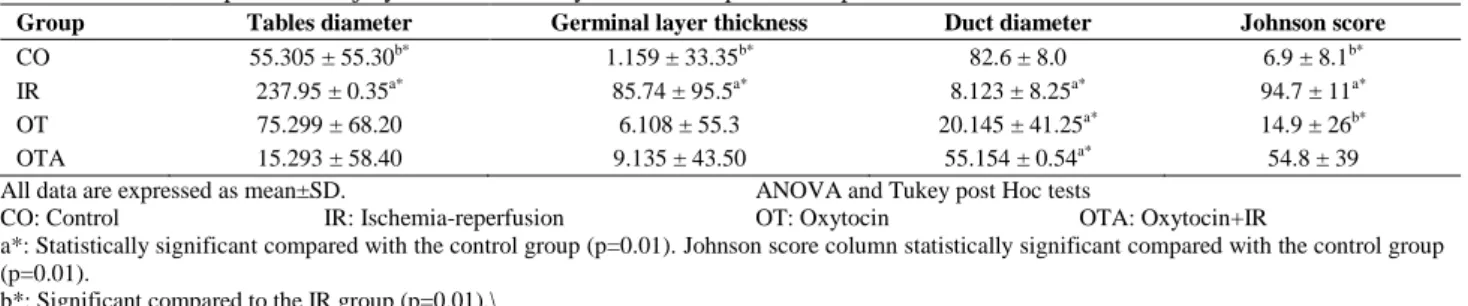
Figure 1, table I and table II demonstrate the histological findings and mean of Johnson’s score of each group in testis and
morphometric measurement respectively.
Based on light microscopy observation in control group, spermatogenesis was active and all of germ cells line were seen, lumen had a regular border and abundant mature
spermatozoids and Sertoli cells were
observed. In addition in interstitial tissue blood vessels, connective tissue cells and Leydig
cells were seen. OT group had no
morphologically different with control group while in IR group edema and blood vessels congestion were seen, there was a marked
decrease in the seminiferous tubular diameter and germinal layer thickness and Johnson score in IR group (p=0.01).
In OT+IR group edema and blood vessels congestion improved and Johnson score increased morphologically but no statically significant. Even though the thickness of germinal epithelium increased significantly (p=0.03) but there wasn’t significant difference in tubular diameter (Table I). Table II shows the number of cells, our results showed that germ cells number except pachyten cells had not significant statistical difference in each groups so that in IR group cells number had no significant difference in camparision with control while pachyten cells had a significant decrease (p=0.0001). However administration
of 0.03 µg/kg OT immediately after
reperfusion induction led to significant
increase in pachyten cells number (p=0.04).
Hormone measurement
Table III shows serum levels of endocrine profiles serum levels of testosterone, FSH and LH were in normal range as expected in control and OT group. Also there was no significant difference in serum levels of testosterone, FSH and LH in IR and IR+OT groups (p=0.07).
Apoptosis analysis
Evaluation of germ cell apoptosis showed that apoptotic cells were seldom in both of control and OT groups and apoptotic index was not significant as is shown in figure 2 but in IR group apoptotic cell were abundant and apoptotic was increased significantly statically (p=0.001), while in IR+OT group, number of apoptotic cell decreased and apoptotic index decreased significantly in comparison with IR group (p=0.04) (Figure 2, Figure 3).
Table I. Ischemia-reperfusion injury and effect of oxytocin on morphometric parameters and Johnson score of the adult rat testis
Group Tables diameter Germinal layer thickness Duct diameter Johnson score
CO 55.305 ± 55.30b* 1.159 ± 33.35b* 82.6 ± 8.0 6.9 ± 8.1b*
IR 237.95 ± 0.35a* 85.74 ± 95.5a* 8.123 ± 8.25a* 94.7 ± 11a*
OT 75.299 ± 68.20 6.108 ± 55.3 20.145 ± 41.25a* 14.9 ± 26b*
OTA 15.293 ± 58.40 9.135 ± 43.50 55.154 ± 0.54a* 54.8 ± 39
All data are expressed as mean±SD. ANOVA and Tukey post Hoc tests
CO: Control IR: Ischemia-reperfusion OT: Oxytocin OTA: Oxytocin+IR
a*: Statistically significant compared with the control group (p=0.01). Johnson score column statistically significant compared with the control group (p=0.01).
b*: Significant compared to the IR group (p=0.01).\
Table II. Ischemia-reperfusion injury and oxytocin effects on adult rat testicular germ cell count
Group Spermatogonia Preleptoten Pachyten Round spermatid Elongated spermatid p-value
CO 1.66 ± 0.27 9.3 ± 1.53 11.69 ± 1.50 38.62 ± 3.08 26.43 ± 4.40 p>0.05 IR 1.60 ± 0.54 8.38 ± 1.95 7.46 ± 1.78a* 31.16 ± 3.31 20.69 ± 11.97 p=0.0001 vs. p>0.05
OT 1.54 ± 0.37 8.55 ± 2.48 9.82 ± 1.13 35.26 ± 3.31 21.41 ± 8.12 p>0.05 OTA 1.55 ± 0.44 8.87 ± 2.18 7.18 ± 1.54b* 35.06 ± 3 21.20 ± 8.63 p=0.04vs p>0.05
All data are expressed as mean±SD. ANOVA and Tukey post Hoc tests
CO: control IR: ischemia-reperfusion OT: Oxytocin OTA: Oxytocin+IR a*: Significant in compare whit the control group (p=0.0001).
b*: Significant in compare whit IR (p=0.04).
Table III. Ischemia-reperfusion injury and oxytocin effect on endocrine profiles adult male rats
Group Testosterone (ng/ml) Luteinizing hormone (lu/l) Follicle stimulating hormone
(mlu/l)
CO 3.26 ± 0.19 3.66 ± 0.29 239.08 ± 9.05
OT 2.54 ± 0.79 3.32 ± 0.52 230.42 ± 7.55
IR 3.09 ± 0.22 3.45 ± 0.45 263.93 ± 7.53
OTA 2.94 ± 0.78 3.49 ± 0.58 321.45 ± 4.10
All data are expressed as mean±SD. ANOVA and Tukey post Hoc tests (p=0.07) CO: Control IR: Ischemia-reperfusion OT: Oxytocin OTA: Oxytocin+IR
Figure 1. Photography of seminiferous tubules. Arrow point to edema and congestion H&E staining ×200
CO: Control OT: Oxytocin
IR: Ischemia-reperfusion OTA: Oxytocin+IR
Figure 2. Photography of seminiferous tubules. Arrows point to apoptotic cells TUNEL staining ×200
CO: Control OT: Oxytocin
IR: Ischemia- reperfusion OTA: Oxytocin+IR
Figure 3. Graph shows Ischemia-reperfusion injury and oxytocin effect on germ cell apoptosis index in adult rat testis.
All data are expressed as mean±SD. ANOVA and Tukey post Hoc tests
CO: Control IR: Ischemia-reperfusion OT: Oxytocin OT+IR: Oxytocin+IR.
a: Significant compared to the control group (p=0.001) b: Significant compared to the IR group (p=0.04).
Discussion
The main pathophysiology of testicular torsion is ischemia-reperfusion that leads to testicular damage, apoptosis and finally infertility. The histological damage of IR injury in testis has been shown in many studies with different time and degree of torsion and different time of reperfusion (3-6). IR injury by several mechanisms including increased ROS, production and release of inflammatory factors such as the release of apoptotic caspases cascade enzymes promotes a decrease in blood flow can cause tissue damage (28). Previous research has shown that the severity of ischemic tissue damage associated with the duration and degree of twist (29).
Kurcer and colleagues in a study that ischemia was performed for 1 hr and reperfusion injury was induced for 24 hr, showed that this time of ischemia and reperfusion can cause testicular tissue damage (30). Filho et al in a study conducted in 2012, found that ischemia and reperfusion Injury for 1 hr creates some results similar to previous research (31). Although It has been shown that 720 ischemia is sufficient cause to cessation of the testicular blood flow, and its minimum time lead to testicular damage and germ cell apoptosis in a rat model (32). The adverse effect of IR injury in many tissue such as liver, heart have been shown (6, 33, 34). According to previous studies mentioned above in the present study, the ischemia time was chosen as, 2 hr with 1 hr reperfusion subsequently. furthermore our study showed that 720 ischemia for 2 hr and consecutive reperfusion for 1 hr led to edema and blood vessels congestion and histologically damage such as degeneration of germ cells layer and decrease germinal and luminal diameters, decreased Johnson’s score and number of germ cells especially pachytene cells and increase apoptotic index parallel with previous studies (1-3).
Spermatogenesis is a highly regulated process that is controlled mainly by the testosterone and gonadotropins (26). In this study there was not significant statistical difference in serum levels of testosterone, FSH and LH. Testosterone level reduced in IR group however it was not significant. There
are conflicting reports about hormonal
changes after testicular IR: in a prospective
study in 2009, 5 years after detorsion treatment, The endocrine profiles were resistance to ischemia (35). In another study it was reported that the level of testosterone,
luteinizing hormone, follicle stimulating
hormone were normal with ischemia for 7 hr and 48 hr (36). Testicular hormonal functions partly well conserved except in patients with ischemia more than 8 hr or testicular atrophy (37). While reduction in testicular androgen production results in minimal duration and degree of ischemia in long term was reported As well (38). As previously mentioned, in our study endocrine profiles were not affected in none of groups (p=0.07).
Apoptosis or programed cell death that occurs in both physiologic and pathologic periods and naturally wave of apoptosis in testes of prepubertal mammals occurs, It appears that apoptosis is essential for the
development of spermatogenesis in
adolescence. Also in the adult testis
spermatogenesis and spontaneous
degeneration of germ cells is that they seem to have the highest amount of apoptosis leading to the loss of 75% of the cells mature spermatozoa (39). About 10 min after
apoptosis induction Bcl2 proteins and
mitochondria leads to cell death is initiated and in this phase of course different cells are at different intervals (40).
The role of apoptosis has been highlighted
in testis ischemia-reperfusion (40).
Furthermore the role of IR injury in apoptosis in tissues such as kidney and heart was reported (10). Although some studies reported the role of reperfusion in apoptosis and confirm that ischemia starts apoptosis and necrosis, reperfusion accelerates apoptosis. In this research we found a lot of TUNEL positive cells in group with 720 ischemia for 2 hr and consecutive reperfusion for 1 hr although statistical analysis confirmed an increase in apoptotic index in IR group compared to control group (p<0.001). OT is a small Nano peptide that is well known for its role in reproduction (16, 41). OT receptors are on the central nervous system, myometrium and uterine endometrium, heart, liver, kidney, myo-epithelial cells of the breast tissue and testis (12).
Steroid factors, especially estrogen have effects on OT and increases binding OT to the OT receptors. Although OT produced in testes and Leydig cells are responsible for that and
LH has effects on hormone secretion. Furthermore OT is involved in the contraction of the seminiferous and epididymis duct (42, 43). Tugtepe and colleagues in 2007 reported protective effects of OT on apoptosis in kidney under ischemia-reperfusion injury, Erkanli and colleagues also evaluated protective effect of exogenous OT in skeletal muscle under
ischemia-reperfusion and reported anti-
apoptotic effects of OT before and during ischemia (9, 44).
Alizadeh et al during several studies that examined the effect of OT on ischemia- reperfusion, reported anti-inflammatory and anti-apoptotic effects of antioxidants (21, 24, 45). Although it was reported that OT can improve left ventricle ejection fraction in rats subjected to MI via intrinsic cardiac cholinergic neurons and NO release (46). Recently it have been shown that anti-oxidant can improve complication due to IR injury (1, 2). Antioxidant role of OT in IR injury in some tissue such as urinary bladder and skeletal muscle has been shown, although OT reduces IR injury in rat kidney, with improved renal function, via decreased serum creatinine and BUN levels in addition improved antioxidant status and reactive oxygen species (7, 18, 34).
Furthermore It was shown that OT same as other G-protein coupled ligands can act in such a way that PI3K/AKT activation and release onto downstream kinases, such as glycogen synthase kinase-3 beta, targeting the mitochondria to protect cells (44). Results of our study showed that administration of 0.03 µg/kg OT immediately after reperfusion induction decreases edema, blood congestion
and increases Johnson’s score
morphologically but the difference was not statistically significant, also this amount of OT improved germinal layer thickness and number of germ cells but it wasn’t significant statically. Anti-apoptotic effect of OT in IR injury previously has been shown in some tissues such as heart ovary and according to our knowledge this study is the first report of OT effect on apoptosis in IR injury in testis a rat model.
Based on light microscopy observation an obvious reduction in tissue edema and blood vessels congestion were seen and apoptotic cells were reduced in group OT+IR group in comparison with IR group and apoptotic index decreased significant statically (p<0.04), and
this results confirmed that OT can decrease
apoptotic index after acute ischemia
reperfusion.
Conclusion
In conclusion, we demonstrated the
protective effect of OT on apoptosis
immediately after reperfusion induction in testis for the first time and we can say that OT could improve spermatogenesis after IR injury and decrease apoptotic index without effect on LH, FSH and testosterone levels. We propose that OT may be a novel approach for
improvement of testicular
ischemia-reperfusion injury complication.
Acknowledgements
The authors wish to thank Guilan Medical University Faculty of Medical Sciences, Cellular and Molecular Research Center and Department of Anatomy for support of the study. Special thanks to vice-chancellor for Research of Guilan University of Medical Sciences for financial support of this research.
Conflict of interest
The authors report no conflict of interest. The authors alone are responsible for the content and writing of this article.
References
1. Sari E, Aksit H, Erken HA, Yay A, Aksit D, Amasyali AS, et al. Protective effect of 2-APB on testicular
ischemia-reperfusion injury in rats. J Urol 2014; pii:
S0022-5347.
2. Wei S, Yan Z, Zhou J. Curcumin attenuates
ischemia-reperfusion injury in rat testis. Fertil Steril
2009; 91: 271-277.
3. Wei S, Yan Z, Zhou J. Protective effect of rutin on
testicular ischemia-reperfusion injury. J Pediatr Surg
2011; 46: 1419-1424.
4. Hamed GM, Ahmed R, Emara MM, Mahmoud MH. Effect of erythropoietin on experimental unilateral
testicular torsion detorsion in rat model. Life Sci J
2011; 8: 405-412.
5. Ozgur BC, Telli O, Yuceturk CN, Sarici H, Ozer E, Surer H, et al. The effect of sildenafil and udenafil on testicular damage following ischemia-reperfusion
injury in rats. J Urol 2014; 192: 1272-1277.
6. Gonzalez F, Cutrin BS, Boveris J. Time course and mechanism of oxidative stress and tissue damage in
rat liver subjected to in vivo ischemia-reperfusion. J
Clin Invest 1993; 91: 456-464.
7. Cutrin JCBA, Zingaro B, Corvetti G, Poli G. In situ determination by surface chemiluminescence of
temporal relationships between evolving warm ischemia-reperfusion injury in rat liver and phagocyte
activation and recruitment. Hepatology 2000; 31:
622-631.
8. Yamato M, Egashira THU. Application of in vivo ESR spectroscopy to measurement of cerebrovascular ros
generation in stroke. Biol med 2003; 35: 1619-1631.
9. Tugtepe H, Sener G, Biyikli KN, Yuksel M, Cetinel S, Gedik N, et al. The protective effect of oxytocin on
renal ischemia/reperfusion injury in rats. Regul Pept
2007; 140: 101-108.
10. Schumer M, Colombel CM, Sawczuk SI, Gobe G,
Connor J, Kathlee M, et al. Morphologic,
biochemical, and molecular evidence of apoptosis during the reperfusion phase after brief periods of
renal lschemia. Am J Pathol 1992; 140: 831-838.
11. Faghihi M, Alizade AM, Khori V, Latifpour M, Khodayari S. The role of nitric oxide, reactive oxygen species, and protein kinase c inoxytocin-induced
cardioprotection in ischemic rat heart. Peptides 2012;
37: 314-319.
12. Wenwen Z, Jianfu Z, Ming XU, Yongmei Z. Effect of oxytocin on gastric ischemia-reperfusion injury in
rats. Front Med China 2007; 1: 433-437.
13. Striepens N, Scheele D, Kendrick MK, Becker B, Schafer L, Schwalba K, et al. Oxytocin facilitates protective responses to aversive social stimuli in
males. Proc Natl Acad Sci USA 2012; 109:
18144-18149.
14. Savaskan E, Ehrhardt E, Schulz A, Walter M, Schachinger H. Post-learning intranasal oxytocin modulates human memory for facial identity.
Psychoneuroendocrinology 2008; 33: 368-374.
15. Moghimian M, Faghihi M, Karimian SM, Imani A, Houshamnd F, Azizi Y. The role of central oxytocin in
stress-induced cardioprotection in
ischemic-reperfused heart model. J Cardiol 2013; 61: 79-86.
16. Thakare H, Nicholson HD, K W. Oxytocin-its role in male reproduction and new potential therapeutic
uses. Hum Reprod Update 2006; 12: 437-448.
17. Nicholson DH, Frayne J. Effect of oxytocin on testosterone production by isolated rat leydig cells is
mediated via a specific oxytocin receptor. Biol
Reprod 1995; 52: 1268-1273.
18. Frayne J, Townsend D, Nicholson HD. Effects of
oxytocin on sperm transport in the pubertal rat. J
Reprod Fertil 1996; 107: 299-306.
19. Jankowski M, Bissonauth V, Gao L, Gangal M, Wang D, Danalache B, et al. Anti-inflammatory effect of
oxytocin in rat myocardial infarction. Basic Res
Cardiol 2010; 105: 205-218.
20. Erkanli SG, Erkanli K, Aydin U, Arbak S, Ercan F, Tuncdemir M, et al. The protective effect of oxytocin on ischemia-reperfusion injury in rat urinary bladder.
Peptides 2013; 40: 82-88.
21. Alizade AM, Faghihi M, Sadeghipouri HR,
Mohamadghasemi F, Imani A, Houshman F, et al. Oxytocin protects rat heart against
ischemia-reperfusion injury via pathway involving
mitochondrial atp-dependent potassiumchannel.
Peptides 2010; 31: 1341-1345.
22. Saller S, Kunz L, Dissen GA, Stouffer R, Ojeda RS, Berg D, et al. Oxytocin receptors in the primate ovary: molecular identity and link to apoptosis in
human granulosa cells. Hum Reprod 2010; 25:
969-976.
23. Imani H, Syiadat SF, Parivar K, Eftekhari Yazdi P, Rzazadeh Valojerdi MAS. Autologus transplantation of intact mouse ovaries in gluteus superficialis
muscle. Yakhteh Med J 2009; 11: 184-189.
24. Alizadeh AM, Faghihi M, Khori V, Sohanaki H, Pourkhalili K, Mohamadghasemi F, et al. Oxytocin protects cardiomyocytes from apoptosis induced by
ischemia–reperfusion in rat heart: role of
mitochondrial atp-dependent potassium channel and
permeability transition pore. Peptides 2012; 36:
71-77.
25. Hess ra. Quantitative and qualitative characteristics of the stages and transitions in the cycle of the rat
seminiferous epithelium: light microscopic
observations of perfusion-fixed and
plastic-embedded testes. Biol Reprod 1990; 43: 525-542.
26. Hess RA, Luiz F. Spermatogenesis and cycle of the
seminiferous epithelium. Adv Exp Med Biol 2008; 45:
15-30.
27. Potten CS. What is an apoptotic index measuring?A
commentary. Br J Cancer 1996; 74: 1743-1748.
28. Yulug E, Turedi S, Karaguzel E, Kutlu O, Mentese A, Alver A. The short term effects of resveratrol on
ischemia-reperfusion injury in rat testis. J Pediatr
Surg 2014; 49: 484-489.
29. Yang C, Song B, Tan J, X L, G W. Testicular torsion inchildren:a 20-year retrospective study in a single
institution. Sci World J 2011; 11: 362-368.
30. Kurcer Z, Ozbakis-Dengiz G, Baba F, Nur banogul Z. The effects of statins on testicular ischemia
reperfusion-induced histopathologic injury. Ulusal
Farmakoloji Kongresi 2012; 21: 19-21.
31. Filho AU, Lnouye CM, Pontes JC, SilvaI VAC, Rodrigues S, Marques CH. Propofol effects on the morphology of rat testes subjected to ttesticular
ischemia- reperfusion. Acta Ciroe rgica Brasileira
2012; 27: 172-178.
32. Aktas A, Tuncer CM, Yildirim A, Nergiz Y, Akkus M. Protective Effect of melatonin on testicular torsion
and detorsion in sprague-dawley rats. Int J Morphol
2011; 29: 7-15.
33. Kadkhodaee M, Golab F, Zahmatkesh M, Ghaznavi R, Hedayati M, Arab AH, et al. Effects of different periods of renal ischemia on liver as a remote organ.
World J Gastroenterol 2009; 15: 1113-1118.
34. Houshmand FFM, Zahediasl S. The role of oxytocin on cardiac ischemia-reperfusion-induced oxidative
stress in rats. Iran J Endocrinol Metab 2011; 12:
633-640.
35. Carmelo R, Pietro I, Teresa A, Pietro A, Mariella V, Silvio M, et al. Late hormonal function after testicular
torsion. J Pediatr Surg 2010; 45: 411-413.
36. Aarp MA, Vicentini FC, Cocuzza M, Hallak J, Athayde K, Lucon MA, et al. Late hormonal levels, semen parameters, and presence of antisperm
antibodies in atients treated for testicular torsion. J
Androl 2007; 28: 528-532.
37. Visser AJ, Heyns CF. Testicular function after torsion
of the spermatic cord. BJU Int 2003; 92: 200-203.
38. Turner TT, Bang HJ, Lysiak JJ. Experimental testicular torsion: Reperfusion blood flow and subsequent testicular venous plasma testosterone
consentration. Urology 2005; 25: 390-394.
39. Pentikäinen V. Regulation of male germ cell apoptosis Roles of sex steroids and the cellular death receptors Fas and TNFR1. Academic
Dissertation University of Helsinki Finland. 2002: 1-69.
40. Eefting F, Rensing B, Wigman J, Pannekoek WJ, Liu WM, Carmer MJ, et al. Role of apoptosis in
reperfusion injury. Cardiovascr Res 2004; 61:
414-426.
41. Kiss A, Mikkelsen JD. Oxytocin- anatomy and
functional assignments: A minireview. Endocrine
Regulat 2005; 39: 97-105.
42. Assinder SJ, Rezvani A, Nicholson HD. Oxytocin promotes spermiation and sperm transfer in the
mouse. Int J Androl 2002; 25: 19-27.
43. Assinder SJ, Carey M, Parkinson T, Nicholson HD. Oxytocin and vasopressin expression in the ovine testis and epididymis: changes with the onset of
spermatogenesis. Biol Reprod 2000; 63: 448-456.
44. Erkanli SG, Erkanli K, Aydin U, Arbak S, Ercan F, Tuncdemir M, et al. Oxytocin ameliorates skeletal
muscle after ischemia-reperfusion injury. Surg Res
2011; 162: 122-131.
45. Alizadeh AM, Faghihi M, Sadeghipouri HR, Mohamadghasemi F, Khori V. Role of endogenous
oxytocin in cardiac ischemic preconditioning. Regul
Pept 2011; 167: 86-90.
46. Gutkowska J, Jankowski M. Oxytocin: old hormone,
new drug. Pharmaceuticals 2009; 2: 168-183.