International Journal
of
Innovative Computing
Journal Homepage: http://se.cs.utm.my/ijic
ACTOR INTERACTION IN POLICY
NETWORK THROUGH SOCIAL NETWORK
ANALYSIS
Doria Abdullah, Abdul Latiff Mohd Ibrahim
UTM Perdana School of Science, Technology andInnovation Policy Universiti Teknologi Malaysia
Kuala Lumpur, MALAYSIA
[email protected], [email protected]
Mohd Ismail Abd Aziz
Office of Deputy Vice Chancellor (Student Affairs and Alumni) Universiti Teknologi Malaysia
Johor Bahru, MALAYSIA [email protected]
Abstract—A total of 4.3 million students went outside of their country of origin for higher education in 2011. The increased international student mobility highlights the role of national higher education systems in hosting the international student population and ensuring their well – being throughout their study. This paper presents a network analysis of actor interaction in policy networks concerning international student management across four countries i.e. Germany, Netherlands, New Zealand and Australia. The extent of interaction between actors within each policy network informs on the locality to which pertinent intervention strategies should be implemented, consequently facilitating design of policies on international student management that could be implemented in support of the students’ academic, social and living experiences. Policies from the identified countries were coded and imported into Gephi in order to generate network maps which visualises the formally instituted interaction between actors in each policy. It was found that the universities, with various terms used in each document to represent them, are key actors responsable for providing optimal higher education experience to the international students. Each network map highlights the range of actors responsible and the range of interaction which exists among actors managing the international student population. It also shows the impact that one actor has on other actors within the network. Among all network maps analysed, the network map from New Zealand’s Code of Practice for Pastoral Care of International Students has the most number of actors responsible for with dynamic interactions between the actors. The network analysis is a novel approach in policy analysis which enables analysts to use a relational perspective to explain interactions independent of
actors’ will, belief systems and values within a policy environment.
Keywords — Internationalisation; international students; international student management; higher education.
INTRODUCTION (HEADING 1)
international student population; social integration with local students and student safety, among others [9]. The increased international student mobility highlights the role of national higher education systems in hosting the international student population and ensuring their well – being throughout their study. Even though universities are responsible in hosting the international students, actors at the national level, such as ministries, government agencies and organisations interacting with the international student population must also be accountable in providing optimal care and services to the students so as to maintain quality of higher education experience provided and the appeal of the country as a study destination within the global international student market.
ANOTEONTHERESEARCH
This paper reports key findings from a larger study on design of policies in international student management across higher education systems. A different perspective was undertaken on the subject matter by exploring policy responses elicited by actors at the national level in safeguarding the international student population. The discourse used in official documents transports the actors‟ attitudes, ideas and beliefs about policy issues and precede policymaking process and institutional change [10]. Problems and issues would only come to light if it forms part of a discourse within a policy, where language is used as a political tool reflecting the struggle between power, language and reality [11]. The analysis on policy sentences allows exploration on how the objects, actors and spaces within the policy are constructed, besides revealing the “rules of formation” or conditions of existence of the policies formulated [12]. It could also reveal the values and goals that are perceived as more worthy than others besides studying the ways in which domination and subordination of actors and actions are presented within a policy [13].
The premise of this research is that the students‟ experience should be perceived through an institutional lens i.e. the “rules of the game” that shaped the actions of different actors operating consecutively at different levels of operation [14]. Higher education exhibits characteristics of an institution [15]: it hosts a myriad of actors, possesses the working parts of an action situation i.e. the space which actors operate and interact, and is subjected to external rules impacting operation and delivery of higher education at multiple levels. The international students experience higher education within an institution of smaller scale in the form of universities, colleges and higher education institutions, and within a bigger context of institution in the form of national higher education systems. Six critical elements in an institution [15] i.e. the actor(s) involved, the action(s) undertaken by the actor(s), the constraints/opportunities available, the action situation, the actors‟ interaction as a community, and the working rules applicable were identified to anchor the research and its focus. A total of five national policies on international student management from four countries i.e. Germany, Netherlands, New Zealand and Australia were selected in addressing the above-mentioned premise. These countries have established
themselves as renowned higher education exporters with high international student enrolment figures annually, becoming choice destinations for students seeking higher education opportunities outside of their country of origin. Written policies were selected as units of as they constitute rich learning blocks capable of illustrating the workings of all the above-mentioned elements in a policy environment [16]. Each policy document puts forward ideas, values, social and cultural structures, relations of power and processes, political and organisational objectives into light, consequently allowing the subject matter to be further scrutinised [15]. Constructing knowledge through written policies hence requires one to look at the documents as a medium which “… can be used as a starting-point for more extensive, speculative interpretations of other conditions, e.g. of behaviors, practices, and structures, and events, or of ideas, values or experiences…” [17]. Policy texts put forward ideas, values, social and cultural structures, relations of power and processes, political and organisational objectives into light, consequently allowing the policy to be interpreted and translated by participating actors in the policy process [16]. Such knowledge is of crucial importance in each component of the policy cycle: it not only informs on the issues to be addressed at the policy design level, but also impacts stakeholder engagement and resource allocation at the policy implementation level, as well as tracking measures at the policy evaluation level.
METHODOLOGY
The methodology used to derive findings presented in this paper is based on an adaptation of the Social Network Analysis (SNA) method, a methodology which “…presupposes ideas about the relational texture of society and which tries to operationalise these ideas…” [15] with the ability to represent the said relational texture into clear visualisation for analysis. With an interdisciplinary orientation, its application ranges from anthropology, sociology, history, social psychology and political science to communications, economics, and human geography. In essence, SNA uses a relational perspective to explain human behaviour and social change independent of actors‟ will, belief systems and values by graphically representing individual actors as “nodes” and links with other actors as “ties”. SNA operates based on four theoretical propositions: first, actors in all social systems are interdependent; second, actors link with each other for information, affection and resources; third, the structure of those links both constrains and facilitates action; and four, patterns of relations among actors define economic, political and social structures [19].
direction of those links. First, actors from statements with explicit interaction between an actor to another are extracted from the documents. Each of the actor serves as nodes; they either connect to one another or form terminal interaction at the end of the linkages formed. The direction of interaction is limited to single or unidirectional i.e. from one actor to another actor. The following policy statement exemplifies interaction between two actors institutionalised in a policy document: “The university will inform the students about the applicable law relating to intellectual property rights.” (National Code of Conduct, Germany, item (III)6) In this example, the university interacts with the students. The interaction identified from the statement is direct and unidirectional i.e. from the university to the students. All available data from each policy statement were collected and imported into Gephi [20]. Three iterations were conducted so as to ensure rigour of network maps generated and the interpretation that ensued.
RESULTS
Each network map is presented with a brief overview of the connection analysed. Abbreviations of each node are presented wherever appropriate.
A.Germany
Fig.1. Network map, Germany
The strongest connected actor is university, represented by the “Univ” node and marked red in the network map. It interacts with eight other actors. There are two in degrees, i.e. interactions directed to the university, marked by arrows pointing into the “Univ” node, and six out degrees, i.e. interactions directed from the university going outwards, indicated by arrows pointing out from the “Univ” node. The closeness centrality score for the “Univ” node is 1.142. It means there is direct connection between the university and other actors within the policy network. The university has a betweenness centrality of 14. The score is significantly high as compared to betweenness centrality scores of other nodes in the network map. This denotes the central role of the university in disseminating information to other actors in the network.
The university has the highest interaction with international students (abbreviated “ISGen” in figure). Two nodes were seen to have direct influence over the university‟s actions, seen through the direction of the arrows pointing into the “Univ” node i.e. Joint University Admission Service Centre (abbreviated “JointUniAdSvcCtr”) and the German Rectors‟ Conference (abbreviated “HRK”), with the former dealing with university admission for domestic students and international students from EU member states while the latter deals with accession and compliance of universities with the policy document. The international students are accountable in reporting to the Joint Arbitration Office (abbreviated “JointArbOffice”) on matters concerning grievances and disputes that could not be solved within the university. For the rest of the linkages formed, each linkage is directed outward from the “Univ” node to other nodes, representing the university‟s responsibility towards other actors within the network. A visible feature of this network map is the distinction on international student population based on geographical region – this can be detected through the “ISGen” node and “IS3rdWorld” node (representing international students from third world countries). The existence of these nodes hinted on differentiated policies in managing the international student population in German higher education institutions, which serves as an observation for further exploration.
B.Netherlands
Fig.2. Network map, Netherlands
the network. Its average clustering coefficient is 0.084, hinting on the existence of triads in the network map. The average path length for Netherlands‟ network map is 2.235 – much higher than that of Germany and Australia but lower than that of New Zealand.
The strongest connected actor in the network map is the university, abbreviated “HEIs” in Figure 2. It has an in degree of 4 and out degree of 9. The closeness centrality of the “HEIs” node is 1, indicating a direct linkage between universities and other actors within the network. The betweenness centrality score for the “HEIs” node is 79, significantly higher than that of Germany‟s. Other than the university, four other actors also play crucial role in international student management i.e. the National Commission (abbreviated “NatCom”), the Register Administrator (abbreviated “RegAd”), the petitioner (abbreviated with its namesake) and the international student (abbreviated “IS”).
Unlike the network map for Germany, both uni- and bi- directional interactions were observed in Netherlands‟ network map. The linkages which indicate bidirectional interactions, represented by a line with two arrowed ends, are formed between international students and universities, the National Commission and universities, the Register Administrator and universities, and the National Commission and the petitioner. Coincidentally, these actors formed triad groupings with one another, identifiable through the triangles formed between three nodes. Universities are accountable to five other actors in the policy network, as seen through the outward arrows from the “HEIs” node leading to five actors: the Research Centre for Examination and Certification (abbreviated “RCEC”), the accreditation body (abbreviated “AccredBody”), the Advertising Code (abbreviated with its namesake), the Immigration and Naturalisation Services (abbreviated “IND”), and recruitment agents (also abbreviated with its namesake). They have to report to these actors on matters concerning accreditation of academic programmes offered, assessment processes, marketing and promotional activities within the country and abroad, as well as matters concerning immigration status of international students. They are also required to be accountable for actions of recruitment agents commissioned to recruit international students into their institutions. Despite the variety of actors and interactions in the network map, international students are isolated from interactions with other actors. This might point to two possibilities which merit further exploration: one, universities are deemed solely responsible for the population of international students recruited into their institutions; and two, there is a lack of feedback mechanism with regard to services experienced by international students outside universities such as country admission procedures.
C.New Zealand
Figure 3 showed the network map of New Zealand‟s policy on international student management i.e. Code of Practice for the Pastoral Care of International Students. Among all network maps generated, the network map for New Zealand is the most dense and has the most number of actors and interactions between actors. The network diameter for New Zealand‟s network map is also the highest among the network maps. The
actors are well connected with each other; its graph density of 0.053 is the lowest among all network maps. This network map also has the highest score for modularity – there is at least nine triads identified between the actors in the network map.
The strongest connected actor is the university, abbreviated “Signatory” in the network map with an in degree of 6 and an out degree of 18. Its closeness centrality is 1.346 and its betweenness centrality is 180, the highest among all network maps generated. Greater uni- and bi-directional interaction is observed among actors with seven bidirectional interaction identified, as indicated through double-edged arrows in the network map, subsequently forming the basis of nine triads in this network map. Of interest is the clear distinction of three different types of international students, namely the conventional international student population undertaking higher education opportunities in New Zealand, young international students i.e. students under the age of 13 and group international students i.e. students over the age of 10 who are holding group visa issued by the Immigration New Zealand. The policy document also included parents of international students as participants in the policy process. It is also worth noting that actors related to receiving and managing complaints at the national level are distinctly mentioned in the policy document and are perceived to play greater role in international student management, as seen through the “BodyInvestigateComplaint” node (representing the body to investigate complaints filed by international students), the “AllAffectedComplaint” node (representing all parties affected by complaints filed by international students) and the “IEAA” node (representing International Education Appeal Authority) in the network map. The map also highlighted the presence of homestay providers and caregivers for international students who have been accorded great responsibility to manage the students in the policy document.
D.Australia
There are two policies for international student management from Australia i.e. the National Code of Practice for Registration Authorities and Providers of Education and Training to Overseas Students 2001 and the Code of Practice and Guidelines for the Provision of Education to International Students 2005. The former i.e. the National Code is a policy document issued by the Australian government while the latter i.e. the Code of Practice is a policy document issued by a conglomerate of Australian universities in support of the government‟s policy document.
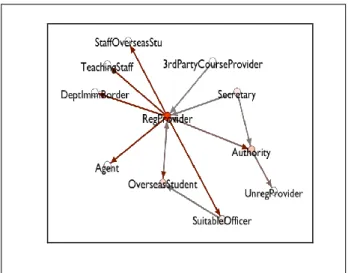
Fig.4. Network map, Australia‟s National Code
Figure 4 showed the network map of the National Code. The network map for Australia‟s National Code is less dense than network maps of New Zealand and Netherlands but with more interactions and the range of actors as compared to that of Germany. Universities who are registered under Australia‟s Commonwealth Register of Institutions and Courses for Overseas Students (CRICOS) – abbreviated “RegProvider” play central role in the policy document, as illustrated through the darkened node. Its betweenness centrality score of 33, the highest among all actors present in the network map. This network map has similar characteristics to that of Netherlands‟, with less density in terms of actors participating in the policy network and the volume of uni- and bi-directional interactions coded. However, unlike Netherlands, two triads were detected between the university, the international student (abbreviated “OverseasStudent”) and officer appointed to manage matters
related to international students (abbreviated
“SuitableOfficer”), as well as between the university, the Secretary managing matters concerning the policy document (abbreviated “Secretary”), and the major authority overseeing compliance of the policy document among registered providers (abbreviated “Authority”). Two distinct features of this network map emerge: one, the presence of third party course providers offering academic programmes and training on behalf of a university (abbreviated “3rdPartyCourseProvider”), as well as the role of university wishing to be registered under CRICOS in order to recruit and host international students (abbreviated “UnregProvider”).
Figure 5 showed the network map of Australia‟s Code of Practice. The network map for Australia‟s Code of Practice 2005 is significantly different compared to the rest of the network maps. There is only one way of interaction from the central node i.e. universities (abbreviated “AusUni”) pointing outwards to other nodes in the network map. This is attributed to the singly directed policy statements in the policy document to the Australian universities, with an example cited as follows:
“The registered provider must ensure that its ownership or tenancy arrangements over its premises are such that students can complete their courses in an appropriate learning environment in the time required.”
(Australia Code of Practice, 2005, item 17)
Fig.5. Network map, Network map, Australia‟s Code of Practice
The uni-directional flow also explained the in degree of the “AusUni” node to be zero while the out degree score is 14. At first glance, the Code of Practice seemed to be outlining responsibilities of Australia universities and its obligation towards other actors within the policy network. However, it is worth noting that this is the only policy document which includes country diplomatic missions in its implementation, as seen through the “AusDipMission” node in the map. This might indicate the role of international student recruitment beyond that of economic benefits that has been much reviewed in available literature concerning internationalisation of higher education.
CONCLUSION
international student population. It also shows the impact that one actor has on other actors within the network. Among all network maps analysed, the network map from New Zealand‟s Code of Practice for Pastoral Care of International Students has the most number of actors responsible for with dynamic interactions between the actors. The visualisation uncovered the range of interaction which exists among the actors and the distribution of one actor‟s influence on other actors: The darker one node is, the greater is its interaction relative to other nodes within the network, and the greater impact that one actor has on other actors within the network. The extent of interaction between actors within each policy network informs on the locality to which pertinent intervention strategies should be implemented, consequently facilitating design of policies on international student management that could be implemented in support of the students‟ academic, social and living experiences. The network analysis is a novel approach in policy analysis, is exploratory in nature and enable analysts to use a relational perspective to explain interactions independent of actors‟ will, belief systems and values within a policy environment. It also demonstrated that actors beyond universities are as accountable as the universities in managing the international students‟ experience in respective higher education systems.
ACKNOWLEDGMENT
This research is supported by the research grants identified by the following codes under the Research Management Centre, Universiti Teknologi Malaysia: 01H56 (Funding source: Research University Grant, Universiti Teknologi Malaysia) and 4B045 (Funding source: Department of Higher Education, Ministry of Education Malaysia).
REFERENCES
[1] Organisation for Economic Cooperation and Development (OECD). (2012). OECD: Education at a glance. Paris: OECD Publisher.
[2] Kelo, M., Teichler, U. and Wa¨chter, B. (2006). Toward improved data on student mobility in Europe: Findings and concepts of the Eurodata study. Journal of Studies in International Education 10(3): 194–223.
[3] de Wit, H. (2012). Student mobility between Europe and the rest of the world: Trends, issues and challenges. In Curaj, A., Scott, P., Vlasceanu, L. and Wilson, L. (Eds.), European higher education at the crossroads: Between the Bologna process and national reforms (pp. 431–439). Dordretch: Springer.
[4] Knight, J. (2006). Higher education crossing borders: A guide to the implications of the general agreement on trade in services (GATS) for cross-border education. Vancouver: Commonwealth of Learning.
[5] Ziguras, C. (2003). The impact of the GATS on transnational tertiary education: Comparing experiences of New Zealand, Australia, Singapore and Malaysia. The Australian Educational Researcher 30(3): 89–109.
[6] Rui Yang. (2001). University internationalisation: its meanings, rationales and implications. Intercultural Education 13(1): 81-95.
[7] Leask, B. and Carroll, J. (2011). Moving beyond „wishing and hoping‟: internationalisation and student experiences of
inclusion and engagement, Higher Education Research & Development 30(5): 647-659.
[8] Ryan, J. (2011). Teaching and learning for international students: towards a transcultural approach. Teachers and Teaching: Theory and Practice 17(6): 631-648.
[9] Doria Abdullah, Mohd Ismail Abd Aziz and Abdul Latiff Mohd Ibrahim. (2014). A „„research‟‟ into international student-related research: (Re)Visualising our stand?. Higher Education 67(3): 235-253.
[10]Wentzel, J. (2011). Governmental paper analysis. In An Imperative to Adjust? (pp. 115-216). Wiesbaden: Springer VS. [11]Watts, R. (2006). The politics of discourse: Academic responses
to the Dawkins reforms of higher education, 1945–1991. Critical Studies in Education 47(1-2): 235-267.
[12]Grimaldi, E. (2012). Analysing policy in the context (s) of practice: a theoretical puzzle. Journal of Education Policy 27(4): 445-465.
[13]MacDonald, C. (2003). The value of discourse analysis as a methodological tool for understanding a land reform program. Policy Sciences 36(2): 151-173.
[14]North, D. C. (1990). Institutions, institutional change and economic performance. Cambridge: Cambridge University Press.
[15]Ostrom, E. (2011). Background on the institutional analysis and development framework. Policy Studies Journal 39(1): 7-27. [16]Lowndes, V. (2002). Institutionalism. In David Marsh and Gerry
Stoker (eds), Theories and Methods in Political Science (2nd edition, p. 90-108). London: Palgrave McMillan.
[17]Singh, P., Thomas, S. and Harris, J. (2013) Recontextualising policy discourses: a Bernsteinian perspective on policy interpretation, translation, enactment. Journal of Education Policy 28(4): 465-480.
[18]Alvesson, M. and Kärreman, D. (2011). Qualitative research and theory development: Mystery as method. Thousand Oaks, CA: Sage.
[19]Vera, E. R. and Schupp, T. (2006). Network analysis in comparative social sciences. Comparative Edu. 42(3): 405-429. [20]Bastian, M., Heymann, S., and Jacomy, M. (2009). Gephi: An
Open Source Software for Exploring and Manipulating Networks. In Int. AAAI Conf on Weblogs and Social Media.
Retrieved from
http://www.aaai.org/ocs/index.php/ICWSM/09/paper/view/154. Accessed 4 February 2014.
[21]National Code of Conduct on Foreign Students at German Universities (Germany)
[22]Code of Conduct with respect to International Students in Dutch Higher Education (Netherlands)
[23]Code of Practice for the Pastoral Care of International Students (New Zealand)
[24]National Code of Practice for Registration Authorities and Providers of Education and Training to Overseas Students 2001 (Australia)
[25]Code of Practice and Guidelines for the Provision of Education to International Students 2005 (Australia)J. Clerk Maxwell, A Treatise on Electricity and Magnetism, 3rd ed., vol. 2. Oxford: Clarendon, 1892, pp.68–73.
[26]I. S. Jacobs and C. P. Bean, “Fine particles, thin films and exchange anisotropy,” in Magnetism, vol. III, G. T. Rado and H. Suhl, Eds. New York: Academic, 1963, pp. 271–350.
[28]R. Nicole, “Title of paper with only first word capitalized,” J. Name Stand. Abbrev., in press.
[29]Y. Yorozu, M. Hirano, K. Oka, and Y. Tagawa, “Electron spectroscopy studies on magneto-optical media and plastic substrate interface,” IEEE Transl. J. Magn. Japan, vol. 2, pp.
740–741, August 1987 [Digests 9th Annual Conf. Magnetics Japan, p. 301, 1982].