‘I Agree With You’ – A Corpus-based Study Of Agreement
ANDY SETO
The Hong Kong Polytechnic University [email protected]
Abstract
The paper is a corpus-based study comparing the expressions of agreement in textbook English and in genuine English to suggest how corpus data can help to improve the authenticity of English textbook material in �ong �ong�� Thethe authenticity of English textbook material in �ong �ong�� The authenticity of English textbook material in �ong �ong�� Theauthenticity of English textbook material in �ong �ong�� Thetextbook material in �ong �ong�� The in �ong �ong�� The�� TheThe data sets included textbook data and selected parts of the �ong �ong Corpus of Spoken English�� Both quantitative and qualitative approaches are used to analyze the data�� The findings show that there are significant differenceshe findings show that there are significant differencesshow that there are significant differences that there are significant differences between textbook English and genuine English in expressing agreement�� �ot�otot only the expressions of agreement but also the ways in which agreement is expressed vary�� �any expressions of agreement mentioned in the textbooks�any expressions of agreement mentioned in the textbooks cannot be found in the corpus data sets�� Simultaneously, the common ways of expressing agreement in naturally occurring spoken English are not introduced in the textbook data�� �t is argued that textbook writers need to enhance the�t is argued that textbook writers need to enhance the authenticity of textbook material for language learners by using exampleslanguage learners by using examples learners by using examples from genuine English and corpus data is one importance source in providing and corpus data is one importance source in providing naturally occurring expressions of agreement for local secondary schools students in �ong �ong��
Keywords:� agreement; corpus-based approach; genuine English; �ong �ong Chinese; native speakers of English, textbook English
Introduction
and differences between textbook English and genuine English with adifferences between textbook English and genuine English with a with a view to discussing how corpus data can help to improve the textbookdiscussing how corpus data can help to improve the textbooking how corpus data can help to improve the textbook how corpus data can help to improve the textbook to improve the textbook improve the textbookimprove the textbook the textbook material����
The issue of genuineness in English Language Teaching �ELT���ELT�� has long been discussed �Breen, 1985; Taylor, 1994; Widdowson, 2000; Römer, 2004b���� �nadequate or inappropriate descriptions of�nadequate or inappropriate descriptions of linguistic features in teaching material are believed to adversely affect features in teaching material are believed to adversely affect are believed to adversely affectare believed to adversely affect believed to adversely affect to adversely affect the learning of genuine English�� Textbooks sometimes contain inventednglish�� Textbooks sometimes contain inventedglish�� Textbooks sometimes contain invented�� Textbooks sometimes contain inventedTextbooks sometimes contain inventedextbooks sometimes contain invented sometimes contain invented contain invented texts and examples constructed with a particular teaching purpose or around a particular topic or a grammatical feature�� The descriptions anda grammatical feature�� The descriptions andgrammatical feature�� The descriptions andThe descriptions and descriptions andand explanations are usually based on intuition or second-hand accountsare usually based on intuition or second-hand accountson intuition or second-hand accounts intuition or second-hand accounts ��cEnery & Wilson, 2001���� �s some of these texts and examples may�s some of these texts and examples mayhese texts and examples maymay not have occurred in natural speech situations, it is likely that therehave occurred in natural speech situations, it is likely that thereoccurred in natural speech situations, it is likely that theres, it is likely that there, it is likely that thereit is likely that there that there will be mismatches between textbook English and genuine English mismatches between textbook English and genuine Englishgenuine English English �Römer, 2004a; 2004b; 2005a; 2005b���� Therefore, teaching materialömer, 2004a; 2004b; 2005a; 2005b���� Therefore, teaching material, 2004a; 2004b; 2005a; 2005b���� Therefore, teaching material2004a; 2004b; 2005a; 2005b���� Therefore, teaching material�� Therefore, teaching materialherefore, teaching materialeaching material based on invented examples may not accurately reflect the use of a examples may not accurately reflect the use of amay not accurately reflect the use of athe use of a use of a particular linguistic feature in real-life communication�� �n this paper,real-life communication�� �n this paper,�� �n this paper,�n this paper,n this paper, the linguistic feature refers to the form and function of the speech act of linguistic feature refers to the form and function of the speech act oflinguistic feature refers to the form and function of the speech act offeature refers to the form and function of the speech act ofthe form and function of the speech act of of agreement ��ustin, 19�5; Searle, 19�9, 19�9; Stenström, 1994�� as used��ustin, 19�5; Searle, 19�9, 19�9; Stenström, 1994�� as used in the group discussion context��the group discussion context��group discussion context�� context����
The corpus-based approach to the study of language uses corpusorpus-based approach to the study of language uses corpus evidence to quantify existing categories in research�� Before the examination of the corpus data, there are pre-formulated ideas and fixed categories in the mind of the researcher �Römer, 2005a, 2005b���� Tognini-Bonelli �2001:�5�� defines the corpus-based approach as �a corpus-based approach as �acorpus-based approach as �a methodology that avails itself of the corpus mainly to expound, test or exemplify theories and descriptions that were formulated before large corpora became available to inform language study”�� TT
Studies have examined corpus data to critically evaluate existing language textbooks and to inform their production �Tribble & �ones,textbooks and to inform their production �Tribble & �ones, and to inform their production �Tribble & �ones,ir production �Tribble & �ones, production �Tribble & �ones,�Tribble & �ones,ones,nes, 1990; �eunier, 2002; Römer, 2005b���� The most obvious pedagogicalömer, 2005b���� The most obvious pedagogicalmer, 2005b���� The most obvious pedagogical The most obvious pedagogical use of corpus data is to treat it as a source of classroom material that the teachers select from and adapt ��ston, 199����� �s Sinclair �2001: xiis select from and adapt ��ston, 199����� �s Sinclair �2001: xii select from and adapt ��ston, 199����� �s Sinclair �2001: xii - xiii�� puts it, �corpus evidence can illuminate language teaching froms it, �corpus evidence can illuminate language teaching from it, �corpus evidence can illuminate language teaching from many different angles” as �there is the accurate description of structure, reliable models of usage, how words and phrases are actually translated, what are the essentials in a syllabus, what are the characteristic errors of learners”�� Corpus examples are important in language learning as they expose learners to the kinds of sentences and vocabulary which theylearners to the kinds of sentences and vocabulary which they to the kinds of sentences and vocabulary which they will encounter in reading genuine texts in the language or in using the language in real communicative situations ��cEnery & Wilson, 2001���� �n other words, the use of corpus data enables learners to learn genuinelearners to learn genuine to learn genuinegenuine English used in real communicative situations and corpus evidence cancommunicative situations and corpus evidence canorpus evidence can contribute to an improvement of teaching material��
Literature review of speech act of agreement
�ccording to Eggins and Slade �199���, agreement is an example of agreement is an example ofagreement is an example ofan example of preferred acts that indicates a willingness to accept the propositionsndicates a willingness to accept the propositions or the proposals of the other speakers, and thus creating an alignmentthe proposals of the other speakers, and thus creating an alignmentproposals of the other speakers, and thus creating an alignment between the speakers�� �n conversation analysis, when the first part of an adjacency pair �Sacks et al��, 19�4�� contains a request or an offer, it is typically expected that the second part is an acceptance rather than a refusal �Eggins and Slade, 199���, and this is called a preferenceis called a preference structure����
the dispreferred second part will be a disagreement�� For instance, aninstance, an, an assessment ��sn�t that really great?� is expected to be responded to by ��es, it is���; a proposal ��aybe we could go for a walk?� is expected to; a proposal ��aybe we could go for a walk?� is expected to proposal ��aybe we could go for a walk?� is expected to?� is expected to� is expected to be responded to by �That�s great���
�n Pomerantz�s �1984: �5-�9�� study, three types of agreementthree types of agreementhree types of agreement are identified, which are �upgraded” �or �strong agreement”��, �same �upgraded” �or �strong agreement”��, �same�or �strong agreement”��, �sameor �strong agreement”��, �same��, �same, �same evaluation”, and �downgraded” �or �weak agreement”���� �n an �upgraded �or �weak agreement”���� �n an �upgradedor �weak agreement”���� �n an �upgraded���� �n an �upgraded�� �n an �upgraded�n an �upgraded�upgradedupgradedpgradeded agreement”, either a stronger evaluative term than the prior evaluative”, either a stronger evaluative term than the prior evaluative, either a stronger evaluative term than the prior evaluative either a stronger evaluative term than the prior evaluativeeither a stronger evaluative term than the prior evaluativea stronger evaluative term than the prior evaluative descriptor in the first part is selected or an intensifier modifying the is selected or an intensifier modifying the or an intensifier modifying the prior evaluative descriptor is included�� �n a �same evaluation”, the is included�� �n a �same evaluation”, the�� �n a �same evaluation”, the�n a �same evaluation”, the�same evaluation”, thesame evaluation”, theame evaluation”, theevaluation”, the”, the, thethe same prior evaluative descriptor is repeated with �too” or pro termsprior evaluative descriptor is repeated with �too” or pro terms is repeated with �too” or pro terms�too” or pro terms indicating the same descriptor�� �n a �downgraded agreement”, a scaled-the same descriptor�� �n a �downgraded agreement”, a scaled-�� �n a �downgraded agreement”, a scaled-�n a �downgraded agreement”, a scaled-�downgraded agreement”, a scaled-downgraded agreement”, a scaled-wngraded agreement”, a scaled-, a scaled-a scaled-down or weakened evaluation term than the prior evaluative descriptor is selected�� When an agreement is invited, an upgraded �or strong���� When an agreement is invited, an upgraded �or strong��an agreement is invited, an upgraded �or strong��agreement is invited, an upgraded �or strong�� is invited, an upgraded �or strong�� invited, an upgraded �or strong��an upgraded �or strong��upgraded �or strong�� �or strong�� agreement is usually performed with a minimization of gap or even inis usually performed with a minimization of gap or even in usually performed with a minimization of gap or even inusually performed with a minimization of gap or even inperformed with a minimization of gap or even in slight overlap��
Though an agreement is usually expressed in the preferred formatan agreement is usually expressed in the preferred formatagreement is usually expressed in the preferred format expressed in the preferred format in the preferred formatthe preferred formatpreferred format and normally comes after a speaker�s assessment, there are exceptions,, for example, when the initial assessment is negative, such as a self-hen the initial assessment is negative, such as a self-deprecation, the usual preference for an agreement is non-operativean agreement is non-operativeagreement is non-operative �Pomerantz, 1984���� Stenström �1994�� categorises agreement, ��gree�,categorises agreement, ��gree�,, ��gree�, as one realization of the primary act of �Reply��� ��gree�, as a reply toone realization of the primary act of �Reply��� ��gree�, as a reply to �opines�, shows the listener�s approval of what the speaker �means”��shows the listener�s approval of what the speaker �means”�� the listener�s approval of what the speaker �means”��s approval of what the speaker �means”�� approval of what the speaker �means”�� Stenström �1994�� examines the London-Lund Spoken Corpus �0��5 million words�� and finds that �agree� markers includethat �agree� markers include�agree� markers include absolutely, all right, fine, good, OK, precisely, quite, right, that’s right, and yes (no)��
Galley et al�� �2004�� describe a statistical approach for modeling agreements and disagreements in conversational interaction�� They first identify adjacency pairs based on a set of lexical, durational, and structural features that look both forward and backward in the discourse�� Second, they classify utterances as agreement or disagreements using those adjacency pairs and features that represent various pragmatic influences of previous agreement or disagreement on the current utterance�� Their approach is found to have 8���9% accuracy��
Methodology
The data collected for the present study came from five textbooks collected for the present study came from five textbooks for the present study came from five textbooks published in �ong �ong �Drave, Gillies, & Simpson-Giles, 2005; Esser, 2005; �eibbor, 2005; �ancarrow, Leung, & Choi, 2005; Potter, 2005�� and the �ong �ong Corpus of Spoken English ���CSE�� �Cheng�ong �ong Corpus of Spoken English ���CSE�� �Chengong Corpus of Spoken English ���CSE�� �Chengng Corpus of Spoken English ���CSE�� �Chengorpus of Spoken English ���CSE�� �Chengrpus of Spoken English ���CSE�� �Cheng��CSE�� �Cheng�� �Cheng �Cheng and Warren, 2005, 200�, 200����� The language forms that realize the actThe language forms that realize the actlanguage forms that realize the act of agreement identified in the ��CSE were compared with those inagreement identified in the ��CSE were compared with those inidentified in the ��CSE were compared with those inin the ��CSE were compared with those inthe ��CSE were compared with those in ��CSE were compared with those inwere compared with those in compared with those ind with those in with those inthose in English language textbooks published in �ong �ong��textbooks published in �ong �ong��published in �ong �ong��
The five textbooks selected were the widely-used textbooks inthe widely-used textbooks in widely-used textbooks in �ong �ong secondary schools when this study was conducted as theysecondary schools when this study was conducted as they schools when this study was conducted as they were the only published textbook materials available in the market then��the only published textbook materials available in the market then�� only published textbook materials available in the market then��published textbook materials available in the market then�� available in the market then�� The contents of the textbooks largely followed the examination syllabus contents of the textbooks largely followed the examination syllabus published by the �ong �ong Examinations and �ssessment �uthority ���E������ The textbook data collected represent a considerable varietyThe textbook data collected represent a considerable varietyhe textbook data collected represent a considerable varietytextbook data collected represent a considerable varietydata collected represent a considerable variety of expressions of agreement that students would learn in the classroomthe classroom classroom for the group discussion in the speaking examination�� group discussion in the speaking examination�� speaking examination��
The ��CSE represents the main overarching spoken genres collected in the �ong �ong context �Cheng and Warren, 1999���� The in the �ong �ong context �Cheng and Warren, 1999���� TheThehe ��CSE is a 2-million-word corpus of naturally occurring spoken discourses primarily between �ong �ong Chinese ���C�� and native speakers of English ��SE���� The corpus comprises 200 hours of data, consisting of four sub-corpora, namely academic, business, conversation, and public�� Each sub-corpus consists of a variety of discourse types and participants��
group discussion in the speaking examination�� From these three sub-speaking examination�� From these three sub-peaking examination�� From these three sub-examination�� From these three sub-xamination�� From these three sub-From these three sub-rom these three sub-corpora, 9 meetings of 21� minutes of recordings and 3�,2�2 transcribed9 meetings of 21� minutes of recordings and 3�,2�2 transcribed words, 2 discussion forums of 39 minutes of recordings and �,�99 transcribed words, and 2 tutorials of 91 minutes of recordings and 8,2�� transcribed words were used�� The total recording length is 34� minutes,used�� The total recording length is 34� minutes,�� The total recording length is 34� minutes, with a total word count of 51,238 �Table 1����
TAbLe 1:� Data collected from the HKCSe
The HKCSe
Number of files Minute Word
�eetings 9 21� 3�,2�2
Discussion forums 2 39 �,�99
Tutorials 2 91 8,2��
The data from the ��CSE was interrogated withs interrogated with interrogated with ConcApp
developed by Chris Greaves from the �ong �ong Polytechnicthe �ong �ong Polytechnic�ong �ong Polytechnic University�� Both quantitative and qualitative data analyses were conducted�� �uantitative analysis of the corpus data provides frequency�uantitative analysis of the corpus data provides frequencyfrequency lists of expressions of agreement while qualitative analysis offersqualitative analysis offersualitative analysis offers offers a more detailed understanding of the data that helps identify the realmore detailed understanding of the data that helps identify the realthe data that helps identify the real that helps identify the real functions of expressions of agreement�� �anual qualitative data analysis�� �anual qualitative data analysis of the corpora was conducted to identify instances of language usage that performs the agreement function ��cEnery & Wilson, 2001������cEnery & Wilson, 2001������
Analysis of findings
expressions of agreement in textboo�sagreement in textboo�ss
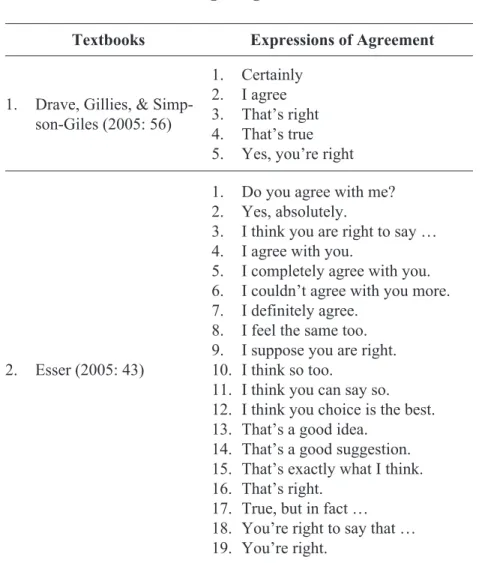
TAbLe 2:� expressions of Agreement in five Hong Kong textboo�s
Textboo�s expressions of Agreement
1�� Drave, Gillies, & Simp-son-Giles �2005: 5���
1�� Certainly 2�� � agree 3�� That�s right 4�� That�s true 5�� �es, you�re right
2�� Esser �2005: 43��
1�� Do you agree with me? 2�� �es, absolutely��
3�� � think you are right to say … 4�� � agree with you��
5�� � completely agree with you�� ��� � couldn�t agree with you more�� ��� � definitely agree��
8�� � feel the same too�� 9�� � suppose you are right�� 10�� � think so too��
11�� � think you can say so�� 12�� � think you choice is the best�� 13�� That�s a good idea��
14�� That�s a good suggestion�� 15�� That�s exactly what � think�� 1��� That�s right��
1��� True, but in fact … 18�� �ou�re right to say that … 19�� �ou�re right��
3�� �ancarrow, Leung, & Choi �2005:21��
Mild agreement: 1�� � suppose so 2�� you�re right��
3�� �n a way, you�re right�� 4�� That�s a fair point �to make���� 5�� To a certain extent, � agree �with
you����
��� �ou could say so��
Normal agreement: 1�� � agree
2�� � agree with you�� 3�� � also think so�� 4�� � feel the same too�� 5�� � support your view�� ��� Of course
��� Certainly��
8�� That�s a good suggestion�� 9�� That�s right
10�� That�s true�� 11�� �es, you�re right��
Strong agreement: 1�� �bsolutely! 2�� Exactly! 3�� �ndeed!
4�� � agree with you entirely��
5�� � couldn�t agree �with you�� more�� ��� � see eye to eye with you �on this
point����
��� ��m strongly in favour of this�� 8�� That�s just the point��
9�� That�s exactly the point��
Continued...
4�� �eibbor, �2005: 8-10�� 1�� � agree��2�� � think so too�� 3�� �es, that�s right��
5�� Potter �2005:14,30��
To support a suggestion: 1�� � like your idea��
2�� � support that suggestion�� 3�� That�s a good idea��
4�� That�s a wonderful suggestion�� 5�� Well, that�s an interesting
sugges-tion��
To agree with others’ opinions: 1�� � agree with you��
2�� � agree��
3�� � think you�re right�� 4�� �either do ��� 5�� � don�t, either�� ��� So do ��� ��� � do, too��
The 54 expressions of agreement in the textbooks vary in lengthhe 54 expressions of agreement in the textbooks vary in lengthtextbooks vary in length from three to nineteen words�� �one of the textbooks rank the expressions in terms of importance of use�� �n the textbooks, an agreement is made as a response to the previous speaker�s opinion or suggestion�� �n or suggestion�� �nggestion�� �n general, across all the five textbooks, invented situations of interaction and examples are used to illustrate agreements in group discussionsdiscussionss �Figures 1 to 5����
Opinion Agreeing Supporting
� think we should travel by train��
�es, you�re right�� That�s right�� Certainly�� � agree with you�� Of course��
�t�ll be much quicker��
�n Figure 1, the writers invent a situation in which a suggestion is made about the means of travelling�� Expressions of agreement are shown with a supporting reason��
expressing agreement
�: They shouldn�t go any further into the woods�� Do you agree with me?
B: �es, absolutely�� � think you are right to say that they should stay where they are and wait for rescuers to come, instead of going blindly into the woods again��
Figure 2:� extract from esser (2005:� 43)
�n Figure 2, the writer invents a situation to show the response of �Do you agree with me?� is ��es, absolutely���
Opinion Agree
� think someone should give their seat to the woman with the child��
● Yes, that’s right. ● I agree
● I think so too. Figure 3:� extract from Meibbor (2005:� 9)
�n Figure 3, the writer shows three expressions of agreement in response to an invented opinion��
Agreeing with others’ opinions
�f you are agreeing with others� opinions, you can say: � agree��
� agree with you�� � think you�re right��
Figure 4:� extract from Potter (2005:� 30)
Their uses are illustrated in Figure 3��5 below with invented examples to show the listener�s different attitudes towards the speaker�s opinions towards the speaker�s opinion towards the speaker�s opinion or suggestion��
�ild agreement
: � think we should spend less time watching TV��
B: I suppose you’re right�� Our teachers are often telling us to work harder��
Normal
agreement �: � think French fries are not good for us��B: I agree with you�� They make us fat��
Strong agreement
: � think all students in �ong �ong should take computer lessons��
B: I agree with you entirely as computer skills are very useful��
Figure 5:� extract from Nancarrow, Leung, & Choi (2005:� 29)
�n Figure 5, the writers use different invented situations to show how expressions are used to show different levels of agreement��
expressions of agreement in the HKCSeagreement in the HKCSethe HKCSeHKCSee
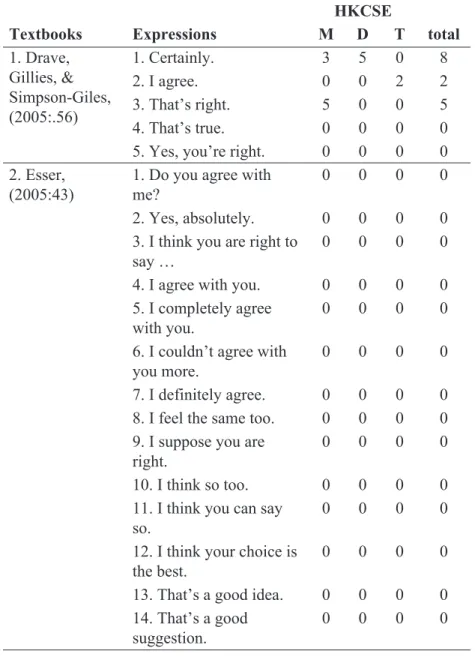
TAbLe 3:� Frequency of occurrence of expressions of potential agreements in the HKCSe
HKCSe
Textboo�s expressions M D T total
1�� Drave, Gillies, & Simpson-Giles, �2005:��5���
1�� Certainly�� 3 5 0 8
2�� � agree�� 0 0 2 2
3�� That�s right�� 5 0 0 5
4�� That�s true�� 0 0 0 0
5�� �es, you�re right�� 0 0 0 0
2�� Esser,
�2005:43�� 1�� Do you agree with me? 0 0 0 0
2�� �es, absolutely�� 0 0 0 0
3�� � think you are right to
say … 0 0 0 0
4�� � agree with you�� 0 0 0 0
5�� � completely agree
with you�� 0 0 0 0
��� � couldn�t agree with
you more�� 0 0 0 0
��� � definitely agree�� 0 0 0 0
8�� � feel the same too�� 0 0 0 0
9�� � suppose you are
right�� 0 0 0 0
10�� � think so too�� 0 0 0 0
11�� � think you can say
so�� 0 0 0 0
12�� � think your choice is
the best�� 0 0 0 0
13�� That�s a good idea�� 0 0 0 0
14�� That�s a good
suggestion�� 0 0 0 0
15�� That�s exactly what
� think�� 0 0 0 0
1��� That�s right�� 5 0 0 5
1��� True, but in fact … 0 0 0 0
18�� �ou�re right to say
that … 0 0 0 0
19�� �ou�re right�� 1 0 0 1
3�� �ancarrow, Leung, & Chi �2005:��21��
Mild agreement:
1�� � suppose so�� 0 0 0 0
2�� �ou�re right�� 1 0 0 1
3�� �n a way, you�re right�� 0 0 0 0
4�� That�s a fair point �to
make���� 0 0 0 0
5�� To a certain extent, �
agree �with you���� 0 0 0 0
��� �ou could say so�� 0 0 0 0
Normal agreement:
1�� � agree�� 0 0 2 2
2�� � agree with you�� 0 0 0 0
3�� � also think so�� 0 0 0 0
4�� � feel the same too�� 0 0 0 0
5�� � support your view�� 0 0 0 0
��� Of course�� 3 15 2 20
��� Certainly�� 3 5 0 8
8�� That�s a good
suggestion�� 0 0 0 0
9�� That�s right�� 5 0 0 5
10�� That�s true�� 0 0 0 0
11�� �es, you�re right�� 0 0 0 0
Continued...
Strong agreement:
1�� �bsolutely! 1 0 0 1
2�� Exactly! 1 1 0 2
3�� �ndeed! 0 0 0 0
4�� � agree with you
entirely�� 0 0 0 0
5�� � couldn�t agree �with
you�� more�� 0 0 0 0
��� � see eye to eye with
you �on this point���� 0 0 0 0
��� ��m strongly in favour
of this�� 0 0 0 0
8�� That�s just the point�� 0 0 0 0
9�� That�s exactly the
point�� 0 0 0 0
4�� �eibbor
�2005:8-10�� 1�� � agree��2�� � think so too�� 00 00 00 20
3�� �es, that�s right�� 0 0 0 0
5�� Potter
�2005:14, 30�� 1�� � like your idea��To support a suggestion: 0 0 0 0 2�� � support that
suggestion�� 0 0 0 0
3�� That�s a good idea�� 0 0 0 0
4�� That�s a wonderful
suggestion�� 0 0 0 0
5�� Well, that�s an
interesting suggestion�� 0 0 0 0
Continued...
To agree with others� opinions:
1�� � agree with you�� 0 0 0 0
2�� � agree�� 0 0 2 2
3�� � think you�re right�� 0 0 0 0
4�� �either do � 0 0 0 0
5�� � don�t, either�� 0 0 0 0
��� So do ��� 0 0 0 0
��� � do, too�� 0 0 0 0
�ey: � – �eetings; D – Discussions; T – Tutorials
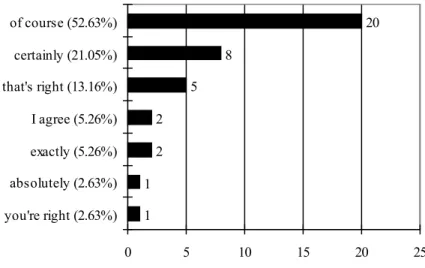
Out of the 54 expressions, only seven are found in the ��CSE, namely, in alphabetical order, absolutely, certainly, exactly, I agree, of course, that’s right, and you’re right �Figure ����� �n this paper, these expressions are called �potential expressions of agreement� as they only show the particular linguistic features of agreement but do not necessarily carry the function of agreeing�� The real function of the expression can only be confirmed by referring to the specific context of the speech event and the interpretation of what the speaker intends to express�� The most frequent expression of potential agreement is of course �52���3 %�� with 20 occurrences in the ��CSE, followed by certainly �21��05%�� with 8 occurrences, and that’s right �13��1�%�� with 5 occurrences�� The frequencies of the remaining 51 expressions of potential agreement are from 2 to 0 occurrences��
Figure 6:� Frequency of expressions of potential agreement in the HKCSe
Contextual analysis of each instance potential agreement shows that apart from that’s right, I agree, and you’re right, other expressions
of course, certainly, exactly, and absolutely can carry functions other than agreeing�� � manual filtering analysis of the ��CSE shows that only 1 occurrence of of course �as compared to 20 occurrences in the textbook dataset�� and 1 occurrence of exactly �as compared to 2 occurrences in the textbook dataset�� carry the function of agreeing�� The examples are as follows1:
Example 1: of course ���CSE: P0����
b3: ��C male b1: ��C male
b3… � think we still need do we still need to do quite a bit of work on that
b1: of course the six million dollar question is that are those er people who�ve been infected or immune from further infection it�s er er the worry is if they get infected again and they have to go through another course of pulse steroids that wouldn�t be very nice …
1 1 2 2
5 8
20
0 5 10 15 20 25
�n example 1, the participants are having a conversation at a S�RS �Severe �cute Respiratory Syndromes�� update discussion forum�� b3, a doctor, is explaining if it is safe for recovered patients to go back into the community�� b3 tells b1, the host of the discussion forum, that the doctors need to do more studies about the discharged infected patients�� The host �b1�� agrees with the doctor �b3�� that more work should be done to make sure if the patient is safe to go back to the community��
Example 2: exactly ���CSE: B0�0��
B: �SE male a2: ��C female
B: twenty dollars all of those concerns could be wiped outyou know
a2: exactly
�n example 2, the participants are university associate professor,
b, and research assistant, a2�� They are talking about �ark Six Lottery, a popular lotto game in �ong �ong�� The associate professor �b�� says that by spending twenty dollars one may win the sixty-million prize and wipe out all concerns about one�s career�� The research assistant �a2�� agrees by saying �exactly���
�owever, these adverbs �of course, certainly, exactly, and absolutely�� are mostly used to suggest that something is normal, obvious, and well-known, rather than to agree:
Example 3: of course ���CSE: �044��
b: ��C male �: �SE female
b1… your strength now strength here of course is dealing with �aohan strength how �aohan use the strength to predict advantage of the opportunity …
Example 4: certainly ���CSE: P0���� �: �SE female
�: � er because ��m a epidemiologist one of the first things ��ll say is more data is needed and certainly more data is needed on any of the therapeutic treatments for any illness certainly
of this magnitude and as � st- stated in one of my earlier slides during my presentation it said a study of therapeutics and efficacy is certainly needed��
�n example 4, A, an epistemologist, is expressing her views on the use of Ribavirin in treating S�RS patients in a S�RS update discussion forum�� She uses �certainly� to show the necessity of acquiring more data related to the effectiveness of the drug in tackling the disease�� They can also be used to increase the force of the speaker�s statement:
Example 5: of course ���CSE: B019��
b2: ��C male �: �SE female
b2… if you have any problem come to us talk to us and then we will try to accommodate the best we can of course we�ll write down the problem …
b2 is reporting a business agreement signed between an airline and the hotel in which b2 is working�� �n the meeting, he asks his colleagues to raise any problems that they may have with the airline�� �nd he uses �of course� to show their determination to resolve any problems��
Example �: absolutely ���CSE: B058�� �: �SE female
�: erm ����� but what we have to do absolutely sure is the quality of the sound � mean what what�s the quality of the sound like on those ones that you�ve done
�n short, almost all the 54 expressions from the textbooks are not commonly used or used at all to convey an agreement in the ��CSE�� This may suggest that many of these expressions are not commonly used in genuine English to convey an agreement��
expressions of agreement not found in the textboo�s
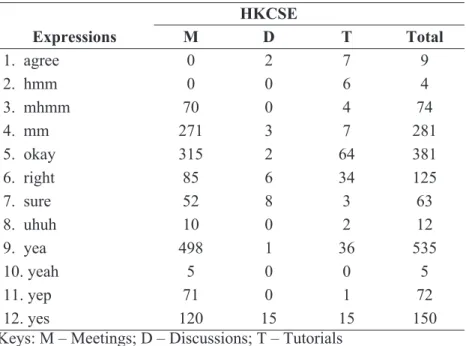
The manual contextual analysis of the ��CSE shows that there are twelve other expressions of potential agreement that are not found in the five textbooks �Table 3��3���� �t should be noted that some of the markers could be delays in response or back-channel responses�� �oreover, comparing written and spoken data is rather difficult as written data does not always indicate expressions of potential agreement�� �t would therefore be difficult to determine the functions of expressions like �mm� and �uhuh� and there are other possibilities when interpreting the functions of these expressions��
TAbLe 3:� Frequency of occurrence of expressions of potential agreement in the HKCSe that are not
found in Hong Kong textboo�s
HKCSe
expressions M D T Total
1�� agree 0 2 � 9
2�� hmm 0 0 � 4
3�� mhmm �0 0 4 �4
4�� mm 2�1 3 � 281
5�� okay 315 2 �4 381
��� right 85 � 34 125
��� sure 52 8 3 �3
8�� uhuh 10 0 2 12
9�� yea 498 1 3� 535
10�� yeah 5 0 0 5
11�� yep �1 0 1 �2
12�� yes 120 15 15 150
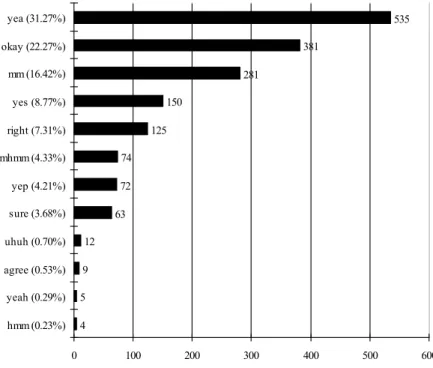
Figure � shows the frequency distribution of these twelve other expressions of potential agreement in the ��CSE��
Figure 7:� Frequency of expressions of potential agreement in the HKCSe that are not found in the textboo�s
� frequency count in the ��CSE subset shows that there is a huge frequency gap between yea, okay, and mm on the one hand and the other nine expressions on the other�� 535 occurrences of yea �31��2�%��, 381 occurrences of okay �22��2� %��, and 281 occurrences of mm �1���42%�� are found�� For the remaining nine expressions, the occurrences only range from 4 to 150��
The ��CSE data was then manually analyzed to exclude the expressions of agreement that do not function as agreeing to a suggestion or an opinion�� The result shows that the frequency counts of these three linguistic realizations with a relative frequency of over 10% drop significantly �Figure 3��8���� Only 14� occurrences of yea �as
4 5 9 12
�3 �2 �4
125 150
281
381
535
0 100 200 300 400 500 �00
compared to 535 occurrences��, 12 occurrences of okay �as compared to 381 occurrences��, and 39 occurrences of mm �as compared to 281 occurrences�� are found to express agreement�� The frequency counts of the remaining nine expressions in the ��CSE also drop, indicating that these expressions carry multiple functions, including agreeing����
Figure 8:� Frequency of expressions of agreement in the HKCSe that are not found in the textboo�s
�t is found that yea �5���42%�� and mm �15��23%�� remain the most frequently occurring expressions of agreement with a relative frequency of over 10%:
Example 1: yea ���CSE: �045��–
B: �SE male a2: ��C female
B: and we�ve got bogged down in er turn taking adjacency exchange structure er –s we�ve spent longer than � wanted to because � think people found it difficult
1 1 1 1 2
10 10 10 12
22 39
14�
0 20 40 �0 80 100 120 140 1�0
a2: mhmm ����� hmm hmm yea it it is difficult ����� [you know ��laugh����
The conversation takes place in an academic tutorial�� The tutor,
b, and his students are talking about adjacency exchange structures in different discourse types�� �fter expressing that adjacency exchange structures may be difficult to learn, one of his students, a2, shows her agreement by uttering �yea���
Example 2: mm –���CSE: B058��
�: �SE female b: ��C male
�: erm so on on Thursday ����� well we we have to decide we have to be talking about how we write the paper for �LEC b: so you need to write up the paper before giving a speech �: � think we have to give it in on the day
b: mm
The conversation takes place in a meeting�� � university teacher �A�� and a research staff �b�� are discussing a paper to be prepared for the �LEC ��nternational Legal English Certificate���� With the utterance of �mm�, b agrees with A that the paper has to be submitted before the speech is given��
�part from yea and mm, the occurrences of the remaining ten expressions of agreement are from 1 to 22 only�� Okay, with a relative frequency of 22��2�% in a simple frequency count, only yields 4���9% in the manual analysis��
the listener or an agreement to an opinion or a suggestion is not always clear, especially when a back-channel response is also used to express agreement�� For example,
B: �SE male a1: ��C female
B: er well that�s not that�s not that�s not certain � need to follow that up that up er at the moment ��ve said to erm ����� �_ to give it back [but to [make sure we�ve got
a1: [mm [yea
B: copies of it [and ��ll check the status of it �HKCSe:� b060��
�n this extract, the conversation takes place in a meeting about the sound and video recordings collected from lectures�� The participants are discussing if the data collected could be used�� While b is saying that he will follow up the case, a1 utters �mm� and �yea� simultaneously�� �ere �mm� and �yea� could be treated as either back-channel responses or expressions of agreement; it is difficult to distinguish between them in this extract��
of the textbooks explain how the different expressions are used in genuine English for authentic communication��
Conclusion
The study has found that a number of expressions of agreement �4� of 54�� found in the textbooks do not exist in the ��CSE, and that many expressions of agreement �12�� cannot be found in the textbooks�� These confirm that the selected textbook material does not adequately reflect the use of expressions of agreement in genuine English�� To improve the relevance and accuracy of the teaching material, textbook writers could refer to corpus evidence when designing the material for both genuine contexts of communication and language input�� �oreover, corpus data can be used inductively for the learners to find out how agreement is performed in genuine English �Cheng & Warren, 2005, 200�; Römer, 2004a, 2004b, 2005a, 2005b����
Textbook materials should be based on genuine examples from corpora and expose learners to natural language use�� �f textbook writers want to bring what they write about agreement closer to its use in genuine English, they should make reference to corpus evidence, such as yeah
and mm, both in terms of the actual language forms and the relative frequencies of the different forms�� The most obvious pedagogical use of corpora is to treat them as sources of classroom material for teachers to select and adapt from ��ston, 199����� �s shown in the corpus findings, the list of expressions of agreement need to be reduced from 54 to 3, including that’s right, yea, and mm only�� �oreover, it is necessary to familiarize learners with the contexts in which the expressions of agreement are used in real-life speech situations so that learners can use the expressions appropriately and effectively��
References
�ustin, ���L�� �19�5���� How to do things with words, second edition�� Urmson,
J.O., Sbaśa, M. (Eds.). Oxford University Press, Oxford.
Breen, ���P�� �1985���� �uthenticity in the language classroom�� Applied Linguistics �, �0-�0��
Cheng, W�� �2003���� Intercultural Conversation�� Benjamins,
�msterdam��
Cheng, W��, Warren, ��� �1999���� Facilitating a description of intercultural conversations: The �ong �ong Corpus of Conversational English��
ICAME 20, 5-20��
Cheng, W., Warren, M. (2005). // →well have a DIFferent // ↓
T���king you know //: � Corpus-driven study of disagreement in �ong �ong Business Discourse�� �n F�� Bargiela-Chiappini, ���Gotti�� �Eds���� Asian Business Discourse�s�� �pp�� 241-2�0���� Peter Lang, Frankfurt��
Cheng, W��, Warren, ��� �200����� � would say be very careful of��: Opine markers in an intercultural Business corpus of spoken English�� �n ��� Bamford, ��� Bondi,�Eds����, Managing Interaction in Professional Discourse. Intercultural and Interdiscoursal Perspectives �pp�� 4�-58���� Officina Edizioni, Rome��
Cheng, W��, Warren, ��� �200����� Checking understandings in an intercultural corpus of spoken English�� �n O��eefe, Walsh, S�� �Eds����, Corpus-based Studies of Language �wareness�� Special Issue of Language Awareness 1� �3��, 190-20���
Drave, ���, Gillies, R��, Simpson-Giles, F�� �2005���� Focus on Skills: Paper 3 Speaking�� Longman, �ong �ong��
Eggins, S��, Slade, D�� �199����� Analyzing Casual Conversation�� Cassell, London��
Esser, D�� �2005���� Teach & Practice 4: Paper 3 Speaking�� Pilot, �ong �ong��
Galley, ���, �e�eown�� ���, �irschberg, ���, Shriberg, E���2004���� �dentifying agreement and disagreement in conversational speech: Use of Bayesian networks to model pragmatic dependencies�� Proceedings of the 42nd �nnual �eeting of the �ssociation of Computational Linguistics ��CL-04����
�illard, D��, Ostendorf, ���, Shriberg, E�� �2003���� Detection of agreement vs�� disagreement in meetings: Training with unlabeled data�� Proceedings of the �LT-���CL Conference��
�cEnery, ������, Wilson, ��� �2001���� Corpus Linguistics�� Edinburgh University Press, Edinburgh��
�eibbor, C�� �2005���� Speaking Made Simple: Paper 3 Speaking�� Witman, �ong �ong��
�eunier, F�� �2002���� The pedagogical value of native and learner corpora in EFL grammar teaching�� �n S�� Granger, ��� �ung, S�� Petch-Tyson �Eds����, Computer Learner Corpora, Second Language Acquisition and Foreign Language Teaching �pp�� 119-141���� �ohn Benjamins Publishing Company, �msterdam��
�ey, ��� �2001���� Pragmatics: An Introduction�� Blackwell, Oxford/ Boston, �ass����
�ancarrow, C��, Leung, S�����, Choi, S��P�� �2005���� Developing Skills: Paper 3�� �risto, �ong �ong��
Pomerantz, ��� �1984���� �greeing and disagreeing with assessments: Some features of preferred/dispreferred turn shapes�� �n ������ �tkinson, ��� �eritage �Eds����, Structures of Social Action: Studies in Conversation Analysis �pp�� 5�-101���� CUP, Cambridge/�ew �ork��
Potter, ��� �2005���� Step & Skills 4: Paper 3 Speaking. Witman, �ong �ong��
Römer, U���2004a���� � Corpus-driven approach to modal auxiliaries and their didactics�� �n ��� Sinclair �Ed������ How to Use Corpora in Language Teaching �pp�� 185-199���� �ohn Benjamins, Philadelphia�� �pp�� 185-199��
Römer, U�� �2004b���� Comparing real and ideal language learner input: The use of an EFL textbook corpus in corpus linguistics and language teaching�� �n G�� �ston, S�� Bernardini, D�� Stewart�� �Eds����,
Corpora and Language Learners �pp�� 151-1�8���� �ohn Benjamins, �msterdam��
Römer, U�� �2005a���� Looking at looking: Functions and contexts of progressives in spoken English and �school� English�� �n ��� Renouf, ��� �ehoe�� �Eds����, The Changing Face of Corpus Linguistics �pp�� 231-242�� Rodopi, �msterdam��
Römer, U��� 2005b���� Progressives, Patterns, Pedagogy: A Corpus-driven Approach to English Progressive Forms, Functions, Contexts and Didactics�� �ohn Benjamins, �msterdam��
Searle, ��� �19�9���� Speech acts: An essay in the philosophy of language�� CUP, Cambridge
Searle, ��� �19�9���� � taxonomy of illocutionary acts�� In: Expression and meaning: Studies in the theory of speech acts�� CUP, Cambridge, pp�� 1-29��
Sinclair, ��� ��� �2001���� Preface�� �n ��� Ghadessy, ����enry and R�� L�� Roseberry �Eds����, Small Corpus Studies and ELT, Theory and Practice �pp vii – xvi ���msterdam: �ohn Benjamins Publishing�� Stenström, ���-B�� �1994���� An Introduction to Spoken Interaction.
Longman, London; �ew �ork��
Taylor, D�� �1994���� �nauthentic authenticity or authentic inauthenticity?�� TESL-E� 1 �2��, 1-12�� �vailable at http://www-writing��berkeley�� edu/TESL-E�/ej02/a��1��html ��ccessed �une 30, 2009����
Tognini-Bonelli, E�� �2001���� Corpus: Theory and Practice�� TWC, Birmingham��
Tribble, C��, �ones, G�� �1990���� Concordances in the Classroom: A Resource Book for Teachers�� Essex, Longman��
Widdowson, ���G�� �2000���� On the limitations of linguistics applied��
Applied Linguistics 21 �1��, 3-25��
Wong, L��T�� �200����� �n analysis of two speech acts: �greement and disagreement and the classroom implications�� The Hong Kong Linguist 2�, 29-3���
�ule, G�� �199����� Pragmatics�� Oxford University Press, Oxford��
Footnotes
1 �n the ��CSE, lower case letters indicate �ong �ong Chinese�n the ��CSE, lower case letters indicate �ong �ong Chineseong �ong Chinese�ong Chineseong ChineseChinesehinese
���C�� and upper case letters indicate native speakers of Englishand upper case letters indicate native speakers of Englishnative speakers of English ��SE���� The letters �a” and ��” are used for female speakers and The letters �a” and ��” are used for female speakers and �b” and �B” for male speakers�� The number after the letter, if any, indicates individual speaker �Cheng & Warren, 2005���� �Cheng & Warren, 2005�����Cheng & Warren, 2005����
biodata of author