warwick.ac.uk/lib-publications
Manuscript version: Submitted Version
The version presented here is the submitted version that may later be published elsewhere. Persistent WRAP URL:
http://wrap.warwick.ac.uk/116103
How to cite:
Please refer to the repository item page, detailed above, for the most recent bibliographic citation information. If a published version is known of, the repository item page linked to above, will contain details on accessing it.
Copyright and reuse:
The Warwick Research Archive Portal (WRAP) makes this work by researchers of the University of Warwick available open access under the following conditions.
Copyright © and all moral rights to the version of the paper presented here belong to the individual author(s) and/or other copyright owners. To the extent reasonable and
practicable the material made available in WRAP has been checked for eligibility before being made available.
Copies of full items can be used for personal research or study, educational, or not-for-profit purposes without prior permission or charge. Provided that the authors, title and full
bibliographic details are credited, a hyperlink and/or URL is given for the original metadata page and the content is not changed in any way.
Publisher’s statement:
Please refer to the repository item page, publisher’s statement section, for further information.
Evaluation of the University of Warwick’s
outreach programme, UniTracks: The Warwick
Young Achievers' Programme:
Report 8
UniTracks’ Big Deal, Shooting the Past, and
Mentoring, 2018.
Stephen M. Cullen.
6 September, 2018.
Centre for Educational Development, Appraisal and Researc h (CEDAR),
1
Contents
Executive summary ... 3
Overall findings ... 3
Recommendations ... 4
1. Background ... 6
1.1 Core offers from UniTracks, 2016-2018 ... 6
1.1.1 UniTracks offers and evaluation, 2016-2017 ... 6
1.1.2 UniTracks, and its evaluation, 2017-2018 ... 8
1.1.3 This evaluation report ... 12
2. The Big Deal ... 13
2.1 The survey data ... 13
2.2 Survey responses, pre and post-competition ... 14
2.2.1 Running a business ... 14
2.2.2 Expectations of the competition ... 15
2.2.3 Perceptions of the impact of the Big Deal on respondents’ futures ... 15
2.2.4 Conclusions ... 16
2.2 The Big Deal interview data ... 17
2.2.1 The young people’s views ... 17
2.2.2 The teachers’ views ... 20
2.2.3 The mentors’ views ... 21
2.3. The Big Deal 2018, conclusions ... 22
2
3.1 The survey data ... 23
3.2 Survey responses, pre and post-project ... 23
3.2.1 Making a film about local history ... 24
3.2.2 Expectations of Shooting the Past ... 25
3.2.3 Perceptions of the impact of Shooting the Past on respondents’ futures ... 25
3.2.4 Conclusions ... 25
3.3 The Shooting the Past interview data ... 26
3.3.1 The young people’s views ... 26
3.3.2 The teachers’ views ... 29
3.3.3 The mentors’ views ... 31
4. E-mentoring ... 36
4.1 E-mentoring engagement data ... 36
4.1.1 E-mentoring engagement for the Year 11 scheme ... 36
4.1.1 E-mentoring engagement for the Year 12 scheme ... 37
4.1.1 E-mentoring conclusions ... 37
5. Conclusions ... 37
3
Executive summary
Overall findings
The 2017/18 UniTracks programme delivered a number of projects for UniTracks members:
the Year 10 UniTracks launch, and the start of ‘We Are UniTracks’; the Big Deal competition;
Shooting the Past; Year 11 GCSE Bootcamp; Year 12 ‘Mini-Research’ project; and the Year 13
A level Bootcamp. However, some other projects that had been planned for 2017/2018
failed to be presented, or were only partially presented: Year 11 mentoring; Year 12
e-mentoring; and the Year 12 academic assignment.
Difficulties in carrying out the evaluation limited the ability of the evaluation to gather
impact data. It was only possible to gather snapshot impact data, which suggested:
Big Deal:
Both the survey data, and the interview data suggest that the young people had high
expectations of the competition, which were largely fulfilled; that they were a
well-motivated group; and that the impact of taking part was more notable in terms of
skills and knowledge than ideas about the young people’s futures.
In terms of the experience of taking part in the Big Deal, the highlighted experiences
were visiting the University of Warwick, having an overnight, residential, experience,
4
Shooting the Past:
Shooting the Past participants had a positive experience of the project, were
motivated to do well, and remained interested in the various aspects of
film-making and history covered by Shooting the Past.
Shooting the Past provided additional incentives to already motivated young
people to attend a research-led university.
Shooting the Past had most impact in terms of research project experience, team
working, and confidence-building.
E-mentoring:
Difficulties with the presentation of e-mentoring in 2017/18 prevented any
conclusions being made.
Recommendations
The following recommendations are made:
The difficulties with establishing and delivering the e-mentoring projects
must be addressed. The value of e-mentoring for UniTracks had already been
established1, but that successful delivery was not repeated.
1 Cullen, Stephen M, & Thomas, Ruth (September 2017), Evaluation of the University of Warwick’s outreach programme, UniTracks: The Warwick Young Achievers’ Programme: Report 7: E-mentoring, 2016-2017, CEDAR,
5
Notwithstanding difficulties with the delivery of the Year 11 and Year 12
e-mentoring schemes, the low engagement rates, in addition to some of the
evidence provided by Shooting the Past student mentors in relation to their
e-mentoring, suggest that the running of e-mentoring needs to be closely
examined. Further work needs to be done to ensure full engagement with
any successfully delivered e-mentoring project.
As with previous evaluations, the evidence suggests that the role of Warwick
undergraduates in acting as Ambassadors and mentors is highly valued by
UniTracks’ members. Some thought should be given to ways in which the
UniTracks’ members can benefit from more face-to-face contact, and other
support from Warwick undergraduates.
Visiting and residential stays at the university have high impact value, and
more opportunities for visits and residential stays at the university should be
considered, especially for Year 11, 12, and 13 UniTracks’ members.
There is some evidence that many UniTracks students are already highly
motivated to perform well at school, and have high aspirations in terms of
university choice and career expectations. UniTracks can still offer impact
value for such students, but it is likely to be marginal. Some work might be
undertaken with schools to draw in pupils who have lower expectations and
aspirations, but who still meet the UniTracks’ criteria.
Any future evaluations need to receive much more support, both from
6
1. Background
1.1 Core offers from UniTracks, 2016-2018
1.1.1 UniTracks offers and evaluation, 2016-2017
UniTracks forms part of the University of Warwick’s widening participation programme. It
engages between 440-520 school students from Years 10 – 13 (ages 14 – 18 years) in a
programme of outreach and widening participation events aimed at talented/highly able
school students (top 10-5% nationally) from 23 partner schools. The participating school
students all meet strict eligibility requirements relating, for example, to no parental history
of higher education, residents of low participation neighbourhoods, and residents of areas
of significant socio-economic deprivation. The overriding aim of UniTracks is to support
school student members to successfully apply to the UK’s most competitive, research
intensive universities.
Each of the UniTracks’ cohorts are offered differing interventions, events and support for
each year of their membership. The Year 10 members have been offered three events in
their first year as UniTracks members. These were: the Launch Day at the University of
Warwick, the Big Deal Enterprise Challenge (Big Deal), and the ‘Shooting the Past’
Competition. The Big Deal competition is an established part of UniTracks, and earlier
University of Warwick outreach work, and gives young people the chance to take part in a
business and enterprise focused project. This well-established scheme has proved itself as a
popular and effective programme, and, in its current incarnation, has been evaluated by the
Centre for Educational Development, Appraisal and Research (CEDAR) in 2016 and 20172. In
addition, the same cohort has been offered, since 2016, an alternative, history and
2 Cullen, Stephen M., (July 2016) Evaluation of the University of Warwick’s outreach programme, UniTracks: The Warwick Young Achievers’ Programme: Report 2: The Big Deal Enterprise Challenge, 2016, CEDAR,
University of Warwick. Cullen, Stephen M., & Thomas, Ruth (July 2017), Evaluation of the University of
7
focused, project, ‘Shooting the Past’. In its first presentation, various difficulties led to its
cancellation3, but the following year saw a successful presentation of the programme4.
For Year 12 members of UniTracks, the academic year 2016-2017 saw the first offering of an
e-mentoring scheme. The scheme, operated in partnership with the Brightside Trust5, was
evaluated by CEDAR6, and was a successful offering for the Year 12 members. There was
evidence from the mentee data that the process of mentoring had strengthened mentees’
attitudes in respect of their academic work, understanding of university, and their ability to
make informed choices about degree and university choices.
Year 11 and Year 13 members of UniTracks are offered support during the period of their
public examinations – GCSE and A level. In 2017, CEDAR evaluated the Year 11 offer, which
is a ‘GCSE Bootcamp’. The ‘Bootcamp’ is a residential GCSE revision course in one of four
subjects, mathematics, English language, chemistry or physics. It involves a two night stay at
the University of Warwick, and two and a half days of revision teaching and learning. The
CEDAR evaluation showed that the 2017 presentation was a successful one for the
UniTracks members7.
3 Cullen, Stephen M, (July 2016), Evaluation of the University of Warwick’s outreach programme, UniTracks: The Warwick Young Achievers’ Programme: Report 3: ‘Shooting the Past’, 2016, CEDAR, University of Warwick. 4 Cullen, Stephen M., & Thomas, Ruth, (August 2017), Evaluation of the University of Warwick’s outreach programme, UniTracks: The Warwick Young Achievers’ Programme: Report 6: ‘Shooting the Past’, 2017,
CEDAR, University of Warwick.
5http://www.thebrightsidetrust.org/
6 Cullen, Stephen M, & Thomas, Ruth (September 2017), Evaluation of the University of Warwick’s outreach programme, UniTracks: The Warwick Young Achievers’ Programme: Report 7: E-mentoring, 2016-2017, CEDAR,
University of Warwick.
8 1.1.2 UniTracks, and its evaluation, 2017-2018
1.1.2.1 UniTracks planning for 2017-2018
UniTracks’ planning for the academic year 2017-2018 envisaged the following elements
being offered to the members:
Year 10:
14th October, new cohort Launch Day at Warwick, and start of project, ‘We are
UniTracks’.
12th/13th January, launch of Big Deal and Shooting the Past
End of March, Big Deal presentations and Shooting the Past screening event.
Year 11:
5th/7th April: Year 11 GCSE Revision Bootcamp.
Following the Bootcamp, e-mentoring programme (this was dependent on contract negotiations with the Brightside Trust).
Year 12:
E-mentoring, to start at the beginning of the January term (this was dependent on contract negotiations with the Brightside Trust).
‘Mini-research’ project to take place at Warwick, 22nd/23rd February.
Academic assignment.
Year 13:
9
In the event, there were difficulties with a number of the planned projects and programmes.
The difficulties encountered in the delivery of some of the planned projects impacted upon
the evaluation.
As in previous years, the evaluation for 2017/18 focused on the core offers of the Big Deal,
and Shooting the Past. There had been an intention to collect data on the e-mentoring
schemes for the Y11 and Y12 members of UniTracks, but although the mentors were
recruited, initial interviews with five of them during the Easter vacation revealed that very
little work had been carried out at that point. Similarly, had the other projects been
delivered to schedule there would have been data collected for the evaluation. The planned
projects were not, however, all delivered. Problems were experienced with the following
projects:
Year 11 e-mentoring: difficulties with negotiations between UniTracks and the
Brightside Trust led to the late implementation of the project, and take-up was
‘mixed’, with lower than expected take-up.8
Year 12 e-mentoring: this project started later than planned, which impacted on the
evaluation (see 1.1.2.2 below).
Year 12 academic assignment: this project did not run.
Nonetheless, in addition to the Year 10 projects being run (Launch Day, the Big Deal and
Shooting the Past), along with the two revision Bootcamps, ‘We Are Unitracks’ operated,
with 12 podcasts on the theme of ‘Local Heroes – Community Champions’ being made by
Year 10 UniTracks members:
10
https://warwick.ac.uk/study/outreach/whatweoffer/unitracks/cohort13podcasts/
(accessed, 21 August 2018). In addition, ten UniTracks Year 12 students took part in a two
day residential research project (run jointly by UniTracks and Realising Opportunities)9.
1.1.2.2 The evaluation, 2017-2018. Plans and data collection.
The evaluation focused, as before, on the two core offers for the Y10 UniTracks’ members,
that is the Big Deal Enterprise Competition, and Shooting the Past. The intention had been
to collect data on more UniTracks’ projects, but difficulties (see 1.1.2.1 above) prevented a
wider evaluation. For example, the evaluation of the e-mentoring for the Y11 and Y12
members did not take place due to the late running of those projects, and only basic
engagement data is presented here (see 4 below).
The evaluation of both the Big Deal and the Shooting the Past programmes had the
following data collection elements:
A pre-project electronic, ‘SNAP’, questionnaire survey, designed by the CEDAR
evaluation and delivered by UniTracks.
A post-project electronic, ‘SNAP’, questionnaire survey, designed by the CEDAR
evaluation and delivered by UniTracks.
Recorded, fully transcribed, semi-structured interviews with UniTracks members,
mentors, and school staff for each of the projects.
The SNAP surveys were designed by CEDAR, and delivered by UniTracks. Both pre-project
surveys were delivered prior to the start dates of each project (12th/13th January). However,
11
the post-project surveys were delivered late by UniTracks, and were completed by very few
of the young people during late April and early May (Details below, table 1). Word
document copies of the surveys are presented in Appendix 1. The interviews with UniTracks’
members, school staff and mentors were conducted using semi-structured interview
schedules (Appendix 2), and were, with informed consent, recorded and fully transcribed for
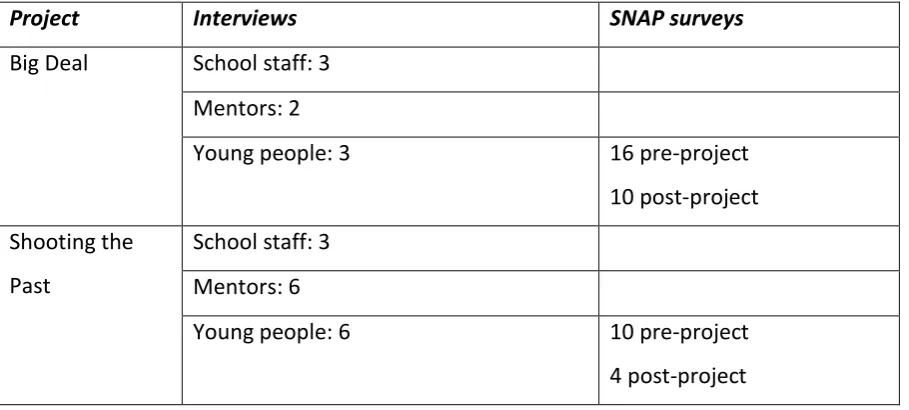
[image:14.595.73.528.283.488.2]analysis. Data collected is presented in Table 1.
Table 1: Data collected for the evaluation, 2017-2018.
Project Interviews SNAP surveys
Big Deal School staff: 3
Mentors: 2
Young people: 3 16 pre-project
10 post-project
Shooting the
Past
School staff: 3
Mentors: 6
Young people: 6 10 pre-project
4 post-project
The previous evaluation of the Big Deal, in 2017, provided evidence that the Big Deal was a
successful offering that was valued by participating young people, business mentors and
school staff, and that:
‘The experience of being involved with the Big Deal, and the impact of the
competition on the young people were positive. Participating in the competition
enhanced skills and confidence in key areas relating to learning, school work, and
12
University of Warwick, working with the Warwick Business School and the business
mentors, all had positive effects on the young people. The young people’s sense of
opportunities open to them in the future , their understanding of university life and
study, and their longer-term aspirations were all enhanced by participation in the Big
Deal.’10
The aim for the evaluation of the Big Deal 2018 was to enhance the picture relating to the
impact on the young people of taking part in the project.
The second, successful, presentation of Shooting the Past, in 2017, incorporated learning
from the initial attempt, in 2016, to run the programme. The 2017 evaluation showed that,
‘the young people, responsible school staff, and student ambassadors all reported positively
on the experience of the project. Highlights for the young people included the residential
Launch Days at the University of Warwick, the visit to a local archive, and the chance to
research, write, film, edit and present a documentary film,’11. As with the Big Deal
evaluation, the aim of the 2018 evaluation of Shooting the Past was to enhance the
understanding of the impact on the young people of taking part in the project.
1.1.3 This evaluation report
This evaluation report is the first of two evaluation reports to be presented for 2017/2018.
This report presents the available data on the two Year 10 UniTracks; projects – the Big Deal
and Shooting the Past. The focus of the reporting is on the impact of both projects, as seen
by young people involved, responsible school staff, and UniTracks’ mentors. The small scale
13
of the sampling provides a snapshot of impact. The second 2017/2018 report will focus on
an overview of the UniTracks’ offer, 2016/2018.
In addition to reporting on the Big Deal and Shooting the Past, the avaialable data,
consisting of engagement reports, for both the Year 11 and Year 12 e-mentoring is also
presented here.
2. The Big Deal
2.1 The survey data
The evaluation created a pre and post Big Deal electronic survey (see Appendix 1 for Word
versions; the electronic, SNAP, version is no longer accessible) to be completed by all the
participants prior to the start of the competition (12/13 January, 2018) and following the
competition day (the planned competition day was for 26 March, 2018, but had to be
re-scheduled by UniTracks to 19 April, 2018). Administration of the survey was the
responsibility of UniTracks, and only 16 of the participants completed the pre-competition
survey. Similarly, UniTracks was responsible for the administration of the post-competition
survey which was delayed, and only 10 participants completed that survey. The intention, as
with pre and post surveys, was to have a data set that comprised of responses from most, if
not all, the participants. That would have enabled the generation of a data set that would
have provided an individualized insight into the impact of taking part in the competition on
the participant group. However, the low response rate meant that only four participants
responded to both the pre and post-competition surveys. This was too low a number to
14 2.2 Survey responses, pre and post-competition
In addition to basic demographic information, the surveys asked 14 questions grouped into
three categories: ‘You and the Big Deal’; ‘Working in a Big Deal Team’; and ‘Being involved in
the Big Deal’. Responses to statements such as, ‘I would like to know more about running a
business’ were made using a five point Likert scale. The pre-competition survey aimed to
establish the respondent’s hopes and expectations of their participation in the competition;
while the post-competition survey aimed to establish the degree to which those hopes and
expectations had been met. The low response rate, particularly for the post-competition
survey, and the fact that only four participants completed both surveys, limited the
usefulness of the survey data. However, some observations are made below.
2.2.1 Running a business
The Big Deal competition provides a well-structured, well established business and
entrepreneurial challenge for participants. The immediate focus of the competition is to
develop a range of business-related skills and knowledge. The pre-competition survey asked
four questions asking respondents would they like to know more about: running a business;
marketing; budgeting for business; and designing products or services for sale. The matched
questions in the post-competition survey asked respondents if they were still interested in
these issues. The pre-competition survey (n = 16) showed that 72% of the responses to the
questions were positive (‘agree’ and ‘totally agree’), with 20% ‘neither agree nor disagree’
(all percentages given here have been rounded to the nearest whole number).
Notwithstanding the low response rate for the post-competition survey (n = 10), the
percentage of positive responses to the questions relating to still being interested in finding
out about business was 60% (both ‘agree’ and ‘totally agree’), and 28% neither agree nor
disagree. Negative responses (‘disagree’ and ‘totally disagree’) were 9% for the
15 2.2.2 Expectations of the competition
Respondents were asked in the pre-competition survey to indicate whether they expected
to have an enjoyable time; whether they intended to put a lot of effort into the
competition; and whether they expected to learn new team working skills; new
communication skills; and new presentation skills. These questions were mirrored in the
post-competition survey. The pre-competition survey showed that 84% of the respondents
had high expectations (‘agree’ or ‘totally agree’) of taking part in the Big Deal in terms of the
effort they would put into the competition, how enjoyable it would be, and the skills that
they would learn. Those who neither ‘agreed nor disagreed’ represented 14% of responses,
with only 3% have a negative response. The post-competition survey suggested that those
expectations had been met, with 86% of respondents agreeing or totally agreeing that they
had put plenty of effort int the competition, had enjoyed themselves, and had learnt new
team-working, communications and presentation skills. Compared with the pre-competition
survey, the negative responses were 10% of responses, with only 4% neither agreeing nor
disagreeing.
2.2.3 Perceptions of the impact of the Big Deal on respondents’ futures
The final group of questions aimed to gain some idea of the respondents’ perceptions of the
impact of taking part in the Big Deal on their future school, and post-school careers. Overall,
55% of the responses to the pre-competition questionnaire were positive (‘agree’ or
‘strongly agree’), with 25% ‘neither agree nor disagree’. Negative responses related only to
the statements about being interested in a business career, and ideas about future
university and career choices. The post-competition survey produced 46% ‘agree’ and
‘strongly agree’ responses, with 14% ‘neither agree nor disagree’, and 46% negative
16 2.2.4 Conclusions
The low response rate, particularly to the post-competition survey, prevented a full pre and
post competition comparison on an individualised basis. However, some general
commentary is possible in relation to the three areas covered by the survey: learning about
business; expectations of the competition; and impact.
Expectations of taking part in the Big Deal competition were high, with 84% of
pre-competition responses being positive. This suggests that the respondents were motivated
and also believed that UniTracks could deliver an exciting and useful project in the Big Deal.
The post-competition responses suggested that those expectations were met, with 86% of
responses being positive. In terms of learning about business, the pre-competition
responses suggested that the young people were positive about business learning (72%),
with 20% of the responses being neutral. The post-competition survey showed a fall in the
positive responses (to 60%), a rise in ‘neither agree nor disagree’ (28%), with 13% negative
response. This may have been a reflection of the limited sample (which was self-selected),
the success of the competition (i.e. the young people felt that they had learnt enough about
business), or some disappointment with the competition. Finally, the impact of taking part
in the Big Deal seems to have been limited, with 46% of responses to the post-competition
survey being negative and 46% positive. It is likely that this reflects the fact that many of the
respondents already have a good idea as to future degree courses and careers.
Overall, it may be correct to say that the respondents had high expectations of the
competition, which were largely fulfilled; that they were a well-motivated group of young
people; and that the impact of taking part was more notable in terms of skills and
17 2.2 The Big Deal interview data
Three young people who took part in the Big Deal were interviewed, along with two
responsible teachers, and two Big Deal student mentors. Previous evaluations have shown
that the Big Deal is an effective model of business education, delivering a range of learning
opportunities12. The primary focus of the 2018 evaluation interviews was, therefore, on
trying to establish the impact of taking part on the young competitors. Each set of
interviews is dealt with below, with the impact focus to the fore in each case.
2.2.1 The young people’s views
Three girls were interviewed, by telephone, separately, during February and March, 2018,
while the Big Deal competition was still in progress. There was a high degree of
commonality in the accounts given by the three interviewees in terms of their aspirations,
and their accounts of the specific impact of the Big Deal (and UniTracks in general).
2.2.1.1 The young people’s aspirations and the impact of visiting Warwick University
All three interviewees were highly motivated and had clear ideas of future university,
subject, and career pathways. These appeared to be longstanding aspirations, and included
the determination to attend research-led universities. For example, interviewee YP/BD3 said
that she wanted to go to UCL, LSE, or Warwick. However, having attended the UniTracks’
Launch Day at Warwick, along with the residential Big Deal launch, all three interviewees
made mention of the impact of those events on them. Visiting Warwick, staying overnight,
and talking to Warwick’s undergraduate Ambassadors all had impact on the young people’s
perception of university and of Warwick as a place to apply to in the future. One of the
interviewees explained:
12 Cullen, Stephen M., (July 2016) Evaluation of the University of Warwick’s outreach programme, UniTracks: The Warwick Young Achievers’ Programme: Report 2: The Big Deal Enterprise Challenge, 2016, CEDAR,
University of Warwick. Cullen, Stephen M., & Thomas, Ruth (July 2017), Evaluation of the University of
18
‘I know myself and my team mates all really liked it [the Big Deal residential launch
at Warwick], and we enjoyed staying in the dorms as well; my mum thought that was
a really nice touch, but it was quite exciting as well, and also the teacher who took us
to the thing actually went to Warwick, so we got there a bit early and she showed us
round and stuff. […] We really liked it, and we really liked the quiz in the evening,
which was quite fun, and there was like a workshop about public speaking, or
something else, and I made friends with people from one school in the Peak District,
and somewhere in Birmingham, and we stayed friends for the whole weekend, so it
was really good.’ (YP/BD2).
Talking about the value an impact of the undergraduate Ambassadors, the interviewee went
on to say, ‘they’re students there [at Warwick], and you could ask them about what they
thought about student life, or any pressures you had about it, and my group found that
really useful,’ (YP/BD2). This view was echoed by one of the other interviewees:
‘I really liked that you got to look around the whole campus, and you had the
students’ perspective of it, so they weren’t all saying positive things. They were
saying this is quite small, but will be improved by the time you come here, if you
come here. So they were doing good. You knew it was the truth that they were
saying, that they weren’t over-exaggerating to make it sound really good.’ (YP/BD3).
2.2.1.2 The impact of the Big Deal on skills acquisition
The three interviewees identified a small number of areas were they felt that they had
learnt, or developed further, important skills. These were team working, public speaking,
19
The respondents said that they already had team-working skills, this was usually built
around pre-existing friendships – ‘the three girls [in the team] are me and two of my best,
closest friends, and the boys are realy close. We’ve been working as a team for so long
because we debate together, so we’re quite confident in each other,’ (YP/BD1).
Nonetheless, there was also a recognition that the Big Deal had brought about improved
team-working skills due to the combination of weekly tasks, and the range of skills needed.
An example was:
‘Everyone says this, but I’ve also learned how to work in a team more co-operatively,
whereas before I wouldn’t have taken charge but I would have done the majority of
the work. Because of the people I’ve been partnered with I’m quite close with most
of them, so I’ve been able to learn how to let them do things as well, and not just to
take charge.’ (YP/BD3)
All three interviewees talked about improved confidence as a result of taking part in the Big
Deal. One of the young people gave an account that linked taking part in the Big Deal with
improved confidence arising from successful team-working, which they appreciated not only
as an immediate benefit, but also in terms of their future life-experience (Box 1).
Box 1: Taking part in the Big Deal – confidence-building, team working and life skills
‘I think it [the Big Deal] just helps me to have a bit more confidence in myself. I’m
quite a confident person, but in the things I do it’s helped me become more
20
more confident. It helps you to prepare to react as a team because we all had
completely different experience, and obviously, when you are older you’re not
going to be working with people exactly like you, and it just helps you to learn
different ways of working with people.’ (YP/BD1).
In addition, individual business-related skill acquisition was mentioned, along with
public-speaking skills. For example, one interviewee noted, ‘I mentioned the public public-speaking thing
[at the launch], which I thought was really good, and a lot about the spreadsheets, and how
you do budgeting, and things like that. I thought that was all useful,’ (YP/BD2).
2.2.2 The teachers’ views
Both of the teachers who were interviewed stressed the same aspects of the Big Deal when
it came to thinking about the impact on the young people of taking part in the competition.
The stress was on the importance of visiting the university campus and the launch being a
residential event. In addition, the interviewees noted the strengthening of the young
people’s ‘soft skills’, such as deadline keeping, and independent work skills. One of the
teachers commented:
‘I think its benefits are in terms of their soft skills and their cultural capital because
some of the students (not necessarily the four that are involved this year) but some
in our school for example have never really left the region, certainly would never
have gone to university and gone onto a campus so even just having been in a
lecture hall and knowing what that is like makes that just a bit more solid concept for
21
challenge are they applicable, probably the independent work skills and having to
complete something without somebody on your back, because our school like quite
a lot of others, is quite hands-on making deadlines met and things like that.’ (T/BD1)
The importance of visiting, and staying at the university was also noted by the other
teacher:
‘That experience was incredibly beneficial, the students gained so much just actually
first of all quite simply being on a campus and having the opportunity to explore a
campus which is very, because we are in the [city] and it’s very, very busy around
here and we do obviously have campuses but what makes Warwick a little bit special
is it is quite a way from the city so first of all just the experience of being on a
campus like that helped motivate them, helped boost them, they were talking about
university, they were having conversations, they are 14 and 15 they were having
conversations about where they’d like to go, whether they’d like to go to a campus
university or not so it was very inspiring.’ (T/BD2)
This interviewee returned to the point later in the interview, stressing the importance to the
young people of the overnight stay, and of ‘being immersed in that environment’.
2.2.3 The mentors’ views
Two mentors were interviewed, separately, in April and early May. Both were
undergraduate student mentors, not Big Deal business mentors13. One of the interviewees
13 The evaluation did not receive business mentor contact details for 2018. These had been supplied in
22
did have some online interaction with Big Deal participants, although ‘there wasn’t a
massive flow of conversation between myself and the students,’ (M/BD2). This mentor went
on to praise the Big Deal for showing the young people ‘a path to university’, and for helping
to build ‘planning skills, even creativity in terms of the ideas that they had to put forwards,
that they had to pitch to the expert,’ (M/BD2). However, the mentors were unable to give
examples of impact.
2.3. The Big Deal 2018, conclusions
Following previous evaluations of the Big Deal competition which had established that it
was a well-functioning project that was popular with those involved, the focus of the 2018
evaluation of the competition was to have been on impact for the young participants.
Difficulties in data collection for the evaluation (see 2.1) in respect of both the online
surveys and the interview data gathering, mean that it is difficult to make firm conclusions.
However, the survey and interview data do suggest that taking part in the Big Deal
competition was both welcomed and useful for the young people. Further, some degree of
triangulation is possible; for example, the survey data regarding the impact on the young
people of taking part on their future plans shows that, post-competition, only 46% ‘agreed’
and ‘strongly agreed’ with the statement that taking part had changed their ideas about
their future, while14% ‘neither agreed nor disagreed’, and 46% gave negative responses. It
was suggested that this was a reflection of the young people’s high levels of motivation and
aspiration. This view was borne out in the interviews with the three UniTracks’ students
who all had clear educational and career aims.
Both the survey data, and the interview data suggest that the young people had high
expectations of the competition, which were largely fulfilled; that they were a
well-motivated group; and that the impact of taking part was more notable in terms of skills and
23
In terms of the experience of taking part in the Big Deal, the highlighted experiences were
visiting the University of Warwick, having an overnight, residential, experience, and being
able to talk to university ungraduates.
3. Shooting the Past
3.1 The survey data
As with the Big Deal competition, the evaluation created a pre and post project electronic
survey (see Appendix 1 for Word versions; the electronic, SNAP, version is no longer
accessible) to be completed by all the participants prior to the start of the competition
(12/13 January, 2018) and following the film showing day (24 March, 2018). Administration
of the survey was the responsibility of UniTracks, and only 10 of the participants completed
the pre-competition survey. Similarly, UniTracks was responsible for the administration of
the post-competition survey which was delayed, and only four participants completed that
survey. As with the Big Deal survey, the intention was to have a data set that comprised of
responses from most, if not all, the participants. That would have enabled the generation of
a data set that would have provided an individualized insight into the impact of taking part
in the competition on the participant group. The low response rate did not enable this, and
the remarks below are very much snapshots.
3.2 Survey responses, pre and post-project
The pre and post-Shooting the Past surveys asked a series of matched questions,
answerable on a five point Likert scale. The questions were grouped into three sections,
relating to interest in film making, film editing, script writing, history, and oral history; nine
questions relating to expectations of Shooting the Past, including skills acquisition and
approach to the project; and five questions relating to future plans and taking part in the
24
be made from the surveys, and the findings below ca only be taken as small snapshots of
the Shooting the Past cohort. Each of the three sections are presented in turn below.
3.2.1 Making a film about local history
The Shooting the Past teams were tasked with making a film about the history of their local
area, using archival and oral history sources. The survey questions focused on the
respondents’ interest in: film making; film editing; script writing; history; and oral history –
the component parts of the Shooting the Past project. Overall, the majority of responses
were positive for three of the five questions, with six ‘agree’ and ‘totally agree’ responses in
relation to film making; seven in relation to film editing; and six relating to history. For the
question asking about interest in script writing, four responded ‘agree’ or ‘totally agree’,
with four ‘disagree’ or ‘totally disagree’, and two ‘neither agree nor disagree’. The final
question of the section, relating to oral history, produced three ‘agree’ or ‘totally agree’;
five ‘neither disagree nor agree’; and two negative responses.
Although the four respondents to the post-Shooting the Past survey also completed the
pre-project survey, it is not possible to say that their responses represent more than just their
perceptions. Nonetheless, the four gave more positive responses to the first section
questions compared to their pre-project responses. All their responses to the matching,
post survey questions remained the same or showed improvement, suggesting that, for
these four young people at least, the experience of Shooting the Past had either made no
difference, or increased their interest in the aspects of film, and history covered in the
25 3.2.2 Expectations of Shooting the Past
The pre-Shooting the Past survey asked seven questions relating to expectations of the
project, and skills acquisition in relation to film, history, and wider skills, such as analytical
skills. With four exceptions all pre-project responses were either positive, with 28% of all
responses being ‘strongly agree’, and 45% of all responses being ‘agree’, with 22% being
‘neither agree nor disagree’. For the four post-survey respondents, their positive
expectations had been met, with no negative responses, and only three ‘neither agree nor
disagree’ responses.
3.2.3 Perceptions of the impact of Shooting the Past on respondents’ futures
The final group of questions aimed to gain some idea of the respondents’ perceptions of the
impact of taking part in Shooting the Past on their future school, and post-school careers.
The majority of the pre-project responses were ‘neither agree nor disagree’, 25, with 13
negative (‘disagree’ or ‘totally disagree’), and 12 positive (‘agree’ or ‘totally agree’). As with
the responses from the Big Deal young people, it is likely that many of them already had
good ideas of their future school and post-school intentions. The four post-Shooting the
Past survey respondents reflected this, with, for example, negative responses from all four
in response to the question concerning a possible change in ideas about their future careers
as a result of taking part in Shooting the Past.
3.2.4 Conclusions
From the limited data available, it appears that the Shooting the Past participants had a
positive experience of the project, were motivated to do well, and remained interested in
26 3.3 The Shooting the Past interview data
Interviews, both by telephone and face-to-face, were carried out with young people taking
part in Shooting the Past, responsible teachers, and student mentors. As with the Big Deal
interviews, the primary focus of the 2018 Shooting the Past interviews was on impact. Six
young people were interviewed – two together by telephone, and four in a face-to-face
group interview. In addition, two responsible teachers, and five student mentors were
interviewed, individually, by telephone. The data from each set of interviews is presented in
turn below.
3.3.1 The young people’s views
3.3.1.1 Skills acquisition
All the interviewees were able to give good accounts of the ways in which taking part in
Shooting the Past had enabled them to acquire and/or improve their skills set, both in
relation to generally applicable skills and to film-specific skills. The young people explained
that they had benefited in terms of team working, confidence building, and working to
deadlines. Examples included:
‘I think what I learnt was that at the start I was really nervous, and didn’t have a lot
of confidence, like I’d never really done anything like that before, so, like, when we
first got started I was, like, you [name of another participant] do it, you hold the
camera. Then by the end I didn’t want to let go of the camera. So, like, it was, yeah, I
think next time, if we were to do it again, I’d be a lot more laid back, feel a lot more
comfortable straight away.’ (YP1)
‘I found it quite a team-building experience, because before I’d never really hung out
27
obviously spent, like, a night together [Shooting the Past residential launch]. It was
just quite nice to get to know the people around me more and how they would deal
with the situation when there’s a bit of pressure as well, and I feel like all of us dealt
with it very swiftly.’ (YP3)
‘I think it helped with deadlines as well. There was a lot of times we didn’t think we’d
finis it because the deadline was really close, but we got through with it, and I think
that will help us with schoolwork and homework and stuff like that.’ (YP2).
One of the young people gave a good account of the process of tackling their project, and
the way in which the archive visit, research, and film editing came together:
‘We went to the [archive name], we went and spent the day out there, getting
pictures at the [name of centre] and the museum. We were gathering quotes,
information, pictures, small clips and stuff, and then we came back and slowly
started editing and seeing what else we wanted – “is this good?”’ (YP1)
3.3.1.2 Impact pf taking part in Shooting the Past on future aspirations
Two of the young people made very clear statements about how taking part in Shooting the
Past had impacted on their aspirations for their futures. One explained that they had
already been interested in career in film or media, and that taking part had strengthened
28
‘Well, I want to go into film because I’ve always desired and been interested by the
concept of making films and the creative outlook that it has, and I really think that
this [Shooting the Past] has helped give me a better outlook on the process that goes
into it and al the many different stages of production, pre-production etc.’ (YP5)
One of the other participants described how the university-led experience of Shooting the
Past – staying at Warwick, meeting staff and students – had impacted on their desire to
attend university:
‘I think it was good for me because, initially I wanted to go to university, and then
after experiencing what it’s like, and how it is like living in a university, and stuff like
that, it made me want to go a lot more.’ (YP4)
3.3.1.4 The young people’s views overall
The young people’s overall experience of taking part in the Shooting the Past project was
nicely summed up by one of them who linked attending Warwick, meeting undergraduates,
team working, developing research skills, socialising and gaining in confidence (Box 2).
Box 2: A young person’s view of multiple benefits from being part of Shooting the
Past
‘I feel like the experience I got from going to the university, talking to other
people, and working as a team, and having, like, to go off and do research and
work together, and also working with the [student] ambassadors as well – they
29
questions. I felt we could socialize with other people there, and I had a lot more
confidence. At the start I hesitated to gain that confidence straight away, but once
I got that university experience and started to work as a team more, I felt it really
helped me back at school as well. Just generally socialising, more confident with
myself and other people.’ (YP2)
3.3.2 The teachers’ views
Two teachers with responsibility for their schools’ Shooting the Past teams were
interviewed, separately, by telephone. The focus of the interviews was on the teachers’
perceptions of the impact on the young people of taking part in Shooting the Past. The
interviewees talked about the benefits of the project in terms of enhanced skills,
experience, and increased enthusiasm for university.
3.3.2.1 Skills
Both the interviewees noted that taking part in Shooting the Past benefited the young
people. In terms of the entire UniTracks scheme, the teachers valued the opportunities to
widen their pupils’ experiences and to enhance subject-specific skills and knowledge
(particularly through the GCSE ‘boot camp’), and more generally applicable skills. This latter
was seen as one of the most valuable aspects of the Shooting the Past experience – ‘the
skills are really organisation, planning, teamwork, communication – I think that all these
things they absolutely had to employ,’ (STP/T1).
3.3.2.2 Wider benefits of taking part in Shooting the Past
Both teachers stressed a wide range of benefits accruing to the young people involved with
UniTracks and Shooting the Past. There was a slight difference in emphasis in terms of the
30
involved with Shooting the Past were already on track to achieve well and attend a Russell
Group university; in this case UniTracks and Shooting the Past was experienced as a
reinforcement of existing plans and attitudes:
‘I think the immediate benefits [of taking part in Shooting the Past] are the greater –
the satisfaction of a job well done, the enjoyment of being in a completely different
environment, the enjoyment of a devil-may-care attitude initially, “we’re away from
our parents” [name] said. It was exciting, and that transfers to the increasing
confidence that will give them the confidence to look beyond the school as a future
for them. They’re very well motivated at school, they want to do well, they’re
perfectly capable of getting very, very good grades at GCSE and A level, and going to
a Russell Group university, and doing very, very well, and I think that this experience
has enhanced the maturity that they already seem to possess, but I think it’s a little
bit hidden, and I think the opportunities that were afforded for them with this whole
process [Shooting the Past], greater contact with older people if you like, other than
parents, because they don’t have older brothers or sisters who have been to
university.’ (StP/T2).
The other interviewee put the Shooting the Past project into the wider context of UniTracks
and the support provided by school. The interviewee argued that UniTracks provided an
additional, important, element of support that was valuable because it provided a bigger
picture for the young people, especially in a school without a Sixth Form:
‘Students get the opportunity to do things they wouldn’t necessarily get to do, so,
especially if students come from disadvantaged backgrounds, they get the revision
boot camp, they get days out of school going to different places […] they go to
31
wouldn’t necessarily get otherwise. It’s given them that extra base of support, they
get a lot of support through school but it gives them that little bit extra, and
especially seeing as they leave [the school] at the end of Year 11, UniTracks provides
that consistency all the way through to the end of college.’ (StP/T1).
3.3.3 The mentors’ views
Shooting the Past provided student mentors and history mentors to support the young
people for the project. Six of the student mentors were interviewed, individually, by
telephone at the end of April and the beginning of May. Five of the student mentors were
undergraduates, one a post-graduate. They came from a variety of courses, and included
law, social sciences, arts, and medical science students. They all had prior experience in
mentoring, either as school students themselves, or since being at university. The role of the
Shooting the Past student mentors was to: attend the launch event; provide online
mentoring during the period of the project; and to attend the film showing day at the end.
The interviews focused on the impact of the launch day, the online mentoring, and the
impact of the entire project, including the film day.
3.3.3.1 The Launch event
The residential launch event was attended by all the interviewees, and they gave very
positive accounts of the residential event. The role of the student mentors was to support
the young people while at the university, to answer their questions, and to ensure that their
stay went well. The student mentors all argued that visiting, and staying overnight, at the
university was important for the young people. A good account of the impact and usefulness
of the residential event was given by one of the mentors who compared the Year 10 pupils
on the Shooting the Past project with a group of Year 12 pupils the mentor had worked with
for another project. The same mentor linked the experience of the launch event with
32 Box 3: The value of the residential launch day
‘I think staying at the university in accommodation really does help them [the
school pupils] feel part of the institution, and that they are working with the
institution. So, I think that was really helpful because we [pupils and student
mentors] could speak about that as well – that they’d really enjoyed it, and they
saw how university was. I know [in the past] I was trying to push Year 12 to start
university, but these people were in Year 10 and they were already interested in
how university life works, asking me questions about it and stuff […] And I think
seeing the university accommodation was really good to prepare them for
university because they got the feeling of how that works. Also, in terms of their
integration into the project, it really did help them because they felt part of the
institution and they didn’t feel shy […] they asked questions like, “how do you
apply? Is it good here? Is it nice here? Do you like it? How often do you go home?’
(StP/M1)
3.3.3.4 Online student mentoring for Shooting the Past
Following the launch event, the Shooting the Past teams were supported by the student
mentors via an online mentoring platform. The role of the student mentors was ‘to ask
them how they were doing, are they troubled by anything, do they need help, are they up to
date with everything. They had to send me a draft, and I had to look through them and
make sure everything made sense […] I was basically there to help them keep up with
everything,’ (StP/M2). The student mentors gave varied reports of the use of the online
mentoring platform. A few of the school pupils made good use of the platform, but there
were other teams which made little, if any, use of it. Failure to use the mentoring platform
was attributed by the mentors to some Shooting the Past pupils being quite confident
33
One of the student mentors provided contrasting experiences with two different Shooting
the Past teams. Mentor 3 was responsible for supporting two teams, one of which failed to
engage at all, while the other, with only two members (two others dropped out shortly after
the project started), did use the mentoring platform effectively. The two young people who
engaged were motivated and used the mentoring platform in a way that the mentor
thought was effective and appropriate:
‘They were pretty good, they didn’t ask too many questions. It was just, like, can we
send you this, can we have your feedback on this, what do you think about what
we’ve done? So they were quite independent in a lot of ways. They didn’t need a lot
of input from me, just sort of more of a point in the right direction, as opposed to,
this is what you need to be doing.’ (StP/M3)
This use of the mentoring platform contrasted with the other team’s failure to engage: ‘on
the platform they never actually got in touch with me […] I never actually heard from them. I
doubt they produced any work, which is a bit worrying,’ (StP/M3). This mentor was not the
only interviewee who experienced limited online contact with their Shooting the Past team.
However, limited online contact did not, in the view of some of the mentors, necessarily
mean that there were problems with the teams, it could also be seen as a sign that the
teams were progressing well and did not need to use the platform. Nonetheless, mentors
were aware of the importance of prompting teams; for example:
‘For the online aspect I think it was a nice, quick, efficient way to get in contact with
the students. The students I feel could have been a bit more communicative more
regularly. They didn’t tend to take the initiative when it came to communication so
the mentor had to constantly go “OK, I would like an update for this” or “a deadline
34
regarding additional things. They seemed pretty OK with what they were doing. I felt
like the website format was great for all the projects, I just feel sometimes the
students [unclear]. I messaged my group when I recognised “oh they’re not
messaging me as much and they’re not giving me any feedback”, so I messaged them
“I would appreciate more feedback” so from that point on they were giving regular
feedback so it was quite like you had to tell them “I would like more feedback. I’m a
bit disappointed that there hasn’t been a lot” and then they would send me “OK”
and then respond and communicate more.’ (StP/M5)
There was, then, a range of experience regarding the use of the online mentoring platform,
and the student mentors gave accounts that illustrated the importance of mentors being
proactive in their role.
3.3.3.5 Mentors’ views of the impact of Shooting the Past
The student mentors provided a number of examples of the impact of Shooting the Past.
These included enhancing the young people’s knowledge and understanding of university;
providing the opportunity for the school pupils to undertake their own piece of research;
the opportunity to learn new film and history-related skills; and boosting skills such as team
working, and communication skills.
The launch event, the fact that the project is embedded in the university, and the nature of
the work and skills associated with the Shooting the Past project all contributed to the
student mentors’ view that there was clear, positive, impact. One mentor summed this up,
35
‘I think the aims [of Shooting the Past] were pretty much fulfilled to be honest. In
terms of university, because of the launch they got to see the university, and also
that kind of influences them as well, so it applies to Warwick, or any other campus
university, because my group really liked that campus environment. In terms of
developing their skills, it was mental, literally. That girl [name], she was absolutely a
star. If her team weren’t speaking that much, she’d encourage them, and getting
that leadership skill. And then, they were working together as a team, and they got
really good work out of it […] And I think communication skills were also developed
during the launch, and everyone was speaking on the e-platform [mentoring] – so I
think it was really good in terms of developing those skills.’ (StP/M1)
Another mentor noted that Shooting the Past offered the young people a chance to engage
in a way that ‘schools don’t necessarily offer’ (StP/M5). One of the mentors also gave a good
example of the direct impact of the project on one particular pupil, while, at the same time,
noting that there could well be longer-term impact that the young people might not
immediately recognise:
‘I think it might not make a massive impact on some people [but] I know a few of the
individuals absolutely loved the filming so afterwards they went away and spoke to I
think it was one of the lecturers that taught the filming aspect over the weekend and
he was going to go off and make a few more films, which is obviously incredible, so
he has found out this is a passion that he loves. I think regarding other people some
of them didn’t enjoy it as much but I think just the fact that they were meeting new
people, working together and they had to present at the end, not present but had to
stand up and they were asked a few questions, kind of informally, but just doing that
I think is invaluable practice that they might not appreciate now but I think in the
36
4. E-mentoring
4.1 E-mentoring engagement data
As noted (see 1.1.2), UniTracks’ planning for 2017/18 incorporated two e-mentoring
schemes to be run in conjunction with the Brightside Trust. One of the schemes was for Year
11 UniTracks’ members who took part in the GCSE Bootcamp, the other was for Year 12
members. Difficulties, including negotiations with the Brightside Trust over the contract for
the two e-mentoring schemes, impacted upon the start dates and running of both schemes.
The intention of the evaluation had been to carry out interviews with the mentors and
mentees at the beginning and the end of the two schemes. However, mentors who were
contacted at the end of April and the first two weeks of May reported that little, if nothing,
had occurred. As a result, it was not possible to collect any of that data. However, UniTracks
was able to provide basic engagement figures for the Year 11 and Year 12 e-mentoring
schemes. These figures were provided on 22 August, 2018, and came from the Brightside
e-platforms. The key elements of those engagement reports are reported here.
4.1.1 E-mentoring engagement for the Year 11 scheme
The e-mentoring engagement figures for Year 11 are broken down into mentor, mentee,
and contact data. There were 10 mentors, and 35 Year 11 UniTracks’ mentees. Reflecting
the initial planning, the mentor/mentee online links were largely created in January (19 on
8th January; eight on the 9th January; and five on 26th January), with a further three created
on 11th August. Contacts in the form of messages from mentors to mentees, and vice versa,
were recorded. The average number of messages sent by the mentors to their mentees was
seven, with all mentees, excepting one, being contacted at least once. One was contacted
five times, and two, seven times each. The average number of messages sent by the
mentees to mentors was one message. Fifteen of the mentees sent no messages at all, and
the highest number of messages from a mentee to a mentor was five messages. In terms of
the last time there was activity on the e-platform, one was in April, 17 in May, five in June,
37 4.1.1 E-mentoring engagement for the Year 12 scheme
There were 12 mentors and 25 mentees registered on the Year 12 e-mentoring scheme. The
online links were created at the end of 2017, and the beginning of 2018, with one created in
November 2017 (along with an earlier contact created in April 2017); seven in February,
2018; 14 in March 2018; one in April; and one in August, 2018. The mentees sent the
mentors an average of four messages, with one mentee sending 13 messages, one sending
nine messages, and another sending eight messages. Seven mentees sent no messages.
Mentors sent an average of eight messages, with one sending 13 messages to one mentee,
another sending 10, one sending nine, and two sending eight. The final contact details
showed last contacts in March, April, May, June and July, with most (nine) taking place
during March.
4.1.1 E-mentoring conclusions
The e-mentoring programme for the Year 11 and 12 UniTracks’ students was planned as a
new addition to the UniTracks’ offer for the school year 2017/18. Although UniTracks and
the Brightside Trust had a long history of working together on widening participation,
difficulties arose concerning these two online mentoring schemes. As a result, the schemes
did not offer year-long mentoring support. Further, after a delayed start, the engagement
figures showed low levels of engagement. Why this was the case is unclear as it was not
possible for the evaluation to gather interview data from mentors or mentees.
5. Conclusions
The 2017/18 UniTracks programme delivered a number of projects for UniTracks members:
the Year 10 UniTracks launch, and the start of ‘We Are UniTracks’; the Big Deal competition;
Shooting the Past; Year 11 GCSE Bootcamp; Year 12 ‘Mini-Research’ project; and the Year 13
38
failed to be presented, or were only partially presented: Year 11 mentoring; Year 12
e-mentoring; and the Year 12 academic assignment.
Previous evaluation work, carried out by CEDAR, had established the generally effective
processes of the Year 10 UniTracks launch; the Big Deal competition; Shooting the Past; the
GCSE Bootcamp, and E-mentoring. The aim of the evaluation for 2017/18 was to sharpen
the focus on establishing the impact of the key UniTracks’ projects, including the Big Deal,
Shooting the Past; and Year 11 and Year 12 e-mentoring. However, difficulties in gathering
data, which had been apparent in previous evaluations of UniTracks, were enhanced this
year. For example, the delivery of pre and post project surveys, which were administered by
UniTracks, was partial and limited. There were also difficulties in recruiting participants for
interview; and the late-running, and limited delivery, of the e-mentoring schemes also
impacted on data collection. As a result, this evaluation report can only provide snapshot
evidence in relation to the impact of UniTracks in 2017/18.
Snapshot impact evidence suggests that:
Big Deal:
Both the survey data, and the interview data suggest that the young people had high
expectations of the competition, which were largely fulfilled; that they were a
well-motivated group; and that the impact of taking part was more notable in terms of
39
In terms of the experience of taking part in the Big Deal, the highlighted experiences
were visiting the University of Warwick, having an overnight, residential, experience,
and being able to talk to university ungraduates.
Shooting the Past:
Shooting the Past participants had a positive experience of the project, were
motivated to do well, and remained interested in the various aspects of
film-making and history covered by Shooting the Past.
Shooting the Past provided additional incentives to already motivated young
people to attend a research-led university.
Shooting the Past had most impact in terms of research project experience, team
working, and confidence-building.
E-mentoring:
Difficulties with the presentation of e-mentoring in 2017/18 prevented any
40
Appendix 1. Surveys.
[ADD CEDAR TREE LOGO AND UNIVERSITY OF WARWICK LOGO AT THE TOP OF THE PAGE]
UniTracks Year 10, Shooting the Past, 2018. First online survey.
About UniTracks
As part of its commitment to widening participation in higher education, the University of Warwick runs a number of schemes designed to support school students in their education. One such scheme is UniTracks, for school students in Years 10 – 13. In order to assess the effectiveness of the scheme, UniTracks is being evaluated by researchers from the Centre for Educational Development, Appraisal and Research (CEDAR), the University of Warwick.
What are you being asked to do?
The evaluation team from CEDAR are collecting the views of the young people involved in UniTracks in order to understand what they think are the strong, and less strong, points of the scheme. We would like you to complete this short, online survey at the start of Shooting the Past, and another survey at the end of Shooting the Past. Your answers will be confidential, and kept by CEDAR on a password protected data base on secure University of Warwick servers. When the material is used to write evaluation reports it will be anonymised. If you have any questions about the survey or the evaluation, contact Dr. Stephen Cullen, CEDAR, University of Warwick, CV4 7AL,
Consent:
Please tick the boxes.
[ADD BOX] I confirm that I have read and understood the above information concerning this survey, and know who to contact to ask any questions.
[ADD BOX] I understand that participation in the survey is voluntary and that I can stop whenever I want to.
[ADD BOX] I agree to participate in the survey.
41 Surname:
Given name:
2. How would you describe your ethnicity:
3. Gender:
4. About you and Shooting the Past. (Please tick one box in each row)
Totally disagree
Disagree Neither agree nor disagree
Agree Totally agree
a) I am interested in film making.
b) I am interested in film editing.
c) I am interested in script writing.
d) I am interested in history.
e) I am interested in oral history.
5. Working in a Shooting the Past team: (Please tick one box in each row)
Thinking about the Shooting the Past project, and working with other students in your school team, do you think that:
Totally disagree
Disagree Neither agree nor disagree