COGNITIVE REPRESENTATION OF CHALLENGING
BEHAVIOUR AMONG STAFF WORKING WITH
ADULTS WITH LEARNING DISABILITIES : AN
EVALUATION OF THE IMPACT OF AN OPEN
LEARNING TRAINING COURSE
Martin Campbell
A Thesis Submitted for the Degree of PhD
at the
University of St Andrews
2004
Full metadata for this item is available in
St Andrews Research Repository
at:
http://research-repository.st-andrews.ac.uk/
Please use this identifier to cite or link to this item:
http://hdl.handle.net/10023/14333
Cognitive Representation of Challenging Behaviour
among Staff Working with Adults with Learning
Disabilities
-An Evaluation of the Impact of an Onen T.earning
Training Course
Martin Campbell
PhD Thesis
ProQuest Number: 10170703
All rights reserved
INFORMATION TO ALL USERS
The quality of this reproduction is dependent upon the quality of the copy submitted.
In the unlikely event that the author did not send a com plete manuscript and there are missing pages, these will be noted. Also, if material had to be removed,
a note will indicate the deletion.
uest
ProQuest 10170703
Published by ProQuest LLO (2017). Copyright of the Dissertation is held by the Author.
All rights reserved.
This work is protected against unauthorized copying under Title 17, United States C ode Microform Edition © ProQuest LLO.
ProQuest LLO.
789 East Eisenhower Parkway P.Q. Box 1346
Declarations
I, Martin Campbell, hereby certify that this thesis, which is approximately 80,000 words in length, has been written by me, that it is a record of work carried out by me and that it has not
been submitted in any previous application for a higher degree. ^
Date,. Signature of candidate..
V
I was admitted as a research student in September 1998 and a candidate for the degree of PhD (Psychology) in September 1998; the higher study for which this is a record ^ s carried out in the University of St Andrews between 1998 and 2004.
Signature of candidate... ^
I hereby certify that the candidate has fulfilled the conditions of the Resolutions and
regulations appropriate for the degree of PhD in the University of St. Andrews and that the candidate is qualified to submit this thesis in application for that degree.
Date..?. .^ . iff Signature of supervisor..
In submitting this thesis to the University of St Andrews I understand that I am giving permission for it to be made available for use in accordance with the regulations of the
University Library for the time being in force, subject to any copyright vested in the work not being affected thereby. I also understand that the title and abstract will be published, and that a copy of the work may be made and supplied to any bona fide library o r f ^ ^ c h worker.
Date. Signature of candidate..
Preface
Contents
Page
Abstract
List of Figures and Tables
List of abbreviations used
General Introduction
Chapter 1 Challenging Behaviour
Background National Trends
Theories and approaches Summary
Chapter 2 Cognitive Representation
Background
Family and sta ff representations Helping behaviour
Quality o f life
Interactions between sta ff and service users Summary 6
1
9 10 12 13 16 20 29 30 3134
35 41 434d
Chapter 3 Staff Training
Cognitive representations o f challenging behaviour and sta ff training
Assessment o f attitudes and rating scales Dimensions o f cognitive representation Summary
Chapter 4 Development of a Questionnaire
Methods Design Participants Panels
Measures and Procedures (Stages 1-9) Results (Stages 1-9)
Summary Discussion 62 63 63 66 70 36 36
Chapter 5 An Evaluation of the Impact of an Open Learning Training Course
Methods Design
Methodological considerations Measures and Procedures Participants Results Discussion 39 39 93 96
764
773
733Chapter 6 Testing vs. Training Effects
Background Methods Design
Measures and Procedures Participants Results Discussion 146 747 747 747 743 150 733 737
Chapter 7 Conclusions
Overview
Cognitive representation o f challenging behaviour among sta ff working with people with learning disabilities
159
766
Interactions 168
Future studies 172
Some issues fo r employers 175 Concluding comments 178
Appendices
1 129 item questionnaire. Examples o f questionnaire items 179 2 Initial question answered by 300 sta ff working with people with 180
challenging behaviour
3 Groups who completed initial question ‘When you think o f 181 challenging behaviour what comes to mind? ’
4 Questionnaire introduction 182 5 Instructions fo r labelling 185 6 Membership o f Panels 186 7 Sample o f training courses fo r sta ff run by School o f 187
Psychology, University o f St Andrews (1992-2002)
8 Questionnaires developed in Chapter 4 188 9 Organisations participating in studies described in Chapter 5 199
and Chapter 6
10 Summary Profile o f Characteristics fo r Participants in Groups 204 1, 2 and 3
11 See separate copies o f training course materials for:
“Approaches to People with Challenging Behaviour ” (2000) University o f St Andrews, ISBN 0953688207
and
“Approaches to Sexual Abuse o f Adults with Learning Disabilities” University o f St Andrews, St Andrews. ISBN
6933633223
Acknowledgements 209
Ethical approval 210
Abstract
This was an investigation into the relationship between quality of care and staff views of, and responses to, challenging behaviour in adults with learning disabilities. Cognitive representations have been identified as a determinant of therapeutic outcomes in a variety of health care settings.
There were two main aims of this study. First, to describe and measure the cognitive representations of challenging behaviour among staff working with adults with learning disabilities and second, to evaluate the effects of training on these views held by staff. Existing literature was reviewed.
A Likert type questionnaire, the Challenging Behaviour Representation Questionnaire (CBRQ) was developed to record staff views. The CBRQ draws on two existing measures: the Illness Perception Questionnaire (IPQ) and the Challenging Behaviour Attributions Scale (CHABA). The CBRQ will give a new method of
evaluating the staff views most often associated with evidence-based practice, helping behaviours and positive outcomes.
Questionnaire items were generated from responses by 300 staff, to assess the applicability of Leventhal’s Self Regulatory model in the context of challenging behaviour. The rating scales in the questionnaire were
theoretically derived, based on the dimensions of Leventhal’s model (identity, cause, consequences, treatment/control, time-line). An ‘emotional-reaction’ dimension was added, suggested by more recent research. The use of the Leventhal model was supported, with the exception of the ‘time line’ component. The questionnaire was tested for reliability and validity then administered before and after training to staff in thi ee different groups.
Targeted training changed cognitive representation of challenging behaviour overall, as measured by the CBRQ, and this change was statistically significantly in two of the five dimensions for the experimental group. Other results suggest that dimensions of cognitive representation are affected in different and complex ways by training. The statistical and the practical significance of the results are discussed in relation to staff training and therapeutic outcomes for people with learning disabilities. A ‘staff-regulatory’ model of cognitive
List of Figures and Tables
Figures Page
L I Number o f staffed learning disabilities beds in Scotland 1980-2003 76
L2 Percentage o f people resettled into types o f accommodation 1998-2002 17 2.1 Leventhal’s Self-Regulation Model 32
2 2 Relation between attribution and affect: Two Models 36 2.3 Model o f attribution 37 4.1 Development o f Questionnaire 64 4.2 Age distribution o f sta ff in Stage 1 70 4.3 Job titles o f staff in Stage 1 71
4.4 Top ten and bottom ten scores (used in discrimination analyses) 76 4.5 Distribution o f total scores fo r test (test, re-test results) 78 4.6 Distribution o f total scores fo r 2"^ test (test, re-test results) 73
4.7 Scatterplots o f test, re-test total scores fo r each dimension andfor 129 items
overall 79
5.1 Test conditions fo r Groups 1, 2 and 3 92
5.2 Gender profile o f participants fo r Groups 1, 2 and 3 105 5.3 Age profile ofparticipants fo r Groups 1, 2 and 3 766
5.4 Job setting profile o f participants fo r Groups 1, 2 and 3 767
5.5 Job title profile o f participants fo r Groups 1, 2 and 3 763
5.6 Length o f service profile ofparticipants fo r Groups 1, 2 and 3 769
5.7 Severity o f challenging behaviour profile ofparticipants fo r Groups 1, 2 and 3 776 3.3 Type o f challenging behaviour profile o f participants fo r Groups 1, 2 and 3 111
3.9 Post school qualifications profile ofparticipants fo r Groups 1, 2 and 3 772
5.10 Summary o f questionnaire scores, including Means and Standard Deviation 774
5.11 Mean scores on Questionnaire (Overall) 115
3.72 Mean scores on Questionnaire (Identity) 776 3.73 Mean scores on Questionnaire (Cause) 777
5.14 Mean scores on Questionnaire (Consequences) 773
5.17 Pre-test I scores plotted against length o f service fo r Groups 1 and 2 141 5.18 Pre- test 1 scores plotted against length o f service fo r Groups 1, 2 and 3 141 6.1 Summary o f test conditions fo r Groups 1 and 1(a) 150 6.2 Mean scores fo r Groups 1 and 1(a)- Individual dimensions 155 7.1 Summary o f findings 169 7.2 Proposed staff-regulatory model o f cognitive representation o f challenging 170
behaviour
Tables Page
4.1 Percentage o f item agreement among observers (Panel 1) fo r each o f the six 73 dimensions, in comparison with items identified by author
4.2 Comparison o f observer consensus on labelling items, as percentages 73 4.3 Comparison o f observer consensus on labelling o f items as Kappa values 74 4.4 Rating o f items as professionally desirable or undesirable (good practice) by 75
Panel 2
4.5 Differences between top scores and bottom scores in discrimination analyses 76 4.6 Number o f items in each dimension before and after discrimination analyses 77 4.7 Reliability Cronbach’s Alpha — Summary fo r inter-item correlations fo r each 77
o f the five dimensions within the questionnaire
4.8 Test, Re-Test Mean scores and correlations on 129 questionnaire items 79 4.9 Principal components analysis — component matrix fo r Identity 81 4.10 Principal components analysis — component matrix fo r Cause 81 4.11 Number o f items in each dimension before and after principal components 82
analysis and reduction by use o f component matrices
4.12 Direction o f scoring fo r questionnaire items 83 4.13 Correlation o f participants * statements and questionnaire scores 86 5.1 Estimated Marginal Means fo r Intercept and Group 121 5.2 Analysis o f variance on each o f the five subscales - Group effect Pre-Test 122
1/Pre-Test 2
5.3 Groups 1 and 3 — comparison o f characteristics 125 5.4 Groups 1 and 2 - comparison o f characteristics 127 5.5 Groups Means and Standard Deviations fo r Pre-Test 2/ Post-Test 1 130 5.6 ANOVA Groups 1, 2 and 3 comparison o f Means fo r Pre-Test2/ Post-Test 1 130 5.7 Analysis o f variance on each o f the five subscales - Group effect Pre-Test 2/ 131
5.8 Groups Means and Standard Deviations fo r Post-Test I / Post-Test 2 133 5.9 ANOVA Repeated Measures Groups I, 2 and 3 Post 1/Post 2 133 5.10 Analysis o f variance on each o f the five subscales - Group effect 134 5.11 Binary Logistics Regression fo r Participants who completed/Did not 136
complete Post-Test 2
6.1 Summary profile o f characteristics; Group 1 and Group 1(a) 151 6.2 Comparison o f other characteristics; Group 1 and Group 1(a) 153 6.3 Summary o f questionnaire scores fo r Groups 1 and 1(a) 154 6.4 Summaiy o f questionnaire scores fo r Groups 1 and 1(a) by number o f pre- 155
tests completed
6.5 Analysis o f variance on each o f the five subscales fo r Group 1 and Group 156
List of abbreviations used
OL Open Learning
APCB Approaches to People with Challenging Behaviour IPQ Illness Perception Questionnaire
General Introduction
Professional care staff have been employed in hospitals but increasingly their work is in community settings and in day care provision for people with learning disabilities and challenging behaviours: aggression towards others, self-injury and stereotype behaviours are commonly reported by these staff. For example, 87% of nursing staff working with people with learning disabilities report threats of or actual physical assault (Reeves 1994). Staff continue to be trained by their employers to reduce and prevent such behaviour s and to improve the quality of life for people with disabilities. While such training is generally well evaluated by care staff, there is debate about whether and how it changes the way staff think about the challenging behaviours, and how they subsequently perform in their job.
By 2005, all learning disability hospitals in Scotland will have closed. These hospitals have been the home of many of the people with learning disabilities who have the most serious challenging behaviour. Health services, social services and other voluntary sector organisations working in community settings are being asked to provide therapeutic services to an increasing number of the people to be resettled. Careful recruitment and the adequate, effective training of staff are essential elements of good services in this demanding area.
For ten years Campbell (1992-2002) has been rumiing training courses for staff hom health services, local authorities and the voluntary sector around Britain and Ireland. The University of St Andrews has offered a range of both accredited and non-credit bearing courses on the subject of challenging behaviour during this time (see Campbell and Cullen 1994, 1996, 1997, 2000; Campbell et al 1998; Campbell and McConkey 2000 and courses listed in Appendix 7). To date, more than 1000 staff have undertaken short course or accredited open learning training. The courses have been positively evaluated in terms of their usefulness and popularity with staff, and the courses have been consistently oversubscribed, serving to
emphasise the importance given to this topic by both services and staff, and the need for research-based help in this area. Further, employers and staff report high levels of satisfaction with the format and content of courses. It is now important to evaluate the impact of such training courses on staff, both in terms of enhancing their knowledge and in altering beliefs relevant to service users with learning disabilities and challenging behaviour. In order to conduct such an evaluation, a methodology for assessing these
interpersonal views was necessary, and the first aim of this thesis was to develop a questionnaire to do this. The second aim was to use this questionnaire to assess changes in cognitive representation due to training.
There is a body of research and practice evidence indicating that cognitive representation of
consequences; and an individual’s own beliefs about what challenging behaviour is, what causes it, and how it can best be treated. Until recently, behaviouial components alone have been used to try to explain staff responses to challenging behaviour, and to design staff training in this area. There is now an acknowledgement however that cognitive factors will also need to be included in any comprehensive model that explains staff performance (Stanley and Standen 2000; Wanless and Jahoda 2002).
The theoretical basis of the present study was work done by Leventhal and others to investigate the mechanisms underlying illness representation and perceptions, and later work by Hastings on staff beliefs about challenging behaviour and its causes (Leventhal et al 1984; Leventhal and Nerenz 1985; Leventhal and Diefenbach 1991; Hastings 1996, 1997a, 1997c). The study combined elements of health psychology, a cognitive-emotional model of attributions and evidence-based behavioural analysis.
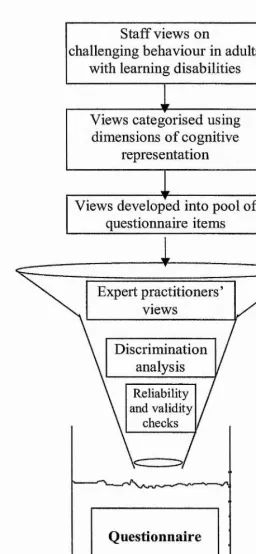
The research was in two parts: the development of a questionnaire to investigate how challenging behaviour is cognitively represented in care staff, and an evaluation of the impact of an open learning training course on these cognitive representations. Chapters 1, 2 and 3 review the literature and the context for this thesis and give the justification for developing the CBRQ. The first part of the research therefore was to develop and test an effective questionnaire to measure cognitive representation of challenging behaviour in staff. This was done by combining findings fiom thi'ee areas of previously umelated applied research, namely:
(a) self regulatory processes;
(b) cognitive representations of challenging behaviour amongst staff; and
(c) the study of staff-client interactions in services to people with learning disabilities
This was an attempt to assess how the concept of challenging behaviour is cognitively represented in care staff working with people with learning disabilities, and whether this cognitive representation follows a consistent, multi-dimensional pattern evidenced in other health psychology studies.
Cognitive Representation of Challenging Behaviour
among Staff Working with Adults with Learning
Disabilities
-An Evaluation of the Impact of an Open Learning
Training Course
CHAPTER 1
CHAPTER 1
Challenging Behaviour
Background
This chapter will review the theoretical background of challenging behaviour and national trends to explain the rationale for the present study.
Challenging behaviour can be defined as:
“culturally abnormal behaviour o f such intensity, frequency or duration that the physical safety o f the person or others is likely to be placed in serious jeopardy, or behaviour that is likely to seriously limit or delay access to and use o f ordinary community facilities” (Emerson et al
1987).
Other criteria have been used to define challenging behaviour generally (e.g. Quereshi 1994) or specific types of challenging behaviour (e.g. Borthwick-Duffy 1994, Kiernan and Quereshi 1993) but Emerson’s description is the most widely accepted, functional definition in services to people with challenging behaviour. It
describes behaviour in terms of its frequency, duration and intensity but also identifies the context of the behaviour as a defining factor. The term ‘challenging behaviour’ has been adopted in services to people with learning disabilities and in the research literature as an improvement on older, more judgemental terms, which describe behaviour as ‘problem’, ‘difficult’, ‘aberrant’, or even ‘rebellious’ or ‘untrustworthy’ (Nihira et al
1975). In a study looking at some of the labels used with people with learning disabilities Hastings and Remington (1993a) found that the term ‘challenging behaviour’ had fewer negative comiotations when compared with other terms in use.
One advantage of the term ‘challenging’ is that the behaviour is seen as a response to the individual’s environment, or the context, rather than as a characteristic of the person (Jones and Eayrs 1993; Emerson
1995). Even so, caution is needed to avoid ‘learning disabilities’ becoming the perceived context, as in the phi'ase ‘a person with learning disabilities and challenging behaviour’ (Hastings and Remington 1993a). In practical terms, challenging behaviour is ultimately defined by its effects on an individual and those around him or her (Emerson 1995, 1999; O’Reilly 1997). In its original definition, it is a ‘challenge’ to the services and people that support the person and organisations that provide services (Blunden and Allen 1987). Any explanation of challenging behaviour must include reference to the physical and social environment where it occurs, and care staff make up an important part of this environment in most cases.
Disability Assessment Schedule (of functional disability) (DAS) (Holmes et al 1982). Overall diagnosis is usually made with reference to the ICD 10 Classification of Mental and Behavioural Disorders (WHO 1992) (Chung et al 1996). The WHO defines challenging behaviour in behavioural terms, usually as a consequence of ‘disease’. This gives a clear but rather limited definition to cover the many types of challenging behaviour. To tiy to explain some of the additional variations of disability, a number of psychological and emotional factors - “control cognitions" - have been posited (e.g. Johnston 1996, 1997). These control cognitions may help to provide a more precise international definition of more complex disabilities, including challenging behaviour. A more recent definition of challenging behaviour comes from the Royal College of Psychiatrists (2001). They propose four “mandatory criteria " to be met in the diagnostic classification of “problem behaviour" in adults with learning disabilities, the behaviour
1. is of sufficient fi equency, severity or clu'onicity as to require clinical assessment/special intervention. 2. has significant negative impact on the person’s quality of life or quality of life of others.
3. is not a direct result of psychiatric disorder or drugs. 4. is present across a range of social and personal settings.
Challenging behaviom is a social or a management problem. It is ‘challenging’ to family carers, relatives, staff or services (Lowe and Felce 1995). There is a range of behaviours with varying degrees of severity identified within the term. Behaviours that have damaging effects on care staff and services are more likely to be classified as ‘challenging’ than behaviours that have negative effects on the people who have those behaviours (Elgie and Hastings 2002). Care staff definitions of challenging behaviour have tended to focus on the fact that the behaviour is difficult for them to manage, rather than on more objective or formal aspects of a definition. Hastings (1997c) reviewed staff beliefs about challenging behaviour and found a difference between staff definitions and more widely accepted definitions. Similarly, the behaviours that carers rate as the “most severe management problems " tend to be the ones that have most impact on others. Physical aggression to others, tlu'owing objects, verbal abuse and screaming were rated highest by carers in one study (Lowe and Felce 1995), while repetitive, stereotyped behaviour may not be viewed by staff as “challenging” (Hastings 1997c). The frequency of these behaviours and the settings in which they occurred were also factors that influenced how they were rated by staff. Clearly this has implications for management of services and for appropriate staff training (Whitaker 2000).
well controlled and sometimes unpredictable may therefore put some people at a double disadvantage in public view. The question of whether high ability or high effort is more closely associated with positive regard by others has not been investigated in people with learning disabilities and serious challenging behaviour.
The main factors influencing public (and care professional) representation can be summarised as: ♦ Characteristics of the person perceived, that is, the natui e of the disability or the behaviour
♦ Characteristics of the ‘perceivers’, for example, background and experience
♦ Cultural images and representations of people with disabilities, including people with challenging
behaviour (Scottish Executive 1999)
The present study will focus primarily on the first and second of these factors, looking at perception, or cognitive representation, of challenging behaviour by different staff. Interactions between all tliree factors have been investigated elsewhere (Sharrock et al 1990). (See section on “Helping Behaviour” in Chapter 2 also for more discussion on this issue).
In Victorian times the views of people with learning disabilities and challenging behaviour were well intentioned but lacking in understanding. For example, the stated aim of the superintendent of the Royal Albert Asylum in Lancaster in 1895 was “to remove the mark o f the brute from the forehead of the idiot”
(Ryan and Thomas 1987). Thankfully there had been a change in the views of the “gatekeepers ” when Felce (1995) wi’ote, onê hundred years later, of the need for “evidenced based” services (Felce et al 1995). There is still considerable debate however, over what ‘evidence’ should be considered when planning services and training staff to work in them.
The case for non-institutional care has been made strongly in a number of studies and government commissioned reports (Beardshaw 1981; Emerson et al 1987; Dept, of Health 1992, 1992a, 1995; Rowley 1993; McGrother et al 1999; Hester Adrian Centre 1999; Felce et al 1998a, 1998b; Scottish Executive 2000). The eventual implementation of the National Health and Community Care Act (1990) in 1993 was a
legislative change that marked the final rejection of two long-held attitudes about people with learning disabilities, dating back to Victorian times - ‘They are all alike ’ and ‘They should all live in institutions. ’ A System 3 poll commissioned by the Scottish Office in 1999 found that 76% of the 1021 adults questioned disagreed with the statement, “People with learning disabilities should be looked after in hospitals ” . Under the new Act people with learning disabilities, including those with challenging behaviours, were to be
National Trends
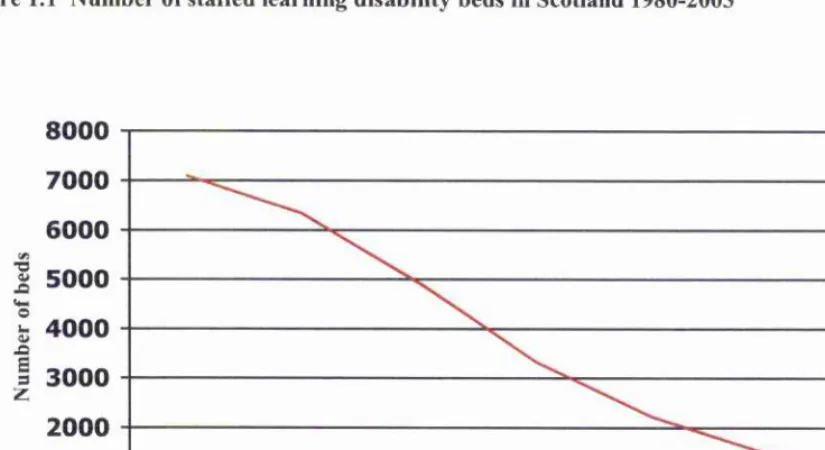
The number of people with a recognised learning disability in the UK increased by 53% over the 35 year period 1960-1995, with a further projected increase of 11% by 2008 (McGrother et al 2001). Although most people with learning disabilities in Scotland and in the UK as a whole have lived in family homes, until recently the specialist resources, including staff, have been based at old style ‘mental handicapVlearning disability hospitals. In Scotland, most adults and all children have now moved out of hospitals and into smaller, community-based provision with varying degrees of support; see Figure 1.1, adapted from Scottish Executive 2004. The adults who remain in hospital care are being prepared for a similar move to the community. The majority of this group are people with serious challenging behaviour and other complex needs. Despite the resettlement of a large number of people from hospitals to a variety of providers, challenging behaviour is still seen as an NHS issue in many areas because of historical associations with specialist hospital care. This has caused some friction between agencies because of a difference of views on whether challenging behaviour is a health need or a social need. In Scotland all long stay hospitals for people with learning disabilities will close by 2005 (Stalker and Hunter 1999, 1999a; Scottish Executive 2000; NHS Scotland 2004).
Figure 1.1 Number of staffed learning disability beds in Scotland 1980-2003
■2
J3
o
u0^
.Q
s
3 z
8000
7000
6000
5000
4000
3000
2000
1000
0
1980
1985
1990
1995
2000
2002
2003
[image:18.612.62.475.485.710.2]Note that the number of people with learning disabilities in long stay care differs slightly from the number of
“staffed learning disability beds This disparity arises from the different definitions used by health authorities for ‘assessment/treatment’ beds, ‘longer stay’ beds vs. ‘long stay’ beds, ‘forensic’ beds and NHS ‘continuing care’ beds. The most recent figures (2003) show 652 people in Scotland still in long term hospital care, for whom:
• 268 have already had new services commissioned
• 109 are in the process of having new services commissioned • 275 are still awaiting new services to be commissioned
The numbers given above do not include learning disabled patients classified as ‘mentally disordered offenders’ and currently cared for at the State Hospital (Scottish Executive 2004).
The new services commissioned include in a remarkable diversity of residential provision for adults with learning disabilities in Scotland. Figure 1.2 relates to a total number of 1319 people discharged between 1998- 2002. A wide range of agencies, including the NHS, local authorities and private and voluntary sectors now manage these community-based services (Scottish Executive 2004).
Figure 1.2 Percentage of people resettled into types of accommodation 1998-2002
30
1998
(129)
1999
(176)
(214)
2000
2001
(226)
(574)
2002
■ SINGLE TENANCY
□ 2 - 4 SHARING
HGROUP HOMES FOR 4 OR MORE
□ NURSING HOMES
Year
[image:19.613.61.507.433.709.2]There has been a gr owth in the number of small group homes for people with learning disabilities in Scotland, with the average size of care homes being halved to nine places over a ten-year period, between 1986-1996. In
1996 over 70 per cent of residential care homes for people with learning disabilities had fewer than ten beds compared with just 57 per cent in 1991.
Whilst these patterns and the move to community have had many positive aspects, there is a concern among professionals and the general public that existing services will have difficulty supporting adults with the most serious challenging behaviours in social care, community settings (Department of Health 1992; Emerson et al 1987; Emerson and Hatton 1994; Emerson et al 2000; Kiernan 1993; Allen 1999; Emerson et al
1992, 1998; Stalker and Hunter 1999). For example, the belief that relocation in itself would lead to a significant reduction in challenging behaviour and a significant increase in community participation for most people has not generally been supported (Emerson and Hatton 1994). In a study of 100 people with learning disabilities and challenging behaviour in Scotland, done over a period of 26 years between 1975-2001, Thompson and Reid (2002) found that, “Behavioural symptomology is remarkably persistent”. Most of the behaviours measured, using psychiatrist and carer ratings, changed little and stereotypy, overactivity and
“emotional abnormalities” were especially persistent. Similarly, empirical studies of people moving from hospital to community services in England and Wales report little change in the severity of challenging behaviour (Donnelly et al 1994; Knapp et al 1992; Wing 1989). This has implications for the success of the policy of community care and the integration of people back into their local communities.
The proportion of people with learning disabilities in Scotland is estimated at 2% for those with mild or moderate learning disabilities and 0.3-0.4% for people with severe or profound disabilities. (Scottish Executive 2000). These figures are based on other regional and national studies of prevalence, rather than any specific demographic study of the Scottish population. For example, in a review of 43 papers looking at the prevalence of learning disabilities across the world, figures varied from 0.2- 8.5%. This review produced an average prevalence of 3.4% for mild learning disabilities and 0.38% for more severe learning disabilities. (Roeleveld et al 1997).
The prevalence of challenging behaviour in people with learning disabilities has been estimated at somewhere between 12-20% in different international studies, with more challenging behaviour in men and boys, (DiTerlizzi et al 1999) and in people with more severe disabilities, including sensory and
communication difficulties. Challenging behaviour decreases with age, although it does present a major challenge to services when it results from dementia. The figures are partly dependent on the definition of challenging behaviour used (Emerson et al 1997; Emerson 1998), with higher prevalence reported when broader definitions are used (O’Brien 2003). Thi'ee UK studies in single districts with clearly defined
the percentage of people with learning disabilities who also had challenging behaviour (Qureshi and Alborz 1992; Emerson and Bromley 1995; Emerson et al 2001). In Scotland, as in the rest of the UK, the number of people with the most severe disabilities and challenging behaviour is increasing (McGrother et al 2001).
Taking the overall prevalence of learning disability at 0.45-0.5%, (Emerson 1998; Emerson et al 1997; Health Evidence Bulletins Wales 2001; National Electronic Library for Health 2003) this research would suggest that there are between 450-650 people per 1,000,000 population with learning disabilities who are likely to display challenging behaviour of some kind. Of this number, between 40-60% (i.e. between 150 and 350 people) are likely to show severe behavioural problems, including offending behaviours. (Emerson 1995, 1999, 2001; Emerson and Bromley 1995; Emerson et al 1997; Borthwick-Duffy 1994; Department of Health 1992; Jacobson 1982; Chung et al 1996; Kiernan 1993; Simpson and Hogg, 2001, 2001a). A defining characteristic of “offending behaviour” here is that the perpetrator is aware that what he or she is doing is illegal or socially sanctioned (Clare and Murphy 1998). One of the first major reports in this area, by Professor Jim Mansell estimated 200 adults with a learning disability per 1,000,000 of the whole population would “present a significant challenge” (Department of Health 1992),
Studies of learning disabled populations have sought to identify the most common forms of challenging behaviour. Kicking, pinching, scratching, pulling hair, biting, head butting, use of weapons, choking and tlirottling have all been reported as challenging behaviours in a single health authority (Harris
1993; Emerson 1995). Physical aggression, self-injury and stereotypy feature in most studies, and are the most common ‘categories’ or topogiapliies of challenging behaviour (Hastings et al 1997). The most
frequently reported behaviours are not premeditated or sophisticated; for example “grab, punch and pull” and “hit with open hand” are reported in one recent study of referrals to a community team (McDonnell 2002). More unusual behaviours have also been reported. For example, Chung et al 1996 listed “hyperactivity and irritability ” as the most common challenging behaviours in a survey of one health district. The most common functions (as opposed to forms^ of challenging behaviour, identified in a study of 70 people with learning disabilities, (Emerson and Bromley 1995) were self stimulation (for self injurious behaviours, destructive behaviours and “other” challenging behaviours), and getting the attention of carers (by aggressive
behaviours). It was not possible however, to establish consistent relationships in the data between the form of behaviours (aggression, destructive behaviours for example) and their respective functions. Such
form/function relationships would give important clues in proactive treatment of behaviour and in studying what staff perceive to be the function of behaviours, i.e. cognitive representations of cause and
For the majority of challenging behaviours the behaviours of other people are the main antecedents and consequences. The role of the main professional caregivers for people with serious challenging behaviour is therefore a crucial determinant in the overall success of services in reducing and preventing challenging behaviour. Consequently, the cognitive processes and professional practice of those staff have been
investigated, with a view to targeted training interventions to improve success. The different approaches and interventions taken by services and by individual staff can reveal much about how challenging behaviour is cognitively represented. The next section will briefly review some of these approaches.
Theories and approaches
“It should be our job as ethical and evidence-based practitioners to ensure that vulnerable people and their carers are guaranteed access to things we know work” (Emerson 2000).
There is a large range of approaches to the management and treatment of challenging behaviours. Any claims of efficacy have to be judged by an evidence base of research as well as ethical and practical considerations (Emerson 1995, 2001). What follows is a brief review only, looking at the growing influence of cognitive approaches and cognitive representations in particular in therapeutic approaches.
It is increasingly aclaiowledged that a combination of behavioural and cognitive factors are needed to explain fully staff performance in relation to the treatment of people with learning disabilities and challenging behaviour (Stanley and Standen 2000; Wanless and Jahoda 2002). A comprehensive model is still some way off, but there have been some successes in practical applications of theory. Application of social cognition theories to clinical settings, including the study of people with challenging behaviour and the staff who work with them, is a relatively recent development, although the study of how cognitive representations may predict some emotional reactions and behaviour has a long history (Jones et al 1972; Weiner 1980, 1985; Skelton and Croyle 1991; Petty et al 1997; Jones et al 1987a). There has been some integration of different approaches to challenging behaviour over the past 30 years, but some basic divisions still remain.
A ‘pathological’ view of challenging behaviour is given more space and discussed in more depth than other approaches in the brief review that follows for two reasons. First, use of medication remains the most widespread approach to people with serious challenging behaviom- in Scotland and elsewhere. Second, a pathological approach exemplifies how cognitive representation and quality of outcomes may be closely related.
Measures to prevent challenging behaviour and interventions to manage and treat it are varied in range and in effect. Approaches based on Applied Behavioural Analysis (ABA) have the strongest evidence base in the research to date (e.g. Journal of Applied Behavior Analysis 1968-present, Journal of the Experimental Analysis of Behavior 1958- present). This evidence-based practice is not universally accepted or practised in sei-vices however, and a ‘pathological’ view of challenging behaviom’ persists in many places. ‘Pathological’ approaches to the treatment of challenging behaviour see the behaviour as something to be removed;
'‘focusing on the elimination o f [behaviour] through a variety o f means ... Such approaches often consider the problem in terms of a pathology which, regardless o f how it was established, or developed, or is maintained, is to be eliminated” (Goldiamond, 1974).
As long ago as 1957 B.F.Sldnner emphasised that behaviours must be subject to a “historical and contextual analysis ” in order to understand them fully (Skinner 1957). This differed fundamentally from earlier approaches, and indeed some modern day approaches, which attempt to 'treat' the behaviour on Limited information. An analogy here might be what happens if you turn up at the Accident and Emergency
Department of your local hospital with a broken arm. You have it treated and repaired, but it is not strictly necessary for the doctor to know how you broke it. The assumption here is that the conditions under which you broke your arm will not regularly recur. It is very difficult, if not impossible, to treat challenging behaviour in this way, partly because it is rarely a 'pathological' condition, like a broken arm, and partly because the more information that is available, the more chance there is of finding out why the behaviour is happening. Ball and Bush (1998) have formalised the Clinical Practice Guidelines for interventions and Cullen (1999) identifies the factors that must be taken into account:
“Challenging behaviour is a function o f the interaction between the person (involving their physiological, emotional and cognitive state as well as their public behaviour) and their current environment (which includes the physical setting and other persons). This means that successful and enduring therapeutic interventions will be those that avoid addressing only the specific problem behaviour” (Cullen 1999).
behaviour. The constructional approach is the basis of many non-aversive procedures for working with people with challenging behaviom (e.g. Meyer and Evans 1989; Axelrod 1987; Donnellan et al 1988). It is not a set of procedures but a framework for looking at how specific procedures can be used singly or together to teach new or alternative skills and improve the person’s life. A simple example is “functional equivalence training” . Typically, this is teaching an alternative behaviour which results in the same reinforcer for the person and has been used to replace challenging behaviours with more socially acceptable ones (LaVigna and Donnellan 1986).
It is generally accepted among psychologists and other behavioural specialists working in an evidence- based framework that challenging behaviour must be viewed and treated with regard to the interactions between staff, service users and their environment (SHAS 1998, 2003; Emerson et al 1987; Dept, of Health
1998; Cullen 1992) and include elements of programme design, teaching skills, building social support and effective staff training. However there is limited evidence that non-pathological, constructional approaches such as these are accepted or practised by the majority of direct care staff (Foxx 1996; Cullen 1987; Mansell 1995; Reid and Whitman 1983; Hogg and Mittler 1987; Stoltz 1981; Edelstein and Glenwick2001; Whitaker 2000a).
A pathological view of challenging behaviour still persists in many care settings. This is evidenced by the never-ending search for instant or ‘magic bullet’ training solutions amongst services, the use of medication as a first-line tieatment and the demand for reactive training by staff (Hogg and Mittler 1987; Foxx 1996; Cullen 1996, 1988). Only occasionally are trainers asked to provide an intervention that will change staff attitudes. Fuither evidence comes from the increased numbers of cases of abuse in managed services that have come to light in the past 20 years. Obviously not all abuse is related to challenging behaviours, but staff have used a frightening range of abusive methods in attempting to stop challenging behaviour and to coerce people with learning disabilities to behave in what they see as more ‘appropriate’ ways (e.g. see Beardshaw 1981 ; L’Institut Roeher 1995; Williams 1993, 1995; Harris and Craft 1994; Sobsey 1994; Ridout 1993; Furey
1989). The author has been involved in reviewing health services for people with learning disabilities in Scotland between 1994-2004 (Scottish Health Advisory Service 1998, 2003). Dur ing that time a number of cases of inappropriate, ill-advised and unlawful approaches to challenging behaviour have been investigated.
The important point here is that if many direct care staff do have a pathological view of challenging behaviour, then the cognitive representations associated with this view are likely to differ from those of an evidence based, constructional approach. Similarly, it should be possible to detect these differences, using empirical tools.
The introduction of Tion-pathological’ models is made more difficult by the premise of the pathology
of learning disability. Many services, including those now in the coimnunity, are psychiatry-led, both in management and in ethos. For people with serious challenging behaviour, psychopharmacology is the main treatment option in most services (Branford 1994; Kiernan et al 1995; Anderson and Reeves 1991; Singh et al
1992). A distinction is made here between treatment and management of challenging behaviour, although this distinction is often blurred in the use of interventions (Emerson et al 2000). In a study of residential settings antipsychotic medication was used with 49% of residents who had challenging behaviour; physical restraint was used with 44%, and sedation with 35% (Emerson et al 2000).
Most reviews of the learning disability literatui e on interventions to treat challenging behaviour and reduce it in the long term suggest that use of medication is among the least effective interventions (Baumeister et al 1998; Brylewski and Duggan 1999; Didden et al 1997; May et al. 1995; Ahmed et al 2000; Branford
1994, 1996). An early review of 180 studies by Sprague and Werry (1971) concluded that no real conclusion could be di'awn about whether challenging behaviour had been reduced by psychotropic di'ugs. More recently, one systematic review by Biylewski and Allen (1999) did not find any reliable research evidence to support the use of antipsychotic diugs in the treatment of challenging behaviour (Emerson 2000). Similarly Brylewski and Duggan (1999) found no good evidence that antipsychotic medication helped in the management of challenging behaviour, and Verhoeven and Tunier (1999) have gone so far as to say of antipsychotics:
“Most probably, their presumed efficacy is restricted to suppressing behaviour in general ”
Large scale studies of prescribing typically report between 20-45% across hospitals, hostels and group homes (Branford 1994; Harlow et al 1990). It has been estimated that between 20-50% of people with learning disabilities are prescribed psychotropic medication (Robertson et al 2000). The reason for its use is often unclear and often it is used in the management of problems for which there is little reliable evidence of effectiveness (Stolker et al 2001, Stolker et al 2002).
It is important here to differentiate clearly between people with learning disabilities who also have an identifiable physical or mental illness (e.g. gastro-oesophageal reflux, depression, bipolar disorders,
“In the main medication use was consistent with known or presumptive indications for the respective drug groups, although unestablished applications were also observed”
(Aman 1995).
It is the “unestablished applications ” that are the main issue here. There is an absence of a strong evidence base, rather than conclusive evidence on the ineffectiveness of di ug regimes to treat and manage challenging behaviour. In defence of psychopharmacology there is some evidence that antipsychotic medication helps to manage general or specific challenging behaviour. For example Aman (1991) and Lewis et al (1995) give support for drug use to reduce stereotypical behavioui s, Natarajan et al (1997) present some evidence for the efficacy of psychotropic medication to reduce challenging behaviours generally. There is specific support for use of fenfluramine to “enhance social relatedness, lessen overactivity and improve attention span ” in childien with autistic spectrum disorder (Aman and Kern 1989) and other challenging behaviour in children and adults with autistic spectrmn disorder (Hellings et al 1996; Perry et al 1996; McDougle et al 1996; Cohen et al 1998). Thompson et al (1994), Sandman and Matrick (1995, 1997) and Crews et al (1999) all report on studies to reduce self-injury by psychotropic medication. Controlled trials with risperidone have shown tliat it can be used to successfully reduce aggression (Buitelaar et al 2001) “disruptive” (Aman et al 2002) and
“aberrant” (Zarcone et al 2001) behaviour. Aman (1993) comprehensively reviews the empirical literature in this area and reports on the success of some drugs (e.g. thioridazine, lithium carbonate and opiate antagonists). However Aman does strike a note of caution and emphasises the need for further research in this area.
(Thioridazine use has now largely been bamied in the UK). In summary, there are not enough convincing studies to justify the current level of medication usage in services, but neither is there enough evidence at present that a service dependency on psychopharmacology does widespread and consistent harm to people with learning disabilities and challenging behaviours.
Cullen (1991) reported that one reason that medication continues to be commonly prescribed, in the absence of other, more constructional strategies may be because staff can be seen to be responding to challenging behaviour “in a professionally unique way ”. Administering medication, and especially emergency medication, leads medical staff, including nurses, to feel that they are putting their professional training to good use. Cullen supports this assertion with reference to the fact that it is “outward directed”
challenging behaviour- for example aggression - which is usually the subject of medication, rather than other forms of challenging behaviour, such as extreme withdi awal (Kiernan et al 1995).
So what are the implications of this evidence for the present study? It is well established that the way in which staff cognitively represent challenging behaviour is a major determinant of their reactions to it (e.g. Hastings 1994, 1996a, 1997b, 1997c; Hastings and Brown 2002). In the context of the present study, staff
(85%) in one study into the “caregivers ’perceptions o f psychotropic medication ’’ expressed dissatisfaction with their training in the use of drugs in residential settings for people with learning disabilities and
challenging behaviour. However they continued to use the medication. The principal conclusion of the same study (Aman et al 1987) was that there was a need for more education on the use of a variety of social, pharmacological and behavioural issues, as they relate to medication use.
The main concerns of those opposed to the popularity of drug regimes include the relatively high rates of prescribing, polypharmacy (combinations of di ugs, which may have been built up over a number of years), and the inconsistency of medication reviews. These concerns, combined with the absence of data showing the long-term effectiveness of drugs ah eady in use in changing behaviours, have led to some professional tensions between psychiatrists and other professionals, questioning the quality of healthcare received by people with learning disabilities (e.g. Lewis et al 2002). The pattern of prescribing nationally also shows some
geographical variations. These differences may be as a result of different psychiatrists having different views on the efficacy of certain medication (Kiernan et al 1995). Regarding the amount of di ugs prescribed, there is more di'ug usage in hospitals, less in community based accommodation, and least in family homes (Clarke et al 1990; Kiernan et al 1995; Cullen 1999). The debate about the use of diugs to control and treat challenging behaviour' is on-going and a full review is beyond the scope of this study. Until such time as sufficient empirical evidence exists there have been calls not to throw the baby out with the bathwater (Aman and Singh
1986a). The establishment of international bodies to agree on the best practices and clinical effectiveness may bring some resolution (Reiss and Aman 1997).
In the context of the present study ‘pathological’ approaches provide an example of how staff cognitive representation of challenging behaviour and therapeutic outcomes may be related. The dimensions of cognitive representation proposed in this thesis are based on a model by Leventhal, later developed by Weinman - identity, cause, consequences, time line/duration, treatment/control and possibly emotional reaction ( Leventhal et al 1984; Leventhal et al 1992. Weinman et al 1996). It is possible to see how these dimensions may operate individually or in combination. To take just a few possible examples, the ‘identity’ component is how staff define or classify challenging behaviour, and in a pathological approach the
rationalise their behaviour? This may be dependent on other factors; such as how much influence individual staff have over which approaches are adopted and other factors in the working environment. Conflicts
between service ideologies, personal beliefs and therapeutic approaches have been identified as one reason for the failure of services to provide appropriate or adequate behaviour support to people with learning disabilities (Albin et al 1996; Hastings and Remington 1995b; Emerson et al 1994; McBrien and Candy 1998; Morgan and Hastings 1998).
Constructional approaches
Do staff show characteristic cognitive representations associated with constructional approaches that can be measured? This is a key research question for the present study and will be looked at in some depth in Chapter 2. A brief review of some constructional approaches is presented here as an introduction to the topic.
Some of the more constructional approaches have yet to make an impact on learning disability services. For example, Stone (1991) points out that health psychology will “flourish ” only where health research and services are not dominated by medicine and psychiatry. There are a number of other approaches which can be described as ‘constructional’, although they lack a strong evidence base to support their claims for effectiveness as yet, e.g. Gentle Teaching, Intensive Interaction and use of Snoezelen (Emerson 2001). One set of treatment strategies that has been increasingly influential is collectively termed ‘Cognitive- Behavioural’ approaches. A few examples of these will be presented.
and Lindsay 1997; Rossiter et al 1998; Jahoda et al 2001). Treatment methods adopting a cognitive
framework have also been gradually incorporated into more established behavioural methods of intervention to good effect (Jahoda and Espie 2003; Taylor 2002). Jones et al (1997) have suggested that cognitive approaches and strictly behavioural approaches are not necessarily contradictory or mutually exclusive. Dagnan and Chadwick (1997) have described several methods for assessing suitability for Cognitive Behaviour Therapy and screening tools are available.
Despite reported successes and a growing demand for CBT, it is not widely available in mainstream challenging behaviour services, tending to be restricted to use in seiwices to people with mental health and forensic/offending behaviour. Kroese (1997) has speculated that the reasons for this include a therapeutic view that people with learning disabilities may not be able to report reliably on their own cognitions or overcome any deficits that they have in self-regulation. Bender (1993) has called this resistance to using cognitive approaches “therapeutic disdain In this view, people with learning disabilities are valued less than other potential recipients of treatment. How this ‘disdain’ behaviour of therapists may arise from a cognitive representation of learning disability is also of interest here.
The influence of so-called “therapeutic disdain ” has also been implicated in the psychotherapeutic approaches (Waitman and Conboy-Hill 1992; Bender 1993). Very few studies have investigated the efficacy of psychotherapeutic counselling with people with learning disabilities who also have challenging behaviour. Prout and Nowak-Drabik (2003) reviewed research over a 30-year period and asked an expert consensus panel to judge outcomes and effectiveness. Their evaluation concluded that “moderate” effectiveness and a
“moderate ” degree of outcome change had been achieved, and that psychotherapeutic interventions should be considered as part of overall treatment plans. The studies evaluated were not specific to challenging
behaviour, but included a wide range of psychological and behavioural difficulties. Therapeutic disdain may deny some people with learning disabilities access to services. In a similar way diagnostic ‘overshadowing’ can lead to other health needs, including challenging behaviour, being put down to a person’s learning disability and not treated (Patel et al 1993; NHS Scotland 2004).
Because of the diversity of units and of teams it is difficult to make any valid comment on their effectiveness, relative to each other or in general.
“Service quality would be assured with greater certainty if what was special about specialist services could be distilled” (Felce al 1998b).
Emerson et al (1993) and Lowe et al (1996) have looked at the differences made by specialist teams, compared with services without specialist input. They concluded that specialist provision per se “did not make a
significant impact on behaviour or quality of life” ÇLowq et al 1996). However other organisational and
individual staff factors did have an influence on how effective specialist teams were.
The most effective, evidence-based approaches to working with people with challenging behaviour remain those that are based on applied behaviouial analysis, and this is supported by a large and consistent body of research literature (e.g. Stoltz 1981; Page et al 1982; Foxx 1996; Allen et al 1997; Cullen 1999; Whitaker 2000, 2002). These approaches are ethically and practically acceptable and result in a measurable decrease in the challenging behaviour (Emerson 2001). The evidence base for applied behaviour analysis has a 40-year history and interventions are rigorously tested for effectiveness in peer-reviewed journals.
Translating the research and evidence base into practice is a complex process however. Jahoda et al (2001) strikes a note of caution, reviewing the literature and noting that behavioural approaches using functional analysis show more success in group and institutional settings but less when applied in community and family settings. A few examples of the applied behavioural analysis approach will be given here, to give an idea of how it has been used.
Challenging behaviour often has a communicative function; that is, the person engages in challenging behaviour as a way of communicating their needs or wants to others. Self-injuiy or running out of a room might be two ways for someone to communicate that they want to stop or leave a particular activity.
Functional analysis of behaviour has been used to investigate what a person may be trying to communicate by their behaviour, and to devise a communication based intervention (Carr et al 1994). A second example, the approach know as “active support training” (Jones et al 1999, 2001a) for direct care staff has been shown to increase the likelihood that staff will support resident activities in community housing (Jones et al 2001; Smith et al 2002) for all but those with the most severe challenging behaviour (Adaptive Behavior Scale scores over
180). The results of the Smith et al study on over 100 adults with learning disabilities supports previous work on the effectiveness of active support training (Jones et al 2001, Felce et al 2000; Jones et al 2001a; Felce et al 2002; Mansell et al 2002). Finally LaVigna et al (2002) have made similar claims for the efficacy of their own person-centred, analytic support services. A number of behavioural training packages for cliildi en with
Training (ACT) (Stevens et al 1999), BATPAC (Wheldall and Merrett 1987), functional communication training (Derby et al 1997). Some of these approaches will be discussed again in Chapter 3, in the context of staff training.
Summary
In summary, there are a variety of approaches used in learning disability services. For the purposes of this study these approaches have been divided into two types; pathological and constructional.
Treatments that concentrate only on control or elimination of the problem may be valid and effective in the case of some physical illnesses, but for challenging behaviour a purely pathological or ‘eliminative’ approach is neither appropriate nor effective in the long term. One additional problem with this approach is that focussing only on removing a behaviour often leaves a behavioural ‘vacuum’, particularly in cases where that behaviour has been occmring frequently, over a long period of time. This vacuum is then often filled by an alternative or displacement behaviour, which can be just as challenging as the behaviours which have been eliminated, rather than more useful, adaptive behaviours (Goldiamond 1974; Delprato 1981). Although the research focus may have moved away from a pathological view of challenging behaviour, it remains to be seen whether this change of emphasis has been reflected in the professional practice of staff in direct care.
Constructional approaches or alternatives put more emphasis on staff responses to the challenging behaviour, rather than the behaviour itself, and this is relevant in the present study. Challenging behaviour is most often a function of the settings in which the person finds themselves, and the interactions with others and their reaction to challenging behaviour. One notable exception to this may be some very specific forms of self-injurious behaviour, which may be established through a variety of means and maintained by
physiological (or internal) events (Oliver et al 1996; Kahng et al 2002).
Definitions and different approaches to the treatment of challenging behaviour may both be flinctions of the cognitive representations held by staff. It is essential that staff working with people who have
challenging behaviour in learning disability services are appropriately aware, and appropriately and effectively trained. National trends suggest that working with people with challenging behaviour will become an
Cognitive Representation of Challenging Behaviour
among Staff Working with Adults with Learning
Disabilities
-An Evaluation of the Impact of an Open Learning
Training Course
CHAPTER 2
CHAPTER 2
Cognitive Representations
Background
This chapter will explain how attribution theory and cognitive representation relate to the quality of care experienced by people with learning disabilities and challenging behaviour. To do this it is necessary to look first at some of the research in health psychology. The chapter begins by reviewing the research on how people cognitively represent their illness and then moves onto what is known about the cognitive
representation of illness by others, including family carers and staff. Leventhal and his colleagues have proposed and tested a number of hypotheses about the nature of illness representation and its role in self regulatory behaviour. In simple terms, they have studied how people view their illness, why they view the illness the way they do; and how their views may influence their behaviour and illness prevention and recovery (Maes et al 1996; Abraham and Sheeran 1997; Diefenbach and Leventhal 1996; Leventhal and Diefenbach 1996; Leventhal et al 1997; Brownlee et al 2000). The influence of cognitive representations on the prognosis of illness and, by extension, challenging behaviour is of special interest to the present study.
A number of models and explanations have also been suggested for how people conceptualise their illness and the value of their ti’eatment. For example, a medical model, a health belief model, the theory of reasoned action, the theory of plaimed action and a “common sense” model have all been proposed (Leventhal
1992; Diefenbach and Leventhal 1996; Horne et al 1998). The idea of “self-regulation" is central to most of these models, with the person’s goals for coping set according to how they see theii* illness and treatment. The
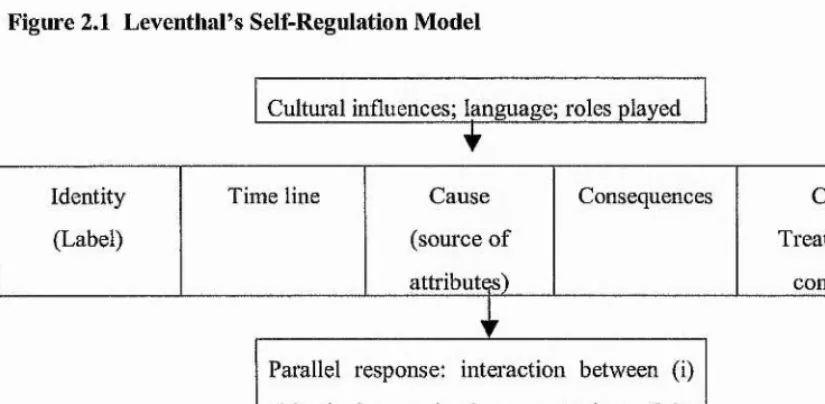
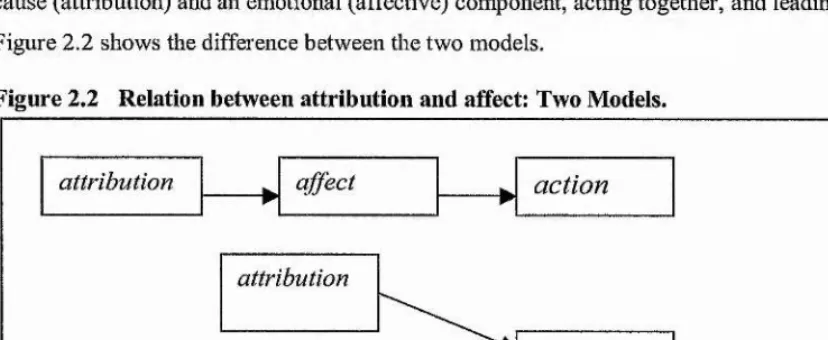
“common sense” model is the one proposed by Leventhal and his colleagues to explain self-regulation (see Figures 2.1 and 2.2 which follow). In this model an individual makes a decision about their state of health or illness based on a personal analysis of the (often complex) information they have. This may include, for example, the person’s cognitive representation of the disease and treatment they are offered, the person’s cognitive representation of their current quality of life, and the person's emotional reactions to these (Leventhal and Colman 1997).
illnesses. Leventhal and Diefenbach (1991) have described these five components further, incorporating them in a model of self-regulation (see Figure 2.1, adapted from Brownlee et al 2000).
Figure 2.1 Leventhal s Self-Regulation Model
Cultural influences; Imiguage; roles played
Identity Time line Cause Consequences Cure
(Label) (source of Treatment/
attributes) control)
Parallel response: interaction between (i) objectively perceived representations of the above, plus (ii) emotional experience______
This model has been applied to the care of a number of conditions, including diabetes, high blood pressure, hypertension and respiratory illness (Brownlee et al 2000). A practical example may be useful here to illustrate how the model works. For a person diagnosed with cancer their ideas about the label ‘cancer’ and the perceived symptoms would be the identity component in the model. The person will have a view on how long cancer lasts, or the amount of time left until their death {time line/duration component). Diet, smoking and other lifestyle choices may be considered as possible causes by that person, and the consequences of pain and deterioration in health will almost certainly be a consideration. The person will have their own views of chemotherapy, radiotherapy and the chances of control of the cancer generally. He or she will also have an emotional reaction to each of these individual components and to the components collectively. All of these factors will make up a cognitive representation of the cancer and will influence how a person will plan and act, and their prognosis for recovery. This is a simplified application of the model and does not take into account a number of contextual factors which may affect each of the five dimensions; family circumstances, religious or cultural influences, for example.