doi:10.4236/jdm.2011.14012
Obesity and type 2 diabetes
Subhashini Yaturu
Section of Endocrinology and Metabolism, Stratton VA Medical Center, Albany, USA; [email protected]
Received 17 August 2011; revised 20 September 2011; accepted 30 September 2011.
ABSTRACT
Obesity and type 2 diabetes (T2DM) are public health problems, with health consequences and economic costs that have raised concern world- wide. The increase in the prevalence of diabetes parallels that of obesity. Some experts call this dual epidemic “diabesity”. Elevated body mass index (BMI) and waist circumference (WC) were significantly associated T2DM. One consequen- ce of obesity is an increased risk of developing T2DM. There is evidence that the prenatal, early childhood, and adolescent periods are critical in the development of obesity. Most obese indivi- duals have elevated plasma levels of free fatty acids (FFA), which are known to cause periph- eral (muscle) insulin resistance. Weight loss ei- ther with lifestyle modification, pharmacother- apy or bariatric surgery improves glycemic con- trol and metabolic parameters that are related to cardiovascular disease. Pharmacotherapy for glycemic control with metformin or GLP-1 ago- nists and DPP-4 inhibitors help in weight reduc- tion.
Keywords: Diabetes; Obesity; Body Mass Index; Impaired Glucose Tolerance; Insulin Resistance Syndrome
1. INTRODUCTION
Obesity and diabetes are emerging pandemics in the 21st century. Both are major public health problems thr- oughout the world and are associated with significant, potentially life-threatening co-morbidities and enormous economic costs. The prevalence of overweight (body mass index (BMI) between 25 and 30 kg/m2) [1] and
obesity (BMI of 30 kg/m2 or higher) [1] is increasing
rapidly worldwide, especially in developing countries. There is a strong association between obesity and type 2 diabetes. Meta-analysis of studies of association of these two conditions showed higher relative risk with BMI as
well as waist circumference in both men and women [2]. Not all subjects with type 2 diabetes (T2DM) are obese and many obese subjects do not have diabetes, but most of the subjects with T2DM are overweight or obese. Significant numbers of obese individuals have diabetes. Overweight, obesity and T2DM are largely preventable with change in life style and avoidance of sedentary hab- its and over-consumption of energy. Both obesity and T2DM, feature insulin resistance and atherogenic lipid profiles such as increased triglycerides and decreased HDL-C. The genetic basis of human obesity that predis-poses to insulin resistance and T2DM is multigenic rather than monogenic. Current clinical guidelines ackn- owledge the therapeutic strength of exercise intervention for prevention and treatment of diabetes.
2. PREVALENCE
Data from the Third National Health and Nutrition Examination Survey (NHANES III) indicate that two- thirds of adults, both men and women, had BMI values >27 kg/m2 [3]. The prevalence of T2DM parallels the
predominant form of diabetes worldwide and constitutes 85% - 95% of all diabetes. Obesity and overweight cur- rently affect 15% and 20% of Spanish children [4], re- spectively. The NHANES study noted that with increas- ing overweight and obesity class, there is an increase in the prevalence of diabetes, from 2.4% for normal weight to 14.2% for obesity class 3. With normal weight indi-viduals as a reference, indiindi-viduals in obesity class 3 had an adjusted odds ratio of 5.1 (95% CI 3.7 to 7.0) for diabetes [5].
Diagnostic Criteria and Definitions
WHO defines “overweight” [1] as a BMI equal to or more than 25, and “obesity” [1] as a BMI equal to or more than 30. BMI, calculated by weight (kg)/height (m2)
and adjusted for height, is used as a measure of weight standards. The criteria for diagnosis of diabetes mellitus as recommended by the American Diabetes Association7
include: 1. A1C≥ 6.5% or fasting plasma glucose [FPG]
value after an 8-hour fast ≥126 mg/dL, or 2-hour post load glucose (PG) ≥200 mg/dL (11.1 mmol/L) during an OGTT, or symptoms of diabetes mellitus and a random plasma glucose concentration ≥200 mg/dl (11.1 mmol/ L). Insulin resistance [6] is defined as a failure of target organs to respond normally to the action of insulin.
Insu-lin resistance syndrome [7](IRS) refers to the cluster of
abnormalities that occur more commonly in insulin re-sistant individuals. Metabolic syndrome (MS), as de- fined by the National Cholesterol Education Program Adult Treatment Panel III (NCEP ATP III) [8], is a clus- ter of metabolic abnormalities with insulin resistance as a major characteristic. The presence of any three of the five components is sufficient for diagnosis. The compo- nents of metabolic syndrome include: 1) abdominal obe-sity (waist circumference > 102 cm [40] in men, >88 cm [35] in women); 2) hypertriglyceridemia (≥150 mg/dL); 3) low HDL-C (<40 mg/dL in men, <50 mg/dL in women); 4) high blood pressure (≥130/85 mm Hg); and 5) high fasting glucose.
3. Impact of Obesity on Type 2 Diabetes
The relative risk of T2DM increases as BMI increases above 23 [9], and the association was found to be stronger in younger age groups in this study from the Asia-Pacific region [10]. Weight gain in early adulthood is related to a higher risk and earlier onset of type 2 diabetes than is weight gain between 40 and 55 years of age [11]. The risk of diabetes increases linearly with BMI; the prevalence of diabetes increased from 2% in those with a BMI of 25 to 29.9 kg/m2, to 8% in those
with a BMI of 30 to 34.9 kg/m2 , and finally to 13% in
those with a BMI greater than 35 kg/m2 [12]. Although
the prevalence of diagnosed diabetes has increased signi-
ficantly over the last decade, the prevalence of undiag- nosed diabetes and impaired fasting glucose (IFG) has remained relatively stable [13]. More than generalized obesity, the risk of central obesity increases with increa- se in waist circumference (WC), waist-to-hip ratio, vis- ceral adiposity, or abdominal obesity [14-17]. In a review of 17 prospective and 35 cross-sectional studies in adults aged 18 - 74 years, either BMI or WC predicted or was associated with T2DM independently [18]. Increase in BMI is a better predictor of diabetes than increase in weight.
Prospective studies in non-diabetic overweight adults noted a 49% increase in the incidence of diabetes in 10 years for every 1 kg/year increase in body weight and similarly eachkg of weight lost annually over 10 years was associated with a 33% lower risk of diabetes in the subsequent 10 years. Similar studies in Pima Indians reported that weight gain was significantly related to diabetes incidence only in those who were not initially overweight (BMI less than 27.3 kg/m2) [19,20]. Simi-
larly, in the Behavioral Risk Factor Surveillance System (BRFSS) for 1991-1998, Mokdad et al. [21] reported that every 1 kg increase in average self-reportedweight was associated with a 9% increase in the prevalence of diabetes [23]. Visceral fat seems to be strongly associ-ated with an abnormal metabolicprofile rather than up-per body subcutaneous fat. The National Institutes of Health uses WC to identify those at increased risk [22]. Though both visceral adiposity (VAT) and subcutaneous fat are associated withadverse cardio metabolic risk factors, VAT remains more stronglyassociated with these risk factors [23].
3.1. Impact of Childhood Obesity on T2DM
with obesity in children include T2DM, hypertension, hyperlipidemia, gallbladder disease, nonalcoholic stea- tohepatitis [32,33] sleep apnea, and orthopedic compli- cations [34,35].
3.2. Neonatal Size and Impact of Catch-Up Growth
Low birth weight predicts central obesity. High BMI at birth and low socio-economic status were shown to be independent determinants for overweight [36]. Prema-ture infants are at increased risk for persistent growth failure, hypertension, and diabetes [37]. The risk of T2DM is high among adults with low birth weight (small for gestational age) [38] and is further increased by high growth rates after 7 years of age [39]. Acce- lerated childhood growth is another risk factor for adi-posity and insulin resistance, especially in children with low birth weight [40]. These children with low birth weight and catch up growth are at risk for diabetes, obe-sity, and cardiovascular disease [41]. Prevention of early catch-up growth reversed the development of glucose intolerance and obesity was shown in a mouse model of low birth weight associated diabetes [42]. Crossing into higher categories of BMI after the age of two years is also associated with these disorders [42].
4. PATHOPHYSIOLOGY
4.1. Insulin Resistance in T2DM and Obesity
Normal glucose homeostasis is maintained by a deli- cate balance between insulin secretion by the pancreatic
β-cells and insulin sensitivity of the peripheral tissues (muscle, liver and adipose tissue). Insulin resistance is a key feature of the metabolic syndrome and often pro- gresses to T2DM. Decreased insulin sensitivity and im- paired β-cell function are the two key components in T2DM pathogenesis based on long-term experience in adults [43-46]. The major link between obesity and T2DM is insulin resistance. In the natural history of diabetes, obesity and insulin resistance precede abnormal glucose. Insulin resistance in both of these conditions is mani-fested by decreased insulin-stimulated glucose tran- sport and metabolism in adipocytes and skeletal muscle and by impaired suppression of hepatic glucose output [47].
4.2. Visceral Adiposity, Obesity, Insulin Resistance, T2DM
In obesity the initial deposition of triglycerides occurs in subcutaneous adipose tissue and as this increases in size insulin resistance will rise and limit further subcu- taneous lipid accumulation. Triglycerides will then be di-
verted to the visceral fat depot as well as to ectopic sites. This leads to a substantial rise in insulin resistance and the prevalence of its associated disorders. Evidence sup- porting this hypothesis includes studies showing that in lean subjects the prime determinant of insulin resistance is BMI, that is, subcutaneous fat, whilst in overweight and obese subjects, it is waist circumference and visceral adiposity. It has also been shown that the metabolic syn- drome suddenly increases in prevalence at high levels of insulin resistance and it is suggested that this is due to the diversion of lipids from the subcutaneous to the vis- ceral depot [48]. Accumulation of fat in abdomen re- gions has majorimplications for metabolism and parti- cularly for insulin sensitivity [49-51]. This high preva- lence of co-morbidities relates more to waist circumfe- rence than to BMI.
Many studies have pointed to an association between insulin resistance and intra-abdominal fat accumulation (visceral obesity) [52]. The look AHEAD (Action for Health in Diabetes) Trial of patients with T2DM demon- strated adipose tissue distribution that was significantly altered, with more visceral adipose tissue and intermu- scular adipose tissue, depots known to exacerbate insulin resistance, and less subcutaneous adipose tissue in peo- ple with diabetes than in healthy control subjects [53]. A high prevalence of obesity and abdominal obesity in Mexicans is associated with a markedly increased inci- dence of diabetes and hypertension [54]. Visceral adipo- sity is considered a risk factor for insulin resistance me- tabolic syndrome [55] and T2DM in adults [56], as well as in first degree relatives of patients with T2DM with normal glucose levels [57]. Adipocytokines, hormones secreted by the visceral adipocytes, generate the insulin resistant state and the chronic inflammatory profile that frequently goes along with visceral obesity [58].
4.3. Visceral Adiposity and Children
independent correlate of insulin resistance, β-cell dys- function, and increased abdominal adiposity [69]. It is hypothesized that abdominal obesity leads to insulin resistance partly through decreased adiponectin [70].
FFA, Free Fatty Acids
Visceral fat exhibits accelerated lipolytic activity with increased release of free fatty acids (FFA), which can adversely affect insulin action and glucose disposal in several tissues [71-75]. Conversely, declines in visceral adiposity and reduced FFA levels following weight-loss diets have been associated with enhanced insulin sensi- tivity [76,77]. A strong correlation between intramyo- cellular triacylglycerol concentrations and the severity of insulin resistance has been found, which led to the assu- mption that lipid oversupply to skeletal muscle contrib- utes to reduced insulin action [71,78]. These increases in circulating FFA levels may also result in the develop- ment of triglyceride reservoirs in both muscle and liver, depressing the actions of insulin and increasing hepatic very-low-density lipoprotein output [79-81]. In most obese subjects, plasma FFA levels are increased. FFAs have been shown to have an important contributing role in the pathogenesis of insulin resistance in human obe- sity [82]. The mechanism involves intramyocellular ac- cumulation of diacylglycerol and activation of protein kinase C. FFAs cause hepatic insulin resistance by inhib- iting insulin-mediated suppression of glycolgenolysis [82-85]. Physiologic increases in plasma FFA levels cause insulin resistance in both diabetic and nondiabetic subjects by producing several metabolic defects: 1) FF- As inhibit insulin-stimulated glucose uptake at the level of glucose transport or phosphorylation (or both); 2) FFAs inhibit insulin-stimulated glycogen synthesis; and 3) FFAs inhibit insulin-stimulated glucose oxidation (this last-mentioned defect probably does not contribute to insulin resistance). Studies have shown that both obe- sity and T2DMimpair insulin-induced suppression of glycogenolysis and gluconeogenesis, and that the degree of impairment correlateswith plasma FFA concentrations [86,87]. The stimulatory effect of FFAs on hepatic glu- cose production (HGP) would then become unchecked, resulting in hyperglycemia. Hence, continuously ele- vated levels of plasma FFAs may play a key role in the pathogenesis of T2DM in predisposed individuals by impairing peripheral glucose utilization and by promot- ing hepatic glucose overproduction [86-90]. Potential mechanisms of this increased risk with VAT may include increased free fatty acid release and alterations in adi-
pokines. Evidence from studies that manipulate FFA
concentrations suggests thata number of these metabolic abnormalities are caused by elevatedFFAs, because the most consistent abnormality in FFA metabolismis failure to normally suppress FFA in response to insulin/meal ingestion [91]. In people with visceralobesity, omental
and mesenteric fat may play a special rolein delivering both excess FFA and IL-6 to the liver [91]. Atherogenic lipid abnormalities with lower levels of high-density liporotein (HDL) and overproduction of large very low- density lipoprotein (VLDL) particles precede the diag- nosis of T2DM by several years [92]. In obesity and T2DM, the altered communication between adipose tis- sue and the liver results in the altered regulation of VLDL production. A number of studies indicate that adi- pocytokines, in particular adiponectin, may be seminal players in the regulation of fat metabolism in the liver [93]. VLDL assembly in the liver is catalyzed by micro- somal triglyceride transfer protein (MTP). A study by Wolfrum and Stoffel [94] showed that the forkhead pro- tein Foxa2 stimulates hepatic VLDL production in con- cert with the coactivator PGC-1beta and that insulin in- hibits this process by inactivating Foxa2. It appears that excessive VLDL production associated with insulin re- sistance is caused by the inability of insulin to regulate FoxO1 transcriptional activation of MTP [95,96].
4.4. Visceral Fat Tissue as a Pro-Inflammatory Tissue
Adipose tissue is a highly active metabolic and endo- crine organ. During the progression from normal weight to obesity and then to overt diabetes, adipocyte-derived factors contribute to the occurrence and development of
β-cell dysfunction and type 2 diabetes [97]. Adipocytes secrete a variety of products known as “adipokines”, including leptin, adiponectin, resistin and visfatin, as we- ll as cytokines and chemokines such as TNF-α, IL-6, and monocyte chemoattractant protein-1 [98] all of which also play important roles inthe pathogenesis of diabetes, dyslipidemia,inflammation, and atherosclerosis [98-100]. The release of adipokines by either adipocytes or adi- pose tissue-infiltrated macrophages leads to a chronic sub inflammatory state that could play a central role in the development of insulin resistance and T2DM, and the increased risk of cardiovascular disease associated with obesity [98].
deeper origin [101].Leptin improves insulin sensitivity through activation of AMP protein kinase (AMPK), which controls cellular concentrations of malonyl-CoA, thereby inhibiting acetyl-CoA carboxy-lase (the enzyme involved in malonyl-CoA transformation) [102]. While a deficiency of leptin is very likely to contribute to in- sulin resistance when adipose tissue is lacking and leptin resistance is considered as a main feature of human obesity.
TNF-α and IL-6 are expressed in adipose tissues, with visceral fat responsible for more TNF-α production than subcutaneous fat. These cytokines inhibit insulin signa- ling and TNF-α may play a crucial role in the systemic insulin resistance of T2DM [103,104]. Interleukin-6 (IL- 6), one of the adipokines, has emerged as one of the po- tential mediators linking obesity-derived chronic infla- mmation with insulin resistance. Adipose tissue contri- butes to up to 35% of circulating IL-6, the systemic eff- ects of which have been best demonstrated in the liver, where a STAT3-SOCS-3 pathway mediates IL-6 impair- ment of insulin actions. In contrast to its role in liver, IL- 6 is believed to be beneficial for insulin-regulated glu- cose metabolism in muscle [105].
TNF-α is a pro-inflammatory cytokine produced by numerous cells, but adipocytes also produce TNF-α. TNF-
α is overexpressed in adipose tissue from obese animals and humans, and obese mice lacking either TNF-α or its receptor show protection against developing insulin re- sistance. TNF-α induces a state of insulin resistance in terms of glucose uptake in myocytes and adipocytes that impair insulin signalling at the level of the insulin rece- ptor substrate (IRS) proteins. The mechanism involves Ser phosphorylation of IRS-2 mediated by TNF-α acti- vation of MAPKs [106]. TNF-α inhibitstyrosine kinase phosphorylation of the insulin receptor, resulting in defects in insulin signaling and ultimately leading to insulinresistance and impaired glucose transport [107, 108]. An imbalance in favor of pro-inflammatory cytokin- es from adipose tissue (hypoadiponectinemia and increas- ed levels of IL-6) and other sources may trigger CRP secretion. CRP levels are related strongly to insulin resis- tance and adiposity, and elevated levels correlate with impaired endothelial dysfunction (ED) and CAD. This in turn can exacerbate mild insulin resistance and accentu- ate other metabolic abnormalities that together constitute metabolic syndrome. Thus, insulinresistance, itself, app- ears to be an endothelial dysfunctionrisk equivalent. The pathways are clearly intertwined with andsparked by obesity, in large part by excess adipokine production. The association of endothelial dysfunction with insulin resistance in the absence of overt diabetes or metabolic syndrome provides evidence that the atherosclerosis may actually begin earlier in the spectrum of insulin resis-
tance, ultimately resulting in a progression of metabolic syndrome to prediabetes and then to T2DM [109,110].
Adiponectin is a protein highly expressed in adipose tissue. Like leptin, adiponectin enhances insulin sensi- tivity through activation of AMPK [111]. Functional analyses including generation of adiponectin transgenic or knockout mice have revealed that adiponectin serves as an insulin-sensitizing adipokine. Obesity-linked down- regulation of adiponectin is a mechanism that explains how obesity could cause insulin resistance and diabetes [112]. Adiponectin also affects hepatic glucose produc- tion by decreasing the mRNA expression of two es- sential gluconeogenesis enzymes: phosphoenolpyruv- ate carboxykinase and glucose-6-phosphatase. It appears that high-molecular-weight adiponectin may be the most insulin-sensitizing [112]. Adiponectin correlates with blood concentrations of free fatty acids and reduced bo- dy mass index or body weight, and may be the molecular link between obesity and insulin resistance, and may serve as a biomarker for the metabolic syndrome [113]. Interventions to reduce insulin resistance by increasing adiponectin concentrations may be effective particularly in obese, insulin-resistant individuals [113]. Plum treat- ment (plum juice) significantly increased plasma adi- ponectin concentrations and PPAR-γ mRNA expression in adipose tissue from Wistar fatty rats [114]. Decreased plasma adiponectin and insulin resistance coexist in subjects with prediabetes, diabetes and atherosclerosis [115].
Visfatin (also known as pre-B cell colony-enhancing factor or PBEF) is a newly discovered adipocyte hor- mone, highly expressed in visceral fat, with a direct rela- tionship existing between plasma visfatin levels and T2- DM. Visfatin binds to the insulin receptor at a site dis- tinct from that of insulin and causes hypoglycemia by reducing glucose release from liver cells and stimulating glucose utilization in adipocytes and myocytes [116]. Serum visfatin levels were reported to be elevated in ty- pe 2 diabetes independent of insulin resistance [117]. Increased visfatin levels have been shown to be asso- ciated with BMI and insulin resistance in obese child- ren [118]. Visfatin is not related to insulin resistance either as assessed by a homeostasis model assessment or during lipid infusion [119].
as well as with pro-inflammatory markers, suggesting its potential involvement in the low-grade chronic inflame- mation accompanying obesity [121].
4.5. Non-Alcoholic Fatty Liver Disease
[image:6.595.310.538.498.716.2]Non-alcoholic fatty liver disease (NAFLD) is chara- cterized by hepatic steatosis in the absence of a history of significant alcohol use or other known liver diseases. Primary NAFLD emerges due to the metabolic syn- drome. Compared with healthy controls, risk for stea- tosis is increased 4.6-fold in obese subjects. Subjects with NAFLD have a 2-fold greater risk of diabetes [122]. Free fatty acids (FFAs) play a pivotal role in the deve- lopment of simple hepatic steatosis. The development of NAFLD is closely linked to an excess flow of FFAs arising from visceral adipose tissue. Multiple mechan- isms including pro-inflammatory cytokines and pathways have been implicated in the pathogenesis of NAFLD. Understanding the role of obesity and lipotoxicity in patients with liver disease as part of a broader metabolic disorder is likely to improve the management of these challenging diseases. In a 11 year follow-up study, NAF- LD with elevated aminotransaminase (ALT) levels was a risk factor for incident diabetes or the metabolic syn- drome (MS) [123]. Insulin resistance is the basis of both NAFLD and metabolic syndrome [124,125]. Obesity results in marked enlargement of the intra-abdominal visceral fat depots. The development of insulin resist- ance leads to continuous lipolysis within these depots, releasing fatty acids into the portal circulation, where they are rapidly translocated to the liver and reassembled into triglycerides. Reactive oxygen species, generated in the liver from oxidation of fatty acids, are precipitating factors in the cascade of events leading from simple steatosis to NASH [32]. Circulating free fatty acids may be cytotoxic by inducing lipid peroxidation and hepato- cyte apoptosis. Insulin resistance is often associated with chronic low-grade inflammation, and numerous media- tors released from immune cells and adipocytes may contribute liver damage and liver disease progression [125].
5. BENEFITS OF WEIGHT LOSS IN TYPE
2 DIABETES AND OBESITY
Weightloss of 5% to 10% can significantly improve risk factors for obesity-related diseases [126]. Weight loss has been shown to improve glycemic control and cardio-vascular risk factors in obese individuals with type 2 diabetes. Clinical studies demonstrate that the therapeutic benefit rises with increasing weight loss, but that losses as low as 0.45 - 4 kg (1 - 9 lb) have positive effects on metabolic control, cardiovascular risk factors
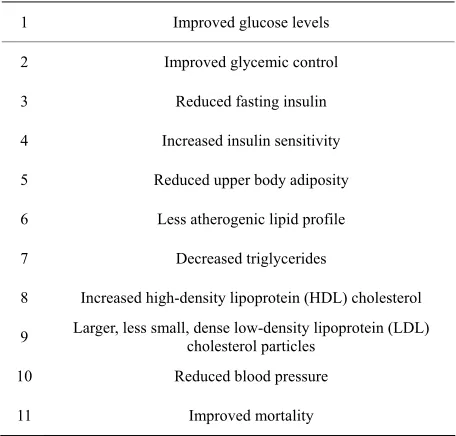
and mortality rates. The current data support a continued focus on weight loss, including moderate weight loss, as a key component of good care for overweight patients with type 2 diabetes [127]. The list of benefits is shown in Table 1. The most effective interventions include
comprehensive behavioral management, dietary modify- cation, exercise, pharmacotherapy and bariatric surgery. The most widely investigated drugs, sibutramine and orlistat, result in modest weight loss with demonstrable improvements in co-morbidities, among which is type 2 diabetes.
Nutrition in the management of obesity and type 2
diabetes: Observational and interventional studies have
clearly shown that type 2 diabetes can be prevented by lifestyle measures, including reduced energy intake to induce a modest but sustained weight reduction, together with changes in diet composition [128]. Even in elderly individuals, diet induced weight loss results in improved insulin sensitivity and improved β-cell function [129]. In short-term [130] as well as long-term studies [131], use of a low carbohydrate diet in obese subjects with type 2 diabetes has improved glucose profiles, insulin sensitive- ity and decreased plasma triglyceride and cholesterol levels.
5.1. Prevention of Type 2 Diabetes by Weight Reduction
Several interventional studies have demonstrated that significant weight reduction could lead to a decreased incidence of progression to type 2 diabetes.
Finnish study [132]: This study from Finland included middle-aged obese subjects with impaired glucose tol- erance (IGT) who were randomized to receive either
Table 1. Benefits of weight loss in type 2 diabetes.
1 Improved glucose levels
2 Improved glycemic control
3 Reduced fasting insulin
4 Increased insulin sensitivity
5 Reduced upper body adiposity
6 Less atherogenic lipid profile
7 Decreased triglycerides
8 Increased high-density lipoprotein (HDL) cholesterol
9 Larger, less small, dense low-density lipoprotein (LDL) cholesterol particles
10 Reduced blood pressure
brief diet and exercise counseling(control group) or in- tensive individualized instruction on weightreduction, food intake, and guidance on increasing physicalactivity (intervention group). After an average follow-up of 3.2 years, there was a 58% relative reduction in the inci- denceof diabetes in members of the intervention group compared with the controlsubjects.
Diabetes Prevention Program (DPP) [133]: This mul- ticenter study enrolled subjects with impaired glucose tolerance whowere slightly younger and more obese. Approximately 45% of study subjects were recruited from minority groups (e.g.,African American, Hispanic) and 20% of subjects were aged ≥ 60 years. Subjectswere randomized to one of three intervention groups:the in- tensive nutrition and exercise counseling (“lifestyle”) group, or either of two masked medication treatment groups, themetformin group or the placebo group. Par- tipants in both the placebo group and the metformin gr- oup received standard diet and exercise recommenda- tions.After an average follow-up of 2.8 years, compared with the control group, a 58% relative reductionin the progression to diabetes was observed in the lifestylegr- oup and a 31% relative reduction in the metformin group. On an average, 50% of the subjects in the lifestyle group achieved the goal of ≥7% weight reduction and about 74% maintained at least 150 min/weekof moderately intense activity. During follow-up after DPP at 10 years, incidences in placebo and metformin groups fell to equal those in the former lifestyle group, but the cumulative incidence of diabetes remained lowest in the lifestyle group, indicating that prevention or delay of diabetes with lifestyle intervention or metformin can persist for at least 10 years [134]. Progression to diabetes is more common in women with a history of gestational diabetes (GDM) compared with those without a history of GDM, despite equivalent degrees of impaired glucose tolerance (IGT) at baseline. Both intensive lifestyle changes and metformin use are highly effective in delaying or pre- venting diabetes in women with IGT and a history of GDM [135].
Da Qing study [136]: this study from China included subjects with IGT determined by oral glucose tolerance tests, who were randomized by clinic to a control group or to one of three active treatment groups: diet only, ex- erciseonly, or diet plus exercise. Subjects were followed biannually. After an average of 6 years’ follow-up, the diet,exercise, and diet plus exercise interventions were associatedwith 31%, 46% and 42% reductions in risk of developing type 2diabetes, respectively.
Xenical in the prevention of Diabetes in ObeseSub- jects (XENDOS) study [137]: this study addressed the benefit of weight reduction achieved by the addition of orlistat to lifestyle change, to delay the progression of type 2 diabetes in agroup with BMI ≥ 30 kg/m2 with or
without IGT. After 4 years oftreatment, the effect of orlistat addition corresponded to a45% reduction in risk factors in the IGT group, with no effect observedin those without IGT [137].
Look AHEAD (Action for Health in Diabetes) [138]: This was a multicenter randomized study of 5145 parti- cipants randomized between 2001 and 2004, whose eth- nicities paralleled the ethnic distribution of DM in the National Health and Nutrition Examination Survey (NHANES) 1999-2000 survey, with a mean age of 59 +/– 6.8 years (mean +/– SD), and of whom 60% were women. Furthermore, 65.0% of participants had a first- degree relative with diabetes. Overall, BMI averaged 36 +/– 5.9 kg/m2 at baseline, with 83.6% of the men and
86.1% of women having a BMI > 30 kg/m2 and 17.9%
of men and 25.4% of women having a BMI > 40 kg/m2.
Intensive lifestyle intervention (ILI) participants had a greater percentage of sustained weight loss (–6.15% vs. –0.88%; P < 0.001) and improvements in fitness, glyce- mic control, and CVD risk factors in individuals with type 2 diabetes [139].
In a recent Japanese randomized control trial to test the feasibility and effectiveness of a lifestyle intervene- tion program in the primary care setting, in 30-60-year old subjects and BMI > 22.5 kg/m2, a significant impro-
vement in insulin sensitivity was observed representing a significant reduction in the cumulative incidence of pro- gression to diabetes [140].
5.2. Pharmacotherapy for Obesity and Improvement in Metabolic Risk Factors and Diabetes
Orlistat, a gastrointestinal lipase inhibitor drug, has beenused effectively and safely in the treatment of obe- sity [141]. Orlistat significantly reduces body weight, and improves glycemic control and several cardiovascu- lar risk factors in overweight and obese subjects with type 2 diabetes [142,143]. In type 2 diabetic patients, orlistat also attenuates postprandial increases in triglyc- erides,remnant-like particles, cholesterol, and free fatty acids [144].The anti-hyperglycemic effect of orlistat has been attributedto a weight loss-associated decrease in insulin resistance [145] and augmentation of the post- prandial increases inplasma levels of glucagon-likepep- tide 1 (GLP-1) [146].
Rimonabant in obesity-lipids study [149]: it has shown to reduce body weight and improve cardiovascu- larrisk factors in obese patients, such as a reduction in waist circumference, increase in HDL cholesterol and reduction in triglycerides. In addition, rimonabant use at a daily dose of 20 mg also resulted in anincrease in plasma adiponectin levels that was partly independentof weight loss alone.
Sibutramine: sibutramineis an anti-obesity drug that induces satiety and thermogenesis [150]. Sibutramine use has been shown to reduceweight, lower the levels of nonesterified fatty acids,decrease hyperinsulinemia, and reduce insulin resistance. It has been used as an effective adjunct to oral hypoglycemic therapy in obese subjects with type 2 diabetes [151]. However, the magnitude of weight loss was modest, andthe long-term health bene-fits and safety remain unclear [152].
Pharmacotherapy for diabetes and weight reduction: Weight loss is an important therapeutic objective for individualswith type 2 diabetes [153]. Both short [154] and long-term [155] weight loss in overweight or obese type 2 diabetic subjects on very low calorie diets was shown to decrease insulin resistance, improve measures of glycemic control, improve lipid abnormalities and lower blood pressure [154,156]. Metformin, an oral hy-poglycemic agent, decreases calorie intake in a dose- dependent manner and leads to a reduction in body weight in subjects with type 2 diabetes and obesity [157- 159]. Exenatide: exenatide is a member of a new class of agents known as incretin mimetics currently in deve- lopment for the treatment of type 2 diabetes. In short- term studies, Exenatide improved glycemic control and helped to reduce body weight over 28 days in patients with type 2 diabetes treated with diet/exercise or metfor- min [160].
Bariatric surgery for obesity and effect on type 2 dia- betes: bariatric surgery for severe obesity results in long-term weight loss, which leads to an improved life-style and recovery from diabetes [161,162], hypertrigly- ceridemia, low levels of high-density lipoprotein choles- terol, hypertension, and hyperuricemia [162-164].
5.3. Potential Role of Adiponectin in the Treatment of Obesity, Diabetes and Insulin Resistance
Studies have shown that adiponectin administration in rodents has insulin-sensitizing, anti-atherogenic and anti- inflammatory effects and under certain settings also de- creases body weight. Therefore, adiponectin replacement in humans may represent a promising approach to pre- vent and/or treat obesity, insulin resistance and type 2 diabetes; however, clinical studies with adiponectin ad- ministration need to be conducted to confirm this hypo-
thesis.
6. PHARMACOGENETICS: POTENTIAL
ROLE IN THE TREATMENT OF
DIABETES AND OBESITY
The prevalence of obesity and diabetes, which are heritable traits that arise from the interactions of multiple genes and lifestyle factors, continues to rise worldwide. Until recently, candidate gene and genome-wide linkage studies have been the main genetic epidemiological ap- proaches to identify genetic loci for obesity and diabetes, yet progress has been slow, with limited success. Recent advances have transformed the situation and there has been progress in understanding how genetic variation predisposes individuals to diabetes and obesity, and how candidate genes may alter drug response. The discovery of causal genes includes family-based linkage analyses and focused candidate-gene studies; among them, large- scale surveys of association between common DNA se- quence variants and disease were most successful. The current total of approximately 40 confirmed type 2 dia- betes loci includes variants in or near WFS1 (wolframin) and the hepatocyte nuclear factors HNF1A and HNF1B
(genes that also harbor rare mutations responsible for monogenic forms of diabetes) [165-168]; the melatonin- receptor gene MTNR1B (which highlights the link be-tween circadian and metabolic regulation) [169-171]; and IRS1 (encoding insulin-receptor substrate 1), one of a limited number of type 2 diabetes loci with a primary effect on insulin action rather than on secretion [172]. Genetic discoveries have provided a molecular basis for the clinically useful classification of monogenic forms of diabetes and obesity [173,174]. Genomewide association studies of population-based samples undertaken to ex- amine the full range of BMI values have identified ap- proximately 30 loci influencing BMI and the risk of ob- esity. The strongest signal remains the association with variants within FTO (the fat-mass and obesity–related gene) [171,175-177]. Other signals near BDNF, SH2B1,
and NEGR1 (all implicated in aspects of neuronal func- tion) reinforce the view of obesity as a disorder of hypo- thalamic function [178-181]. There are insufficient gene- tic data to support management decisions for common forms of type 2 diabetes and obesity [182]. Although the
The combined contribution of these loci to the variation in obesity and diabetes risk is small and their predictive value is typically low. One of these loci, variants in the fat-mass and obesity-associated gene (FTO), influences susceptibility to type 2 diabetes via an effect on adipos- ity/obesity [184]. The EPIC-Norfolk study is a popula- tion-based, ethnically homogeneous, white European cohort study of 25,631 residents living in the city of Norwich, United Kingdom, and its surrounding area. Of these, 12,201 had complete genotype data for all 12 sin-gle nucleotide polymorphisms (SNPs). The FTO locus represented the largest [185]. Variants that predispose to common obesity also result in altered susceptibility to PCOS, probably mediated through adiposity [200]. One single-nucleotide polymorphism (SNP) associated with weight is located close to monoacylglycerol acyltrans-ferase 1 (MGAT1), the MGAT enzyme family known to be involved in dietary fat absorption [186]. Genetic studies offer two main avenues for clinical translation. First, the identification of new pathways involved in disease predisposition-for example, those influencing zinc transport and pancreatic islet regeneration in the case of type 2 diabetes-offers opportunities for devel-opment of novel therapeutic and preventive approaches. Second, with continuing efforts to identify additional genetic variants, it may become possible to use patterns of predisposition to tailor individual management of these conditions.
7. BARIATRIC SURGERY FOR OBESITY
AND IMPROVEMENT IN DIABETES
CONTROL
Bariatric surgery as a modality to treat obesity in the US is reserved for patients with BMI ≥ 35 kg/m2 and the
presence of serious co-morbidities (T2DM, moderate or severe obstructive sleep apnea (OSA), pseudotumor ce- rebri, and severe steatohepatitis), or BMI > 40 kg/m2 and
minor comorbidities (mild OSA, hypertension (HTN), insulin resistance, glucose intolerance, dyslipidemia, im- paired quality of life, or activities of daily living). Gas- tric bypass surgery appears to have significant increased therapeutic potential for treating obesity and Type 2 dia- betes. In view of the growing enthusiasm for surgical interventions to treat T2DM, the first diabetes surgery summit (DSS) was held in Rome in March 2007. Trends in mortality in bariatric surgery were reported by Buch- wald et al. in 2007 [187] in a systemic review that in- cluded meta-analysis of 361 studies and a total of 85,048 patients with a mean BMI of 47.4 kg/m2. The early and
late mortality rates after bariatric surgery were reported as low.
A review by Cunneen reported that all studies report- ing on co-morbidities showed significant resolution or
improvement of type 2 diabetes mellitus ([T2DM] 60%), hypertension ( 43%), and dyslipidemia (70%). One meta-analysis study reported that surgery was found to be superior to medical therapy in resolving T2DM, hypertension, and dyslipidemia. Sleep apnea was significantly resolved/improved in 85% across pro-cedures in the one meta-analysis that addressed this co-morbidity [188]. Studies have shown that those who undergo bariatric surgery for obese diabetic patients ex-perience complete remission of diabetes, maintaining euglycemia without medications for more than 10 years [189]. Additionally, following some gastrointestinal (GI) procedures, T2DM resolves within days to weeks, long before the occurrence of major weight loss. T2DM reso- lution or remission has usually been defined as HbA1C
values ranging from <6% to <7% in the absence of antidiabetic medications. Meta-analysis of bariatric sur- gery by Buchwald et al. [190] included 136 studies for a total of 22,094 patients; mean baseline BMI was 46.9 kg/m2 (32.3 - 68.8). The studies that reported resolution
of T2DM included a total of 1846 patients. Diabetes resolution rates were 98.9% after biliopancreatic diver- sion (BPD), 83.7% after RYGB and 47.9% after AGB. Another systematic review by Levy et al. [191]. con-firmed that bariatric surgery was highly effective in ob-taining weight reduction in morbidly obese patients with losses of up to 60% of the excess weight, along with re- solution of preoperative diabetes in more than 75% of the cases.
Pharmacotherapy for Diabetes that Helps Weight Reduction
Pramlintide is an analog of amylin, a naturally occur- ring hormone produced by pancreatic β-cells. The major mechanism of action appears to be inhibition of gastric emptying and suppression of glucagon release. Clinically, it also suppresses appetite in patients who receive it.
has similar effects. Clinically, the result is an A1C reduce-
tion of ~1%. Preliminary studies suggest that a signify- cant proportion of insulin-treated patients with type 2 diabetes may be successfully transitioned from insulin to Exenatide in addition to their oral agents. Most patients experience significant weight loss of ~2.5 kg when Ex- enatide is used in addition to metformin and ~1 kg when it is added to a sulfonylurea [193,194]. Exenatide was associated with a significant reduction in mean (SD) body weight from baseline (–2.1 [0.2] kg), with pro- gressive reductions after 2 years (–4.7 [0.3] kg; P < 0.001 vs baseline) [195].
Liraglutide works in a manner similar to that of Exen- atide but has a longer half-life, which allows for once daily (rather than twice daily) dosing. Some studies, including one meta-analysis, suggest that it may have a slightly greater A1C-lowering effect than Exenatide, alth-
ough more investigation is warranted to substantiate such findings. In a meta-analysis, it is noted that exena- tide and liraglutide resulted in greater weight loss (from 2.3 to 5.5 kg) with improvements in HbA1C similar to
that obtained with sufonylureas [196]. Neither exenatide nor liraglutide are indicated for simple weight loss.
8. MULTIPLE RISK FACTORS FOR
CARDIOVASCULAR DISEASE AND
DIABETES MELLITUS
The metabolic syndrome is a constellation of central adiposity, impaired fasting glucose, elevated blood pres- sure, and dyslipidemia (high triglyceride and low HDL cholesterol). When three of these five criteria are present, the risk of cardiovascular disease and diabetes is in- creased 1.5- to 2-fold [197,198].
8.1. Obesity and Co-Morbidities
Obesity is becoming a major public health problem throughout the world and is associated with significant, potentially life-threatening co-morbidities. Either obesity itself or the co-morbidities that accompany obesity are responsible for increased cardiovascular risk. Obesity is associated with most of the components of metabolic syndrome, the leading cause of type 2 diabetes. The co- morbidities of obesity and type 2 diabetes associated with insulin resistance syndrome include obstructive sleep apnea, hypertension, polycystic ovary syndrome, non- alcoholic fatty liver disease and certain forms of cancer.
8.2. Impact of Diabetes and Obesity on Cardiovascular Disease
Cardiovascular disease (CVD) is a major cause of morbidity and mortality among subjects with type 2 dia- betes and is responsible for up to 75% of deaths among
them. The risk of CVD mortality in type 2 diabetic pa-tients is more than double compared with that in age- matched subjects [199]. The risk of coronary artery dis- ease (CAD) in subjects with type 2 diabetes is consid- ered equivalent to that of nondiabetic subjects who have CAD [200,201], especially women [202]. The associa- tion of obesity with clinically significant coronary artery disease is blatant in two classical prospective studies highly consulted: the Framingham Heart Study [203] and the Nurses Health Study [204]. Elevated pro-in- flammatory cytokine levels found in obese patients re- late mainly to obesity rather than to T2DM. Moreover, surgery-induced weight loss reduces circulating concen- trations of key pro-inflammatory factors, which contri- ute to the improvement in the cardiovascular co-mor- bidity following excess weight loss [205]. Obesity and overweight are often defined by WHO (World Health Organization) in terms of excess weight for a given hei- ght [1206] Overweight was defined as a body mass in-dex (BMI) of 25.0 to 29.9 and obesity as a BMI of >30.0. BMI, calculated by weight (kg)/height (m2) and adjusted
for height is used as a measure of weight standards.
9. CONCLUSIONS
Obesity has become an epidemic worldwide. The de- velopment of obesity and diabetes involves complex ge- netic and environmental factors. Diabetes is fastest grow-ing disease in the world. The health consequences and economic costs of the overweight, obesity and type 2 diabetes epidemics are enormous. Behavioral changes leading to increased body weight is a major contributing factor to the rising incidence of diabetes.
10. ACKNOWLEDGEMENTS
Dr. Yaturu receives salary support from Veterans Health Administra-tion.
REFERENCES
[1] WHO Technical Series (2000) Obesity: Preventing and managing the global epidemic. Report of a WHO con-sultation. World Health Organization Technical Report Series, 894, 1-253.
[2] Guh, D.P., et al. (2009) The incidence of co-morbidities related to obesity and overweight: A systematic review and meta-analysis. BMC Public Health, 9, 88.
doi:10.1186/1471-2458-9-88
[3] Flegal, K.M. and Troiano, R.P. (2000) Changes in the distribution of body mass index of adults and children in the US population. International Journal of Obesity and Related Metabolic Disorders, 24, 807-818.
doi:10.1038/sj.ijo.0801232
SESPAS Report 2010. Gaceta Sanitaria, 24, 49-55. [5] Nguyen, N.T., et al. (2008) Association of hypertension,
diabetes, dyslipidemia, and metabolic syndrome with obesity: Findings from the National Health and Nutrition Examination Survey, 1999 to 2004. Journal of the Ame- rican College of Surgeons, 207, 928-934.
doi:10.1016/j.jamcollsurg.2008.08.022
[6] Cefalu, W.T. (2001) Insulin resistance: Cellular and clinical concepts. Experimental Biology and Medicine (Maywood), 226, 13-26.
[7] Reaven, G. (2004) The metabolic syndrome or the insulin resistance syndrome? Different names, different concepts, and different goals. Endocrinology Metabolism Clinics of North America, 33, 283-303.
doi:10.1016/j.ecl.2004.03.002
[8] Erkelens, D.W. (2001) Insulin resistance syndrome and type 2 diabetes mellitus. American Journal of Cardiology, 88, 38J-42J. doi:10.1016/S0002-9149(01)01883-5 [9] Colditz, G.A., et al. (1990) Weight as a risk factor for
clinical diabetes in women. American Journal of Epide-miology, 132, 501-513.
[10] Ni Mhurchu, C., et al. (2006) Body mass index and risk of diabetes mellitus in the Asia-Pacific region. Asia Pa-cific Journal of Clinical Nutrition, 15, 127-133.
[11] Schienkiewitz, A., et al. (2006) Body mass index history and risk of type 2 diabetes: Results from the European Prospective Investigation into Cancer and Nutrition (EPIC)-Potsdam Study. The American Journal of Clinical Nutrition, 84, 427-433.
[12] Harris, M.I., et al. (1998) Prevalence of diabetes, im-paired fasting glucose, and imim-paired glucose tolerance in U.S. adults. The Third National Health and Nutrition Examination Survey, 1988-1994. Diabetes Care, 21, 518-524. doi:10.2337/diacare.21.4.518
[13] Cowie, C.C., et al. (2006) Prevalence of diabetes and impaired fasting glucose in adults in the US population: National Health and Nutrition Examination Survey, 1999-2002. Diabetes Care, 29, 1263-1268.
doi:10.2337/dc06-0062
[14] Snijder, M.B., et al. (2003) Associations of hip and thigh circumferences independent of waist circumference with the incidence of type 2 diabetes: The Hoorn study. The American Journal of Clinical Nutrition, 77, 1192-1197. [15] Cassano, P.A., et al. (1992) Obesity and body fat
distri-bution in relation to the incidence of non-insulin-de- pendent diabetes mellitus. A prospective cohort study of men in the normative aging study. American Journal of Epidemiology, 136, 1474-1486.
[16] Lundgren, H., et al. (1989) Adiposity and adipose tissue distribution in relation to incidence of diabetes in women: Results from a prospective population study in Gothen-burg, Sweden. International Journal of Obesity, 13, 413- 423.
[17] Ohlson, L.O., et al. (1985) The influence of body fat distribution on the incidence of diabetes mellitus. 13.5 years of follow-up of the participants in the study of men born in 1913. Diabetes, 34, 1055-1058.
doi:10.2337/diabetes.34.10.1055
[18] Qiao, Q. and Nyamdorj, R. (2010) Is the association of type II diabetes with waist circumference or waist-to-hip ratio stronger than that with body mass index? European Journal of Clinical Nutrition, 64, 30-34.
doi:10.1038/ejcn.2009.93
[19] Aucott, L.S. (2008) Influences of weight loss on long- term diabetes outcomes. Proceedings of the Nutrition So-ciety, 67, 54-59. doi:10.1017/S0029665108006022 [20] Resnick, H.E., et al. (2000) Relation of weight gain and
weight loss on subsequent diabetes risk in overweight adults. Journal of Epidemiology & Community Health, 54, 596-602. doi:10.1136/jech.54.8.596
[21] Mokdad, A.H., et al. (2000) Diabetes trends in the US: 1990-1998. Diabetes Care, 23, 1278-1283.
doi:10.2337/diacare.23.9.1278
[22] Janssen, I., Katzmarzyk, P.T. and Ross, R. (2002) Body mass index, waist circumference, and health risk: Evi-dence in support of current National Institutes of Health guidelines. Archives of Internal Medicine, 162, 2074- 2079. doi:10.1001/archinte.162.18.2074
[23] Liu, J., et al. (2010) Impact of abdominal visceral and subcutaneous adipose tissue on cardiometabolic risk fac-tors: The Jackson Heart Study. The Journal of Clinical Endocrinology & Metabolism, 95, 5419-5426.
doi:10.1210/jc.2010-1378
[24] Roelants, M., Hauspie, R. and Hoppenbrouwers, K. (2009) References for growth and pubertal development from birth to 21 years in Flanders, Belgium. Annals of Human Biology, 36, 680-694.
doi:10.3109/03014460903049074
[25] De Onis, M., et al. (2009) WHO growth standards for infants and young children. Archives of Pediatrics & Adolescent Medicine, 16, 47-53.
doi:10.1016/j.arcped.2008.10.010
[26] Rolland-Cachera, M.F., et al. (1982) Adiposity indices in children. The American Journal of Clinical Nutrition, 36, 178-184.
[27] Cole, T.J., et al. (2007) Body mass index cut offs to de-fine thinness in children and adolescents: International survey. BMJ, 335, 194.
doi:10.1136/bmj.39238.399444.55
[28] Tfayli, H. and Arslanian, S. (2009) Pathophysiology of type 2 diabetes mellitus in youth: The evolving chame-leon. Arquivos Brasileiros de Endocrinologia & Me-tabologia, 53, 165-174.
doi:10.1590/S0004-27302009000200008
[29] Weiss, R. and Caprio, S. (2005) The metabolic conse-quences of childhood obesity. Best Practice & Research: Clinical Endocrinology & Metabolism, 19, 405-419. doi:10.1016/j.beem.2005.04.009
[30] Aboul Ella, N.A., et al. (2010) Prevalence of metabolic syndrome and insulin resistance among Egyptian ado-lescents 10 to 18 years of age. Journal of Clinical Lipi-dology, 4, 185-195. doi:10.1016/j.jacl.2010.03.007 [31] Holst-Schumacher, I., et al. (2009) Components of the
metabolic syndrome among a sample of overweight and obese Costa Rican schoolchildren. Food and Nutrition Bulletin, 30, 161-170.
[32] Verna, E.C. and Berk, P.D. (2008) Role of fatty acids in the pathogenesis of obesity and fatty liver: Impact of bariatric surgery.Seminars in Liver Disease, 28, 407-426. doi:10.1055/s-0028-1091985
[33] Hoppin, A.G. (2004) Obesity and the liver: Developmen-tal perspectives. Seminars in Liver Disease, 24, 381-387. doi:10.1055/s-2004-860867
for childhood overweight: A summary of evidence for the US Preventive Services Task Force. Pediatrics, 116, e125-e44. doi:10.1542/peds.2005-0242
[35] Barlow, S.E. and Dietz, W.H. (1998) Obesity evaluation and treatment: Expert Committee recommendations. The Maternal and Child Health Bureau, Health Resources and Services Administration and the Department of Health and Human Services. Pediatrics, 102, E29.
doi:10.1542/peds.102.3.e29
[36] Thorn, J., et al. (2010) Overweight among four-year-old children in relation to early growth characteristics and socioeconomic factors. Journal of Obesity, Article ID: 580642. doi:10.1155/2010/580642
[37] Hermann, G.M., et al. (2009) Neonatal catch up growth increases diabetes susceptibility but improves behavioral and cardiovascular outcomes of low birth weight male mice. Pediatric Research, 66, 53-58.
doi:10.1203/PDR.0b013e3181a7c5fd
[38] Bhargava, S.K., et al. (2004) Relation of serial changes in childhood body-mass index to impaired glucose toler-ance in young adulthood. The New England Journal of Medicine, 350, 865-875.
doi:10.1056/NEJMoa035698
[39] Forsen, T., et al. (2000) The fetal and childhood growth of persons who develop type 2 diabetes. Annals of Inter-nal Medicine, 133, 176-182.
[40] Yajnik, C.S. (2004) Early life origins of insulin resistance and type 2 diabetes in India and other Asian countries. Journal of Nutrition, 134, 205-210.
[41] Jimenez-Chillaron, J.C. and Patti, M.E. (2007) To catch up or not to catch up: Is this the question? Lessons from animal models. Current Opinion in Endocrinology, Dia-betes and Obesity, 14, 23-29.
doi:10.1097/MED.0b013e328013da8e
[42] Jimenez-Chillaron, J.C., et al. (2006) Reductions in ca-loric intake and early postnatal growth prevent glucose intolerance and obesity associated with low birthweight. Diabetologia, 49, 1974-1984.
doi:10.1007/s00125-006-0311-7
[43] Kaiser, N. and Leibowitz, G. (2009) Failure of beta-cell adaptation in type 2 diabetes: Lessons from animal mod-els. Frontiers in Bioscience, 14, 1099-1115.
doi:10.2741/3296
[44] Lowell, B.B. and Shulman, G.I. (2005) Mitochondrial dysfunction and type 2 diabetes. Science, 307, 384-387. doi:10.1126/science.1104343
[45] Kahn, S.E. (2001) Clinical review 135: The importance of beta-cell failure in the development and progression of type 2 diabetes. The Journal of Clinical Endocrinology & Metabolism, 86, 4047-4058. doi:10.1210/jc.86.9.4047 [46] DeFronzo, R.A. (1988) Lilly lecture 1987. The
triumvi-rate: Beta-cell, muscle, liver. A collusion responsible for NIDDM. Diabetes, 37, 667-687.
[47] Reaven, G.M. (1995) Pathophysiology of insulin resis-tance in human disease. Physiological Reviews, 75, 473- 486.
[48] Ali, A.T., et al. (2011) Insulin resistance in the control of body fat distribution: A new hypothesis. Hormone me-tabolism Research, 43, 77-80.
[49] Wiklund, P., et al. (2008) Abdominal and gynoid fat mass are associated with cardiovascular risk factors in men and women. The Journal of Clinical Endocrinology &
Metabolism, 93, 4360-4366. doi:10.1210/jc.2008-0804
[50] Yamashita, S., et al. (1996) Insulin resistance and body fat distribution. Diabetes Care, 19, 287-291.
doi:10.2337/diacare.19.3.287
[51] Kaplan, N.M. (1989) The deadly quartet. Upper-body obesity, glucose intolerance, hypertriglyceridemia, and hypertension. Archives of Internal Medicine, 149, 1514- 1520. doi:10.1001/archinte.149.7.1514
[52] Frayn, K.N. (2000) Visceral fat and insulin resistance— causative or correlative? British Journal of Nutrition, 83, S71-S77. doi:10.1017/S0007114500000982
[53] Gallagher, D., et al. (2009) Adipose tissue distribution is different in type 2 diabetes. The American Journal of Clinical Nutrition, 89, 807-814.
doi:10.3945/ajcn.2008.26955
[54] Sanchez-Castillo, C.P., et al. (2005) Diabetes and hyper-tension increases in a society with abdominal obesity: Results of the Mexican National Health Survey 2000. Public Health Nutrition, 8, 53-60.
doi:10.1079/PHN2005659
[55] Merino-Ibarra, E., et al. (2005) Ultrasonography for the evaluation of visceral fat and the metabolic syndrome. Metabolism, 54, 1230-1235.
doi:10.1016/j.metabol.2005.04.009
[56] Hayashi, T., et al. (2008) Visceral adiposity, not abdomi-nal subcutaneous fat area, is associated with an increase in future insulin resistance in Japanese Americans. Dia-betes, 57, 1269-1275.
doi:10.2337/db07-1378
[57] Nyholm, B., et al. (2004) Evidence of increased visceral obesity and reduced physical fitness in healthy insu-lin-resistant first-degree relatives of type 2 diabetic pa-tients. European Journal of Endocrinology, 150, 207-214. doi:10.1530/eje.0.1500207
[58] Vettor, R., et al. (2005) Review article: Adipocytokines and insulin resistance. Alimentary Pharmacology & The- rapeutics, 22, 3-10.
doi:10.1111/j.1365-2036.2005.02587.x
[59] Aylin, P., Williams, S. and Bottle, A. (2005) Obesity and type 2 diabetes in children, 1996-1997 to 2003-2004. BMJ, 331, 1167. doi:10.1136/bmj.331.7526.1167 [60] Lee, S., Guerra, N. and Arslanian, S. (2010) Skeletal
muscle lipid content and insulin sensitivity in black ver-sus white obese adolescents: Is there a race differential? The Journal of Clinical Endocrinology & Metabolism, 95, 2426-2432. doi:10.1210/jc.2009-2175
[61] Chiarelli, F. and Marcovecchio, M.L. (2008) Insulin re-sistance and obesity in childhood. European Journal of Endocrinology, 159, S67-S74. doi:10.1530/EJE-08-0245 [62] Bacha, F., et al. (2003) Obesity, regional fat distribution,
and syndrome X in obese black versus white adolescents: Race differential in diabetogenic and atherogenic risk factors. The Journal of Clinical Endocrinology & Me-tabolism, 88, 2534-2540. doi:10.1210/jc.2002-021267 [63] Goran, M.I., Bergman, R.N. and Gower, B.A. (2001)
Influence of total vs. visceral fat on insulin action and secretion in African American and white children. Obe-sity Research, 9, 423-431. doi:10.1038/oby.2001.56 [64] Caprio, S. and Tamborlane, W.V. (1999) Metabolic
doi:10.1016/S0889-8529(05)70099-2
[65] Gower, B.A., Nagy, T.R. and Goran, M.I. (1999) Visceral fat, insulin sensitivity, and lipids in prepubertal children. Diabetes, 48, 1515-1521. doi:10.2337/diabetes.48.8.1515 [66] Abrams, P. and Levitt Katz, L.E. (2011) Metabolic ef-fects of obesity causing disease in childhood. Current Opinion in Endocrinology, Diabetes and Obesity, 18, 23-27. doi:10.1097/MED.0b013e3283424b37
[67] Weiss, R. and Caprio, S. (2006) Altered glucose metabo-lism in obese youth. Pediatric Endocrinology Reviews, 3, 233-238.
[68] Lee, S., et al. (2006) Racial differences in adiponectin in youth: Relationship to visceral fat and insulin sensitivity. Diabetes Care, 29, 51-56.
doi:10.2337/diacare.29.01.06.dc05-0952
[69] Bacha, F., et al. (2004) Adiponectin in youth: Relationship to visceral adiposity, insulin sensitivity, and beta-cell function. Diabetes Care, 27, 547-552.
doi:10.2337/diacare.27.2.547
[70] Rasmussen-Torvik, L.J., et al. (2009) Influence of waist on adiponectin and insulin sensitivity in adolescence. Obesity (Silver Spring), 17, 156-161.
doi:10.1038/oby.2008.482
[71] Timmers, S., Schrauwen, P. and de Vogel, J. (2008) Muscular diacylglycerol metabolism and insulin resis-tance. Physiology & Behavior, 94, 242-251.
doi:10.1016/j.physbeh.2007.12.002
[72] Boden, G. and Shulman, G.I. (2002) Free fatty acids in obesity and type 2 diabetes: Defining their role in the development of insulin resistance and beta-cell dysfunc-tion. European Journal of Clinical Investigation, 32, 14-23. doi:10.1046/j.1365-2362.32.s3.3.x
[73] Yu, C., et al. (2002) Mechanism by which fatty acids inhibit insulin activation of insulin receptor substrate-1 (IRS-1)-associated phosphatidylinositol 3-kinase activity in muscle. The Journal of Biological Chemistry, 277, 50230-50236. doi:10.1074/jbc.M200958200
[74] Mittelman, S.D., et al. (2002) Extreme insulin resistance of the central adipose depot in vivo. Diabetes, 51, 755- 761. doi:10.2337/diabetes.51.3.755
[75] Griffin, M.E., et al. (1999) Free fatty acid-induced insu-lin resistance is associated with activation of protein kinase C theta and alterations in the insulin signaling cascade. Diabetes, 48, 1270-1274.
doi:10.2337/diabetes.48.6.1270
[76] Brunzell, J.D. and Ayyobi, A.F. (2003) Dyslipidemia in the metabolic syndrome and type 2 diabetes mellitus. American Journal of Medicine, 115, 24S-28S.
doi:10.1016/j.amjmed.2003.08.011
[77] Purnell, J.Q., et al. (2000) Effect of weight loss with reduction of intra-abdominal fat on lipid metabolism in older men. The Journal of Clinical Endocrinology & Metabolism, 85, 977-982. doi:10.1210/jc.85.3.977 [78] Barrett, J.F. (2001) Targeting DNA gyrase. Expert
Opin-ion on Therapeutic Targets, 5, 531-533. doi:10.1517/14728222.5.4.531
[79] Koo, S.H. and Montminy, M. (2006) Fatty acids and insulin resistance: A perfect storm. Molecular Cell, 21, 449-450. doi:10.1016/j.molcel.2006.02.001
[80] Ginsberg, H.N. and Stalenhoef, A.F. (2003) The meta-bolic syndrome: Targeting dyslipidaemia to reduce coro-nary risk. Journal of Cardiovascular Risk, 10, 121-128.
doi:10.1097/00043798-200304000-00007
[81] Ginsberg, H.N. (2000) Insulin resistance and cardio- vascular disease. The Journal of Clinical Investigation, 106, 453-458. doi:10.1172/JCI10762
[82] Boden, G. (2001) Free fatty acids-the link between obe-sity and insulin resistance. Endocrine Practice, 7, 44-51. [83] Boden, G. (2003) Effects of free fatty acids (FFA) on
glucose metabolism: Significance for insulin resistance and type 2 diabetes. Experimental and Clinical Endo- crinology & Diabetes, 111, 121-124.
doi:10.1055/s-2003-39781
[84] Lam, T.K., et al. (2002) Free fatty acid-induced hepatic insulin resistance: A potential role for protein kinase C-delta. American Journal of Physiology—Endocrin- ology and Metabolism, 283, E682-E691.
[85] Boden, G., et al. (2002) FFA cause hepatic insulin resis-tance by inhibiting insulin suppression of glycogenolysis. American Journal of Physiology―Endocrinology and Metabolism, 283, E12-E19.
[86] Basu, R., et al. (2005) Obesity and type 2 diabetes impair insulin-induced suppression of glycogenolysis as well as gluconeogenesis. Diabetes, 54, 1942-1948.
doi:10.2337/diabetes.54.7.1942
[87] Basu, R., et al. (2005) Obesity and type 2 diabetes do not alter splanchnic cortisol production in humans. The Journal of Clinical Endocrinology & Metabolism, 90, 3919-3926. doi:10.1210/jc.2004-2390
[88] Boden, G. (1997) Role of fatty acids in the pathogenesis of insulin resistance and NIDDM. Diabetes, 46, 3-10. doi:10.2337/diabetes.46.1.3
[89] Bonadonna, R.C., et al. (1990) Obesity and insulin resis-tance in humans: A dose-response study. Metabolism, 39, 452-459. doi:10.1016/0026-0495(90)90002-T
[90] Kolterman, O.G., et al. (1980) Mechanisms of insulin resistance in human obesity: Evidence for receptor and postreceptor defects. The Journal of Clinical Investiga-tion, 65, 1272-1284. doi:10.1172/JCI109790
[91] Jensen, M.D. (2008) Role of body fat distribution and the metabolic complications of obesity. The Journal of Clinical Endocrinology & Metabolism, 93, S57-S63. doi:10.1210/jc.2008-1585
[92] Adiels, M., et al. (2008) Overproduction of very low- density lipoproteins is the hallmark of the dyslipidemia in the metabolic syndrome. Arteriosclerosis, Thrombosis, and Vascular Biology, 28, 1225-1236.
doi:10.1161/ATVBAHA.107.160192
[93] Taskinen, M.R. (2005) Type 2 diabetes as a lipid disorder. Current Molecular Medicine, 5, 297-308.
doi:10.2174/1566524053766086
[94] Wolfrum, C. and Stoffel, M. (2006) Coactivation of Foxa2 through Pgc-1beta promotes liver fatty acid oxida-tion and triglyceride/VLDL secreoxida-tion. Cell Metabolism, 3, 99-110. doi:10.1016/j.cmet.2006.01.001
[95] Kamagate, A. and Dong, H.H. (2008) FoxO1 integrates insulin signaling to VLDL production. Cell Cycle, 7, 3162-3170. doi:10.4161/cc.7.20.6882
[96] Sparks, J.D. and Sparks, C.E. (2008) Overindulgence and metabolic syndrome: Is FoxO1 a missing link? The Journal of Clinical Investigation, 118, 2012-2015. [97] Zhao, Y.F., Feng, D.D. and Chen, C. (2006) Contribution
Cell Biology, 38, 804-819. doi:10.1016/j.biocel.2005.11.008
[98] Antuna-Puente, B., et al. (2008) Adipokines: the missing link between insulin resistance and obesity. Diabetes & Metabolism, 34, 2-11. doi:10.1016/j.diabet.2007.09.004 [99] Kralisch, S., et al. (2007) Adipokines in diabetes and
cardiovascular diseases. Minerva Endocrinologica, 32, 161-171.
[100] Arner, P. (2005) Insulin resistance in type 2 diabe-tes—role of the adipokines. Current Molecular Medicine, 5, 333-339. doi:10.2174/1566524053766022
[101] Considine, R.V., et al. (1996) Serum immunoreactive- leptin concentrations in normal-weight and obese hu-mans. The New England Journal of Medicine, 334, 292-295. doi:10.1056/NEJM199602013340503
[102] Minokoshi, Y., et al. (2002) Leptin stimulates fatty-acid oxidation by activating AMP-activated protein kinase. Nature, 415, 339-343. doi:10.1038/415339a
[103] Greenfield, J.R. and Campbell, L.V. (2006) Relationship between inflammation, insulin resistance and type 2 dia-betes: “Cause or effect”? Current Diabetes Reviews, 2, 195-211. doi:10.2174/157339906776818532
[104] Hotamisligil, G.S. and Spiegelman, B.M. (1994) Tumor necrosis factor alpha: A key component of the obe-sity-diabetes link. Diabetes, 43, 1271-1278.
doi:10.2337/diabetes.43.11.1271
[105] Kim, J.H., Bachmann, R.A. and Chen, J. (2009) Inter-leukin-6 and insulin resistance. Vitam Horm, 80, 613-633. doi:10.1016/S0083-6729(08)00621-3
[106] Nieto-Vazquez, I., et al. (2008) Insulin resistance associ-ated to obesity: The link TNF-alpha. Archives of Physi-ology and Biochemistry, 114, 183-194.
doi:10.1080/13813450802181047
[107] Lorenzo, M., et al. (2008) Insulin resistance induced by tumor necrosis factor-alpha in myocytes and brown adi-pocytes. Journal of Animal Science, 86, E94-E104. doi:10.2527/jas.2007-0462
[108] Feinstein, R., et al. (1993) Tumor necrosis factor-alpha suppresses insulin-induced tyrosine phosphorylation of insulin receptor and its substrates. The Journal of Bio-logical Chemistry, 268, 26055-26058.
[109] Hartge, M.M., Unger, T. and Kintscher, U. (2007) The endothelium and vascular inflammation in diabetes. Diabetes and Vascular Disease Research, 4, 84-88. doi:10.3132/dvdr.2007.025
[110] Hsueh, W.A. and Quinones, M.J. (2003) Role of endo-thelial dysfunction in insulin resistance. American Jour-nal of Cardiology, 92, 10J-17J.
doi:10.1016/S0002-9149(03)00611-8
[111] Yamauchi, T., et al. (2002) Adiponectin stimulates glu-cose utilization and fatty-acid oxidation by activating AMP-activated protein kinase. Nature Medicine, 8, 1288- 1295. doi:10.1038/nm788
[112] Kadowaki, T. and Yamauchi, T. (2005) Adiponectin and adiponectin receptors. Endocrine Reviews, 26, 439-451. doi:10.1210/er.2005-0005
[113] Schondorf, T., et al. (2005) Biological background and role of adiponectin as marker for insulin resistance and cardiovascular risk. Clinical Laboratory, 51, 489-494. [114] Utsunomiya, H., et al. (2005) Anti-hyperglycemic effects
of plum in a rat model of obesity and type 2 diabetes, Wistar fatty rat. Biomedical Research, 26, 193-200.
doi:10.2220/biomedres.26.193
[115] Yaturu, S., Bridges, J.F. and Subba Reddy, D.R. (2006) Decreased levels of plasma adiponectin in prediabetes, Type 2 diabetes and coronary artery disease. Medical Science Monitor, 12, CR17-CR20.
[116] Adeghate, E. (2008) Visfatin: Structure, function and relation to diabetes mellitus and other dysfunctions. Current Medicinal Chemistry, 15, 1851-1862.
doi:10.2174/092986708785133004
[117] Esteghamati, A., et al. (2011) Serum visfatin is associ-ated with type 2 diabetes mellitus independent of insulin resistance and obesity. Diabetes Research and Clinical Practice, 91, 154-158.
[118] Davutoglu, M., et al. (2009) Plasma visfatin concentra-tions in childhood obesity: Relaconcentra-tionships with insulin re-sistance and anthropometric indices. Swiss Medical Weekly, 139, 22-27.
[119] Pagano, C., et al. (2006) Reduced plasma visfatin/pre-B cell colony-enhancing factor in obesity is not related to insulin resistance in humans. The Journal of Clinical Endocrinology & Metabolism, 91, 3165-3170.
doi:10.1210/jc.2006-0361
[120] Guo, H., et al. (2010) Lipocalin-2 deficiency impairs thermo-genesis and potentiates diet-induced insulin re-sistance in mice. Diabetes, 59, 1376-1385.
doi:10.2337/db09-1735
[121] Catalan, V., et al. (2009) Increased adipose tissue expres-sion of lipocalin-2 in obesity is related to inflammation and matrix metalloproteinase-2 and metalloproteinase-9 activities in humans. Journal of Molecular Medicine, 87, 803-813. doi:10.1007/s00109-009-0486-8
[122] Musso, G., et al. (2011) Meta-analysis: Natural history of non-alcoholic fatty liver disease (NAFLD) and diagnos-tic accuracy of non-invasive tests for liver disease sever-ity. Annals of Medicine, 43, 617-649.
[123] Adams, L.A., et al. (2009) NAFLD as a risk factor for the development of diabetes and the metabolic syndrome: an eleven-year follow-up study. The American Journal of Gastroenterology, 104, 861-867.
doi:10.1038/ajg.2009.67
[124] Bugianesi, E., et al. (2010) Insulin resistance in nonal-coholic fatty liver disease. Current Pharmaceutical De-sign, 16, 1941-1951. doi:10.2174/138161210791208875 [125] Fan, J.G. (2008) Impact of non-alcoholic fatty liver
dis-ease on accelerated metabolic complications. Journal of Digestive Diseases, 9, 63-67.
doi:10.1111/j.1751-2980.2008.00323.x
[126] Guidelines Committee (1998) Clinical guidelines on the identification, evaluation, and treatment of overweight and obesity in adults—The evidence report. National In-stitutes of Health. Obesity Research, 6, 51S-209S. [127] Fujioka, K. (2010) Benefits of moderate weight loss in
patients with type 2 diabetes. Diabetes, Obesity and Me-tabolism, 12, 186-194.
doi:10.1111/j.1463-1326.2009.01155.x
[128] Riccardi, G., Capaldo, B. and Vaccaro, O. (2005) Func-tional foods in the management of obesity and type 2 diabetes. Current Opinion in Clinical Nutrition & Meta-bolic Care, 8, 630-635.
doi:10.1097/01.mco.0000171126.98783.0c