Idioms and extended transducers
Gregory M. KobeleUniversity of Chicago [email protected]
Abstract
There is a tension between the idea that id-ioms can be both listed in the lexicon, and the idea that they are themselves composed of the lexical items which seem to inhabit them in the standard way. In other words, in order to maintain the insight that idioms ac-tually contain the words they look like they contain, we need to derive them syntacti-cally from these words. However, the en-tity that should be assigned a special mean-ing is then a derivation, which is not the kind of object that can occur in a lexicon (which is, by definition, the atoms of which derivations are built), and thus not the kind of thing that we are able to assign meanings directly to. Here I will show how to resolve this tension in an elegant way, one which bears striking similarities to those proposed by psychologists and psycholinguists work-ing on idioms.
1 Introduction
One standard conception of the lexicon is that it is a set of form-meaning pairs, usually just the bare minimum needed to derive in a systematic way all the other form-meaning pairings constitutive of the language (Di Sciullo and Williams, 1987). Under this conception of the lexicon, an idiom, as its meaning is by definition not predictable given its form, must be a lexical item. Given that id-ioms are able to occur in syntactic environments where their parts are separated by arbitrarily large amounts of material, as in 1, it then follows, under this conception of the lexicon, that lexical items must (be able to) have complex internal structure, of the sort that is amenable to syntactic manipula-tion.
(1) The catseems to have beenlet out of the bag.
This treatment of idioms is unsatisfying in the following way. It is natural to think that the word ‘cat’ occurs in the idiom ‘let the cat out of the bag’, and not just a synchronically unrelated string of phonemes /c/, /a/, /t/. However, as id-ioms are simply entereden masseinto the lexicon,
and are therefore not derived objects, they cannot be said to contain the words they look like they contain. In other words, the word ‘cat’ occurs in ‘let the cat out of the bag’ under this conception of the lexicon to the very same degree it occurs in ‘catastrophe’ (i.e. not at all).
In order for the word ‘cat’ to actually occur in the idiomatic expression ‘let the cat out of the bag’, the idiomatic expression must have a deriva-tion that uses the word ‘cat’.1 But then it would seem that we must assign a non-predictable mean-ing to a non-lexical item.
There are thus two (mutually incompatible) roles that a lexicon plays. It is on one hand the set of syntactic building blocks, and on the other the repository of form-meaning pairings. In this pa-per I will show how the transductive (‘two-step’) approach to grammar (Morawietz, 2003) disen-tangles these two notions. The transductive ap-proach to grammar defines the expressions gener-ated in two steps: first, in terms of a set of deriva-tion trees, and second, in terms of operaderiva-tions turn-ing these derivation trees into the objects (sounds, and meanings) that they are the derivations of. We propose that the mapping between derivation tree and derived object be not a simple transduction, but rather anextendedone in the sense of Graehl et al. (2008). These transducers implement ex-actly the kind of ‘bounded subderivation’ transla-tion suggested by Shieber (1994). This ennables us to dissolve the tension between listing idioms on the one hand, and allowing them to be derived, on the other – they are derivationally complex, but interpretatively atomic.
Compare this approach with the general picture painted by Chomsky (1995):
A language, in turn, determines an infi-nite set of linguistic expressions (SDs),
1This is true by definition: an expressionAcontains all
and only those expressions that its immediate constituents contain, along with its immediate constituents. (Note that this implicitly involves identifying an expression with its derivation; we don’t say of ambiguous expressions that they contain all the expressions that occur in any of their deriva-tions, but rather that under one reading, the expression con-tains one set of expressions, and under another, another.)
each a pairhπ, λidrawn from the inter-face levels (PF,LF), respectively.
According to the two-step approach, each lan-guage determines an infinite set of linguistic ex-pressions d, which are then mapped to inter-face interpretable elements π and λ by opera-tions Π and Λ, respectively. Λ will be viewed as the repository of atomic syntax-meaning pair-ings, and Π as the repository of atomic syntax-form pairings, while these may make reference to syntactic atoms, they are defined over entire derivation trees, and thus can make reference to larger chunks than single nodes.
The remainder of this paper is structured as fol-lows. In section 2 we present some formal prelim-inaries. Our proposal is presented in more detail in§3. Section 5 explores linguistic aspects of id-ioms from this perspective. Section 6 is the con-clusion.
2 Background
Lambda terms provide a simple and uniform pre-sentation of structured objects (trees, strings) and of mappings between them. Given a denumerably infinite set X of variables, and a set C of con-stants, the set of lambda terms overC is defined by the following grammar:
M ::=X|C|(M M)|λX.M
The usual notions ofβ,η, andαreduction apply (Barendregt, 1984), and we do not distinguish be-tween terms which areβ,η, orαequivalent.
We are interested in lambda terms which can be (simply) typed. Given a finite setA(of atomic types), we define the setT(A)of types as the clo-sure ofAunder pairing. When writing elements of T(A), we treat pairing as associating to the right;(a,(b, c))will be written simply asabc. We writet0 := t andtn+1 := ttn. The order of an atomic type is 1, and of a function typeabis the greater oford(a) + 1andord(b). A linear Higher Order Signature (HOS) is a tripleΣ =hC, A, τi where C andA are finite sets (of constants and atomic types, respectively), andτ :C→ T(A)is a function assigning types overAto eachc ∈C. We adopt the notational convention that a HOS Σiconsists ofCi,Ai, andτi. A HOS is of ordern just in case the highest order type assigned to any constant isn.
x:α`Σx:α
Γ`ΣM:αβ ∆`ΣN:α
Γ,∆`Σ(M N) :β
Γ,x:α`ΣM:β
Γ`Σλx.M:αβ `Σc:τ(c)
Figure 1: Deriving typing judgments
A typing context Γ is a finite map from vari-ables to types. We writex:αto indicate the typ-ing context defined only on x, mapping x to α. Given typing contexts Γ,∆, their union Γ,∆ is defined iff they have disjoint domains (i.e. no vari-able is assigned a type in bothΓand∆). A typing judgmentΓ`ΣM:αindicates thatMhas typeα in contextΓ, with respect to HOS Σ. A typing judgment is derivable just in case it is licensed by the inference system in figure 1.2 The lan-guageΛα(Σ)at typeαof HOSΣis defined to be the set of lambda terms which have the typeαin the empty context (Λα(Σ) := {M : `ΣM:α}). We writeΛ(Σ)to denote the set of all well-typed lambda terms overΣ.
A tree is a first order term (i.e. a term of atomic type) over a second order HOS (which we will call atree signature). Here a constant corresponds to a node of a tree, and its arguments (which are themselves trees) to its daughters. A tree con-text is a second order term over a second order HOS. A set of trees is regular iff it is the lan-guageΛα(Σ)at some atomic typeαof some tree signatureΣ. The atomic types in this case corre-spond to states of a tree automaton, and a constant cof typea1a2· · ·anacorresponds to a production c(a1, . . . , an) → a. A string is a second order term over a second order HOS all of whose con-stants have typeαβ for some atomic types α, β (which we will call a string signature). As an example, λx.x represents the empty string, and λx.a(b(x))the string “ab”. As before, the types correspond to states of an NFA, and the function type αβ assigned to a constant c to a transition fromαtoβreadingc(withouttransitions). A set of strings is regular iff it is the languageΛαβ(Σ) of some string signatureΣ, forα, β atomic types
2Because the rules for variables and constants require
Σ1
Σ2
L
Figure 2: ACGs, graphically
(here α is the start state of the NFA, and β the (unique) final state).
A linear homomorphism L from HOS Σ1 to HOS Σ2 is a pair of maps F : A1 → T(A2) and G : C1 → Λ(Σ2) such that for any c ∈ C1,`Σ2G(c) : ˆF(τ1(c)), where Fˆ isF extended pointwise overT(A1); this simply demands that the lambda term a constant is mapped to has a type which is appropriately related to the type of the original constant. The order of a linear homomor-phismLis the maximum order of the image under
it of an atomic type.3
Our proposal is formalized using abstract cat-egorial grammars (ACGs). An ACG (de Groote, 2001) G = hΣ1,Σ2,L, αi consists of a pair of higher order signaturesΣ1(called itsabstract vo-cabulary) andΣ2 (itsconcretevocabulary), a lin-ear homomorphismL(called alexicon) between them, and a designated typeαinA1. Theabstract
language of an ACG G is the set Λα(Σ1), and its concrete language is the set L(Λα(Σ1)) :=
{L(M) : M ∈ Λα(Σ1)}. It will be convenient to depict ACGs graphically, as in figure 2.
We writeG(m, n)for the set of ACGsGwith m the order of its abstract vocabulary, andnthe order of its lexicon. Thinking of the abstract vo-cabulary as the ‘derivation structures’, ACGs with a second order abstract vocabulary (i.e. those in
G(2) := Sn∈NG(2, n)) represent grammar for-malisms with regular derivation tree languages (de Groote and Pogodalla, 2004). The set of con-crete tree languages defined byG(2)is exactly the set of tree languages generated by hyperedge re-placement grammars (Kanazawa, 2010), and the concrete string languages defined by G(2)is ex-actly the set of multiple context free languages (Salvati, 2007).
3ord(
L) :=max({ord(L(a)) :a∈A1})
3 Proposal
We focus on grammars with regular derivation tree languages; in particular tree adjoining gram-mars (Joshi, 1987) and minimalist gramgram-mars (Sta-bler, 1997).
The derived structures generated by a grammar in both of these grammar formalisms can be given in terms of a transducer of a particular sort acting on a regular set of derivation trees – in the case of tree adjoining grammars the transducer is a simple macro tree transducer (Shieber, 2006), and in the case of minimalist grammars it is a linear deter-ministic multi-bottom up tree transducer (Kobele et al., 2007; M¨onnich, 2007).
Importantly, natural semantic analyses for both grammar formalisms can be given in terms of a similar tree transduction over the deriva-tion (Nesson, 2009; Kobele, 2006), allowing a ‘synchronous’ representation whereby lexical items ` are represented as triples of the form
hh1(`),cat(`), h2(`)i, whereh1, h2 are the de-rived structure and semantic structure transduc-tions respectively, andcat(`)is the relevant cat-egorical information (the state the regular tree au-tomaton recognizing the well-formed derivation trees is in upon scanning`).4 The ‘standard’ ap-proach to idioms in (synchronous) TAG is to enter them directly into the lexicon (Shieber and Sch-abes, 1990) – this amounts to introducing a new atomic lexical item `idiom, with (possibly com-plex) images under h1 andh2. While idiomatic expressions have not been handled in published work on MGs, this is also the obvious approach here too. While judicious choice of the derived structures associated with `idiom may allow for the ability of idiomatic material to be affected by syntactic operations, it does not capture the in-tuition that idioms actually contain the words it seems they do. To do this, we move to extended transductions (we discuss for simplicity homo-morphisms: transductions without state). The kernel of an extended homomorphism is a finite relation between tree contexts: H ⊂ TΣ(X) × T∆(X). This kernel is thus the repository of non-predictable interpretations of derivation tree con-texts. Intuitively,H will mapkick(the(bucket)) directly to die, as well as, indirectly via its
4The second component,cat(`), is only implicit in the
components, to kick(ιx.bucket(x)). Note that, in the case we are primarily interested in here in which only the semantic map is ‘non-compositional’, we have two objects which can be weighted – the set of lexical items, and the kernel of the semantic homomorphism. This is in line with the psycholinguistic findings (more on which in §5.2) (Titone and Connine, 1999) that (1) idioms seem to behave as though they are syntactically complex (weights over the lexicon) and (2) idioms themselves have different frequen-cies which subjects are sensitive to (weights over the extended transducers). In the remainder of this paper, we use abstract categorial grammars to work out this approach to idioms.
4 An ACG perspective
Viewing extended transducers from the perspec-tive of abstract categorial grammars (ACGs) (de Groote, 2001) gives us a uniform way of visual-izing this approach to idioms, one which explains the attraction of treating idioms as complex lexi-cal items. Simply put, applying an extended trans-ducer to a term tis the same as applying a non-extended transducer to the inverse homomorphic image oftunder the maphex: Σ∪∆→TΣ(X), which maps elements ofΣto themselves, and el-ements of∆to contexts overΣ. (∆represents the idioms as atomic objects.) (Second order) ACGs provide a uniform notation for the macro and the multi bottom-up transducers mentioned above – both are defined in terms of a common set Aof ‘abstract λ-terms’ which are mapped via homo-morphismLto a set of ‘concreteλ-terms’C. The differences between macro and multi bottom-up transductions are cashed out in terms of the homo-morphisms and the nature of the concrete terms (de Groote and Pogodalla, 2004). Synchronous grammars are given in terms of two ACGs sharing the same abstract languageA, but with different homomorphismsLΠandLΛto different concrete languagesC1(derived syntax) andC2(semantics) respectively as illustrated in figure 3 (cf. (Pogo-dalla, 2007)).
An ACG representation of an extended trans-duction τ from the terms of HOSA to those of HOS C is obtained as follows. First, we cre-ate a HOS X, whose constants represent the left hand sides of the extended transducer rules, and a homomorphism LX expanding constants inX to the terms over A which they represent. Then
A
C1
LΠ
C2
[image:4.595.332.490.74.162.2]LΛ
Figure 3: An ACG Perspective on Synchronous Gram-mars
X
C
rhs(τ)
A
LX
Figure 4: Representing an extended transducerτ
the right hand sides of the extended transducer rules are implemented via a homomorphism from X to C. In the degenerate case where τ is a non-extended transduction, A and X are the same and the map LX is the identity function. This is shown in figure 4. As a concrete ex-ample, consider an extended (linear) bottom-up transducer t from TΣ to T∆. The HOS A has a single atomic type o, and constantsσ ∈ Σ of typeorank(σ), similarly forC and∆. The atomic types of the HOS X are the states of the trans-ducer. For each rule ρ = q(D[x1, . . . , xn]) → E[q1(x1), . . . , qn(xn)], we have in X a con-stant cρ of type q1· · ·qnq, whose image under
LX : X → A is λx1, . . . , xn.E(x1)· · ·(xn),
and whose image under L : X → C is
λx1, . . . , xn.D(x1)· · ·(xn).
[image:4.595.336.485.209.305.2]X
ALX
C1
LΠ
C2
[image:5.595.355.464.71.294.2]LΛ
Figure 5: Semantically Extended Synchronous Gram-mars
X
C1
LΠ◦ LX
C2
LΛ
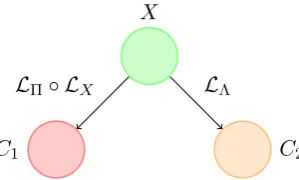
Figure 6: An ACG Perspective on Idioms as Lexical Items
idiomatic constants to the complex (derivational) objects they appear to be, and the mapping LΠ fromAtoC1. Here we see that idioms are both lexical items (elements ofX) and derived (com-plex objects inA). This is shown in figure 5.
Indeed, the standard approach to idioms, whereby they are simply lexical items, is obtained from ours by eliminating the HOSAby compos-ing the mapsLX and LΠ, as shown in figure 6. Distinguishing betweenA andX, as we propose here, does however have two (potential) benefits, as discussed in sections 4.1, where we propose a similar approach to morphological suppletion, and 5.2, where we suggest that our approach has some psychological plausibility.
4.1 Interface Uniformity
In decompositional (i.e. non-lexicalist) ap-proaches to syntax, the notion of word-hood is divorced from the notion of syntactic terminal – words are conceived of as syntactically complex objects. In this sort of approach, an additional interface is needed to mediate between syntax and morphology, so as to permit suppletive forms
X
Y
C1
LΠ
C2
LΛ
A
LX
LY
Figure 7: A w-shaped ACG
(go +Past ;went). A natural idea is to take both the mapping from syntax to semantics and the one from syntax to morphology to be of the same kind; an extended transduction.
In our ACG setting, this amounts to introducing a new abstract languageY, and a new lexiconLY mapping terms inY to terms inA. The lexiconΠ fromAtoC1, the concrete language of strings, is replaced by one fromY toC1. This gives rise to a new ‘w-shaped’ way of combining ACGs, shown in figure 7. In the figure, we see that the deriva-tion tree language is no longer directly mapped to any derived structure language (and has become therefore a concrete language). Instead, it serves only to coordinate the abstract languagesX and Y, making sure that the strings and meanings they produce are ‘of the same derivation’. Note also that we are no longer able to eliminate the HOSA (and recover the standard approach to idioms out-lined in figure 6) as the relation betweenXandC1 (or betweenY andC2) is no longer functional.
Parsing in a w-shaped ACG is a matter of com-puting the inverse image of LΠ, then its image underLY, then its inverse image underLX, and then finally its image underLΛ; in other words,
[image:5.595.105.255.257.347.2]are both first order (as they map atomic types to atomic types) and lexicalized (abstract constants are mapped to non-combinators), and thus do in-deed preserve recognizability. Hence a regular set of strings (over the concrete HOSC1) is mapped to a regular set of trees over the abstract HOSX.
The fact that the mapsLX andLY are first or-der distinguishes our proposal formally from the related one proposed by Dras (1999) in the con-text of con-textual paraphrase, which, from our per-spective, introduces a sequence of ever more ab-stract languages, which are related to each other by maps of the same complexity as the mapsLΠ and LΛ. (There it is described as deriving tree languages which are then interpreted as derivation tree languages and so on.)
5 Linguistics
5.1 Constraints on Idiomatic Structure Linguists have formulated various constraints on possible idioms, in particular that dependents of a head can belong to an idiom only if the head belongs as well (Koopman and Sportiche, 1991; O’Grady, 1998). This constraint is naturally im-plemented in the present context by adopting a TAG-like perspective on derivations, whereby the operations of the grammar are left implicit, and the lexical items are treated as constants of higher rank. Then any first order subterm of a deriva-tion tree satisfies this constraint. This move addi-tionally rules out completely unlexicalized idioms and constructions.5 This perspective on deriva-tion trees can be easily adapted into the mini-malist grammar framework, where the rank of each lexical item is the number of positive selec-tor features6 it has.7 Although the set of well-formed minimalist derivation trees is not the al-gebra freely generated over this signature, it is a regular subset thereof.
5For example,λx, y.merge(move(y), z)is a first order
term over a HOS for (standard presentations of) minimalist derivations. It could be the image of some idiom under the mapLS.
6Recall that minimalist grammar categories are finite lists
of syntactic features, which are either positive or negative versions of either licensing (for themoveoperation) or se-lection (formerge) feature types.
7It is also not necessary in the TAG framework, where
one could treat elementary trees as nullary function symbols,
andadjoinandsubstituteas binary ones.
5.1.1 Syntactic Permeability
Empirical ‘puzzles’ about idioms, such as their variable permeability to syntactic operations (Nunberg et al., 1994), must be dealt with by fine-tuning the syntactic analysis; canonical anal-yses of voice phenomena in MGs (as in (Kobele, 2006)) treat the voice head as taking a verb phrase as an argument – an idiom which is not passiviz-able must include the voice head, whereas one which is must not.
As an example, consider the idiom “kick the bucket” (‘die’), which cannot be passivized.8 Adopting the na¨ıve formalization of standard transformational analyses from Kobele (2006), we could represent the idiomatic interpreta-tion of this phrase by means of a unary ab-stract constant ckick the bucket, which is inter-preted semantically as die, and derivationally asλx.act(kick(the(bucket)))(x).9 On the other hand, idioms like “let the cat out of the bag” (‘reveal a secret’) can be passivized (and then sub-ject to raising, and other transformations). While there is no analysis of prepositions in Kobele (2006), we can treatletas a raising to object verb, and adapt a small clause analysis of the following form:10
[Vlet[sc[Dthe cat]out[Pof the bag]]
We represent this in terms of a
nullary abstract constant clet cat out of bag,
which is semantically interpreted as
λx.some(secret)(λy.reveal(y)(x)), and which is derivationally interpreted as let(out(P(of(the(bag))))(the(cat)))
Finally, an idiom like “throw the book at” (‘punish severely’) illustrates the need for con-stants corresponding not to subtrees, but to deriva-tion tree contexts. Adopting again an overly simplistic approach to prepositions, we repre-sent this passivizible idiom using the unary ab-stract constant cthrow book at, which is seman-tically interpreted as λx.severely(punish(x)),
8This means that sentences like “The bucket was kicked”
can have only a literal interpretation.
9Lexical entries:
hact,=V+k=d vi hkick,=d Vi hthe,=n d-k-qi hbucket,ni
10Lexical entries:
and is interpreted as the derivational term λx.Adj(throw(the(book)))(P(at(x))).11
5.1.2 Transformationalism
In general, treating idioms via extended trans-ducers (as done here) puts great pressure on the type system of the grammar formalism (if it is de-sired to have a single abstract constant represent-ing the idiom in all of its glory). As one of the arguments for transformational analysis continues to be the variety of syntactic contexts which per-mits idiomatic interpretation, it is perhaps no sur-prise that the minimalist analyses sketched here go some ways in achieving the ideal of assign-ing a sassign-ingle type to the idiomatic abstract con-stant. However, the particular constraints on id-iom shape in place here rule out certain otherwise reasonable transformational analyses, such as the implementation of the raising analysis of relative clauses in Kobele (2006).
5.2 Psycholinguistics
Adopting a ‘levels’ perspective on the relation between grammar and parser (Marr, 1982), a ‘search’ perspective on parsing still needs a way to order nodes in the agenda. A natural strategy here is to use weights assigned to lexical entries. Perhaps the main substantive difference between our proposal and ‘standard’ treatments of idioms is the availability of two ‘lexica’ – the HOSs A (for derivations) and X (for idioms) – for dif-ferential weighting (see figure 5). The standard treatment, according to which idioms are lexical items (as in figure 6), does not have access to the HOSA. We will need to make a linking theory precise, but, generally speaking, this setup will predict that idioms behave in certain respects as though they were indeed composed of the syntac-tic atoms it appears they contain. We claim that the literature on priming is consistent with this prediction (Cutting and Bock, 1997; Titone and Connine, 1999; Peterson et al., 2001; Sprenger et al., 2006; Konopka and Bock, 2009). Priming is the phenomenon whereby a prior exposure to some linguistic object token facilitates the com-prehension of another token of that type, and in-creases the likelihood of producing a token of that type.
11Lexical entries:
hthrow,=d Vi hAdj,=V=p Vi hat,=d+k+q Pi hP,=P pi hbook,ni hcat,ni
In order to account for the fact that words can prime idioms which contain them, and vice versa, Sprenger et al. (2006) (following Cutting and Bock (1997)) propose that the mental lexicon is structured as a graph; the lexicon contains id-ioms, along with links to their constituent parts. Priming works by increasing the weights attached not only to a single node, but to all of its immedi-ate neighbors. (And thuskickwill prime the node
kickas well as its neighborskick the bucket,kick the can, . . . ) One defect of this account is that it does not explainwhy certain nodes are linked to others. Still, it bears an obvious resemblance to the ACG account presented here – its nodes are the elements of HOSX(which is the HOSAwith extra constants for idioms), and the links are given by the lexiconLX.
First, a (sketch of a) na¨ıve linking theory. We assume that priming effects are to be captured by updating weights on lexical items, and that the weights of all and only the lexical items in a successful parse are increased.12 Under this view, priming effects come about due to an in-creased weight of the primed lexical item as a result of having used it previously in a success-ful parse. For our preliminary purposes here, we will say that a derivationd0 primes derivation d (of sentence s) given grammar G just in case
WeightG
d0(d) > WeightG(d), where Gx is
the result of updating the weights of lexical items in parse x (i.e. the weight of d is higher in the reweighted grammar than in the original gram-mar).
Now, taking the unique derivation d0 of the sentence “John kicked Mary” as our primer, and the idiomatic derivationdof the sentence “Susan will kick the bucket” as our primee, we have that the weight ofdin the ‘idiomatic’ HOSX is the same as inXd0, but that the weight in the
‘deriva-tional’ HOSAis less than inAd0 (as the weight of
the constantckick was increased after parsingd0). Taking the overall weight of a termtinGto be a monotonic functionf of its weight inXand its weight inA, we have thatdis primed.
12This is an ‘off-line’ implementation of priming effects,
6 Conclusion
The noncompositional aspect of idiomatic expres-sions is most naturally dealt with in terms of ex-tended transducers. The ACG perspective allows for a generalization to a wide variety of transducer types, and language families. In addition to being a principled formal account of idioms, the present story allows for a natural connection to the psy-cholinguistic data.
What we have not explained is the intuition that, in some idioms (such as let the cat out of the bag), certain parts of the idioms (e.g.the cat) seem to be associated with certain parts of the id-iomatic meaning (e.g.the secret). That this intu-ition may in fact be deserving of an explanation is suggested by Horn (2003) (building on work by Nunberg et al. (1994)), who argues that this sort of ‘semantic transparency’ is a good predictor of whether the internal structure of an idiom can be subject to syntactic manipulation.
References
Hendrik Barendregt. 1984. The Lambda Calculus: Its syntax and semantics, volume 103 ofStudies in Logic and the Foundations of Mathematics. Else-vier, Amsterdam.
Noam Chomsky. 1995. The Minimalist Program. MIT Press, Cambridge, Massachusetts.
J. Cooper Cutting and Kathryn Bock. 1997. That’s the way the cookie bounces: Syntactic and se-mantic components of experimentally elicited id-iom blends.Memory and Cognition, 25(1):57–71. Philippe de Groote and Sylvain Pogodalla. 2004.
On the expressive power of Abstract Catego-rial Grammars: Representing Context-Free for-malisms. Journal of Logic, Language and Infor-mation, 13(4):421–438.
Philippe de Groote. 2001. Towards abstract categorial grammars. InAssociation for Computational Lin-guistics, 39th Annual Meeting and 10th Conference of the European Chapter, Proceedings of the Con-ference, pages 148–155.
Anna Maria Di Sciullo and Edwin Williams. 1987. On the definition of word, volume 14 ofLinguistic Inquiry Monographs. MIT Press.
Mark Dras. 1999. Tree Adjoining Grammar and the Reluctant Paraphrasing of Text. Ph.D. thesis, Mac-quarie University.
Jonathan Graehl, Kevin Knight, and Jonathan May. 2008. Training tree transducers. Computational Linguistics, 34(3):391–427.
George M. Horn. 2003. Idioms, metaphors and syn-tactic mobility. Journal of Linguistics, 39:245–273.
Aravind K. Joshi. 1987. An introduction to tree ad-joining grammars. In A. Manaster-Ramer, editor, Mathematics of Language. John Benjamins, Ams-terdam.
Makoto Kanazawa. 2010. Second-order abstract cat-egorial grammars as hyperedge replacement gram-mars.Journal of Logic, Language and Information, 19:137–161.
Gregory M. Kobele, Christian Retor´e, and Sylvain Sal-vati. 2007. An automata theoretic approach to min-imalism. In James Rogers and Stephan Kepser, edi-tors,Proceedings of the Workshop Model-Theoretic Syntax at 10; ESSLLI ’07, Dublin.
Gregory M. Kobele. 2006.Generating Copies: An in-vestigation into structural identity in language and grammar. Ph.D. thesis, University of California, Los Angeles.
Agnieszka E. Konopka and Kathryn Bock. 2009. Lex-ical of syntactic control of sentence formulation? Structural generalizations from idiom production. Cognitive Psychology, 58:68–101.
Hilda Koopman and Dominique Sportiche. 1991. The position of subjects.Lingua, 85:211–258.
David Marr. 1982. Vision. W. H. Freeman and Com-pany, New York.
Uwe M¨onnich. 2007. Minimalist syntax, multi-ple regular tree grammars and direction preserv-ing tree transductions. In James Rogers and Stephan Kepser, editors,Proceedings of the Work-shop Model-Theoretic Syntax at 10; ESSLLI ’07, Dublin.
Frank Morawietz. 2003.Two-Step Approaches to Nat-ural Language Formalisms, volume 64 ofStudies in Generative Grammar. Mouton de Gruyter.
Rebecca Nesson. 2009. Synchronous and Multi-componenet Tree-Adjoining Grammars: Complex-ity, Algorithms and Linguistic Applications. Ph.D. thesis, Harvard University.
Geoffrey Nunberg, Ivan A. Sag, and Thomas Wasow. 1994. Idioms. Language, 70(3):491–538.
William O’Grady. 1998. The syntax of idioms. Natu-ral Language and Linguistic Theory, 16:279–312. Robert R. Peterson, Curt Burgess, Gary S. Dell, and
Kathleen M. Eberhard. 2001. Dissociation be-tween syntactic and semantic processing during idiom comprehension. Journal of Experimental Psychology: Learning, Memory, and Cognition, 27(5):1223–1237.
Sylvain Pogodalla. 2007. Generalizing a proof-theoretic account of scope ambiguity. In J. Geertzen, E. Thijsse, H. Bunt, and A. Schiffrin, editors,Proceedings of the 7th International Work-shop on Computational Semantics (IWCS), pages 154–165.
11th conference on Formal Grammar, pages 143– 156. CSLI Publications.
Stuart M. Shieber and Yves Schabes. 1990. Syn-chronous tree-adjoining grammars. InProceedings of the 13th International Conference on Computa-tional Linguistics (COLING), volume 3, pages 253– 258, Helsinki,Finland.
Stuart M. Shieber. 1994. Restricting the weak-generative capacity of synchronous tree-adjoining grammars. Computational Intelligence, 10(4):371– 385.
Stuart M. Shieber. 2006. Unifying synchronous tree-adjoining grammars and tree transducers via bi-morphisms. In Proceedings of the 11th Confer-ence of the European Chapter of the Association for Computational Linguistics (EACL-2006), pages 377–384, Trento.
L. Robert Slevc and Victor S. Ferreira. to ap-pear. To err is human; to structurally prime from errors is also human. Journal of Experimental Psychology: Learning, Memory, and Cognition. doi:10.1037/a0029525.
Simone A. Sprenger, Willem J. M. Levelt, and Gerard Kempen. 2006. Lexical access during the produc-tion of idiomatic phrases. Journal of Memory and Language, 54:161–184.
Edward P. Stabler. 1997. Derivational minimal-ism. In Christian Retor´e, editor,Logical Aspects of Computational Linguistics, volume 1328 ofLecture Notes in Computer Science, pages 68–95. Springer-Verlag, Berlin.