THE IMPACT OF NETWORKS
ON EFFECTUATION OVER
CAUSATION PROCESSES
Master Thesis Business Administration
Author: Sanne Woertman
s1273906 [email protected] Master Business Administration, International Management track
First supervisor: Msc. M.R. Stienstra Second supervisor: Dr. R. Harms
I
Acknowledgements
This master thesis is part of my graduation at the University of Twente. Writing this thesis totally enriched my existing knowledge and competencies. I am thankful for having the experience to learn about writing my own research project. However, without some important persons this project would not exist and therefore I take this opportunity to thank these
persons.
First of all, I would like to thank my first supervisor Msc Martin Stienstra for
introducing me to the interesting EPICC project and supervise me in the development of this master thesis. I am very grateful for his feedback and guidance which kept me focused. I also would like to thank my second supervisor Dr. Rainer Harms for his useful comments and
time.
` Second I would like to thank the professors Paula and Basil Englis from Berry College for their help with finding the American student entrepreneurs. I would also like to thank
them for making sure I would have a pleasant stay in America and I felt very welcome at your college. I would like to express my very great appreciation to Marsha Wilson for providing me with enough cases and questionnaires. I am very grateful for her time and patience. Without Jolien Pot the trip to the USA would not have been the same. I would like to thank her for the great time we had in the USA.
Furthermore I would like to thank my family and friends for supporting me during these months of writing my master thesis, but also during my whole Master‟s study. I know I was not able to join many activities and I am thankful for their understanding. In particularly I would like to thank Sandra van Beek and Tim Woertman for their support and interest in my study, Thijs van der Bij for his patience and trust in me, Niels Robben for improving my English and Lana Ronk for her support and encouragement.
Finally yet importantly I would like to thank all American student entrepreneurs for
participating in this study. I know for many of them it was already a busy period with finals and their cooperation means a lot to me. Without them this research would not have been successful.
Zutphen, January 2014
II
Abstract
Aim of this study. The aim of this study is to examine the relationship between network integration and the use of effectuation in the decision making process. This research builds on the effectuation literature and network theory. It aims at explaining the influence of networks on entrepreneurial processes. Effectuation research is encouraged by a lot of researchers and literature on the combination of networks and effectuation is limited.
Methodology. In this exploratory research a mixed method design in combination with a quasi-experiment is used. Data was collected among seventeen American student
entrepreneurs in Rome, Georgia. The participants were found with the help of professional connections of the University of Twente and through snowball sampling. Participants were presented a case in which they had to solve ten decision problems using the think aloud method so that decision making processes could be analyzed. In addition they were given a questionnaire to be filled out afterwards. The questionnaire consisted of several questions regarding use of networks adapted from the survey of Cooper, Scott & Baggio (2009). The interviews were transcribed and coded in order to transform all data in quantitative measures. From the data two groups were created on network usage: high and low network integration. These groups were compared on five effectuation processes using the Independent Samples T-test. Control variables are tested for using the Two Way Between-Subjects ANOVA.
Results. The results indicate that no significant differences exist between student
entrepreneurs having a low or high degree of network integration and the use of effectuation processes. The hypotheses could not be supported with empirical evidence. The findings showed that religion, experience, age, sex, and general reliance on network in the start-up phase do have a significant effect on use of the means based principle. Age significantly influences usage of embracing contingencies. All control variables significantly influenced the overall effectuation processes. Furthermore, an analysis of effectuation per problem area
showed that significant differences exist between the two network groups in several areas.
Future research. Recommendations for future research refer to similar studies using a bigger
III
Table of Contents
Acknowledgements ... I Abstract ... II List of Tables ... V
Chapter 1 Introduction... 1
1.1 Background ... 1
1.2 Context ... 1
1.3 Entrepreneurial processes ... 2
1.4 Research gap ... 4
1.4.1 Research question ... 4
1.5 Overview ... 4
Chapter 2 Literature Review ... 5
2.1 Networks ... 5
2.2 Effectuation ... 11
2.3 Networks and principles of effectuation... 14
2.3.1 Affordable loss ... 15
2.3.2 Means based ... 16
2.3.3 Creation of the future ... 17
2.3.4 Use of alliances and partnerships ... 17
2.3.5 Embracing contingencies ... 18
Chapter 3 Methodology ... 19
3.1 Research setting and instruments ... 19
3.2 Think aloud method... 20
3.3 The coding process ... 21
3.4 Network survey ... 23
3.5 Sample ... 24
3.6 Operationalization ... 25
3.6.1 Independent variable ... 25
3.6.2 Dependent variable ... 26
3.6.3 Control variables ... 26
3.7 Integrity ... 27
3.8 Data Analysis ... 29
Chapter 4 Results ... 31
4.1 Network integration on the affordable loss principle ... 31
4.2 Network integration on the means based principle ... 32
IV
4.4 Network integration on the use of alliances and partnerships principle ... 35
4.5 Networks and embracing contingencies ... 36
4.6 Covariance ... 37
4.7 Overall use of effectuation processes ... 38
Chapter 5 Discussion & Conclusion ... 42
5.1 Discussion ... 42
5.1.1 Limitations and critics ... 43
5.1.2 Implications for practice ... 44
5.2 Conclusion ... 44
5.3 Recommendations for future research ... 45
References ... 46
Appendix A ... 49
Appendix B ... 56
Appendix C ... 59
V
List of Tables
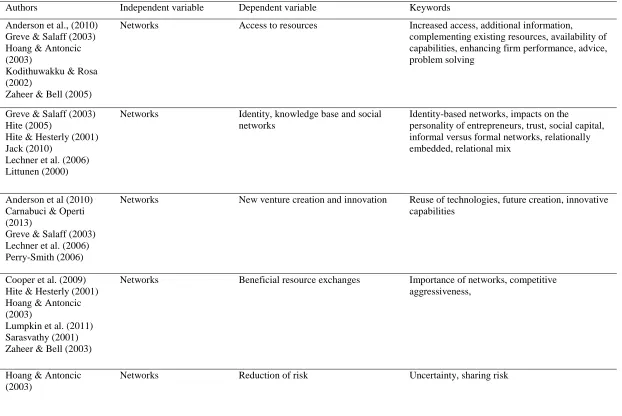
Table 1. Summary of the network literature ... 10
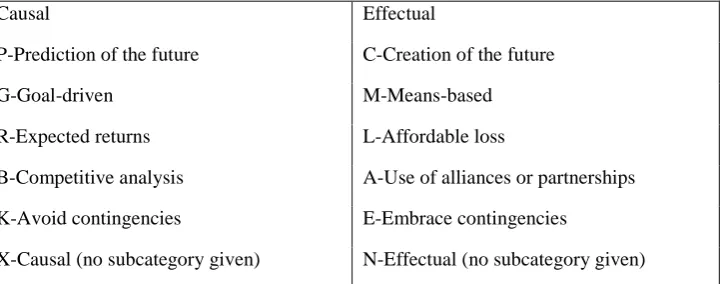
Table 2: Coding scheme, based on Sarasvathy (2008: p.55) ... 22
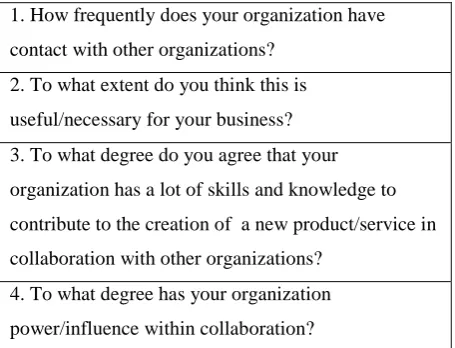
Table 3: Survey questions used in this study adapted from Cooper et al. (2009) ... 23
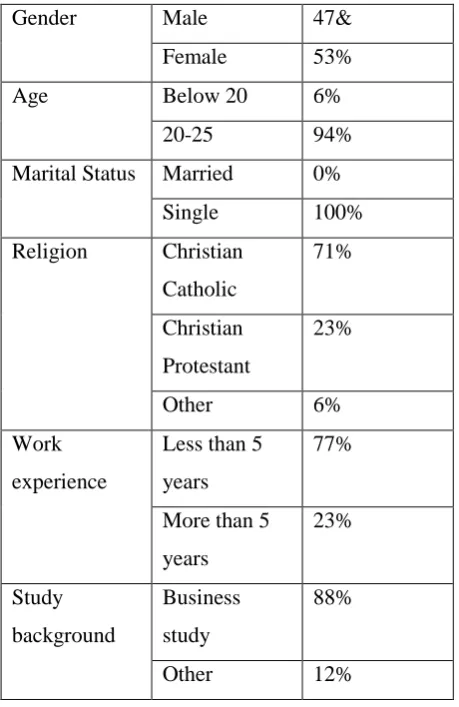
Table 4: Sample specifications ... 25
Table 5. Results hypothesis 1 Shapiro-Wilk test for normality ... 32
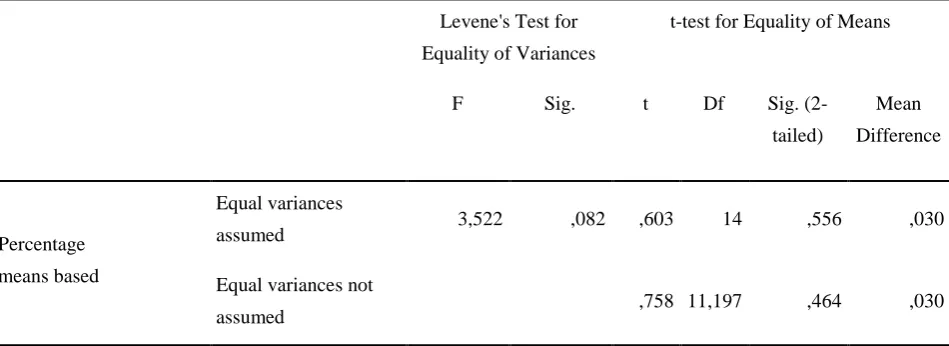
Table 6. Results hypothesis 1 Independent Samples T-test ... 32
Table 7. Results hypothesis 2 Shapiro-Wilk test for normality ... 33
Table 8. Results hypothesis 2 Independent Samples T-test ... 33
Table 9. Results hypothesis 3 Shapiro-Wilk test for normality ... 34
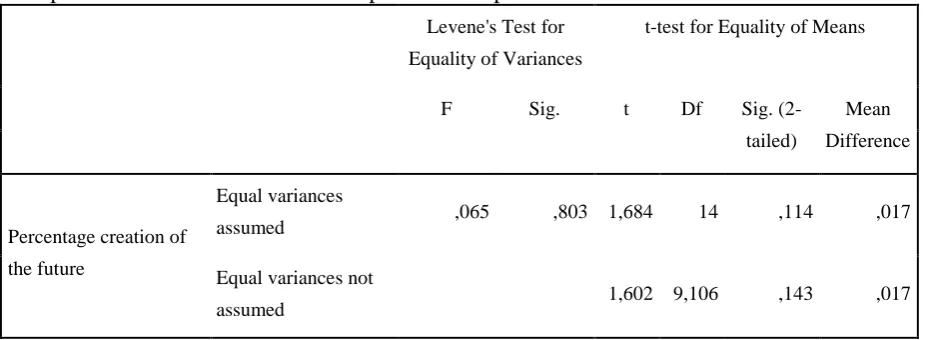
Table 10. Results hypothesis 3 Independent Samples Test ... 34
Table 11. Results hypothesis 4 Shapiro-Wilk test for normality ... 35
Table. 12 Results hypothesis 4 Independent Samples T-test ... 36
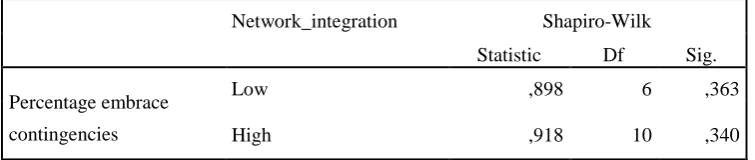
Table 13. Results hypothesis 5 Shapiro-Wilk test for normality ... 36
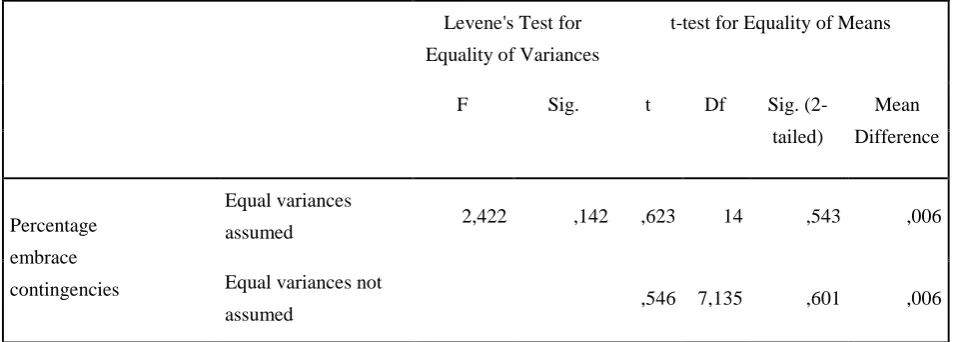
Table 14. Results hypothesis 5 Independent Samples T- test ... 37
Table 15. Results of the Two Way ANOVA Between-Subjects Effects ... 38
Table 16. Results Shapiro-Wilk test for normality on overall use of effectuation ... 39
Table 17. Results of the Independent Samples T-test on the effect of network integration on effectuation processes ... 39
Table 18. Results Two Way ANOVA Between-Subjects Effects Percentage Effectuation from the total case ... 40
Table 19: Results for the control variables on affordable loss ... 59
Table 20: Results for the control variables on means based ... 60
Table 21: Result for the control variables on creation of the future ... 61
Table 22: Result for the control variables on use of alliances and partnerships ... 62
Table 23: Results for the control variables on embracing contingencies ... 63
1
Chapter 1 Introduction
1.1 Background
In 2012, 43% of the Americans were positive about the opportunities regarding
entrepreneurship which was an increase of 20% in comparison with one year earlier (Global Entrepreneurship Monitor, 2012, p. 7). Furthermore, the Total Entrepreneurial Activity reached its highest level in 2012 since it was first reported in 1999 (GEM, 2012). Next to these numbers evidence is found within the literature that the field of entrepreneurship is experiencing an upward trend due to the increase of the number of articles published (Busenitz, West, Shepherd, Nelson, Chandler and Zacharakis, 2003).
In the field of entrepreneurship two frequently asked questions are what exactly do entrepreneurs? and how do they do it? (Moroz & Hindle, 2011). There are also studies in the field of entrepreneurship why some entrepreneurs succeed and some of them fail (Aldrich & Martinez, 2001). Although there are many obstacles, entrepreneurs differ a lot from each other and a few entrepreneurs are able to create better outcomes. One way to look at questions of „how entrepreneurs do it‟ is by looking at the underlying entrepreneurial processes (Moroz
& Hindle, 2011).The results from a literature review held by Moroz and Hindle (2011) indicate that different perspectives exist on answering these questions. Decision making processes used by entrepreneurs in comparison with managers is addresses by Busenitz and
Barney (1997). Entrepreneurs were found to make more use of non-rational decision making processes due to the uncertainty and complexity that comes along with starting a business.
Entrepreneurs making non-rational decisions are more likely to do so in certain
circumstances: if entrepreneurs have started the firm themselves, if they are in a network, if they think they can use their own skills in a business and if they are more positive towards what their business will do as others in the same business (McCarthy, Schoorman & Cooper, 1993).
1.2 Context
Entrepreneurship as defined by Hindle (2010) is based on the entrepreneurial process
literature: „Entrepreneurship is the process of evaluating, committing to and achieving, under
contextual constraints, the creation of new value from new knowledge for the benefit of
defined stakeholders‟ (Hindle, 2010; p.609).
A trend noticeable is the increase in studies about networks in the field of
2
used theory developed for explaining firm performance (Barney, 2001; Zaheer & Bell, 2005). The RBV focuses on internal resources and capabilities. Some scholars however, argue that
besides these internal resources, one has to look at external resources. In contrast with the RBV, network theory focuses on the existence of external resources and capabilities through partnerships (Zaheer & Bell, 2005). Lumpkin, Moss, Gras, Kato and Amezcua (2013) studied whether entrepreneurial processes are influenced by the antecedents and outcomes that make entrepreneurship unique. Multiple stakeholders and access to resources are two of the
antecedents that were studied in their relationship between outcomes such as satisfying multiple stakeholders. The study showed that the entrepreneurial dimensions autonomy, competitive aggressiveness and risk taking were influenced by the presence of multiple stakeholders. These findings indicate networks have an influence on entrepreneurial outcomes. In satisfying the multiple stakeholders and achieve solutions, entrepreneurial processes differed (Lumpkin et al., 2013).
In addition, there are three key elements which explain the impact of networks on entrepreneurial outcomes: content, governance mechanisms and network structure (Hoang and Antoncic, 2003). With network content the media through which firms have access to resources which are held by others is meant. Governance mechanisms is described as how the network exchange is coordinated and the emphasis is on the importance of trust between the actors. The last element, network structure, refers to the patterns of the relationship (Hoang and Antoncic, 2003). Today networks are seen as an important element of entrepreneurship
(Jack, 2010)
1.3 Entrepreneurial processes
Studying entrepreneurship in a process oriented way provides „much unexplored potential for understanding‟ entrepreneurship as a research field (Moroz & Hindle, 2011, p. 3). It also
offers a lot of potential for unifying the disparate research domain. When an academic looks at entrepreneurship with a focus on process, they look at what entrepreneurs actually do and how they do it (Moroz & Hindle, 2011). Different models exist based on this process oriented view, but in one important aspect the different views show similarities. The majority of the models indicate that the development of a new organization follows a „linear, progressive and sequential process with identifiable stages‟ (Steyaert, 2007, p.457). There is however, some
3
for more empirical work and a harmonized model when it comes to entrepreneurial processes (Moroz & Hindle, 2011).
Earlier research on entrepreneurial processes suggested that entrepreneurs are in control of the situation, they know how to succeed and which market to target. However, with the effectuation model introduced by Sarasvathy (2001) was showed that entrepreneurs work in different ways to be successful and they work with the resources they possess. The
effectuation model of Sarasvathy (2001) offers insight into what is generic and distinct to the entrepreneurial process (Moroz & Hindle, 2011) and represents a shift in the way we
understand entrepreneurship (Perry, Chandler & Markova, 2011). Generic refers to „all processes that are “entrepreneurial” do this‟ and with distinct „only entrepreneurial
processes do this‟ are meant (Moroz & Hindle, 2011; p. 1). Sarasvathy (2001) discusses the
difference between causation and effectuation processes of entrepreneurs in the new venture development process. Causation is defined as „processes that take a particular effect as given and focus on selecting between means to create that effect‟ and effectuation as „processes that
take a set of means as given and focus on selecting between possible effect that can be created
with that set of means‟(Sarasvathy, 2001; p. 245). Causation is coherent with planned
strategy approaches and effectuation, in contrast, is coherent with emergent or non-predictive approaches (Chandler, DeTienne, McKelvie & Mumford, 2011). In addition, Sarasvathy (2001) introduced five different effectuation principles which will be discussed in Chapter 2.
The theoretical concepts of causation and effectuation can be applied in a broader context (Harms & Schiele, 2012). When entrepreneurs make their decisions while setting up a
4
principles as such and combined with networks will be explained into more depth in Chapter 2.
1.4 Research gap
Although a lot of research already has been conducted in the field of networks, it is still important to keep focusing on the impact of networks on entrepreneurial processes and outcomes especially because there is a lack of qualitative studies (Hoang & Antoncic, 2003). In addition, entrepreneurs devote quite some time to the development and maintenance of relationships in order to access resources (Greve & Salaff, 2003). Furthermore, effectuation
research is encouraged by a lot of researchers and literature on the combination of networks and effectuation is limited (Perry et al., 2011). As far as this literature study goes, limited
authors actually tested the influence of networks on effectuation processes.
This will lead to the aim of this research which is to examine the relationship between the degree of network integration and the use of effectuation in the decision making process.
1.4.1 Research question
The following research question is formulated:
To what extent, does the degree of network integration influences the use of effectuation over
causation processes?
To answer this question, entrepreneurs will be asked to work on a case in which they have to set up a coffee company from the beginning until year ten by thinking aloud. Using this method, the entrepreneurial processes can be analyzed and classified as either causal or
effectual. After this qualitative interview the participants will fill out a questionnaire in which questions related to networks are asked.
1.5 Overview
5
Chapter 2 Literature Review
2.1 Networks
There has been an increase in popularity of network theory in different research fields Borgatti & Halgin, 2011), but in the field of entrepreneurship this increase was „dramatic‟ (Jack, 2010; p. 120). In network research there are two noticeable trends (Hoang & Antoncic, 2003). The first research stream is outcome-oriented and focuses on the impact of networks on entrepreneurial processes and outcomes. Entrepreneurial outcomes are the consequences of entrepreneurial processes, for example a new business, the exit of a business or merging with other business (Hoang & Antoncic, 2003). The other stream is process-oriented and
investigates networks as the dependent variable. The creation and development of a network and the impact of new-venture creation on this development is assessed (Hoang & Antoncic, 2003). However, this second stream exist of fewer studies than the first research stream. Most studies so far have investigated the role of networks on entrepreneurial outcomes because since the rise of network research in the entrepreneurship field, scholars got the task to
explore the consequences for firms being integrated in a network (Hoang & Antoncic, 2003). Due to the increased popularity of network research amongst other things, nowadays some confusion exist about theorizing networks (Borgatti & Halgin, 2011). First of all a distinction can be made between network theory and theory of a network (Borgatti & Halgin, 2011). The latter describes the forms, characteristics and structures of the networks and why
they are as they are. This research however focuses on network theory which is about the variables who influence network structures.
But what is a network? A network can be defined in its broad terms as „a set of actors and the set of ties representing some relationship-or lack of relationship- between the actors‟
(Brass, Butterfield & Skaggs, 1998; p.17). How a network is defined depends on which actors and what ties the researcher has chosen to study. The visual representation of a network consist of a drawing of dots which are connected with lines (Baggio et al., 2010). Network integration refers to the number of connections between individuals in a network (Louch, 2000). A network as defined by Brass et al. (1998) is in line with the definition of Hoang and Antoncic (2003) „consisting of a set of actors and some set of relationships that link them‟ (Hoang & Antoncic, 2003; p. 40). These rather general definitions require additional information (Jack, 2010). Networks are „complex, take many forms, are fluid, flexible, and
dynamic, constantly changing and evolving to suit individual and organizational needs‟ (Jack,
6
There is however one important difference between these two, namely groups have
boundaries and networks do not. The comparison of networks and groups illustrates the broad
sense in which the concept can be interpreted. This dynamic definition (Jack, 2010) is also used in this study, as networks are referred to in the broad sense and there are no limits to specific types of networks thus no boundaries.
The confusion about network research have led to some critiques (Jack, 2010). First of all a core network theory is lacking, research findings are inconsistent and definitions differ. Although confusion exists, network research can still be used because the majority of the studies can be classified under either outcome-oriented or processes-oriented studies
explained by Hoang and Antoncic (2003). Studies using quantitative methods exist and there is a need for more qualitative studies in the field of networks because qualitative studies proved more insight into what is really going on in a network (Jack, 2010). Despite these critics, it remains important to study networks because of the significant influences networks have on individuals and organizations. Further, a lot of strategy and entrepreneurship
academics have agreed upon the central role of networks in successful firms (Hite & Hesterly, 2001).
Through networks entrepreneurs have access to additional information and resources which are complement to their existing information and resources (Greve & Salaff, 2003). When these external resources and capabilities are available to the firm, this enhances
entrepreneurial effectiveness and firm performance (Anderson, Dodd & Jack, 2010; Zaheer &
Bell, 2005). Entrepreneurial growth is correlated with network practices (Anderson et al., 2010). In addition, networks are used by firms in order to reduce risk by sharing risk with external partners (Hoang & Antoncic, 2003).
An important aspect of networks is social capital which refers to the contacts that facilitate organizational goals and lead to successful results (Greve & Salaff, 2003). In this research there is not distinguished between different types of contacts. However it is important to note the existence of variety in important contacts that are part of the social capital in order to be clear about to whom participants in this study may refer to as part of their networks. Entrepreneurial networks can be either informal or formal (Littunen, 2000). These „facilitating‟ contacts also include members of the informal network (Greve & Salaff,
7
from each other in general. Relational embedded ties change over time and can be managed by the entrepreneur (Hite, 2005). The ties evolve by making use of three evolutionary
processes: network entry, social leverage and trust facilitation.
In addition, various development phases of creating a new venture require different types of networks (Lechner, Dowling & Welpe, 2006). Aligning and adapting networks in order to gain access to the required resources for success is called „the dynamic network evolution‟ (Hite & Hesterly, 2001). Different network types are part of the relational mix:
social-, reputational-, marketing information-, co-opetition and co-operative technology networks (Lechner et al., 2006). The relational mix changes when firms go from one phase to another in the firm development. Networks evolve from identity- based to calculative-based as firms grow and mature (Hite & Hesterly, 2001). Identity-based networks refers to networks in which the majority of its members are from personal and social life. In contrast,
calculative-based networks are based on market ties and provide greater resource availability. Next to the use of different types of networks in different phases of creating a new venture, the frequency of contacts between the entrepreneur and other stakeholders varies in different phases (Greve & Salaff, 2003). In the first phase, motivation, the reliance on networks is limited the same way as in the third phase, establishment, where entrepreneurs either start the new firm or take over an existing firm. Entrepreneurs do not want to commit themselves to others immediately which might explain the low reliance on networks in the first phase, where entrepreneurs discuss their ideas on creating a new venture. This is
important to mention, because novices are under study in this thesis and therefore this has to be taken into account as well. In the second phase, planning, entrepreneurs are preparing to set up a business and in this phase they relied most on their (social) networks. Furthermore, entrepreneurs devote quite some time to the development and maintenance of relationships in order to access information (Greve & Salaff, 2003).
Thus, although novices try not to commit themselves in a very early stage, this does not means they do not make use of networks at all as they make use of networks such as the identity-based networks (Hite & Hesterly, 2001).
8
because it supports networks may be used to explain effectuation processes. Networks not only have an influence on individuals but also on how organizations are managed, which
illustrates the impact networks may have (Jack, 2010).
One important element of relationships which characterize the relationship is strength (Perry-Smith, 2006). Improving stakeholder communication, cohesiveness, knowledge management and innovation improve the effectiveness of organizational collaboration (Cooper et al., 2009). However, this does not count for creativity in dealing with scarcity of resources, another entrepreneurial outcome influenced by social networks (Kodithuwakku & Rosa, 2002). „Successful‟ entrepreneurs are found to be more creative in doing so
(Kodithuwakku & Rosa, 2002; p. 431).
Relationships between entrepreneurs change due to the constantly changing environment and affect the personality of an entrepreneur (Littunen, 2000). The effect of network position on the creativity of individuals was tested by Perry-Smith (2006).
Relationships with a lower degree and lower closeness and thus a weaker relationship, was found to be enhancing creativity. Strong relationships were not correlated with creativity. One explanation for this is that strong relationships are likely to exist between similar individuals and weak relationships are non-redundant connections (Perry-Smith, 2006). Strong
relationships are often moving towards conformity bounded by rules, which does not enhance creativity of individuals in this network. Although strength of the network is beyond the scope of this thesis and therefore not particularly measured, it is important to take into account that
strength may be of influence on creativity.
As discussed briefly in Chapter 1, there are three key elements which explain the impact of networks on entrepreneurial outcomes: network content, governance mechanisms and network structure (Hoang & Antoncic, 2003). Network content refers to the media through which firms have access to resources which are held by others. Governance
mechanisms is described as how the network exchange is coordinated and the emphasis is on the importance of trust between the actors. Very often this is on the basis of open ended contracts. The last element, network structure, refers to the patterns of ties between actors within the relationship. The pattern of ties binding the firms together is a function of the value the firm derives from the relationship (Zaheer & Bell, 2005). There are many ways of
9
10
Table 1. Summary of the network literature
Authors Independent variable Dependent variable Keywords
Anderson et al., (2010) Greve & Salaff (2003) Hoang & Antoncic (2003)
Kodithuwakku & Rosa (2002)
Zaheer & Bell (2005)
Networks Access to resources Increased access, additional information,
complementing existing resources, availability of capabilities, enhancing firm performance, advice, problem solving
Greve & Salaff (2003) Hite (2005)
Hite & Hesterly (2001) Jack (2010)
Lechner et al. (2006) Littunen (2000)
Networks Identity, knowledge base and social
networks
Identity-based networks, impacts on the
personality of entrepreneurs, trust, social capital, informal versus formal networks, relationally embedded, relational mix
Anderson et al (2010) Carnabuci & Operti (2013)
Greve & Salaff (2003) Lechner et al. (2006) Perry-Smith (2006)
Networks New venture creation and innovation Reuse of technologies, future creation, innovative
capabilities
Cooper et al. (2009) Hite & Hesterly (2001) Hoang & Antoncic (2003)
Lumpkin et al. (2011) Sarasvathy (2001) Zaheer & Bell (2003)
Networks Beneficial resource exchanges Importance of networks, competitive
aggressiveness,
Hoang & Antoncic (2003)
11
2.2 Effectuation
As discussed in Chapter 1, the focus in this study lies on the use effectuation over causation processes of entrepreneurs. A decision model in which effectuation processes are included is developed by Sarasvathy (2001). The reason for developing such a model was to provide theory on the creation of organizations. Creation is recognized as a view on entrepreneurial opportunities next to the allocative and discovery view (Sarasvathy, Dew, Velamuri and Venkataraman, 2003.
Effectuation is a useful theory of design which facilitates problem solving in uncertain situations (Sarasvathy, 2004). This is relevant for this study, because the participants solve problems in uncertain situation and the use of effectual processes that come along with solving these problems is predicted. There are three important subjects in which effectuation can be used as a tool for problem solving in uncertain situations (Sarasvathy, 2008). These are Knightian uncertainty, goal ambiguity and isotropy. The first aspect states the impossibility to anticipate on the future by probabilities. This problem is tackled by effectuators by creating the future instead of predicting it (Sarasvathy, 2001). Goal ambiguity emphasizes
entrepreneurial preferences are not given (Sarasvathy, 2008) and an effectuator can help
solving this problem by relying on who they are, what they know and whom they know. Furthermore, an effectuator changes goals along the way (Chandler et al, 2011). The last
element refers to the continuously changing environment. Following isotropy, it is unclear which parts of the environment needs to be focused on and/or ignored (Sarasvathy, 2008). In other words, the processes of effectuation are „fundamental decision units‟ of how for example organizations and markets are created (Sarasvathy, 2001, p. 259). Markets are created when there is no supply nor demand and one or both need to be created for
opportunities to exist (Sarasvathy et al., 2003). Effectuation is found to be significantly related with new-venture performance (Sarasvathy, 2008). With the introduction of this decision model, Sarasvathy forced a paradigmatic shift in the way entrepreneurship is understood (Perry et al., 2011).
It should be noted that Sarasvathy, as she discusses herself, did not want to position effectuation processes as superior or more efficient than causation processes, but provide an alternative logic for the decision-making process in uncertainty. In order to make the concept of effectuation better understandable and to discuss this complex process further into depth, a comparison between causation and effectuation is helpful.
12
effectuation processes entails a better outcome. The main difference between causation and effectuation lies in the set of choices the entrepreneur has in creating this website. In the latter
case, the entrepreneur is choosing between many effects by using specific set of means
whereas causators choose between means to create an effect (Sarasvathy, 2001). Causators are trying to find existing opportunities whereas effectuators co-create these opportunities with stakeholders (Read, Song & Smit, 2009). It is not that an entrepreneur can be classified as either a causator or an effectuator. Both processes can occur simultaneously and overlap depending on the circumstances (Sarasvathy, 2001). Entrepreneurs use both processes in different combinations and use of the processes depends on the level of expertise and a firm‟s life cycle (Sarasvathy, 2008).
Causation can be classified best under the predictive strategies and effectuation
processes are based on non-prediction, which explains the applicability in uncertain situations (Chandler et al., 2011). The distinctiveness of prediction and control as emphasized by
Wiltbank, Dew, Read and Sarasvathy (2006) is illustrated by the use of effectuation
processes. Entrepreneurs can use effectuation processes, which focus on control, to find out what the next step would be for their business. Another distinguish can be made by looking at the causal logic vs. the effectual logic which shows effectuators have a different view of the world (Sarasvathy, 2008). „To the extent we can control the future, we do not need to predict it‟ implies the effectual logic (Sarasvathy, 2008; p. 17). The effectual logic shows that
effectuators see the world as open, controllable and they see markets through an instrumental
viewpoint without avoiding failure (Sarasvathy, 2008). The fact effectuators may have a different worldview compared with causators becomes clearer when looking at the causal logic: „To the extent we can predict the future, we can control it‟ (Sarasvathy, 2008; p. 17).
Effectuation is actor dependent, focuses on exploiting contingencies, the context of relevance lies in human action and new markets are created through cooperative strategies. In contrast, causation is effect dependent, focuses on exploiting of knowledge, the context of relevance lies in nature and market share takes place in existent markets through competitive analyses (Sarasvathy, 2001).
13
found to make more use of effectuation processes than novices did. However, their study included a small sample size and was not controlled for age differences which might explain
the outcomes as well. There probably are differences between expert entrepreneurs and novices in their decision making processes, but these assumptions need to be taken with a lot of caution (Baron, 2008). The biggest threat here has to do with the post-test only design which is often used in entrepreneurship studies. In the post-test only design groups are compared on the base of a stimulus and no pre-test is conducted (Babbie, 2010). These designs are a threat for the internal validity because there are other factors such as age difference, selection of the entrepreneurs and differences in educational background which might be the explanation for the differences between expert entrepreneurs and novices (Baron, 2008). Therefore, more research on novices and the use of effectuation processes is needed and that is what this study provides.
„Effectual problems are problems of design and causal problems are problems of decision‟ (Sarasvathy, 2008; p. 73). Problems of design are solved with effectual logic in order to construct. Effectuators do not preset goals and do not follow a predicted path to reach these goals, but they live in reality and go from there to what is manageable and possible, preferring imaginative fiction and therefore design their path (Sarasvathy, 2004). This means effectuation includes creative thinking (Sarasvathy, 2001). Instead of focusing primarily on theories of the firm, scholars need to focus on theories of firm design, which is also the focus in effectuation research (Sarasvathy, 2004). Theories of firm design focus on the individual
level and aim to look at the cognitive processes at the semantic level of entrepreneurs. By studying these processes, more insight is given about how entrepreneurs create firms (Sarasvathy, 2004). The focus needs to be also on theories of design because first of all, theories of the firm see the firm and the entrepreneur as the same. The distinguish needs to be made between these two because both the entrepreneur and the firm contribute in a various way to firm performance (Sarasvathy, 2004). Another problem with theories of the firm is that they do not enough mark differences between firms because they assume homogeneity of goals. The last critique on theories of the firm refers to the emphasis of opportunism (Sarasvathy, 2004).
14
aspect of effectuation, is related with uncertainty (Chandler et al., 2011). With this results Chandler et al. (2011) positively contributed to the utility of the effectuation concept.
Effectuation research is useful because effectuators in generally get to explore more opportunities and those opportunities fit the entrepreneur better. This has to do with lower costs of failure which increase the number of opportunities taken and make the effectual entrepreneur survive longer. Effectuation may describe the thoughts and behavior related to creating a new business of entrepreneurs better compared to causation (Perry et al., 2011). Even though it is useful, it is not always easy to study effectuation. Researchers are restricted because of the complexity and difficulties they encounter in developing and validating measures of effectuation (Perry et al., 2011). However, this does not mean it is impossible to study the concept and even though complexity is taken into account, it is used as a positive input for studying effectuation and learn from it by giving insights in the relationship with networks.
2.3 Networks and principles of effectuation
The theory of effectuation by Sarasvathy (2001) consists of five core principles: affordable loss, means based, creation of the future, use of alliances and partnerships and embracing contingencies. According to Chandler et al. (2011), these principles are essential components of effectuation and help defining it. All principles emphasize the reduction of prediction and aim at controlling uncertain situations (Sarasvathy, 2001) in which preset goals are changed along the way (Chandler et al., 2011). Although all principles share these commonalities, it can be said that the five principles are distinct and focus on different aspects of effectuation (Chandler et al., 2011).
In studying effectuation, Sarasvathy (2008) also refers to networks. The interaction between effectual commitments leads to both an increase in network size and available resources, which shows the importance of networks (Sarasvathy, 2008). This interaction also helps creating new markets because at the same time stakeholders experience restrictions with their goals, which involves them into new structures. The final result of the new created market is depending on several factors of the interactions between the partners: „interactions
that become embodied in actual additional commitments, those that do not, and
non-negotiable exogenous states of nature‟ and these affect the network (Sarasvathy, 2008; p.108).
15
this, one only becomes a member of a network through actual commitments (Sarasvathy, 2008). Actual commitments among stakeholders are drivers for the effectual model (Wiltbank
et al., 2006). The principles of effectuation were assessed in order to go more in depth regarding this model. Means based, affordable loss and embracing contingencies help the stakeholders by making such effectual commitments because they provide criteria for taking action (Wiltbank et al., 2006).
The principles means based, use of alliances and partnerships and embracing
contingencies are significantly related with new-venture performance (Sarasvathy, 2008). In another study all principles, except affordable loss, were found significantly related with new-venture performance (Read et al., 2009). Overall, all the principles contribute to the reduction of failure of organizations in uncertainty.
Furthermore, the link between networks and effectuation is emphasized with problems of design as explained in section 2.2. Effectuation refers to problems of design which requires creative thinking (Sarasvathy, 2001). Making use of networks enhances creativity (Rodan & Galunic, 2004; Perry-Smith, 2006).
2.3.1 Affordable loss
In uncertainty, effectuators seek to find out what they are maximally willing to lose instead of calculating the expected returns (Sarasvathy, 2008; Wiltbank et al., 2006). By mentioning what they are maximally willing to lose, entrepreneurs limit their risk (Read et al., 2009). This often involves external alliances and partnerships, because with any investment an
entrepreneur is willing to lose a small amount of money (Sarasvathy, 2008). Relying on a network, the entrepreneur is able to test and explore markets without needing all the resources (Chandler et al., 2011).
Making use of the affordable loss principle the entrepreneur is forced to seek potential partners in their close area such as social network, geographic area or area of expertise
(Sarasvathy, 2008). The stakeholders are selected on their ability to create new opportunities. Working together makes the firm rely on aspects of trust which is supported by power and influence of the parties (Hoang & Antoncic, 2003). This is also referred to as network governance. Network governance can create a cost advantage over bureaucratic mechanisms (Hoang & Antoncic, 2003). Network structure impacts the resource flow when different network positions are used (Hoang & Antoncic, 2003).
16
affordable loss principle makes it possible to bring ideas to market without a lot of expenses (Sarasvathy, 2008). Using networks entrepreneurs may see this as an opportunity for a valuable, low-cost link to critical resources. Access to resources and funding is influenced by the presence of multiple stakeholders (Lumpkin et al., 2011).
The ultimate decision how much the entrepreneur is maximally willing to lose also depends on the entrepreneur‟s commitments (Sarasvathy, 2008).
Hypothesis 1: The higher the network integration, the more the entrepreneur will make use of
the affordable loss principle
2.3.2 Means based
The focus in this principle lies on the creation of new things on the base of existing means instead of meeting existing goals through the discovery of new ways to achieve them (Sarasvathy, 2008). When entrepreneurs base their decisions and actions on their identity, knowledge base, or social networks rather than superficial preferences, their decision are mean based (Sarasvathy, 2001). Using effectuation, the entrepreneur does not start with a specific goal, but with a set of means which emerge over time also because of the interaction with others. Identity (who I am), knowledge base (what I know) and social networks (whom I know) are the three categories of this principle (Sarasvathy, 2001) The categories are not mutually exclusive and independent. Identity may be changed by knowledge and social networks and vice versa.
After the entrepreneur started with these three categories, committing stakeholders are set in motion (Sarasvathy, 2008). „Extreme‟ effectuators always begin with mentioning partnerships. In order to create identity, knowledge base and social networks entrepreneurs use networks. The benefit of a network is the increased access to information. Entrepreneurs use networks consistently for this purpose (Hoang & Antoncic, 2003). The access to
knowledge which is often gained by the use of networks, influences firm performance (Zaheer & Bell, 2005). Furthermore, the access to diverse knowledge improves the creativity and
ability to implement ideas of a manager (Rodan & Galunic, 2004). In order to positively affect the information flows, trust is critical when it comes to optimizing the collaboration
(Hoang & Antoncic, 2003).
Hypothesis 2: The higher the network integration, the more the entrepreneur will make
17
2.3.3 Creation of the future
Instead of predicting the future, entrepreneurs can create the future because they feel sense of
control (Sarasvathy, 2001). This may also mean the future is (co) created with internal or external partners. Entrepreneurs using processes of effectuation rely on partnerships instead of performing competitive analyses and favor them even before goals of the organization are clear (Dew et al., 2009). This implies the partners have a say in shaping these goals and creating the future of an organization by providing new means and opportunities (Sarasvathy, 2008).
As discussed before effectuation is based on non-predictive strategies and this has to do with the uncertainty in which effectuators operate (Chandler et al., 2011). In uncertainty, it is really hard to make predictions or statistical inferences and therefore entrepreneurs rely more on partnerships. The future is partially shaped by investors, partners and customers (Sarasvathy, 2005). Networks are socially constructed for future creation (Anderson, Dodd and Jack, 2010). Entrepreneurs create markets together with the stakeholders they bring in, in order to sustain their ideas (Sarasvathy, 2001). Furthermore, the structure of the enterprise is kept open depending on the commitments made. This also results in a less urge for the
entrepreneur to predict the future. The ability of the firm to innovate by reuse of technologies, is influenced by an integrated network (Carnabuci & Operti, 2013). When firms combine a high integrated network with a diverse knowledge base, this even enhances the creation of new technologies.
Hypothesis 3: The higher the network integration, the more the entrepreneur will make use of
the „creation of the future‟ principle
2.3.4 Use of alliances and partnerships
Effectuators seek to reduce uncertainty and spread responsibilities by the use of alliances and partnerships instead of performing competitive analyses as causators will do (Sarasvathy, 2001; Chandler et al., 2011). In addition, the presence of multiple stakeholders influences the competitive aggressiveness of the entrepreneur (Lumpkin et al., 2011). By contracting with partners, firms seek to control the future (Sarasvathy, 2008). Many relations exist but those who share both the risk and the success of the collaboration encounter for effectual
18
emphasizing the importance of strategic partners (Sarasvathy, 2008) intent to reduce risk while working together with partners (Hoang and Antoncic, 2003). They see the use of
alliances and partnerships as a positive element in order to achieve beneficial resource exchanges. In addition to this, innovative capabilities and network structure both enhance organizational performance (Zaheer & Bell, 2005). Causators first define the market whereas effectuators aim to create the market together with multiple stakeholders, not worrying about the opportunity costs (Sarasvathy, 2001). By participating in shaping the organization and her goals, the partners have influence on future outcomes (Wiltbank et al., 2006) Entrepreneurs may also make use of alliances and partnerships by involving customers as partners or sell to them in an early stage (Sarasvathy, 2008).
Hypothesis 4: The higher the network integration, the more the entrepreneur will make use of
the „use of alliances and partnerships effectuation principle‟ in the decision making process
2.3.5 Embracing contingencies
This principle emphasizes the leverage of surprises instead of avoiding them (Sarasvathy, 2001). Unexpected events are seen by effectuators as opportunities to gain control over, but also to learn from the positive and negative contingencies and seek new opportunities in it (Sarasvathy, 2008; Dew et al., 2009). Effectuators in this case, remain very flexible in order to respond quickly in uncertainty (Chandler et al., 2011) Furthermore, uncertainty is not seen as a disadvantage but is used to adapt the loosely set goals from the beginning (Sarasvathy, 2008). The entrepreneur indicates that surprise is good and is willing to change when new
information is available or when they are confronted with means or surprises (Read et al., 2009).
This principle is not expected to be positively related to networks because it refers more to the degree to which the entrepreneur embraces contingencies instead of avoiding them (Sarasvathy, 2001). This can be very broadly interpreted. Furthermore, firms use networks also to reduce the risk in the unstable environment (Hoang & Antoncic, 2003) and this would not be in line in this aspect with the principle of Sarasvathy (2001). The network may restrict a firm in embracing contingencies due to rules and contracts within the network because all stakeholders share both the risk and success.
Hypothesis 5: The lower the network integration, the more the entrepreneur embraces
19
Chapter 3 Methodology
In this chapter the research methodology will be explained. This research consists of a combination of qualitative and quantitative research, which is also referred to as a mixed method design. The mixed method design is combined with a quasi-experiment in order to be able to build on existing theories (Snow & Thomas, 1994). The mixed method design is chosen because there is a need for it in the field of networks in order to build on existing theories and develop more dynamic theories in the entrepreneurial context (Hoang &
Antoncic, 2003; Greve & Salaff, 2003). Furthermore, research results will be richer and more reliable when a mixed method approach is used (Mingers, 2001). This is because in real life a lot of pluralism and a plurality of structures exist. A mixed method approach can help to effectively deal with the richness of the real world. Adding to that, mixed method research
can also be used in order to increase the generalizability of the results (Johnson, Onwuegbuzie & Turner, 2007). The mixed method approach is a creative form of research which is not limiting the researcher (Johnson et al., 2007). The approach is complementary and not constricting the choices of the researcher in answering the research question.
This study is exploratory; the relationship between networks and the use of effectuation processes is explored. The mixed method design is combined with a
quasi-experiment. A quasi-experiment distinguishes itself from classic experiments because the lack of random assignment and a control group (Babbie, 2010). It permits the researcher to make claims stronger in order to valid research results (Snow & Thomas, 1994).
3.1 Research setting and instruments
After an introduction to the case 1 and the think aloud method, all the respondents were presented the case including ten decision problems regarding the start-up of a fictional coffee corner called Coffee Inc. In the first problems the participants had to discuss to whom they want to sell coffee, for how much and how. Here the market was identified and defined including the main competitors of the coffee company. In the starting phase Coffee Inc. experienced some trouble with financing. The student entrepreneurs had to make decisions on how to get the money they needed and after this the company was able to grow. The
participants chose between one-liners or came up with one themselves. When the company
reached its fifth year of operation there was space for redesign. Other decision problems dealt with personnel, hiring new staff and goodwill. In the end the students entrepreneurs could
1 The case and questionnaire are available on request via Rainer Harms ([email protected]) or Martin Stienstra
20
either sell the coffee corner to one of its main competitors or get involved in the stock market. The student entrepreneurs did not have to prepare themselves before participating in the case
and as soon as the case begun, the researcher was not allowed to speak anymore. The case is based on the case of Sarasvathy (2001) and was slightly modified to fit the country and fictional company by EPICC members. While thinking aloud, thus saying anything that comes to their minds, the student entrepreneurs worked through the case setting up Coffee Inc. from the beginning until year 10. The think aloud method is used in this thesis because the method can be used to get to know more about the cognitive processes of entrepreneurs (van Soomeren, Barnard and Sandberg, 1994). Effectuation processes are measured in this study using the think aloud method, which is also studied by Sarasvathy in the same way. The case constitutes the qualitative part of this study and was followed by a survey. The survey was developed by the members of the EPICC project, except for a few questions on networks. The questions were based on the survey of Cooper et al. (2009) and this survey will be
explained in section 3.4.
3.2 Think aloud method
By using the think aloud method, the scientist can get to know more about the cognitive processes of, in this case, the student entrepreneurs (van Soomeren, Barnard and Sandberg,
1994). Information about the cognitive processes can be best obtained by instructing the participants to think aloud while they solve a business case (Ericsson & Simon, 1981). In addition, the think aloud method makes it possible to study decision-making processes of entrepreneurs and the amount of behavior that can be studied increases a lot using this method (Sarasvathy, 2008) because the protocols give full information (Ericsson & Simon, 1981). The think aloud method results in protocols which provide „a valuable source of data about
the sequence of events that occur while a human subject is solving a problem or performing some other cognitive task‟ (Ericsson & Simon, 1981; p. 10). Protocols which do not provide
21
made and the benefit of the think aloud method weights heavier than the costs: no other method is better at obtaining information about cognitive processes as verbal protocols (Russo
et al., 1989). Subjects who explain their behavior after they performed a task may include retrospective biases (Sarasvathy, 2008). Using the think aloud method allows the participant to solve the problems as they think, which prevents this bias.
The method implies the participant is thinking aloud as much as possible without being interrupted and is encouraged by the researcher to keep thinking aloud if necessary (van Soomeren et al., 1994). Encouragement of the researcher is important to prevent nonveridical protocols (Russo, et al., 1989). Nonveridical protocols include errors as they report thoughts that did not occur or do not report thoughts that occurred. When participants think aloud as much as possible, this results in thoughts that come naturally and are not forced by the researcher (Van Soomeren et al., 1994). The subjects do not need to explain their thoughts hence this is the task of the researcher, but subjects only verbalize the thoughts as they emerge (Ericsson & Simon, 1981).
Before any subject has performed a task the researcher very often already developed a coding scheme in which the possible information that will be gathered is included (Ericsson & Simon, 1981). This means the researcher does not have to recognize cognitive processes himself but makes choices between categories. This also counts for this study.
3.3 The coding process
All interviews were recorded, transcribed and coded. Every word in the recorded interviews was transcribed into a written protocol, including the „euhm‟ and „ehhs‟ in order to prevent data loss and be able to follow the decision-making process completely (van Soomeren et al., 1994). Pauses within a sentence were marked with dots and longer pauses resulted in a new sentence. Intonation of the participants was not marked because that is beyond the scope of this study. The transcriptions are required to start the coding process. An example of a transcription can be found in Appendix A.
The written protocols were analyzed using the coding scheme developed by EPICC members, who based this scheme on Sarasvathy (2008). Table 2 presents the coding scheme used in this research. The first step was to study the principles of causation and effectuation in order to be able to code particular behavior of the participants. After this was assessed
whether decision making processes of the entrepreneur could be classified as causal or
22
behavior the corresponding letter of the principle was written with the corresponding number of the sentence in the codebook. An example of a codebook can be found in Appendix B.
Furthermore, a small argument why this code is assigned to certain behavior was provided and the total number of coding for one participant was marked after the code letter.
Causal Effectual
P-Prediction of the future C-Creation of the future
G-Goal-driven M-Means-based
R-Expected returns L-Affordable loss
B-Competitive analysis A-Use of alliances or partnerships
K-Avoid contingencies E-Embrace contingencies
[image:28.595.73.436.175.317.2]X-Causal (no subcategory given) N-Effectual (no subcategory given)
Table 2: Coding scheme, based on Sarasvathy (2008: p.55)
23
3.4 Network survey
As discussed in Chapter 2 network integration refers to the number of connections between individuals in a network (Louch, 2000). Networks are in this research studied at the individual level, which means the focus lies on relationships of entrepreneurs with other individuals or organizations (Hite, 2005). The survey of Cooper et al. (2009) is used to measure network integration because it is validated. That is why it can be used and it fits this research because next to the fact it measures frequency of contacts, it stresses complimentary questions which can be linked with the concepts of network content, governance mechanisms and network structures which impact entrepreneurial processes and entrepreneurial outcomes (Hoang & Antoncic, 2003). In Table 3 the questions of the survey of Cooper et al. (2009) can be found. Responses were gathered using a five point Likert scale. The first question in this survey refers to the network structure, as it says something about the frequency of the contact. An entrepreneur who never or seldom has contact with other organizations has a low degree of network integration and one who has quit often or very often contact has a high degree of network integration. The second question is also part of the network structure. Zaheer and Bell (2005) explain the pattern of ties binding the firms together is a function of the value the
firm derives from the relationship.
The second element, governance mechanisms can be linked best with the last question
of the network survey because it refers to the power and influence existing in the
collaboration and network content deals with the third question because it deals with what the entrepreneur has to offer in the relationship.
1. How frequently does your organization have
contact with other organizations?
2. To what extent do you think this is
useful/necessary for your business?
3. To what degree do you agree that your
organization has a lot of skills and knowledge to
contribute to the creation of a new product/service in
collaboration with other organizations?
4. To what degree has your organization
[image:29.595.66.294.508.682.2]power/influence within collaboration?
24
3.5 Sample
The aim was to collect data among twenty American student entrepreneurs. American student entrepreneurs are chosen because no differences between countries exist in the use of
networks in the firm development phases between expert entrepreneurs and novices (Greve & Salaff, 2003). Most of the participants were found with the help of professional connections and visiting professors of the University of Twente. The professors work at Berry College in Rome, Georgia where the interviews were held face-to-face. Berry College is chosen because it is entrepreneurial oriented. It offers students the possibility to start up business in courses and it‟s one-liner is „experience it firsthand‟. All participants study or have studied at Berry
College. Only students who live and study around Rome, Georgia are interviewed in order for consistency.
Student entrepreneurs were asked to sign up for the interviews and in order to motivate them they got bonus points if they showed up for the interview. Other participants were found using the snowball-method. Students entrepreneurs were asked at the end of the interview whether they knew others. Furthermore, there was actively searched for student entrepreneurs on the campus of Berry College by giving presentations in classes, send emails to students
associations and ask around on campus. The final sample exists of seventeen American student entrepreneurs the youngest being 19 years old and the oldest 23 years old. 9
25
Gender Male 47&
Female 53%
Age Below 20 6%
20-25 94%
Marital Status Married 0%
Single 100%
Religion Christian Catholic
71%
Christian Protestant
23%
Other 6%
Work experience
Less than 5 years
77%
More than 5 years
23%
Study background
Business study
88%
[image:31.595.65.295.69.423.2]Other 12%
Table 4: Sample specifications
3.6 Operationalization
3.6.1 Independent variable
Degree of network integration represent the independent variable in this research. This is measured with the five-point scale questions in the survey based on the survey of Cooper et al. (2009) as discussed in section 3.4. The questions of this survey can be found in Table 3. In
addition, two five-point scale questions already present in the existing survey will be used to measure the degree of network integration as well. These are: 1. I used a substantial number of agreements with customers, suppliers and other organizations and people to reduce the
amount of uncertainty. 2. I used pre-commitments from customers and suppliers as often as
possible.
To test all hypotheses, a variable was computed summing the four questions from the questionnaire of Cooper et al. (2009) and the two questions from the existing Chandler survey mentioned above.
26
participants are integrated into a network which could be either low (1) or high (2). Student entrepreneurs who scored a total of 21 or higher on all the six network questions are
considered to be highly integrated into a network and network integration is considered low for entrepreneurs scoring <21.
3.6.2 Dependent variable
The dependent variable in this research are effectuation processes of which all five principles are part of: creation of the future, affordable loss, means based, embracing contingencies and use of alliances and partnerships. Behavior could also be causal and was measured with the principles: prediction of the future, goal driven, expected returns, competitive analysis and avoid contingencies. However, when testing the hypotheses the causal principles will not be used. Effectuation and causal processes are highlighted while the entrepreneurs went through the case. Behavior is coded as discussed in section 3.3 and this shows patterns of the use of effectuation of the student entrepreneur.
A continuous variable was created for each of the ten decision problems, stating the total amount of text coded. This variable was created in order to calculate the total use of effectuation per principle in percentages before being able to perform an Independent
Samples T-test. For example, the total amount of „affordable loss‟ coded text is computed with a new variable by adding all affordable loss coded text for each problem. The percentage of the use of the affordable loss principle states this new variable divided by the total amount of text coded. This was repeated for each effectuation principle in order to test the specific hypothesis.
3.6.3 Control variables
Whether networks impact effectuation processes is tested and there is controlled for the variables gender, age, religion and experience. To control for general reliance on networks due to the start-up phase there will be assessed among the entrepreneurs how early they committed themselves in starting their business. It is important to test these control variables because quasi-experiments lack control groups. This means there might be alternative explanations for the use of effectuation (Shadish, Cook & Campbell, 2002).
To control for gender a variable representing gender was computed with 1
representing males and 2 females. The variable age was recoded into a new variable (1=19,
27
until 11 years including values. To control for religion the variable was valued 1.
None/Atheist, 2. Christian Protestant, 3. Christian Catholic and other Christian, 4. Hindu, 5
Moslem, 6. Buddhist, 7. Other and 8. Jewish. General reliance on networks in the start-up phase was measured with the question whether the student entrepreneurs tried to get resource commitments and sales commitments as early as possible. The variable was computed including 5 values numbered from 1 to 5: not at all, a little, somewhat, to a large extent and absolutely. 1 being not at all, 5 being absolutely. Recoding is necessary to perform the ANOVA in SPSS.
3.7 Integrity
Validity is a key criterion for evaluating research (Van Aken, Berends & van der Bij, 2010). The way this research is conducted as described above, must lead to believe the results will be adequate. In addition, validity refers to the extent to which researchers measure what they intend to measure (Babbie, 2010).
Face validity refers to whether indicators seem a reasonable measure for variables (Babbie, 2010). In this case, the amount of contacts with other organizations seems like a proper way to assess network integration. The questionnaire was taken from Cooper et al. (2009) which means it has been validated already.
Effectuation was measured using a qualitative method. The instrument is based on a case developed by Sarasvathy (2008) and used by a lot of academics working for the EPICC project afterwards. Therefore one may assume the case is reliable and the quality of this measurement is reasonable because many researchers have tested effectuation with this method.
Before the real interviews were held at Berry College, one test interview in the Netherlands was performed under the supervision of one of the EPICC members. After this interview feedback was provided in order to arrive at Berry College well prepared for the interviews. This test interview also included practicing the transcription and coding process in order to perform these processes at best.
28
With regard to coding, the encoding reliability was increased because the coding scheme was already developed before the protocols were gathered (Ericsson & Simon, 1981).
This was increased because the different coders will code the same information because of the already well defined coding scheme and therefore did not have to recognize cognitive
processes themselves. Furthermore, transcripts were coded by two independent coders after this consensus was met. This is also referred to as inter-rater reliability (James, Demaree & Wolf, 1984). Only reporting the percentage of agreement between coders is not enough because it does not control for agreements expected by chance (Hallgren, 2012). The inter-rater reliability can be assessed with the weighted kappa coefficient in order to test whether consensus between independent coders is expected by chance. A Cohen‟s kappa ranges from -1 to -1 with -1 stating perfect agreement and --1 perfect disagreement. The aim was to reach substantial agreement which means a kappa between the range from 0.61 to 0.80 (Hallgren, 2012).
The Cohen‟s kappa coefficient can be calculated with the following equation:
Pr(a) is representing the percentage of agreement between the coders and Pr (e) states the percentage of agreement expected by change (Hallgren, 2012).
Before calculating the Cohen‟s kappa coefficient it is determined that due to the time insensitivity of assessing the inter-rater reliability, only a part of the transcripts is coded by
two independent coders and the remainder by a single coder. This kappa coefficient is generalizable to the full dataset (Hallgren, 2012).
During the coding process the possibility existed to code effectuation processes or non-effectuation processes. The first coder coded 19 effectuation processes out of 48 total coded text and the second coder coded 18 effectuation processes out of 41. The probability for obtaining the percentage of agreement due to chance for effectuation is computed as (19/48)= 0.395 x (18/41)= 0.439 = 0.173. The probability for obtaining the percentage of agreement due to chance for non-effectuation is computed as (1-0.395) x (1-0.439) = 0.339. The total probability of chance is 0.173+0.339= 0.512. Now the equation can be filled out, thus Cohen‟s kappa coefficient = (0.85-0.512) / (1-0.512) = 0.69. This means the aim of a
substantial agreement is fulfilled.
29
manipulated or measured‟ (Shadish et al., 2002; p. 54). There are several threats regarding the
internal validity of this research, especially because of the lack of random assignment and a
control group. The first is selection which refers to the fact that the subject in this sample had the possibility to select themselves because they were interested in the topic under study. This is because after an introduction of this research, student entrepreneurs were able to sign up to participate in this research. Another threat is attrition which refers to the loss of respondents to the measurement (Shadish et al., 2002). Because of the duration of the case some
respondents did not have enough time to fill out the complete questionnaire which means some questions measuring networks remain unanswered. Due to the chosen research design there is a lack of randomization and a control group. This is a threat to the internal validity because there may be confusion about which variable occurs first. Is it effectuation processes that influence the use of networks or is it networks that influence effectuation processes? However these threats are reduced by using both qualitative and quantitative measures. The use of networks is both measured in the interview and in the questionnaire and the qualitative interviews using the think aloud method give the best possible way of gathering information about the cognitive processes (Russo et al., 1989).
External validity refers to „inferences about the extent to which causal relationships holds over variations in persons, settings, treatments and outcomes‟ (Shadish et al., 2002; p.
83). This research was conducted only at Berry College in Rome. Because of the big cultural differences within the United States, the results may not be generalizable to all Americans.
Furthermore, it may not be generalizable to all entrepreneurs because there was only chosen for student entrepreneurs. However, this was not the aim of this explorative study as it aims at assessing the impact of networks on effectual processes.
3.8 Data Analysis
Because there is made use of both qualitative and quantitative research methods, different methods of analysis are required. To address the quantitative part, first descriptive statistics are used in order to give an overview of the participants‟ characteristics, use of networks and
decision making processes.