warwick.ac.uk/lib-publications
A Thesis Submitted for the Degree of PhD at the University of Warwick
Permanent WRAP URL:
http://wrap.warwick.ac.uk/79421
Copyright and reuse:
This thesis is made available online and is protected by original copyright. Please scroll down to view the document itself.
Please refer to the repository record for this item for information to help you to cite it. Our policy information is available from the repository home page.
Professional Development of Teacher Educators:
Challenges and Opportunities
By
Naima Qureshi
A thesis submitted to the University of
Warwick for the degree of Doctor of
Philosophy
Centre for Education Studies
University of Warwick
International Conference Presentations during PhD (2012-2015)
Opportunities and Challenges of Teacher Educators’ Professional Development at STORIES Annual Graduate Conference, Department of Education, University of Oxford, March 12-13, 2013, Oxford, UK .
Professional development of Novice and Experienced Teacher Educators at Crossing Boundaries, WIE Inaugural Postgraduate Student Conference, Institute of Education, University of Warwick, April 27, 2013, Coventry, UK.
Induction Experiences of Teacher Educators in Higher Education: A Case of University of X at 4th Teacher Education Advancement Network by Higher Education Academy, 13th May, 2013, UK.
Professional Development of Teacher Educators: A Case of University of X
at Opening up the Ivory Tower, Kaleidoscope Graduate Student Research Conference, May 29-30, 2014, University of Cambridge, UK
Teacher Educators’ Induction into Higher Education at Opening up the Ivory Tower Kaleidoscope Graduate Student Conference, May, 28, 2014, University of Cambridge, UK.
Professional Development of Teacher Educators: Challenges in Professional Roles
at Australia Teacher Education Association, University of Queensland, 30 June to 3rd July, 2013 at Brisbane, Australia.
Case of Novice and Experienced Teacher Educators: Organisational Culture and Learning at Teacher Education in Pakistan: Recruitment, Preparation and Policy, 20-21 August, 2013, Karachi, Pakistan.
Challenges of Teacher Educators in Research: A Case of University of X in Pakistan
at in Research Matters 3rd Annual Midlands ESRC Conference, 19th June, 2014, Birmingham, UK.
1
Table of Contents
LIST OF FIGURES ... 5
LIST OF TABLES ... 6
DEDICATION ... 8
ACKNOWLEDGEMENTS ... 9
DECLARATION ... 10
GLOSSARY ... 11
ABSTRACT ... 12
CHAPTER I ... 14
Introduction ... 14
1.1. Rationale of the Study ... 14
1.2. Significance and Need of the Study ... 16
1.3. Background of the Study ... 22
1.4. Scope of the Study ... 23
1.5. Research Questions ... 23
1.6. Research Design ... 24
1.7. Structure of the Study ... 24
CHAPTER II ... 25
The Teacher Education Landscape in Pakistan and the Background to the University of X ... 25
2.1. Structure of Teacher Education in Pakistan ... 25
2.2. Research in the Field of Teacher Education ... 27
2.3. Recent Reforms in Teacher Education ... 30
2.4. Context of University of X ... 32
2.5. Campuses and Teacher Educators’ Context ... 33
CHAPTER III ... 40
Literature Review ... 40
3.1. Introduction ... 40
SECTION I ... 40
2
3.3. Informal Learning ... 45
3.4. New Paradigm of Professional Development ... 46
3.6. Collaboration, Community and Collectivity ... 48
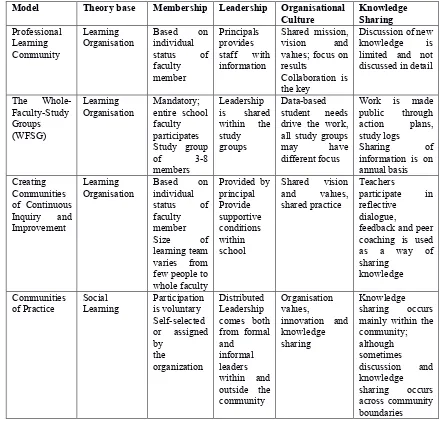
3.7. Professional Learning Communities and Community of Practice ... 49
3.8. Factors affecting Community and Collaboration ... 53
3.9. Relationship between Learning and Context ... 57
3.10. Organizational Factors and Professional Development ... 59
3.11. Summary ... 63
SECTION II ... 63
3.12. Demands and Roles of Teacher Educators ... 63
3.13. Challenges of Teacher Educators ... 68
3.14. Learning of Teacher Educators ... 82
Implication of the Literature for this Study ... 87
CHAPTER IV ... 91
Methodology ... 91
4.1. Introduction ... 91
4.2. Ontological and Epistemological Foundation ... 91
4.3. Research Design: Use of Mixed Methods ... 96
4.4. Research Setting ... 104
4.5. Research Questions ... 106
4.6. Research Methods ... 107
4.7. Ethical Consideration ... 113
4.8. Piloting ... 115
4.9. Quantitative Data Collection, Management and Analysis ... 123
4.10. Qualitative Data Collection, Management and Analysis ... 129
4.11. Qualitative Data Analysis ... 137
4.12. Trustworthiness of the Study ... 146
4.13. Reflexivity ... 151
4.14. Summary ... 152
CHAPTER V ... 154
Quantitative Findings ... 154
5.1. Introduction ... 154
3
5.3. Induction Experiences of Teacher Educators ... 159
5.4. Perceived Importance of Professional Development ... 160
5.5. Teacher Educators’ Professional Role: Involvement and Challenges ... 162
5.6. Formal and Informal Professional Learning Opportunities ... 165
5.7. Challenges in Professional Development Activities ... 167
5.8. Professional Practices of the University ... 169
5.9. Professional Practices of Teacher Educators ... 172
5.10. Summary of the Quantitative Findings ... 175
CHAPTER VI ... 178
Qualitative Findings ... 178
Teacher Educators’ Interviews ... 178
6.1. Introduction ... 178
6.2. Sample of the Study ... 178
6.3. Formal Professional Development Opportunities ... 180
6.4. Challenges in Professional Development ... 191
6.5. Professional Development Experiences and Roles ... 202
6.6. Teacher Educator’ Learning ... 216
6.7. Summary ... 226
CHAPTER VII ... 228
Qualitative Findings ... 228
University Campus Management ... 228
7.1. Introduction ... 228
7.2. Induction and Orientation Practices for Teacher Educators ... 231
7.3. System of Professional development ... 233
7.4. Challenges in Professional Development ... 235
7.5. Challenges in Research ... 237
7.6. Informal learning ... 240
7.7. Conceptions of Heads about Government and University Teacher Educators .... 242
7.8. Vice Chancellor views on Professional development and Support ... 247
4
CHAPTER VIII ... 253
Discussion ... 253
8.1. Introduction ... 253
8.2. Organisational Context ... 255
8.3. Professional Context ... 268
8.4. Professional Experiences and Roles of Teacher Educators ... 279
8.5. Challenges in Professional Development ... 287
8.6. Experiences of Formal and Informal learning ... 297
8.6.1. Formal Learning Opportunities ... 297
8.6.2. Informal Learning Opportunities ... 299
8.7. Summary ... 311
CHAPTER IX ... 313
Conclusion ... 313
9.1. Summary of Research, Key Findings and Conclusions ... 313
9.2. Limitations ... 324
9.3. Possible Area for Further Research ... 325
9.4. Recommendations ... 326
9.5. Implications of Research ... 327
9.6. Contribution to Knowledge ... 329
REFRENCES ... 332
APPENDIX I: Application for Ethical Approval for Research Degrees ... 364
APPENDIX II: Letter for Access ... 370
APPENDIX III: Information Sheet for Teacher Educators ... 371
APPENDIX IV: Information Sheet for the Head of the Institute ... 372
APPENDIX V: Questionnaire for Teacher Educators ... 373
APPENDIX VI: Interview Protocol for the Heads/Principal of the Campuses ... 377
APPENDIX VII: Interview Protocol for the Vice Chancellor of University of X ... 378
APPENDIX VIII: Interview Protocol for DG, Learning Innovation Centre, HEC .... 379
5
LIST OF FIGURES
Figure 1: Teacher Educators at the heart ... 17
Figure 2: Map of the Campuses of University of X ... 33
Figure 3: University Campus Context ... 34
Figure 4: Factors Affecting Learning at Work ... 62
Figure 5: Roles of Teacher Educators ... 64
Figure 6: Teacher Educators' Professional Development ... 89
Figure 7: My Ontological Position ... 94
Figure 8: Strategic Map of Research ... 105
Figure 9: Example of Analysis I ... 141
Figure 10: Example of Analysis II ... 142
Figure 11: Example of Analysis III ... 143
Figure 12: Balkanisation ... 266
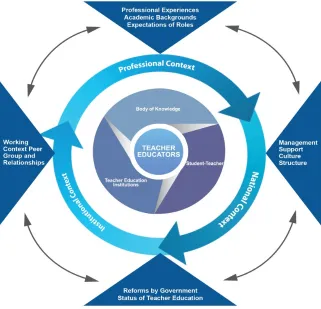
Figure 13: Interrelationship of Organisational and Professional Context ... 273
Figure 14: Learning of Teacher Educators: Workplace Affordances and Individual Participation ... 277
6
LIST OF TABLES
Table 1: Teacher Education Programmes in Punjab ... 26
Table 2: Characteristics of University Campuses: Administrative and Academic Control .... 37
Table 3: Comparison of Primary Characteristics of Professional Learning Communities and Communities of Practice ... 52
Table 4 : Broad Purpose for Mixed-methods Applied to this Research ... 102
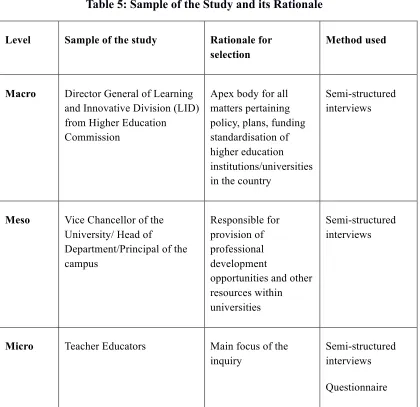
Table 5: Sample of the Study and its Rationale ... 111
Table 6: Research Methods and Corresponding Research Focus ... 112
Table 7: Questionnaire Distribution for Pilot Study ... 116
Table 8: Revision of Questionnaire Items after Piloting ... 118
Table 9: Questionnaire Items, Type and Purpose ... 126
Table 10: Correspondence Between Research Questions, Questionnaire items and Literature ... 127
Table 11: Demographics of Interview Participant ... 135
Table 12: Example of Integration of Quantitative and Quantitative Data ... 146
Table 13: Number of Questionnaire Received ... 155
Table 14: Gender and Age of Respondents ... 156
Table 15: Professional and Academic Qualification of the Respondents ... 158
Table 16: Teaching Experience of the Respondents ... 159
Table 17: Enjoyment in Professional Roles ... 163
Table 18: Challenges in Professional Roles ... 164
Table 19: Involvement in Professional Learning Opportunities ... 166
Table 20: Involvement in Informal Learning Opportunities ... 167
Table 21: Challenges in Professional Development Opportunities ... 168
Table 22: Provision of Opportunities and Resources ... 170
Table 23: Expectations of the University ... 171
Table 24: Views about Self-Study ... 172
7
Table 26: Subject Knowledge and Skills ... 173
Table 27: Expectations of Teacher Educators ... 174
Table 28: Mode of Learning ... 175
Table 29: Teaching Role ... 175
Table 30: Gender, Designation and Cadre Distribution of the Respondent ... 179
Table 31: Provision of Induction ... 181
Table 32: Ways of Learning ... 216
Table 33: Profiles of Heads/Principals ... 230
8
DEDICATION
9
ACKNOWLEDGEMENTS
I owe thanks and gratitude to so many people who have contributed to the
completion of this research. Firstly, I would like to show my immense gratitude and
sincere thanks to Mary Briggs, my primary supervisor for her great assistance,
generous time during supervision meetings, positive and timely feedbacks, and her
guidance from initial to the final version of this research. It was her great support and
unwavering belief on me that I could complete this project successfully. I am also
indebted to Dr. Janet Goodall, my secondary advisor and Dr. Michael Hammond for
their encouraging remarks, thoughtful questions and valuable comments on my
research which helped me a lot for understanding of the subject and improving the
quality of this research. I acknowledge and appreciate the University of Education,
for granting me the scholarship for this Ph.D. Thanks are also due to the colleagues
at the University of Education, without their support, this project would not have
been possible. I hope I succeeded in honouring your voices. My deepest thanks to
Qudsia Kalsoom and Steve Ryan who have always provided me invaluable support
prior to and throughout my professional journey. Their thoughtful criticism and
discussion on my work was invaluable for me. I also extent my profound gratitude to
my best teacher Dr. Muhammad Khalid Mahmood for his valuable guidance and
support. I offer my special thanks to my dearest friends Asima Iqbal for her
incredible support, insightful feedback and tremendous assistance in all possible
way. Babar Khan and Maria Shiraz deserve special thanks who have spent numerous
hours either talking me through different sections or reviewing chapters. Lastly, I
owe my deepest gratitude and blessings to my parents, brothers, sisters and all my
nephew and nieces for their love, moral support and encouragement throughout this
10
DECLARATION
I declare that this thesis is entirely my own work.
I declare that no material from this thesis has been used or published before.
I confirm that the thesis has not been submitted for a degree at any other university.
11
GLOSSARY
ADE Associate Degree in Education
AIOU Allama Iqbal Open University
B.Ed. Bachelor of Education
CT Certificate in Teaching
CPD Continuous Professional Development
COP Community of Practice
CCCII Community of Continuous Inquiry and Improvement
DSD Directorate of Staff Development
GCETs Government Colleges of Elementary Teachers
GCEs Government Colleges of Education
HEC Higher Education Commission
IER Institute of Education and Research
LID Learning Innovation Division
MEd Master of Education
NACTE National Accreditation Council for Teacher Education
NEP National Education Policy
PTC PLC
Primary Teaching Certificate Professional Learning Community
QAD Quality Assurance Division
QEC WFSG
Quality Enhancement Cells Whole Faculty Study Group
12
ABSTRACT
This study examines the challenges and opportunities for the professional
development of teacher educators in a leading teacher education university in
Pakistan. It underpins the participatory and sociocultural perspectives of learning to
gain insight into teacher educators’ learning. This research deployed a sequential
explanatory mixed methods approach, using questionnaires followed by
semi-structured interviews. Interviews were conducted with teacher educators, heads of
the departments, campus principals and higher management personnel. The study
highlights the fact that the teacher educators do not have any formal permanent
system of professional development. The findings further reveal the diverse
professional characteristics of teacher educators in terms of experience in teaching,
research and professional qualifications, which lead to varied learning experiences
and professional challenges to teacher educators in their respective roles. Beginner
teacher educators with no professional qualification and inadequate teaching and
research experience face more challenges in meeting the demands of the higher
education settings. Teaching appears to be the major professional role of teacher
educators in comparisons to curriculum design, mentoring or engagement in
research. This study raises a number of issues regarding professional adequacy and
entry requirements of teacher educators, as well as the status of the field of teacher
education in Pakistan. A key finding of this study is the contested context of the
University as a workplace, which inhibited the professional relationship of teacher
educators. This resulted in a balkanized culture, which challenged the learning of
teacher educators. In addition, inequitable and insufficient access to resources, lack
of professional support from management and excessive workloads limited the
13
are relying more on peer and self-learning. However, peer-learning was not evenly
observed across all campuses.
This research improves our understanding of Community of Practice showing that
the concept needs to consider power, culture and disentangle the relationship
between working conditions and learning. It also gives insight to the
conceptualization of workplace affordances by seeing that such affordances are both
personal and institutional. In terms of looking at Eraut’s ideas of informal learning,
this research adds to our understanding that it is not just learning and contextual
factors (institutional factors) which affect the learning of the individuals but also
their professional context.In this research, professional context includes professional
experiences (teacher educators’ repertoires in teaching and research), qualifications,
their differentiated roles and positions. By doing so the research has added to the
discourse of informal learning and provides an empirical study in the field of teacher
education. In addition, this research provides deeper insight of teacher educators’
learning, and can assist in designing and strengthening the professional development
14
CHAPTER I
Introduction
In this chapter, I will explain my motivation for undertaking this research. I will then
state the purpose and significance of the current study which will be followed by the
research questions. After this, I will summarize the research design. The chapter ends
with an explanation of the structure of the thesis.
1.1.
Rationale of the Study
My motivation for undertaking this research arose from my position and professional
background in the field of teacher education for the last ten years. This professional
journey is the experience of transition from being a teacher, to a Continuous
Professional Development (CPD) head, and finally, to a teacher educator. As a Head
of Continuous Professional Development Centre at a private Teachers Training
Institute of Punjab, Pakistan, I was involved in designing and conducting the
capacity building programmes for teachers, as well as teacher educators. This
professional role provided me with an opportunity to assist and observe new and
experienced teachers, and also teacher educators in their professional endeavours. As
a head of the CPD centre in a teachers’ training institute and an MPhil student at the
University of X, I found numerous opportunities to sit with my fellow teachers and
teacher educators. Working with teachers and teacher educators exposed me to the
difficulties and challenges that teacher educators face in performing their
professional roles.
In 2012, under the Strengthening Teacher Education Programme (STEP) project
15
teacher educators of the Government College of Elementary Teachers (GCET), a
government college for training teachers. This experience informed me of different
indicators essential to the successful implementation and sustainability for any
professional development programme. Meanwhile, I closely observed many
challenges and issues that teacher educators face with recent reforms in teacher
education in Pakistan. These close interactions with teacher educators stimulated my
interest in the work and learning of teacher educators.
In 2012, I was appointed as a teacher educator at University of X and was awarded a
scholarship for my Ph.D. by the Higher Education Commission (HEC) of Pakistan.
As a teacher educator at the University of X, I was not provided with any formal
induction or orientation programme supportive to my role, though my experience as
a teacher educator proved very helpful for me in various ways.
I observed that my other colleagues with no teaching or work experience in school
or higher education faced more challenges than I did. One of my fellow beginner
colleagues faced difficulty in supervising MA students in their dissertations. Other
new colleagues struggled with heavy workloads including lesson preparation,
teaching, assessment and a range of administrative responsibilities. Insufficient
support and information about roles and academic rules and regulations added to the
difficulties. It was perplexing; sometimes we were unhappy and frustrated with
certain things, but we accepted whatever came to us because we considered it our
duty. Sometimes, we viewed ourselves as being vulnerable and de-skilled. We
learned many things with time, but in a hard way. A key support mechanism that we
were able to draw on was our informal conversations and the sharing of experiences,
16
only one got the chance to attend an induction programme organized by HEC.
Personally, I learned a great deal in first four months of my experience which has
given me a real insight into the significance of professional development for teacher
educators.
A few months later, I joined the University of Warwick to pursue a Ph.D. The
journey of four months as a teacher educator and my interactions with teacher
educators were still fresh in my mind which motivated me to investigate learning
opportunities and challenges faced by teacher educators. After discussion with my
supervisors, I chose to research teacher educator’s professional development. By
studying the literature in the field of teacher educators’ professional development, I
realised that the challenges and uncertainties that my colleagues and I faced were not
very different from those presented in the literature.
As a teacher educator, I believe that research is the key to development. I think
completing a PhD. in teacher education will help me to develop insights into the
subject, as well as improve my skills in raising questions and researching them. It
will also help me in developing insight regarding the policy initiatives and reforms
of teacher education in Pakistan, and producing new knowledge in the field of
education.
1.2.
Significance and Need of the Study
The important role of teacher educators in the teacher education profession has been
frequently highlighted in the literature. A study entitled Supporting Teacher
Educators by European Commission (2013), conducted by national experts from 26
17
teachers’ career. Teacher educators had also significant participation in the
professional development of pre-service and in-service teachers (Smith, 2003).
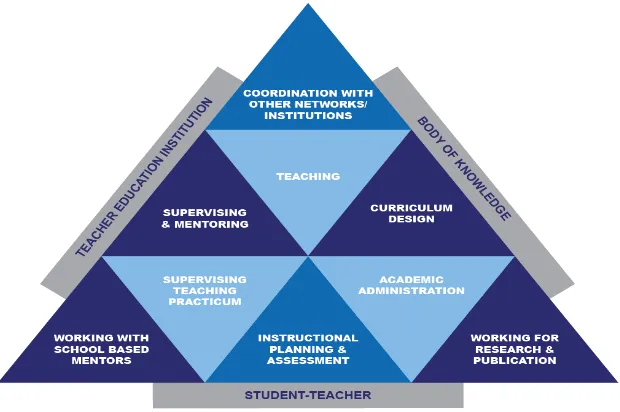
Shagrir (2010) identified four ‘partners’ in the teacher education profession:
student-teachers, a body of knowledge, teacher education institutions and teacher educators.
He further suggested that teacher educators stand at the centre of the profession. This
a theme is picked up by others authors including Smith, (2005) and Lunenberg,
Korthagen and Swennen (2007) writing about the context of Israel and the
Netherlands respectively and also emphasized by Volet and Swet (2010:149) who
argued that teacher educators were ‘at the core of good teacher education’. This
position of teacher educators among the other three partners is presented in Figure 1.
Figure 1: Teacher Educators at the heart
(Based on Shagrir, 2010)
Teacher educators have considerable impact on schools and on future teachers. For
example, Koster et al., (2008) mentioned that the quality of teachers affected the
18
teacher educators affected the quality of teachers (Snoek and Klink, 2011). In the
same vein, Furlong et al., (2000:36) evidenced the critical role of teacher educators
and observed:
What student teachers learn during their initial training is as much influenced by who is responsible for teaching them as it is by the content of the curriculum.
Given the significance of teacher educators’ role in teacher education, the
professional development of teacher educators themselves cannot be neglected.
Snoek and Klink (2011) further maintained that improvements in the competencies
of teacher educators and their professional development are important for producing
quality teachers.
Smith (2003:203) described the prominence of professional development of teacher
educators, and contended that there were many reasons why professional
development of teacher educators was important including: to improve the
profession of teacher education; to maintain interest in the profession; to grow
personally and professionally; and to advance within the profession.
There is also a long established link between quality of teaching, teachers and
teacher educators. This was captured by Turney and Wright (1990), who argued for
this interrelationship of quality teaching and quality of teacher educators in the
following way:
19
This was picked up by Murray (2006) in more recent literature who also drew on
Turney and Wright and agreed on the interrelationship of quality teaching and of
teacher educators. In spite of its importance, there is limited research on teacher
educators. Some years ago, Lanier and Little (1986: 528) maintained that ‘teachers
of teachers–what they are like, what they do, what they think–are typically
overlooked in studies of teacher education.’ Yet recently for example Swennen,
Jones and Volman (2010) highlighted the same gap. There is a limited body of
knowledge about teacher educators, and little is known about who the teacher
educators are and about the ‘what’ and ‘how’ of their professional development
(Smith, 2003; Murray and Male, 2005; Loughran, 2006). Murray and Male (2005)
and Koster and Dengerink (2001) maintained that notwithstanding the wealth of
accounts of teacher education, there was little empirical research that focused on
teacher educators themselves. As until recently, little consideration has been given to
the expertise (professional knowledge and competencies) and professional quality of
teacher educators. As Martinez (2008: 35) noted this as following:
Little systematic research has been undertaken to inform us about fundamental characteristics of the professional lives of this occupational group–their qualifications, their recruitment, their career pathways into and through the academy, their teaching and research practices, the problems they encounter, or their professional development needs and practices.
In short, it is frequently highlighted and agreed in the literature that professional
development of teacher educators is very important and there is a need to research in
20
Moreover, the process of professional development is complex and calls for an
examination the personal, professional and wider context in which teachers work.
Among all the studies on teacher educators published in last ten years, only one
study is found with the title of Professional Development of Teacher Educators. Most
of the other covered ‘Induction’ or ‘Identity’ as reflected in their titles. For example
Murray and Male (2005), Murray (2008), Ben-Peretz et al., (2010), Boyd and Harris
(2010), Swennen et al., (2010), McKeon and Harrison (2010), Loughran (2011) have
also looked at the development of professional identity and have recognised it as the
process of becoming a teacher educator. These studies were conducted using mostly
interview approaches with teacher educators only. Furthermore, most of the studies
have been carried out in the UK, USA and other European countries (Izadinia, 2014).
In Asian countries, especially in Pakistan, there is research on teacher professional
development and professional development of faculty members (as general
group-non-teacher educators) but very little research has been conducted with regard to the
professional development of teacher educators (Khan, 2011). Izadinia (2014:437) in
a review of articles on professional identity of teacher educators and faculty
induction spanning the previous ten years showed that most research carried out in
North America, Europe and Australia. Izadinia further found only four studies on
teacher educator identity has been undertaken in Asia; two in Israel, one in China
and one in Pakistan.
The existing literature on teacher educator’s professional development was
investigated with reference to challenges teacher educators confront during their
induction and focused on a newly emerging concept of teacher educator’s identity
21
communities of learning and the importance of collaborative and collegial
relationships, the need for further studies was frequently highlighted.
A review of the literature demonstrates the need to approach the professional
development of teacher educators in greater depth, with their personal and
professional experiences (Hodkinson and Hodkinson 2004a; Izadinia, 2014). It also
establishes the need to understand the professional development of teacher educators
in their own institutional context, and to take into account the broad national
educational context in general. Many of the researchers based in western countries
have acknowledged that most of their findings were based on western experiences of
teacher educators, and warned against generalizing their findings to the context of
developing countries. Bronfenbrenner (2004) argued that it is important that studies
of teacher educators’ professional development be located in social contexts and
professional knowledge landscapes (Connelly and Clandinin, 1995) in which teacher
educators’ work.
Thus, this research is an attempt to fill the gap in the literature on professional
development of teacher educators. This study takes a broader view of learning, and
considers both formal and informal ways of learning. It takes into account teacher
educators’ professional experiences, backgrounds and organizational context.
This research also has a methodological strength in that it uses both quantitative and
qualitative methods. In addition, views of heads and two elites were also elicited
22
This research is also significant within the backdrop of the current education reforms
in Pakistan, education system in general, and teacher education in particular. This
will be explained below.
1.3.
Background of the Study
As will be discussed in the literature review, there is research on the quality and
evaluation of teacher education programmes, student-teachers’ beliefs, teachers’
professional development and the curriculum of teacher education programmes in
Pakistan. However, the professional development of teacher educators has been a
neglected area of research. There is also very little emphasis in policy documents
about teacher educators’ practices and professional development, and there are no
formal arrangements for the professional development of teacher educators.
However, in the last five years, Pakistan’s education system has undergone changes
which have raised expectations of teacher educators. The New Education Policy
(2009) planned for the standardization and institutionalisation of accreditation and
certification procedures in the teacher education field. As a result, a number of
initiatives were developed by various bodies including the Higher Education
Commission (HEC), Quality Assurance Division (QAD) and National Accreditation
Council for Teacher Education (NACTE), which established National Teaching
Standards for Teachers. These reforms in the system require teachers and teacher
educators to build their professional competence, knowledge and skills. They also
introduce the expectations that teacher educators will exhibit a high standard of
teaching and learning. At the same time, there is a need to look more closely into the
needs, challenges and available professional development opportunities of teacher
23
perform better in their professional roles. This research will help throw light on the
needs of teacher educators and the challenges they face.
1.4.
Scope of the Study
This research will focus on a public sector university within Pakistan. This is the first
specialized teacher education university in the Punjab which provides pre-service
education. This university was established in September, 2002, and offers a B.Ed,
MEd., M.Phil. leading to Ph.D. and degree programmes in other non-education
subjects. It has a total of ten campuses across the Punjab.
1.5.
Research Questions
The overarching aim of my research was to investigate the types of professional
development opportunities available to teacher educators, their professional learning
experiences while performing their roles; and challenges they face in their
professional development in general and in their professional endeavours
specifically.
To achieve this purpose, the following research questions were formed.
Research Question 1: What are the professional development opportunities available for teacher educators?
Research Question 2: What challenges do they face in their professional development?
Research Question 3: What are the professional learning experiences of teacher educators with various academic and professional backgrounds?
24
development opportunities are not available?
To answer these questions, various sub-questions were formed which will be detailed
in Chapter 4.
1.6.
Research Design
This study has a sequential mixed methods design. It begins as an exploratory study
of an under-explored area leading to an explanatory framework.
1.7. Structure of the Study
In the present Chapter, I have explained my motivation for the research, the
significance and purpose of the study, and the research design. In Chapter 2, I
introduce the context for the investigation, which focuses on the higher education
and teacher education system of Pakistan and also covers the background of the
University of X and its staff where the field work was undertaken. In Chapter 3, I
review the literature and look critically at issues in the field of teacher educators’
professional development. In Chapter 4, I present my methodology and the
procedures taken to collect and analyse qualitative and quantitative data. In Chapter
5, I present the quantitative findings. The qualitative findings are then presented in
Chapter 6 and Chapter 7. In Chapter 8, the findings are discussed in relation to the
existing literature. Finally, Chapter 9 provides a summary of the research, explains
25
CHAPTER II
The Teacher Education Landscape in Pakistan and the
Background to the University of X
This chapter provides an overview of the system as well as issues in the field of
teacher education. It will also present a brief outline of the research which has been
carried out around the teacher education field generally, and on teacher and teacher
educators specifically in Pakistan. It will then present the background to the
University of X and its staff. This broad sketch of Pakistan’s teacher education
system and background of the University of X contextualizes my research.
2.1. Structure of Teacher Education in Pakistan
In Pakistan, the government sector has the largest number of teacher training
institutions spread all over the country. The organization and names of public sector
institutions differ from province to province. Each province has a different
organizational and administrative set-up of teacher training institutions. Common
provincial features include the pre-service curriculum and a provincially centralized
structure, with most of the institutions functioning under Education Departments
rather than the district governments.
Four type of institution offer teacher education including Government Colleges of
Elementary Teachers (GCETs); Government Colleges of Education (GCEs);
directorates or centres at the provincial level and universities (Khan, 2011).GCETs
offer certificate-level courses of one year’s duration under the title of Primary
Teaching Certificate (PTC), and Certificate in Teaching (CT) for primary and
26
years of education) and CT is offered after ‘intermediate’ (twelve years of
education). PTC and CT are offered all over Pakistan except in the province of
Punjab where the minimum teaching qualification is an Associate Degree in
Education (ADE). The ADE is a two years degree offered after twelve years of
education. University departments, IERs and GCEs all offer ADE, One year
Bachelor of Education (B.Ed.), B.Ed. Honours (4 years) and Master of Education
(M.Ed.). The M.Ed. is also a one year programme completed after the B.Ed. (Khan,
2011).
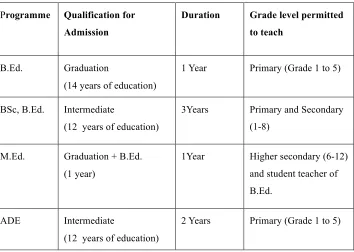
Table 1, below shows details of the teacher education programmes and levels for
[image:29.595.119.473.424.676.2]which student-teachers are prepared.
Table 1: Teacher Education Programmes in Punjab
(Source: Mahboob and Tallat, 2008: 20)
Programme Qualification for Admission
Duration Grade level permitted to teach
B.Ed. Graduation
(14 years of education)
1 Year Primary (Grade 1 to 5)
BSc, B.Ed. Intermediate
(12 years of education)
3Years Primary and Secondary
(1-8)
M.Ed. Graduation + B.Ed.
(1 year)
1Year Higher secondary (6-12)
and student teacher of B.Ed.
ADE Intermediate
(12 years of education)
27
At the time of the study. there were 135 pre-service teacher education institutions,
with 36,563 teacher educators in Pakistan. Of the 135, 114 institutions were
established in the public sector, and 21 were set up in the private sector (Dilshad and
Iqbal, 2010). GCEs were affiliated with multiple organising and governing bodies
with respect to curriculum, examination, recruitment of teacher educators, budget
and administration (Faheem, 2006). These GCEs were affiliated to the Provincial
Bureau of Education for administrative purpose; for examination purpose, they were
affiliated with Board of Secondary Education (Khan, 2011). Faheem (2006)
maintained that the numerous government teacher training institutions at the
provincial levels, including the Bureau of Curriculum in Baluchistan, Provincial
Institute of Teacher Education, Idara Taleemo Aagahe, Directorate of Staff
Development (DSD), University of Education etc., had unclear mandates, with an
overlap between their roles and responsibilities. Faheem further stated that although
in Punjab, the provision of pre-service and in-service training had been divided
between its two apex organizations, the University of Education and Directorate of
Staff Development (DSD) respectively, the other provinces were still undergoing
institutional clutter. However, at the time of this study, there was no overarching
body to regulate and guide these institutions particularly in terms of academic
leadership within provincial departments of education (Dilshad and Iqbal, 2010).
2.2. Research in the Field of Teacher Education
The quality of teaching and learning in teacher education institutions in Pakistan has
been a concern (Warwick and Reimers, 1994; Hoodbhoy, 1998; Khan, 2011; Dilshad
and Latif,2011). According to Warwick and Reimers (1994:51), high school teachers
28
reached their time of promotion but no one wanted them as school heads, or were
school heads who had failed in some way. Therefore, they had ‘low morale, a poor
opinion of the teaching profession, and serious doubts about themselves as teachers’
(Warwick and Reimers 1994:6). The study also found that there was little
opportunity for career advancement in the teaching profession in Pakistan. The only
available chance of promotion was based on seniority. Farooq cited by Khan (2011)
discussed the fact that many teacher educators had sustained experience of school,
but were not particularly motivated in their work because they had detached
themselves from working in classrooms earlier in their careers, and had taken on
administrative and/or managerial positions in schools before moving to higher
education. Research conducted by Khan (2011) found that the majority of the teacher
educators had limited skills as researchers, and many were not given institutional
support to undertake research.
A project supported by USAID (2006) ‘Pakistan Teacher Education Programme and
Professional Development’ conducted a performance gap analysis and training need
assessment of teacher training institution in the public sector in the country. The
study included respondents from 24 teacher education institutions, including the
University of X, Punjab, which is the university under study for this current project.
The study observed the administrative structure of teacher education institutions, the
academic environment, the nature of the teacher education programmes and teaching
styles practised in these institutions. The report found gaps in training for both
pre-service and in-pre-service teacher educators and observed that there was no guidance or
induction for a freshly appointed teacher trainers. The fresh appointee was often a
secondary school teacher with a Master degree with very little knowledge and
29
never experienced teaching primary school children. Concerns over the appointment
of teacher educators were also expressed in The National Education Policy
(Government of Pakistan, 1998:48) which concluded that ‘there is no standardized
procedure for appointment of teacher educators in teacher training institutions. In
[the] existing system, any person belonging to [a] school or college cadre can be
transferred to teacher education institutions’.
The study by USAID (2006) further noted the teacher educators of the GECEs and
GCE had opportunities for in-service training, but most of the courses for the teacher
educators were curriculum based for example on specific subject topic rather than on
pedagogical skills. The individual faculty members’ questionnaires indicated that
almost 70-80% of faculty members had attended 3-5 different in-service courses on
average. About 8-10% of total faculty from 24 sample institutions had opportunities
for foreign training too. However, teacher educators did not have any specialised
training relevant to their field of teaching.
A report by UNESCO (2006) on the Situational Analysis of Teacher Education in
Pakistan reported key issues and challenges in teacher education in Pakistan and
argued that teachers in teacher education institutes (GCETs and GCEs) had a
shortfall in core competencies fundamental to their profession. These included not
selecting teachers on merit, lack of proper screening and relaxing of qualification
requirements. Job descriptions and performance appraisals of teachers were missing.
The report suggested that teacher educators show poor quality teaching and
administer their classes in the traditional teaching style of lecture giving dictation
and notes. Trainers were failing to cultivate creative thinking, inquiry and problem
30
learning techniques because they had concerns that it might spoil class discipline.
Most of them were not aware of their professional strengths and weaknesses. The
report also concluded the poor quality of teacher educators is one of the major
reasons why Pakistan has not been able to raise its educational level and standards
(UNESCO, 2006:45).
The UNESCO report (2006:50-58) summarises the following issues and challenges
specific to teacher educators and teacher education institutes.
• Standards had been developed, but student and teacher competencies were
low
• Teacher educators were usually inappropriately experienced for their role,
generally having little practical experience
• No standards had been described for teacher educators
• Teacher educators were apprehensive of change
• There was a need to recruit teacher educators who were not only
academically qualified for their role, but were also suitably experienced
• Teacher educators were transferred with no regard to their relevant
experience and qualifications
2.3. Recent Reforms in Teacher Education
The Higher Education Commission (HEC) is the governing body for universities and
HEIs in Pakistan and has the main aim of facilitating quality assurance in both public
and private sector higher education institutions. The Higher Education Commission
of Pakistan has introduced many reforms for the improvement of the quality of
31
academics to explore the challenges associated with the job and to equip them with
latest professional techniques (Higher Education Commission, 2013).
In 2006, the Higher Education Commission established a Quality Assurance Division
(QAD) with the purpose of providing an integrated quality assurance and
management service for higher education (HEC, 2006). One of the objectives of the
QAD was to develop a viable and sustainable mechanism of quality assurance,
which was achieved through the creation of Quality Assurance Agency (QAA) for
regulating and facilitating the Quality Enhancement Cells (QECs) at all universities.
The QECs now established at 30 public universities have become instrumental in
implementing the quality assurance policies developed by HEC. The purpose of
these QECs was to enhance the quality of teaching and learning as well as to
improve the internal academic and administrative processes, with the main focus
being on the self-assessment of different quality parameters. This included:
‘programme mission objectives and outcomes, curriculum design and organization,
laboratories and computing facilities, student support and guidance, faculty, process
control, institutional facilities [and] institutional support’ (HEC 2009:102). Efforts
were made to raise the quality in all respects including quality of teaching faculty,
infrastructure, curricula, assessment, management and governance, and accreditation
of academic programmes and institutions (Batool and Qureshi, 2008).
The New Education Policy (2009) and higher education commission (HEC), with its
various initiatives, aimed at revitalizing the education system with a particular focus
on increasing access and quality (Government of Pakistan, 2009). The said policy
planned for the standardization and institutionalization of accreditation and
32
Council for Teacher Education (ACTE) was set up at the time of the study at the
national level which established National Teaching Standards for Teachers and
requirements for teacher education programmes and institutions. Current educational
reforms in teacher education in Pakistan have raised expectations. To understand
this, I now looked at the context in which implementation is expected to take place.
The following section will discuss the context of the University of X, where
fieldwork was carried out. This background is important to the current study because
it contextualizes the challenges which teacher educators face in their professional
development.
2.4.
Context of University of X
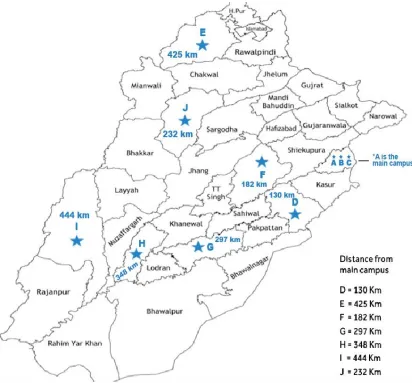
University X is a multi-campus university with three divisions and ten campuses
across Punjab, as shown in Figure 2. Among ten campuses, three of them are in
Lahore, which is a Metropolitan city of Pakistan, while the other seven are situated
33
Figure 2: Map of the Campuses of University of X
2.5. Campuses and Teacher Educators’ Context
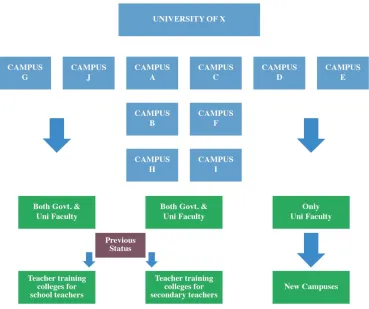
Of the ten campuses, only two were new university campuses, while the other eight
campuses were previously either Government Colleges of Elementary Teachers
34
Figure 3: University Campus Context
Eight of the campuses offeredPTC (primary teaching certificate), CT (Certificate in
teaching), B.Ed., and or M.Ed. All these programmes were affiliated with
universities and the administrative control of these colleges were under the education
department.
The education department is currently administered by two provincial heads
(secretaries of education): a secretary of higher education and secretary of school
education. Employees and teaching staff of GCET and GCE were governed by
entirely separate administrative authorities. The Government College of Education
(GCE) were under the administrative control of the higher education department
while the Government College of Elementary Teachers (GCETs) was under the
35
University of X, all 90 GCEs and 35 GCETs of Punjab became the constituent
colleges of the University of X, and the services of all the employees and teaching
staff of theses colleges were assigned to UOX, but they remained government
employees. Their benefits, seniority, promotion and salary remained with the
government of Punjab, although employees had the right to transfer back to the
education department and the University also had the right to transfer any employee
on administrative grounds. Following a more recent government directive, 33
GCETs and 83 GCEs were detached from University of X, thus reducing the
constituent campuses to 2 GCETs and 7 GCEs.
Two GCETs, which were the campuses of the University (Campus G, Campus J),
had their own context in terms of the teaching programme they offer: they were
previously called “Normal schools”. These ‘Normal schools’ played a critical role in
developing elementary school teachers as 'classroom practitioners' through Senior
Vernacular and Junior Vernacular Certificate programmess. However, as part of the
education reform, Normal Schools were replaced by the Teacher Training Institutions
and offered a Certificate in Teaching (CT) and Primary Teaching Certificate (PTC).
Through another intervention, the nomenclature of these Teacher Training
Institutions was changed to Colleges of Education and Government Colleges for
Elementary Teachers (GCETs) Elementary Colleges of Education. The Colleges of
Education became responsible for offering a Bachelor of Teaching or Bachelor of
Education and Master of Education, whereas the Elementary Colleges of Education
continued their CT and PTC courses. With time, CT and PTC courses became
obsolete. Hence, an attempt was made to introduce two Diploma programs (each of
10 plus 2 years and 12 plus 1 and ½ year) and replace CT and PTC courses. These
36
successful in the testing phase. Due to the lack of sound empirical evidence about the
success of diploma programs, CT and PTC courses continued, but Punjab closed
these programmes in 1998. These courses were still being taught in the Elementary
Colleges of Education in Sindh, Khyber Pakhtunkhwa (KP) and Balochistan
(USAID, 2010). In the context of the National Education Policy (2009), with the
introduction of National Professional Standards and 4 year B.Ed. programme as
discussed in Chapter 1, a National Task force was set up to study in detail the
duration and scheme of study of the prevailing pre-service programs, including
Primary Teacher Certificate (PTC), Certificate of Teaching (CT) and diploma
courses. They reviewed the content of these programmes, specifically considering
their curricula, pedagogy, assessment and teaching practice, and identified that the
condition of the teacher training institutions particularly in terms of human resources
at the district level was inadequate to transition into a B.Ed. Several provinces
expressed concern about holders of PTC and CT certificates and their compatibility
with ADE, and how holders of the former certificates will be affected by the
transition to the B.Ed. (USAID, 2009). The characteristic of the campuses in terms
of their previous and current status, and composition of faculty and heads of the
37
Table 2: Characteristics of University Campuses: Administrative and Academic Control
Campus Previous status Faculty
*U stands for University and G stands for Government
Headed by Current Status
Campus A
GCE used to offer B.S.ED. Three year degree program affiliated with University of the Punjab
Both U and G cadre
University appointment
Administrative and academic control of Government cadre faculty is under Punjab Government.
Academic and administrative control of University cadre faculty is under University of X.
Campus C GCE B. Ed. M. Ed. MA Edu
Affiliated with PU
Both U and G cadre
Government appointment
Same as above
Campus
B GCE Both U and G cadre
Government
appointment Same as above
Campus F
GCE Both U and G
cadre
Government
appointment Same as above
Campus H
GCE Both U and G cadre
Government appointment
Same as above
Campus
I GCE Both U and G
cadre
University appointment
Same as above
Campus
G GCET Previously Normal School CT, PTC
Both U and G cadre
Government appointment
38 Campus Previous status Faculty
*U stands for University and G stands for Government
Headed by Current Status
Campus J GCET (Education Colleges) Normal School
Both U and G cadre
Government appointment
Same as above
Campus
D New campus Only U faculty University appointment
All administrative and academic control with UOX.
Campus E
New campus Only U faculty University appointment
All administrative and academic control with UOX.
This table demonstrates how the administrative and academic control of each of the
two groups of teacher educators (Government and University) were different within
each campus due to the history of each educational facility.
Administrative control of government cadre teacher educators was the responsibility
of the Punjab education department. Therefore, the promotion policy, pension and
transfer of teacher educators was governed and managed by Punjab Government.
Academic duties and roles of government cadre teacher educators were assigned by
the University of X; while they were sometimes engaged in the administrative task
given by Punjab Government. Government teacher educators were not required to
conduct research to gain promotion; instead, they were promoted on the basis of their
seniority. The differences were also found in the scales of both faculty. Government
teacher educators were one scale behind university teacher educators. For example,
an Assistant Professor from government cadre was assigned Grade 18, while
39
In the case of the promotion of government teacher educators, they could be
transferred to another public sector institute or college. However, UOX reserved the
right to retain government teacher educators in the university if they were only given
an NOC (Non-objection certificate).
Conversely, the administrative and academic control of the university teacher
educators was the responsibility of the University of X. The University of X was
governed by the Higher Education Commission, which is the governing body of all
higher education institutions and universities in Pakistan. The promotions, pension,
administrative and academic control were under the rule of the Higher Education
Commission and managed by the University of X.
Summary:
This chapter has covered the main research studies in the field of teacher education
in Pakistan. It also identified the challenges and issues faced by teacher education
institutions. It has also discussed the context of University of X and its staff. It
highlighted that in the University of X, two groups of teacher educators (government
and university) have different administrative and academic control. The next chapter
is the literature review which covers the main research studies around teacher
educator’s professional development and the challenges which they face in their
40
CHAPTER III
Literature Review
3.1. Introduction
This chapter will cover the conceptual framework and basis for my research study.
The framework is based on the integration of several concepts: professional
development, factors affecting professional development, participatory and social
cultural theory of learning, notion of collaboration and community, teacher
educators’ learning and challenges in terms of their professional roles.
The first part of the literature review covers: an exploration of the term professional
development; the changing paradigm of professional development; formal and
informal learning; the concepts of professional learning community and community
of practice; and the characteristics and conditions necessary for teachers’
professional development. The second part of the chapter looks at the demands and
expectations of teacher educators and the challenges they face in their professional
endeavours.
SECTION I
The following section describes the term ‘professional development’, and the
changing paradigm of professional development, including formal and informal
learning. It will then discuss different approaches to this new paradigm of learning,
the introduction to professional learning communities and a community of practice,
41
It is important to mention here that I have used the term professional development
and professional learning interchangeably in this study. Furthermore, there are far
fewer research studies on teacher educators’ professional development, thus the
literature on teachers’ professional development has been used to inform the
conceptual framework of the study.
3.2. Professional Development of Teachers
Kelchtermans (2004:217) observed that the amalgamation of the variant definitions
of professional development has made it a new ‘container concept’ in the educational
research discourse. It implies that different authors have explained the term
professional development in different ways relating to different roles and settings in
which teachers work. Guskey and Huberman (1995) also saw that the concept of
teachers' professional development can be viewed from various foci and informed by
different bodies of research.
Authors including Schön (1987), Hargreaves and Fullan (1992), and Miller and
Silvernails (1994) have focused on teacher’s reflectivity, introspection, self-analysis,
and inquiry. Reimers (2003) defined professional development in a broad sense as
the development of a person in his or her professional role. According to Glathorn
(1995:42), teacher development can be defined as ‘the professional growth a teacher
achieves as a result of gaining increased experience and examining his or her
teaching systematically’. However, this definition focuses on the professional
development of individual teachers and neglects the broader view of development
related to the teachers’ relationship with their colleagues and other professionals, as
well as other dimensions of teaching like commitment, motivation (see Grossman
42
It is the process by which, alone and with others, teachers review, renew and extend their commitment as change agents to the moral purpose of teaching; and by which they acquire and develop critically the knowledge, skills and emotional intelligence essential to good professional thinking, planning and practice with children, young
people and colleagues through each phase of their teaching lives. (Day, 1994:4)
Day (1999) defined professional development as a process that continues throughout
teacher’s life. He also saw emotional intelligence and commitment as important
elements of professional development, along with knowledge and skills. Thus,
professional development encompasses good practices in teaching as well as
understanding the moral purpose of teaching. His definition also reflected the fact
that professional development was linked to teachers’ relationship and interaction
with colleagues and students.
Ganser (2000) goes further, stating that professional development is a combination
of formal experiences as well as informal experiences including attending
workshops, reading professional publications, watching television documentaries,
etc. which may assist teachers in their professional role. Craft (2002) also
conceptualised professional development as professional learning that takes place
over time in both formal and informal settings across different contexts.
Lieberman’s definition of learning includes both formal and informal ways of
learning, as Ganser (2000) and Craft (2002) also identified, although Lieberman
(1995) further identified the different settings in which learning occurs: i) direct
teaching (through conferences, courses, workshops-consultations); ii) learning in
school (through for example peer coaching, critical friends, action research, portfolio
43
example, reforms networks, school-university partnership, professional development
centres, subject networks and informal groups) and learning in the classroom
(through, for example, students’ responses and questioning). This implies different
settings and contexts of learning including formal and informal.
Usually, teachers’ professional development has been assumed as a series of
workshop and training conducted by an outsider with no follow up (Guskey, 2000).
Guskey (2000:5) questioned the tendency for educators to adopt a narrow view of
professional development that did not link professional development with day-to-day
work of teachers. Fullan (2000) contended that one-shot workshops were ineffective,
as the topics were not selected by the teachers. Additionally, this narrow perspective
of professional development for teachers had also been criticised since in-charge of
the workshops may neglect teachers’ opinion and classroom experience. This view of
teachers' professional development as a series of activities that were detached from
the actual classroom engagement often resulted in teachers feeling that their
professional development experience as ‘meaningless and wasteful’ (Guskey,
2000:4). Guskey (2000) explained since most teachers were not usually consulted on
their professional development needs, they often perceived their professional
development experience to be as extraneous to the improvement of their teaching
practice. As a result, it becomes challenging for teachers to combine and use the
knowledge and skills gained from the professional development experiences into
their practices. Goodall et al., (2005) and Bolam and Weindling (2006) also
identified some limitations in the ways that professional development is organised
and delivered. For example, poor criteria to evaluate the effectiveness of the training
programmes, one-off events and the lack of time made available for teachers to