Health Technology Assessment
NIHR HTA programme
www.hta.ac.uk
September 2010
10.3310/hta14440Group cognitive behavioural therapy
for postnatal depression: a systematic
review of clinical effectiveness,
cost-effectiveness and value of information
analyses
MD Stevenson, A Scope, PA Sutcliffe,
A Booth, P Slade, G Parry, D Saxon,
E Kalthenthaler and the group cognitive
behavioural therapy for postnatal depression
advisory group
Glossary
List of abbreviations
Executive summary Background Objectives Methods Results Discussion Conclusions
Chapter 1 Background
Description of health problem Current service provision
Description of technology under assessment
Chapter 2
Definition of the decision problem Decision problem
Overall aims and objectives of assessment
Chapter 3
Assessment of clinical effectiveness Methods for reviewing effectiveness Results
Discussion
Chapter 4
Assessment of cost-effectiveness
Systematic review of existing cost-effectiveness evidence Independent economic assessment
Chapter 5
Assessment of factors relevant to the NHS and other parties Chapter 6
Discussion
Statement of principal findings
Strengths and limitations of the assessment Uncertainties
Chapter 7 Conclusions
Implications for service provision Suggested research priorities
Acknowledgements Contributions of authors
References Appendix 1 Appendix 3
Data abstraction tables – qualitative review Appendix 4
Summary of excluded trials – quantitative review Appendix 5
Summary of excluded trials – qualitative review Appendix 6
References for excluded studies
How to obtain copies of this and other HTA programme reports
An electronic version of this title, in Adobe Acrobat format, is available for downloading free of charge for personal use from the HTA website (www.hta.ac.uk). A fully searchable DVD is also available (see below). Printed copies of HTA journal series issues cost £20 each (post and packing free in the UK) to both public and private sector purchasers from our despatch agents.
Non-UK purchasers will have to pay a small fee for post and packing. For European countries the cost is £2 per issue and for the rest of the world £3 per issue.
How to order:
– fax (with credit card details)
– post (with credit card details or cheque) – phone during office hours (credit card only).
Additionally the HTA website allows you to either print out your order or download a blank order form.
Contact details are as follows: Synergie UK (HTA Department) Digital House, The Loddon Centre Wade Road
Basingstoke Hants RG24 8QW
Email: [email protected]
Tel: 0845 812 4000 – ask for ‘HTA Payment Services’ (out-of-hours answer-phone service)
Fax: 0845 812 4001 – put ‘HTA Order’ on the fax header
Payment methods Paying by cheque
If you pay by cheque, the cheque must be in pounds sterling, made payable to University of Southampton and drawn on a bank with a UK address.
Paying by credit card
You can order using your credit card by phone, fax or post.
Subscriptions
NHS libraries can subscribe free of charge. Public libraries can subscribe at a reduced cost of £100 for each volume (normally comprising 40–50 titles). The commercial subscription rate is £400 per volume (addresses within the UK) and £600 per volume (addresses outside the UK). Please see our website for details. Subscriptions can be purchased only for the current or forthcoming volume.
How do I get a copy of HTA on DVD?
Please use the form on the HTA website (www.hta.ac.uk/htacd/index.shtml). HTA on DVD is currently free of charge worldwide.
review of clinical effectiveness,
cost-effectiveness and value of information
analyses
MD Stevenson,* A Scope, PA Sutcliffe,
A Booth, P Slade, G Parry, D Saxon,
E Kalthenthaler and the group cognitive
behavioural therapy for postnatal depression
advisory group
School of Health and Related Research (ScHARR), The University of
Sheffield, Sheffield, UK
*Corresponding author
Declared competing interests of authors: none
Published September 2010
DOI: 10.3310/hta14440This report should be referenced as follows:
Stevenson MD, Scope A, Sutcliffe PA, Booth A, Slade P, Parry G, et al. Group cognitive behavioural therapy for postnatal depression: a systematic review of clinical effectiveness, cost-effectiveness and value of information analyses. Health Technol Assess 2010;14(44).
Health Technology Assessment is indexed and abstracted in Index Medicus/MEDLINE, Excerpta Medica/EMBASE, Science Citation Index Expanded (SciSearch) and Current
effectiveness, costs and broader impact of health technologies for those who use, manage and provide care in the NHS. ‘Health technologies’ are broadly defined as all interventions used to promote health, prevent and treat disease, and improve rehabilitation and long-term care.
The research findings from the HTA programme directly influence decision-making bodies such as the National Institute for Health and Clinical Excellence (NICE) and the National Screening Committee (NSC). HTA findings also help to improve the quality of clinical practice in the NHS indirectly in that they form a key component of the ‘National Knowledge Service’.
The HTA programme is needs led in that it fills gaps in the evidence needed by the NHS. There are three routes to the start of projects.
First is the commissioned route. Suggestions for research are actively sought from people working in the NHS, from the public and consumer groups and from professional bodies such as royal colleges and NHS trusts. These suggestions are carefully prioritised by panels of independent experts (including NHS service users). The HTA programme then commissions the research by competitive tender.
Second, the HTA programme provides grants for clinical trials for researchers who identify research questions. These are assessed for importance to patients and the NHS, and scientific rigour.
Third, through its Technology Assessment Report (TAR) call-off contract, the HTA programme
commissions bespoke reports, principally for NICE, but also for other policy-makers. TARs bring together evidence on the value of specific technologies.
Some HTA research projects, including TARs, may take only months, others need several years. They can cost from as little as £40,000 to over £1 million, and may involve synthesising existing evidence, undertaking a trial, or other research collecting new data to answer a research problem.
The final reports from HTA projects are peer reviewed by a number of independent expert referees before publication in the widely read journal series Health Technology Assessment.
Criteria for inclusion in the HTA journal series
Reports are published in the HTA journal series if (1) they have resulted from work for the HTA programme, and (2) they are of a sufficiently high scientific quality as assessed by the referees and editors.
Reviews in Health Technology Assessment are termed ‘systematic’ when the account of the search, appraisal and synthesis methods (to minimise biases and random errors) would, in theory, permit the replication of the review by others.
The research reported in this issue of the journal was commissioned by the HTA programme as project number 06/83/01. The contractual start date was in January 2008. The draft report began editorial review in June 2009 and was accepted for publication in January 2010. As the funder, by devising a commissioning brief, the HTA programme specified the research question and study design. The authors have been wholly responsible for all data collection, analysis and interpretation, and for writing up their work. The HTA editors and publisher have tried to ensure the accuracy of the authors’ report and would like to thank the referees for their constructive comments on the draft document. However, they do not accept liability for damages or losses arising from material published in this report.
The views expressed in this publication are those of the authors and not necessarily those of the HTA programme or the Department of Health.
Editor-in-Chief: Professor Tom Walley CBE
Series Editors: Dr Martin Ashton-Key, Dr Aileen Clarke, Professor Chris Hyde,
Dr Tom Marshall, Dr John Powell, Dr Rob Riemsma and Professor Ken Stein Editorial Contact: [email protected]
ISSN 1366-5278
© 2010 Queen’s Printer and Controller of HMSO
This journal is a member of and subscribes to the principles of the Committee on Publication Ethics (COPE) (http://www.publicationethics.org/). This journal may be freely reproduced for the purposes of private research and study and may be included in professional journals provided that suitable acknowledgement is made and the reproduction is not associated with any form of advertising.
Applications for commercial reproduction should be addressed to: NETSCC, Health Technology Assessment, Alpha House, University of Southampton Science Park, Southampton SO16 7NS, UK.
Published by Prepress Projects Ltd, Perth, Scotland (www.prepress-projects.co.uk), on behalf of NETSCC, HTA.
© 2010 Queen’s Printer and Controller of HMSO. All rights reserved.
iii Background: Postnatal depression (PND) describes
a wide range of distressing symptoms that can occur in women following childbirth. There is substantial evidence to support the use of cognitive behaviour therapy (CBT) in the treatment of depression, and psychological therapies are recommended by the National Institute for Health and Clinical Excellence as a first-line treatment for PND. However, access is limited owing to expense, waiting lists and availability of therapists. Group CBT may, therefore, offer a solution to these problems by reducing therapist time and increasing the number of available places for treatment.
Objectives: To evaluate the clinical effectiveness
and cost-effectiveness of group CBT compared with currently used packages of care for women with PND.
Data sources: Seventeen electronic bibliographic
databases were searched (for example MEDLINE, MEDLINE In-Process & Other Non-Indexed Citations, EMBASE, PsycINFO, etc.), covering biomedical, health-related, science, social science and grey literature (including current research). Databases were searched from 1950 to January 2008. In addition, the reference lists of relevant articles were checked and various health services’ related resources were consulted via the internet.
Review methods: The study population included
women in the postpartum period (up to 1 year), meeting the criteria of a standardised PND diagnosis using the Diagnostic and Statistical Manual of Mental Disorders-Fourth Edition, or scoring above cut-off on the Edinburgh Postnatal Depression Scale (EPDS). No exclusion was made on the basis of the standardised depression screening/case finding instrument of
standardised clinical assessment tool used to define PND. All full papers were read by two reviewers (AS and DS) who made independent decisions regarding inclusion or exclusion, and consensus, where possible, was obtained by meeting to compare decisions. In the event of disagreement, a third reviewer (EK) read the paper and made the decision. All data from included quantitative studies were extracted by one reviewer (AS) using a standardised data extraction form. All data from included qualitative studies were extracted by two reviewers (AS and AB) using a standardised data extraction form with disagreements resolved by discussion. Two different data extraction forms were used, one for the quantitative papers and a second for the qualitative papers.
Results: Six studies met the inclusion criteria for
the quantitative review. Three were randomised controlled trials (RCTs) and three were non-randomised trials. Two studies met the inclusion criteria for the qualitative review. These were both treatment evaluations incorporating qualitative methods. Only one study was deemed appropriate for the decision problem; therefore a meta-analysis was not performed. This study indicated that the reduction in the EPDS score through group CBT compared with routine primary care (RPC) was 3.48 [95% confidence interval (CI) 0.23 to 6.73] at the end of the treatment period. At 6-month follow-up the relative reduction in EPDS score was 4.48 (95% CI 1.01 to 7.95). Three studies showed the treatment to be effective in reducing depression when compared to RPC, usual care or waiting list groups. There was no adequate evidence on which to assess group CBT compared with other treatments for PND. Two
Abstract
Group cognitive behavioural therapy for postnatal
depression: a systematic review of clinical
effectiveness, cost-effectiveness and value of
information analyses
MD Stevenson,* A Scope, PA Sutcliffe, A Booth, P Slade, G Parry,
D Saxon, E Kalthenthaler and the group cognitive behavioural therapy
for postnatal depression advisory group
School of Health and Related Research (ScHARR), The University of Sheffield, Sheffield, UK
iv
studies of group CBT for PND were included in the qualitative review. Both studies demonstrated patient acceptability of group CBT for PND, although negative feelings towards group CBT were also identified. A de novo economic model was constructed to assess the cost-effectiveness of group CBT. The base-case results indicated a cost per quality-adjusted life-year (QALY) of £46,462 for group CBT compared with RPC. The 95% CI for this ratio ranged from £37,008 to £60,728. There was considerable uncertainty in the cost per woman of running a CBT course, of the appropriateness of efficacy data to the decision problem, and the residual length of benefit associated with group CBT. These were tested using univariate sensitivity analyses. Supplementary analyses that fitted distributions to the cost of treatment and the duration of comparative advantage reported a cost per QALY of £36,062 (95% CI £20,464 to £59,262).
Limitations: The cost per QALY ratio for group CBT
in PND was uncertain because of gaps in the evidence base. There was little quantitative or qualitative RCT
evidence to assess the effectiveness of group CBT for PND. The evidence that was available was of low quality in the main because of poor reporting of the results. Furthermore, little information was reported on concurrent treatment used in the studies, which was controlled for in only two of the studies.
Conclusions: Evidence from the clinical effectiveness
© 2010 Queen’s Printer and Controller of HMSO. All rights reserved.
v
Contents
Glossary and list of abbreviations ... vii
Executive summary ... ix
1 Background ... 1
Description of health problem ... 1
Current service provision ... 3
Description of technology under assessment ... 6
2 Definition of the decision problem ... 9
Decision problem ... 9
Overall aims and objectives of assessment 9
3 Assessment of clinical effectiveness ... 11
Methods for reviewing effectiveness ... 11
Results ... 13
Discussion ... 35
4 Assessment of cost-effectiveness ... 37
Systematic review of existing cost-effectiveness evidence ... 37
Independent economic assessment ... 37
5 Assessment of factors relevant to the NHS and other parties ... 49
6 Discussion ... 51
Statement of principal findings ... 51
Strengths and limitations of the assessment ... 51
Uncertainties ... 52
7 Conclusions ... 53
Implications for service provision ... 53
Suggested research priorities ... 53
Acknowledgements ... 55
References ... 57
Appendix 1 Literature search strategies . 61 Appendix 2 Data abstraction tables – quantitative review ... 65
Appendix 3 Data abstraction tables – qualitative review ... 81
Appendix 4 Summary of excluded trials – quantitative review ... 89
Appendix 5 Summary of excluded trials – qualitative review ... 95
Appendix 6 References for excluded studies ... 99
Health Technology Assessment reports published to date ... 109
© 2010 Queen’s Printer and Controller of HMSO. All rights reserved.
vii
Glossary and list of abbreviations
Glossary
Postnatal depression (also known as postpartum depression) A non-psychotic depressive episode meeting standardised diagnostic criteria for a minor or major depressive disorder, beginning in or extending into the postnatal period. The term puerperal is also used to describe the postnatal period.
Cognitive behaviour therapy (CBT) The pragmatic combination of concepts and techniques from cognitive and behaviour therapies common in clinical practice. CBT aims to facilitate, through collaboration and guided discovery, recognition and re-evaluation of negative thinking patterns and practising new behaviours.
Interpersonal psychotherapy A time-limited, structured and psycho-educational therapy which links depression to role transitions, interpersonal disputes, interpersonal sensitivity or losses. It facilitates understanding of recent events in these interpersonal terms and explores alternative ways of handling interpersonal situations.
Multipara A woman who has given birth two or more times.
Primipara A woman who is pregnant for the first time, or has given birth to only one child.
The Beck Depression Inventory A 21-item self-report scale used to determine depression severity. Items are scored on a 0–3 scale giving a total range of 0–63. Total scores within the 1–9 range indicate minimal depression, 10–18 mild depression, 19–29 moderate depression, and 30–63 severe depression.
The Edinburgh Postnatal Depression Scale The most widely used self-report scale designed to measure postnatal depression symptomology. The scale consists of 10-item Likert format relating to depression and anxiety symptomology. Items are scored on a 0–3 scale to give a total range of 0–30. Total scores within the 12–30 range suggest significant depression.
viii
BDI Beck Depression Inventory CASP Critical Appraisal Skills
Programme
CBT cognitive behavioural therapy CEAC cost-effectiveness acceptability
curve
CES-D The Center for Epidemiological Studies Depression Scale
CI confidence interval
CINAHL Cumulative Index to Nursing and Allied Health Literature DSM-IV Diagnostic and Statistical Manual
of Mental Disorders-Fourth Edition
EPDS Edinburgh Postnatal Depression Scale
EVPI expected value of perfect information
EVPPI expected value of partial perfect information
GP general practitioner
HEED Health Economic Evaluations Database
ICD-10 International Classification of Diseases-Tenth Edition
IPT interpersonal psychotherapy ITT intention to treat
MCI multicomponent intervention M–ITG mother–infant therapy group NHS EED NHS Economic Evaluations
Database
NICE National Institute for Health and Clinical Excellence
PCT Primary Care Trust
PEG psycho-educational group
PND postnatal depression
PSA probabilistic sensitivity analyses QALY quality-adjusted life-year QUORUM quality of reporting of
meta-analyses
RCT randomised controlled trial
RPC routine primary care
SF-6D Short Form questionnaire-6 Dimensions
UC usual care
WLG waiting list group
List of abbreviations
© 2010 Queen’s Printer and Controller of HMSO. All rights reserved.
ix
Background
Postnatal depression (PND) describes a wide range of distressing symptoms that can occur in women following childbirth. A clinical diagnosis of the disorder is often made using the Diagnostic and Statistical Manual of Mental Disorders-Fourth Edition which describes a range of diagnostic categories indicative of a depressive disorder. There is substantial evidence to support the use of cognitive behaviour therapy (CBT) in the treatment of depression, and psychological therapies are recommended by the National Institute for Health and Clinical Excellence as a first-line treatment for PND. However, access is limited owing to expense, waiting lists and availability of therapists. Group CBT may, therefore, offer a solution to these problems by reducing therapist time and increasing the number of available places for treatment.
Objectives
The overall aims of the review were to evaluate the clinical effectiveness and cost-effectiveness of group CBT compared with currently used packages of care for women with PND.
Methods
Clinical effectiveness
A systematic review of the literature was performed to identify all studies describing trials of group CBT for PND. Databases were searched (for example MEDLINE, MEDLINE In-Process & Other Non-Indexed Citations, EMBASE, PsycINFO, etc.) from 1950 to January 2008 for both quantitative and qualitative studies.
Cost-effectiveness
A systematic review of the literature was performed to identify all cost-effectiveness studies of group CBT for PND. Databases were searched from 1950 to January 2008.
Results
Number and quality of studies
Clinical effectiveness
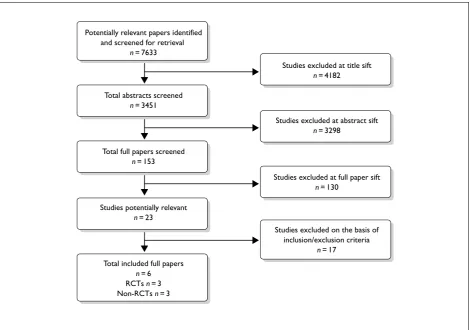
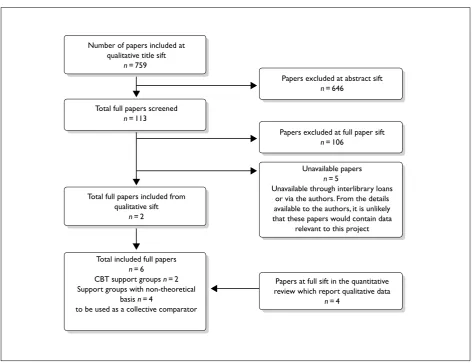
Six studies met the inclusion criteria for the quantitative review. Three were randomised controlled trials (RCTs) and three were non-randomised trials. Two studies met the inclusion criteria for the qualitative review. These were both treatment evaluations incorporating qualitative methods.
Cost-effectiveness
No studies were identified that were deemed relevant to the decision problem.
Evidence of effectiveness
Clinical effectiveness
Six studies of group CBT for PND were included in the quantitative review as part of a narrative analysis. Only one study was deemed appropriate for the decision problem; therefore a meta-analysis was not performed. This study indicated that the reduction in the Edinburgh Postnatal Depression Scale (EPDS) score through group CBT compared with routine primary care (RPC) was 3.48 [95% confidence interval (CI) 0.23 to 6.73] at the end of the treatment period. At 6-month follow-up the relative reduction in EPDS score was 4.48 (95% CI 1.01 to 7.95). Three studies showed the treatment to be effective in reducing depression when
compared to RPC, usual care or waiting list groups. There was no adequate evidence on which to assess group CBT compared with other treatments for PND. Two studies of group CBT for PND were included in the qualitative review. Both studies demonstrated patient acceptability of group CBT for PND, although negative feelings towards group CBT were also identified.
Cost-effectiveness
A de novo economic model was constructed to assess the cost-effectiveness of group CBT.
x
Summary of cost-effectiveness
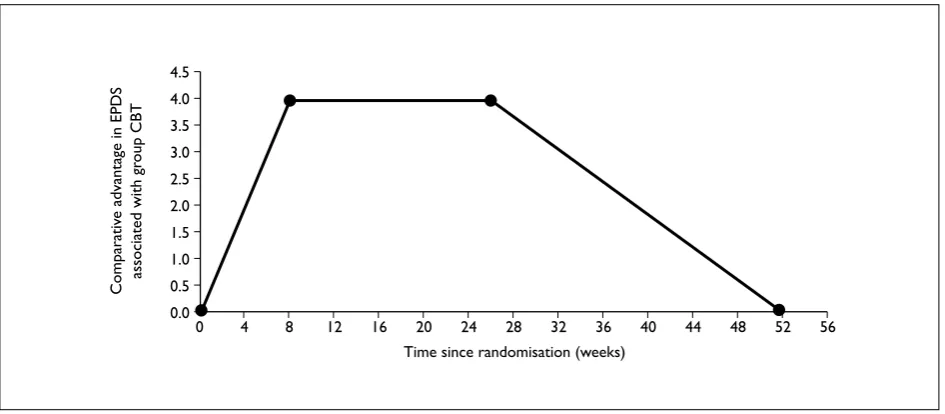
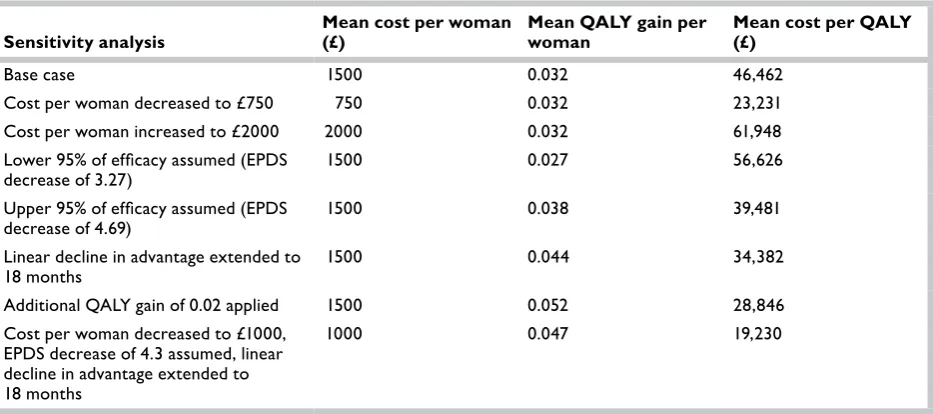
The base-case results indicated a cost per quality-adjusted life-year (QALY) of £46,462 for group CBT compared with RPC. The 95% CI for this ratio ranged from £37,008 to £60,728. There was considerable uncertainty in the cost per woman of running a CBT course, of the appropriateness of efficacy data to the decision problem, and the residual length of benefit associated with group CBT. These were tested using univariate sensitivity analyses. Supplementary analyses that fitted distributions to the cost of treatment and the duration of comparative advantage reported a cost per QALY of £36,062 (95% CI £20,464 to £59,262).
Sensitivity analyses
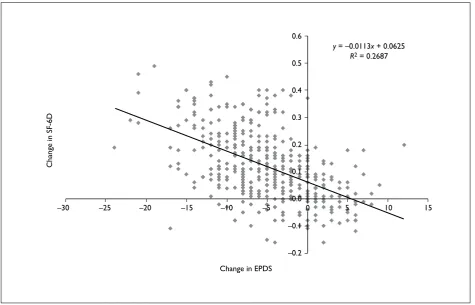
The cost of running a group CBT course, the assumed efficacy of group CBT and the length of residual benefit all markedly affected the results; plausible combinations of these values would produce cost per QALY values below currently used thresholds. Expected value of information analyses were undertaken. These showed that there was expected to be a considerable benefit in conducting further research, particularly regarding the cost of treatment and the relationship between changes in values of the EPDS and changes in the value of the Short Form questionnaire-6 Dimensions (SF-6D).
Discussion
Strengths, limitations and
uncertainties of the analyses
A strength of our work is that an estimation of the cost-effectiveness of group CBT for PND in the UK has been calculated; previously such estimates have not been published. Furthermore, a relationship between a change in EPDS score and utility has been estimated, although the correlation is only moderate. We believe that such a relationship has not previously been published. The analyses have shown that the cost per QALY is heavily dependent on the cost per women treated with group CBT and the assumed relationship between changes in EPDS values and changes in SF-6D values.
Limitations include the dearth of RCT evidence to assess the effectiveness of group CBT for PND. The available evidence was in some cases of low quality due to poor reporting. Some of the included studies failed to provide adequate information about the exact nature of the CBT element of the intervention, concurrent treatment in the intervention group, and patient characteristics
such as time postpartum. These factors may have significant implications for the generalisability of the findings. Furthermore, the potentially small number of health visitors involved in delivering the group CBT assumed applicable to the UK setting may provide severe limitations in generalising the results to other health visitors.
No robust comparisons between group CBT and individual CBT, or between group CBT and other group therapies, were found. For the quantitative analyses only one RCT was considered appropriate for meta-analysis and this had only 45 participants. A further limitation is that utility measurements were not recorded in the RCTs, thus benefits were estimated from a regression of the relationship between EPDS and SF-6D.
As such there is considerable uncertainty in the estimated efficacy of group CBT compared with RPC. This, and uncertainties in the costs of conducting group CBT and in the duration of benefit, mean that the cost-effectiveness of group CBT for PND is uncertain.
Conclusions
Implications for service
provision
Evidence from the clinical effectiveness review provides inconsistent and low quality information on which to base any interpretations for service provision. Although three of the included studies provide some indication that group
psycho-education incorporating CBT is effective compared with RPC, there is enough doubt in the quality of the study, the level of CBT implemented in the group programmes, and the applicability to a PND population to limit any interpretations significantly.
It is also considered that the place of group CBT in a stepped care programme needs to be identified, as well as there being a need for a clearer referral process for group CBT. There is also a requirement to make clearer assessments of the facilitators and resources required for group CBT, including training needs, and to provide a clear method of assessing suitable participants for the treatment.
Suggested research priorities
© 2010 Queen’s Printer and Controller of HMSO. All rights reserved.
xi SF-6D, to determine the effectiveness of group
CBT compared with RPC and individual CBT (preferably in terms of a utility measure to obviate the transformation from the EPDS) and to
determine the duration of comparative advantage by following up the women 1 year, or longer, after randomisation.
If the sample size is large enough, data on the following aspects should be recorded: the effect
© 2010 Queen’s Printer and Controller of HMSO. All rights reserved.
1
Chapter 1
Background
Description of health
problem
The term ‘postnatal depression’ (PND) has been used to describe a wide range of distressing symptoms following childbirth. This has led some clinicians to describe women as suffering from PND on the basis of the symptom of lowered or depressed mood.1 It is more common, however, for a clinical diagnosis to be made based on the pattern and severity of symptoms. PND is also referred to as puerperal depression, postpartum depression and perinatal depression, and is defined as a non-psychotic depressive episode meeting standardised diagnostic criteria for a minor or major depressive disorder, beginning in or extending into the postnatal period, which is usually defined at up to 12 months postpartum.2
Current criteria for the measurement of
depression are provided in two major international classifications, International Classification of
Diseases-Tenth Edition (ICD-10) and Diagnostic and Statistical Manual of Mental Disorders-Fourth Edition (DSM-IV). The ICD-103 divides depression into three categories: mild, moderate and severe, and 10 symptoms of depression are identified. In the DSM-IV,4 nine symptoms of depression are identified.
DSM-IV criteria for a major depressive disorder require the presence of either (1) depressed mood most of the day, nearly every day with self-reports of sadness, emptiness or observation of appearing
tearful, or (2) markedly diminished interest or pleasure, plus five (or more) of the criteria in Table 1 for at least a 2-week period, nearly every day. PND can range in severity and can include the symptoms of major or minor depression as described in the DSM-IV. An additional symptom specific to PND is guilt about the sufferers’ inability to look after their baby.
Neither of these classification systems provides a category specifically for PND. The ICD-10 recommends that depression in the postnatal period be categorised as one of the usual categories of depression, but does make provision for a mental disorder beginning within 6 weeks of the delivery, if the symptoms do not fit the other criteria for depression. The DSM-IV accepts a ‘postpartum onset specifier’. This refers to the same symptoms as those associated with major depression, but is used when onset in within 4 weeks of the delivery of the child (p. 386). However, it should be noted that in some cases women with sub-threshold symptoms are referred to services,1 and current National Institute for Health and Clinical Excellence (NICE) guidance for antenatal and postnatal mental health5 suggests that if the health-care professional or patient has significant concerns regarding a possible mental disorder in a women during pregnancy or the postnatal period, the woman should be referred for further assessment to her general practitioner (GP). In addition to, or as an alternative to, these diagnostic criteria, self-report scales such as the Edinburgh Postnatal Depression Score (EPDS) are used to
TABLE 1 Diagnostic criteria for a major depressive episode – DSM-IV
1 Markedly diminished interest or pleasure in all, or almost all, activities
2 Significant weight loss when not dieting, weight gain, or decrease or increase in appetite 3 Insomnia or hypersomnia
4 Psychomotor agitation or retardation (observable by others, not merely subjective feelings of restlessness or being slowed down)
5 Fatigue or loss of energy
6 Feelings of worthlessness or excessive or inappropriate guilt 7 Diminished ability to think or concentrate, or indecisiveness
2
identify PND; although this scale is the most widely used self-report scale for the identification of PND administered by the health-care provider, it should be noted that further research is required to establish the measure as a tool of identification or diagnosis for PND. The scale consists of 10-item Likert format relating to depression symptomology and has also been shown to measure anxiety symptomology.6 Items are scored on a 0–3 scale, giving a total range of 0–30. Total scores within the range 12–30 suggest significant depression. The Beck Depression Inventory (BDI) is also used in the screening of PND. It is a 21-item self-report scale used to determine depression severity. Items are scored on a 0–3 scale, giving a total range of 0–63. Total scores within the 1–9 range indicate minimal depression, 10–18 mild depression, 19–29 moderate depression, and 30–63 severe depression.
A clinical definition in use in the UK is non-psychotic depression occurring during the first 3 months postpartum.7 Symptoms of PND may spontaneously resolve 3–6 months after onset,8 although some symptoms of depression are common in sufferers up to a year after delivery.9 It should also be noted that there are strong links between prenatal depression and anxiety, and PND and anxiety,10,11 and that the presentation of PND may be comorbid with other mental disorders.
Morrell et al.12 provide UK data on EPDS levels at 6 weeks postpartum. Based on a sample of 3449 postnatal women, 595 had an EPDS13 score of 12 or more at 6 weeks postpartum; an estimated proportion of 17.3% [95% confidence interval (CI) 16.0 to 18.5]. However, it should be noted that the EPDS does not yet have a proven role in the identification, screening or diagnosis of PND. Therefore, prevalence rates based on the EPDS should be treated with caution. This is comparable with previous reports that have suggested PND affects approximately 14.5% of women in developed countries during the first 3 months postpartum,14 and 13% of new mothers in developing countries.15 At 6 months postpartum it is reported that the prevalence of PND in the UK is 9.1% in new mothers compared to 8.2% in women who had not given birth within the previous 6 months.2 Milgrom et al.1 report that prevalence rates of PND are affected by the measurement tool used such as self-report measures of depression including the EPDS and BDI;16 sampling; timing of the assessment; differing diagnostic criteria used in clinical interviews, including the DSM-IV criteria and the ICD-103 criteria; and by the length of the postpartum period under evaluation, as
longer periods tend to identify higher prevalence. It is noted, however, that the EPDS is not, in itself, a diagnostic test. It should be followed by a diagnostic interview or longer structured measure if a diagnosis of PND is required.
Mental illness associated with childbirth can occur in the form of new episodes but also as a recurrence of pre-existing illnesses.7 The risk of suffering from severe affective disorders, including PND, is elevated in women who have recently given birth compared to the general population.7 Women with a history of severe mental illness, whether associated with childbirth or not, have an increased risk of a recurrence of their condition of between 33% and 50% following the birth of a child. This risk is at its greatest during the first 30 days after birth.17 PND is distinguished from both postnatal blues and postnatal psychosis: PND is considered to be more severe and has a longer duration of depressive symptoms in comparison to postnatal or maternity blues, as they are sometimes called.1 However, Beck18 suggests that it is the timing of the depressive symptoms that differentiates PND and postnatal blues.
Up to 80% of women experience emotional lability, known as postnatal blues, in the first 2 weeks postpartum, making this experience extremely common.1 For those with postnatal blues, symptoms occur in the first few days after delivery and can last for up to 10 days. Evaluation should take place if symptoms continue beyond 10 days to identify PND. However, the symptoms of postnatal blues and PND can be difficult to distinguish at this early stage. Symptoms of postnatal blues include crying, irritability, fatigue, anxiety and emotional lability, and it is suggested that maternity blues may be a normal reaction following the physiologic changes associated with childbirth.18
Postnatal depression is also distinguished from postpartum psychosis which has a much less frequent incidence and is more severe.1 The prevalence of postpartum psychosis has been reported as one to two women per 1000 deliveries.19 Symptoms can include delusions, hallucinations, extreme agitation, confusion, inability to eat or sleep, exhilaration and rapid mood swings, and women with postpartum psychosis are regarded as a danger to themselves and their infant.18
© 2010 Queen’s Printer and Controller of HMSO. All rights reserved.
3 basis of PND;9,20 however, a number of psychosocial
factors have emerged as risk factors. Prenatal depression and anxiety, a history of previous depression, and maternity blues have been shown to be strongly related to PND.10,11,15,21 Further, psychosocial variables, such as self-esteem,10
stressful life events,11,15,21,22 childcare stress,10 marital conflict,10,15,21,22 a lack of social support,10,11,15,23 low social status,10,15 infant temperament10 and unplanned or unwanted pregnancy,10 have emerged as significant predictors of PND.
Impact of health problem
Significance for patients in terms of ill-health (burden of disease)
Postnatal depression is a major health issue for the affected individual but also represents a significant risk to the child of the sufferer. Impaired maternal– infant interactions24 can lead to attachment
insecurity,25 and impaired cognitive26 and social-emotional development.27 Fewer positive mother– child interactions are reported in dyads where the mother’s depression persists beyond 6 months postpartum than in those whose depressive symptoms end before 6 months.28 In addition to the impacts on mother and child, findings have shown that there are links between women’s depression and their partner’s mental health.29,30 In men, partner depression has been found to be associated with a higher probability of reporting depression,29 and PND in men has been reported as associated with depression in their partners during pregnancy and after delivery.30
Current service provision
Postnatal care typically involves a short stay in hospital followed by at least two visits by a midwife. The woman remains under the care of the midwife for up to 6 weeks postpartum when care is transferred to the health visiting service.31 In practice this transfer is likely to occur much earlier, often within 14 days. The current NICE clinical guideline for antenatal and postnatal mental health32 (p. 96) outlines the recommended care pathway to identify and treat women with PND. At a woman’s first antenatal contact with primary care, then at two postnatal contacts (usually at 4–6 weeks and 3–4 months), health-care professionals
(including midwives, obstetricians, health visitors and GPs) routinely ask questions to identify possible depression: (1) during the past month ‘have you often been bothered by feeling down, depressed or hopeless?’ and (2) ‘during the past
month, have you often been bothered by having little interest or pleasure in doing things?’. If the woman answers yes to either question then a third question should be considered, ‘Is this something that you feel you need or want help with?’. Health-care professionals may also consider the use of self-report measures such as the EPDS, Hospital Anxiety and Depression Scale or Patient Health Questionnaire-9 items.
In Sheffield, midwives visit postnatal women up to 28 days after the birth, although they do not necessarily have to visit the women at home every day, and often only visit until the 10th day. They do not usually use any formal tool for the detection of PND, but are required to ask questions (as outlined in the previous paragraph) to assess how the woman is feeling. If the midwife feels there is a significant mental health problem he or she can refer the woman to her GP for further assessment. Women should not be discharged by the midwife until the health visitor has made contact, which usually occurs by 28 days after birth, although practice is variable. Some health visitors use self-report measures such as the EPDS typically at 6 weeks postpartum if they feel PND may be an issue, although use of the EPDS is not a universal practice. If they are concerned about the mental health of the women and believe this is beyond their scope they may consult the GP who could refer the patient to the community mental health team. Diagnosis is usually undertaken by the GP, using a formal diagnostic framework, such as DSM-IV criteria, for depression (source: Sheffield Teaching Hospitals, Jessop Wing).
4
stated that self-help strategies [guided self-help, computerised cognitive behaviour therapy (CCBT) or exercise], non-directive counselling delivered at home (listening visits), brief cognitive behaviour therapy (CBT) or interpersonal therapy (IPT) are recommended by NICE.5
Antidepressant drugs are considered for women with mild depression during pregnancy or the postnatal period if they have a history of severe depression and they decline, or their symptoms do not respond to psychological treatments. However, it is noted that, to minimise the risk of harm to the fetus or child, drugs should be prescribed cautiously.5 There is also evidence that women prefer non-pharmacological modes of intervention at this time.33
For women with a moderate depressive episode or a history of depression, or those with a severe depressive episode during pregnancy or in the postnatal period, it is recommended by NICE that structured psychological treatment specifically for depression (CBT or IPT) should be considered. If the woman has expressed a preference for it antidepressant treatment will be considered as an alternative, or combination treatment will be considered if there is no response, or there is a limited response to psychological or drug treatment alone.
Services are ideally provided in a timely fashion to ensure that adverse effects on the health of the woman and her baby can be avoided.34 Specifically, it is recommended that women requiring psychological treatment for PND should be seen for treatment normally within 1 month of initial assessment, and no longer than 3 months afterwards.5
Variation in services and/or
uncertainty about best practice
The NICE guidance states that the structure of services varies in different parts of the country because of local factors including the organisation of existing mental health services, the demographic profile of the population and geographical issues. Recommendations are made to ensure local needs are met and integrated care is delivered, by developing managed clinical networks involving linked groups of services in primary, secondary and tertiary care.
As services vary widely across the UK it is appropriate to provide details of how PND is
managed in a particular NHS trust and how this may potentially contrast with the management of PND in other areas of the UK. Rotherham Primary Care Mental Health Service provides a service based in GP practices for common mental health problems, including PND. Women can be referred to the service by any practitioner, obstetrician, midwife, health visitor or other health professional during both the antenatal and postnatal periods, if it is felt necessary. Rotherham Primary Care Mental Health Service provides a service based in GP practices for common mental health problems, including PND. Women can be referred to the service by any practitioner, obstetrician, midwife, health visitor or other health professional during both the antenatal and postnatal periods, if it is felt necessary. The NICE clinical guidance for antenatal and postnatal mental health is used by practitioners where PND is suspected and they are aware of the primary care mental health service and how to refer into it (although it should be noted that this service is not specific to PND). The EPDS is not used. Once referred to the service, women may attend the GP practice or be visited at home for assessment; women may then be offered six to eight sessions of individual treatment in which CBT approaches and counselling are utilised by the primary care mental health service staff (J Hunter, Head of Service, Primary Care Mental Health Service, Rotherham Community Health Services, 2008, personal communication). This service may differ from other services provided in the UK in the following ways: health visitors in other services may routinely administer the EPDS, which was previously used in the Rotherham service and may be used again in the future; there may not be a dedicated GP-based service for common mental health disorders; and individual CBT may not be routinely administered. The applicability of the Rotherham model to other areas is also likely to be limited owing to the wide variation in health service provision amongst Primary Care Trusts (PCTs) with a reported range of whole time equivalent health visitors per child under 5 years old of 165 in County Durham PCT to 894 in Lambeth PCT.35
© 2010 Queen’s Printer and Controller of HMSO. All rights reserved.
5 antidepressants are the usual first-line treatment
prescribed by GPs for women with PND. However, women have been found to prefer psychological intervention, rather than antidepressants, during the postnatal period.33,36 Furthermore, it is
common to prescribe antidepressants and provide psychological therapies together, although a report suggests that there is no advantage in receiving both, and that cognitive behavioural counselling and a separate antidepressant are equally effective.33
Previous attempts to improve services have had only limited success. A Royal College of Psychiatrists’ report suggests that, despite efforts to improve the recognition of and screening for PND in primary care, little has changed.37 In a more recent report by the Healthcare Commission31 (now known as the Care Quality Commission) it is stated that the recording of mental health needs by maternity staff in trusts is inconsistent, making it problematic to assess the prevalence of mental health problems associated with child birth. It reported the number of women receiving a postnatal check-up of their own health and well-being at 6 weeks postpartum as ranging between 71% and 97%. Half of the trusts reported a rate of 89% or below, showing that many women may not be receiving postnatal checks with the GP.
The Healthcare Commission report in relation to mental health focuses on input from perinatal psychiatry and puerperal psychosis and suggests that PND can be treated with support from mainstream services and does not usually require specialist services. As women with a previous history of mental health problems and those with depression during pregnancy are reported as at higher risk of developing postnatal illnesses,15,21 the data reported by the Healthcare Commission may have some relevance to PND.
Data for the Healthcare Commission report31 were provided from 40 trusts, and of these the median trust reported that 8% of women were identified at booking as having personal or family history of mental illness (range 2–30% across trusts). Twenty-nine trusts provided data on referrals to mental health teams following booking; the median number of women referred by these trusts to a mental health team was 1.6% (range 0–7%). It was also reported that about a third of trusts had joint clinics with mental health teams for previous puerperal psychosis, and some had specialist midwives for women with previous puerperal psychosis (19%) or to support women
with a psychiatric disorder (21%). Forty-two per cent of trusts had no access to a specialist perinatal mental health service. Midwives provided most antenatal and postnatal care but only 70% of trusts were able to refer women directly to mental health specialists, this was not possible for the remaining 30%. Ninety-five per cent of trusts had access to a mother and baby unit, it is assumed that the other 5% do not have any access to a mother and baby unit, although this is not detailed in the report.
The Healthcare Commission report concluded that there are inadequate provisions for mental health needs in many trusts’ maternity services, including booking, speciality training, streamlining referral pathways and access to specialist services. If services are lacking for those with severe postnatal illnesses, the likelihood is that this will be the case with those treated only in primary care for mild to moderate depression associated with pregnancy and the postpartum period, although this is not explicitly covered in the Healthcare Commission report.
There is also uncertainty around the number of women with PND who may be undiagnosed or unidentified. It is reported that women are often reluctant to pursue health care for PND for a variety of reasons. These include a lack knowledge about the condition meaning they are not aware they have it, thinking they could or were expected to cope with it without help, stigma and a fear of failure a fear of losing their baby if they admit to having PND, the fear of giving the family a bad name, and the fear of being labelled as mentally ill.13,36 Cultural reasons have also been reported, these include the fact that the family may discourage women from obtaining help as it is seen as unacceptable to discuss such issues with people external to the family. Furthermore, it is reported that health professionals may limit the number of women who come forward for treatment for PND by making inappropriate assessments and having insufficient knowledge of PND to provide adequate care. It is also reported that women with PND feel health professionals have a tendency to normalise depressive symptoms making women less likely to pursue treatments. They also feel that they have limited time with health professionals and are not taken seriously.36 These reports suggest that there may be a significant number of women with PND who remain undiagnosed and that a clearer referral process may help address this.
6
commissioning guide. These include improving the mother–child relationship, reducing inequalities and improving timely access to services in primary care, mental health and maternity services; reducing the risk of relapse; reducing the risk of women stopping medication in an unplanned way; reducing the number of inappropriate referrals and readmissions and the length of inpatient stays, and offering alternatives to admission; reducing the risk of self-harm and suicide; preventing avoidable separation of mother and baby; and improving performance and person-centred clinical care.34
Current service cost
It is assumed that usual care (UC) for PND includes visits by midwives and health visitors, visits to the GP, prescriptions for medication, and other health contacts, such as community mental health contacts, clinical mental health contacts and social services contacts. Based on these contacts, Morrell et al.13 report that costs at 6 months postpartum for women scoring 12 or above on the EPDS are £374 per patient. Health visitor costs per hour of client time were reported as £77 for UC, and £79 for those trained in using a cognitive behavioural or person-centred approach. Overall costs at 6 months were £339 for those receiving CBT or person-centred therapy. These prices were based on 2003–4 unit costs: prices using 2007–8 inflation indices38 would equate to health visitor costs of £86 for UC and £89 for those trained to deliver an intervention, and overall costs as £419 for UC and £380 for intervention care. The findings of Morrell et al.13 provide some evidence that a psychological intervention delivered by health visitors is cost-effective compared to UC. The costs related to UC did not include any formal CBT treatment.
The current NICE guidance recommends psychological intervention such as CBT or IPT for women with PND. On occasions where formal CBT is provided it is assumed in current practice to be on an individual basis. If a course of individual CBT were offered this would most likely be delivered by a CBT therapist, and would consist of around 12 sessions, 90 minutes in duration. One or two follow-up sessions may be included and the therapist would be required to undertake clinical supervision for approximately 10–30 minutes per session; however, it should be noted that the current service provision of CBT may vary widely (P Slade, Professor of Clinical Psychology, University of Sheffield and J Curran, Consultant Cognitive Behavioural Psychotherapist, Sheffield Health and Social Care NHS Foundation
Trust, 2008, personal communication). The cost of a CBT session has been estimated as £6238 (based on a 55-minute session), therefore we estimate the cost per hour to be £68. Assuming 25 hours of treatment and clinical supervision, the cost per patient would be £1700. An alternative method based on health visitor hourly rate provides a larger cost; the cost per hour of health visitor time was estimated at £89 (based on information from Morrell et al.13 amended using inflation indices to represent current prices), which equates to an estimated cost of £2225 assuming a health visitor was required for 25 hours per patient, although it is unclear whether these resources would be used in reality and may be an overestimation.
Description of technology
under assessment
Summary of intervention
Cognitive behavioural therapy is a psychotherapy commonly practised in the NHS. CBT refers to a combination of concepts and techniques from cognitive and behaviour therapies. Cognitive therapy is derived from cognitive theories and seeks to challenge negative automatic thoughts with an aim of changing maladaptive thoughts and beliefs.39 Behavioural therapy refers to a therapy derived from learning theory and works on symptoms by changing behaviour and environmental factors that control behaviour. The patient works collaboratively with a therapist to identify the types and effects of thoughts, beliefs and interpretations on current symptoms, feelings states and/or problem areas. They develop skills to: identify, monitor and then counteract problematic thoughts, beliefs and interpretations related to the target symptoms/problems; learn a repertoire of coping skills appropriate to the target thoughts, beliefs and/or problem areas; and test out new behavioural patterns.40
© 2010 Queen’s Printer and Controller of HMSO. All rights reserved.
7 to PND, a systematic review has indicated that
psychosocial and psychological interventions are effective treatments.42 Furthermore, a recent trial has demonstrated that psychologically informed treatments delivered by trained health visitors are clinically effective at 6 and 12 months for women with PND compared with UC.12
Cognitive behavioural therapy can be practised in an individual or group setting; the potential benefits of providing CBT in a group setting include increasing the availability of therapists, reducing waiting times and reducing costs. Group CBT differs from individual CBT only in the respect that participants are treated in small groups of around eight people, rather than in a one-to-one situation with their therapist. Group CBT treatment usually runs for 12 weeks, and is often preceded by one individual session of 2-hour duration with the purpose of assessing the patient and briefing the patient regarding group treatment, and one or two sessions follow-up the treatment. Thus, approximately 13 sessions are required for the group treatment, each typically of 2-hour duration. The group facilitators are likely to require 12 hours for preparation and supervision. Follow-ups may take place at 6 months and sometimes at 12 months, but may vary to a large extent. Group psycho-educational CBT is lower impact than normal group CBT and is usually delivered in a smaller number of sessions, four to six opposed to 10–12 (J Curran, personal communication).
There is little available evidence on the service provision of group CBT specifically for PND. For this reason we have provided details of service provision from two sources. The first from a UK study which has reported data on the efficacy of group CBT for PND,43 and the second based on the delivery methods deemed by the authors to be most likely were group CBT to become widely available.
The UK study43 indicates that it is likely that two health visitors trained to use a cognitive behavioural approach would normally deliver group CBT for PND. Clinical psychologists, mental health workers and nurses may also be involved in supervision or run groups, but this is less likely to occur. Although not reported in this study, group CBT for PND would usually take place at the health visitor base which is often the GP surgery. In some situations the setting could also be a health centre or another community-based facility. Minimal equipment would be required, but would
include a flip chart, audio-visual equipment, and equipment to display powerpoint presentations (J
Curran, personal communication). It is likely that services of this kind are very limited.
The resources required using the delivery methods deemed by the authors to be most likely were group CBT to become widely available would include two group facilitators, a recently qualified clinical psychologist and a health visitor.
The criteria used for entry to the treatment would normally include a diagnosis of DSM-IV depression, or an elevated score on a self-report measure such as the EPDS. However, those with subthreshold symptoms of PND or those with a history of depression may also be referred at the discretion of the GP (J Curran, personal communication).
Identification of important
subgroups
From a clinical perspective, PND includes four subgroups of women whose management may differ: (1) those who develop depression only after childbirth; (2) those who have developed antenatal depression which continues into the postnatal period; (3) those with pre-existing chronic or relapsing depression; and (4) subthreshold groups. It was not possible to assess the efficacy of group CBT for these subgroups separately because of a lack of available data.
Anticipated costs associated
with intervention
As detailed in the Summary of intervention section, because of the little available evidence on the service provision of group CBT specifically for PND, details of service provision have been provided both from a UK randomised controlled trial (RCT)43 and also based on the delivery methods deemed by the authors to be most likely were group CBT to become widely available.
Based on the UK RCT43 it is estimated that one programme of group CBT treatment would include eight sessions, occurring once per week for a duration of 2 hours. It is assumed that the group sessions would also be preceded by a 2-hour individual session for the initial assessment of each participant. The average number of participants for the treatment was reported as five. It is assumed that preparation time would be required for
8
health visitor per session, and a further hour per session per health visitor would be required for travelling to and from the sessions. Based on these parameters the health visitor time required would be 74 hours, cost per hour of health visitor time was estimated at £89 (based on information from Morrell et al.13 amended using inflation indices to represent 2007–8 prices). This equates to a total health visitor cost of £6586 and a total cost per participant of £1317.
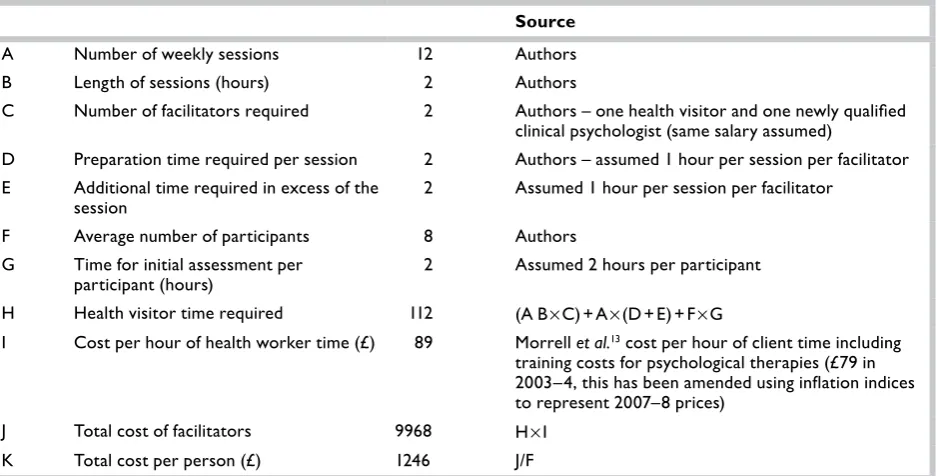
The authors estimated that two group facilitators would be required, a recently qualified clinical psychologist and a health visitor. The programme would consist of 12 sessions occurring once per week for a duration of 2 hours. These would be preceded by a 2-hour individual session for the initial assessment. The average number of participants for the treatment was estimated as eight. Preparation time was estimated as 1 hour per health visitor per session, and a further hour
per session per health visitor would be required for travelling to and from the sessions (G Parry, University of Sheffield, P Slade, University of Sheffield, J Hamilton, St John’s Hospital, West Lothian, Clinical experts, 2008, personal communication). Facilitator time required would be 112 hours, cost per hour of facilitator time was estimated at £89 (based on information from Morrell et al.13 amended using inflation indices to represent current prices). This equates to a total facilitator cost of £9968 and a total cost per participant of £1246.
© 2010 Queen’s Printer and Controller of HMSO. All rights reserved.
9
Chapter 2
Definition of the decision problem
Decision problem
• Interventions The focus of this report is on the use of CBT; however, this may form only a component of an overall treatment package. All interventions that incorporate a form of ‘education’ (i.e. any psycho-educational activity that is informed by
cognitive behavioural theory or technique) in a group setting were included. All settings were included. The included studies therefore were required to specifically refer to the use of CBT when describing their intervention. Therefore, when we refer to group CBT we are referring to a group programme which incorporates, or claims to incorporate, some level of CBT theory or technique. The degree to which each study actually reflects and incorporates CBT theory or technique will be assessed.
• Population including subgroups The population was defined as women meeting the criteria of a standardised PND diagnosis through using DSM-IV, or women designated at being at risk of depression through their scores on the EPDS, subthreshold women referred by their GP, women with PND in the postpartum period (up to 1 year) and women with no other comorbid psychiatric disorder or major medical problems. From a clinical perspective, PND includes four subgroups of women whose management may differ: (1) those who develop depression only after childbirth; (2) those who have developed antenatal depression which continues into the postnatal period; (3) those women with pre-existing chronic or relapsing depression; and (4) subthreshold groups. • Relevant comparators All comparators were
considered (e.g. comparators that function as specific comparisons as well as controls). These included routine primary care (RPC) and individual CBT.
• Outcomes All outcome measures were
considered in both reviews of the quantitative and qualitative research literature.
Overall aims and objectives
of assessment
The overall aim of the review was to evaluate the clinical effectiveness and cost-effectiveness of group CBT compared with currently used packages of care for women with PND. The purpose of the project was to apply rigorous methods of systematic reviewing, evidence synthesis and decision analytic modelling to evaluate group CBT for PND.
The objectives of the review were:
• To determine the relative clinical efficacy of group CBT treatment compared with currently used packages of care for women with PND. A full systematic review of the literature will be undertaken to provide evidence on efficacy. • To provide a detailed user perspective on
the acceptability and potential harms of group CBT, a second systematic review will be undertaken on the available qualitative research literature.
• To undertake a full synthesis of available evidence. This will include the use of a higher level synthesis of the data with mixed-treatment comparisons if appropriate.44 • To estimate the cost-effectiveness of group
CBT for PND. This will include a systematic review of published economic evaluations in the area and identification of other evidence needed to populate an economic model. Cost-effectiveness will be assessed in terms of the incremental cost per quality-adjusted life-year (QALY) gained. Uncertainty will be explored by probabilistic sensitivity analyses (PSA) with data displayed using cost-effectiveness acceptability curves (CEACs).45
© 2010 Queen’s Printer and Controller of HMSO. All rights reserved.
11
Chapter 3
Assessment of clinical effectiveness
Methods for reviewing
effectiveness
Identification of studies
Search strategies
The search aimed to identify all references relating to the clinical effectiveness of group CBT for PND. The original intention was to synthesise evidence within the framework of a mixed-treatment comparison;44 however, during the early stages of the research it became clear that the clinical evidence regarding group CBT was relatively poor. As such, confidence in building a coherent network that contained comparable study designs and homogeneous participants was low. The use of substantial resources to construct a comparison with potential low internal validity was not deemed appropriate.
Sources searched
Seventeen electronic bibliographic databases were searched, covering biomedical, health-related, science, social science and grey literature (including current research). A list of the databases searched is provided in Appendix 1.
In addition, the reference lists of relevant articles were checked and various health service-related resources were consulted via the internet. These included health technology assessment organisations, guideline producing bodies, generic research and trials registers, and specialist mental health sites. A list of these additional resources is given in Appendix 1.
Search terms
A combination of free-text and thesaurus terms were used. Key papers identified through initial scoping searches were used to develop keyword strategies. ‘Population’ search terms (e.g.
depression, postpartum, postnatal depression and post pregnancy depression) were used to identify any references related to this population. The searches were not restricted by intervention because of the complexity of defining the intervention and to prevent omission of relevant references. Copies of the search strategies used in the major databases are included in Appendix 1, for the other databases
the same strategy was used with minor alterations necessary for specific databases. The searches were undertaken in January 2008. The databases were searched from 1950 to 2008, the actual date range for each of the databases searched depended on the coverage of the individual database.
Search restrictions
The searches were intended to be as broad as possible, and whilst they were restricted to human studies where possible, they were not restricted by language, date, publication type or study design. Non-English papers were excluded at the sifting stage rather than setting this as an inclusion criterion.
Inclusion and exclusion criteria
Population
Included: Women in the postpartum period (up to 1 year), meeting the criteria of a standardised PND diagnosis using DSM-IV, or scoring above cut-off on the EPDS. No exclusion was made on the basis of the standardised depression screening/ case finding instrument of standardised clinical assessment tool used to define PND.
Excluded: Prenatal women, women with other comorbid psychiatric disorders or major medical problems, and women who have been involved in a previous psychological programme.
Intervention
Included: All interventions that included elements designated as deriving from cognitive behavioural principles including those that are purely ‘psycho-education’ (i.e. any psycho-educational activity which is informed by cognitive behavioural theory or techniques) in a group setting.
Setting
Included: All settings.
Comparator