REPRESENTATIONS OF HIV POSITIVE PERSONS IN PRINT MEDIA: LIFE 101 COMIC BOOK IN FOCUS
*
Solomon Mekonnen and Dinku Gebeyehu
Assistant Professor of Applied Linguistic and Communication
ARTICLE INFO ABSTRACT
The main objective of the study was to analyze how print media represented HIV positive persons. To do that,
to almost all Ethiopian universities to create awareness and to educate universities’ students about HIV/AIDS. All episodes, 31, of the comic book were considered fo
content analysis was employed to analyze the data gathered from the comic book. The analysis of comic book divulged that
dependable, hopeless, loneliness, were in crisis and who are
print media could adversely affect those who are already positive of HIV. Thus, it is re that print media’s messages should be well
Copyright©2019, Solomon Mekonnen and Dinku Gebeyehu
permits unrestricted use, distribution, and reproduction
INTRODUCTION
It is fact that HIV/AIDS affects all people indifferently. However, youth are more victim of the disease. In 2012, an estimated 780,000 youth aged 15-24 were newly infected with 97% of the new infections occurring in low and middle income countries (UNAIDS 2014). Additionally, UNAIDS estimates indicate that AIDS-related death among young people are increasing and among youth (15-24) make up of 6% of total adult AIDS related mortality in 2012. This high
infection among young people could describe a
whereby, either young people have not been provided sufficient information regarding the dangers associated with the disease, or they have ignored the message communicated to persuade them to protect themselves from the virus. To educate these young people, one of the most common places is at educational institutes. Obviously, there are other places like hospitals, markets, recreational centers that HIV/AIDS education can be given. However, due to their capacity and universality, educational institutes are a decisive setting for educating young people. Universities are one of educational institutes where education about HIV/AIDS should be given. University’s students are mostly young people who, like other group of people, are at the risk of HIV/AIDS.
due to their inclination to be engaged in risky sexual behavior, university students are often viewed as being at higher risks to acquire STIs/HIV infection and they are categorized under the ‘most at risk groups’. In general, based
government and non- government consensus have been arrived that university students are becoming as ‘emergent risk group’.
ISSN: 0975-833X
Article History:
Received 28th January, 2019
Received in revised form 17th February, 2019
Accepted 24th March, 2019
Published online 30th April, 2019
Citation: Solomon Mekonnen and Dinku Gebeyehu
International Journal of Current Research, 11, (04), 3474
Key Words:
Representations, Print Media, Comic Book, Positive Person.
*Corresponding author: Solomon Mekonnen
RESEARCH ARTICLE
REPRESENTATIONS OF HIV POSITIVE PERSONS IN PRINT MEDIA: LIFE 101 COMIC BOOK IN FOCUS
Solomon Mekonnen and Dinku Gebeyehu
Professor of Applied Linguistic and Communication, Wolaita Sodo University, Wolaita Sodo
ABSTRACT
The main objective of the study was to analyze how print media represented HIV positive persons. To do that, the researcher purposively selected Life 101 comic book which was prepared and distributed to almost all Ethiopian universities to create awareness and to educate universities’ students about HIV/AIDS. All episodes, 31, of the comic book were considered fo
content analysis was employed to analyze the data gathered from the comic book. The analysis of comic book divulged that HIV positive persons were represented as persons who were sick, dependable, hopeless, loneliness, and worthless. In addition, they were represented as persons who were in crisis and who are dead or lifeless. Such negative representations of HIV positive persons in print media could adversely affect those who are already positive of HIV. Thus, it is re
that print media’s messages should be well -designed to avoid unnecessary stigma and discrimination.
Solomon Mekonnen and Dinku Gebeyehu. This is an open access article distributed under the Creative in any medium, provided the original work is properly cited.
It is fact that HIV/AIDS affects all people indifferently. However, youth are more victim of the disease. In 2012, an 24 were newly infected with 97% of the new infections occurring in low and middle income 2014). Additionally, UNAIDS estimates related death among young people are 24) make up of 6% of total adult AIDS related mortality in 2012. This high -rate of infection among young people could describe a situation whereby, either young people have not been provided sufficient information regarding the dangers associated with the disease, or they have ignored the message communicated to persuade them to protect themselves from the virus. To oung people, one of the most common places is at educational institutes. Obviously, there are other places like hospitals, markets, recreational centers that HIV/AIDS education can be given. However, due to their capacity and itutes are a decisive setting for educating young people. Universities are one of educational institutes where education about HIV/AIDS should be given. University’s students are mostly young people who, like other IDS. It is to say that due to their inclination to be engaged in risky sexual behavior, university students are often viewed as being at higher risks to acquire STIs/HIV infection and they are categorized under the ‘most at risk groups’. In general, based on data from government consensus have been arrived that university students are becoming as ‘emergent risk group’.
For instance, studies made by Mengistu MaddaWalabu University, Shiferaw
University and Tariku et al. (2012) at Haramaya University show all the same results that students are at high risk of HIV/AIDS. In general, recent preliminary reports show that HIV/AIDS risk behaviors are increasing at higher rate among university students. From the above findings, one can say that educating university’s students is no option. To do that, media can play indispensible roles. One of the desired effects of media intervention in health related area is to show a way how people can have a healthy li
power of media is manifested when reporting on HIV/AIDS. Media can help those who are negative to keep on maintain their status and can help those who are positive to cope with their status. However, all these depend on how the address the issue. According to Schoepf (1991), the construction of HIV/AIDS is extremely fascinating because of the complex cultural and psychological meanings associated with the disease. Although media have shown improvements in increasing knowledge, its efforts in changing behaviors have faced challenges. One contribution for the challenges is that media fail to observe the sensitivityneeded when dealing with HIV/AIDS issues (Parker &Aggleton, 2003). Of HIV/AIDS related issues, one that demands se
HIV positive people are represented in media as it may have counter effects. Hence, this study tries to examine the representation of HIV positive persons in one of the media, print media; particularly the comic book entitled
which was prepared and distributed to Ethiopian university’s students.
International Journal of Current Research
Vol. 11, Issue, 04, pp.3474-3478, April, 2019
DOI: https://doi.org/10.24941/ijcr.35151.04.2019
Solomon Mekonnen and Dinku Gebeyehu. 2019. “Representations of HIV Positive Persons in Print Media: 3474-3478.
REPRESENTATIONS OF HIV POSITIVE PERSONS IN PRINT MEDIA: LIFE 101 COMIC BOOK IN FOCUS
Wolaita Sodo University, Wolaita Sodo
The main objective of the study was to analyze how print media represented HIV positive persons. To the researcher purposively selected Life 101 comic book which was prepared and distributed to almost all Ethiopian universities to create awareness and to educate universities’ students about HIV/AIDS. All episodes, 31, of the comic book were considered for the analysis. Besides, qualitative content analysis was employed to analyze the data gathered from the comic book. The analysis of HIV positive persons were represented as persons who were sick, and worthless. In addition, they were represented as persons who negative representations of HIV positive persons in print media could adversely affect those who are already positive of HIV. Thus, it is recommended designed to avoid unnecessary stigma and discrimination.
Creative Commons Attribution License, which
For instance, studies made by Mengistu et al. (2013) at MaddaWalabu University, Shiferaw et al. (2014) at Gondar . (2012) at Haramaya University show all the same results that students are at high risk of HIV/AIDS. In general, recent preliminary reports show that HIV/AIDS risk behaviors are increasing at higher rate among rom the above findings, one can say that educating university’s students is no option. To do that, media can play indispensible roles. One of the desired effects of media intervention in health related area is to show a way how people can have a healthy life. Regarding HIV/AIDS, the power of media is manifested when reporting on HIV/AIDS. Media can help those who are negative to keep on maintain their status and can help those who are positive to cope with their status. However, all these depend on how the media According to Schoepf (1991), the construction of HIV/AIDS is extremely fascinating because of the complex cultural and psychological meanings associated Although media have shown improvements in ge, its efforts in changing behaviors have faced challenges. One contribution for the challenges is that media fail to observe the sensitivityneeded when dealing with Parker &Aggleton, 2003). Of HIV/AIDS related issues, one that demands sensitivity is the way in which HIV positive people are represented in media as it may have counter effects. Hence, this study tries to examine the representation of HIV positive persons in one of the media, print media; particularly the comic book entitled Life 101 which was prepared and distributed to Ethiopian university’s
INTERNATIONAL JOURNAL OF CURRENT RESEARCH
Research Design and Methodology: Qualitative research design - is mainly descriptive and involves the collection and analysis of data concerned with meaning, perception, attitudes and beliefs rather that data that results in numerical counts from which statistical inferences can be drawn (Sandelowski,2010). The qualitative method was used because it is holistic in nature and, thus allows understanding of the whole phenomenon by discovering, capturing and interpreting the meanings.
Source of data collection: The researcher used document
analysis as source of data collection. The document was prepared to educate young university’s students about HIV/AIDS. Among various documents, a comic book under the title “Life 101” was taken for the study due to its coverage in Ethiopian Universities to educate university’s students about HIV/AIDS.
Sampling technique: From the different print materials, like
posters, broachers, flyers, which are prepared and distributed to university’s students to create awareness about HIV/AIDS, the researcher selected a comic book under the title “Life 101” which was prepared by AAU March project. As mentioned in the above section, the reason for selecting the comic book under the title “Life 101” was due to its coverage. Specifically, the researcher made pre-assessment in some universities like, Gondar University, Jimma University and Wolaita Sodo University to check the coverage of the comic book. According to the Universities’ HIV/AIDS prevention offices, the whole copies of ‘Life 101’ were distributed to the students in different times. According to the offices, the episodes in ‘life 101’ comic book were loved by the students. Moreover, these copies were found in all libraries and in Anti-AIDS clubs’ offices of all universities in Ethiopia. Thus, purposively ‘Life 101’ comic book, which had 30 episodes consisting of 720 pages, was selected for analysis.
Methods of Data analysis: To analyze how HIV positive
persons were represented in the comic book, the researcher used qualitative content analysis. Content analysis goes beyond quantifying. According to Hsieh & Shannon (2005: 1278), it is “a research method for the subjective interpretation of the content of text data through the systematic classification process of coding and identifying themes or patterns”. Specifically, qualitative content analysis goes beyond merely counting words or extracting objective content from texts to examine meanings, themes and patterns that may be manifest or latent in a particular text. Thus, in this particular study, qualitative content analysis was used to obtain the construction of HIV positive persons. Based on the similarities of the messages, the collected messages were categorized thematically. Life 101 comic book, was written in Amharic, Ethiopian working language; therefore, to translate it into English, the researcher used communicative translation approach. According to Newmark (1981), unlike semantic translation that focuses on the semantic and syntactic structure of the second language, communicative translation focuses on the target text and aims to ensure that the readers will understand the message of the text. Hence, communicative translation was given in front of each Amharic version extracts.
Results and Interpretations: After analyses were made, the
researcher identified how HIV positive persons were
represented in the comic book. The representations were categorized thematically as follow:
HIV positive mean ‘Sick’ or ‘Dependent: As can be read from
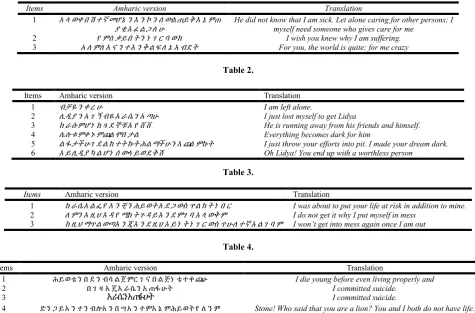
table 1 item 1, HIV person is represented as someone who cannot stand for himself. It says, “I need someone who takes care of me”. A direct definition of care could be doing things that help someone keep healthy, safe or in good condition. Care also means to help someone who is in trouble, worry or anxiety. Thus, when the person says, “I need someone who gives care for me”, it shows that he is not in stable or good condition. This could imply that someone who is HIV positive needs somebody who looks after him/her to overcome his/her problem or he needs protection from his/her trouble. The phrase “let alone caring for you” can imply that a person who is HIV positive cannot watch over other person. “The other representation is that being HIV positive has equivalent meaning with being sick or patient. This representation is manifested by the sentence, “you did not know that I am sick”. Here, it is possible to deduce that being HIV positive, he is convinced that he is sick. However, facts about HIV/AIDS show that being HIV positive does not necessarily mean someone is sick. In addition to item 1, the messagewhich clearly supports the claim that an HIV positive person means that someone who is suffering is found under item 2 which reads as“I wish you knew why I am suffering”. This shows that the person is suffering mentally. The person feels that nobody can understand the pain he is in. This could be due to the lack of discussion about his HIV status. Thus, the word ‘my suffering’ shows how severe his mental pain is due to his HIV status.
The severity of mental pain could lead someone to be panic. This claim can be supported by the sentence found in item 3 which reads as ‘For you, the world is quite; for me crazy’. Here, the person tries to compare how the world serves for those who are not HIV positive and for those who are HIV negative. Precisely, he associates that for those who are HIV negative, the world can give them a peaceful night, and for those who are HIV positive, the world is crazy. It can mean that the person is unstable, unfaithful, and out casted. “Being crazy” is the representation for HIV positive person. Hence, from this extract, it can be concluded that being HIV positive is represented as someone who cannot watch over him/herself or other person. It is also represented as someone who is sick and lives in crazy world.
HIV positive mean ‘Loneliness’ and ‘Hopeless’ or
‘Worthless’: The other representation of HIV positive person
‘I just throw your efforts into pit. I made your dream dark.’ Table 2 item 4, is another sentence which shows hopelessness. It also shows that the person is ashamed when he says ‘I just throw your efforts into pit’. The person reflects how discouraged he is by using the word ‘dark’. Here, being HIV positive is constructed as being in a dark. A person who is in a dark cannot see anything. Again, being HIV positive is represented as throwing away parents’ efforts in large hole which is difficult to remount. Moreover, being HIV positive is represented as worthless person. The sentence,table 2, item 5,‘Oh Lidya! You end up with a worthless person’shows that the person does not fit to be with someone. He feels that he is valueless to be with someone. This shows that his self-esteem is low.
HIV positive mean to be in ‘Crisis’: As can be understood
from the above sentence, table 3, item1, which says, ‘I was about to put your life at risk in addition to mine’,the person confesses that he was about to put a girl’s life into danger. What it can be inferred from the sentence is that he is already accepted that his life is in danger. The same representation can be detected from the following sentences: ‘I do not get it why I put myself in mess!’ and ‘I won’t get into mess again once I am out’. The word ‘mess’ is something which is abnormal and something difficult to cope with. The same explanation can be given to the word “ማ ጥ”which literary means ‘mud’ which has deep pit. It is a metaphor to represent how difficult or challenging it is to get out of it. It asks a lot of efforts to get out it.
HIV positive mean ‘Death’ or ‘Suicide: The analyzed print
media represent being HIV positive as dying as young and committing suicide. Though being HIV positive does not mean death, it is possible to detect sentences, table 3, items 1, 2, and 3, which show that being HIV positive as death and
committing suicide. These two sentences, ‘I die young before even living properly’ and ‘I committed suicide’ clearly show that being HIV positive means death. The former shows that the person dies as young. The word “ተ ቀ ጨሁ” refers to something that is lost or cut before the right time. The later refers that the person takes responsibility for his action as it says “በ ገ ዛ እ ጄ” which means ‘by myself’. Table 4, item 4, which says, ‘Stone! Who said that you are a lion? You and I both do not have life’, refers that the person considers himself as lifeless. He compares himself with monument of a lion. Here HIV positive person is represented as something that does not have life. To sum up, in the print media, Life 101 comic book, HIV positive persons are represented as persons who are sick, dependable, hopeless, loneliness, and worthless. In addition, they are represented as persons who are in crisis and who are dead or lifeless.
DISCUSSION
It is very clear that media play vital roles in shaping the world. Likewise, the way how certain issues are represented in media can influence audiences’ perception, emotion, attitude and behavior. Particularly, according to emphasis framing if media represent certain issue focusing on certain aspect of that issue, it is more likely that audiences’ construction of meaning will be geared towards the framed issue. Hence, based on the representation of HIV positive persons in the print media, it would be possible to infer that audiences’ construction of meaning towards HIV positive persons will be predisposed by the representation in the print media. As it has been pointed out, the print media represent HIV positive persons as ‘being sick’, ‘being dependable’, ‘being hopeless’, ‘being loneliness’, ‘being worthless’, ‘being in crisis’, and ‘being lifeless’. Considering all the unfavorable words, phrases and sentences in which how HIV positive persons are represented, it is Table 1.
Items Amharic version Translation
1 አ ላ ውቀ በ ሽ ተ ኛ መሆኔ ን እ ን ኮ ን ሰ ውል ጠይ ቅ እ ኔ ምጠ
ያ ቂ እ ፈ ል ጋ ለ ሁ
He did not know that I am sick. Let alone caring for other persons; I myself need someone who gives care for me
2 የ ምስ ቃይ በ ት ን ነ ገ ር ባ ወ ክ I wish you knew why I am suffering.
[image:3.595.59.535.73.386.2]3 አ ለ ምለ እ ና ን ተ እ ን ቅ ል ፍ ለ ኔ እ ብደ ት For you, the world is quite; for me crazy
Table 2.
Items Amharic version Translation
1 ብ ቻ ዬ ን ቀ ረ ሁ I am left alone.
2 ሊዲያ ን አ ገ ኝ ብ ዬ እ ራ ሴ ን አ ጣሁ I just lost myself to get Lidya
3 ከ ራ ሱ ምሆ ነ ከ ጓ ደ ኞ ቹ እ የ ሸ ሸ He is running away from his friends and himself.
4 ሌ ሉ ቱ ምቀ ኑ ምጨል ሞበ ታል Everything becomes dark for him
5 ል ፋ ታች ሁገ ደ ል ከ ተ ት ኩት ሕል ማች ሁን አ ጨለ ምኩት I just throw your efforts into pit. I made your dream dark.
6 አ ይ ሊዲያ ካ ል ሆ ነ ሰ ውላ ይ ወ ደ ቅ ሽ Oh Lidya! You end up with a worthless person
Table 3.
Items Amharic version Translation
1 ከ ራ ሴ አ ል ፌ የ አ ን ቺ ን ሕይ ወ ት አ ደ ጋ ውስ ጥ ል ከ ት ነ በ ር I was about to put your life at risk in addition to mine.
2 ለ ምን እ ዚ ህ እ ዳ የ ሚከ ት ጉ ዳ ይ እ ን ደ ምገ ባ አ ላ ውቅ ም I do not get it why I put myself in mess
3 ከ ዚ ህ ማጥ ል ውጣእ ን ጂ እ ን ደ ዚ ህ አ ይ ነ ት ነ ገ ር ውስ ጥ ሁለ ተ ኛ አ ል ገ ባ ም I won’t get into mess again once I am out
Table 4.
Items Amharic version Translation
1 ሕይ ወ ቴ ን በ ደ ን ብ ሳ ል ጀ ምር ገ ና በ ል ጅነ ቴ ተ ቀ ጨሁ I die young before even living properly and
2 በ ገ ዛ እ ጄ እ ራ ሴ ን አ ጠፋ ሁት I committed suicide.
3 እራሴንአጠፋሁት I committed suicide.
possible to conclude the words are stem from those who have low self-esteem. Having low self-esteem can be manifested in feeling of ashamed or having guilty conscious mind. According to Liamputtong et al., (2009), at the heart of one’s self esteem, one has a core belief about the kind of person he/she is. When someone has low self-esteem, he/she will have mainly negative beliefs and these beliefs are expressed in many ways. In general, it is possible to deduce that all the representations mentioned may contribute to create negative self-feelings that may in turn created self-stigma. In brief, one of the manifestations is self –blaming. The above-discussed extracts can support the view that those who have low self-esteem tend to blame themselves. The following sentences assert the claim: ‘I committed suicide’, ‘I just throw your efforts into pit and I made your dream dark’, and ‘I was about to put your life at risk in addition to mine’. From the above three extracts, it is clear to indicate that the person is blaming himself.
Another manifestation on low esteem is focusing on self-weakness or worthless than talking about your positive aspect. Again, there are extracts that highlight one’s weakness or worthless. Extracts like ‘Oh Lidya! You end up with a worthless person’ and ‘Stone! Who said that you are a lion? You and I both are lifeless’ demonstrate weakness or worthless of the person as marks of manifestation for low self-esteem. Hence, having low self –esteem can stop a person from actively participate or from taking role in any activity. It may also prevent from living enjoyable life. In addition, it may create an impact on his/her relationship with others. This, in turn, may lead to constant reminder of being ‘different’ in some way. Finally, this feeling can lead to be stigmatized and discriminated from the normal group and it can also lead to provoke fears which are both considered as unintended outcomes (Corrigan and Rao (2012). In addition, according to Corrigan and Rao (2012), these people can passively isolate themselves from the normal group or relationships as they feel ashamed like the case ‘I just throw your efforts into pit’, and ‘I made your dream dark’ as they feel worthless like the case ‘You end up with a worthless person’. By experiencing these feelings, people will start self-stigmatization. HIV self-stigma is a process whereby people living with HIV impose feelings of difference, inferiority and unworthiness on themselves which can lead prevention and treatment of HIV more difficult Tsai et al., (2013). Even if the main source for self-stigma is from public stigma, other studies indicate that the process of self-stigma can be reversed at the individual level with appropriate interventions (Liamputtong et al., 2009). It is believed that stigma, one of the greatest barriers to preventing new infections of HIV, is a major cause hindering efforts in HIV/AIDS-prevention programmes, HIV testing, and access to treatment. In line with this, UNAIDS (2010) disclose that, HIV-related stigma and discriminations and in the way of HIV prevention efforts- they lead people to be afraid to seek out, and to adopt safer behavior in case this raises suspicion about their HIV status. It is to mean that HIV positive persons are reluctant to provide information about their positive statuses to their close relatives. In general, Crawford et al. (1996) forwarded four reasons as to why HIV/AIDS becomes highly stigmatized: first, it is a disease that is perceived as the person’s responsibility because the chief modes of transmission of the infection are behaviors that are considered voluntary and avoidable. Second, it is perceived as a condition that is unchangeable. Third, conditions that are contagious always have greater stigma attached to them.
Fourth, conditions that are apparent to others, such as the advanced stages of AIDS, are more stigmatized. Thus, these challenges highlight the urgent need to enhance mass media messages to better communicate about HIV/AIDS related stigma and discrimination.
Conclusion
Media’s representations, which are mentioned in the extracts, consequently may create fear on people who read the materials. To be more specific, by reading such kinds of representations, those who are HIV positive may develop self – stigmatization, those who have not discover their HIV status may become panic and those who turned out be HIV negative may develop “othering”. As it has been mentioned in several literatures, fear arousal messages may have counter effects (Witte, 1992 and Lee et al., 2008). The audiences may avoid the fear arousal messages and turn their attentions to something else or after reading the messages, the audiences may deny that such kinds of things are impossible to happen or the audience may counter -argue that the ideas in the messages are exaggerated or the audiences may push away the notion of the messages to other persons saying that this kinds of things cannot happen to me.
According to Witte (1992) health messages which have fear arousal contents can be powerful persuasive only under certain conditions like when the fear arousal messages are accompanied by solutions or a way out. In addition, fear arousal health messages are particularly common in health communication to convince audiences to adopt protective and healthy behavior patterns (Weber et al., 2009). It is for this reason that how media represent some issues or persons should be given rethink. If messages in mass media are too emotional, fear arousal or controversial and if channels do not have audience support, they usually end up having undesirable outcome. All in all, having such representations may affect the efforts of fighting the epidemic of HIV/AIDS.
Recommendations
Based on the analysis, print media’s representation of HIV positive persons could lead readers to develop negative attitudes towards HIV positive persons as they are represented in such a way that elicit fear. Being HIV positive does not necessarily mean sick or lifeless. These kinds of representations could bring unintended result. Thus, message designers should rethink about the way HIV positive persons are framed or represented. Further researches can be conducted to see how other media represent HIV positive persons.
The authors whose names are listed above certify that they have no affiliations with or involvement in the subject matter or materials discussed in this manuscript.
REFERENCES
Corrigan, P. W., & Rao, D. 2012. On the self-stigma of mental illness: Stages, disclosure, and strategies for change. The
Canadian Journal of Psychiatry, 57(8), 464-469.
Hsieh, H. F., & Shannon, S.E. 2005. Three approaches to qualitative content analysis. Qualitative Health Research, 15(9), 1277-1288.
HIV related stigma on treatment adherence: systematic review and meta synthesis. Journal of the International AIDS Society, 16, 18640.
Lawless, S., Kippax, S., & Crawford, J. 1996. Dirty, diseased and undeserving: The positioning of HIV positive women. Social science & medicine, 43(9), 1371-1377.
Lee, D., Larose, R., &Rifon, N. 2008. Keeping our network safe: a model of online protection behaviour.Behaviour& Information Technology, 27(5), 445-454.
Liamputtong, et al. 2009. Researching sensitive topics: Qualitative research as emotion work.Qualitative research, 9(1), 61-79.
Mengistu et al. 2013. Risks for STIs/HIV infection among Madawalabu University students, Southeast Ethiopia: a cross sectional study. Reproductive health, 10(1), 38. Newmark, P. 1988. A textbook of translation (Vol. 66). New
York: Prentice Hall.
Parker, R., & Aggleton, P. 2003. HIV and AIDS-related stigma and discrimination: a conceptual framework and implications for action. Social science & medicine, 57(1), 13-24.
Sandelowski, M. 2010. What’s in a name? Qualitative descrip-tion revisited. Research in Nursing & Health, 33, 77–84. Schoepf B. (1991). Ethical, methodological and political issues
of AIDS research in central Africa. Soc. Sci. Med. 33:749– 63
Shiferaw et al. 2014. Perception of risk of HIV and sexual risk behaviors among University students: implication for planning interventions. BMC Research Notes, 7(1), 162. Tariku et al. 2012. Patterns of sexual risk behavior among
undergraduate university students in Ethiopia: a cross-sectional study. Pan African Medical Journal, 12(1). UNAIDS, 2014. The Gap Report ISBN: 978-92-9253-062-4.;
2014.
Weber et al. 2009.Scaring the already scared: Some problems with HIV/AIDS fear appeals in Namibia. Journal of Communication, 59(2), 317-344.
Witte, K. 1992. Putting the fear back into fear appeals: The extended parallel process model. Communications Monographs, 59(4), 329-349