Original Research Article
Alcohol use and its influencing factors among undergraduate students
in Uttar Pradesh University of Medical Science in district Etawah, India
Jyoti Mehra, Kripashankar Nayak*, Pankaj Kumar Jain, Dhiraj Srivastava,
Pradip Kharya, Neha Sachan
INTRODUCTION
Alcohol use is a major public health concern in adolescent and in youth. It is an important health problem throughout the world including our country. Daily Alcohol use among college going a student has been increasing in recent years. Alcohol is most widely and commonly used substance abuse in college students.1 Alcohol abusing students are more likely to developed offensive behaviour, decrease academic performance, depression, suicide, and unprotected sex etc.1 According to research which was published in Journal of Studies on Alcohol and Drugs in US college student stated that there
were 1,825 students those were between the ages of 18 and 24 die from unintentional injuries due to Alcohol.2 Similarly in another study which was published in Journal of American College Health stated that every 1 in 4 college students report different type of academic consequences from alcohol like missing class, bad performance in exams, and receiving lower grades overall.3
Alcohol use is common in both urban as well as in rural area. Its use has been a part of our societies throughout recorded history, however, for the past several decades; it has increased in prevalence particularly among adults.
ABSTRACT
Background: Alcohol is most widely used substance abuse in college students. Use of alcohol is common in both urban as well as in rural area. In our country, there are many influencing factor for Alcohol use like peer pressure, friends, family and social media etc. Alcohol use has also effect on personal level, family as well as our society. So keeping these facts in view, the above mentioned study is being conducted. Aim of the study is to assess the use of alcohol among college going students and to find out factors influencing alcohol use. The study of objectives was done to assess the use of alcohol among college students, to correlate alcohol, use with socio-demographic profile of students and assessment of factors leading to use of alcohol.
Methods: The Present study was college based cross sectional study carried out in UP University of Medical
Sciences, Saifai, Etawah for a period of one month in January2017. Consent from dean of the college was taken. A total of two hundred undergraduate students were randomly selected as study subjects.
Results: Out of total two hundred participants, majority were male. Prevalence of alcohol use in this study was 20%.
Most of the participants use alcohol on monthly basis (i.e. 55% and most of them (i.e. 80%) were influenced by their friends to take alcohol. Among them 61% was using alcohol for fun.
Conclusions: Parents should have the responsibility for increasing communication with their children. There are need
to support the students by fathers and mothers to lower the regular alcohol drinking habit.
Keywords: Alcohol, Influencing, Adolescent, Youth
Department ofCommunity Medicine, UPUMS, Saifai, Etawah, Uttar Pradesh, India
Received: 03 October 2018
Accepted: 31 October 2018
*Correspondence: Dr. Kripashankar Nayak,
E-mail: [email protected]
Copyright: © the author(s), publisher and licensee Medip Academy. This is an open-access article distributed under
the terms of the Creative Commons Attribution Non-Commercial License, which permits unrestricted non-commercial use, distribution, and reproduction in any medium, provided the original work is properly cited.
Many adults in our country initiate the use of substances in early period of their life.
According to substance abuse and mental health service administration(SAMHSA) in 2017, More than 10 percent of U.S. children live with a parent with alcohol problems.4 Frequency of alcohol use in adolescents and youths is less than adults but when they drink, it is more heavily than adults.5 Globally, Alcohol as a risk factors cause 4.0% of the total burden of disability respectively.6 According to the report which was published in national institutes on drug abuse 2016 by US department of health and human services; heavy alcohol use appears to be Higher in College Students than Non-College Peers, and Binge drinking was reported to be 32.4 percent of college students as compared to 28.7 percent of non-college students.7
Alcohol and tobacco are most frequently use substance in India. History of substance use and those with emotional and behavioral problems are at particularly higher risk.8 There are many influencing factor for Alcohol use like peer pressure, friends, family and social media etc. Effect of family factors are also so important and should not be ignore. Drinking by parents may also effect other family members, leading to a variety of harmful effects on young people. So keeping these facts in view, the above mentioned study is being conducted.
Objectives
To assess the use of alcohol among college students.
To correlate alcohol, use with socio-demographic profile of students.
Assessment of factors leading to use of alcohol.
METHODS
The Present study was college based cross sectional study carried out in Uttar Pradesh University of Medical Sciences, Saifai, Etawah for a period of one months in January 2017. The necessary ethical approval was sought from university ethical committee. A Total of Two hundred undergraduate medical student were randomly selected as study subjects. Those regular undergraduate medical students, who are present during the time of data collection, were included in this study. Two hundred medical students were selected from the four batches (i.e. 2013 batch, 2014 batch, 2015 batch, and 2016 batch students). Within each batch, simple random sampling was used to select the participants based on the student roll numbers.
Data was collected using structured and self-administered questionnaire which was explain to the students to help them understand the questions well. Questionnaire was prepared in English and then translated to local language (i.e. Hindi) which most students could understand. No names or identifying information were indicated on the questionnaires, and all participants were assured of
absolute confidentiality. Information regarding socio-demographic profile and alcohol consumption was gathered with distributed questionnaires in the same day. Collected datawas analyzed by Microsoft excel sheet and analyzed by SPSS version 23. The Chi square test statistic (χ2
) was used to test the significance of association between various factors and the alcohol use measures. A value of p<0.05 was considered statistically significant.
Data quality assurance
The questionnaire was pretested on students of the nearby college. The data collectors were trained, and proper instruction was given before the data entry. The collected data were reviewed and checked for completeness before data entry.
RESULTS
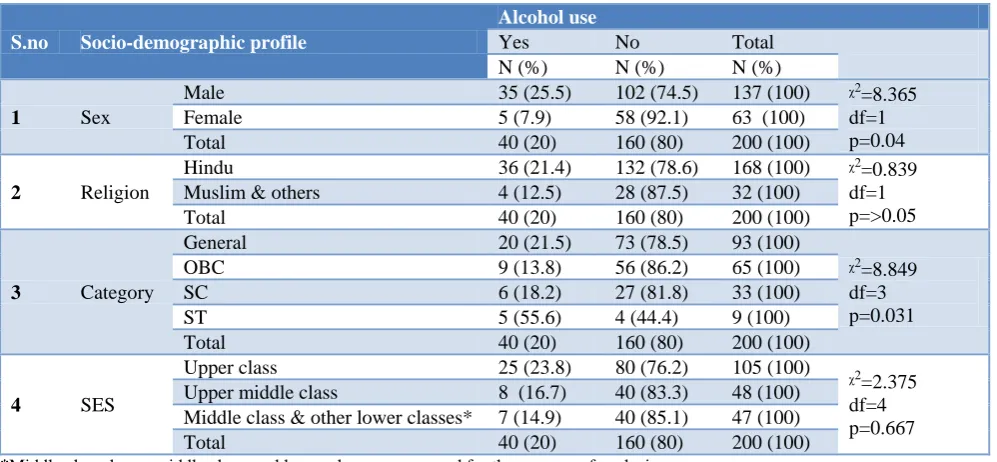
A total 200 participants were enrolled in the study, out of which 137 (68.57%) participants were male and 63 (31.5%) were female. Most (84%) of the participants were Hindu by religion. The majority (46.5%) of participants were from general category and most of them i.e., (52.5%) belongs to upper class. Average minimum age of starting alcohol was 20.17±2.68 year. Among the participants more number of males 35 (17.5%) were consuming alcohol as compared to females 5 (2.5%). So the gender difference in our study is that male has higher rate of alcohol consumption than female. There was statistically significant variation of alcohol use with gender (p=0.04) (Table 1).
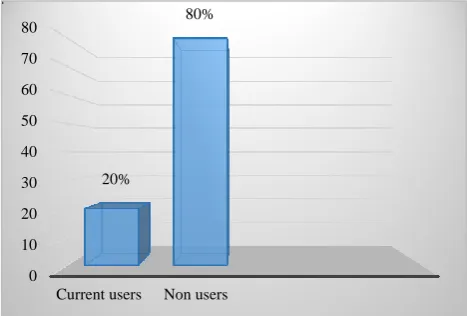
Figure 1: Prevalence of alcohol use among medical students.
In this study prevalence of alcohol use among medical college students was 20% [40 among 200 participants] (Figure 1).
The relation of alcohol use with father (p=0.836) and mother (p=0.783) education are not associated with each other. So this relation was found to be non-significant as p>0.05 (Table 2).
0 10 20 30 40 50 60 70 80
Current users Non users 20%
Table 1: Association of Alcohol use with Socio-demographic profile of participants.
S.no Socio-demographic profile
Alcohol use
Yes No Total
N (%) N (%) N (%)
1 Sex
Male 35 (25.5) 102 (74.5) 137 (100) ᵡ2
=8.365 df=1 p=0.04
Female 5 (7.9) 58 (92.1) 63 (100)
Total 40 (20) 160 (80) 200 (100)
2 Religion
Hindu 36 (21.4) 132 (78.6) 168 (100) ᵡ2
=0.839 df=1 p=>0.05 Muslim & others 4 (12.5) 28 (87.5) 32 (100)
Total 40 (20) 160 (80) 200 (100)
3 Category
General 20 (21.5) 73 (78.5) 93 (100)
ᵡ2
=8.849 df=3 p=0.031
OBC 9 (13.8) 56 (86.2) 65 (100)
SC 6 (18.2) 27 (81.8) 33 (100)
ST 5 (55.6) 4 (44.4) 9 (100)
Total 40 (20) 160 (80) 200 (100)
4 SES
Upper class 25 (23.8) 80 (76.2) 105 (100) ᵡ2
=2.375 df=4 p=0.667 Upper middle class 8 (16.7) 40 (83.3) 48 (100)
Middle class & other lower classes* 7 (14.9) 40 (85.1) 47 (100)
Total 40 (20) 160 (80) 200 (100)
*Middle class, lower middle class, and lower class were merged for the purpose of analysis.
Table 2: Association of alcohol use with parent’s education.
S.no. Socio-demographic profile
Alcohol use
Yes No Total
N (%) N (%) N (%) 1 Father’s
education
Upto 8th 5 (18) 22 (72) 27 (100) ᵡ2
=0.428 df=1 p=0.836 More than 8th 35 (20) 138 (80) 173 (100)
Total 40 (20) 160 (80) 200 (100)
2 Mother’s education
Upto 8th 19 (20) 78 (80) 97 (100) ᵡ2
=0.728 df=1 P=0.783 More than 8th 21 (20) 82 (80) 103 (100)
Total 40 (20) 160 (80) 200 (100)
Table 3: Association of alcohol use with family member.
Indices
Alcohol use by participants
Yes No Total
N (%) N (%) N (%) Use of alcohol by Family member
Yes 29 (54.7) 24 (45.3) 49 (100) ᵡ2
=44.3 df=1 P≤0.05 No 11 (7.5) 136 (92.5) 151 (100)
Total 40 (20) 160 (80) 200 (100)
Figure 2: Frequency of alcohol use.
In this study most of the alcohol users (54.7%) were belongs to the positive family history as compared to students those were having negative family history (7.5%) (Table 4). So there was significant association of alcohol use with their family members who were using alcohol (p<0.05) (Table 3).
Out of 40 alcoholic users, 55% (22/40) were using alcohol monthly, followed by 30% (12/40) who were using occasionally, and 15% (6/40) were using weekly (Figure 2).
0 10 20 30 40 50 60
Occasionally weekly Monthly 30%
15%
Among 40 alcoholic users, majority of participants using alcohol for fun i.e. 61%, followed by 19% to relieve stress, 10% responded that they drank to be happy, 6% drank to work for long hours, 2% users were drinking due to social pressure and remaining 2% for other reasons (Table 4).
Table 4: Reason for starting alcohol use (multiple responses).
Alcohol use (multiple responses)
Number (N)
Percentage (%)
For fun 32 61
To relieve stress 10 19
To be happy 5 10
Work for long hour 3 6
Social pressure 1 2
Others 1 2
Total 52 100
Table 5: Influencing factors for alcohol use.
Influencing factors Number
(N)
Percentage (%)
Friends 32 80
Social media 4 10
No body 4 10
Total 40 100
In our study, we can see that friends as company of initiation of alcohol abuse were 80% followed by social media i.e. 10% (Table 5).
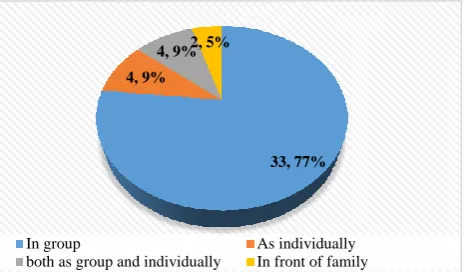
Figure 3: Alcohol taken as individually, in group, both as individually and in group or in front of family
(multiple response).
Source of money for majority of users was pocket money. Most of the users taken alcohol in groups (i.e. 77%), 9% as individually, 9% both as group and individually and 5% use alcohol in family (Figure 3).
DISCUSSION
Alcohol use by college students is an important issue to be discussed as well as to focus our various preventive
programs among colleges and universities. So they ought to remain an important place of research for the association of early alcohol dependence on the future of the students. Studies from different parts of the world have shown that college students have a higher prevalence of alcohol drinking and alcohol-use disorders, than non-college youth. Those who had ever used alcohol in this study could be regarded as current users.
In our study prevalence of alcohol users among college students was 20% (Figure1), but in other study prevalence of substance abuse in school going students was 46.9%, which was conducted by Saxena et all in Doiwala block, district Dehradun.9 Similarly, in other research among college students of North India which was conducted by Baba et al, alcohol users were only 6.2%.10
As our study, majority (55%) of users using alcohol on monthly basis. However, in other study which was conducted by Gupta et al, 49% using on daily bases.11 Family history of alcohol users in this study suggest that if there is some user already present in the family it has a strong effect at the initiation of use in their children, siblings or next generation. So here we can say that the alcohol consumption is significantly associated with positive family history. Similarly, in a study of Ningombam et al, substance use was significantly higher among those students whose father or sibling used substance.12 Garg et al also showed a significant association of alcohol consumption with positive family history.13
In this study majority of respondents (80%) indicated that they took substances under the influence of their friends, 10% influence from social media and 10% respondents took substance without any influence.
In our study, the average minimum age at which medical students using alcohol was 20.17±2.68 year. However, in the study conducted in Imphalby Kumar et al, it was 18.7 yrs.14
CONCLUSION
Use of alcohol among college students is considerably rising. Alcohol use is common phenomenon among college students in India. Parents should have the responsibility for increasing communication with their children. There are need to support the students by fathers and mothers to lower the regular alcohol drinking habit. Parents should also be educated on discouragement of alcohol use. The peer group should give the students an opportunity to communicate with others members of society. Substance use by students has effect on personal level, family as well as society like anxiety, crime, accidents, violent behaviour, and economic. impact on family, withdrawal from family etc. So There is a need to
33, 77% 4, 9%
4, 9% 2, 5%
educate and counsel young students regarding harmful effects of alcohol use.
Funding: No funding sources Conflict of interest: None declared
Ethical approval: The study was approved by the Institutional Ethics Committee
REFERENCES
1. Integrated treatment of Substance Abuse & mental illness. Available at: www.dualdiagnosis.org/drug-addiction/college-drug-abuse/#college. Accessed on 3 June 2018.
2. Hingson RW, Zha W, Weitzman ER. Magnitude of and trends in alcohol-related mortality and morbidity among U.S. college students ages 18 –24, 1998 –2005. J Studies Alcohol Drugs. 2009;(Suppl. 16):12–20.
3. Wechsler H, Dowdall GW, Maenner G, et al. Changes in binge drinking and related problems among American college students between 1993 and 1997: Results of the Harvard School of Public Health College Alcohol Study. J Am Coll Health. 1998;47(2):57–68.
4. Lipari RN, Van Horn SL. Children living with parents who have a substance use disorder. The CBHSQ Report: 2017. Rockville, MD: Center for Behavioral Health Statistics and Quality, SAMHSA. Available at: https://www.samhsa.gov/data/sites/ default/files/report_3223/ShortReport-3223.html. Accessed on 04 January 2018.
5. International council on alcoholism and drug dependence. Available at: https://www.ncadd.org/ about-addiction/underage-issues/underage-and-college-drinking. Accessed on 04 January 2018. 6. Dadwani RS, Thomas T. Prevalence of substance
abuse: a community based study. Int J Community Med Public Health. 2016;3(3):647-50
7. National Institute on Drug Abuse; National Institutes of Health; U.S. Department of Health and
Human Services. Available at: https://www. drugabuse.gov/related-topics/trends-statistics/ infographics/drug-alcohol-use-in-college-age-adults-in-2016. Accessed on 07 January 2018. 8. Agarwal M, Nischal A, Agrawal A, Verma J,
Dhanasekaran S. Substance Abuse in Children and Adolescents in India J. Indian Assoc. Child Adolesc Ment Health, 2013;9(3):62-79.
9. Saxena V, Saxena Y, Kishore G, Kumar P. A study on substance abuse among school going male adolescents of Doiwala Block, District Dehradun. Indian J Public Health. 2010;54(4):197-200. 10. Baba TA, Ganai AM, Qadri SS, Margoob MA, Iqbal
QM, Khan ZA. An epidemiological study on substance abuse among college students of north India (Kashmir valley). Int J Med Sci Public Health. 2016;2(3):562-7.
11. Gupta S, Sarpal SS, Kumar D, Kaur T, Arora S. Prevalence, Pattern and Familial Effects of Substance Use Among the Male College Students-A North Indian Study. 2013;7(8):1632-6.
12. Ningombam S, Hutin Y, Murhekar MV. Prevalence and pattern of substance use among the higher secondary school students of Imphal, Manipur, India. Natl Med J India. 2011;24(1):11-5.
13. Garg A, Chavan BS, Singh GP, Bansal E. Patterns of alcohol consumption in medical students. J Indian Med Assoc. 2009;107(3):151-5.
14. Kumar SK, Akoijam BS. Alcohol consumption among undergraduate MBBS Students, Imphal. Int J Sci Res, 2013;4(3):59-62.
Cite this article as: Mehra J, Nayak K, Jain PK,